Movin’ On: Wildlife Wednesday, April 2017

It’s springtime here in Austin, Texas and there’s plenty to relish, especially regarding the many gifts of nature:  pleasant temperatures, glorious sunshine and well-appointed rainfall, iconic wildflowers and other blooming beauties, and active and abundant urban wildlife. You don’t have to go far–there’s no requirement for lengthy drives into the Hill County or blister-producing hikes–to savor  the benefits of spring pleasures if you plant for wildlife in your own garden space.   When you grow native annuals, perennials and trees, as well as adapted non-native plants, you will reap a blooming bonanza in your garden.  Wildlife of all sorts will come, as they’re granted rest and reprieve, nourishment and protection, most especially during migration and into the breeding season.  Welcome to Wildlife Wednesday where we showcase wildlife and appreciate their place in our own back yards and in the larger world.

This past month I  haven’t observed the variety of migratory birds that I recall from 2016, but there were a few who made brief stops near the pond, or who rested in newly foliaged Red Oaks.  A pretty White-eyed Vireo, Vireo griseus, a lone and stunning Black and White Warbler, Mniotilta varia, a handsome Dark-eyed Junco, Junco hyemalis, and four female Red-winged Blackbirds, Agelaius phoeniceus,(obviously engaged in a girls’ day out), comprise the sum total of spring migratory birds gracing my garden.  With each observance, I either didn’t have my camera ready, or chose to simply marvel at the bird’s presence;  I have no photos of these birds to share.

My avian winter Texans visit the back garden less frequently and I assume that most have moved on to more northern gardens and greenbelts, with the hope of a mate and chicks.   I haven’t seen any Orange-crowned Warblers, Oreothlypis celata in several weeks, but throughout winter and earlier in March, one, or several, were daily garden charmers as they perched on limbs or hunted for insects from spring blooms.

Clinging to the stem of a Yellow bells (Tacoma stans) while surrounded by Giant spiderwort (Tradescantia gigantea).

This one poised to flutter to the bog area of my pond, which is a favorite bathing spot for all the birds in the garden, residents and visitors alike.

Jump!

If you look closely at the following photos, you can spot the smudge of orange, which male Orange-crowns flash in territorial warning when necessary, but which is drab and undramatic when life is simple and there are no threats to manhood, or perhaps I should say, birdhood.


I still see Yellow-rumped Warblers, Setophaga coronata, like these two breeding-plumaged boys, preparing for a buddy bath.

The photo isn’t the best, taken early and pre-coffee and through a window, but I was tickled to catch them hanging around. Do you see the difference between the two?

You’ll notice that the one toward the bottom has a yellow throat–he’s an Audubon’s subspecies and typically found in the West.  The other with a white throat, is a Myrtle subspecies and they’re more common in the eastern part of the United States and in Canada.  I have no clue why both were in my back garden, but it was a treat to see and photograph both in the same frame. More proof I suppose that Texas truly is a crossroads for migratory birds.

Too bad those blackberries aren’t ripe.

Butter Butts have been constant companions since November, but will soon be gone, making their way north to the upper mid-West and Canada for summer,  My early mornings won’t be the same without them.


One of the last winter Texans to leave for northern lands are the Cedar Waxwings,   Bombycilla cedrorum.  Such beautiful birds, they’re always in a flock, gabbing and preening, and usually situated at the top of trees, where it’s too blustery to get a good photo. Even if I managed something decent, it would be of their butts and who wants to see that?   I was on the phone with a friend when a couple of them dropped in to bathe and drink in the birdbath with the bubbling fountain. I told my friend that I HAD to hang up NOW so I could get some good, close shots of these dandies and she was gracious enough to let me go, forthwith.  She’s understanding about my various idiosyncrasies and I knew she wouldn’t be offended at my hasty hangup.
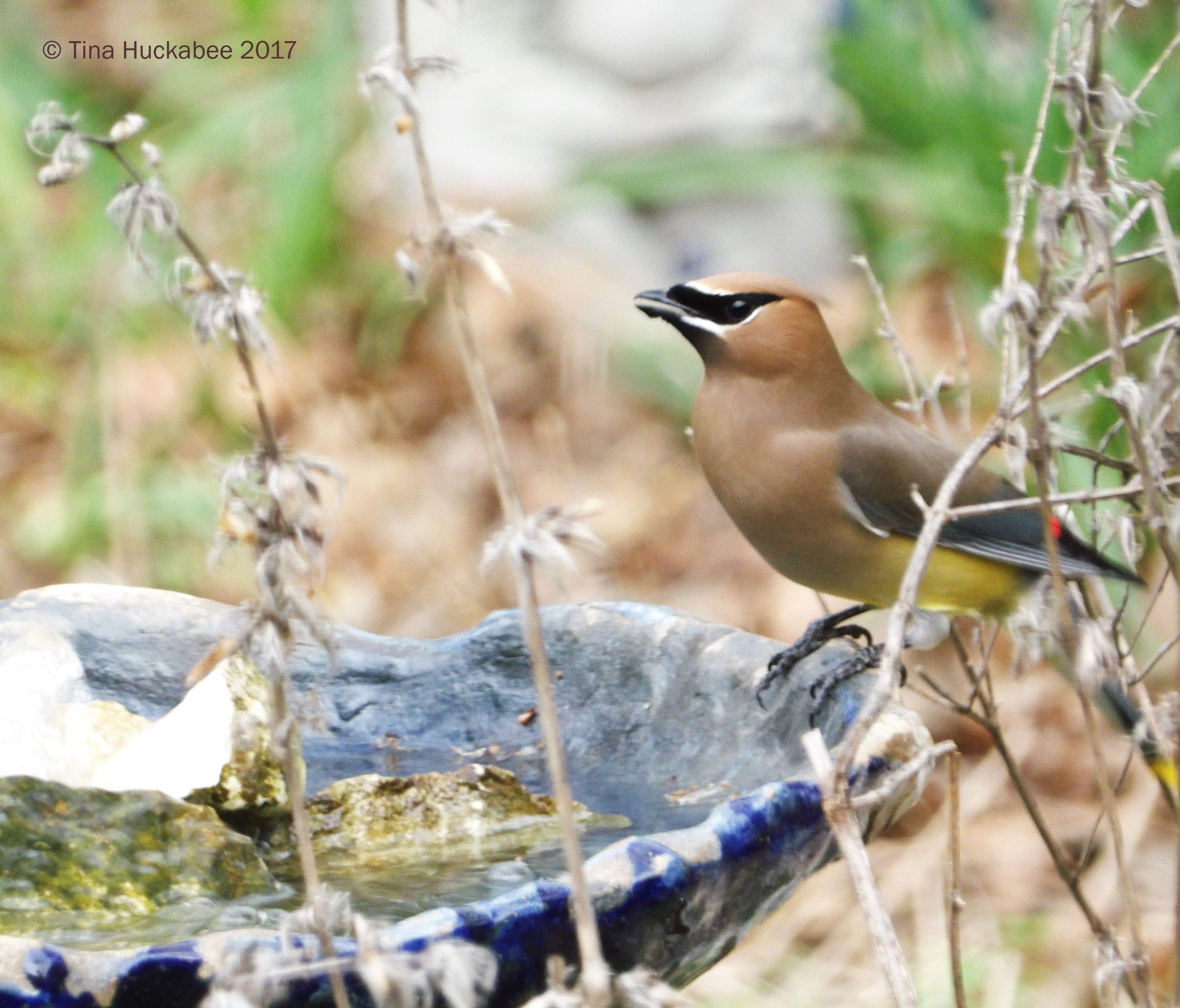
As I write, I hear their high-pitched keening in the breezes outside, their voices carried into the house, keeping me company.  Soon enough,  that keening will no longer linger in the breeze and will be silent; I’ll realize that they’re gone for summer.

I miss them already.

One day next November, I’ll hear their call again–high-pitched and insistent. I’ll be thrilled that they’ve once again joined me for winter and much of spring.


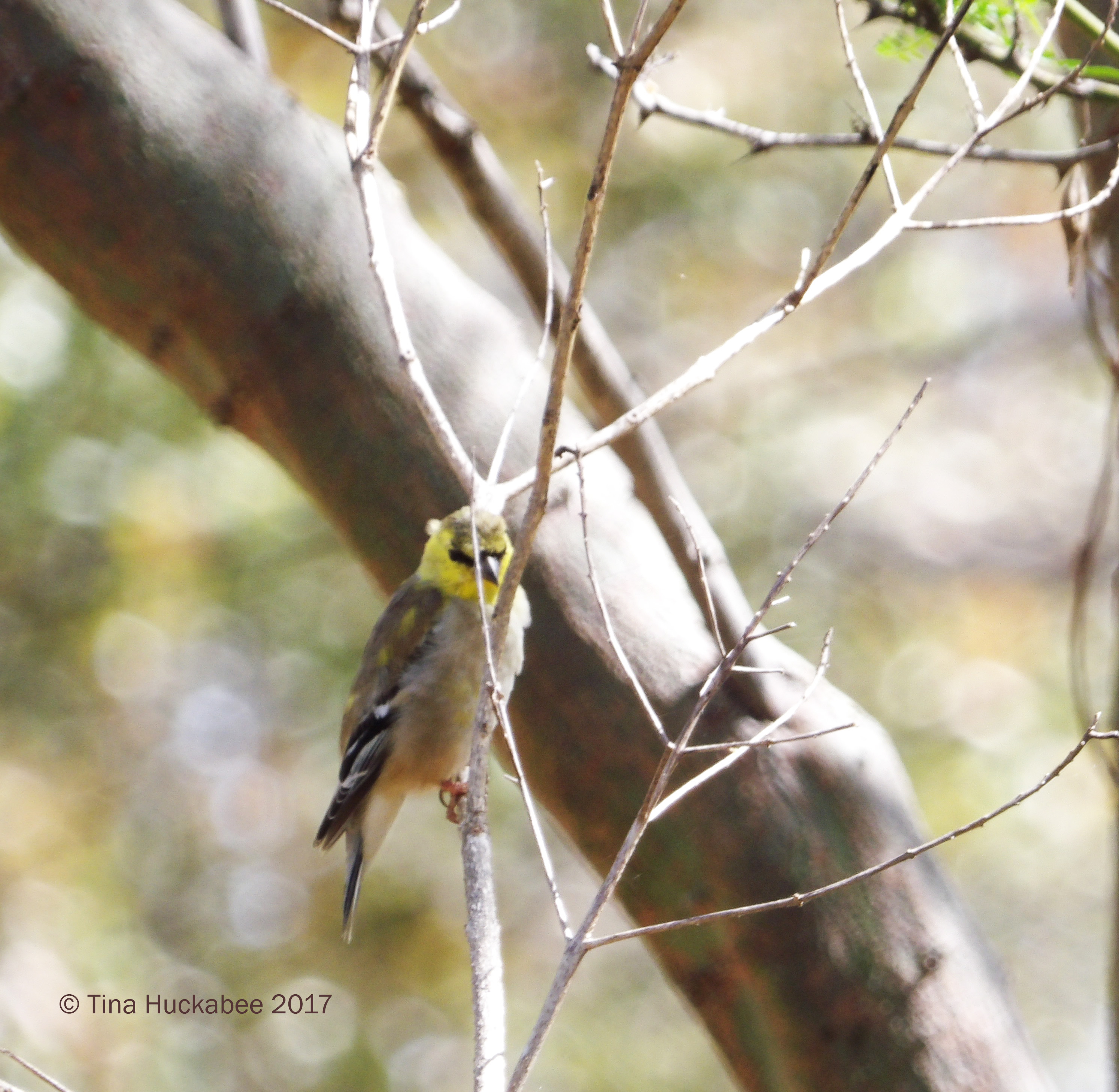
I take pleasure in the typical off-and-on visits from Lesser Goldfinches,                     Spinus psaltria, but they’ve been scarce this year.  I have delighted in several visits from a little band of American GoldfinchesSpinus tristis.  

Mostly, they’ve frequented the birdbaths,

First you see my front,
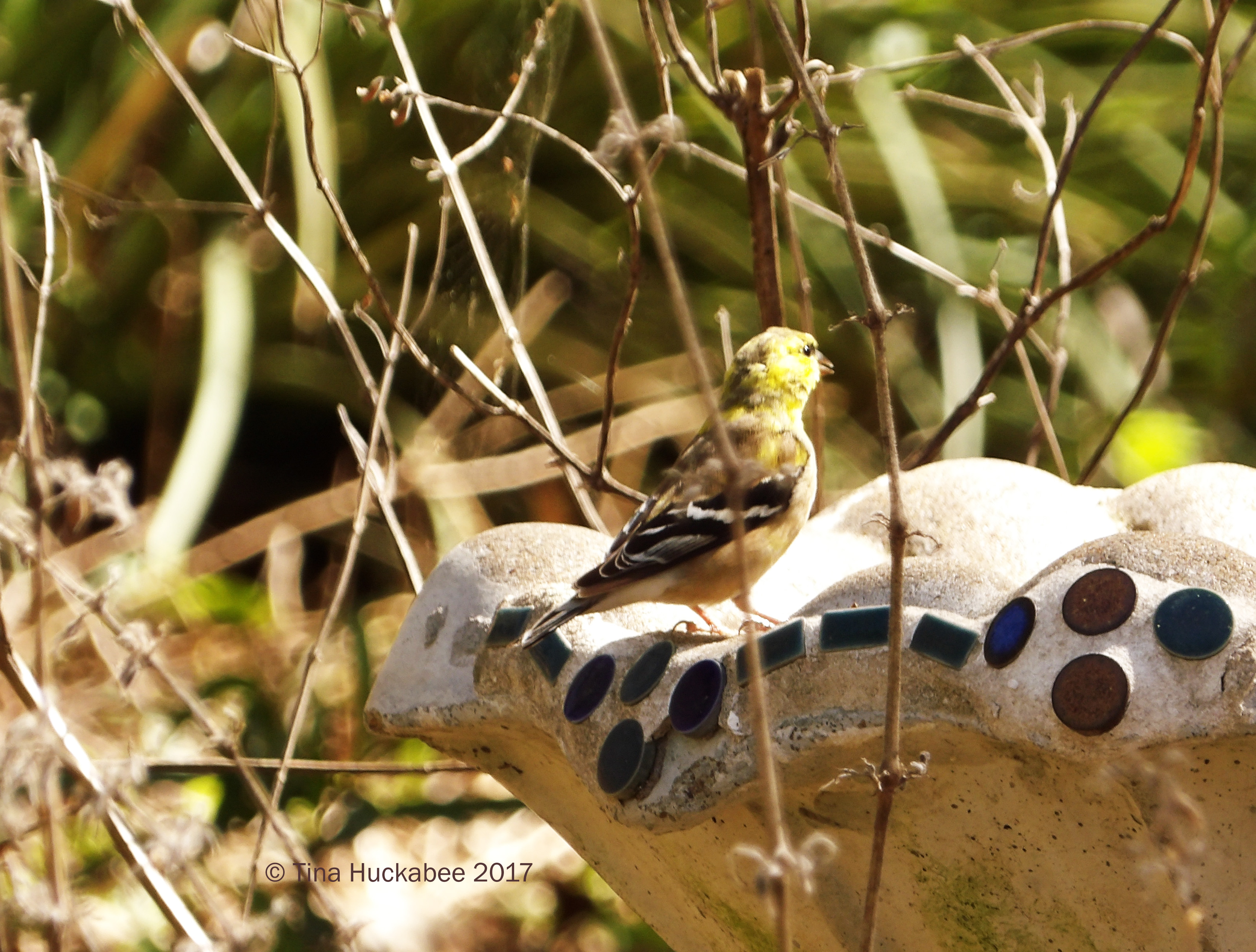
….then you see my back.

…the bog of the pond,

…or perched prettily in the shrubs and trees.
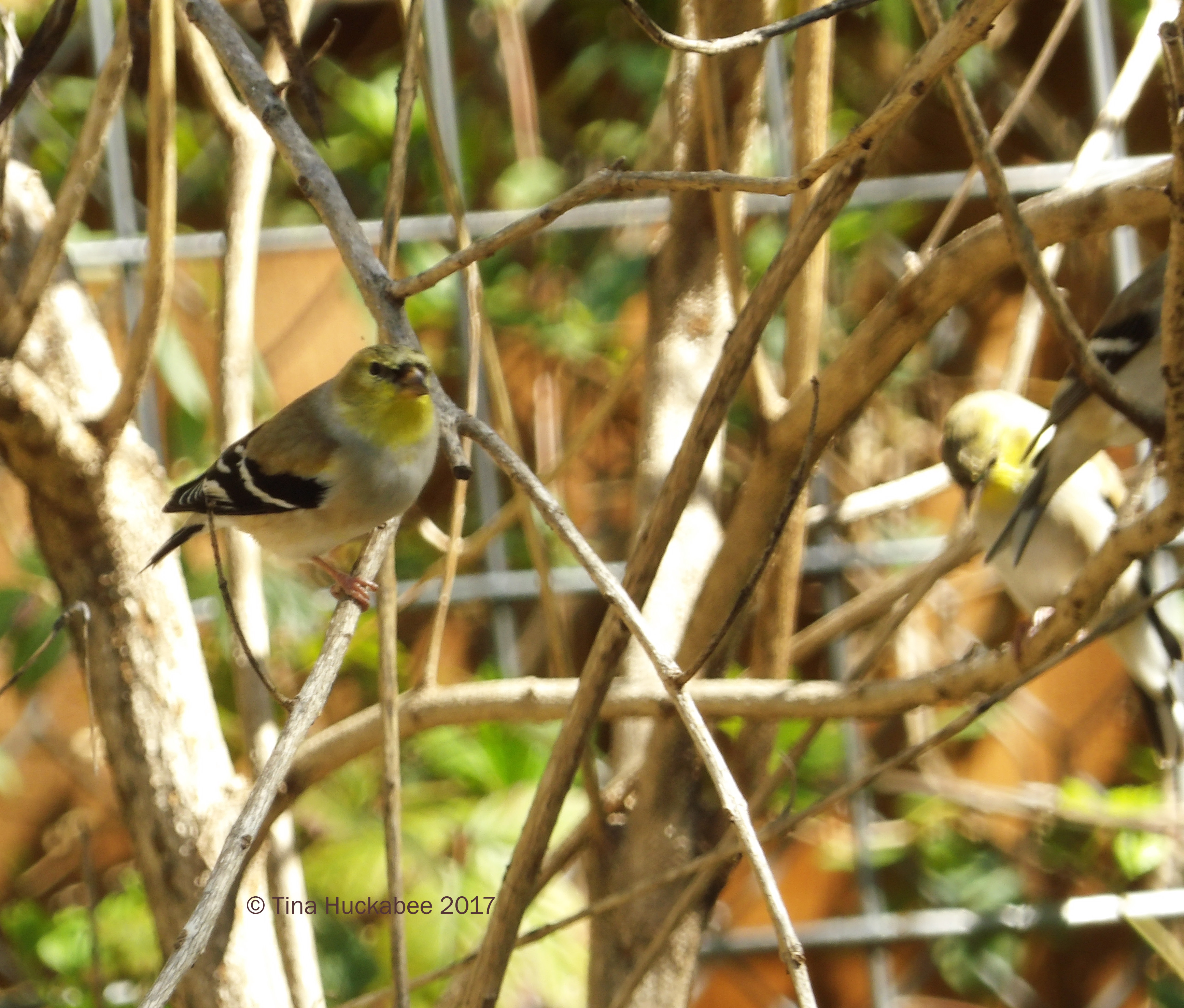
Until I downloaded this photo, I didn’t realize that there were two other goldfinches at the right edge of the above photo.  Like the Cedar Waxwings and teenage humans, Goldfinches tend to hang out in groups, though they’re quieter than the Waxwings–and the human teenagers.
If you’re fortunate enough to host these birds during their summer breeding, they will nosh at feeders, but prefer native composite (Asteraceae) seeds; flower seeds of the many varieties of sunflowers are finch (of all species) favorites.  The trick for attracting Goldfinches, as well as many other native songbirds, is to let the seeds develop after the bloom period.  Many gardeners want to prune back “spent” blooms because there’s nothing left  for pollinators and we’ve been “educated” that spent blooms are unattractive.  Nothing could be further from the truth.  Flower seed heads are attractive and the second round of feeding on a plant comes after the bloom-n-pollination/nectar gathering time: it’s the feeding time for birds, mammals and other insects besides pollinators.  When you see a host of birds eating seeds at plants, it’s a lovely and affirming sight and that nourishing of wildlife is the purpose of plants.

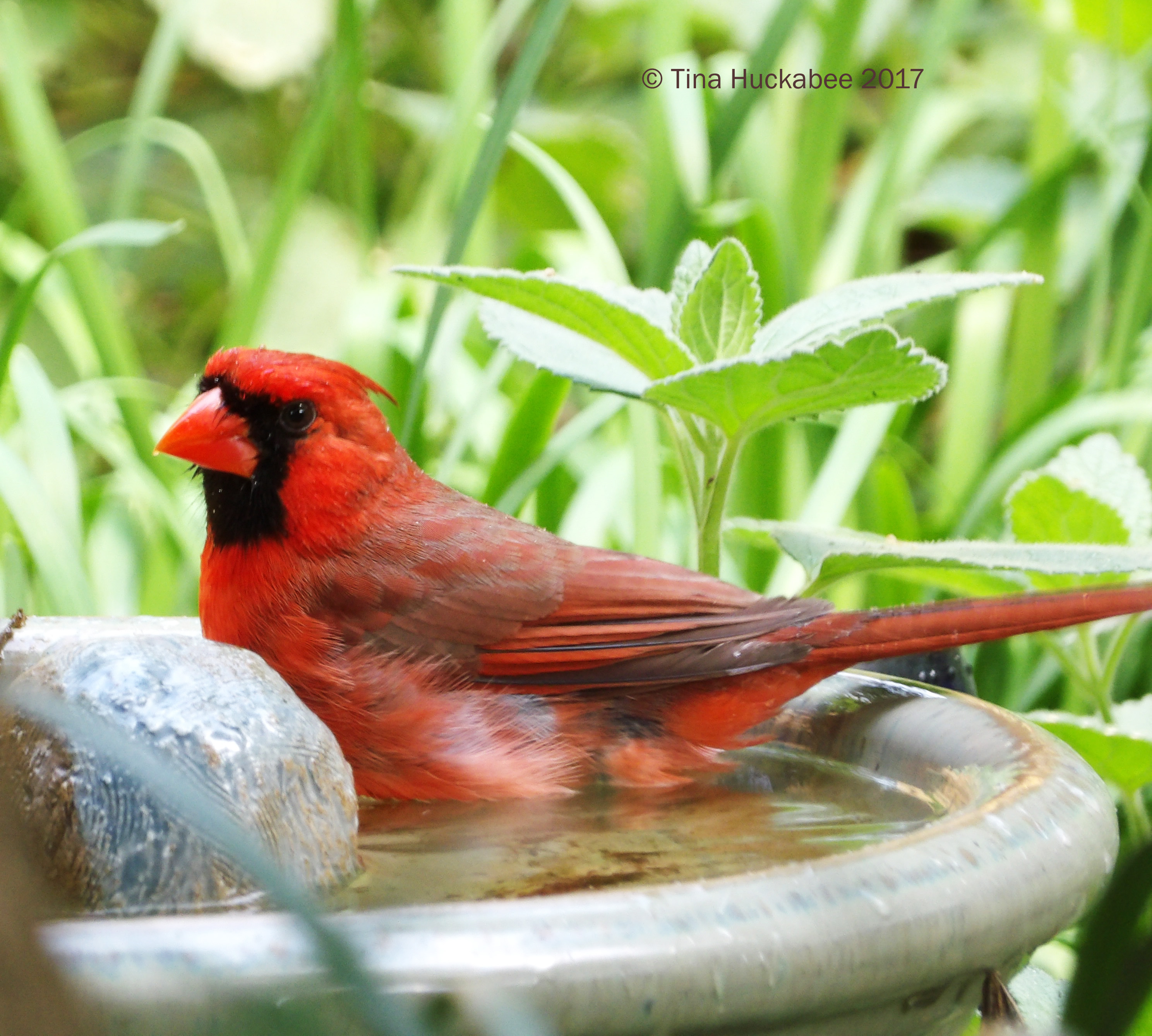
While the migratory birds are movin’ on to their summer breeding sites, I’m left with my resident birds, like this bathing male Northern CardinalCardinalis cardinalis.

Well, that’s not so bad.


Blue orchard beesOsmia lignaria, are almost finished with their seasonal contribution to the world and my garden.
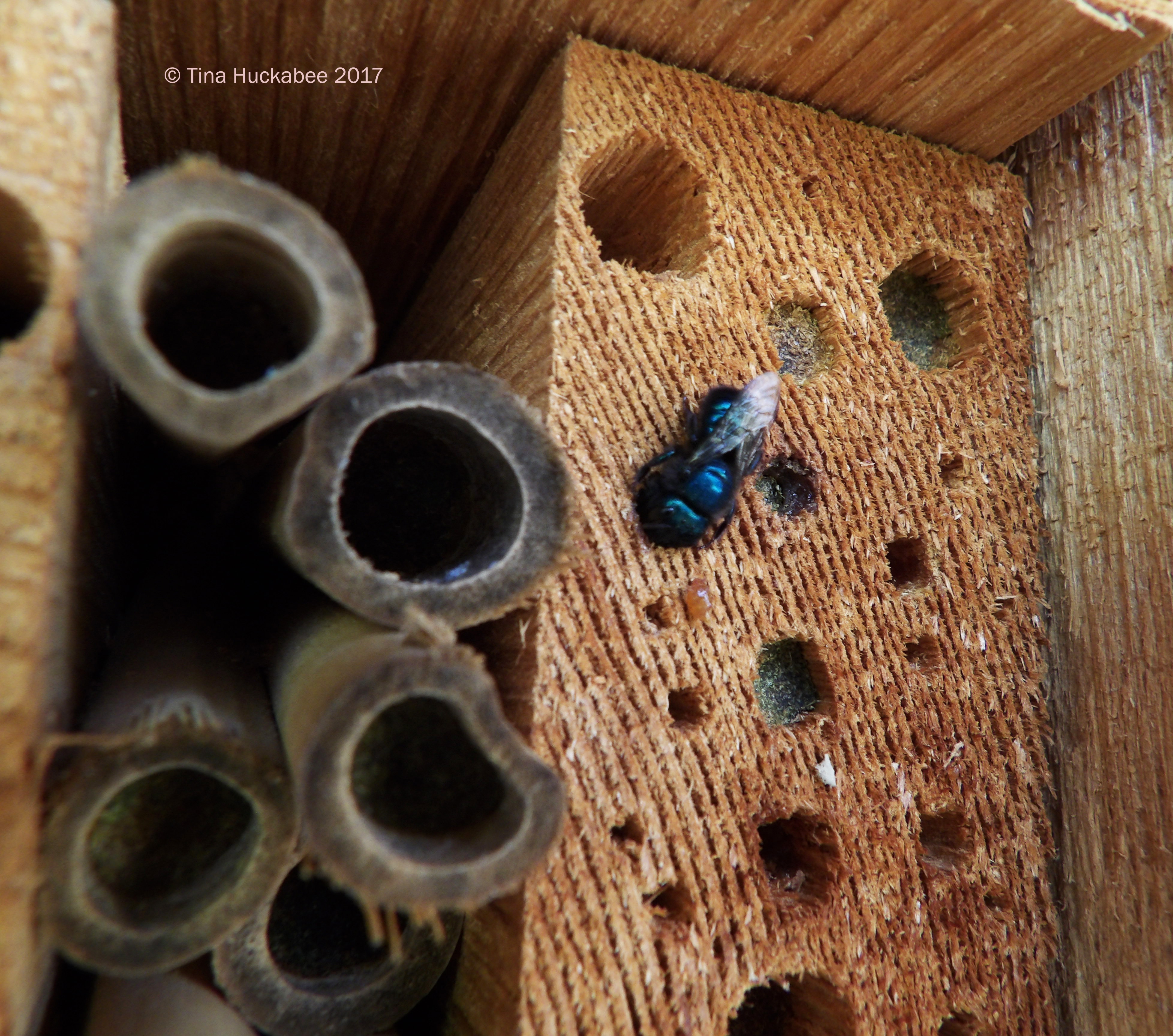
The few remaining adults left are packing away their eggs and soon-to-be-larvae. There are plenty blue bee babies cookin’ for next year.


My favorite native bees, the Horsefly-like Carpenter bee,  Xylocopa tabaniformis, are out in droves and pollinating up a flower-storm!

Stealing nectar from an Autumn sage (Salvia greggii).

More nectar at a Gulf penstemon (Penstemon tenuis).

Zoom!

Got it!

Uh, the pollen and nectar of the white Autumn sage are the other way…


Ubiquitous Texan Crescent butterflies, Anthanassa texana, are also making the rounds of blooming bounty.


This Pipevine SwallowtailBattus philenor, is battered–but not defeated–in its quest for nutrients from flowers of the Giant spiderwort.  There will be more of these gorgeous and useful insects in my gardens in coming months.

He may display rag-tag wings, but he works the garden diligently and for free!

Whether your garden enjoys migrating or resident critters, did wildlife visit your garden this past month? Please post for April Wildlife Wednesday. Share photos and stories of your garden wildlife to promote and appreciate your region’s natural habitat and diversity. When you comment on my post, please remember to leave a link to your Wildlife Wednesday post so readers can enjoy a variety of garden wildlife observations.

Happy wildlife gardening!
 

Owlets, Owlets, Everywhere!

Owlets keep us on our toes.  I missed documenting the appearance of owlet #3 (Frankie? Franky?) on Monday (5/2) evening at the nest box hole, though I saw him/her poking out his/her head briefly when I arrived home in late afternoon.  I intended to take photos, but due to blogger incompetence or distraction by something shiny, no captures of the newest neighborhood raptor ensued.

I figured Mama and Daddy Owl would successfully usher Baby Owlet into their world of dark, trees, foliage, and mice during the night.

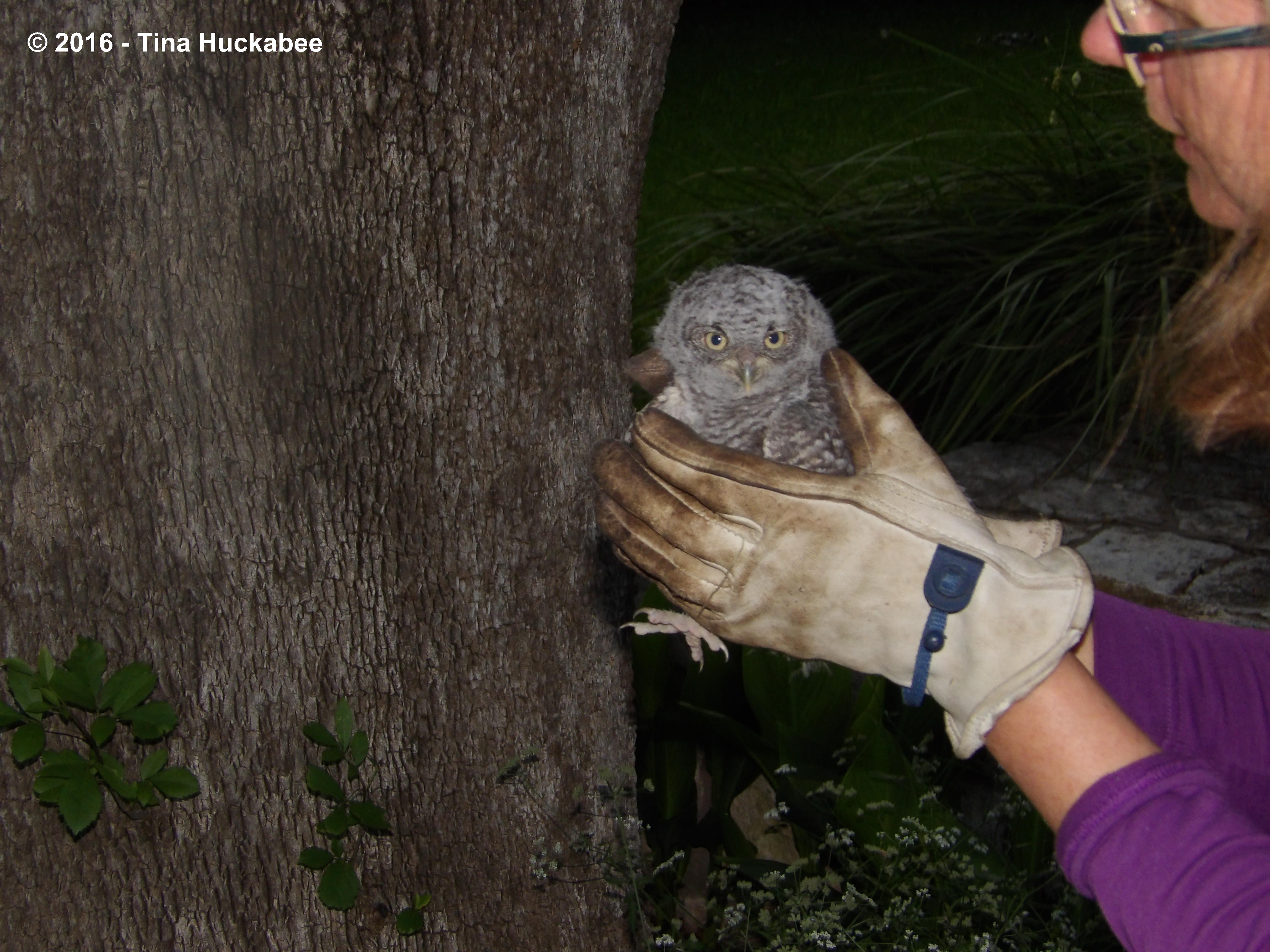
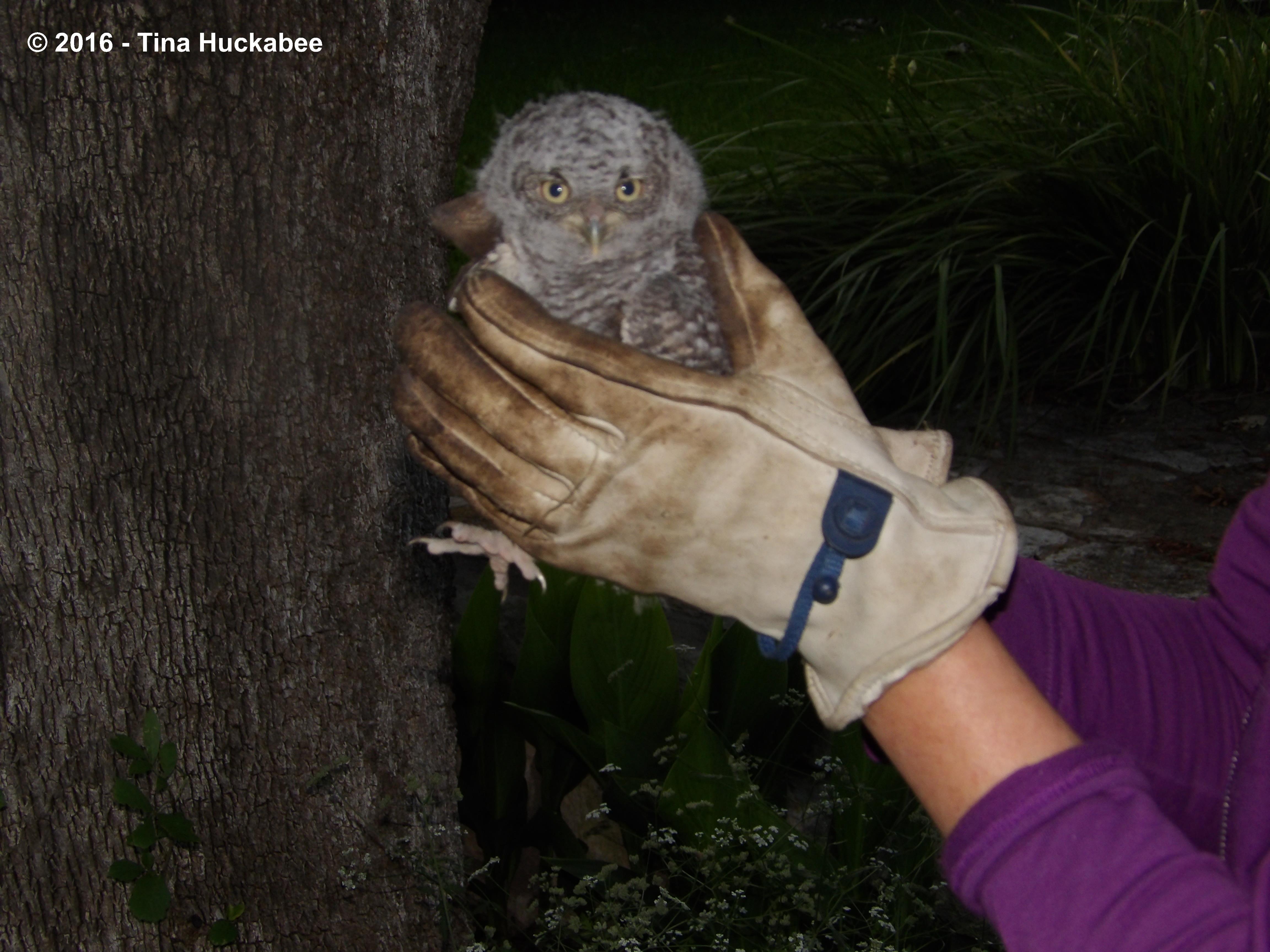
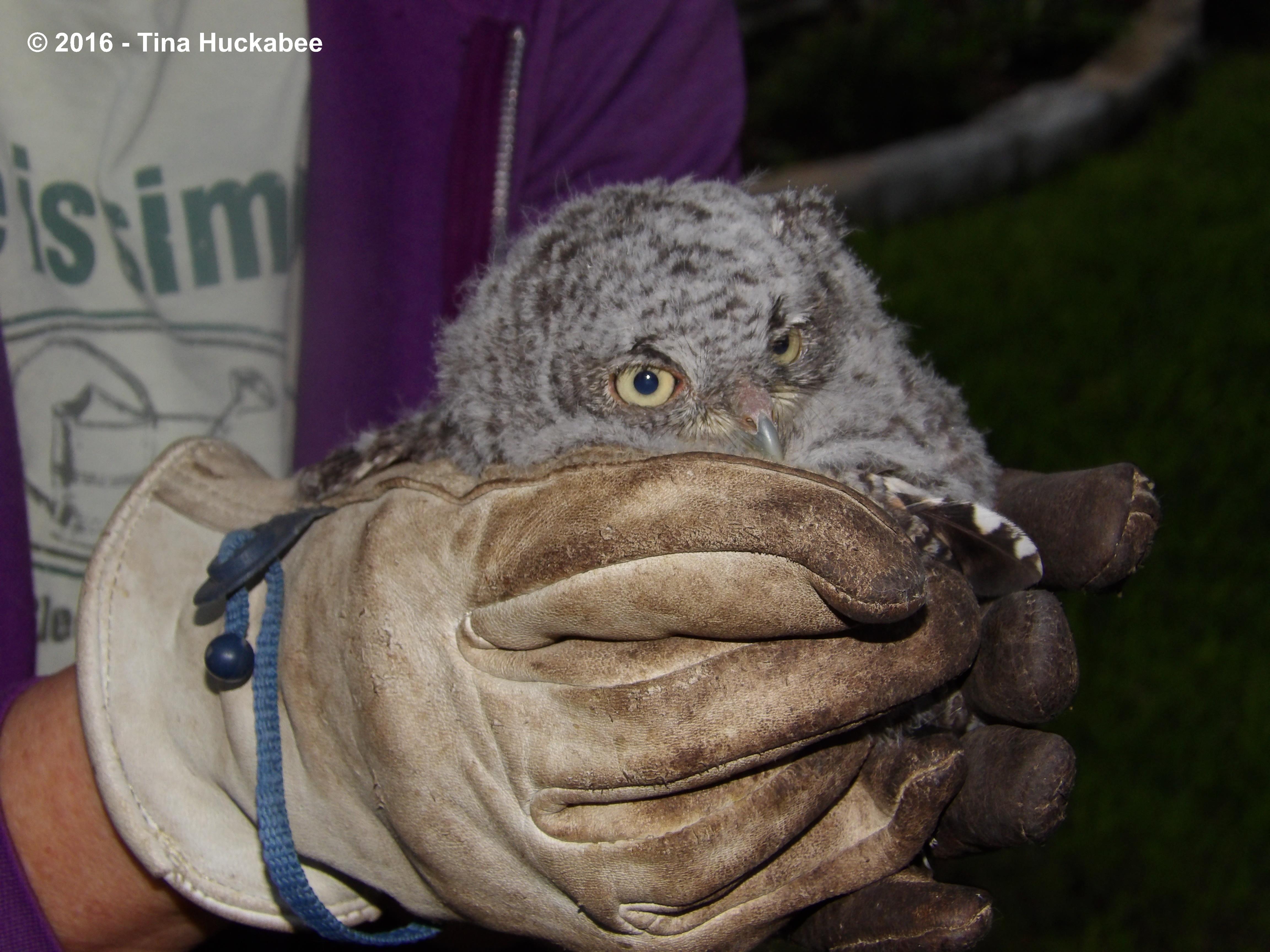
At about 6:30 Tuesday morning–the alarm was up, but we weren’t–there was insistent doorbell ringing and a frantic neighbor who’d been awakened by scuffling noise at her bedroom window and a little owlet staring at her in her jammies.  (The neighbor was in her jammies, not the owlet.) Pre-coffee, my husband and I grabbed necessary items–clothes, camera, gloves–and met with the neighbor in her back yard to commence the Great Owlet Rescue.

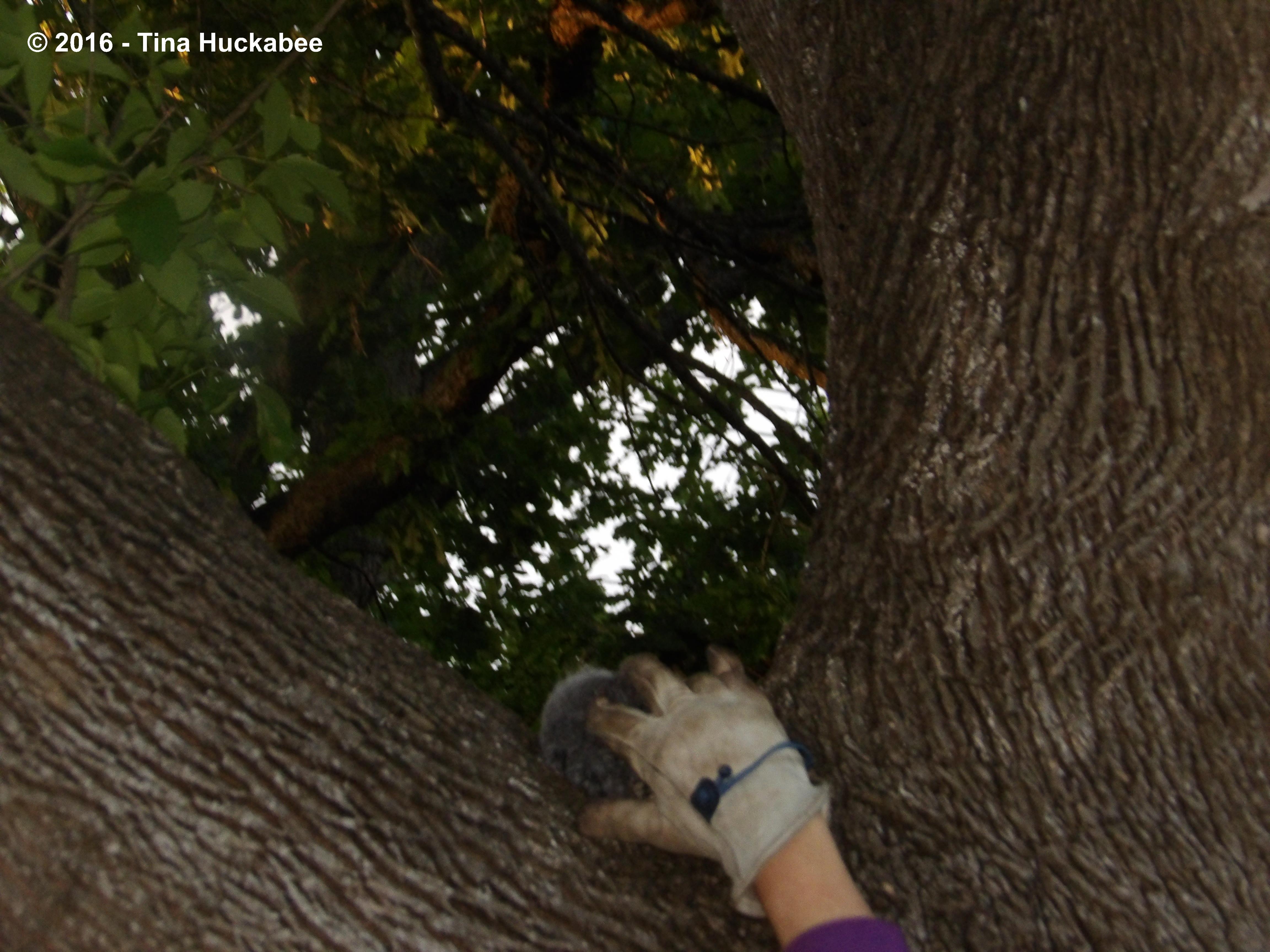
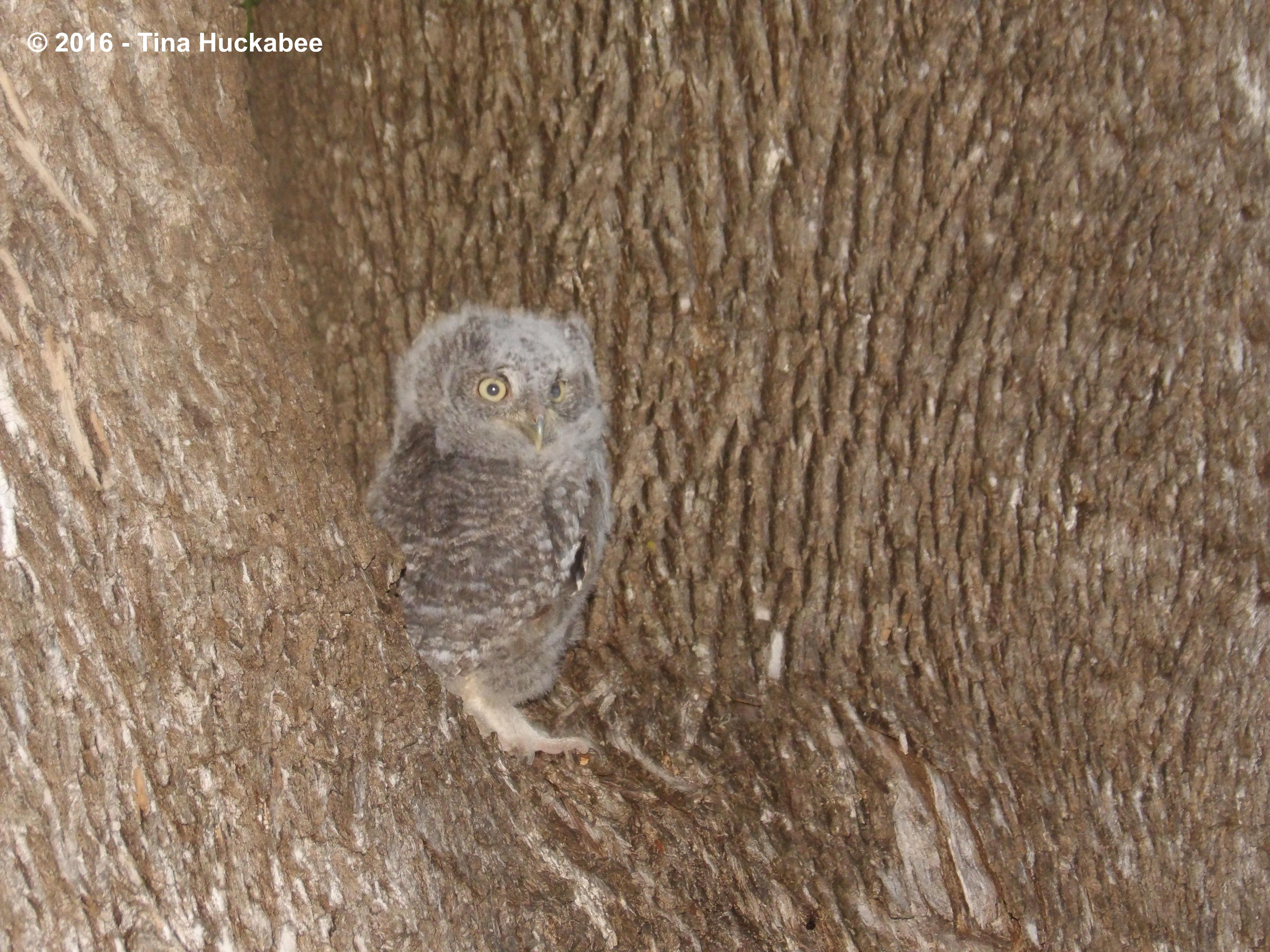
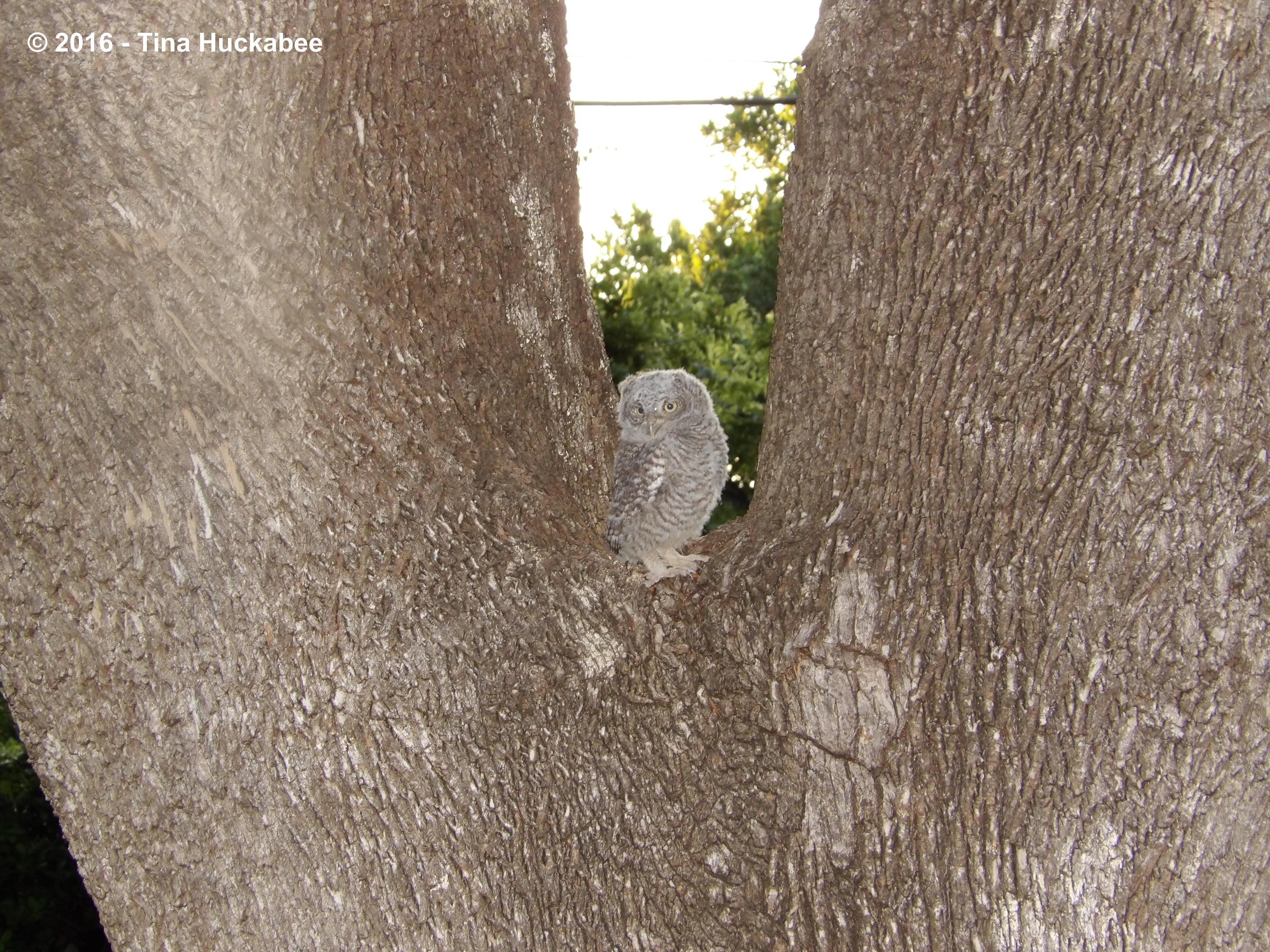
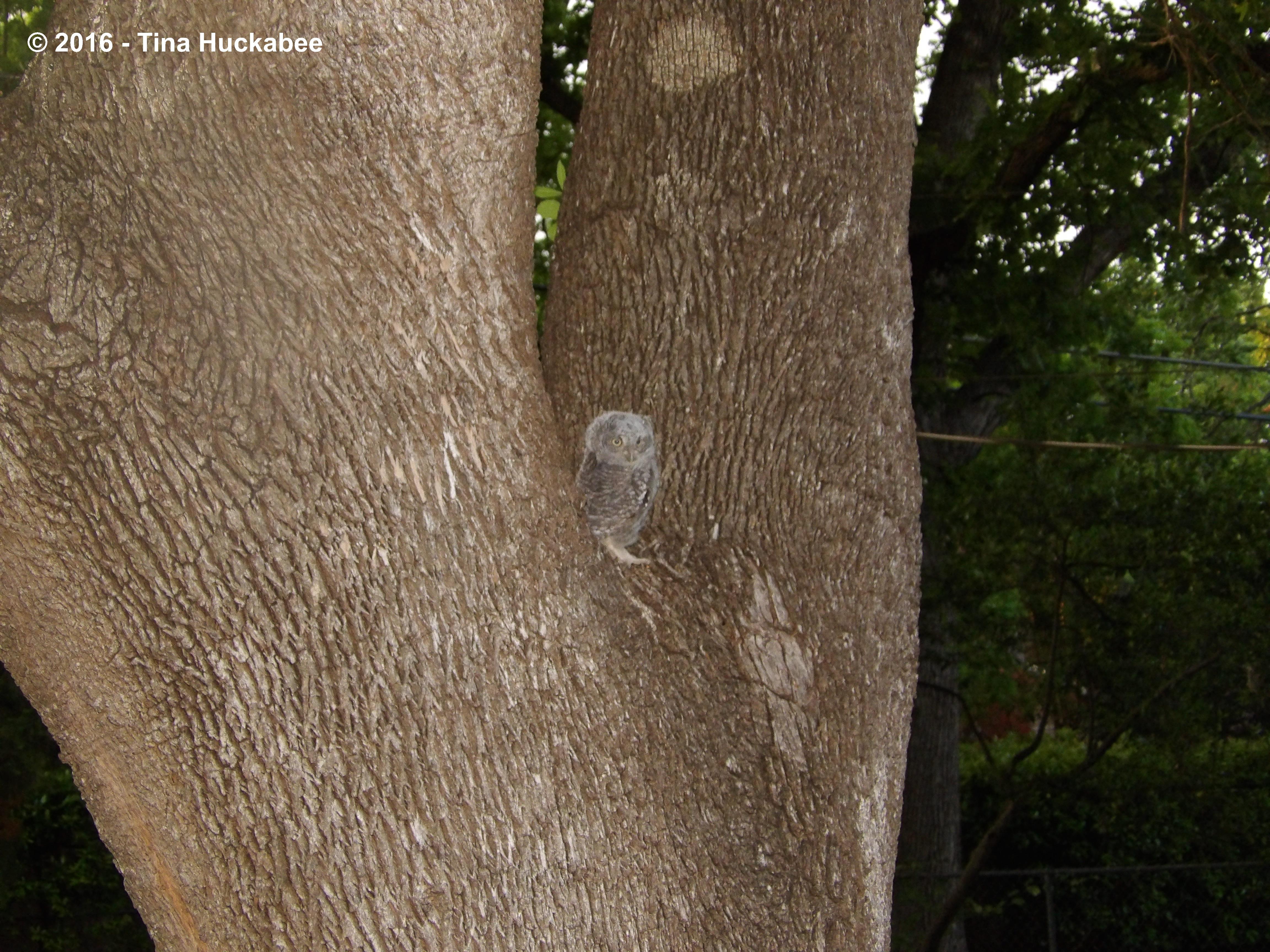
A darling, but not happy owlet–Frankie(y)(?)–was sitting on the grass.  Mama was nearby, watching with steely eyes, as I gently picked Baby up and placed the forlorn fuzzball in a low crook of a large ash tree.

IMGP7826.new

IMGP7823.new

IMGP7824.new

IMGP7828.new

Daddy Owl flew within about 12 inches of my unprotected and early morning face and glared at me as I verbally assured him that I only wanted the best for Baby Frankie(y).

I don’t think he was assured at all.

Baby Frankie(y) sat, confused and bummed, in the tree for a brief period.

IMGP7831.new

Very brief.  Baby fluttered to the ground almost immediately and three inept humans tried several more times to keep the owlet in the tree, admonishing Baby Owl to “stay!”.  That command doesn’t quite work as well with Eastern Screech owlets as it does with dogs.

Actually, “stay” doesn’t work very well with my dog, either.

IMGP7834.new

IMGP7832.new

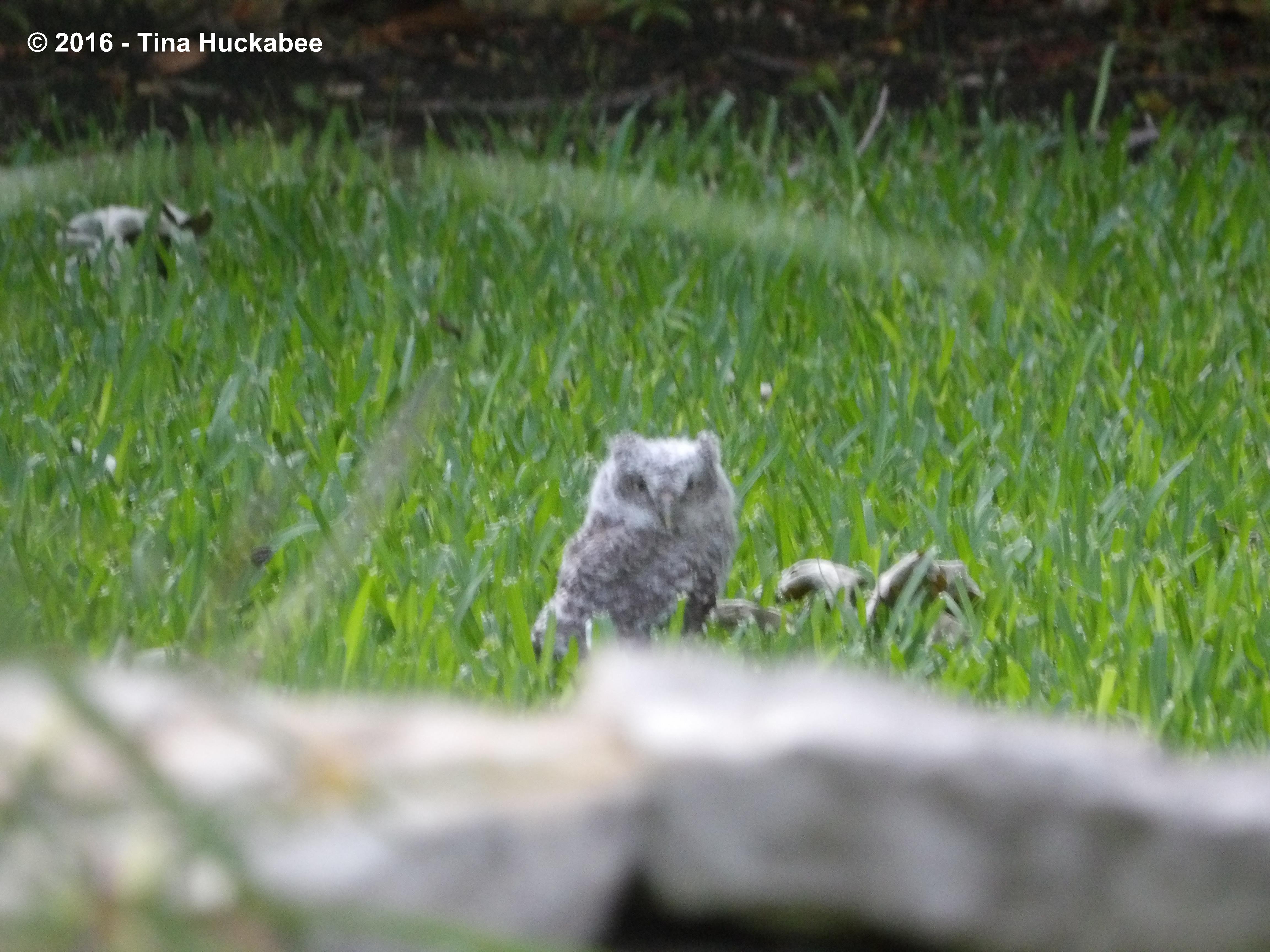
Within a couple of minutes, the owlet flew from the safely of the tree to the middle of the large back yard, just beyond the pond,

IMGP7840.new

…and we decided to let Mama and Daddy take care of Baby Frankie(y). There was no real fear of cats or dogs bothering the owlet and we thought it was best to let Mom and Dad take matters into their own hands.  Er, wings.

Let me remind you, dear readers, that all this avian drama happened PRE-COFFEE! Yes, no caffeine was involved and I would very much appreciate a virtual pat-on-the-back for my rather lame attempts of wildlife rescue prior to my morning fix.

Thank you.

So, basic math suggests that with 5 eggs laid and 3 owlets out of the nest box, there is a theoretical possibility that there are two owlets left to fledge.

Indeed.

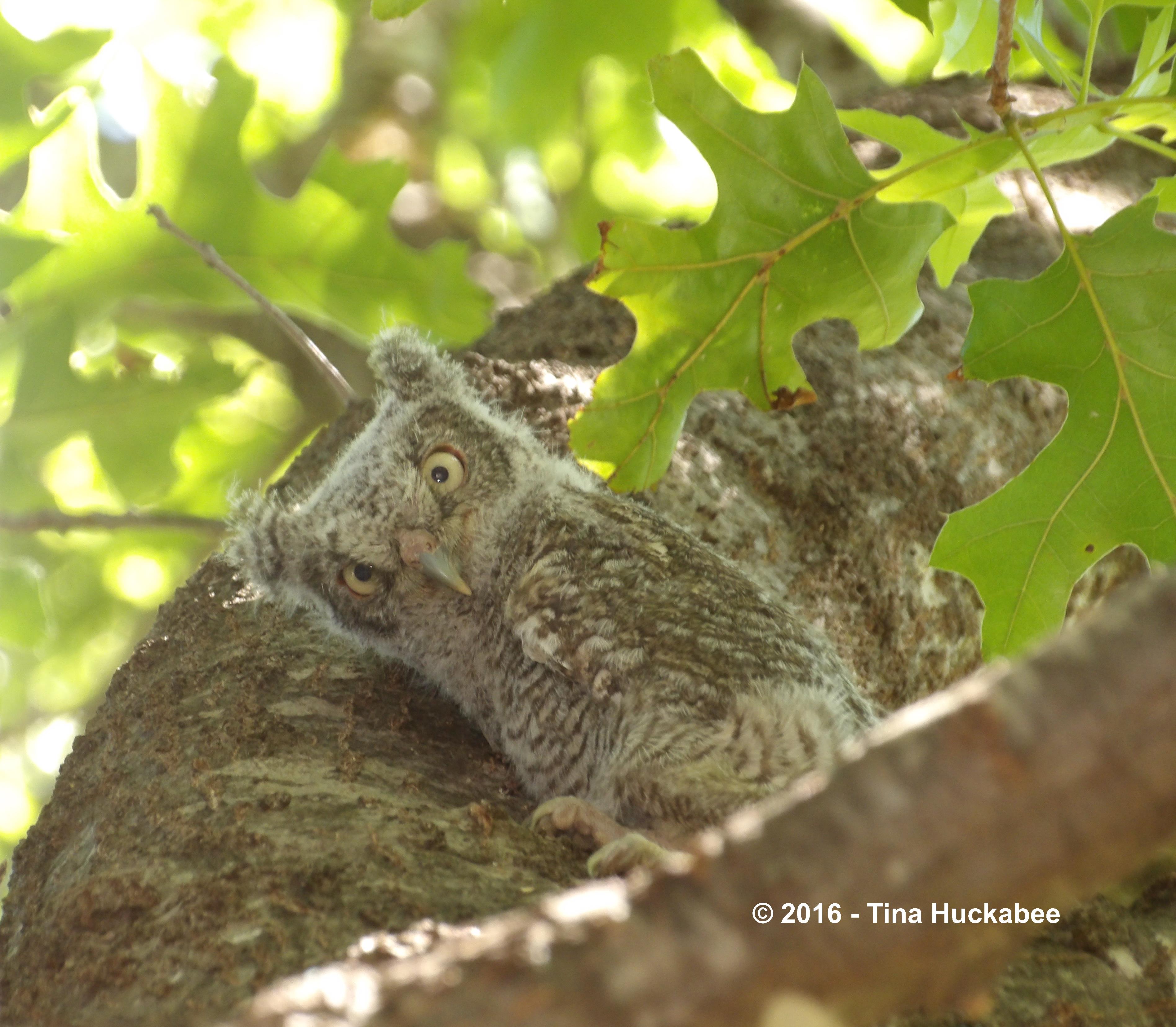
Mid-day Tuesday, this little cutey was clinging to dear life on an oak tree branch after its daring daytime escape from the nest box.

IMGP7847_cropped_3793x3314..new

This is owlet #4, named Fritz.  Though, she could be a girl owlet–I don’t know, they all look alike to me.

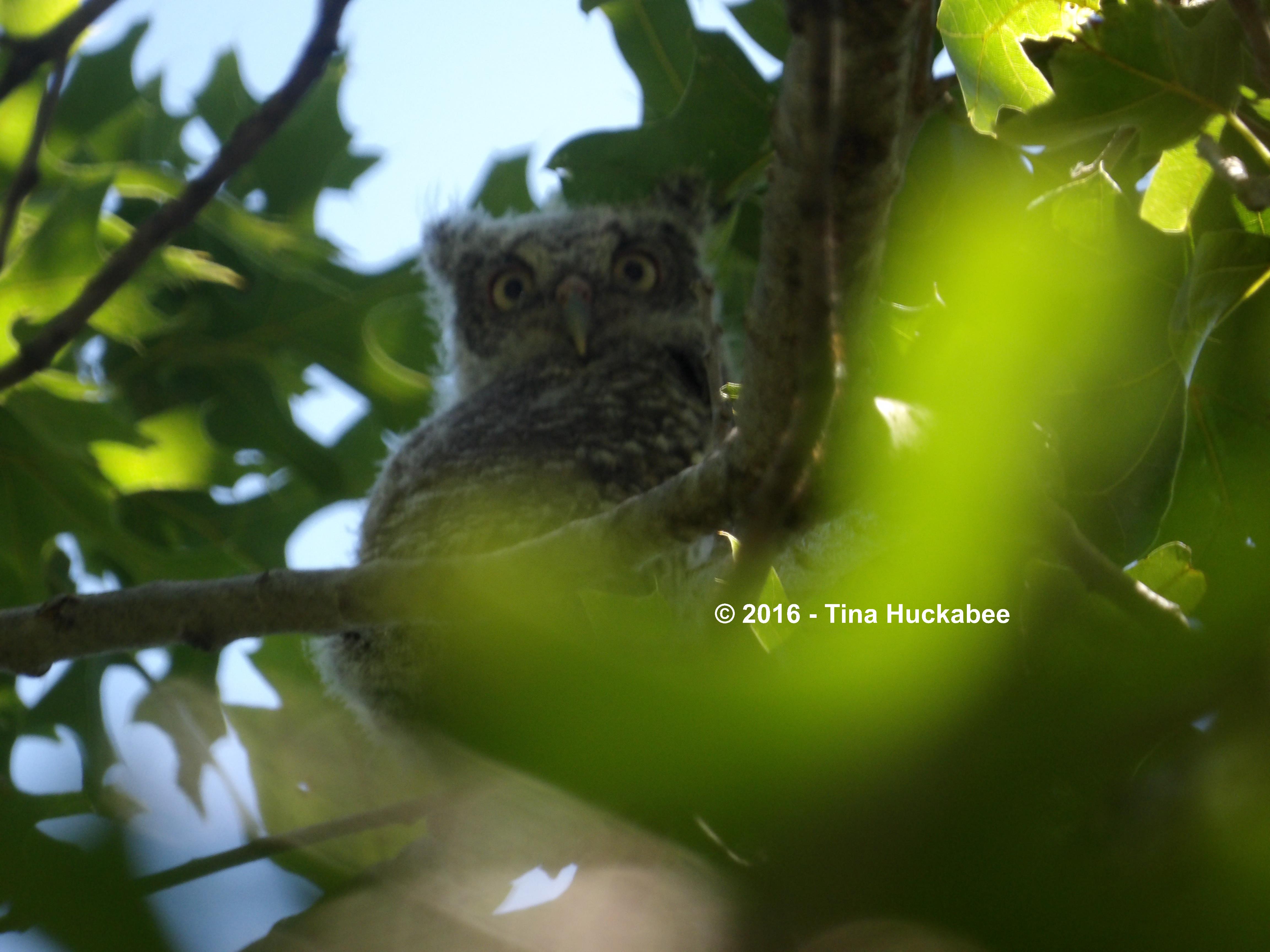
Left to her own devises, Fritz managed to make her way near the top of the oak tree, where I could barely see her amongst the spring greenery.

IMGP7856.new

The only reason I knew where to look for her is that the little song birds–Carolina chickadees and wrens and Cardinals–were fussing-up-a-storm about something at the top of the tree and my bet was that it was a an owlet who was the offending creature.  I was right.  But Fritz  was undeterred by the noisy little bird-pests and determined to stay in her leafy spot for the duration of daylight hours.

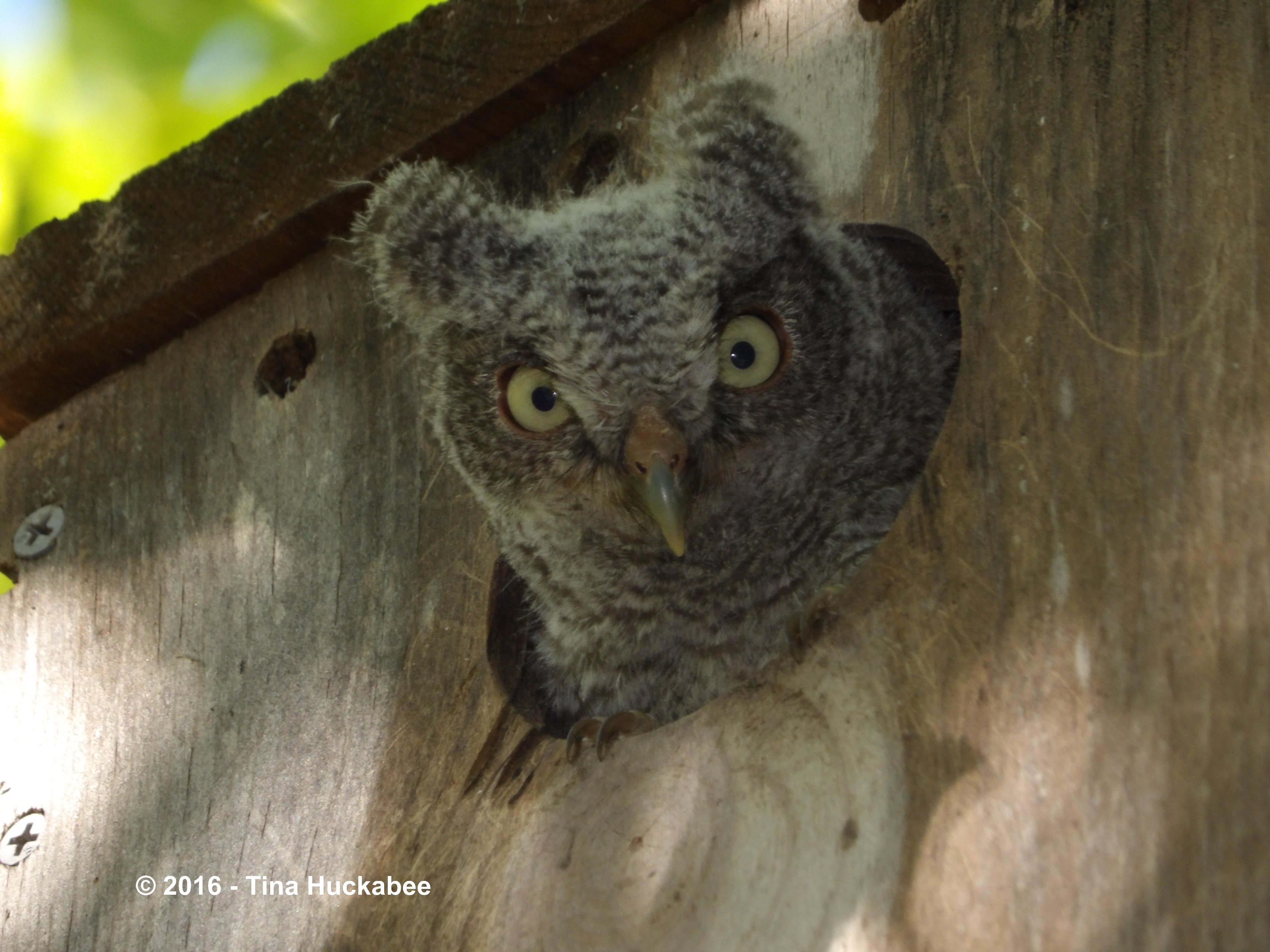
In the mean time, a fifth fuzz face was peeking out of the owls’ nest box–owlet #5, who I think I’ll call Jo–because I can.  As of Wednesday, Jo was still in the nest box, but I’m fairly sure that a plan of action to get out of there was in the works.  At about 9 pm Wednesday night, I stepped outside for a possible owlet look-see and in the sitting area underneath the oak tree was a little grey bit of fluff looking disgruntled.   I picked “Jo” up and place her/him in the Mountain Laurel just as Mama flew by me in warning.  I backed off immediately and moved to another part of the garden.  Mama watched for a bit and so did I, but I decided it was time to vamoose and to give the parents privacy to teach Jo to fly–if only well enough to stay in the trees for the night.

I thought the grey fluff on Wednesday night  was baby #5– Jo– but alas, Jo is still in the nest box as of Thursday afternoon.  Maybe it was Fritz?  Maybe Fritz never left the oak tree?  Who the heck knows? I’m sure that Mama and Dad Owl know who’s in and who’s out–and really, that’s all that matters.

Good luck to you all, little owlets: Jo–and Fuzzy, Frizzy, Frankie(y), and Fritz–may you  fly well and catch plenty of mice, rats, and other assorted yummies.

IMGP7872.new

The excellent Eastern Screech parents raised 5 chicks to fledgling age–an impressive feat, I’d say. I’ve read that the predation rate for Eastern Screech Owl chicks is about 70%–that’s high–and it suggests that with well-learned flying and hunting skills, coupled with some good luck, 2, perhaps 3 of these babies will survive to adulthood.

I always miss the owls–adults and offspring–when the babies leave the nest box.   The intimacy of observing them daily, or almost daily, will cease and I’ll grieve a little bit for my loss, while celebrating their success of a family raised.  I never know which of the babies survives, but I’m sure to see some of them (and their parents) in the coming months, here or there, when I’m outside after sundown. In the next 10 weeks, the babies will be learning the skills they’ll need to improve their chances of survival and eventually, the parents will let them make their way, on their own, in the neighborhood and beyond.  By mid-summer, the owls will melt into the rhythm of the hot Texas summer days and nights and they’ll seemingly disappear. But I know they’ll be around, hunting late at night and resting during the day in the relative safety of lush and leafed out trees.

Later in the year, during some evening in late November or December, I’ll hear the gentle and melodic trill of a male Eastern Screech Owl for the first time in months as he’s looking for a mate, or letting his mate know that he’s found a nice spot in which to raise a family.

Wildlife Wednesday, May 2016: Plenty

It’s been an odd and distracted month for me and one where events out of my control took time away from following the plentiful goings-on of wildlife in the garden.  I won’t bore you with the details, but sometimes life really does get in the way of watching wildlife, photographing wildlife, and the blogging about it all.  Sheesh!

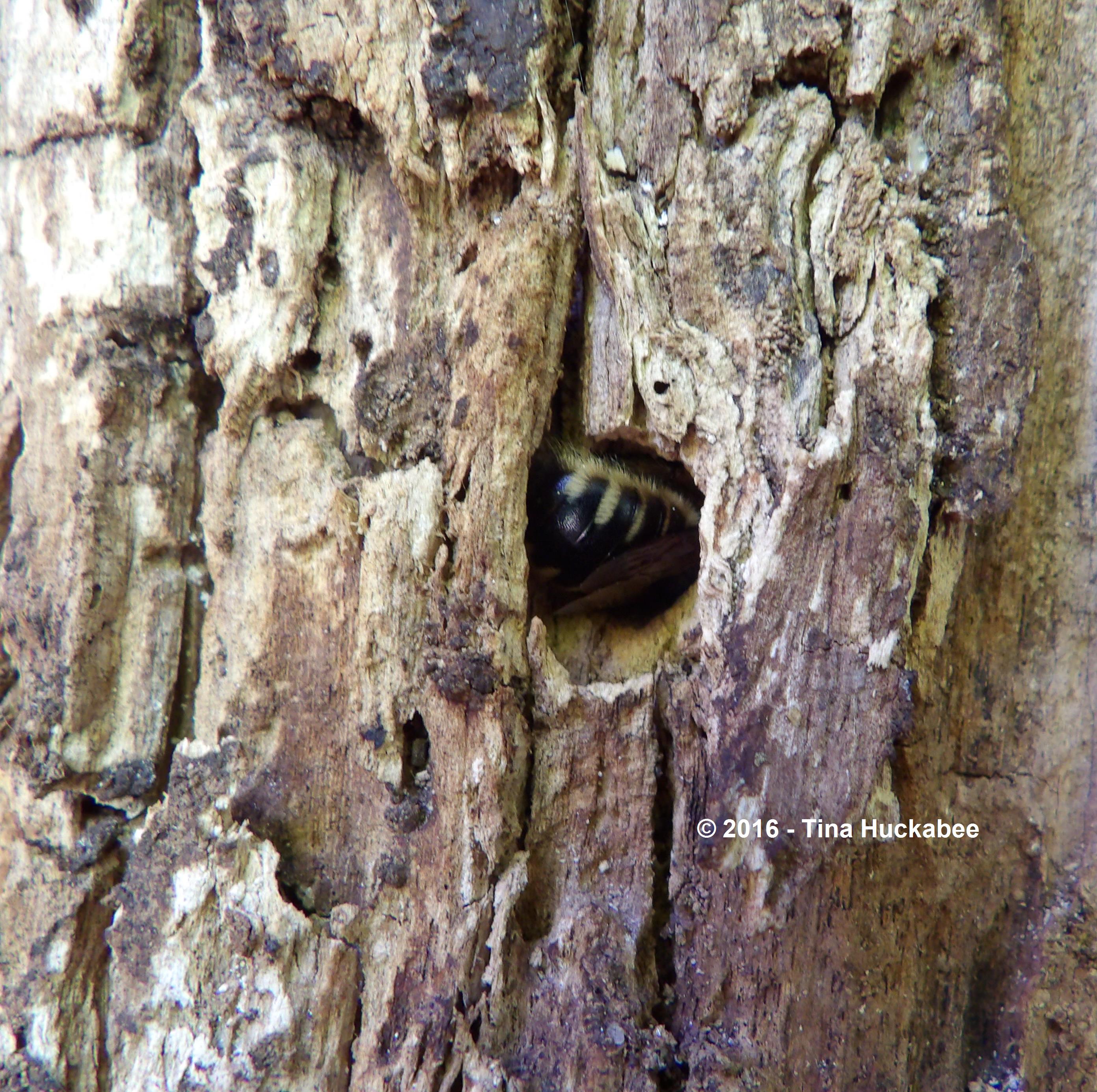
Ah well.   My various difficulties didn’t deter the nesting activities of a Horsefly-like Carpenter Bee,  Xylocopa tabaniformis, as she packed in material to nourish her young in a decaying log.

IMGP6970_cropped_2783x2770..new

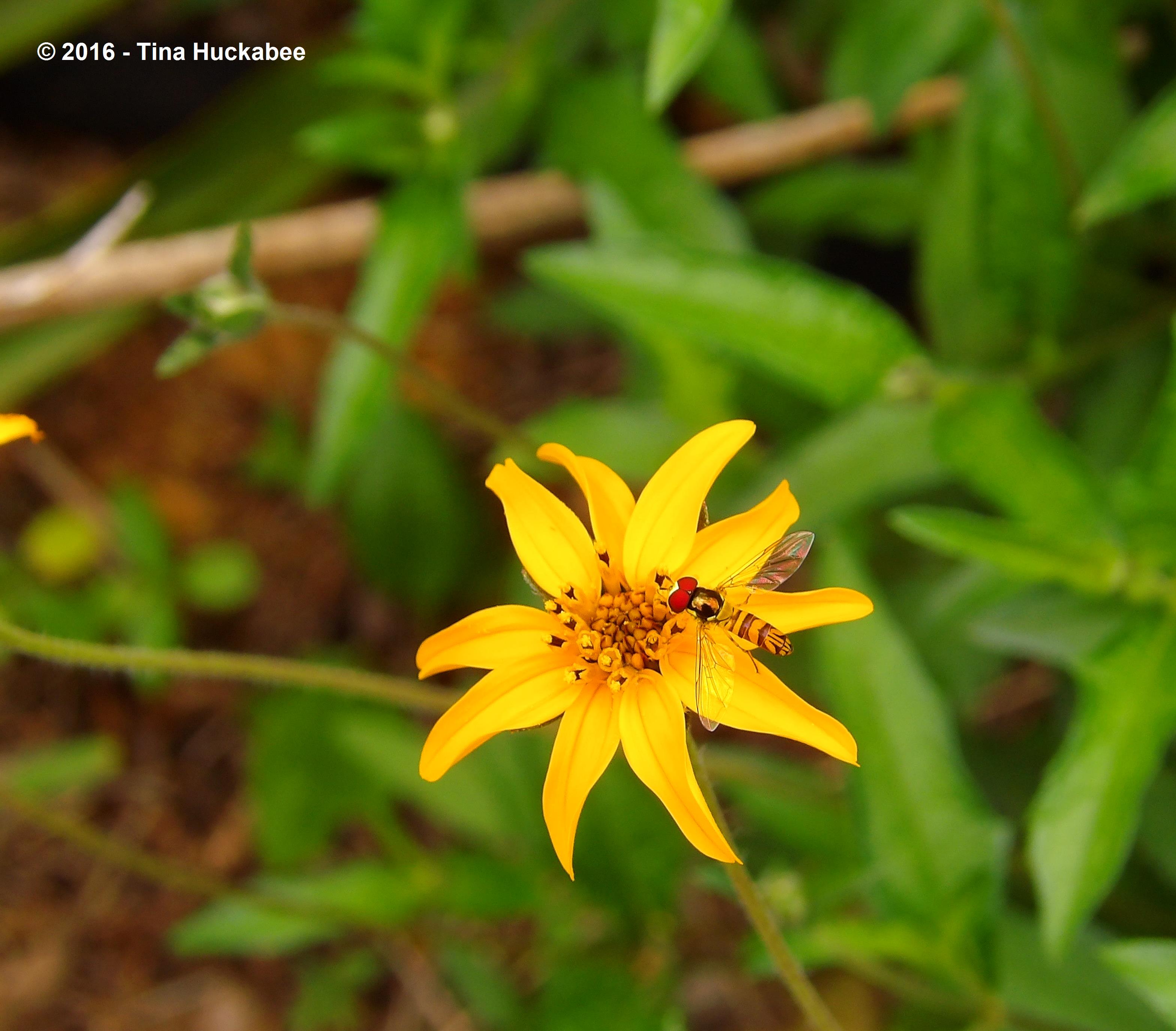
Nor did the big problems of the world (or the relatively small problems of mine) prevent this Syrphid, or Hover fly from pollinating a Zexmenia, Wedelia acapulcensis var. hispida.

IMGP7076_cropped_3138x2752..new

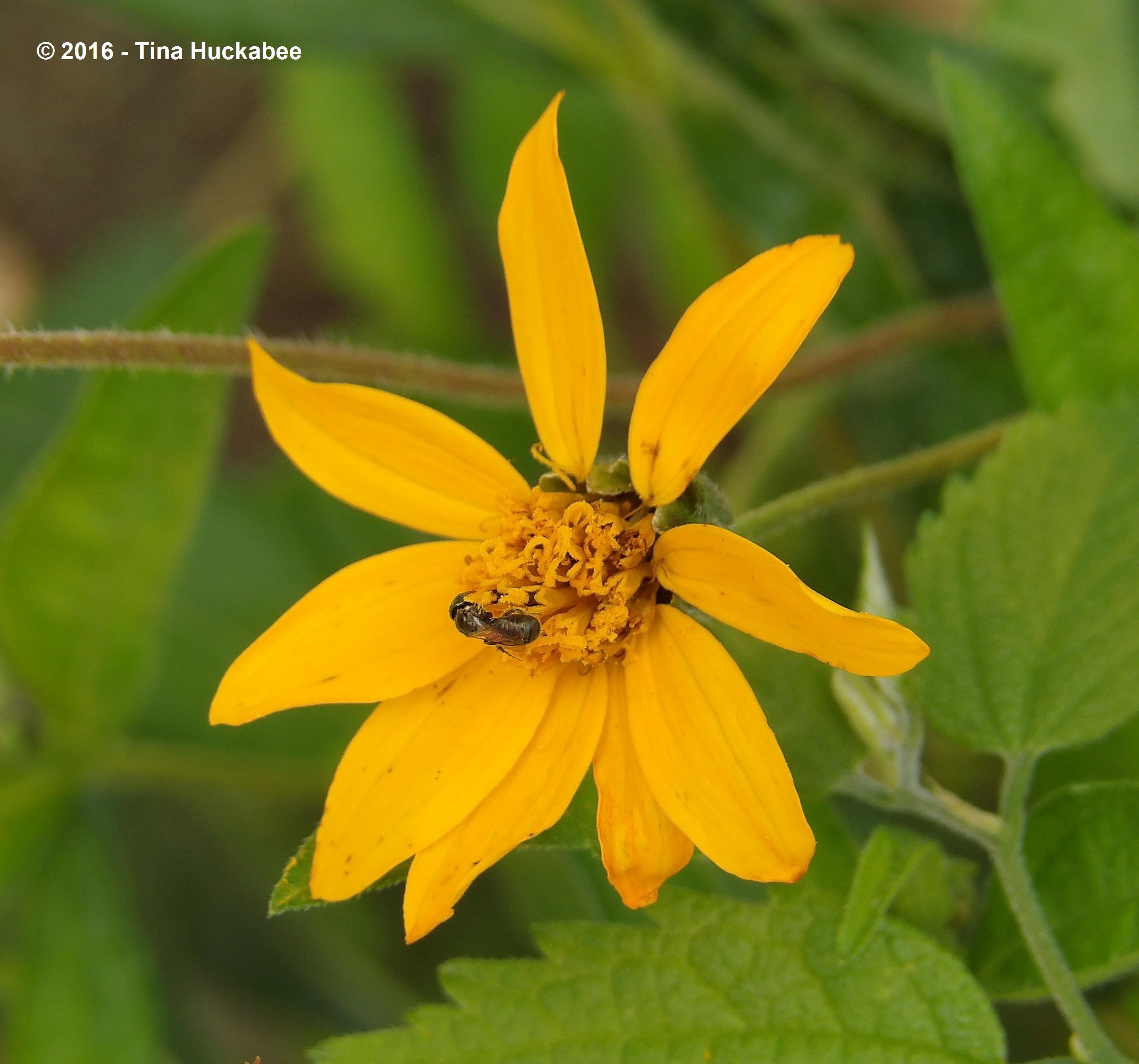
On a different Zexmenia flower, a Small carpenter bee, Ceratina, sp., went about her business, too.

IMGP7428_cropped_3078x2876..new

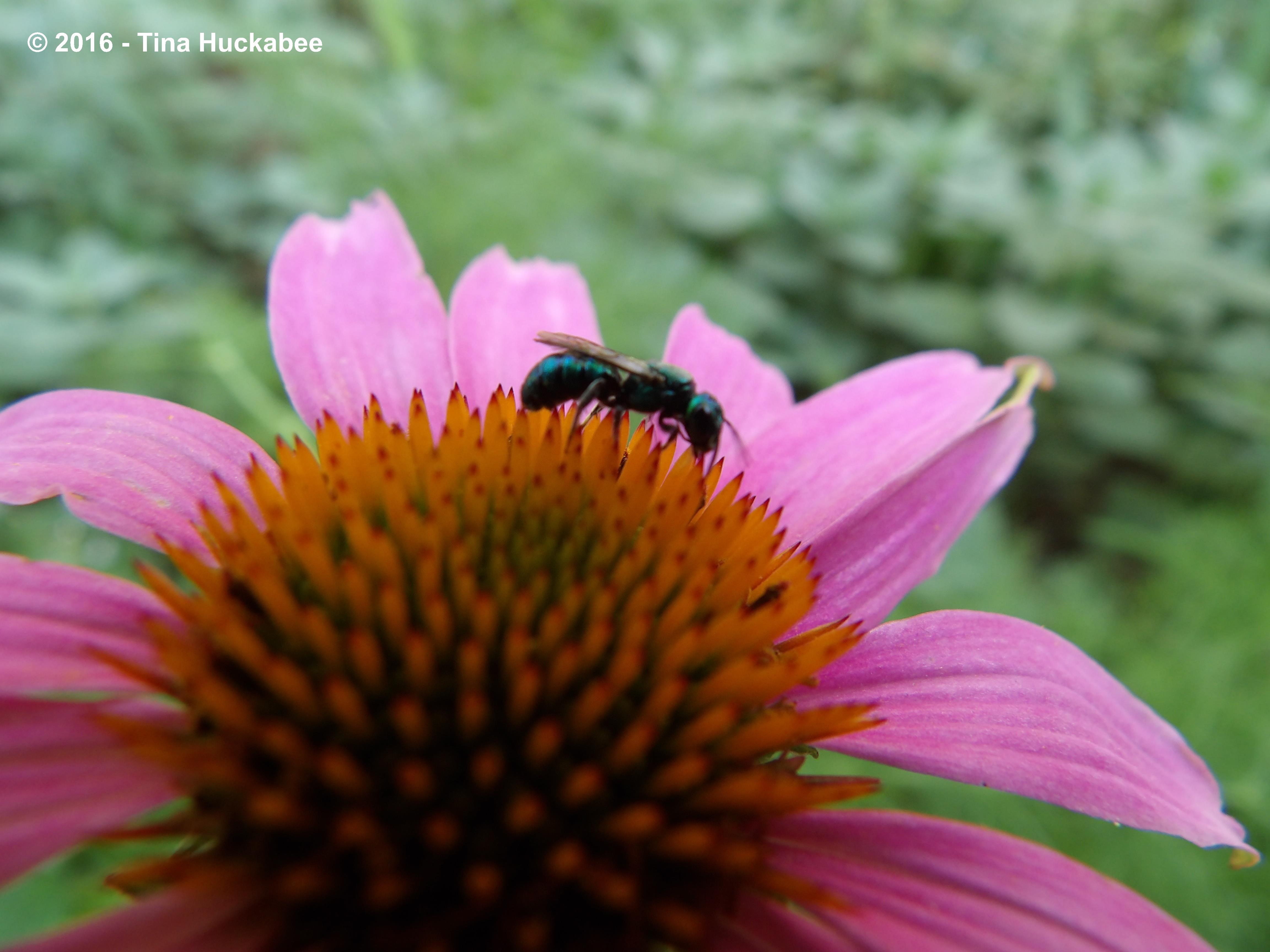
Other native pollinators, like this Sweat beeAugochloropsis metallica, worked a Purple Coneflower, Echinacea purpurea,

IMGP7312.new

…while a Mason beeOsmia subfasciata, favored a Blackeyed Susan, Rudbeckia hirta var. pulcherrima.

IMGP7335_cropped_2871x2908..new

IMGP7336_cropped_3124x3070..new

After pollination, this little bee is covered in pollen grains.

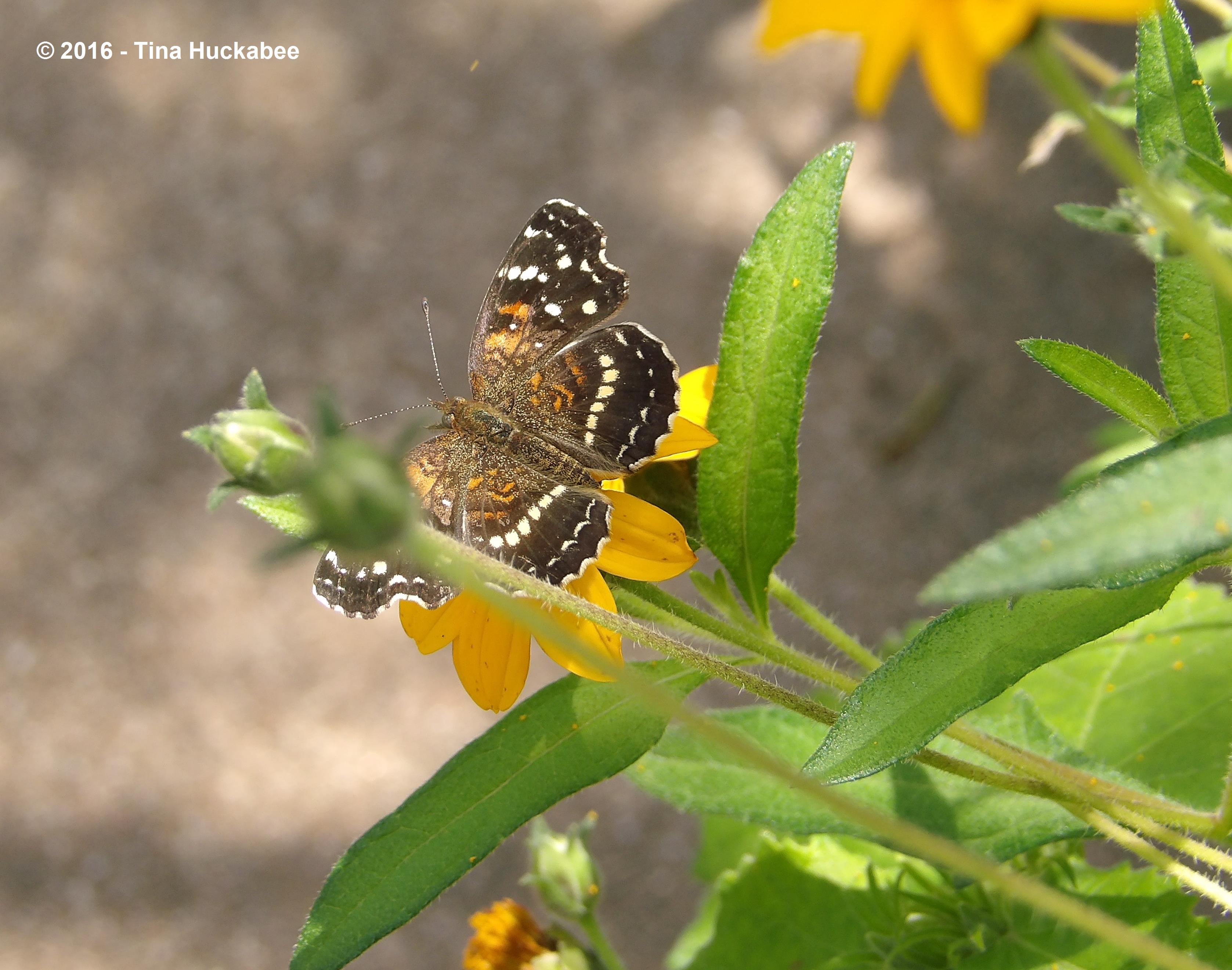
April has seen plenty of butterfly action, as well.  Texas Crescents, Anthanassa texana,      are flitting all over the garden, enjoying the bounty of flowers like the Zexmenia.

IMGP7441_cropped_3355x2641..new

Hmmm.

IMGP7437_cropped_3327x2557..new

It seems that Zexmenia is a good plant for pollinators.

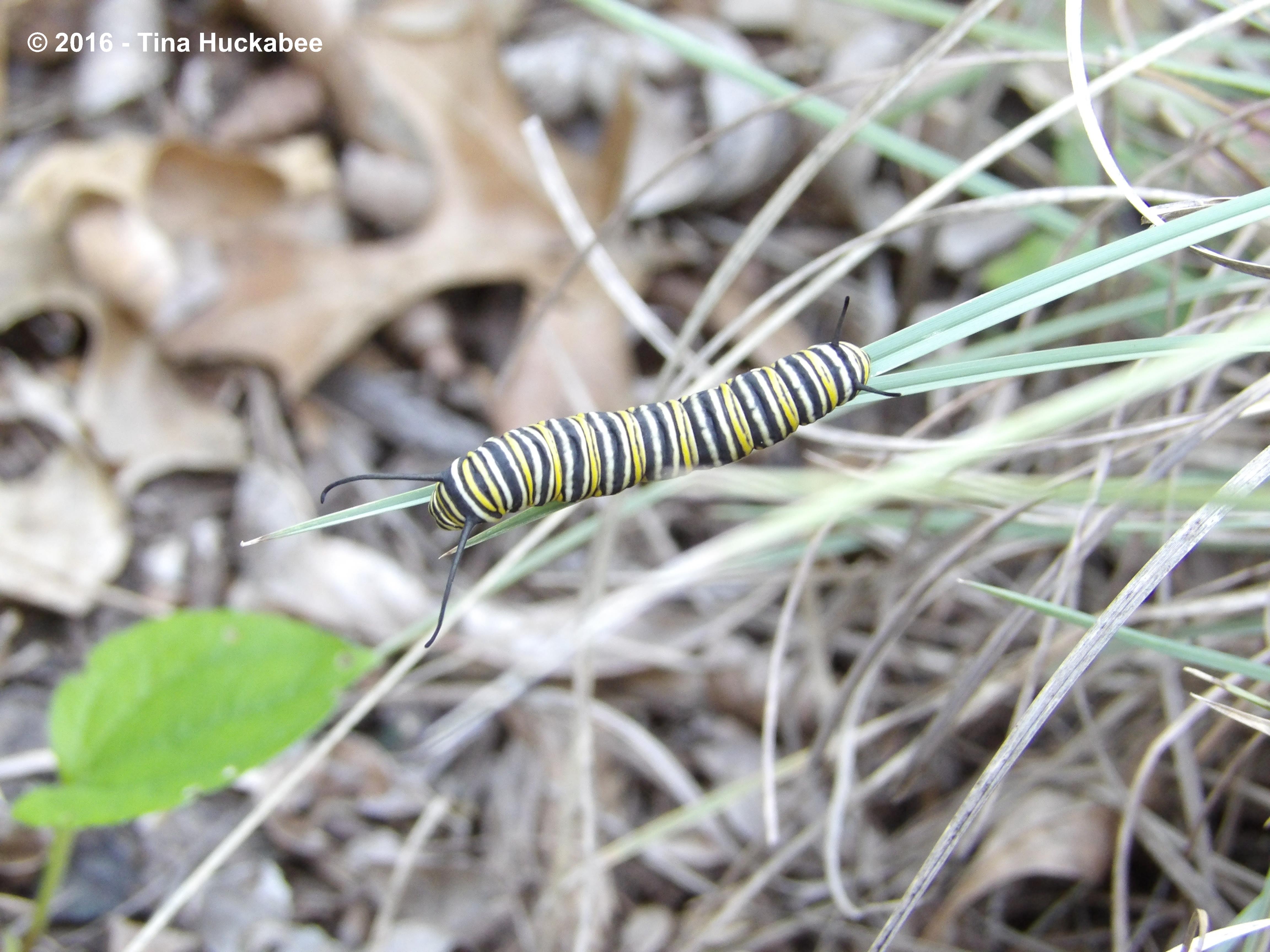
I don’t have a single photo of the few Monarch butterflies, Danaus plexippus who’ve wafted through my garden, but I do have photos of their offspring.

IMGP7598.new

I love the book-ending mode of these two monarch cats.

Those few winged visitors managed to lay eggs and the 5 Monarchs  caterpillars that hatched devoured my Tropical Milkweed, Asclepias curassavica plants.   The cats completely obliterated the foliage, but I transferred 2 cats to a neighbor with milkweed-a-plenty to offer the voracious larvae.

IMGP7610.new

This caterpillar lost his way and ended up on the strand of a Lindheimer’s muhly (Muhlenbergia lindheimeri).

IMGP7613.new

Peeking over the  edge, wondering where all the milkweed is, this cat landed on the underside of a culinary sage leaf.


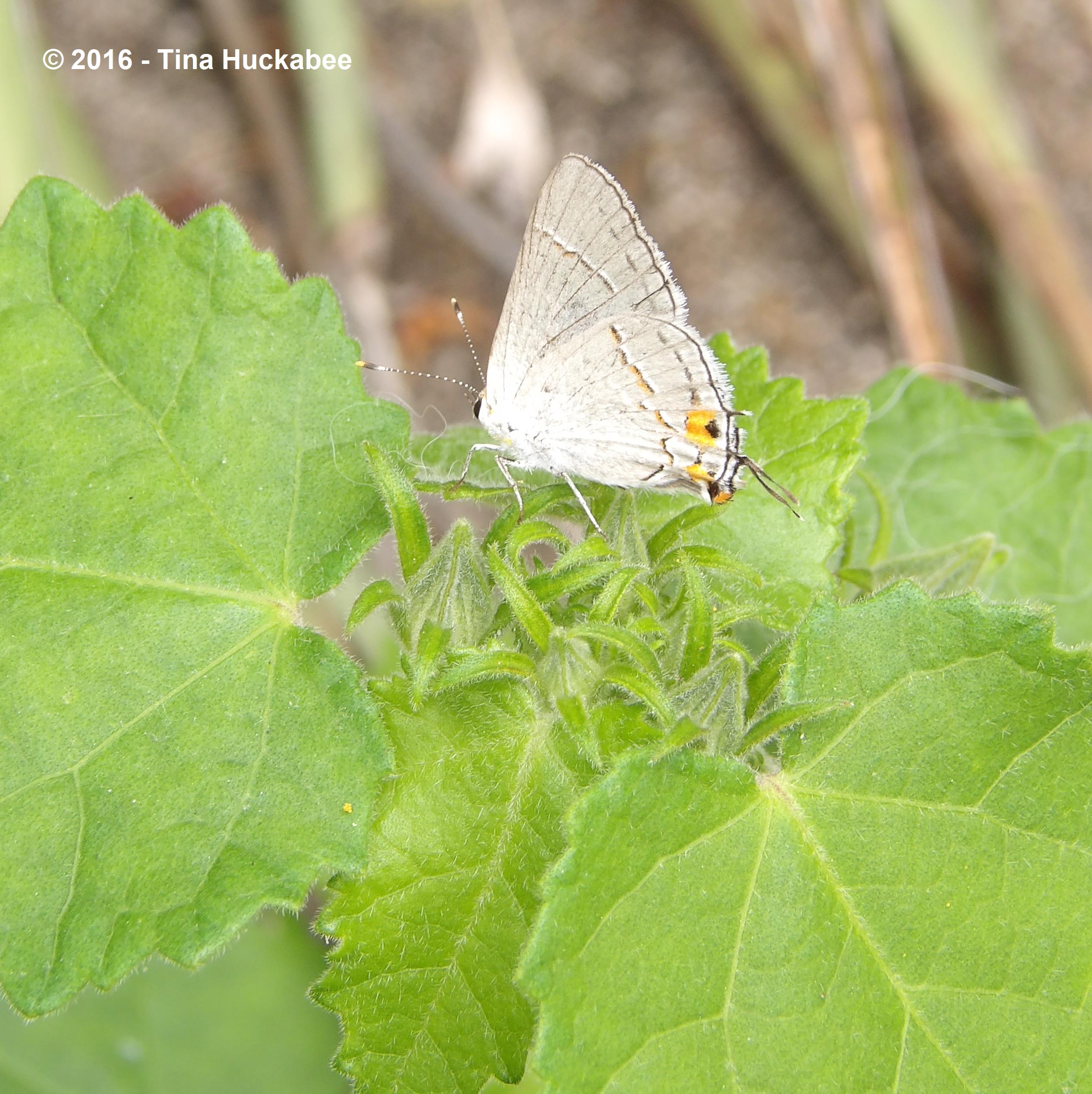
I didn’t catch this Grey Hairstreak, Strymon melinus, nectaring on anything, but she did pose for me, opening and closing her wings coquettishly,

IMGP7624_cropped_2530x2534..new

IMGP7618_cropped_3120x2789..new

IMGP7614_cropped_3111x2484..new

IMGP7616_cropped_2729x2599..new

…while she lounged on Rock Rose, Pavonia lasiopetala foliage.

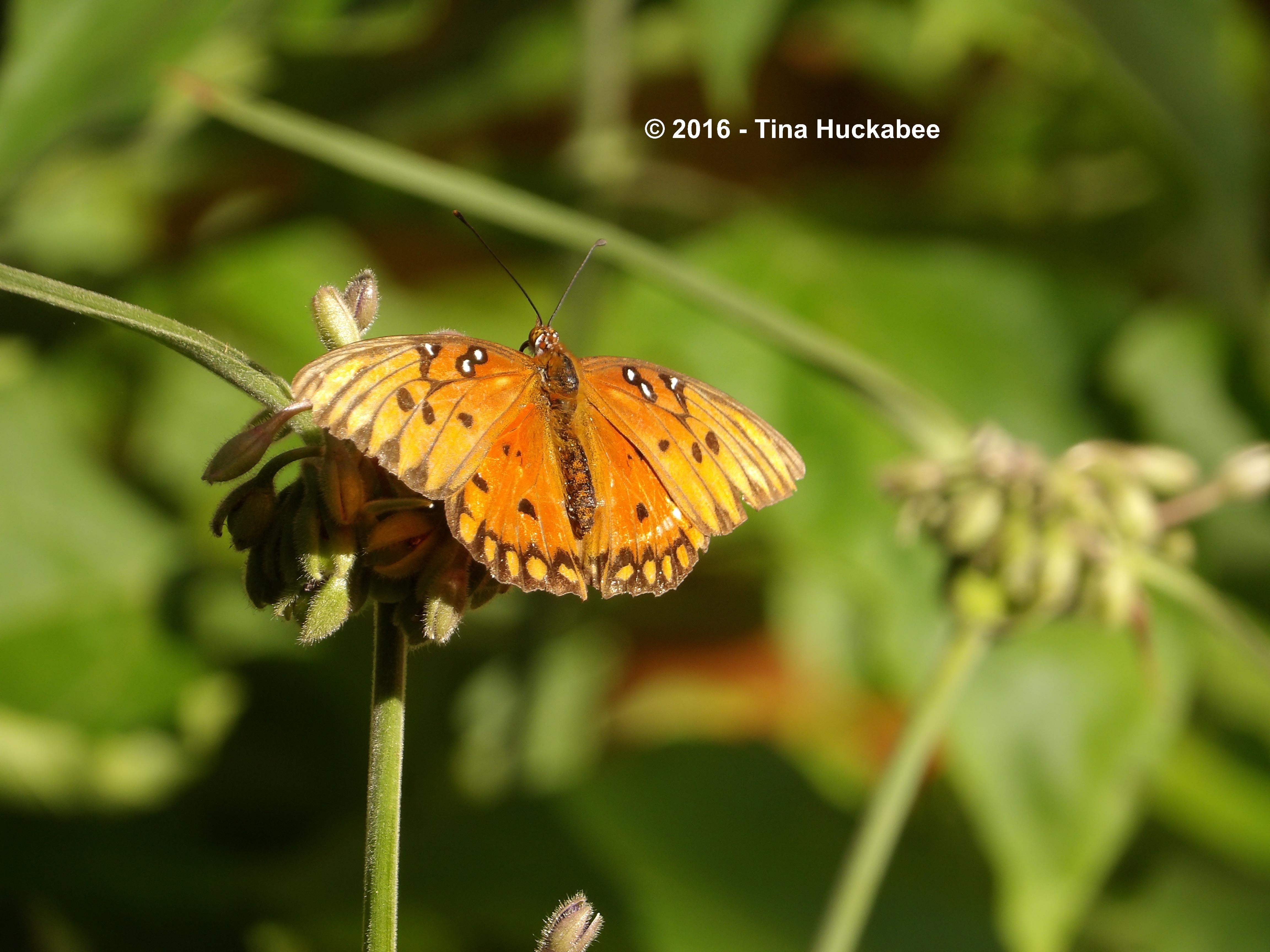
I’ve allowed rogue Passion Vine, Passiflora incarnata to pop up here-n-there in my gardens because it’s the host plant for this pretty pollinator, the Gulf FritillaryAgraulis vanillae.  Whether in its adult form,

IMGP7317.new

…or its larval form,

IMGP7657.new

… it’s a beautiful winged jewel and a great pollinator partner.

And yes, there were birds this month and plenty of them!  The Red-bellied Woodpecker, Melanerpes carolinus, remains a consistent, if not daily, visitor.

IMGP7118_cropped_2903x3120..new

IMGP7114_cropped_3124x3240..new

I’m not sure where this guy nests, though I’ll bet he has a family holed away somewhere nearby , because he’s always on the lookout for a full bird feeder.  There are plenty of older trees in my neighborhood, which, thankfully, the owners have kept rather than removing.  In many those trees are definite woodpecker holes and if the Starlings haven’t bullied the Woodpeckers away, one of those holes is where this handsome guy and his family reside.

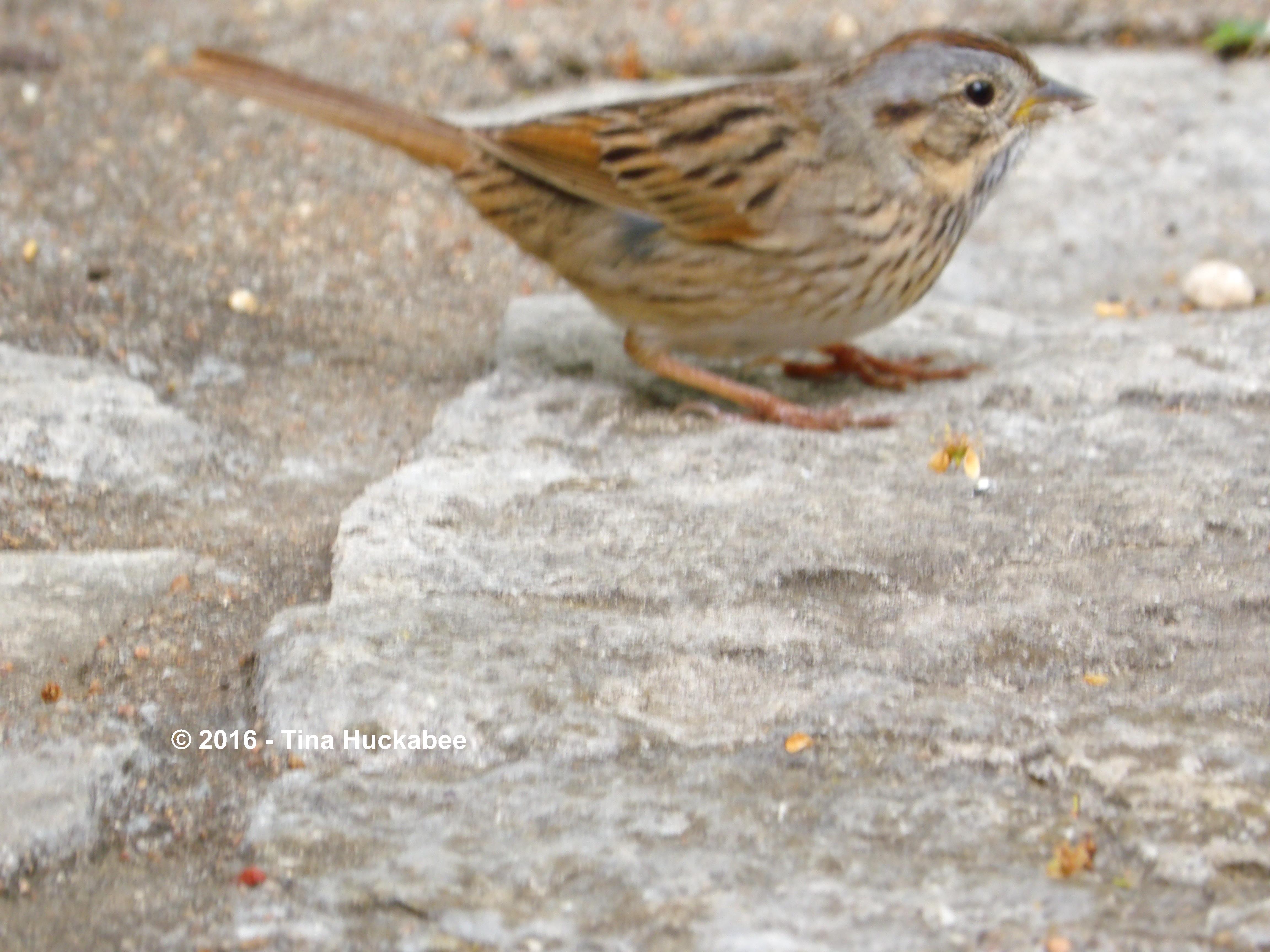
I never was able to capture a clear photo of this sweet little thing, but I found the coloring and markings elegant.

IMGP7145.new

He’s a Lincoln’s Sparrow, Melospiza lincolnii, and one of those birds that I noticed… because I’m noticing birds.  This species winters here in Central Texas, breeding far north into Canada during summer.  I don’t recall seeing any during winter,  but he bopped along the ground hunting and pecking for seeds this past month.

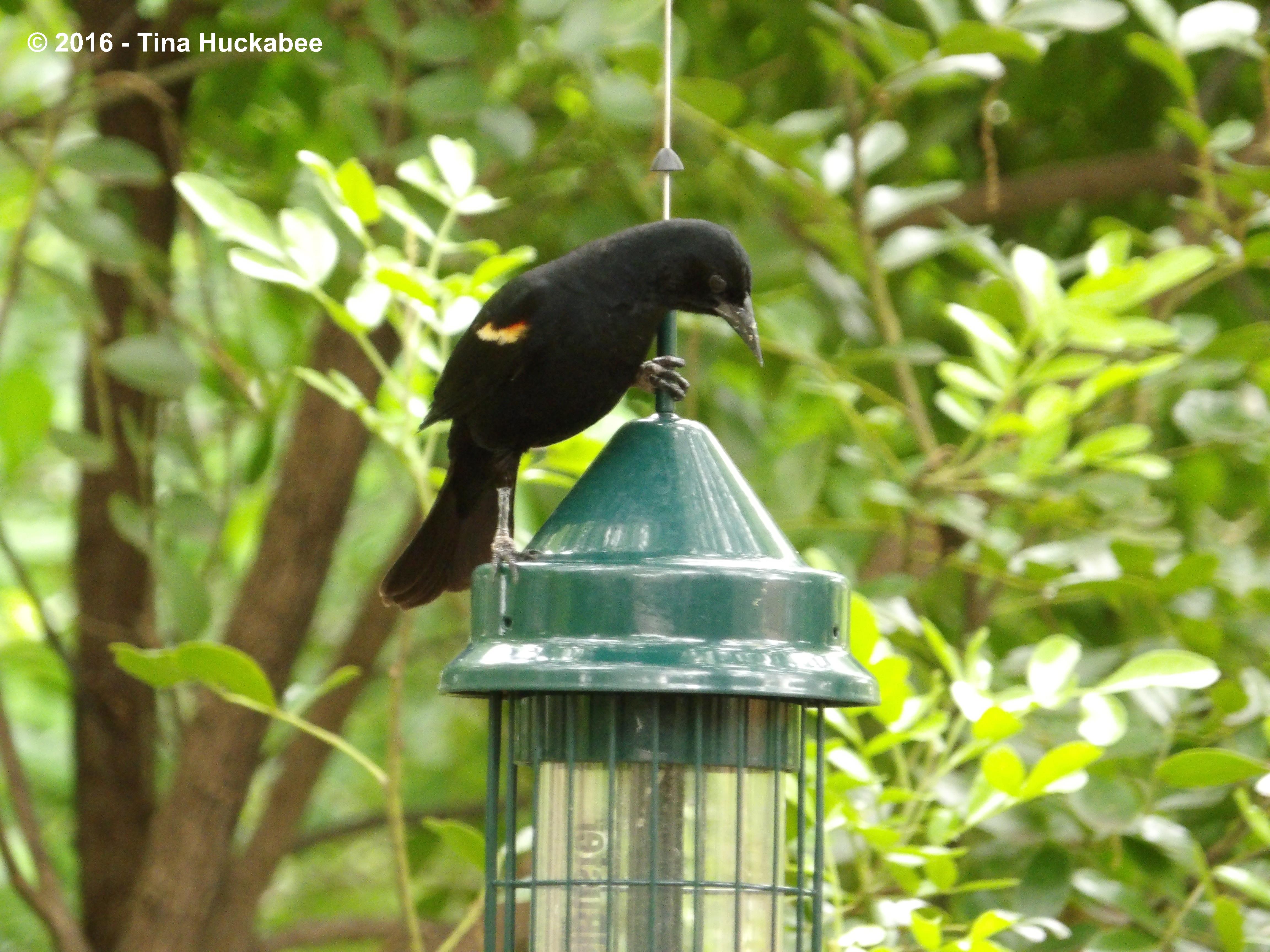
A fairly common visitor is the Red-winged Blackbird,  Agelaius phoeniceus.

IMGP7371.new

I’ve only see a few individuals this year.

Aside from “my” Eastern Screech Owls–which I wrote about here and here, I’m most excited about sightings of a pair of Painted Buntings,  Passerina ciris in my garden.
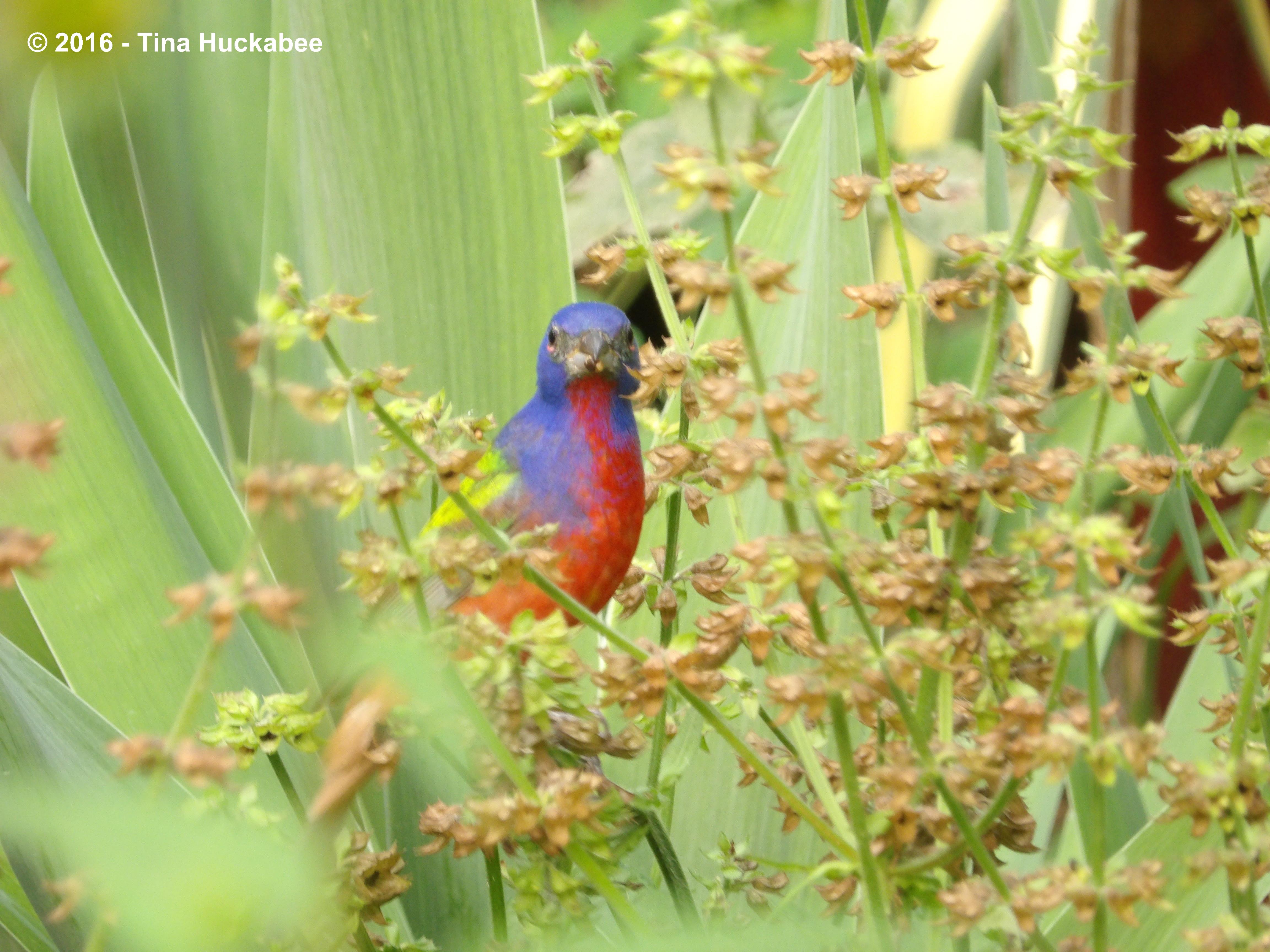
The mature male Painted Bunting is a showstopper bird of the New World.

IMGP7394_cropped_3268x2913..new

IMGP7400_cropped_3374x3291..new

This guy knows he’s totally a gorgeous dude.

I love the description on The Cornell Lab of Ornithology’s All About Birds page on Painted Buntings, specifically regarding the males’ coloring:  With their vivid fusion of blue, green, yellow, and red, male Painted Buntings seem to have flown straight out of a child’s coloring book.

IMGP7776_cropped_3351x2687..new

IMGP7782.new

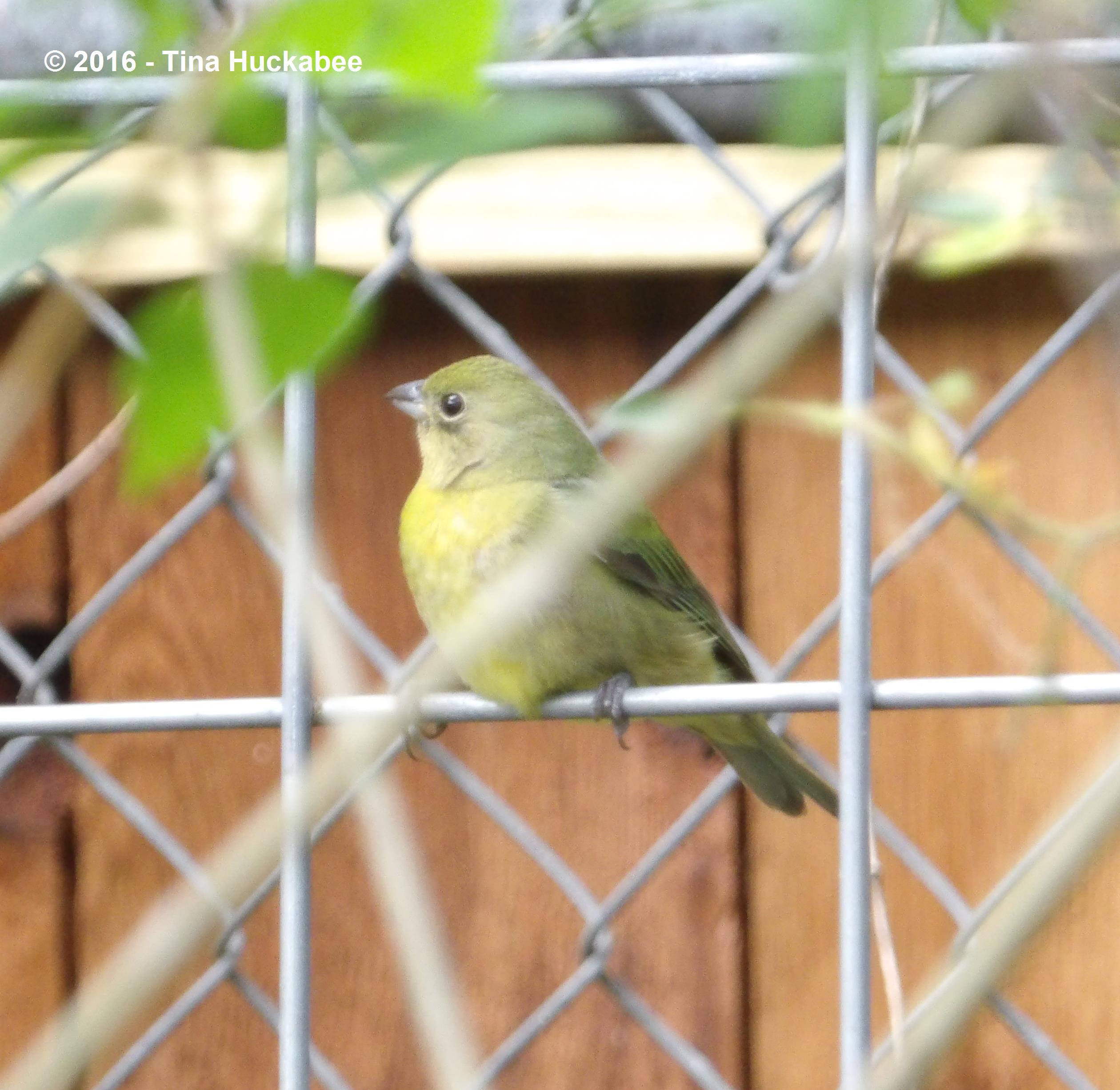
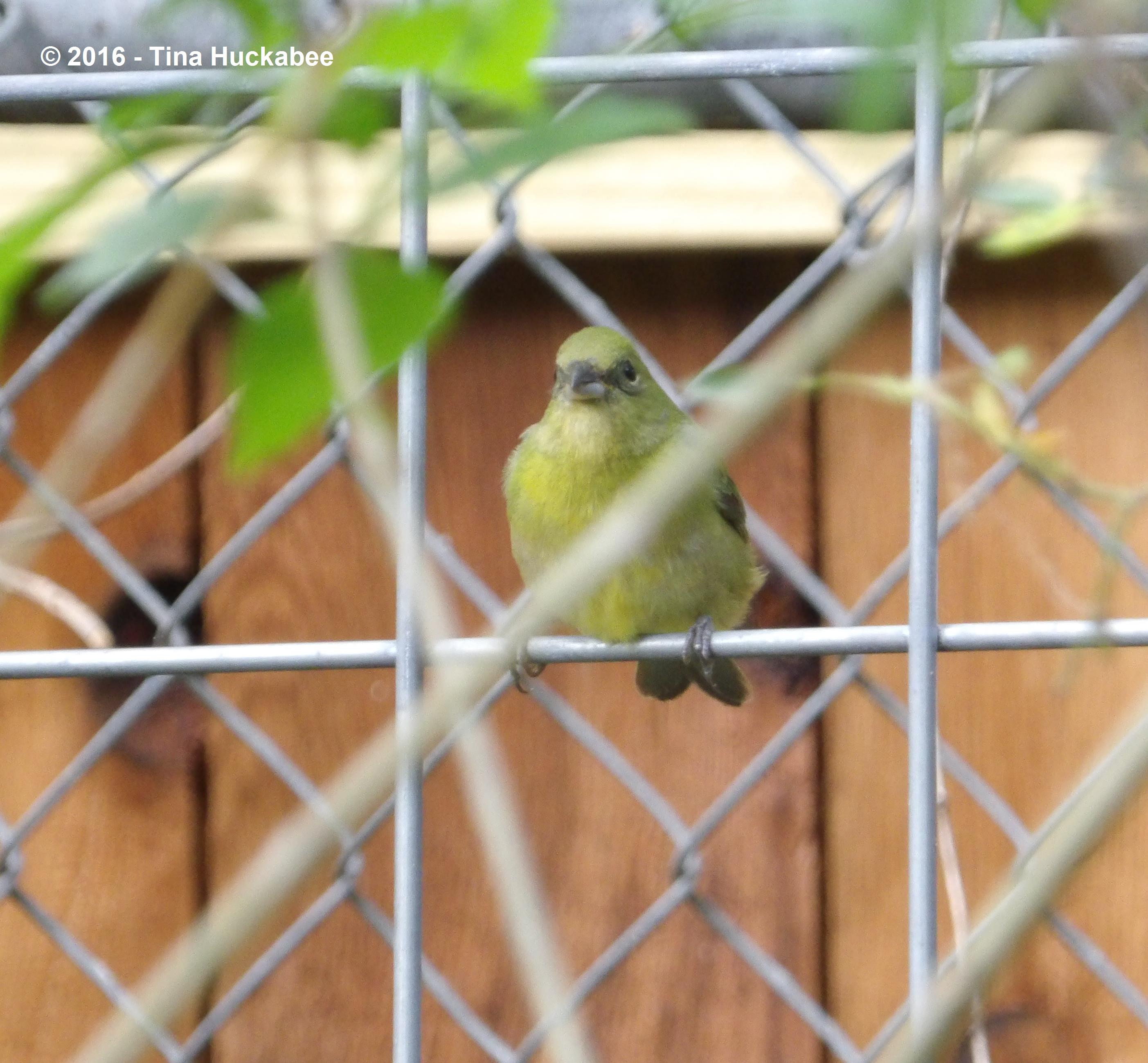
Yeah, that’s about right.    One can’t miss this splash of feathered color as he flutters from one seed-bearing plant to another.  I’ve noticed that both the male and the female in my garden favor the seeds of the native-to-Texas Lyre-leaf Sage, Salvia lyrata.

IMGP7757.new

IMGP7752.new

IMGP7719_cropped_2696x2755..new

Buddy, you’re really good-looking, but you might want to wipe your chin….

The female is not as flashy as her mate, but certainly fetching in her green and yellow swag.

IMGP7669_cropped_3396x2419..new

IMGP7668_cropped_2520x2452..new

IMGP7663_cropped_2806x2598..new

Long ago there were a couple of consecutive years during spring migrations when small flocks of these gorgeous passerine birds visited my garden, each time for a few days. They nibbled on the seeds of a cool season non-native grass that sometimes appeared when I grew mostly grass, rather than a real garden.  I’m glad that I can now offer them  something nutritious, native, and not-grass on their migratory pathway.

One of a nesting pair of Carolina Wrens,Thryothorus ludovicianus,  posed for me the other evening as I was watching for owlets.

IMGP7686.new

These charmers are a favorite bird of mine.  They seem playful and cheeky as they hop around the ground and pop through the shrubs, snatching up insects for themselves and their babies.  Carolina wrens have the loudest songs and calls–and for such a wee bird!  They are my usual wake-up call, singing just outside my bedroom window.  Loudly.  The couple in my garden have a nest somewhere nearby and are always singing and chittering.  After I took the above shot, this wren gleefully (or so it seemed to me) shook out his feathers.

IMGP7693.new


And maybe next month, I’ll know what these are….

IMGP7612_cropped_3124x3134..new

Did wildlife visit your garden this past month? Please post for May Wildlife Wednesday Share the rare or mundane, funny or fascinating, beneficial or harmful critters you encounter. When you comment on my post, please remember to leave a link to your Wildlife Wednesday post so readers can enjoy a variety of garden wildlife observations.