I often bumble. I bumble out of bed early mornings, bumbling down the hallway to feed cats as they mew their kibble requests around my feet. Then, bumbling to the kitchen, I grind coffee beans, though to add to the morning bumbling is the sad reminder that the freshly ground coffee is no longer of the caffeinated kind, a reluctant nod to caffeine intolerance developed and morning wake-up routine compromised. At some point, I bumble out of doors, greeting the sunrise in the garden, sometimes with camera in hand (if I don’t bumble and forget to grab it).
What don’t bumble are American Bumble Bees. They move about their chosen nectar plants buzzing gracefully and intentionally from bloom-to-bloom, gentle in movement, determined in task, beautiful to observe.
In late summer and through autumn cooler, I’ll see Bumble bees in my garden. They feed from many flowers, but in my garden, their proboscis-down favorite is the blue-blooming Henry Duelberg sage, Salvia farinacea ‘Henry Duelberg’. Each morning, there are 3 or 4 at this lovely native hybrid, the Bumbles often sharing the blooms’ bounty with other pollinators who enamored with this plant.
Two decades ago I grew a related perennial, a large Salvia x. ‘Indigo Spires’, which is a hybrid of S. farinacea and S. longispicata. It was taller than the ‘Henry Duelberg’ and had longer bloom spikes; the blooms were also a rich purple-blue. In those years, the late summers and autumns saw the plant hosting15 or 20 gentle, giant bumbles each day, all working the blooms, minding their own business, adding life and movement to the garden. At some point, the bees disappeared, I suspected (though don’t know for certain) that their disappearance was related to the conversion of a nearby untouched field to a development of neighborhood housing. While that new housing addition has been positive for the neighborhood in many ways, the missing bees were, and are, missed. Bumble bees nest in the ground and require undisturbed ground. Urbanization (cement walkways, asphalt streets, swaths of non-native turf) isn’t kind to ground nesting bees, as well as other beneficial insects. In my garden, I have several uncultivated areas–no garden plants, no turf, no mulch–and have seen insect ground nests in those areas. I’m betting that the bees that visit my garden also have other places where they’ve set up their homes and nurseries, and with some good luck and knowledgeable human hosts, those areas will remain protected.
I don’t know if the numbers of bumble bees that my garden once hosted will ever return to their former glory, but I’ll certainly continue to leave open space and plant food sources for them, supporting their full life cycle.
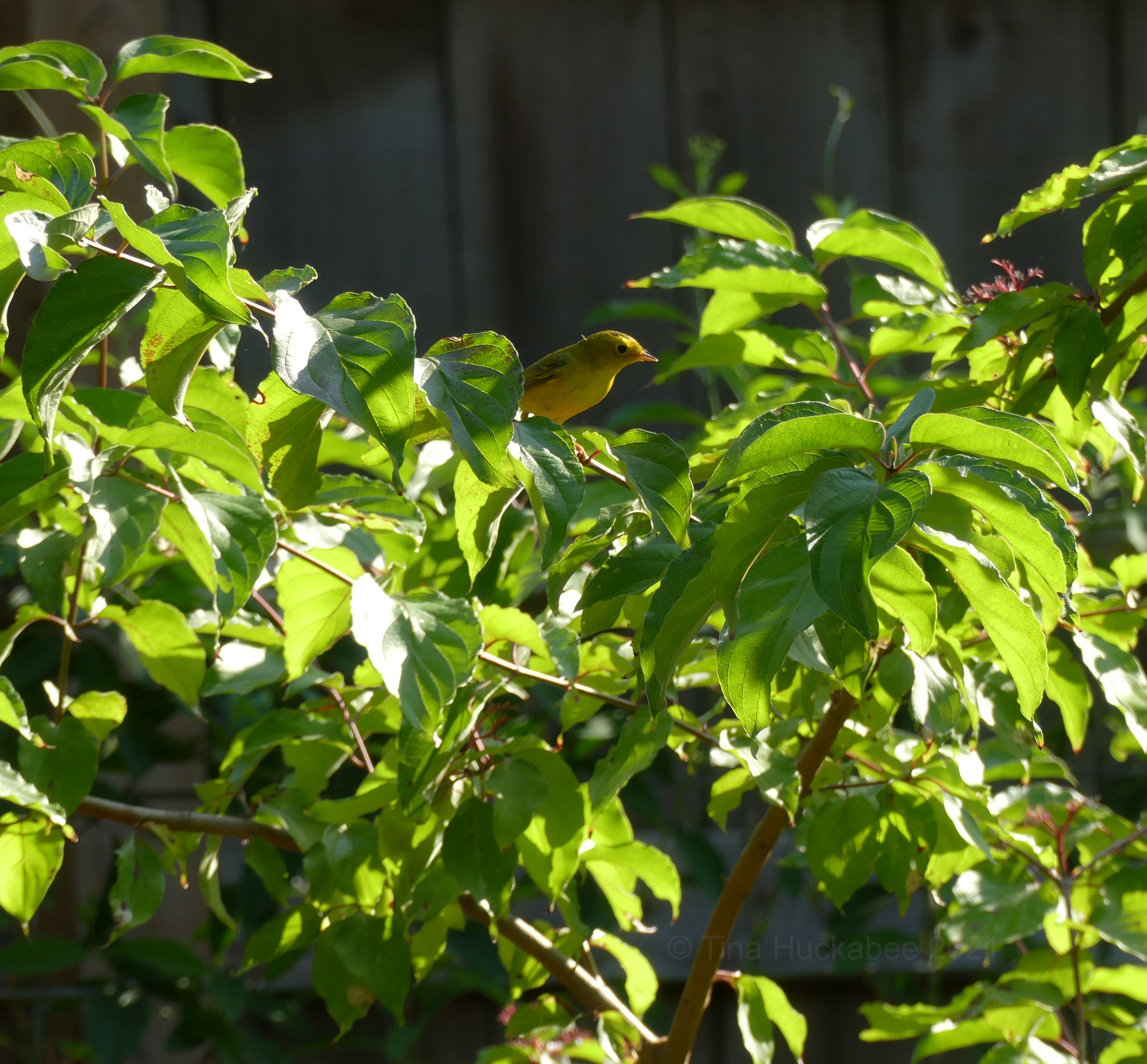
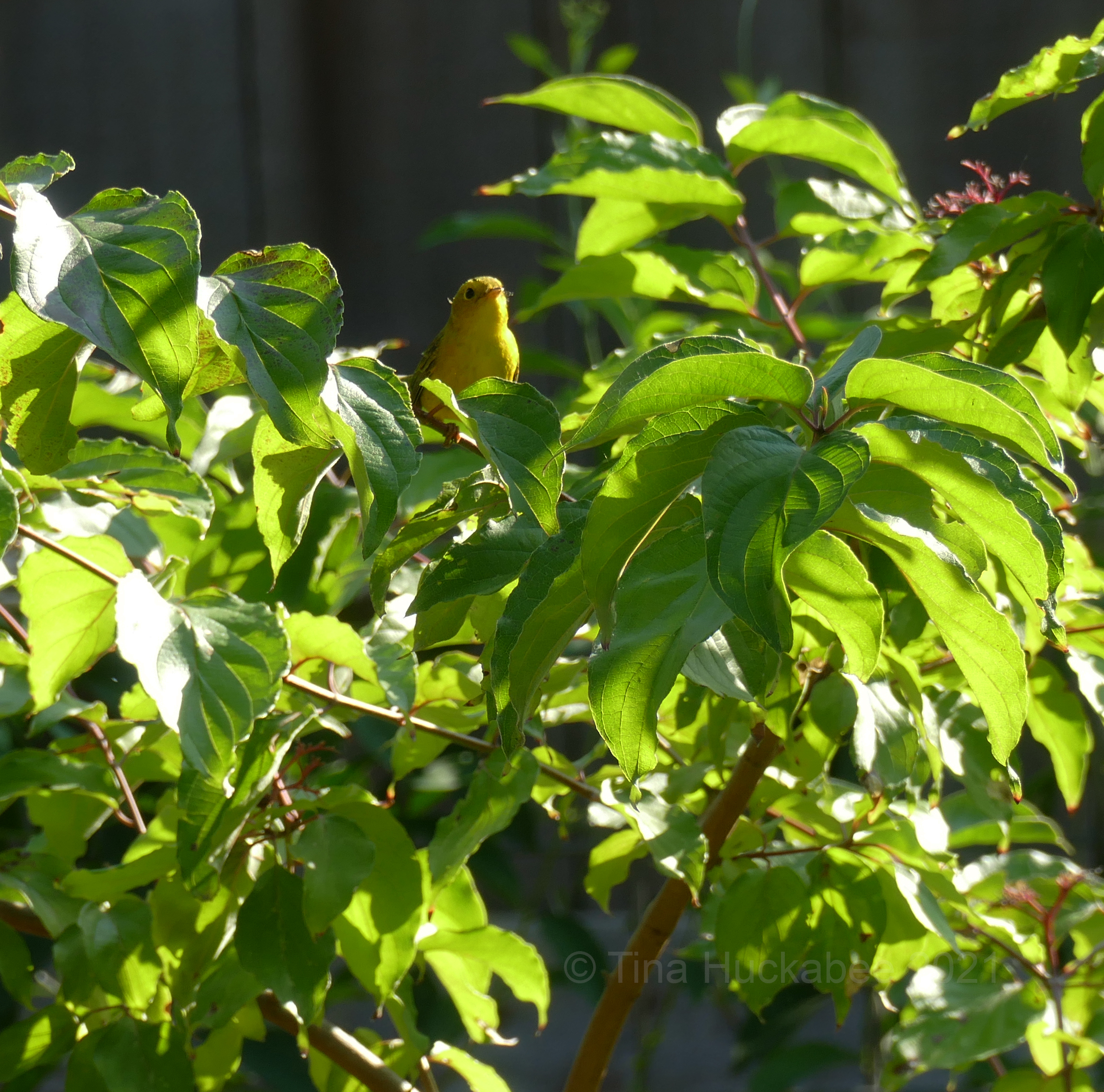
Fall migration through Texas is well underway and I’m keeping a keen eye out for atypical avian visitors to the garden. As a general rule, I don’t see as many migratory birds during autumn migration as I do during spring. So far this migration season, I’ve observed one Orchard Oriole and a Yellow Warbler, both of which where either females or juveniles, and neither of which did I photograph. Those two were the sum total of migratory birds until yesterday, when I spied this sunny male Yellow Warbler, Setophaga petechia.
During spring migration, it’s the pond and other water features which hold the birds’ interest, but autumn migration is different. As I watched him flit, first in my larger Red Oak tree, then to a Rough-leaf Dogwood, Cornus drummondii, I assumed he was headed for the pond for a quick bath. Instead, he flew from the oak tree to the dogwood–and remained there. I then surmised that maybe he was aiming for his share of the white fruits that my two Rough-leaf Dogwoods have produced this year. If you look as the photo, to the right of Mr. Yellow Fellow and far right of the photo, you’ll see a mauve/reddish-brown branchlet. Until recently, this set of small branches, like other similar ones on both trees, held juicy white fruits, most of which have been eaten by a variety of birds, primarily the resident Mockingbirds and Blue Jays. No doubt, other migratory birds have dined on these fruits, too, including the aforementioned Orchard Oriole and Yellow Warbler, who spent time in both dogwood trees, playing peek-a-boo with my camera behind foliage.
Pre-bird munching, this is a close-up of the fruits, developed, but not yet devoured.
As there aren’t many berries left, and most of those sit waiting at the base of the tree, I realized that the yellow fellow was nibbling on insects as he moved along the upper branches. That tracks, as Yellow Warblers enjoy insects as a main source of their diet.
Unfortunately, Mr. Yellow Fellow didn’t hang around too long; I guess he’s eager to get to Central America, where his winter will be mild and his meal choices prolific.
These next few weeks are the apex of bird autumn migration in the Americas and I look forward to more feathered friends flying through. Good luck, Mr. Yellow Fellow–come back and see me next spring!
Wings are things year-round in my garden. Even in winter, there are, minimally, honeybees and Red Admiral butterflies zooming and flitting during those shorter days. But late summer and into autumn, winged insects are a constant source of activity, adding an “experientially rich” dynamic that is always present in a garden, but heightened in the latter months of the growing season.
As the days grow noticeably shorter (though not cooler) I’ve been out and about in the garden, and some of those times, remembered to bring the camera along.
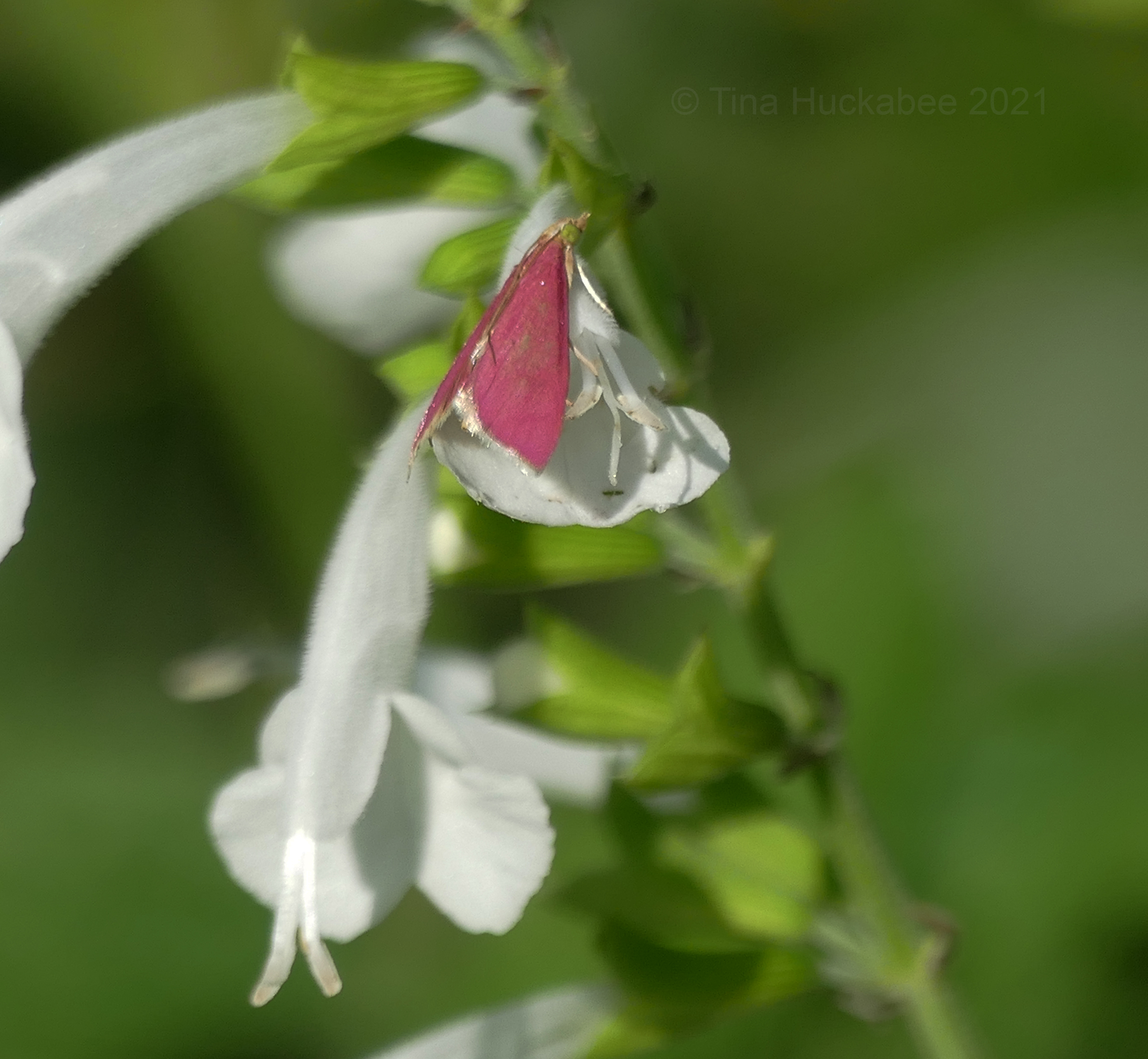
The Southern Pink Moths are familiar in the garden, very often resting on plants in the salvia genus like this White Tropical sage, Salvia coccinea.
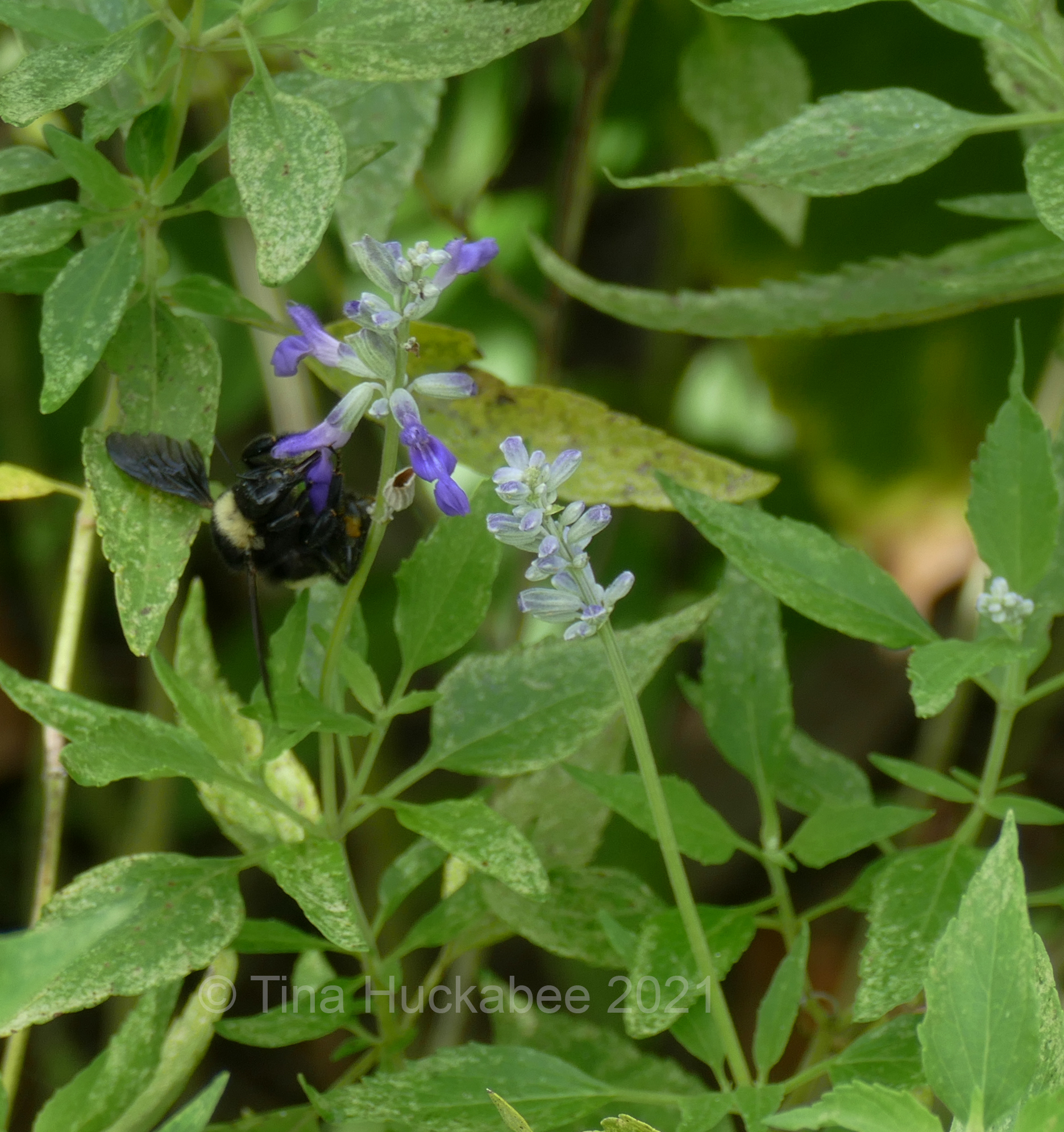
It’s nearly always sometime in July that I spy my first Bumble bees in the garden. They zoom in, buzzing like miniature planes, intent on working a set of blooms before departing for new territory and fresh flowers. This one worked the blue blooms of Henry Duelberg sage, Salvia farinacea ‘Henry Duelberg’ for several minutes. The bee was never still enough for me to capture a good shot, but it did its pollination duty, its proboscis stuck deep in the bloom for maximum slurping.
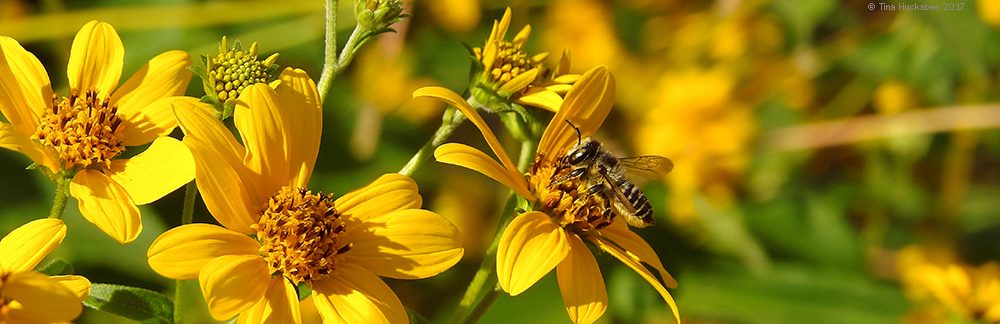
Zexmenia, Wedelia texana, is a pollinator magnet and attracts a wide variety of native flies and bees. This bee is probably a bee in the “hairy legged” category like a minor or digger bee. My best guess is that it’s a longhorn bee, but in this photo that’s hard to confirm, as its antennae are hidden, bee head buried deep in the bloom.
There’s a whole crew of yellow and white butterflies that become very active in July and downright ubiquitous in the following months and they are all fast flyers. This Little Yellow cooperated with me while dining on another Zexmenia bloom. Have I mentioned that Zexmenia flowers are pollinator favorites?
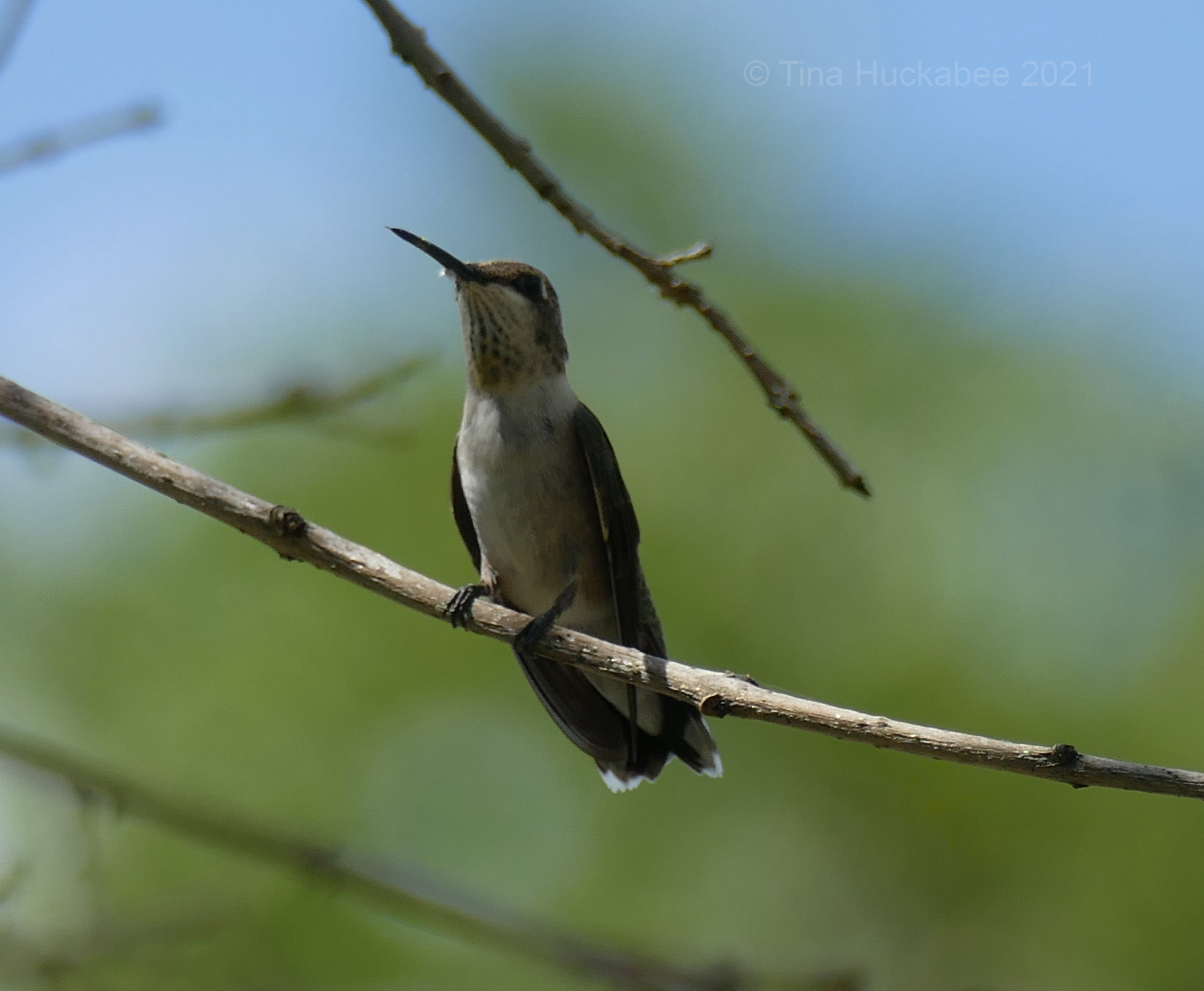
Late summer is also when the hummingbirds are most active. Males, females, and juveniles are ramping up for migration southward and feeding on the abundance of flowering plants. This cutey fussed at me as I bumbled around, initially unaware that she was feeding nearby. She dashed to a branch and scolded me; I snapped a few shots. After moving to a more remote spot, I waited until she’d rested and felt comfortable enough to return to the Turk’s cap that she’d been feeding on before I rudely disturbed her.
The Monarchs are coming through! It seems like the migration is early, but I welcome visits from these iconic butterflies. Gregg’s mistflower, Conoclinium greggii, is a preferred source of nectar for many butterflies and bloom in time for the autumn Monarch migration.
Not pollinators, but predators, damsel and dragon flies got a late start this year, probably due to the winter storm in February. They’re everywhere now! A number of species visit my garden, mostly, though not exclusively, hanging around the pond. Their flight patterns are similar to those of bees rather than butterflies: less flitting, more zooming. They also rest for periods, like this one perched on a leaf of Pickerel Rush, Pontederia cordata.
And this one, sitting pretty atop unopened blooms of Texas craglily, Echeandia texensis.
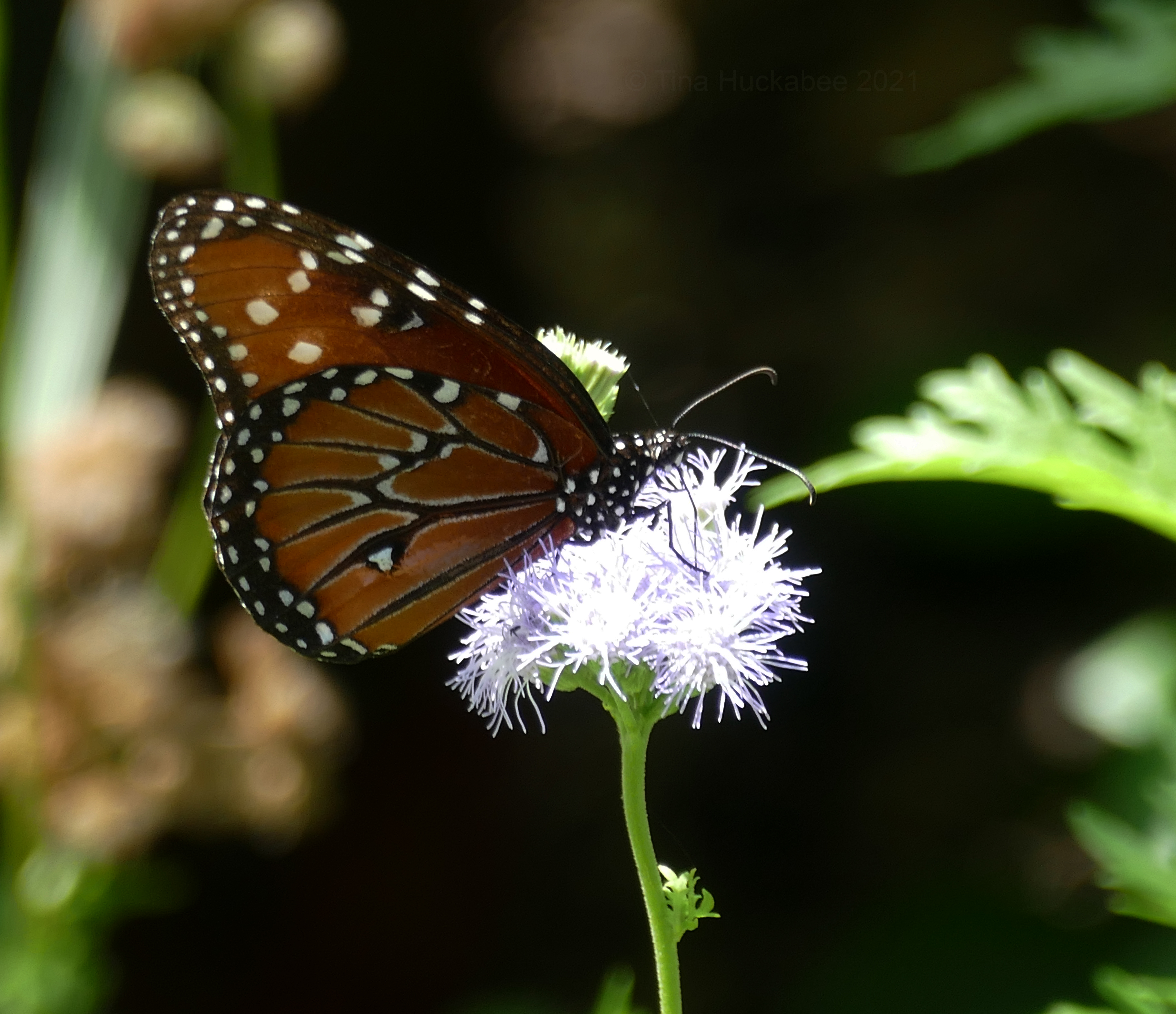
A Queen butterfly, Danaus gilippus, nectars on a Gregg’s mistflower–just like its cousin the Monarch. I have Queens in my gardens on and off throughout the year. Smaller and more polka-dotty than Monarch, they do look similar enough that they’re often confused with Monarchs.
Another winged summer thing is the Gulf Fritillary, Agraulis vanillae. A colorful butterfly–cheery orange with white and black spots–this is a bright adornment in the garden. These feed on a variety of flowers, though I think this one had hatched from its chrysalis shortly before I found it on the spent blooms of a Lyre-leaf sage. The green in the background of this photo is the host plant for Gulf Fritillaries, passionflower vine, specifically Passiflora incarnata. This particular vine grows messily in a pebbled negative space with a surrounding garden. I leave the “weeds” in the space because…butterflies!!
I do have one “official” passionflower vine, purposely planted and growing on a trellis–a set of three seedling Passiflora caerulea which I transplanted a few weeks before the snow/ice storm in February. The seedlings weathered the storm, grew, and have produced several generations of fritillaries. Currently, those three vines are nought but stems, the foliage having been eaten away by ravenous caterpillars. I’m not worried about losing the plants; the vines should survive and with some autumn rain, flush out fully for further fritillaries.
While I was photographing the first fritillary, a butterfly buddy (also newly hatched?) joined in the fun, wings spread wide to dry–and maybe show off?
The Mexican orchid tree, Bauhinia mexicana, attracts lots of bees and big swallowtail butterflies. As I watched, this Giant Swallowtail, Papilio cresphontes, fed at the flowers, lumbered off, came back to the tree, flew off again–but returned to the luscious offering of the blooms.
I grow White-veined pipevine, Aristilochia fimbriata, a lovely shade tolerant ground cover and a host plant for Pipevine Swallowtail butterflies, Battus philenor. This year, there has been a bumper crop of butterflies, chrysalises seemingly attached everywhere in the back garden. I’ve been fortunate to observe a couple of these beauties as they emerged from their cocoon and entered the world as winged adults. Pipevine Swallowtails are fast flyers and, while I observe their nectaring everyday, I’ve been missing to opportunity for a photograph until I found this one enjoying a Basket flower, Centaurea americana, and had my camera ready to shoot.
I’m fortunate to live in a place with a long growing season, so watching winged wonders is almost a year-round adventure. I hope you have some winged things in your garden, too! If not, maybe it’s time to get cracking and plant some nectar and host plants for butterflies and moths and a variety of blooming things for bees and hummingbirds.










 My Gardener Says...