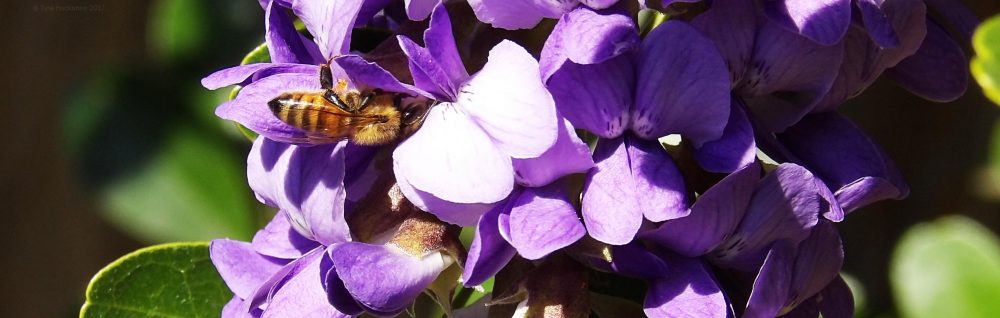
Autumn weather has finally arrived. Clouds and rain, with chilly temperatures (upper 30s and 40s), it’s unseasonably cool. I’m not minding it though, as we have more than our share of balmy days. Just before the wet and cool set in, the pollinators were everywhere, all day long: flitting, flying, nectaring and gifting their unique grace to the garden.
The Monarch butterfly migration didn’t nearly match last autumn’s magnificence, but these seasonal visitors drifted through, and for about 6 weeks, there was always some Monarch action in the garden. Once we warm up again, it’s likely I’ll still see a few lingerers, but it’ll be next March before they make their way back through Central Texas from Mexico.

Monarch butterflies are heading to their winter digs in Mexico. Here’s hoping the weather cooperates, whisking them south safely and protecting them in their roosts.

Late summer and autumn bring a number of yellow butterflies in the garden. One of the more common of the numerous yellows are the Southern Dogface, Zerene cesonia. This one enjoys what Mexican Honeysuckle offers.

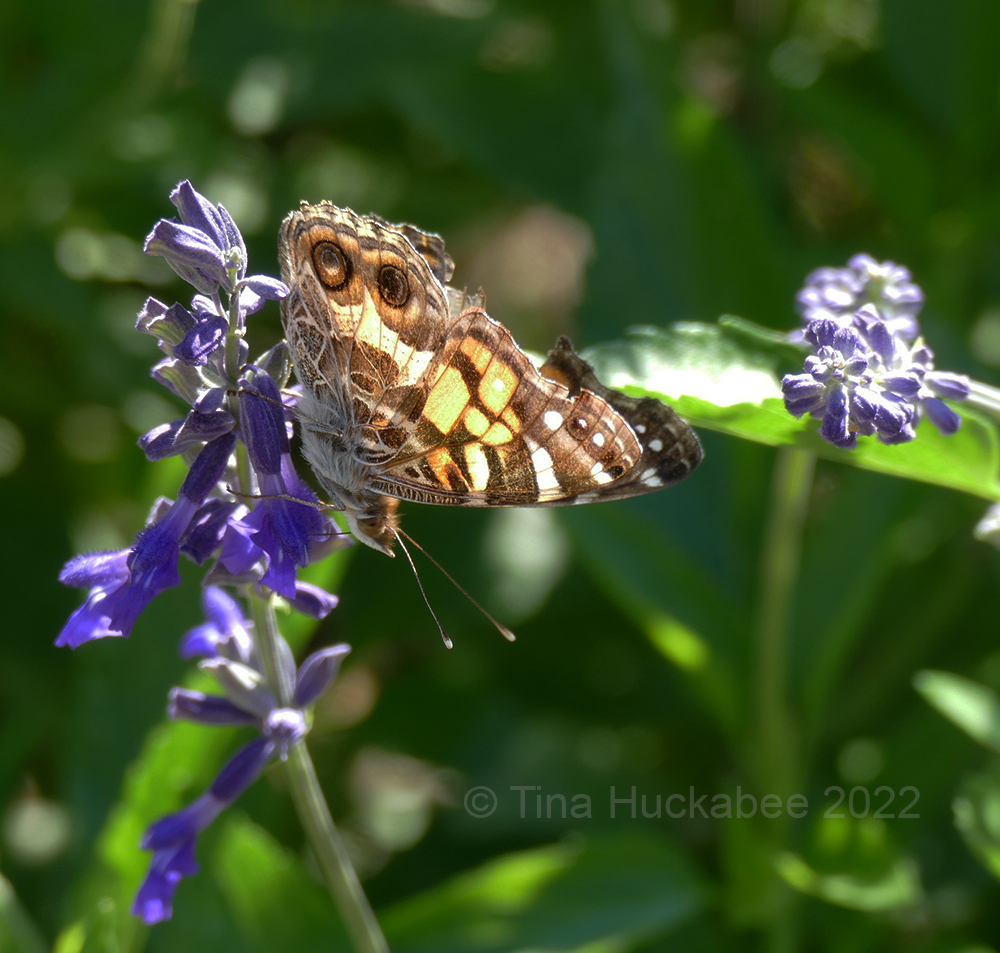
American Lady, Vanessa virginiensis, are also regulars in Central Texas. This one nectared on the prolific blooms of a Henry Duelberg, Salvia farinacea.
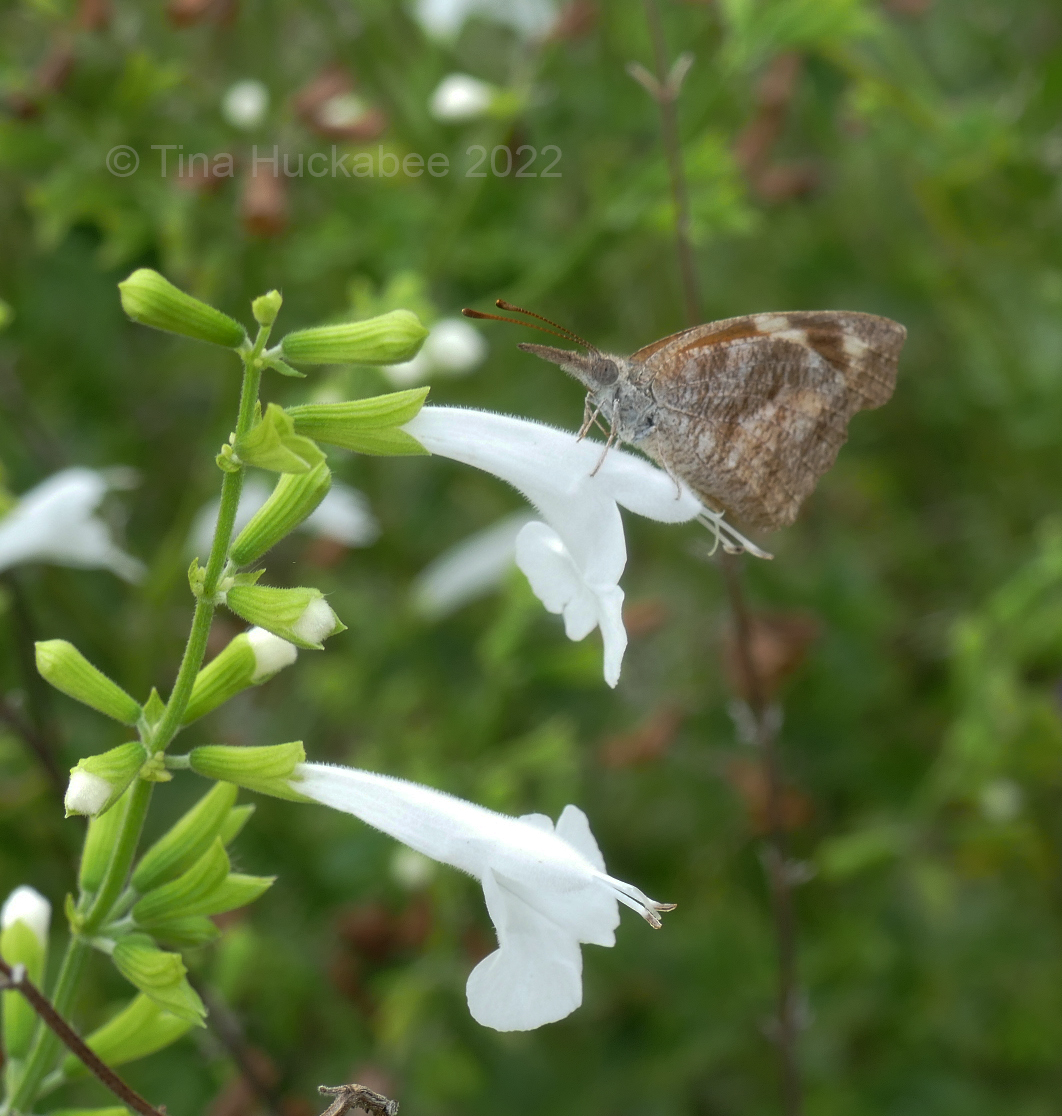
Another familiar autumn butterfly is the American Snout, Libytheana carinenta. These are perhaps not the most beautiful of butterflies, but they’re charming with that extended “snout” as well as their petite form. In some years, they migrate in large numbers, but this autumn, only a few fluttered.
Not outdone by the butterflies, bees are still active, too. One of my favorite native perennials is the Texas Craglily, Echeandia texensis. It’s also favored by a variety of pollinator types, including honeybees.
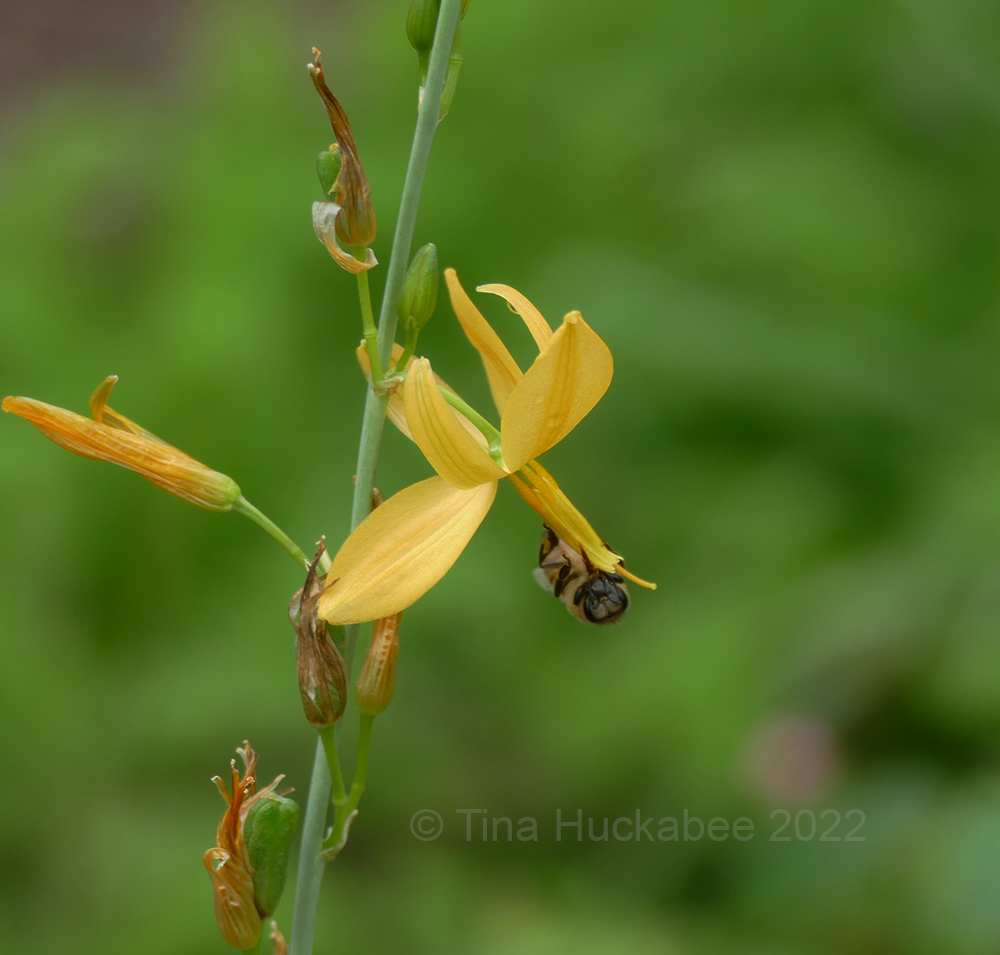
This isn’t a particularly good photo, but I like how it captured the full-to-bursting corbicula or pollen basket. I like to call honeybees’ corbiculae pollinator pantaloons.

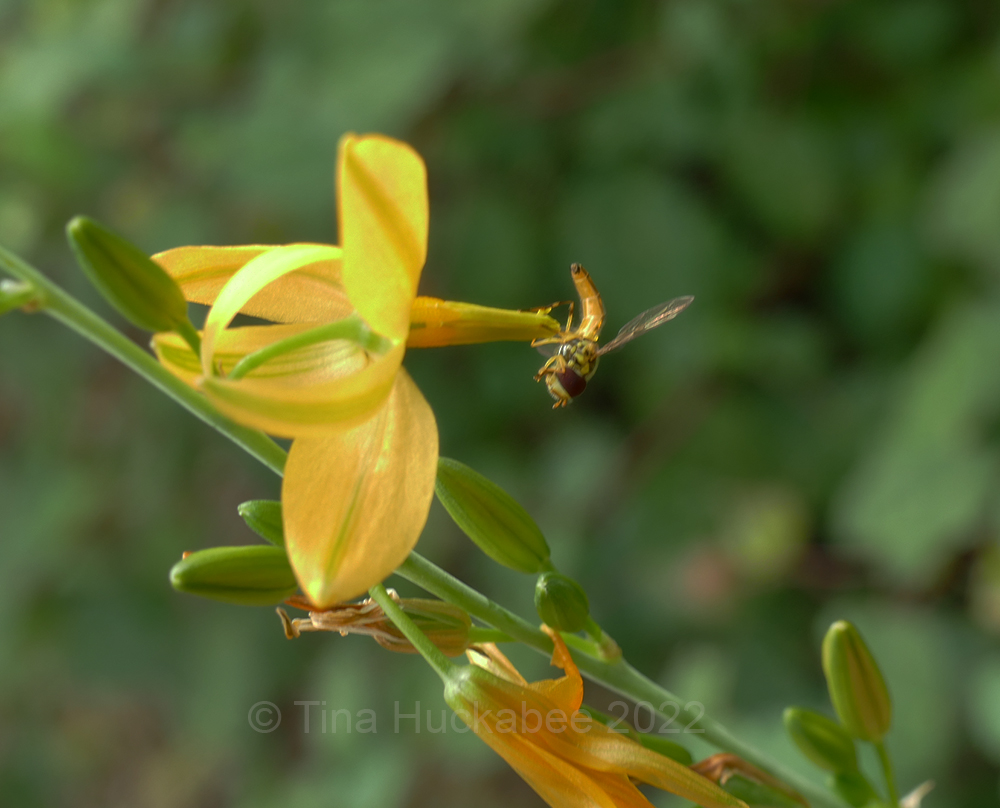
Also buzzing through the garden are a variety of syrphid, or flower flies. This little one is working on its pollinating skills! In fact, there were all kinds of flies around the flowers and they’re excellent pollinators.
A diminutive butterfly that I’m sure I’ve seen in my garden in past seasons, but I know I’ve seen when perusing through insect resources, is this Reakirt’s Blue, Echinargus isola. I enjoyed the flitty antics of several individuals before the rainy period set in.
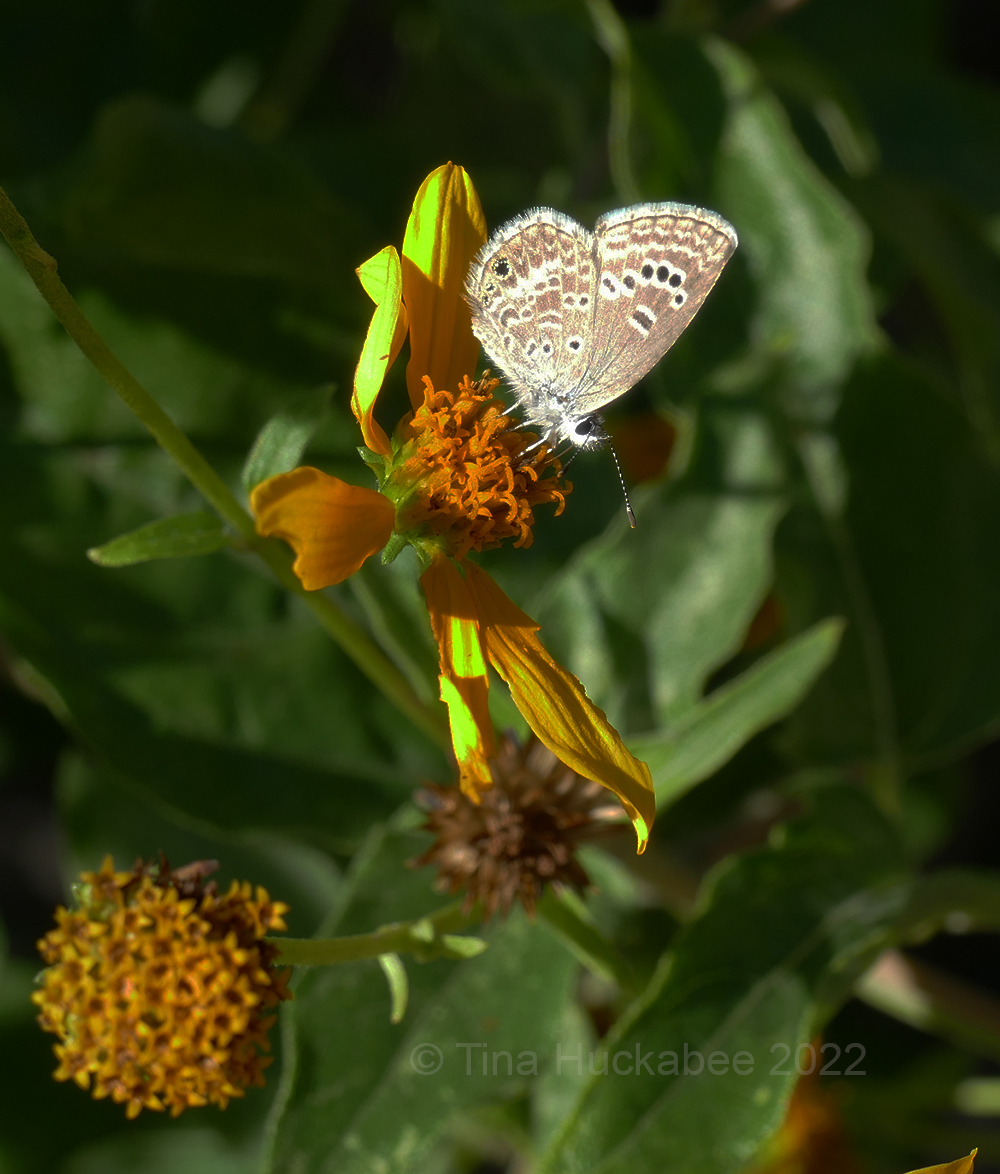
While attractive enough to the human eye when their wings are up, when open wide, a whole new look emerges. I love the blue in the wings.

One interesting fact about Reakirt’s butterflies is that females lay a single egg on a flower bud and the caterpillar eats the flower, seed pods, and only sometimes, the foliage. Additionally, the caterpillars are accompanied by ants, who slurp up the cats’ “sugary secretions” left behind.
This little cutey was a super fast flyer, but I did nab one or two shots. Called a Dainty Sulpher, Nathalis iole, I’ve seen this specie before in the garden, though had never taken a decent photograph. This dainty lives in a wide range of places, but doesn’t survive cold winters. Host plants include those in the aster family and I grow plenty of them. I didn’t see any obvious eggs or caterpillars, but I plan to keep a keen eye out for them next fall.

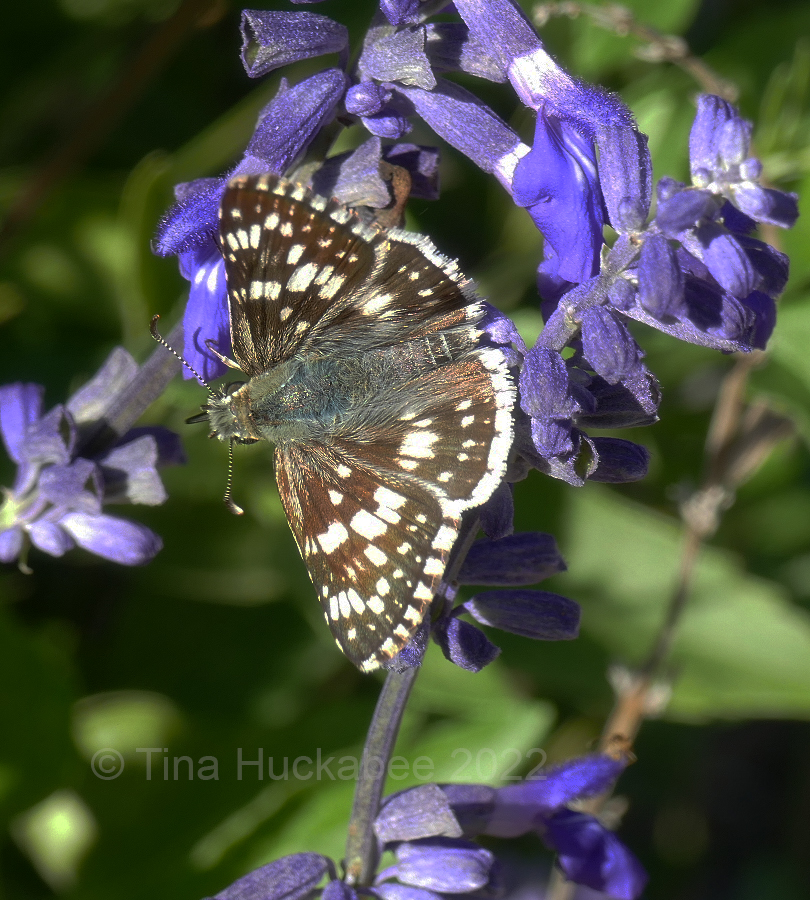
Common Checkered-Skipper, Burnsius communis, is a butterfly that lives in most of the continental United States. A large skipper, it’s also a skipper that cooperates with its human admirers–look at that lovely wingspan. These skippers use plants in the mallow family as their hosts and I grow several: Turk’s Caps, Globe Mallow, and Rock Rose. It’s no wonder that these butterflies are in my garden for late summer and fall.
A cousin to the Monarchs, the Queen Butterfly, Danaus gilippus, rivals in beauty! This handsome male nectars on the bloom of a Gregg’s Mistflower, Conoclinium greggii

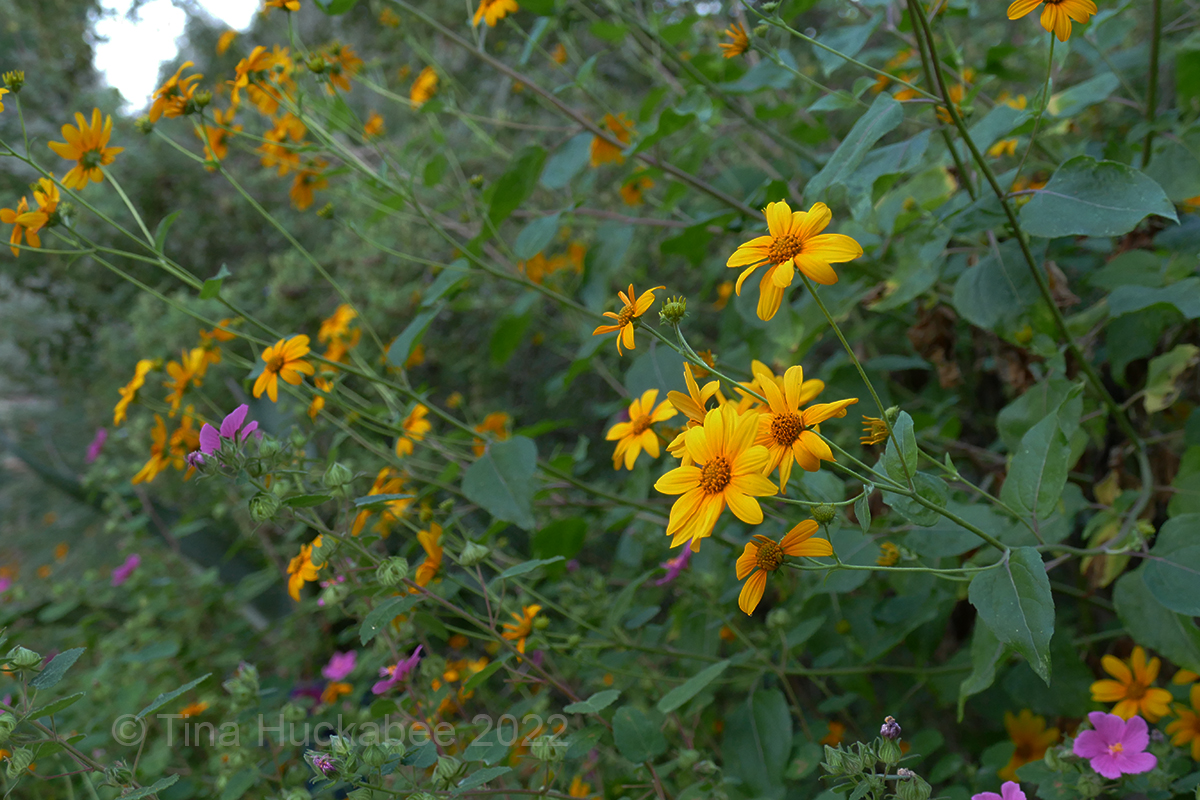
And this one? It’s all about the almost-spent-blooms of a Plateau Goldeneye, Viguiera dentata. Queens don’t migrate like the Monarchs, so I’m likely to see them in summer.

It really has been a glorious October and November and I fully expect that once the chill passes and before our first freeze, some of that glory will return. Central Texas enjoys a long growing season and therefore, a long pollinator season. Some pollinators have gone to rest, like many of the native bees, but others will over-winter and be active during our sunny days. They’re welcome anytime!







 My Gardener Says...