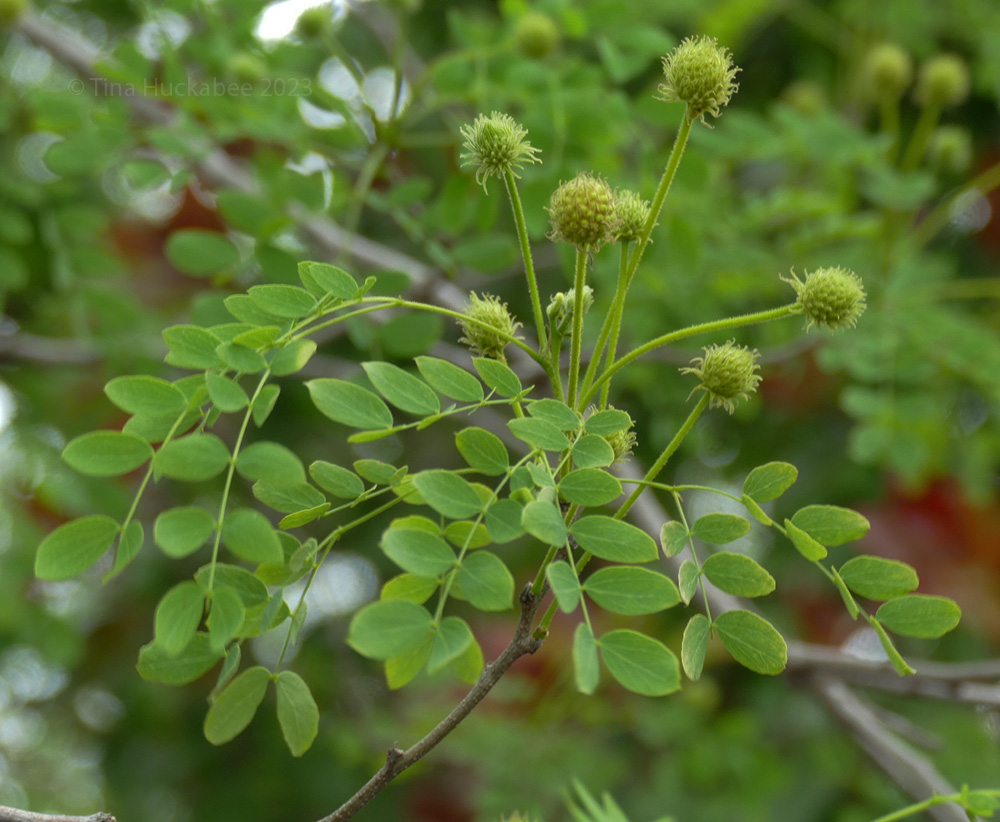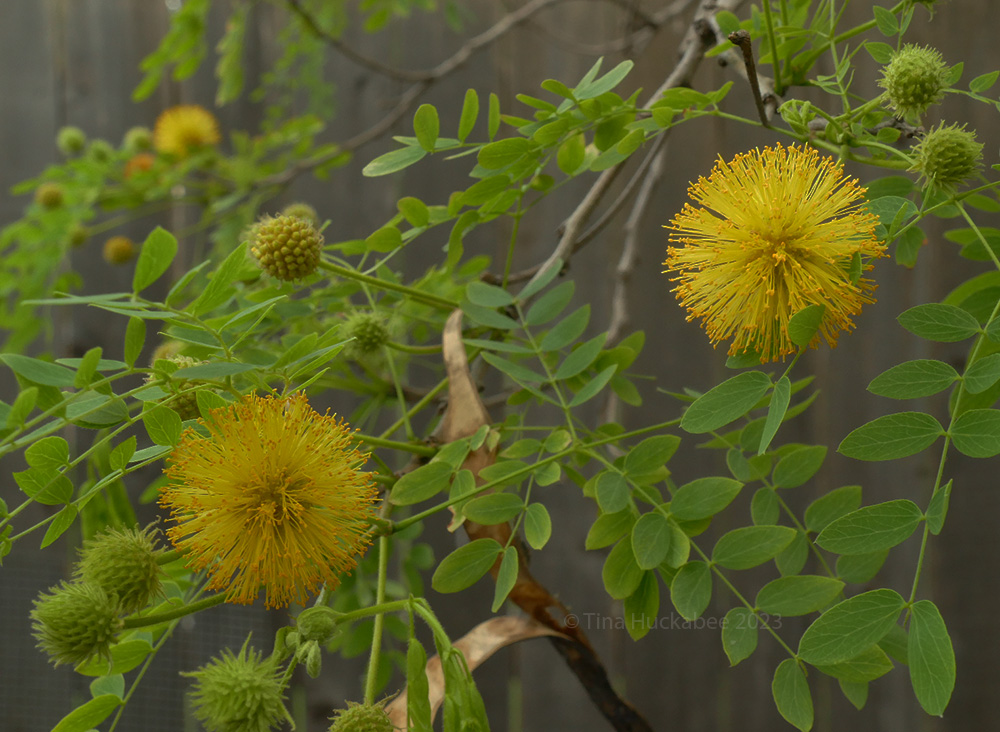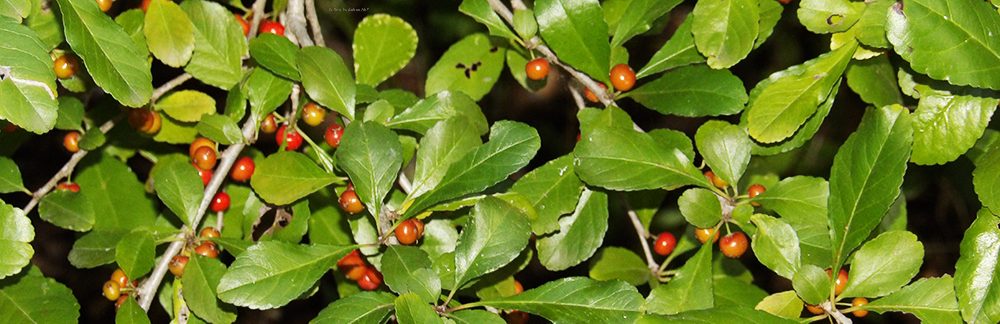
The change of time on a Roughleaf Dogwood, Cornus drummondii, as told by emerging spring foliage, replacing fall leaves.

The change of time on a Roughleaf Dogwood, Cornus drummondii, as told by emerging spring foliage, replacing fall leaves.

As nature does when days grow longer and temperatures warmer, spring brings tender baby leaves which soon grow big and plump buds with unfolding petals. Wildlife is energized and preoccupied with family responsibilities, and insects emerge from dormancy, also preparing for their next generation.
Blue Orchard bees, Osmia lignaria, have materialized in my garden this past week. They are blue, buzzing, and beautiful.

The adult Blue bees flying around now are the eggs laid and hatched a year ago. These are solitary bees and unlike honeybees, not part of a hive. Females lay their eggs in holes of wood or masonry and don’t have a crew of sisters to care for them. The adults prepare the nests by gathering a mix of pollen and nectar known as “bee bread” and then lay their eggs on that bread to nurture the larvae once hatched. Each egg is sequestered in its own room to grow and develop, each room separated by a mud-n-leaf matter wall. Female eggs are laid in the deep end of the hole, the male eggs toward the front of the hole.

Another difference between honeybees and Blue bees (as well as other native bees) is that the Blue bees carry pollen on their abdomens, rather than on their leg pockets or corbiculae as honeybees do.

It’s been a good spring for these bees, more activity than I recall from last year. I’ve seen many working around the Martha Gonzales roses, nibbling leaves to add to the nest sites.


These are such gorgeous bees! They’re fast flyers though and always on the move, which is challenging for clear photos. As I observe and attempt to photograph, these bees are blue flashes, sparkling in the sun.

Near this bee apartment, made from untreated wood with drilled holes and bamboo tubes, there is constant activity, flying in, zooming out, and dotting the wood with metallic color.

Blue Orchard bees are used in commercial farming because they’re excellent pollinators, besting the beloved honeybees. I’m happy that they found my garden and each early spring add to its life and activity–and beauty.
It’s easy to attract these and other wonderful native bees to your garden. Plant a variety of native flowers that bloom throughout the growing season; provide water, some shade, and dried wood, like large limbs from shrubs or trees. I don’t stack my wood piles, but lay the wood randomly (mostly in the back of my gardens) so that rats don’t have a safe place to set up their homes. Leave some area of your place on the Earth free of grass and garden so that there is available bare soil for ground nesters. Don’t use pesticides.
You can also build bee houses, too.

While bee houses or hotels aren’t as labor intensive as honeybee keeping, it’s still a good idea to clean out or replace (if using bamboo) the holes annually so that fungal and parasite problems are avoided. There are plenty of online resources and information for attracting native bees and giving them a safe place live out their lives. County Master Gardener groups, botanic gardens, and native plant groups are just some of the organizations promoting the inclusion of native bees in home gardens. Wherever you live, you can access information for your region on native bees and their habits. If you’re in Texas, check out these links to learn more and there’s lots more out there!
https://citybugs.tamu.edu/2018/06/11/caring-about-the-other-bees/
https://txmg.org/denton/north-texas-gardening/community-gardening/about-texas-native-bees/
https://biodiversity.utexas.edu/news/entry/leafcutter-bee-nest
I was recently visiting with a neighbor as we stood in front of one of my gardens and she commented that a rosette of American Basket flower, Centaurea americana, looks deliciously edible. (I’m not sure if I’d add Basket flower to my salad greens, but it has been used for traditional medicine purposes.) As we chatted, I realized the particular specimen that was the focus of our conversation also shared close space with several other lovely foliage types.

Basket flower forms a dramatic rosette, but peeking through those glorious leaves are ferny Common Yarrow, Achillea millefolium, rounded, lobed Henbit, Lamium amplexicaule, and palmate-leafed Carolina geranium, Geranium carolinianum. Except for the non-native Henbit–one of our earliest bloomers and welcomed by pollinators–all of these plants are native to Texas and in many parts of the Americas.
A closer look at these luscious leaves shows another in their midst, also wanting attention for its leafy action–Caterpillars or Blue Curls, Phacelia congesta

A different Blue Curls planted itself directly on a Basket flower rosette, both settled in the crack of a cement driveway, no less. They’ll have to battle it out for survival once spring growth and blooming begins. The smart money is on the Basket flower, as it tends to get much larger than the Blue Curls–but I wouldn’t count out the curls, they’re a tough bunch.

Both Henbit and Blue Curls are having a moment this year in my garden. Scads of them have seeded out and are growing in profusion!
Another nice foliage vignette in a different area of the garden features a purposely planted Twistleaf Yucca, Yucca rupicola, overseeing two volunteer annuals (poppies and geraniums) and one volunteer perennial shrub, Rock Rose, Pavonia lasiopetala. All will bloom in spring, two will disappear afterward (poppies and geraniums), but the Rock Rose will be foliaged and floraled through the growing season.

Spring flowers are bursting out of their winter doldrums and the foliage of those bloomers is also revving up for its part in the garden show. Foliage and flowers form a partnership that are the stuff of gardens, each adding their particular beauty and role in a diverse community of plants.