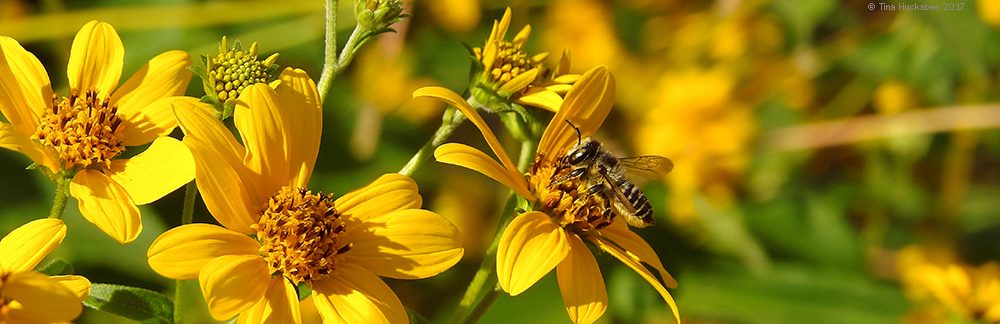
Sunshine in a Dark Time

During this time of year with shorter days, clouds impeding sunshine, and regular rain, the Forsythia Sage, Salvia madrensis, reigns supreme–and yellow–over the garden. This native plant to the Sierra Madre Oriental mountains in Mexico is right at home in my Central Texas Garden.

Many years ago, a generous gardener gifted to me some sprigs-with-roots of the delightful perennial and I’m always grateful for its graceful presence in my garden. Its foliage is a lush blue-green during late spring and throughout summer, the many flower spikes a cheery yellow, blooming from late summer until a hard freeze ends its season. Forsythia sage is one of the last plants in my garden to provide a big, blooming show.

This salvia likes some extra water during the hottest and driest times of summer, so I oblige by dousing the soil in which it thrives in between my once or twice per month irrigation. That being said, I’ve sometimes not given the extra drink, and other than looking a little sad, the plant always rallies with the next rainfall or soaker hosing–whichever comes first. Never has there been even the slightest hint of a brown or dying stem.

This sunny sage hasn’t seeded out, though it spreads by roots and is easily controlled. Mine is planted in a spot that receives brief full summer sun, but is protected from the late afternoon broil. Morning sun with afternoon shade is the ideal Forsythia sage situation.

My honeybees and one native bee, the Horsefly-like Carpenter bee, Xylocopa tabaniformis, are the two pollinators that I’ve observed at the flowers.

Honeybees are happily busy in the dark time of year.

I’ve seen plenty of squirrels and little birds use the dense foliage for cover and who knows what critters of the overnight wildlife shift also take refuge in the protective cover.

The first freeze of the year in my garden occurred recently, landing right at 32 degrees. I noticed that a bird bath in my front garden was left with a thin layer of ice that morning. The back garden, probably because of the shelter provided by the two big Red Oaks, stayed above 32, with no ice found in any water feature. I was glad for that, as the Forsythia sage is still beautiful, providing shelter and nourishment for garden beasties.

A killing frost is coming at some point in time in the next months. For now, the bees and I will enjoy this hardy and stunning perennial and appreciate its bright beauty in a dark time.

Bird on a Fence

Seemingly relaxed, I can only guess that this adult Cooper’s Hawk, Astur cooperii, was content after a morning breakfast. Its presence rendered the other birds quiet for a time.

The hawk perched for some time on the fence, occasionally preening, mostly observing. A few times, its gaze focused just below where it sat, and I hoped that some curious Carolina Wren wasn’t in the hawk’s field of vision.

Eventually the Cooper’s hawk flew off, rested and ready for its next round of hunting. So it is for wildlife: survival is paramount, relaxation a rare gift.

Hermit Thrush

As summer wrapped up and autumn commenced, the neighborhood birds quieted their activities. They’re around–nibbling here, noshing there–yet have been infrequent visitors to the sunflower and safflower feeders that hang in the garden. I do see plenty of bird activity midst the seed and berry producing perennials–that’s why I planted them! As I stroll through, rustling in the underbrush produces a flight of feathers to higher perches, but it’s difficult to catch good glimpses or clear photos of these winged wild things.

Autumn’s migratory season is a memory. I observe fewer birds in both number and variety during autumn migration compared with during spring migration. This autumn there was a quick look-see of a Baltimore Oriole, Icterus galbula, and brief barely-there view of a Yellow-breasted Chat, Icteria virens. Smaller, muted-colored birds are always a challenge to watch, but they were here, in limited numbers: Nashville Warblers, Lincoln Sparrows, Common Yellowthroats, and the like. Some moved on to winter homes south of Central Texas, but others remain, settling in for winter, before spring beckons to recreate their families. There’s at least one Orange-crowned Warbler, Leiothlypis celata, and one Ruby-crowned Kinglet, Corthylio calendula, in my back garden on a regular basis. Whether these two are males or females, I have yet to discern.

The migrant who stayed long enough for the watcher to watch was this handsome Hermit Thrush, Catharus guttatus. What a sweet little face it has and how about those breast/tummy spots?

It mostly hunted and pecked along the ground, looking for seeds and small insects as its busy beak swept back and forth along the ground and through mulched areas. After a while, it took a break from its meal-finding to splash in a bath. Here, resting, it shows off its rufous backside. Hermit Thrush’s tails show a redder hue than other thrush tails.

September through November is a quiet time, an empty nest time, for the resident birds and I miss their feathery antics and calls. During this time, they rest, their adult bird needs minimal. As the days grow shorter, then lengthen, the birds become more active, preparing for the territorial-defending and calorie-consuming seasonal mating and chick rearing responsibilities revisited on an annual basis in spring and summer. The increased attentiveness in the garden, coupled with winter-visiting migratory birds, will make for interesting bird watching in the coming months.