Absconded!

In early June, at the first hive check of the month (we check our hives every 2-2.5 weeks from late February through October), we realized that there was no activity around our hive, Woody. No bees were flying in, no bees were flying out. The hives sit at the back of the garden and I don’t garden-putter much in that area, so day-to-day, I don’t pay close attention to the honeybee goings-on.

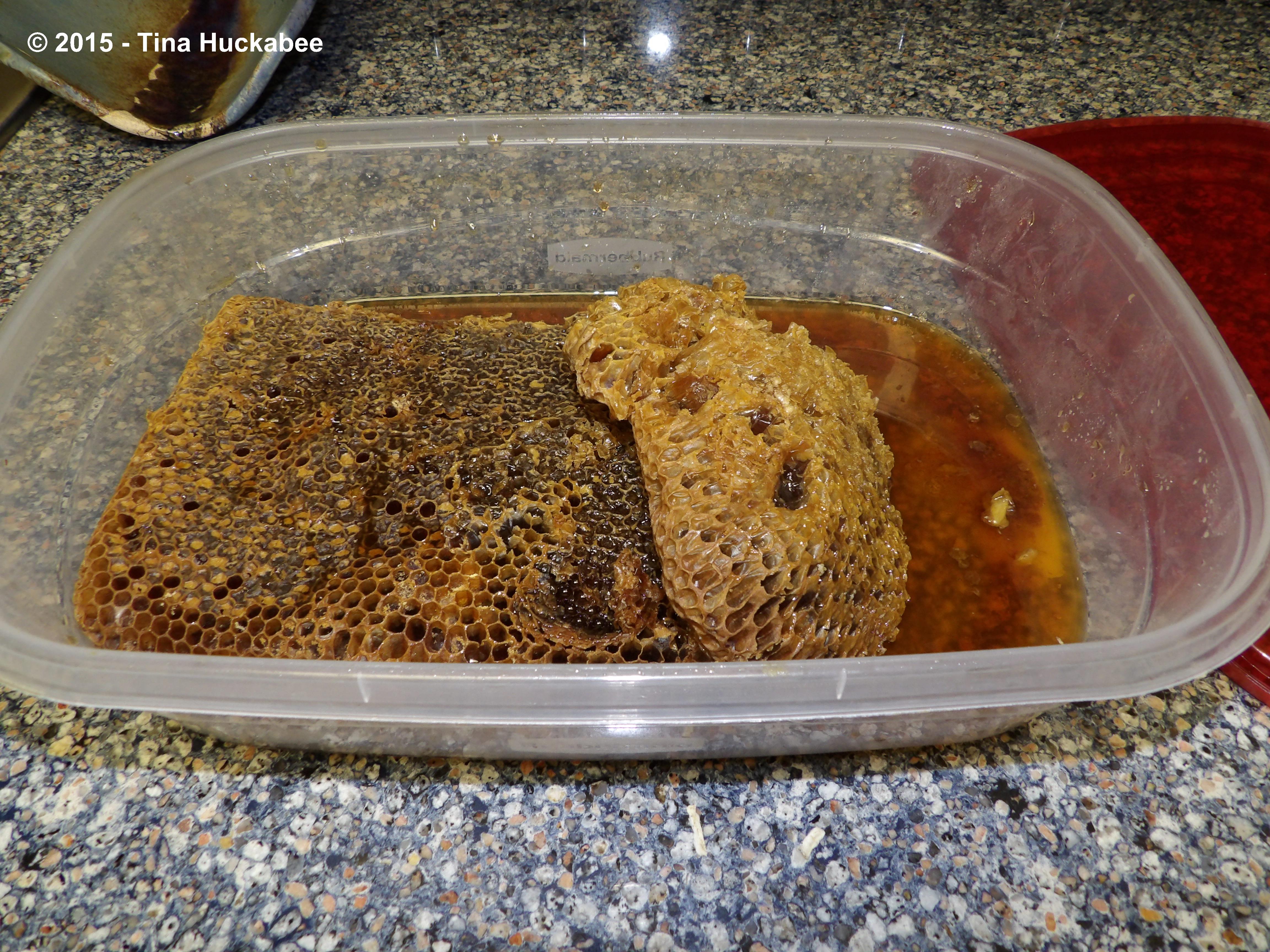
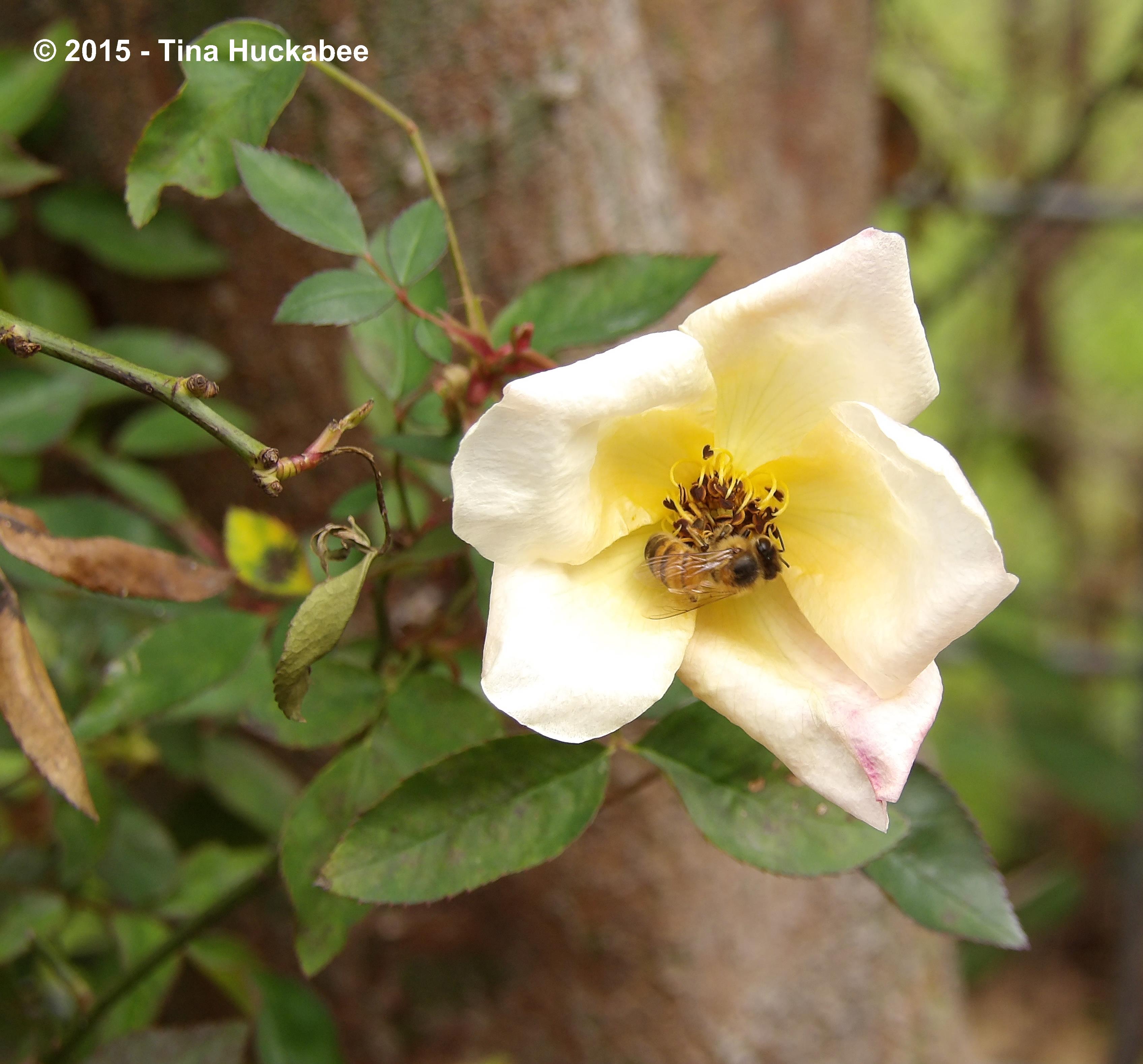
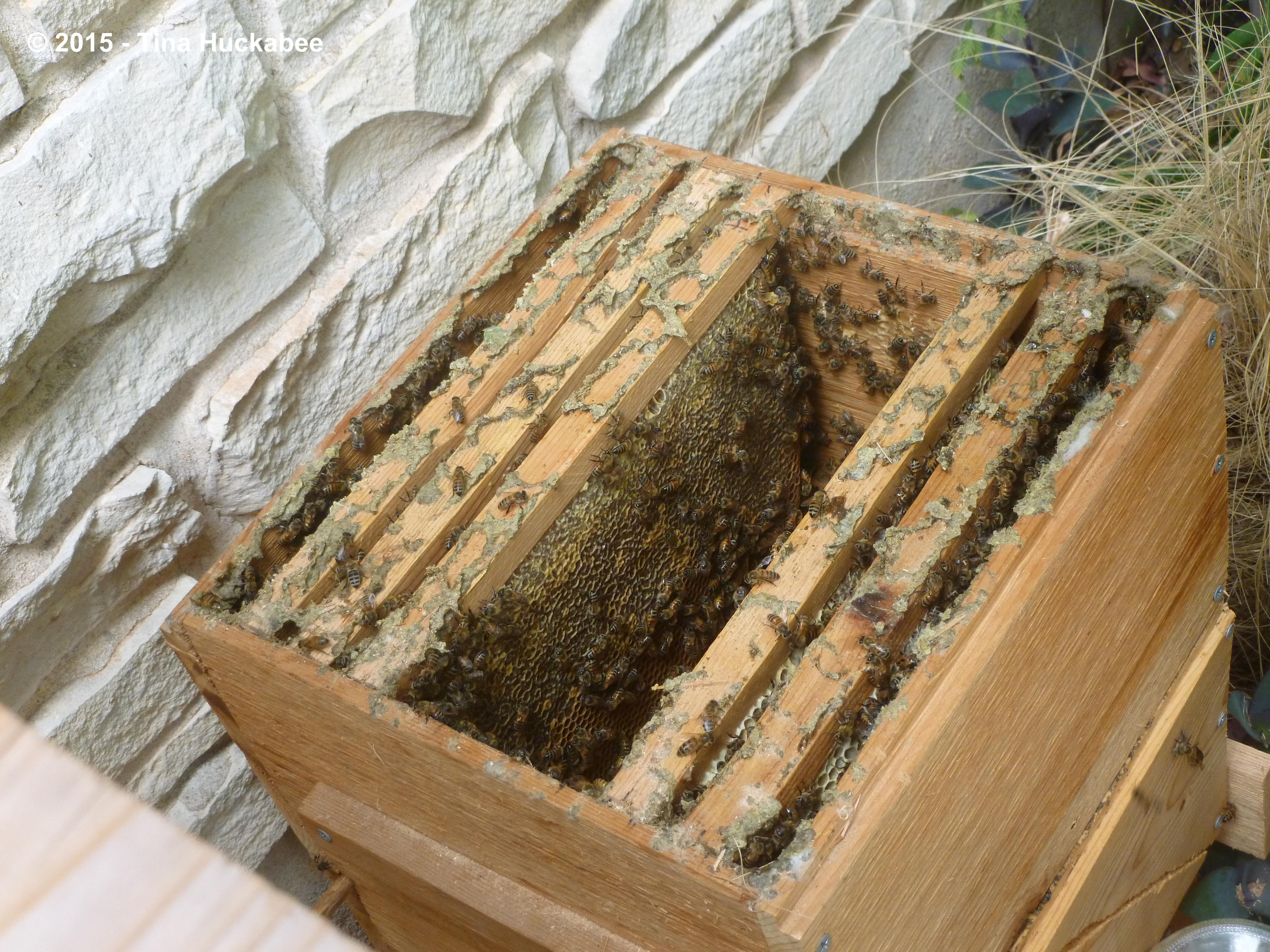
When we opened up the hive, it was empty of life. The comb was beautiful and intact and the bees had eaten all the honey in the the 30 frames, there wasn’t a drop left! Woody’s bees had absconded, meaning that the hive performed a total swarm: the queen and all the workers left, permanently, and for unknown reasons. Honeybees will abandon their hive if the resources are scare (not in this case), or if there is prolonged, rainy weather (didn’t happen), or for other, only-for-honeybees-to-understand, reasons. Bingo! We believe the hive absconded just a few days before the planned the hive check and during the previous hive check, Woody was a healthy, active hive.

The one issue that could have have caused Woody to search for and move to different real estate is that the stronger hive, Bo-Peep, might have been robbing Woody of its honey, and perhaps Woody’s ladies had enough of that nonsense. Realistically? We’ll never know why the bees left. Absconding happens, not often, but it’s a natural process, akin to honeybee swarming, though with different causes and goals. Woody’s absconding is our first experience with this particular honeybee happening.

We dismantled the hive, laid the parts–boxes and frames–in the garden, preparing to freeze the frames to kill any wax moths or other invasive insects and their eggs. We’ll wash the hive boxes with a bleach/water mixture to kill eggs snuggled in cracks and crevices.

I should add that we don’t think the bees absconded because of wax moth eggs or larvae that were in the hive. Every hive in Texas has wax moth eggs and at least, early stage larvae. Wax moth larvae are truly nasty critters, but a healthy hive will keep the hive free of an infestation. Bees are tidy gals! Weak hives are vulnerable, and empty wax frames just sitting around are an invitation for moths to lay eggs so that the gross caterpillars eat their way through the wax.
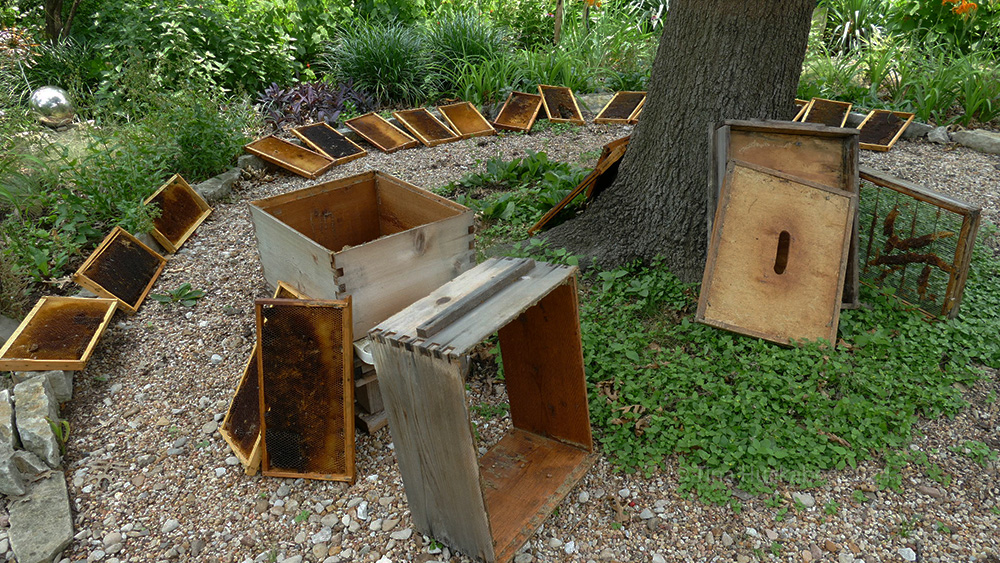
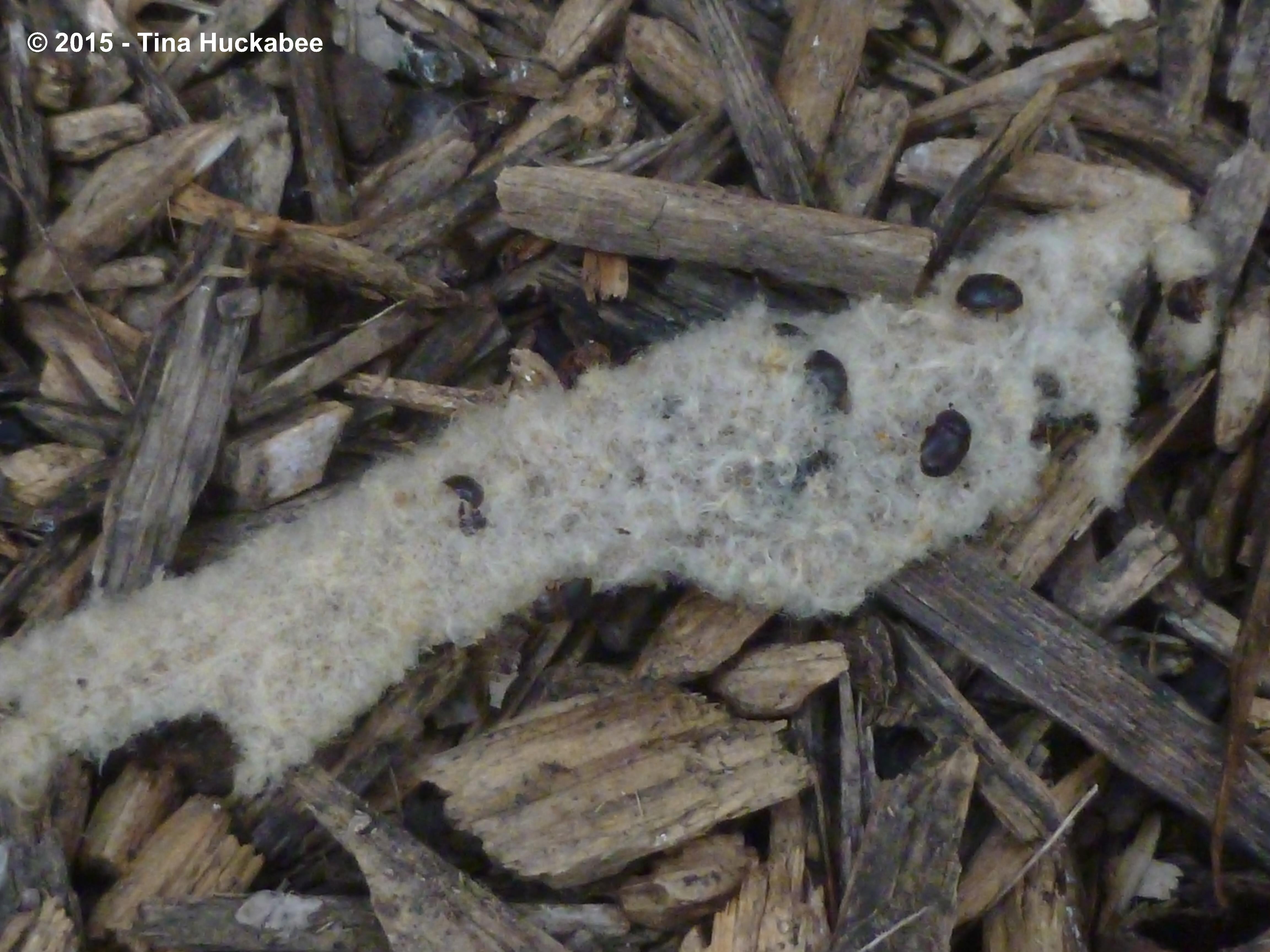
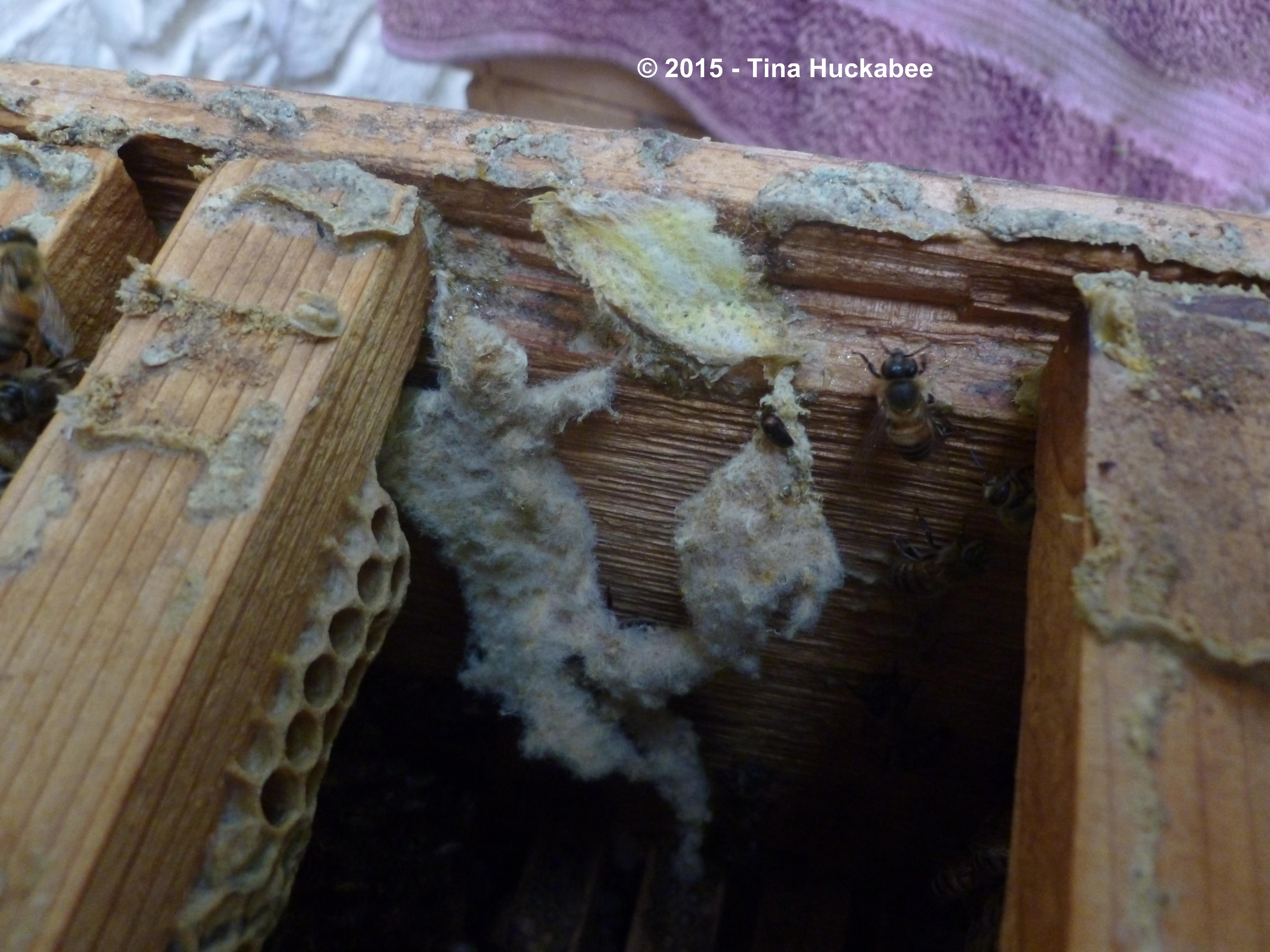
Even in the few days that the bees weren’t in the hive, wax moth larvae had hatched and commenced with their wax destruction. The larvae eat the wax, leaving frass and webbing as they move through the comb. A serious infestation will destroy a hive in a matter of days. We lost a hive to wax moth several years ago and it was horrific. It was one of the foulest, most disgusting clean-up chores I’ve ever been forced to engage in.
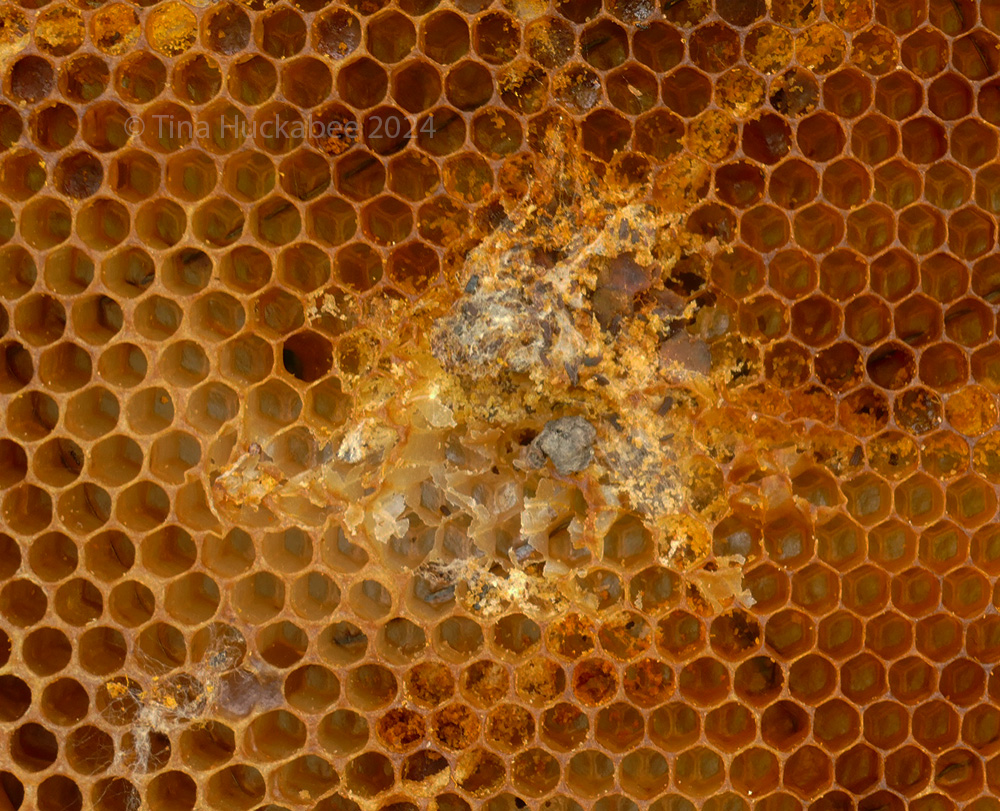
If you look carefully at the comb cells, you can see some of the small, newly hatched larvae.

The larvae grow to about 1 inch long and are quite plump before they’re ready to pupate and morph to their adult selves. Freezing the frames for 3 days is the best insurance for killing any eggs or larvae. Each time we take honey frames for extraction, we pop the frames into our freezer for the allotted 3 days; afterwards, we store the frames in plastic bins. We extract as soon as we have time (it’s a process), because no matter how tight the lids are, if we don’t extract within a month or so, wax moth larvae somehow appear, even when we’ve taken correct precautions.

Bo-Peep is now our only hive.
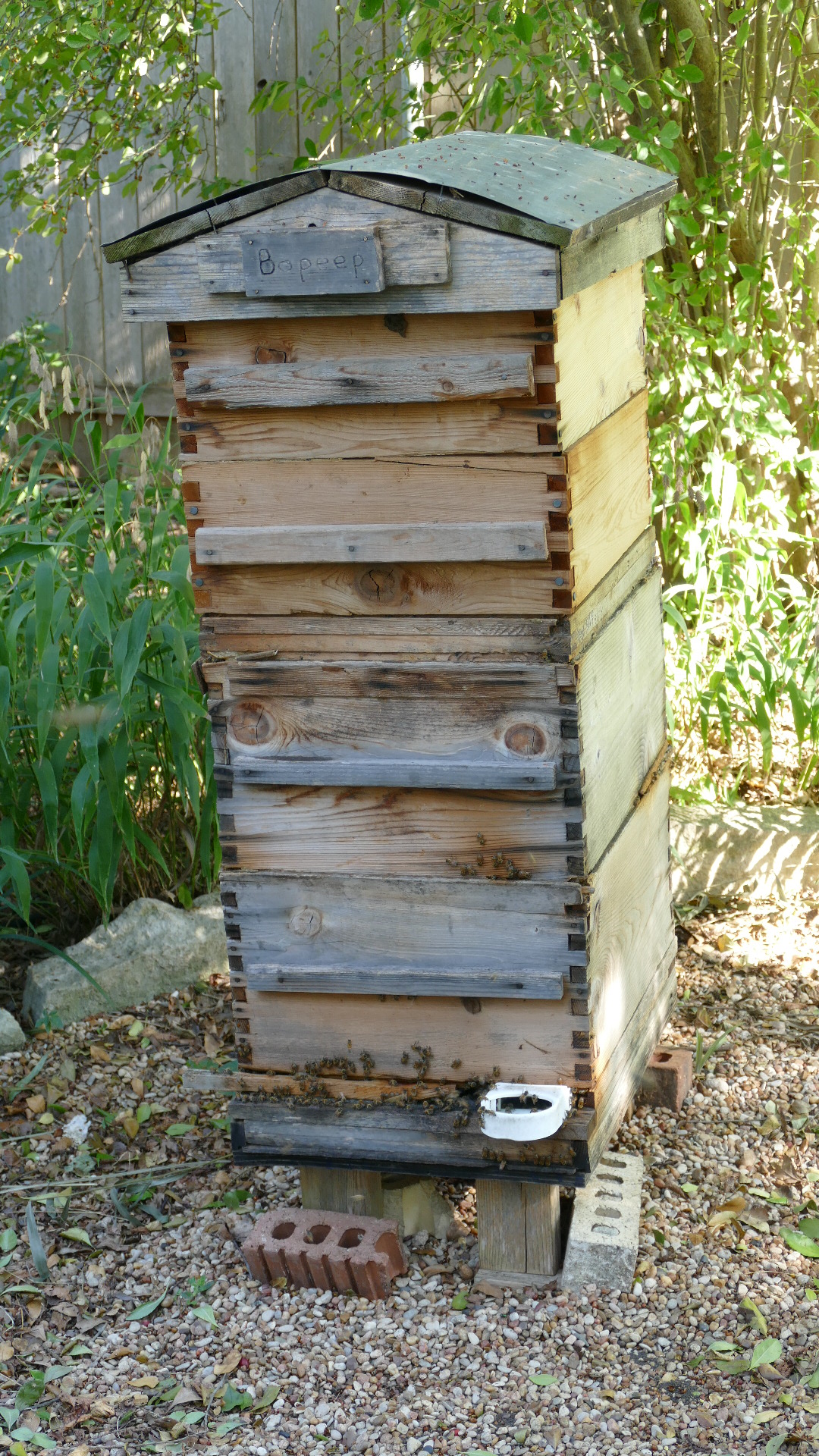
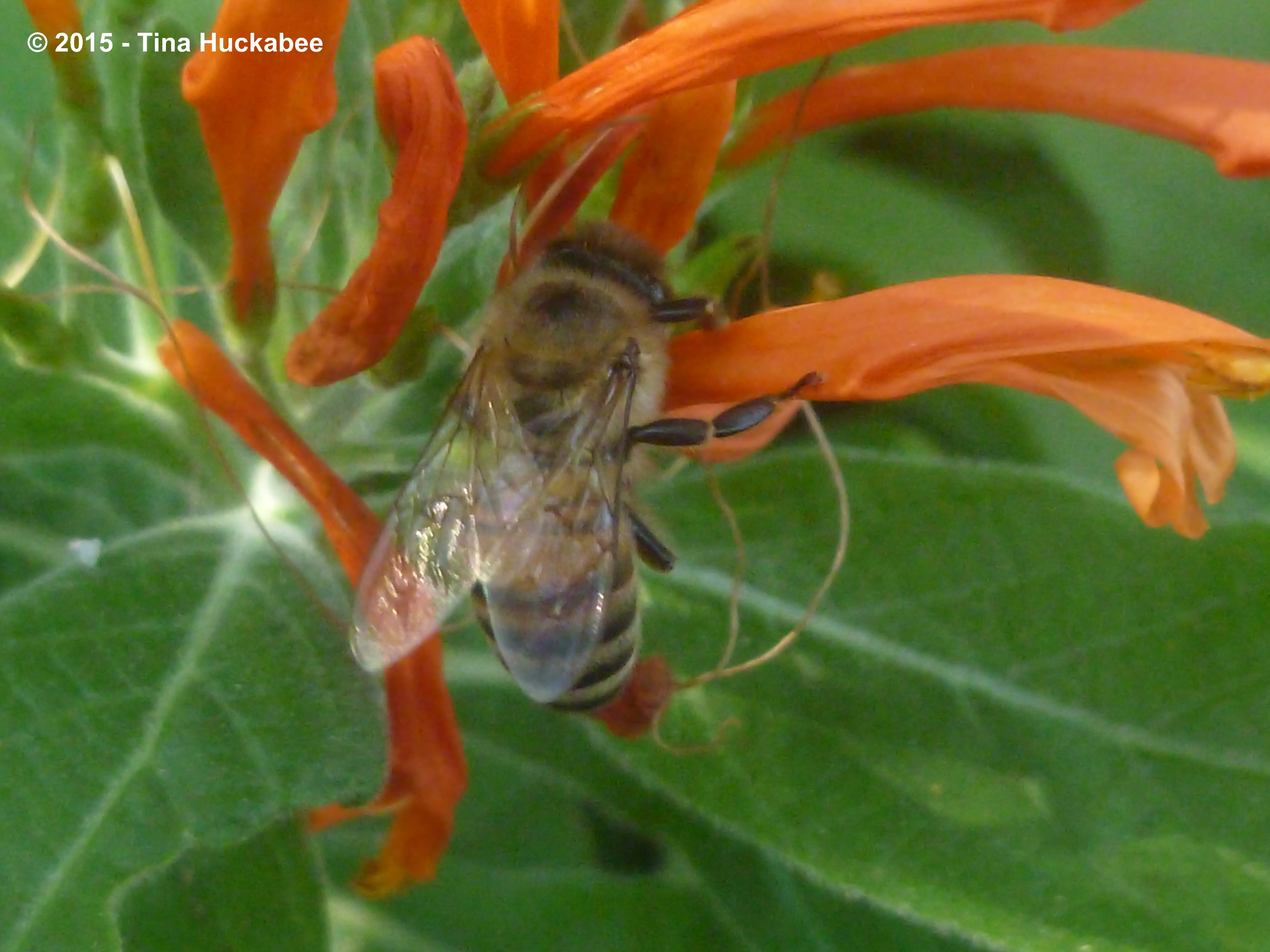
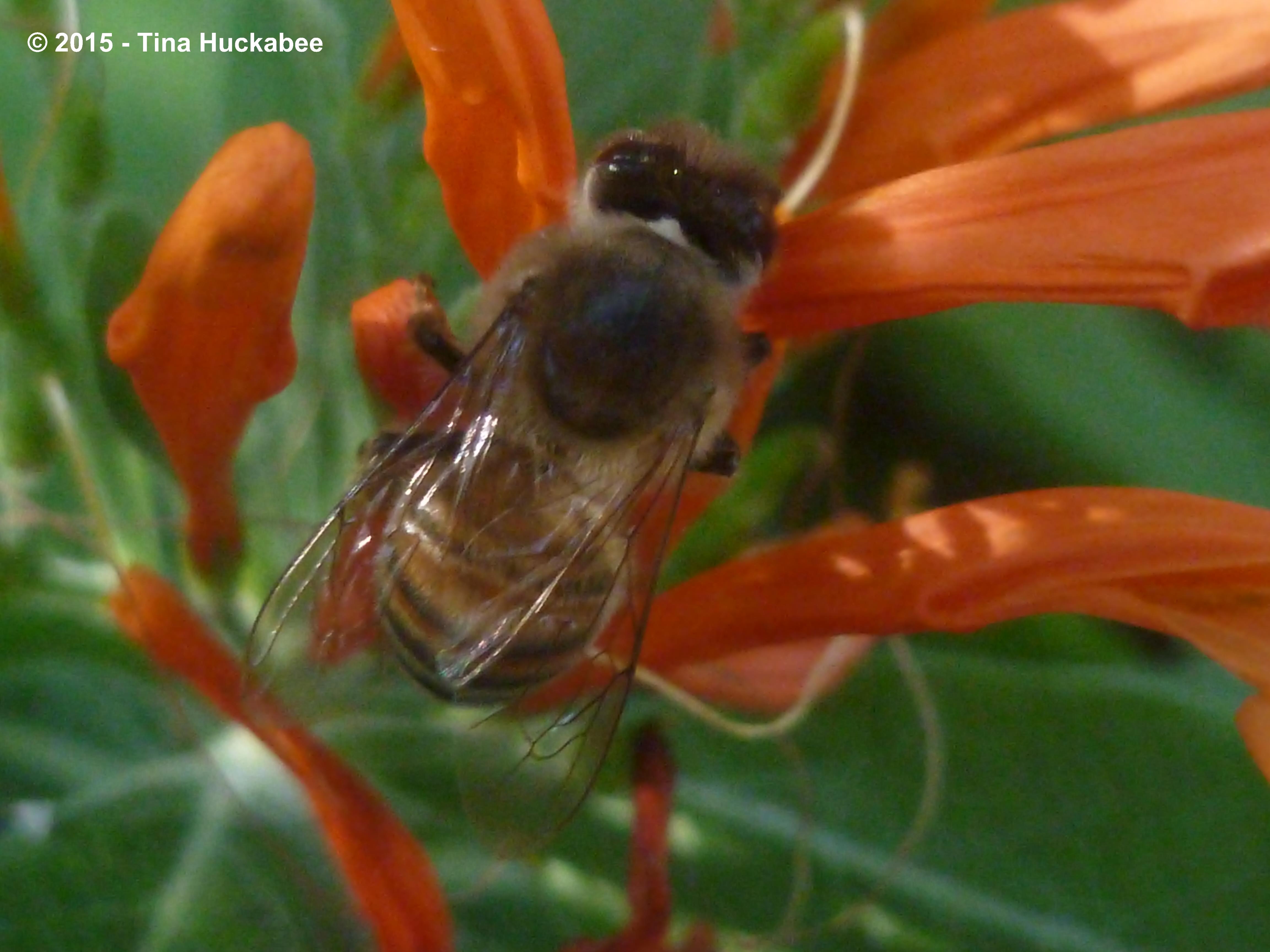
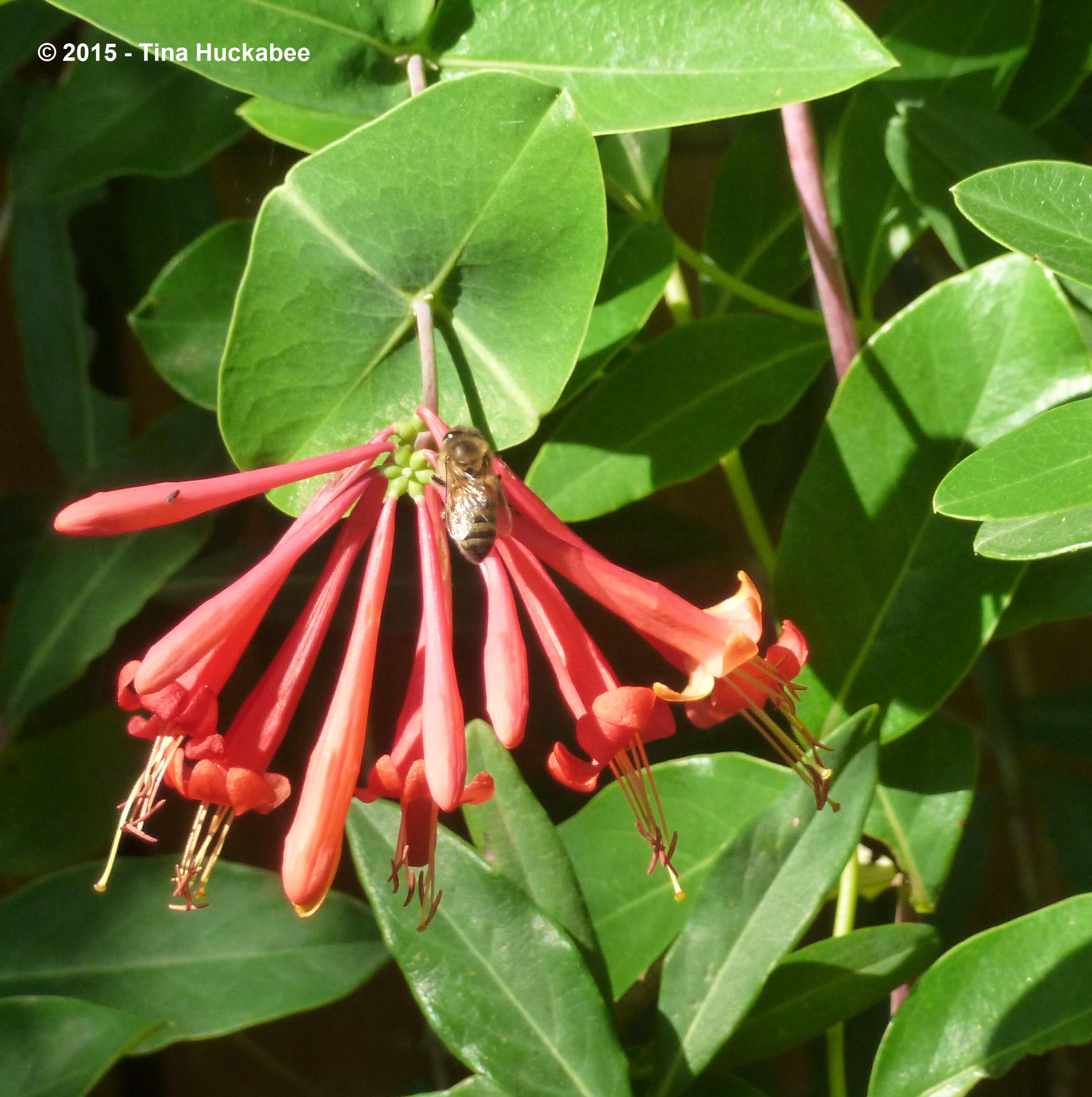
Bo is a prolific honey producer. This season, we’ve already extracted over 6 gallons of honey from her and we have 5 more frames ready to process. I’m hoping that at the next hive check, we won’t need to take honey to free up space in the hive, but we’re going to make sure we have a few frames ready for replacement–just in case! We want to leave plenty of honey for winter, but also to allow for space in the frames so that these busy bees will continue to do what they do–pollinate, slurp nectar, and make honey–in the cooler season ahead. Bees are honey hoarders and they force us to be honey hoarders!

They just can’t help themselves…

Bee Mama Missive: Beetles Bee Damned, Part II

In my last post I promised an update on the Small Hive Beetle, Aethina tumida, (also known as SHB), infestation of our beloved Scar and Mufasa hives.  SHB can wreck honeybee hives by damaging comb and spoiling honeystores; they can be the death knell of weak hives.  We’ve had more of the SHB making themselves at home in our hives this summer, due (probably) to the wet spring.   Bee Daddy and I  are attempting to control their population and help our bee-gals gain the upper hand against these noxious creatures by setting non-chemical traps.  We checked the hives twice, once in late August and again, two weeks ago, and the Beetle Bee Gone traps continue to do what they’re supposed to do–trap beetles.  Yay!

P1070814.new

P1070813.new

Scar, the weaker of our two hives, had very few beetles at last check–which is excellent.  Mufasa, though stronger, still had more beetles than I’d prefer, but significantly fewer than at the beginning of summer.

P1070842.new


We’re doing our part and the honeys are doing their part. Just as we were preparing to open up the hives, these girls were cleaning out the bee ‘hood.  They were removing some of the fuzz, beetles entrapped, from the hive.  I smoked the bees, then pulled out the  material so the girls could put their efforts toward more important work.

P1070806.new

Hmmm.  I wonder if I could get them to clean my house?

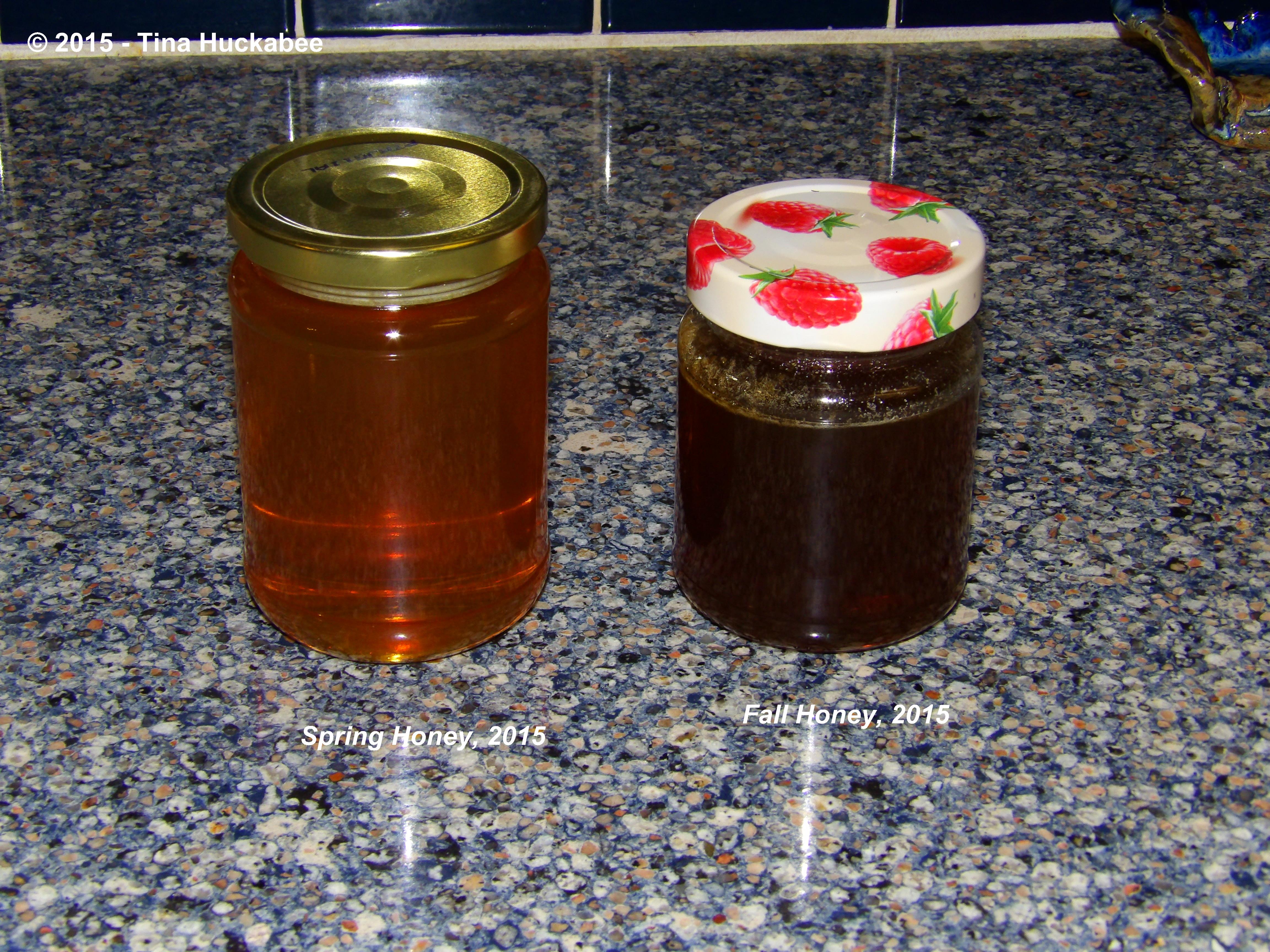
Both hives also had capped and uncapped brood and Mufasa was so flush with full honeycomb that we harvested one comb, though I haven’t had time to squish and drip the golden glory into bottles.  I’m guessing this haul is worth about 24-32 ounces.

IMGP1520.new

Once our autumn blooming season kicks into gear, the bees will be in honey flow mode and more of the gorgeous goo will be made for winter storage.

IMGP0308.new

We’ll pull some off for ourselves, leaving the bulk of honey for the bees to nosh during the cold and the dark of winter. Not that it gets that cold and dark in Central Texas, but yeah, we do have winter!

Sort of.

All good news on the honeybee front for now!   I will check the hives again soon, but am confident that the SHB have declined and are no longer threatening our darling girls.

Go honeybees!

In Praise of Bees

If you live in or near Austin, The Tour de Hives will be held this coming Saturday, August 15.  The tour of local bee yards  is in celebration of National Honey Bee Day and also a fundraiser for the Travis County Beekeepers Association, a nonprofit organization committed to promotion of and education about honeybees.  Check out the links for more information. If you live elsewhere, there are activities planned nation-wide–check out your local gardening calendars and/or beekeeping societies for activities and tours.

IMGP1077_cropped_3415x3060..new Honeybees and all other pollinators need us and we need them–our survival depends on their survival.  There are simple things that gardeners/homeowners can do to help declining pollinators, birds, and other wildlife:

–Remove sterile monoculture turf and replace with native perennials, shrubs and trees. You’ll find the gardening work easier, less expensive, more interesting and beautiful.

–Plant with intention, for wildlife and/or pollinators–after all, that’s who plants were invented for.

–If native plants aren’t readily available in local nurseries, choose pollinator plants that are not invasive to wild areas.  Additionally, growing plants from seeds is often easy and rewarding.

–Don’t use pesticides or herbicides–those products are unnecessary and disrupt the  balance that exists in the natural world.  Using native plants and wildlife gardening methods decreases harmful insect and plant disease infestations.

–Do your part to heal the world, one wildlife habitat at a time.

IMGP1528.new

Honeybees!!

IMGP9004.new

IMGP1817_cropped_3480x3213..new

IMGP5989_cropped_3392x3157..new

IMGP1529_cropped_3549x3313..new

P1070732.new

IMGP2235.new

IMGP6463_cropped_3281x3364..new

P1070733.new

IMGP8552_cropped_3566x2746..new

P1030166.new

P1030547_cropped_2871x2885..new

P1030834.newIMGP8586_cropped_3317x3401..new

P1060789.new

IMGP9202.new

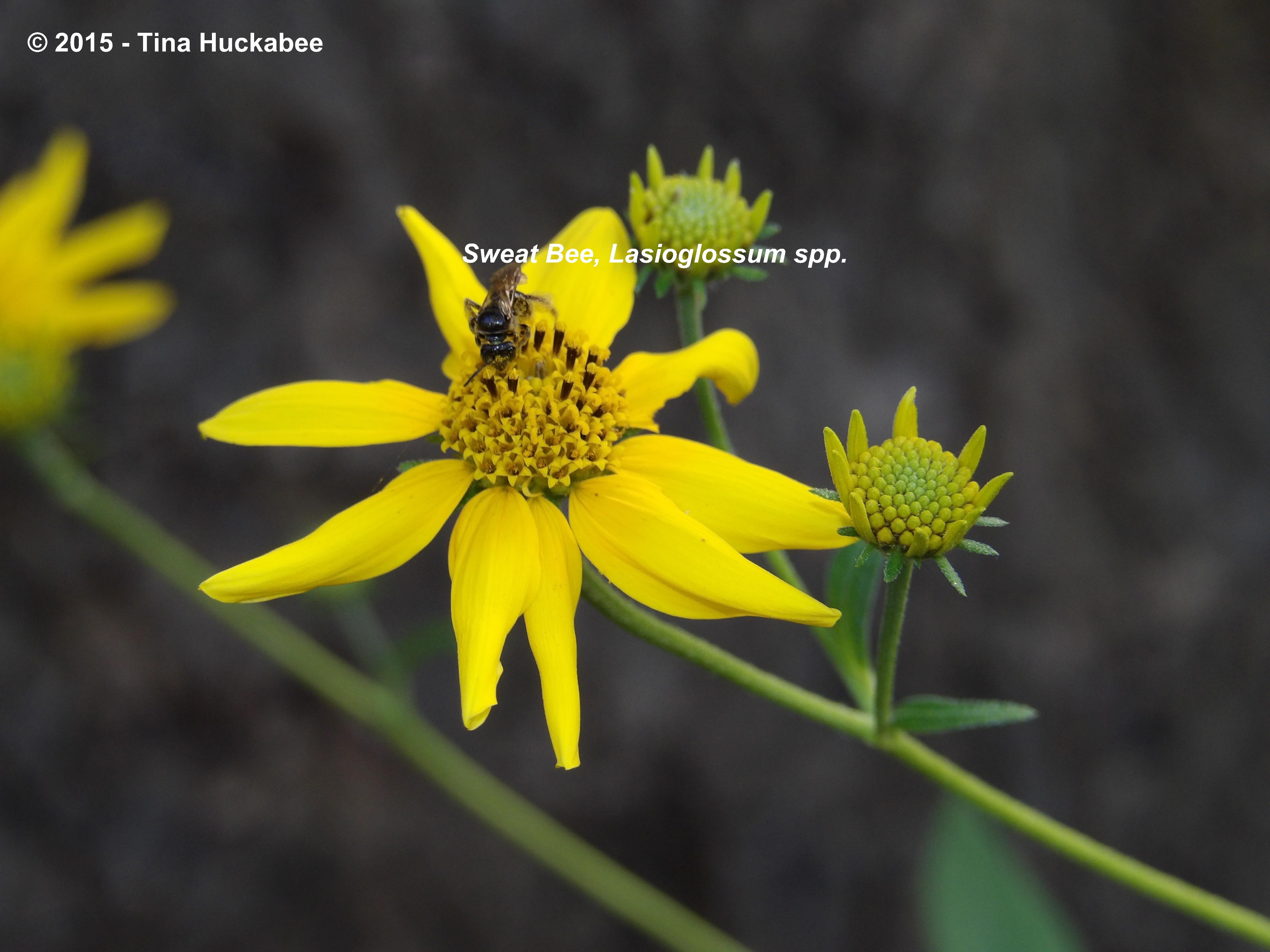
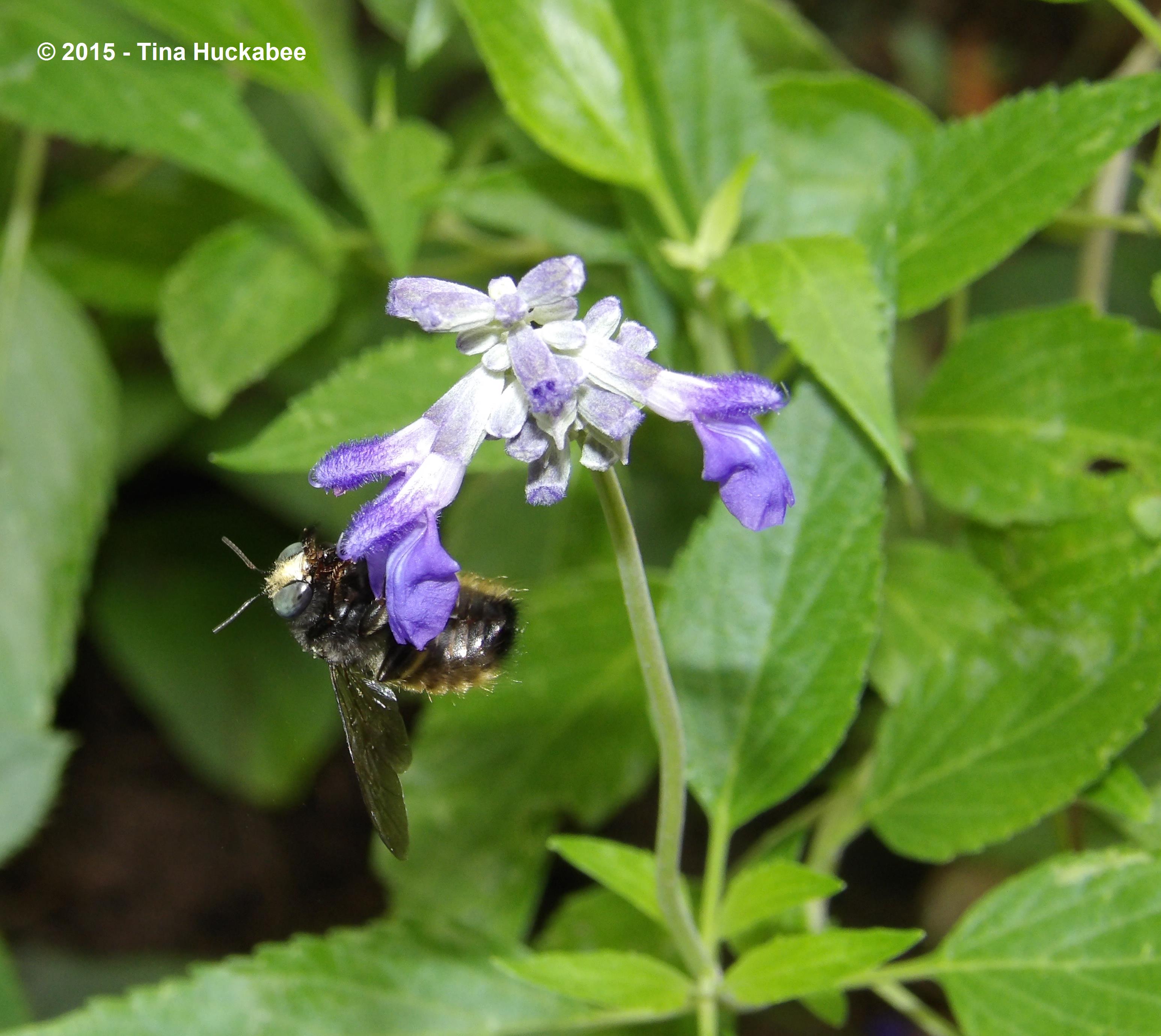
While honeybees are grand (aren’t my girls just lovely?), a more important group of pollinators are the unappreciated but vital-to-the-survival-of-everything, native bees. There are 20,000 identified native bee species worldwide, 4,000 of which live in North America, and over 300 known species in Texas.   Here are a few of the many which visit my gardens:

IMGP2150.new

IMGP8082_cropped_4019x3285..new

P1070698.new

20120327_53_cropped_4451x3267..new

IMGP9074_cropped_3092x2760..new

IMGP8061_cropped_3774x2544..new_cropped_2302x2256..new

IMGP8219_cropped_3318x2958..new

Plant for wildlife, plant for life!