Poop and Owl(s)

Recently, I walked along to path to my beehive, Bo-Peep, to check on the consumption of sugar water after a cold spell. As I was walking back along the same path, realized that I’d stepped in dog poop.

Wait, I don’t have a dog! What I’d stepped in was not the poop of a dog but scat from a fox! I know there are foxes in our neighborhood because I saw a pair not long ago, early in the morning. I’m also fairly sure I know where they live and it’s not far. These neighborhood foxes are most likely Gray Foxes, Urocyon cinereoargenteus. I love the fact that there are foxes in our midst, shy and elusive, but very much a part of the wildlife tapestry and great hunters of rodents. That being said, foxes are omnivores and along with rodents, will eat bird eggs and baby birds, as well as many other things. But in an urban environment, they have a place and are adaptable and comfortable even if we rarely encounter them.

Last year, a pair of mated Eastern Screech Owls, Megascops asio, wooed one another and settled into our nest box, the female laying four eggs. At that time, our owl nest box camera was functional (it has since given up the ghost), but I loved watching mama in the box, shifting and snuggling over the eggs, and dad bringing her treats of rats in the evening. One morning in early March, I logged on, got the inside view and there was nothing in the box–no eggs, no mama owl. I found broken egg shells at the base of the tree and realized that the nest had been raided, I assumed by a raccoon, as they’re very common in our neighborhood. Like foxes, they’re omnivores consume a wide variety food.

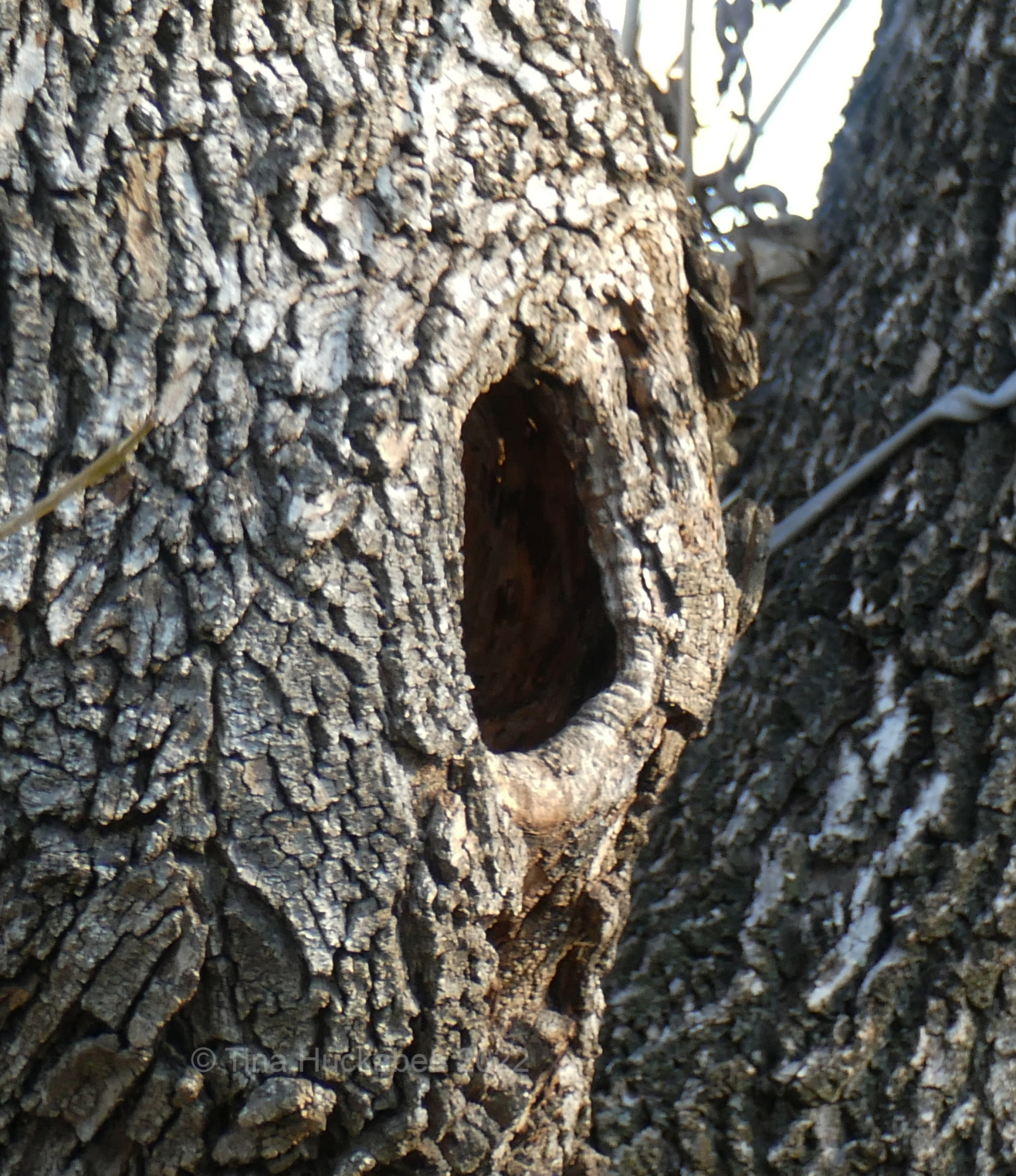
During that nesting time last year, dad would rest in the hole of my back neighbor’s dead Arizona Ash tree. The hole has a clear view of the nest box and isn’t far away. In the last two weeks, I’ve spied an owl (the same male?) in that hole almost every day. The Blue Jays know he’s there–that’s how I found him–following their warning calls as they harass him from time-to-time. Without the help of the caterwauling jays, I would have never known he was there, he’s so well camouflaged.

I know when he’s sleeping inside the hole or perhaps not there at all, when I can see the deep, dark of the hole. These two photos of the same hole were taken on different days.
This morning, at about 7am, I was hanging up the bird feeders and setting out unshelled peanuts along my back fence, when I saw an owl perched in a different, smaller tree–a Crape Myrtle–belonging to the same back neighbor. It was light, just barely, and it’s not typical to see owls out in the open after daybreak. The owl was still and facing my sister-in-law’s back garden. Just then, I heard the call of a Cooper’s Hawk, Accipiter cooperii, and observed two in her large backyard tree One of the hawks was enjoying an early breakfast.

The smaller male perched nearby while the female ate. They were closer together when I initially saw them and the dining hawk definitely bigger, which indicates that she’s the female.

It’s not a great photo, but shows both of these beauties. Did the male bring its prey to the female as a love offering? I mean, it is almost Valentine’s Day!

I was surprised at the early morning catch by the hawks, I usually see them hunting later. I now suspect that the little owl in the myrtle was caught in the open and was remaining still, as the hawks are a clear threat to her.

The Blue Jays arrived for their morning peanuts, discovered the owl in the myrtle and in a flash (that I missed, as I was glancing at the hawks) the owl flew to the nest box, trailing yelling jays after her. Just after that bit of bird drama, I glanced at the tree hole, saw an owl face there and snapped the photo shown the beginning of this post. I now know that there is a pair of nesting Eastern Screech owls in my back garden: dad is in the tree hole, mom is in the box. This pair is quiet and shy–just like last year’s owls. Are the the same pair? Probably, but only they know for sure. And really, isn’t that all that matters?

So why did I start this story with the fox scat? Last March, when the screech owl nest was destroyed, I assumed it was a raccoon that did the deed. For some time now I’ve wondered if, instead of a raccoon being the predator, that it was a fox that snatched the eggs. Foxes climb well, I know they’re around and that they’ve been in the back garden. I didn’t see any raccoons in or around my garden in this past year (though I’m sure there were visits from some) and I’ve spied the foxes several times. Additionally, in the past, but mostly during summer, I’ve seen snakes in the garden and it’s possible it was a snake which raided the box. The truth is that I’ll never know for sure who ended the owl couple’s chance at a family that time and whatever the predator, it has to eat too and likely had offspring to feed. After all, owls are predators and eat plenty of smaller birds.

Now that I’m aware that there are two owls, probably a mated pair and likely the same couple as last year, I hope to be proactive in helping them protect their nest box. There are guards that can make it difficult for predators to reach the nest and I’ll figure out something along that line. If past experience holds true, the owls will have eggs by the end of this month, definitely by March.

As for the Cooper’s Hawks, I will keep an eye out for their nesting digs. They’re big birds and a nest is likely placed in a large, evergreen oak tree.

Nesting season 2022 is underway!

Rest up, Dad. You’ll soon (hopefully!) have other beaks to feed!

A Dab of Yellow

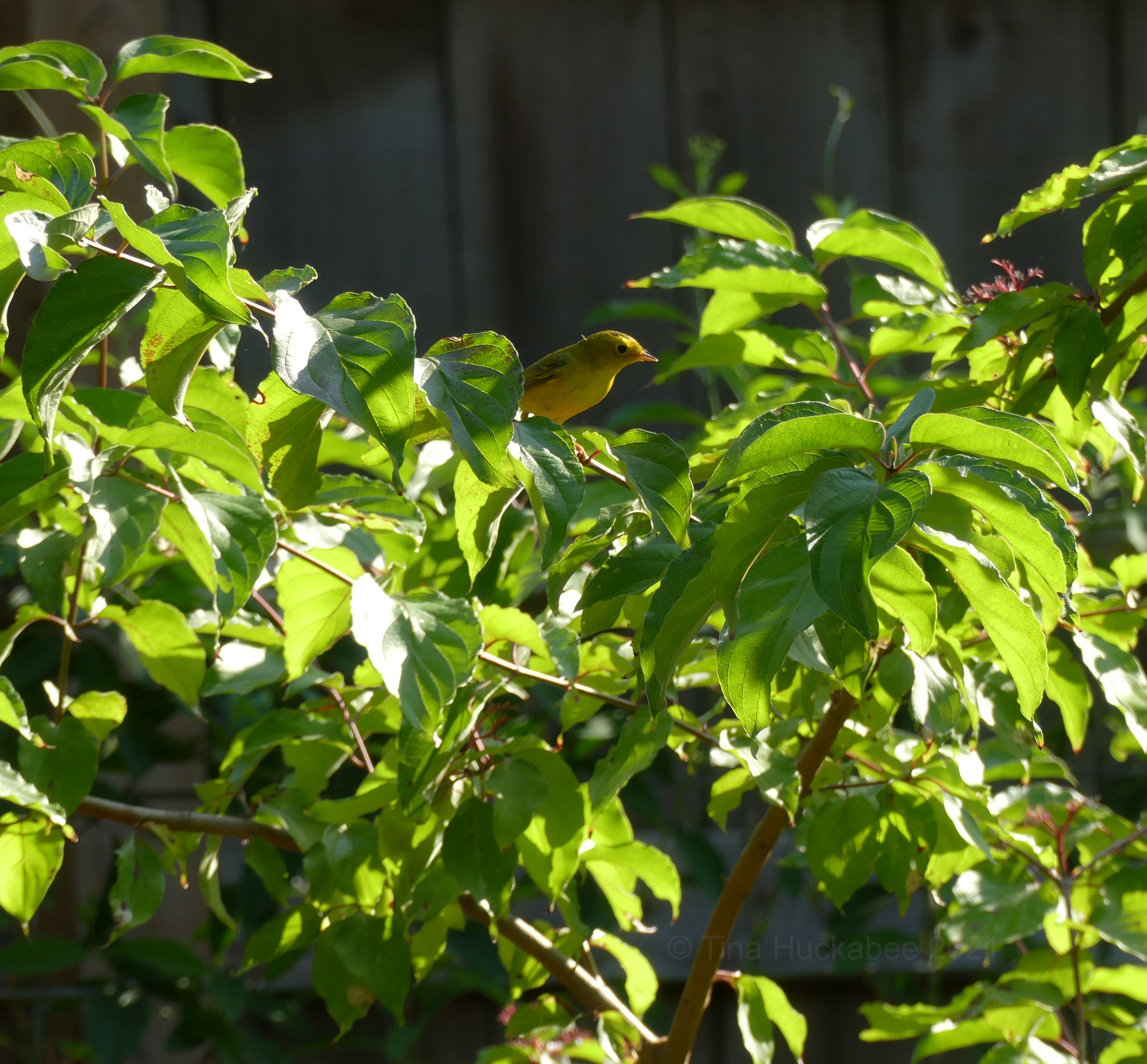
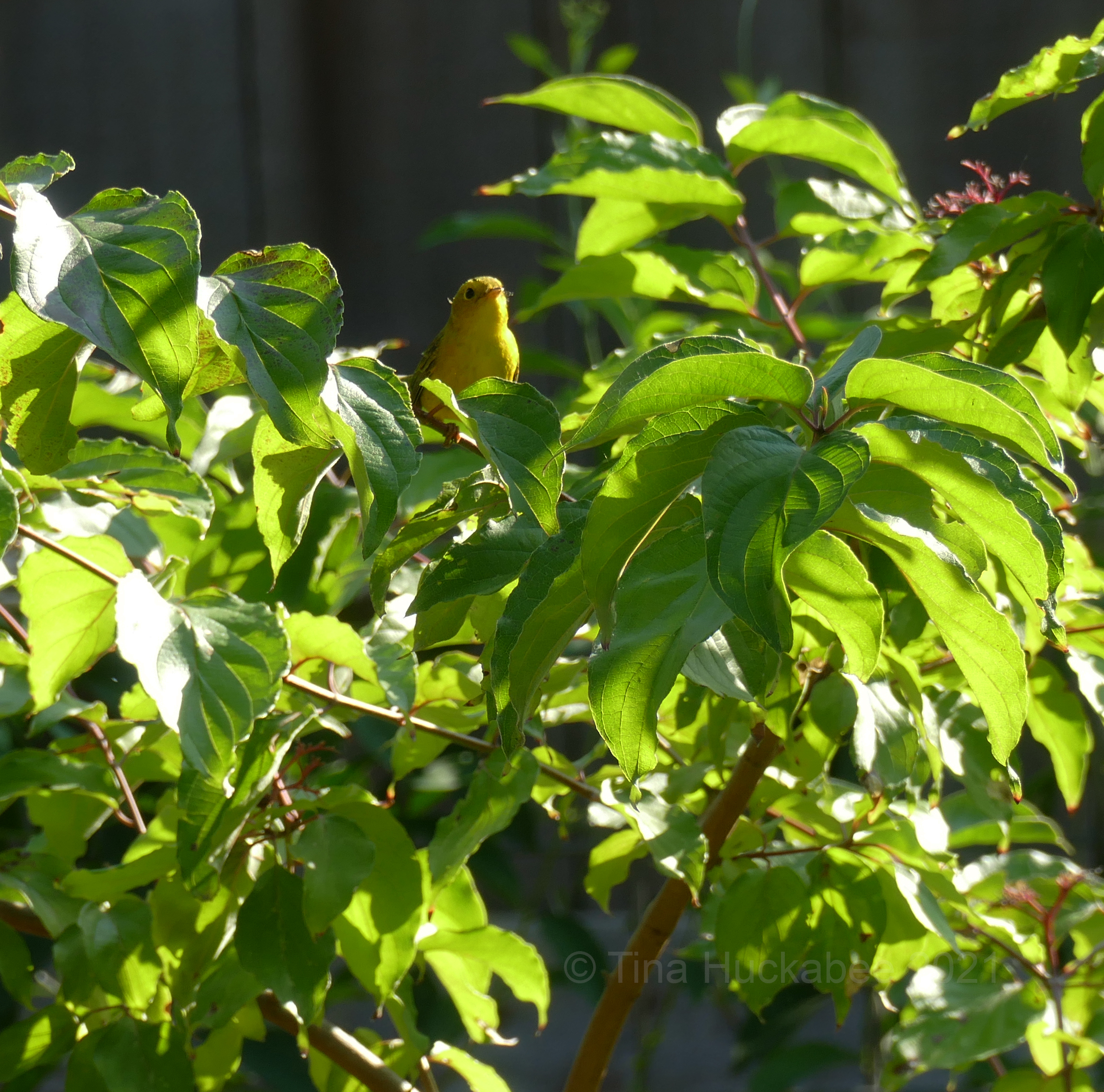
Fall migration through Texas is well underway and I’m keeping a keen eye out for atypical avian visitors to the garden. As a general rule, I don’t see as many migratory birds during autumn migration as I do during spring. So far this migration season, I’ve observed one Orchard Oriole and a Yellow Warbler, both of which where either females or juveniles, and neither of which did I photograph. Those two were the sum total of migratory birds until yesterday, when I spied this sunny male Yellow Warbler, Setophaga petechia.

During spring migration, it’s the pond and other water features which hold the birds’ interest, but autumn migration is different. As I watched him flit, first in my larger Red Oak tree, then to a Rough-leaf Dogwood, Cornus drummondii, I assumed he was headed for the pond for a quick bath. Instead, he flew from the oak tree to the dogwood–and remained there. I then surmised that maybe he was aiming for his share of the white fruits that my two Rough-leaf Dogwoods have produced this year. If you look as the photo, to the right of Mr. Yellow Fellow and far right of the photo, you’ll see a mauve/reddish-brown branchlet. Until recently, this set of small branches, like other similar ones on both trees, held juicy white fruits, most of which have been eaten by a variety of birds, primarily the resident Mockingbirds and Blue Jays. No doubt, other migratory birds have dined on these fruits, too, including the aforementioned Orchard Oriole and Yellow Warbler, who spent time in both dogwood trees, playing peek-a-boo with my camera behind foliage.

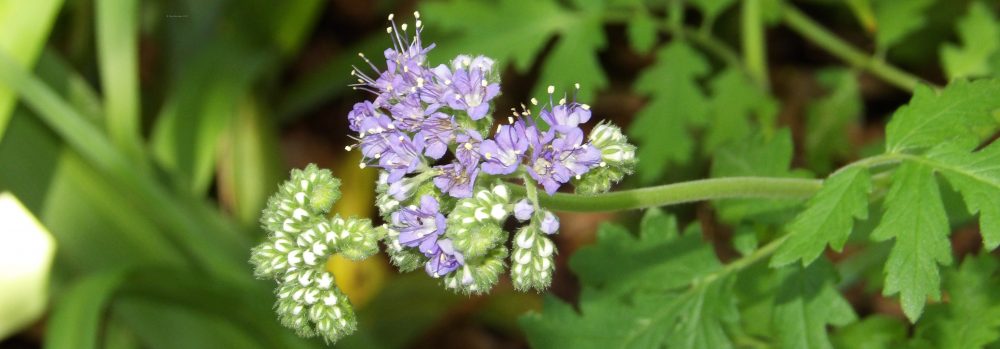
Pre-bird munching, this is a close-up of the fruits, developed, but not yet devoured.

As there aren’t many berries left, and most of those sit waiting at the base of the tree, I realized that the yellow fellow was nibbling on insects as he moved along the upper branches. That tracks, as Yellow Warblers enjoy insects as a main source of their diet.

Unfortunately, Mr. Yellow Fellow didn’t hang around too long; I guess he’s eager to get to Central America, where his winter will be mild and his meal choices prolific.

These next few weeks are the apex of bird autumn migration in the Americas and I look forward to more feathered friends flying through. Good luck, Mr. Yellow Fellow–come back and see me next spring!

Picking Peanuts

Recently I’ve removed the safflower and sunflower feeders, as the finch eye disease has appeared in our neighborhood in several House Finches and I don’t want to assist in its spread. Poor little finches. House Finch eye disease, a conjunctivitis which eventually causes blindness, is caused by Mycoplasma gallisepticum and is a known problem for some kinds of birds who feed at feeders, primarily types of finches. (Check out the highlighted link above for more information about this disease.) Because the House Finches rarely eat peanuts, I’m leaving my two peanut feeders up and filled for the backyard bird visitors’ eating pleasure. For what it’s worth, my garden has scads of giant sunflowers and there’s no shortage of seeds for those who partake. I’ve observed House Finches, House Sparrows, Carolina Wrens, doves–and squirrels–hanging out amongst the sunflowers, nibbling this and noshing that. I’m sorry that the disease is spreading in my neighborhood, but with the sunflowers in bloom for the pollinators and seeding out for the birds and beasts, it’s a good time to remove the feeders and let birds feed like they’re supposed to–on plants which provide nourishment.

While I’m missing the cute House Finches close-up at the feeders, other resident birds are active and worth the watching. Downy Woodpeckers like this mature female, are always ready for peanuts. They are often the first to show up most mornings.

Her back and tail feathers show a beautiful pattern.

The local male (mate of the above female?) is darling with a bit of peanut in his beak and topped by his red hat.

The Downy Woodpeckers aren’t the only woodpeckers who love peanuts. Red-bellied Woodpeckers are also fond of the legume. This female is stunning with her bright red head and her stripey black-n-white wings.

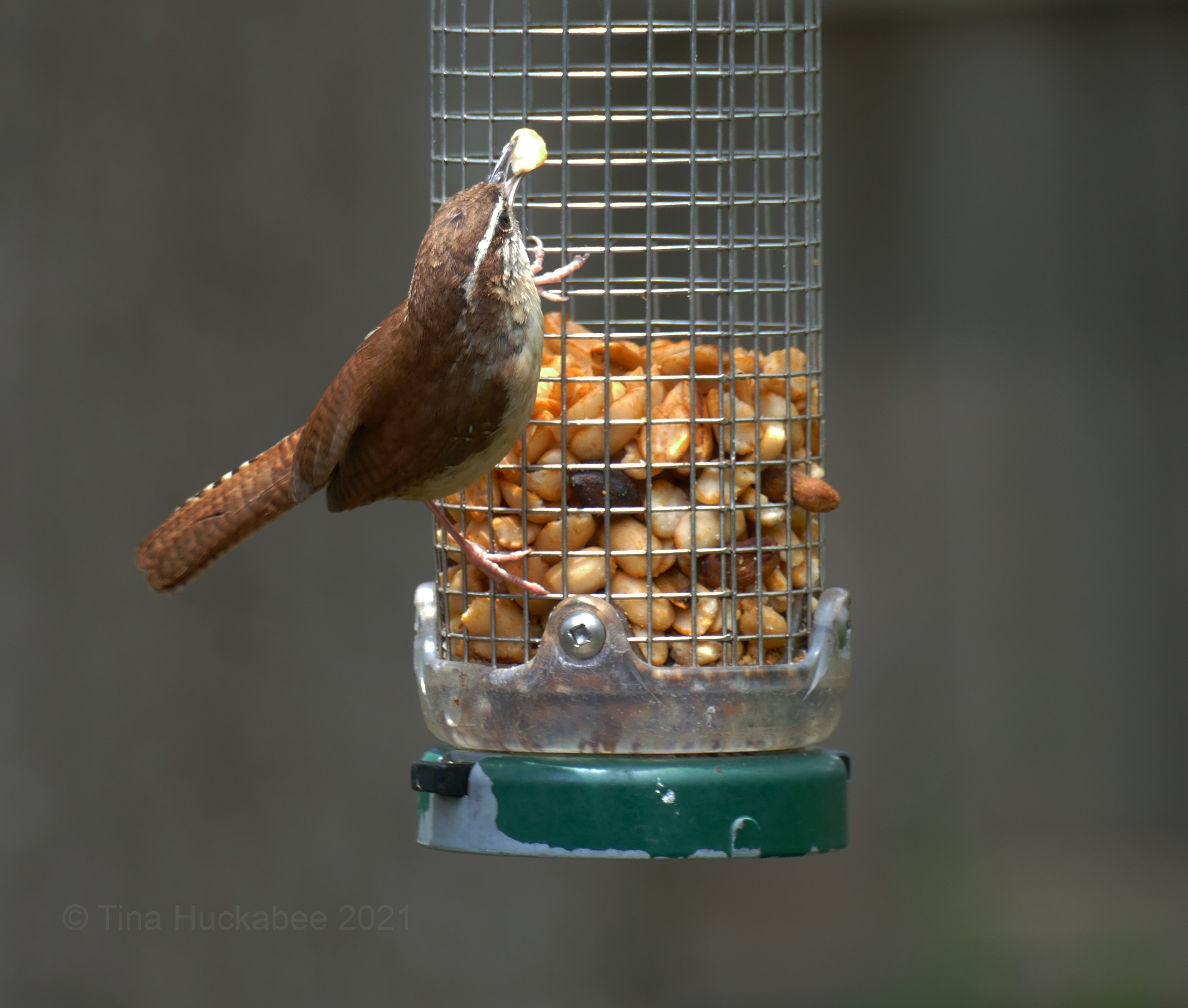
The most vocal of the neighborhood songbirds are Carolina Wrens. After singing, this one captured its treasure and dashed to a secluded spot for a quick snack.

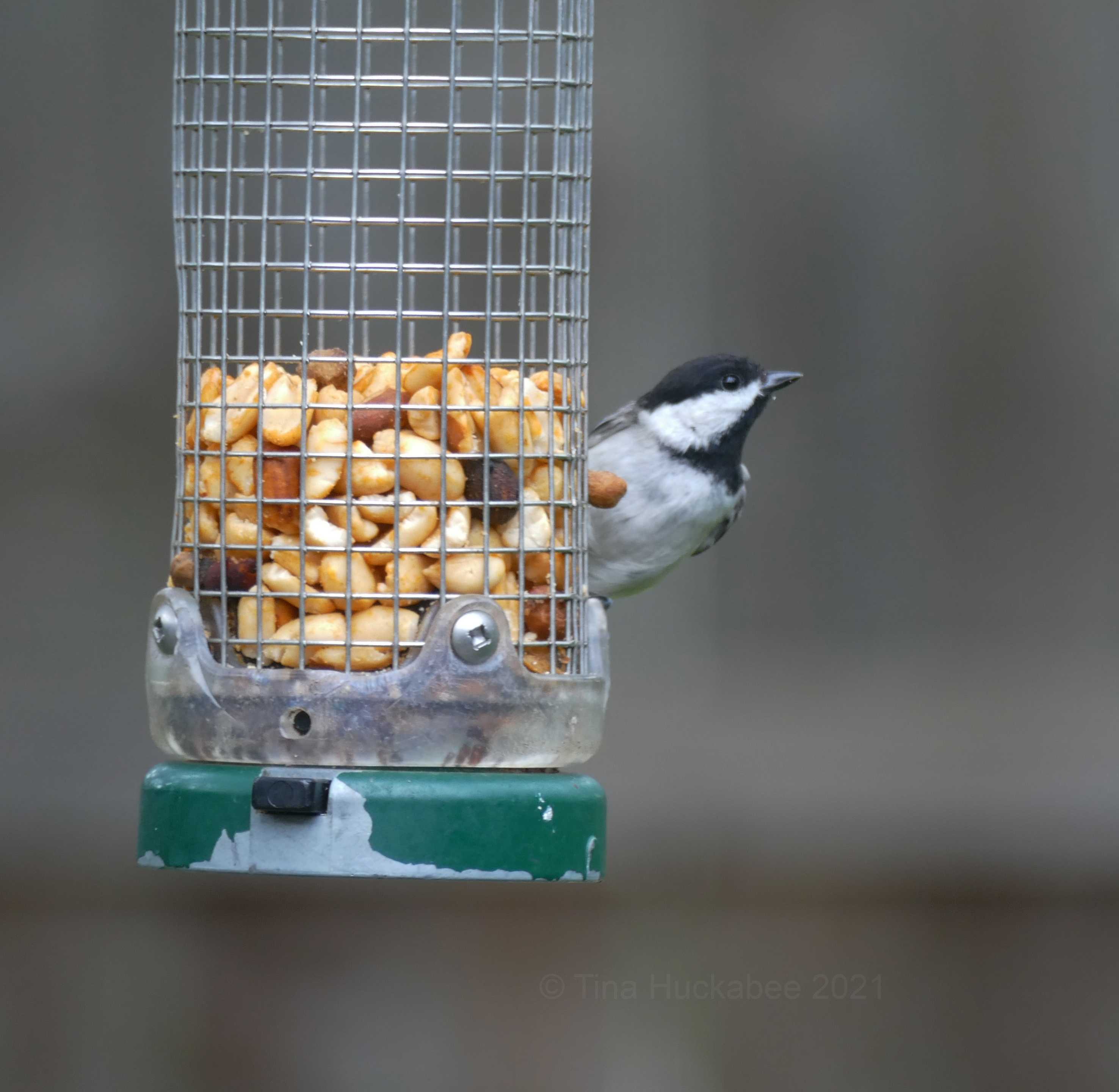
Carolina Chickadees come and go in my garden. Right now, a male and female and their offspring are regulars at the peanut feeders.

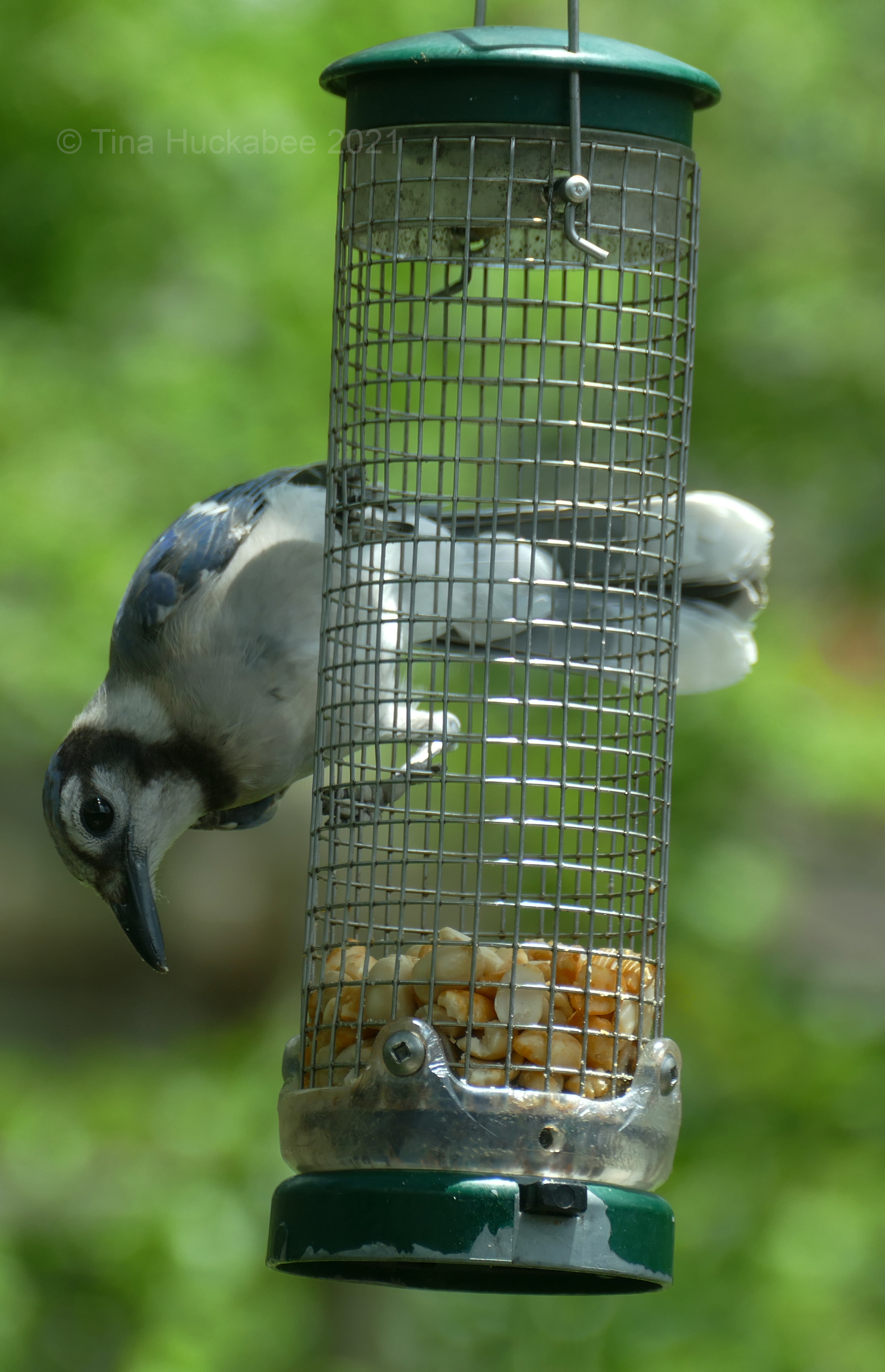
Always, there are Blue Jays. These guys and gals enjoy all the feeder offerings, but like so many birds, snarf peanuts with glee. This juvenile got a chance at one of the feeders without any pushy adults bullying him.

I have two feeders for shelled peanuts and a ceramic pot (which was supposed to be for a plant) for unshelled peanuts. Mostly the jays and the squirrels snatch these treats, but sometimes I see a Great-tailed Grackle or a Red-bellied Woodpecker snatching a prize. I put the unshelled peanuts out first thing in the mornings; once the peanuts are gone, the birds have to wait until the next day for more of these yummies.

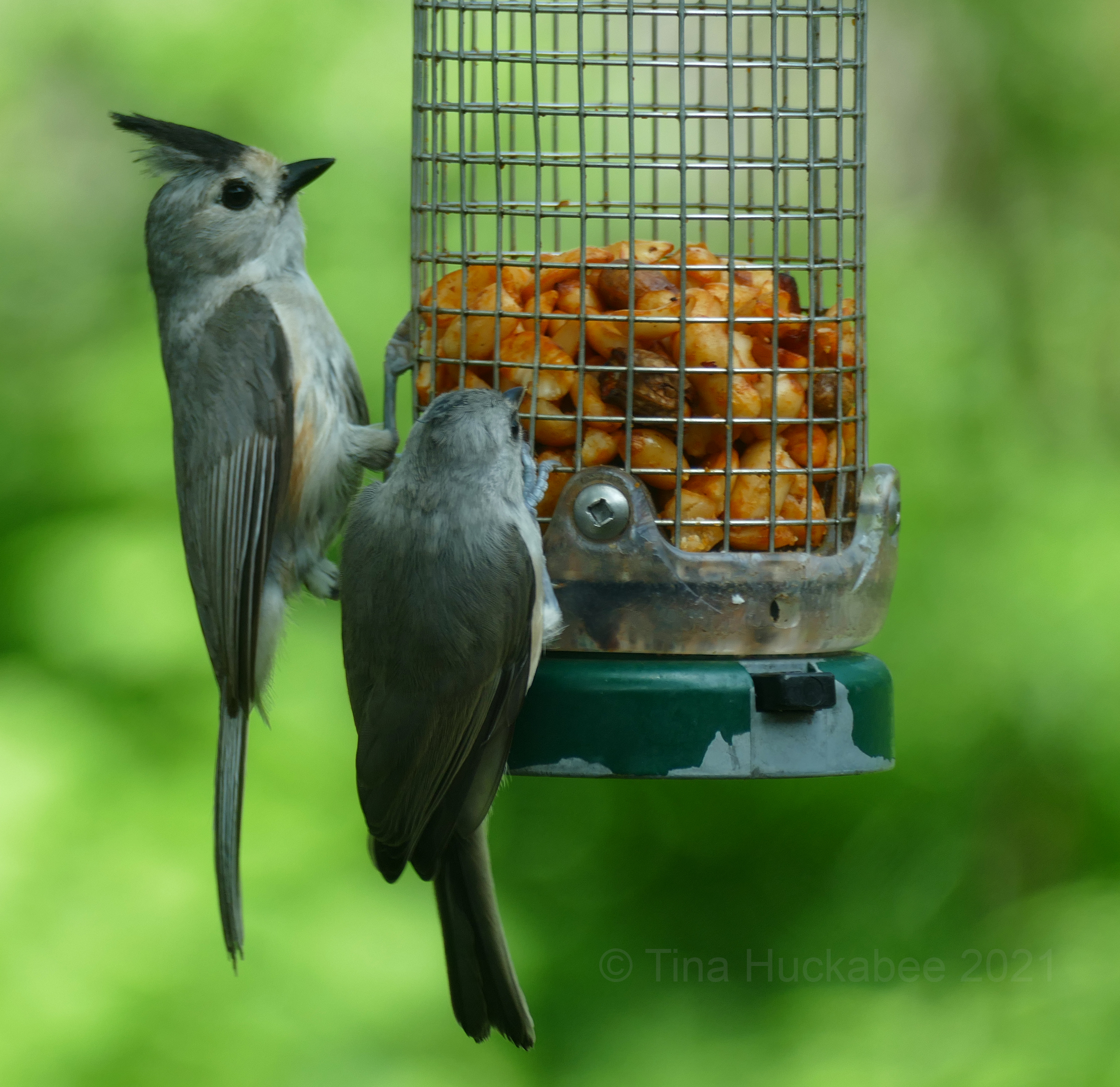
Like the Carolina Wrens, the Black-crested Titmice come and go at the feeders, with the summer months being a big time for feeding. This is a parent and a fledgling sharing a meal.

As summer progresses and the bird families are grown up and mostly out of the nest, eating at the feeders slows a bit. For the next six weeks or so, it’s mostly the usual suspects in the garden. By late August, there will be whispers of migratory bird activity and after flights south, the winter warblers will settle in. During those times, peanuts will remain the flavor of the months.