Time Outdoors

Fraught times we live, yes?   It’s hard to stay calm and breathe deeply. 

If you’re healthy and able, go outdoors.  Walk.  Ride your bike.  Smell the roses.  Don’t hug, shake hands, or kiss cheeks–save those sweet things for another time.

I feel fortunate that I enjoy bit of space to roam and ramble and soothe my fears, if only temporarily.  I feel lucky that I live in a neighborhood where we watch out for and call on one another in times of need.  I feel blessed that I live in a larger community which places a premium on support and presence when needed.   

As an additional boost to my soul, it’s spring and there’s something new in the outside world each day to see, to appreciate and find comfort in.

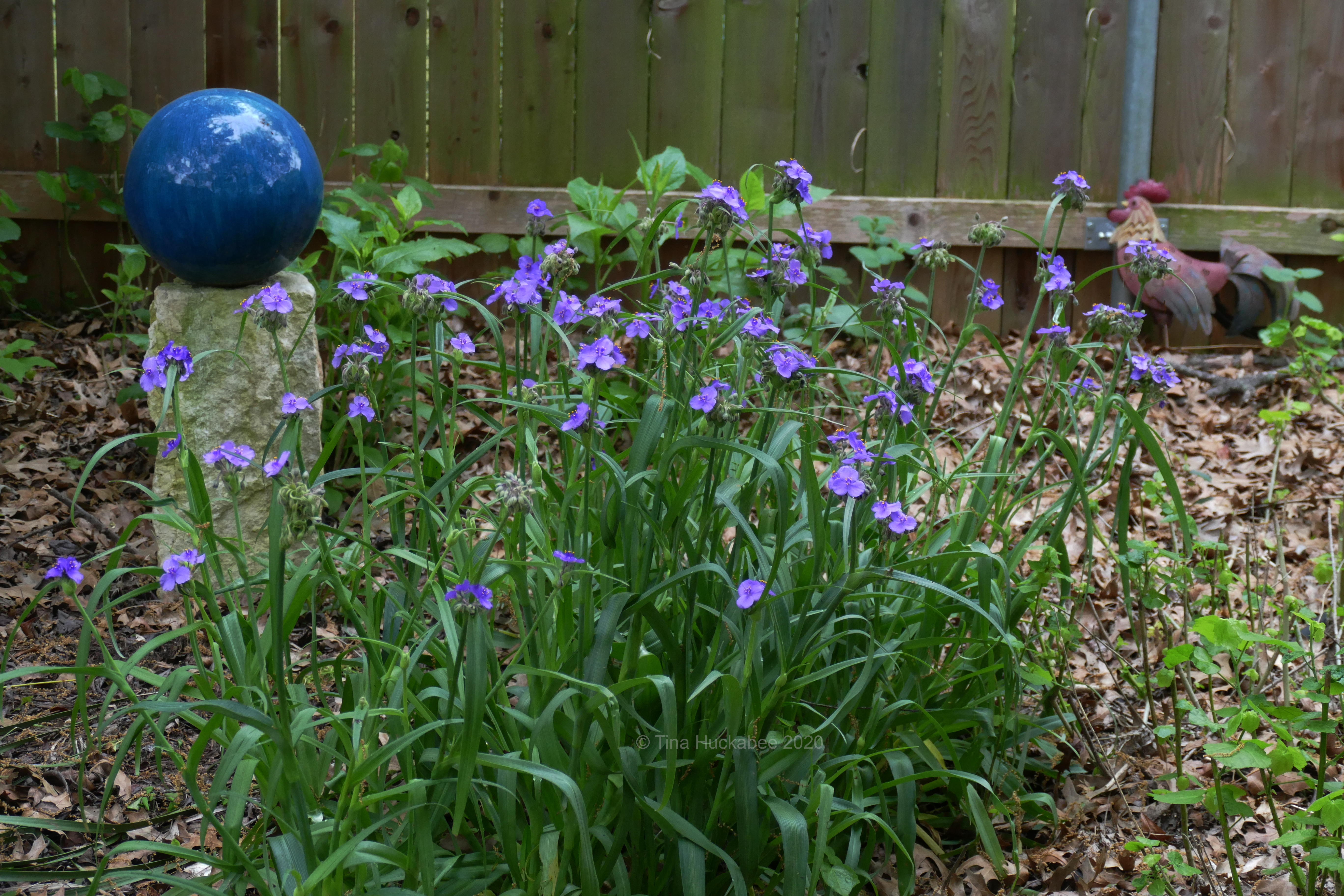
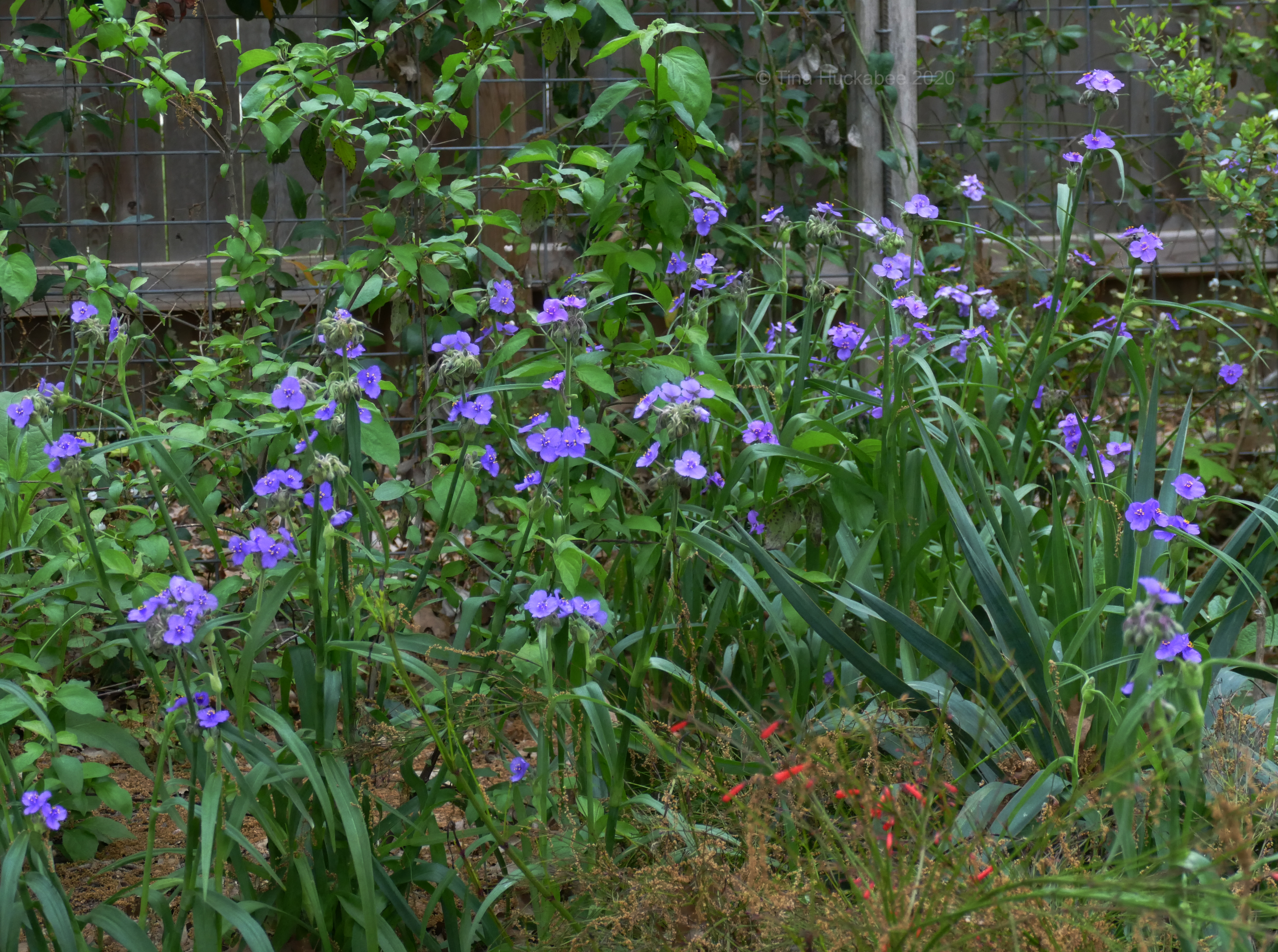
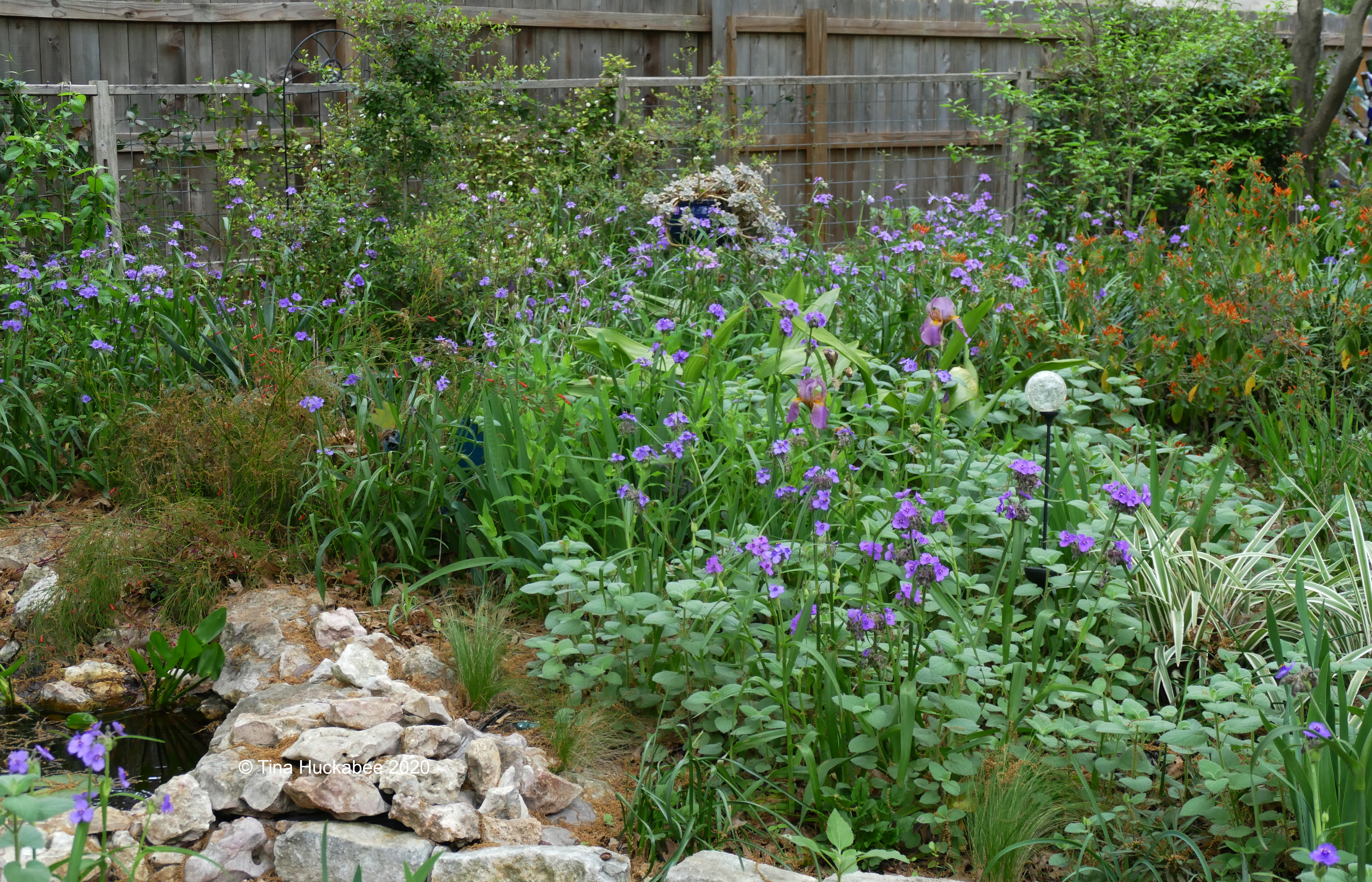
Giant spiderwort, Tradescantia gigantea, are in their prime.
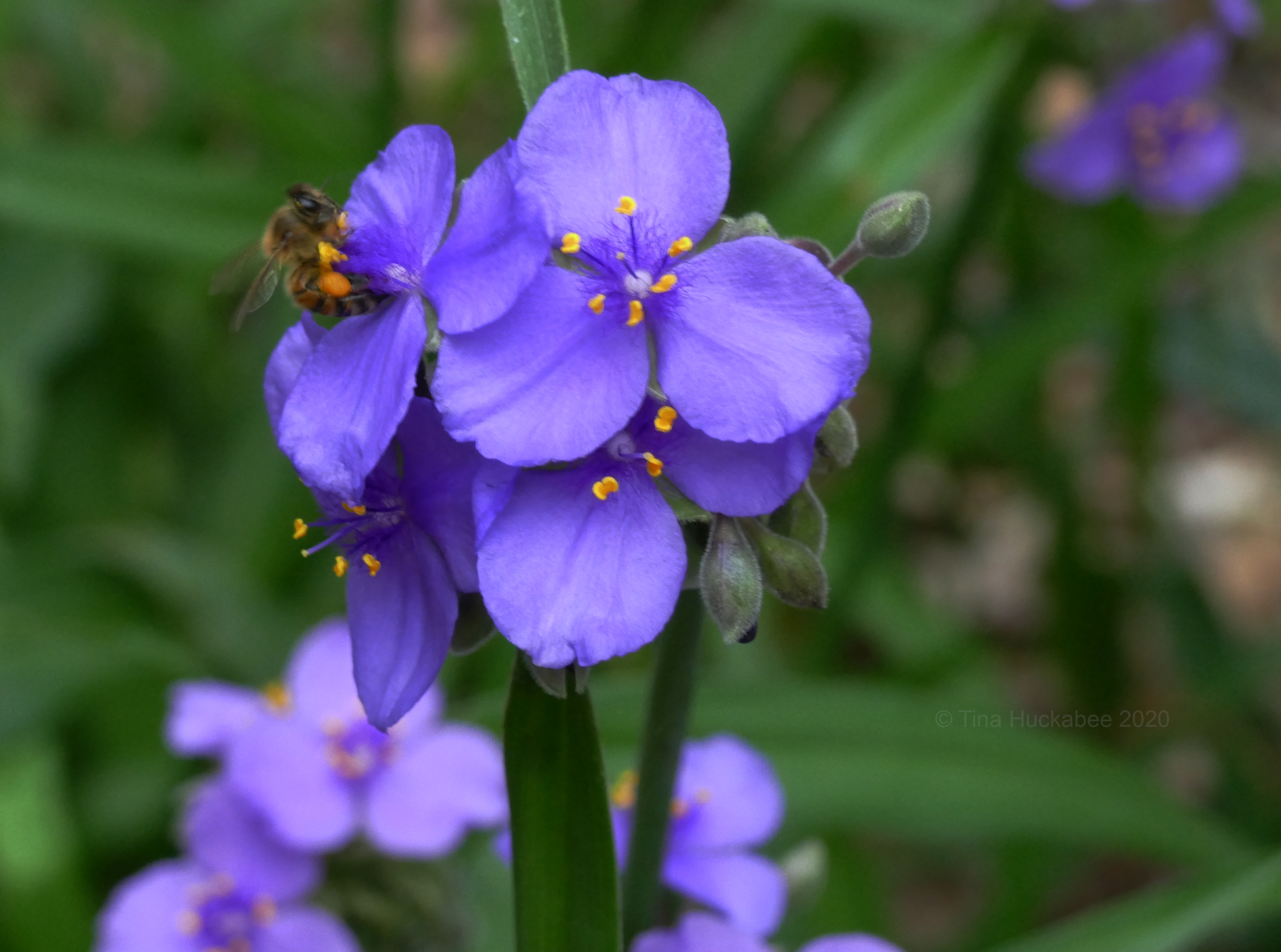
The Spiderwort provide plenty of work for the pollinators. Honeybees and even some native bees are busy, busy, busy with these blooms.
 

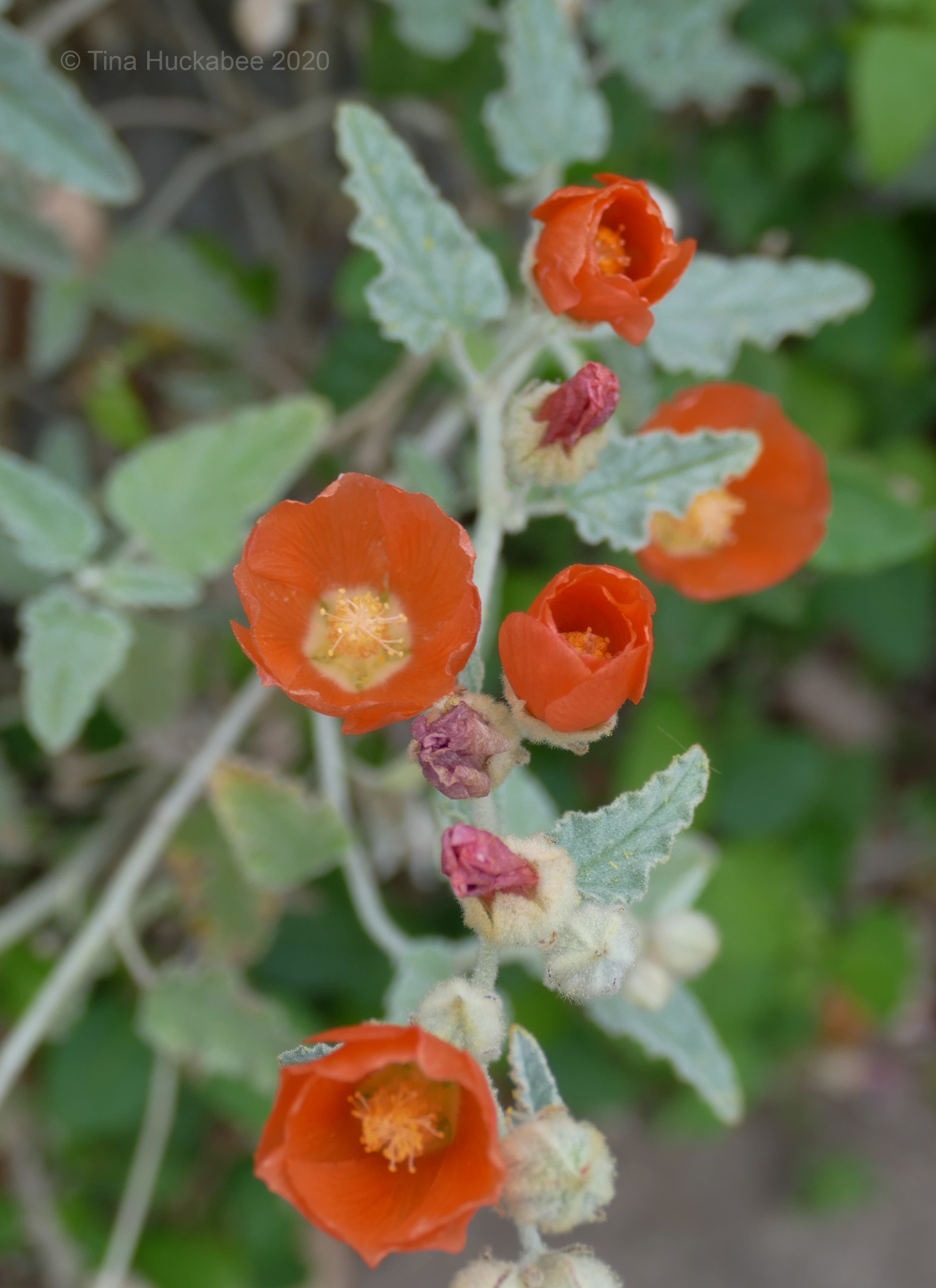
Globe mallowSphaeralcea ambigua,  bloomed all winter, but somehow, their color is more vibrant now.
 

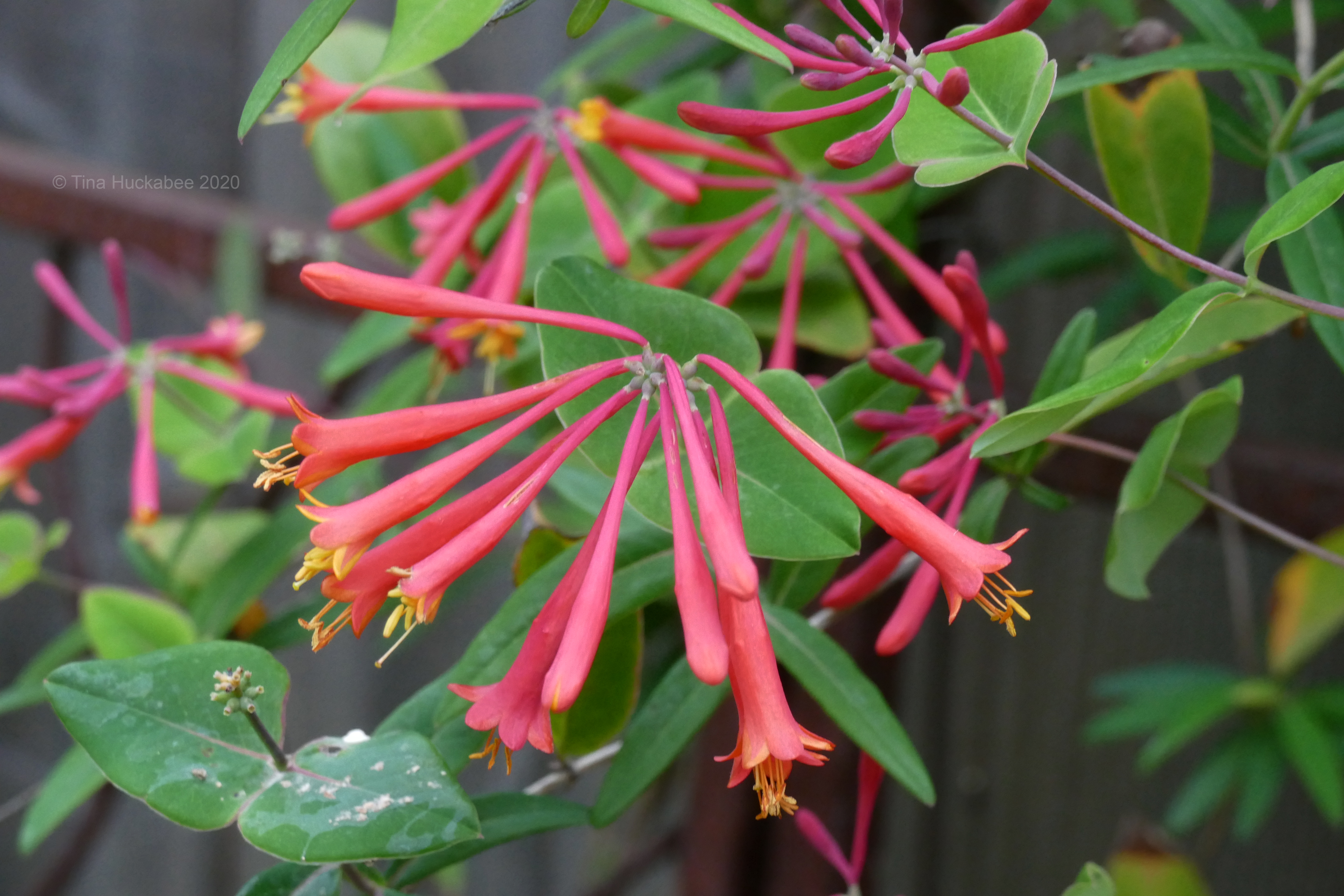
Coral honeysuckleLonicera sempervirens, dangles its clusters of spring flowers.

I saw some native sweat bees around these blooms yesterday, though none early this morning.  Where are the hummingbirds?  This is one of their favorite flowers!
 

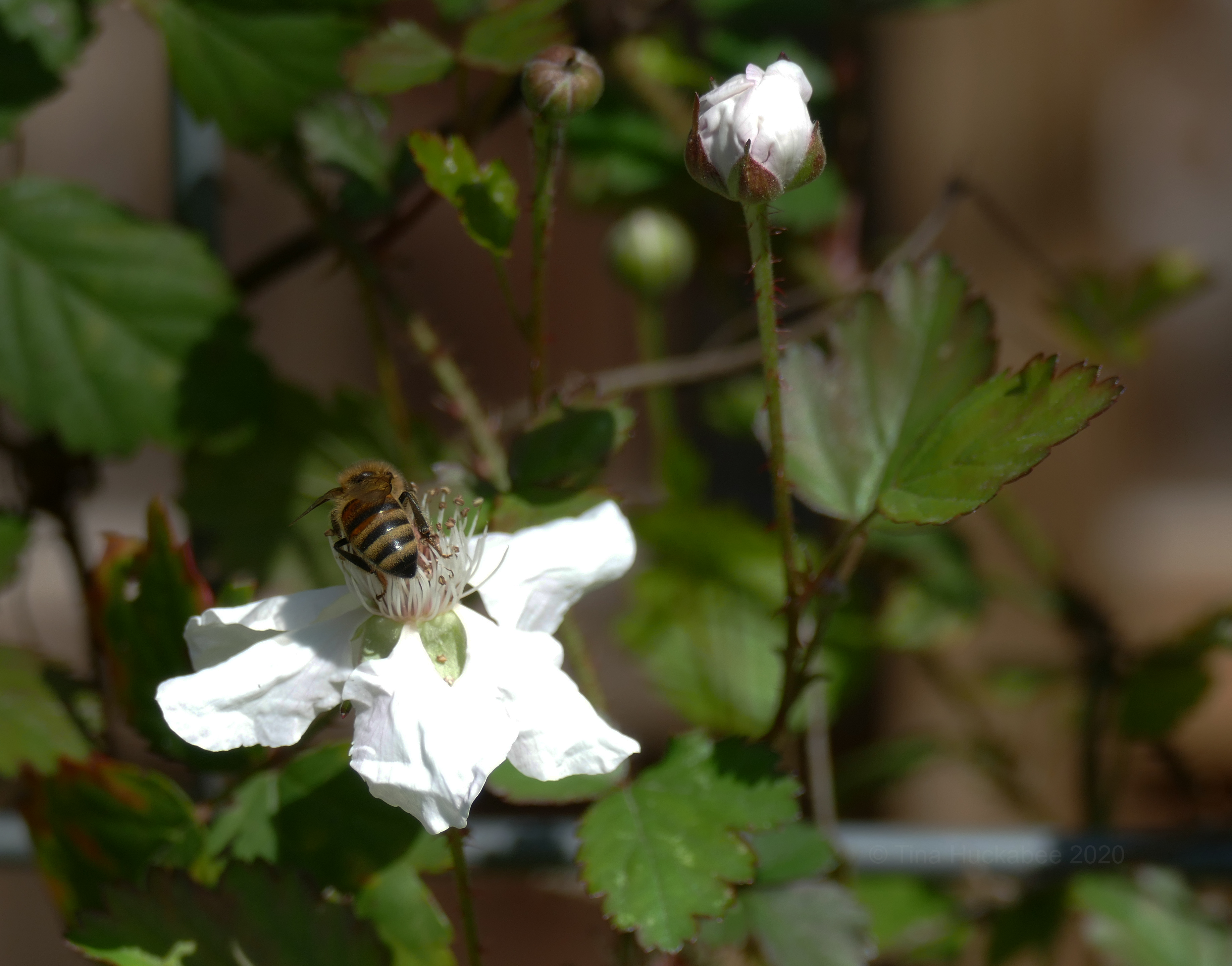
Dewberries, mostly for the birds, will follow their pretty white blooms, helped along by my honeybees.
 

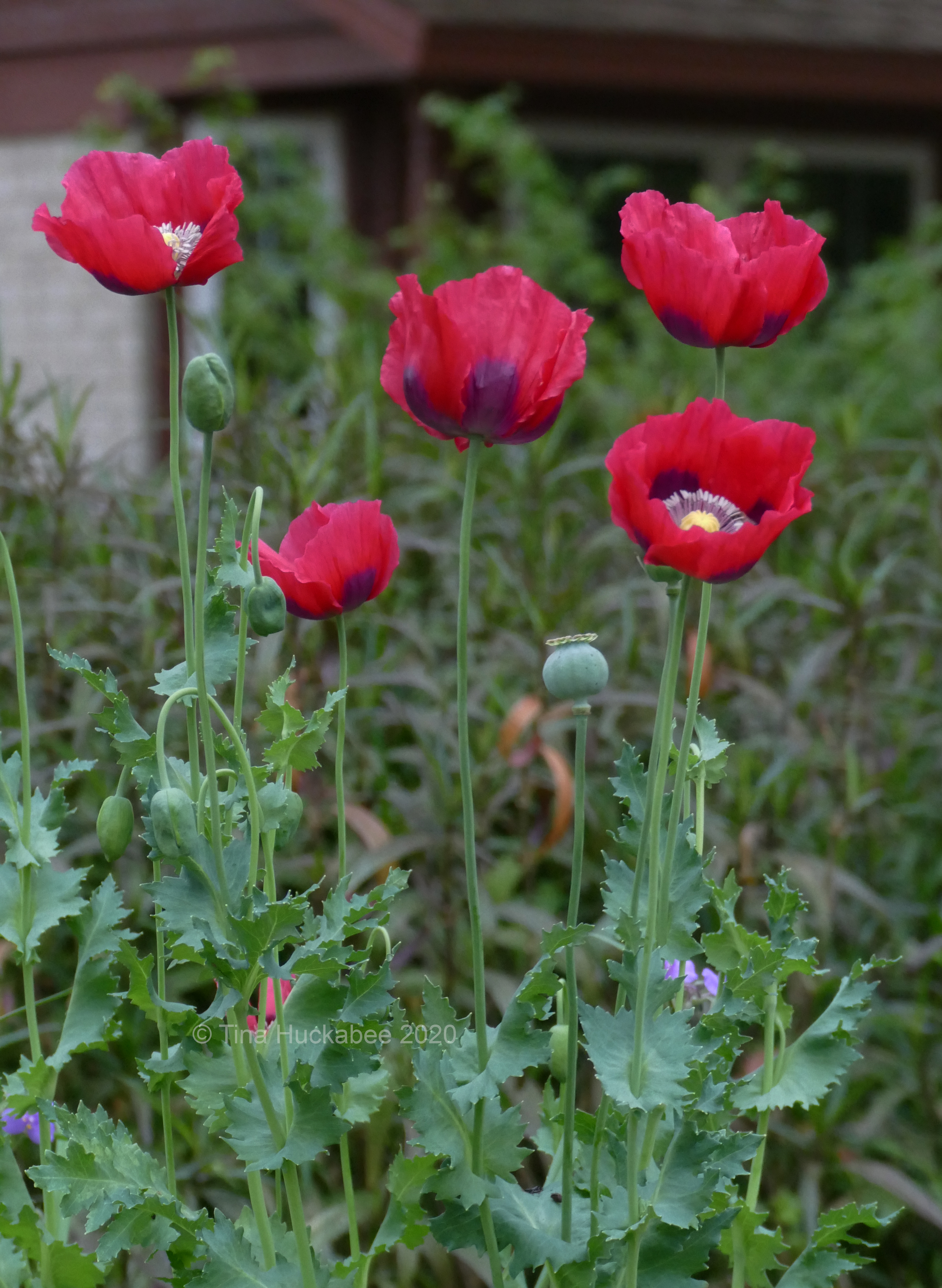
The poppies are popping.  Really, what more could I possibly add to this?
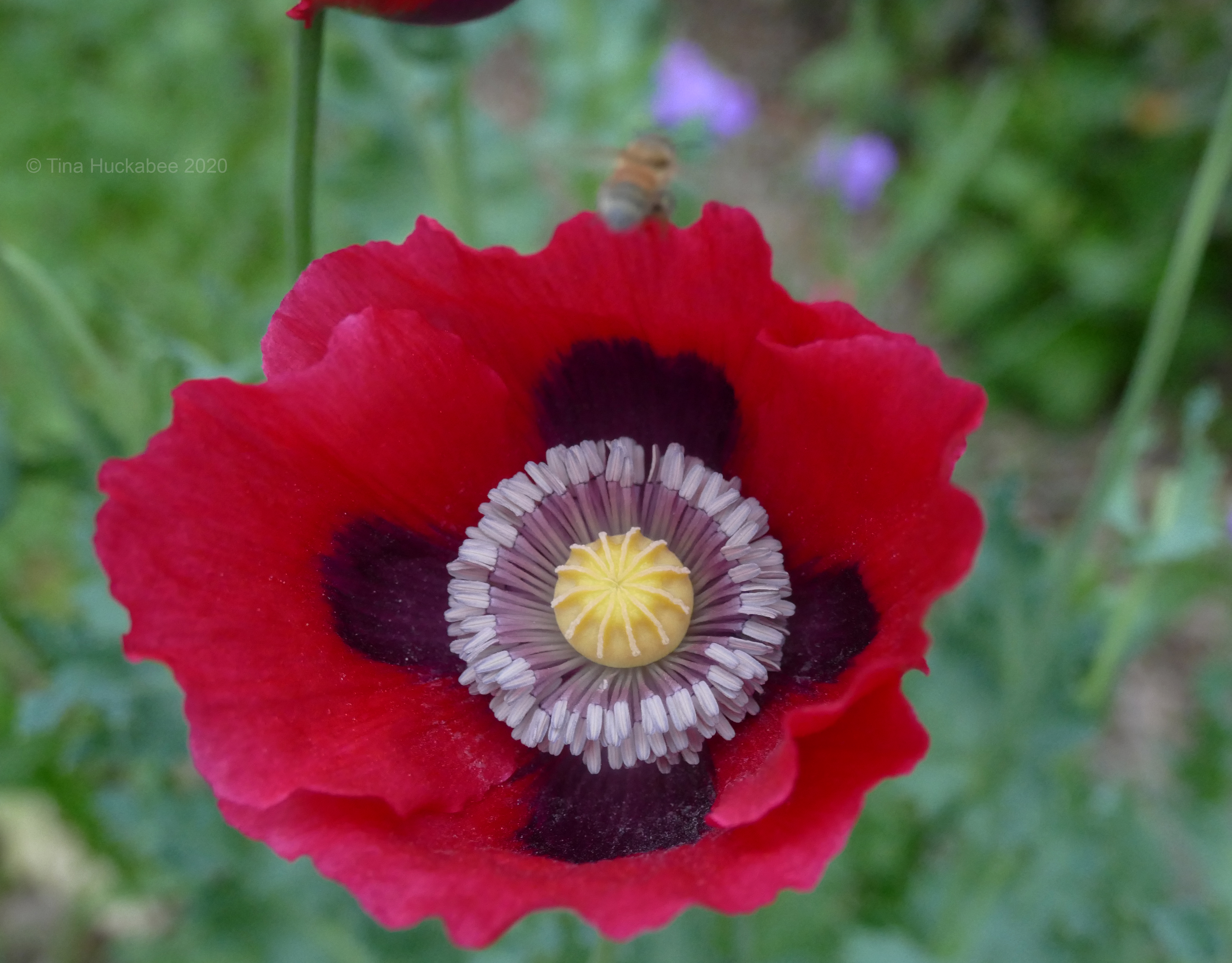
This smear of honeybee at the top of the flower is the best photo I managed, given herspeed and the breezy south winds.
 

In the same plant family as the spiderwort, this charming False Dayflower or Widow’s TearsTinantia anomala, is one of many that grace my garden.  These seed out prolifically, showing up here and there.  But I don’t mind; they’re lovely, springy, cheery–and easy to pull up.


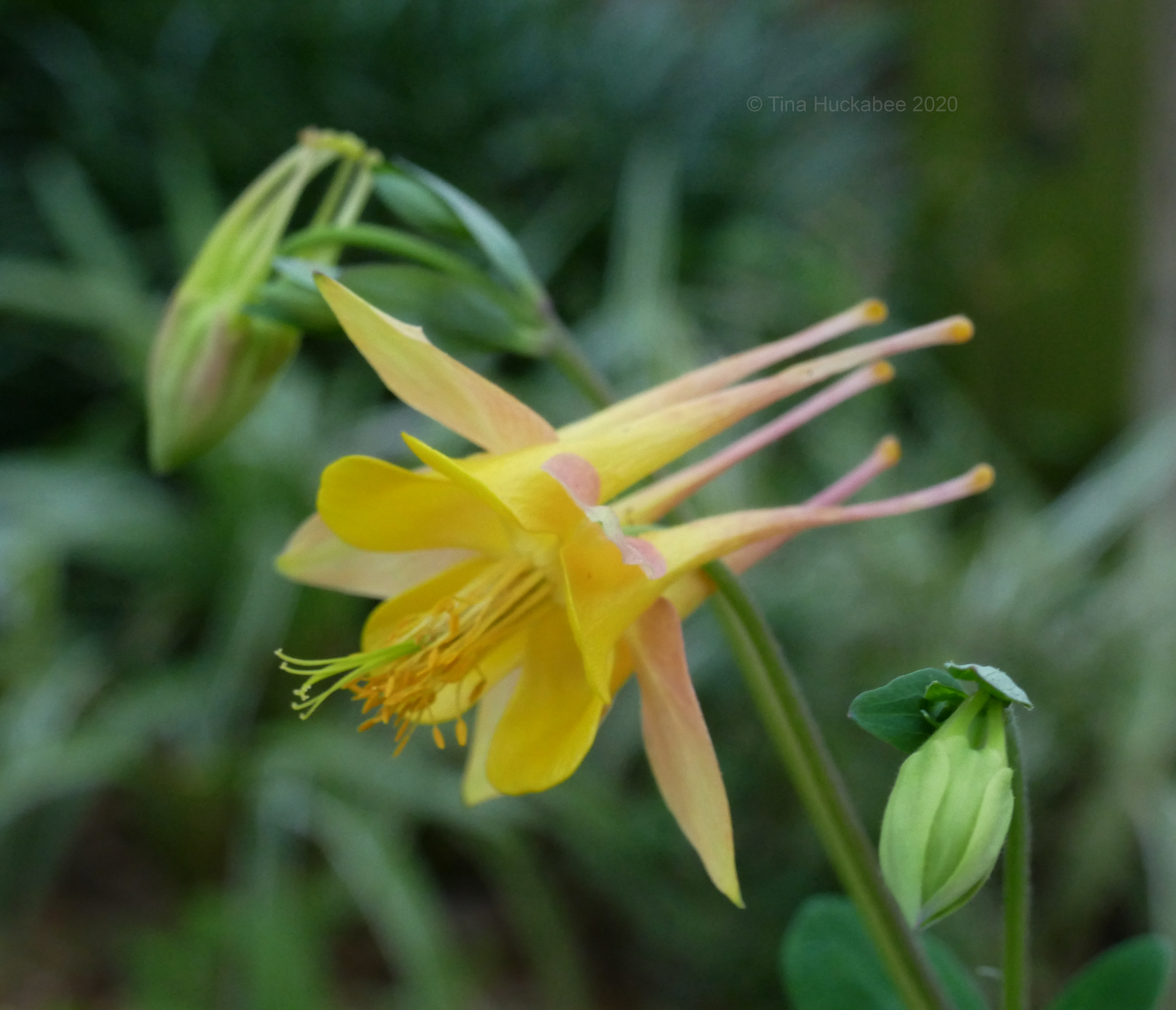
March and April (and sometimes, May) are season of columbines.  Mine are a mix of two natives to Central Texas:  Aquilegia chrysantha and Aquilegia canadensis


Columbines show their beauty in many poses.

Oak pollen drapes over the flower.


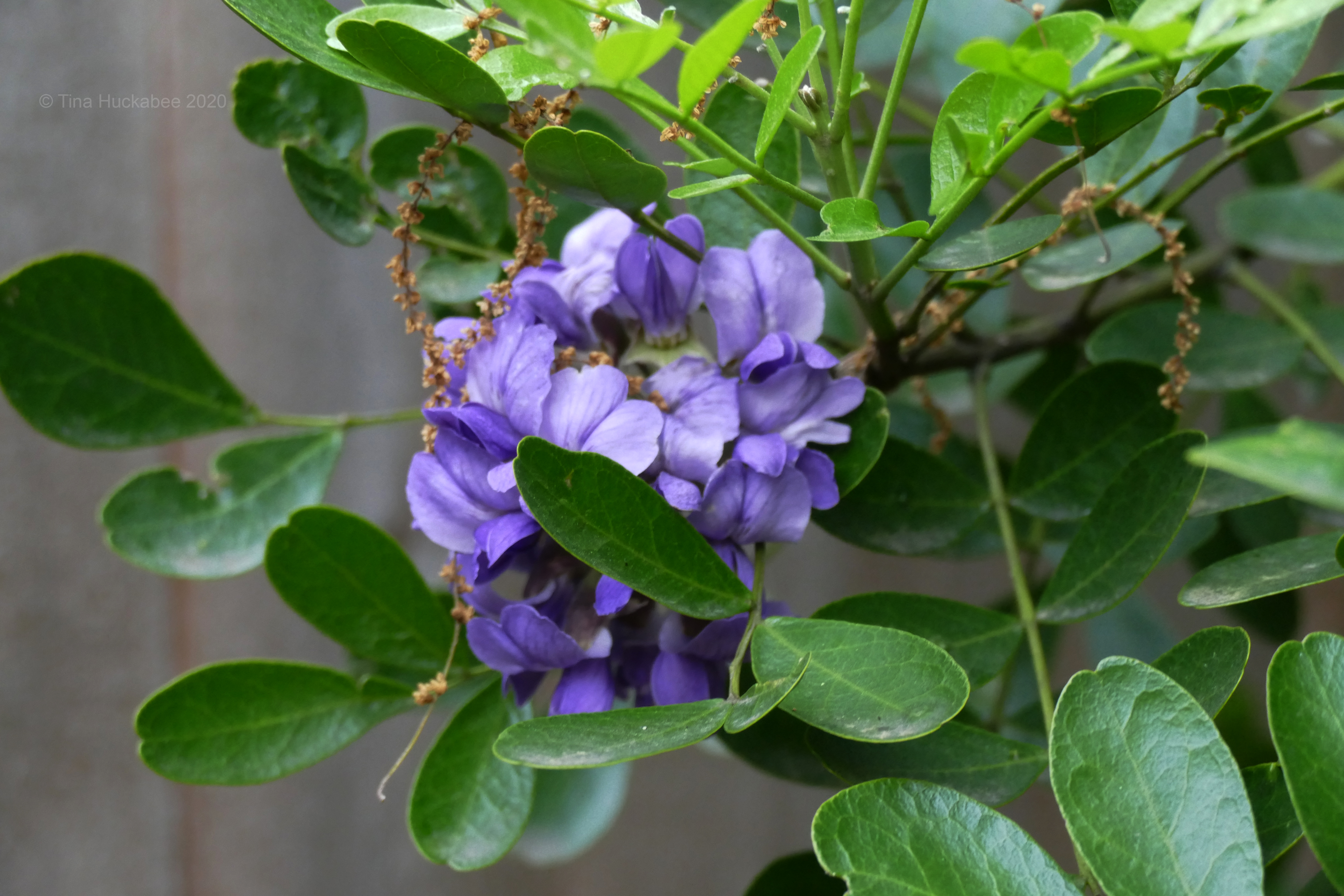
Texas mountain laurelSophora secundiflora, bloom briefly, but beautifully.   The tree is a favorite of mine–and many here in Central Texas-and the blooms are a favorite of several native bee species.  The bees-on-the-blooms are usually too high up for me to get a decent shot of their activity.

This is a tree worthy of any garden.

It’s also oak pollen season–and how!  This blossom wears its oak pollen well!
 

CrossvineBignonia capreolata, a hardy evergreen vine, announces itself with bold, summer-like colors during March and April.  Interestingly, when Crossvine blooms in the summer, the color is a pastel peachy hue.

The vine should cover the fence in a year or two.  I’m looking forward to a wall of springtime terracotta and yellow.


I’m lucky to grow a garden: to tend, to nurture, to love.  My garden, with its blooms, beasts, and beauty, is a respite from troubles–and always has been.

Take care of yourselves.  Make time to go outdoors:  in your own green space, at a park, or along a tree-lined street–just avoid crowds.  Be safe, wash your hands, don’t hoard.  Watch out for your loved ones and neighbors.

Be well.
I’m joining with Carol  of May Dreams Garden and her monthly huzzah for blooms–pleas pop over and enjoy blooms from many places.  You’ll feel better.     

Yellow or Mexican Butterfly Vine (Mascagnia macroptera): A Seasonal Look

While not the real deal, I welcome these butterfly doppelgangers to my garden:

The chartreuse seedpod is beginning its morph to the mature-seed incarnation.

This golden toast heralds the final seed product.


These two seed pod examples develop on a fabulous vine, the Yellow or Mexican Butterfly vineMascagnia macroptera. 

Butterfly vine is a native to Mexico, but grows southward into Central America.  Several sources I’ve come across mention that the early English naturalist and botanist, Joseph Banks, observed Butterfly vine growing in Brazil.  

I’ve grown my Butterfly vine for at least a decade, maybe longer–I don’t remember exactly when I planted it.  The thick, twisted main trunk confirms that mine isn’t a newby vine.

I first came across Butterfly vine when I was a volunteer gardener at my children’s elementary school about 20 years ago.  One grew at the back of a portable building, with western exposure and no water source readily available.  I recall that it was summer that I found the vine–a Texas summer, folks–and the vine was as fresh as a daisy and blooming its clusters of petite yellow flowers.

Full sun, drought-tolerant, deer resistant, and attractive?  Yep,  that’s a vine for me!

My Butterfly vine grows in an opposite situation, receiving only dappled or diffused light, depending on the season. Yet it thrives with the same great qualities as in full sun, though with fewer blooms most years.  The only maintenance that I employ with this vine is the same one that I do with my hair: tuck away those annoying, wayward tendrils that fall into my face!  I’ve never experienced any negative issues with this vine:  no debilitating diseases, no invasive insects.  

During a hard winter, where there’s at least one multi-day freeze well into the 20s or teens, the vine may be rendered dormant.  The last cold winter like that was in 2014.

The “butterflies” certainly held their own that winter, even when the rest of the vine suffered freeze damage.

Even with the vine losing its leaves to the hard freeze, the foliage returned vigorously from the roots and along the mature stems once longer days and warmer temperatures arrived.

Last year’s winter was mild, but a late, hard freeze blasted through in March. This is how the vine responded:

The vine lost a good portion–but not all–of its leaves; what was lost, came back quickly.  

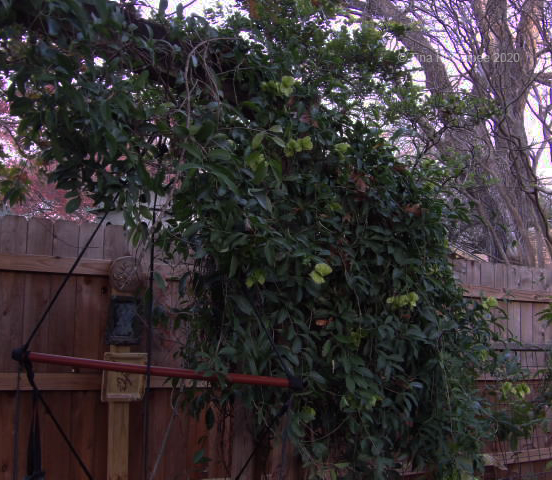
In a mild winter like this one of 2019-20,  the vine retains its evergreen habit.

With climate change, I’m guessing that this vine is now mostly an evergreen for my  USDA zone 8B garden.  According to Monrovia, Butterfly vine grows in USDA zones 8-10.  I can imagine that for gardens growing significantly farther north than my own,  the vine is an annual or semi-annual plant.  

The vine flushes out during the wet and cool spring months, preparing for its summer/autumn blooming.

Green-n-growing-n-fresh is Butterfly vine’s contribution to the summer garden.  Typically, the yellow flowers don’t appear until mid-to-late summer, sometimes not until autumn.   In full sun, the flowers appear earlier and are more numerous.  Flowers on my vine are scattered, given the shady conditions that they grow in.

The number of bloom clusters also varies according to rainfall or irrigation.  I don’t water much–just twice per month during summer–but if there’s decent rainfall in late July, August, or September, the vine yellows-up nicely.  The vine weathers drought beautifully; I’ve never seen it wilt, nor does it lose leaves during that time.  But for its yellow beauties to perform, some extra wet stuff is an appreciated must.

Butterflies and honeybees sip the nectar, and I’ve seen lizards and smaller songbirds hide in the lush foliage, so I think Butterfly vine qualifies as a solid wildlife plant. 

Even with minimal rainfall, there are still pops of yellow along the vine. The vine blooms throughout autumn, with blooms eventually morphing into their seed-producing, butterfly selves. 

If you live in USDA zones 8-10 plant this lovely, fast-growing, water-wise vine. Yellow or Mexican Butterfly vine is friendly to a variety of pollinators and provides cover for other wildlife.  It’s not invasive and works well on trellises, fences, and arbors. Most years, you and your wild garden buddies will enjoy its spring and summer glory and its evergreen foliage in winter. In a mild winter, the vine retains its foliage and its butterflies. After a hard freeze, all bets are off.

But with this vine, you might have butterflies year-round!!


Spring:

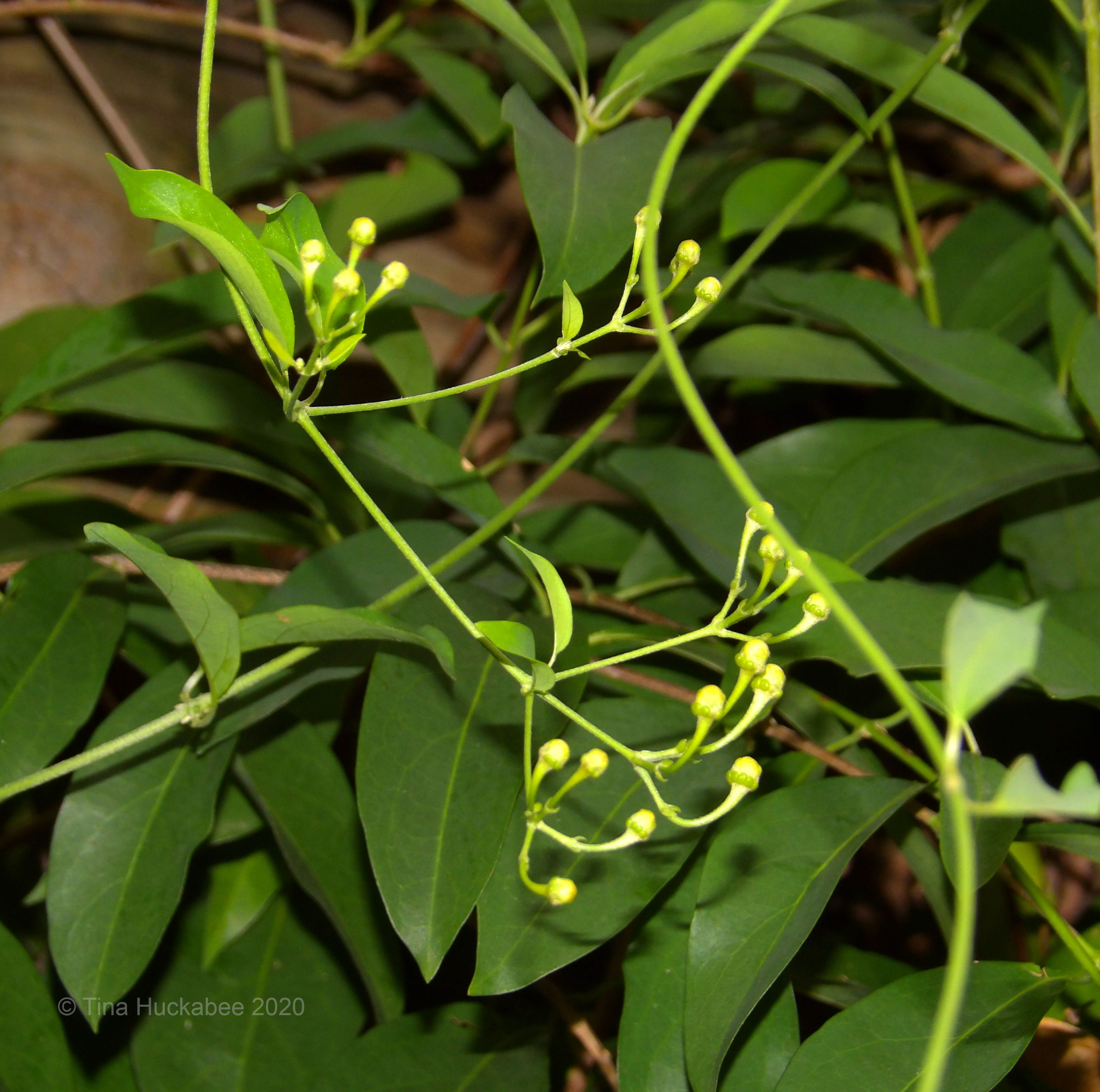
Summer/Autumn:


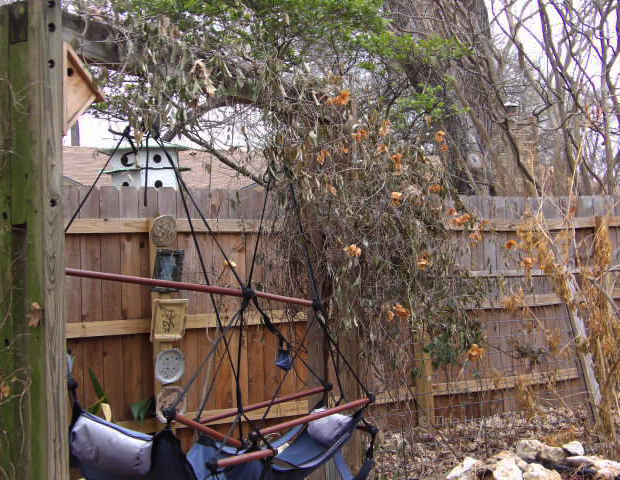
Winter:

…or,


Searching

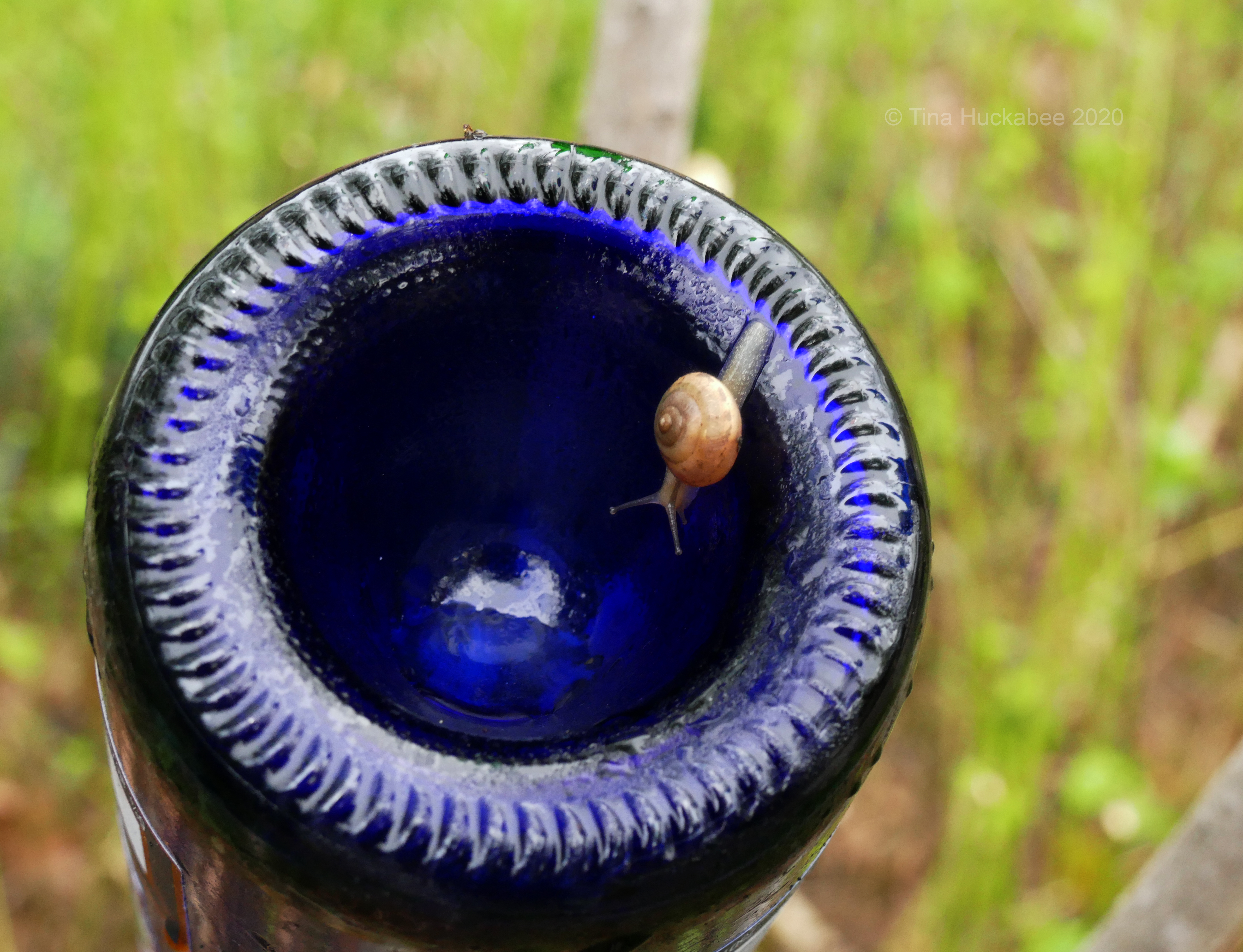
I’d like to know what this little snail is searching for.  Perhaps a leafy bed to lie in?  Or maybe some petals to snack on?  Might it simply like the color blue?

I’m fortunate that snails aren’t much of a problem in my garden.  They’re in the garden, but not damaging.  The trundle along, slow and steady, and quiet.

Except when I step on one.  Snails aren’t quiet when I accidentally step on one.

Crunch

I feel badly when that happens and apologize. I suppose that’s a hollow gesture.

Possibly, curiosity drives this one to search.  It halted progress downward as I approached, wiggling its antennae, sniffing its surroundings.

Do antennae smell scents?  Apparently, they do.  As well, snails use antennae for movement and orientation, and sometimes, for sight.  Useful things.

I hope the snail climbed out, made its way down the bottle tree, and relocated itself to flatter ground before our recent rains.  I haven’t seen it since I snapped this photo, but would I know this snail–irrespective of size–from any other?

Probably not.

If you’re searching for something fun, interesting, or beautiful, check out Anna’s Flutter and Hum for Wednesday Vignette musings.