This spring of constant garden clean-up and daily prioritizing of critical garden tasks has proved almost overwhelming these past two months. Typically, my busiest time in the garden is winter into early spring, but with the devastating mid-February ice and snow storm, assessing damage and preparing for the onslaught of our long growing season has been non-stop. Impatient spring growth and nature’s penchant for always moving forward has compounded the immediacy of completing various spring tasks. Add to the process of pruning and removing masses of once-verdant growth, I’ve experienced a lower back injury back in January–not serious, but chronic–which has slowed me down. (I am currently in physical therapy and doing quite well Yay for physical therapists!) Bee Daddy has graciously served undergardener, and I must admit, I’ve enjoyed being in a supervisory position. Bossing is boss! That said, while I hate what the storm did to our beloved Central Texas plants, I love the process that occurs after a deep freeze: the revelation of problem areas that might otherwise be ignored and the re-evaluation that follows of where and what plants or garden accessories might be better suited for different areas in the post-freeze paradigm.
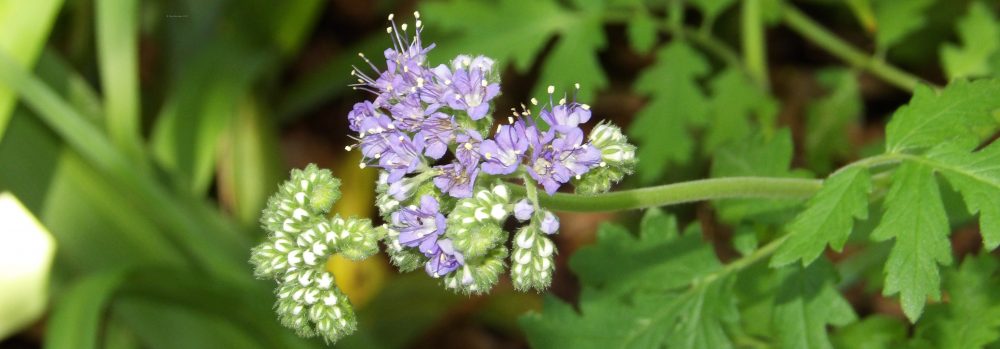
I like this shot, as it’s how I felt for the last couple of months.

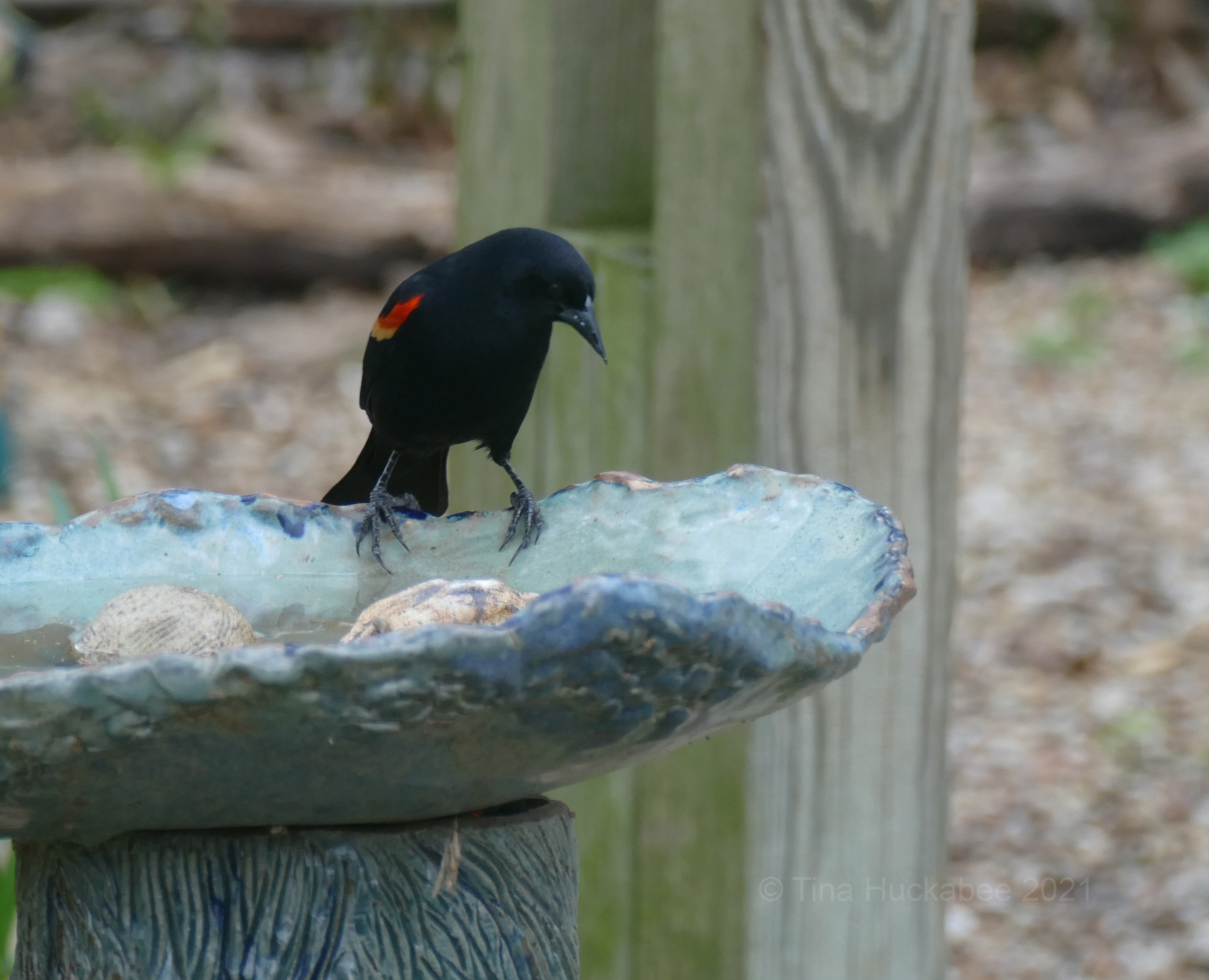
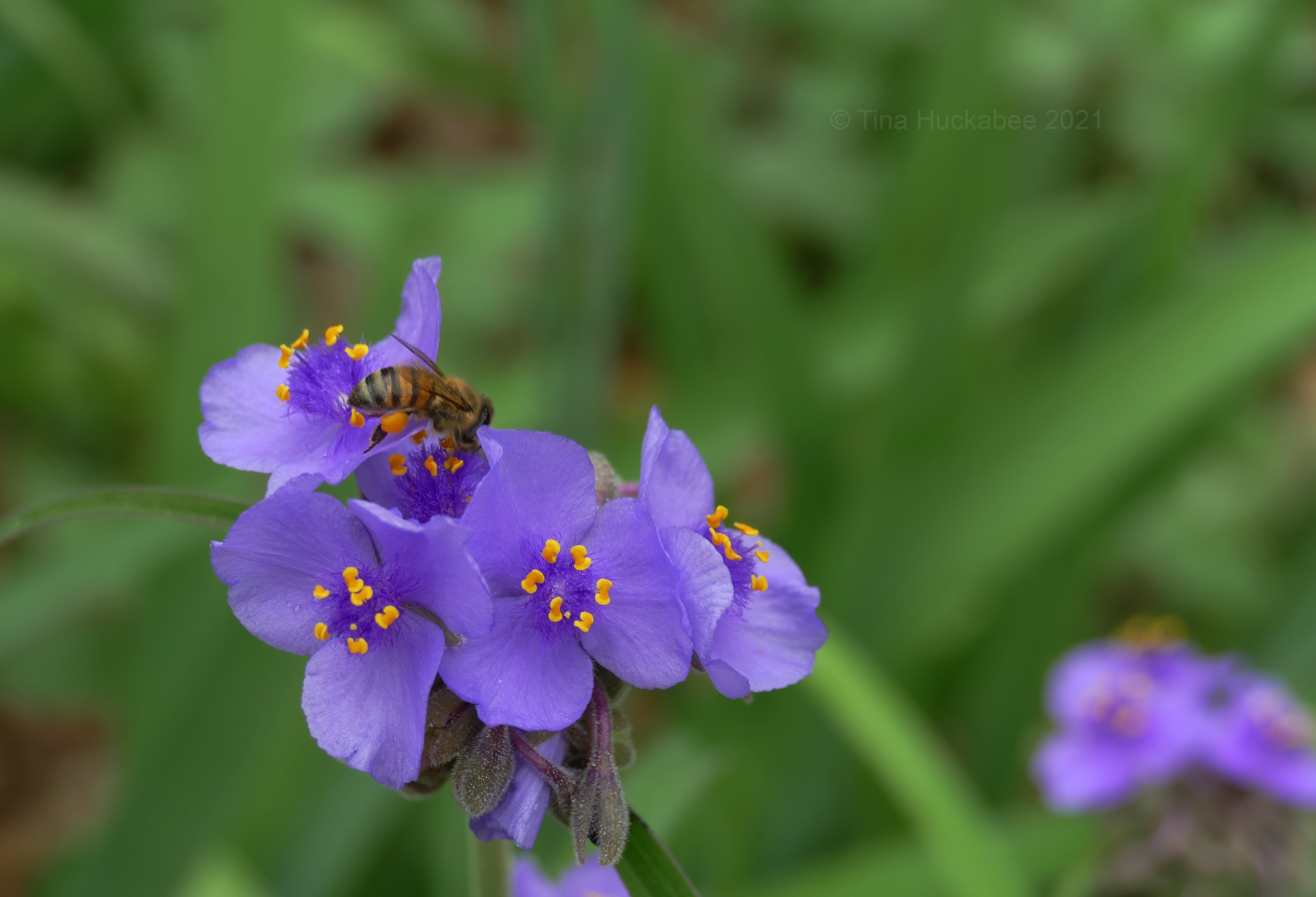
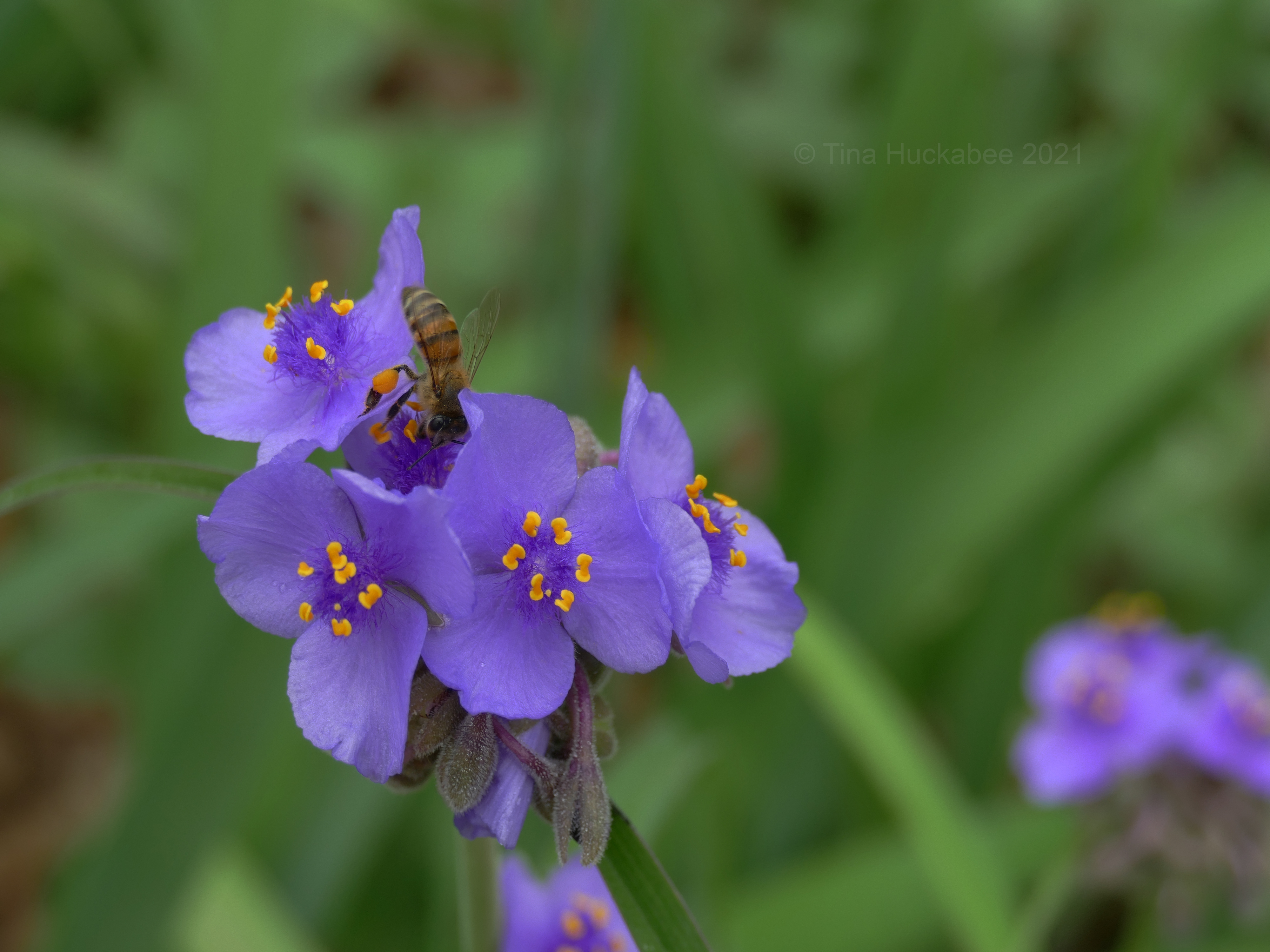
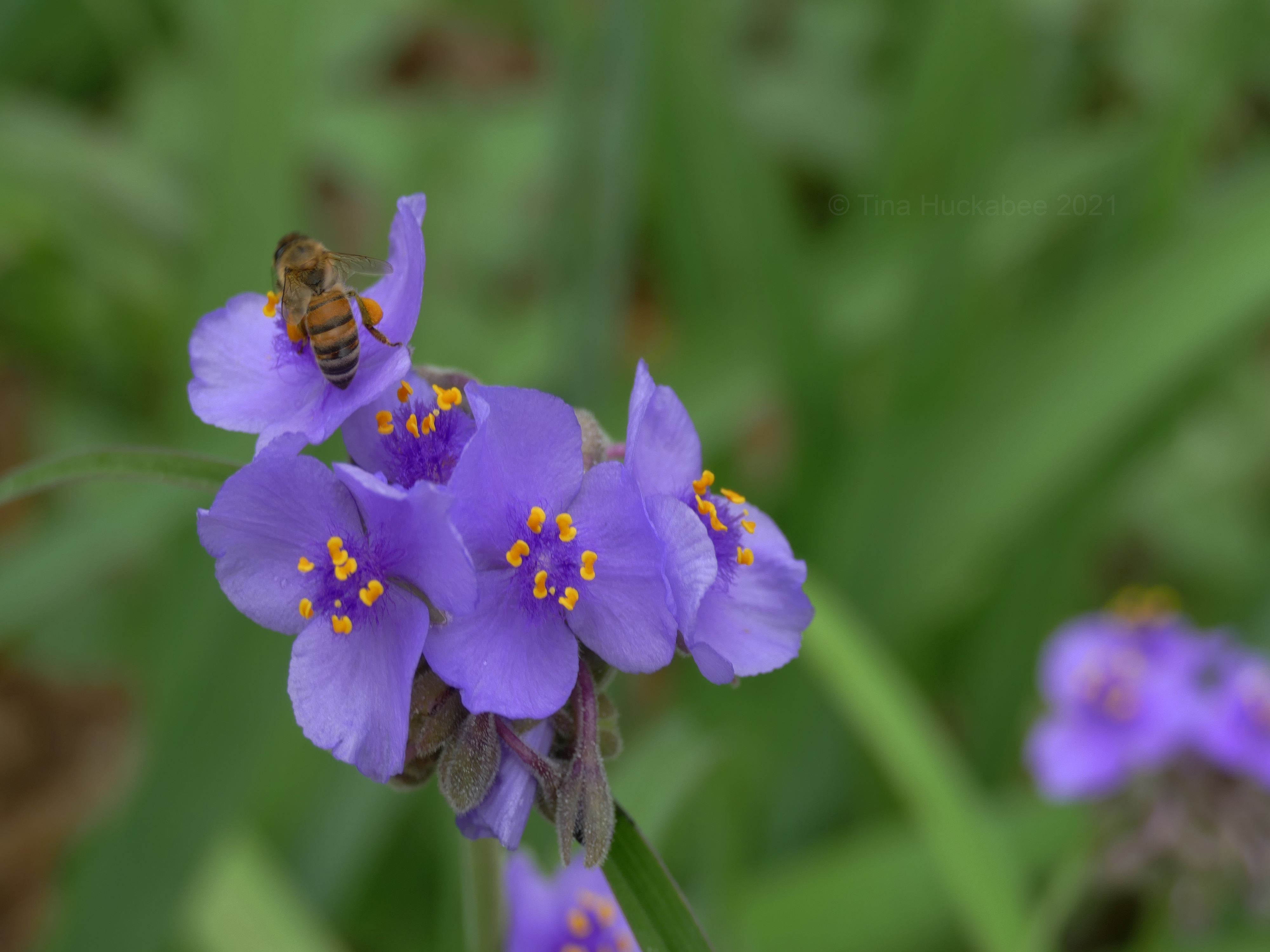
Spiderworts seed into pathways (and everywhere else) and I usually avoid them while I stroll and toil, but sometimes, my foot steps and stems break. What to do? Turns out, the broken stems they fit nicely in a bubbling bird bath, blooms still available for pollinators. So while I never contributed any blooms-in-the-birdbath photos for the fun garden meme In a vase on Monday, I was able to allow the broken flowers to achieve their pollinator potential. Lesson learned: from broken plants come renewal of life, and flexibility is a must.
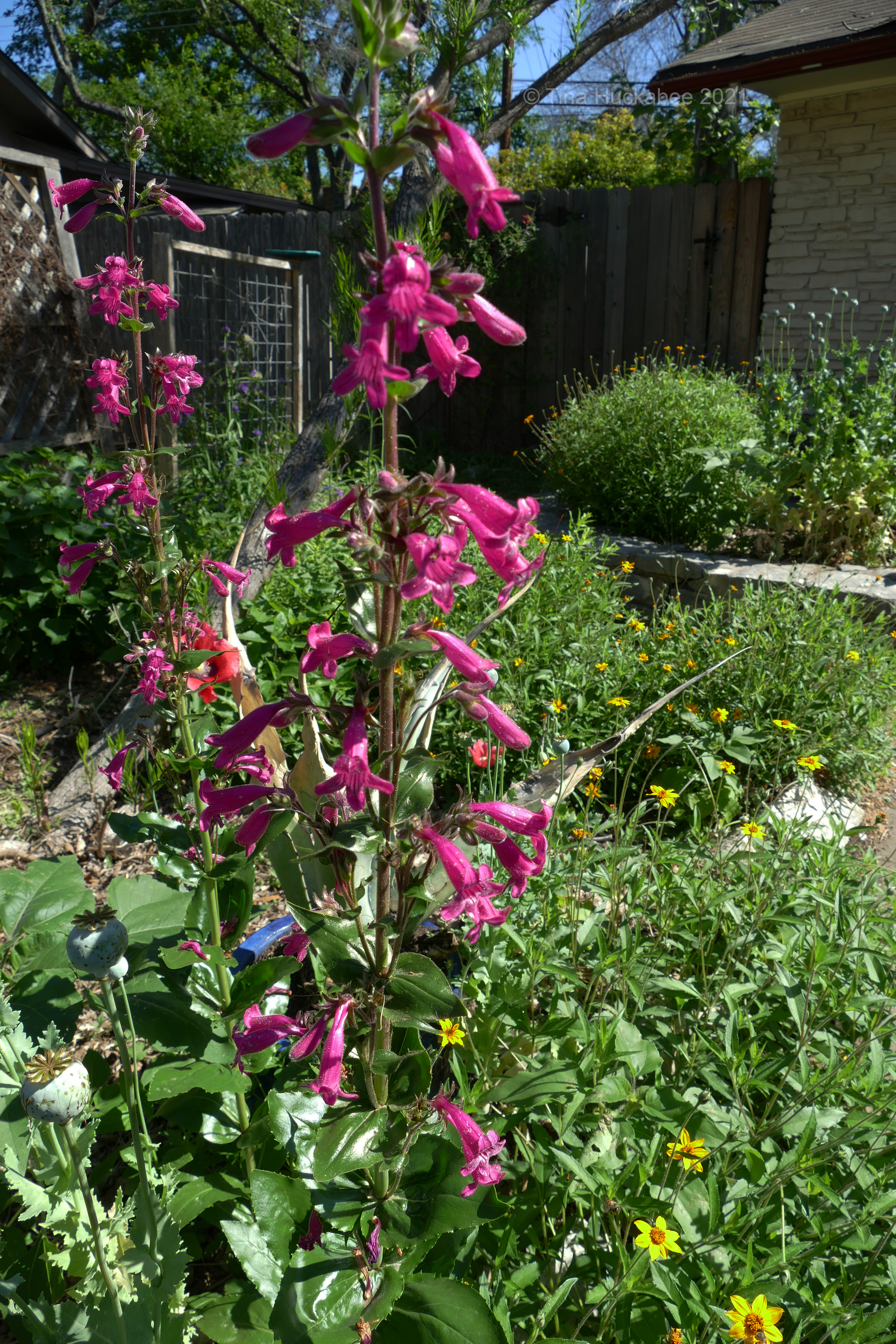
Yesterday I attempted a photo of a nectar-stealing Horsefly-like carpenter bee, Xylocopa tabaniformis, but with no success. He became annoyed with me and buzzed away. The luscious belled blooms of the Hill Country penstemon, Penstemon triflorus, stand tall and await another to benefit from its pollen or nectar. The penstemon’s sunny garden companions are the daisy-like Zexmenia, Wedelia acapulcensis var. hispida and seed pods of European red poppies.
Spring is in full swing as my Goldenball leadtree, Leucaena retusa, attests. It’s quite chilly this morning, so no bees were attending theses fuzzy globes, but I suspect that will change as the day warms.

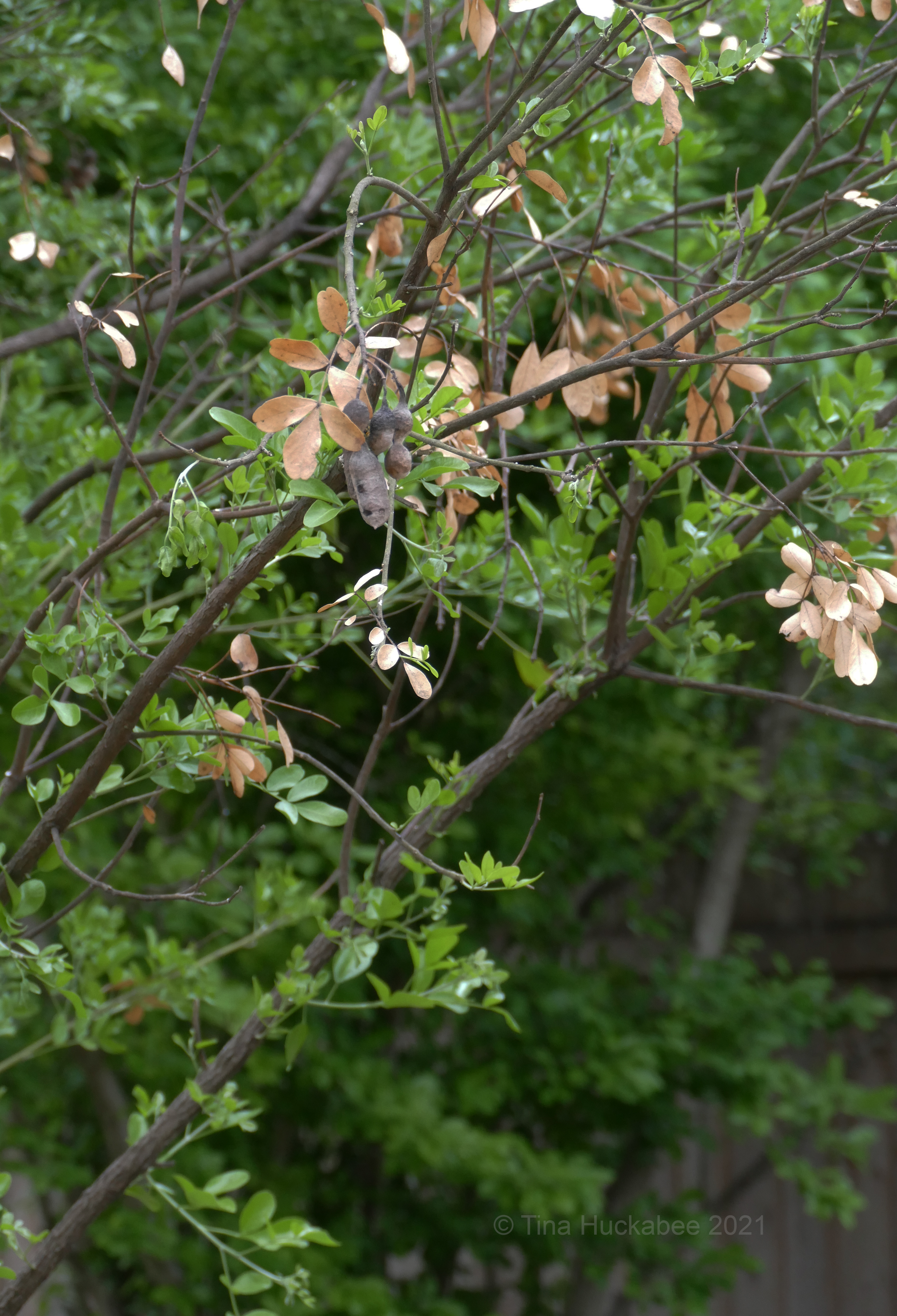
The freeze damage to my trees is obvious, even on the “evergreen” Mountain Laurel. I’ve never seen Mountain Laurels succumb to freezing temperatures, but the week-long freeze, and temperatures down to single digits was more than enough to challenge the little trees.

Though it was challenged, this tree, and my other Mountain laurel, are leafing out with new growth!
In my garden, trees have shown the most damage from February’s snowpocalypse. The Red oaks are leafing out, albeit slowly and weirdly, and the non-native Arizona ash are even pokier in their spring growth. I’ve probably lost an old Retama tree, Parkinsonia aculeata. I’m sad about that, but it was 20-plus years old and generally happier in warmer regions south of here. As well, two potted American agave plants, way too big to bring into the house during the freeze, were reduced to frozen mush, and one of my four Lemon rose mallows, Hibiscus calyphyllus–neither the oldest nor the youngest–has yet to emerge from the soil. Other than those casualties, everything else I grow is returning with vim and vigor. I’m especially pleased that the Mexican honeysuckle, Justicia spicigera, and Mexican orchid tree, Bauhinia mexicana, are returning from the Earth. It will be a while before flowers appear on those plants, but they will appear!
Spring has been a mixed bag: our Langstroth hive (Woody) entered spring busting at its seems and full of honey, but we lost the other hive (Scar), who froze to death in the storm. An Eastern screech owl couple settled in our garden and nested in our box. I checked on Mama daily through our owl camera, finally observing 4 eggs when she moved off of the eggs to stretch. Dad was always nearby, bringing snacks to her in the early evening, poor little rats hanging from the sharp owl talons. One morning in March, the camera revealed no Mama owl or eggs. I ran outside and found bits of eggshell, one of which was broken in half with some blood. We suspect a raccoon raided the nest box the night before. The owls are still around and I’ve even observed them mating, but I doubt they’ll choose our box again this year.
Pruning is done (well, mostly), transplanting of seedlings (there are scads this spring!) is ongoing, and mulching for summer’s heat is commencing (my ‘core’ and Bee Daddy are fully engaged).

Garden stories are ongoing and never ending. Check out Anna’s Wednesday Vignette for some garden goodness.





 My Gardener Says...