Reds After the Rain

As happens every August and September, flower stalks of the perennial bulb Oxblood or Schoolhouse Lily, Rhodophiala bifida, have emerged. These bright pops of color appear, seemingly overnight, after the first few soaking late summer rains. This particular group lives among some Mexican Feathergrass, Nassella tenuissima. The still green, but turning autumn-toasty feathery grass, contrasts with the deep red, dainty lilies, creating a charming scene.

So far, this is the only Schoolhouse Lily group that has awakened from its underground bed, but I’m confident that in coming weeks, other red surprises will reach up for a share of sunshine and a howdy! from pollinators. The individual blooms don’t last long, only a few days, but I’ve planted various bulbs around my garden and they appear, as they choose, at different times, allowing for a longer period in which to enjoy the pretties. Once the blooms fade, strappy foliage will stay green, disappearing in late spring as the temperatures rise. This Amaryllid was most likely introduced in Texas by a German colonist and botanist, Peter Heinrich Oberwetter (1830-1915). He imported R. bifida bulbs from Argentina and it has naturalized successfully in many parts of the state, especially here in Central Texas.

Another Amaryllis bulb making its flowery appearance after late summer rains is the Red Spider Lily, also called Guernsey Lily–Lycoris radiata. These stunning flowers, with their curled petals and spidery stamens, are showstoppers.

Like the Schoolhouse Lily, Red Spider Lily flowers emerge from buried bulbs after an August or September rain and sit atop fleshy stems . The stems of L. radiata are taller and the flower is larger than those of R. bifida. Both rock stunningly rich red accents in the garden.
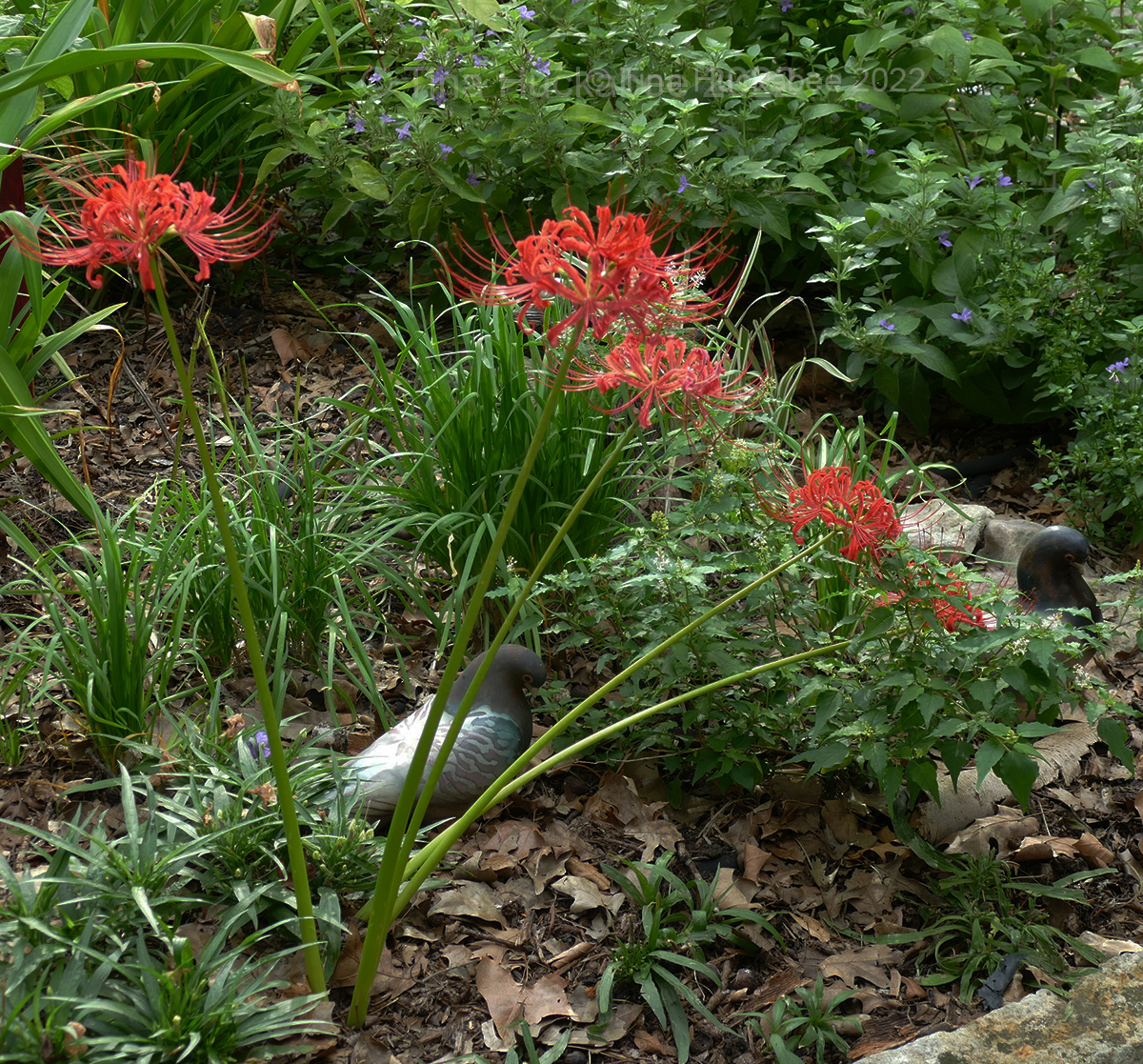
This group of Red Spider Lilies produced five stems with flowers. The stems are single, with no foliage emerging until the flower has faded. Like the Schoolhouse Lily, the foliage will be evergreen through winter and spring, disappearing with warmer temperatures. The bulbs stay safe from summer’s heat in deep soil, needling little water through the summer months.

The foliage you see in both photos comes from a Pigeonberry, Rivina humilis. The Pigeonberry and Spider Lily are accompanied by a couple of Glo Coalson’s raku pigeons. I thought the Pigeonberry needed some pigeon friends. Also, these pigeons don’t poop.

Our blisteringly hot summer has somewhat abated and we’ve recently received 4-5 inches of rain. We’re still in an official drought, but the slightly cooler temperatures and the rain are most welcome by the garden and this gardener. Along with these reliable late summer bulb bloomers, everything in the garden is breathing a sigh of relief–greening up and flowering out–demonstrating their appreciating for the rain.

Not a Worm

You know what they say: The early bird gets the worm.

In this case, the early bird wasn’t the least bit interested in a worm, but instead chose dove or mockingbird as its breakfast of choice.

Just as it was light this morning, I spotted this juvenile male Cooper’s Hawk, Accipiter cooperii, enjoying a meal atop the remains of my neighbor’s Arizona Ash tree. The tree was damaged during the February 2021 freeze, but retained some of its lower branches. The upper branches all died and were removed last summer. What remains are some well-utilized perches for a variety of birds, including this beauty.

It’s possible that the hawk caught its prey yesterday evening, ate some of it, and saved the rest to finish for breakfast. I know I like left over pizza for breakfast, though I’d probably pass on dove. To each their own.

As I watched the hawk, it fluttered from the highest perch, to the one just below. I’m not certain what the advantage of the lower perch presented, but the hawk stayed for a bit, flying off later to spend the day hunting.

Observe that the outer bark of the tree is pulling away from the main wood. All of the trees damaged in that devastating freeze have similar shedding of of bark, some are larger pieces like this, some smaller. The birds don’t mind, though; it’s been fun to see the variety of birds making use of these large limbs. Everything from this big hawk to tiny hummingbirds perch on various parts of these limbs. I just have to remember to notice.

Thanks, Wildflower Nymphs

Every year for most of the past decade, I find a wildflower in my garden that I didn’t plant. Each year it’s a different wildflower and typically not repeated by either seed or root during the next growing cycle. The wildflowers have all been Texas natives, usually spring or spring/summer bloomers. Each plant has appeared in a different spot: some in the back garden, some in the front; a few popped up in containers where other things were housed, and several have grown along the southern side of my house, where there isn’t much of a garden, only a utilitarian pathway.

Where do these garden gifts come from? Maybe birds have dropped seed by way of their excrement, maybe seeds wafted into my garden space from the wind. Perhaps, wildflower nymphs, being such quirky critters, choose to leave me something new and unique to my garden– just because they can.

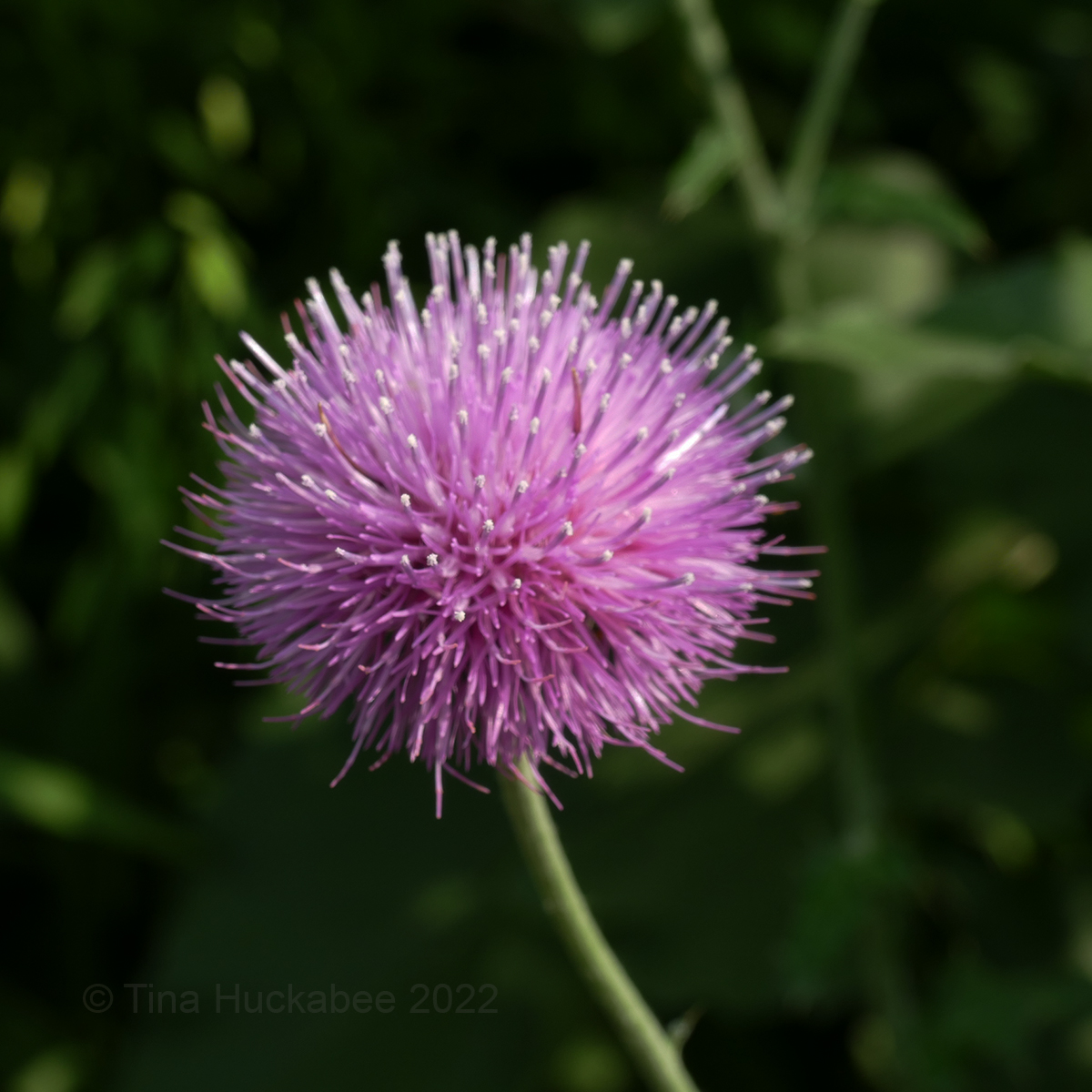
This year, Texas Thistle, Cirsium texanum, was the wildflower nymphs’ gift of choice.

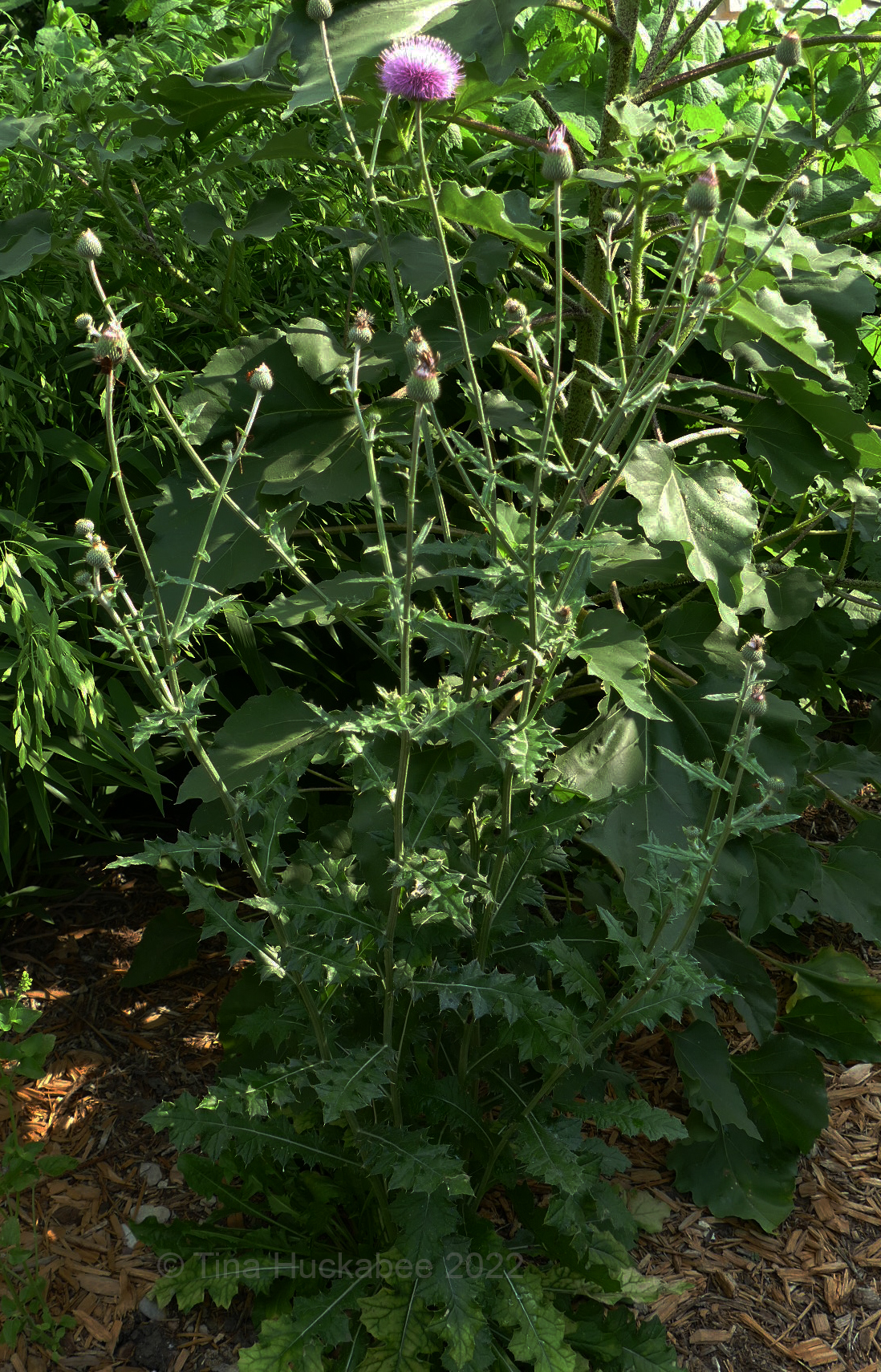
This pretty-in-pink flower bloomed in June and July, having arrived as an attractive, though prickly, evergreen rosette. Trust me when I say that those prickles HURT! Actually, the wildflower nymphs left the rosette last year, but no flowers appeared, as Texas Thistle is a biennial, blooming in its second year. I was aware of the rosette last year, but left it alone and unidentified.

While I never observed any eggs or larvae on this foliage, the Texas Thistle is a host plant for the Painted Lady butterfly, Vanessa cardui. Indeed, I enjoyed the presence of several flitting Painted Ladies earlier this summer. Thanks , Texas Thistle, I’m glad someone likes that foliage!

Bright blooms develop atop stems with few leaves, about 18 inches from the base of the plant. Once open, they resemble deep pink Koosh balls.

Insects, especially native bees, are big fans of this plant. Here, a Leaf-footed bug, Leptoglossus, and its nymph (immature form of the bug), rest on a bud. They were probably doing some bug-like slurping, but I didn’t see any damage to the bud or plant.

I didn’t bother the bugs. Generally speaking, I let bugs be bugs; mostly, they’re harmless.

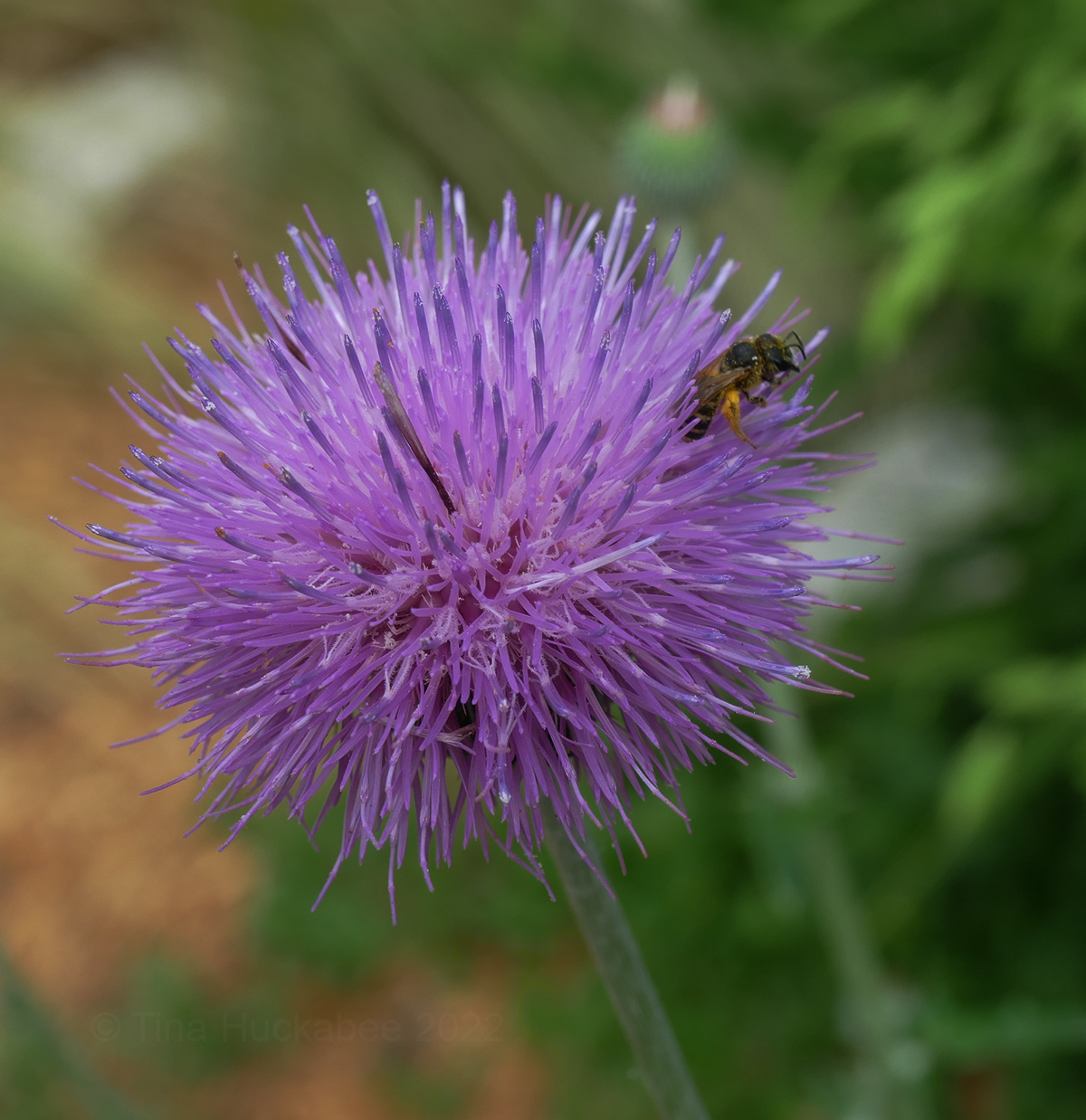
In the information about Texas Thistle from the Lady Bird Johnson Wildflower Center website, the bumble bee is specifically mentioned as a frequent pollinator of thistles’ disk blooms. Lots of bumbles have graced my garden this year, though I observed none of them on the thistle flowers. However, other native bees relished the nectar offered and picked up pollen as they worked the blooms. I’m not sure what species of native bee this little one is, but its pollen pantaloons are packed with rich pollen, gifts from the flower.

Most years, the wildflower nymphs have gifted one individual plant of one species. This year, there were two thistles that magically bloomed: the one of this post, growing in full sun along the side of my house, and a second, in a pot of variegated American Agave, in part shade, in my back garden. That one didn’t produce as many flowers as this one, but both completed their life cycles; I hope that the seeds will assure some thistles in my garden in future seasons. Also, the other nymph wildflower gifts have been annuals, but as mentioned, Texas Thistle is a biennial, 2022 its year to flower. Those wildflower nymphs, they like to mix-it-up and keep me guessing.

So, wildflower nymphs–what will it be for 2023? I await your gift(s)!