Implements of Destruction

In this mild winter, coupled with the heat island effect in Central Austin, very few of my perennials have actually frozen to the ground.  I could have titled this post, “To Prune Or Not To Prune?”   I’m flummoxed as I ponder what to cut back.  There are only a few plants that actually “died” to the ground with the limited cold that my personal garden has experienced this winter of 2011-12.

The Blue Mistflower (Conoclinium coelestinum) is gone.

The Cuphea ‘David Verity’ (Cuphea x. ‘David Verity’) suffered some freeze damage early on which I’ve pruned and  it’s coming up bright and cheery.  I hope we don’t have a freeze now, because it won’t be bright and cheery anymore.

Here, another re-leafing Cuphea is accompanied by Heartleaf Skullcap (Scutelleria ovata sp. bracteata).  The Cuphea is the plant with the bright green leaves and the Heartleaf sports the scalloped, grey-green leaves.

A perennial Hibiscus (Hibiscus moscheutos x. hybrida), is a stick, at the moment,

while the Lemon Rose Mallow (Hibiscus calyphyllus) thinks it’s time to start growing again.

The Leadwort Plumbago (Ceratostigma plumbaginoides) never died back completely.  Its leaves turned a lovely burgundy with suggestions of a more vibrant red here and there.

Lastly, the Pickerel Weed (Pontederia cordata), which is the bog plant in my pond, succumbed to the limited cold temperatures, but is beginning its growth very early this year.

The lilies in my pond have bloomed on and off, all “winter.” The Colorado Lily (Nymphaea) bloomed  beautifully this past week.

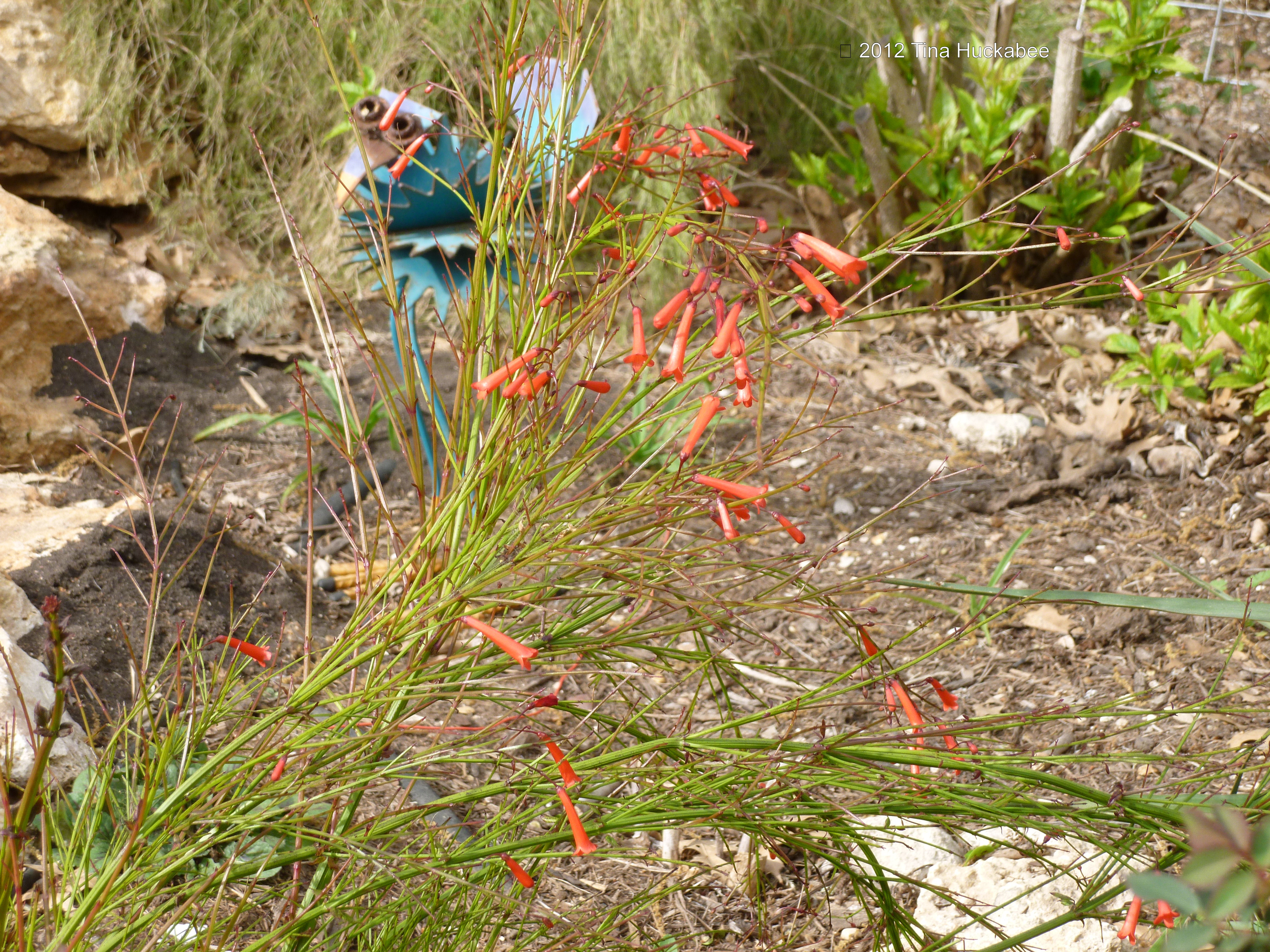
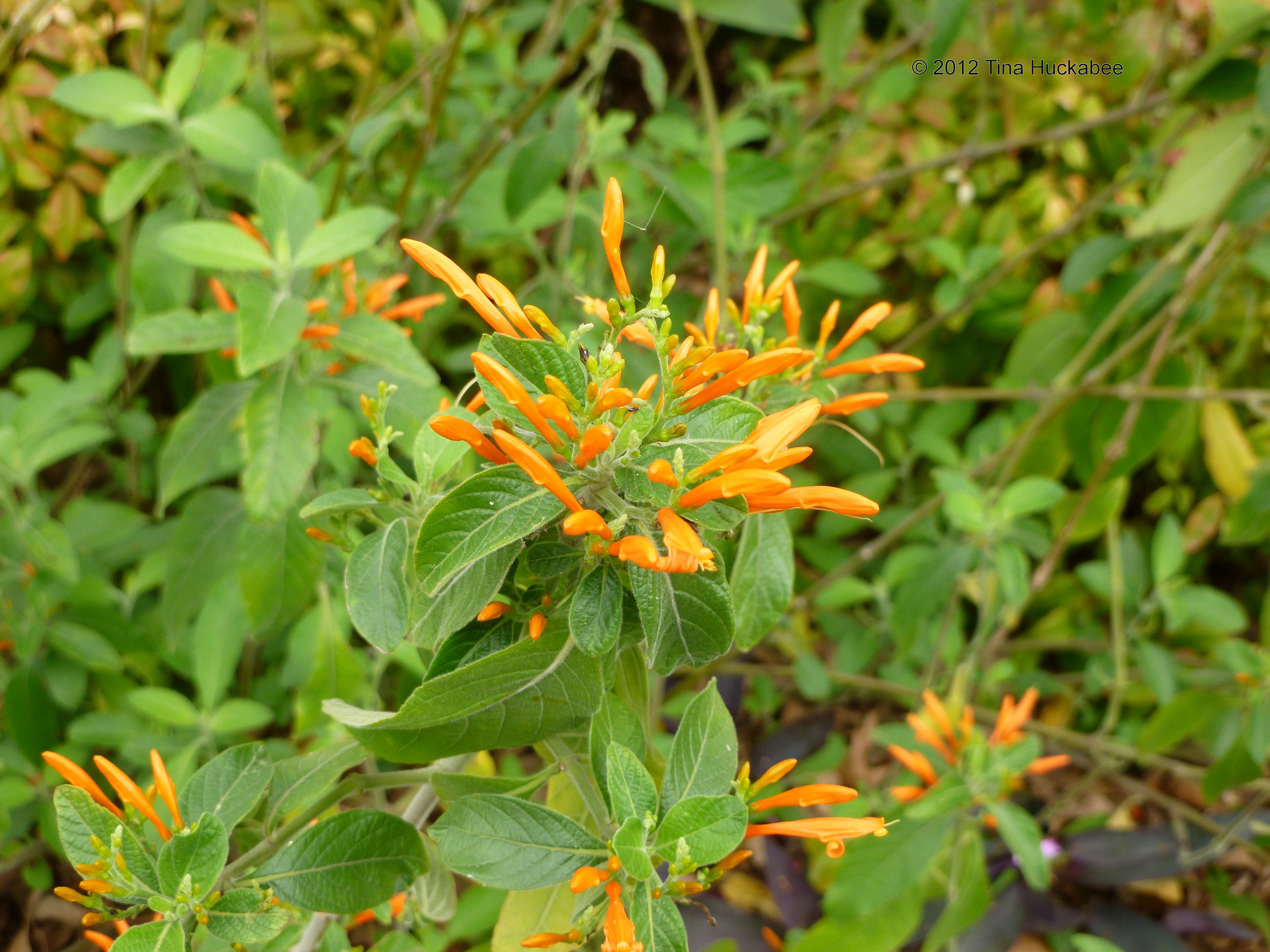
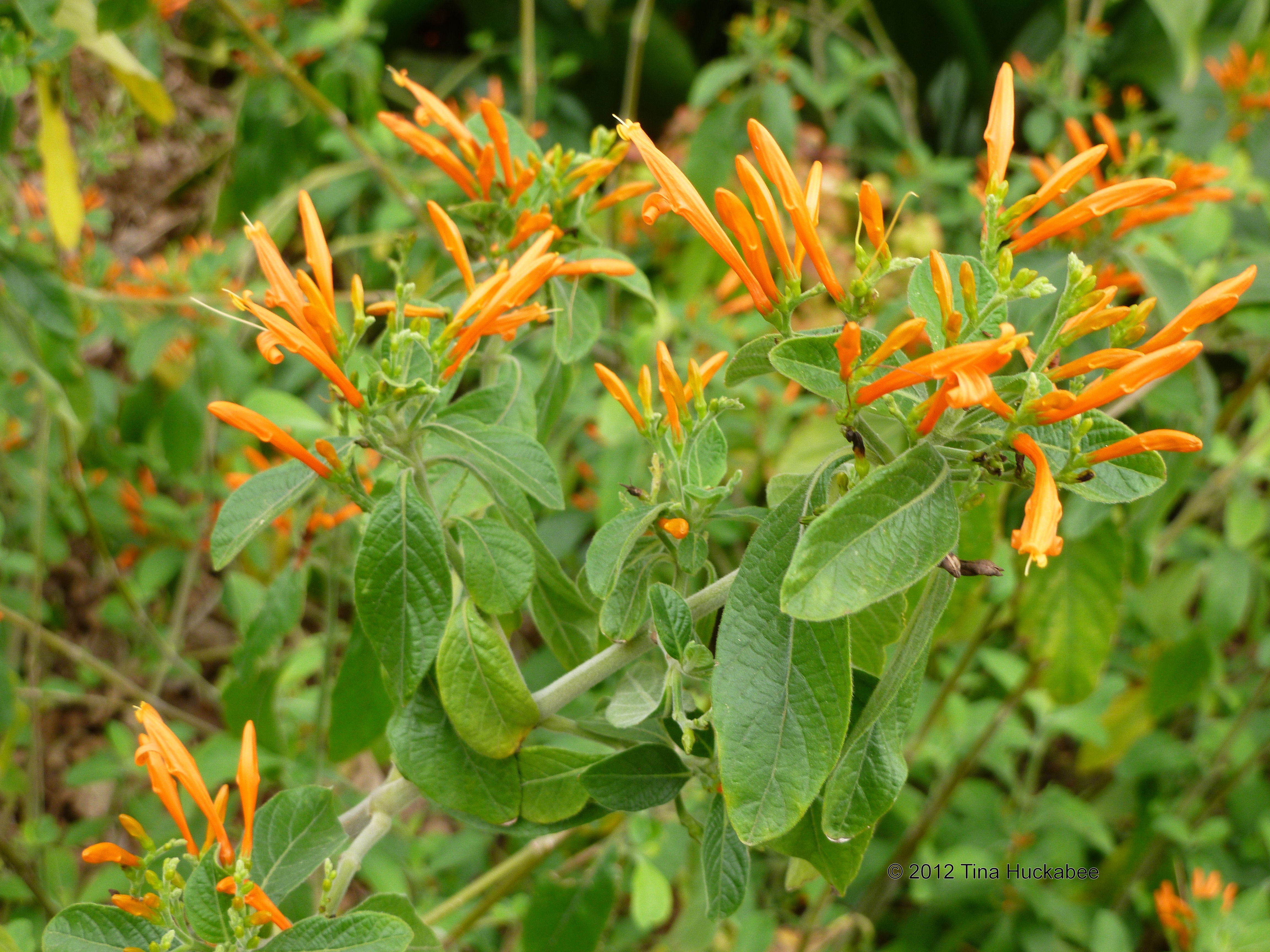
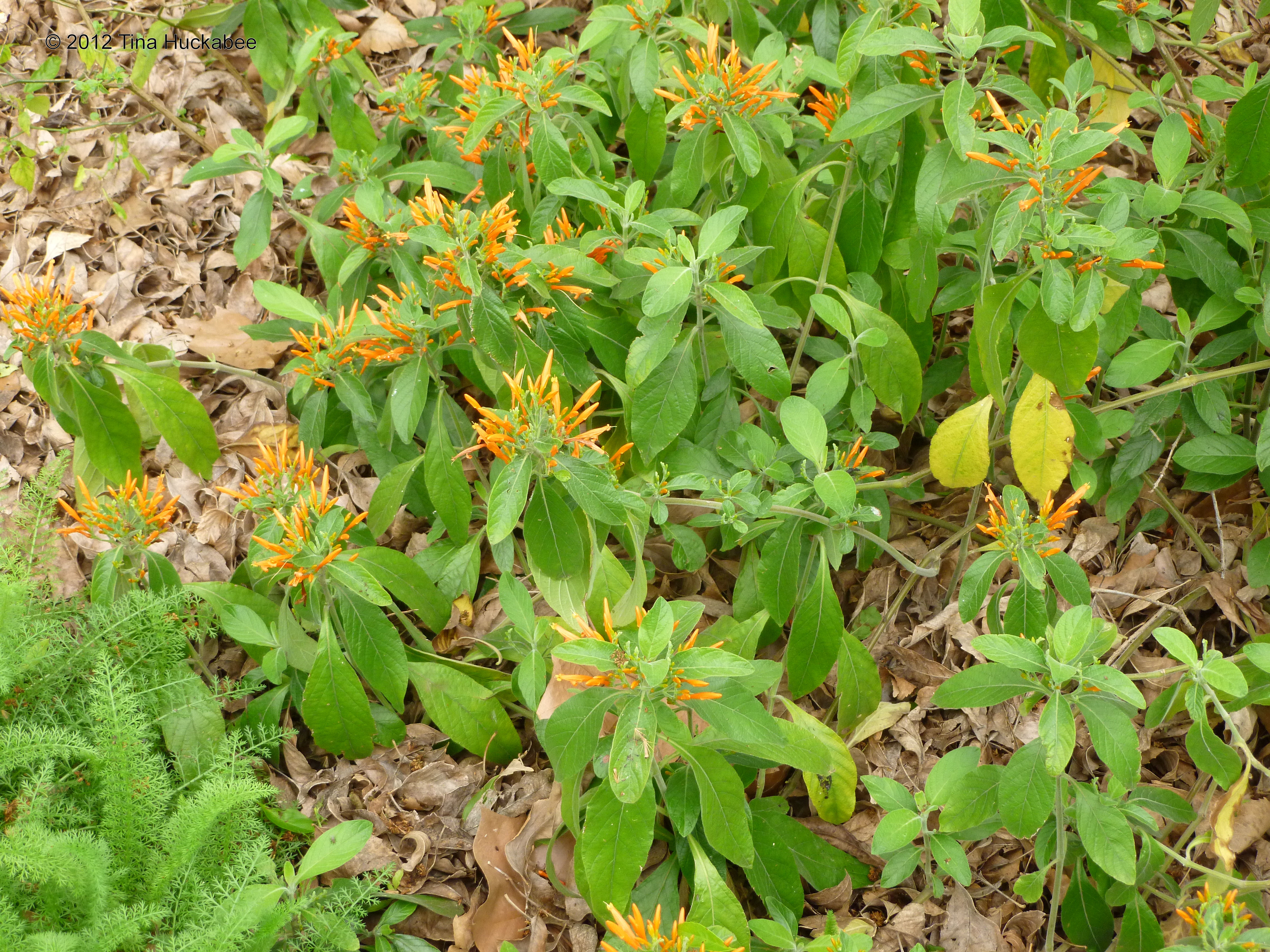
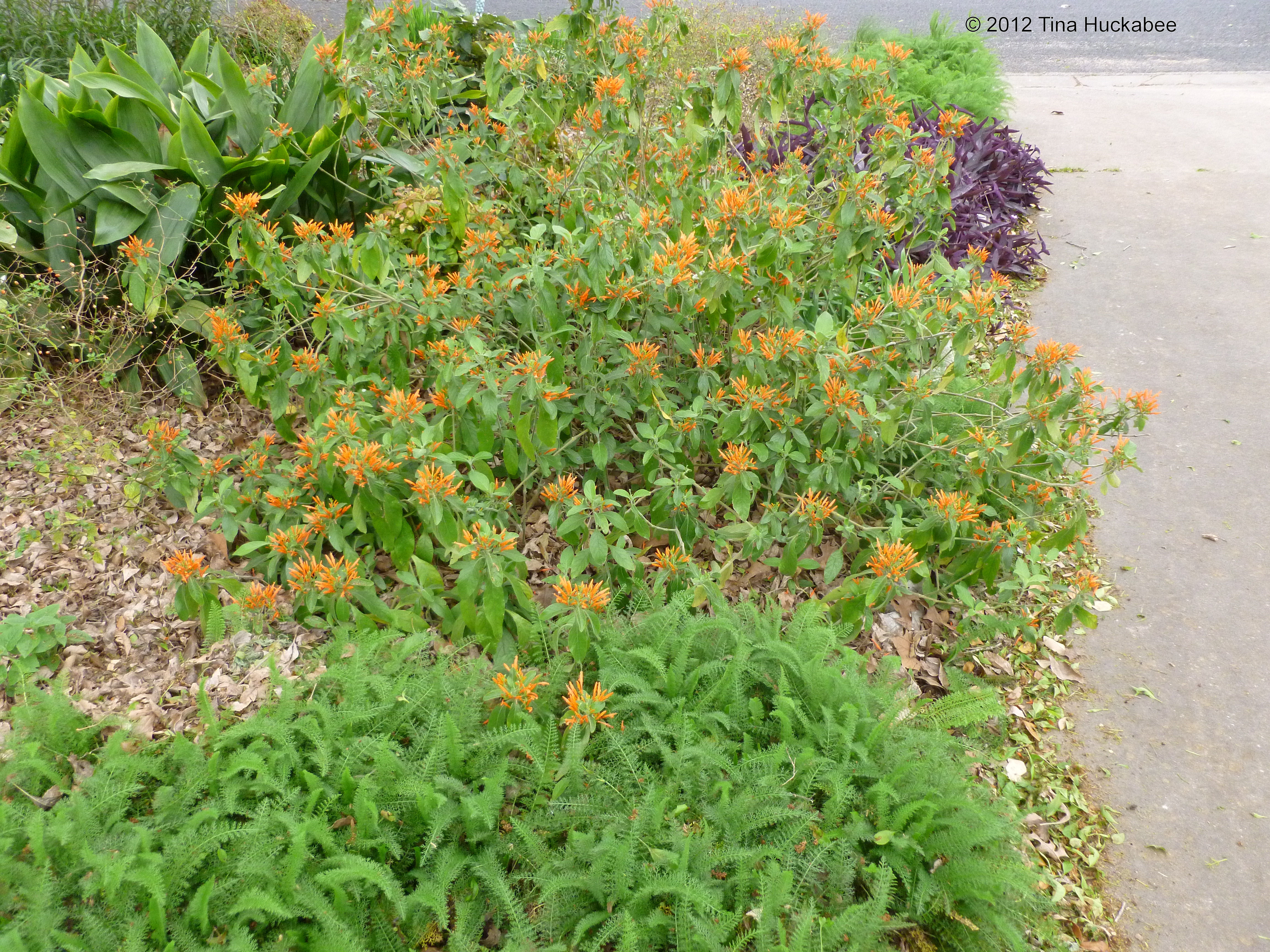
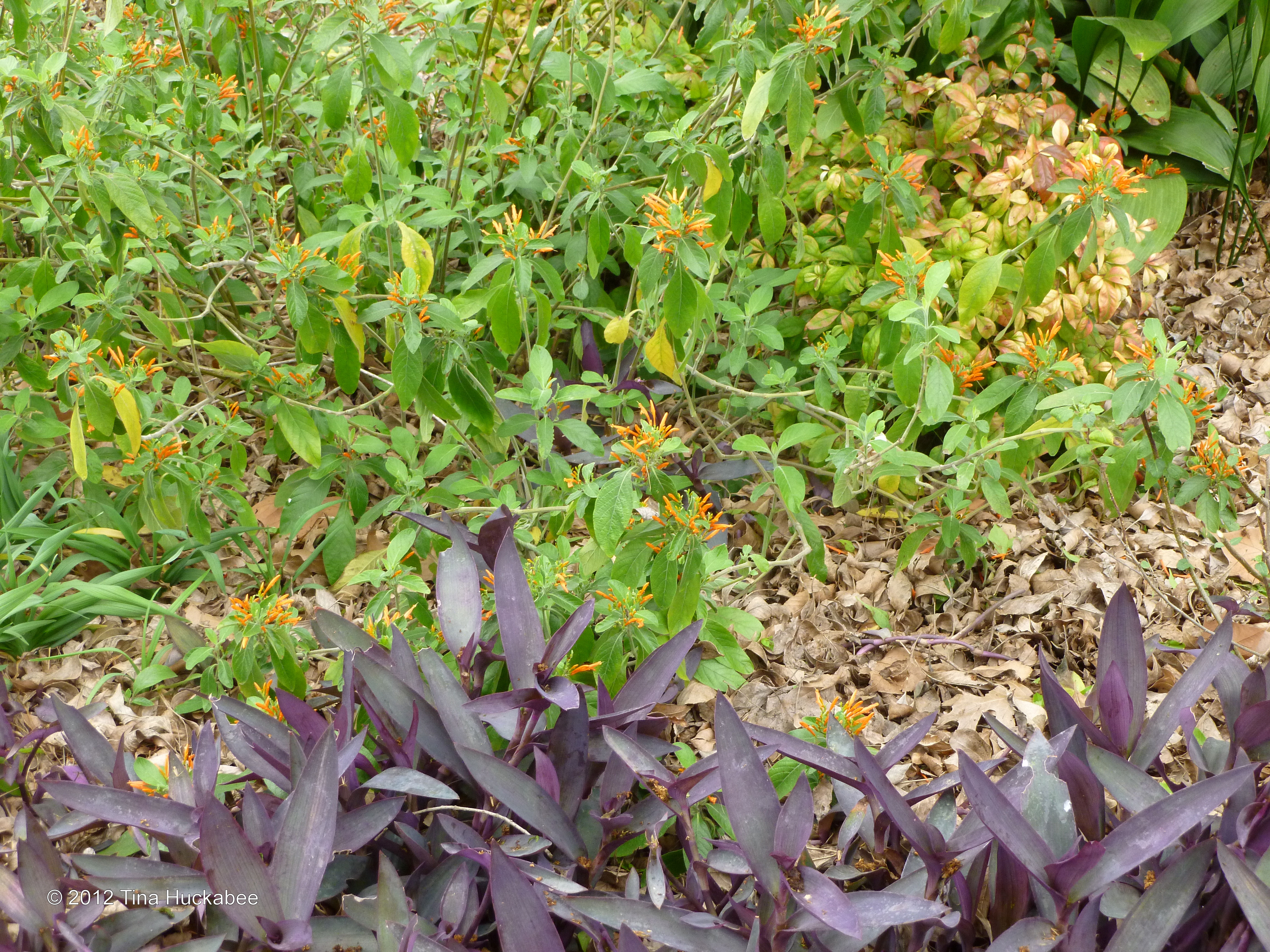
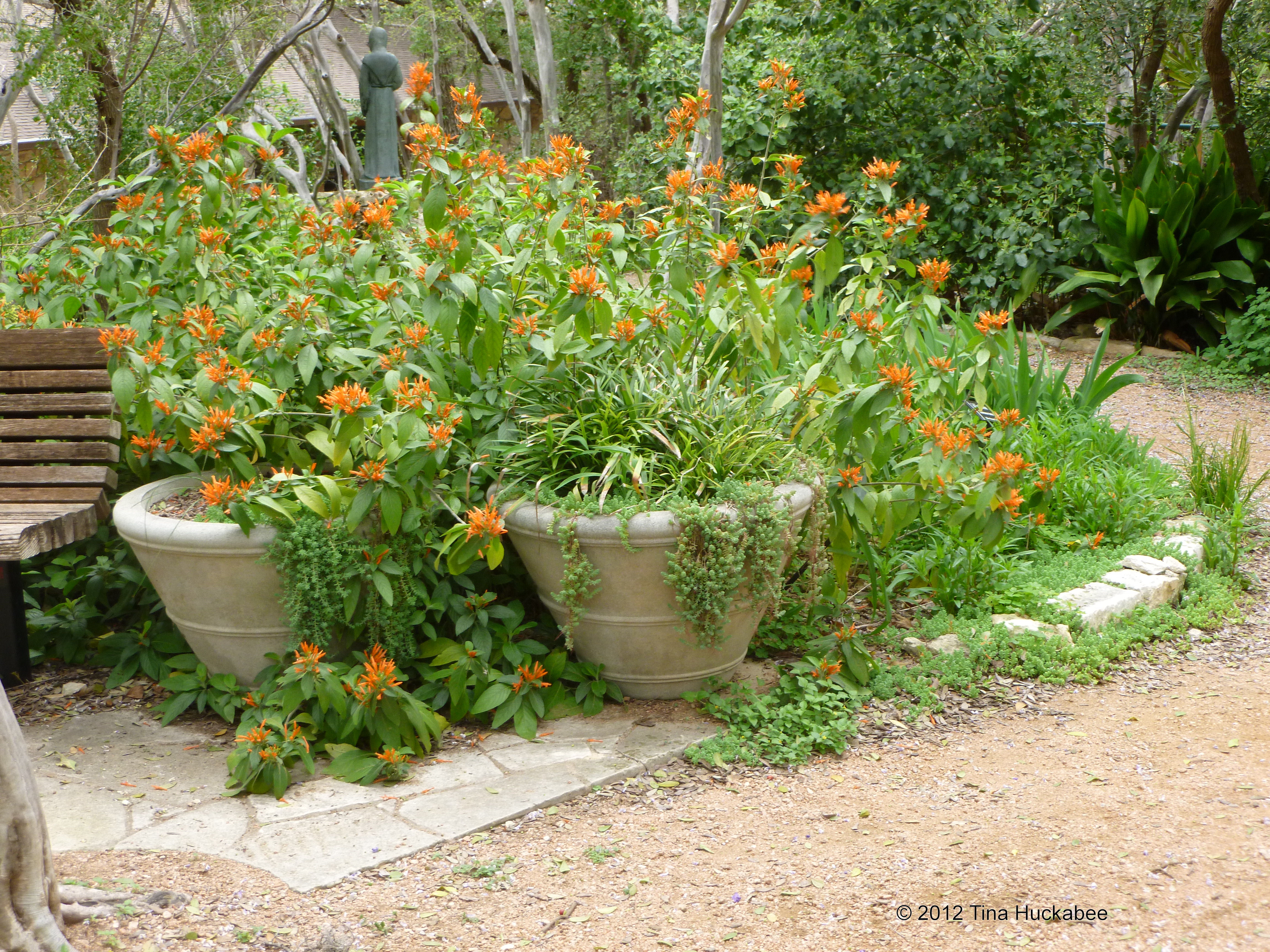
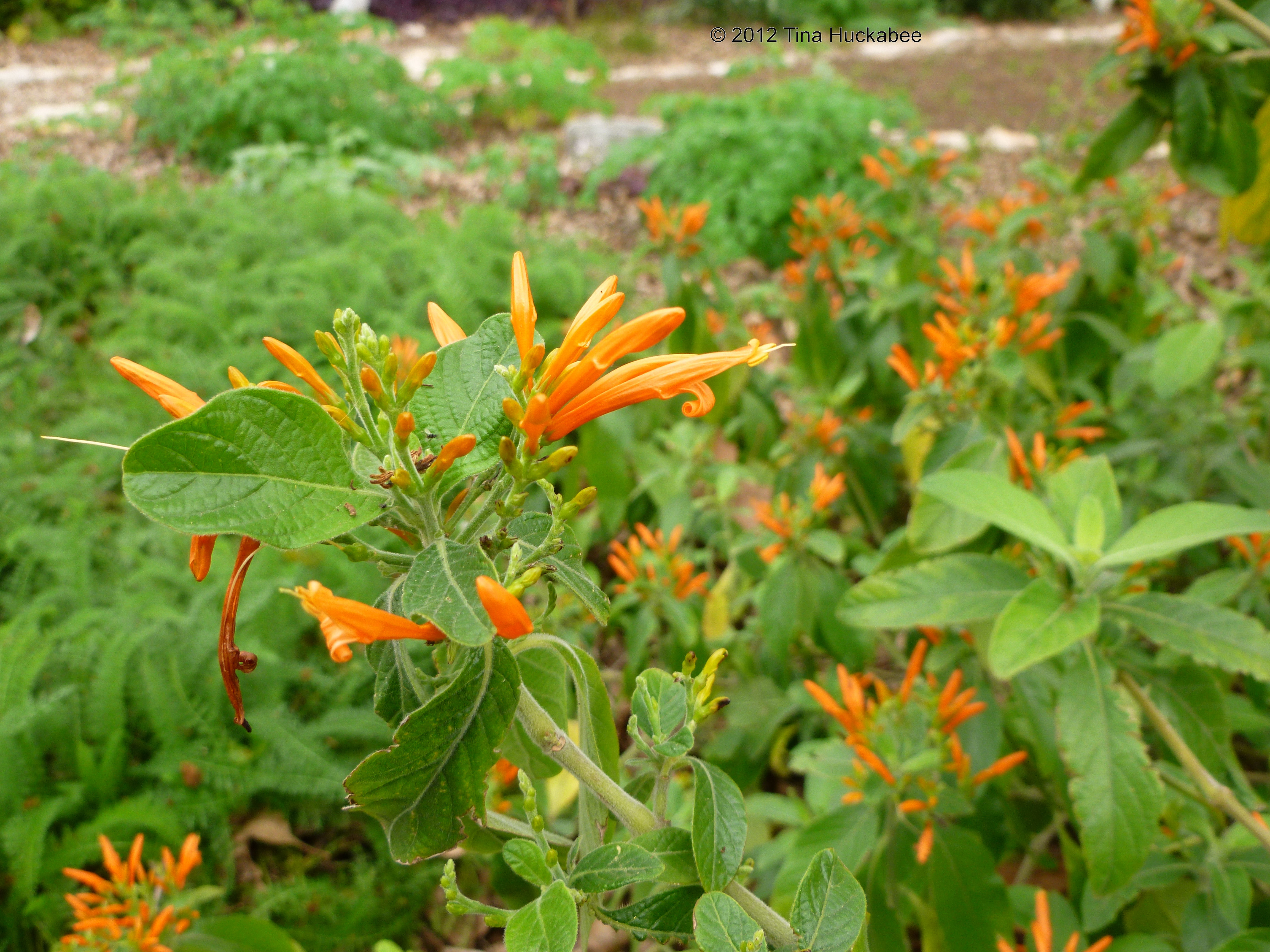
Even the Firebush (Hamelia patins), didn’t completely die to the roots this year.

Many of these plants are already leafing out as if it is spring.

Well, I guess it is, if they say so.

I’ve begun my hard winter pruning in earnest this past week.  I delayed as long as possible, hoping/fearing a hard freeze, but I can’t procrastinate any longer.  It’s time to sharpen the lopper, change the blade on the fabulous Felco hand pruner and then…. take the horrid ElectriDestructoPruner off of the shelf to which it is banned for most of the year.

My son thinks it’s “bad-ass”–his words, not mine.

I first used this creature last year after having developed severe tendonitis in both elbows during the winter/spring of 2010 because of the massive amount of manual pruning, trimming and cutting for the various gardens I tend.  Lest you think, ‘what a wimp’, I was in so much pain, for months, that I was concerned that I might have to stop gardening.  EEK!! (You can’t imagine just how many things a human being needs elbows for, until they hurt, hurt, hurt all the time.)  So I sought medical intervention  and eventually had about four months of physical therapy.  In time, the physical therapy repaired and strengthened the ligament overuse damage and I’m able to continue  the gardening I love.  The damage is  permanent and I still  use resistant bands for about an hour of home physical therapy every week and will do so for the rest of my life.  Gardeners beware!  You can hurt yourself with too much physical strain–overuse injuries are common for those who garden.  On a positive note, the physical therapist (yay, Debbie English!) at the Sports Center, was incredible and the entire staff is knowledgeable, warm and compassionate.

I used the Implement of Destruction to prune plants that are not too woody and thick and that don’t require sharp, precise cuts.  It’s electric, so other than holding it, it doesn’t require much muscle/ligament strain for me. I permanently borrowed it from my in-laws, who probably haven’t used it since about 1965–that’s how old it is.  It tends to shred a bit, so I can only use in on plants that can survive anything.  Fortunately, many of my plants are in that category.  I still use my excellent Felco hand pruners and Fiskar loppers for the plants that need to be pruned more carefully. But for things like Turk’s Cap,

Zexmenia (Zexmenia hispida),

Inland Sea Oats (Chasmanthium latifolium),

as well as other tough plants, the Implement of Destruction is perfect–it’s quick and it doesn’t add much strain to my hand, wrists and elbows.  This Turk’s Cap mayhem took about five minutes to achieve.

It’s so much faster than hand pruning the stalks.  On the down side, I like a quieter, more serene and meditative gardening experience and the Implement of Destruction is noisy.  But, it saves my elbows and that’s worth a few minutes of noise pollution once or twice a year.

I’ve debated  cutting back certain things this year and I’ve decided (a hard freeze, notwithstanding) that I’m not going to prune everything that I normally prune.  I did decide to prune most of my Turk’s Cap (Malvaviscus arboreus), although I fretted over it a bit.  I’ve not pruned them in a past mild winter and they bloomed well the following year.  But this year I’m giving in to my inner neat freak and pruning most of them to the ground.  I’m going to leave three groups in my front gardens un-pruned, just to see how they fare in the coming year with the drought predicted to last through 2012.  I’ll tidy a bit around the edges, but leave them mostly alone.

I’ve already pruned the Yellow Bells (Tacoma stans) although they were still green with some leaves,

and I’ll also prune the Pride of Barbados (Caesalpinia pulcherrima) and Orange Bells (Tacoma stans, sp.), to the ground.  I’ll prune the various salvias, ornamental grasses and all the Rock Rose (Pavonia laseopetala) to about 8-10 inches in the next week or so.

One of the biggest mistakes home gardeners make is that they’re shy about pruning back.  It’s true that some things, like Mexican Feather Grass  (Nassella tenuissima)
shouldn’t be pruned at all or other plants (roses of all sorts)  are pruned a certain way or at a certain time.  But for most herbaceous perennials, it really is best to cut to the ground, even in a year as mild as this.  
Sometimes, brutality is a good thing.
 

Beam Me Up, Scottie!

I think bees are the ‘bee’s knees’.

I love their work ethic.

I love what they do for plants.

And I love what they do for the world.

Last November, on a chilly, breezy Sunday afternoon, I attended a basic beekeeping class sponsored by Round Rock Honey.   In the class, there were about a ten other students, with varying interests in bees and the production of honey.

Here we are, in our very attractive bee suits.

I’m reasonably sure that I saw these suits in one of the shows from the original,  Star Trek series.

It’s fascinating to see the bees in their hive and the accompanying honey stores.

It was interesting to watch the bees actually calm down with the introduction of smoke–it really works!  (Though to be fair, it was very cold and windy that day, so that might have played a role in their lethargy of movement.)

I’m now in the process of ordering bees (yes, you can do that!), to place in my new bee hives that my nice husband built for me.

My interest in beekeeping stems from the invasion of my Eastern Screech Owl house by a little swarm of honeybees last May.  The day after the two owlets left the house for good, I noticed  a few bees buzzing about the entrance hole.  Within two days, there was a bona fide swarm in the owl house.    I knew that I didn’t want the bees exterminated, so I Googled beekeepers in/near Austin and hired Brandon Fehrencamp of Eastside Honey Co. to safely remove the hive without killing the bees.  The bees were in the owl house for about three days and when Brandon opened the owl house, I was amazed to see how much honeycomb was built in that short period of time.  After he safely vacuumed the bees into another container to relocated them to new hives, I extracted about two tablespoons of honey which I shared with neighbors.

I decided that it would be interesting to someday build some hives (I’m allowed two in the city limits of Austin, with some restrictions) and tend bees. I figured beekeeping would be a good empty-nest project. But, for my birthday last fall, my husband built a set of hives for me.  (Most women get jewelry, flowers or an extravagant dinner at an elegant restaurant.  Me?  I get bee hives.)

I prefer the bee hives!

The hives are Warre type hives built from untreated cedar.

The bee houses were supposed to be a surprise, but I figured out what he was building, especially after he nearly cut his finger off and we had to spend a Sunday afternoon in a local ER.  Sigh.

The queen and her workers won’t arrive until April, so we’ll finish the work on the frames (where the honey is stored) and continue our study of home beekeeping.

If you’re interested in learning more about bees, check out BeeWeaver Apiaries and Urban Beekeeping in Austin, Texas.

Live long and prosper, little bees.

Damn Dog

I love my dog.

I really do.

He’s a more loyal companion and friend than some of the people I’ve known. But it’s sure hard to garden with a dog around.

He digs.

Beside the compost bin.

And digs.

Behind an old stand of Turk’s Cap.

And digs.

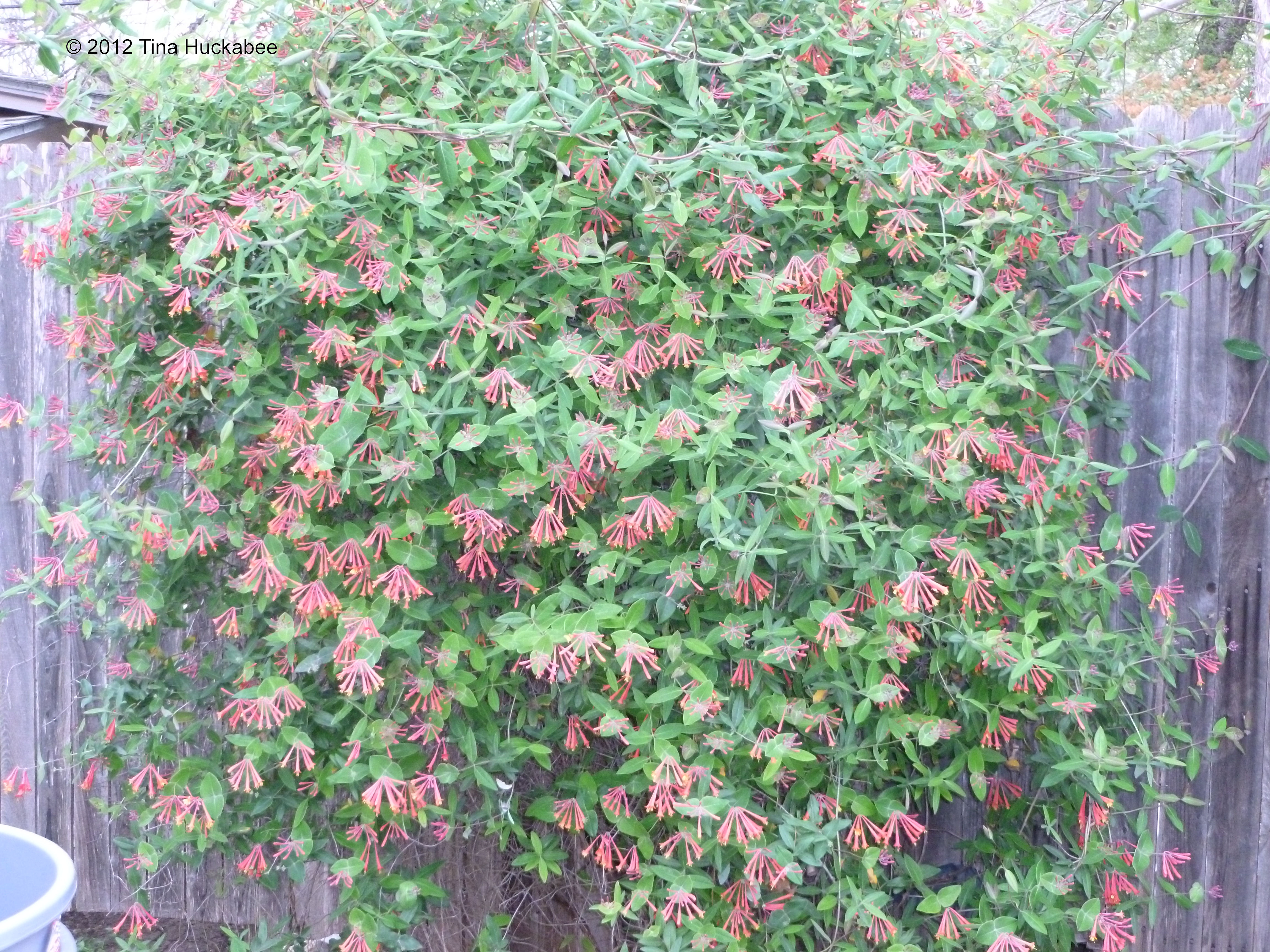
Under the fence and non-native honeysuckle.

Before you say, “Gee, maybe if she walked him….”  He’s walked two or three times a day, every single day, rain or shine.   And I’ve allowed him the space for digging because he likes it and it’s not damaging any part of my gardens that I genuinely care about.  I have plans for screening that will help hide the one particularly unsightly area (under the fence) that Asher has created, but I wish it hadn’t been necessary to add yet another project to my already long list.

Actually, he’s better behaved than many dogs.  He’s never romped through my gardens, ripping things out with abandon.  He doesn’t dig up newly installed plants.  He doesn’t urinate on seedlings–something to be thankful for.

I never see photos in garden magazines and books, showing the havoc that dogs can wreck in a garden.  Those publications tend to showcase the perfectly coiffed garden–no bloom or leaf out-of-place.  I don’t know what color the sky is in their world, but it isn’t the same as in mine.  In the real world, gardeners have dogs and gardens and attempt to enjoy both without too much fret and stress.

I’ll share a funny story.  So, I let the remains of a large part of my grass area  in my back yard die this past year.   Mostly I did this because I wanted to reduce the turf area, reduce water usage and lessen general maintenance.   Also, my beloved dog  rolled in the grass and there were bald spots developing (in the grass, not on the dog), so I was more than happy to get rid of what remained of the grass.  I used layers of newspaper and then mulch on top, so that any errant roots still alive wouldn’t return.

Every chance he gets, Asher lumbers out to that particular area and rolls,

and rolls,

and rolls.

Aaah, that feels soooo good!

Right. So much for low maintenance!

It’s true that I don’t have to water, mow or edge the area, but some days I have to brush Asher five or six times so that the floors in my house aren’t sprinkled with mulch and leaves.  My son claims I say, “Damn Dog” every time Asher goes outside and wants to come back inside, oblivious that he is shedding mulch and leaf bits all over the house. (Thank you very much, Asher, but the tile and wood floors don’t need mulch!)

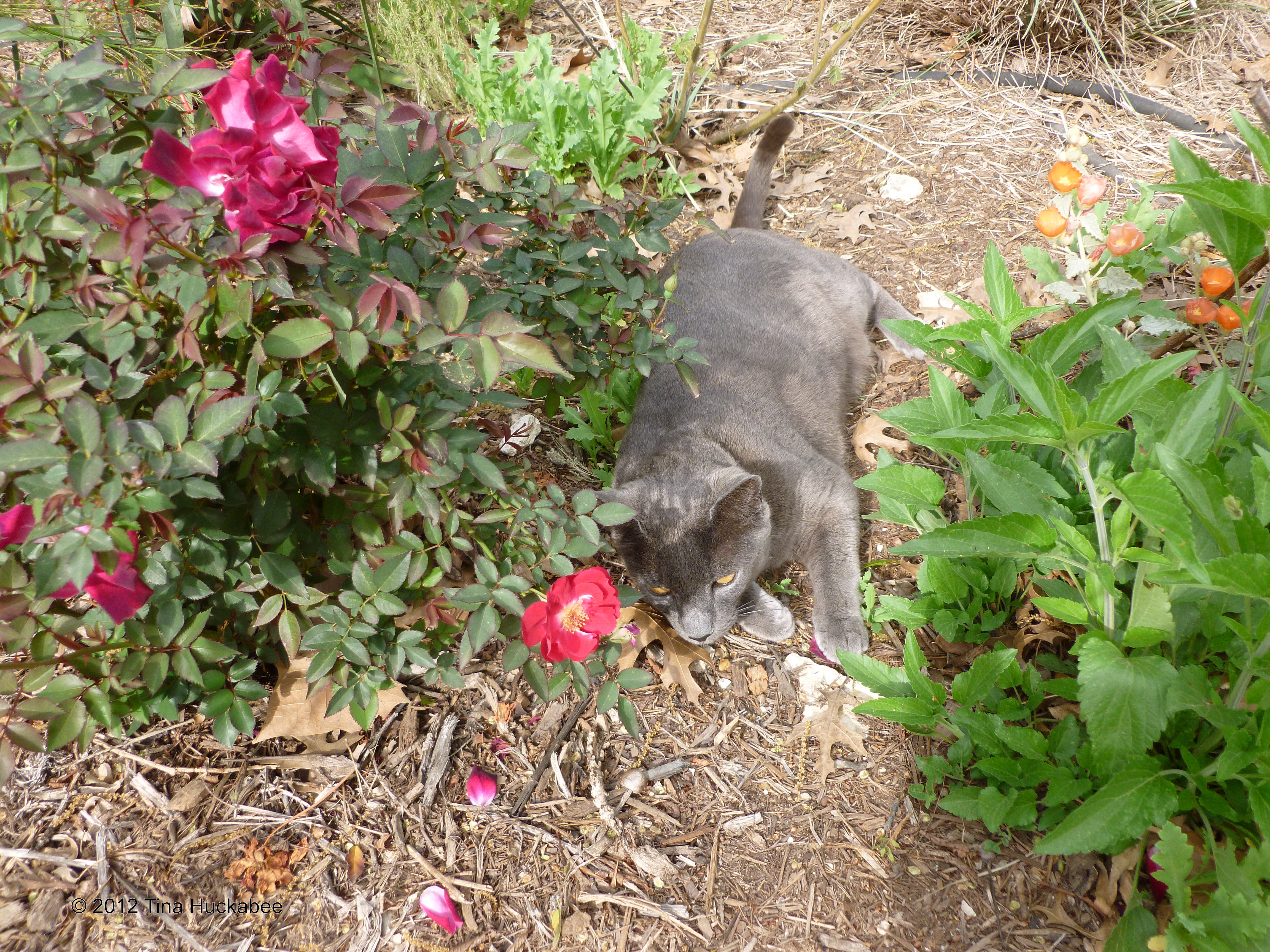
Even our cat, Nuri, thinks he’s an idiot and would never do such a thing. (No, he just catches birds–or attempts to.  Damn cat!)

Asher has always liked digging in mulched areas. He’s pawed this older mulched area for years.

Caught in the act!

Oh, Asher, Stop!

Good Boy!

Gardeners with dogs (and cats, too, if they’re causing botanical mischief), constantly must stay a ‘step ahead’ of their pets’ idiosyncrasies.  If the gardener has pets, it’s almost inevitable that some method of plant protection will be necessary.  Solutions for frustrated gardeners include installing physical or invisible fencing around gardens.  As I developed my gardens over the years, I purposely left grass so that Asher (and previous dogs before him) would have that to enjoy.  But the grass couldn’t survive my neglect and doggie overuse and the mulched areas that replaced the grass created other maintenance issues that I didn’t quite anticipate.

That said, Asher’s a good companion when I garden and seems generally content to hang out on the rock and mulched sections of the my gardens.

Plus, I’ve allowed him certain digging privileges, so we’ve come to an accord.

So I’ll let Asher be a part of the garden.

He’s twelve years-old, a great buddy of mine and I’ll use the (many) times that I have to brush him as bonding time.  How’s that for rationalization?  All worthy relationships take work, effort and compromise.

Yes, it’s challenging, though not impossible, to love a dog and a garden simultaneously.

At least I don’t have deer!