I Couldn’t Wait

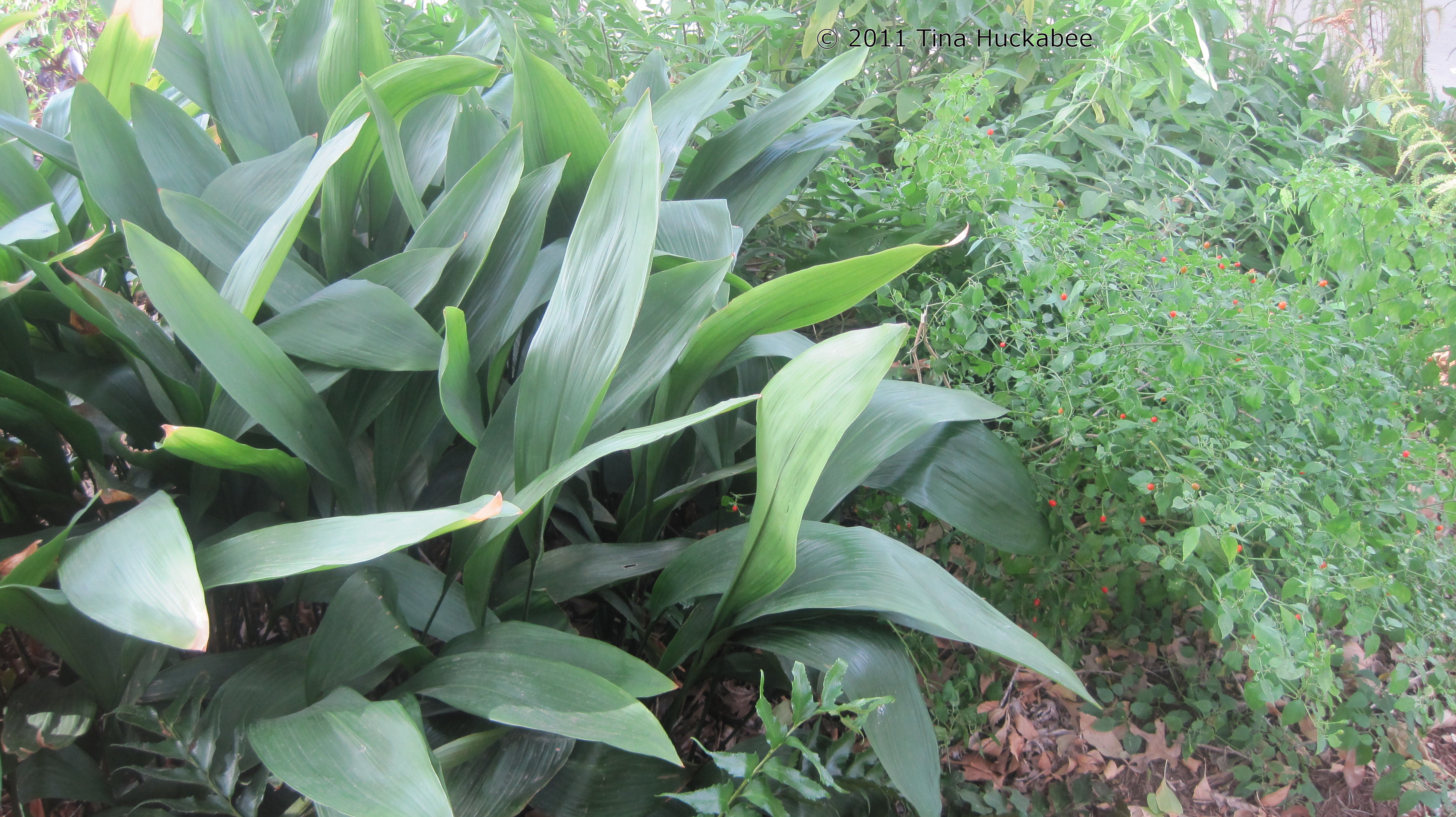
In my post, Cast Iron Crisp, I discussed how one stand of Cast Iron Plant (Aspidistra elatior), in my gardens, suffered leaf burn this past summer.

The plants have been in that spot for more than a decade and have never had this sort of damage.

The garden receives dappled shade most of the day, until the late afternoon blast of hot, west sun.  The plants that are in front and to the side  of the Cast Iron are all sun lovers and thrived with no ill effects from the exceptional drought and heat.
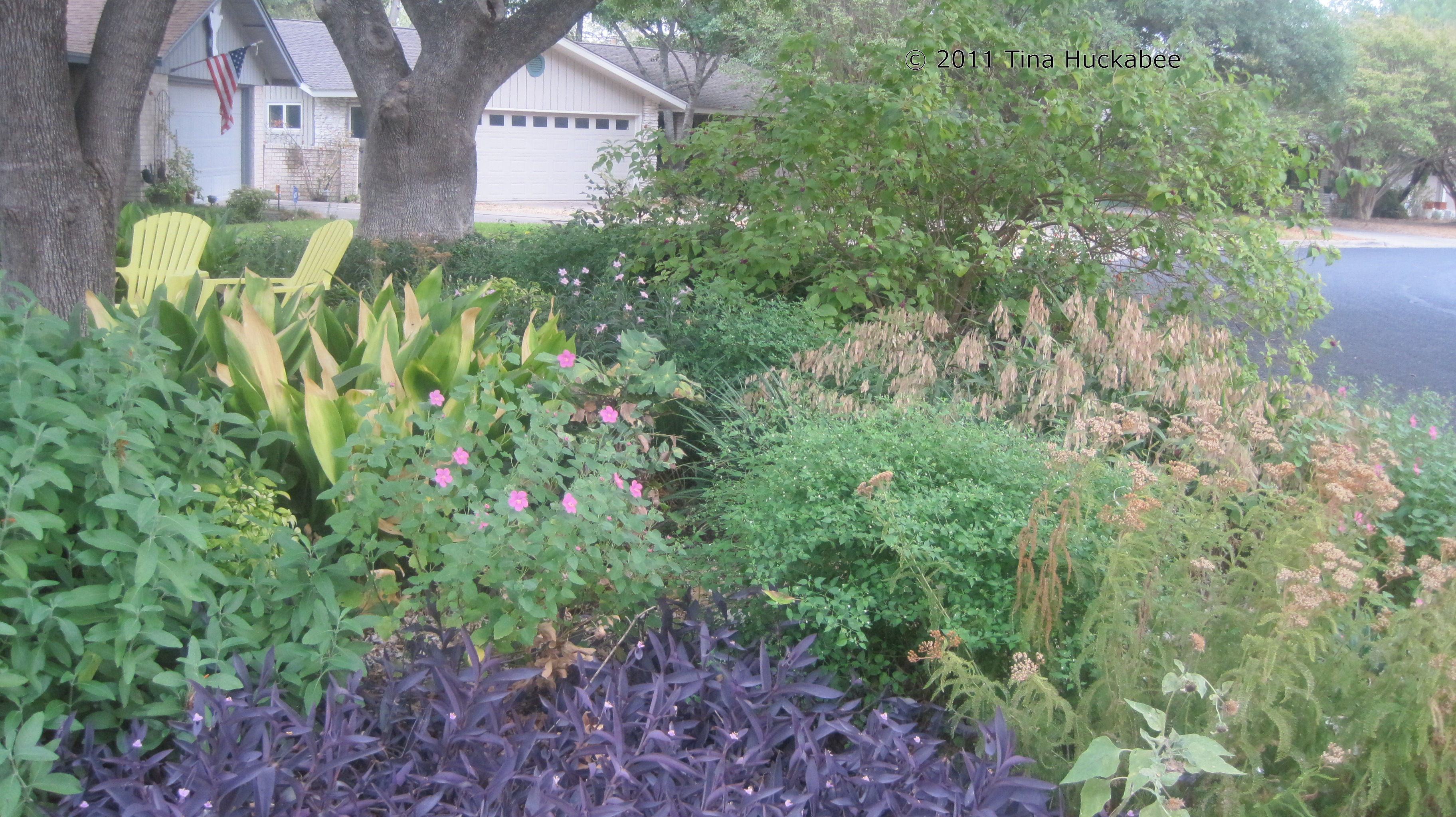
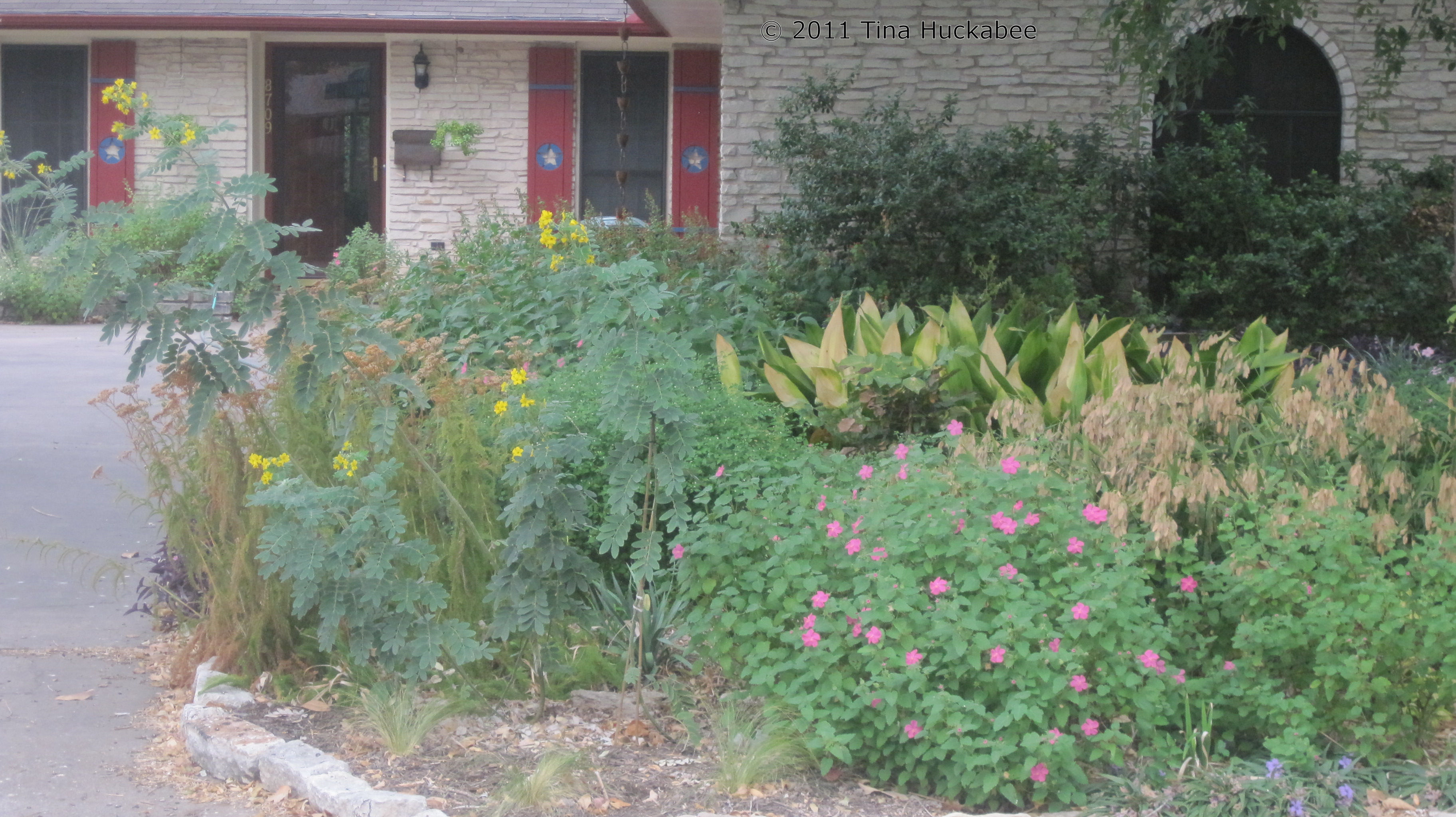
My assumption about the damage this year is that it was caused by the extremely hot (more than 70 days above 100 degrees) temperatures that Austin experienced during summer 2011.  Originally, I planned to prune the Cast Iron in winter and observe what happens next year and if it is as hot again and similar damage occurs, I would replace the plants.

Yeah, right.

I can’t wait that long.

So, once I’ve dug out the sun-burned plants, what do I replace the Cast Iron Plant with?

I wanted something that I don’t already have, that can take mostly shade, but won’t burn up with the death rays of the west sun and something that won’t need much water, given the very real possibility of Stage 3 water restrictions in the foreseeable future.

I love the native red Turk’s Cap (Malvaviscus arboreus) and have many of those shrubs in my gardens. I used to have a White Turk’s Cap and enjoyed it as well, but  moved it and it didn’t survive its transplantation.   I’ve never been quite as enthralled with the Pam’s Pink Turk’s Cap (Malvaviscus drummondii ‘Pam Puryear’), although I’ve grown to like it more after observing it at Zilker Botanical Gardens (in the Butterfly Garden) and in private gardens around Austin.  According to those who grow it, it’s as hardy and xeric as the red Turk’s Cap. So, I decided to try two Pink Turk’s Cap as the replacements for the fried Cast Iron Plant.

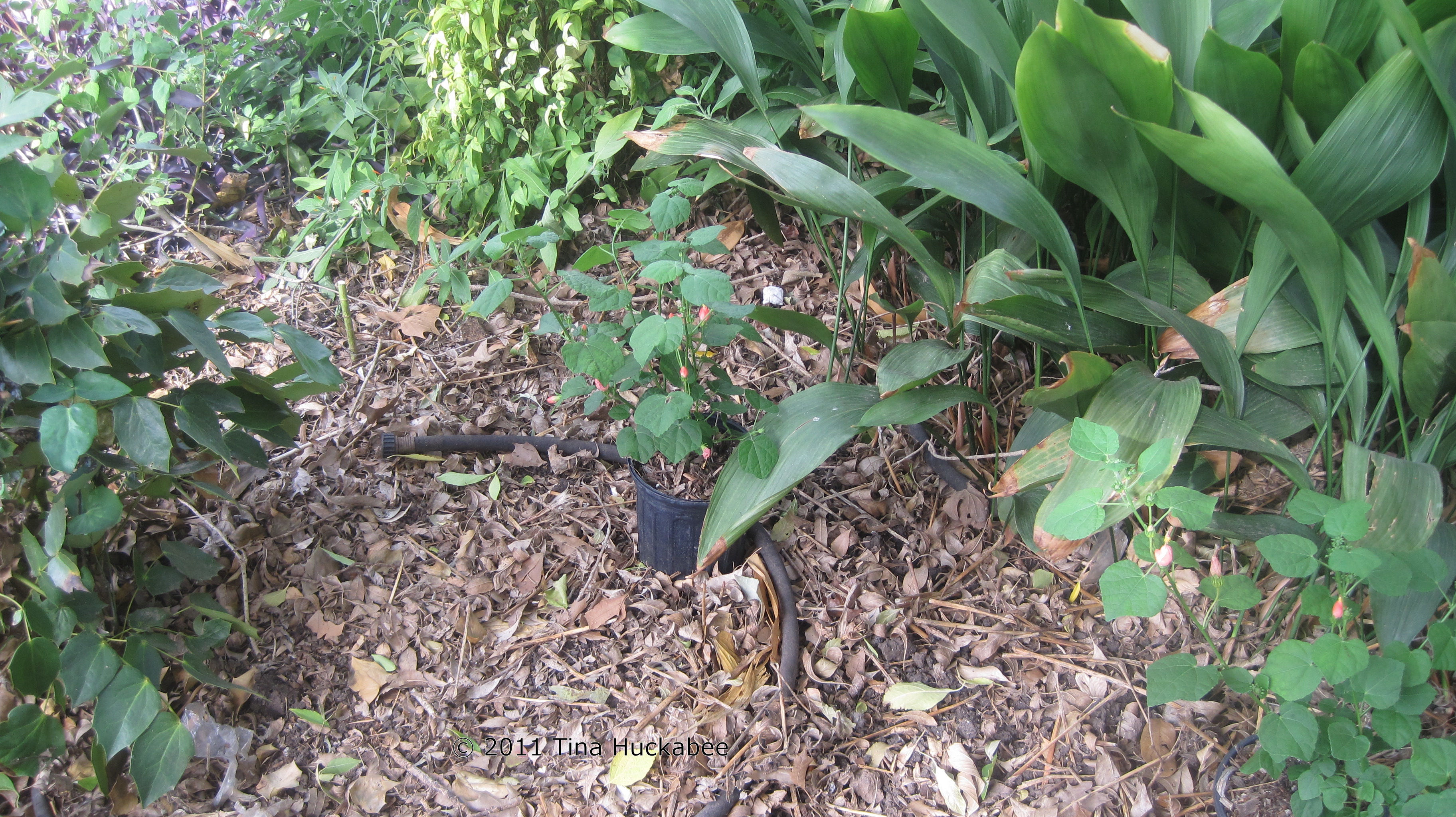
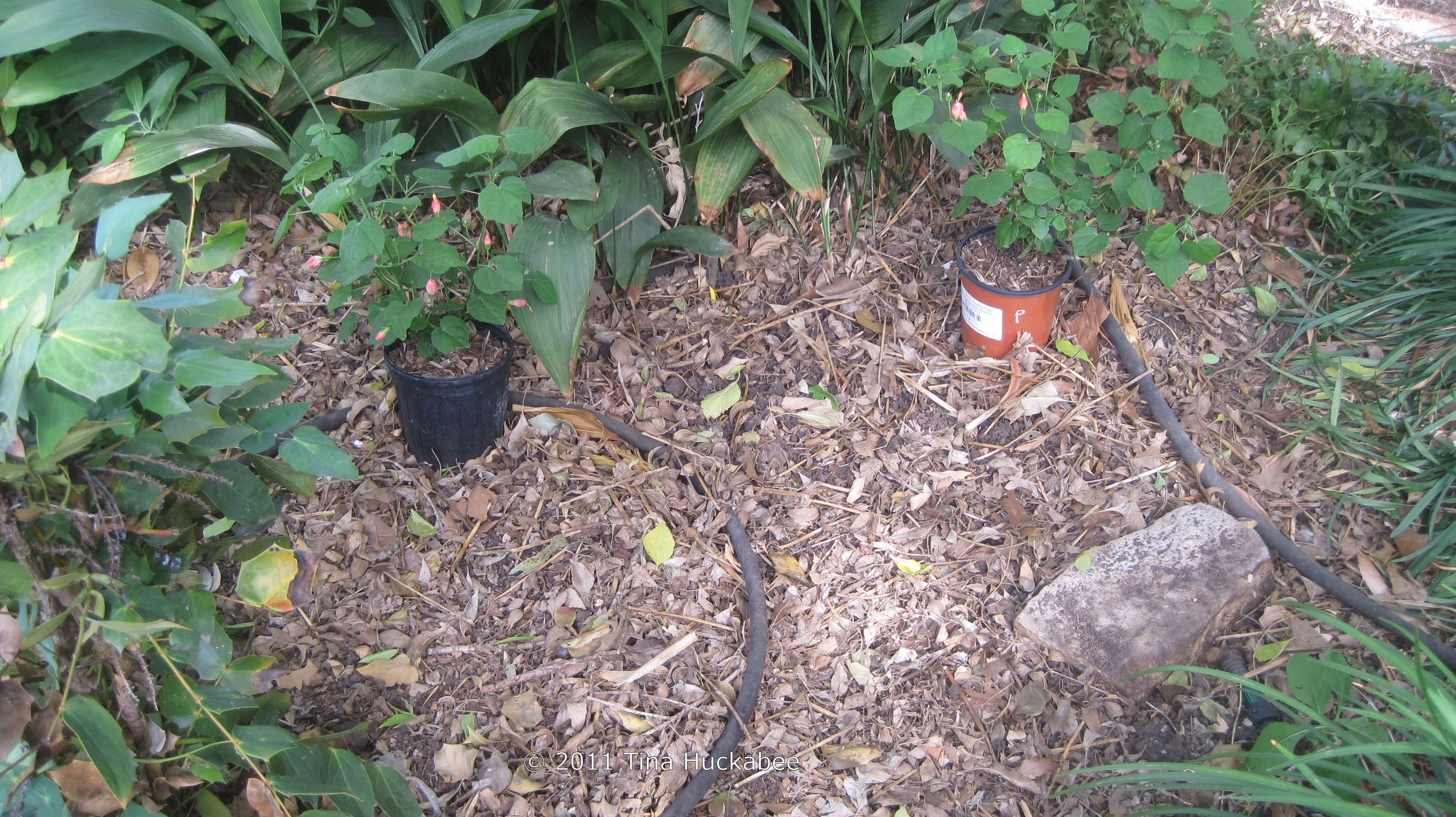
I laid out the exact spot where I want the Turk’s Cap  and adjusted the soaker hose to pass over the root zone of each plant.
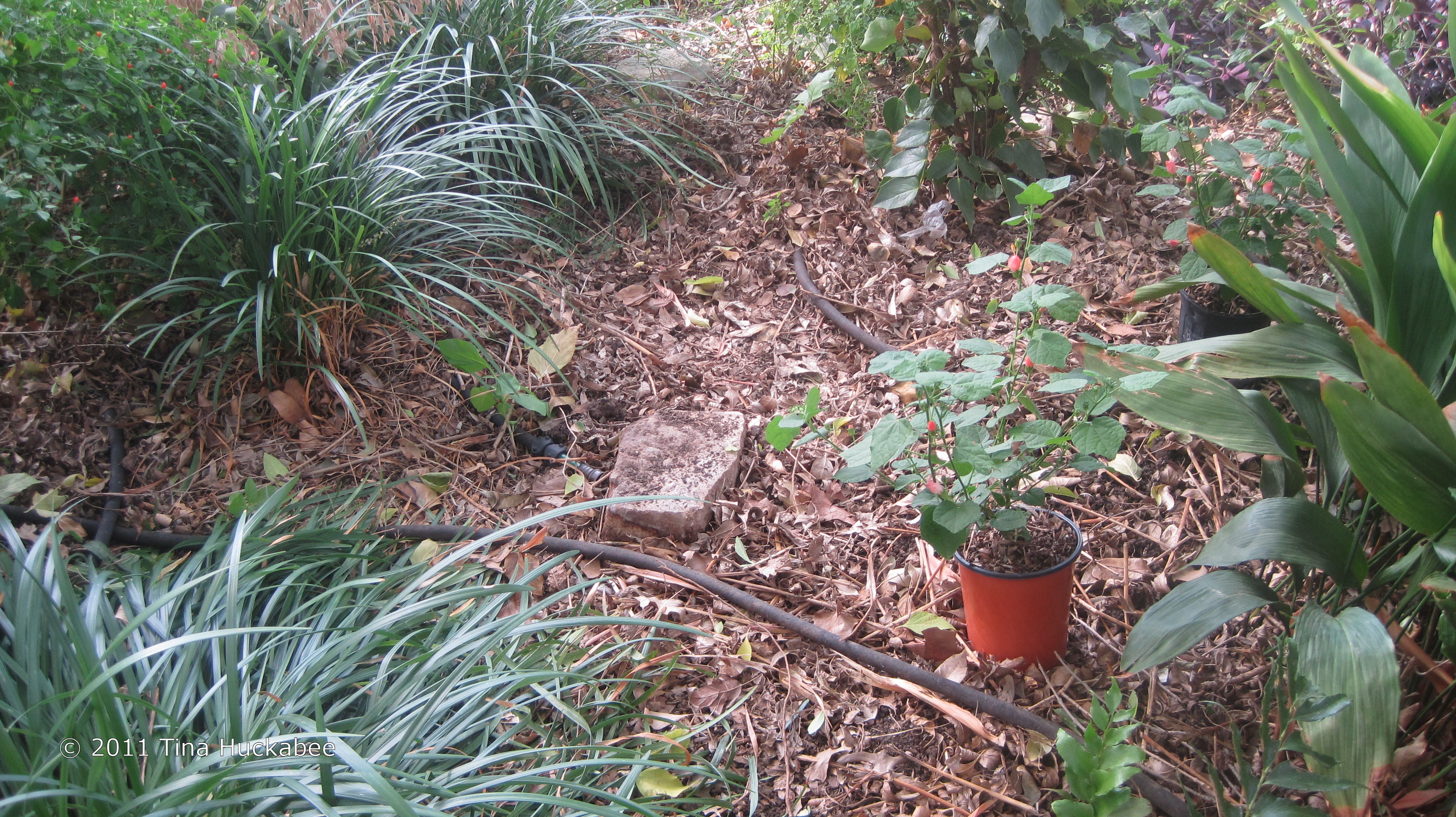
I dug ’em in, watered ’em and mulched ’em.

Because it’s late in the growing season, I opted for gallon pots each with a large root base  to better ensure survival odds through winter.  At maturity, these two plants should be four to five feet tall.

Viewing from the street (toward the tree), the Turk’s Cap will fill in the space behind  the Mahonia (Mahnonia repens) and in front and to the right  of the Cast Iron, thus shading the remaining Cast Iron Plant from the sun during the hellish summer months.  The small Giant Lirope (Lirope muscari) in the front/center of the photo, is a transplant from another part of my garden and will eventually be about three times its current size.
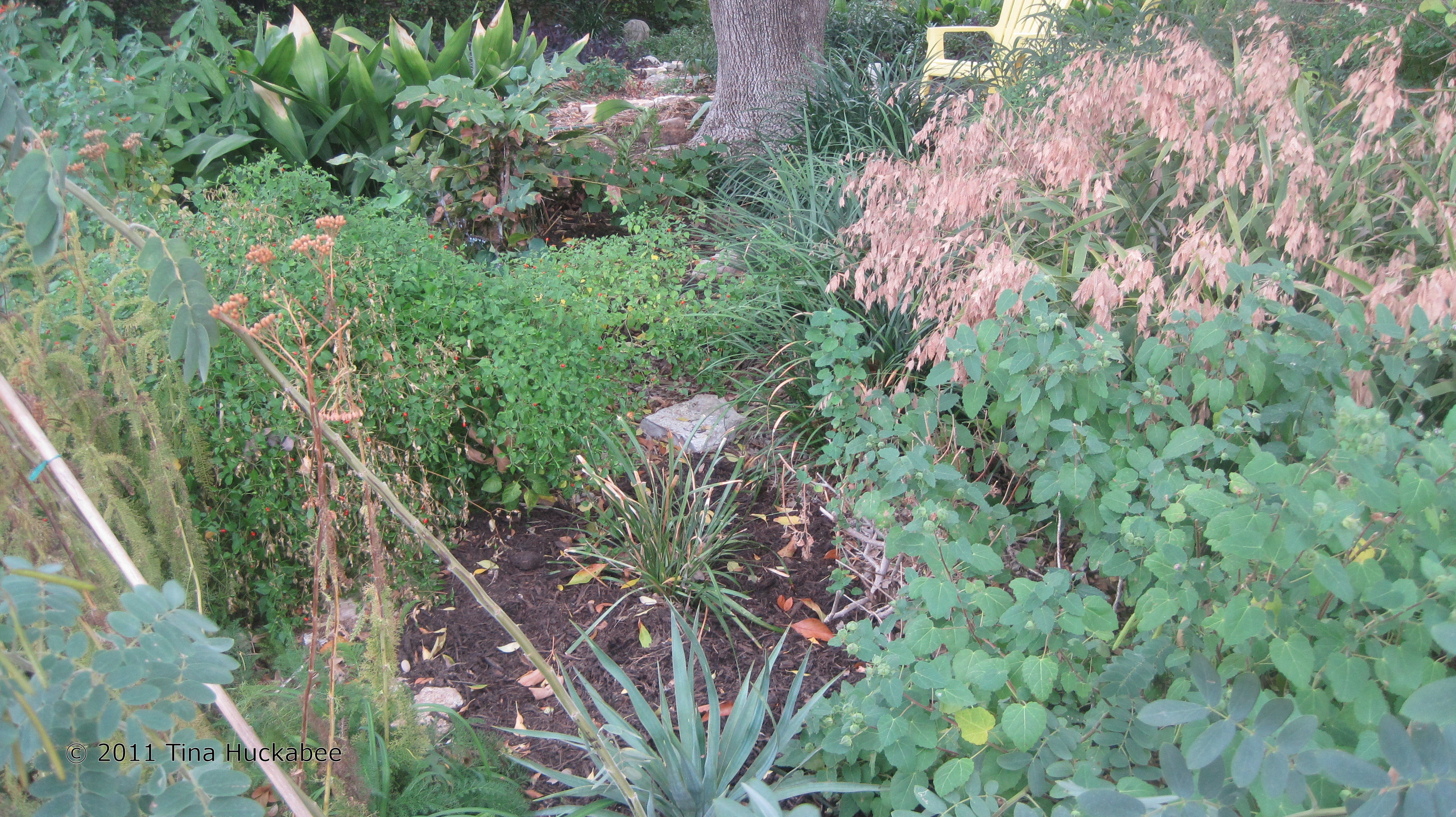
Viewing from the tree side of the garden (toward the street), a seedling Chile Pequin (Capsicum annuum var. glabriusculum), is to the right of the Giant Liriope and left of the Mahonia and will fill in the area in front of where the Turk’s Cap is planted.

I opted to leave the section of Cast Iron Plant which was not sun-damaged.
I think this is a good solution to the Cast Iron sun-burn problem.  My greatest concern  is planting during the  continuing drought.  My hope is that I’m ahead of possible severe water restrictions with enough time for the xeric Pam’s Turk’s Cap to establish itself.

Wish them (and me), good luck.  And, think about what you can do to replace drought/sun damaged plants, inappropriately placed, with better suited options.

Tardy Again! This Time to Foliage Follow-up

Like Pam of Digging, I’ve also admired the landscaping at the North Star Home Center  in Austin.  I live near this commercial site and drive by often. I greatly appreciate that the owners of the property chose xeric, mostly regional plants to landscape with, rather than the typical needy and boring turf.  I’ve long admired the combination of the deep purple of the Purple Heart (Tradescantia pallida) combined with the blue-green of the Agave and Sotol in that garden.  It is a stunning contrast. Inspired by the beauty  of this commercial garden, I planted an Agave (Agave americana)  in concert with a long-established group of Purple Heart.

This area is part-shade, so the Purple Heart doesn’t bloom much and the Agave will be slower growing than in full sun.  The tree that shades the spot is in decline, so I expect in the next few years to have more sun in this spot.

In Pam’s post, the Purple Heart is in full sun.  In my gardens there are six areas where Purple Heart is planted  and all are part to full shade.  It’s a very versatile ground cover.  It’s especially nice planted with evergreens such as Cast Iron Plant (Aspidistra elatior) and Giant Lirope (Lirope muscari).

It tends to bloom more with more sun and sometimes has a tinge of green in the leaves.  In shade it remains a deep purple, usually with a few blooms and attendant bees.

Purple Heart can be a bit invasive, so in a cultivated garden, one must take a shovel or sharpshooter to it from time-to-time to keep it in bounds.

Every spring, I have to dig some of the Purple Heart out of this group to prevent encroachment into (from left to right), the  Mexican Honeysuckle (Justicia spicigera), the Rock Rose (Pavonia lasiopetala), the Chile Pequin (Capsicum annuum var. glabriusculum)  and Yarrow (Achillea spp.).

Purple Heart dies to the ground with the first freeze, but in Central Texas, it is root hardy.  In northern climates, it can be grown as a container plant.  It is not deer resistant.

Purple Heart is a native to Mexico and an extremely tough plant–it works well  in  most soil types and with minimal irrigation. It is a beautiful foliage ground cover that adds color to any garden. It’s an easy pass-along plant.  So find a gardening friend who has Purple Heart, snip a branch or two, stick in the ground and enjoy for years to come.

Garden Bloggers’ November 2011 Bloom Day–Before The Rain

At best, I’m fashionably late–at worst, tacky.  It’s the fifteenth of the month–the day, hosted by May Dream Gardens, that bloggers from everywhere post about what is blooming in their gardens.  I’m sure more experienced bloggers are ready for this day at sunrise–photos, text and all. This is my first time to post and I’m a little tardy.

As it is raining today (the third substantial rain since June), and dark and wet outside, the photos were taken in the last few days.  The rain won’t change the dynamics of the drought, but it’s desperately needed and most welcome in parched Central Texas.

Even with the drought, there are still plenty of blooms–a sampling:

A group of  Cuphea ‘David Verity’– I planted these almost two years ago.  They didn’t bloom  much this year until the past two months.  Generally, this hybrid is considered one of the longer-blooming of the cuphea plants.

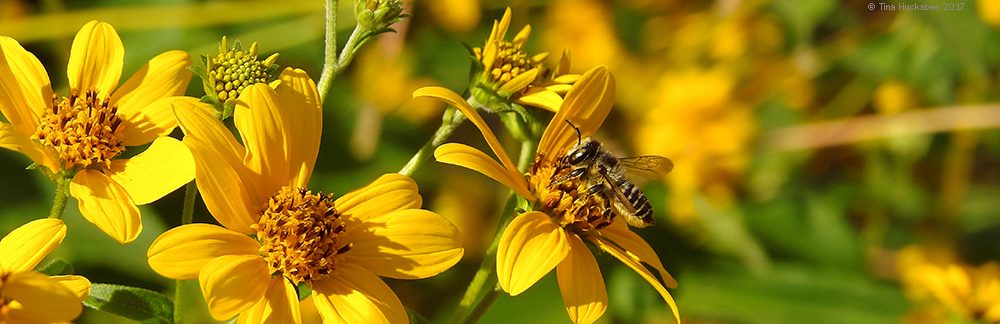
A fragrant White Mistflower (Ageratina havanensis) is still being enjoyed by the honeybees.  Peeking from behind the White Mistflower, is a Goldeneye (Viguiera dentata) bloom, not usually so shy.

The Salvia farinacea ‘Henry Duelberg’ became one of my absolute favorite plants in the past two years.  I planted one at Shay’s Green Garden and was hooked.  Rich, blue flowers, a long blooming time (spring to frost) and heat and drought tolerant–what’s not to love about this plant? I now have four of them, scattered about in my personal gardens.

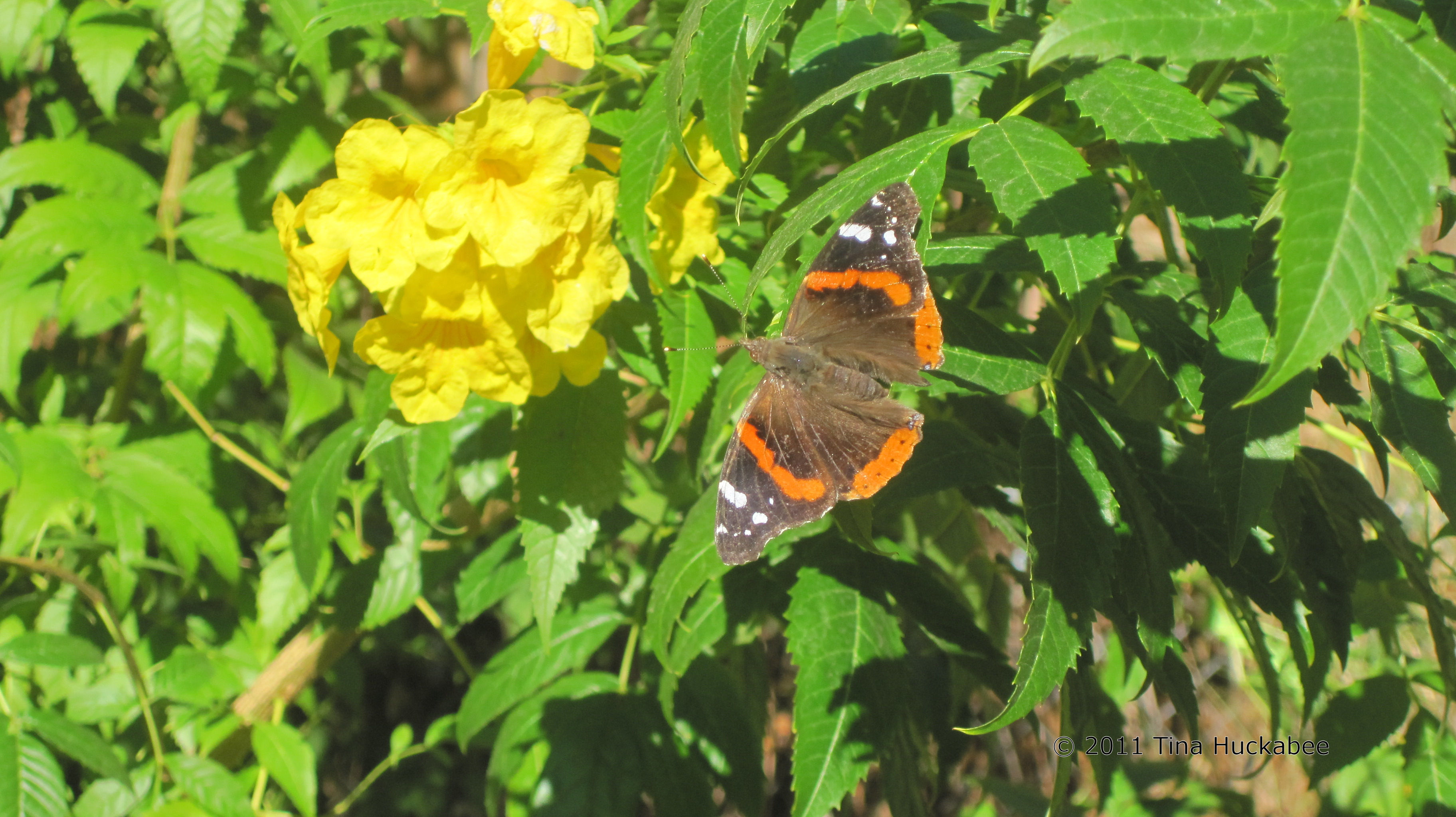
We haven’t had many butterflies this year due to the exceptional drought, but I observed this little Red Admiral a few days ago.  A fast flier, he was hard to catch, but he stopped for the Yellow Bells (Tacoma stans)–several times.

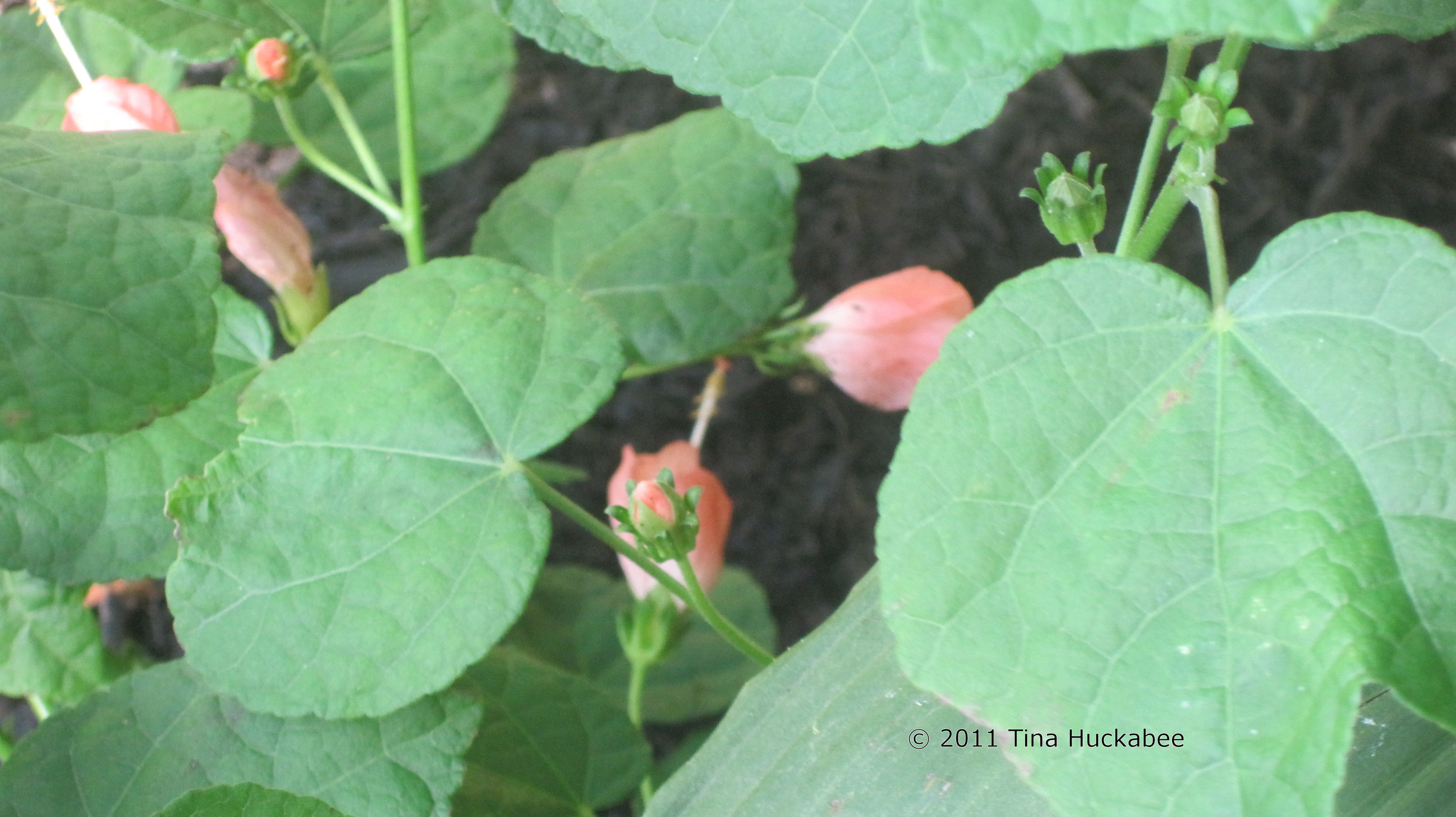
A new addition to my garden’s blooms is a variation of the red Turk’s Cap (Malvavicus arboreus),called Pam’s Pink Turk’s Cap (Malvaviscus drummondii ‘Pam Puryear’)

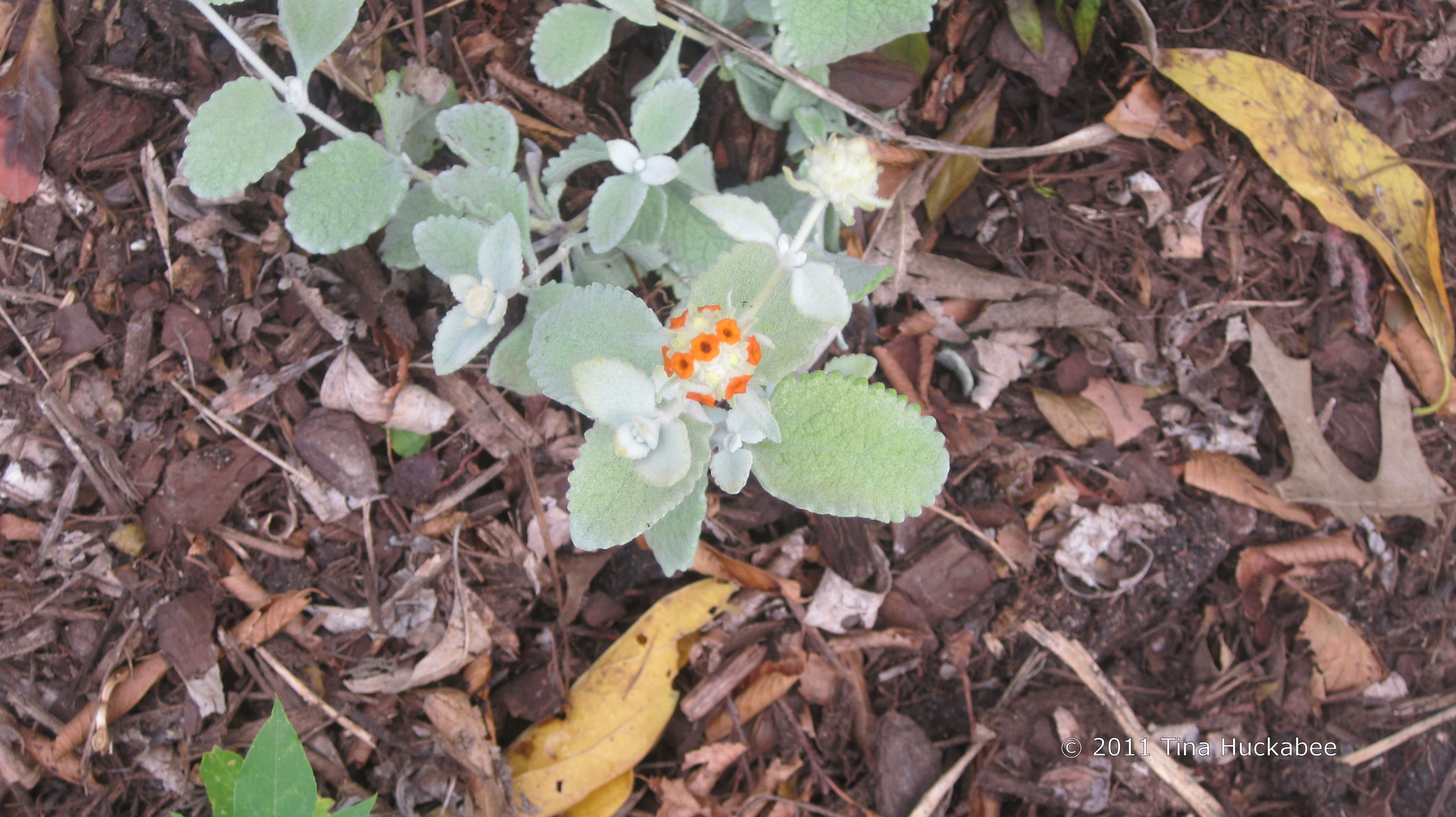
Another new plant for me is the Wooly Butterfly Bush (Buddleja marrubiifolia).  Fuzzy, silver-gray leaves and tiny orange flowers encased in a ball–very 1960s.  It is native west of Austin and in higher elevations.  It’s planted in Shay’s Green Garden, has done well there and I’m hoping it won’t be offended by my rather heavy soil.

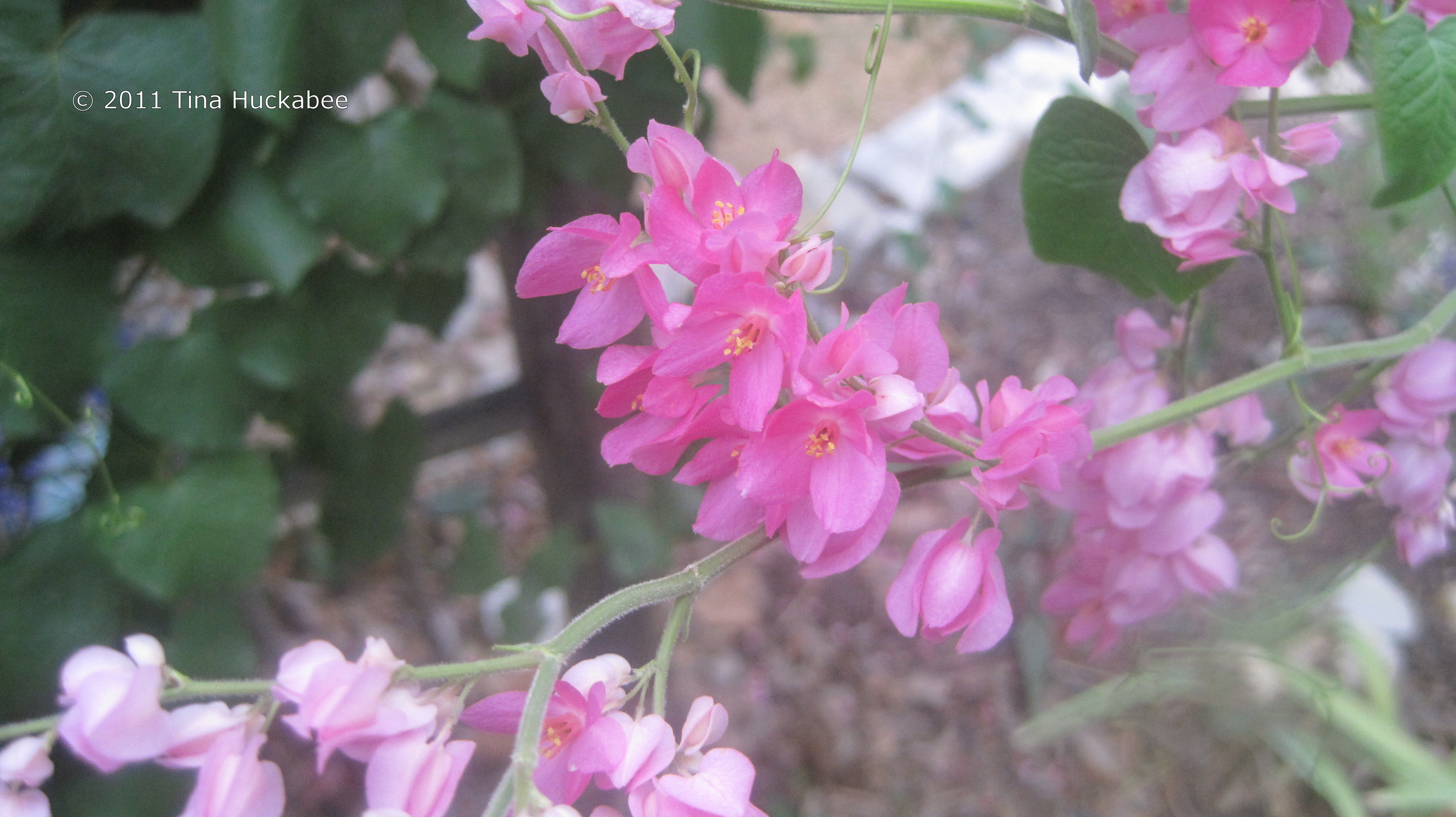
And, still in bloom, the lovely Coral Vine ((Antigonon leptopus).

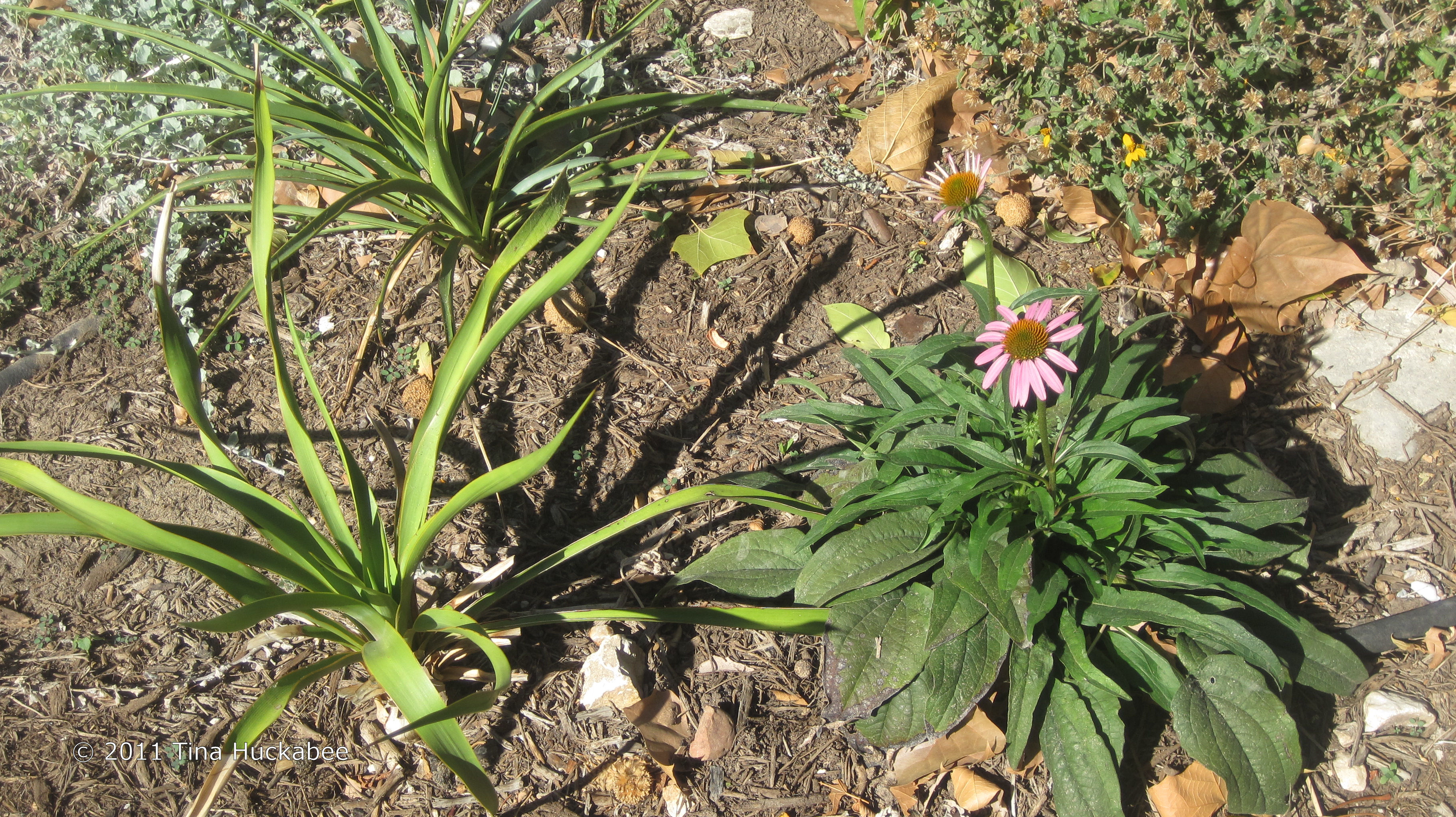
A couple of my adored Purple Coneflower (Echinacea pupurea)  continue their display,

as does the ever-hardy and beloved Turk’s Cap (Malvaviscus arboreus).  It’s  blooming–a little odd for November.

Finally, the Rock Rose (Pavonia lasiopetala) and the Blackfoot Daisy (Melampodium leucanthum) just will not stop.

And that’s fine by me.  How ’bout you?