A Flock of Fall Fruits

There are an abundance of berries on shrubs and trees in my gardens this fall.  I choose to believe it’s because they are happy, loved and established rather than some exhibition of desperation, a last-ditch effort to reproduce, given the exceptional drought they’ve lived through this past year or so.

I didn’t expect much of a berry show this year because of the drought, so I’m glad that I was wrong.

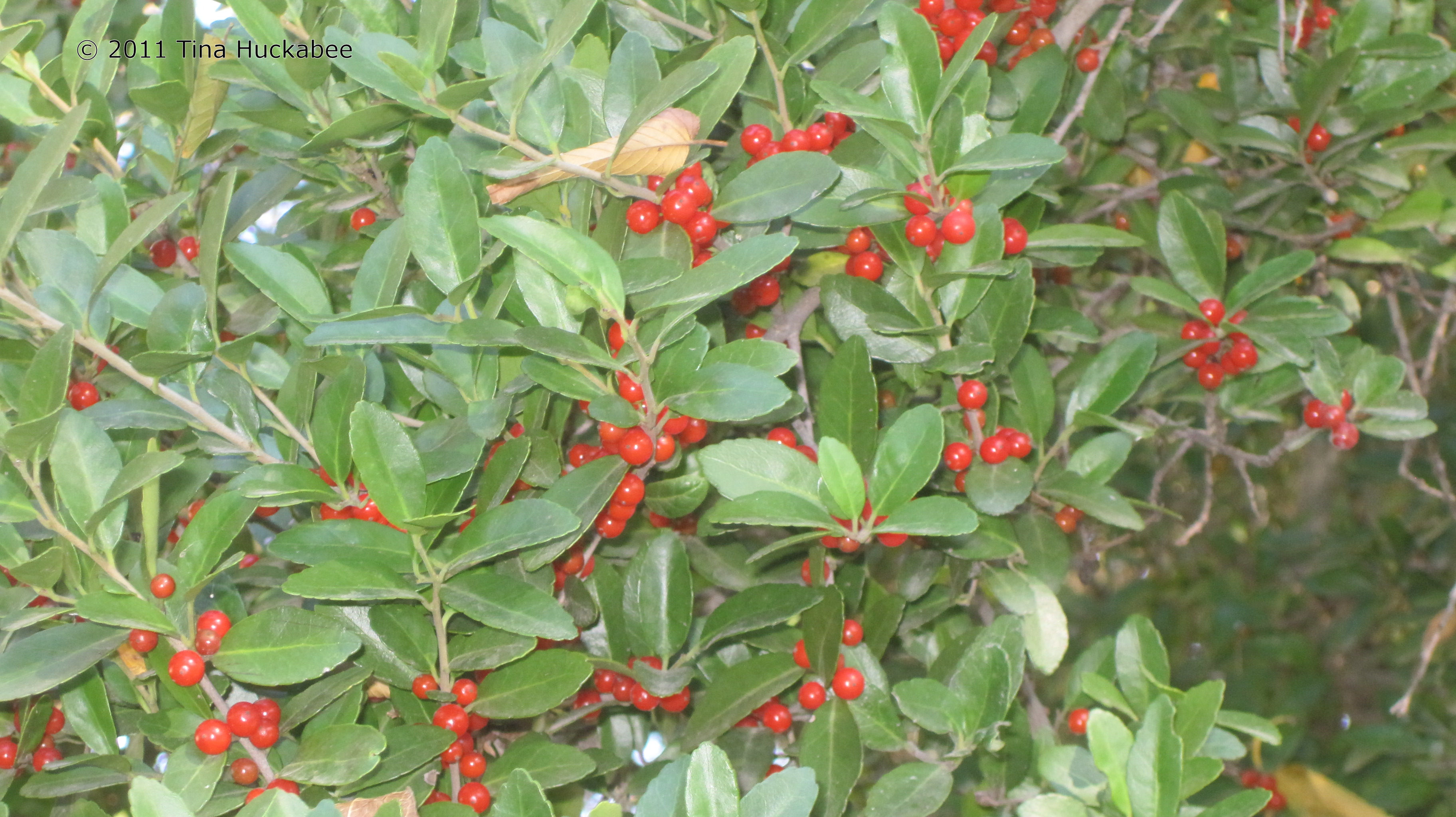
My Possumhaw Holly (Ilex decidua) has been an inveterate berry producer for some years now.

It’s about eleven years old and usually by  November, it showcases its lovely, lush red berries.
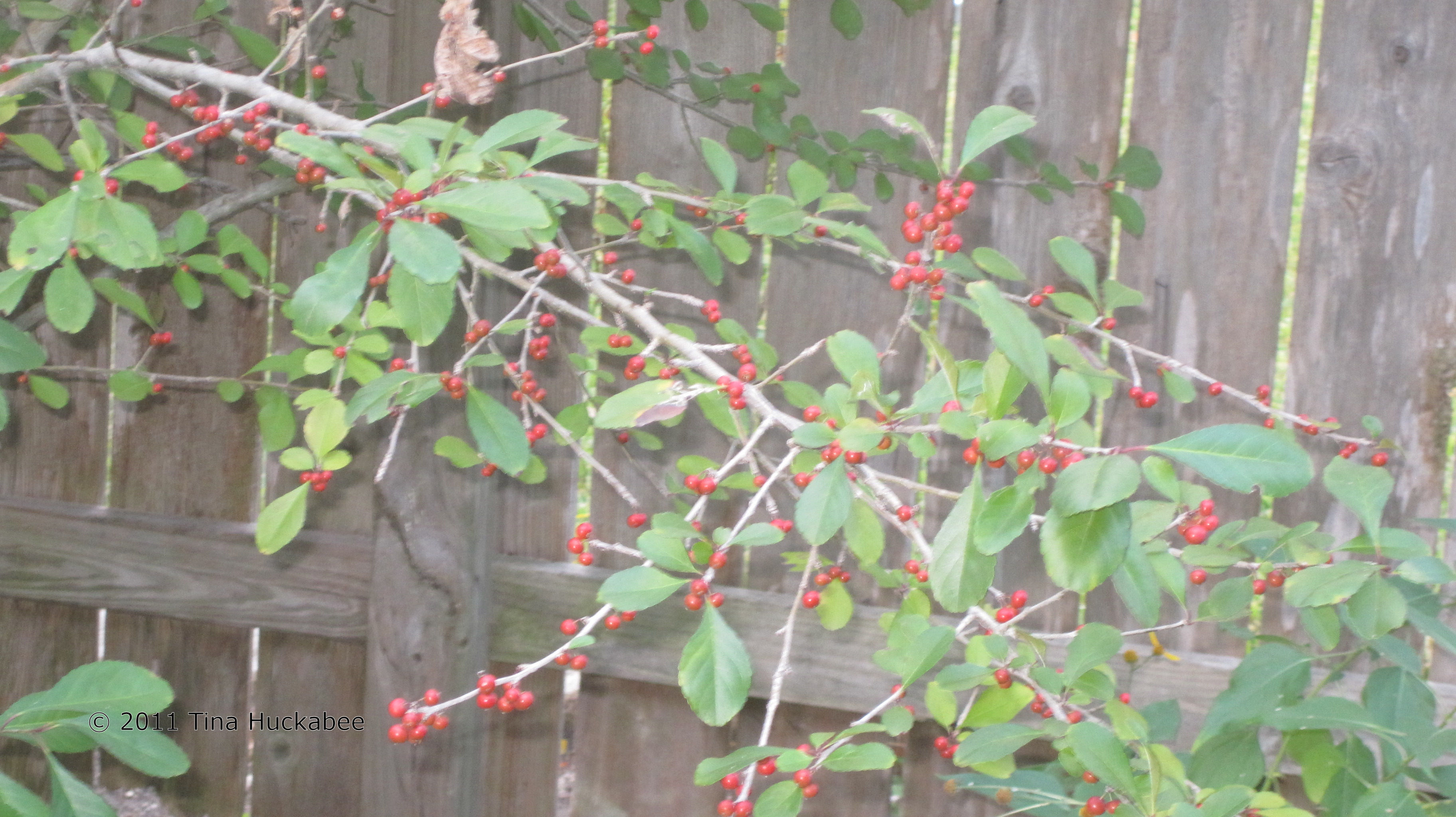
The birds (mockingbirds, bluejays and cedar wax-wings) love this berry and are very generous with me:  they don’t eat these fruits to extinction until early spring so I get to enjoy the beauty of the berries throughout winter. Interestingly,  many of the berries that developed last fall stayed on the tree well into this past summer, a surprise to me given the limitations of wildlife food available this year.

My neighbor has the related Yaupon Holly (Ilex vomitoria), just over the fence which separates our property.

I like these two small, native trees planted so closely together.

The Yaupon remains evergreen during winter and the Possumhaw is deciduous after our first hard freeze.  The berries will remain on both trees until birds and squirrels devour them.  The Possumhaw has slightly larger and darker red berries,

while the Yaupon’s fruits are smaller, scarlet red and shiny.

Both trees are excellent landscape and wildlife plants for Central Texas.

The non-native, but well-adapted Dwarf Burford Holly (Ilex cornuta ‘Dwarf Burford’ ), is also exhibiting a bumper crop of berries this year.

Typically, these berries stay on the shrubs until the cedar wax-wings swoop, en masse, and eat them all, usually in one afternoon, sometime in late February or March.  These shrubs are very slow-growing.  I planted them in 1990 and it took  many years for them to reach their mature size.  They’ve always been good berry producers though.

Pigeonberry (Rivina humilis) are still producing their little, brilliant red fruits this year as well.
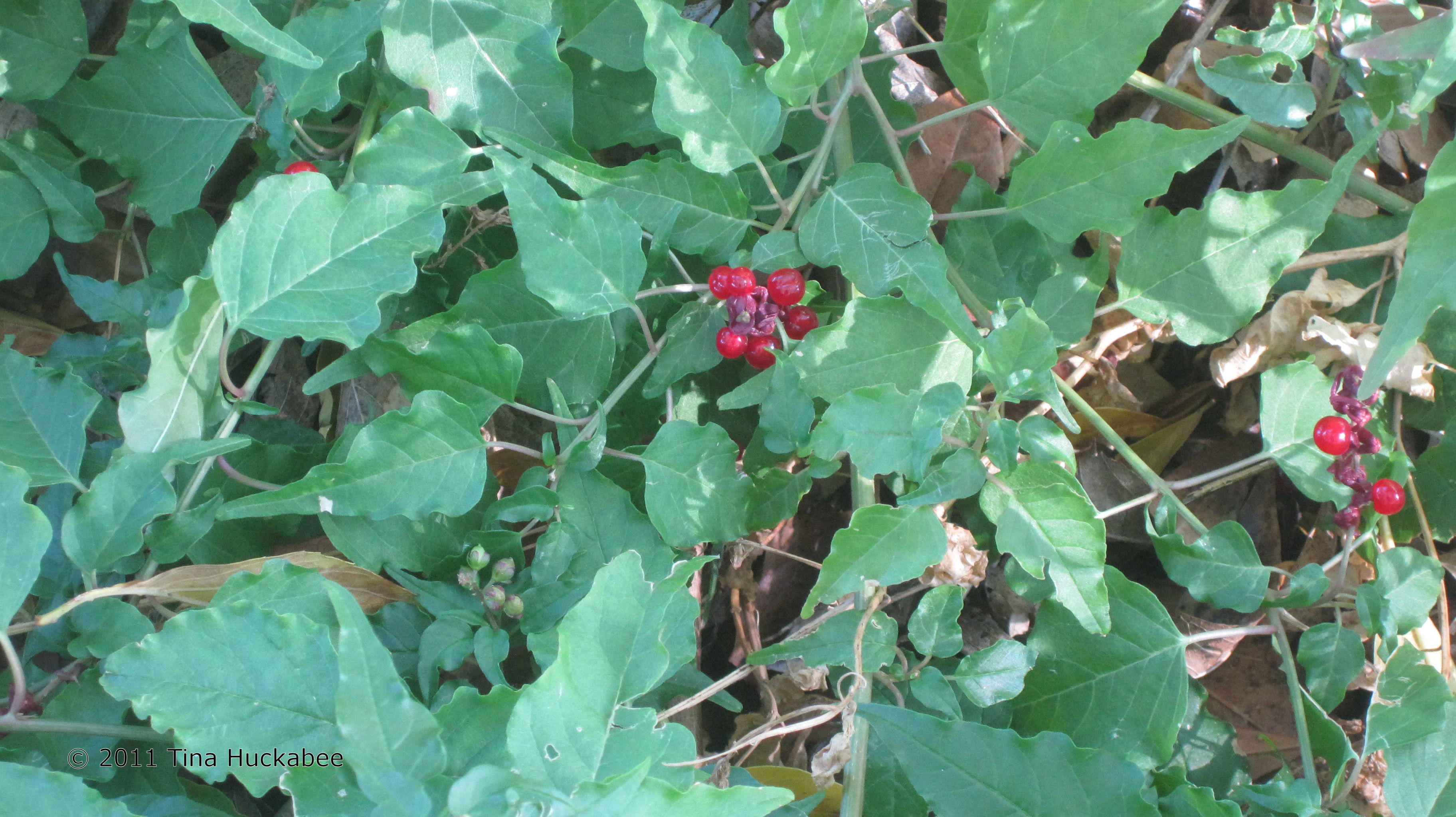
I’m guessing that the recent rains we’ve had contributed to the slightly longer bloom ‘n berrying time for this plant.

The Texas native pepper, Chile Pequin (Capsicum annuum), also is a reliable fruit producer, although this year (at least in my garden), the fruits (peppers) developed a little later than usual.

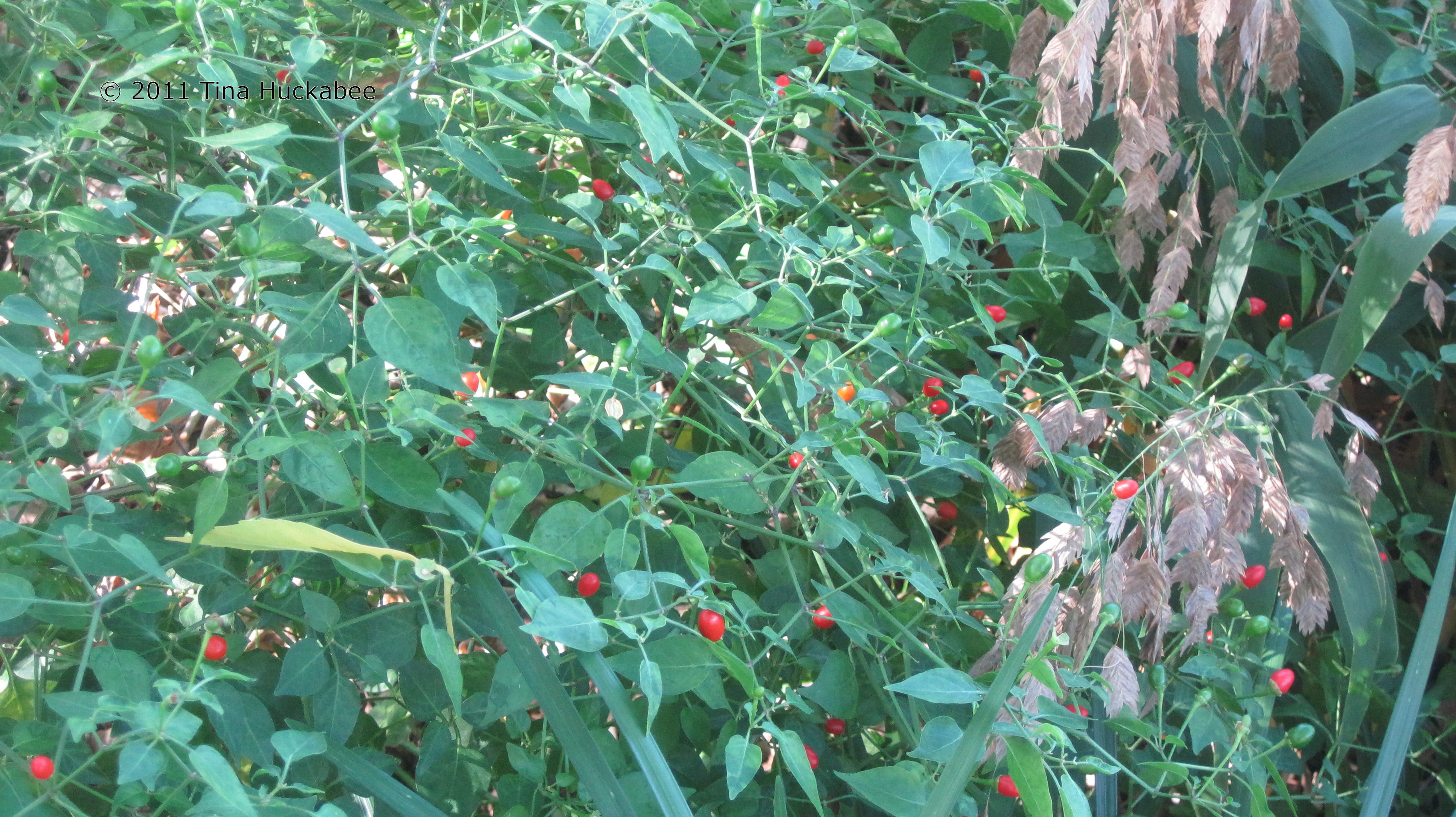
Typically, the peppers develop in the summer months, turning red by late August/September.  Aside from the later ripening time, there aren’t as many peppers on my Chile Pequin plants this year as in others.  The mockingbirds have visited these plants recently, so it’ll be interesting to observe whether the fruits remain throughout winter.  Usually they do, that is until a very hard freeze.

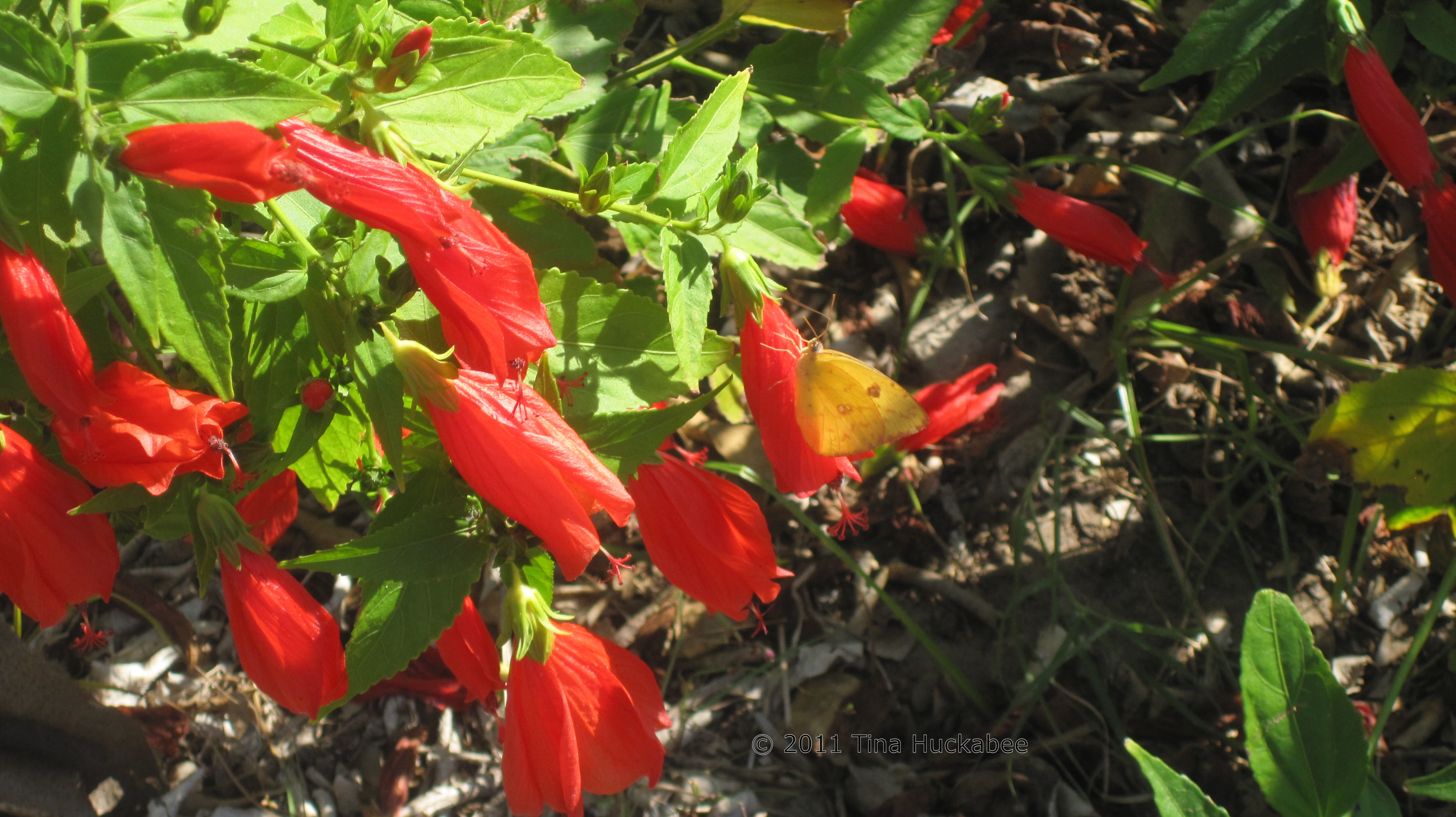
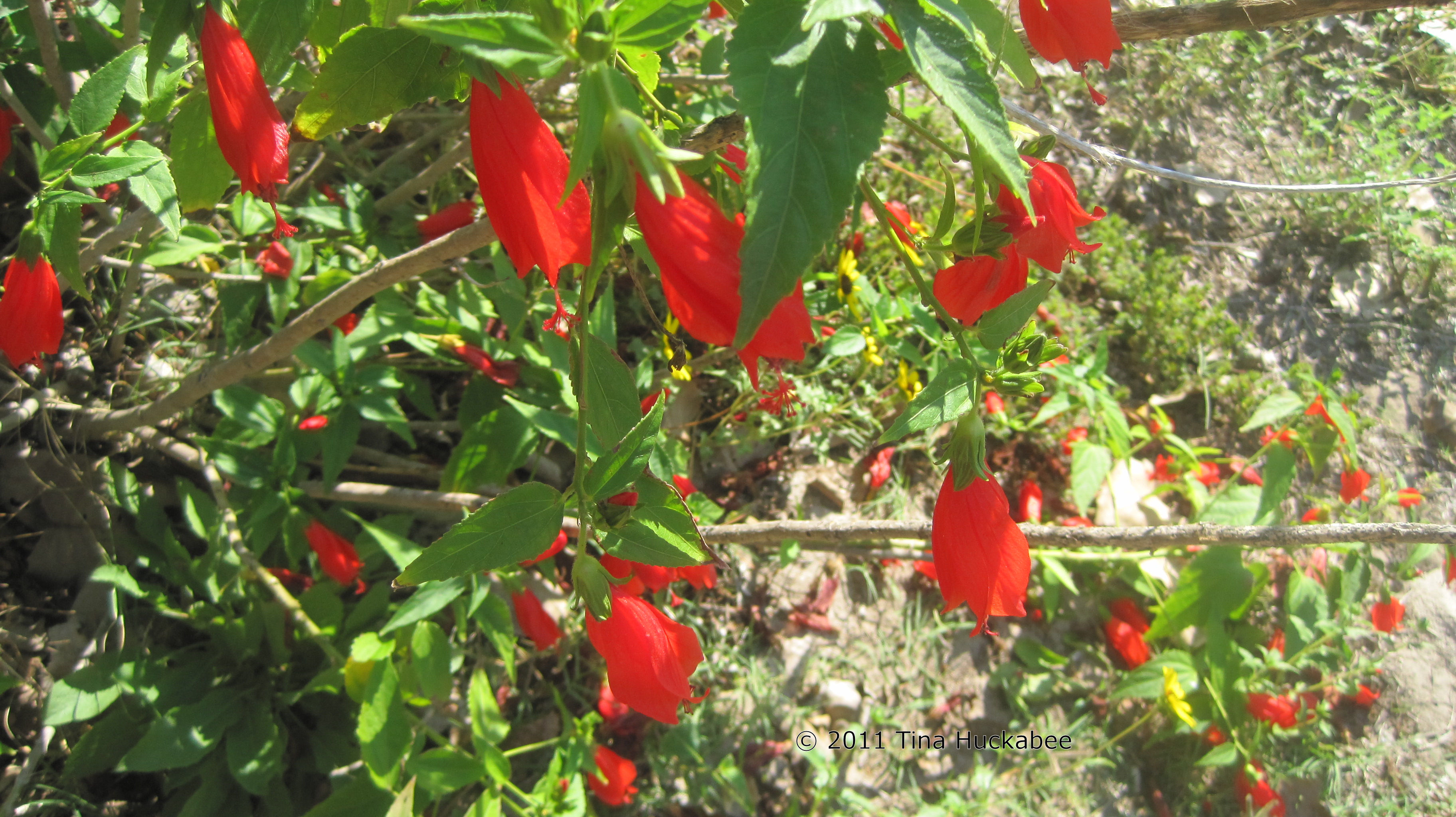
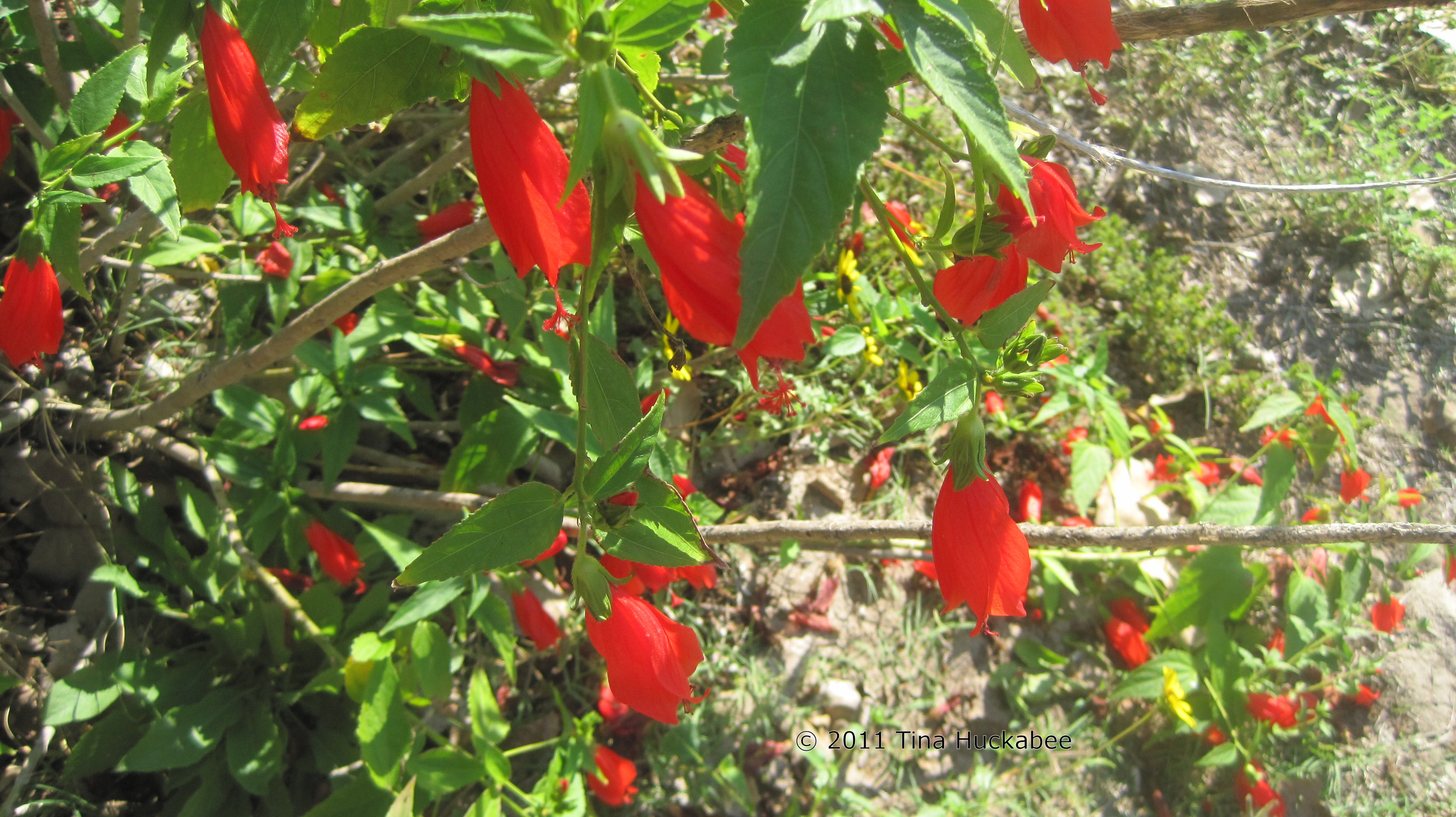
Conversely, some of the other fruit producers  have had their fruits gobbled up (seemingly) about three seconds after ripening.  I haven’t seen a Turk’s Cap (Malvaviscus arboreas) fruit or a Barbados Cherry (Malpighia glabra) fruit since earlier in October.  I did however, see a mockingbird flitting about those plants, often with a fruit wedged firmly in his beak.  I wonder if there’s a connection??

What berries to you and your wildlife enjoy?
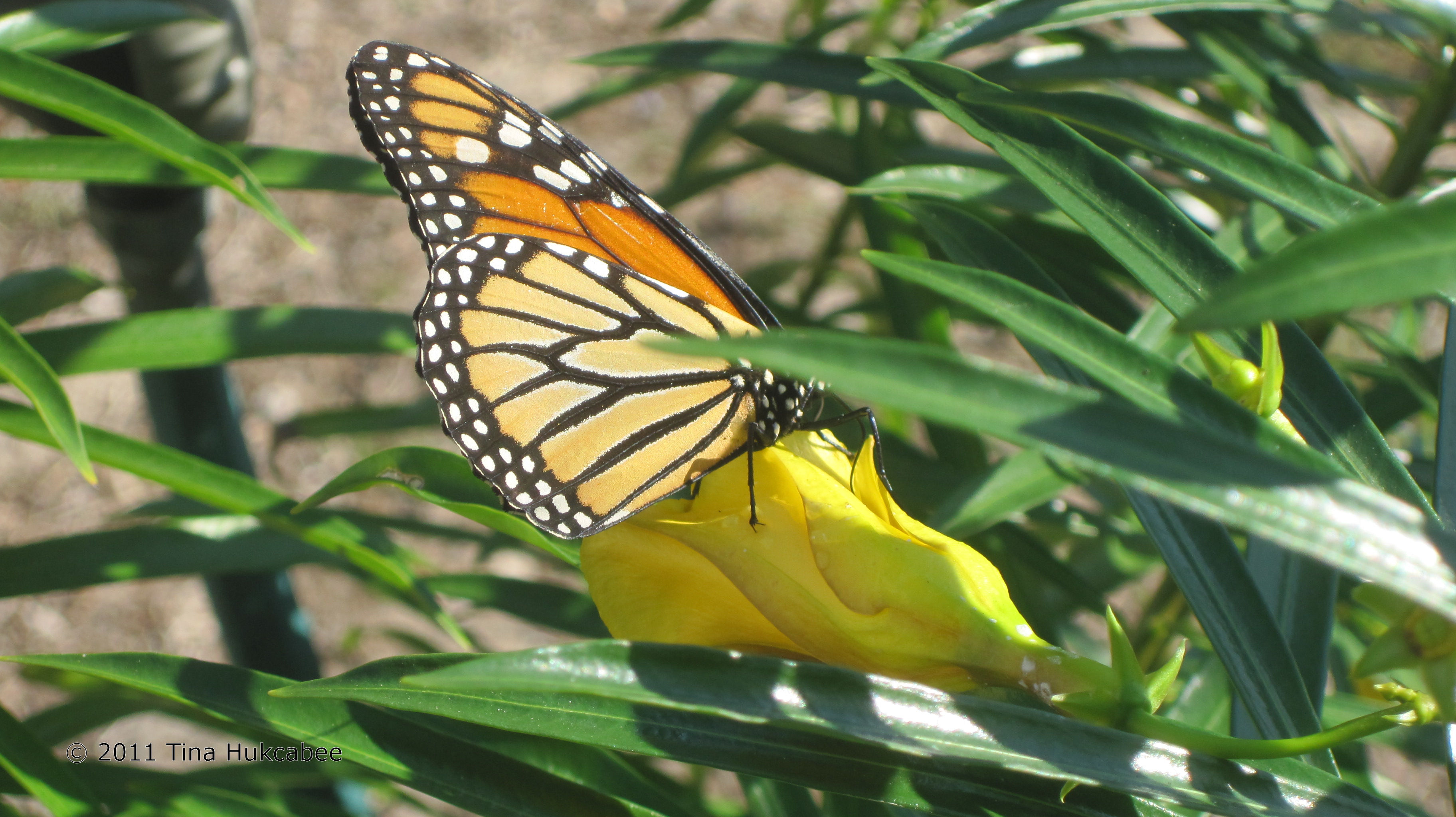
I’m Glad Someone Has Butterflies

All summer, amateur and professional photographers visited Zilker Botanical Gardens, looking glum.  When they walked into the Green Garden they’d invariably ask, “Do you have any butterflies? ” “No, I’m afraid not,” I would reply, shaking my head just as glumly.  We would then spend some time lamenting the awful drought and heat.

Central Texans who enjoy the great outdoors have noticed how few pollinators, especially butterflies and moths, there has been in this past year. The drought is the obvious cause of the dearth of pollinators, especially in the butterfly population.

Recently, I visited the Texas Gulf Coast (specifically Corpus Christi) and saw more butterflies there in two days than I’ve seen all year in Austin.

The Monarchs are still there, making a pit stop to refuel for their long trek to Mexico.

They’ve been gone from my gardens for a couple of weeks and I only had a few visit this year.

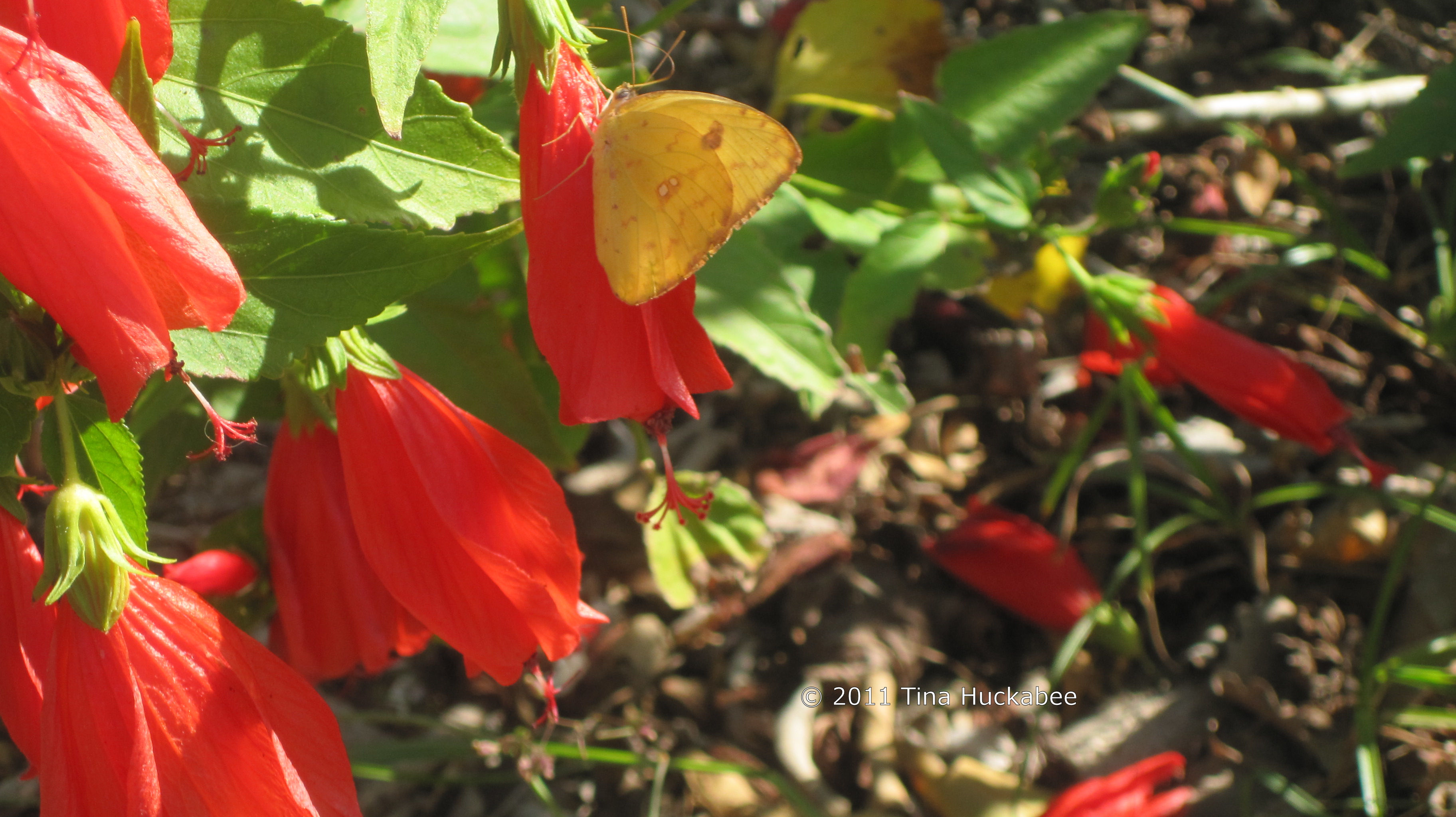
I observed numerous Sulphur Butterflies cruising blooms.

I don’t have any photographic evidence, but family members bragged about the numbers of  Gulf Fritillary they have.  Harrumph!  I haven’t seen a single Fritillary in my gardens all year.  Not one. Even though the Gulf Coast region experienced drought conditions, their conditions weren’t as severe and that region didn’t have the accompanying heat that we in Central Texas suffered.

It’s interesting to compare the difference that two hundred miles makes in what grows and how well.  At my father’s home, this is one (of several) of his Firebush Plants (Hamelia patens).
It’s about eight feet tall, six feet wide and still blooming.  This is an old plant, nearly twenty years old.  I remember when my mother planted it.
 This is my  Firebush.
Mine is about two feet tall and two feet wide. Not much of a comparison.  To be fair, I transplanted this at the beginning of June.  It transplanted beautifully, especially considering the drought and heat.  I don’t think it even wilted.  I coddled it for a couple of weeks, but  I was impressed with how tough and resilient it is.  It will never be as big or as floriferous as those in South Texas, but it’s still a good perennial to grow in Central Texas.
My dad also has a Golden Thyrallis (Galphimia glauca) in his garden.
It’s approximately ten feet tall and at least as wide.   I’ve never grown this plant, but I’ve seen it growing in Austin, although I don’t think I’ve ever seen one as large here. If you look closely, you can spy some red blooms of another large Firebush peeking over the Thyrallis at the top right of the photo.
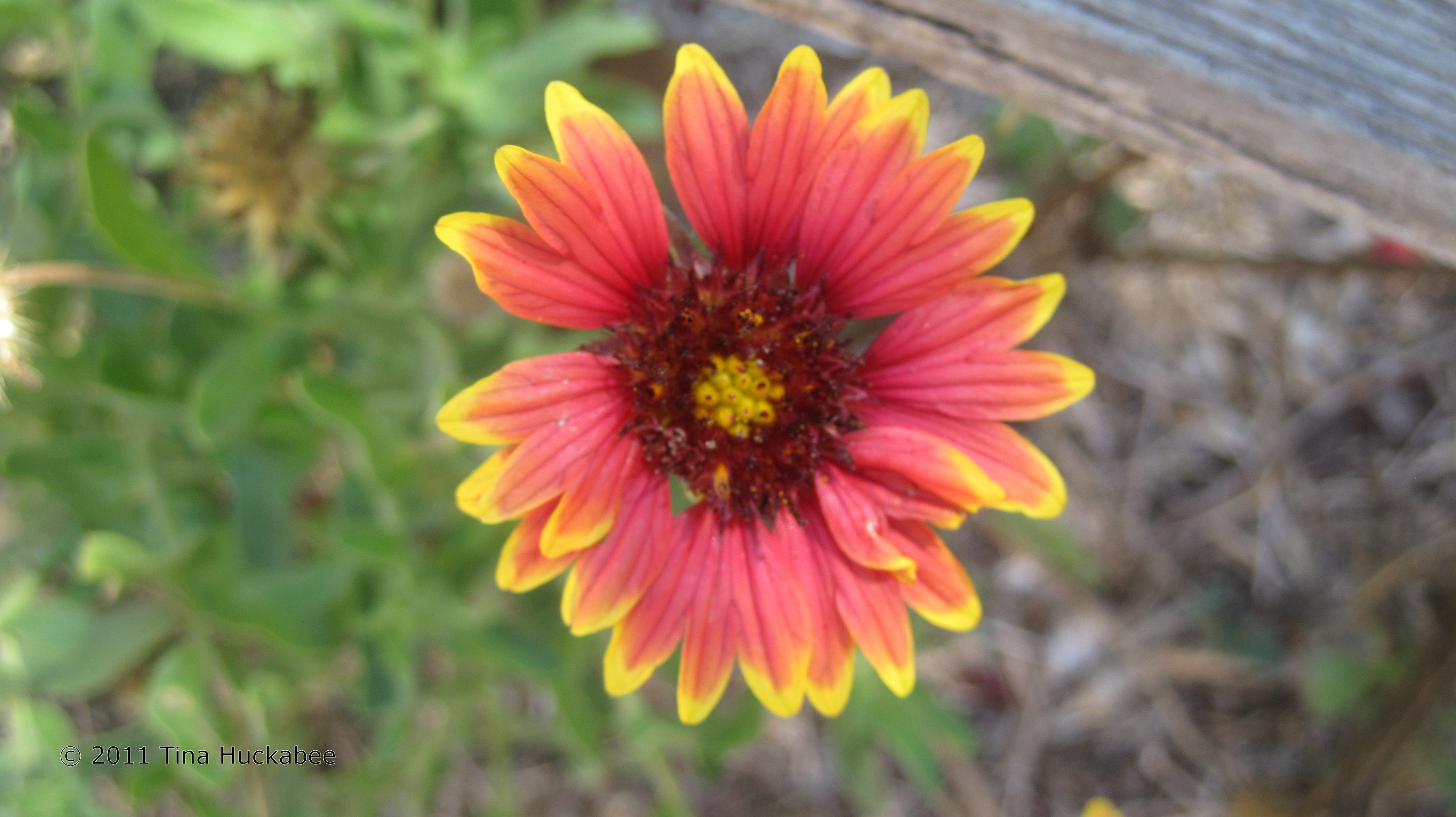
Even the Indian Blanket (Gaillardia pulchella) were still blooming in his garden. 
This was a surprise to me.  I’ve only seen this native wildflower bloom during the late spring through summer months.
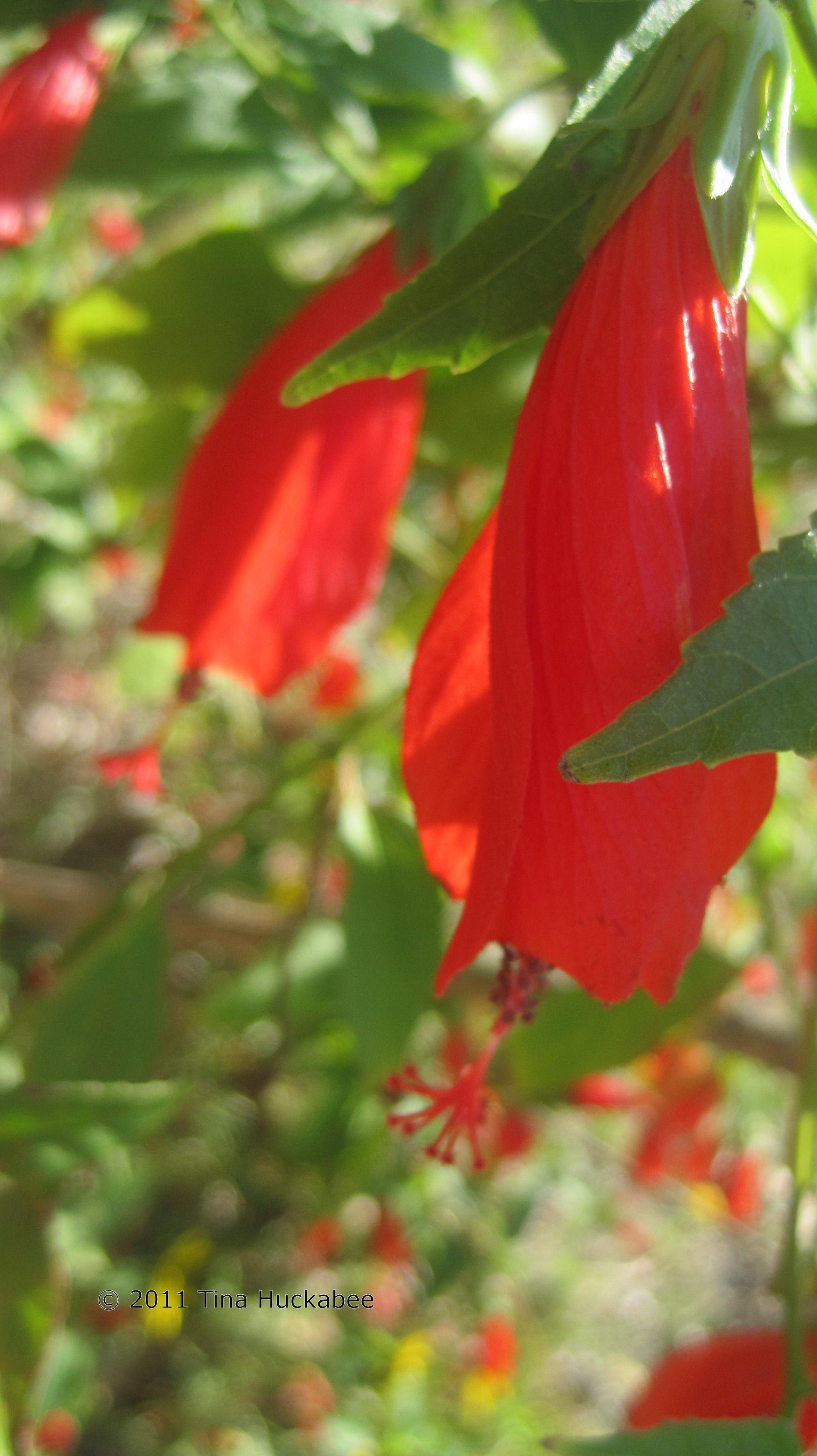
 This Giant Turk’s Cap ( Malvaviscus arboreus var. penduliflorus) was magnificent.
The Giant Turk’s Cap was one of the plants that I considered using when I removed  Cast Iron Plant and replaced it with Pam’s Pink Turk’s Cap. I chose the Pink  because I think it will be more winter hardy here in Central Texas than the Giant.   But that Giant Turk’s Cap is a beauty. With its brilliant red, three to four-inch blooms, it’s quite a show-stopper.
Central Texas has received some rain recently and it’s interesting that I’ve observed a few more butterflies flitting about. Not to our usual standards of course, but it’s heartening to see a few when they were so scarce during the Summer From Hell.
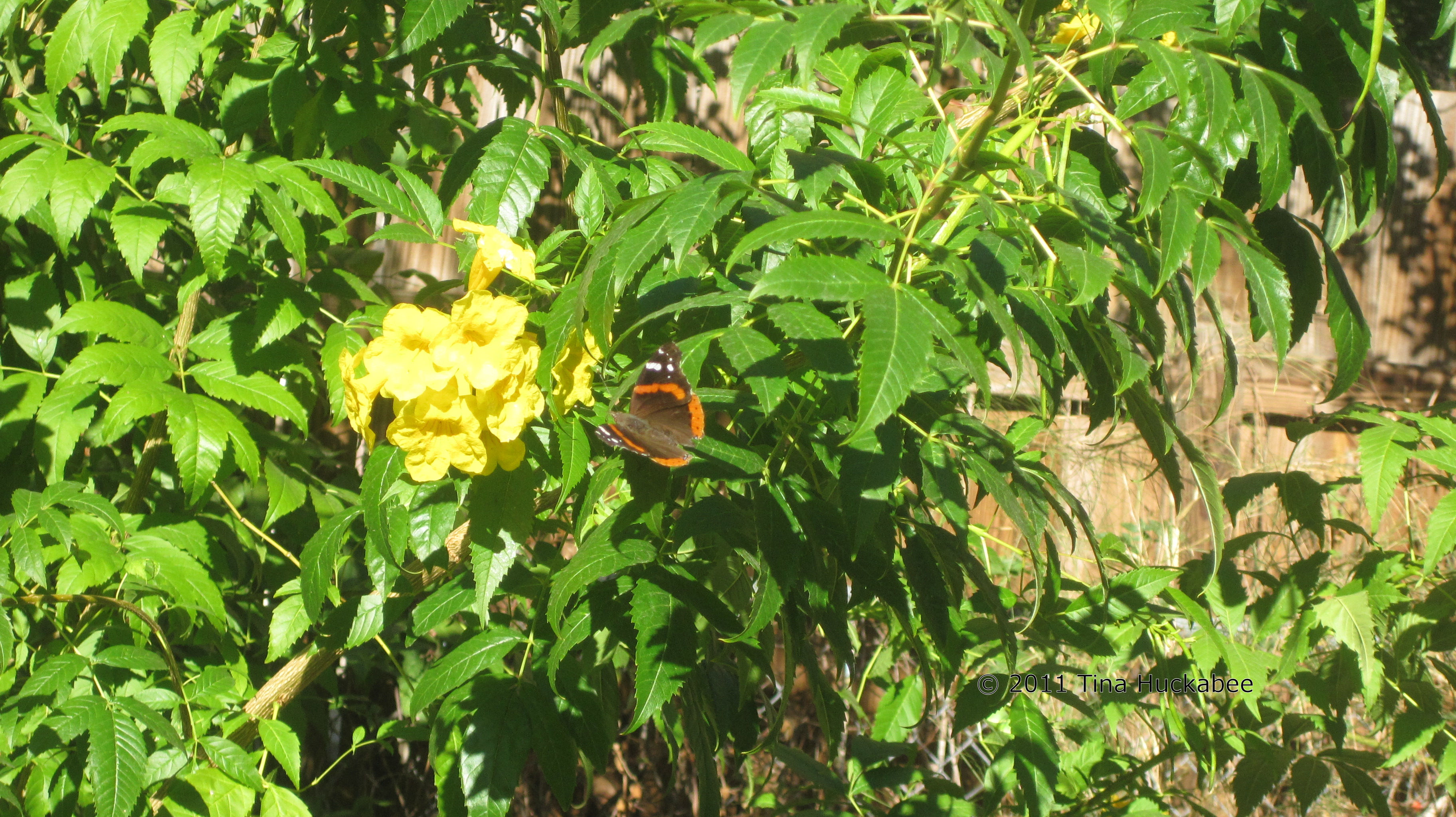
I’ve observed two Red Admirals regularly visiting my Yellow Bells (Tacoma stans) in the last few weeks.
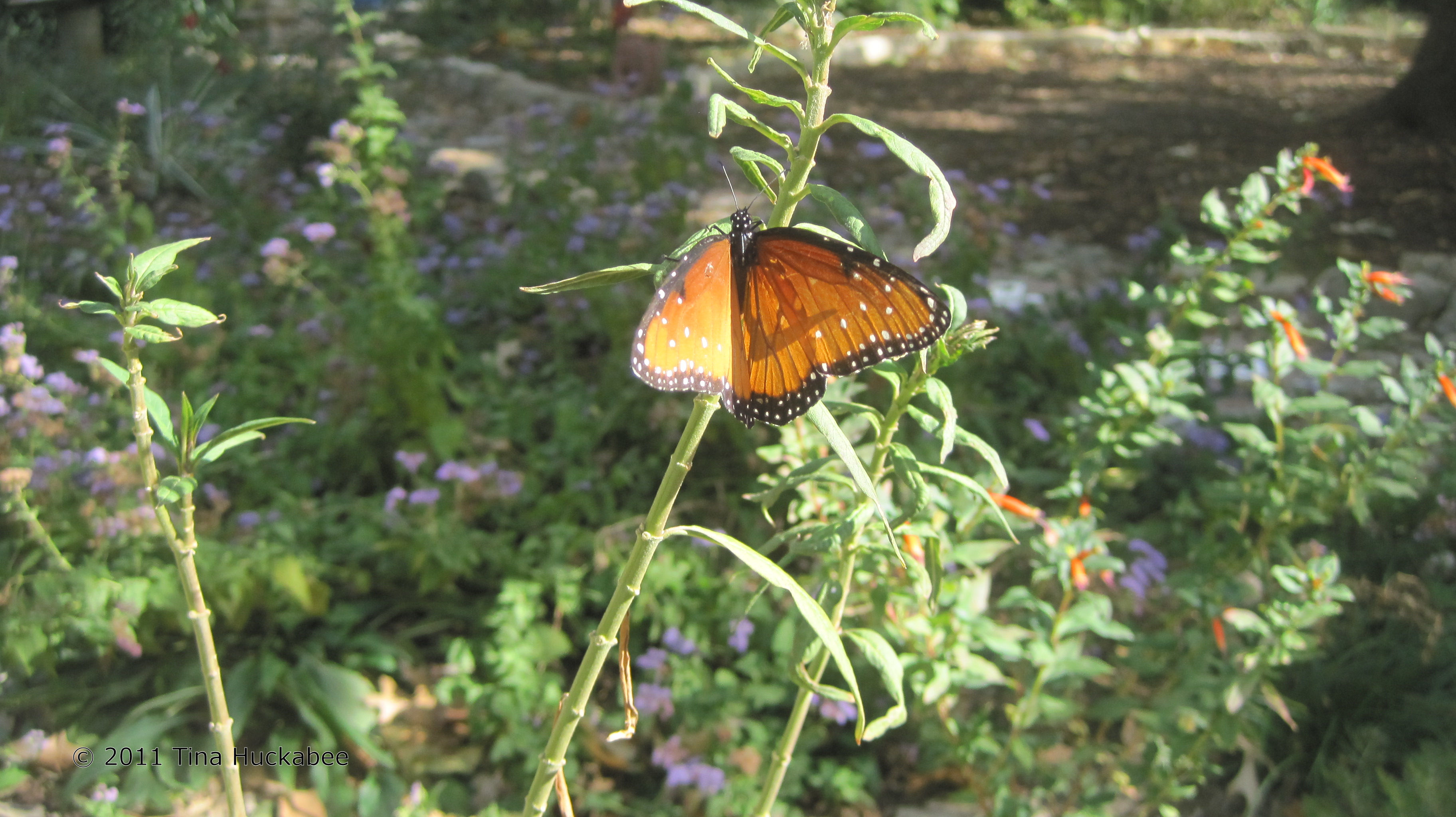
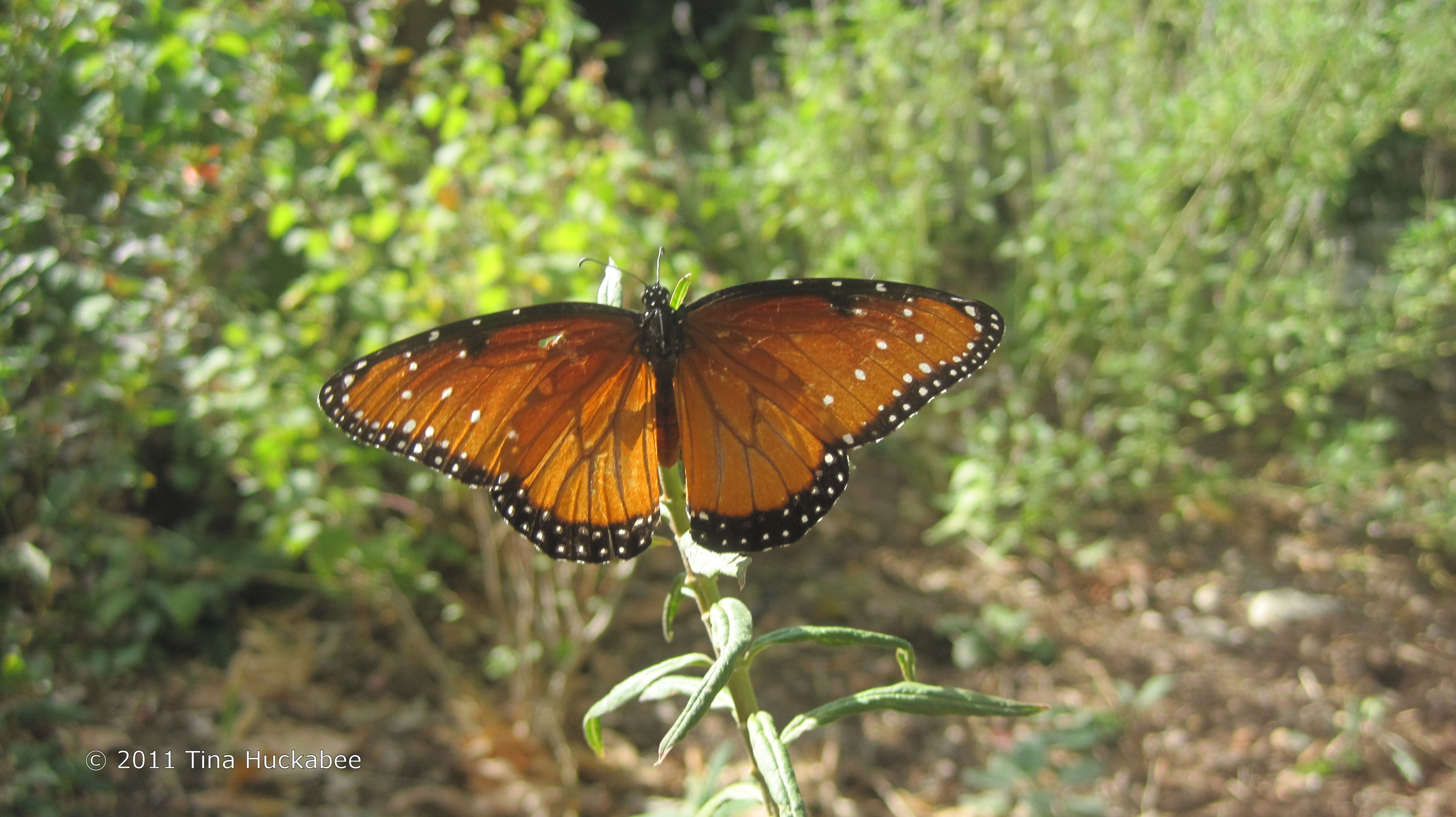
And, one Sunday afternoon, a Queen (the only Queen to visit my gardens this year), was flirting with a Butterfly Weed (Asclepias curassavica).
 
Other than these few and the Monarchs (two or three) who migrated through earlier in the fall, there hasn’t been much of a butterfly show.  Few skippers.  No swallowtails.  Hardly any butterflies.
I’m glad there are butterflies in other areas and I hope next year Central Texas will be once again graced with their presence.
 

Who Names Their Kid ‘Chi Chi’?

It’s pretty, isn’t it?

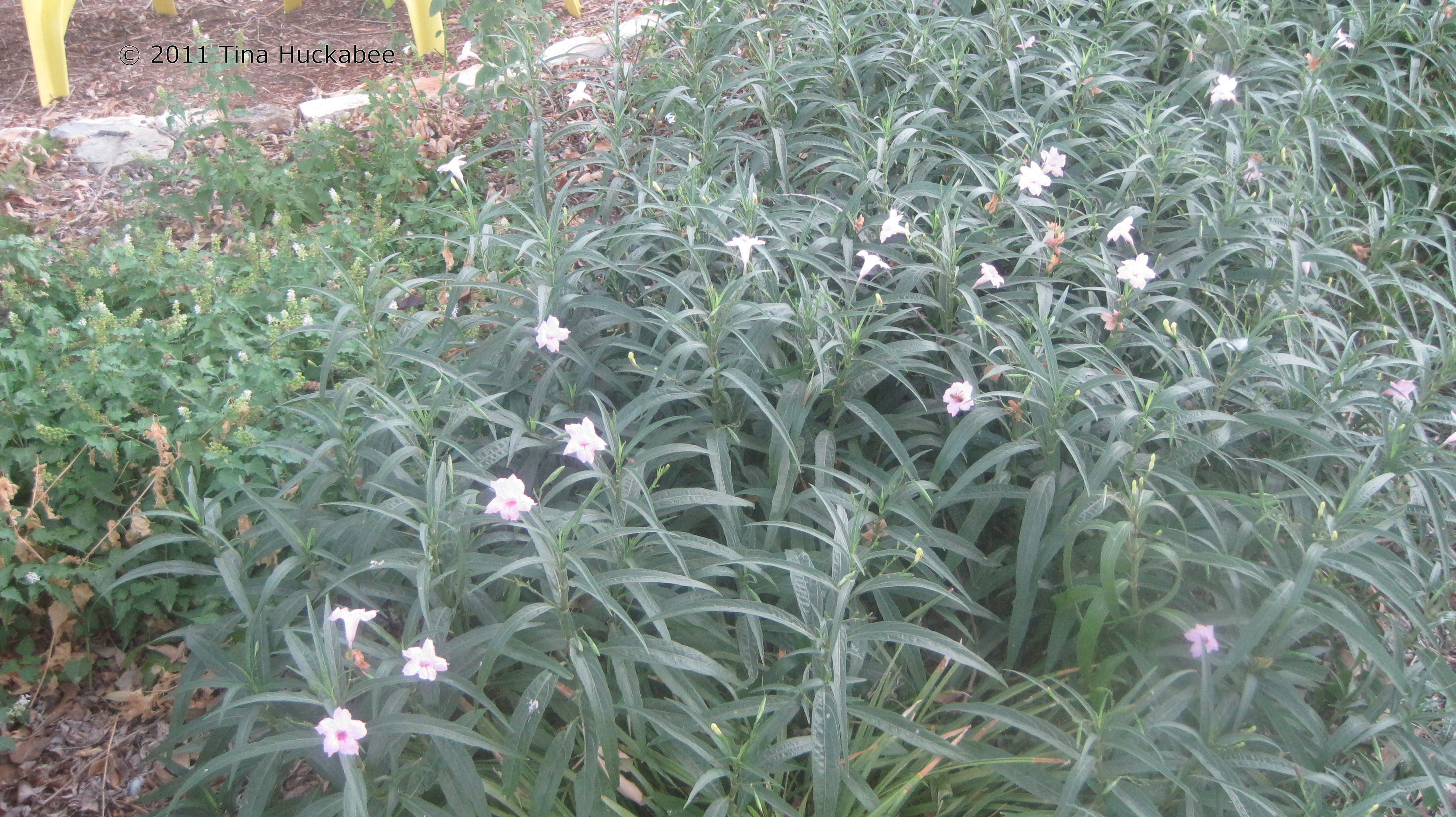
I call it Pink Ruellia, but it’s also known as Hardy Pink Petunia. The official name is Ruellia brittoniana ‘Chi Chi’.  I don’t know why the ‘Chi Chi’, and I wish whomever thought of that name would think of another.  But, there it is.

I like this plant.  Someone gave me a couple of starts many years ago– I don’t even know how long ago. One source that I read said that it’s a great plant to grow except in more tropical climates because it can grow “too well.”  No kidding!

‘Chi Chi’ Ruellia can be grown in full to part sun, blooming best in full sun. I have several colonies of this plant and I’ve especially liked them in my front garden, which is shady.  The plant grows as individual stalks and this adds vertical structure to the garden.  The sprinkling of flowers at the upper portion of the stalks is an added bonus.

Chi Chi Ruellia Cast Iron Plant Inland Sea Oats all

Giant Lirope Columbine all

Even though they don’t bloom quite as much in shade, the flowers are soft and light and the foliage is attractive: dark green and slender.  The leaves are opposite and grow the length of the stalk.

I especially like the ‘Chi Chi’ foliage after the first light freeze because the leaves develop a deep burgundy tinge and this adds richness to the fall/winter color palette.  ‘Chi Chi’ is a herbaceous perennial so after a hard freeze, the plant dies to the ground.  However, it is root-hardy in Austin and can be evergreen in mild winters.

I love it mixed with a pass-along Crinum Lily (unknown name) from my parents’ garden.  When these two plants bloom (both are light pink summer bloomers), it’s a lovely combination.  The foliage of the two plants work well together, too.

‘Chi Chi’ Ruellia blooms throughout summer and into fall.  In hot August,  the flowers are soft, fresh and pretty pink as they greet me sweetly early in the mornings.  The individual flowers  drop off by mid-afternoon and new flowers open early the next day, so there is a long succession of blooms.  If we have rain, ‘Chi Chi’ will bloom into October. This plant is  xeric and requires  little care once established.  It’s a tough plant that adapts to a variety of growing conditions.

‘Chi Chi’ has a rhizome-like root and spreads by root colonization and by seedlings.  It can be invasive (especially with regular irrigation) and that’s something the gardener should consider when planting any ruellia, especially a non-native like the Mexican or the ‘Chi Chi’. If you live near a green belt, I would hesitate to recommend the ‘Chi Chi’ for your gardens because of its propensity to propagate.  As with most flowering perennials, it’s very happy to have more irrigation, but it becomes troublesome with that extra water. In my personal gardens,  it primarily spreads in the immediate vicinity of where the original was planted.

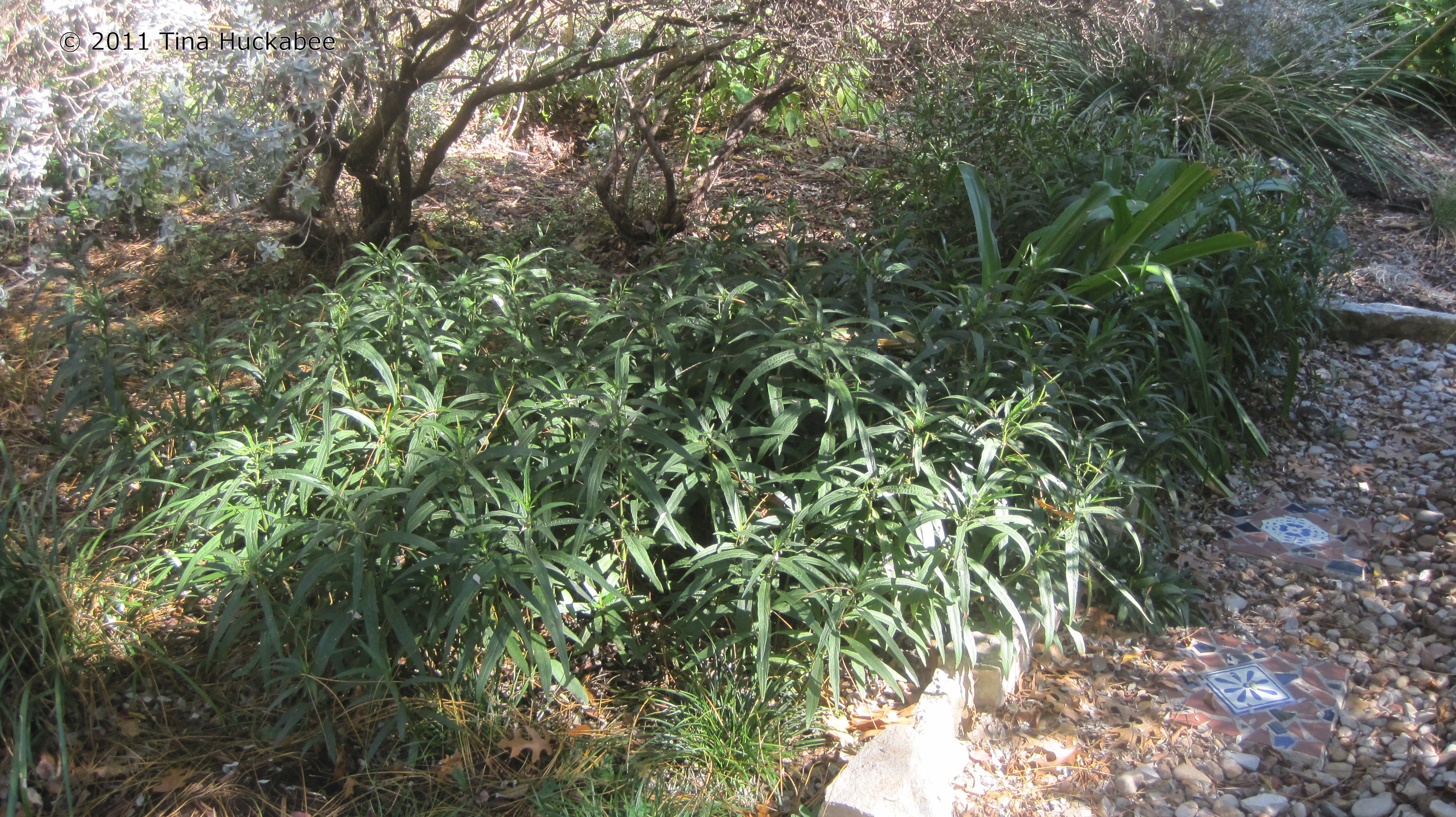
In this spot, the stalks have insinuated themselves into the rock walkway.  Now that we’re  getting some rain in Austin (finally!), I’ll take a shovel and dig them out to tidy the area.  When the soil is dry, ‘Chi Chi’ can be hard to remove.

About four years ago,  in order to diversify the plantings of one of my gardens, I removed a large colony of well-established ‘Chi Chi’.  Or at least I thought I did.

I inadvertently left some root when I re-worked this bed, so stalks have developed in a colony of Yarrow.  I could let the Yarrow and ‘Chi Chi’ duke it out, but I think I’ll excise the ‘Chi Chi’ myself.

In this drought year (gosh, that’s getting tiresome to say), the ‘Chi Chi’ didn’t bloom as much as usual, nor did they grow quite as tall as is typical. Normally, ‘Chi Chi’ grows over two feet tall.  This year, this group in particular only grew to about fifteen inches.

It survived though and with very little care.

‘Chi Chi’ Ruellia is a hardy, tough plant for Central Texas gardeners.  I’ve seen it in shade, sun, containers and as an indoor plant. It isn’t picky about soil-type and bees and butterflies will visit the flowers.  ‘Chi Chi’ blooms in the hottest time of the year–always a gift in Central Texas.

However, it’s a plant that can be a bit of a bully, so take that into consideration before inviting ‘Chi Chi’ to your garden party.