Mexican Honeysuckle–Spring Show-Off

All around Austin these past few weeks,  Mexican Honeysuckle (Justicia spicigera) is strutting its stuff.  Sporting showy clusters of orange flowers, it’s quite a head-turner.

Gardeners grow it here in Austin and it’s a common plant in many parts of the southern United States. Native to Mexico and all the way south to Columbia, it’s naturalized in parts of South Texas.  I remember seeing it in Corpus Christi growing up, although I don’t think my parents grew it in their gardens.  It’s related to the Shrimp plant (Justicia brandegeana), which is also a common South to Central Texas perennial.

Most years, if there’s a deep enough freeze, this fabulous herbaceous perennial dies to the ground and returns from its roots once temperatures warm. Then in mid to late summer,  it begins its bloom cycle.  It will bloom, sporadically, until it succumbs to the next significant freeze. During this mild winter (in Austin) in which there was no  hard freeze (mid-twenties or lower), these gorgeous plants didn’t die to their roots.  Mine suffered slight freeze damage on some of the foliage, but that was all.

My Mexican Honeysuckle began its 2011 bloom cycle last August/September, rested a little during the “winter” months and then started blooming again about six weeks ago. They show no inclination to cease showing off as they brandish their clusters of tubular, orange flowers with abandon.

Mexican Honeysuckle is drought tolerant, but I usually water it once every two weeks during the summer.  During our Summer from Hell of 2011, it didn’t bloom, but it always looked good and I don’t remember it wilting often.  I’ve had no problems with insects or disease –it’s a very easy plant to grow and maintain in the garden.  It’s not too fussy about soil type and it does well in a dappled shade situation.

I saw two Mexican Honeysuckle plants recently on the Hike and Bike trail around Lady Bird Lake in Austin.  They were planted on a terraced hill, with no irrigation (that I could see) in the dappled shade of large trees.  They were blooming profusely!   I probably wouldn’t put this plant in full, blasting Texas sun, because there are better choices and because Mexican Honeysuckle works nicely in a part-shade environment.  It’s reportedly a hummingbird plant and that makes sense given the shape and color of the bloom.  I’ve never seen any hummingbirds feeding at the blooms, though.  And it may well be that the pollinators native to this plant aren’t normally in this geographic area.

In my garden, it’s paired with Purple Heart (Setcreasea pallida) and with Yarrow (Achillea spp.)

I also have it planted with the ‘Nana’ Nandina–you can see how both plants share similar orange/yellow  coloring.  When Mexican Honeysuckle freezes to the ground, it gives the ‘Nana’ a chance to shine.  This year, the ‘Nana’ is peeking around to the right of the Mexican Honeysuckle and isn’t getting much attention.

This one, in the Green Garden at Zilker Botanical Gardens,

receives some direct late morning sun, but is in dappled light for most of the day and  gets water once a week in the summer.  It has the same rangy growth that mine at home has.  I like that.  It adds a softness and casualness that is very appealing.  Mexican Honeysuckle can be pruned back, as needed, and I imagine that I’ll have to tidy both this one and mine at home during the course of this growing season.

Be patient  if you’ve planted Mexican Honeysuckle recently.  It can take a year or so before it demonstrates what a great addition to the garden it is.  Just give it a little room and let it go.  Enjoy!

What Is It About Yellow Flowers?

They’re just so…yellow.

And bright.

And cheerful.

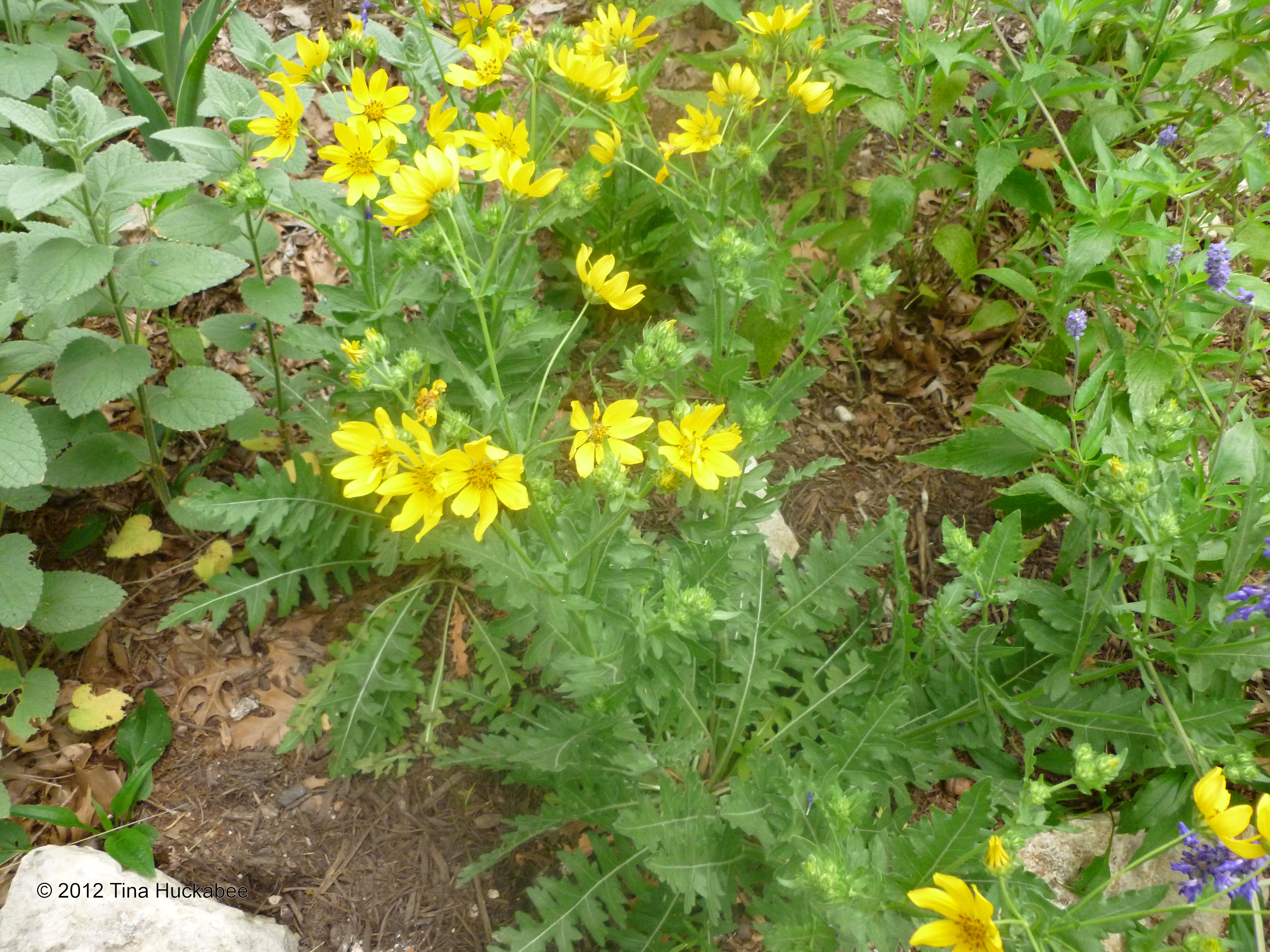
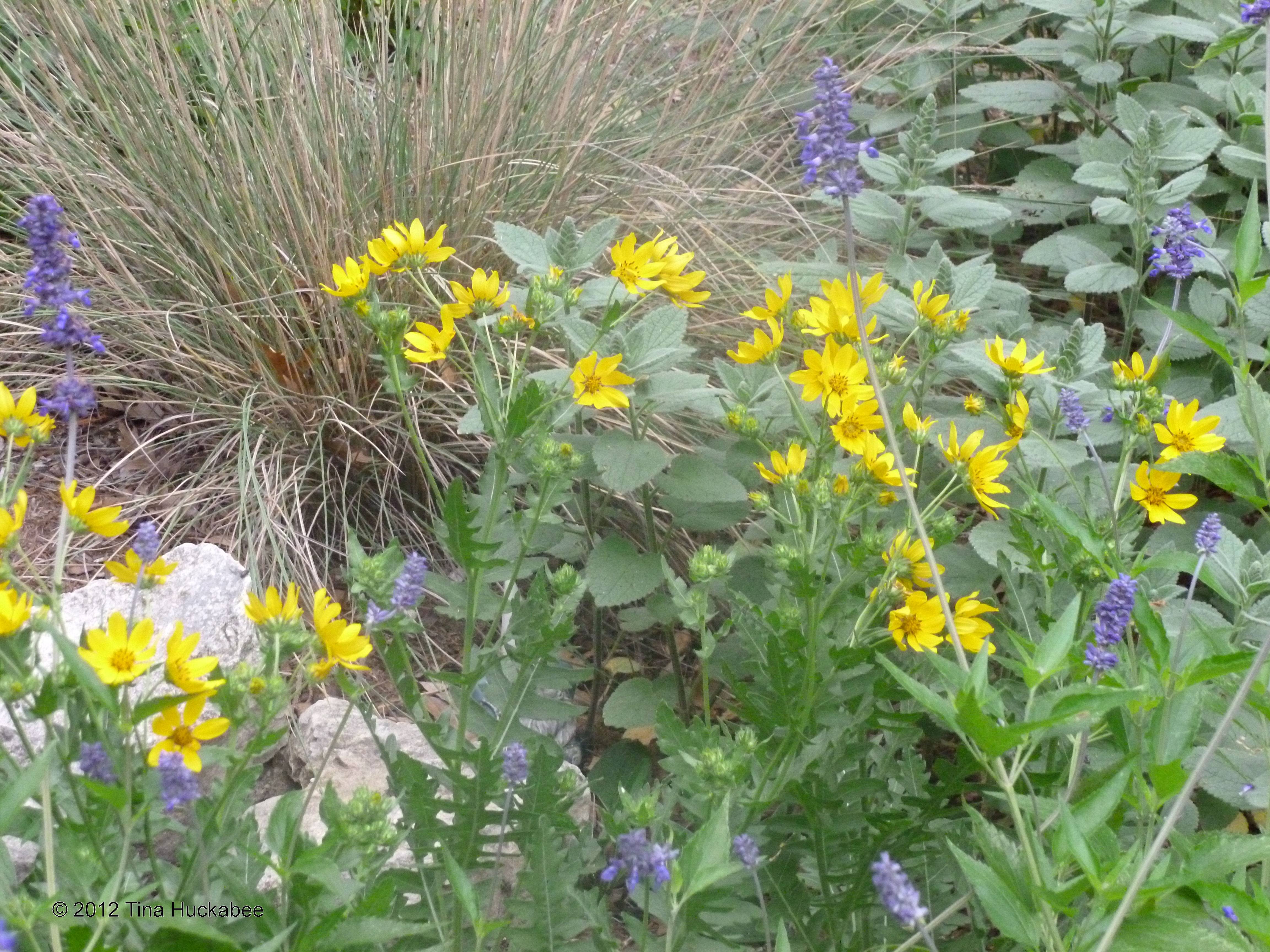
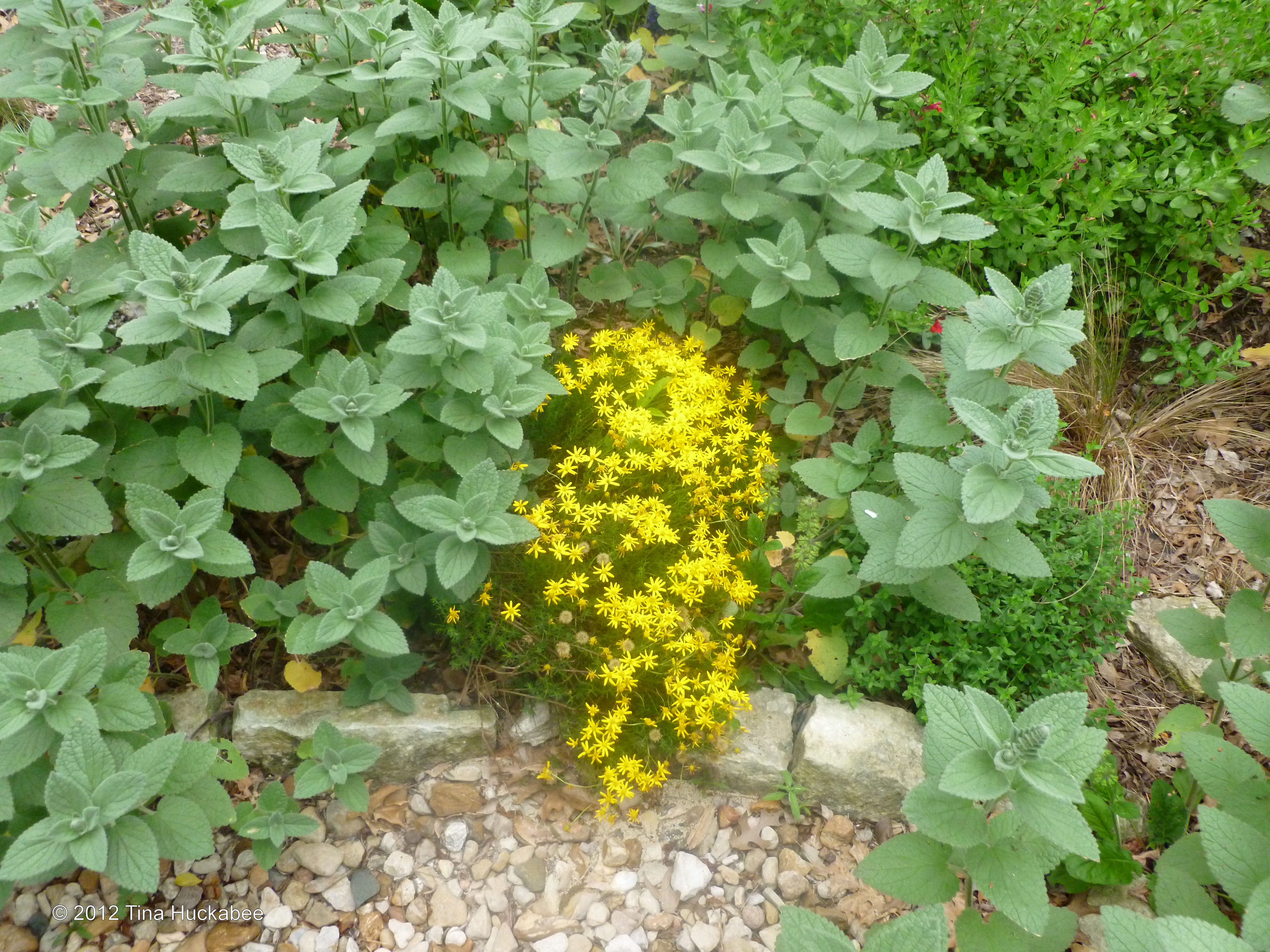
And, unfortunately, not planted or grown commercially nearly as much as they should be.  The Golden Groundsel (Packera obovata) is a beautiful spring blooming perennial ground cover native to much of North America, including Texas.  It belongs to the Asteraceae (Aster) family of plants,

and is a wonderful addition to a shade or part-shade garden.  It can be planted in a formal setting or as drifts in a woodlands garden.  But in either place, it brightens the late winter/early spring  garden spectacularly.

I first became acquainted with Golden Groundsel just over two years ago, when I noticed a patch of bright yellow  flowers in one of the native woodland areas that I garden at the Green Garden in Zilker Botanical Gardens (ZBG).  That patch absolutely resonated yellow! I recognized the plant because I had read about Golden Groundsel before, although this was the first time I’d actually seen it in a garden.  Most of the year, it’s a ground cover with evergreen, oval and finely serrated leaves.

In January/February (in Austin), it sends forward its bloom stalks.  The slender stems grow to about a foot tall, then burst open with shockingly bright, little flowers.

It colonizes well in ideal conditions and is an easy plant to grow.  Its water requirements are moderate and it fits well in a xeric landscape.  If it gets water once a week in a hot, dry summer, it’ll be just fine.  In the Green Garden,  I moved some Groundsel in late spring of 2010 to this spot,

and while it bloomed last spring, it’s even lovelier this year.  Here, it gets mid-day sun in the summer, with dappled light most of the rest of the day.  It also receives irrigation once per week.  Its companions include Turk’s Cap, Twisted Leaf Yucca, Purple Coneflower and also Columbine.

The two other areas where Golden Groundsel is planted in the Green Garden receive more shade and thus, the plants are not yet blooming.  This group is in a native woodland area which receives very little irrigation.

This second group is planted in the Habitat Garden.  This colony began with six starts, about 15 months ago.  It gets regular (once/week) irrigation and dappled light.  The soil is a bit on the heavy side and you can see how well it’s filled in.

Golden Groundsel is a good nectar source and given that it’s often one of the earliest to bloom, very appreciated by hungry bees and butterflies.  Oddly, it’s blooming a little later this year compared to the last two years.  This is in contrast to so many other plants which are blooming earlier than their normative bloom times.

Golden Groundsel spreads by  roots and by seeds–don’t cut back the flower stalks until the seeds have ripened and dispersed.  It doesn’t seem to spread voraciously by seed though.  My only experience with propagating Groundsel is by root division. When I transplanted the Groundsel at ZBG, I had to be careful about where I dug the plant up from the soil.  Several times I shoved my trowel firmly into the ground, assuming that I was well-underneath a nice root ball, only to realize that the rosette that I was attempting to dig up was connected to another by a runner and there was no root to excavate.  So, if you separate this plant, you must  be sure that the rosette you’re aiming for actually has some root.

When I decided to write about this plant, I called a number of the independent nurseries in and around the Austin area to check for availability and almost no one was familiar with this plant.  Only the nice folks at Barton Springs Nursery  knew anything about Golden Groundsel although they don’t carry it regularly.   I do know that it’s sometimes available at the Lady Bird Johnson Wildflower Center’s plant sale, but I don’t know if they grow it for every sale.

For more information about this great and underused native plant, check out the Central Texas Gardener link–Golden Groundsel was the “Plant of the week” for the  October 1, 2011 program.  Or, as always, you can find information on the page for Golden Groundsel in the Native Plant Database.

I’m going to purchase and plant this lovely perennial for my own garden.  Gardeners should encourage their local nurseries to carry available, but rare, plants.  In turn, growers will begin to produce these plants for retail sales.

Almost Done!

The end of February looms and I’m almost done with the pruning in my personal gardens and the gardens I tend at Zilker Botanical Gardens.  I waited as long as a could before I started pruning, but almost waited too late.  Spring has sprung in mild Austin and I need to wack back the remaining plants that I intend to prune.

I pruned the roses  in my gardens last week.  Most had been blooming for a few weeks, so it hurt to cut back such beautiful flowers.  Gardening sometimes resembles parenting:  the difficult and painful things that you occasionally must do, are often the most important for nurturing growth and blooms.

Philosophical musings aside, the Mutabils (Rosa ‘Mutabilis) was big and full of darling blooms.

It had even developed new stems.

But it’s pruned back and now ready for new beginnings and a long year of growth and blooms.

The Knockout Rose (Rosa ‘Knock Out’) produced  lovelies for my kitchen table and to enjoy outdoors,

but it too is reduced to mere sticks.

I’m more careful with this rose than I am with my others (although I don’t think it’s  necessary because this rose is a tough one).  I clean (disinfect) and sharpen the pruners before I start with this rose.  I take care to prune the branches cleanly above a leaf node.

The node is the pinkish bump to the right of the cut, above the thorn.

The Belinda’s Dream Rose is a new one in my gardens, so I’m leaving it as is.

But at Zilker Botanical Gardens, there are two in the one of the beds I tend.   I pruned both down to their major three or four branches.

The other roses in my personal gardens, the Martha Gonzales and the Old Gay Hill, are treated like I treat my hardy native shrubs–I thwack away with abandon!  I transplanted both of these last year,

so they haven’t grown much.  But I did prune them back a little,

so they’ll be ready for growth in the coming year.  The Old Gay Hill still had buds n’ blooms, so I left them–there’s no need to be heartless, after all.

I cut back the Martha Gonzales Roses at Howson Library Garden last week as well.    This photo is on the City of Austin Grow Green Resources page, under the “Landscape Design” section and can be seen when you click the “Classic” design.

There are a total of eight roses at Howson. This view is of the four at the southern end of the area where the roses are planted.  This photo shows the roses in early fall and by the end of the growing season, they’re even larger.  I didn’t take a photo before I pruned them back last week.  (Oh, no!  That would have made too much sense!)   But, I did take a picture once I pruned.  This is the same angle now, after pruning:

and from the front.

The Martha Gonzales is such a hardy rose that the gardener doesn’t have to be particularly careful about cutting.  I clip off any dead branches, but other than trimming them to roughly the same height and shaping and tidying a bit, not much more is required during pruning time for this beautiful rose.

Pruning roses is easier if you keep the pruners clean and very sharp.  It’s also a great idea for Central Texas gardeners to plant roses that are hardy and tough and don’t require much water.  Check out the “Native and Adapted Landscape Plants Guide”  under “Plants” on the Grow Green Resources page for some examples of suitable roses for our area or visit one of Austin’s excellent independent nurseries for guidance on what roses to plant.

It’s not too late to prune and it’s time to plant some pretty roses in your garden.