Bloom Day, October 2014

Summer has been reluctant to release its toasty grip on us in Texas, but the cool of autumn has mostly arrived. We’ve enjoyed a couple of refreshing cold fronts, dropping our temperatures into the ’50’s, with highs in the 70’s and ’80’s. The lingering warmth of September and early October didn’t damper blooms in my gardens, though. Joining Carol at May Dreams Gardens, I’m celebrating blooming stuff on this 15th of October.

There is no shortage of blooming native Texas plants in my gardens. Let’s take a tour, shall we?

Barbados Cherry, Malpighia glabra, has blossomed its dainty, pink clusters for a month or so now.

IMGP0216_cropped_3829x2521..new

Soon, cherry red fruits will replace blooms, feeding a whole different crop of critters. Barbados Cherry is lovely in tandem with Turk’s CapMalvaviscus arboreus.

IMGP0218.new

A cultivar of the native red Turk’s Cap, the Pam’s Pink Turk’s CapMalvaviscus ‘Pam Puryear’, blooms as heartily as the red,

IMGP0235_cropped_3548x3355..new

…but with softer pink swirls perched atop the long branches.   In my gardens, the Pam’s Pink is planted with FrostweedVerbesina virginica,

IMGP1283.new

….and it’s a successful pairing.   Frostweed is an excellent wildlife plant.   Attracting butterflies, like this migrating Monarch,

IMGP1166.new

IMGP1149.new

…and bees,

IMGP1077.new

…and this guy, a Tachinid fly,

IMGP1072.new

…who you can see again on Wildlife Wednesday, a fun little wildlife gardening meme I host.  The next Wildlife Wednesday is November 5th.  Frostweed a stalwart native perennial; it’s drought hardy and works well in either shade or sun.

IMGP1031_cropped_3429x3208..new

The GoldeneyeViguiera dentata, is photogenic in the fall garden.
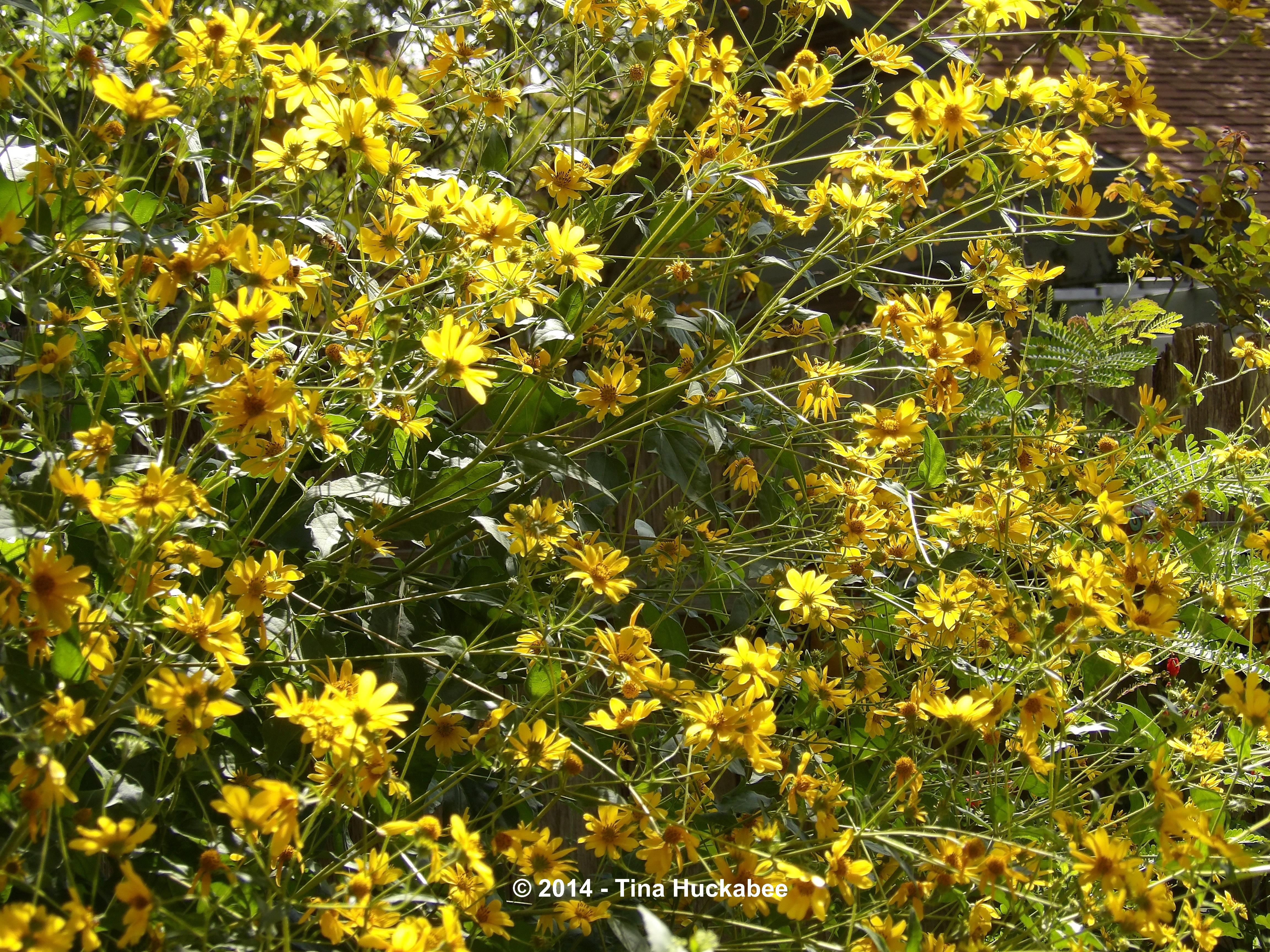
IMGP1236.new

Another perennial which attracts its share of pollinators,

IMGP1241.new

…these pretty yellow flowers evoke glorious autumn sunshine.
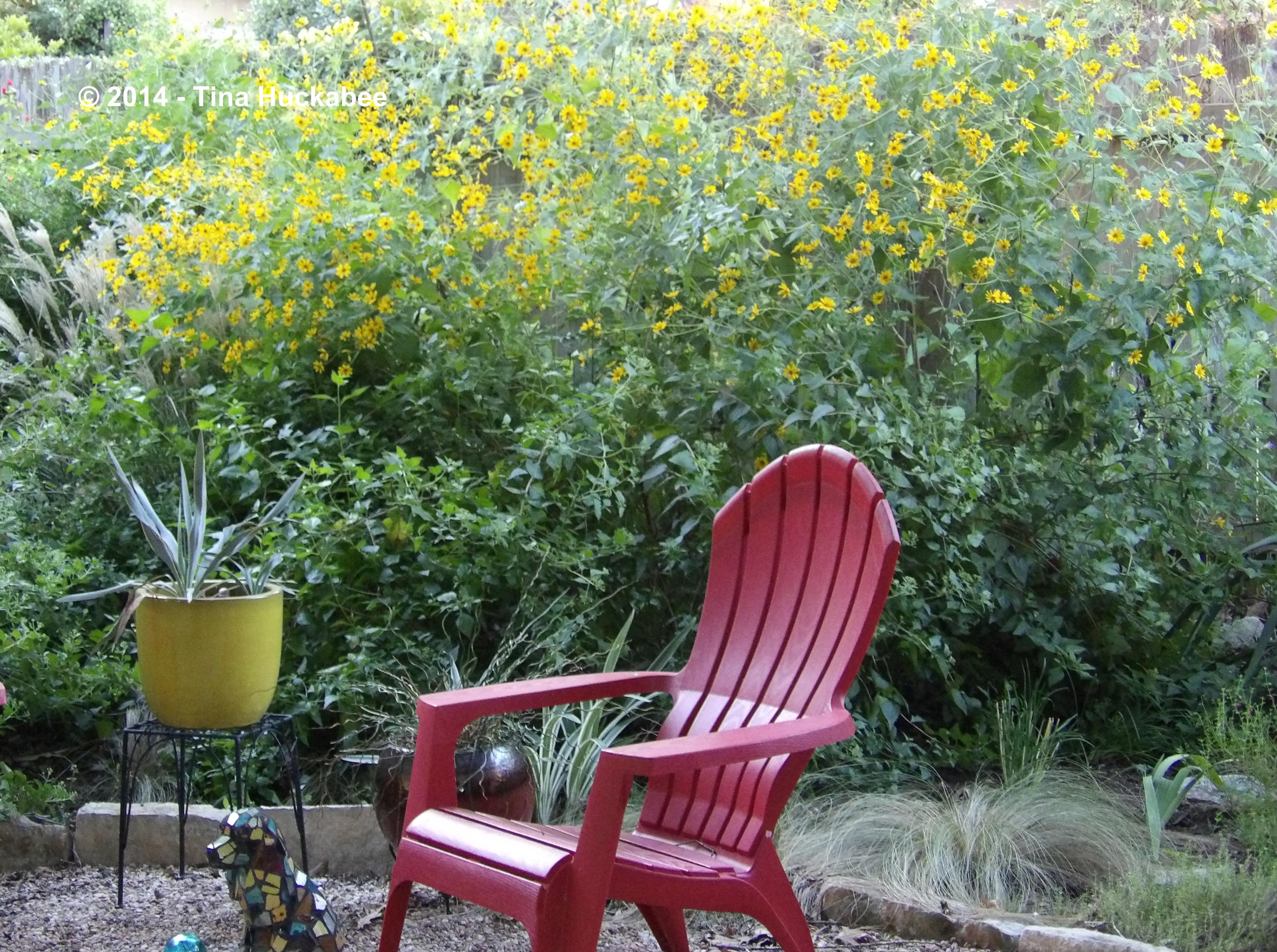
IMGP1008_cropped_4129x3078..new

IMGP1342.new

They work and play well with other natives in my gardens,

IMGP1185.new

…like the Rock RosePavonia lasiopetala and Barbados Cherry. And who doesn’t love the tried and true combination of yellow and blue?

IMGP1277_cropped_3129x3382..new

This Goldeneye’s companion is the non-native Blue Anise Sage, Salvia guaranitica.  

The roses in my gardens are awake again after the heat of summer. I grow only water–wise antique or cultivar roses in my gardens.  If a rose can’t shrug off the heat and dry of the Texas summer, it’s out!  The Martha Gonzales Rose is one such beast.

IMGP1208.new

Named after a Navasota, Texas gardener, Martha Gonzales,

IMGP1204.new

…this rose is beautiful, fragrant, and tough. Martha grows in USDA zones 7a to 10b so it it’s appropriate in a wide range of situations.  If you only grow one rose, make it the Martha!

The Belinda’s Dream Rose, which is appropriate for USDA zones 5a to 10b,

IMGP1612.new

is the quintessential elegant pink rose. Fragrant and downright luscious, Belinda isn’t quite as hardy as the Martha, but still performs well for me.  Belinda gets a little peeky in summer, but picks up again with rain and softer temperatures.  Caldwell Pink Rose,

IMGP0975.new

looks dainty, but it’s no wilting beauty.  This poor thing, I’ve moved it four times–I think I’ve finally found its forever home.

IMGP1014.new

A migrating Monarch finds this Old Gay Hill Rose delightful,

IMGP1724.new

…and so do I.  Similar to the Martha Gonzales, the shrub is larger and the petals slightly (but only slightly) more pink than the Martha’s fire engine red petals.

I’m not a grow-only-native purest and host a number of non-native perennials in my gardens, like these Four O’Clocks, Mirabilis jalapa.  Considered a staple of the Southern garden, these are new to my gardens and were gifted to me by a gardening friend, TexasDeb at austin agrodolce.

IMGP1180.new

IMGP0856.new

IMGP0858_cropped_3419x3414..new

These lovely trumpets open late in the day, bloom all night, and close in the morning. Four O’clocks are fragrant and are such lovelies–I’m tickled to make room for them in my gardens.

Jewels of OparTalinum paniculatum, are another new-to-my-gardens perennial from TexasDeb.  Jewels are also an old-fashioned flower of the Southern garden.

IMGP1369.new

IMGP1380.new

I love the teesny flowers, the “jewels” seeds, and chartreuse foliage. Both Four O’Clocks and Jewels of Opar are potentially invasive, so I’ll keep them in check–ripping out uninvited extras who crash my garden party!

It’s now that my Coral Vine, Antigonon leptopus, shines,

IMGP1413.new

IMGP1415.new

…or is that a sparkle?  Whatever it is, the bees love this bloomer.

After each rain, the Almond Verbena, Aloysia virgata, flowers and its fragrance graces my garden.  Shown here in partnership with Turk’s Cap blooms, the Almond Verbena is favored by honeybees.

IMGP0918.new

My Almond Verbena is the anchor plant in a group of native shrubs and perennials.

IMGP0910.new

It fits quite well, I think.

Quoting another garden blogging buddy, Debra of Under the Pecan Trees,  we enjoy a “second spring” in Texas–a  lush blooming autumn gift, after the heat, when all, including gardeners, perk up anew.

What’s blooming in your gardens this October Bloom Day?  Check out May Dreams Gardens for blooms from everywhere.


I Grow (Some) Of My Own

I’ve enjoyed posts from participants of the “virtual garden club” Dear Friend and Gardener in recent months. Hosted jointly by Carol Michel of May Dreams Gardens, Mary Ann Newcomer of Gardens of the Wild, Wild West, and Dee Nash of Red Dirt Ramblings, this gardening club encourages gardeners who grow their own food and flowers.  The focus of Dear Friend and Gardener is on fruit, vegetable, and all manner of edible production, but can include ruminations on growing gorgeous flowers, nattering about native plants, or gabbing about garden design. By clicking on the badge to the right, you too can read adventures in edibles gardening and tales of culinary happenings.

My personal gardening interests lean primarily to learning about and experimenting with native Texas plants, water-wise landscaping, coupled with wildlife gardening. However,  I aim to produce some home-grown herbs and veggies.  It’s a mixed veggie bag for me because I don’t have many spots of full sun on my property, so my edibles real estate is limited.   This past year, I’ve experimented with growing vegetables, tomatoes, and herbs in a vertical garden, The Green Tower.  Click here to read about the design and building of our Green Tower (GT) and here, for a late summer update on how the GT worked as an edibles garden.

IMGP1595.new

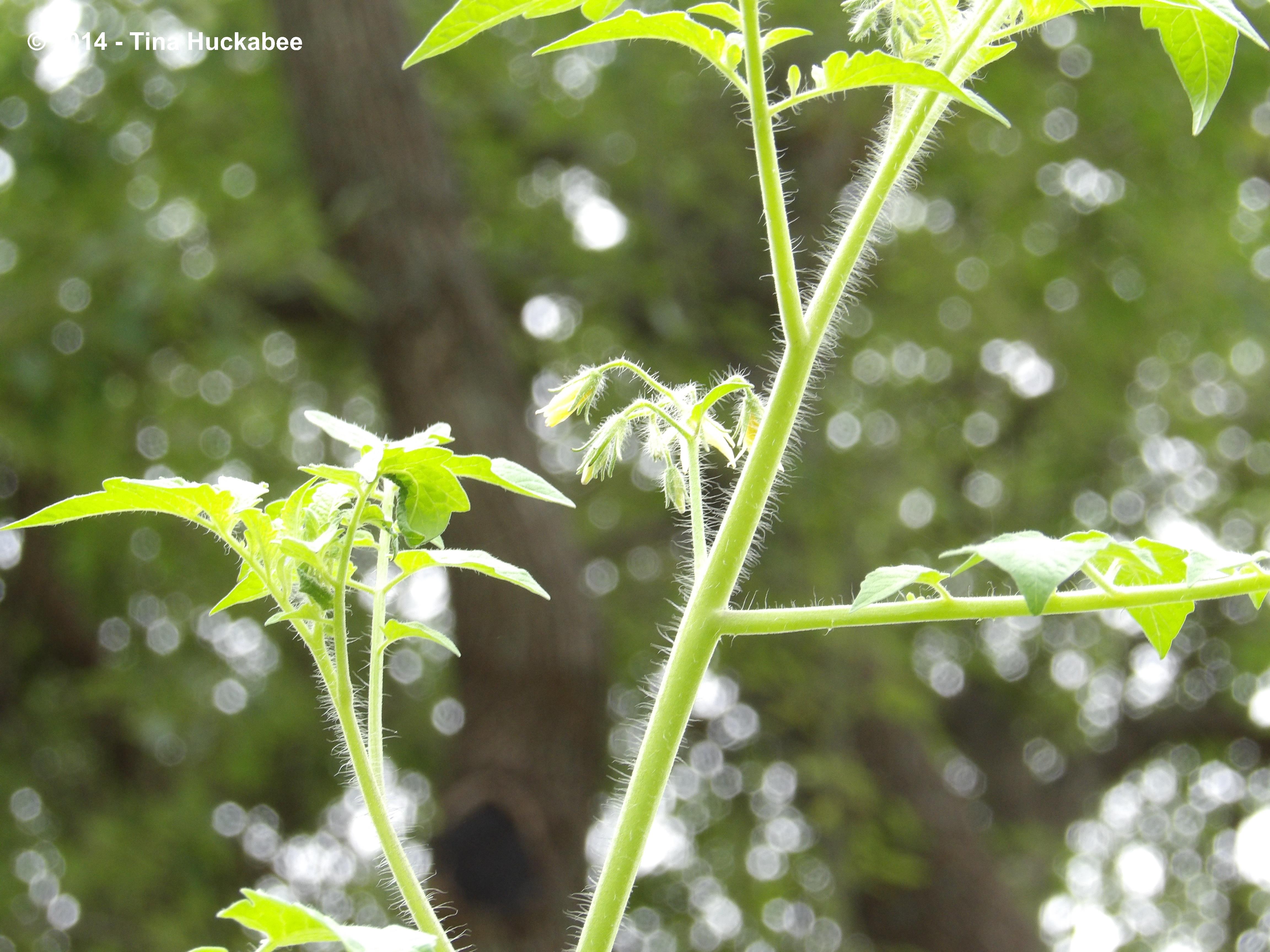
Currently, for the fall garden, I have planted one Cherokee Purple tomato, which has some blossoms,

IMGP1623.new

and a cherry tomato,

IMGP1584.new

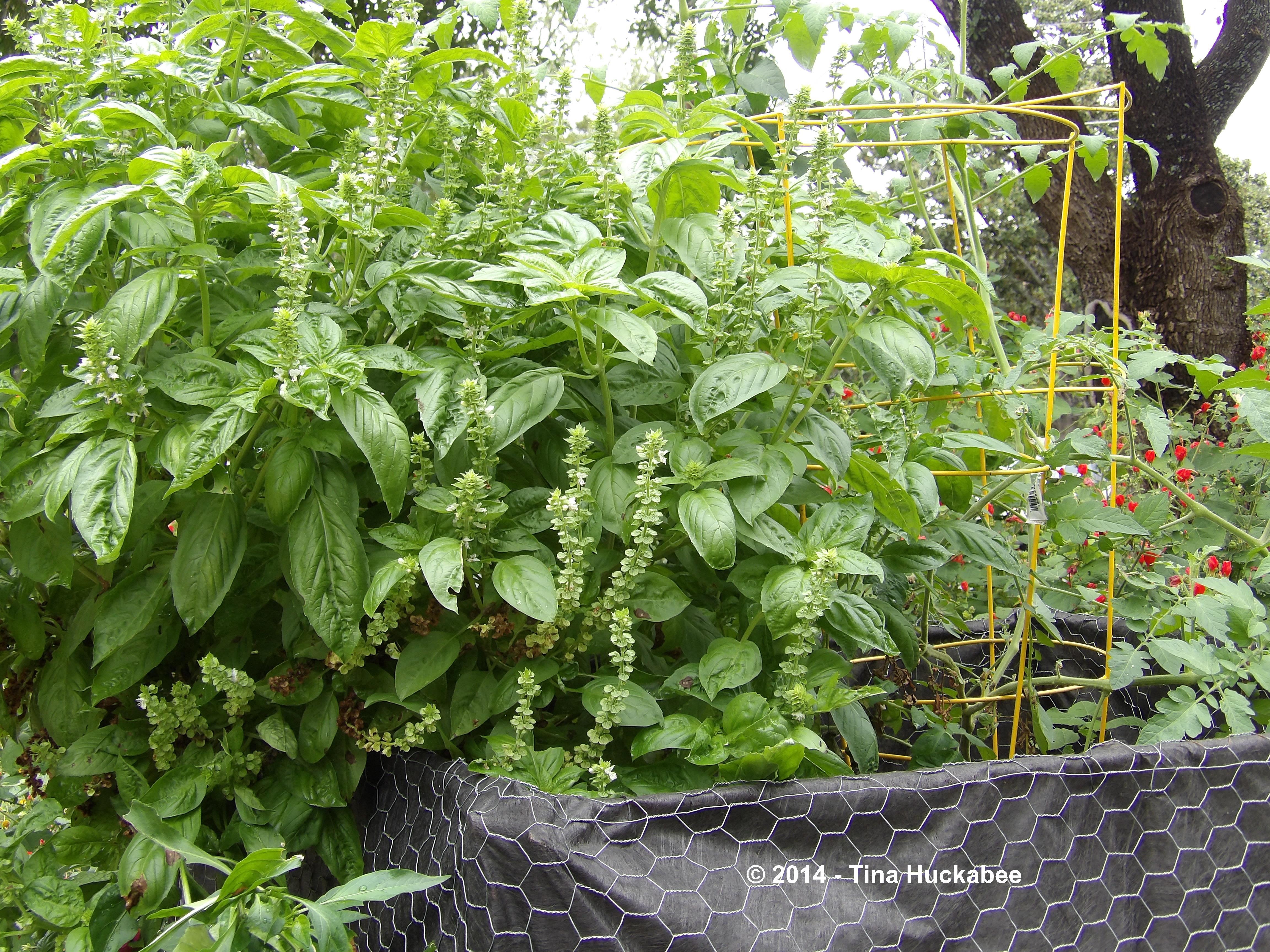
which has more blossoms.  The basil is crazy gorgeous,

IMGP1582.new

…I can’t eat enough of it. Really, I put those leaves in everything, it seems.  I think it’s way past time to make pesto.  Lots of pesto.

I left this pepper plant from last spring and it’s blooming,

IMGP1583.new

…but I’ll be surprised if it produces anything this late in the year.   The greens seeds that I’ve sprinkled on the top of the GT haven’t germinated at the rate that I’d hoped.  My plan was to seed three types of my favorite greens, let them germinate, then transplant to the sides of the GT for maturity and eventual harvest.  The plan might still work as we segue into cooler/wetter weather patterns, but so far, the Red Sails, Lactuca sativa, lettuce seedlings are the most successful,

IMGP1590.new

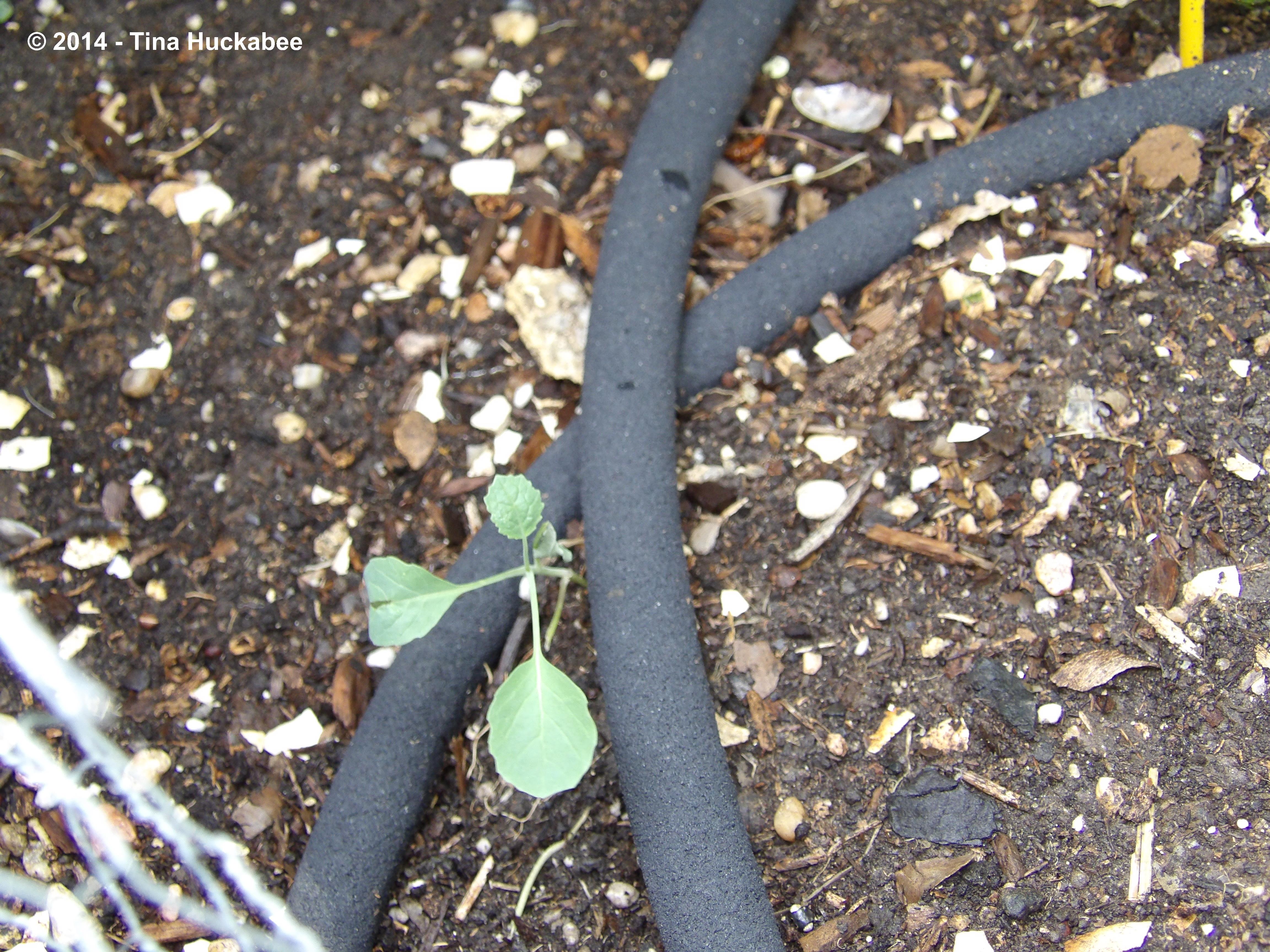
…and that’s not saying much.  The Italian Lacinato Kale, Brassica oleracea,  is a bit of a bust with a grand total of one seedling,

IMGP1591.new

…and it’s a big zilch for the Bloomsdale Spinach, Spinacia oleracea.  Ever hopeful, I’ve seeded out more of all of the above and here in Austin, it’s now consistently cooler and wetter–I hope.  Time will tell whether these greens will germinate and grow, but I can produce cool season greens throughout winter and into spring.

Aside from the honey that my little bees make (which really, I can’t take credit for) and some other herbs in planted in the perennial gardens, that’s it for me.  I like the idea of sharing my harvest, such as it is, with others–even if it is through cyberspace.

More about the fall/winter greens fest, if there is one, another time!


American Beautyberry, French Mulberry (Callicarpa americana): A Seasonal Look

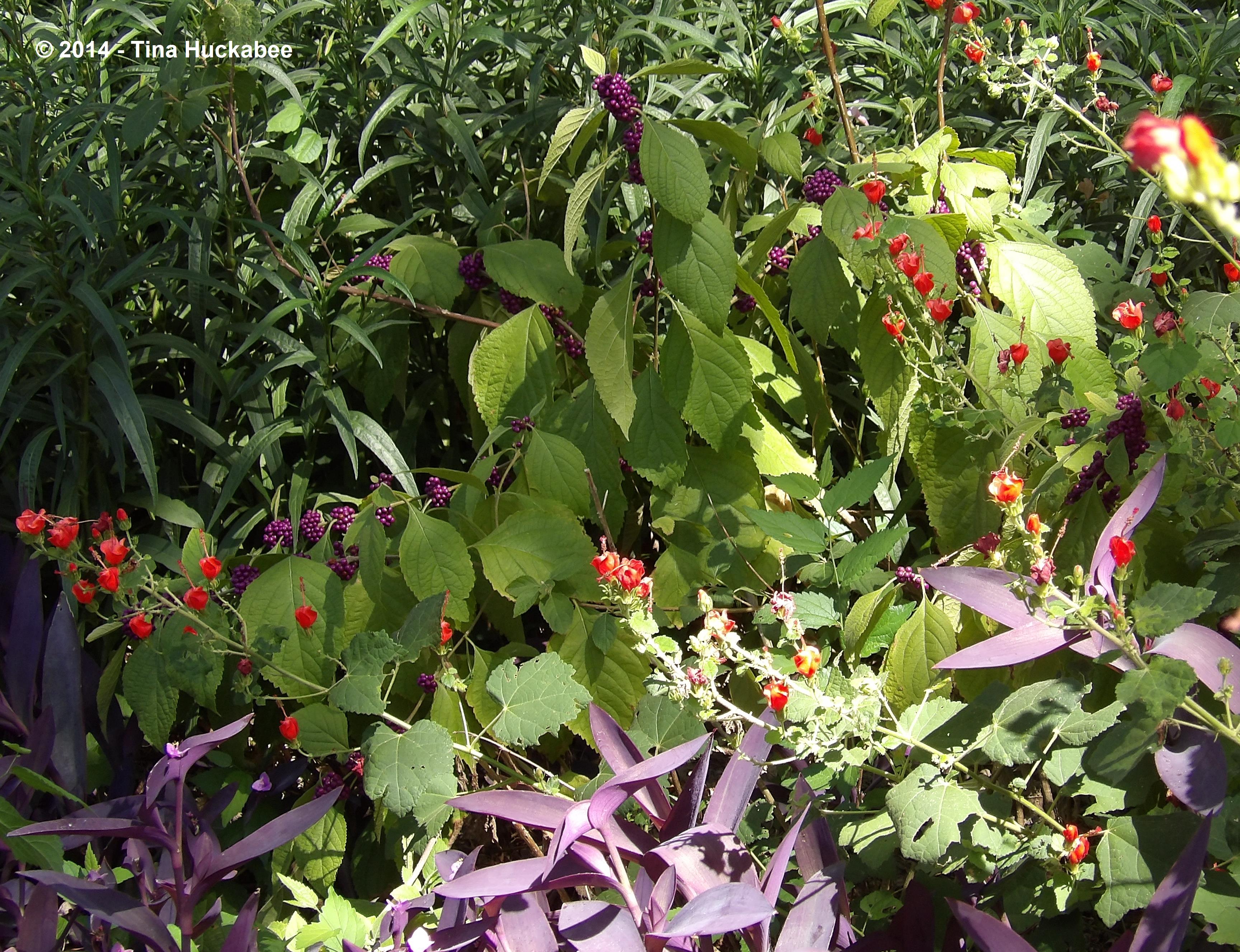
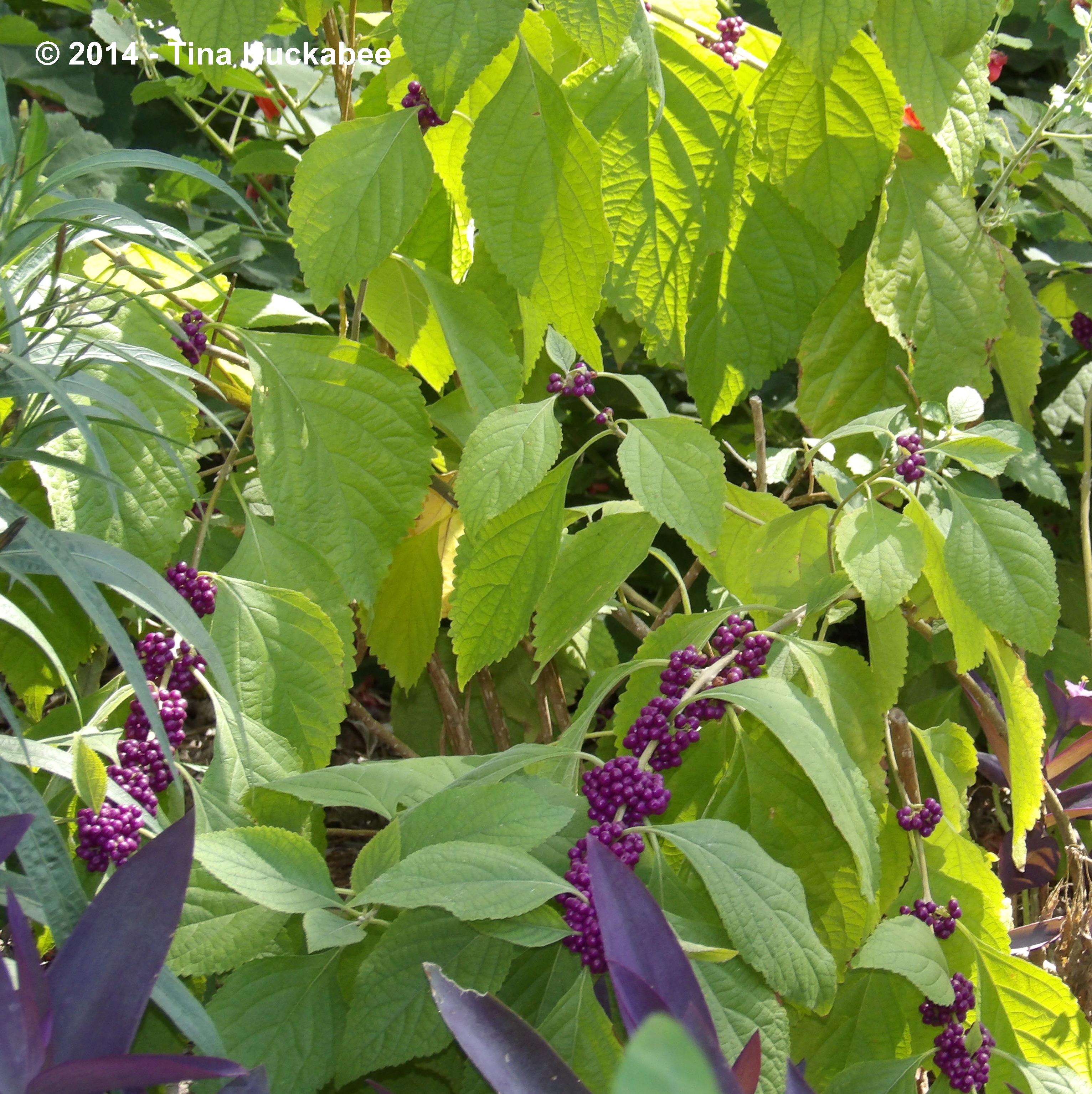
Here in Texas, we don’t really enjoy traditional autumn colors from our trees and shrubs as is common in New England, the Midwest, or even the Pacific Northwest.  The   dramatic foliage mosaic that defines “fall” for many doesn’t occur for us in October. Our deciduous trees transform their leaf color in response to less light and colder temperatures, but that conversion isn’t until late November/December and transpires  over a longer stretch of time, versus the spectacular two or three-week performance in October typical to other parts of the United States.  However, we in Texas are gifted a second blooming period in the fall months (until the first hard freeze), which rivals our spring beauty. Accompanying that second bloom extravaganza, there are many trees and shrubs which berry, providing food for indigenous and migrating birds.  My favorite of the berrying shrubs is the American Beautyberry or French Mulberry, Callicarpa americana. Continuing with the series, A Seasonal Look, I would like to share my experiences with this wonderful native shrub.

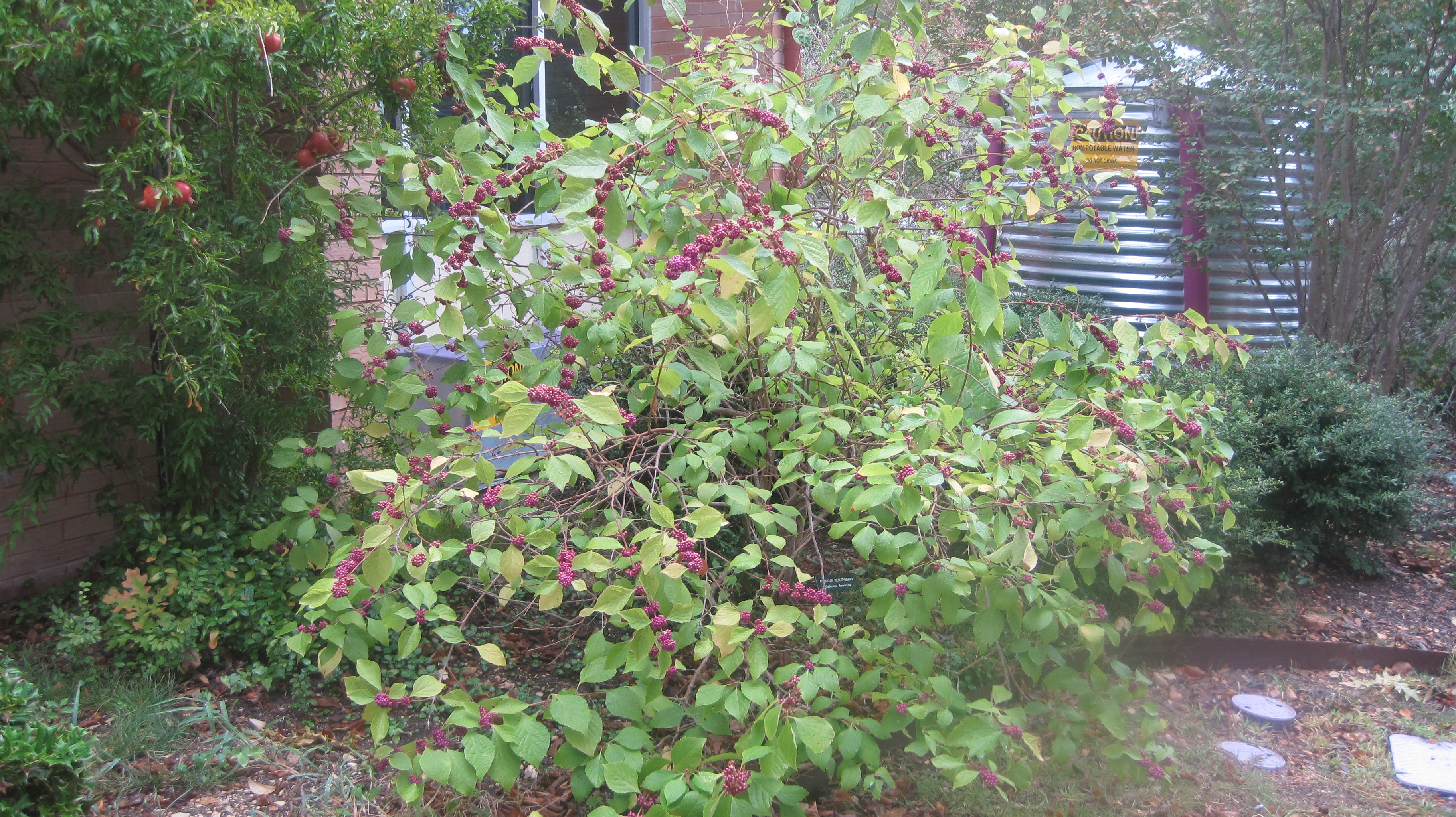
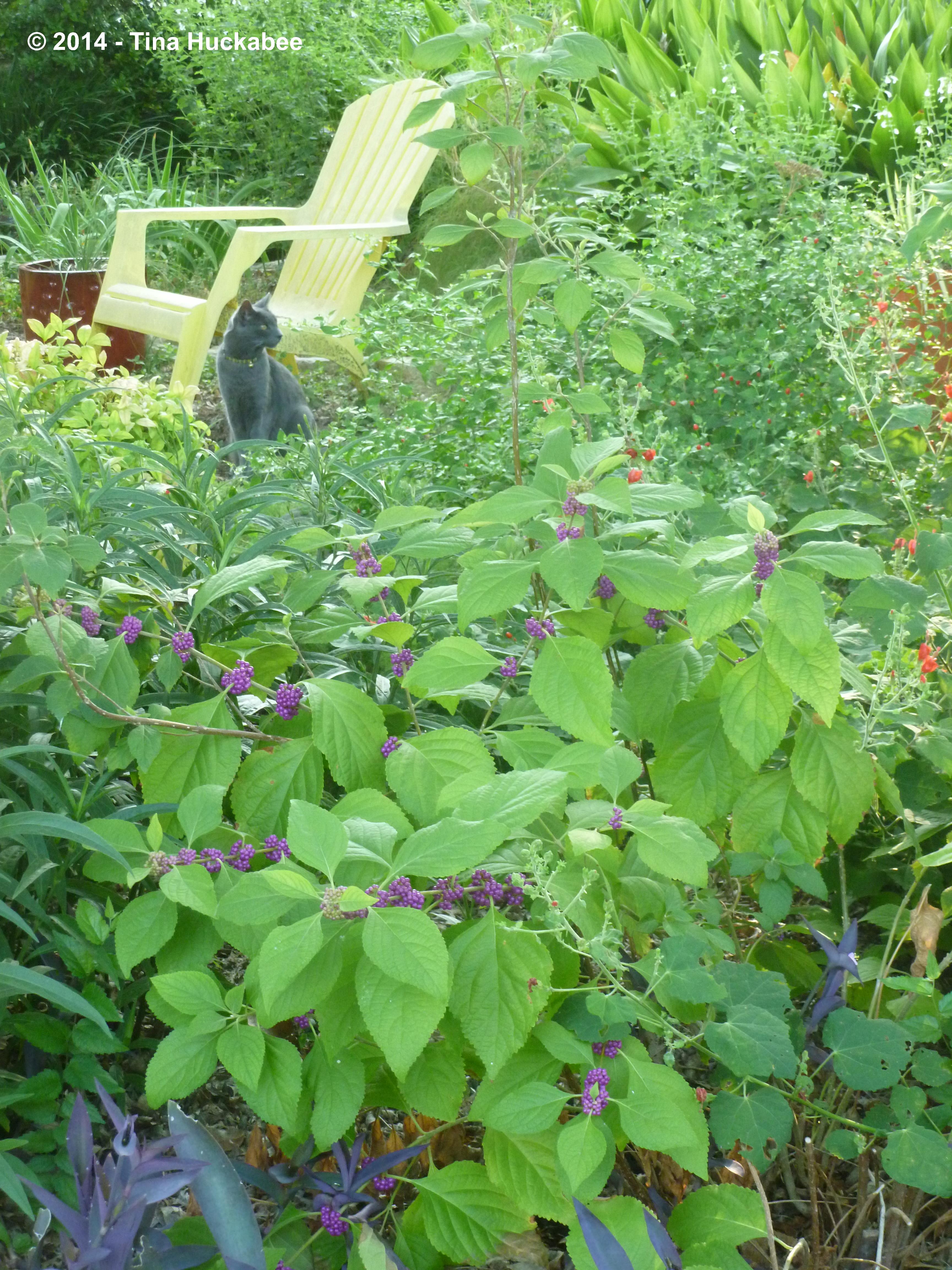
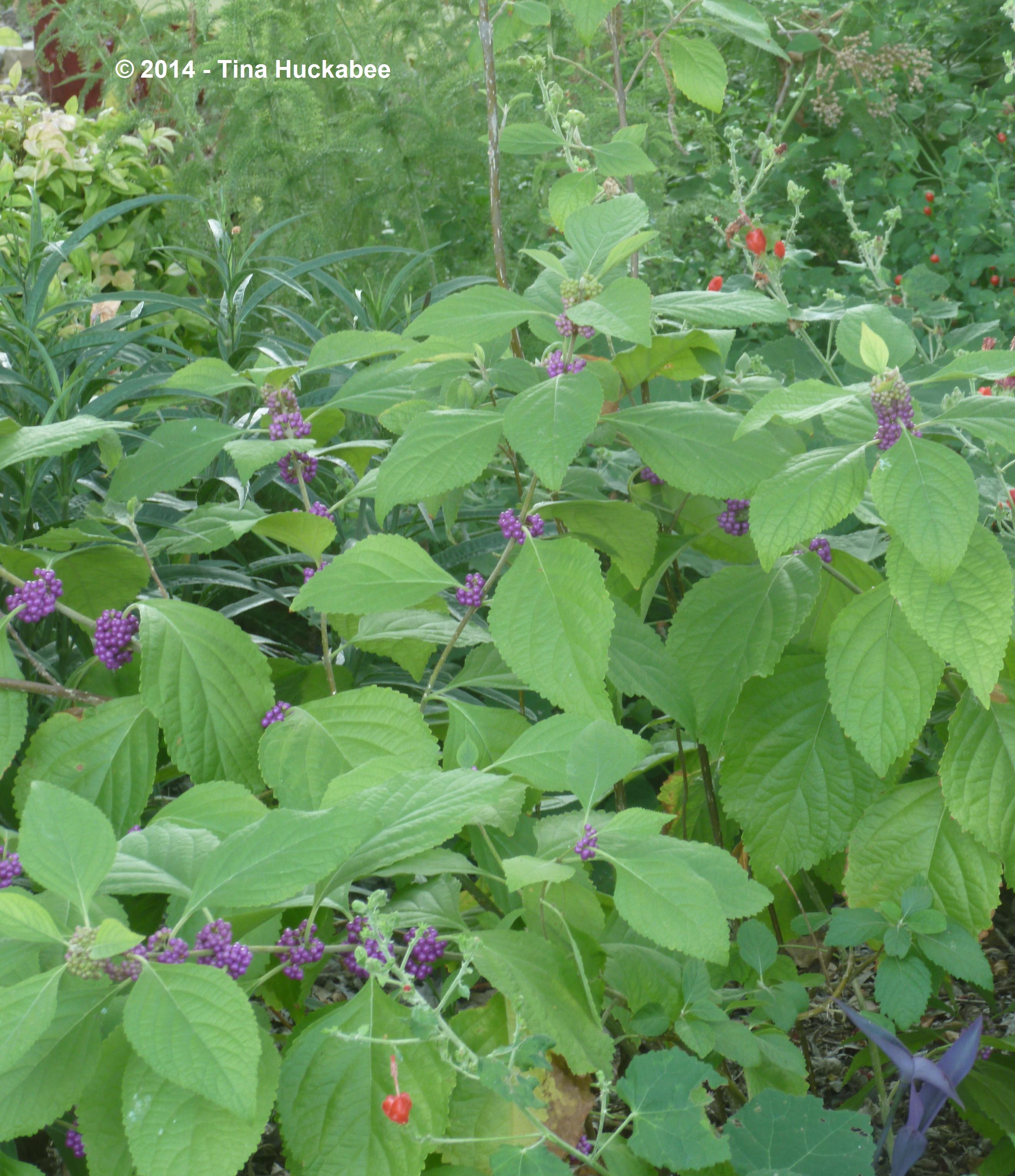
American Beautyberry is a native deciduous shrub throughout the American South, including Texas.  It is usually a medium-sized shrub, but can grow quite large in cultivated gardens. My original plant,

20111016_24_cropped_2495x1606..new

grew to about six feet tall and about ten feet across before it began a decline which continues, although the plant is still living.  This specimen,

20111007_11

…planted in the Howson Library garden in Austin, isn’t as large as mine, but it is substantial. Beautyberry develops arching branches and is best left in its natural form; it’s not a plant you want to prune for “neatness.”  In this natural form, it provides cover for wildlife and that’s always a good thing.  Gardeners can prune the dormant shrub to about a foot from the ground in late winter if a more compact size is the goal. I’ve never pruned my Beautyberries, except for stem waywardness (that’s a quirky definition) and when stems died, as has happened with my original shrub.

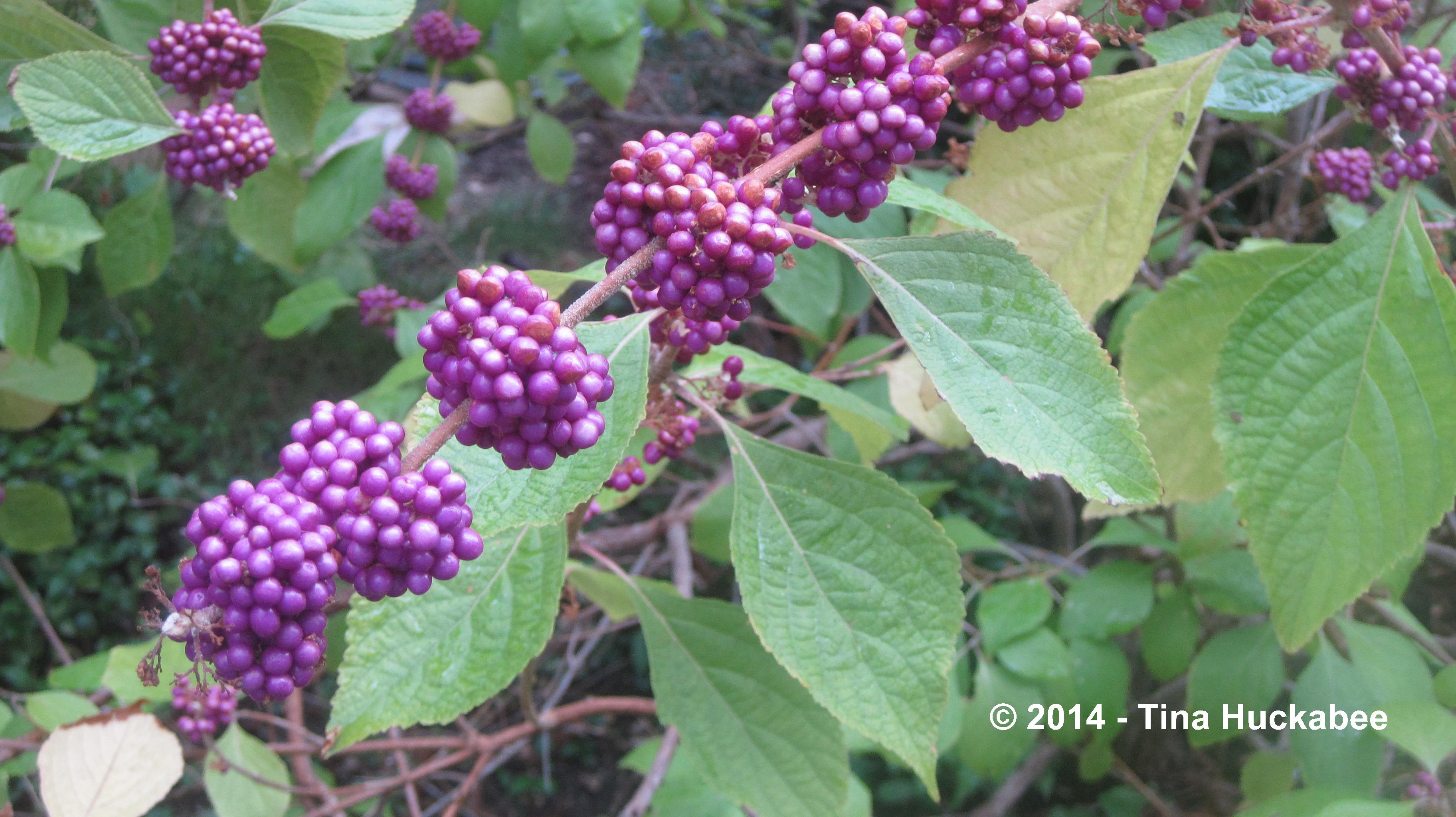
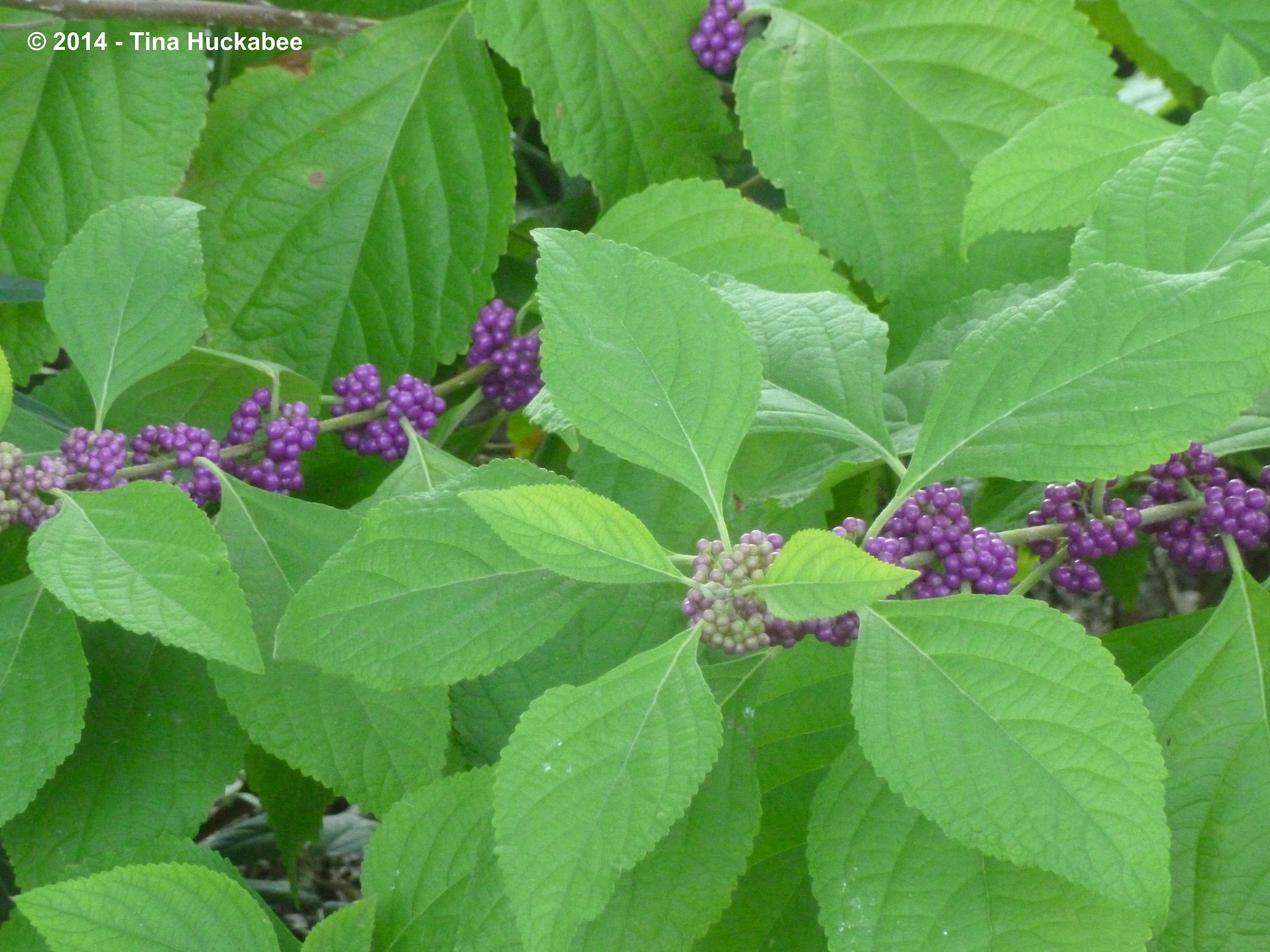
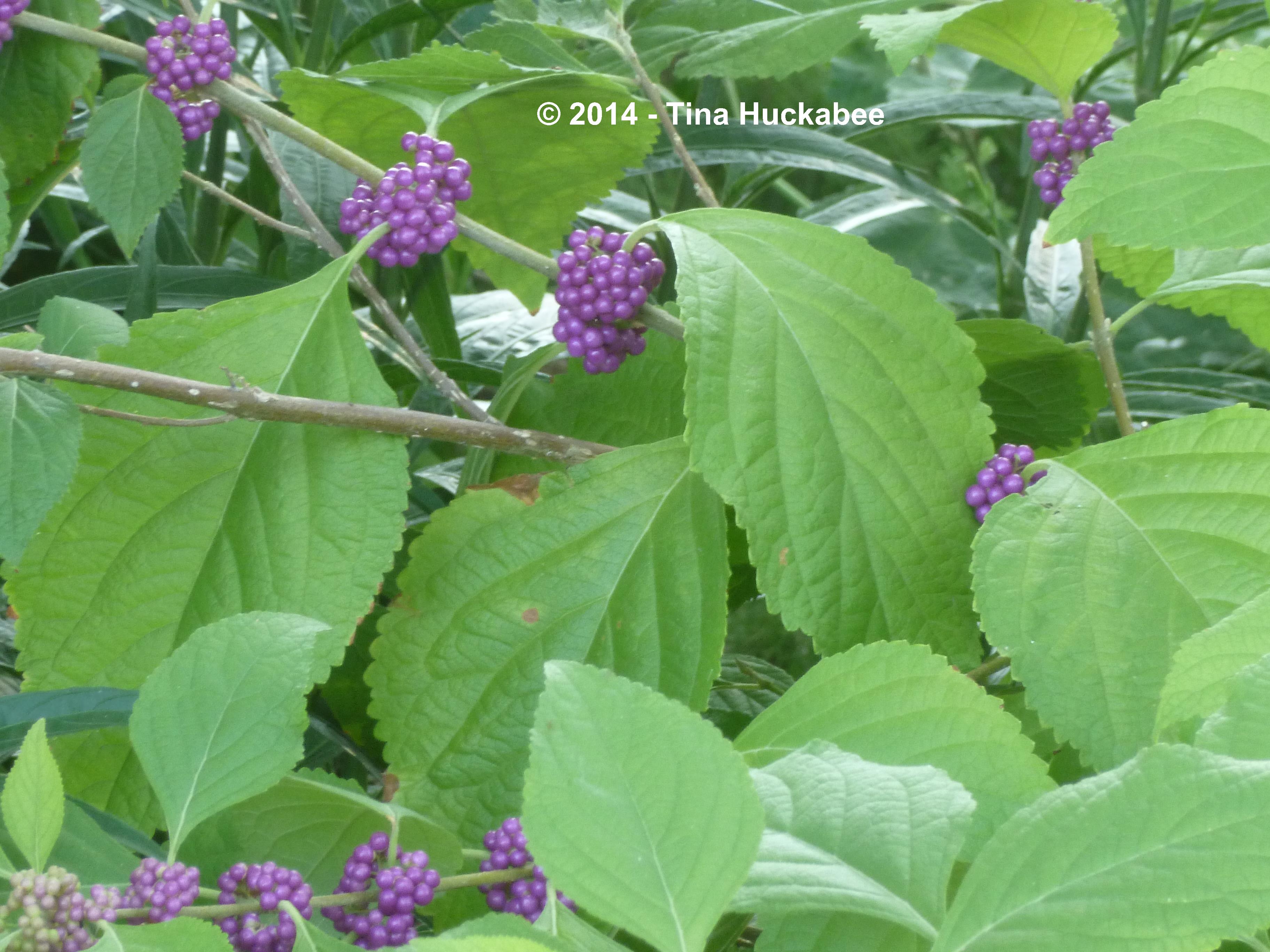
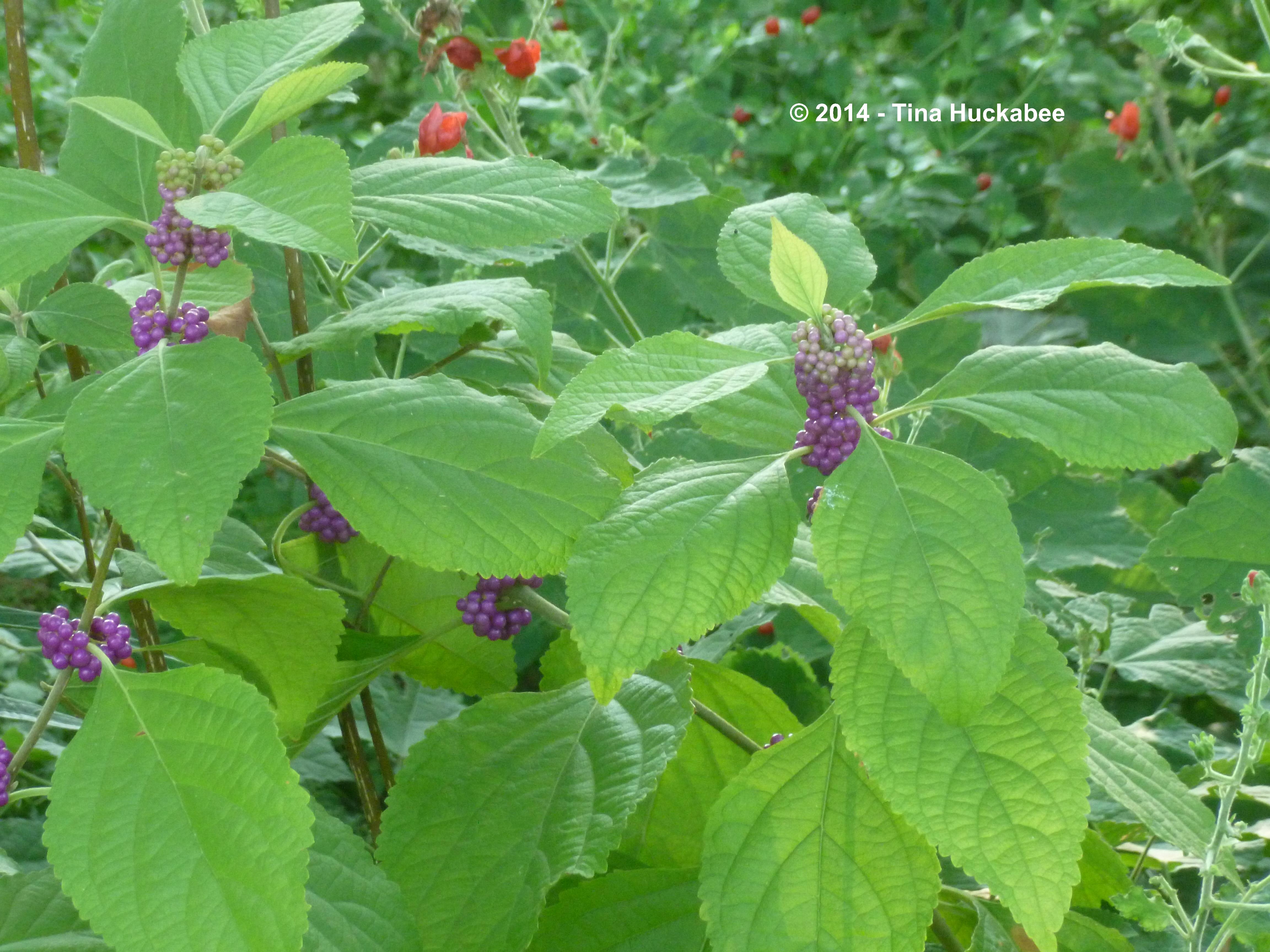
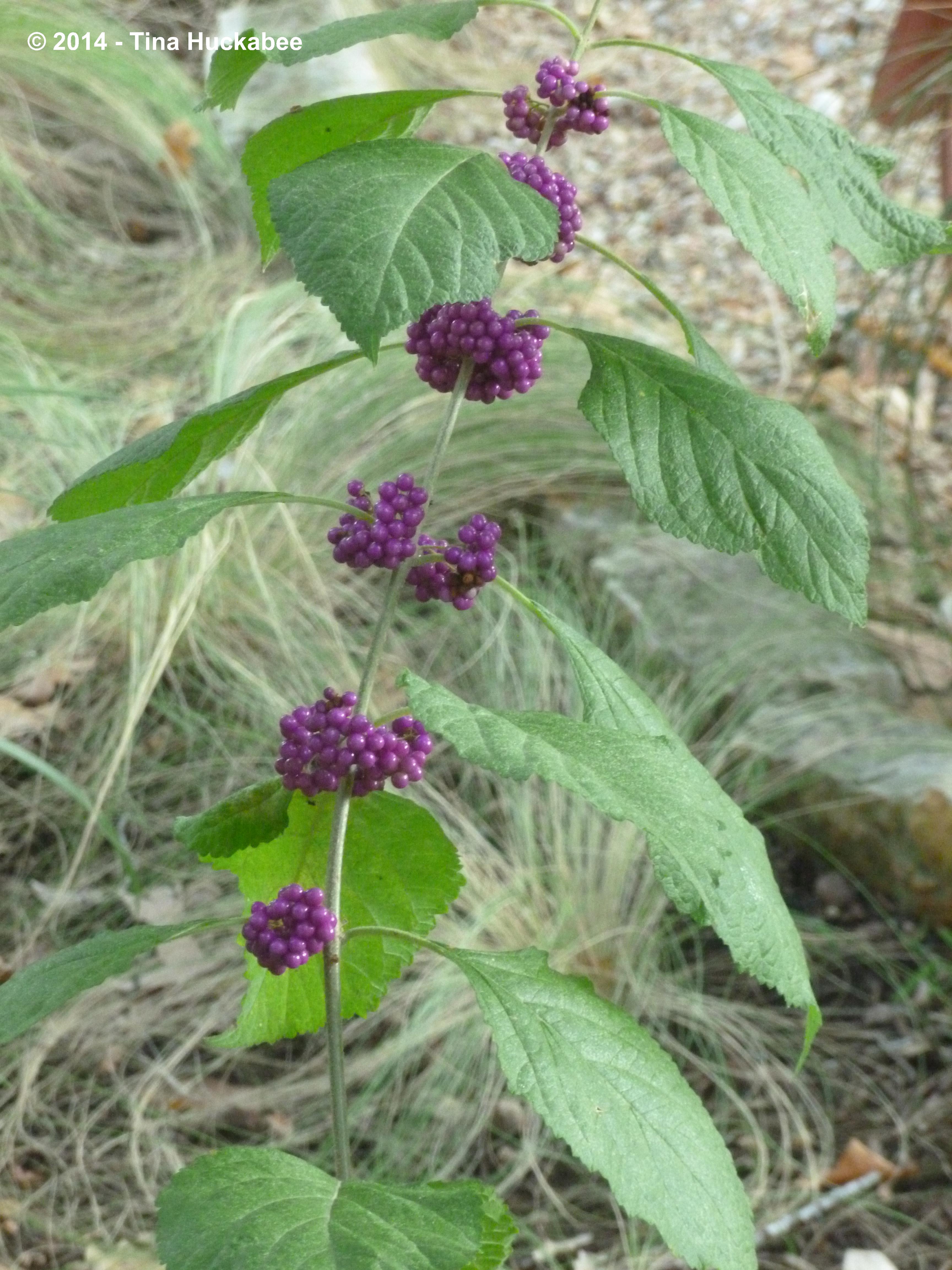
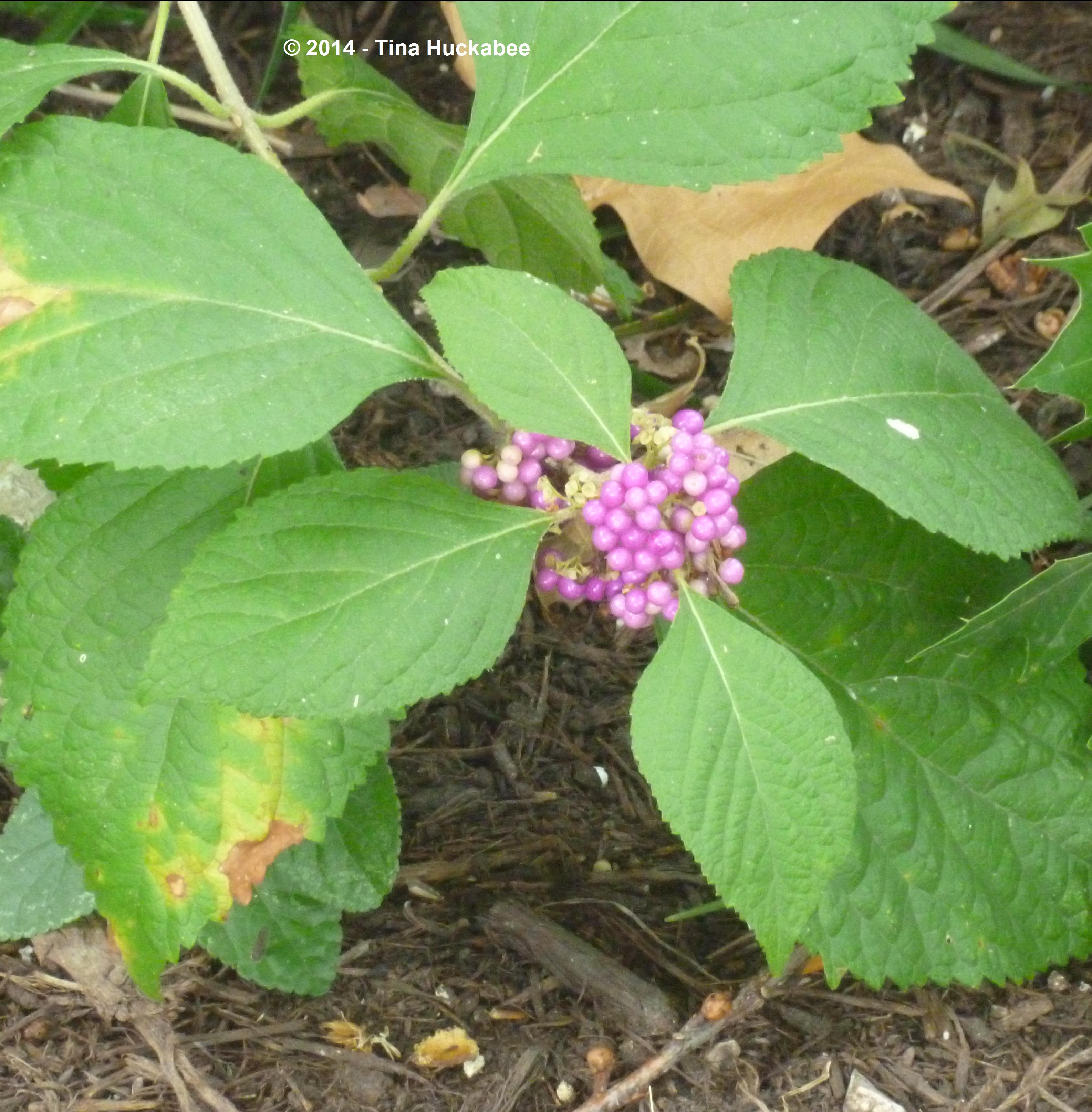
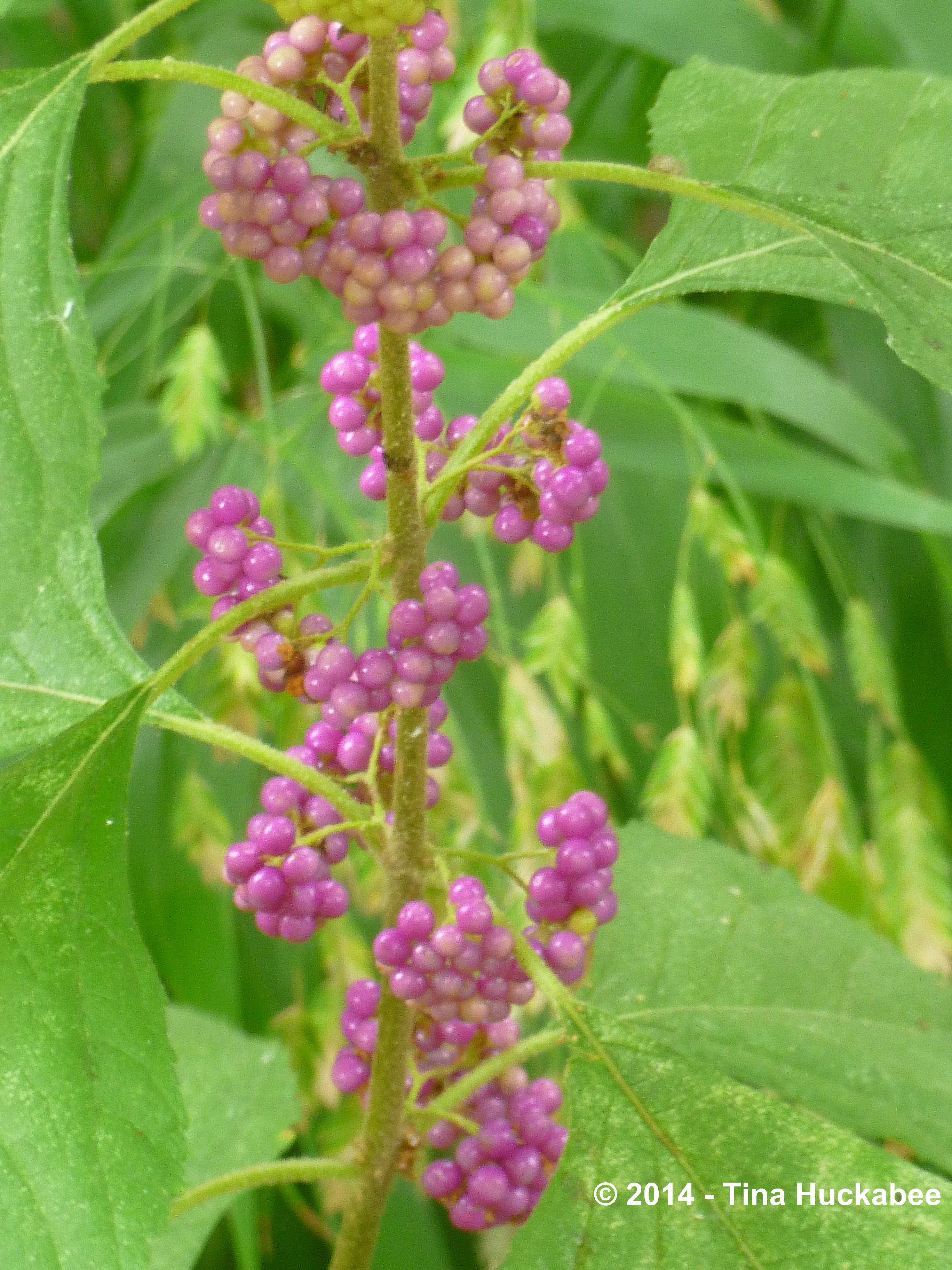
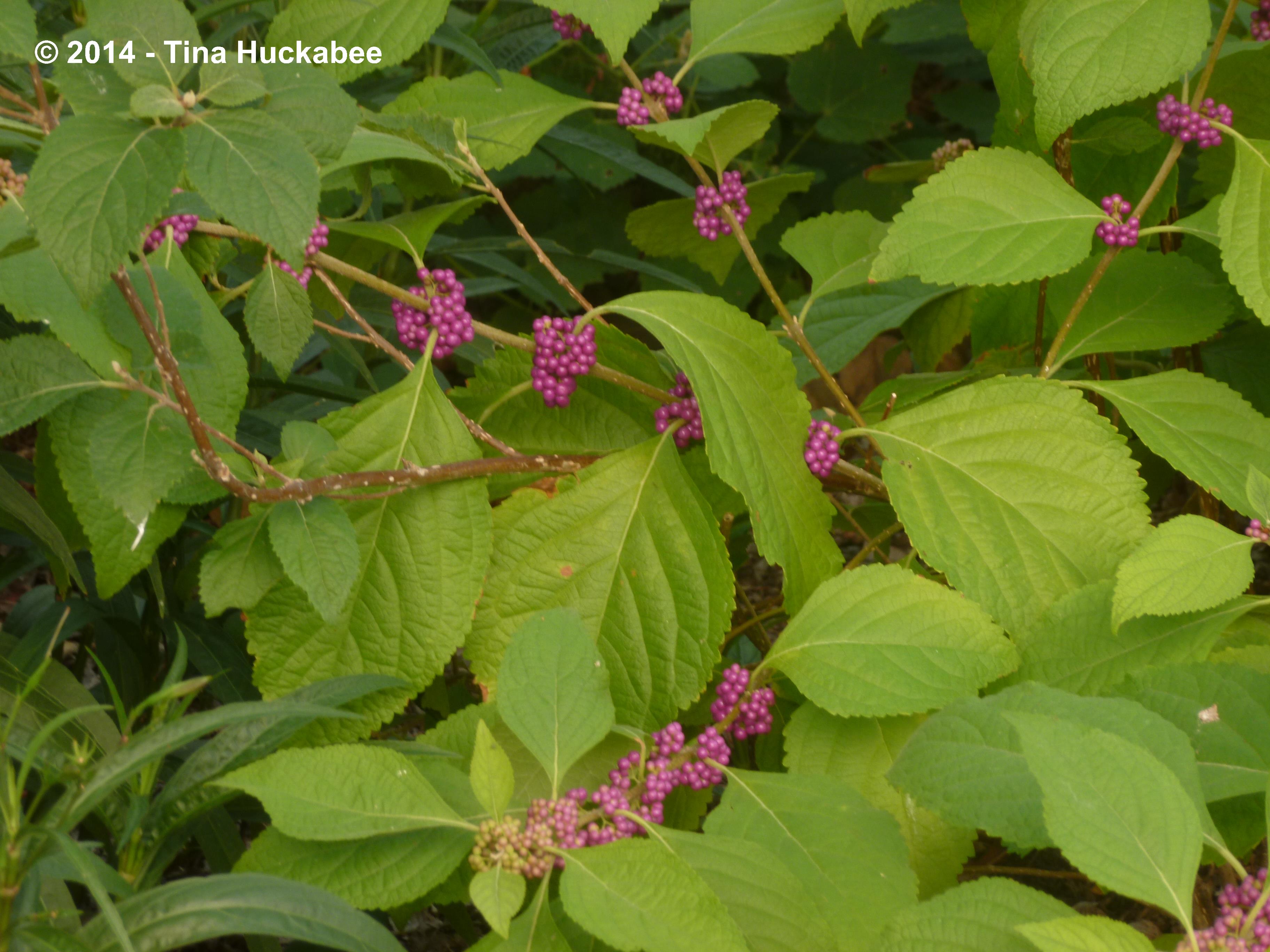
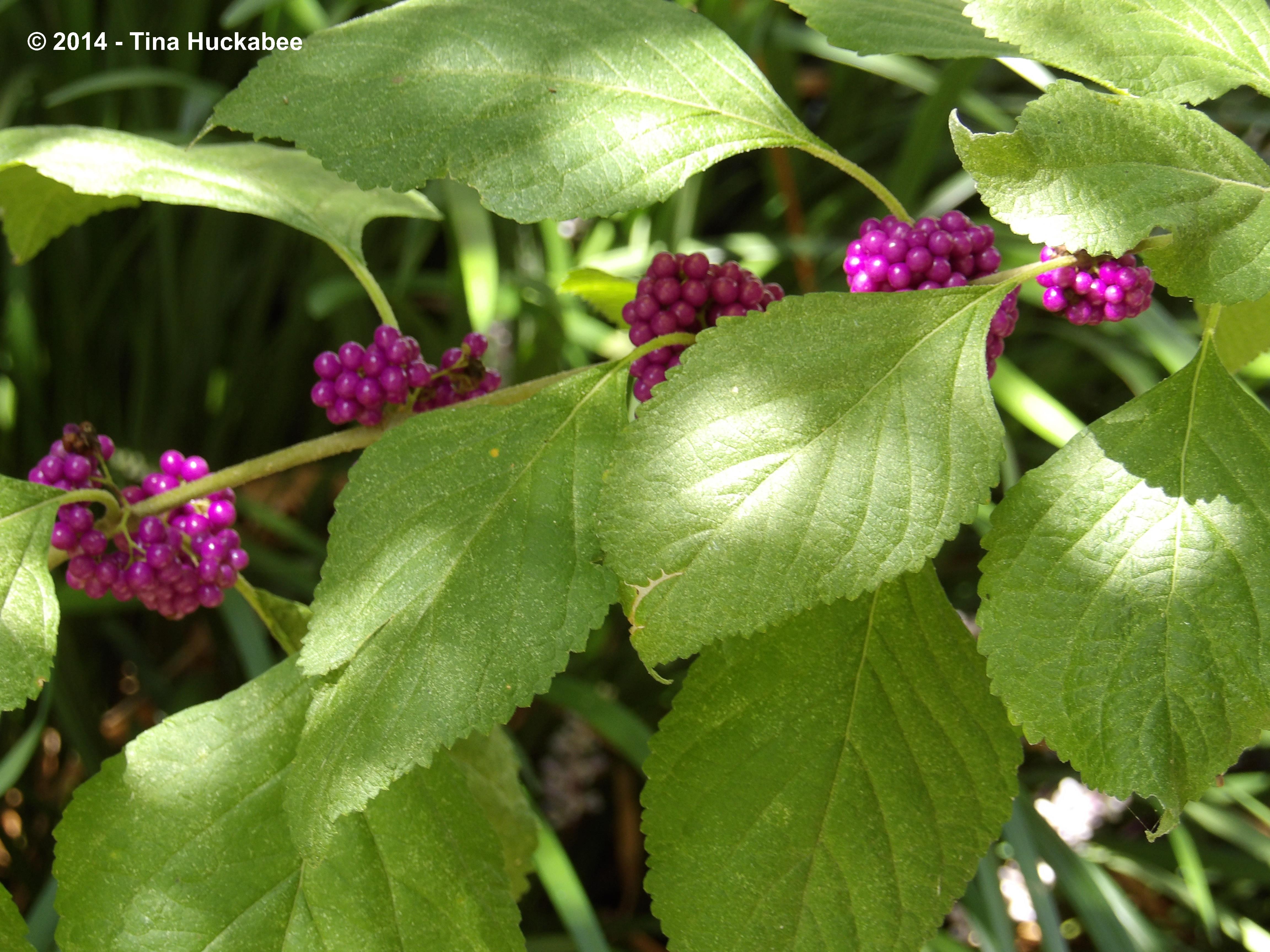
Known primarily for the showy, purple berries or fruits which form in clusters along the branches,

20111007_10.new

…the American Beautyberry is drought tolerant, a good wildlife plant, and a lovely landscape shrub for the Southern garden.  In late September, October, and November. it reaches the zenith of its beauty.   Those berries!

IMGP1192_cropped_3456x2654..new

IMGP1194_cropped_3064x3069..new

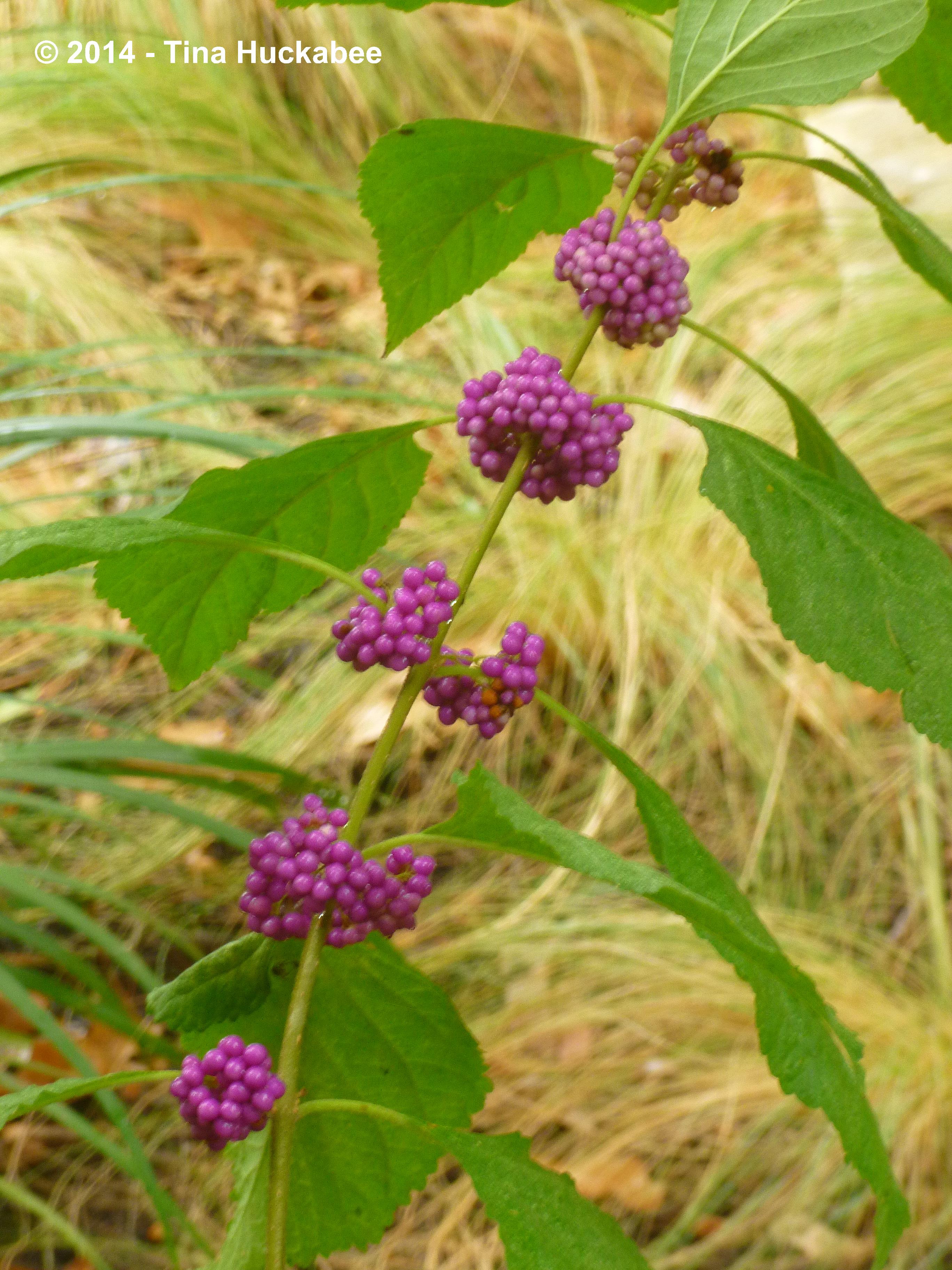
They are quite something in the garden.  I’ve always thought they look otherworldly, not entirely natural.

P1070295.new

That’s a natural color?

P1070142.new

Yes, the color is of this world and the birds love the berries!  Usually in my garden, it’s the Mockingbirds who stake their claim to ownership of the berries, one or two Mocks fighting off other birds for the privilege of fine bird dining that the sumptuous berries provide. But I’ve also seen Blue Jays as well, swooping onto the shrub, then hopping from branch to branch, plucking and munching as they go. The berries are an unusual, bright, almost metallic, purple, and if the birds don’t eat them up within a few weeks, gardeners can enjoy their gorgeousness for quite a long time. I’ve read that the fruits can be made into jelly, but I haven’t tried that, nor have I ever tasted either the berries or jelly. There are also white-fruited Beautyberries–White American BeautyberryCallicarpa americana var. lactea.  At Zilker Botanical Garden, several grow in the Green Garden and I’ve seen White Beautyberries for sale at nurseries. I like them and more importantly, the birds like them, but the purple has my heart.

P1070144.new

P1070303.new

Additionally, deer favor the leaves, so Beautyberry is not a good plant if you share your garden space with those particular mammals.  I said it was a good wildlife plant, didn’t I?

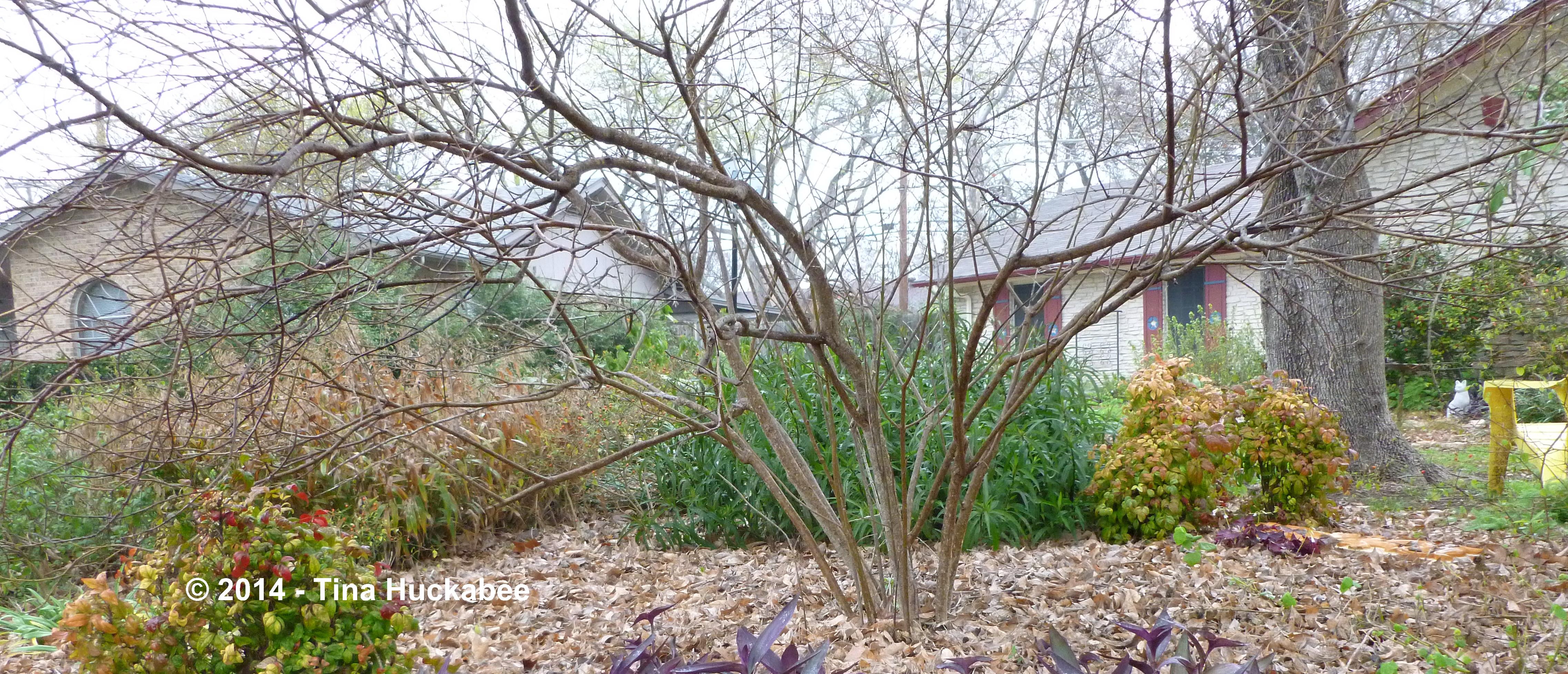
After the inevitable freeze, the berries (if birds have left any) shrivel up.  Also, after the first hard freeze, the foliage of the Beautyberry will turn yellow and drop.  The Beautyberry remains bare of leaves and (usually) of berries for the duration of winter.

20120215_1_cropped_4548x1954..new

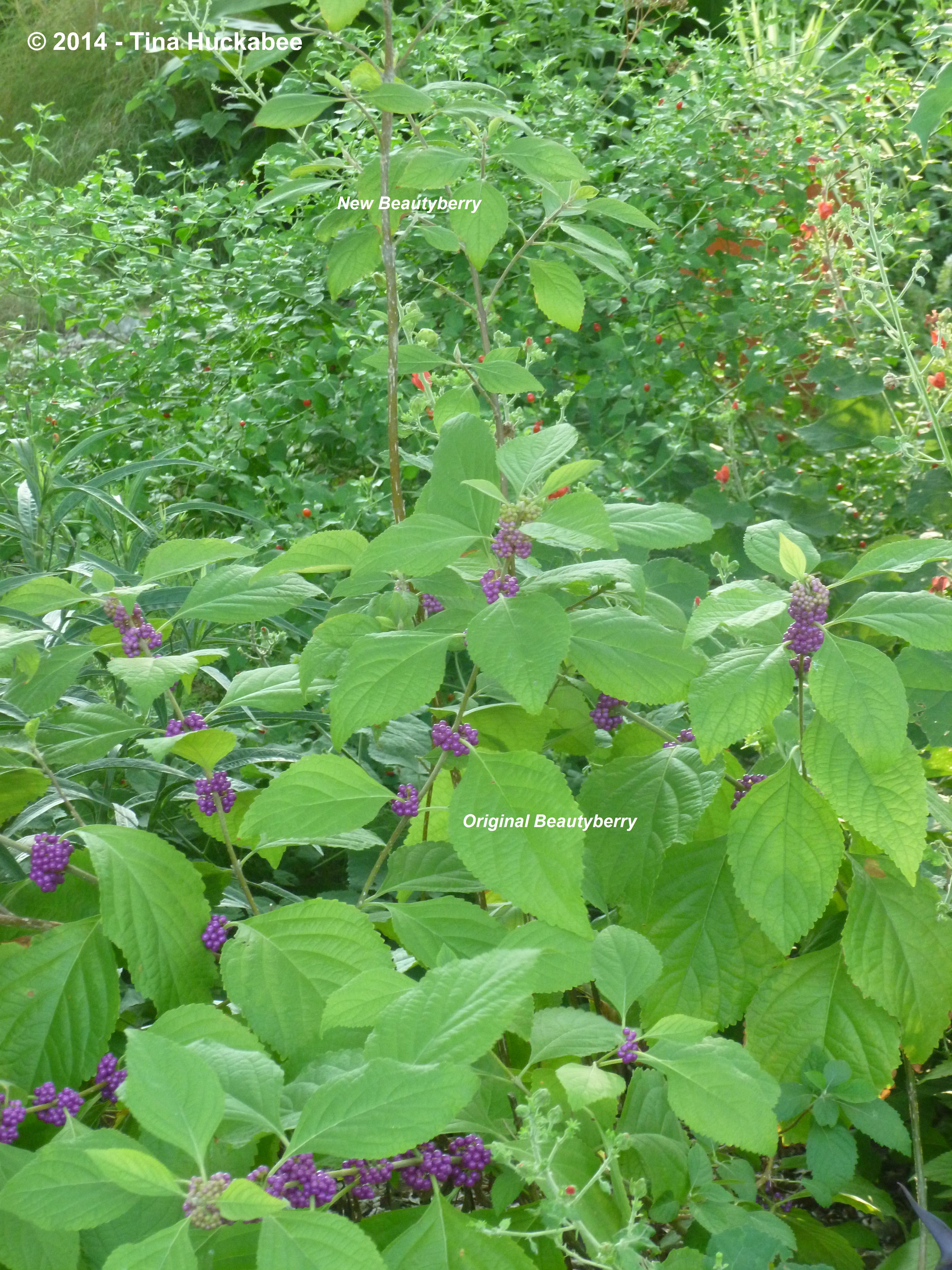
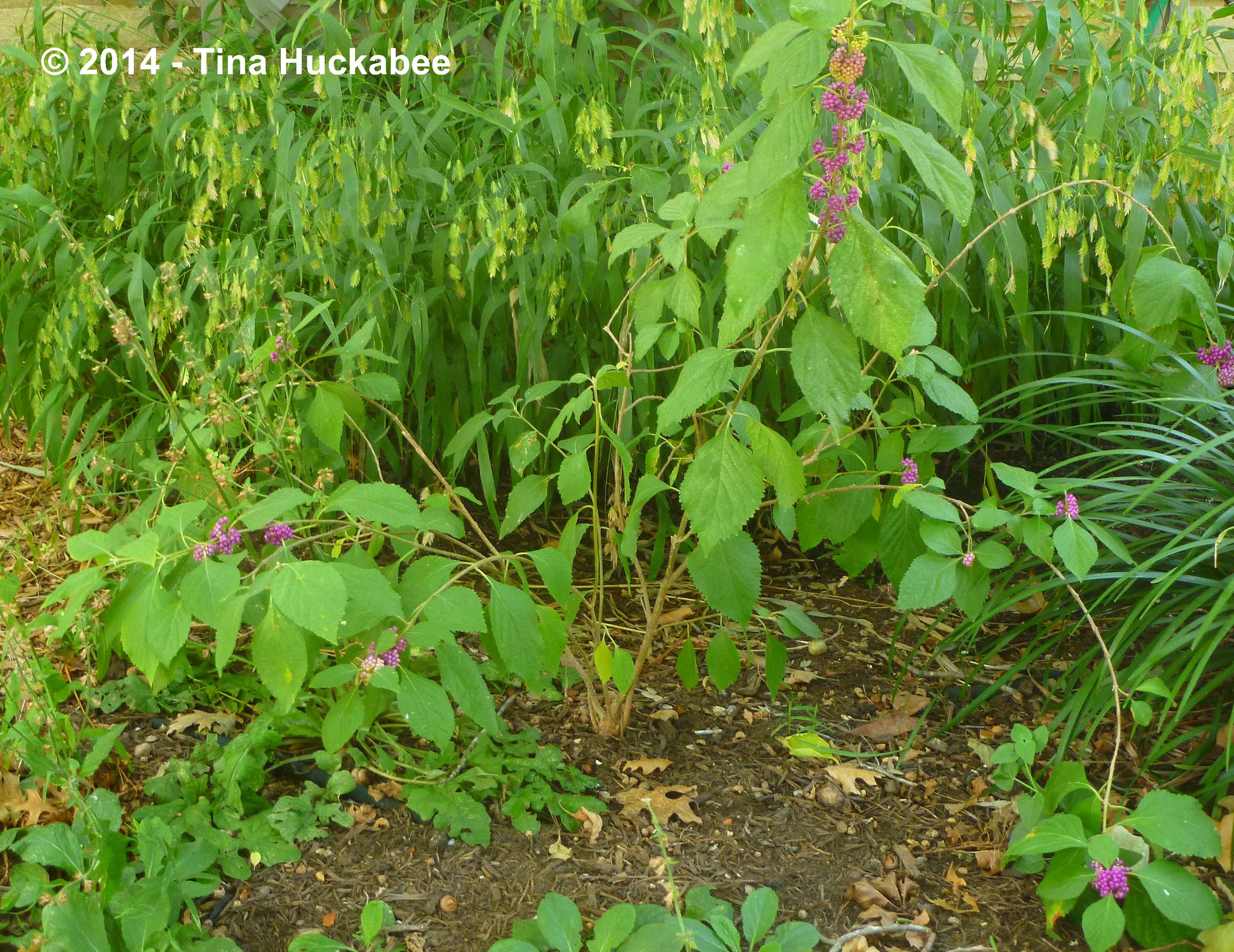
This specimen is my original plant.  It’s about eighteen years old and began declining about a year ago. The branches died, one by one, and I’ve prune most of them off.   Assuming that the original was on its way out, I planted a new Beautyberry in October 2013,

P1070293.new

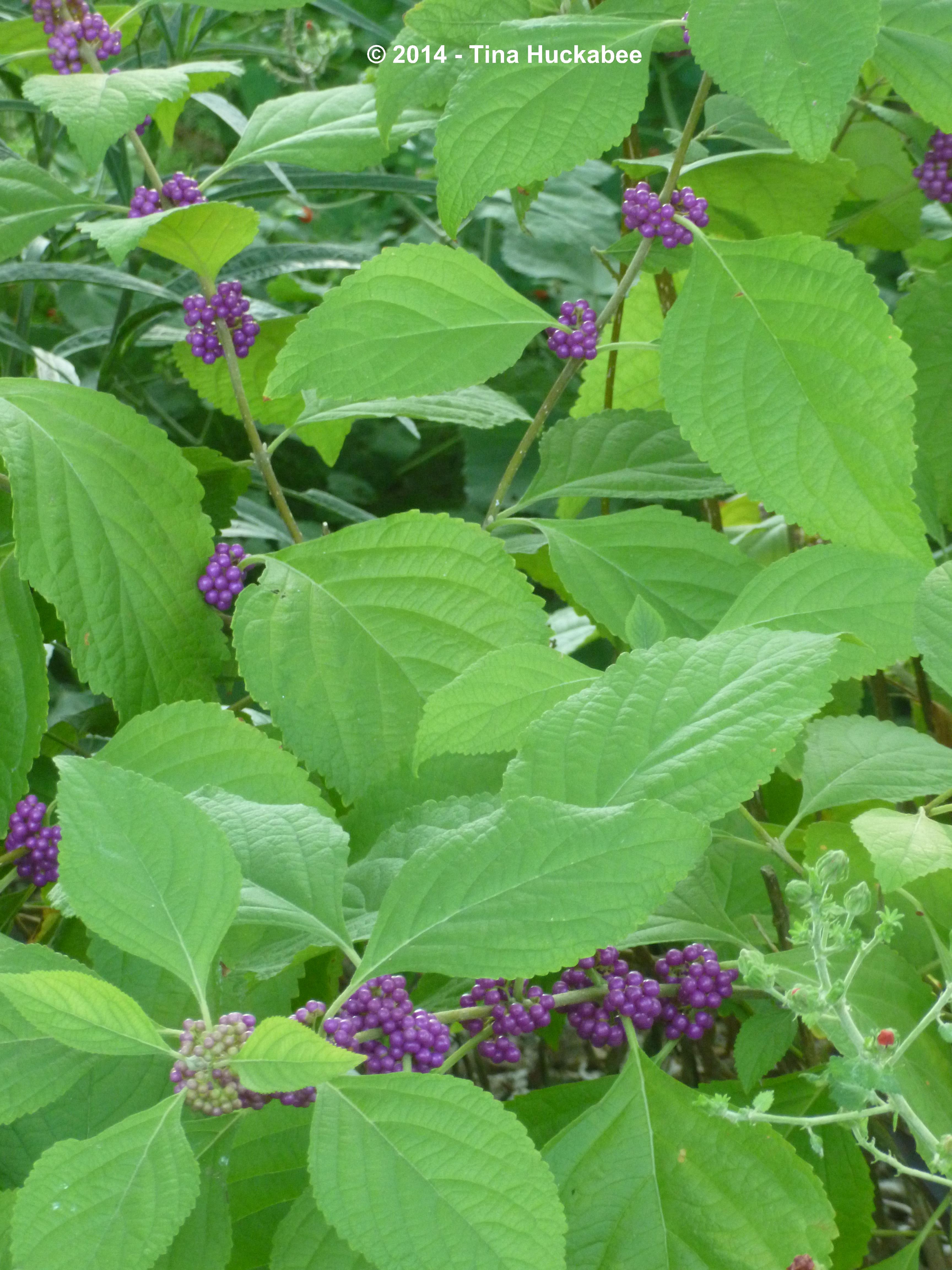
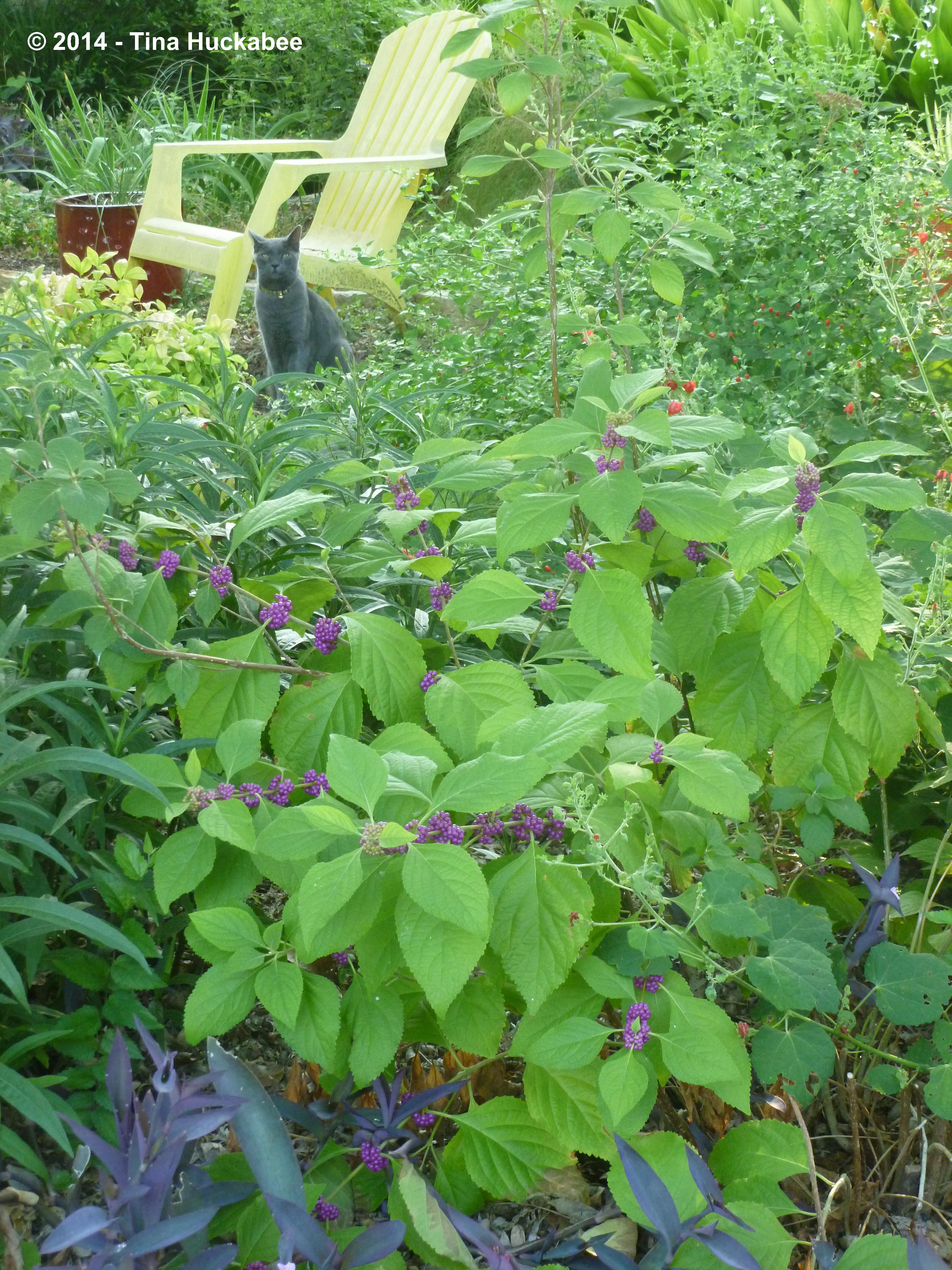
….next to the original.  The new Beautyberry has the tall stem which towers over the the original, which is significantly shorter and with fewer branches.  The original shrub produced berries this year,

P1070294.new

P1070298.new

P1070300.new

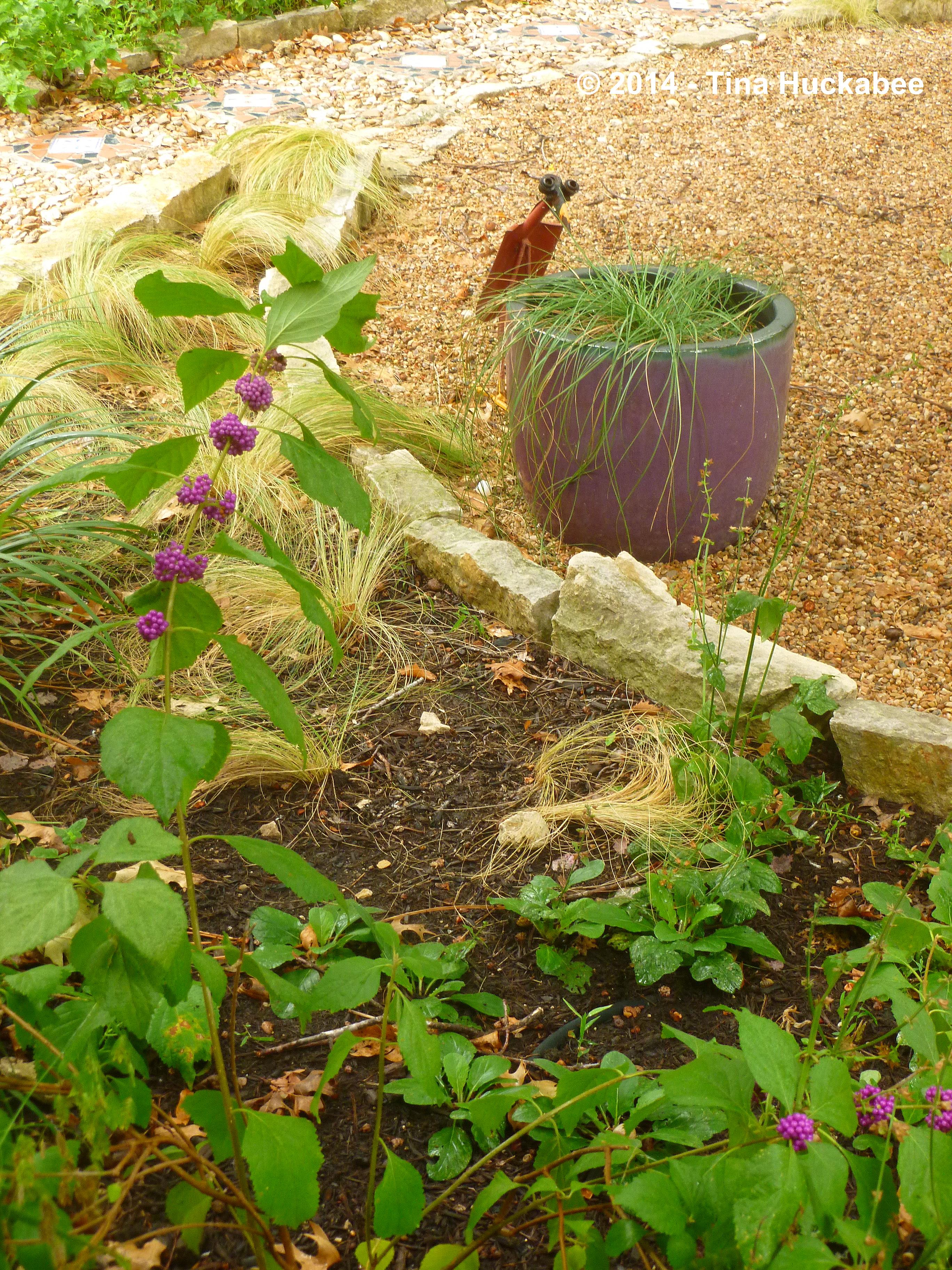
…but the new Beautyberry didn’t, though it bloomed in early summer.  Along with this new specimen in my front garden, I planted another in the back garden.

P1070308.new

…which sports fruit clusters this fall (2014).  The back garden Beautyberry receives no direct sun, only dappled light,

P1060951_cropped_3006x2320..new

…and the Beautyberry in the front receives dappled light most of the day, then is blasted by the last of the west sun.  The soil in which it resides dries out during the summer.  I hand-watered when the Beautyberry looked pathetic and it’s weathered its first summer well.

P1070297.new

The back Beautyberry is situated in generally moist soil, because of shade and the clay content of the soil. I think that explains the difference in fruit production for this year, though I expect both shrubs will produce berries equally as the plants mature and the roots establish themselves. According the the Lady Bird Johnson Wildflower Center’s page on American Beautyberry, this shrub prefers a moist, bottomland type of soil, but I’ve seen them planted in a variety of situations.  Beautyberries thrive in either sun or shade and varying soil types, but are drought tolerant in shade or part shade, requiring more irrigation with more sun exposure. Beautyberry is adaptable.  My father grows a huge one in Corpus Christi, in full sun, in sand.  He irrigates more than I do.
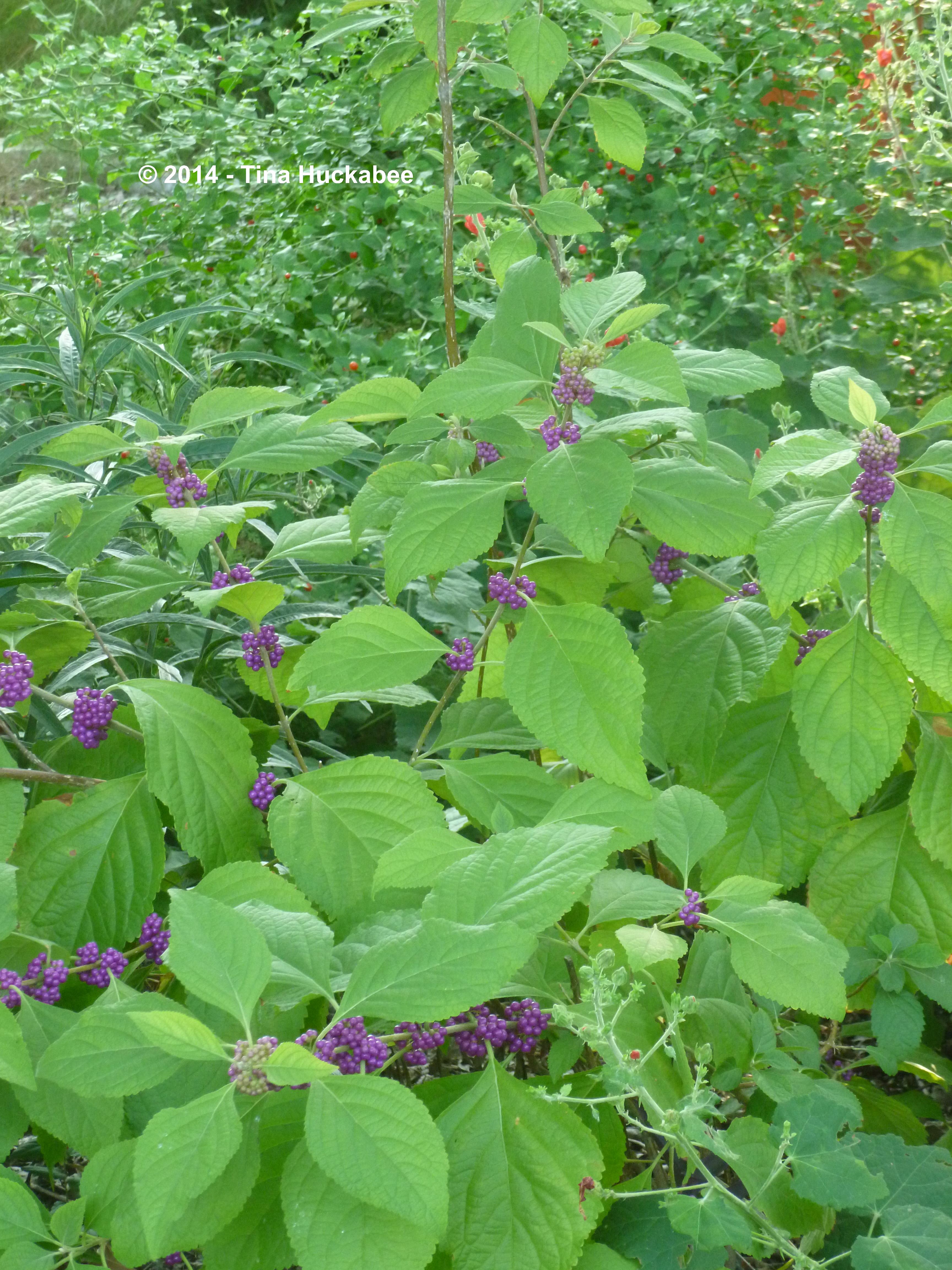
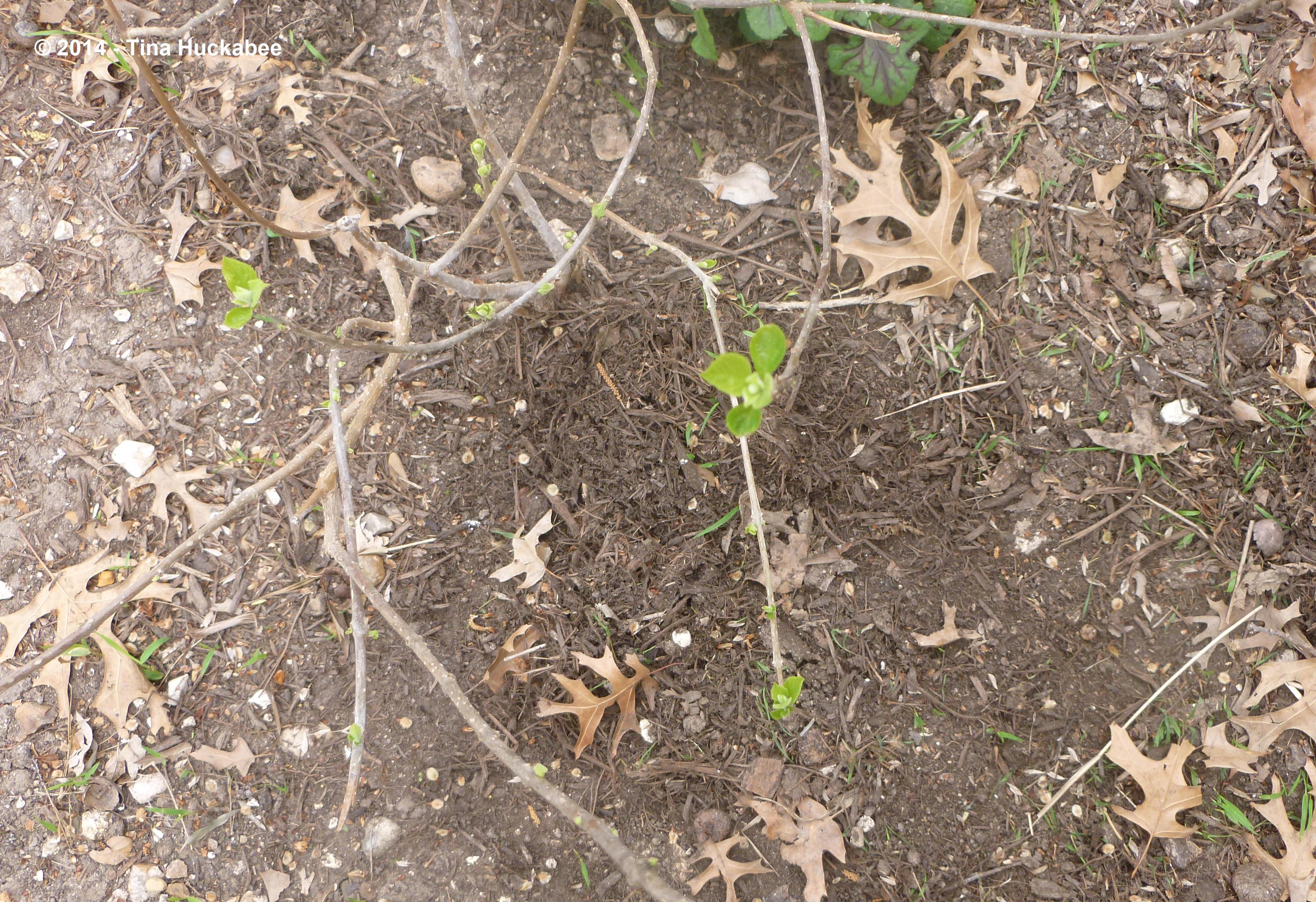
Once spring temperatures warm and the days lengthen, fresh, new leaves emerge. Tiny at first,

20100911_12_cropped_3807x2608..new

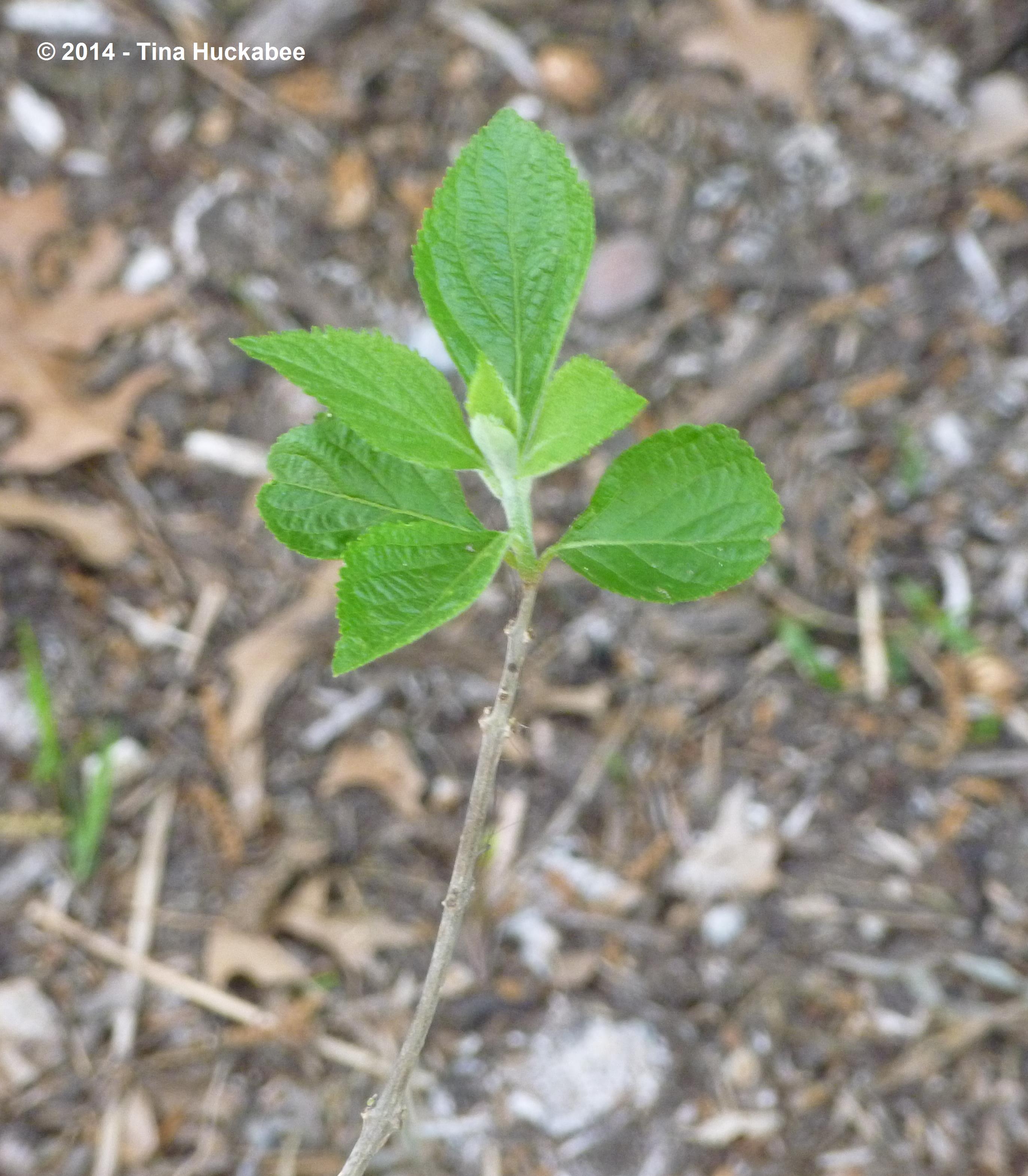
…they grow rapidly to their full size.

P1030074_cropped_2746x3142..new

These photos show the newly planted Beautyberries from last spring, but established Beautyberry shrubs leaf out similarly. The leaves grow large, are thin rather than thick, and are light, bright green in color.  They form opposite from one another and are slightly serrated.  The leaves reportedly contain a chemical which repels insects from people and livestock. I haven’t tested that by crushing a leaf and spreading it on my skin, but I should,  as there are plenty of mosquitos in the gardens.

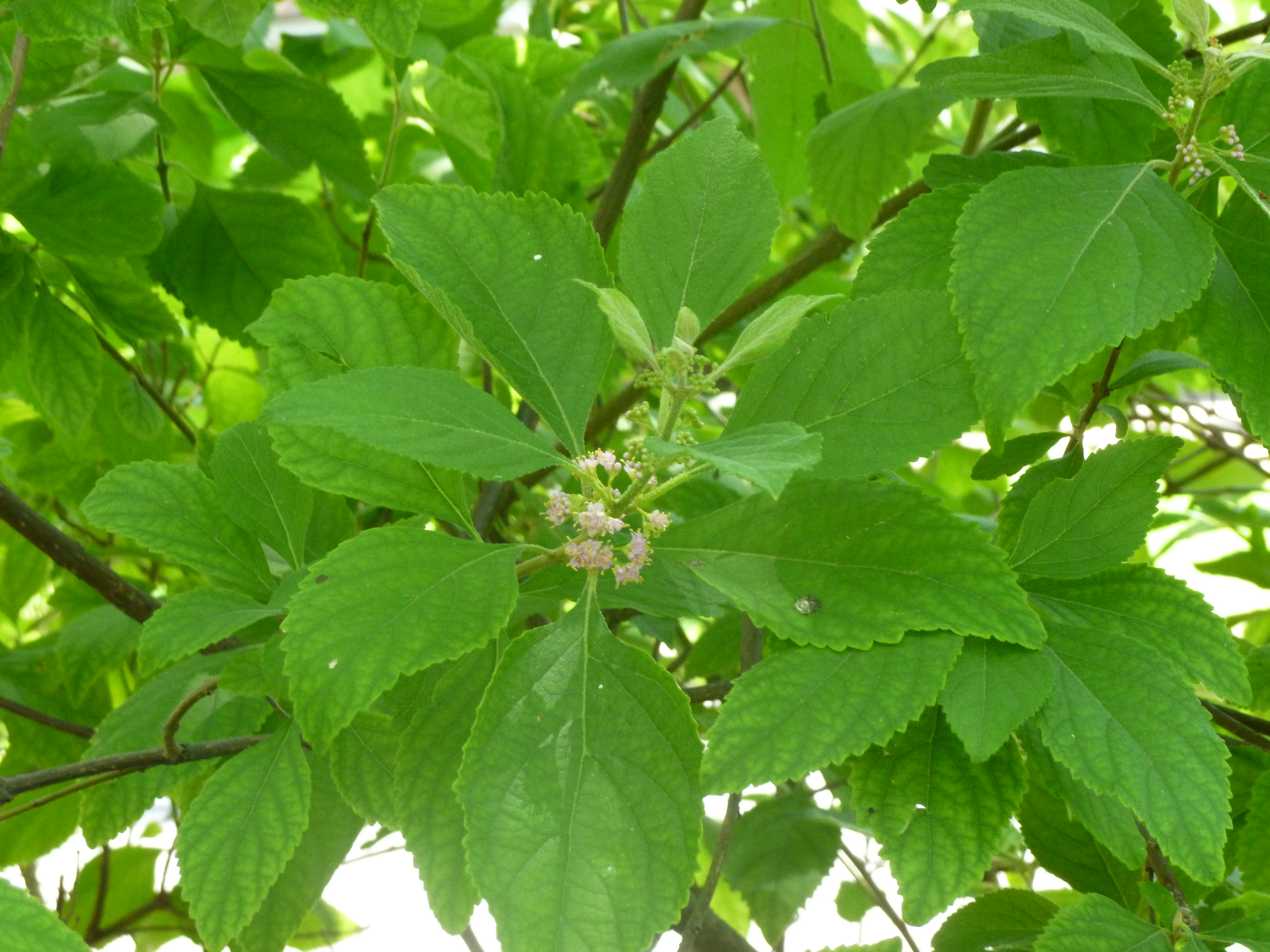
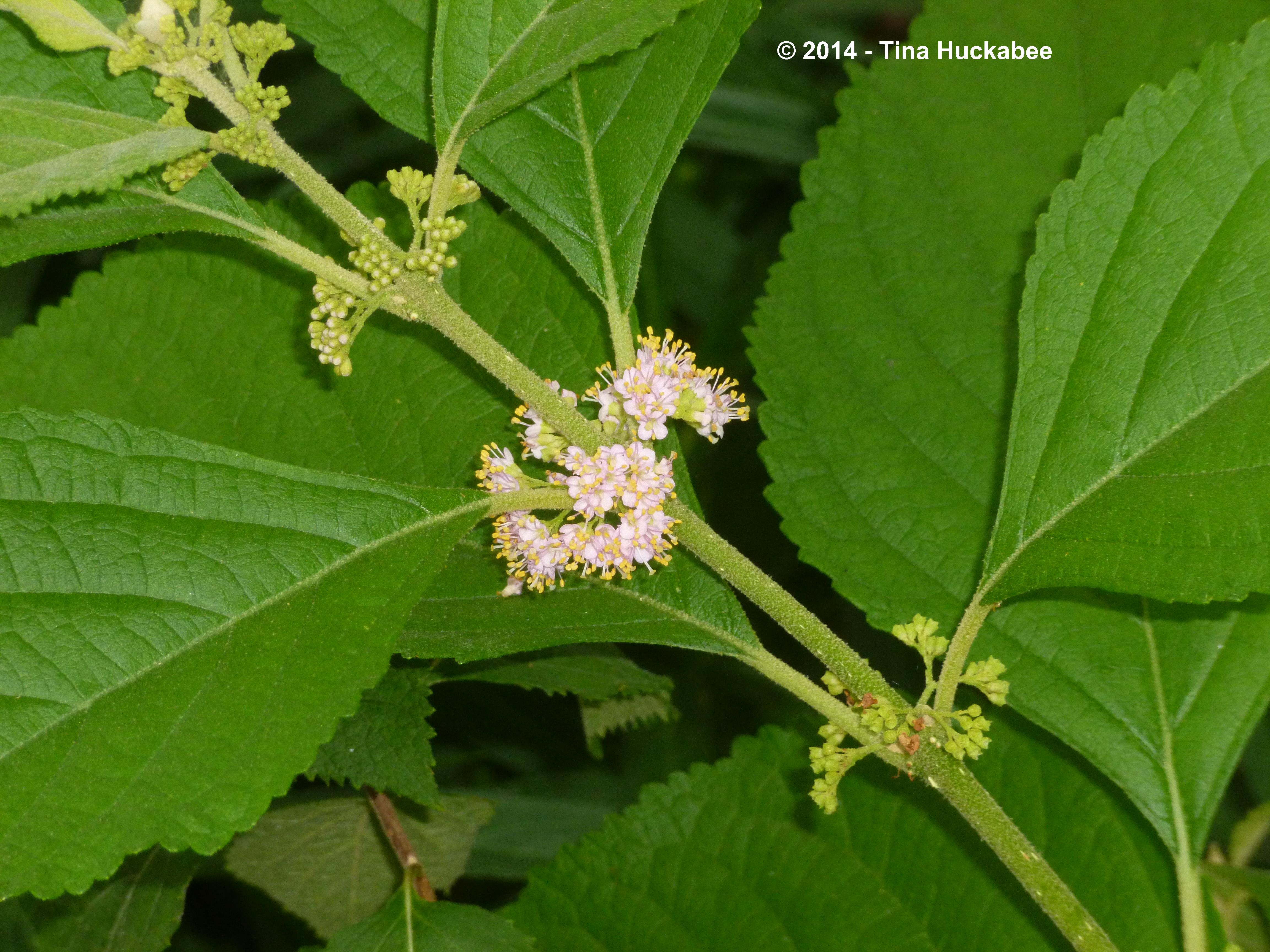
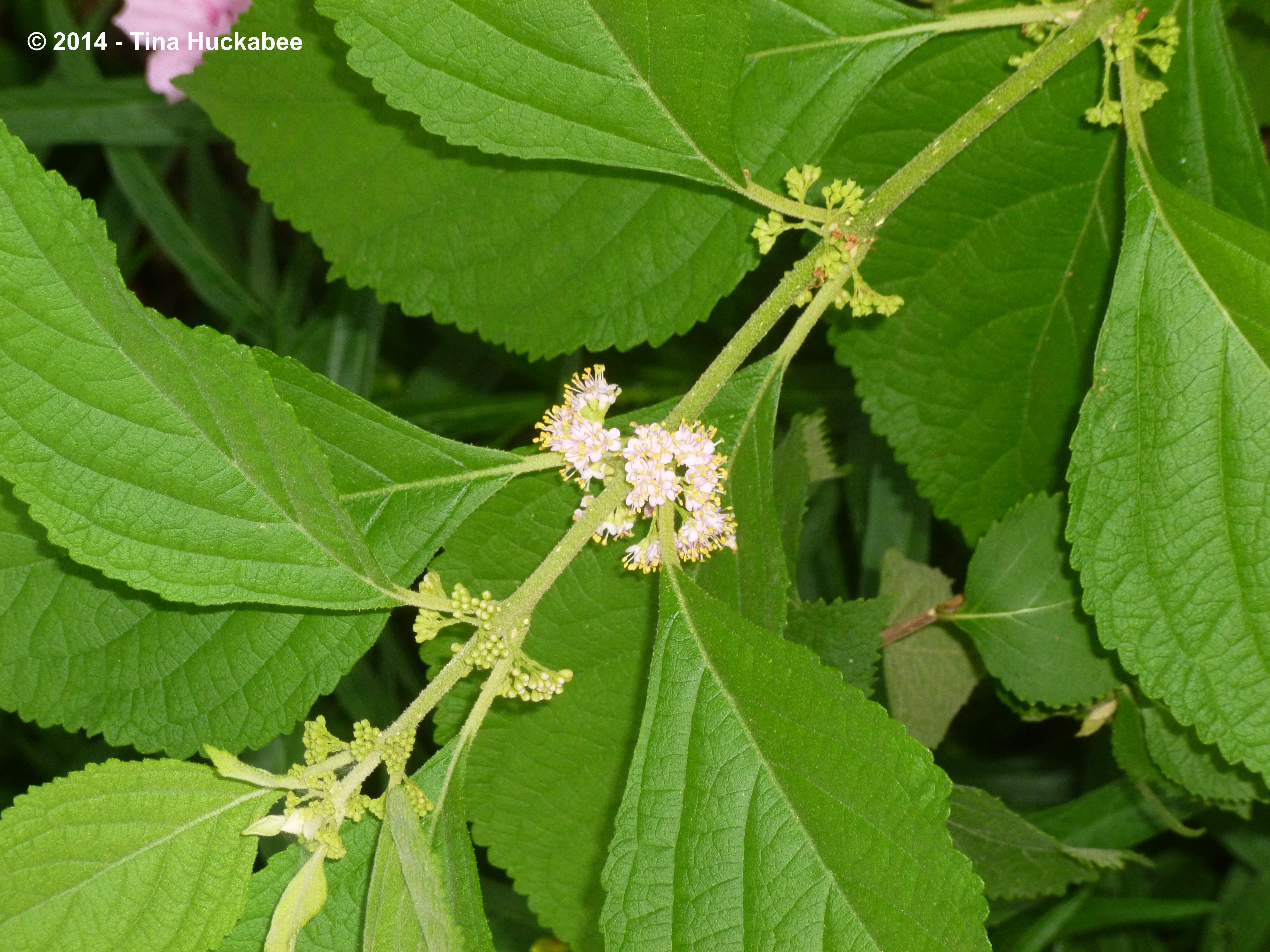
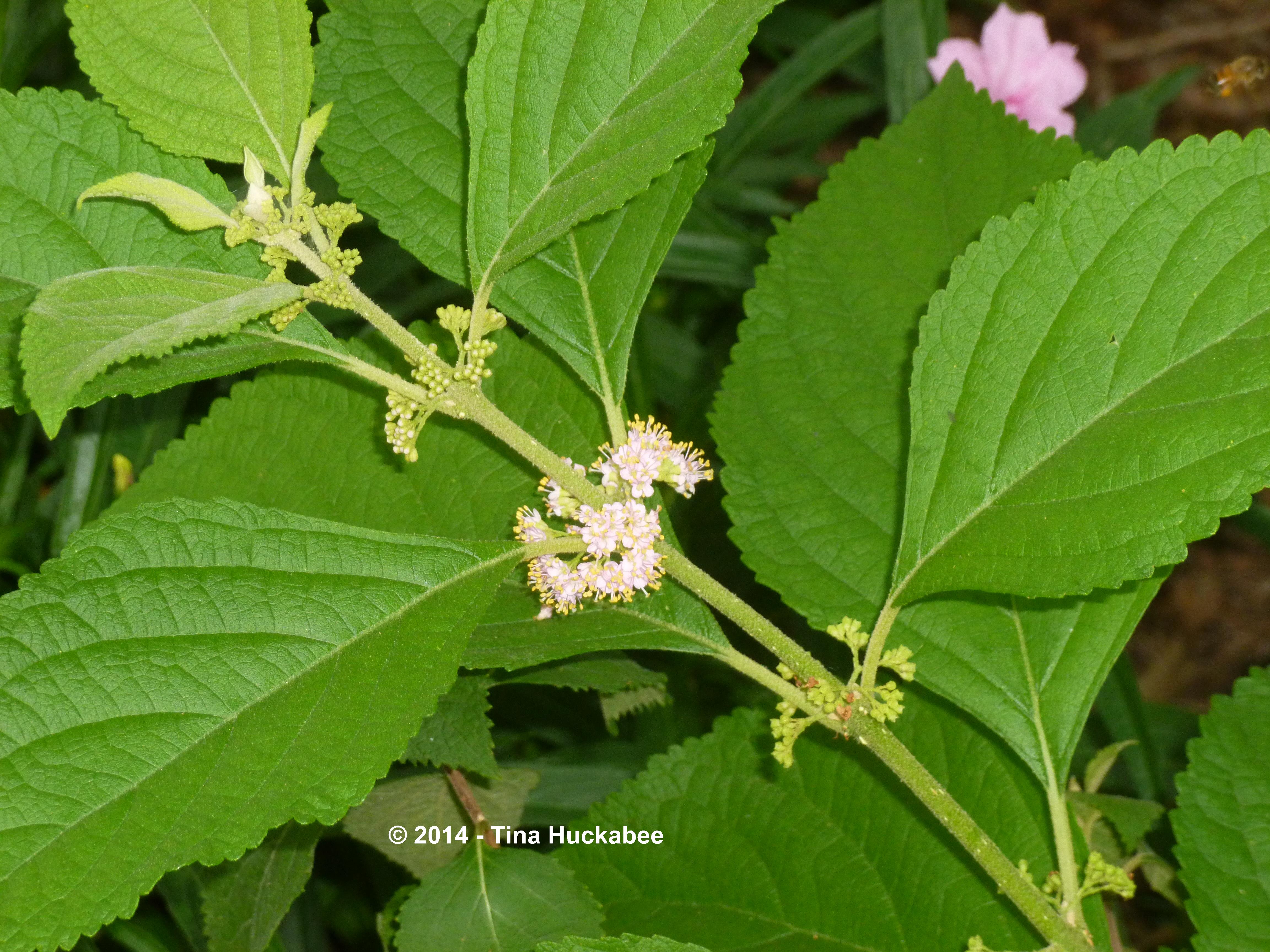
In May, the Beautyberry begins blossoming for about six weeks with delicate pink flowers.

20120528_32

P1050165.new

P1050166.new

Flowering occurs at the nodes of the leaves,

P1050167.new

P1050493_cropped_2827x2660..new

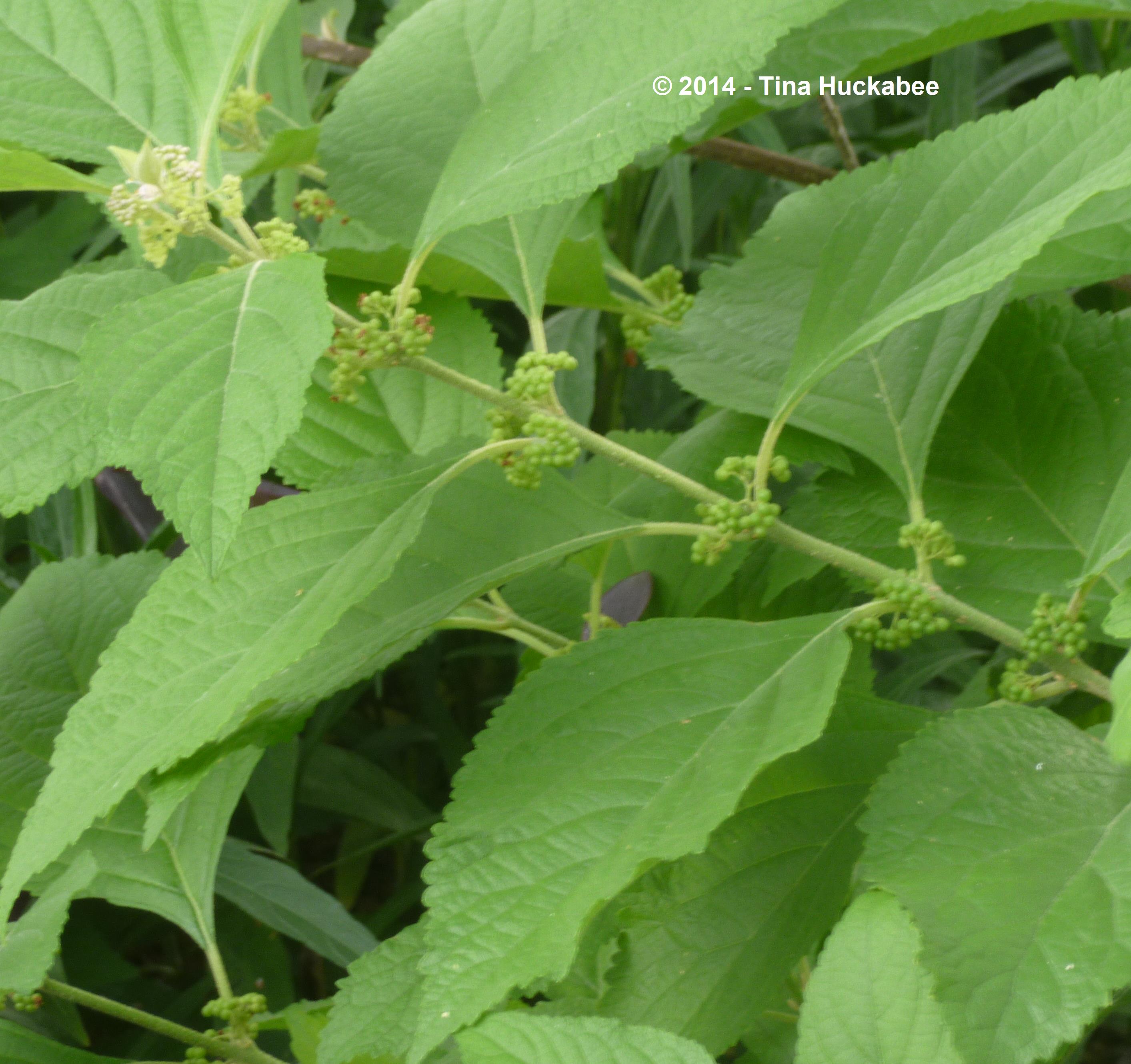
…and as the flowers fade,  the green fruits develop. The green berries remain on the main stem throughout summer.

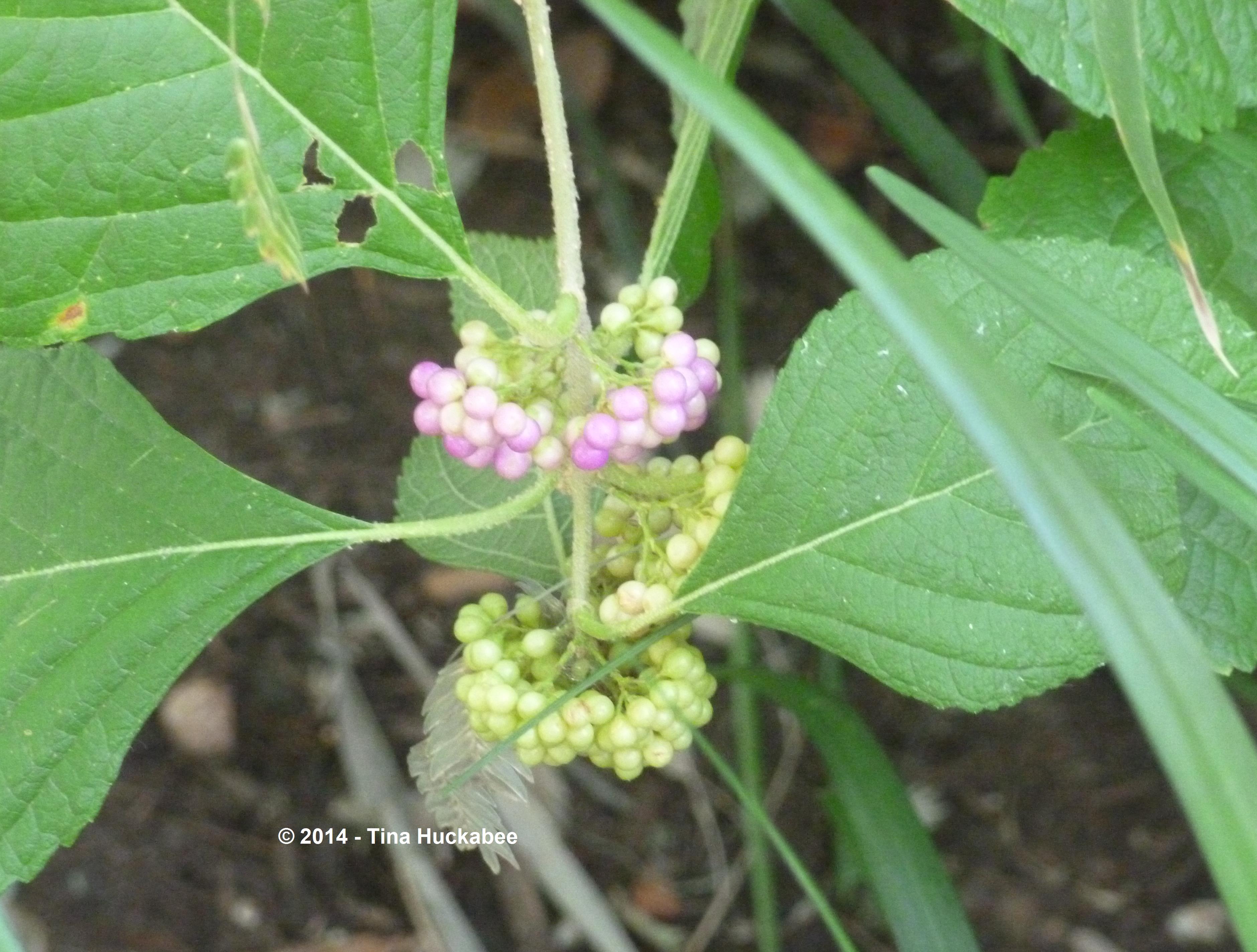
The berries begin their gradual transformation to the iconic purple sometime in August,

P1060749_cropped_3760x2847..new

P1060844_cropped_3171x3229..new

along the stems of the shrubs, cluster by cluster.

P1060848.new

And then–Shazamm!

P1070183.new

P1070244_cropped_2641x3059..new

P1070292.new

Those are some purple berries!

I confess that I get annoyed in those years when the birds snarf the berries within a week or two of the Great Purpling.  I wish they’d leave them, just a little longer, for me to enjoy.  But while I may long for and appreciate the beauty of the berries, the birds need the berries for sustenance.  I plant this beautiful native shrub for the birds–I can’t really complain when they do what I want them to do–eat the berries, fill their tummies, and spread Beautyberry joy throughout the land–or at least, throughout the neighborhood.

So goes a year in the life of an American Beautyberry.  It’s a desirable understory shrub–valuable for its landscape qualities and its importance for wildlife.  Plant one today!

IMGP0546.new