Lookin’ For Wildlife

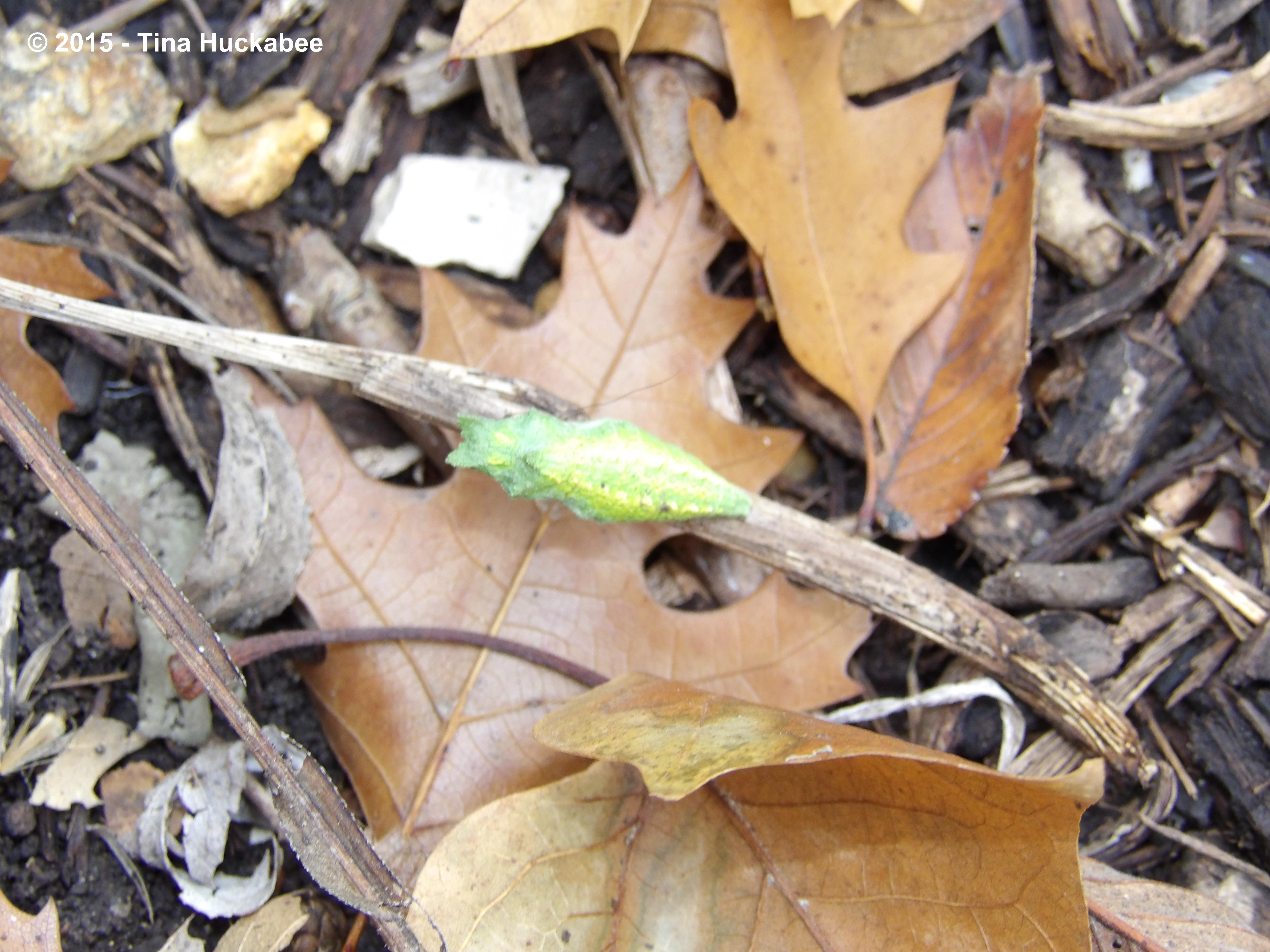
Happy 2015 to gardeners, garden bloggers, and especially to the residing and visiting wildlife who augment the beauty and meaning of our natural spaces.   This little cloaked Black Swallowtail, Papilio polyxenes, butterfly chrysalis,

IMGP3001.new

…is cozy for winter. Though he/she is cocooning and not flitting, flying, and nectaring, there’s still plenty of wildlife to observe and appreciate in our gardens. Wildlife is intrinsic to healthy gardens and astute gardeners realize that we are their advocates and partners in the work of healing the world.

Please join in next Wednesday, the first Wednesday of January and 2015, for Wildlife Wednesday. Photograph and write about the wildlife who  graced your gardens this past month. Celebrate the feathery, flighty, and furry, as well as the jumpy, crawly, and slithery you observed in your gardens.

Wildlife Wednesday.

Wednesday, January 7, 2015.

Inland Sea Oats (Chasmanthium latifolium): A Seasonal Look

I love this plant.

IMGP1340.new

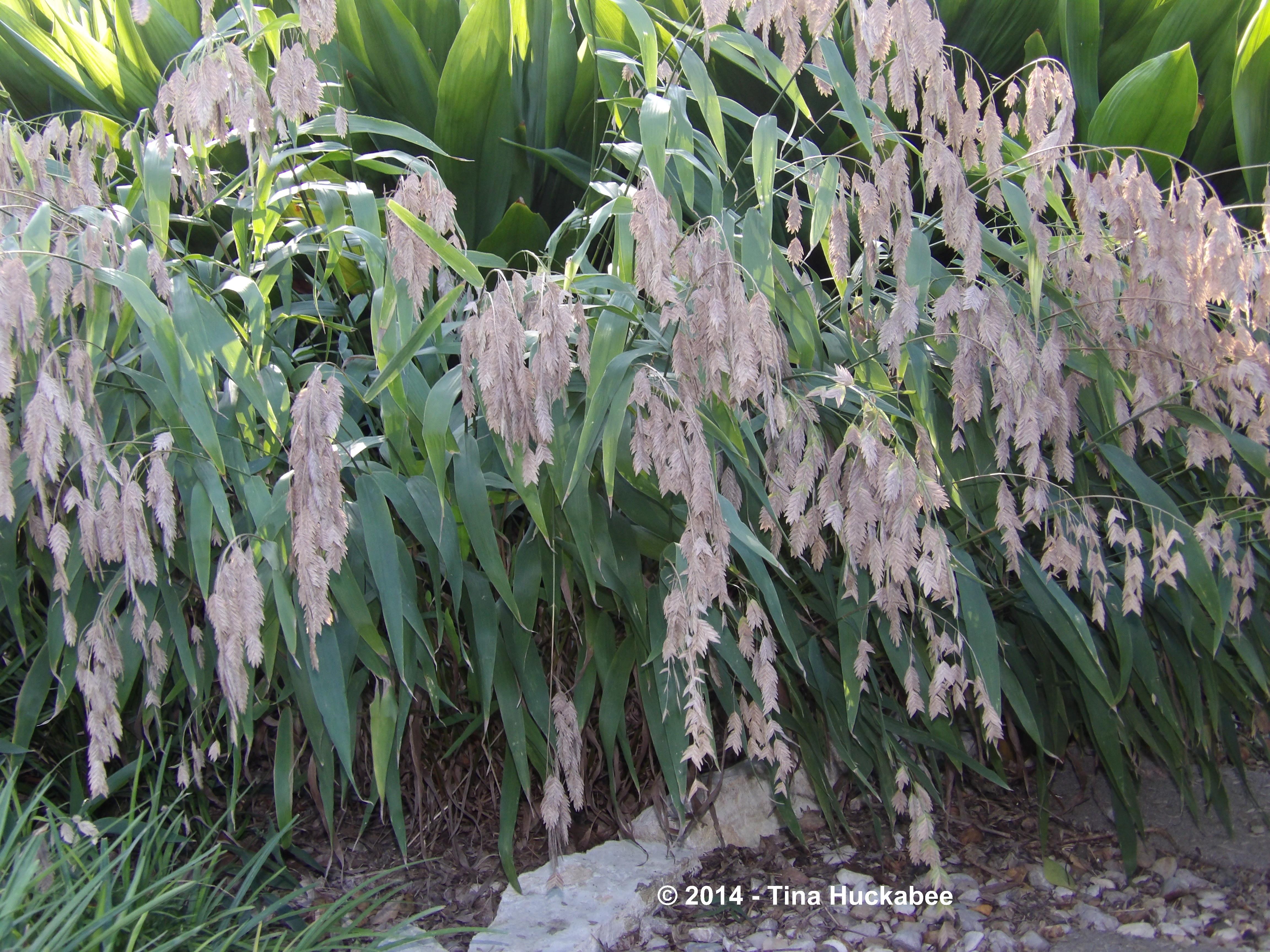
It’s a beautiful shade-loving grass, excellent for erosion control, prized by wildlife for cover and seeds, and a water-wise choice for gardeners.

IMGP1490.new

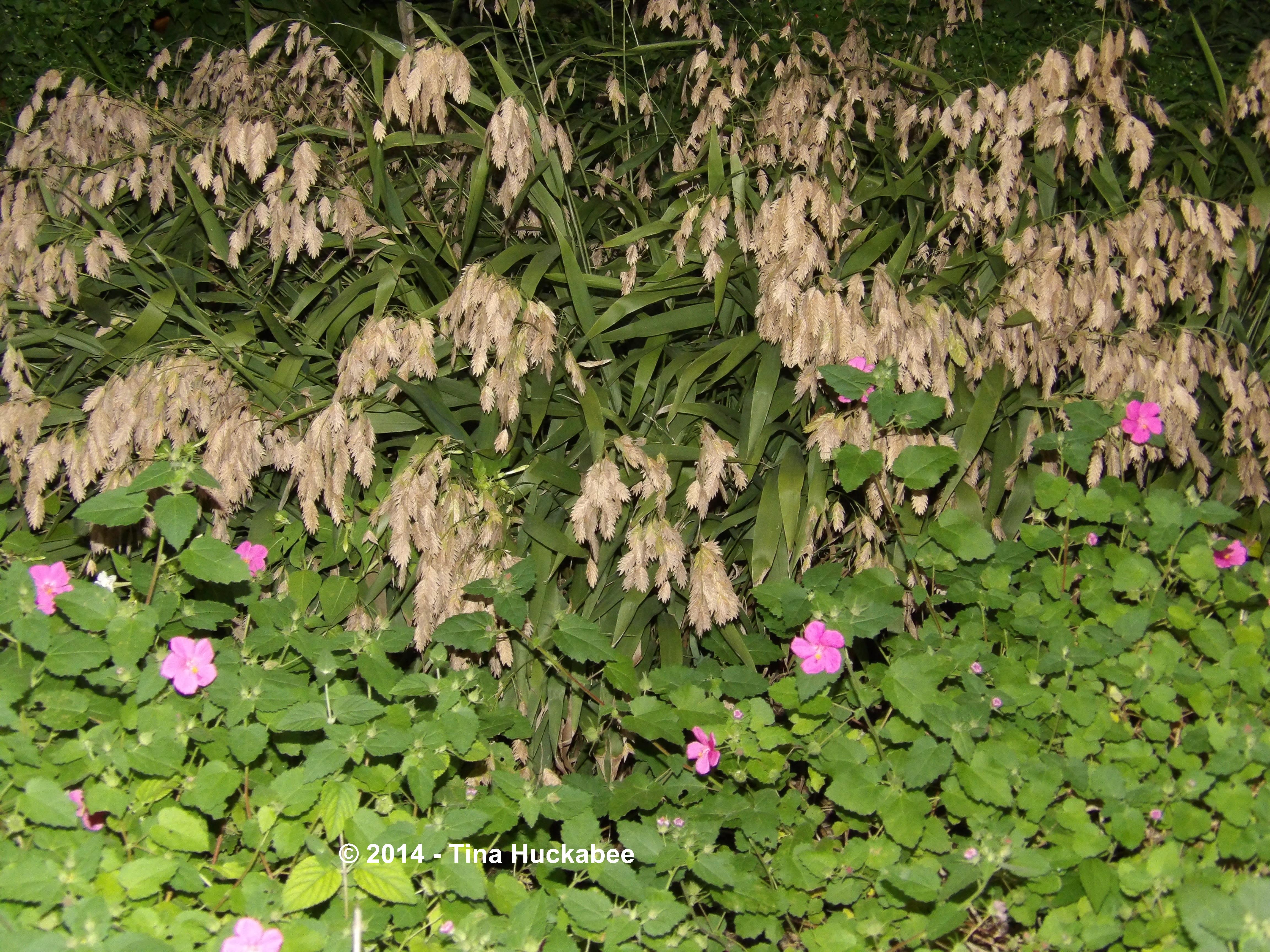
Inland Sea Oats, Chasmanthium latifolium, is the go-to plant for so many difficult garden situations.

IMGP2243.new

IMGP2410.new

P1040915.new

What’s not to love about that?

Native to a large swath of North America, this grass forms a dense cluster requiring little effort by gardeners throughout its growing season. Let’s take a look at how this valuable wildlife and landscape perennial performs throughout the year–A Seasonal Look for Inland Sea Oats.

Fresh, green stalks appear in late February or early March (in Austin, Texas) after winter dormancy and gardeners’ pruning shears.   Those fresh, verdant shoots will emerge later if you live and grow further north.

20120208_2_cropped_3862x2106..new

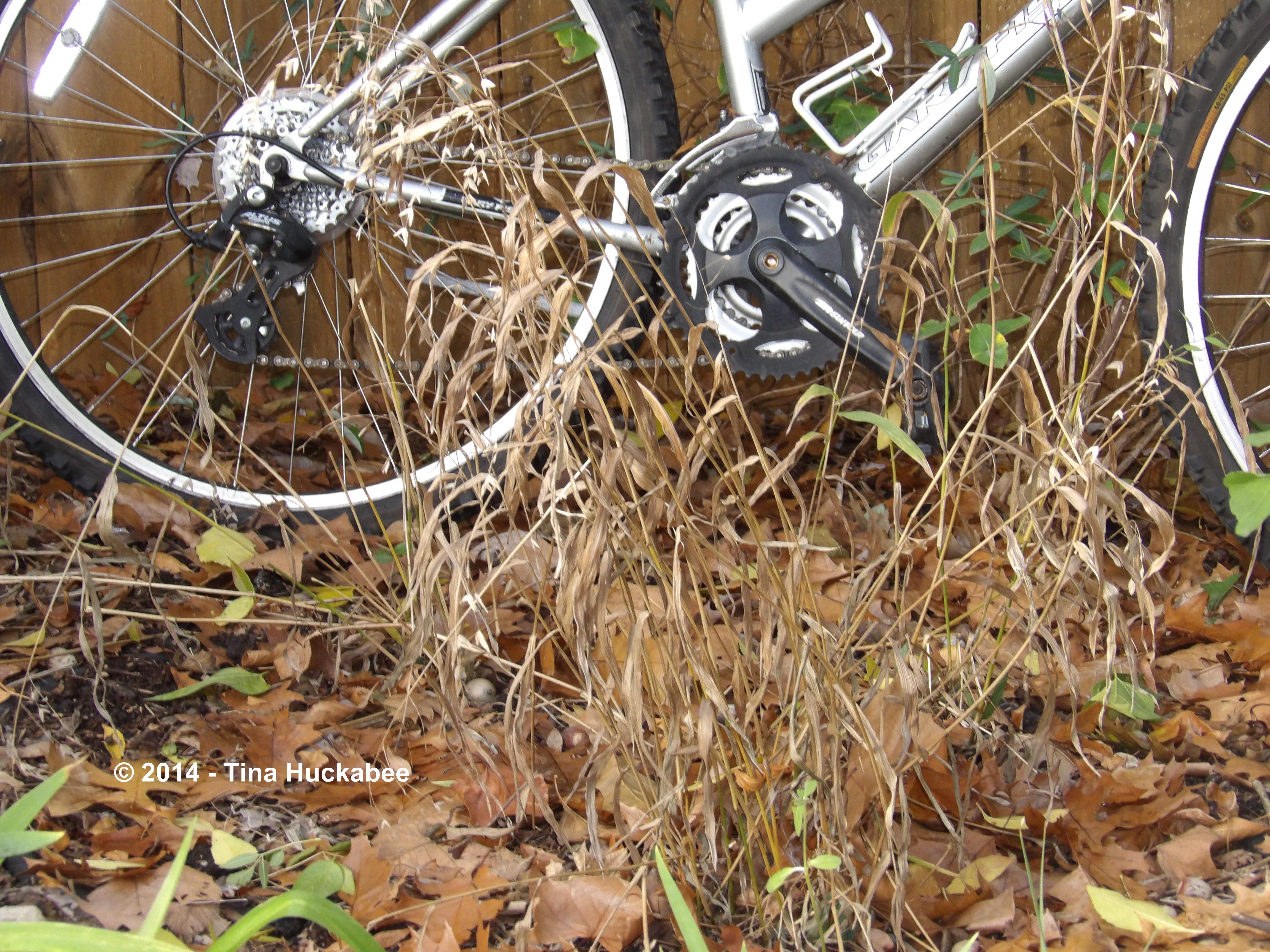
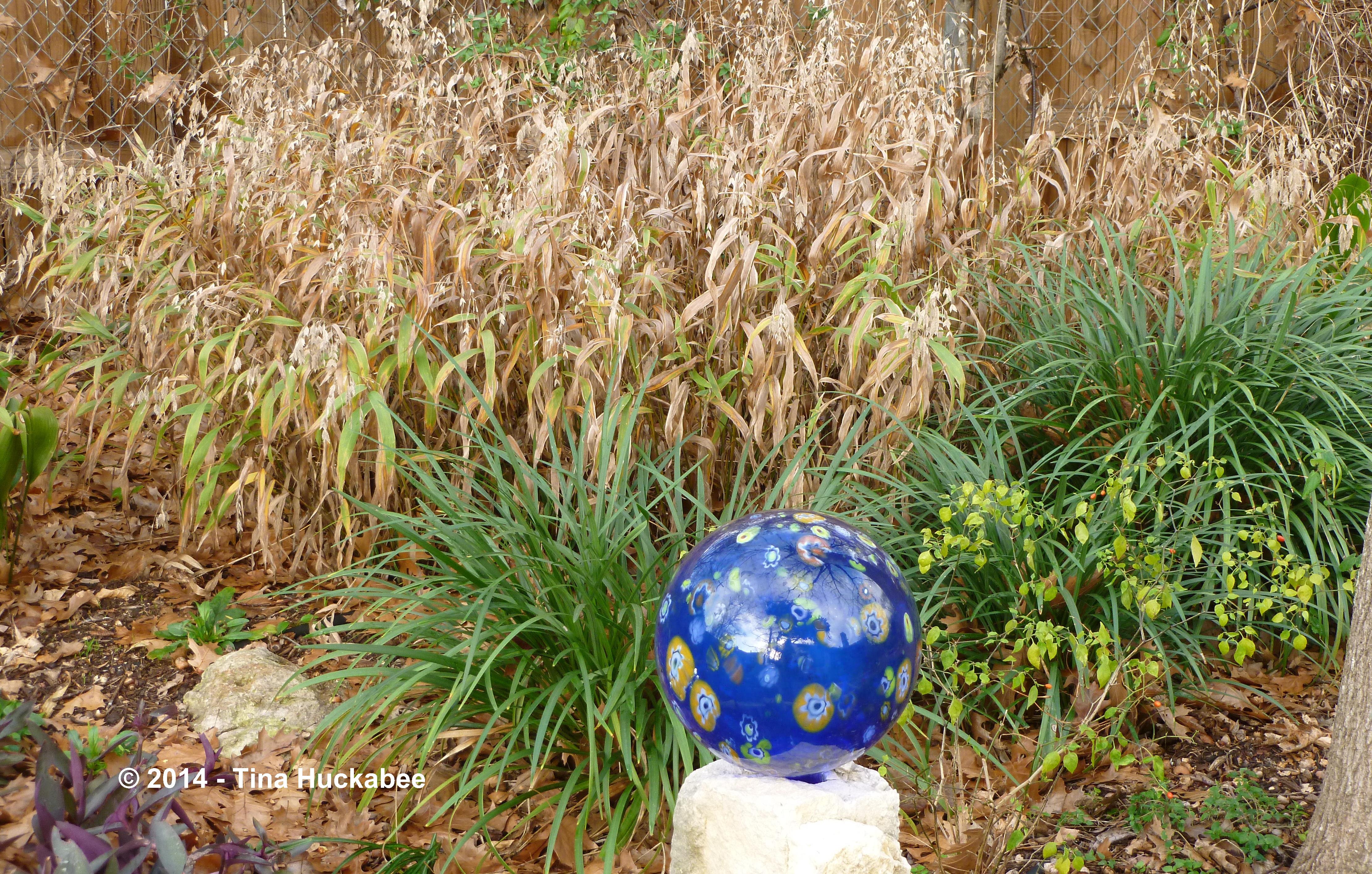
I usually wait until I see the bright green sprouts of new growth from the basal clump before I cut back the previous year’s growth.  However, one can prune before–it’s really a matter of aesthetics and available time. The dormant beige grass does get a bit tatty toward the latter part of winter so if that’s a problem for you whack away to the ground whenever the mood strikes! 20120202_16_cropped_4474x3299..newInland Sea Oats is attractive  in winter,  but it’s a good idea to plant it in companionship with evergreens,

IMGP1426.new IMGP2243.new

P1050608_cropped_2743x2364..new

…just because it’s nice to have some botanical interest while the Oats are dormant.

During the spring months,  Inland Sea Oats grow,

20120327_27_cropped_4465x3216..new

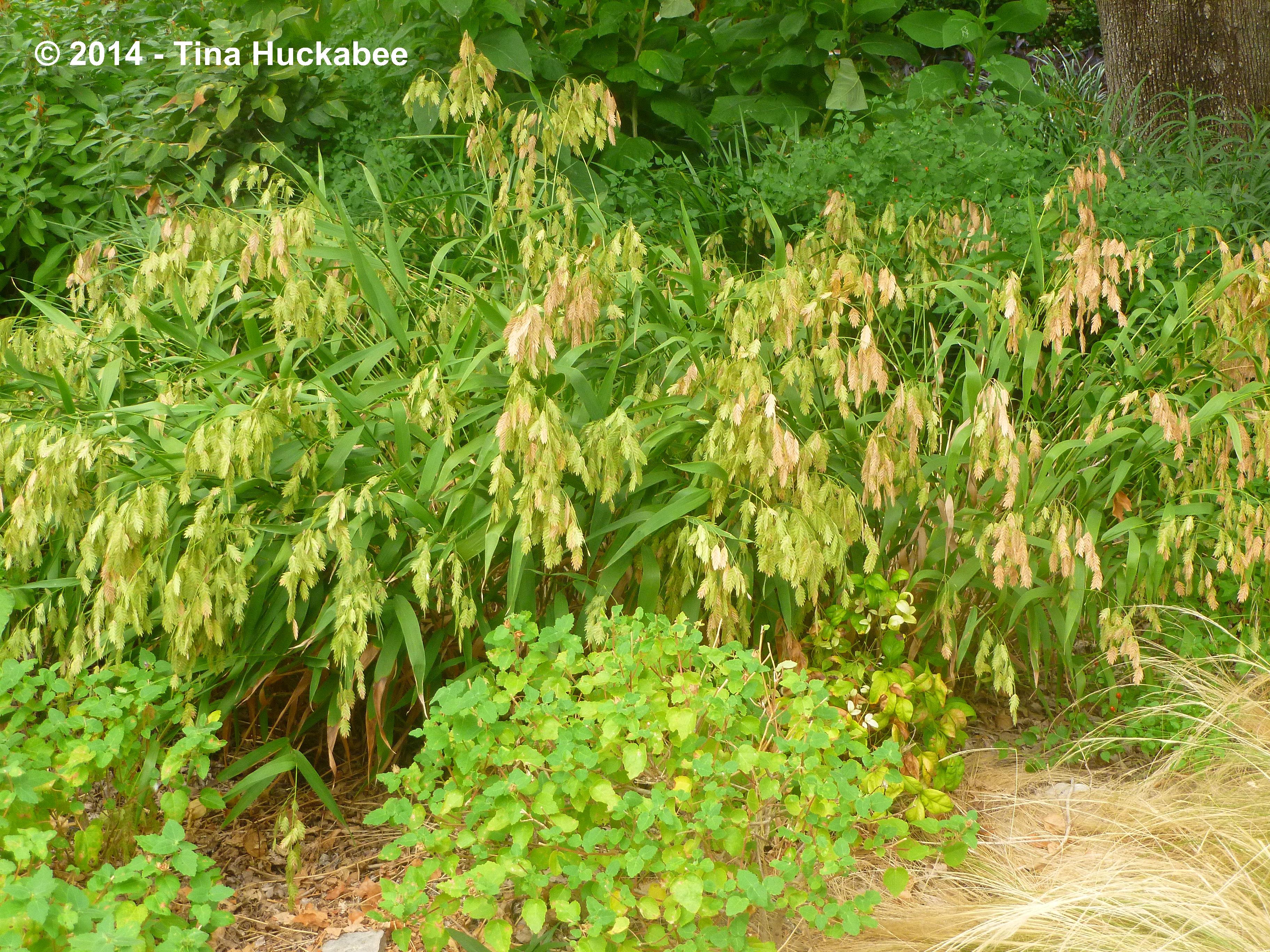
…and grow.  The foliage reaches two-three feet in height.   Seed heads develop in the late spring and early summer, adding texture and grace to the lovely grass foliage.

P1030985.new

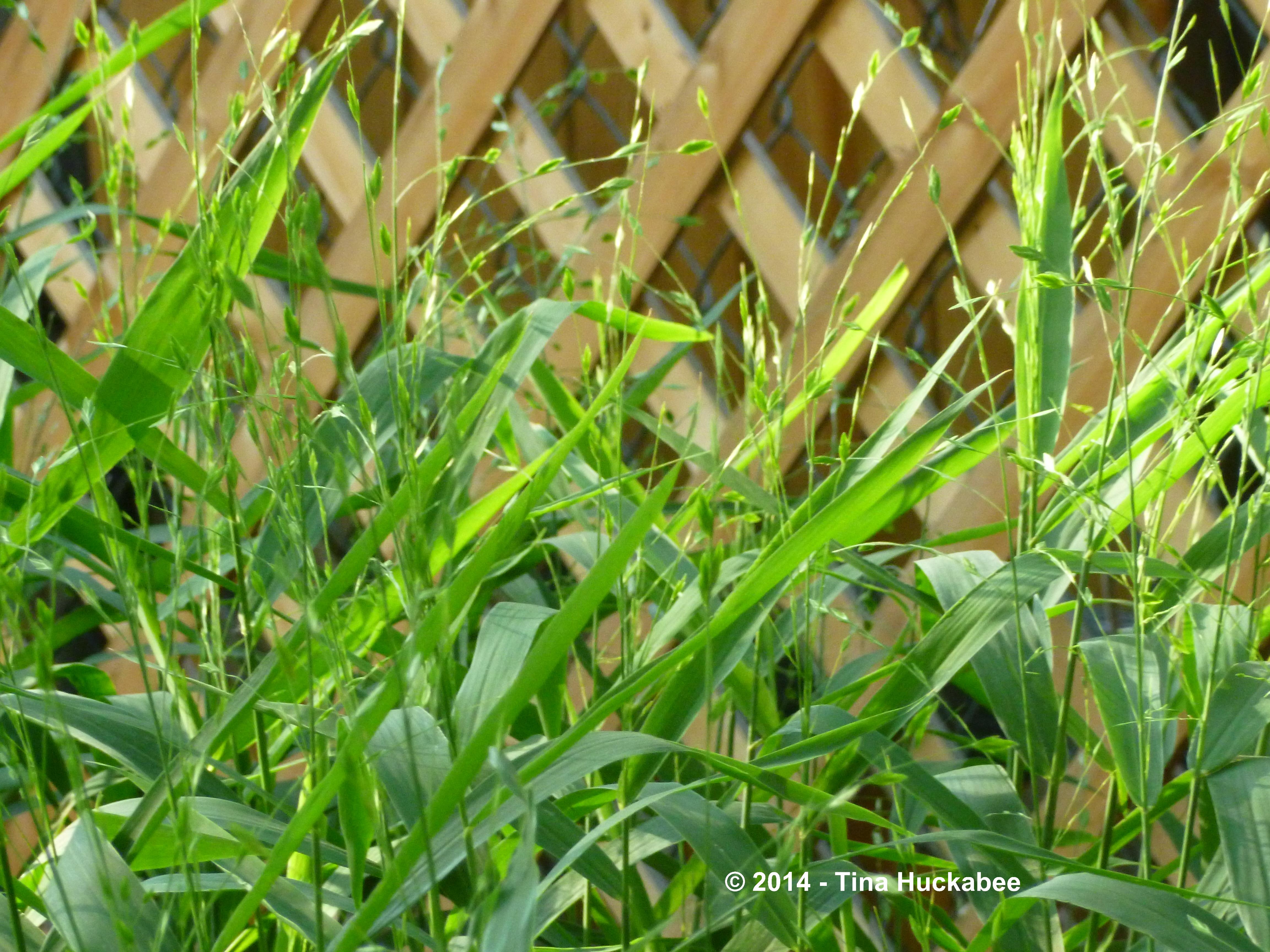
Through most of summer, the foliage and seeds share the same brilliant green coloring.

P1040254.new

P1040252.new

P1040248.new

P1040246.new

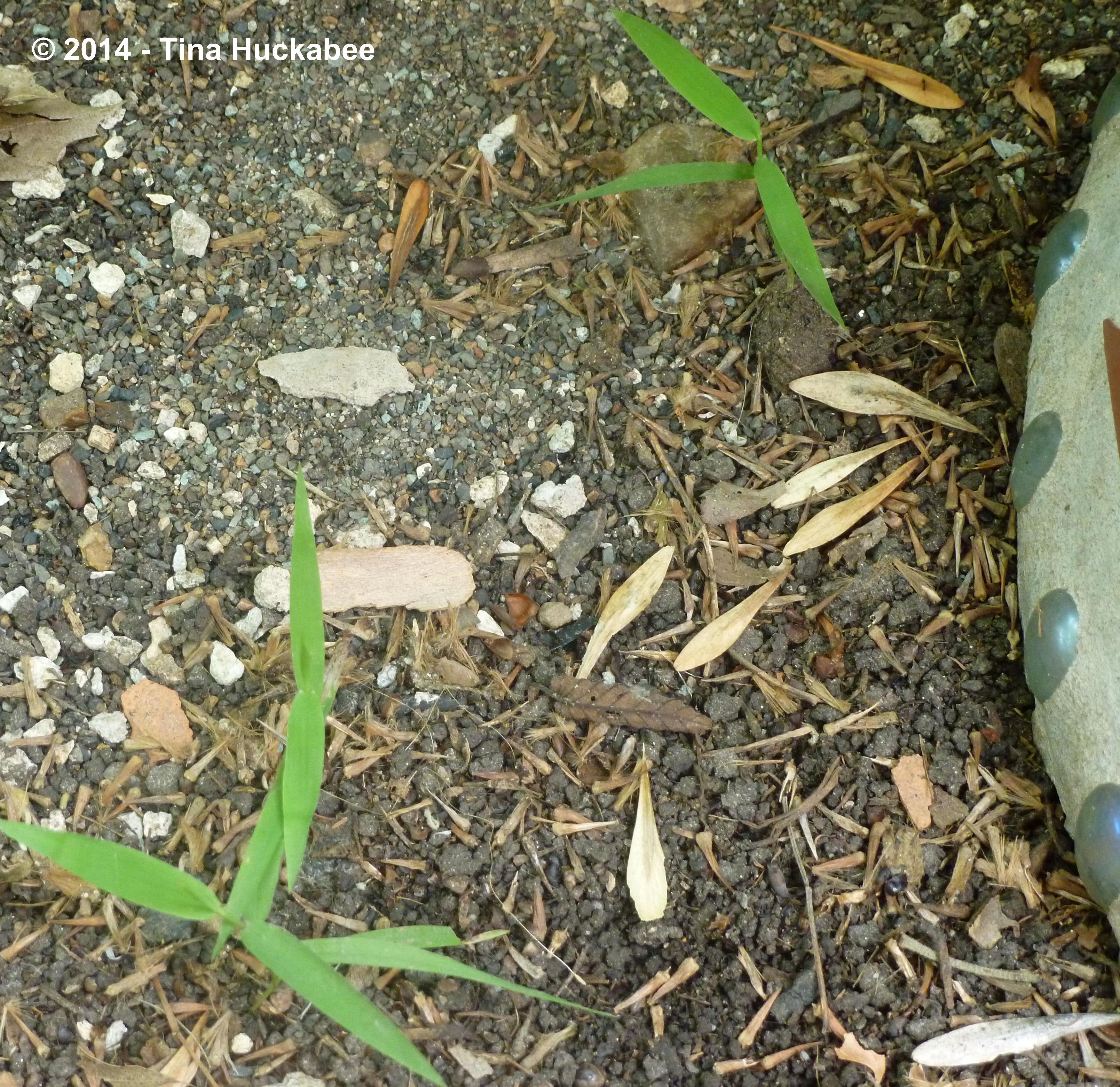
Elegant and lush during the hottest time of the year, Inland Sea Oats grass is drought-tolerant, requiring little irrigation.  In my gardens, soaker hoses lie along the root zone of most, though not all of my Inland Sea Oats groups and receive irrigation once or twice/month. I grow several groups that receive no irrigation at all and they endure our long, hot summers just fine.  In fact, it’s a greater problem if the Oats are over-watered. If watered regularly and year round, a greater percentage of Oats seeds will germinate, thus plenty of seedlings develop.  This might be desirable in a spot where immediate erosion control is desired, but probably not for most home garden situations.  I remove those seedlings which grow in unwanted places in my gardens,

20120521_6_cropped_3502x3400..new

…but I haven’t found the Inland Sea Oats particularly troublesome to control.   This grass tolerates a variety of soil types and transplants easily.   Just recently, I separated and transplanted a group of three from another mature cluster into a spot which gets little direct sun.

IMGP3236.new IMGP3238.new

Peeky looking for now, they’ll return with full vigor in spring.  Inland Sea Oats perform best in shade or part-shade.  They tend to fry when planted in full Texas sun, though in northern latitudes, the sun isn’t quite so unrelenting.  It’s good to have a lovely and reliable shade plant, so use it in those spots where many plants won’t thrive–you’ll always be happy with Oats in a shady spot.   Beth at Plant Postings in Wisconsin recently profiled Northern Sea Oats (another common name) for her “plant of the month” choice. It’s always interesting visiting a garden with a different climate and soil composition to review how a plant fares.  C. latifolium is as gorgeous and valuable in Wisconsin as it is here in Texas. It’s a fabulous grass for many places.

P1050485.new

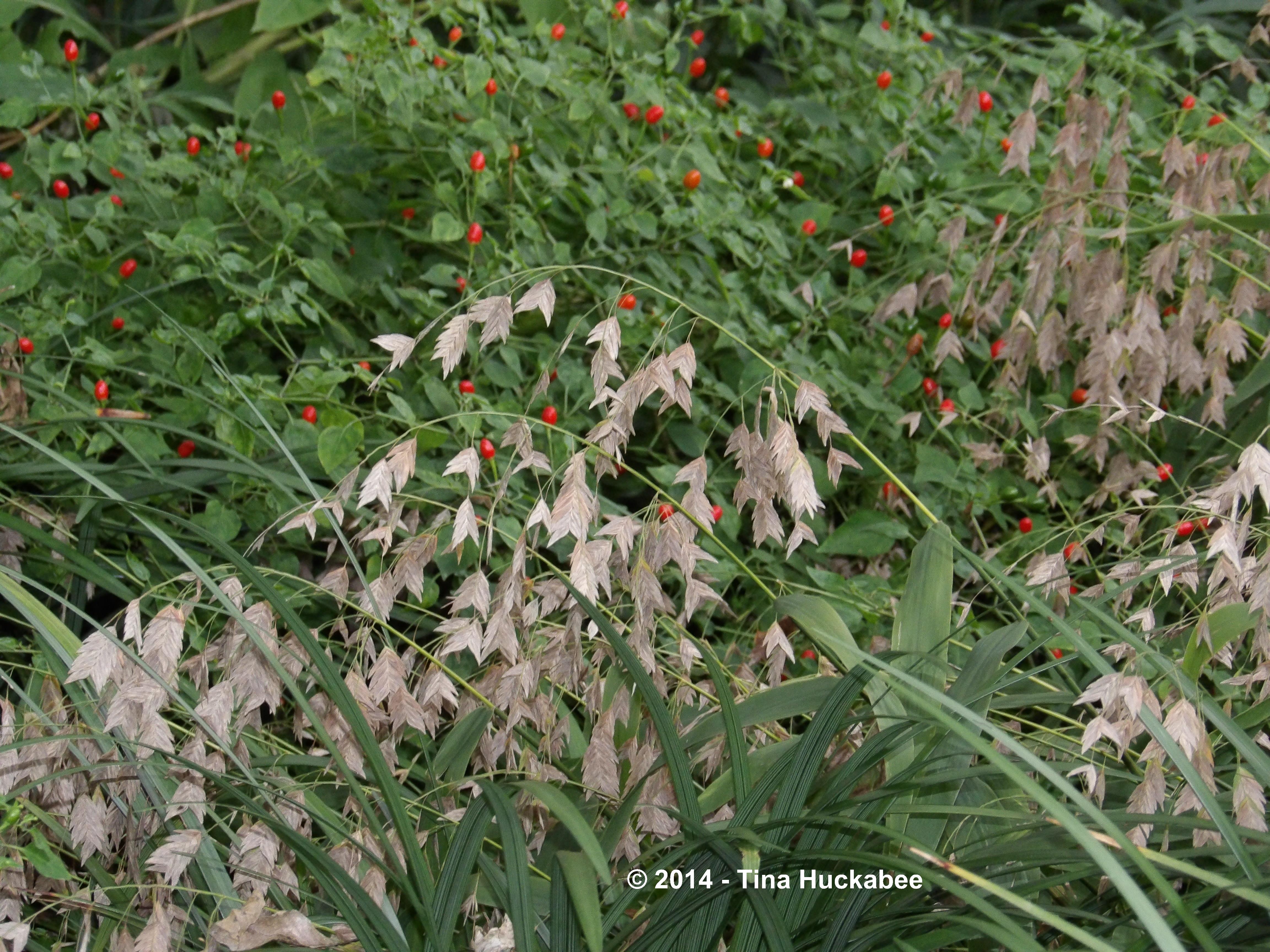
As summer wanes and the days shorten, the seeds of Inland Sea Oats transform from the their summer vivid green,P1040916.new

P1060298.new

P1060885.new


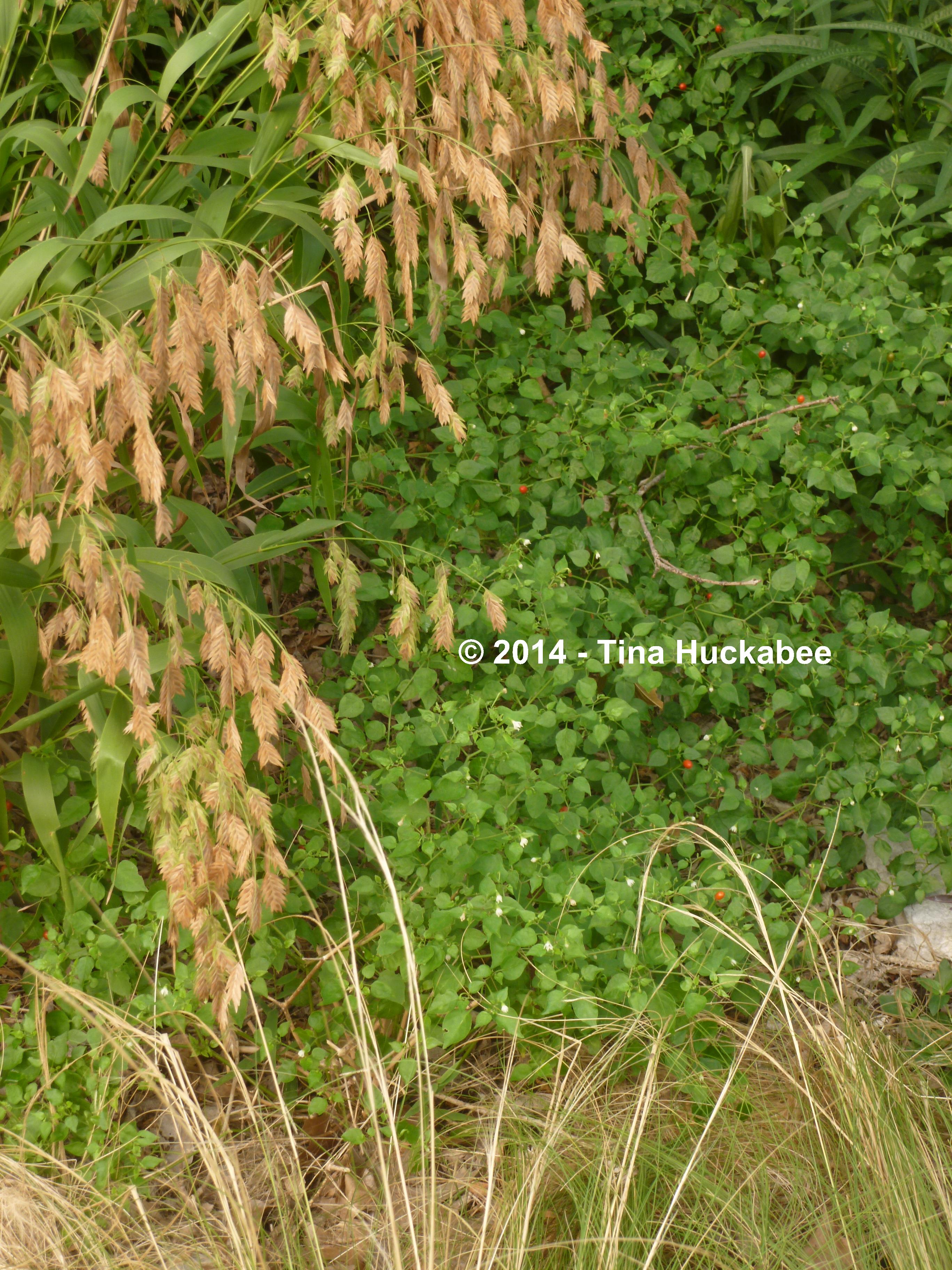
…to the autumn’s toasty beige.

P1060888.new


I think my favorite part of that transition is during the actual color change,

P1060884.new

–some seed heads are green and some are tan.  It reminds me of a lizard in mid-transformation from green to brown.  I really like that.

Once the seeds have morphed to autumn beige, Inland Sea Oats is even more striking in the garden.

P1060989.new

P1060997.new

P1060998.newP1070004.new

Until a hard freeze ushers winter dormancy, the foliage remains green, though some yellowing of individual blades of grass is normal. Also in late fall/early winter, the seeds begin dispersal, either because of critter munching or seeds dropping.  The seed heads end up as little inverted “Vs”s atop the grass blades.

IMGP2412.new

Inland Sea Oats has so many good qualities, besides its good looks and its water-wise and hardy nature.  Highly deer resistant,  (go eat something else, Bambi), it’s the host plant to several butterfly species.  The stalks with the seed heads are also quite pretty in flower arrangements.  I’m not one to pick flowers from my gardens for indoors, but on the rare occasions that I do, I always add some Inland Sea Oats to pop into the vase. Whether the seed heads are vivid green or tawny-tan, the stalks add beauty and interest to any flower arrangement.

So there you have it:  a year in the life of the Inland Sea Oats.  A grass that most gardeners (and their garden wildlife visitors) will enjoy.

Spring,

P1030121.new

P1050643.new


Summer,

20120521_8_cropped_4083x3198..new


Fall,

P1060999.new P1070187.new


Winter.

20120202_21_cropped_4442x2830..new


Foliage Day, December 2014

I’ve profiled foliage from my garden in the past, but I’m going to hang out with the Europeans today by joining with Christina and her beautiful blog,  Creating my own garden of the Hesperides, as she hostesses Garden Bloggers’ Foliage Day for December 2014.

Folks who’ve relocated to Austin, Texas have complained to me (usually in  whiny voices), there’s no fall color here.  That gets my “Texan” up a bit, because we do enjoy autumn color in Central Texas, at home and all around.

IMGP2938.new Lovely fall foliage.

IMGP2940.newThe color evolution happens later than in other parts of the Northern Hemisphere, closer to the actual start date for winter.  Additionally, the turn of foliage is gradual, beginning in November, peaking in late November/early December, and typically finishing by New Year’s Day.  It’s not a dramatic foliage show, loud and boisterous like you’d think something in Texas would be.  Instead, the change is gradual, subtle, and gentle.

IMGP2937.new

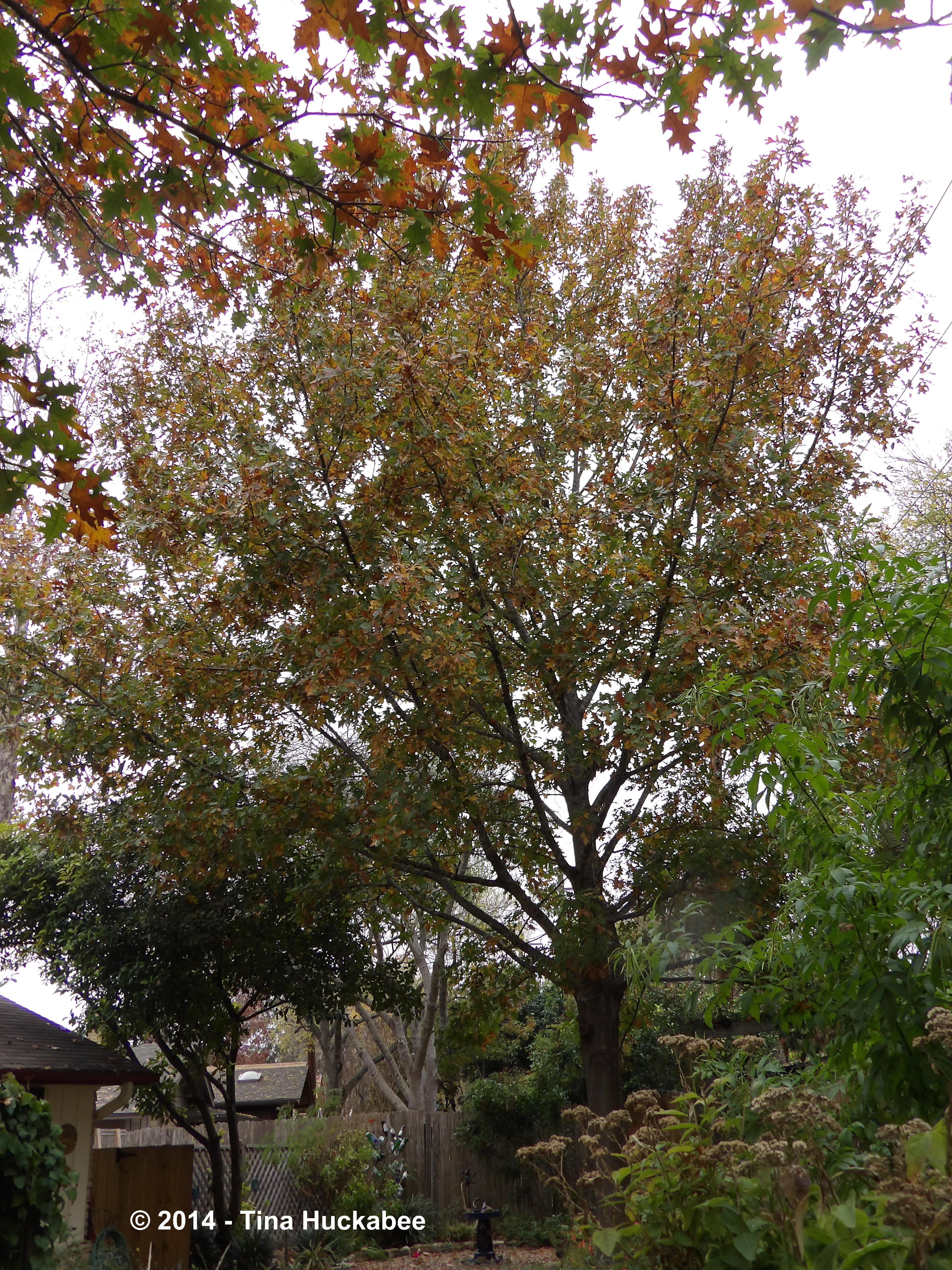
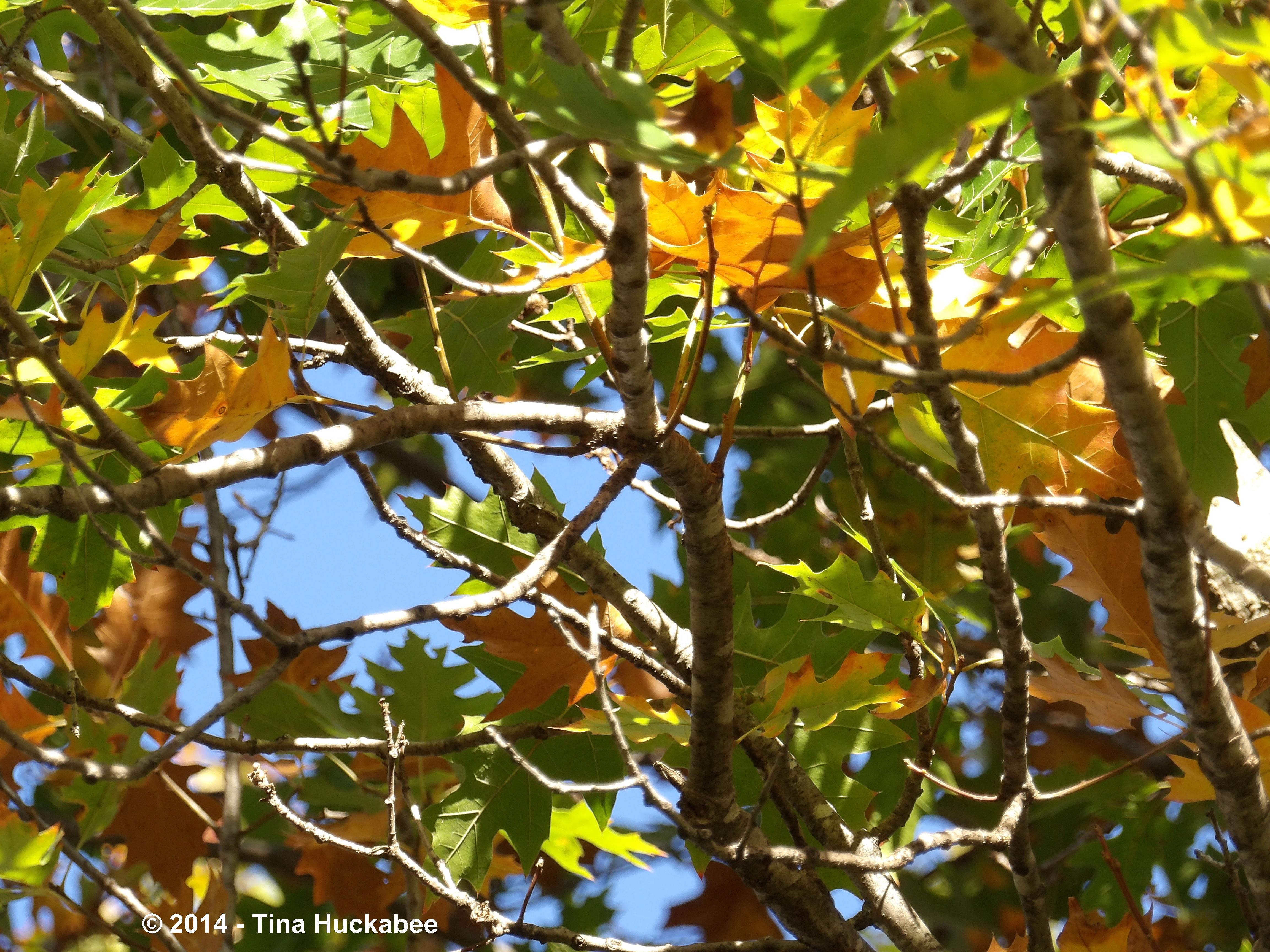
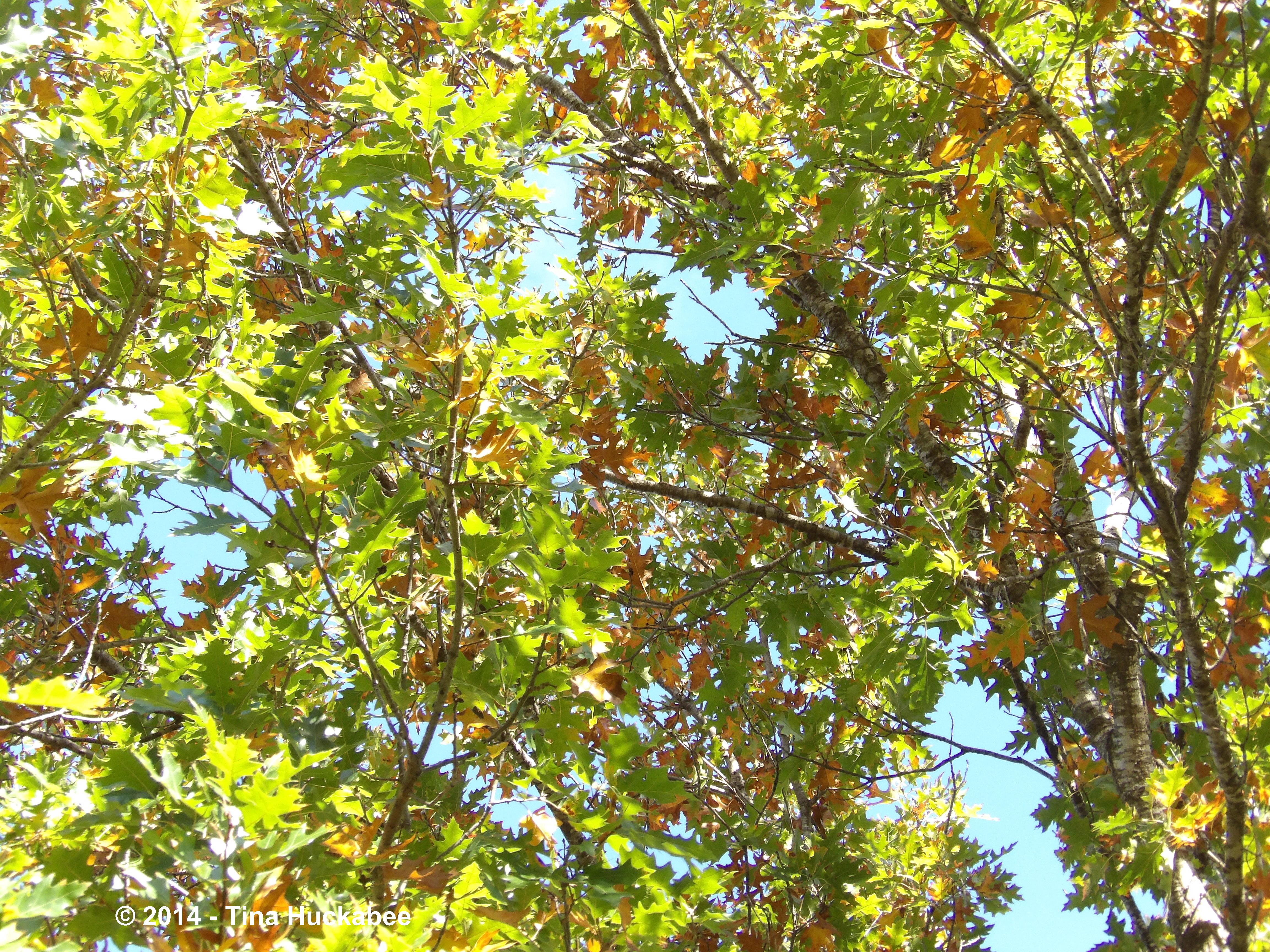
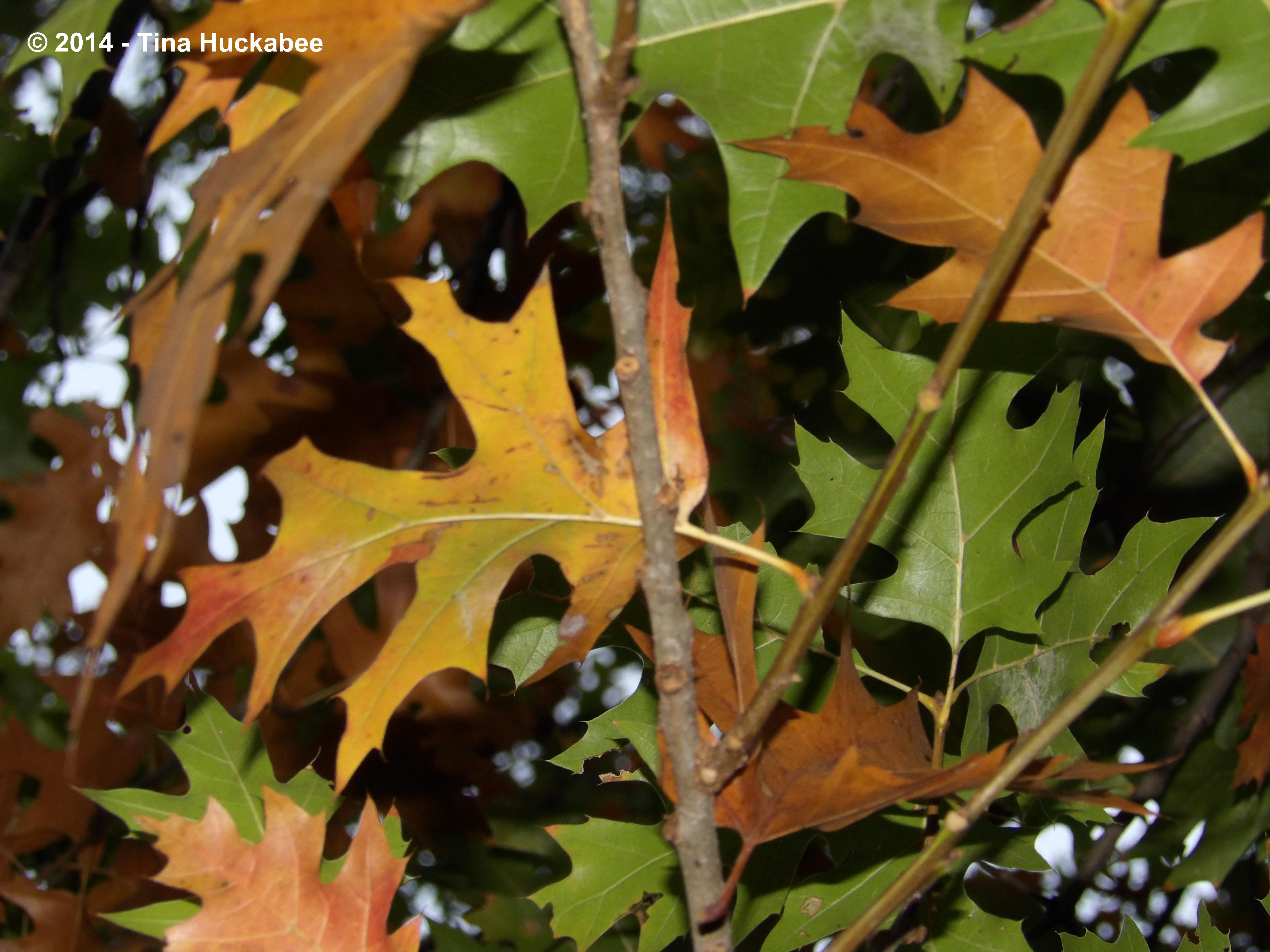
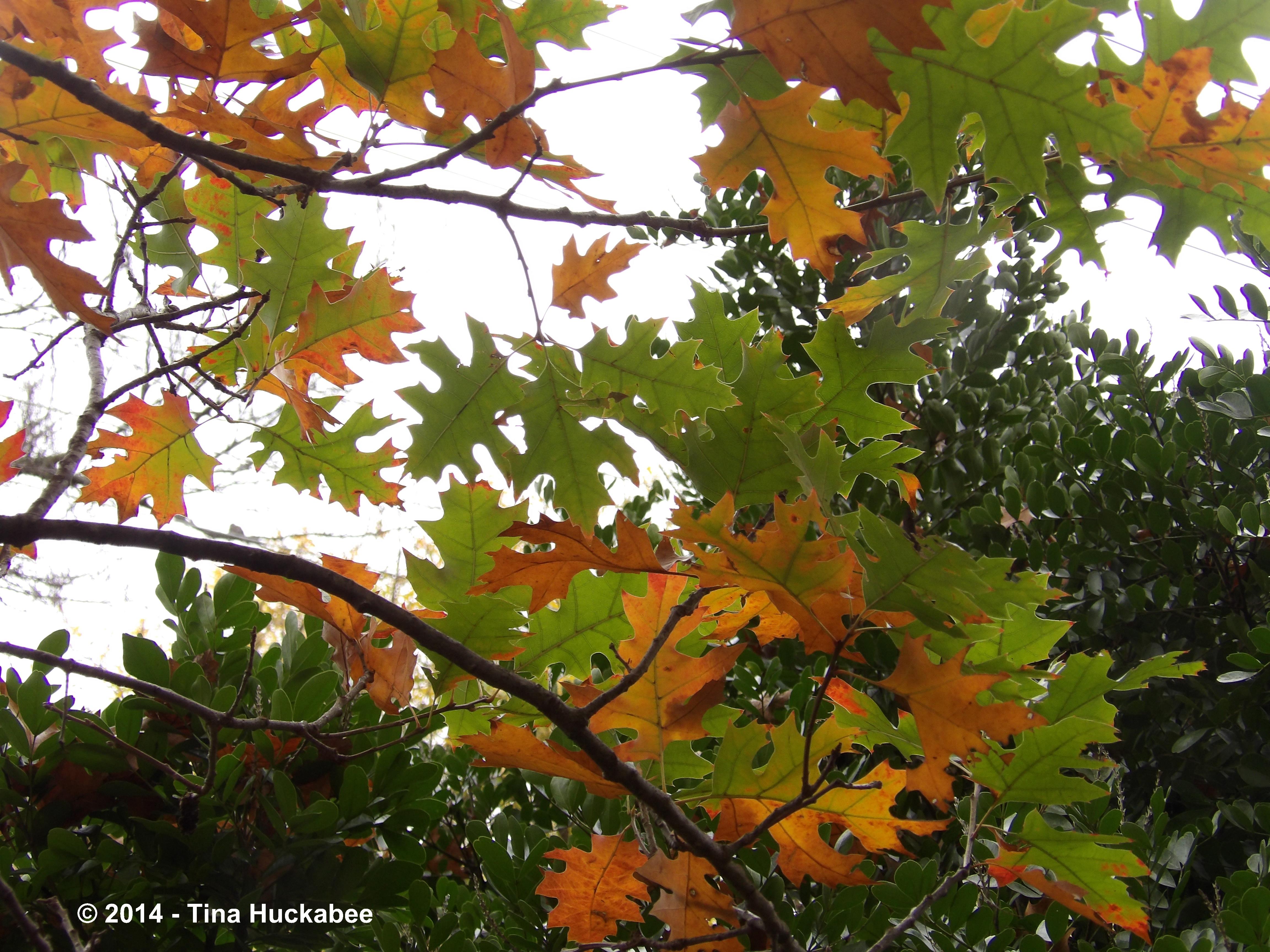
In my gardens, the two Shumard Oak, Quercus shumardii, trees extend their color change over many weeks.

IMGP3124.new IMGP3191.new

There are several species of oak trees in Texas that are commonly referred to as “Red” oak.  I’m guilty of misnaming the two major arboreal specimens in my back garden as “Red” oaks.  In fact, both are Shumard  Oaks.

IMGP3034.newIMGP3033.new

Gorgeous trees, I appreciate their many attributes: the shade they cast in summer, the cover and food provided for the many birds and other wildlife who visit or make these trees home, and the fall foliage mosaic (albeit in December) that these two trees provide.

IMGP2967.new

IMGP2968.new

IMGP3122.new

IMGP3139.new

IMGP3140.new

Another tree residing in my realm, though probably not one I would have planted on my own, is the American Sycamore, Plantanus occidentalis.IMGP3153.new

I don’t hate this tree, but it’s a bit water thirsty for Central Texas–it’s naturally found along stream banks and bottomlands which hold moisture from floods, and that’s not where my home resides.  The tree was established when I bought my home and I wouldn’t remove a mature tree, so it’s remained as a major shade source for my gardens. Aside from its struggles during dry periods (drought-stress causes defoliation), the leaves are thick and big.

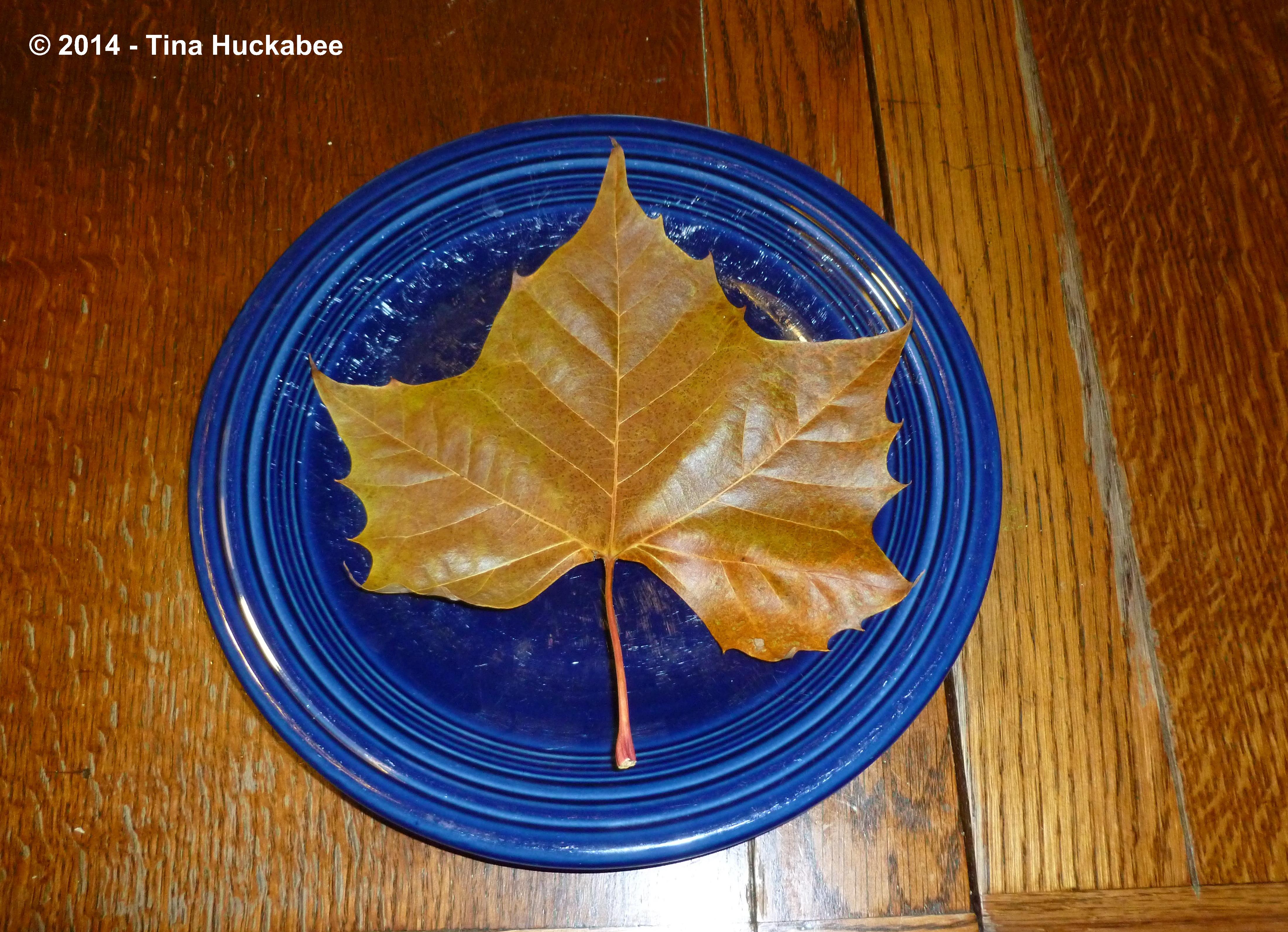
20111231_7_cropped_4401x3184..new Really big.

Awkward and especially messy in the garden, the leaves don’t break down in any reasonable amount of time. Here you can see a small sampling of Sycamore leaf litter.

IMGP3208.new There are points during late December when all that is visible in certain parts of my gardens are those dinner plate-sized leaves. A garden is not so nice when those huge leaves obscure everything in it!  Sycamore leaves are too large and thick to leave in the garden (for this OCD gardener), or to place, as is, into the compost.  They mat together, forming a barrier against moisture, thus slowing the composting process.

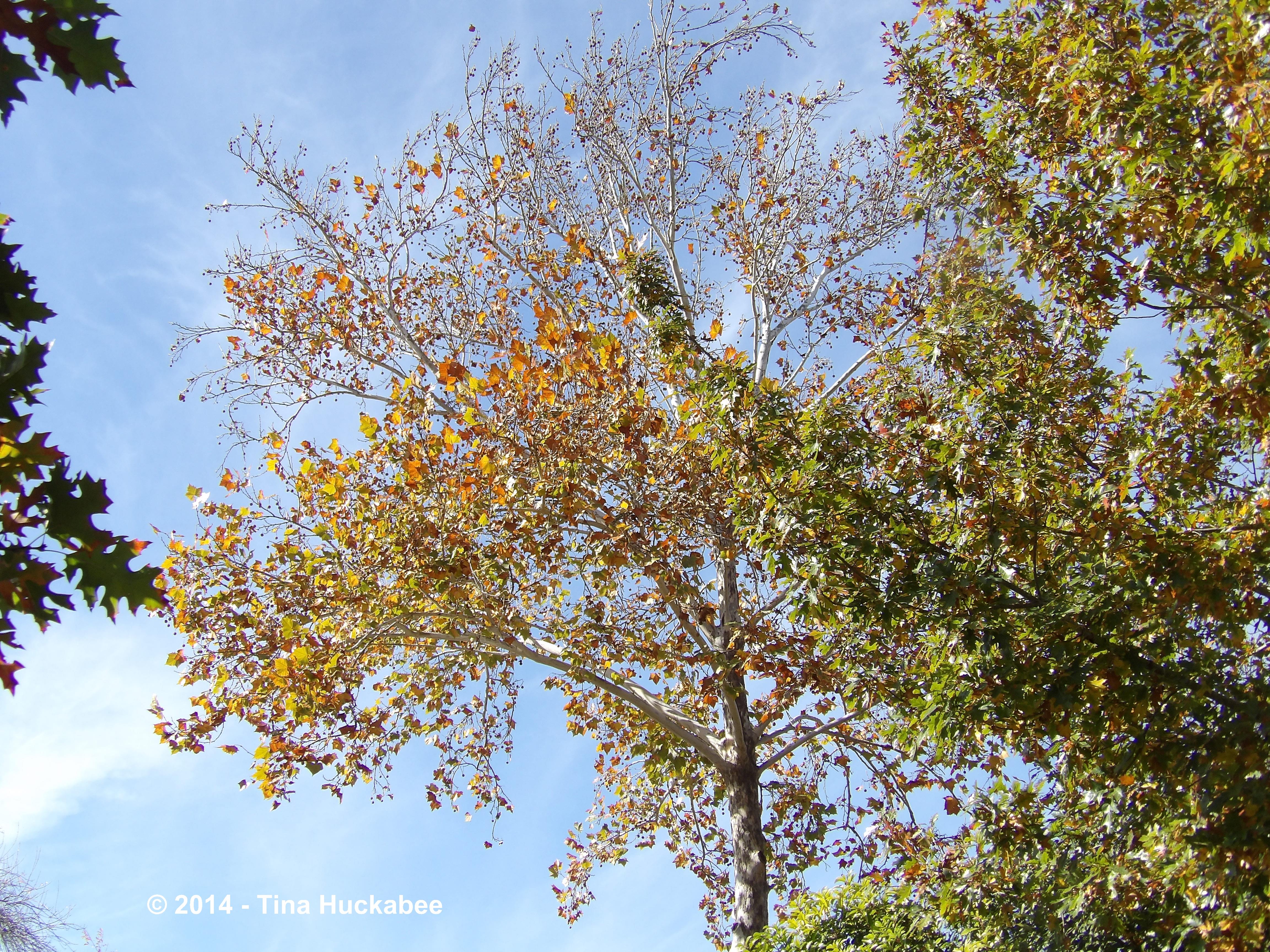
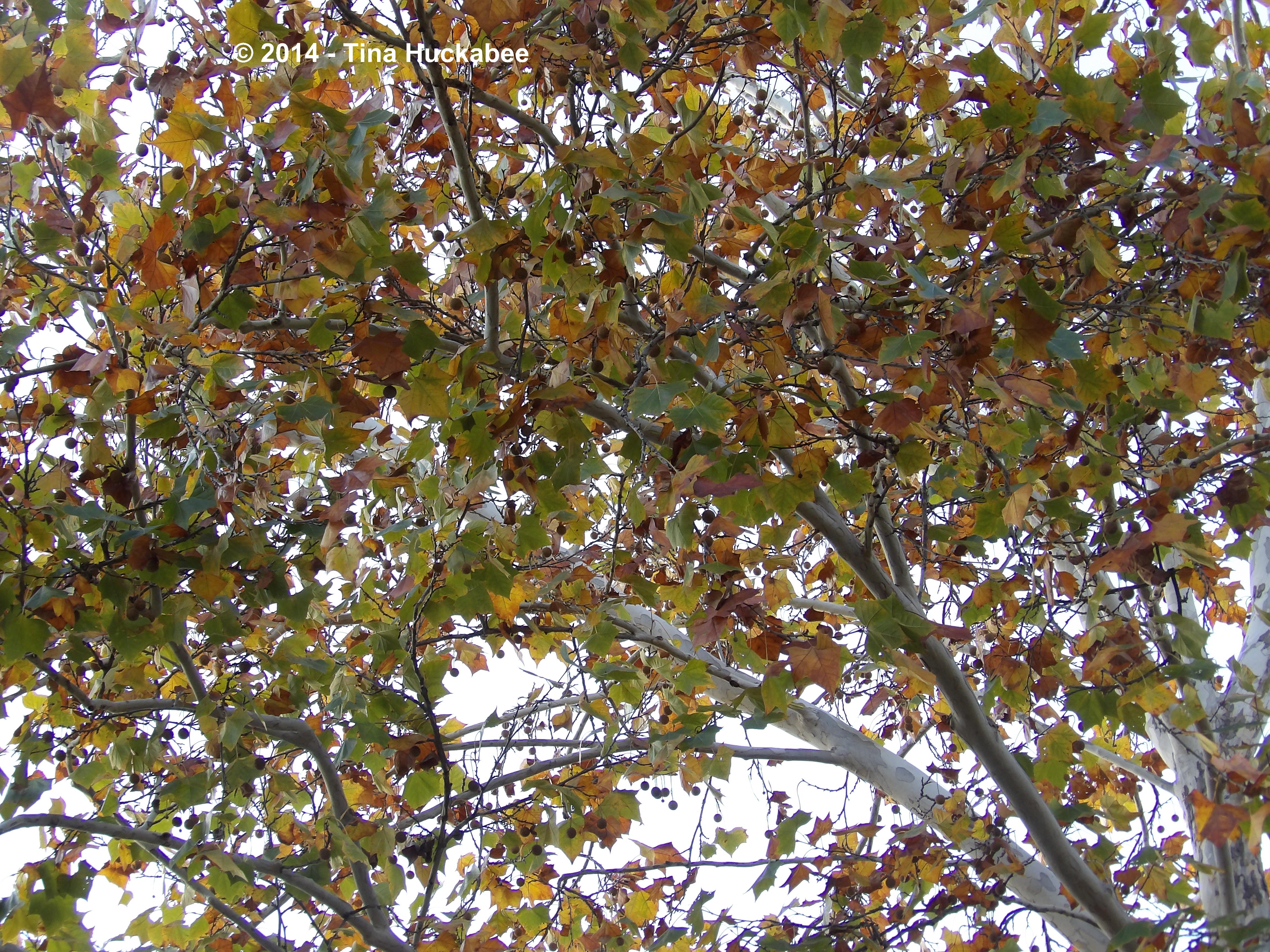
But in the tree, especially during the seasonal change,  Sycamore foliage is quite lovely.

IMGP3043.new IMGP3119.new

IMGP3118.new

Fluttering in the breeze, in an array of colors,

IMGP3155.new

IMGP3044.new…the leaves are resplendent against the blue sky.

Once the leaves drop and I’ve vacuumed and shredded them, dumped them directly into my compost bin and/or onto the gardens as mulch, the spherical seed pods decorate the tree throughout winter.  In spring, the seed balls explode, releasing feathery seeds aloft in the wind.

On the ground, foliage also makes its presence known.  Floating in the bird baths, IMGP3190.new


…accompanying the bee hives,

IMGP3152.new

…and blanketing the gardens and pathways.  Here, the brown oak leaves combine with the stalks of the Retama, Parkinsonia aculeata. 

IMGP2969.new

A bit upwards from the ground sit perennials which also sport fabulous foliage this GBFD. The colorful foliage of the Ruby Red Runner, Alternanthera hybrid, which is part of the biological filtering system of my pond, is eye-catching.IMGP3120.new

Tiny floral gomphrena puffs accompany the plum leaves. Ruby Red Runner provides foliage interest nearly year round; a hard freeze will render this plant dormant.

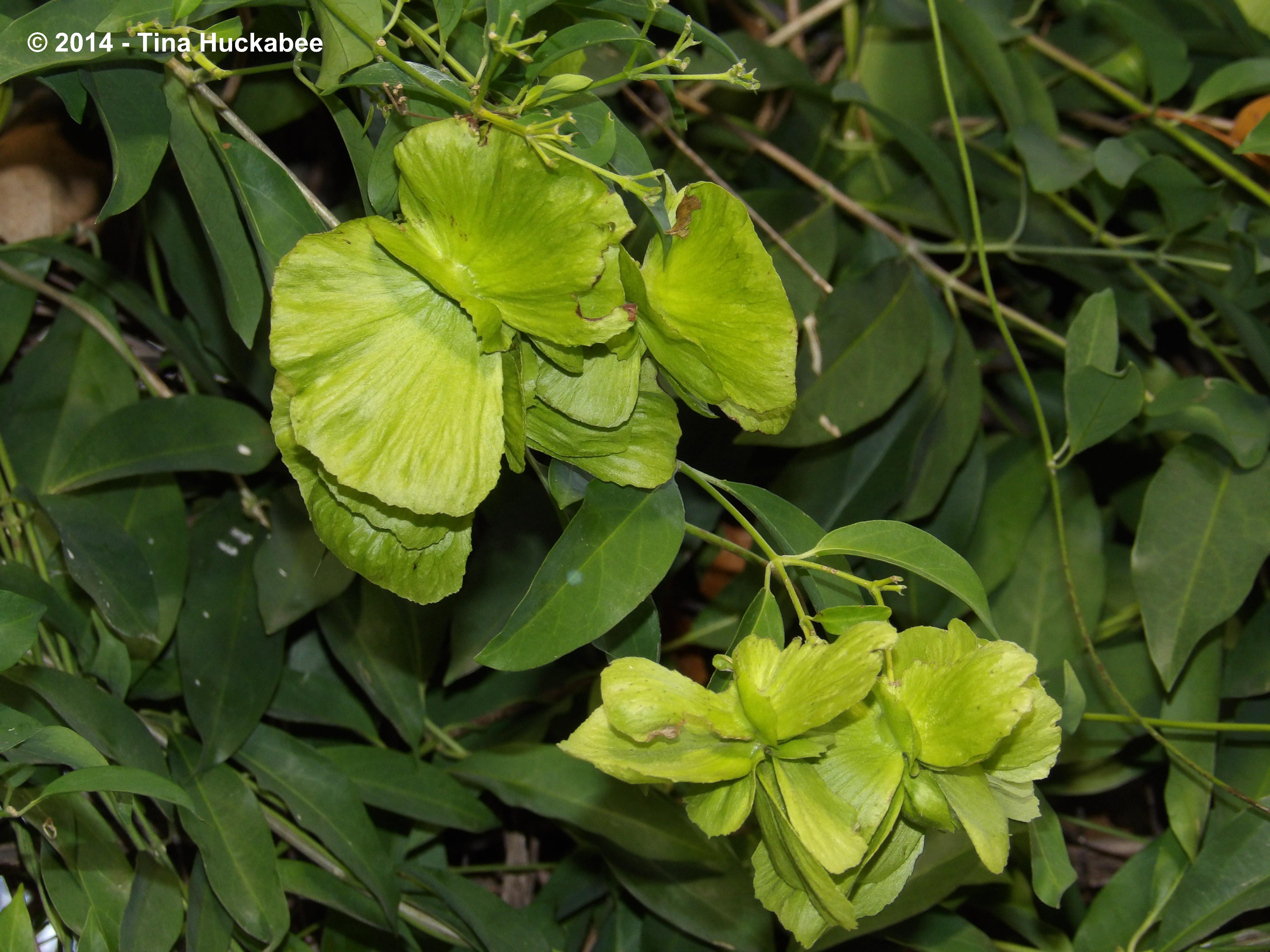
The Butterfly Vine, Mascagnia macroptera, showcases lush green foliage and fascinating chartreuse seed pods which resemble butterflies, thus the common name for this native plant to Mexico and southwards.

IMGP3125.new IMGP3126.new

Currently, none of the seed pods are the rusty-brown they eventually become, but it’s quite a picture when there are differently pigmented “butterflies” resting on the vine.

Firebush, Hamelia patens. speckles after frost damage to its foliage,

IMGP3143.new IMGP3144.new

…but  I like it.  No blooms remain on this heat-loving, native-to-Florida.  Once we have a killing freeze, it will be dormant until late spring.

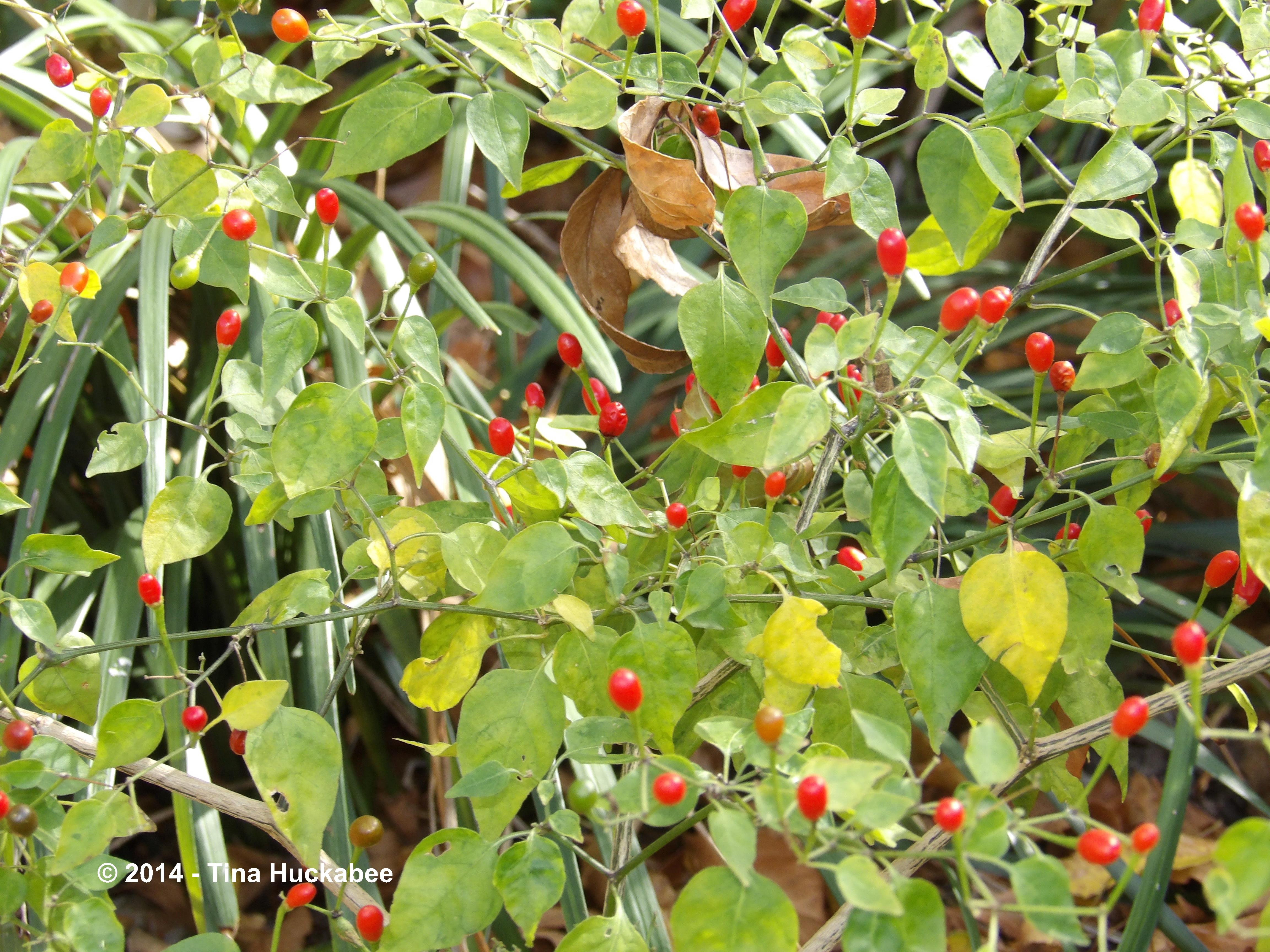
Lastly, the Chile Pequin, Capsicum annuum (var. glabriusculum) adds major hotness to the garden.

IMGP3146.new

Pepper hotness, that is.  A beautiful, shade-tolerant and deciduous (in most winters) shrub, many birds (and my husband) favor these chile peppers, the only truly native chile pepper in Texas.  Here, it’s  accompanied by Yarrow, Achillea millefolium.

IMGP3148.new

Such a lovely plant for this time of year.  Who says we don’t have seasonal foliage color in Texas??

For foliage celebrations from around the world, visit Creating my own garden of the Hesperides for GBFD!

IMGP3183.new