Took Care of THAT Squirrel!

Every winter, we clean out the Eastern Screech-Owl house in preparation for the upcoming brood season. This year, when The Husband took down the owl house for its yearly cleaning, he decided to quickly cobble together another because the one used for a couple of years was worse for wear. Screech Owl houses are easy to build.

We installed the newly constructed house and waited to hear the tell-tale trill of a male Eastern Screech-Owl, Megascops asio, letting his partner know that he has, indeed, found a lovely home in which to raise a family.

I heard him trill one evening in December, just after sundown, but only a few times since.  I also haven’t spotted an owl head poking out of the hole at sundown–which typically happens once the couple settles in for breeding and brooding and it’s a pretty cute thing to see.  No observable owl isn’t  that unusual–Screech Owls, while comfortable in and adapted to urban settings, are shy and elusive, although I usually see and hear more activity than has been the casethis year.

I wasn’t particularly concerned, until I saw this:

IMGP4500.new

He or she moved in and has been quite comfy squatting in another’s home this winter.  I forgot this might happen–usually it’s a young squirrel and I’ve engaged in this battle of wills before: a fuzzy-tailed rodent moves into the house, cranky gardener chases him off and round it goes until the squirrel moves out and the owls move in. This year though, Squirrel Nut-twerp (SN) has been quite the recalcitrant squatter.  On and off throughout January and February, SN has outsmarted me.   I placed an old pillowcase early in the mornings,

IMGP4655.new

…that I’d remove at night.  I didn’t do this everyday, but as often as I felt like I needed to in my quest to dissuade SN from his desired digs.

I’d think to myself: Ah ha, e’s gone!  Victory is mine!!  Then he’d be back in the house, looking cute and if I might suggest, just a little smug, at besting me.

IMGP4501.new

Last Thursday, as the sun sank to the west and as the coldest night of the year commenced, SN was in the brood box, looking askance at me, clearly wondering what I was going to do.  You gonna chase me out again, lady? The forecast predicted rain, freezing temperatures and ice.  He looked at me, I looked at him. I capitulated. OK, Bub. You can stay there for the night.  I didn’t have the heart to chase him off. Truthfully, I’d given up on hosting an owl family this year.  I’ve seen and heard so little from the neighborhood owls, that I assumed the couple moved on to a less squirrelly location. My adored owls and I were vanquished. Squirrel Nut-twerp was the victor in the annual maneuvering for desirable tree trunk real estate.

Just after sundown on Saturday evening, I stood outside, looked up in disappointment once again at the hole being devoid of  a fuzzy owl face and I turned away.  Feeling quite disconsolate and sorry for myself, believing with full conviction of my abject failure as a wildlife gardener, I morosely stared off into the opposite distance from the brood box, appreciating the form of budding trees against a darkening sky.  After a minute (probably less), I turned around and saw two perched owls in the tree–the female (the larger of the two), whinnied in the way of Eastern Screech-Owls and her mate, who sat just beyond her, on a different branch, quiet and probably annoyed at me.  We regarded each other, though I’m sure they saw me more clearly than I saw them.  One swooped off, the other followed, both in complete silence.

Happy, happy wildlife gardener am I!

Sunday morning, I noticed Squirrel Nut-twerp nosing around the brood box.  First, he climbed on top, timorously looking in from above.  Then he scampered to the limb in front of the box, poking his nose close to, but not into, the hole–then withdrawing in a hurry.

Hmmm, that’s a good sign that something scary resides in the box.

Further circumstantial evidence of inhabiting owls presented when I stepped outside a little later to the raucous  kerfuffle from 10 birds, perched in the tree, pointedly cawing at the brood box. Wrens, a mockingbird, blue jays all in noisy chorus,  protesting…something. New neighbors? That’s one of the sure signs of Screech-Owl inhabitants:  other birds, as well as their offspring,  are potential meals of the owls and once owls move in to the brood house or tree hole, those prey make known their displeasure about the predators. As a friend of mine said:  there’s nothing like some killers moving in to galvanize the neighbors into action.  I understand the birds’ trepidation. While I cheer about the rats and mice hunted by the Screech and Great Horned Owls, as well as the various hawks in the neighborhood, I lament the loss of fledglings and migrating songbirds who will, undoubtedly also be prey.

Such is nature.

Sunday afternoon, absolute proof of the Screech couple and their choice of house.

IMGP5915.new

Isn’t she adorable, even if she looks a little grumpy?    I don’t know where Dad Owl is, close by more than likely, but I haven’t spotted him yet.

I’d like to think that I helped my owl buddies by annoying Squirrel Nut-twerp to the point that she moved on, but I suspect it was all the owls’ doing.

IMGP5918.new

Tree Following, March 2015: What’s In A Name

Thanking Lucy at Loose and Leafy for hosting Tree Following, there’s nothing new to report about the physical state of my lovely Retama, Parkinsonia aculeata.   February proved chilly, though not in any record-breaking way like so much of the United States, but cold enough that the Retama still sleeps.

IMGP5864.new

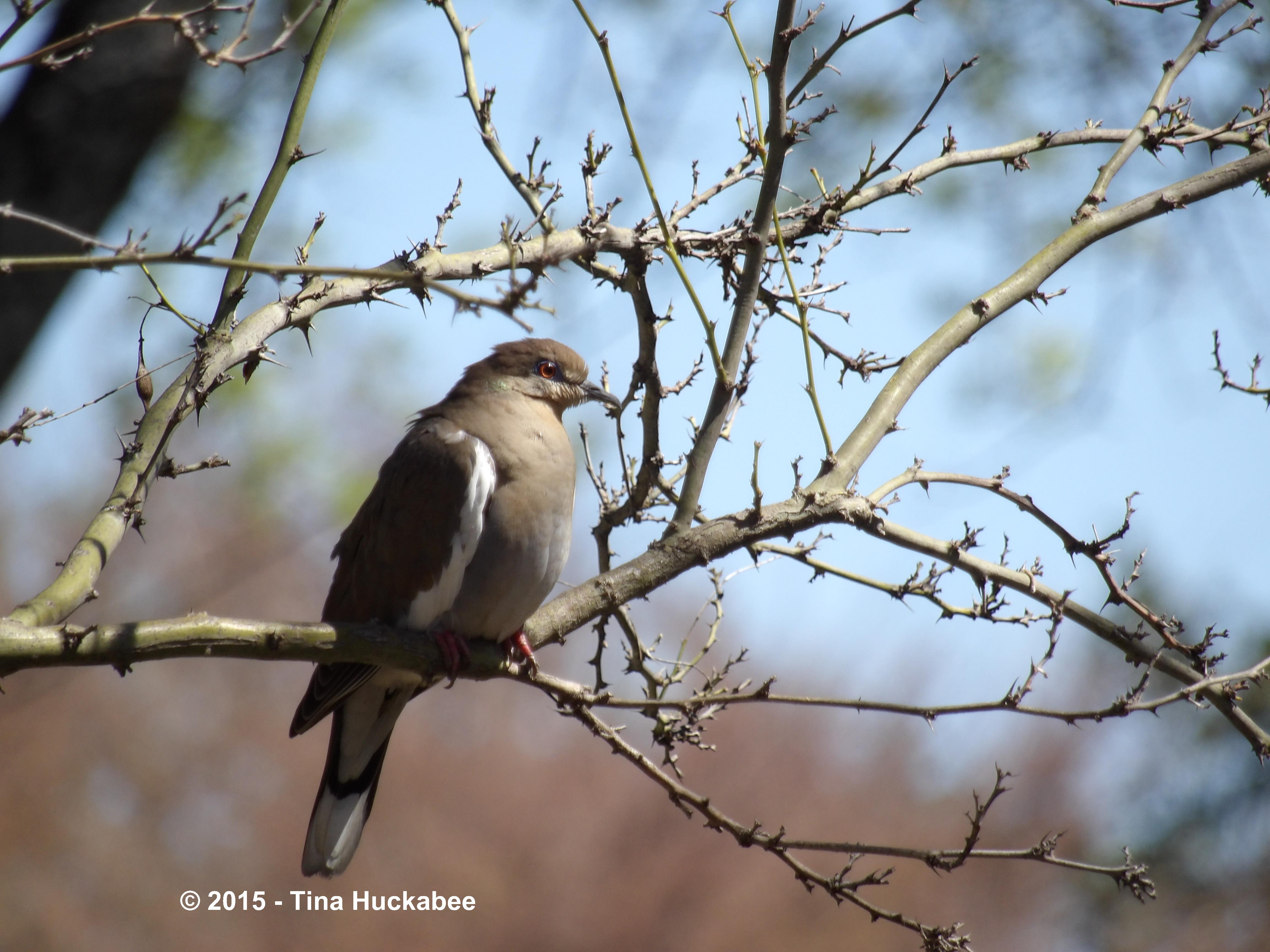
Cold birds, like this White-winged Dove, continue perching on sleepy limbs.IMGP5875.new

No swelling or emerging buds exist.

IMGP5866.new IMGP5868.new

Last year’s seed pods, a few anyhow, dangle, undropped and unsprouted. IMGP5871.new

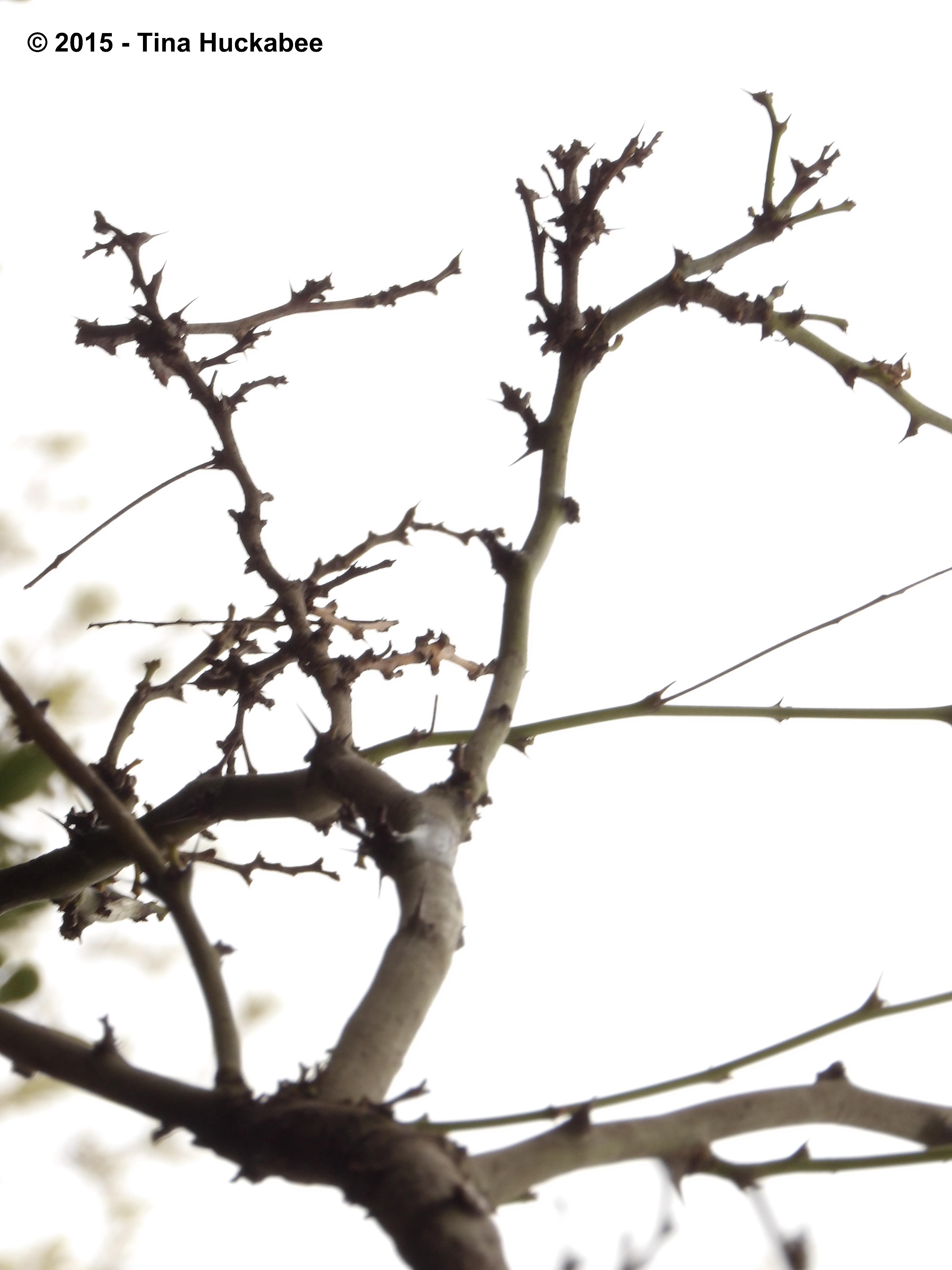
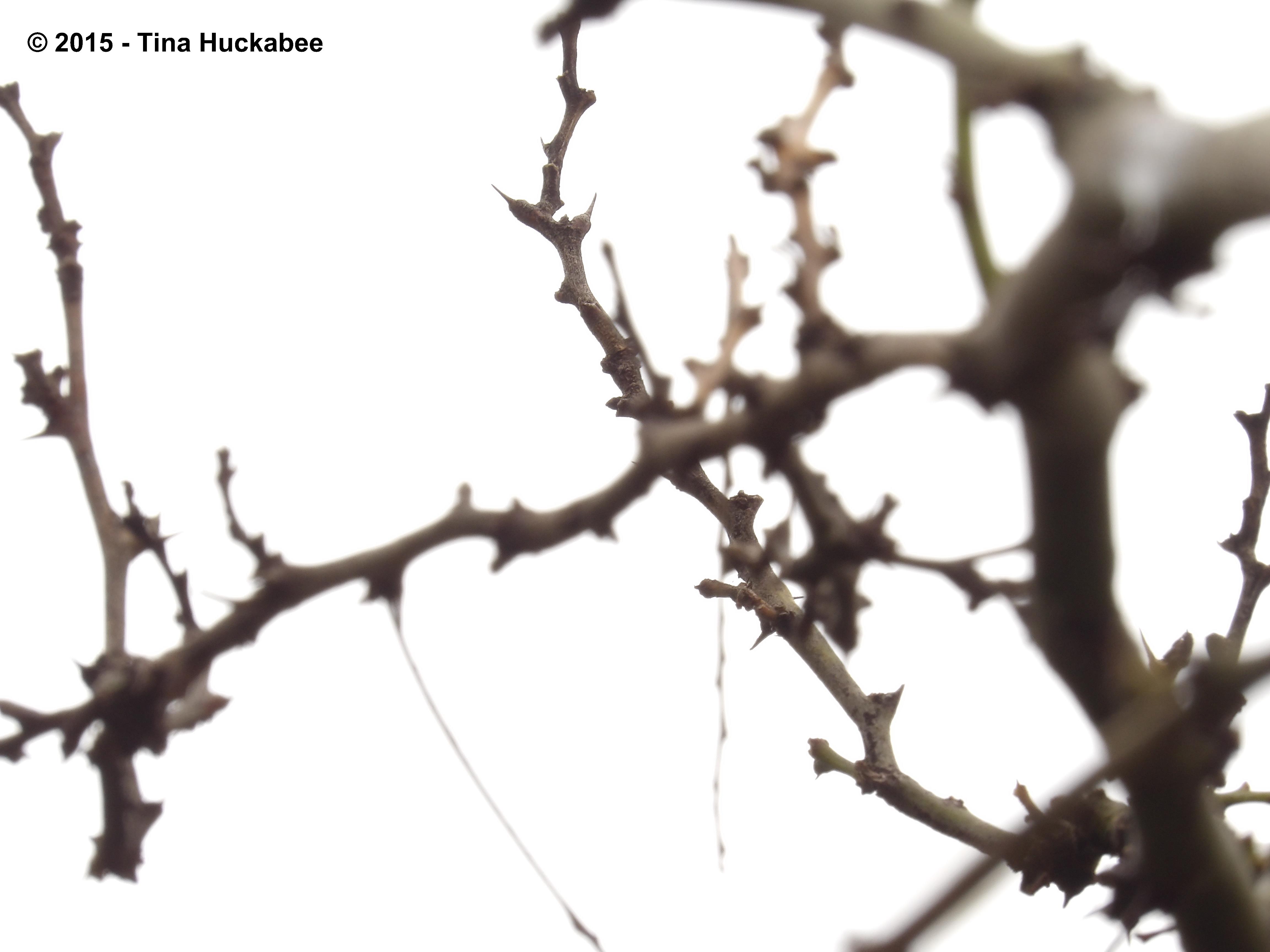
The trunk and many branches remain green, as is the way of the Retama, continuing the chlorophyll  function that the tree is known for, especially during drought periods. Those nasty thorns,

IMGP5882.new …which prick and poke this gardener from time to time, are healthy and prominent. One of the common names for P. aculeata is Jerusalem Thorn, though not because of these sharp fiends,

IMGP5883.new …but rather because the English name is an adulteration of the Italian/Spanish word girasol, which means sunflower, or turning toward the sun. ‘Sunflower’ or girasol is an appropriate name as the the Retama requires full sun exposure for its growing and blooming best, and the spring, summer, autumn flowers are brilliant yellow, though not of the sunflower or aster (Asteraceae) variety.  The legume fruits in the earlier photo are evidence that P. aculeata is a member of the Fabaceae or Pea, family of plants.

I’ve always called this tree Retama, but my mother referred to it using another of its common monikers, Palo Verde, which is also spelled Paloverde, from the Spanish, ‘green wood’.  In reading about this great tree, I’ve discovered  many other names for it. The Lady Bird Johnson Wildflower Center lists a total of six names for P. aculeata:  Retama, Paloverde, Mexican Palo Verde, Jerusalem Thorn , Horsebean, Lluvia de Oro.

IMGP5884.new

In this link from the World Agroforestry Centre, I found loads information about Retama, including a long list of names from around the world for this indigenous North American tree.  Similar to most plants, not everyone calls P. aculeata by the same common name.  That’s one of the interesting side stories with horticulture:  as plants are globally distributed, the vernacular of plant names adopts a linguistically provincial flavor.  Often, names are descriptive (‘green wood’/Paloverde) and many common plant names are quite charming and poetic.   This excerpt from the section about names from the Agroforestry Centre’s article lists an array of common names in numerous languages used for P. aculeata.

Amharic (filfile,Ye eyerusalem eshoh); Arabic (sessaban,sesaban);
Bengali (balati kikar); Bislama (shewina); Creole (madame naiz,madame
yass); Dutch (boonchi strena); English (wonder tree,Mexican palo
verde,blue palo verde,takataka tree,Barbados flower fence,Jerusalem
thorn,horsebean,hardbean); French (epine de Jerusalem,arrête-
bouef,genet epineux); German (Stacheliger Ginsterßaum); Gujarati
(bawal,kikar,rombawal); Hindi (adanti,sima tumma,vilayati babul,vilayati
kikar); Indonesian (adjao kase); Italian (Ginestra spinosa); Spanish
(aroma extranjera,capinillio,capinillo,cina-cina,acacia de los
masones,bayahonda blanca,palo de rayo,sulfato,sauce
guajiro,retama,pinos japonés,pino japonés,junco
marino,paloverde,espino,mataburro,lluvia de oro,acacia de agüijote,pauji);
Swahili (mkeketa); Tigrigna (shewit hagai); Trade name (Jerusalem thorn);
Yoruba (hanson sessaban)
IMGP5877.new

 .

Where’s my Retama??  Funnily enough, what I call P. aculeata isn’t mentioned in the English section of the names, but it is listed in the Spanish, because retama is Spanish for ‘broom’.  I used Google translator to check out the meanings of many of these words and I was surprise at how many had ‘broom’ in the translation, though not at all surprised at how many use ‘thorn(y)’ in the meanings.  My favorite name for P. aculeata is the Spanish, Lluvia de oro, which translates as ‘rain of gold’.  If you’ve ever seen a Retama in full, glorious bloom and some, or many, of those blooms have dropped to the ground, lluvia de oro certainly tells that story beautifully.
IMGP5880.new
I fear I’m too cranky and set-in-my-ways to change what I routinely call this plant, so Retama it remains for me.  Maybe I should call it by its scientific name, Parkinsonia aculeata?  That’s a mouthful of words, but from where is that name gleaned?  The Parkinsonia part of the equation honors the British botanist, John Parkinson, who lived from 1567-1650.  While Parkinson was an important gardener and introduced new plants to England in his lifetime, he did not “discover” the genus of trees which bear his name.  The naming of the New World plant genus, Parkinsonia, commemorates Parkinson’s life and horticultural contributions.  The species term, aculeata, derives from the Latin, aculeatus, meaning ‘sting or prickle’.  As one who’s been dinged on the head more than once by those thorns, yes, I agree that it’s aptly named.
IMGP5885.new
I’m not always a conscientious practitioner of proper name usage for plants, but it’s a good idea for gardeners to familiarize themselves with scientific/botanical names.  The example of my followed tree, the Retama, is a good one–at a minimum, there are 50 different common names for this one little tree: Parkinsonia aculeata.
 P1030904.new
Head over to Loose and Leafy and read about other trees from their admirers and followers.

Wildlife Wednesday, March 2015

Like last month, February wildlife adventure was all about the birds; it’s been a bit too cold on a regular basis for much insect goings-on.  That’s fine–I enjoy feathered friends and entice them to my gardens in winter with food and water.

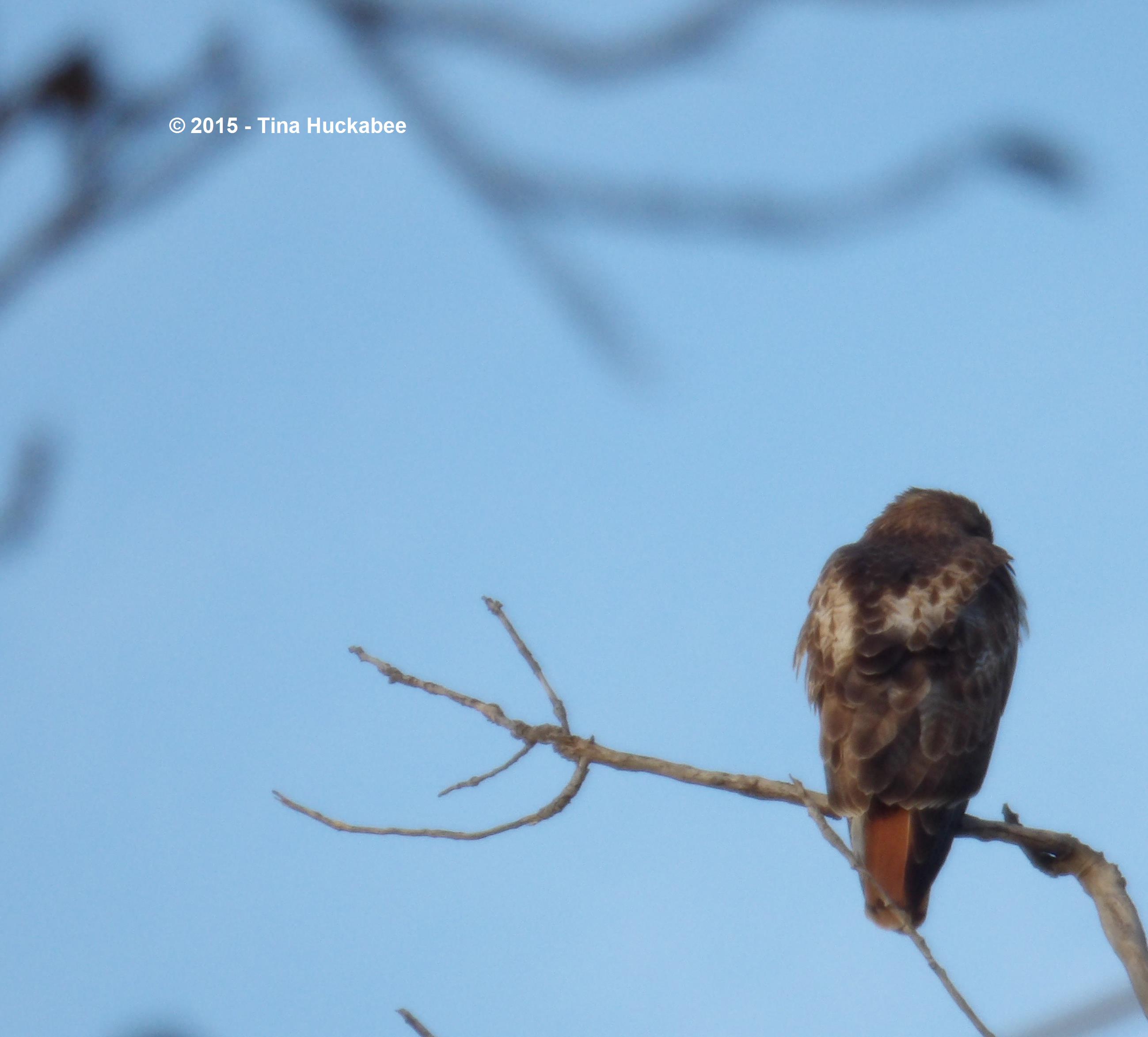
I’ve seen this single gal-I think she’s female because she’s quite large, perched atop trees around my home many mornings throughout this past month.

IMGP5238_cropped_3922x2945..new

She’s a Red-tailed HawkButeo jamaicensis, and I hope a juvenile hawk, not ready to take a mate yet, rather than an adult without a mate.  That would be sad.  I’ve also seen her hidden in Live Oak trees, upsetting the Carolina Chickadees and scattering the feathers remaining of her meal of White-winged Dove.

IMGP5241_cropped_2598x2346..new

She’s magnificent, sitting at attention early in the morning or as she glides from tree to tree, on the hunt in the neighborhood.

House Finch, Haemorhous mexicanus, is a  common species of bird living year-round in my gardens.  I realized that I didn’t have any photos of this charming, gregarious finch. Here, this male munches a sunflower seed.M0055575_cropped_1926x1323..new

I need a companion photo of a female House Finch–they’re not as colorful, but cute and perky, nonetheless.

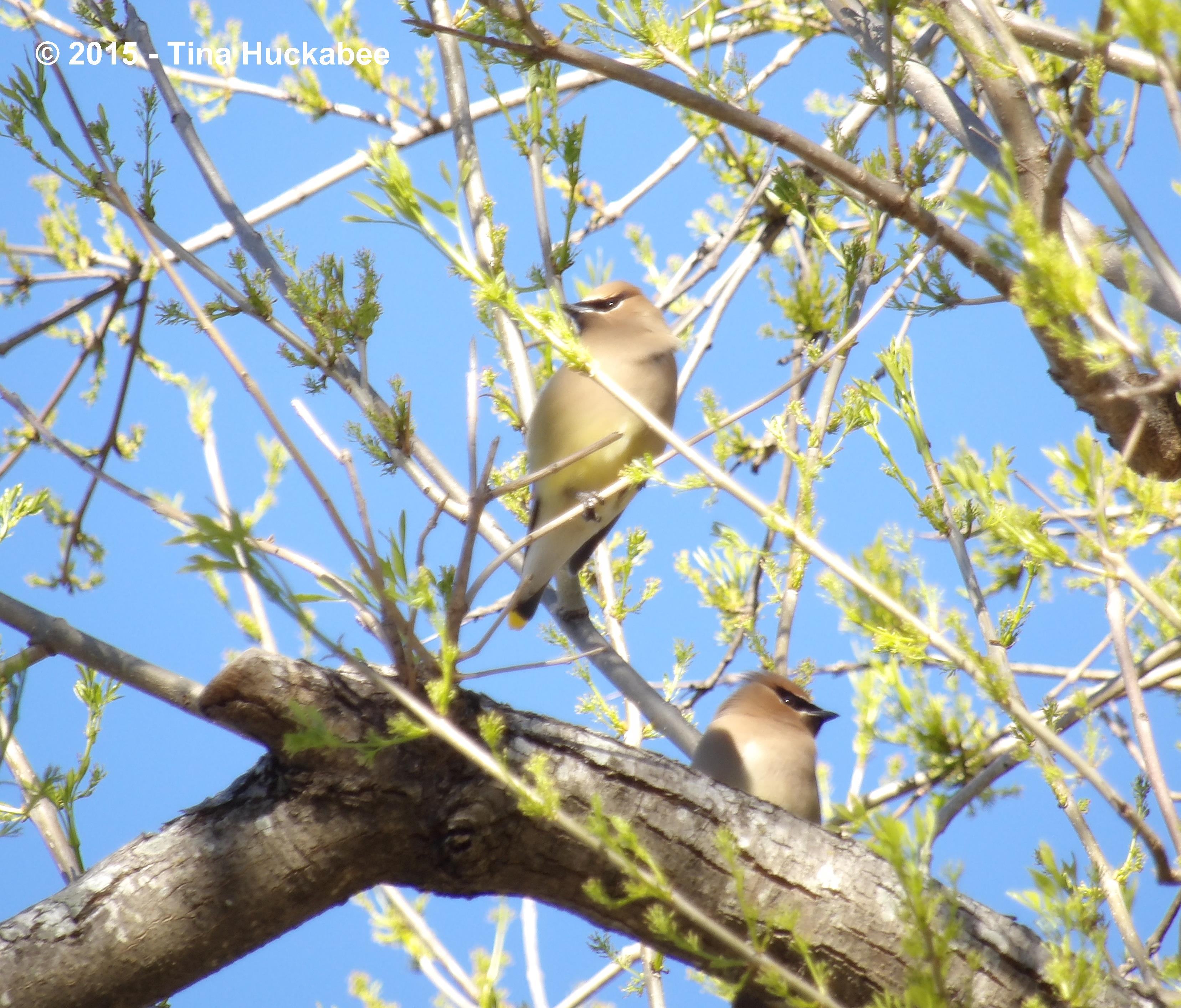
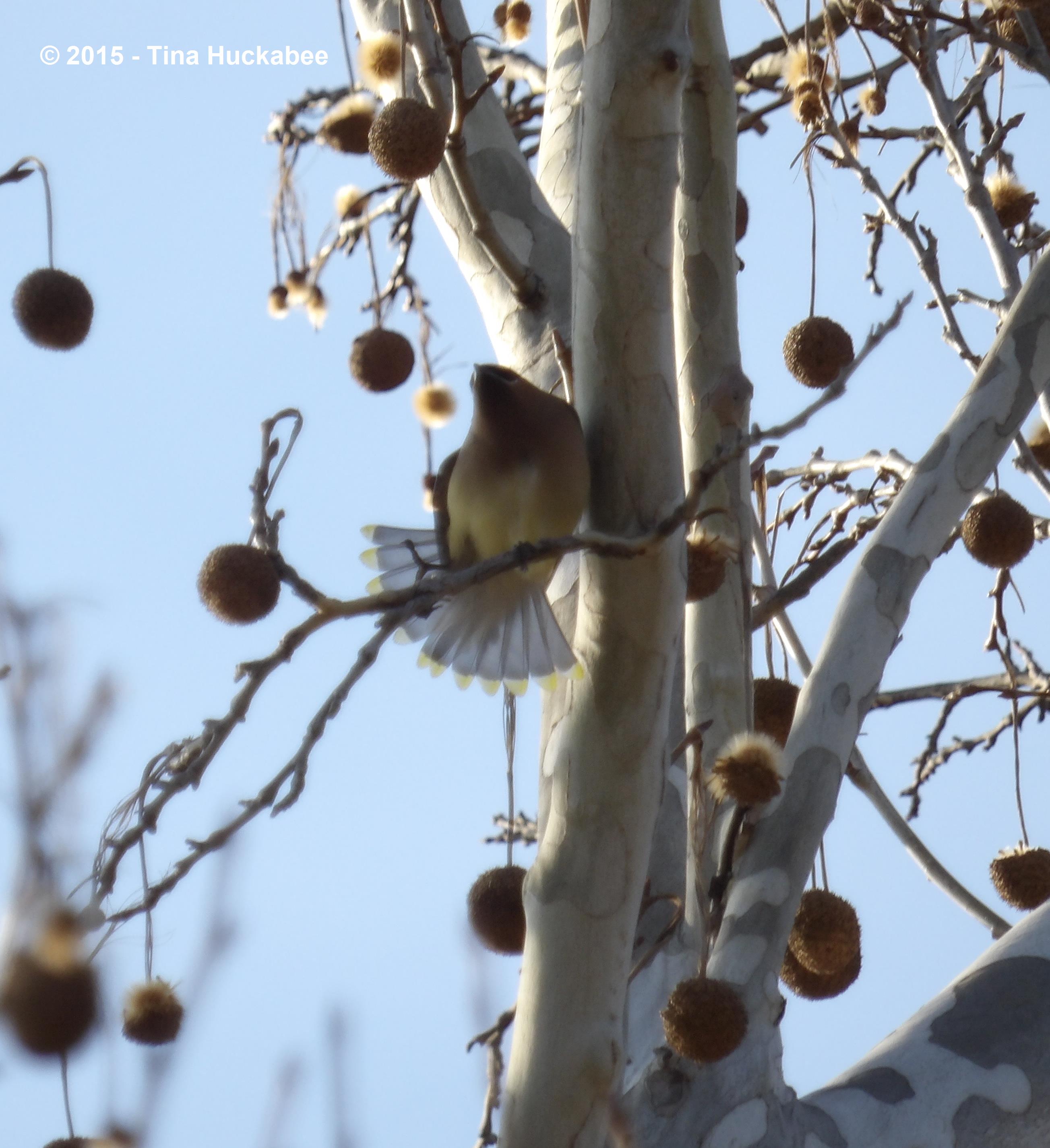
Every February I look forward to the hordes of the migratory bird, Cedar Waxwing, Bombycilla cedrorum. I usually hear them before I see them; they travel in groups and sing with a high-pitched keening as they swoop across the sky to settle in trees.

IMGP5602_cropped_3313x2829..new

IMGP5311_cropped_3111x2419..new

They are gorgeous birds and maybe just a little vain.  They’re always preening,

IMGP5310_cropped_3815x3281..new

…and displaying their pretty feathers for all to admire,IMGP5321_cropped_2608x2852..new

…and posing so you can view them at best advantage.

IMGP5325_cropped_3613x3355..new

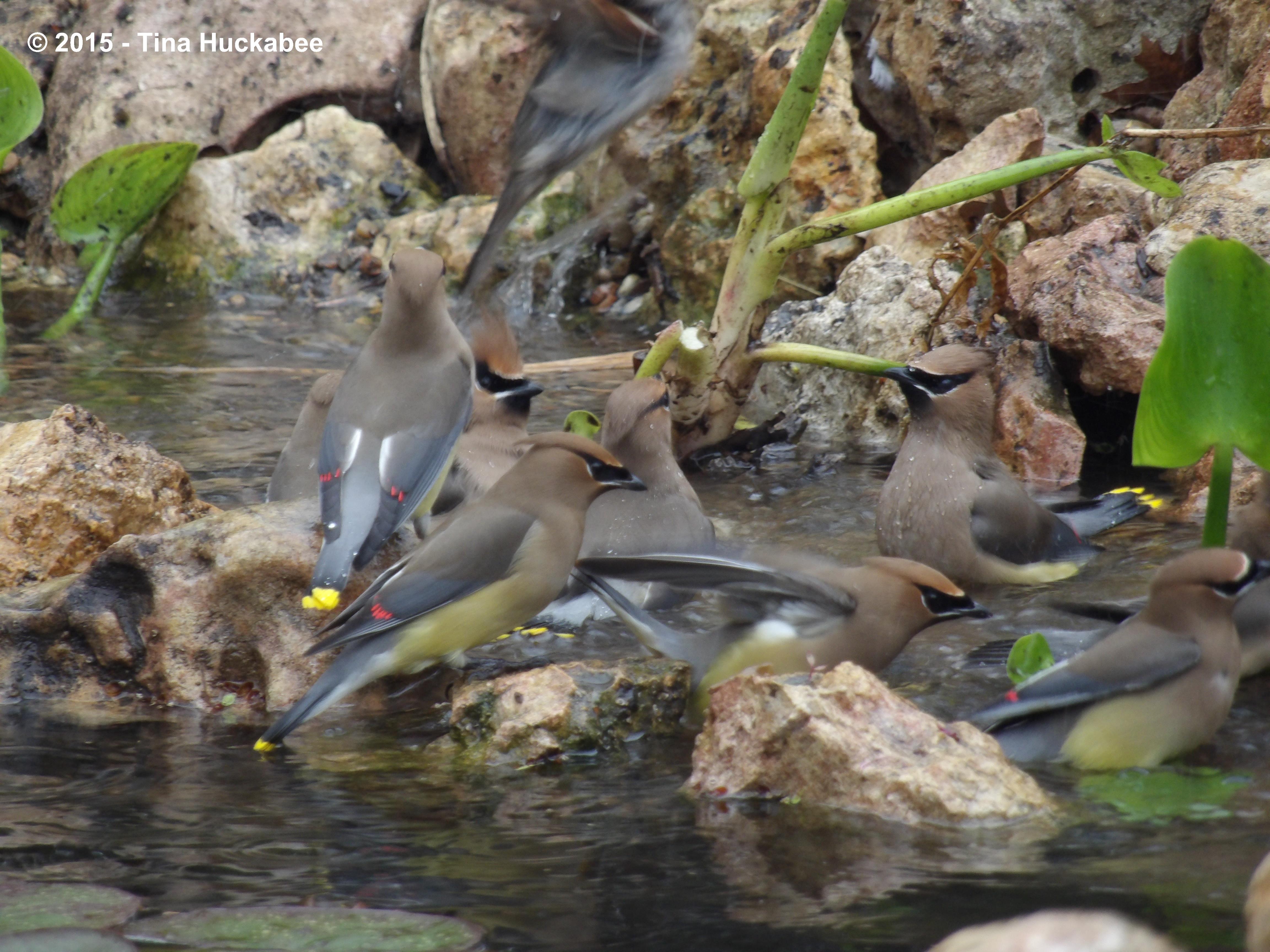
Cedar Waxwings are social birds too; they remind me of those girls in high school who can’t do anything alone–they go everywhere and do everything in a group. IMGP5665.new

IMGP5667.new

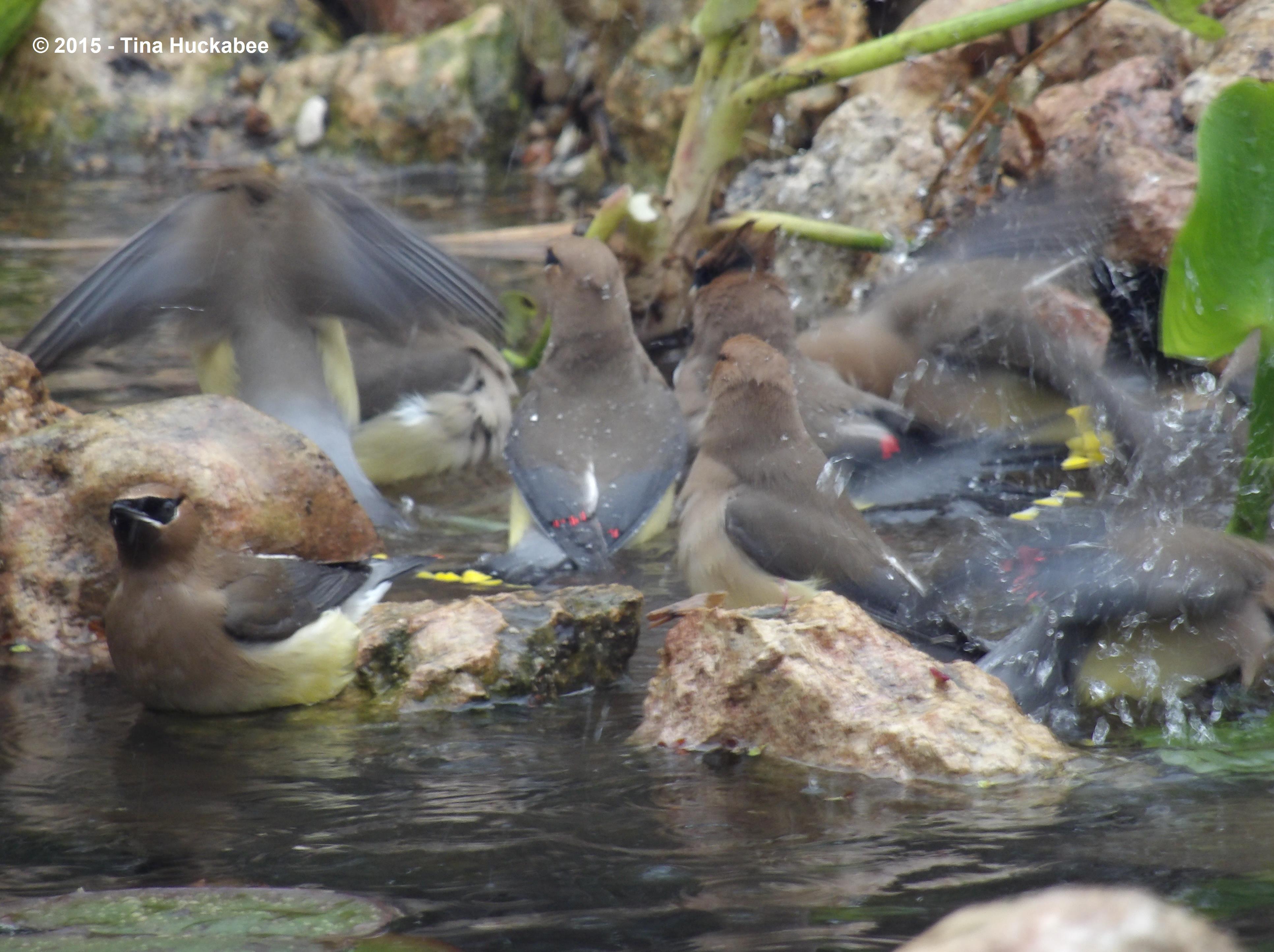
They are clearly having a grand time bathing in the newly cleaned pond,

IMGP5668_cropped_3866x2889..new….splashing, with flashing of red and yellow, and dashing in their Mardi Gras-esque masks. Can birds be full of themselves?

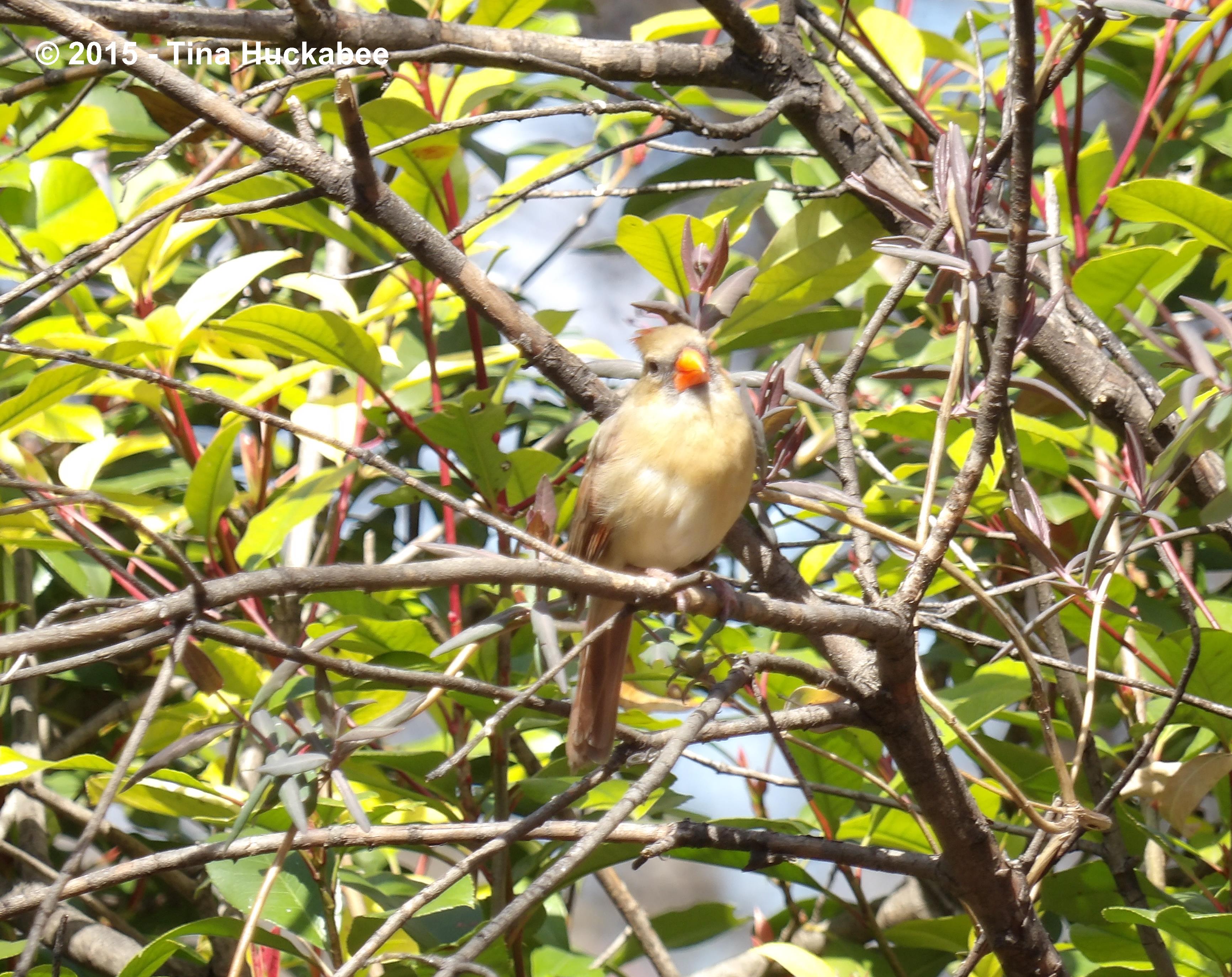
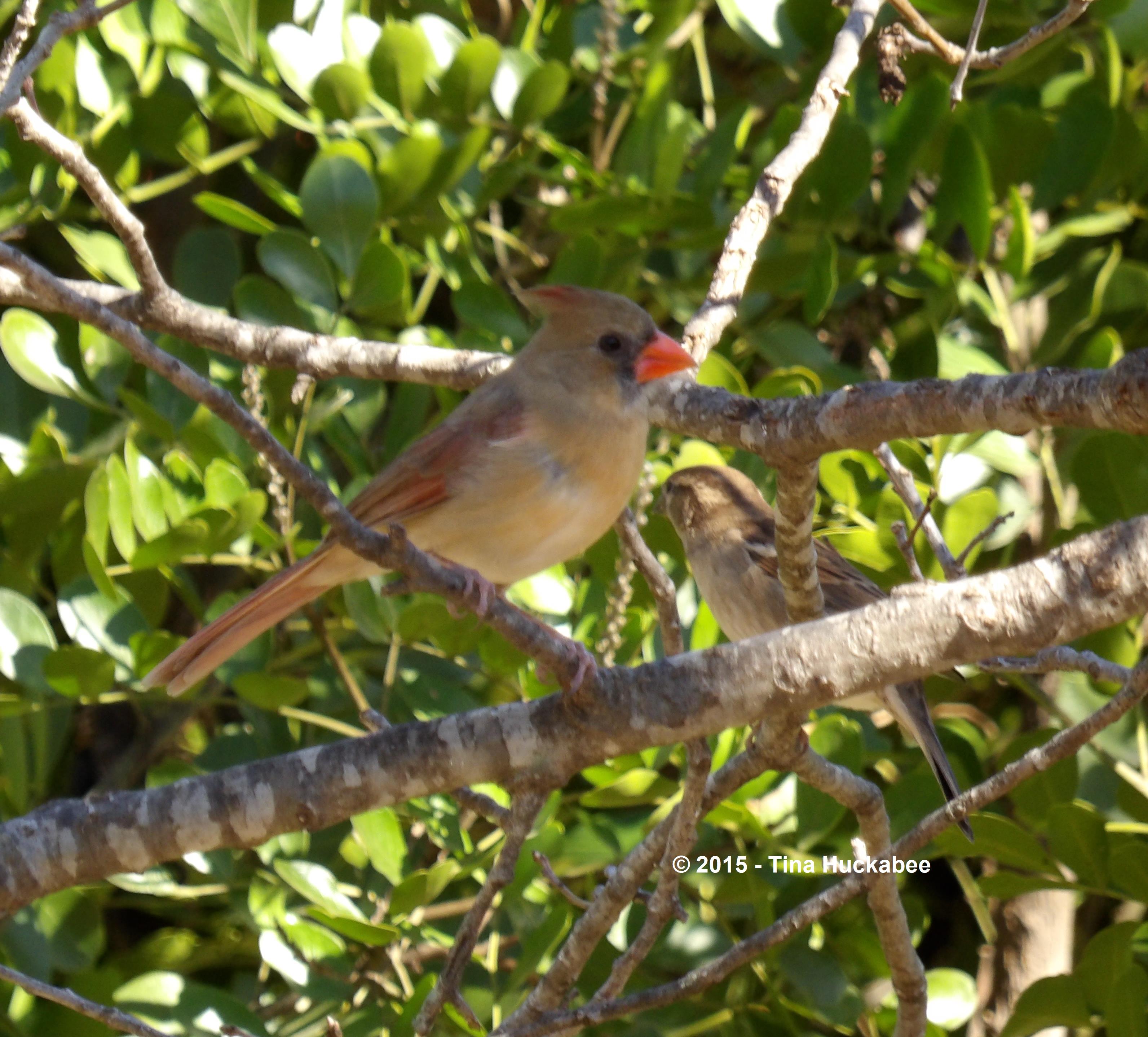
I see male Northern Cardinals everyday, but the ladies are shyer and elude the use of my camera with their quick movements through the cover of trees and shrubs.  I find them as attractive as the masculine of their kind.  This lovely lady Northern CardinalCardinalis cardinalis, was not so flighty as is typical of her female friends. IMGP5464_cropped_3387x2788..new

IMGP5465_cropped_3465x2747..new

IMGP5466_cropped_3331x2852..new

She landed and sat in the woody shrub for a long while before taking flight to another.

IMGP5482_cropped_3184x2875..new

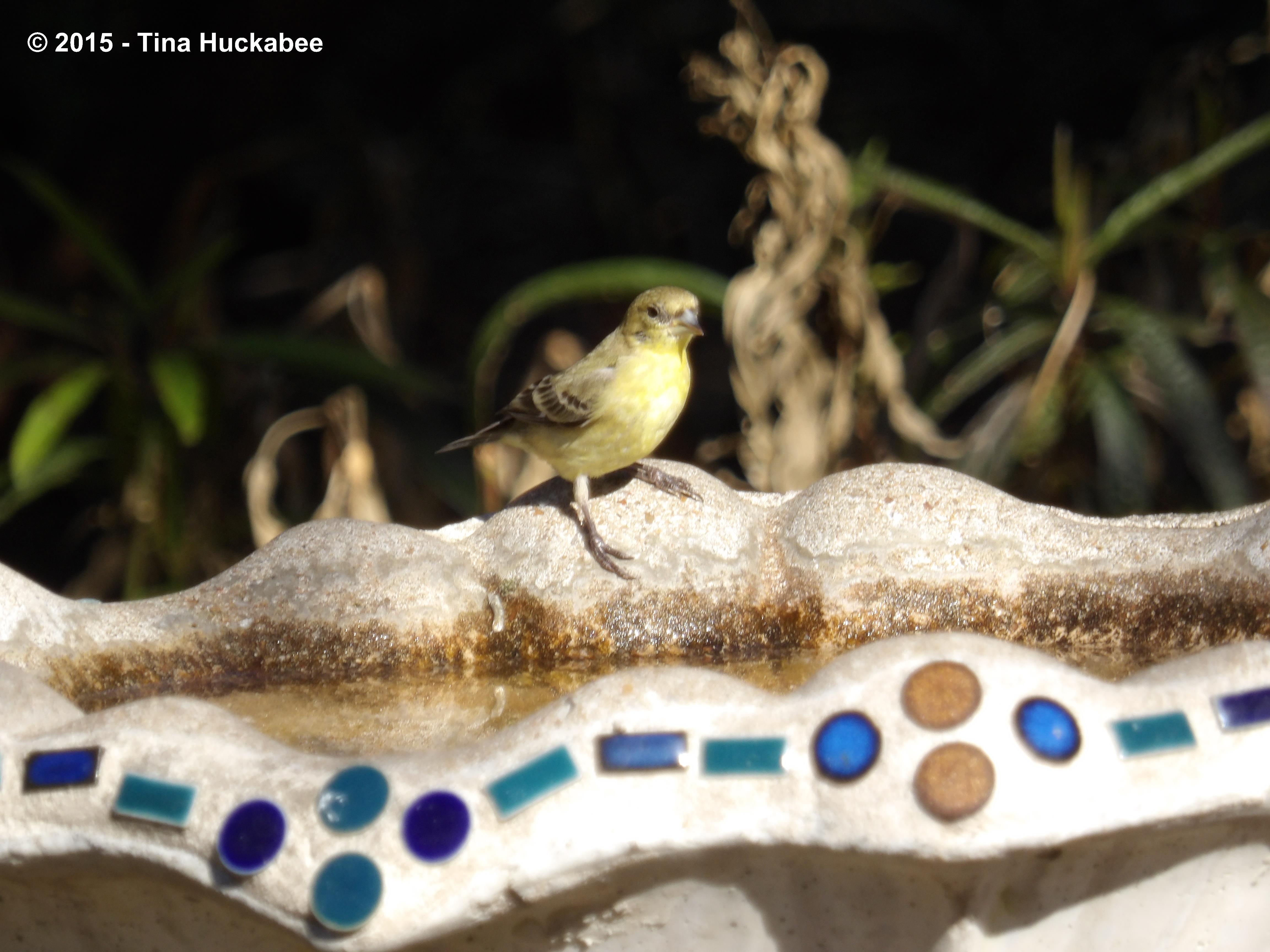
I love the funny, quizzical look on this female Lesser GoldfinchSpinus psaltria, stopping for a sip at the bar.IMGP5484.new

I meant to do that.

IMGP5485.new

This Black-crested TitmouseBaeolophus atricristatus, landed in a small tree after snatching a seed from the feeder.

IMGP5729.new

He pecks to the left,

IMGP5727.new

….and pecks to the right,

IMGP5728.new

…and finally, mmmmm, that seed is tasty.

IMGP5731.new

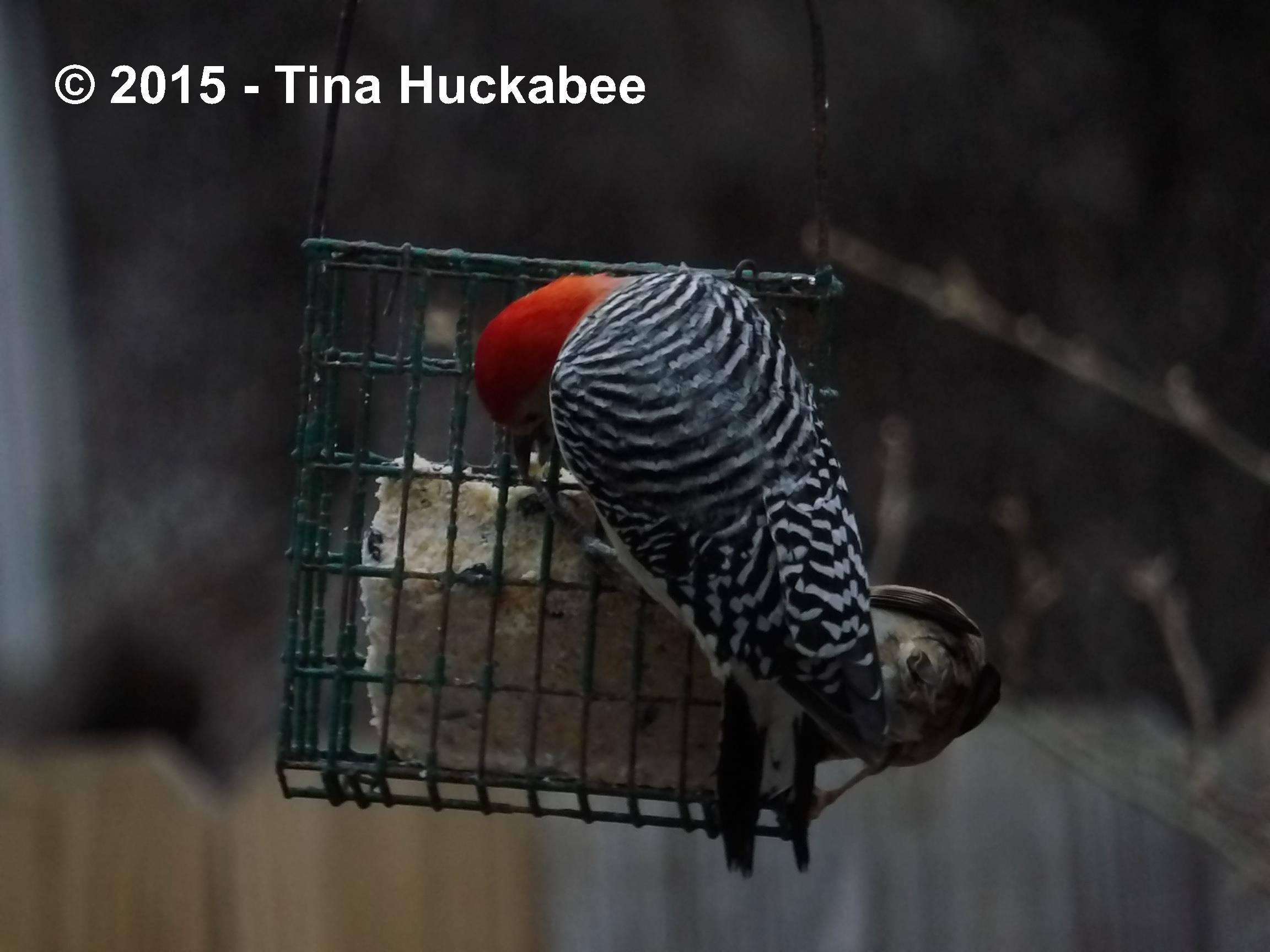
I introduced this handsome dude, a Red-bellied WoodpeckerMelanerpes carolinus, in my last post.

M0035806.new

He’s part of a couple, no doubt gearing up to raise a little family of redheads, though I don’t know where their nest is.  Not in my garden unfortunately, but he does visit.

I hope wildlife shared your gardens this month, even though winter retains its icy grip on so many places. Please join in posting about the wildlife in your gardens for March Wildlife Wednesday. Share the rare or mundane, funny or fascinating, beneficial or harmful critters you encounter. When you comment on my post, please remember to leave a link to your Wildlife Wednesday post so we can enjoy a variety of garden wildlife observations.

Good wildlife gardening!