Winkin’ and Blinkin’

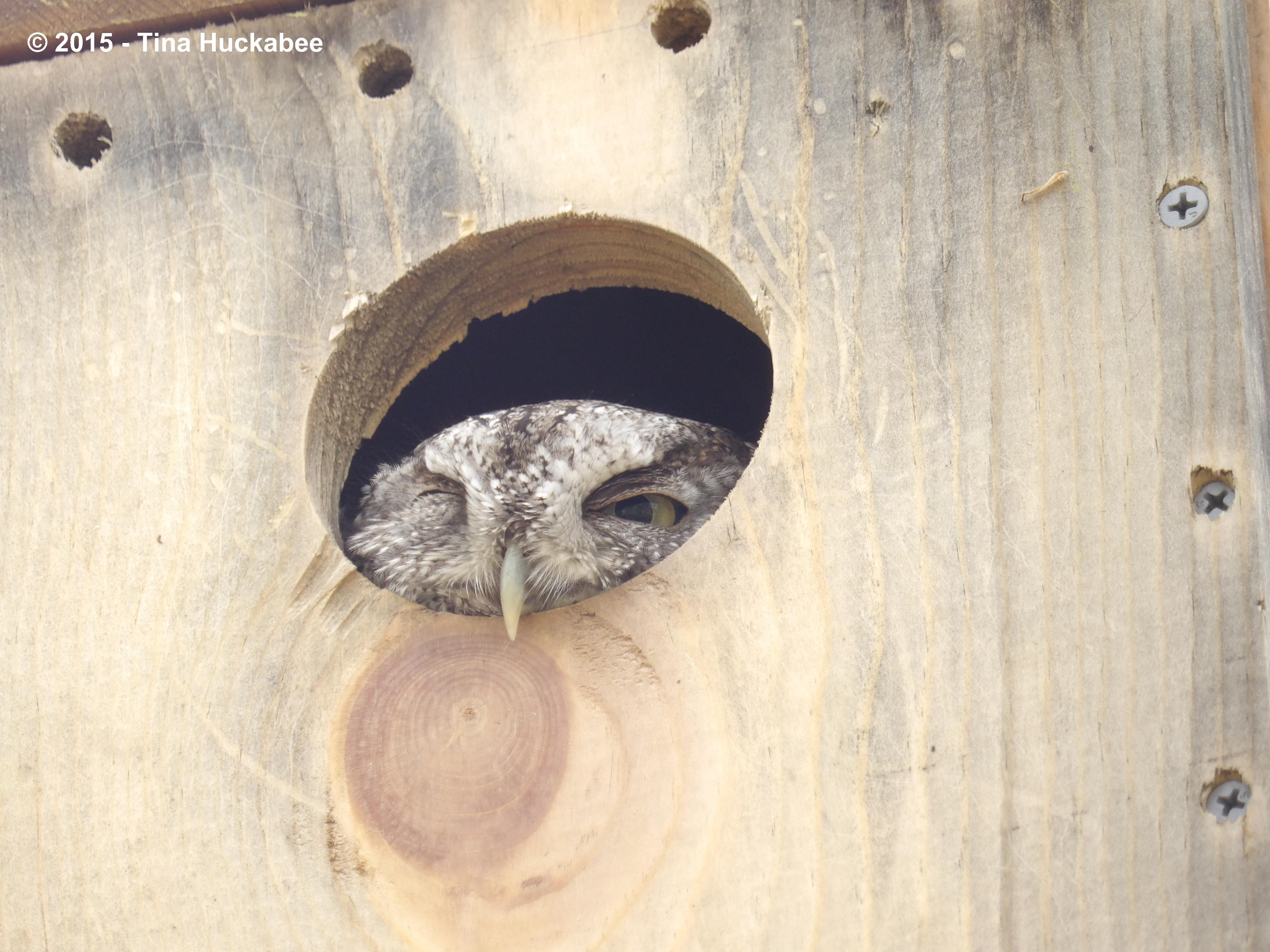
What a pair these are, owls and eyes that is.  Dad in the tree,IMGP6232.new

…with one focused, though squinty eye at me, and the other mostly closed, with a little red glare, either his or the camera’s, I’m not sure which.  Mamma is cozy in the brood house, IMGP6236.new

…snoozy with one eye alert to the activities of world around her and one eye shut, the signal of her days of dozing.

My resident Eastern Screech Owl couple: Winkin’ and Blinkin’.  Where is Nod?  Maybe in one of the unhatched eggs. Stay tuned!

Foliage Day, March 2015

The Wearing of the Green

An apt phrase for March in Texas if there ever was one, with apologies to revolutionaries everywhere.  No doubt this ditty was sung in the past week somewhere in Austin, Texas, but my focus is on verdant foliage in my spring (officially!) garden. With thanks to Christina of Creating my own garden of the Hesperides for hosting Garden Bloggers’ Foliage Day, spring has most definitely sprung in my home town. Let’s take a quick stroll through this Texas spring garden, shall we?

The columbines are flowering, but their leaves are lush during fall, through winter and into spring bloom time.  This little one is paired with a passalong daylily leaf, emerged from winter dormancy, which won’t bloom until early summer.

IMGP6216.new

And this group of columbines leads in a nice foliage vignette which includes a potted American Century PlantAgave americana and Cast Iron PlantAspidistra elatior.

IMGP6260.new

I grow only the native Texas columbines, the Aquilegia chrysantha and the Aquilegia canadensis because others will fry to a crisp in the Texas summer heat.

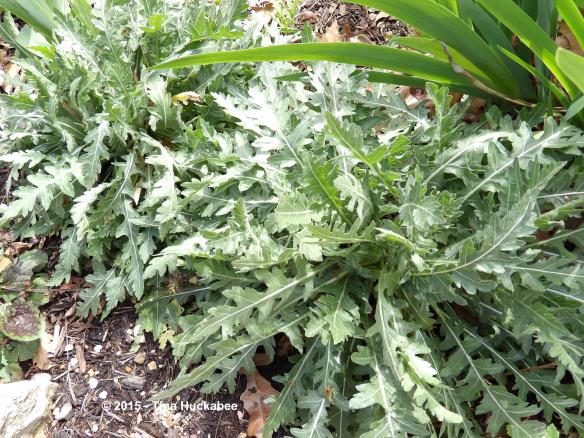
Engelmann Daisy or Cutleaf Daisy, Engelmannia peristenia, sports deeply lobed fuzzy, gray-green foliage.
IMGP6218.new IMGP6217.new

The bright yellow blooms will accompany the foliage later in the season.

Lyreleaf Sage, Salvia lyrata, is attractive  year round,

IMGP6243.new

…and the foliage makes an excellent ground cover.  I planted Lyreleaf as a groundcover in the area where my honeybee hives are located. The plants withstand moderate foot traffic and we can place our beekeeping equipment on the rosettes with little negative impact, as long as the Lyreleaf are not blooming or setting seed.

IMGP6354.new And once the blooms open, the bees don’t need to travel far for gathering nectar and pollen.

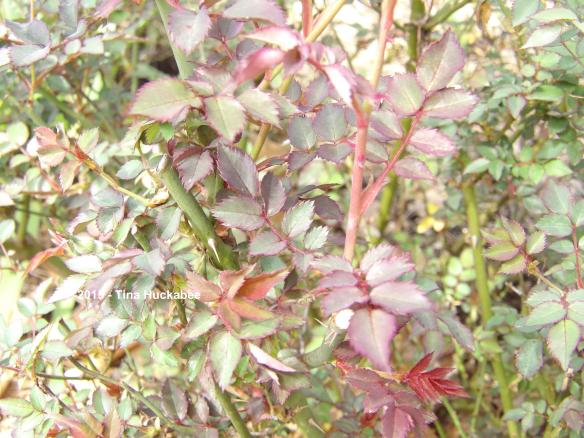
Glorious in burgundy rimmed foliage are the leaves of the Martha Gonzales Rose.IMGP6220.new
IMGP6219.new

There are currently only a couple of roses open, but I love the color of the tender, new leaves.

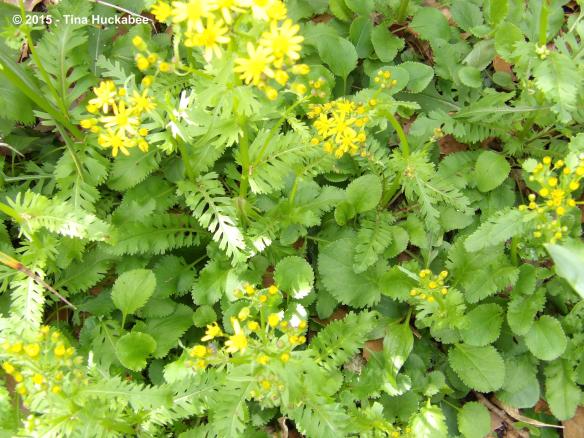
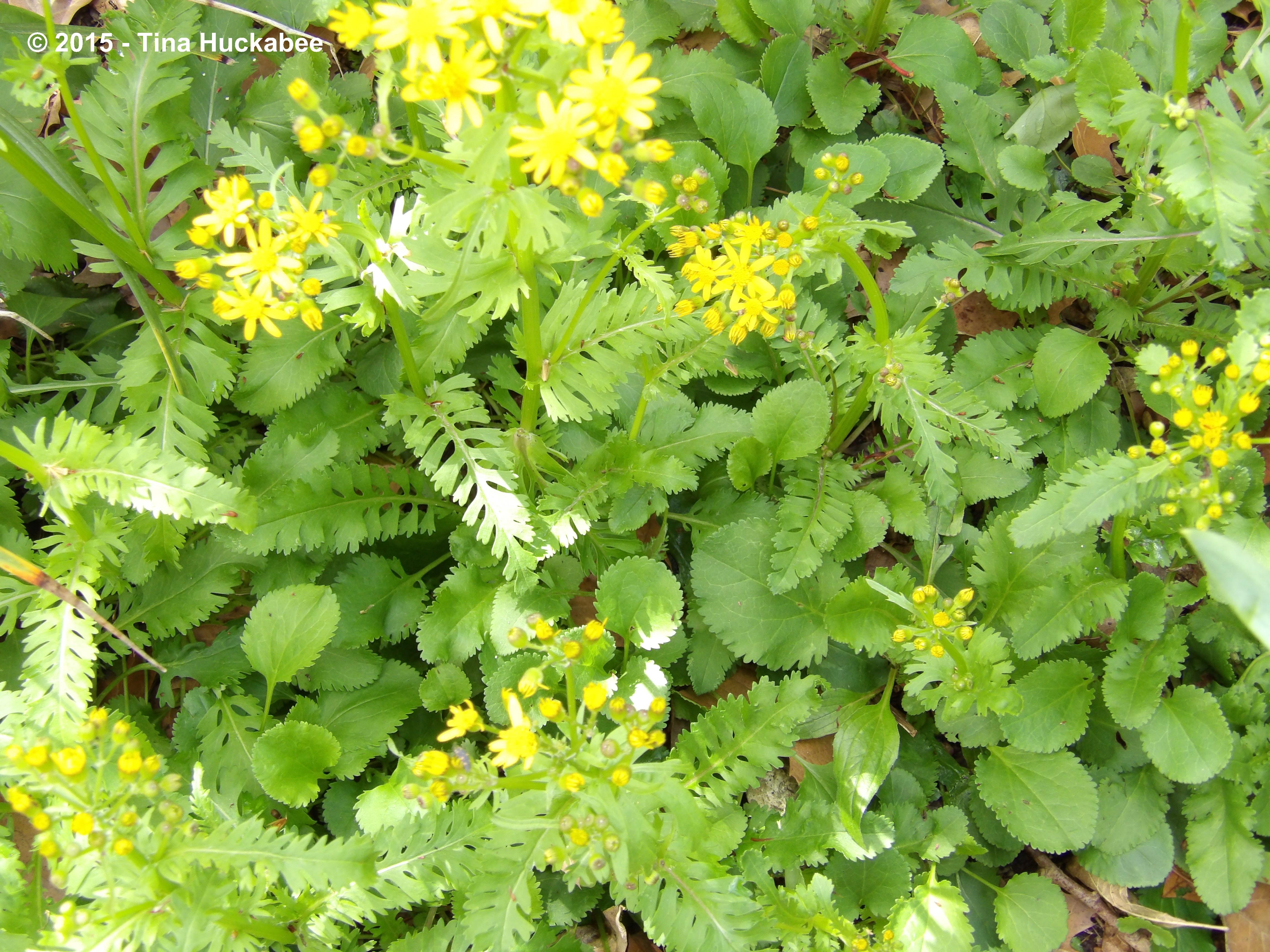
Golden Groundsel, Packera obovata, is in full blooming mode, but its foliage demonstrates a bit of a split-personality.  Most of the year, the plant acts as a low ground cover with ovate, serrated leaves hugging the ground.  As the bloom stalks shoot upward to their flowering ends, the leaves along the stalk form lance-shaped and fern-like.IMGP6222.new

IMGP6223.new

It’s a foliage twofer.

One of my favorite plants for shade/part-shade is the White Yarrow, Achillea millefolium. It’s always lush, elegant and beautifully spring-green.IMGP6224.new

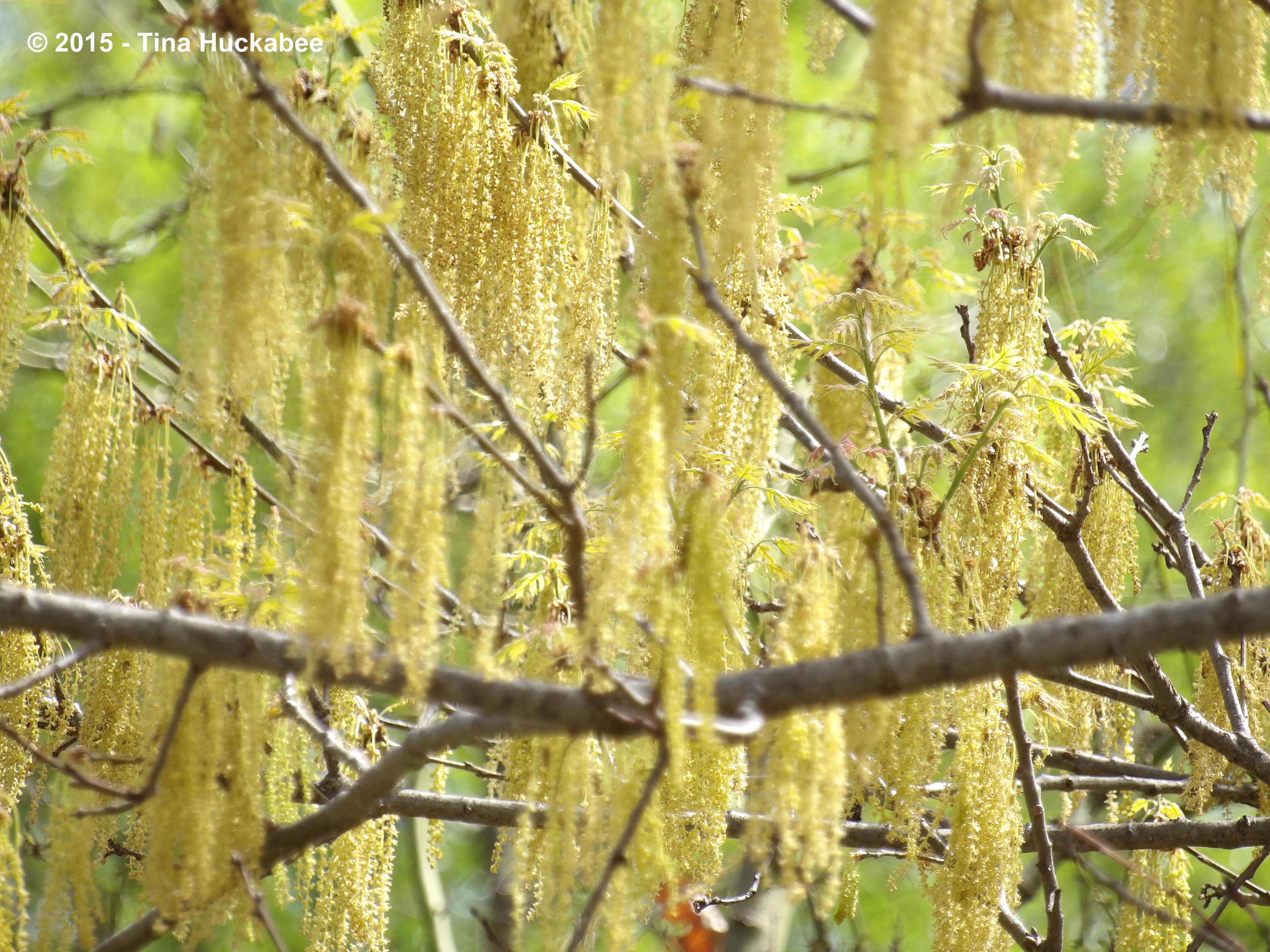
I know many people suffer oak allergies and I am sympathetic to their sniffling and stuffed-headed misery, but the pollen tassels on the Shumard Oak, Quercus shumardii, are golden and gorgeous.

IMGP6226.newIMGP6225.new

I look forward to seeing them every year.IMGP6227.new

This Shumard branch shows off its new chartreuse leaves,

IMGP6345.new

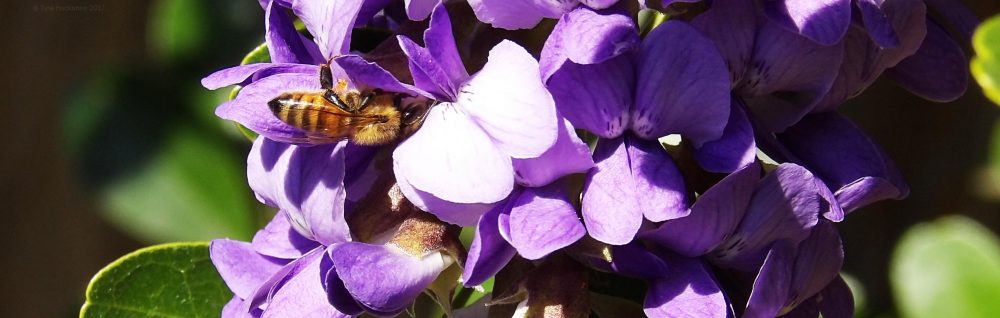
…accessorized with a tassel skirt, amidst a background full of the stunning native small tree, Mountain LaurelSophora secundiflora. The dark green leaves of the Laurel are punctuated by clusters of the signature fragrant, deep purple blooms.  Nothing speaks early spring in Austin like that pairing!

What foliage do you sing about this bonny March?  Have a look at foliage from gardens everywhere by visiting Garden Bloggers’ Foliage Day and happy spring to Northern Hemisphere gardeners and a good autumn to gardeners in the Southern Hemisphere .
All Hail Hymenoxys

All hail, indeed!!  For those gardeners living in Texas and northwestward states to Colorado, as well as southward into Mexico, it’s a tough proposition to find a longer blooming, better-behaved, cheery daisy to place in the garden than the perennial HymenoxysTetraneuris scaposa.

IMGP5608.new

IMGP5611.new

IMGP5614.new

Commonly called Four-nerve Daisy (because of the veins inside the petals, which the Lady Bird Johnson Wildflower Center describes as “dark purple,” but look green to me),

IMGP5704.new …it’s also known as Stemmy Four-nerve Daisy, Yellow Daisy, and Bitterweed.  It’s a ray of sunshine, year-round, in the home garden or along the highway.

IMGP5708.new

IMGP5625.new

I first planted Hymenoxys over 20 years ago in a spot in my backyard when I began the conversion from a high-maintenance lawn to a low-maintenance, native plants garden. The one I planted didn’t last long and that was  because I planted it in a shady spot. I’ve made lots of mistakes like that over the years and (hopefully) have learned from those mistakes.  That’s the best garden education there is–screw up, learn, redo correctly.  Or at least redo; some of us take longer to learn than others of us.  Over the years, I was enamored and distracted with other aster perennials and never replanted Hymenoxys in my gardens.  When I designed the long, narrow Driveway Garden in spring 2014,  I purchased and planted three Hymenoxys daisies.  I knew they would be great additions to this garden,

IMGP5624.new

IMGP5623.new

…and so they are.  These sweet, dancing-in-the-breezes daisies have bloomed non-stop since being popped in the ground a year ago.IMGP5621.new

IMGP5618.new

IMGP5616.new

Borne from an evergreen clump of slender grey-green foliage,IMGP5711.new

…the leafless stems, the ‘scape’ of scaposa,  rise about 6-8 inches, topped by a single daisy.  The stems show a slightly purple tinge (which I do see as purple),

IMGP5700.new

IMGP5712.new

….and in all phases of flower development, the blooms are attractive.

IMGP5609.new IMGP5618.new

The petals are bright yellow and each ends in three lobes.IMGP5620.new

IMGP5623.new

Hymenoxys is a perennial that works well in many styles of  gardens, including sparse rock/succulent gardens and lush perennial beds.  Hymenoxys is a small plant, so it’s best placed in the front of a bed, rather than behind something that will tower or flop over it. That’s one of the reasons I remembered Hymenoxys for my Driveway Garden–it’s very tidy and doesn’t grow huge like so many perennial shrubs.  It fits well in a narrow spot.

IMGP5625.new

IMGP5717.new

It will seed out prolifically if planted in good soil.  I don’t view that as a bad thing, though I’m sure I’ll eventually have to toss some seedlings into the compost because I won’t have any other spot in my gardens to plant the new additions.   This past fall, I transplanted some seedlings from the mother plants,

IMGP6214.new

IMGP6215.new …and they’ve flourished.  Of course they have.

My patch of Hymenoxys bloomed all winter and that’s another great quality about this plant, its remarkably long bloom time.

IMGP5616.new

Hymenoxys is tolerant of a variety of soil types and is heat and drought resistant during our long summers.  The flowers attract pollinators–I’ve seen bees and butterflies at mine.  Additionally, drum roll please, Hymenoxys is highly deer resistant.

Wow!  The perfect plant!

IMGP5621.newIMGP5709.new

IMGP5715.new

Unless you’re not fond of pretty yellow flowers!