Bee Mama Missive: Beetles Bee Damned

In my last Bee Mama Missive, I mentioned that my hives have been invaded by Small Hive Beetles, Aethina tumida.

IMGP9694_cropped_2637x2392..newThese invasive ickies hail from Africa, appearing in the United States first in 1996.  Here in Texas, there’s nary a honeybee hive that doesn’t host these lovely creatures. Sarcasm here, folks. Our hives were invaded by them last year, too.  If the hive is strong, the beetles don’t cause all that much damage–bees will remove some of the beetles and their larvae, thus keeping the invaders in check.  But hive beetles are destructive; they can damage comb and the accompanying honey and pollen.  If the hive is weak for whatever reason, the hive beetles can destroy the hive and/or the honeybees will abandon their hive.

This summer, many beekeepers in Austin have reported prolific infestations of small hive beetles, owing to the heavy rains and resulting higher humidity that occurred in late spring.  My hives are no exception to the rampant hive beetle infiltrations. Last summer, I’d see a few beetles whenever we checked our hives, but only a few.  In the last three hive checks, I’ve been appalled at how many of the nasty critters scurried away as we removed the tops of our hives for inspection.

IMGP9695.new

P1070480.new

One  suggestion to limit hive beetle infestation is to place hives in full sun–apparently the beetles don’t particularly care for the blazing sun and resulting heat in the hives. In my garden, there aren’t many “full sun” spots on my property and none of those spots are particularly appropriate for hive placement, so that’s not a remedy I can employ.  My hives face east and are under the shade of a large Shumard Oak.  I don’t use chemicals in my gardens and with beekeeping (for obvious reasons), chemical fixes are generally discouraged. While Bee Daddy and I can squish the hive beetles when we open our hives, that’s not a particularly effective or practical way to limit their population, no matter how satisfying the squishing might  be.   What to do?

I noticed that Beeweaver Apiaries sells a product called Beetle Bee-Gone.

IMGP9686.new

Basically, it’s a package of cotton cloth sheets that act to trap the beetles in the hives.

IMGP9687.new

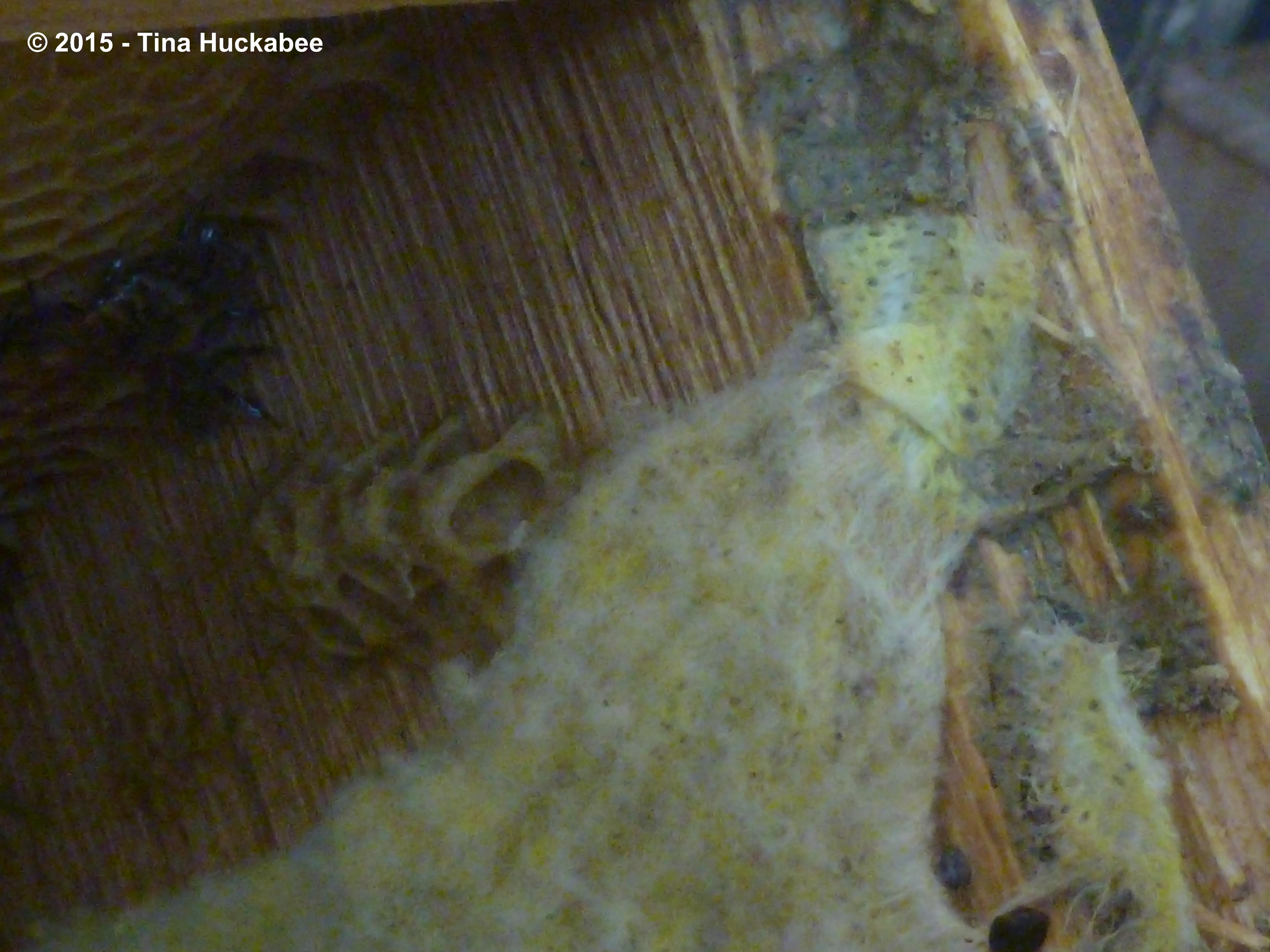
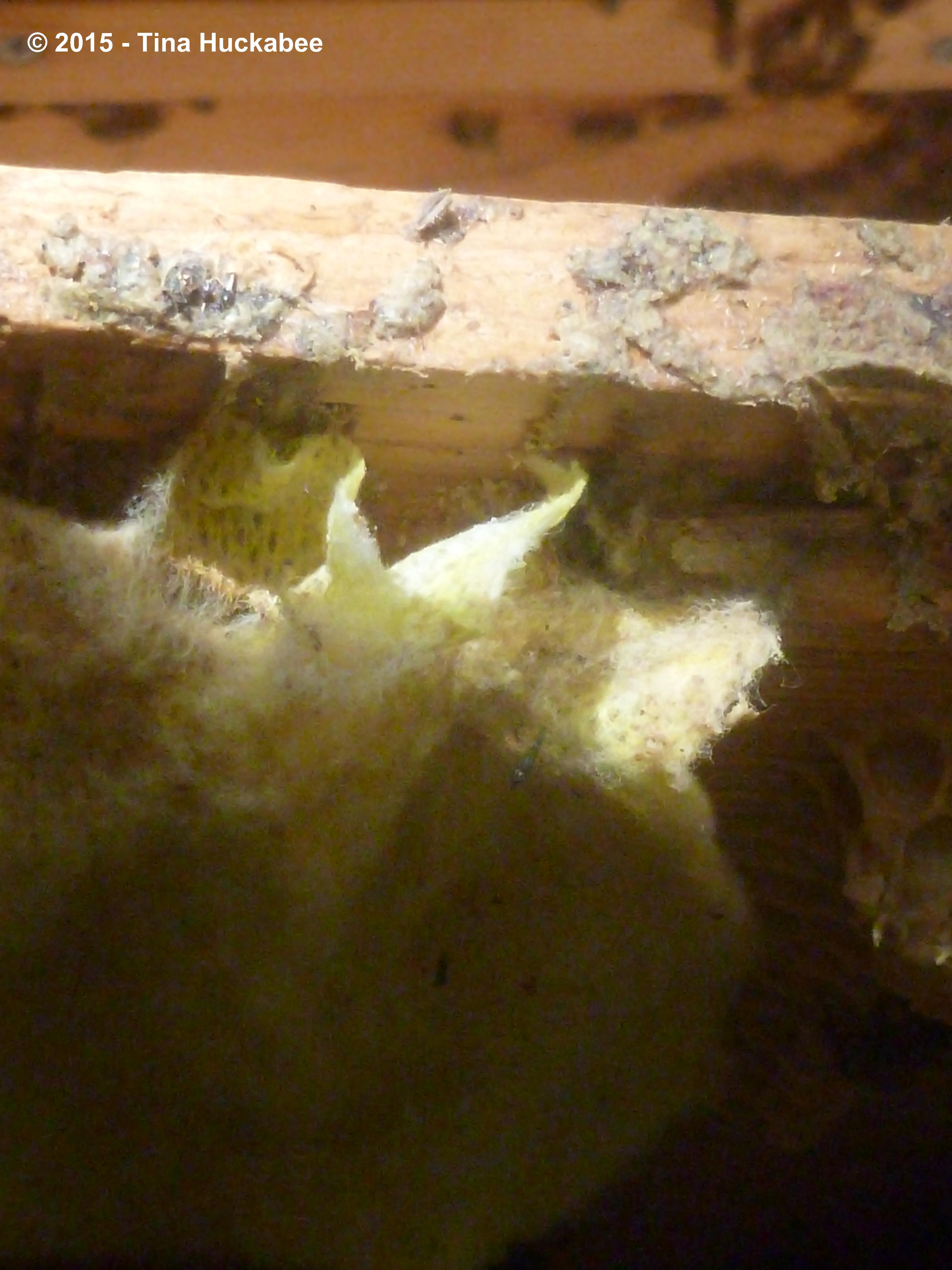
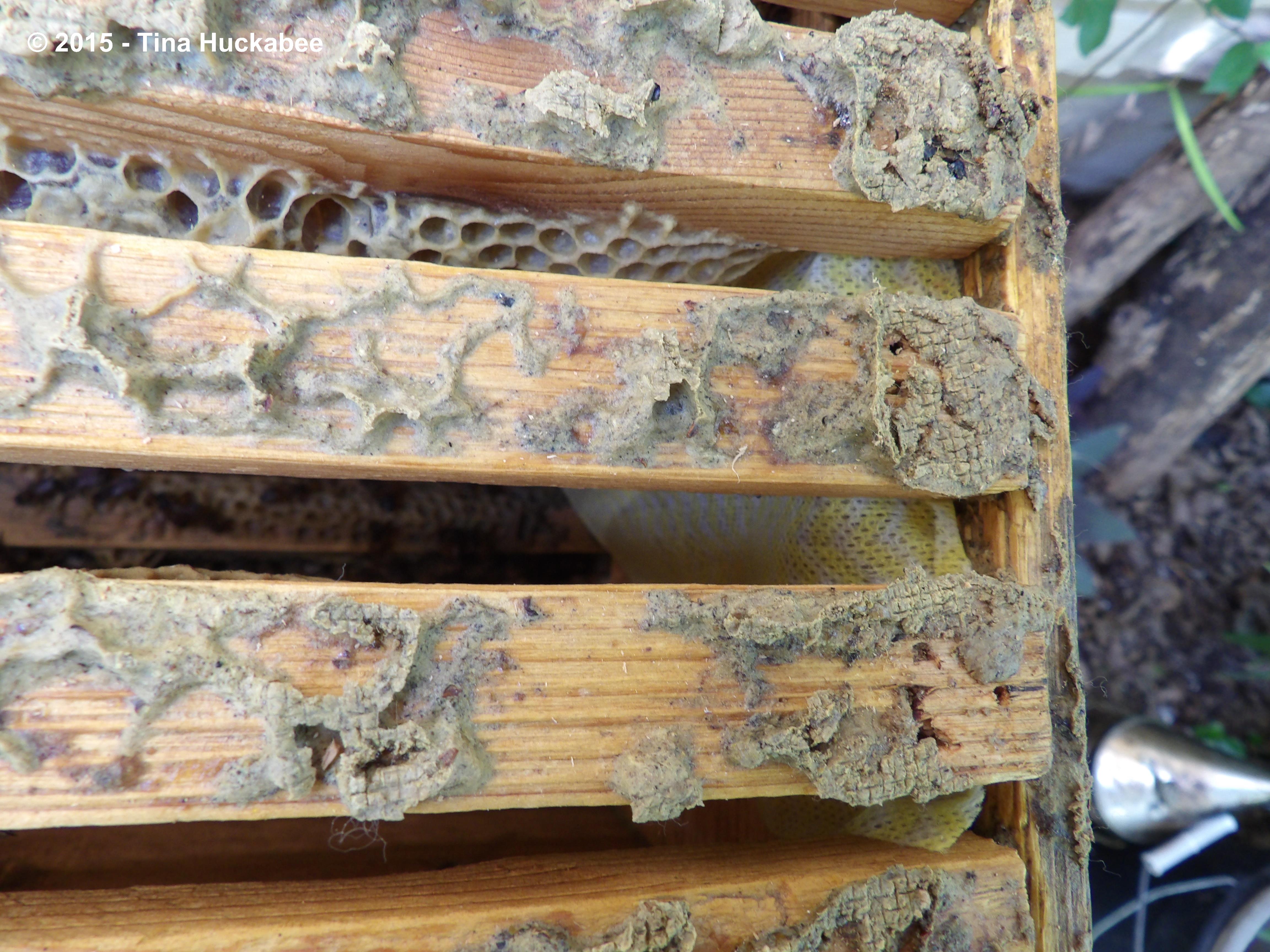
The sheets are affixed to the frames and the bees will chew up the cloths, rendering them “fuzzy”. The beetles in the hive are then trapped because they have hooks on their legs and become ensnared in the fuzz.  Honeybees like tidy hives and they will remove the fuzz-n-beetles loose in the hive.

At $7.95 per 48 sheets, plus shipping and tax, I’m game to try just about anything against the helmeted menaces.

On July 22, just before I left on a trip, I placed two sheets in each of the top two boxes of both Scar and Mufasa.
IMGP9691.new

IMGP9692.new

It wasn’t quite as easy as I’d envisioned, placing the sheets under bars while wearing thick gloves and crooning to the annoyed bees. Yes, I do that. I removed a couple of the center bars in the top and middle boxes, then tacked down each sheet with a little bit of wax, placing the bars back on top of the sheets.   I closed the hives, wished the bees well and left town with a good heart.

Sixteen days later and with some trepidation–Did the traps work? Will we see more beetles?  Is there beetle damage to the comb?–we opened and checked both hives.

P1070515.new

P1070520_cropped_2626x3295..new

P1070513.new

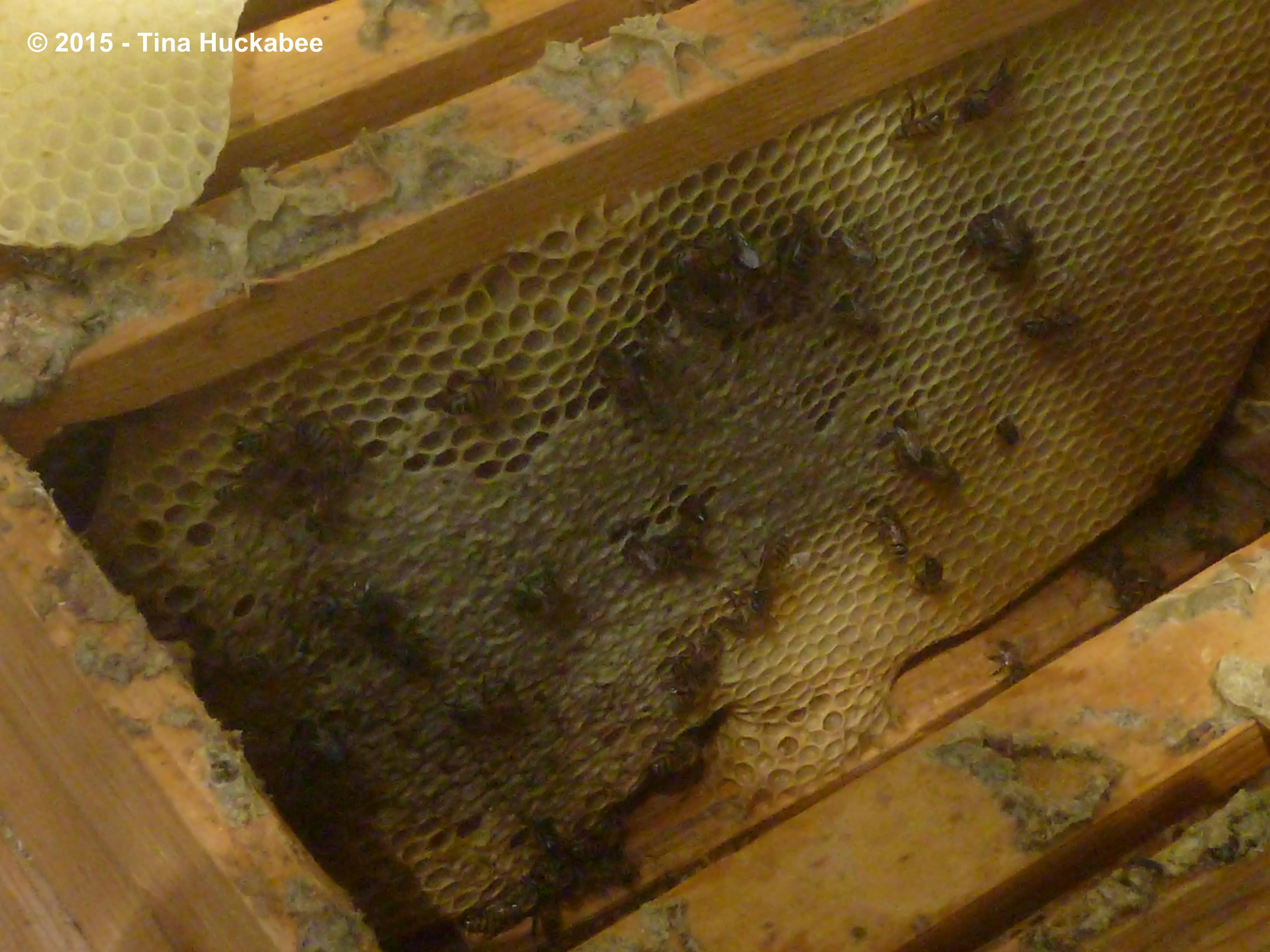
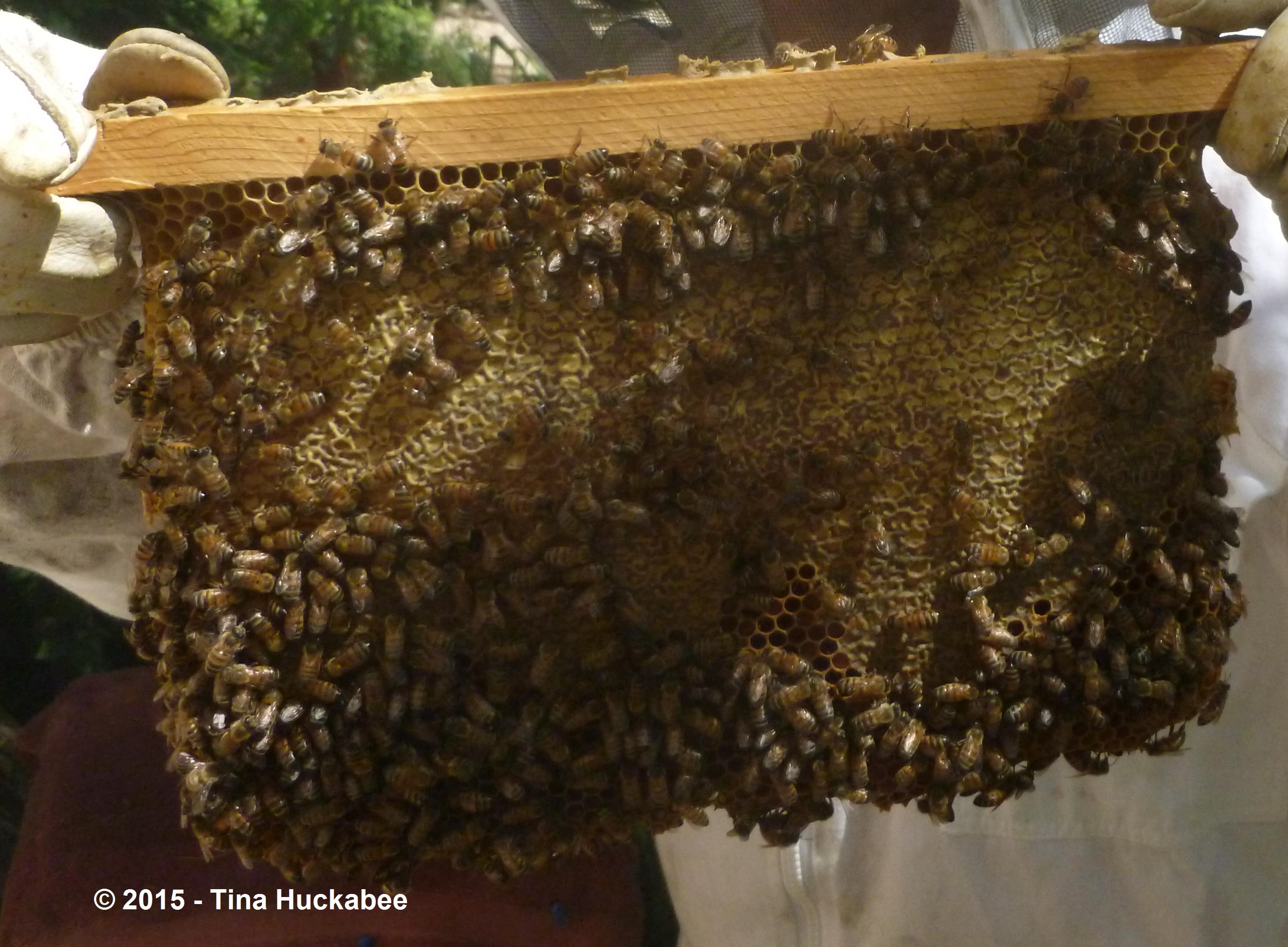
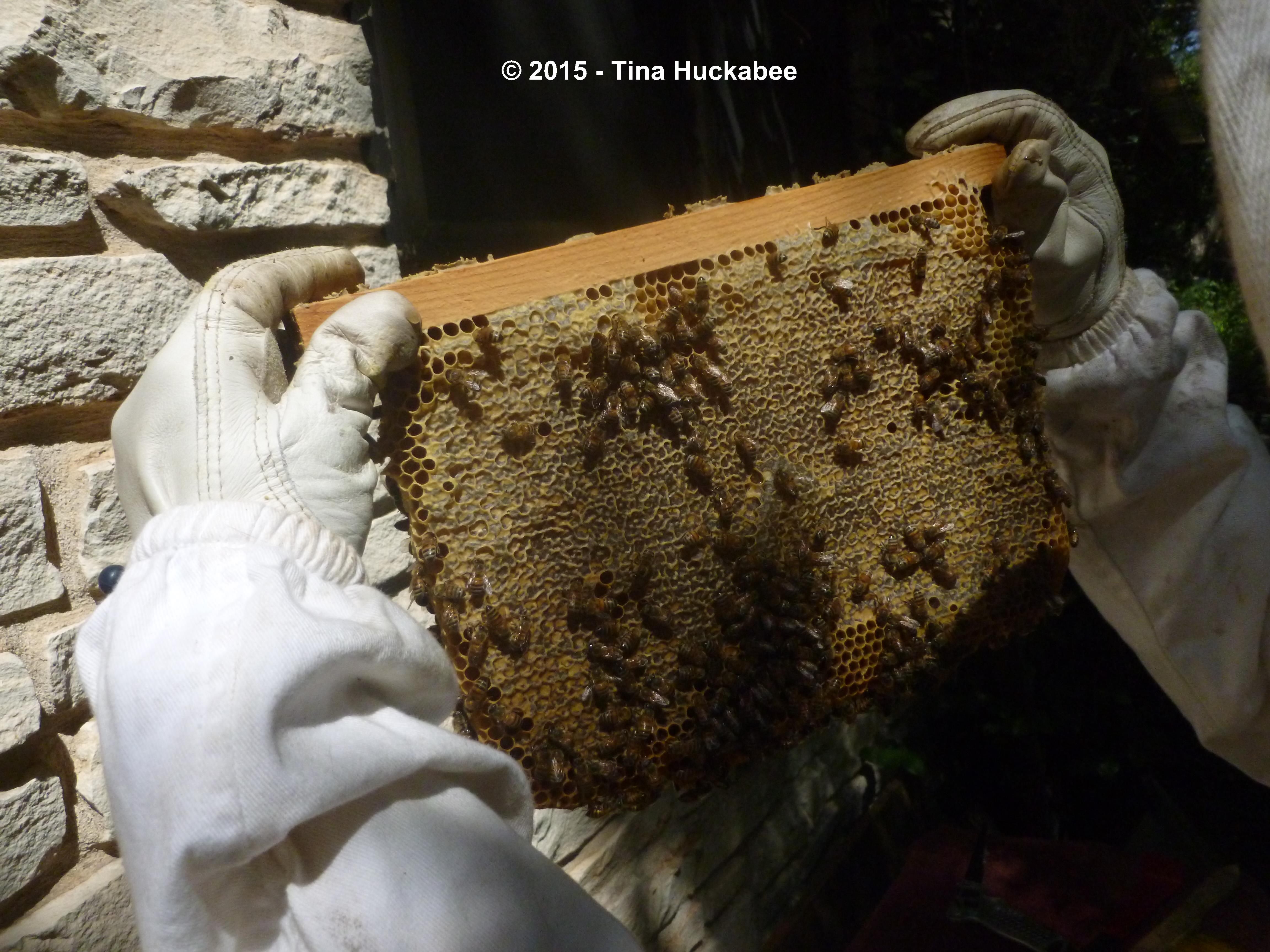
Mufasa is thriving!  Mufasa has a strong queen and the hive is healthy, active, a bit cranky, and loaded with beautiful honeycomb.
P1070494_cropped_2940x2161..new

P1070489.new

P1070485_cropped_3373x3185..new

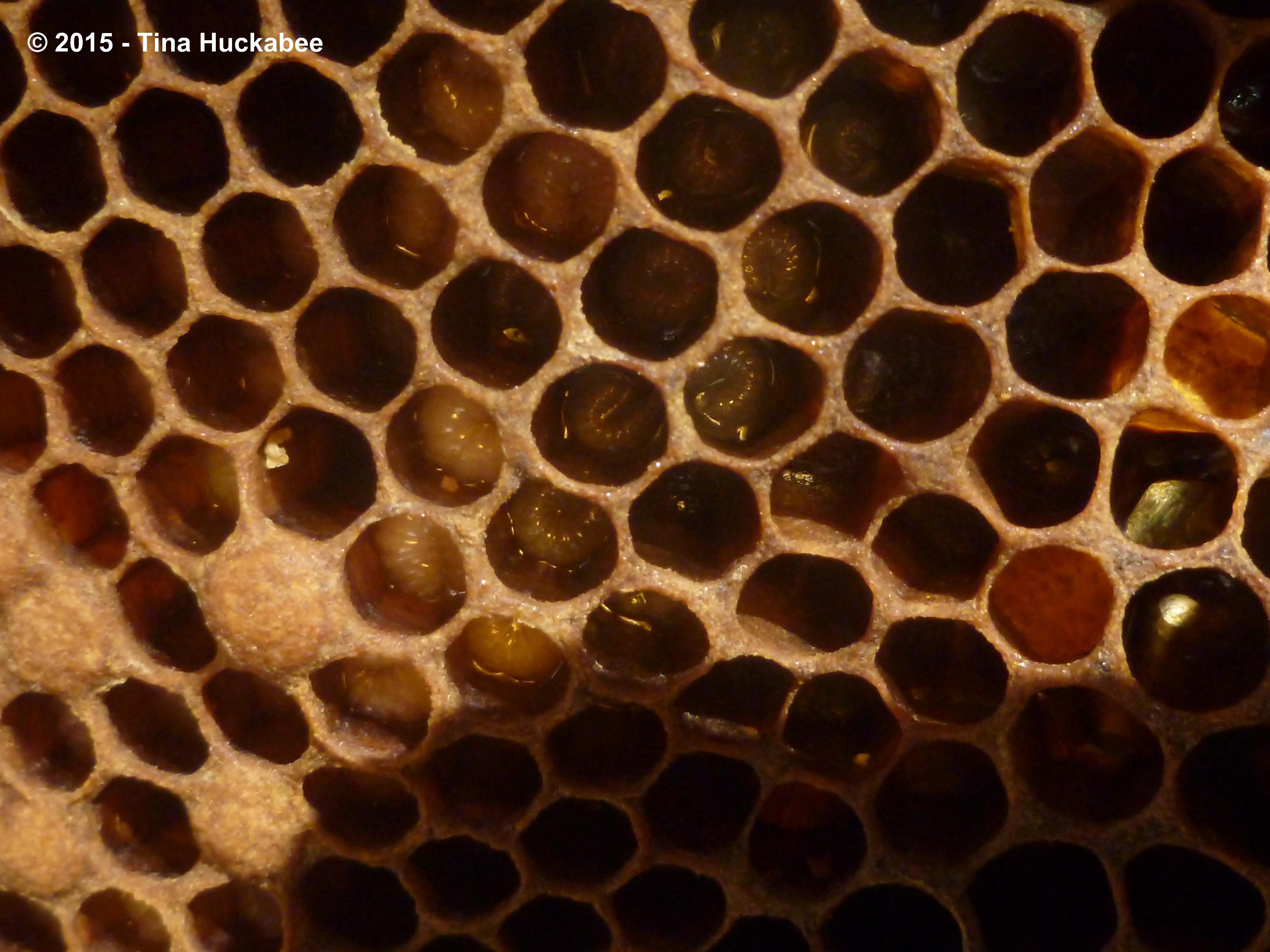
With plenty of capped and uncapped brood–a new generation is underway.

P1070502.new

P1070498.new

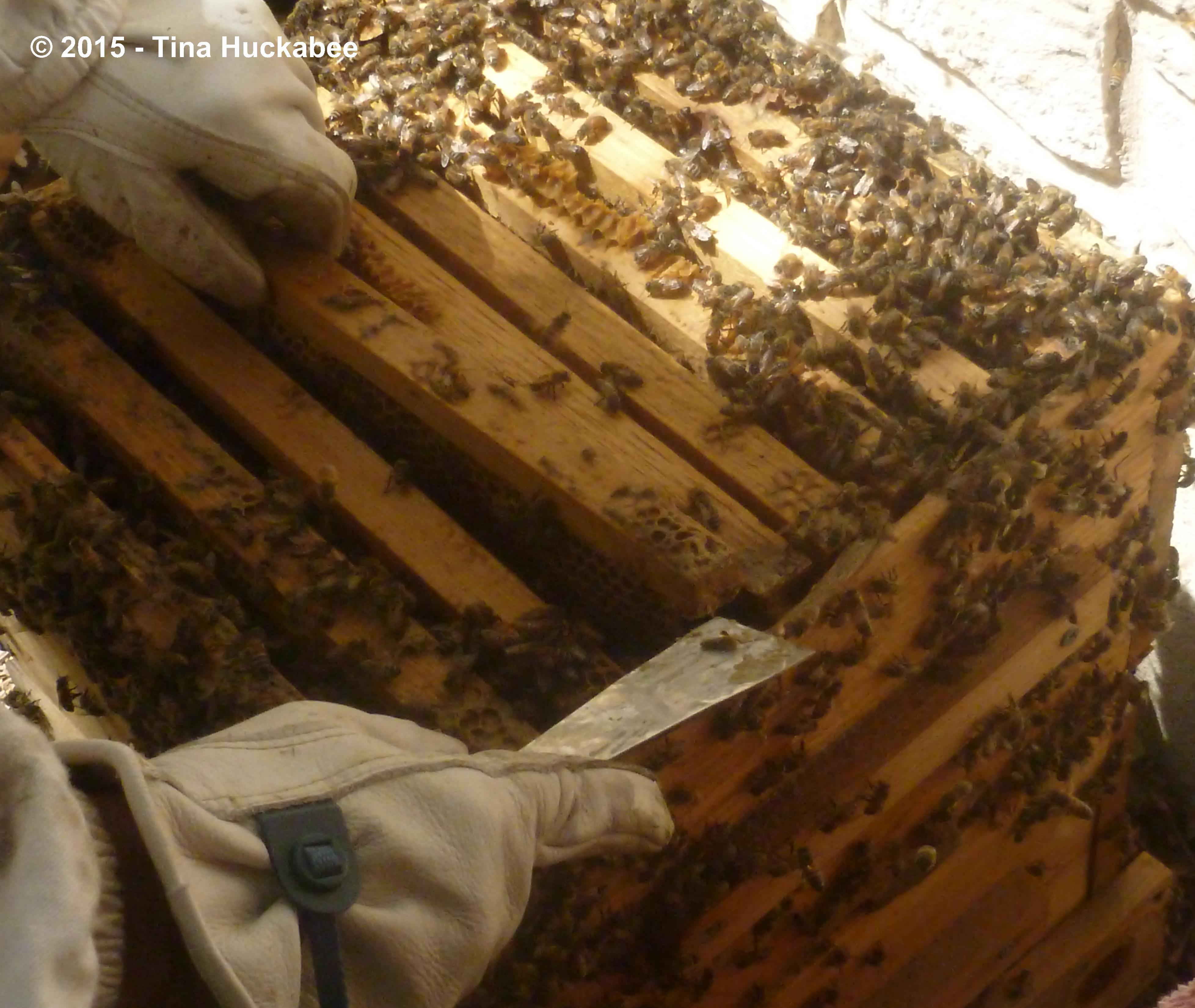
However, there was no sign of the sheets that I placed in Mufasa’s boxes.  A day or two before, I’d seen bees removing fuzz from the hive entry board.  Was it Beetle Bee-Gone fuzz?  Maybe, but I’m not positive.  There were still more beetles that scurried when we opened the hive than I would have liked, but significantly fewer than we’d seen in the last few hive checks.  We squished plenty; I’ve discovered an additional use for the hive tool.
P1070500_cropped_3913x3300..new.new

It’s an excellent beetle murder weapon when placed on top of a victim and pressed.

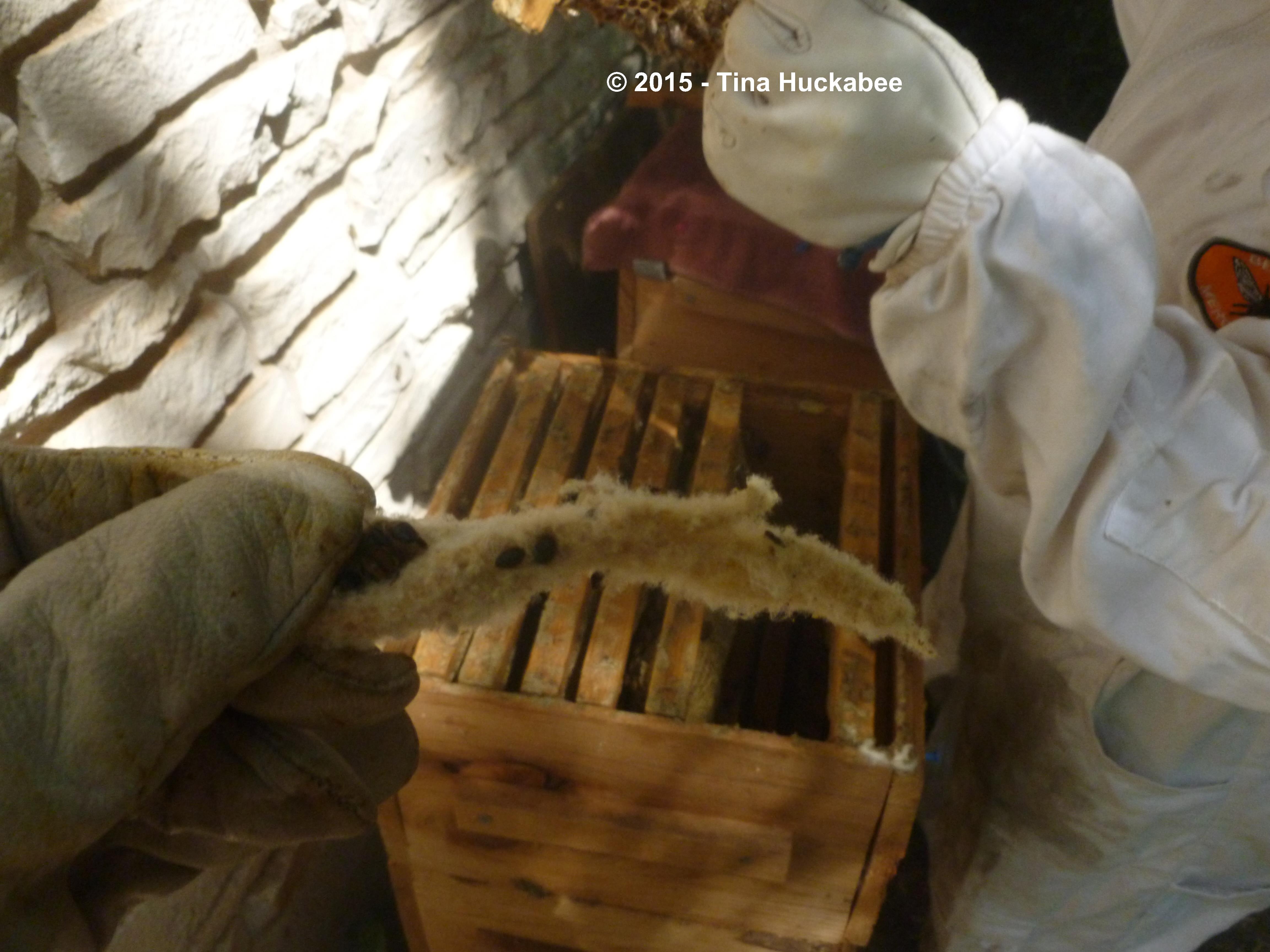
Generally pleased that the hive was healthy and that we saw fewer beetles, we closed Mufasa and moved on to Scar.  Scar was quite the revelation!!  Not as robust a hive as Mufasa, there were hardly any beetles–a few, but roughly in the manageable numbers that we saw last summer.  And in Mufasa, we were able to see the Beetle Bee Gone sheets in action.
P1070496.new

P1070527.new

P1070511.new

P1070507.new

P1070506.new

P1070509.new

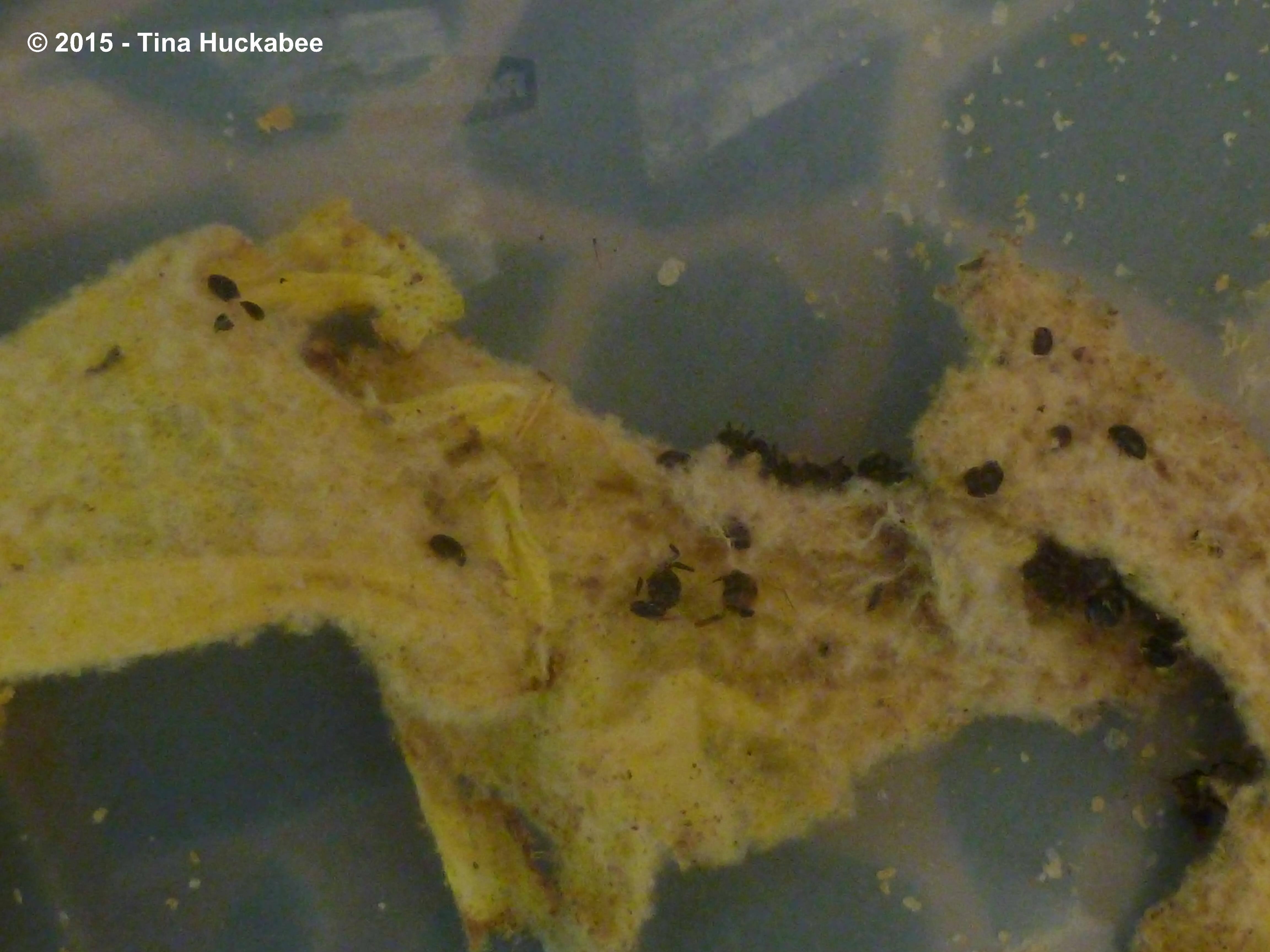
Or maybe post-action is a better description.  The sheets were obviously bee-chewed and fuzzy and there were beetles, dead and alive, caught in the fuzzy sheets.

P1070526.new

P1070525.new

P1070524.new

Victory!!

Scar doesn’t have the full comb in both top boxes like Mufasa has, nor the amount of honeycomb, but like Mufasa, Scar has lots of capped and uncapped brood.

P1070497.new

I added more sheets to both hives and will check on the beetle-trapping progress in a couple of weeks. I gathered up the used sheets with beetle bodies,

P1070528.new

…and tossed the whole mess where it will do some good–in my compost bin.

I feel good about the success of the Beetle Bee-Gone sheets and their trapping of some of the beetles.  Did we get them all?  No way and we also didn’t check the bottom, or main, brood box.  There could be beetles there, causing havoc.  But both Bee Daddy and I concur that we don’t want to go into the hive that deeply–the risk of rolling our queen is just too great. Been there, done that.  We’ll continue to monitor the hives from the middle and top box.

That will have to suffice.  Fingers crossed.

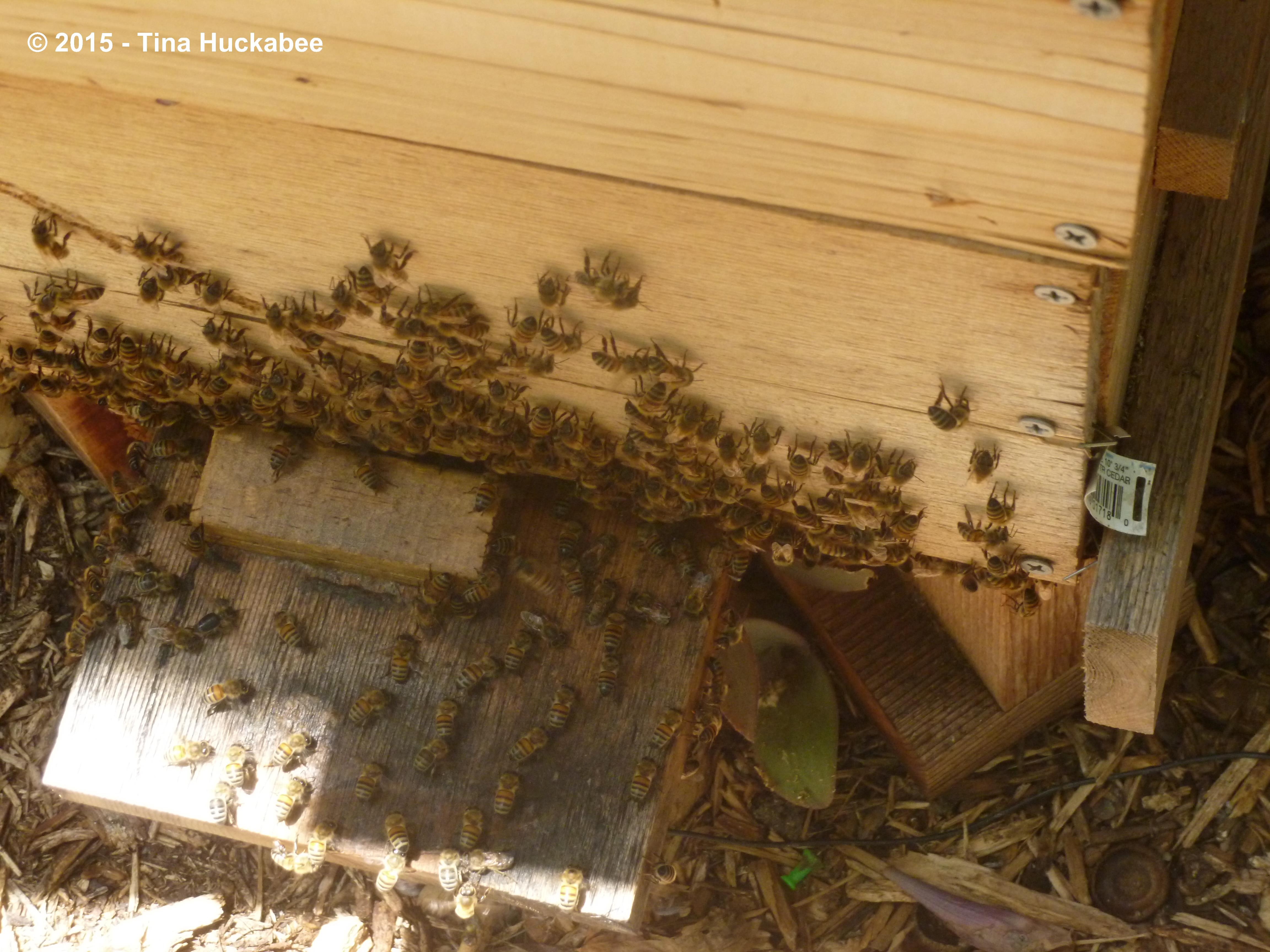
I think that giving the bees a hand in the maintenance of their hive may have allowed them to get ahead of their beetle infestation.  I won’t know if that’s true until we check the hives again, but we noticed that during  the last few hive checks and with full, gross beetle infestation,  our bees were quite cantankerous.  Really mean.  Even with adequate smoke, they were much more aggressive than usual. This hive check?  They were back to their (relatively) sweet selves. Yes, they get snippy when we invade their home, but they were tolerant of our intrusiveness this time, whereas in the last few checks–wowzers–they were tough customers!!  Was their over-the-top defensiveness because the hive was under siege?  I think that makes some sense, especially since they seem more normal now and the beetles seemingly have less of a presence.

For now, I have to give Beetle Bee Gone a thumbs up  in our war against the invasive Small Hive Beetle.

One of the best parts of checking the hives is that Bee Daddy always cleans our bee tools afterwards!

P1070530.new

Isn’t that nice?  Now for those dinner dishes….

Wishing the the girls a good August: success in foraging, in egg laying, and the raising of a new generation of bees and in the continued dissipation (dare I say eradication?) of the small hive beetle infestation.

If you live in or near Austin, The Tour de Hives will be held this coming Saturday, August 15.  The tour of local bee yards  is in celebration of National Honey Bee Day and is a fundraiser for the Travis County Beekeepers Association, a nonprofit organization committed to promotion of and education about honeybees.  Check out the links for more information.
P1070467.new


Tree Following: August Oven, 2015

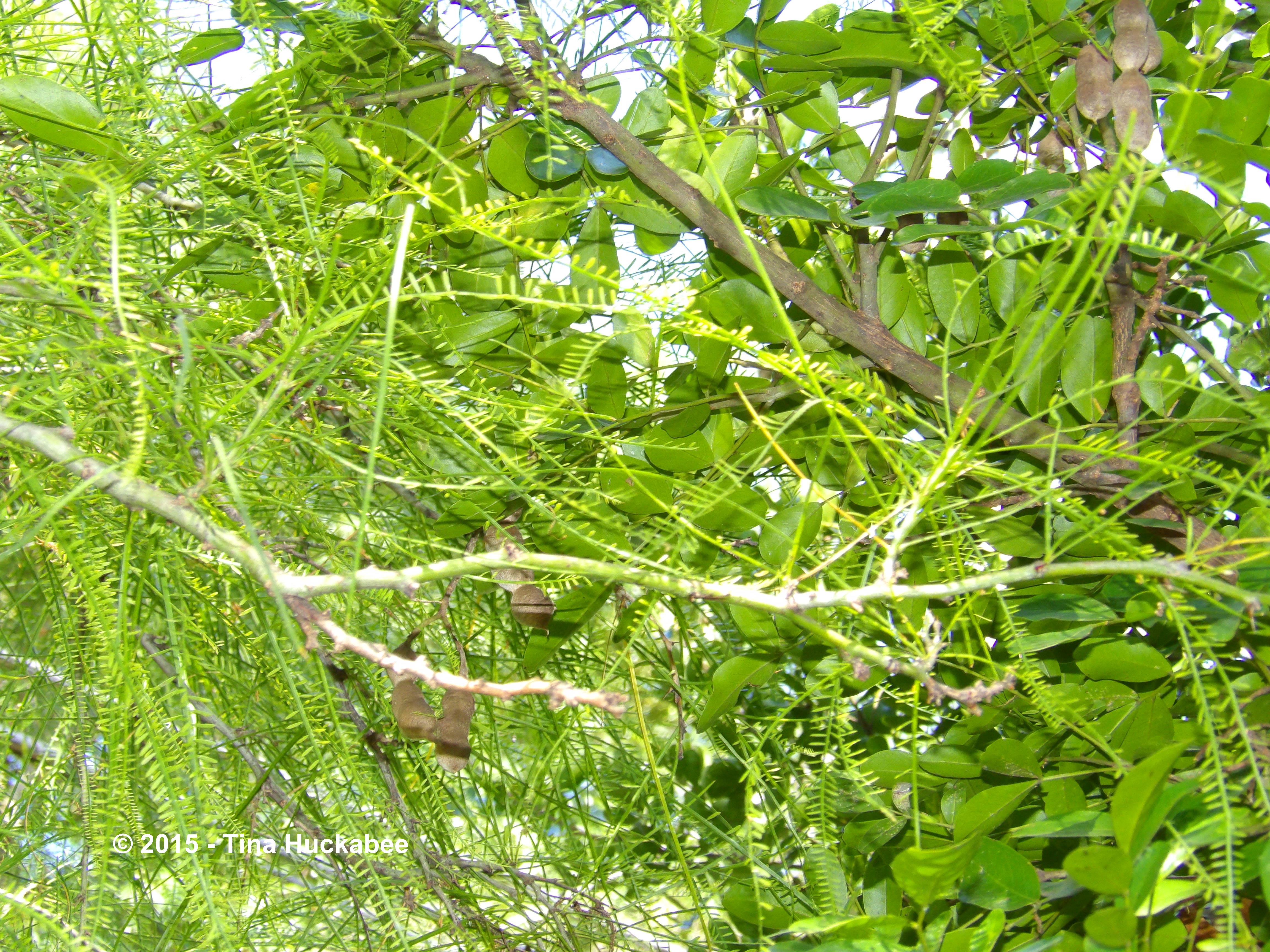
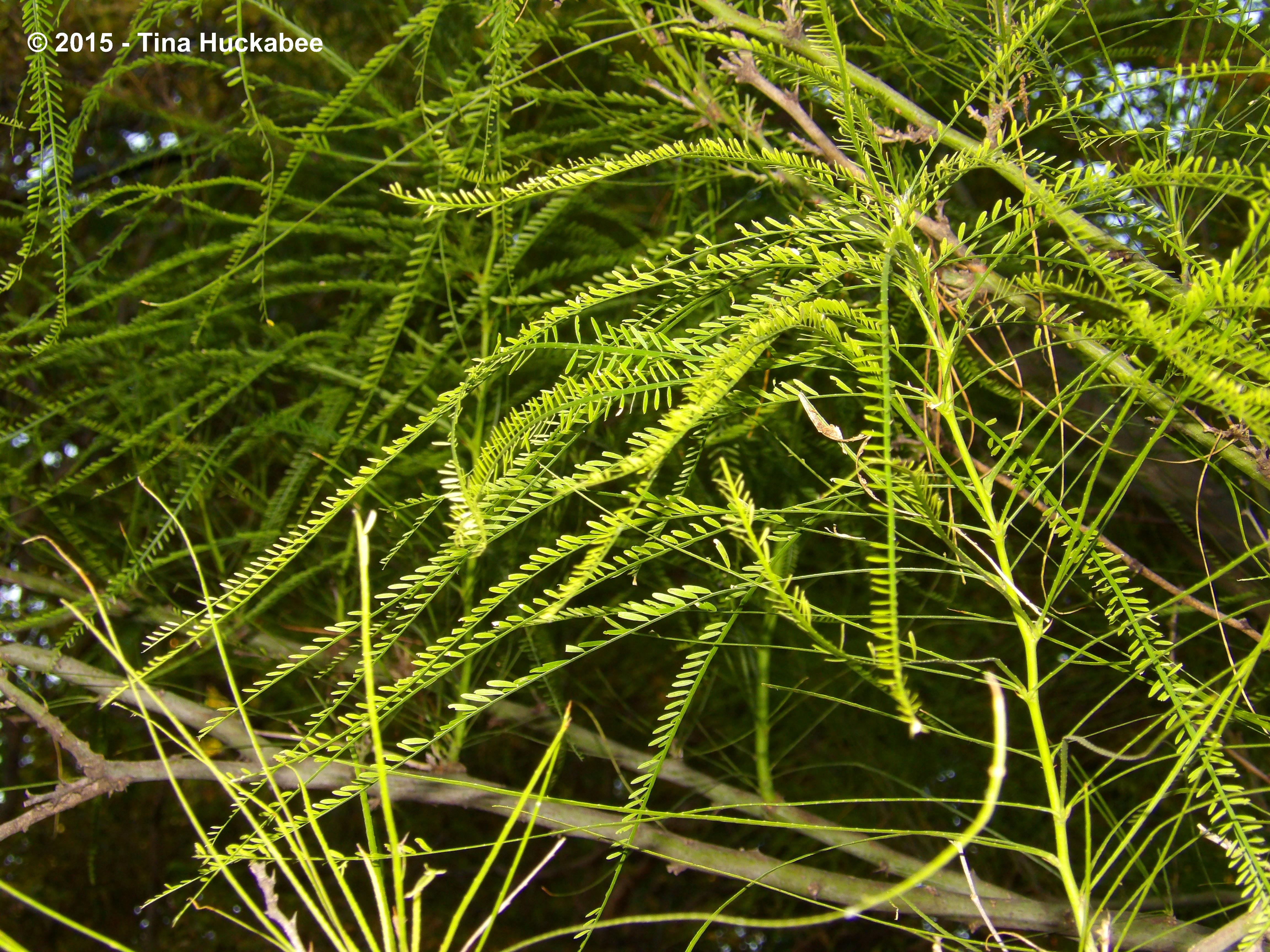
It’s toasty out there!  The hot August sun beats down on me and mine, but most of my tough Texas natives stand brave against the 100 F+ temperatures this hot August. Included in that set of stalwart botanical steadies is my 2015 Tree Following choice, the beautiful Retama, Parkinsonia aculeata.  It’s still green,

IMGP9789_cropped_3275x3483..new

…lacy and lush.

IMGP9893.new

Juxtaposed with the Mountain Laurel, Retama’s fine foliage is brilliant,

IMGP9818.new

…and against the Shumard Oak’s more substantial leaves,

IMGP9936.new

IMGP9811.new

…it softens, though I must admit that I prefer the shade of the Oak to that piddling amount of cover provided by the Retama.

Against the big Texas sky, Retama foliage is stunning.

IMGP9820.new

IMGP9888.new

The foliage contrasts with summer light.IMGP9919.new

And sometimes, reflects it.

IMGP9939.new

The foliage is fresh and verdant and that is welcome in late summer.

IMGP9938.new

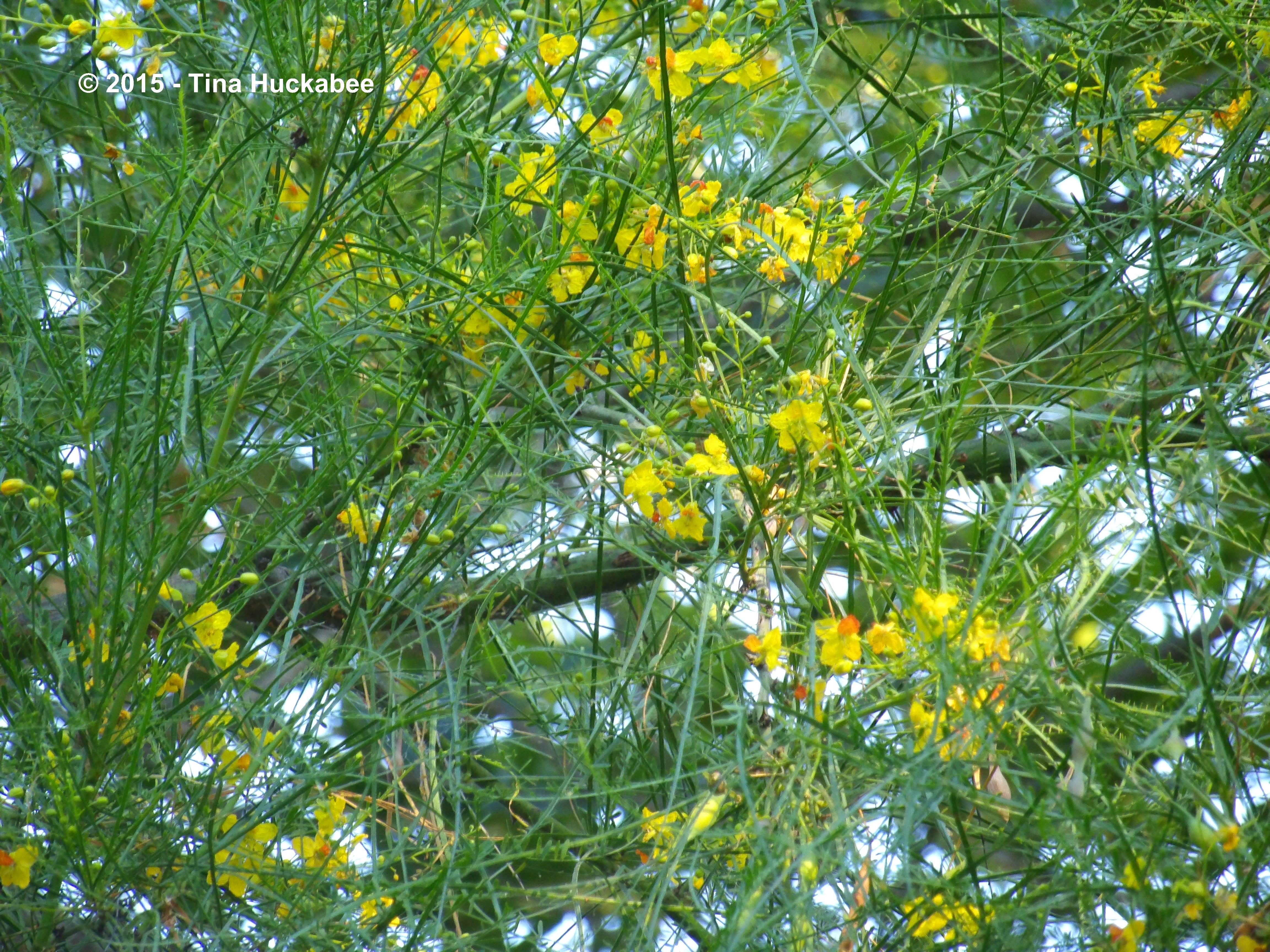
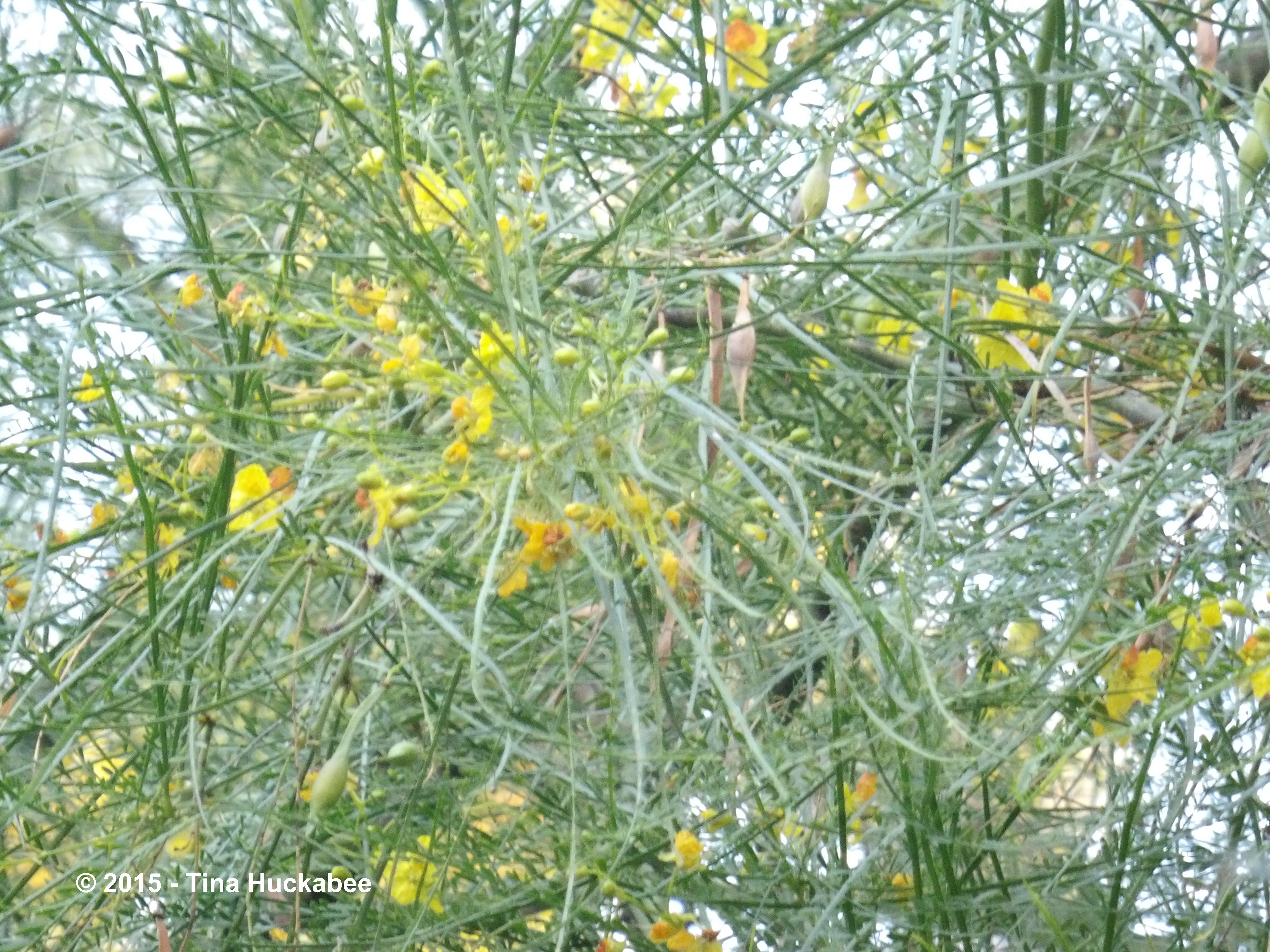
Clusters of Retama flowers are visited by bees, butterflies and hummingbirds. All the blooms are now situated at the top of the tree, whereas previously, individual blooms were scattered along the lower branches.  Because the flowers are high on the tree and summer breezes blow, I’ve had a difficult time getting adequate close-up shots.

IMGP9884.new

In the tangle of sunny yellow are freckles of red/orange “honey” petals, typical of each individual flower.  When the bloom first opens, the honey petal is not yellow, but a paler version of that orangey-red.  Once the flower is pollinated, that “honey” petal turns a deeper color and curls backward.  Retama flowers are a colorful two-fer gift.

IMGP9886.new

As bloom time wanes, the seedpods are growing larger, maturing, and turning brown. That is probably the biggest change since my Tree Following July report.

IMGP9927.new

Retama seeds are edible and also used as fodder for farm animals in parts of the world where this tree grows, whether in its native region (southwest US, Mexico and parts of South America) or where it is an introduced and often, an invasive species.  The seed pods will continue developing as fall approaches, eventually dropping to the ground. While this tree has become a problem plant in some areas of the world (Australia has banned it), I’ve rarely had seedlings develop from my tree.  When seedlings have germinated and grown, they don’t make it through winters. That said, out in open areas of south and west Texas, Retama must germinate well and often enough because there are plenty of Retama trees which dot and decorate the rugged Texas landscape and adjacent highways.

IMGP9887.new

Until September…please visit Lucy at Loose and Leafy to learn about other trees being followed for August.

IMGP9787.new

Love your trees!!

Wildlife Wednesday, August 2015

As a general rule I’m not a conspiracy theorist.  However, this past month I’ve begun to think that they’re all out to get me.  Or rather, they’re conspiring against me, so that I don’t get them–in photograph form, that is.  The them I refer to is all the wild critters that inhabit and visit my gardens.  This past month, whenever I spied an interesting garden visitor nectaring, breeding, or otherwise creeping, crawling, or flitting,  I struggled to fetch or focus my camera quickly enough to snag a photo.  I’ve come to believe, cross-species, that there’s an understanding among the wildlife in my gardens:  Hey! Tina’s got her camera–let’s vamoose!!  And vamoose they did.  Even when strolling into the gardens, camera in hand and ready for a wild photo shoot, those in the garden, right there, busily slurping on a bloom or nipping at a seed suddenly, weren’t.

Is it my breath?

IMGP9710.new

I do have lots happening–bees a’buzzing, butterflies a’flying, birds a’twittering, but they don’t seem to want to mug for the camera.

IMGP9625.new

Maybe it’s just too darn hot.

IMGP9630_cropped_2898x3014..new

It is hot.  The dog days of summer have settled in Austin, but it’s also the first Wednesday of the month and time to celebrate wildlife in wildlife gardens.

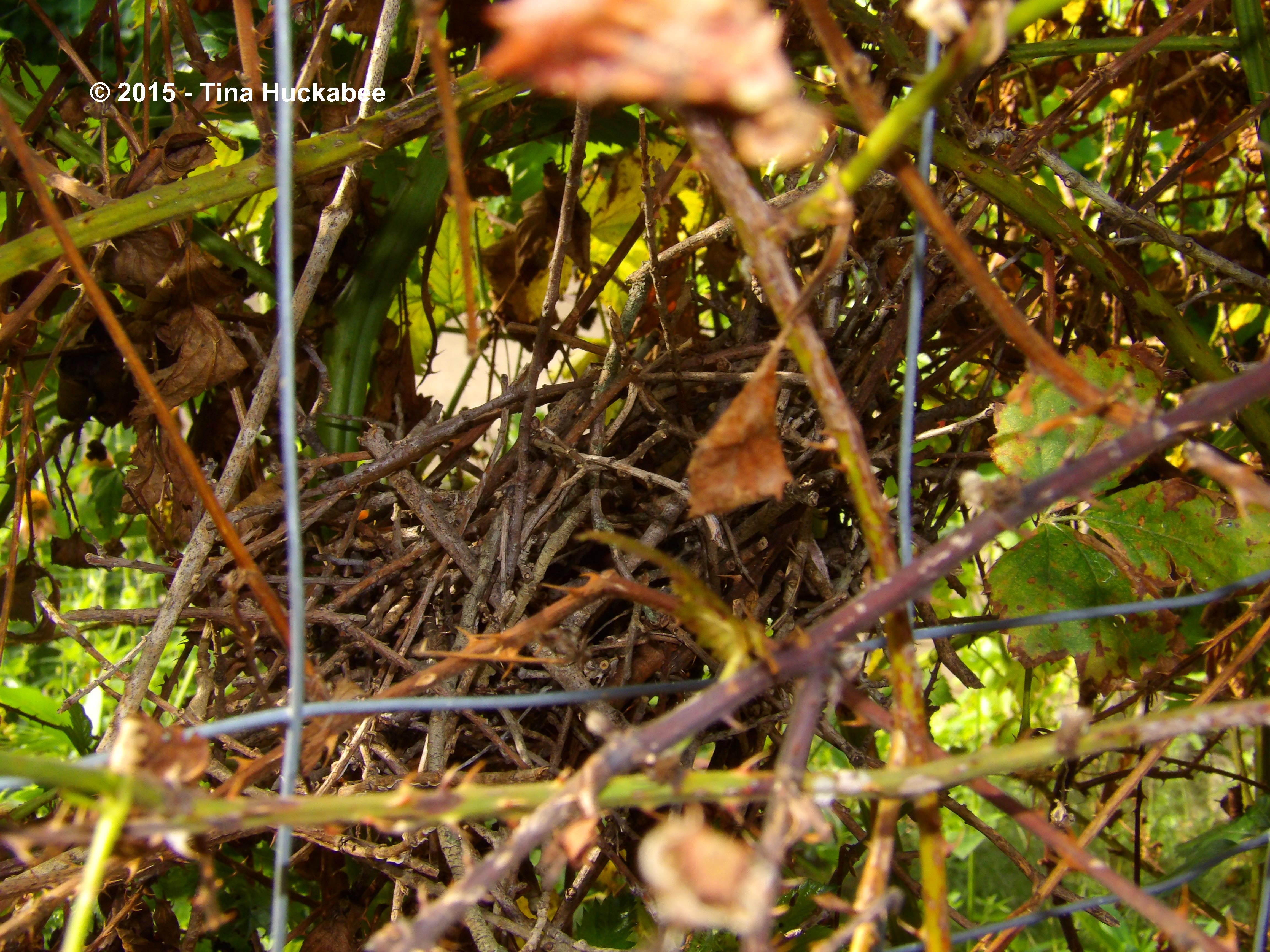
There were a few things that didn’t scamper away from me like this nest that I discovered while pruning the blackberry bramble.

IMGP9214.new

I have no idea who this belonged to and I don’t know when it was built.  I didn’t see it during blackberry season (May), so I assume it was built afterwards.  I wonder what happened to the builders and/or the residents?

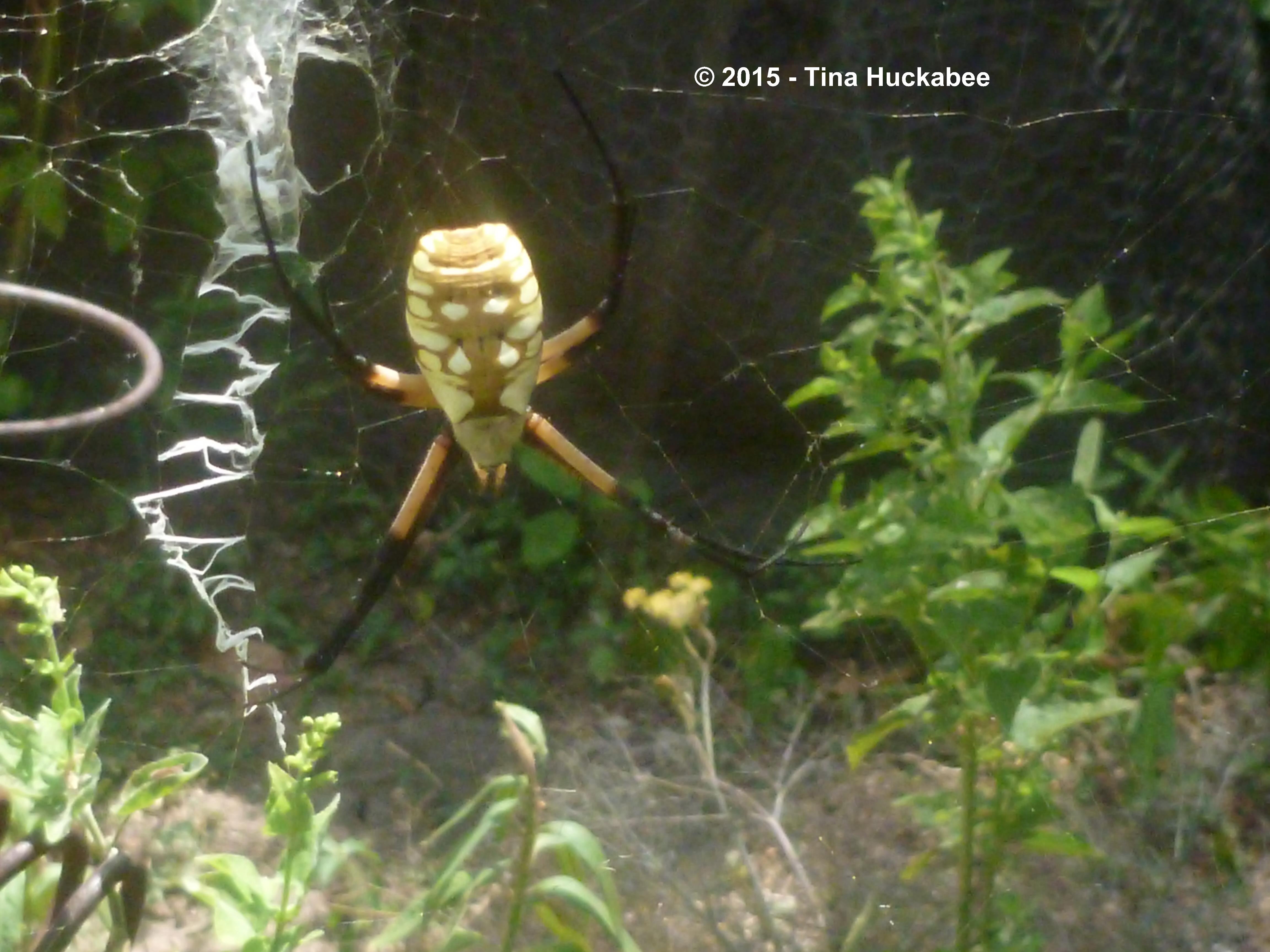
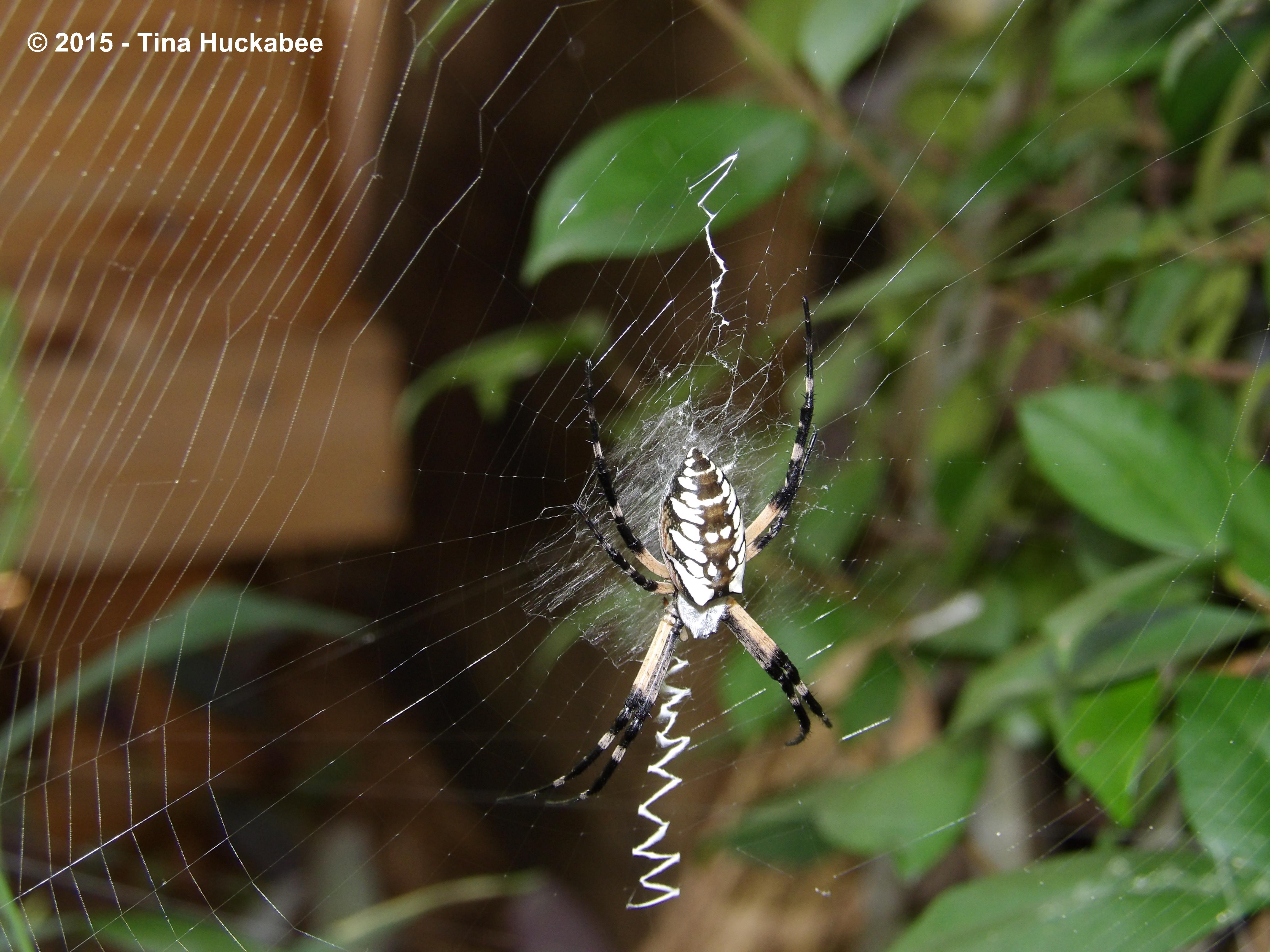
On the other side of the blackberry vine this beauty has built a lovely summer home.

P1070472.new

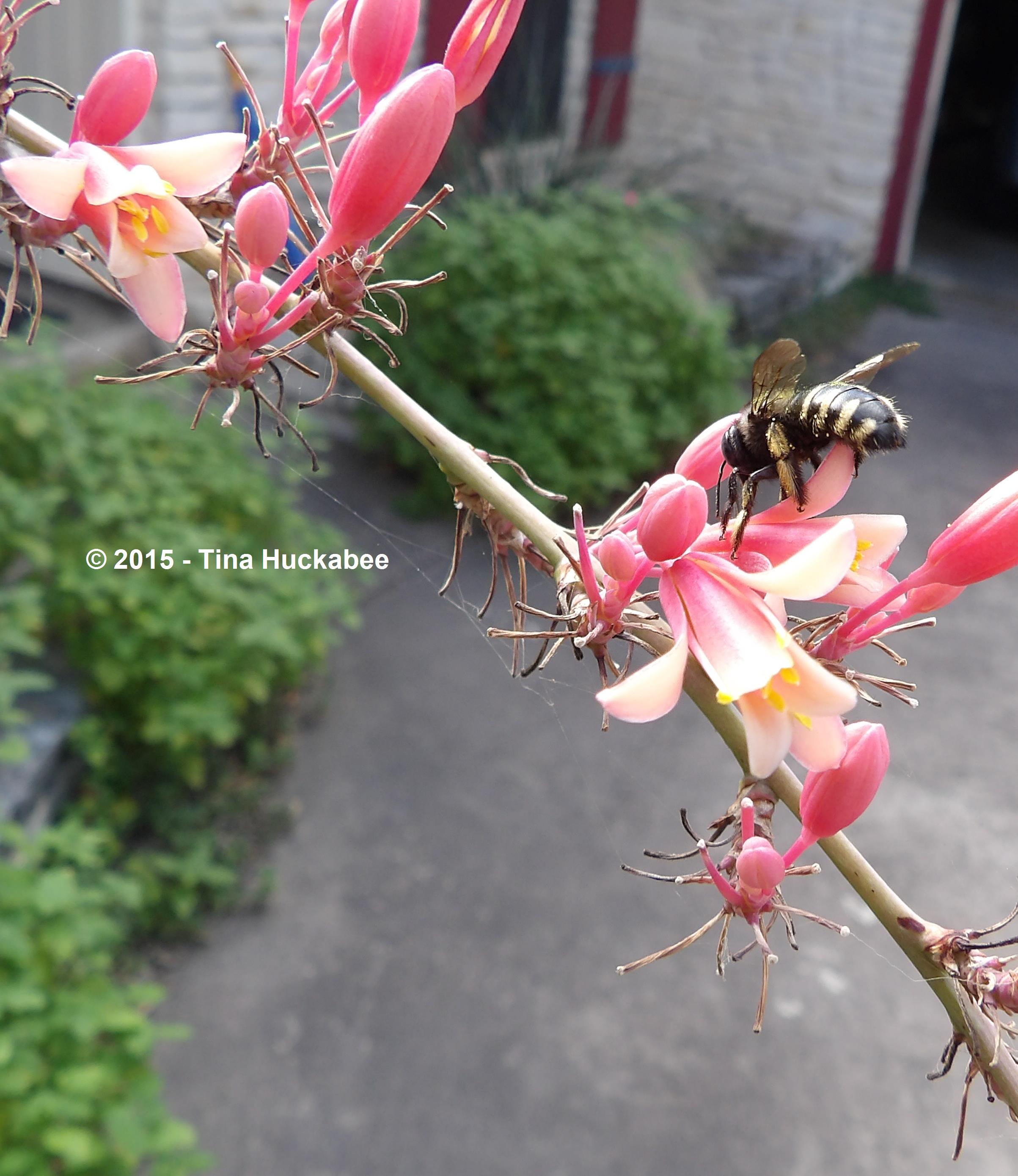
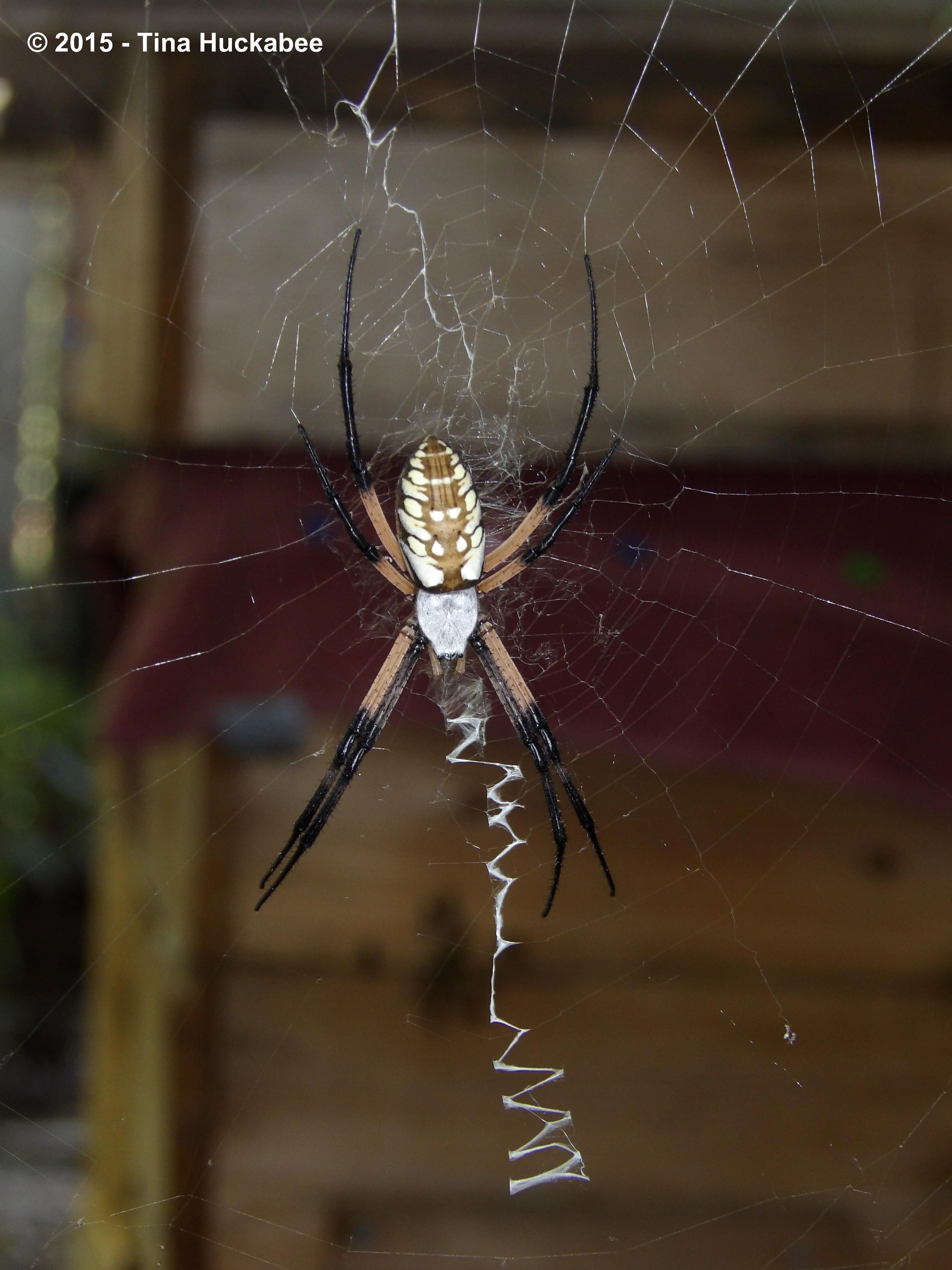
A deadly home though for anyone who bumbles into her webbing, but I welcome these common garden spiders, the Black and Yellow ArgiopeArgiope aurantia.  I saw that she caught some of the insects that were chewing on some of my veggies and milkweed plants which are nearby.   I definitely have mixed feelings about her hunting as I know she also caught at least two of my beloved Horsefly-like Carpenter Bees, Xylocopa tabaniformis,  like this one.

IMGP9637_cropped_2406x2779..new

Another Black and Yellow Garden spider set up shop in the back garden, as well.  If you’re a regular reader, maybe you’ll recognize the wooden structure in the background?

IMGP9387.new

Yup, she hunting honeybees and I know that she caught at least one.  No doubt, there were others ensnared in her web.

IMGP9674.new

It’s been a couple of years since I had these spiders in my gardens; some years they’re common, some years not.  I take a hands-off approach to spiders, insects and most critters in the garden.  Even with a very compromised local environment (lots of sterile lawns and few pollinator gardens), my garden space is healthier and relatively balanced if I let everyone do their thing, even if it means eating some of my favorite insects.

Sniff.

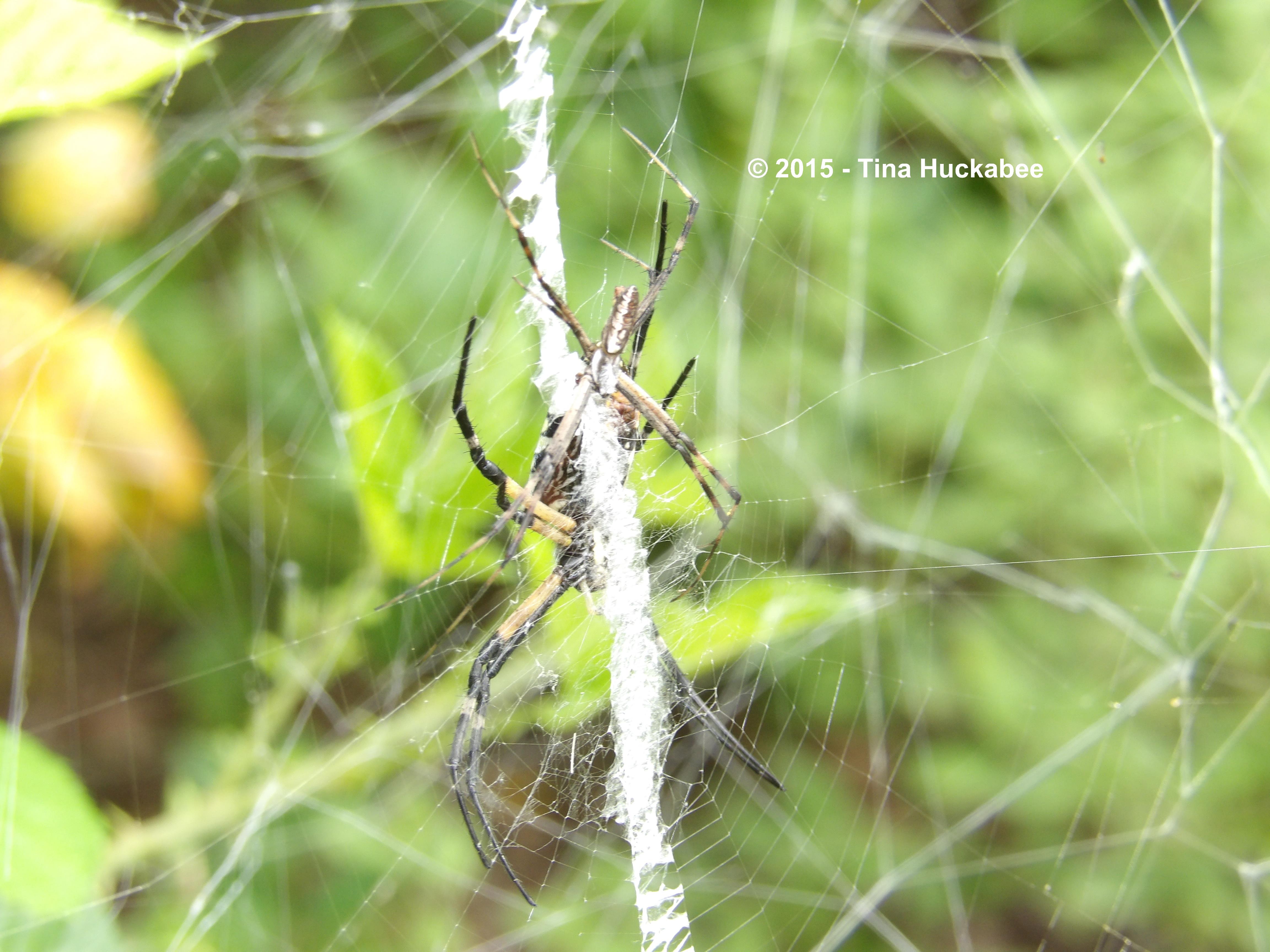
The male spider is much smaller and cruises around gardens,

IMGP9373.new

….looking for a female to mate with.  I guess these two are enjoying their summer fling.

IMGP9371_cropped_2591x3106..new

More spiders in my garden’s future….

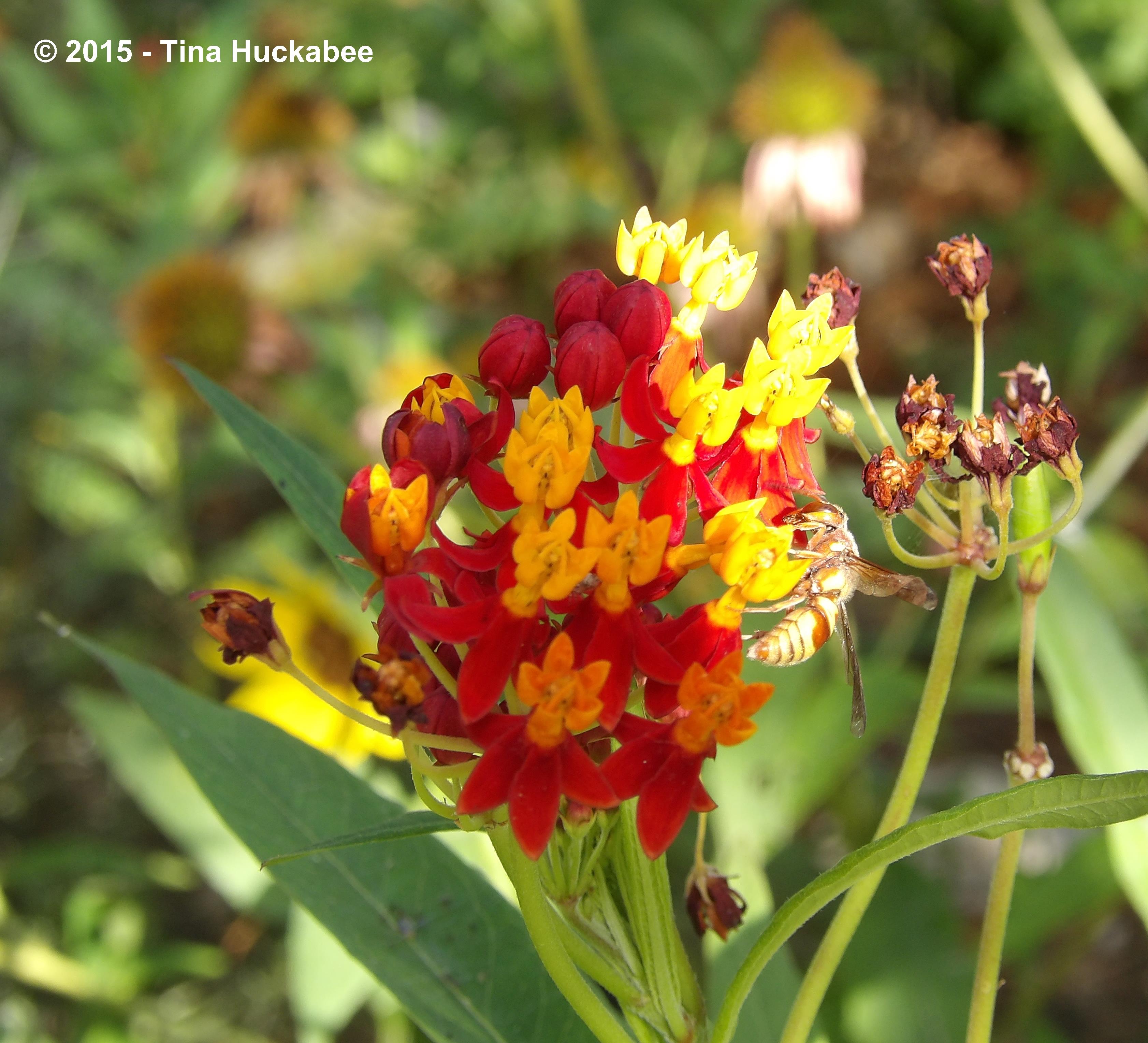
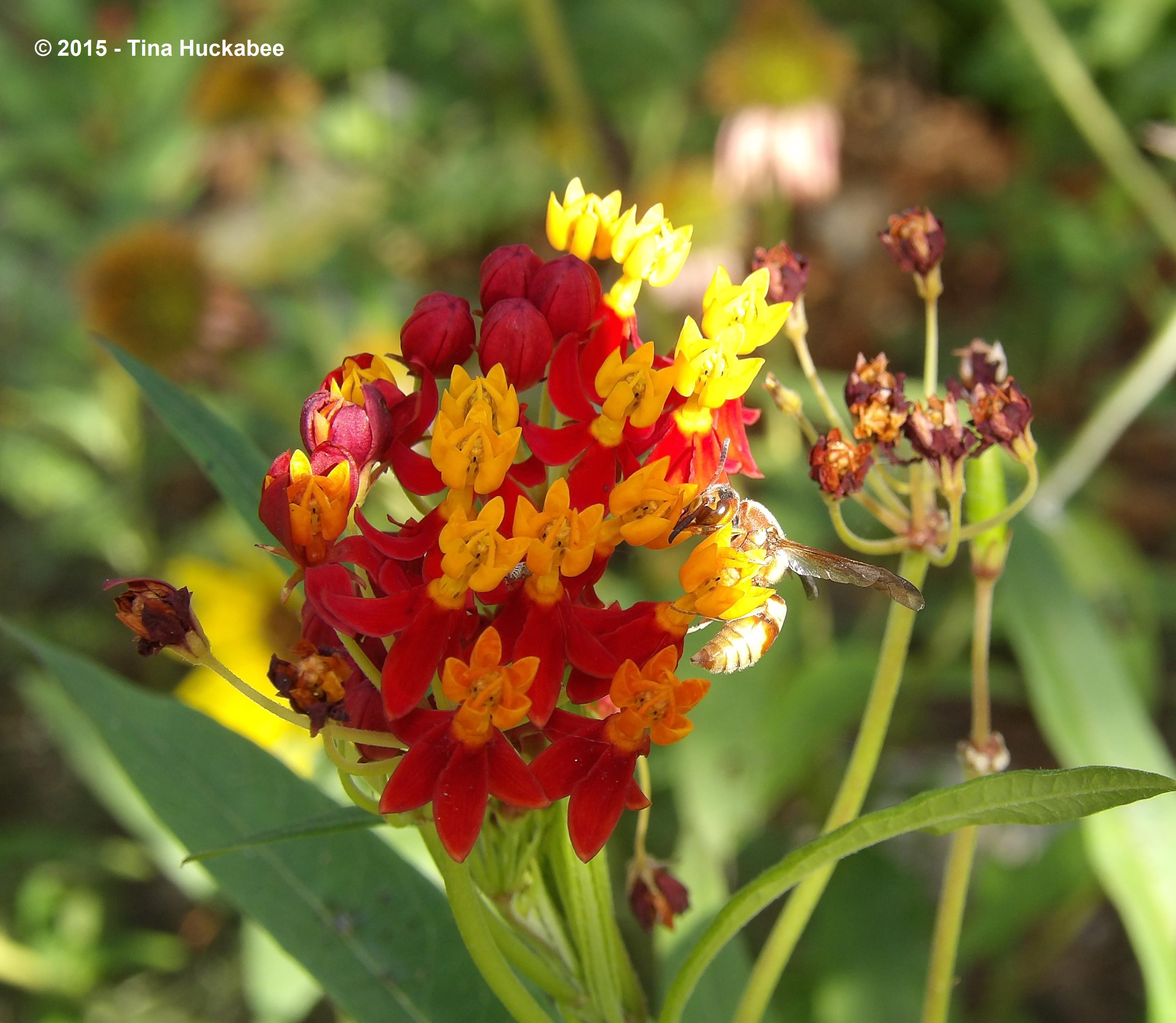
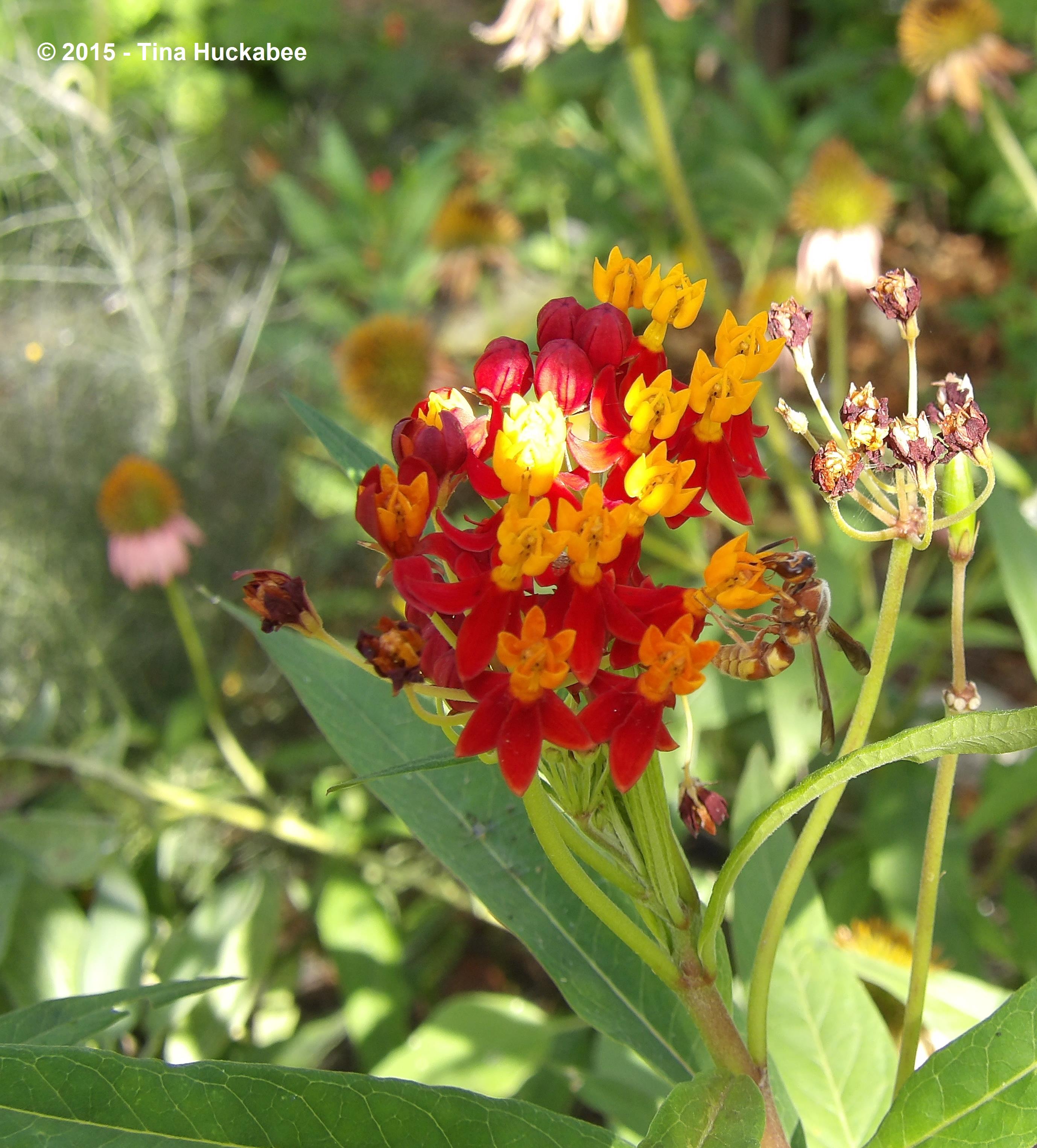
Other beneficial garden inhabitants are wasps, like this social Paper Wasp, Polistes exclamans.

IMGP9635_cropped_3365x3056..new

This insect is widespread in Texas and much of the South. I’ve seen a number of them this past month–resting on leaves, feeding at blooms, and sipping at bird baths.

IMGP9634_cropped_3374x2936..new

IMGP9633_cropped_2756x3051..new

Paper Wasps are  nectaring insects and categorized as social because they live in groups with a breeding queen and workers, though many wasps are solitary and are also common in Texas gardens.  These particular Paper wasps build nests that are made of cellulose, either out of wood or paper, with cells similar in design to honeybee combs; nests hang from a single stem attached to some object. I know I’ve seen the nests around my property, but of course couldn’t find one to photograph for this post. However, you can see one here.

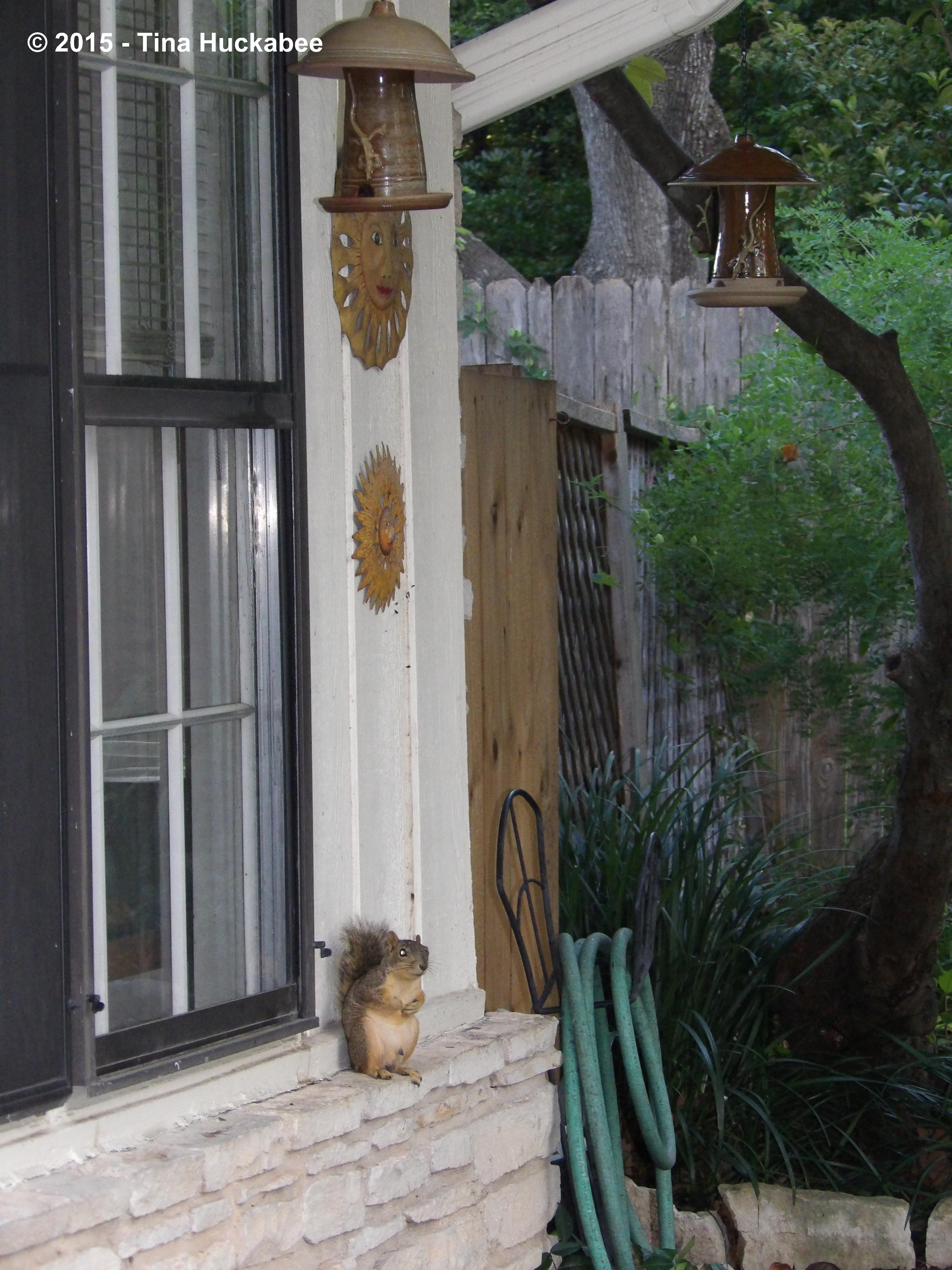
The squirrels are not happy with me. I don’t always fill the bird feeders, but I am this summer. By default and population, I’m also feeding the squirrels.   Several of these enterprising rodents began climbing up and then hanging onto the solar screen while nibbling seeds at the ceramic feeder in front of the kitchen window. They were emptying this feeder in front of the kitchen window in less than a day.  NOT cool. I finally removed the screen, to their great frustration.  Since then, the screen-vanquished squirrels have tried, in vain, to figure out how to get to the feeder.
Glass is not so easy to hang onto.

IMGP9622.new

One morning, this little guy sat on the window ledge, looking quite despondent at his inability to reach the feeder.  I swear that he had his arms folded and was tapping his foot in annoyance.

It’s a good day when I can out-smart the squirrels.

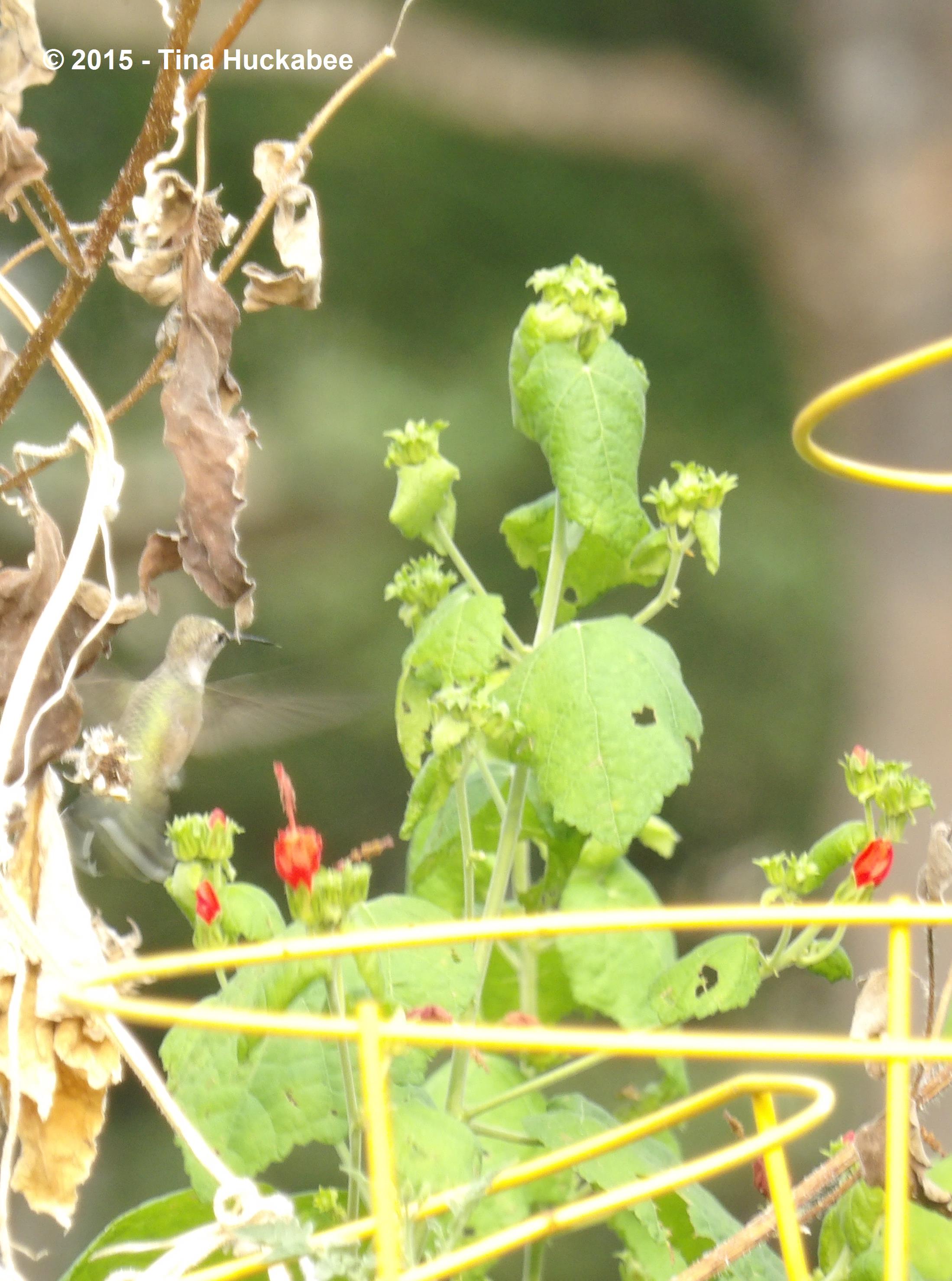
These female Black-chinned Hummingbirds, Archilochus alexandri (or maybe it’s the same one) have visited on a regular basis.  In the first set of photos, the flower-of-choice is the Big Red SageSalvia penstemonoides,

IMGP9290.new

IMGP9288.new

IMGP9282.new

…and in this second set, the meal source are blooms of Turk’s Cap, Malvaviscus arboreus.

IMGP9774_cropped_2198x2958..new

IMGP9773_cropped_2875x2295..new

I’ve seen one or more Black-chinned males and male Ruby-throated Hummingbirds-alas, no photos other than those above though.    They’re hard to catch, these winged jewels, but I’m enjoying their visits, however fleetingly, as they feed at the plants they favor in my garden.

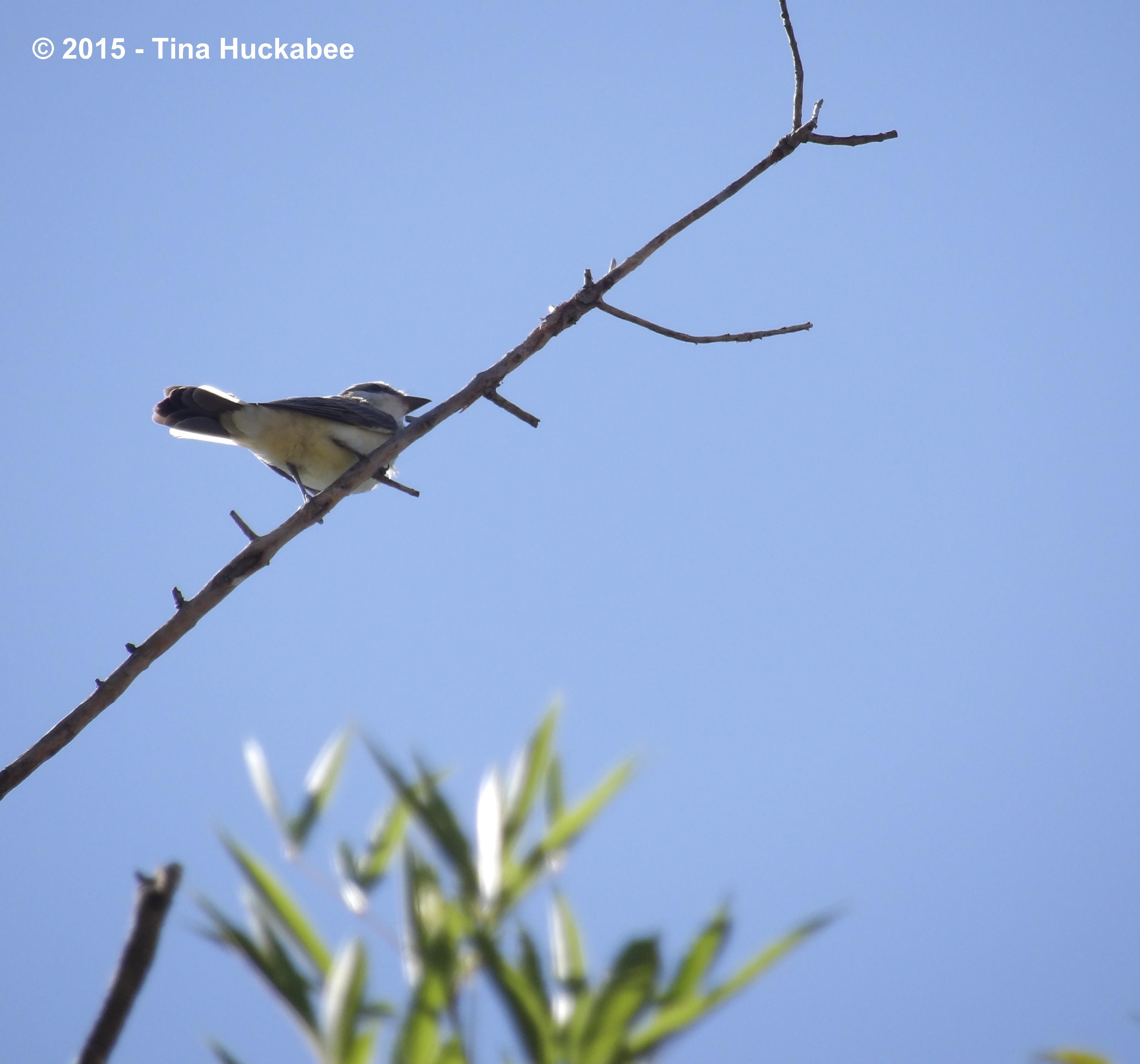
For several days in mid-July, I was  hearing an unfamiliar bird call.  I couldn’t find the singers for the first day or so, then finally spotted the jazz-like crooners.

IMGP9688_cropped_3521x3286..new

The Logger-head ShrikeLanius ludovicianus, is a year-round resident of much of the United States, though I’ve never seen one–ever.  I was surprised to see several of them, though all I could photograph was their lower halves, due to their perching high in neighbors’ trees around my gardens.  They have a varied diet, but also eat insects.  Were they after my honeybees?  Hmmm.  I heard them, finally saw a few, then I left town for a bit.  I’ve heard none since.  Too bad.

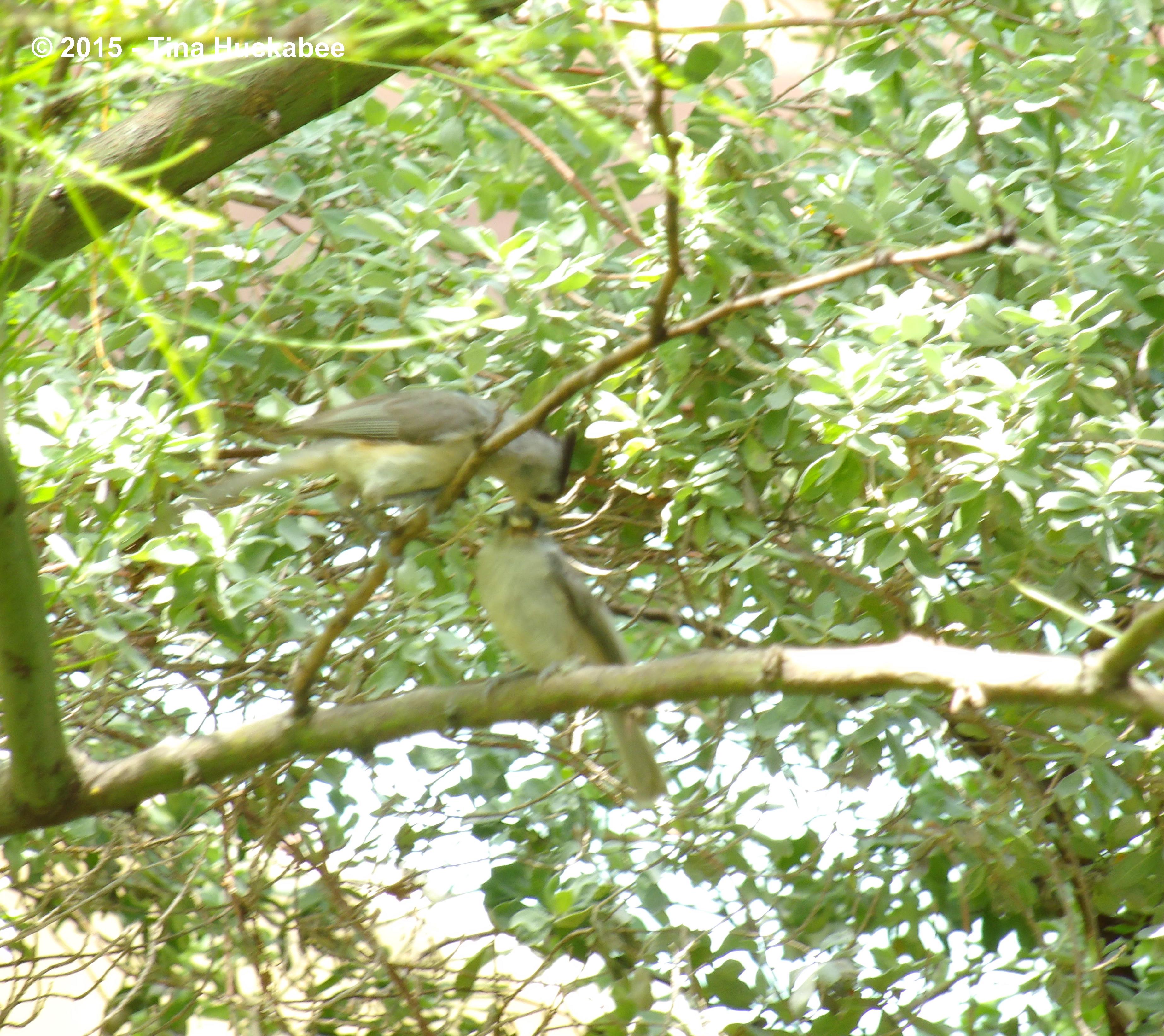
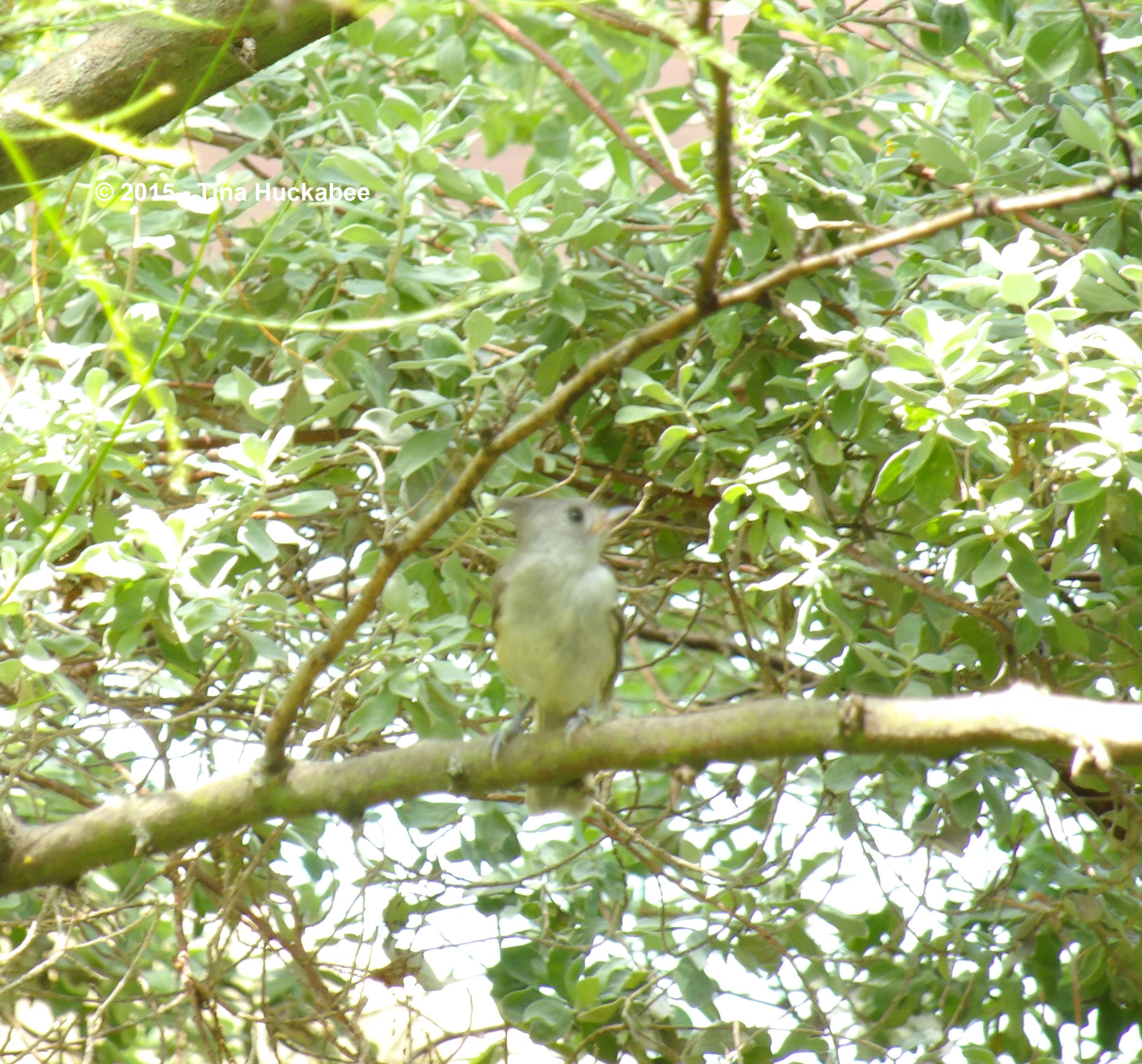
I loved watching this parent  Black-crested TitmouseBaeolophus atricristatus, feeding a young’n.

IMGP9259_cropped_2927x2710..new

IMGP9260_cropped_2976x2774..new

IMGP9268_cropped_3692x3286..new

Actually, I guess it was the young’n that I really watched, as he/she looked this way and that for this parent to show up with the seed.  Adorable, and gratifying that there’s enough to feed the next generation.

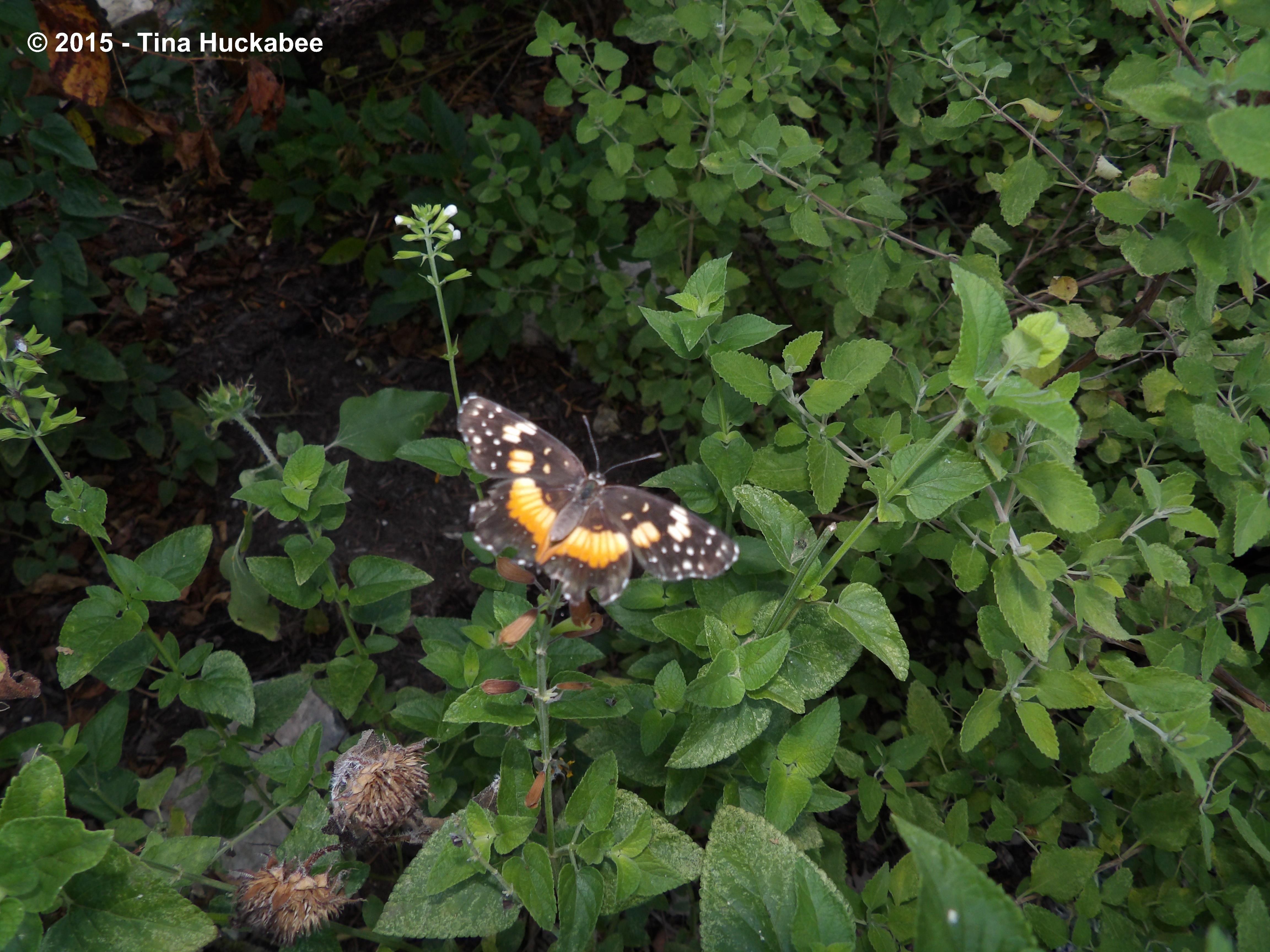
This lovely little Bordered Patch butterfly, Chlosyne lacinia, flitted in the garden for days before I could catch this mediocre shot.

IMGP9610.new

The host plant for this pretty are sunflowers, which are plentiful in my gardens this summer.

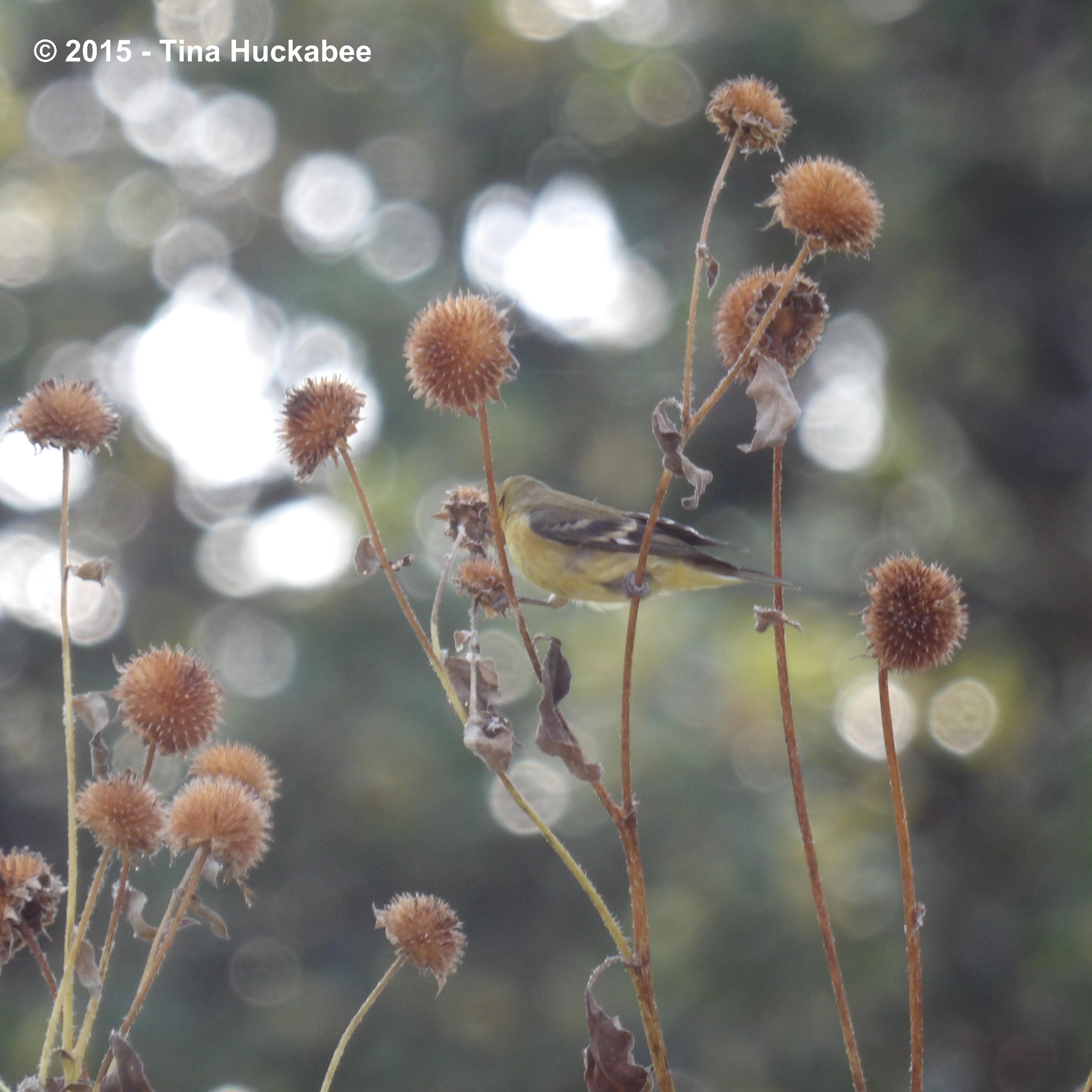
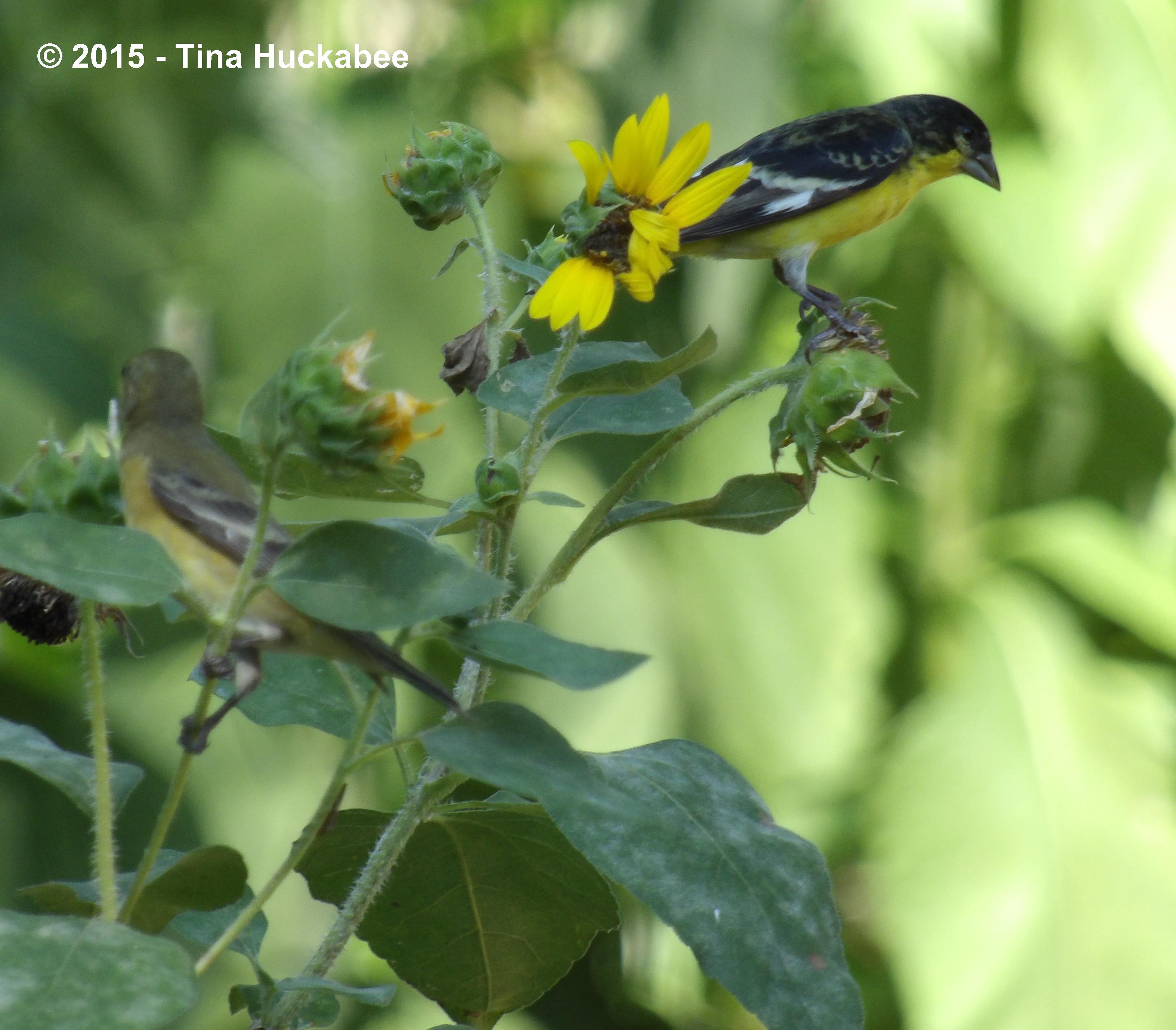
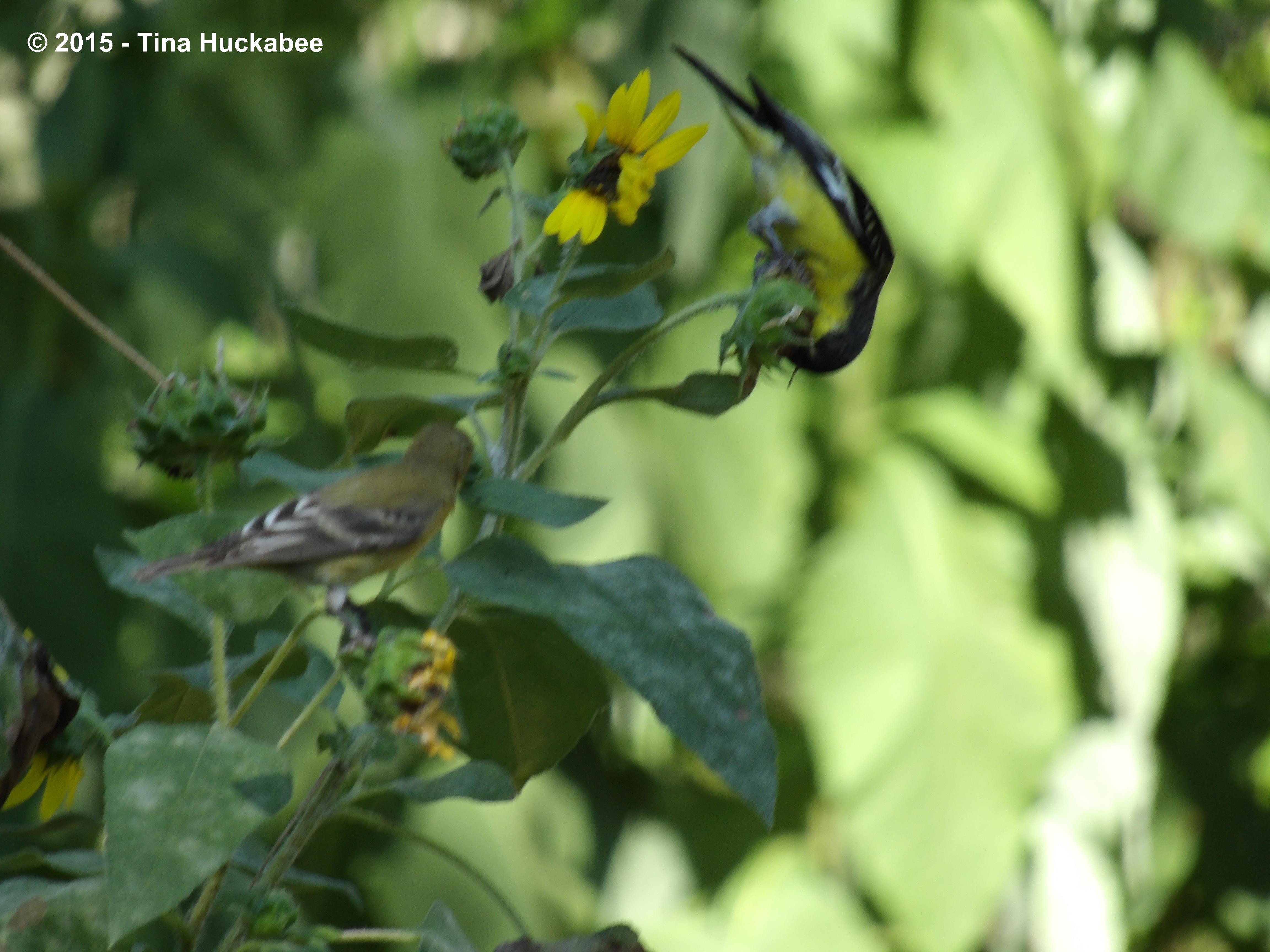
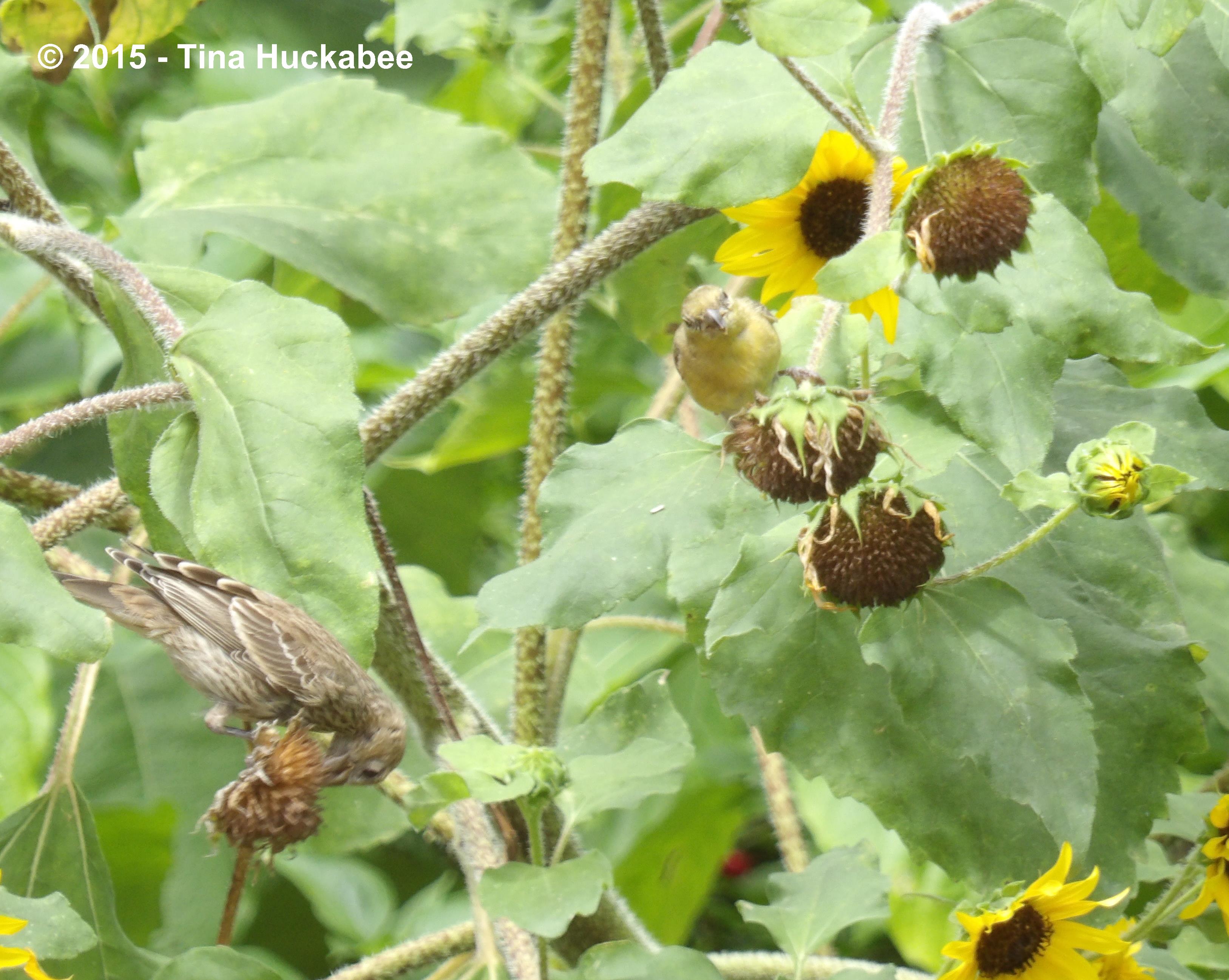
Feeding on the going-to-seed sunflowers are the Lesser GoldfinchSpinus psaltria, gang–boys and girls alike.

IMGP9715_cropped_3216x3216..new

IMGP9653_cropped_2700x2793..new

IMGP9659_cropped_3147x2755..new

Lessers love the seeds of Asteraceae plants, like sunflowers.  I chuckle as they hang upside-down for their food; it’s a neat trick, though I’ll take my meals at the table, thank you very much.

IMGP9658.new

These guys-n-gals will soon finish up with the tall spring-germinating, summer-towering sunflowers.  I’ve already pruned a couple of stalks because there was little left on them, either in bloom or seed form.  But several sunflowers still have viable blooms, which the honeybees and butterflies are feeding on and seeds which the Lessers and also House Finches and Sparrows, are enjoying.

IMGP9215_cropped_3254x2595..new

To the “pretty plant” gardener–one who wants the sterile, pristine lawn or perfect, non-insect attracting bloom-n-foliage plants, I’m sure my sunflowers look hideous.  But to myriad wildlife–bees, butterflies, moths, syrphid flies, and a variety of birds, the stalks are beautiful for their life-giving  bounty.  And that is what wildlife gardening is all about.

I lamented that I didn’t have much to show and tell for this month, but I guess there was enough. Thank you critters–for your presence and for enlivening and completing my garden.

Kudos to all of you who garden for wildlife, no matter how much or little:  you’re part of the solution.  I hope your gardens received wildlife visitors this month and that you will join in posting for August Wildlife Wednesday. Share the rare or mundane, funny or fascinating, beneficial or harmful critters you encounter. When you comment on my post, please remember to leave a link to your Wildlife Wednesday post so readers can enjoy a variety of garden wildlife observations.
Happy wildlife gardening!

**Just a quick and timely addendum. This article is from the Washington Post via. Cornell Lab of Ornithology. A must read for anyone who understands the wastefulness and pointlessness of the American lawn.
Also, the original, beautifully written essay from Ohioan Sarah Baker about her experience in allowing her property to become a wildlife habitat.