A Parade of Pretties: Bloom Day for March

I’m not going to pretend that this post is anything more than a runway fashion show of the botanical kind.  What follows is a shameless and giddy celebration of the the bounty of blooming beauty that is early spring in my Austin, Texas, zone 8b, garden.

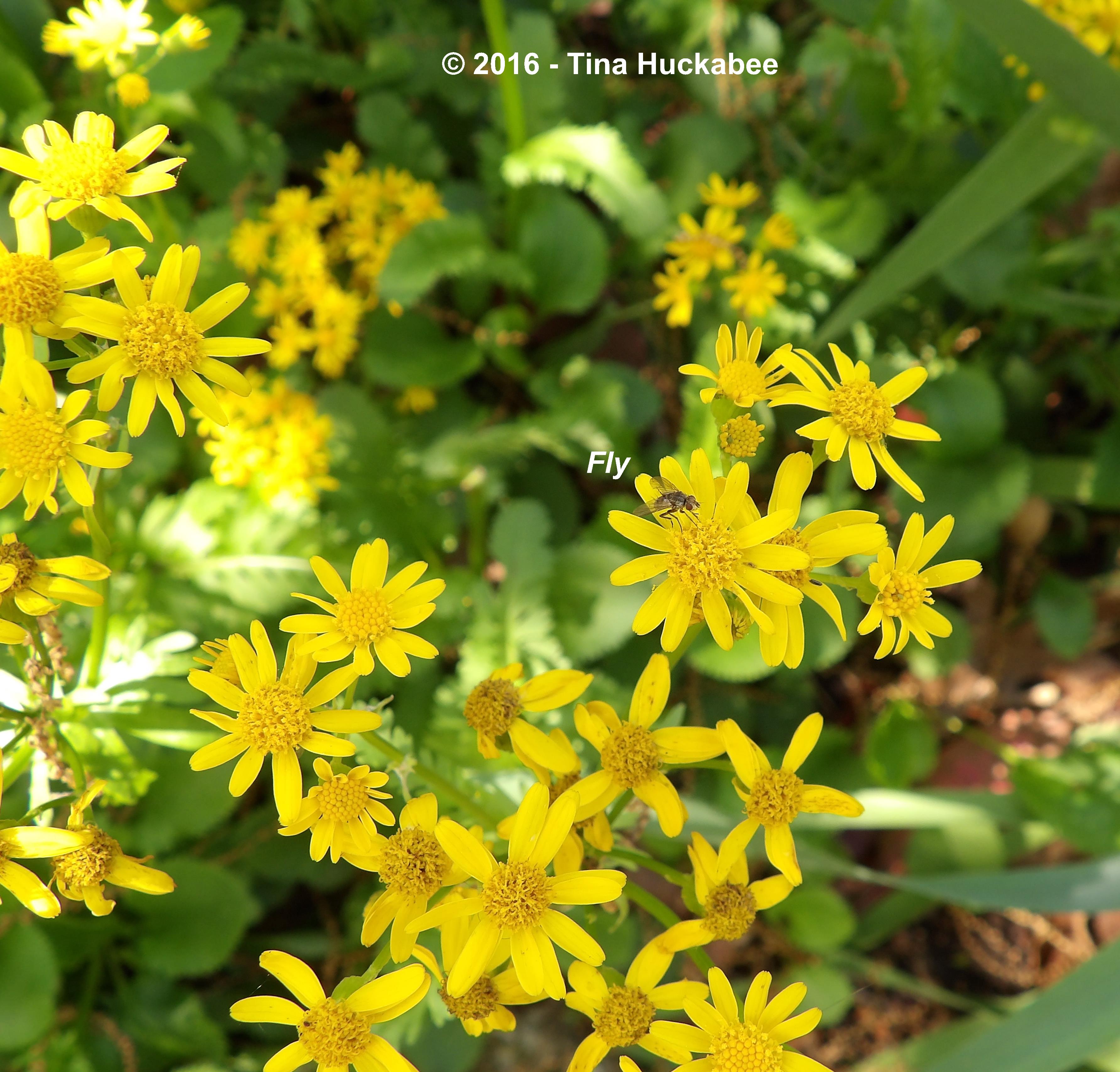
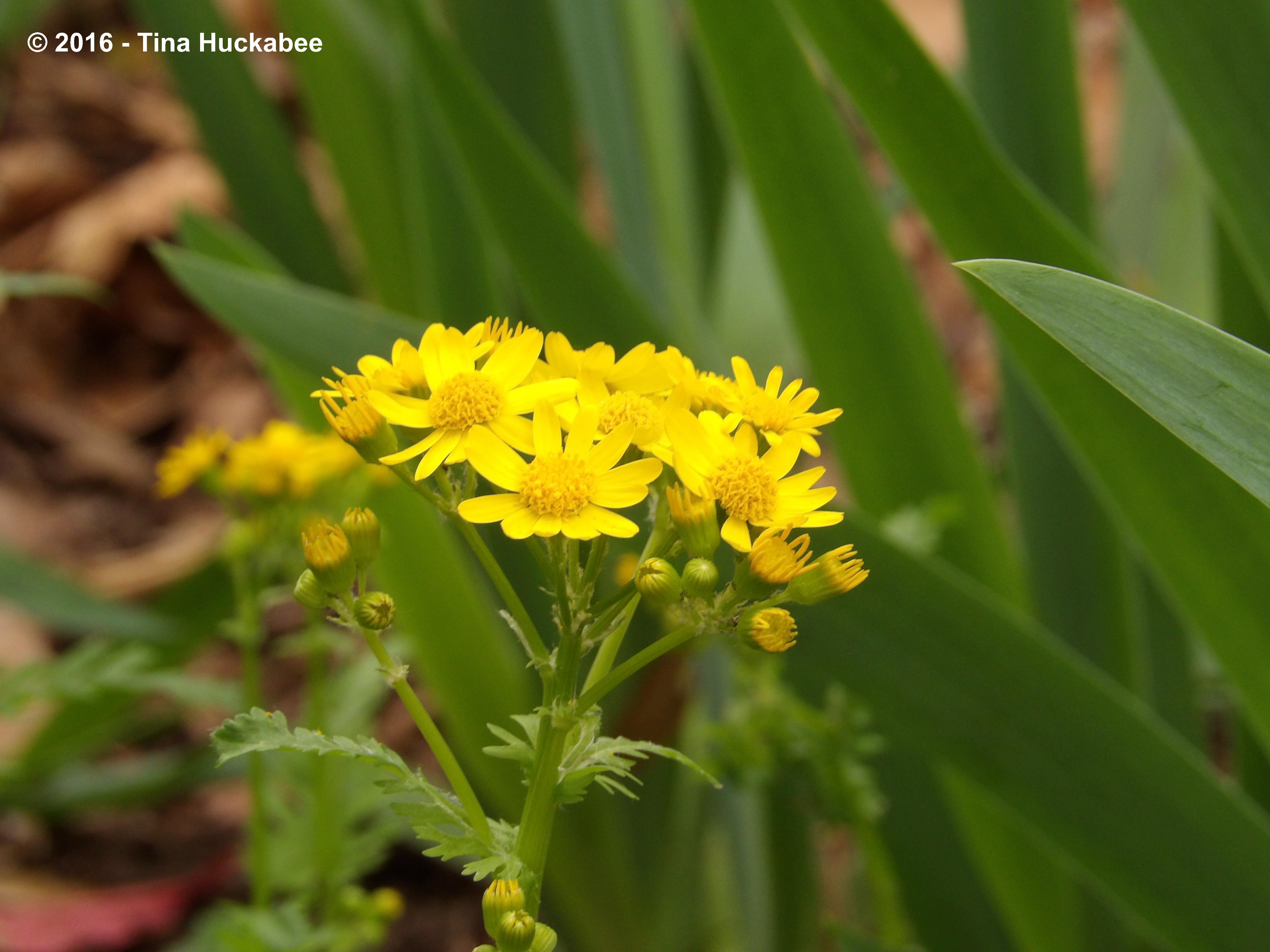
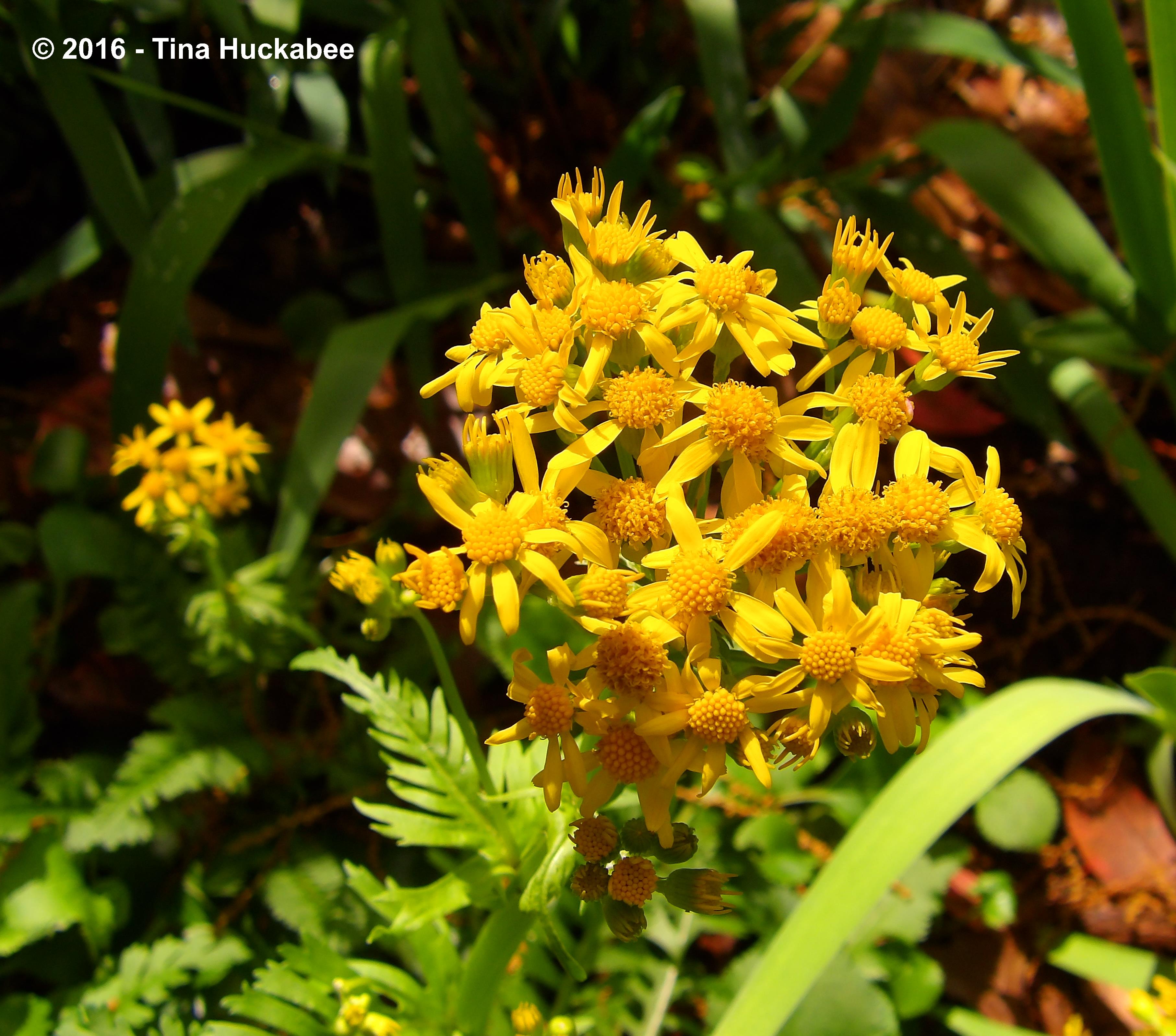
Golden Groundsel, Packera obovata, hit its flowering stride since last profiled  for its beautiful foliage a few weeks ago.
IMGP5034_cropped_3627x3194..new

Slender bloom stalks hold aloft the blasts of brilliant yellow,

IMGP5028.new

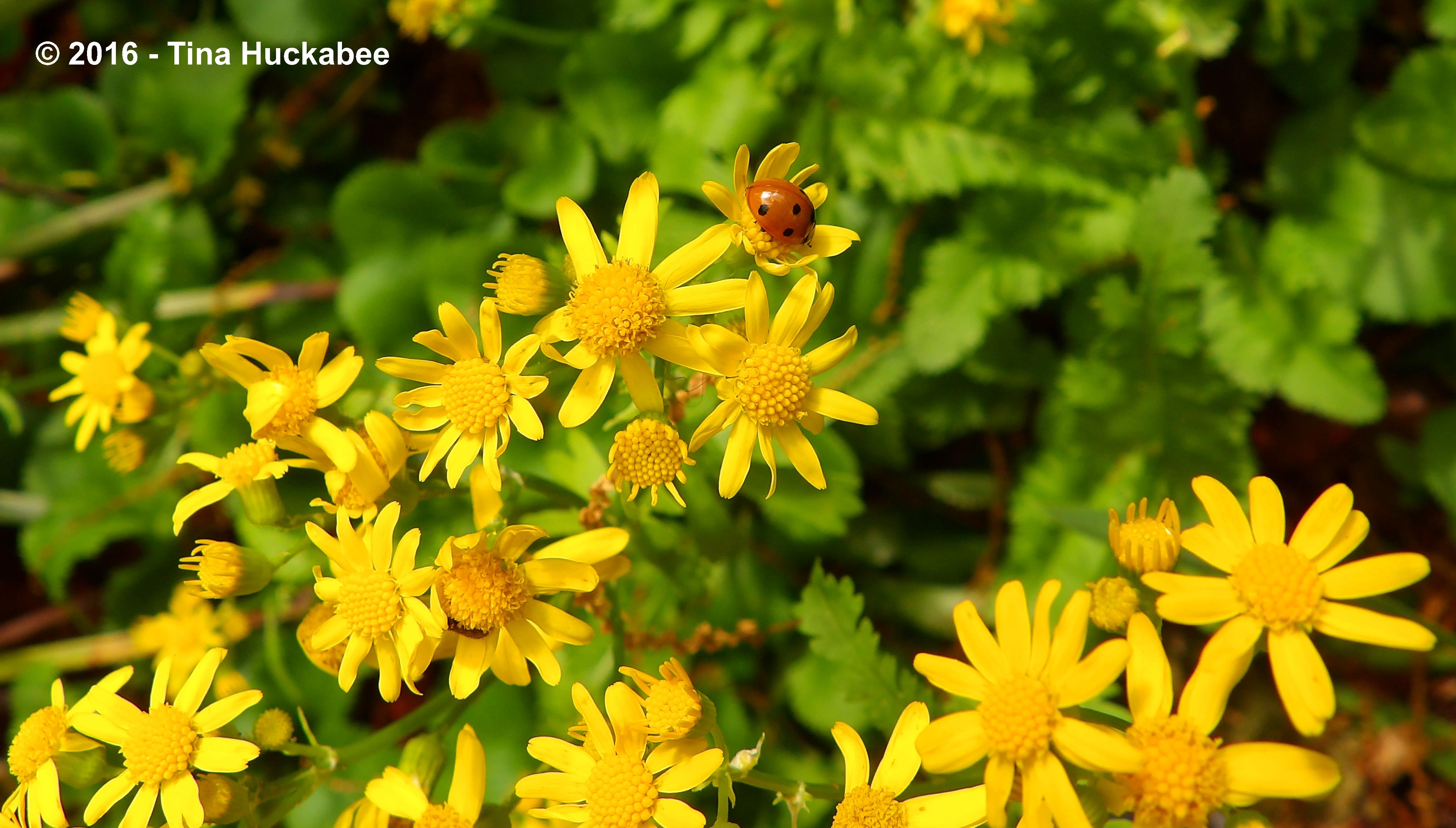
…and the gardener smiles.  Tiny critters of all sorts visit–to rest,
IMGP5031_cropped_4083x2323..new

…and pollinate.

IMGP5188_cropped_3166x3410..new

IMGP5174_cropped_3567x3414..new

I’m not thrilled when a fly makes its way into my kitchen, but am happy to see it sipping the sweet stuff from the Golden Groundsel.

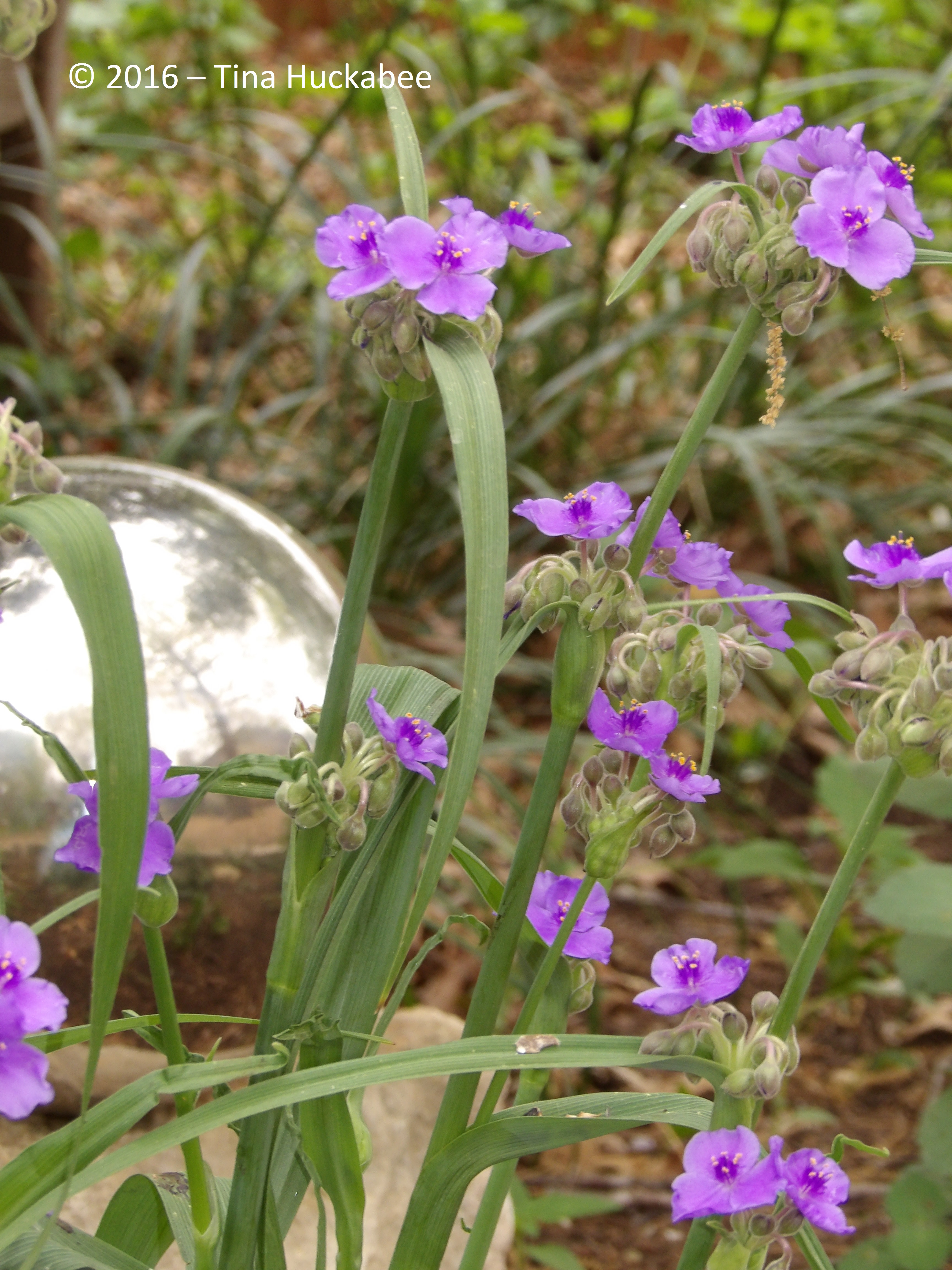
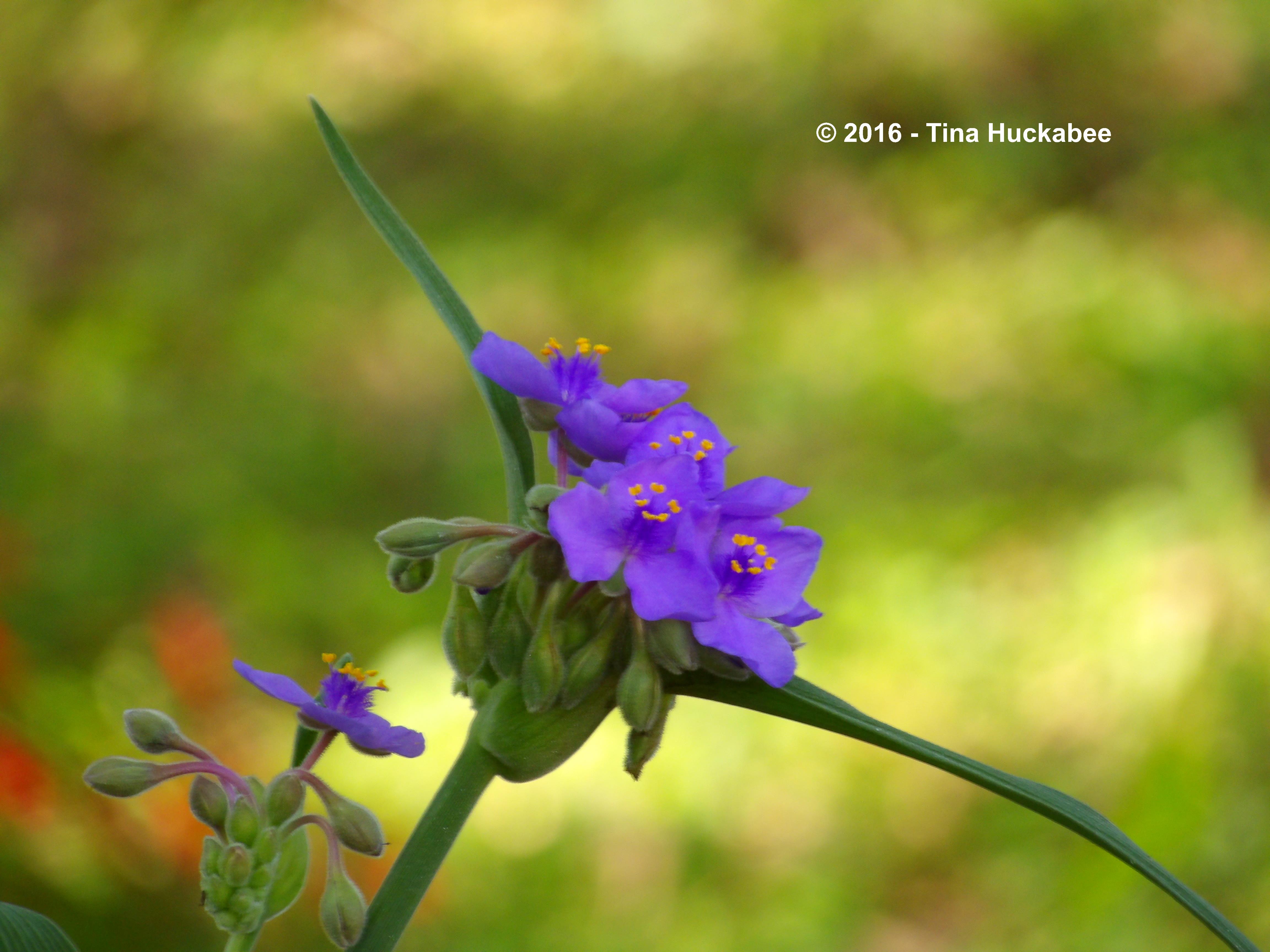
SpiderwortTradescantia, plants are strutting their flower-power and keeping the honeybees busy.

IMGP5007.new

This Giant Spiderwort  keeps company with garden furniture.
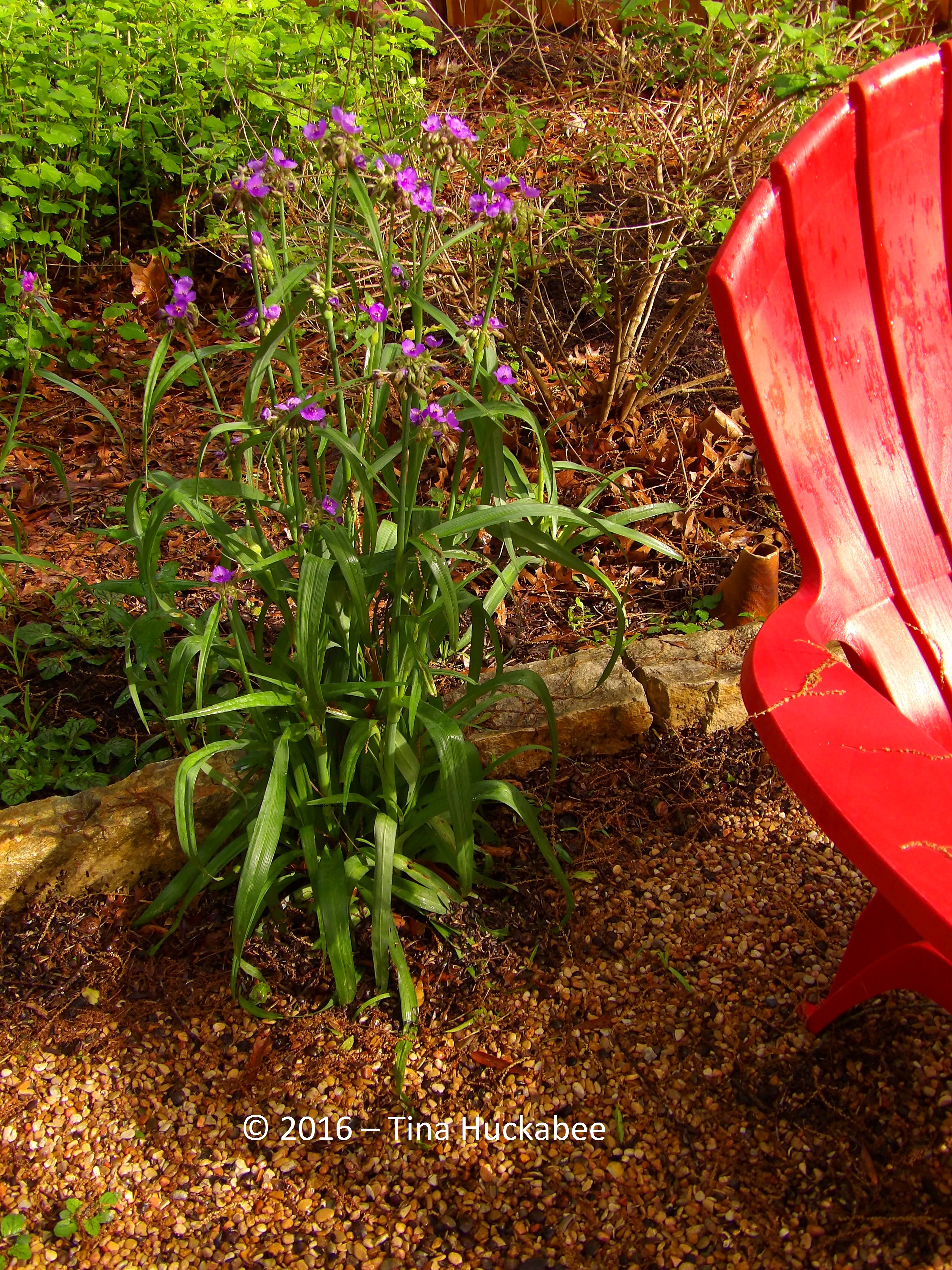
The many Spiderwort clumps my garden enjoy some variability in size and coloration and I suspect that there’s more than one species growing and cross-mingling through the seasons.

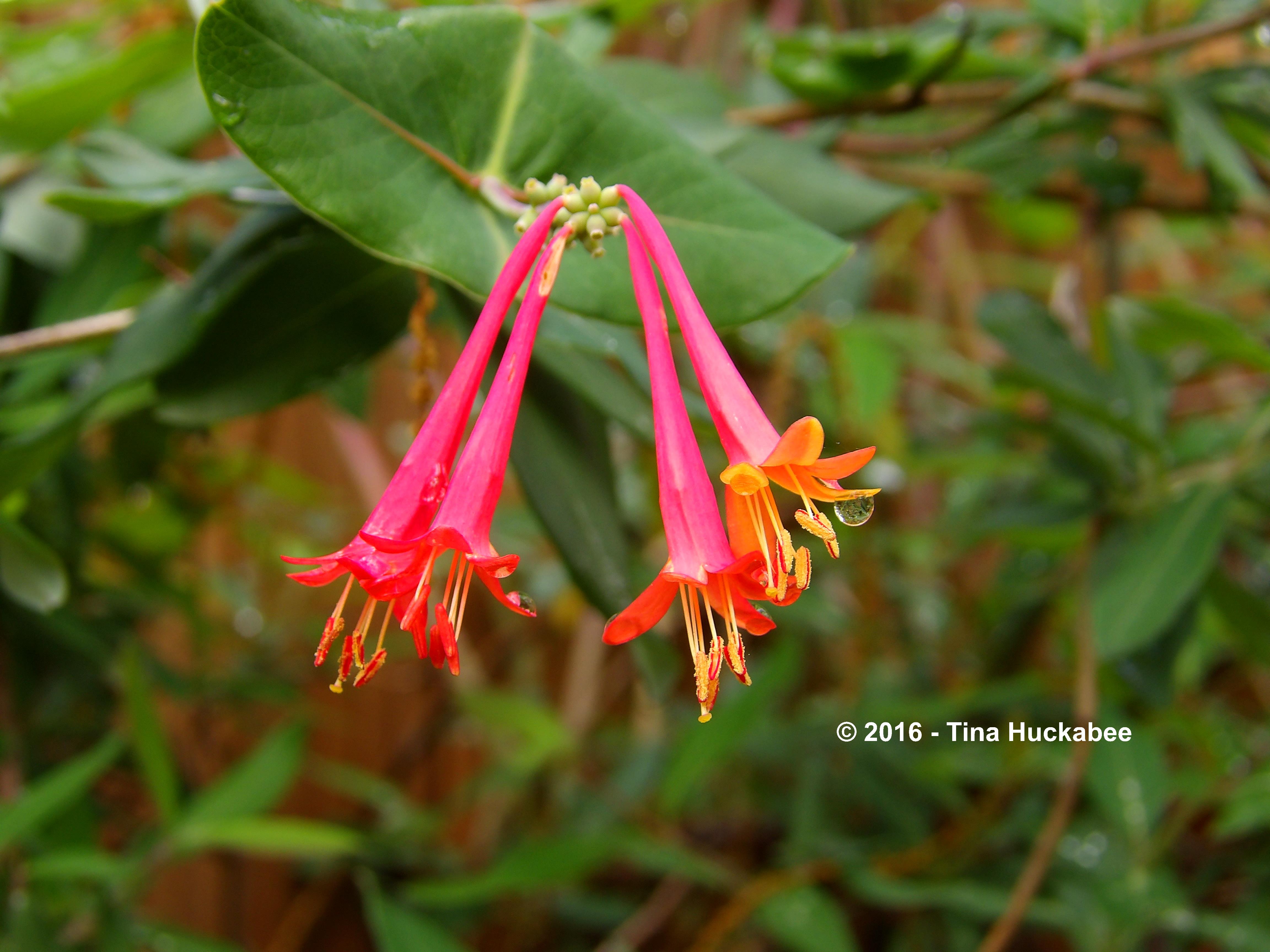
Coral Honeysuckle,  Lonicera sempervirens, a vine hosting dripping clusters of tubular beauty,
IMGP5017.new

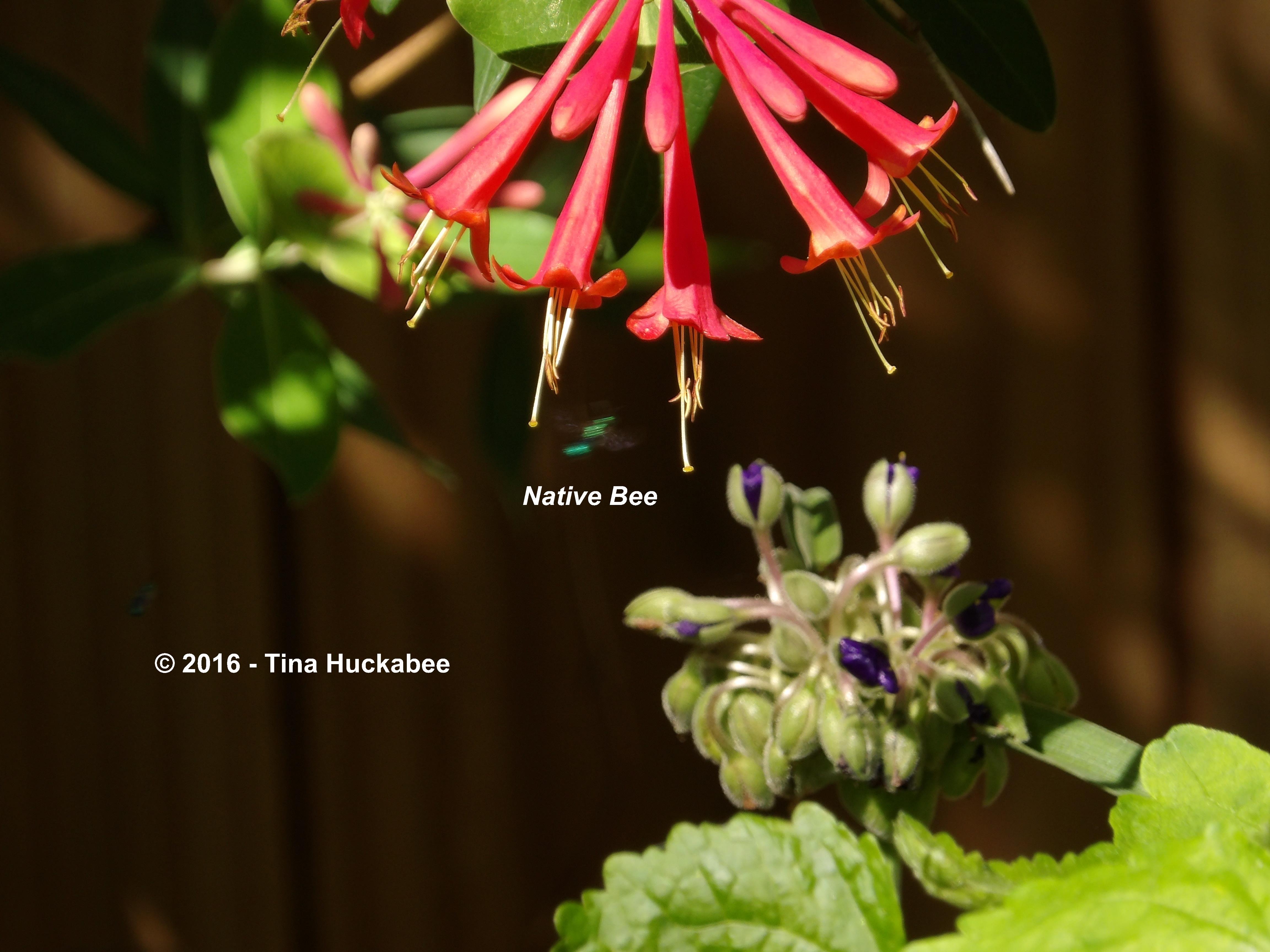
…are surrounded by tiny native metallic bees, which I can only manage a vague photograph of.
IMGP5225.new

Actually, that’s not really true, but you’ll have to wait until my own Wildlife Wednesday on April 6th to see some slightly better photos of one of the stunningly gorgeous and fast-flying metallic wild bees.

This Coral Honeysuckle bloom cluster and the not-quite-open Spiderwort look like they’re trying to reach one another for a smooch.

IMGP5237_cropped_3898x3277..new

Well, it is spring, you know–the season of love!

Yellow Columbine, Aquilegia chrysantha var. hinckleyana,
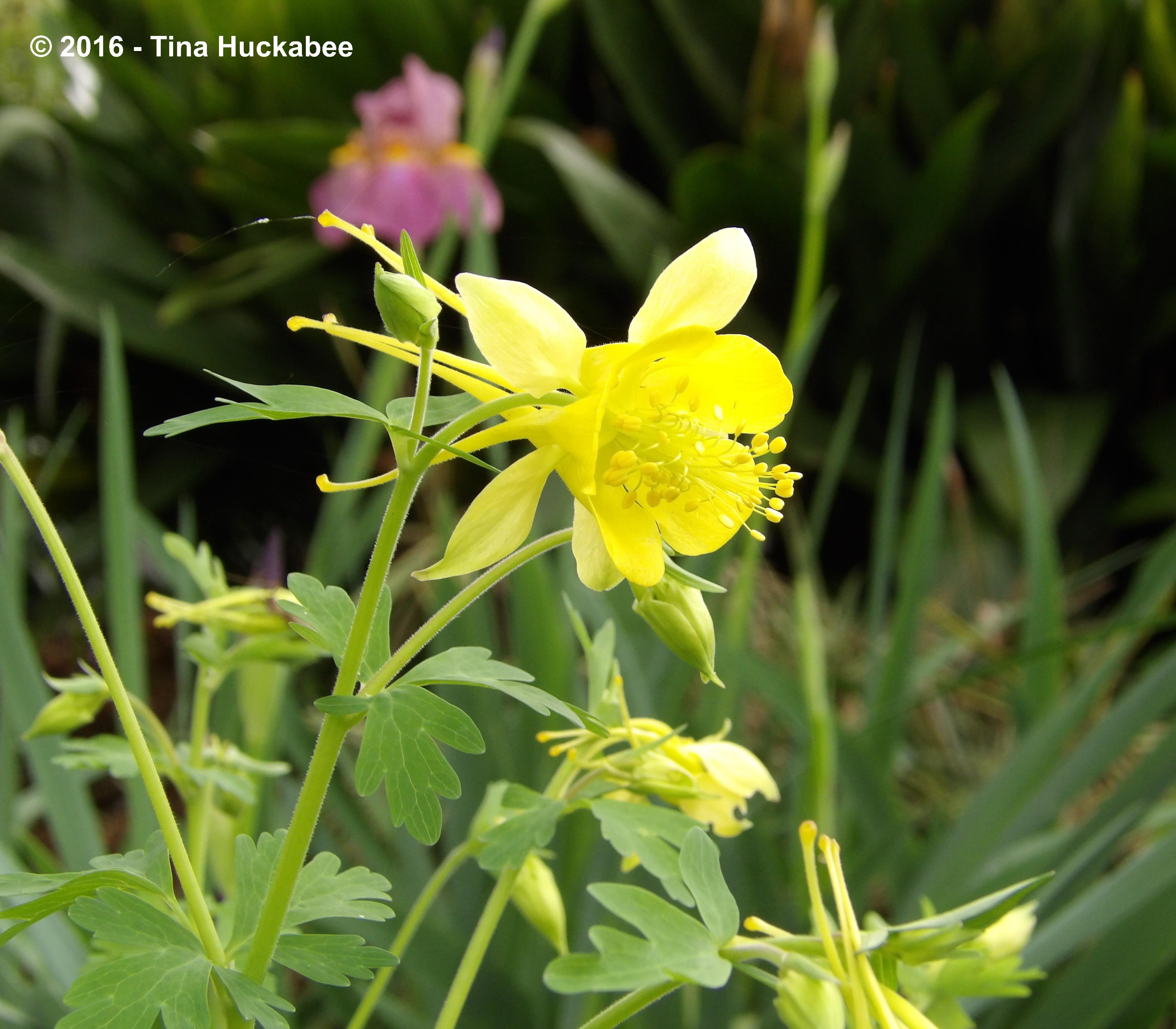
Yellow Columbine with blooming Iris.

Yellow Columbine with blooming Iris.

…and the hybrid between A. chrysantha and A. canadensis, pose beautifully and are available for nectaring, too–if you possess the right proboscis, that is.
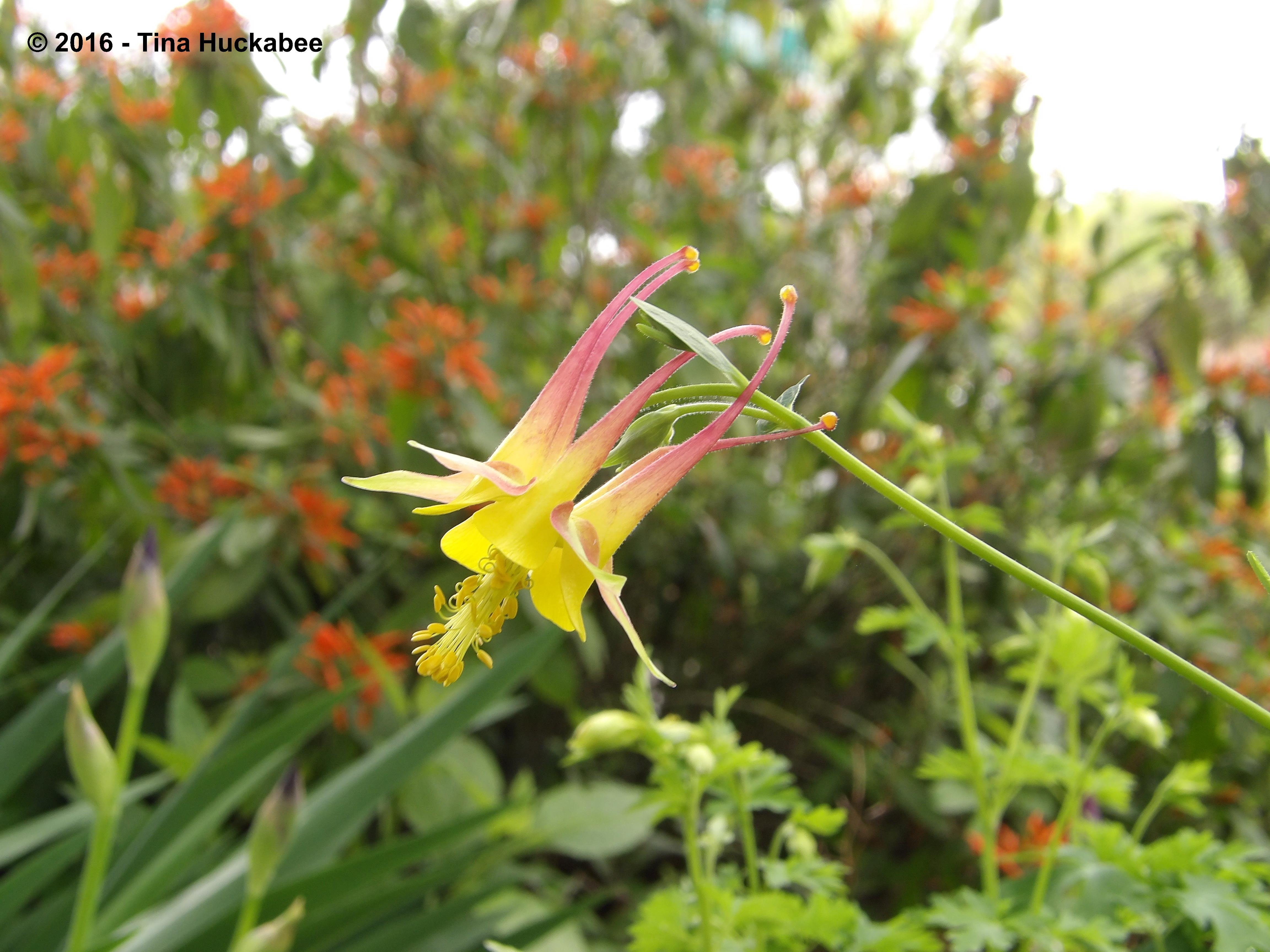
Hybrid Columbine with backdrop of orange blooming Mexican Honeysuckle and unopened Iris.

Hybrid Columbine with backdrop of orange blooming Mexican Honeysuckle and unopened Iris.

Hybrid Columbine with not yet in bloom day lilies and Yarrow.

Hybrid Columbine with not yet in bloom day lilies and Yarrow.

The A. canadensis is a smaller, mostly brick-red columbine.  But when cross-pollination occurs, the flower of the hybrid is typically larger, with more yellow and a blush of red.  Over the years, the columbines in my gardens have hybridized and I’m delighted with nature’s improvisations.

Globe Mallow, Sphaeralcea ambigua, is also open for business,  awaiting interviews from native bees.  So far, it’s been teeny, tiny bees, too fast for this photographer to capture with any competence.
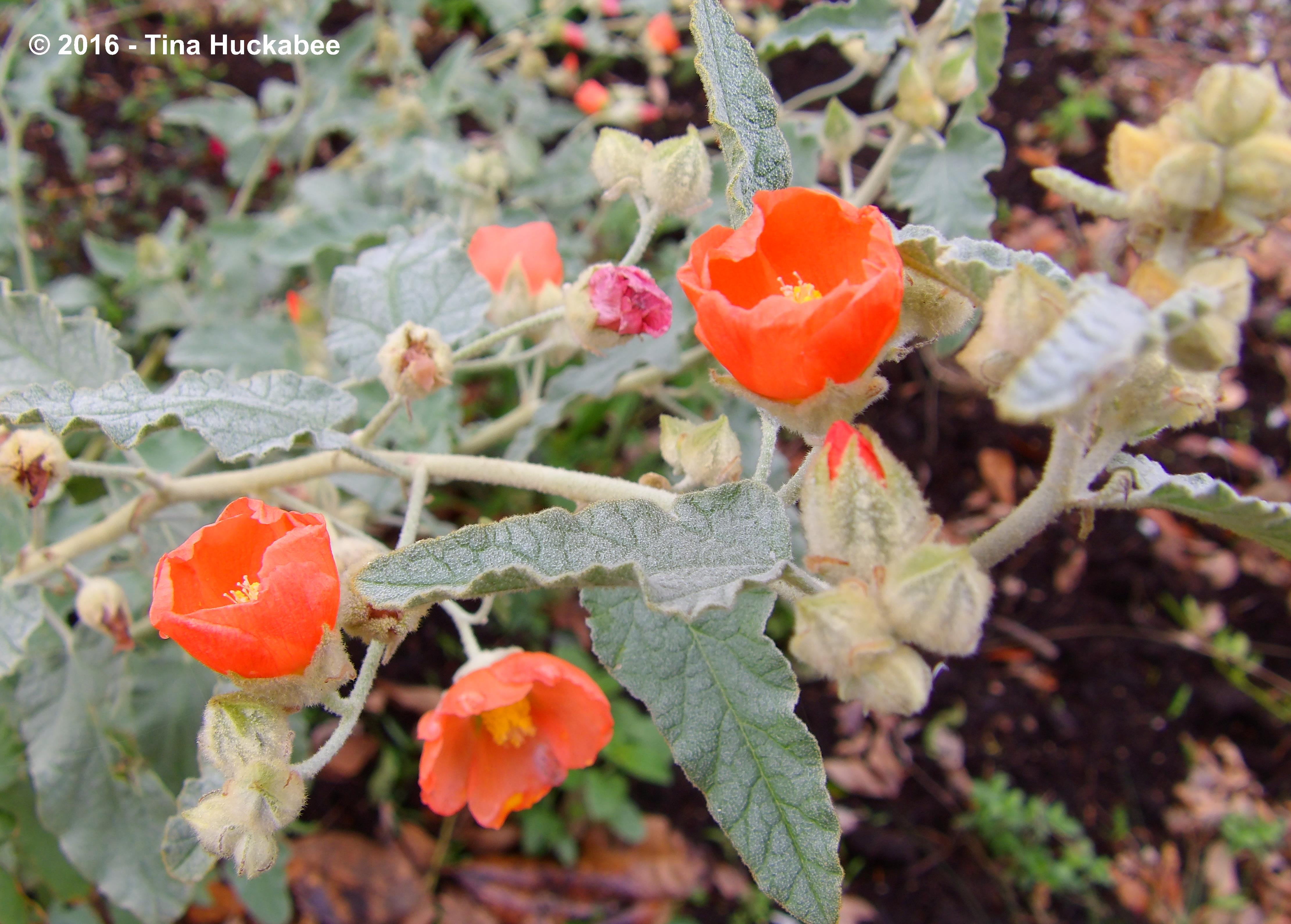
IMGP5044_cropped_4443x3180..new

The first blooms of many-to-come Purple Coneflower, Echinacea purpurea, have unfurled their pinky-purple glory, welcoming spring and their lengthy growing season.
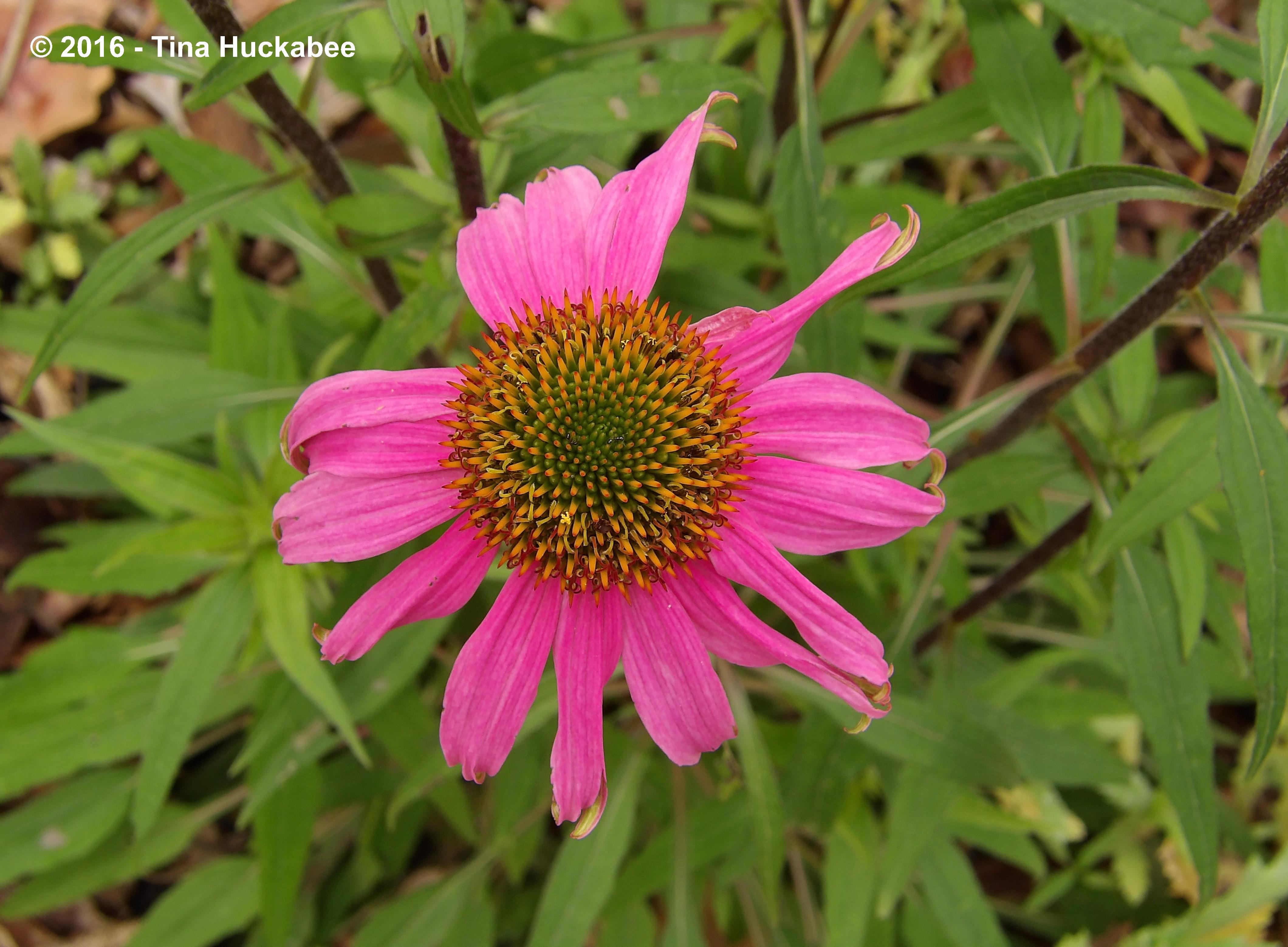
IMGP5050_cropped_4240x3116..new

Another first is with this Brazos Blackberry bloom, which heralds more of the same.
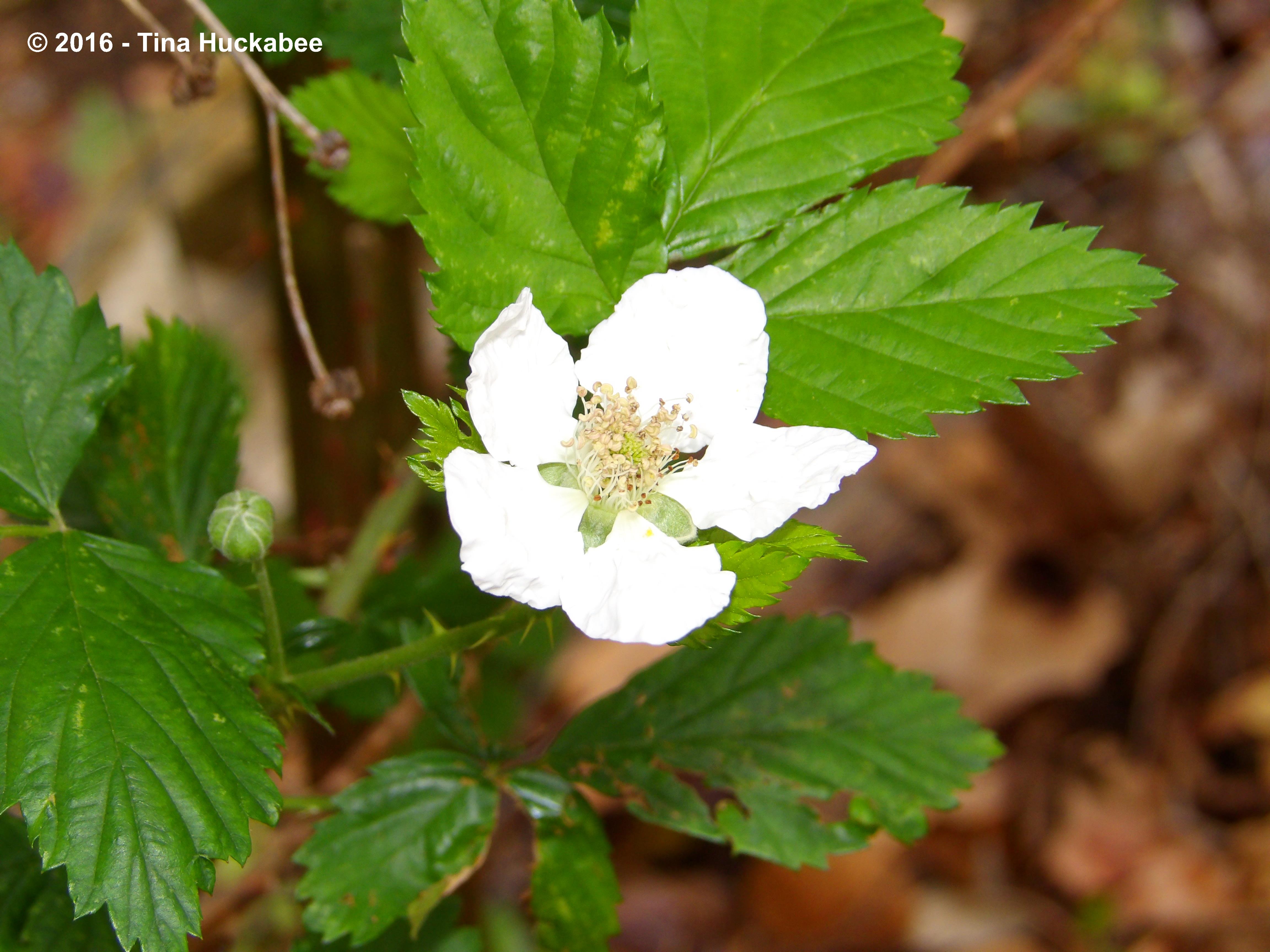
IMGP5070.new

Once those flowers are spent, berries will not be far behind.  Yum!  I can taste the blackberries now–as well as the blackberry cobbler.  Bring’em, blooms!

Dancing at the ends of slender bloom stalks all winter and continuing their performance in the spring breezes, the cheery, bouncy Four-nerve Daisy (Hymenoxys), Tetraneuris scaposa,  flowers are nearly non-stop bloomers.

IMGP5043.new

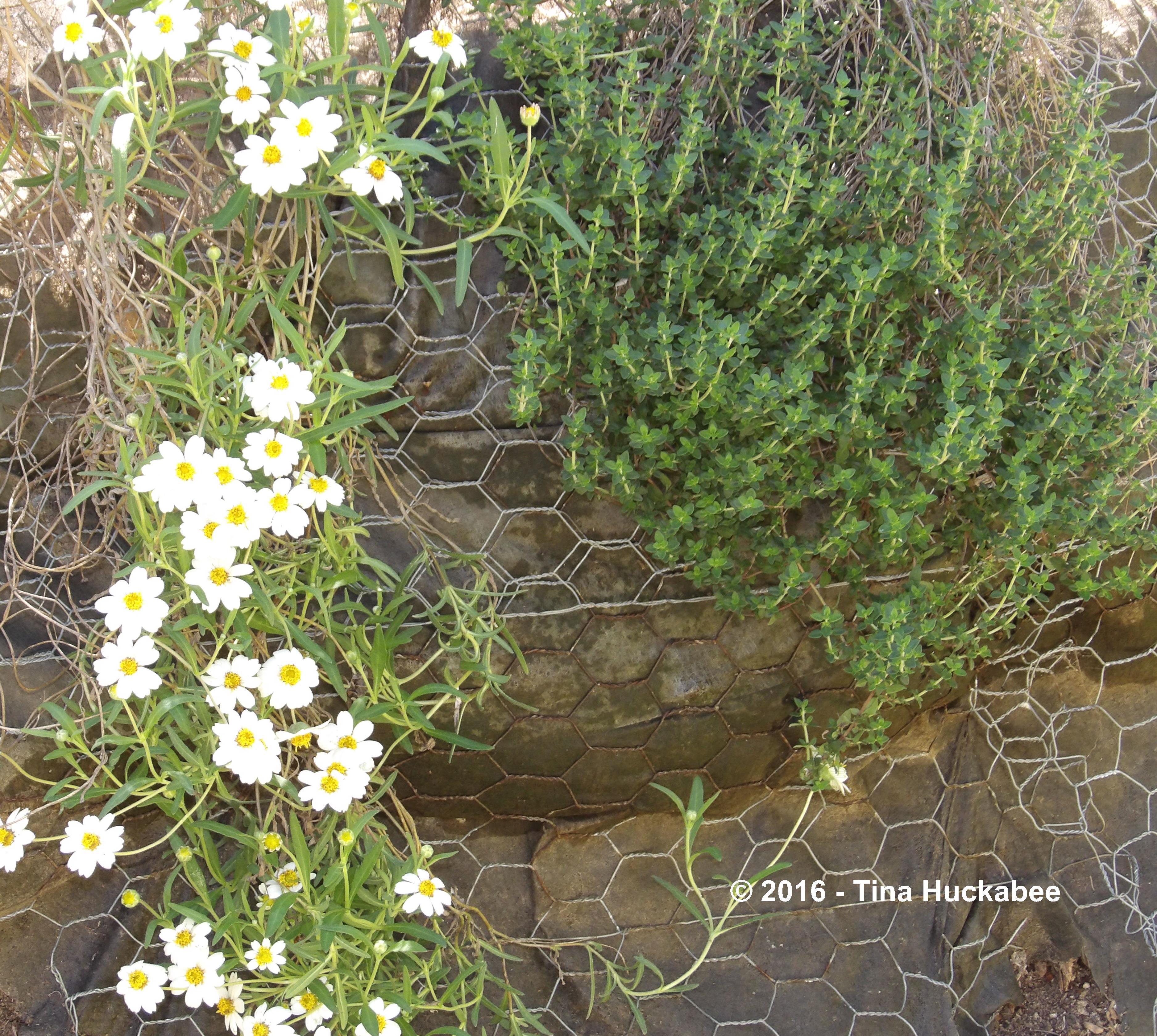
Tired of these tidy, singleton blooms?  How about this cascade of Blackfoot Daisy, Melampodium leucanthum.

IMGP5071.new

A tough Texas native that is best when growing out of poor soil or rock, this one is content and flowering in my Green Tower, which is where I grow veggies and most of my herbs.  The Blackfoot Daisy buddies-up to a thyme plant which also flourishes in the Tower.
IMGP5180_cropped_3750x3359..new

Due to the non-winter this year, Mexican Honeysuckle, Justicia spicigera, wasn’t freeze-knocked to the the ground and thus is blooming with orange abandon this early spring.

IMGP5098.new

Mexican Honeysuckle boasts constant pollinator activity, especially from a variety of bees.
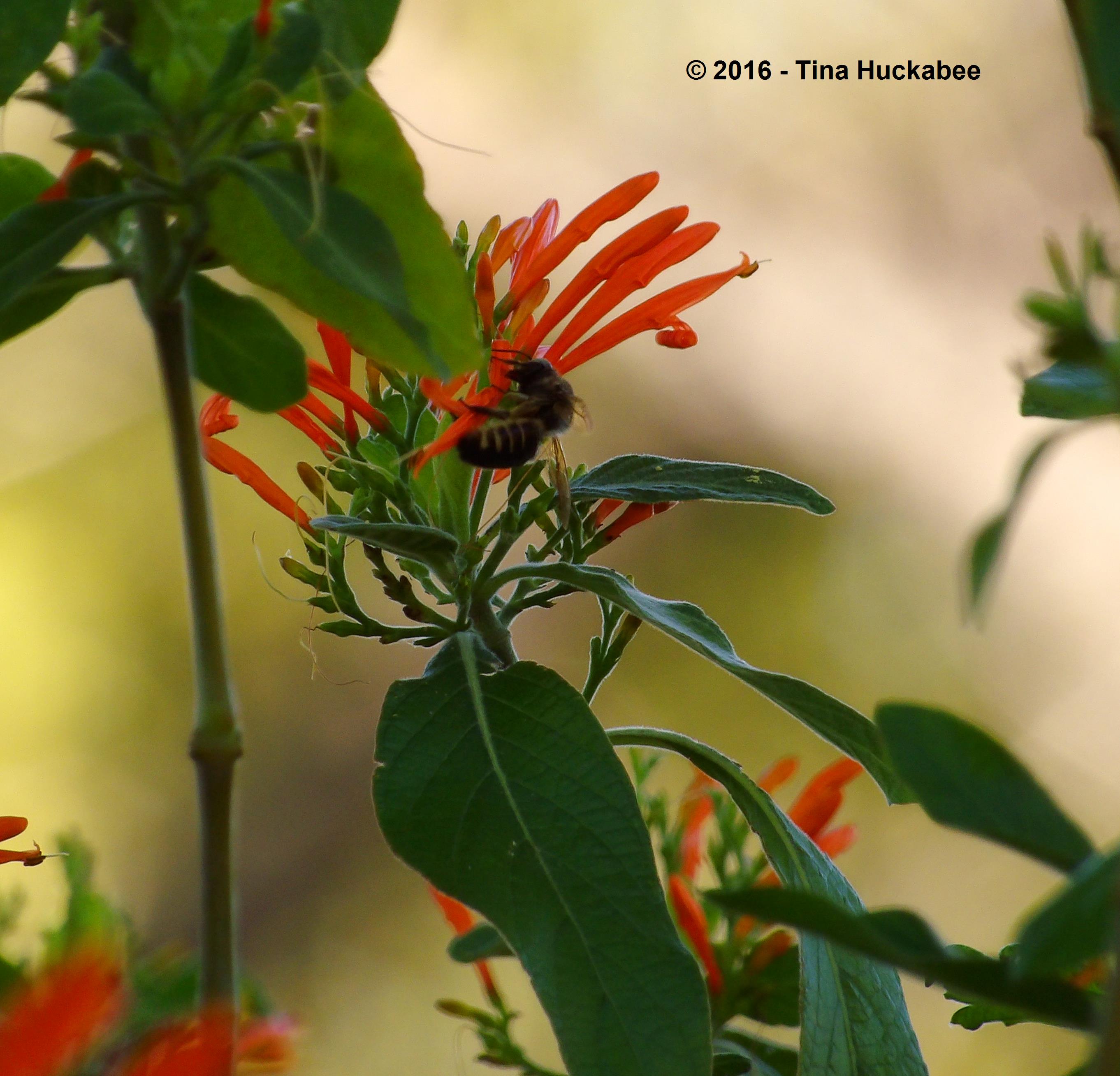
Horsefly-like Carpenter Bee (Xylocopa tabaniformis) works the Mexican Honeysuckle flowers.

Horsefly-like Carpenter Bee (Xylocopa tabaniformis) works the Mexican Honeysuckle flowers.

There’s more where that came from!

IMGP5271_cropped_4552x2747..new

There are too many blooms and not enough time to showcase them all–they’ll just have to participate in another parade!
IMGP5273.new

Thanking Carol at May Dreams Garden for hosting this monthly bloom frenzy known as Garden Bloggers’ Bloom Day.  Share your garden pretties, then click over to her lovely blog to see and learn about blooms from many places.

IMGP5274.new


Spring Is Just Too Easy

It’s easy to love the spring garden.  From traditional garden standards,

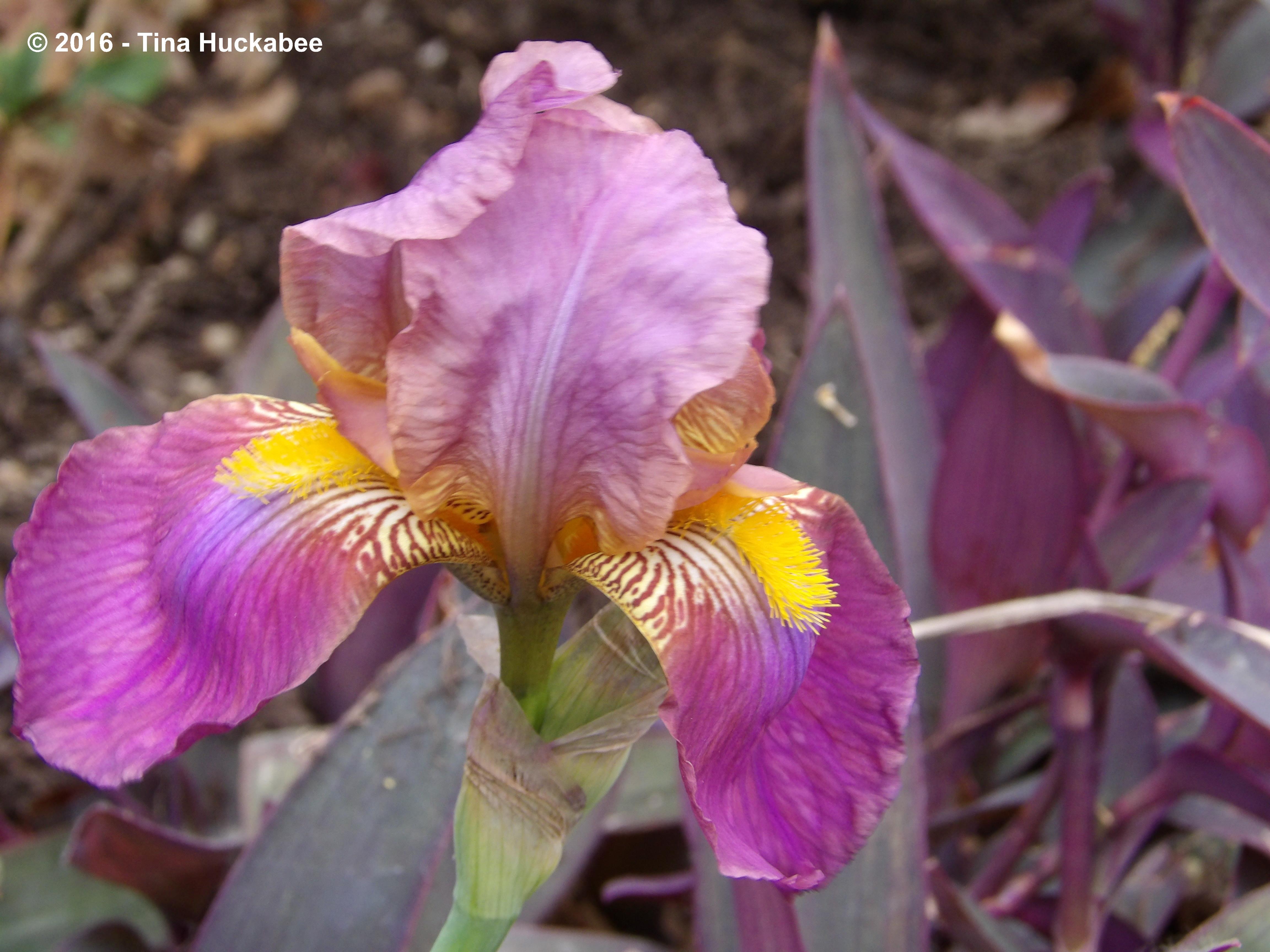
Unknown passalong Iris.

Unknown passalong Iris.

…to self-seeding weeds, also known as wildflowers,

Carolina Geranium (Geranium carolinianum) and Damianita (Chrysactinia mexicana) pair well in a sunny bed.

Carolina Geranium (Geranium carolinianum) and Damianita (Chrysactinia mexicana) pair well in a sunny bed.

Giant Spiderwort (Tradescantia gigantea)

Giant Spiderwort (Tradescantia gigantea)

…the spring garden awakens the gardener’s heart and gladdens the soul.

Blooming and climbing vines wind their way along fences,

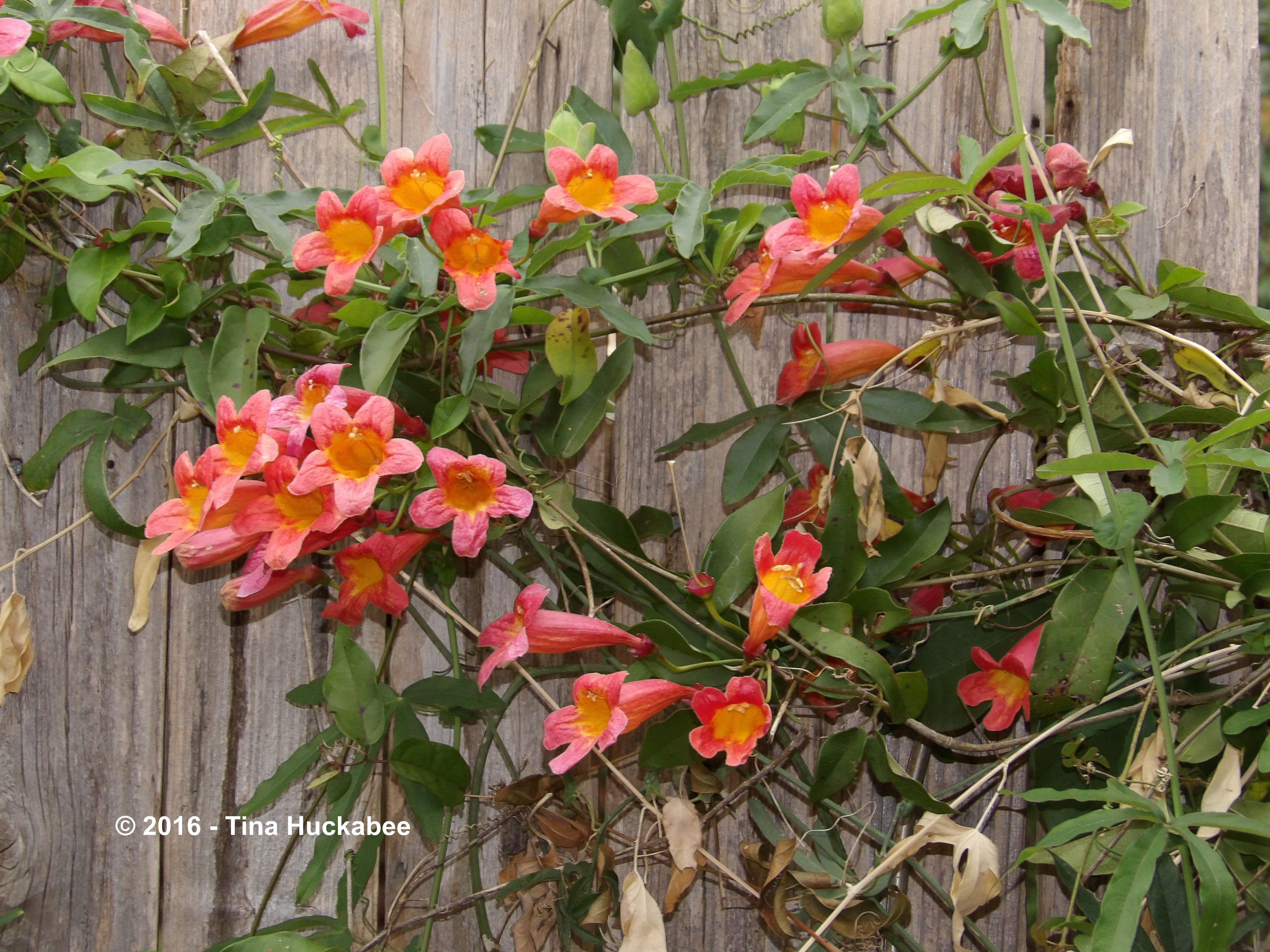
Crossvine (Bignonia capreolata) opens its tubular blooms

Crossvine (Bignonia capreolata) opens its tubular blooms

…or sometimes, a beloved daughter’s bicycle.

Coral Honeysuckle (Lonicera sempervirens) entwines and embraces Shoshana's bicycle.

Coral Honeysuckle (Lonicera sempervirens) entwines and embraces Shoshana’s bicycle.

Bold foliage/bloom pairings abound in the spring garden.  The vibrant purple clusters of the Texas Mountain LaurelSophora secundiflora, contrast beautifully with its solid and simple foliage,

IMGP4840.new

…while the orange-crush, cup-like blooms of Globe Mallow, Sphaeralcea ambigua,         differentiate themselves from their companionable ruffly, silvery leaves.

IMGP4895.new

Sunshine yellow is plentiful at the terminal ends of stalks of Golden Groundsel,  Packera obovata,           .

IMGP4886.new

The cheery blooms give rest to a weary Crane fly.

IMGP4974.new

It’s easy to appreciate the many stunning blooms flourishing  in the garden.

Not to be outdone by mere perennials however, the two back garden Shumard Oaks, Quercus shumardii,

IMGP4900.new

IMGP4905.new

…rush to compete with other plants, producing their own inflorescence show which has ramifications for all other parts of the garden.

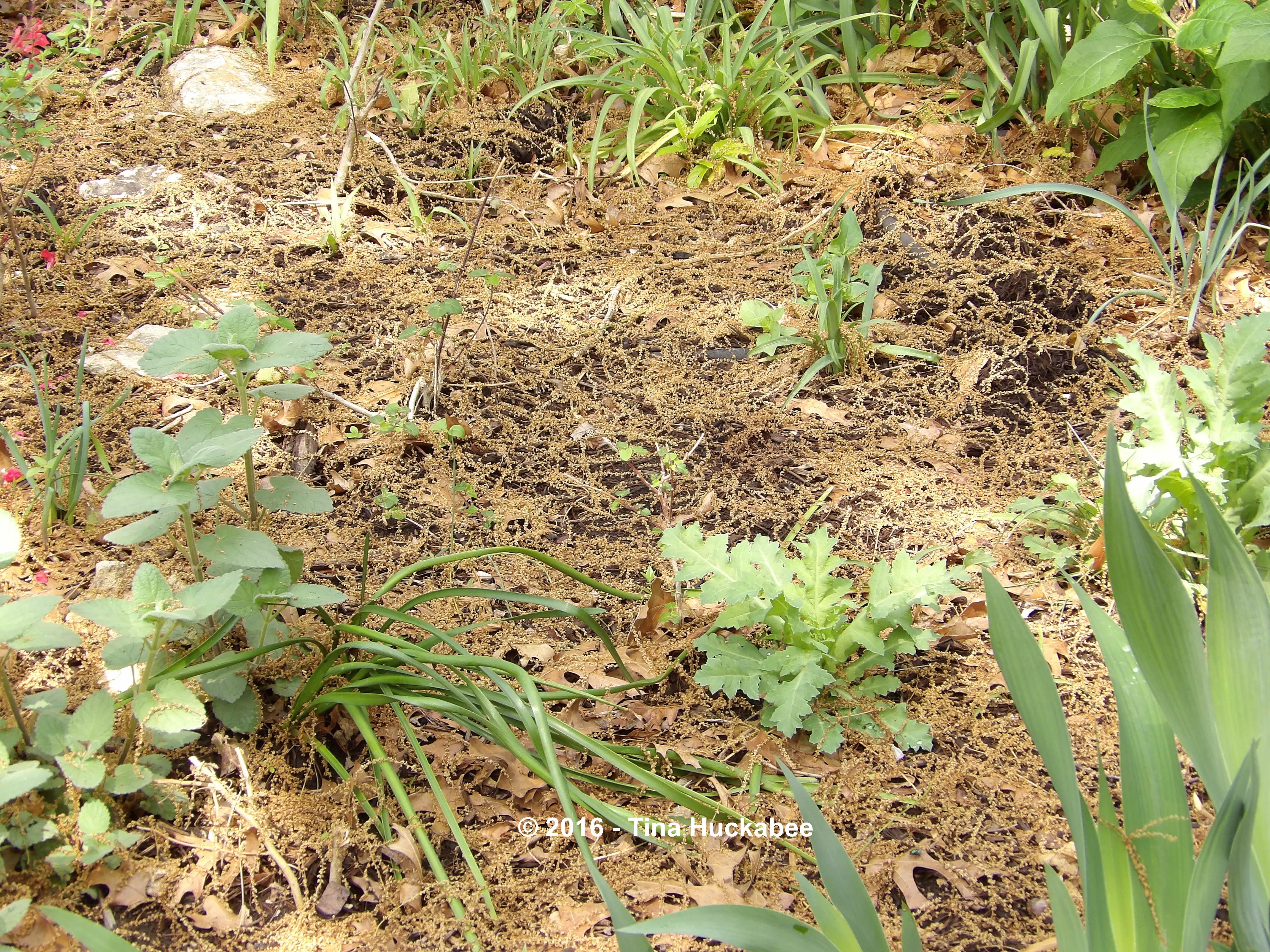
Fallen oak catkins cover a newly planted area.

Fallen oak catkins cover a newly planted area.

Oak catkins atop a potted Texas Beargrass (Nolina texana)

Oak catkins atop a potted Texas Beargrass (Nolina texana)

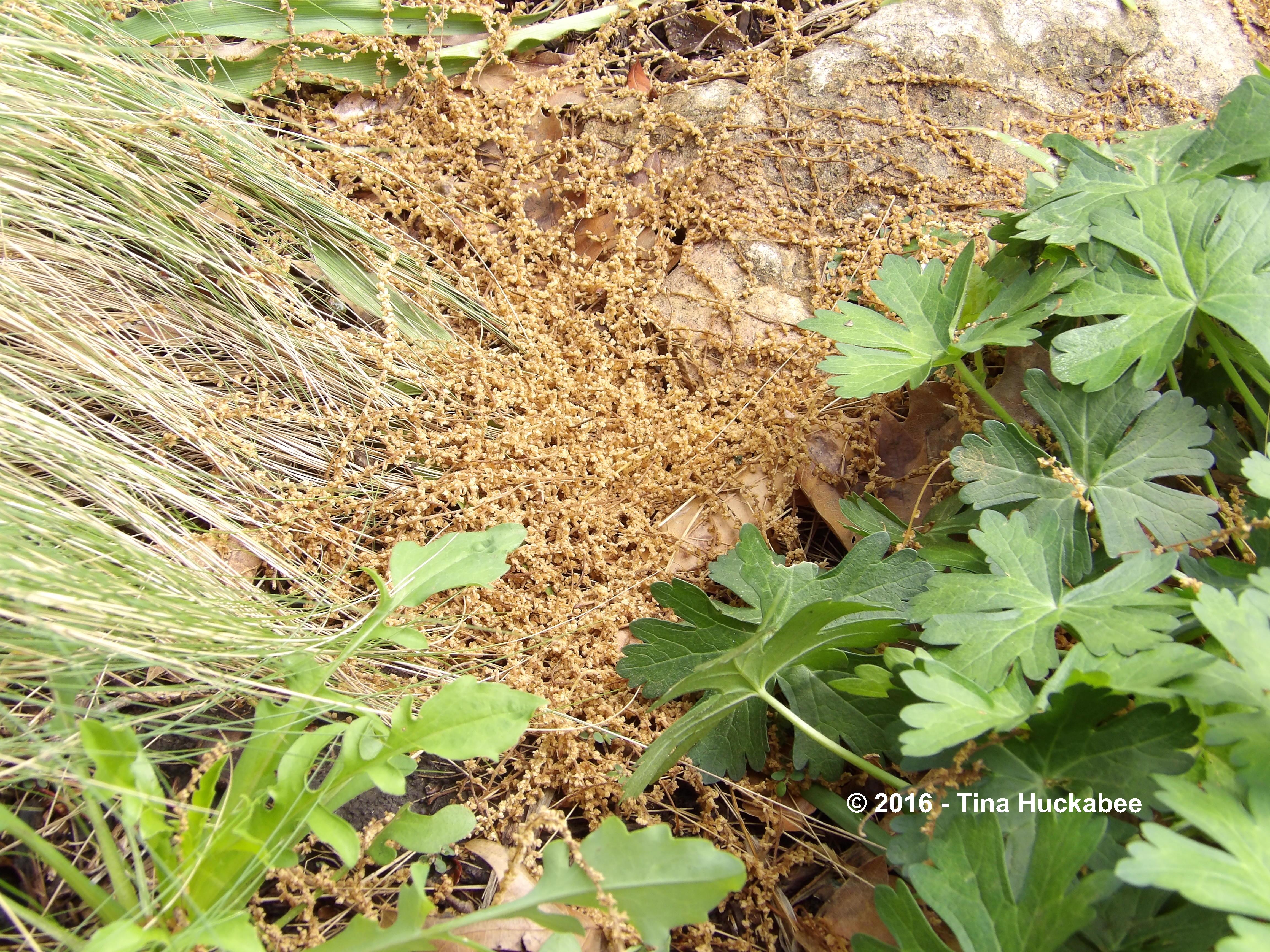
Oak catkins in between Mexican Feathergrass (Nassella tenuissima) and Winecup (Callirhoe involucrata).

Oak catkins in between Mexican Feathergrass (Nassella tenuissima) and Winecup (Callirhoe involucrata).

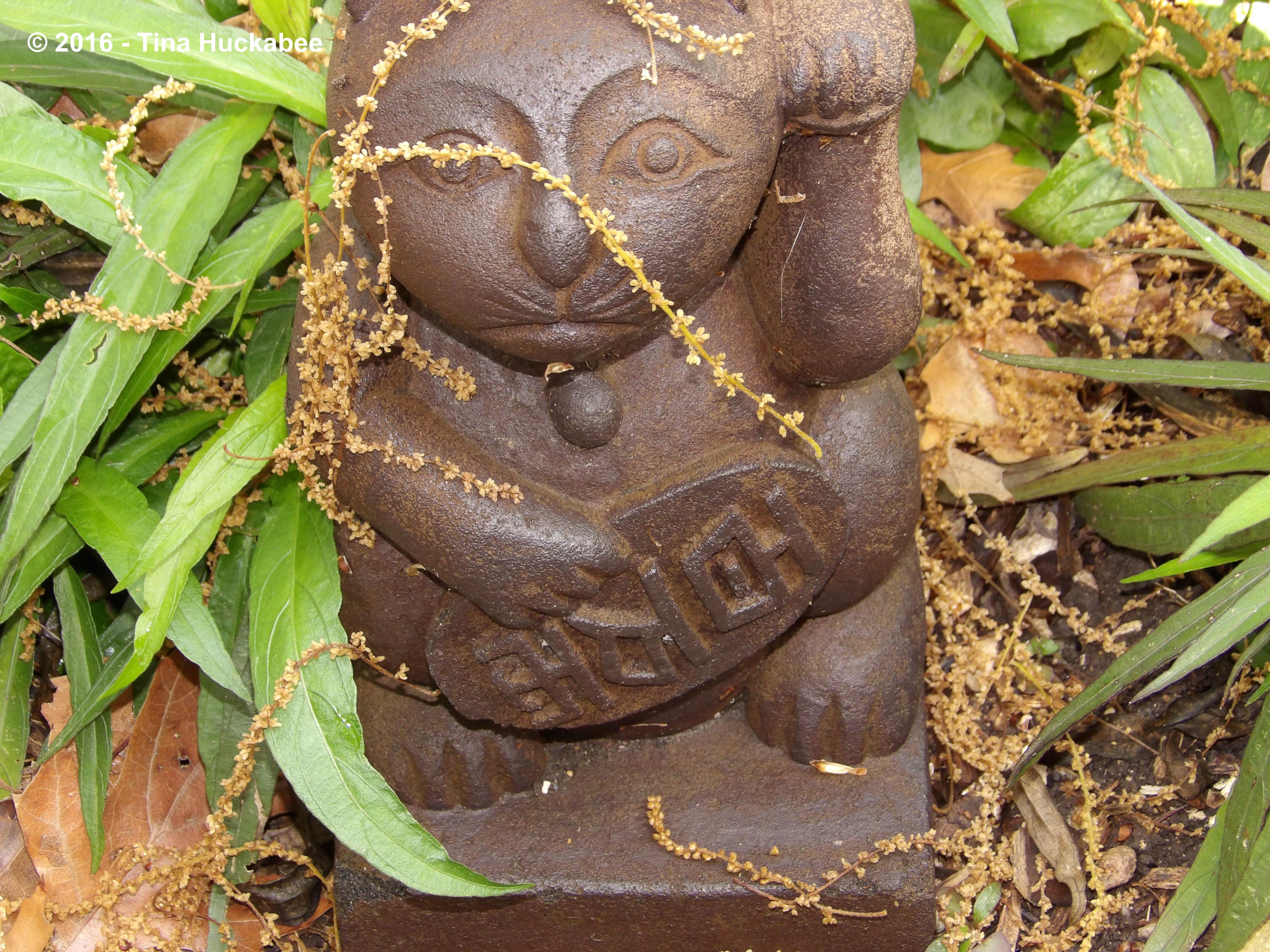
Catkins adorn a Maneki-neko garden art.

Catkins adorn a Maneki-neko garden art.

Catkins embellish a White Autumn Sage (Salvia greggii).

Catkins embellish a White Autumn Sage (Salvia greggii).

Catkins float in the recently cleaned pond!

Catkins float in the recently cleaned pond!

Catkins drape over a Martha Gonzales Rose bush.

Catkins drape over a Martha Gonzales Rose bush.

Catkins decorate Asher!

Catkins decorate Asher!

Those darned catkins!  They are not so easy to enjoy, nor are they so easy to clean up!

Ah well, it’s all part of the spring garden experience.

The early spring garden–easy to savor, easy to treasure.

IMGP4892.new

It is a place to listen to the love songs of the Northern Mockingbird, Mimus polyglottos, sung between his treats of Burford Holly berries,

IMGP4996.new

….or to be charmed with the nighttime (and occasionally daytime) trills of the resident Eastern Screech Owl, Megascops asio, couple.

Mama Screech Owl waiting for a snack from her mate.

Mama Screech Owl waiting for a snack from her mate.

Daddy Screech Owl resting and watching in the Texas Mountain Laurel Tree.

Daddy Screech Owl resting and watching in the Texas Mountain Laurel Tree.

The spring garden is lush, colorful, vibrant–and ready for new life.

Tree Following in March: A Whole Lotta Nuthin’

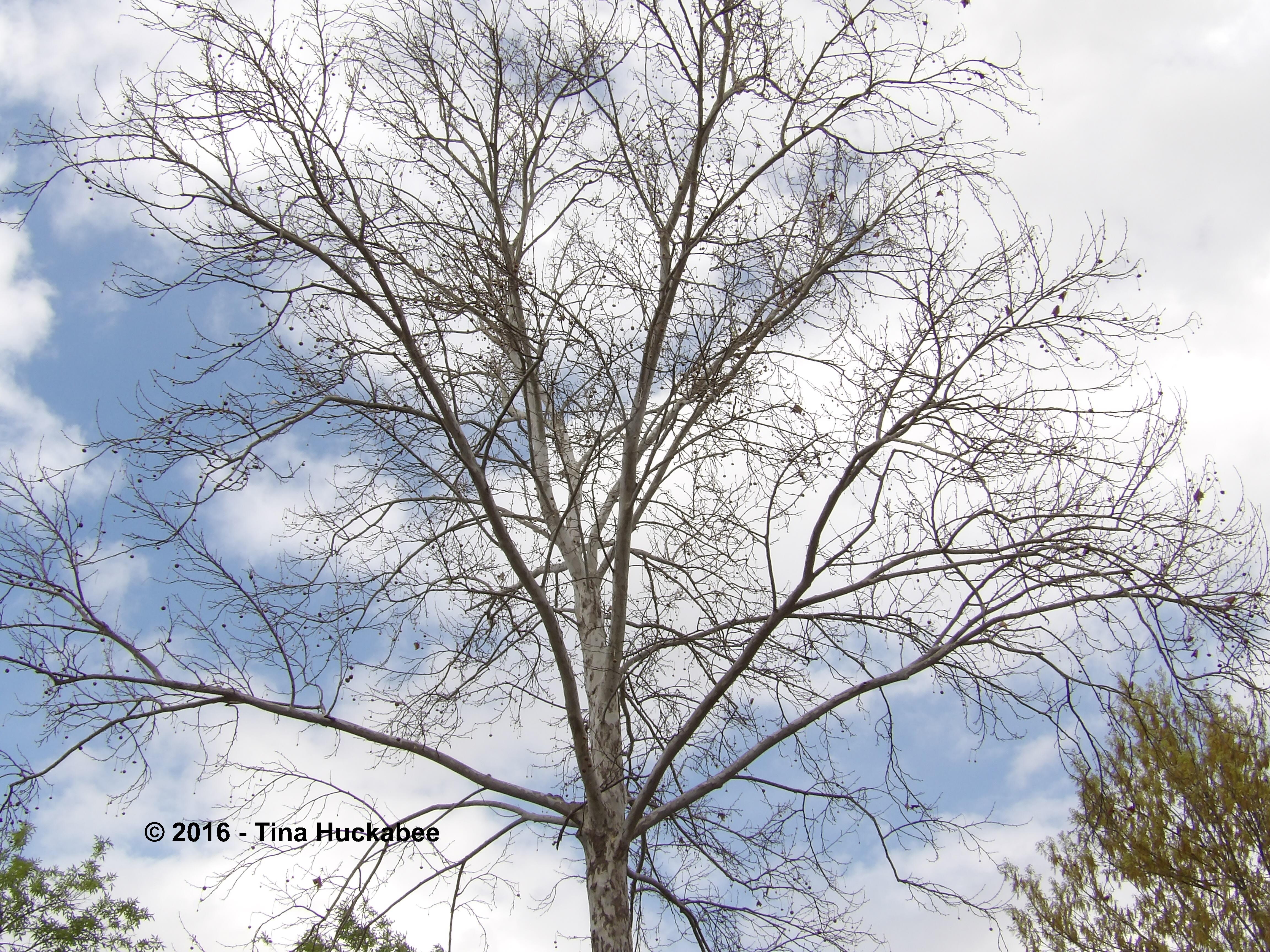
I suppose to suggest that there’s nothing going on with my American Sycamore,  Platanus occidentalis, would be erroneous. Truthfully, in its outward appearance, not much has changed since we last engaged in the monthly Tree Following musings.

IMGP4924.new

The American Sycamore stands stalwart and skeletal, beautiful in its simplicity.  It’s always one of the last trees to leaf out in my neighborhood, along with the native Pecan, Carya illinoinensis, trees.  I’m not seeing much, if any, thickening of bud development for ultimate leaf-making.

IMGP4763.new


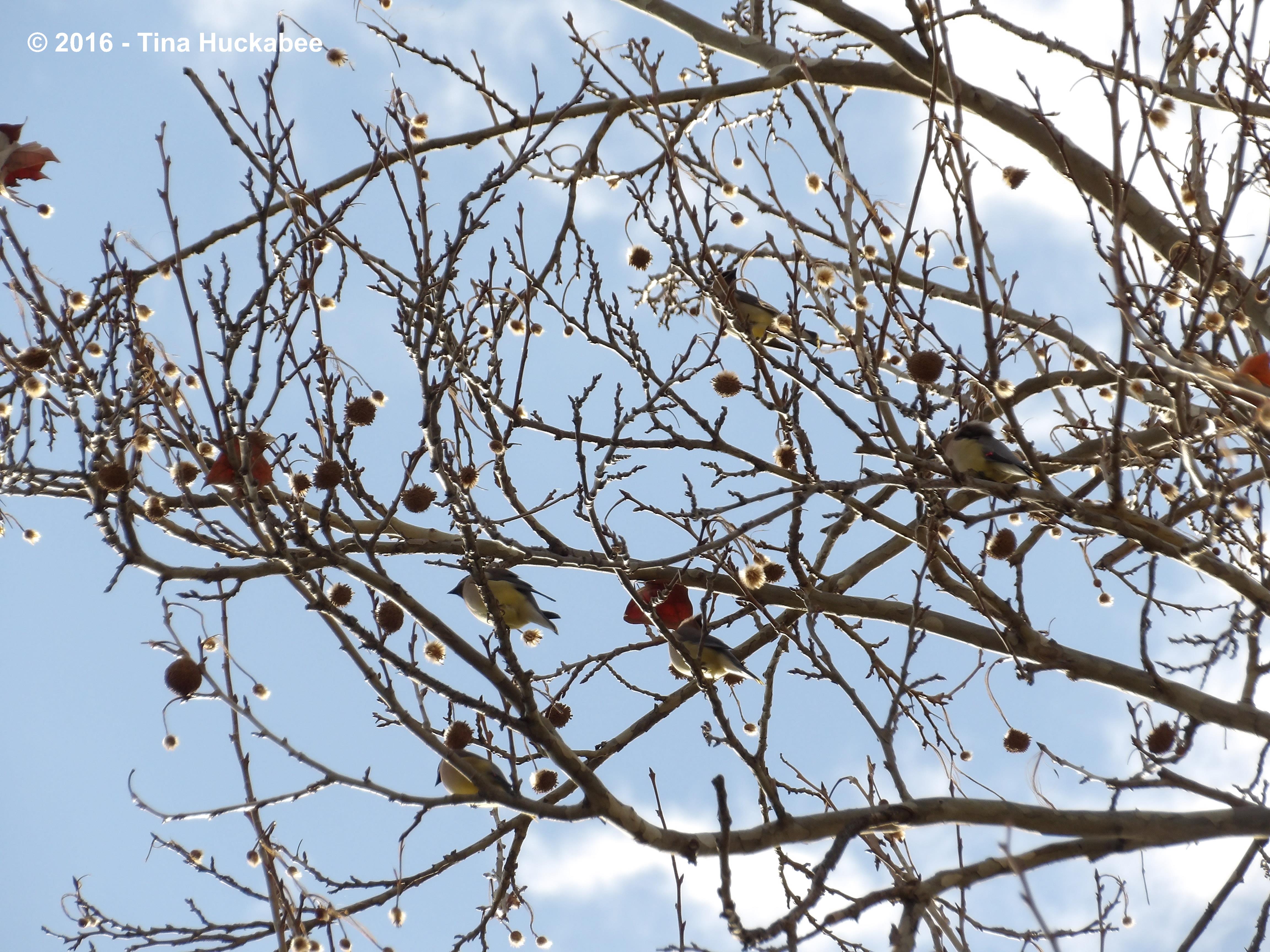
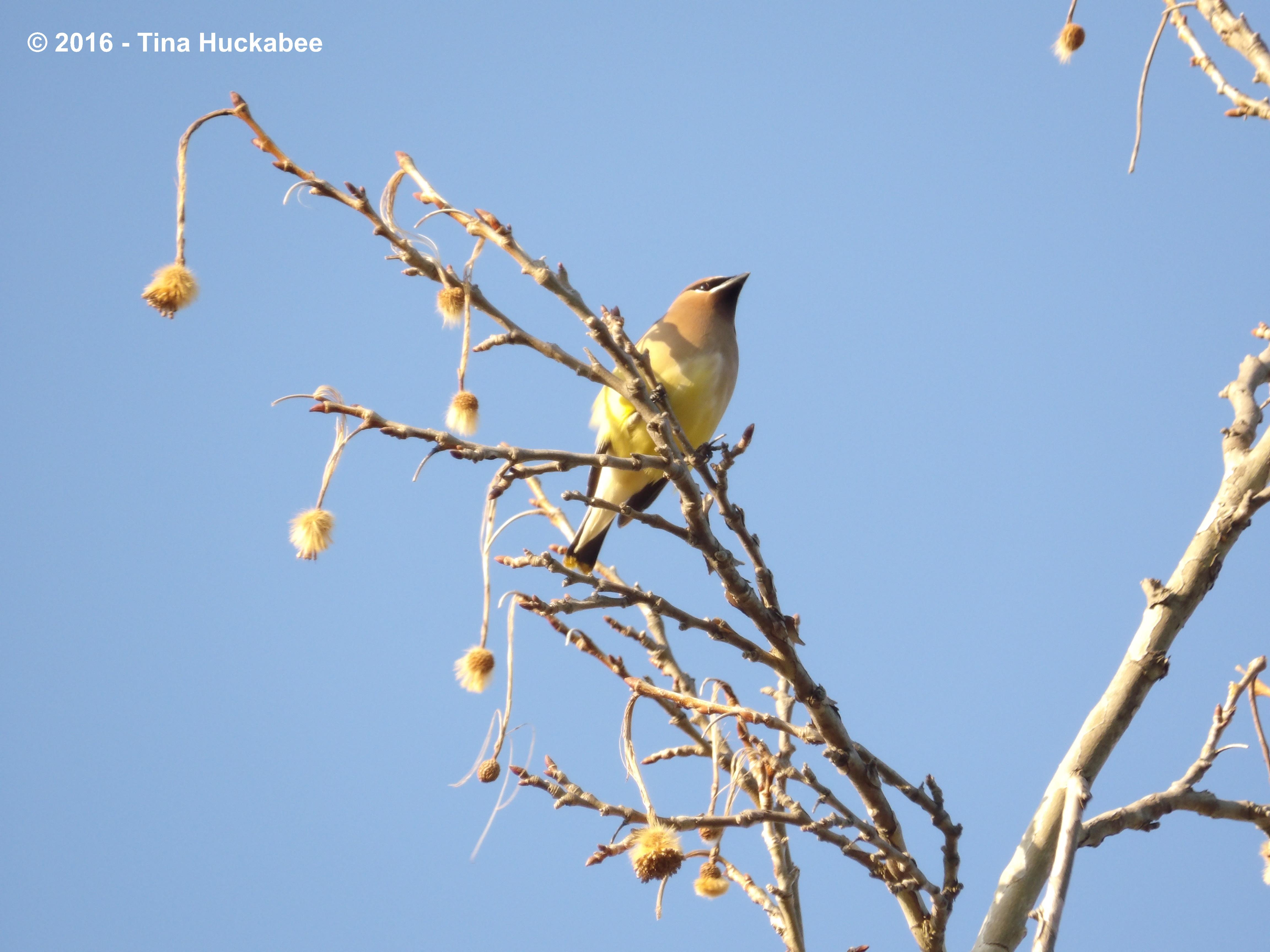
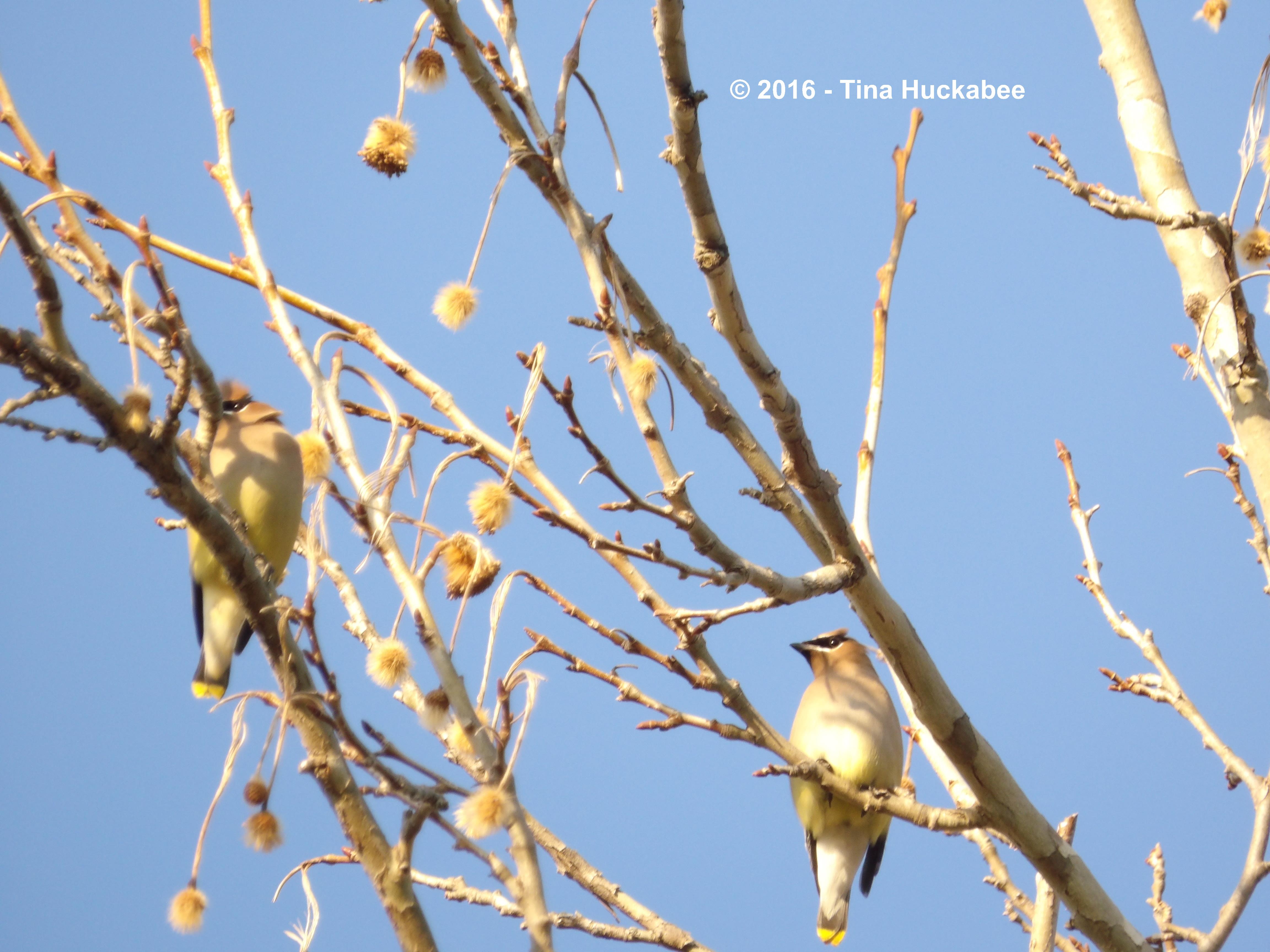
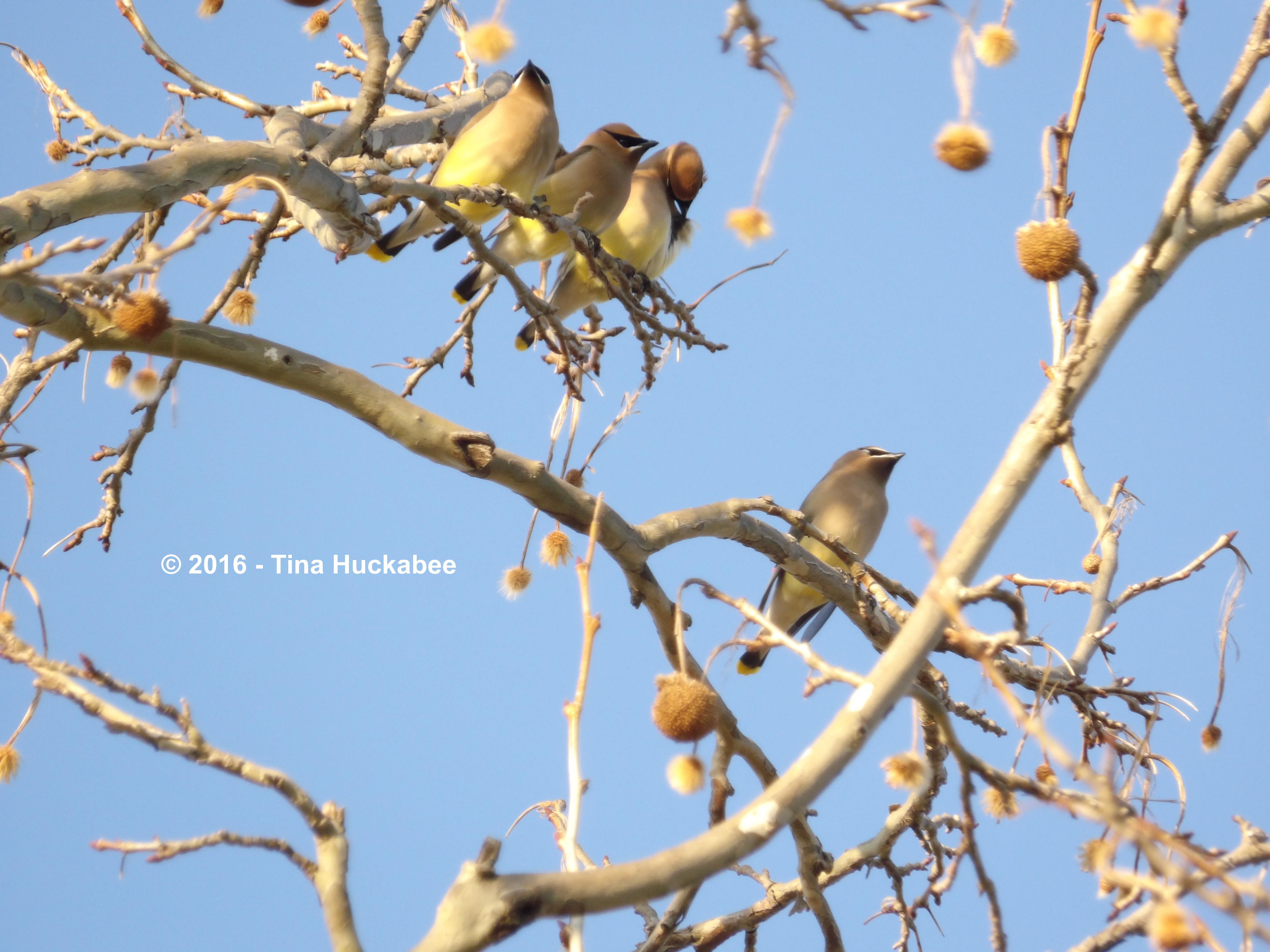
But there is some action in the goings-on of birds.  Cedar Waxwings,  Bombycilla cedrorum, rest and chatter on  the limbs.

IMGP4762.new

One,

IMGP4540.new

…two,

IMGP4611.new

…four,

IMGP4565.new

…four more,

IMGP4577.new


…and six.  Yes, there are six in the photo, though I cut the head off of one lad and another preens behind two full seed balls, to the amusement, or irritation, of a companion.

IMGP4568.new

There have been more birds at other times too, but on such windy days all that photographed was a smear.

The seed balls, or fruits, which never dangled in quite their usual numbers this year, are fewer on the tree now. Some are on the ground in my gardens, either whole or not.

IMGP4912.new

The Sycamore seed is an achene attached to hairy strands which help with seed dispersal.

The Sycamore seed is an achene attached to hairy strands which help with seed dispersal.

There have been days when I noticed a light snowfall of individual seeds floating on the wind, wafting to unknown destinations, but this year, there was no ticker-tape celebration of normal early spring wind dispersal.  The dispersal of seeds by wind is called anemochory, but American Sycamore seeds also disperse by water, called hydrochory.

IMGP4923.new

The Sycamore will leaf out during the next month.  The foliage will be lush, providing months-long shade for animals and people.

Thanking Pat of The Squirrelbasket for graciously hosting this fun meme about trees. Check out her blog for interesting information about trees from all over the world.