Winter’s bare trees allow for good bird watching, especially when it comes to the local raptors. It’s also the time of year when we prepare to host Eastern Screech Owls, Megascops asio, as they court, breed and fledge their young in the Red Oak tree in our back garden. We’ve been privileged to observe these shy beauties for the last 8 years and certainly hope that they once again choose our back garden for their home territory in these next few months. I haven’t seen an owl yet this season and I’ve missed them this winter. Once in early October and then once more in early November, I heard a Screech Owl whinny announcing to others this is MY territory!, but I haven’t heard the common owl trill as the owls are living their lives: hunting, flirting with a potential mate, and then working with that mate to raise a family.
Since late November, I’ve spotted a young Virginia opossum, Didelphis virginianus sitting in the owls’ oak tree at night,

Not a great shot, but you get the idea.
…as well as occasionally scuttling through my garden early in the morning.
I also suspect the same opossum as the thief who had stolen a small board at the entrance to one of my honeybee hives–I found it in a corner of my garden, weeks after it went missing, dropped nowhere near the hives. Because I’d noticed bits of non-oak leaves and Mexican feathergrass shards caught in the branches just below the owl nest box, I thought the opossum might be squatting in the box, but I never actually saw her enter or exit. Squirrels have moved in to the nest box in the past and I hoped that a rogue opossum would be too large.
I hoped, but I was wrong.
As Screech Owl breeding season is nigh, we’re placing a new camera in the owl house this year because we enjoyed watching Mama Owl in her box last year–until the camera pooped out just after she laid her 5th egg.
This past weekend, the ladder out and up and tools at the ready, The Hub was up in the owls’ tree.

Steady there!
I remained terra firma and sollicita because 2016 wasn’t a great year for his bones–all 20 that he broke due to a bike accident and related glitches. That’s all we need: for him to tumble off the ladder in the service of wildlife watching. Thankfully, he didn’t tumble, but he did find an owl box interloper in the guise of this fella:
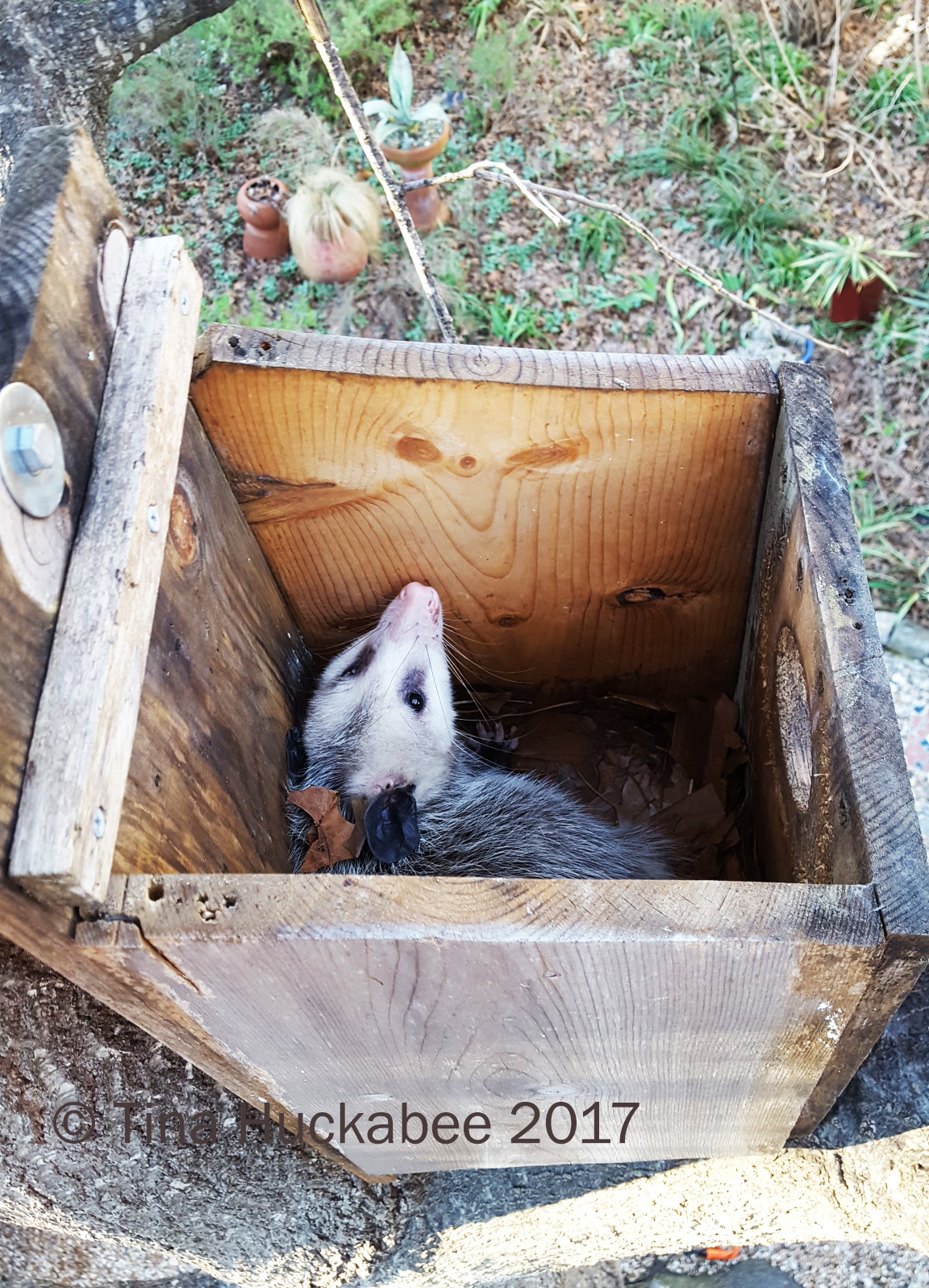
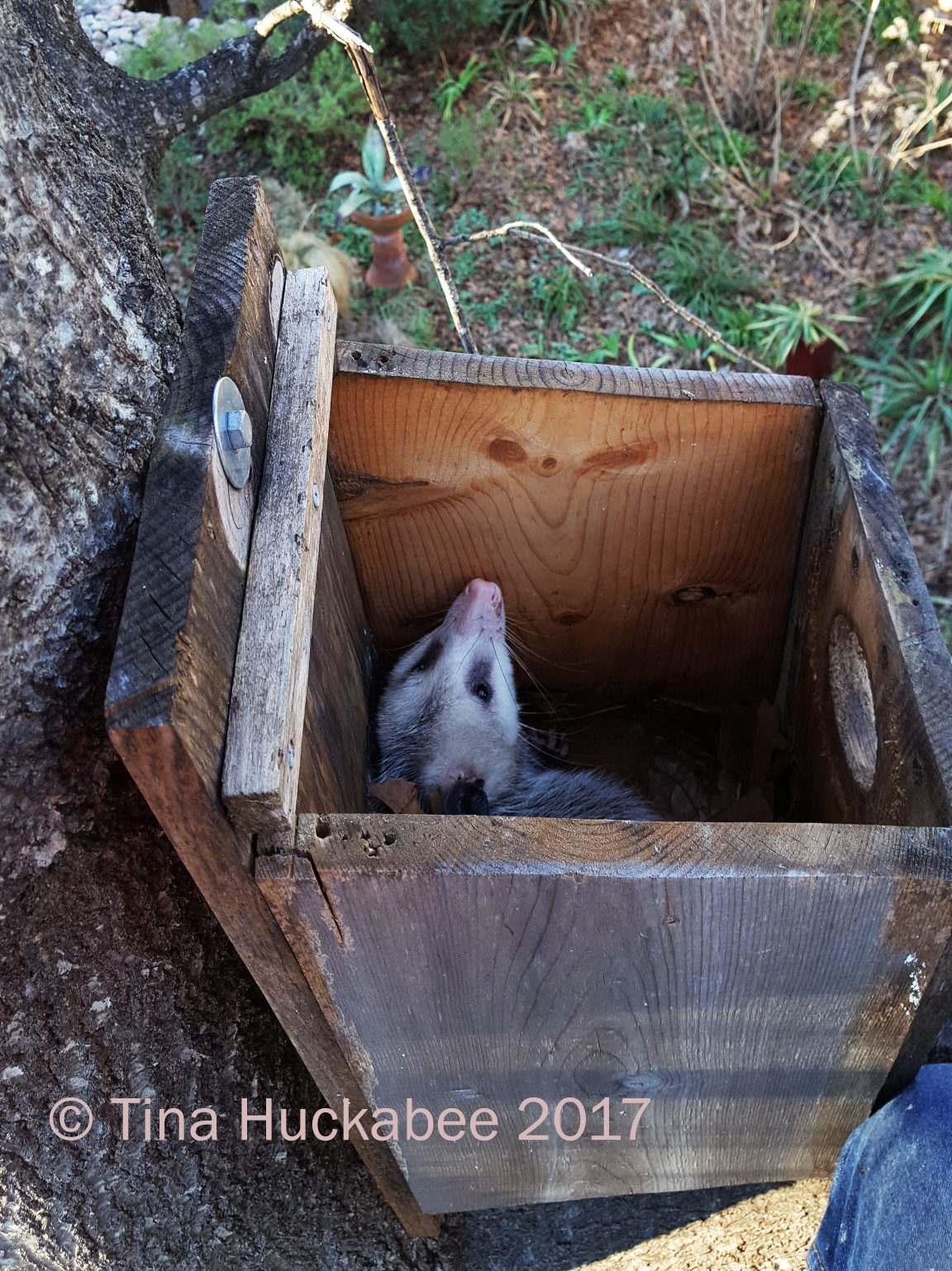
Actually, I suspect she’s a young, possibly pregnant, female opossum. What to do with a malingering marsupial snuggled in an owl nest box?
I have no objection to opossums. I don’t mind them sipping at the pond and bird baths, eating from the compost bar, or even rummaging through my garden, but I do mind, very much, that this one has decided she needs the owls’ house for her own.
Once the top of the box was removed, the opossum didn’t comply readily with our wishes for her to vacate the premises, nor did she cooperate when The Hub attempted to scoop her out onto a branch with a long stick. She peeked over the top of the nest box once or twice,

Too high up to jump!

Is there an opossum-sized ladder I can use?
…but decided that staying put and hissing was her best bet. With The Hub remaining up in the tree, we contemplated our options: leave the opossum in the house or scoot her out, forthwith? We decided that the best thing to do–for us, the opossum, and the nest box, would be to carefully lower the nest box to the ground,

Going down…
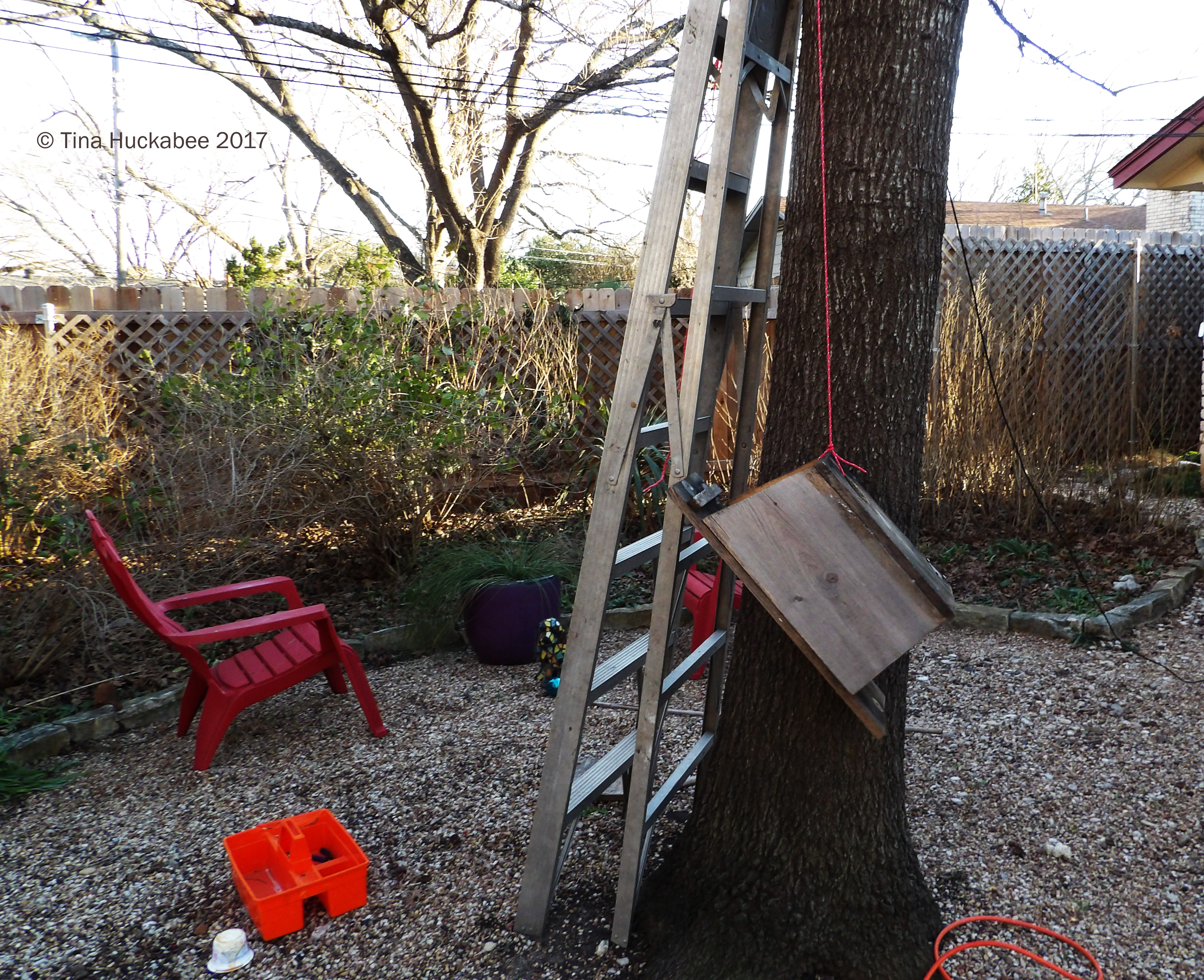
Almost there!
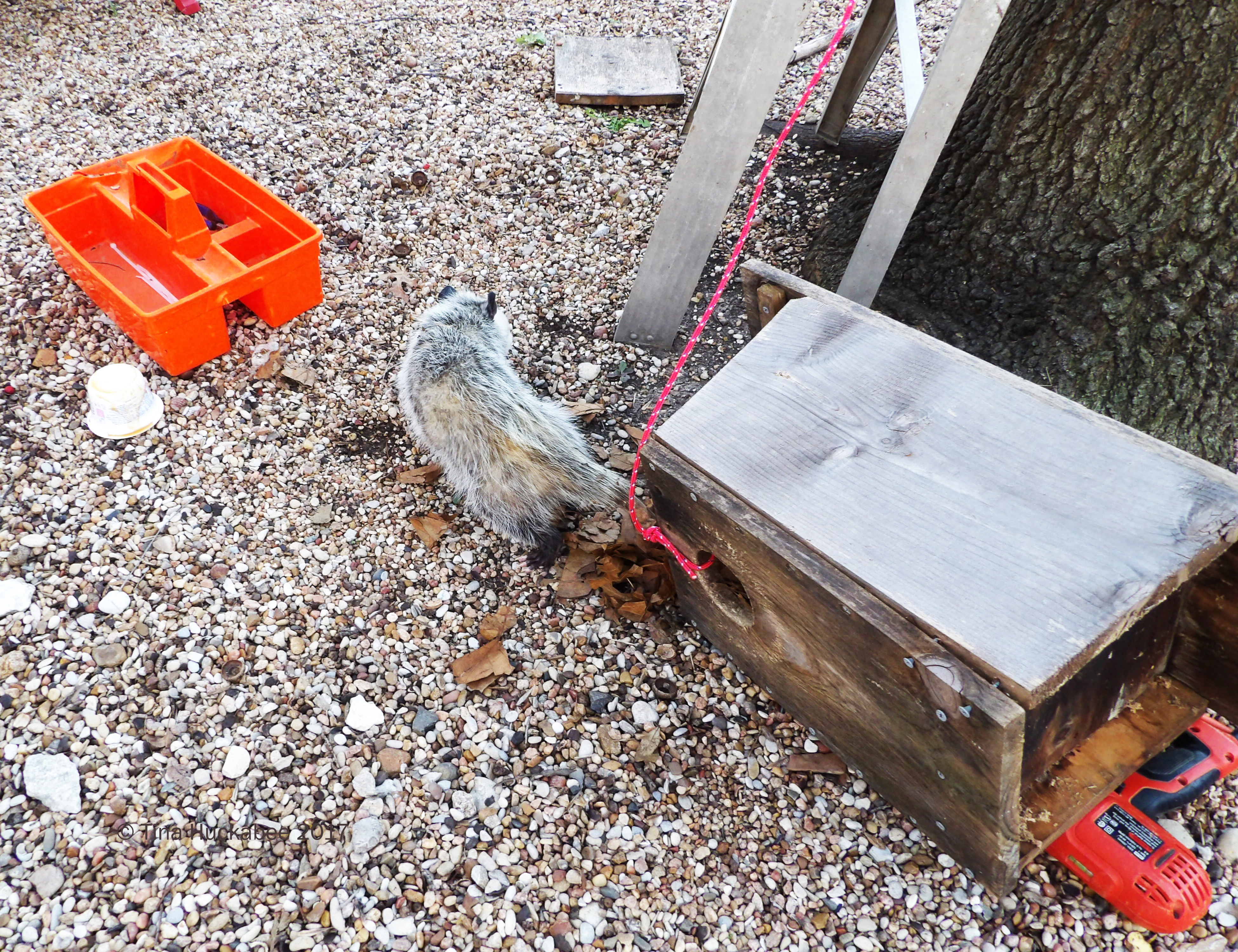
Thwarted–no more owl nest box squatting for you, missy!
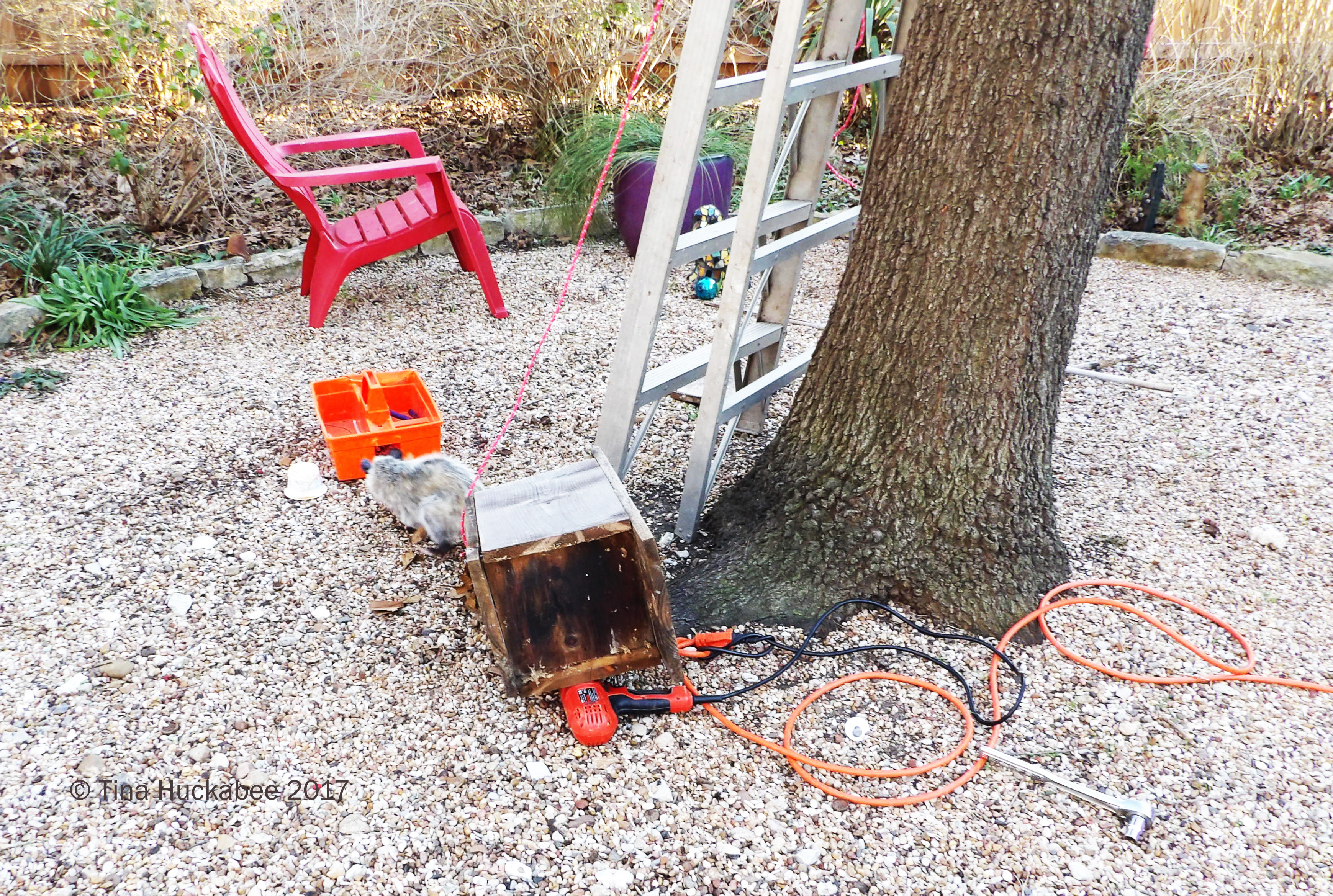
…allowing her to safely waddle off,
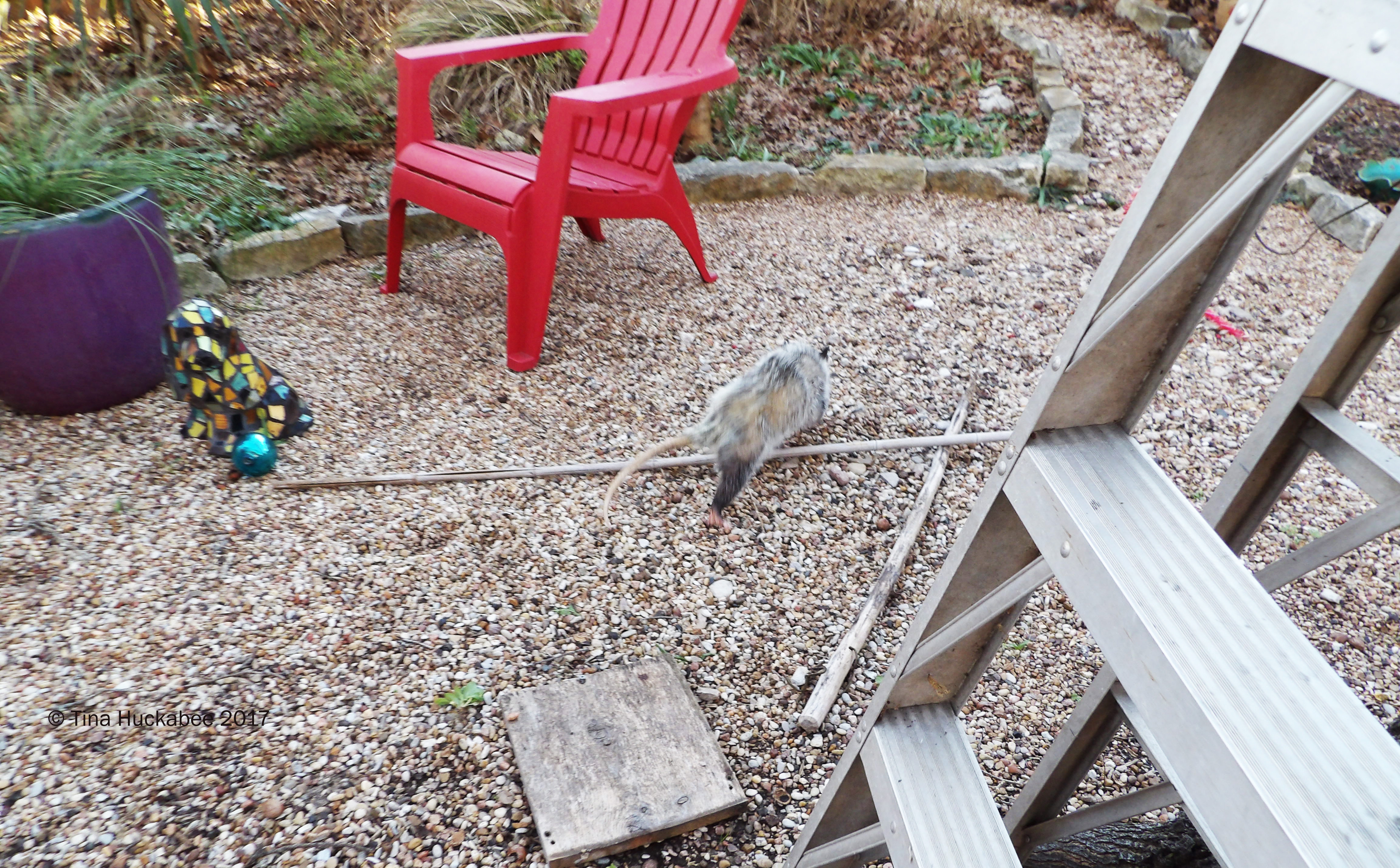
…which she did, in a huff.
I admire her steadfastness at claiming the box and for the obvious efforts at collecting leaves and grass for her nest and I do feel badly that we evicted her from such prime real estate. But we didn’t build the box for her and I’m sure she’ll soon find another cozy spot in which to nest. Opossums are not the brightest of critters, but they are remarkably adaptable–they eat almost anything and can nest almost anywhere.
Opossums thrive in urban environments–like my back garden.
We’re leaving the nest box down for the week and plan to put it back up into the tree, camera affixed and ready to go, by next weekend. Learning about and enjoying the life cycle of the Eastern Screech Owls has been a great pleasure for us. I hope that we can continue with that this spring.

2016 Mama Owl
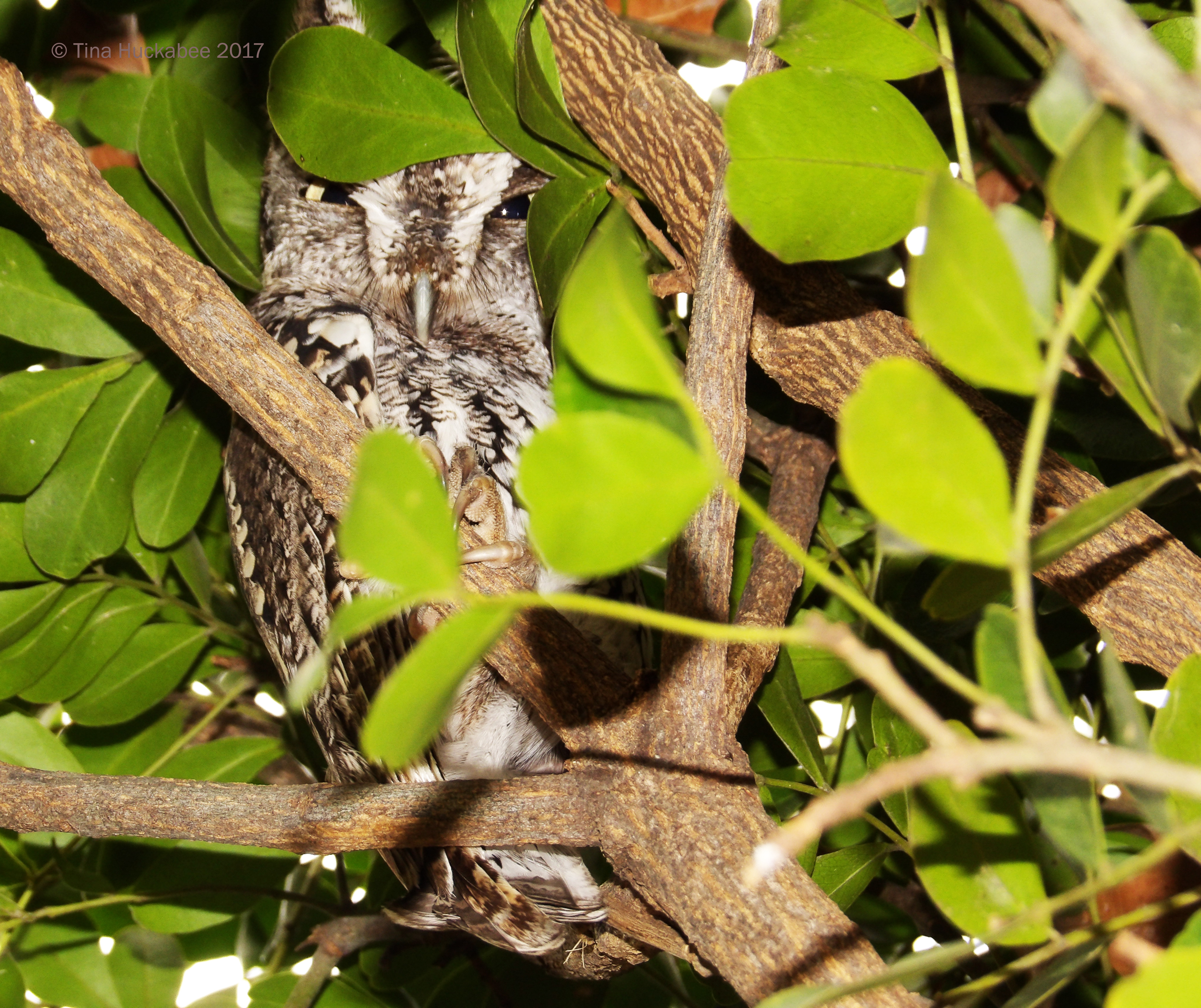
2016 Daddy Owl
As for Ms Opossum, I have no doubt that we’ll cross paths again.




 My Gardener Says...