Birds of Winter: Wildlife Wednesday, January 2017

Greeting the new year with my first 2017 post, I’m glad to kick 2016 to the curb–good riddance, what a difficult year–but I am glad that the birds in my garden are busy with their winter work of eating, singing, bathing, gearing up for spring flirting, defending territory and providing interest in the garden and entertainment for the gardener. It’s the first Wildlife Wednesday installment for 2017, where critters are wild, occasionally woolly, and always welcome.

Central Texas enjoyed a couple of nights of sub-freezing temperatures a few weeks ago, just enough to leave  the garden crinkled and wrinkled, foliage-deprived and bloom-less. On the up-side though, it’s easier to see the birds as they forage  in the undergrowth for winter sustenance and prepare their game-on for spring migration, spring wooing and summer chick-rearing.

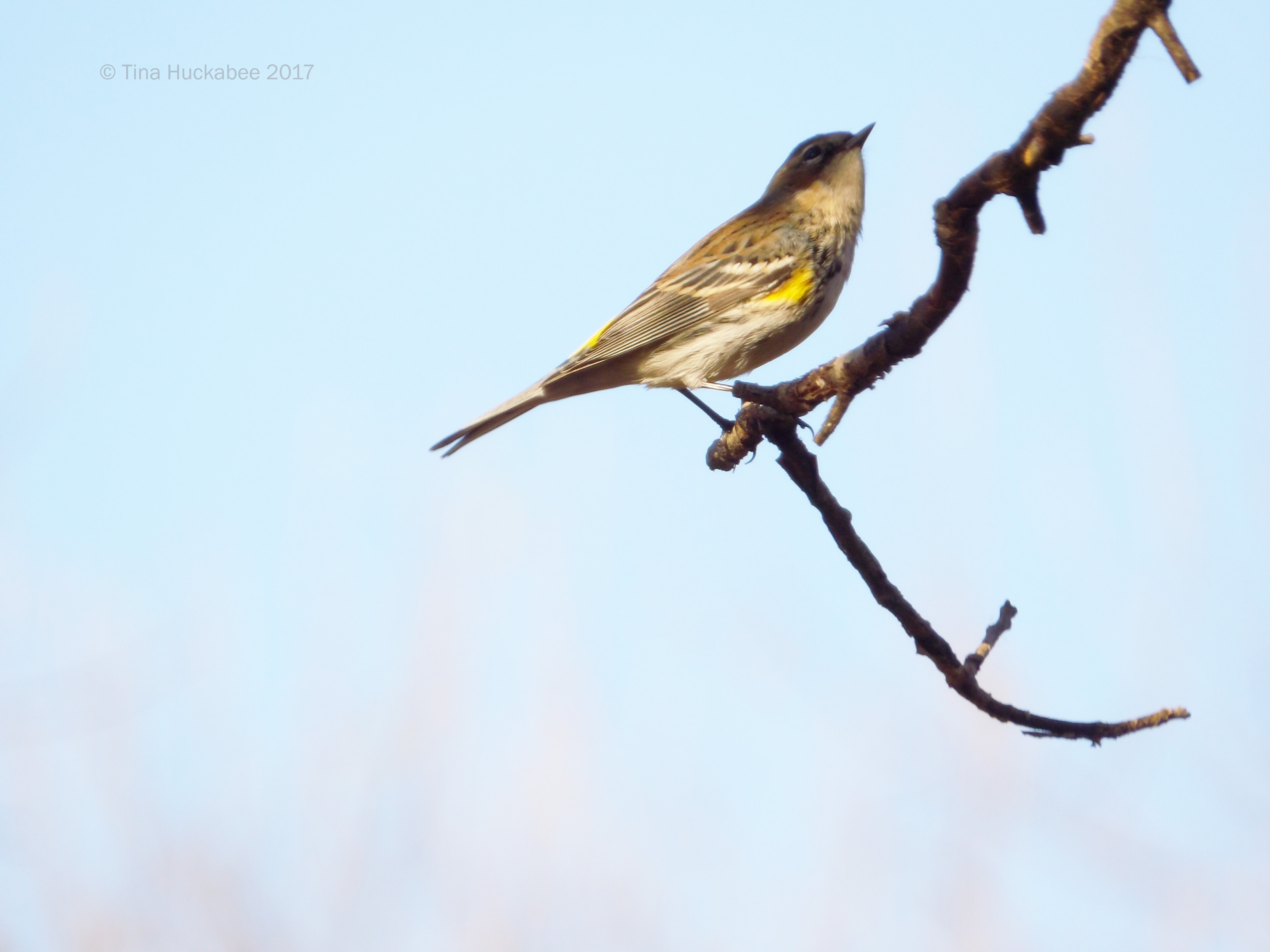
I’m observing and listening to winter Texan warblers again this winter–and pleased that I’ve learned a bit about their habits and vocalizations.  This past month, my garden has hosted several of the Yellow-rumped Warblers, Setophaga coronata.  So far, it’s mostly males in their winter plumage that I’m spying.  Flashes of sunny yellow and soft cheeps  in the trees are my clues in identifying these cuties as they fly between trees or perch on bare limbs.
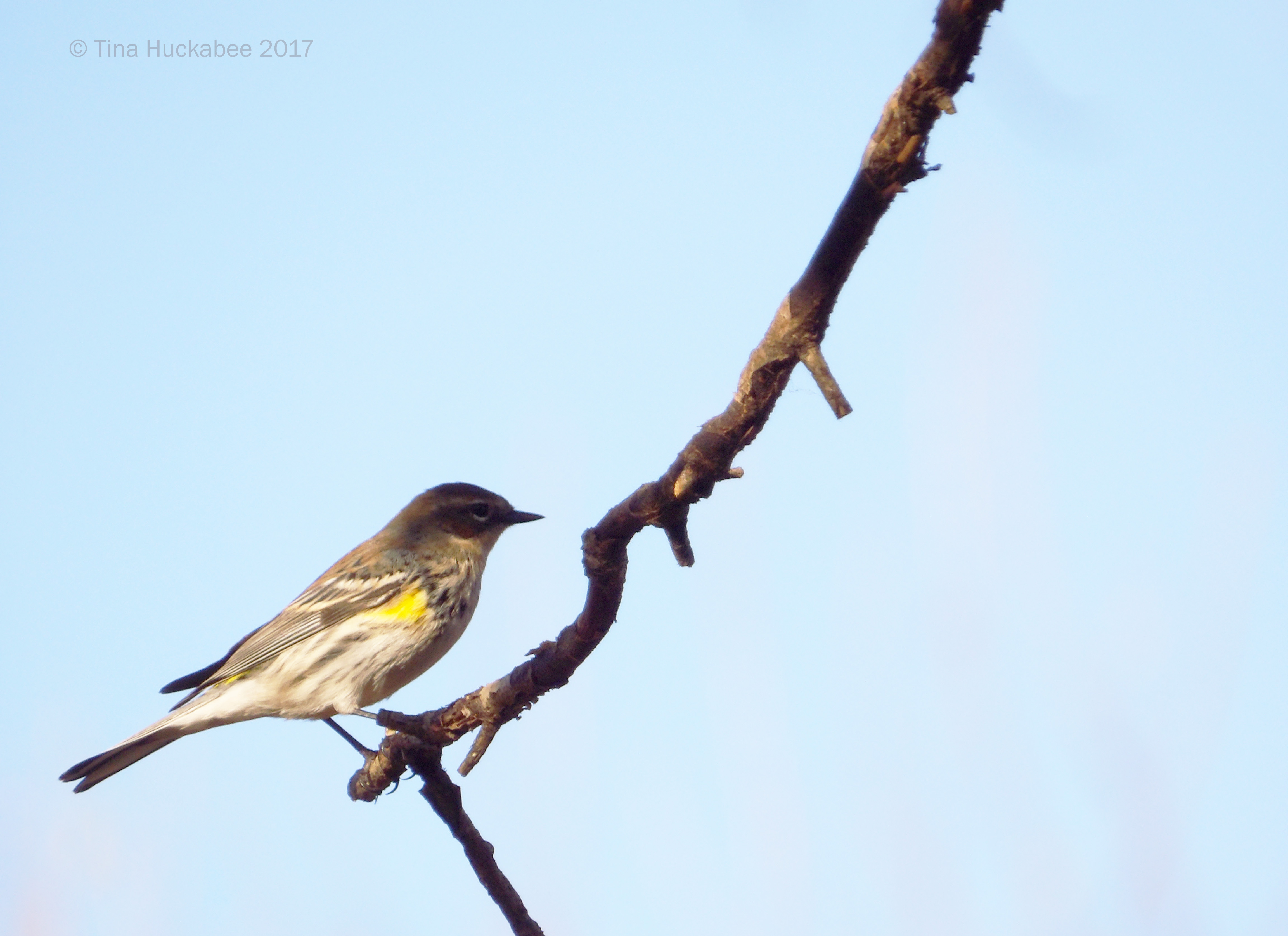
 

I’ve no idea if this is the same fella, but he rested in the glow of the late afternoon light, which rendered  his colors a golden hue.
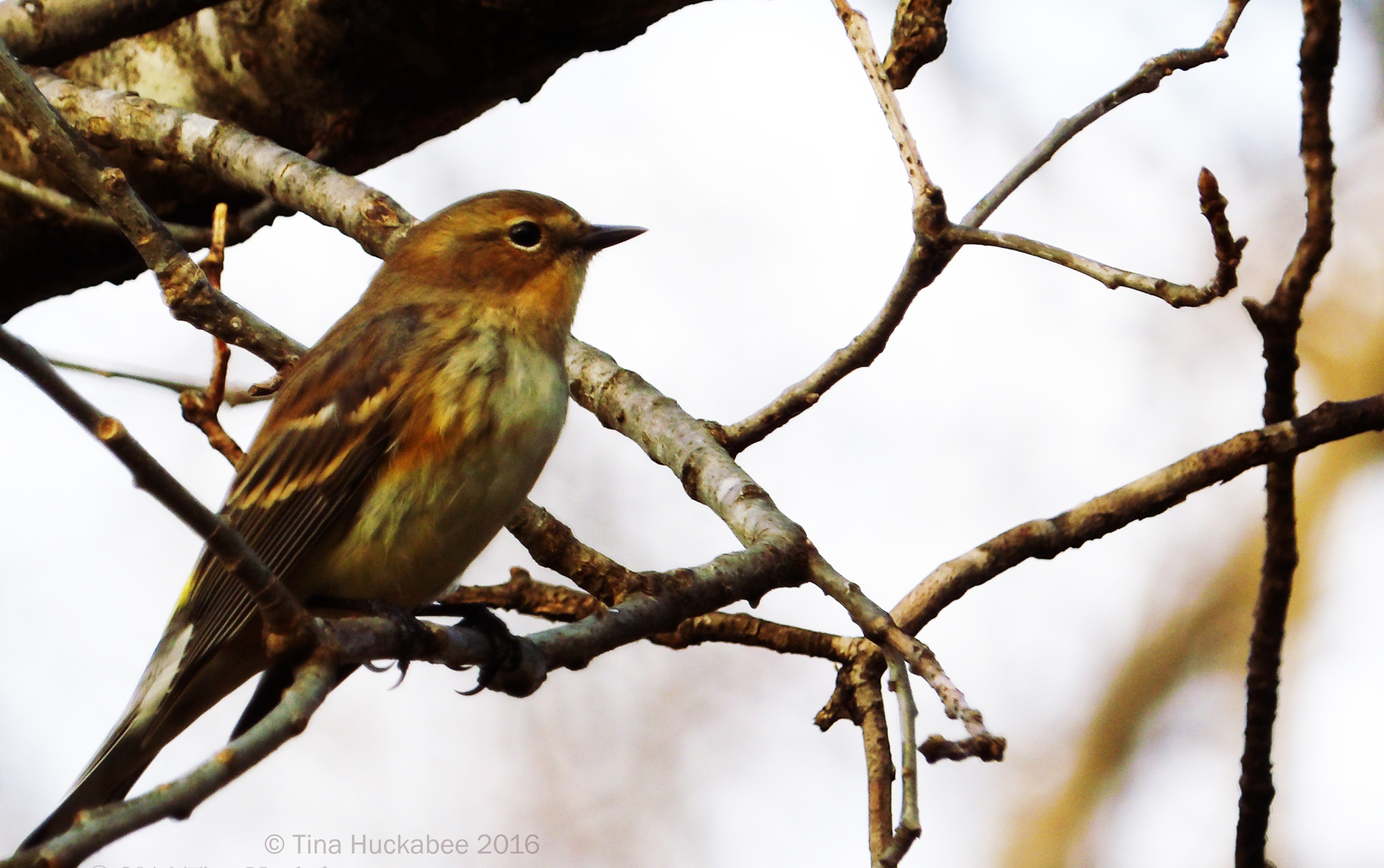
I especially like this shot,  as he points his yellow rump at me.  Avid birders call these North American songbirds Butter butts.  A silly and apt name, I think.
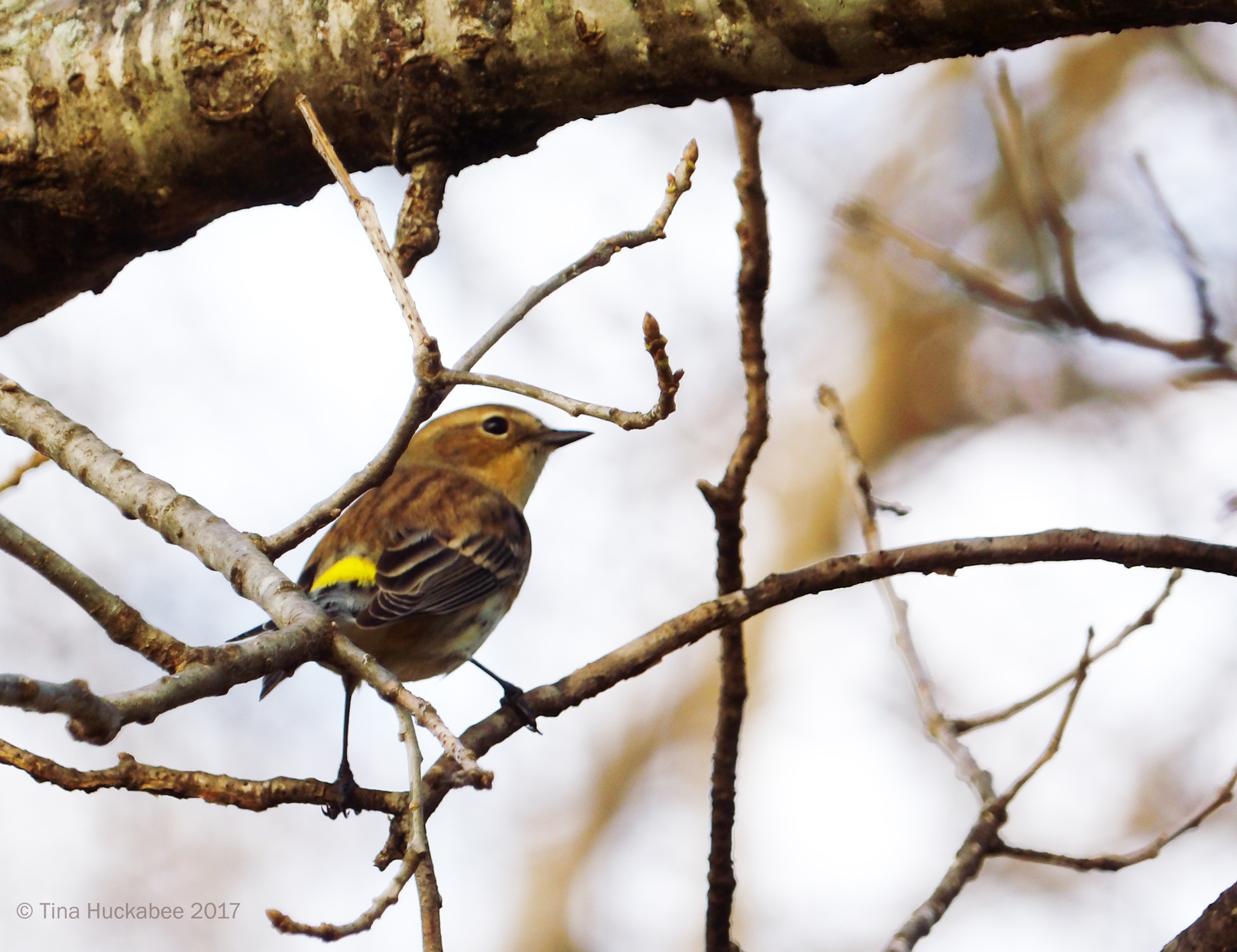
I believe that the Butter butts in my garden are the “Myrtle” subspecies common to the eastern part of the United States because my Butter butts have a white or cream-colored throat.  The “Audubon” subspecies common further west sports a yellow throat.


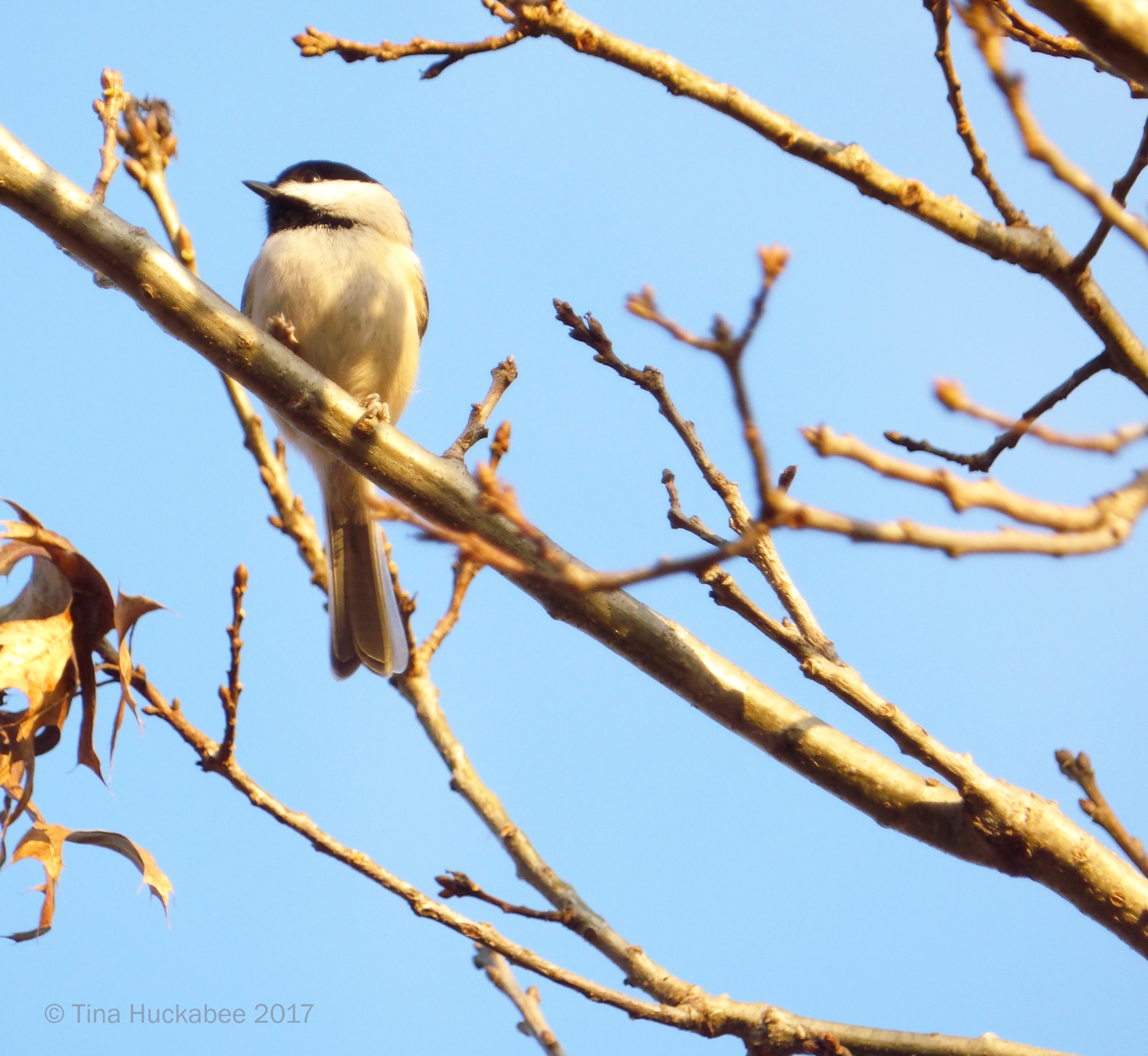
Many are my “favorite” birds, but the Carolina ChickadeePoecile carolinensis, really holds a soft spot in my heart.  From their pretty songs, to their decorative popping presence in trees, to their break-neck snatches of sunflower seeds from the feeder, these year-round residents are fun to watch because of their antics with one another and curiosity about their surroundings.
 

Thrilled this winter to have at least one Ruby-crowned Kinglet, Regulus calendula, in the gardenhe’s challenging my photography skills because he’s super quick flitting in the brush and shy after any movement I make.  He’s hard to shoot–that is if I’m aiming for a clear photo.  If you click on the name link (which takes you to the Cornell Lab of Ornithology page on this bird), you can see the red “ruby” crown in a photo.  For now,  I can only dream of getting that splash of crown color which is this species’ namesake. However, I can gleefully report that I’ve seen the red stripe atop his darling head through my binoculars.  My goal this winter is at least one shot of the ruby crown on the Ruby-crowned.
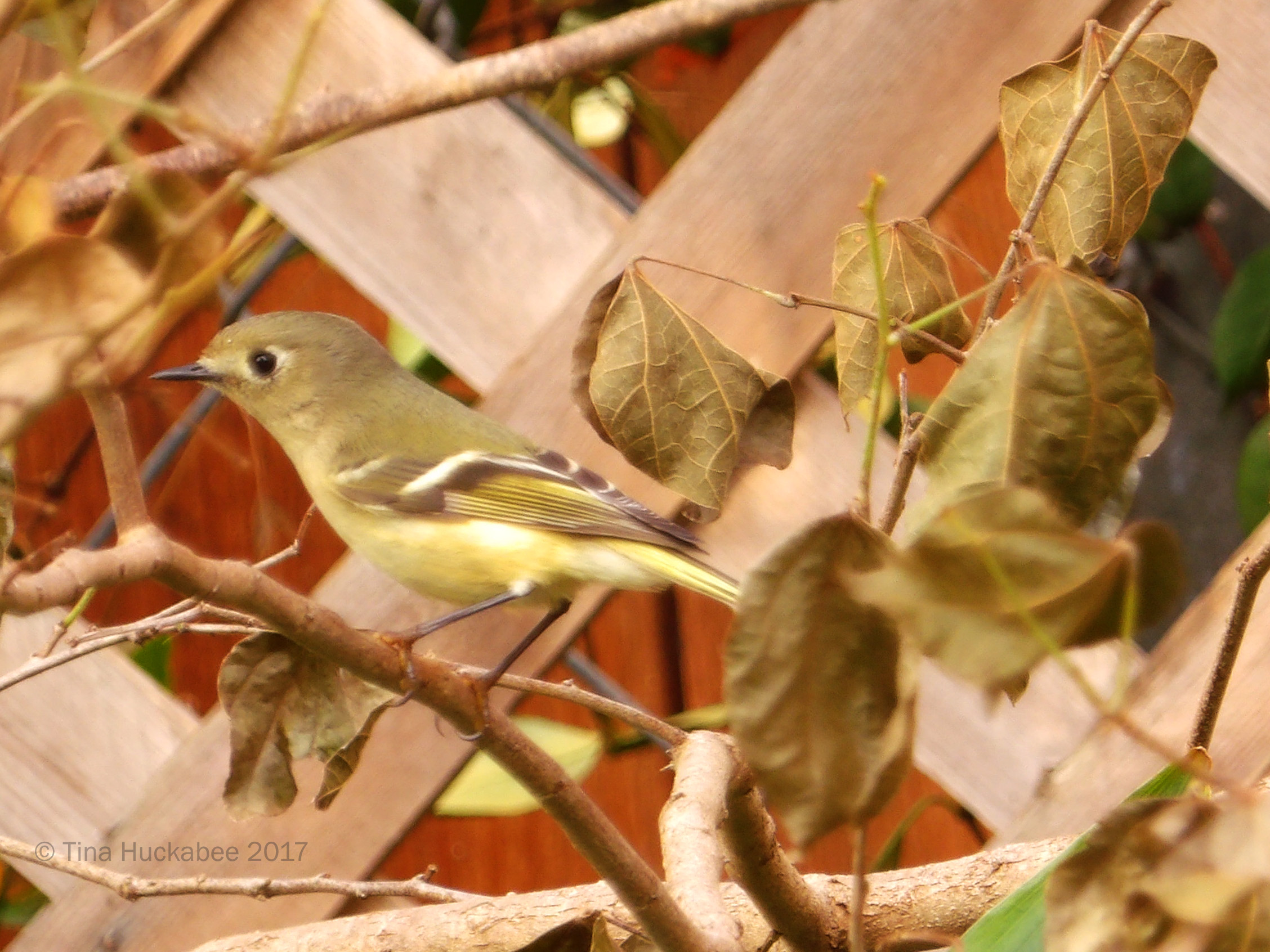
I think there might be a female coming in for visits too, but for now, it’s all about the guy and his red crown.


Several Orange-crowned Warblers, Oreothlypis celata, are currently hanging around, much as they did last winter. I’ve observed two males and a female.  Like most other warblers, their movements are fast and their body language–all head tilts and swishy tail flicks–charming.

A butterfly chrysalis hangs below the blue bowl, just to the right of the vertical wood post. I didn’t see it until I downloaded the photos.

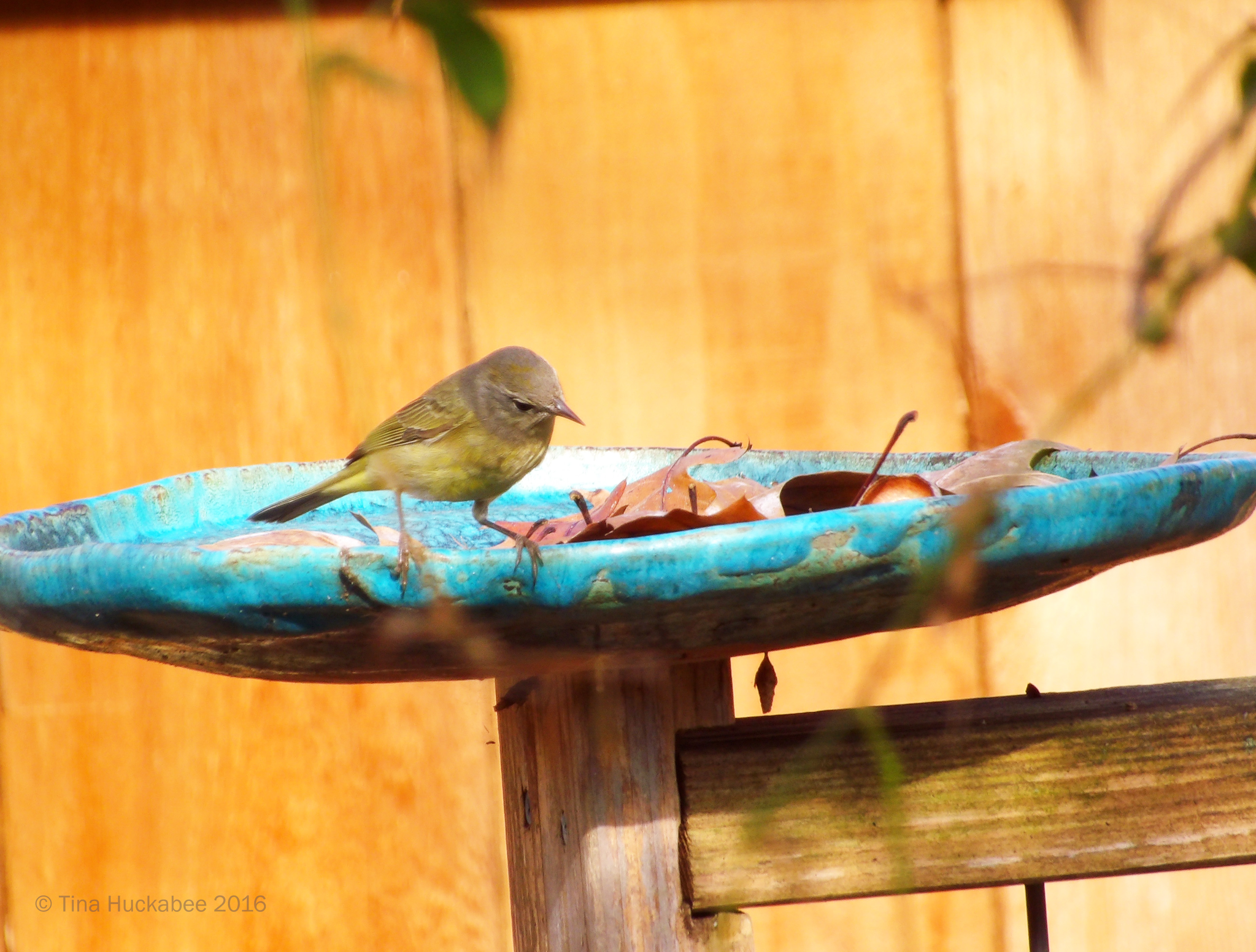
The Orange-crown males have an orange crown (similar to the red crown of the Ruby-crowned), which appears as a little bird mohawk when a girl bird, or rival guy bird, needs impressing. I haven’t seen the orange crown so far this winter, but did on a regular basis last year with those who visited.


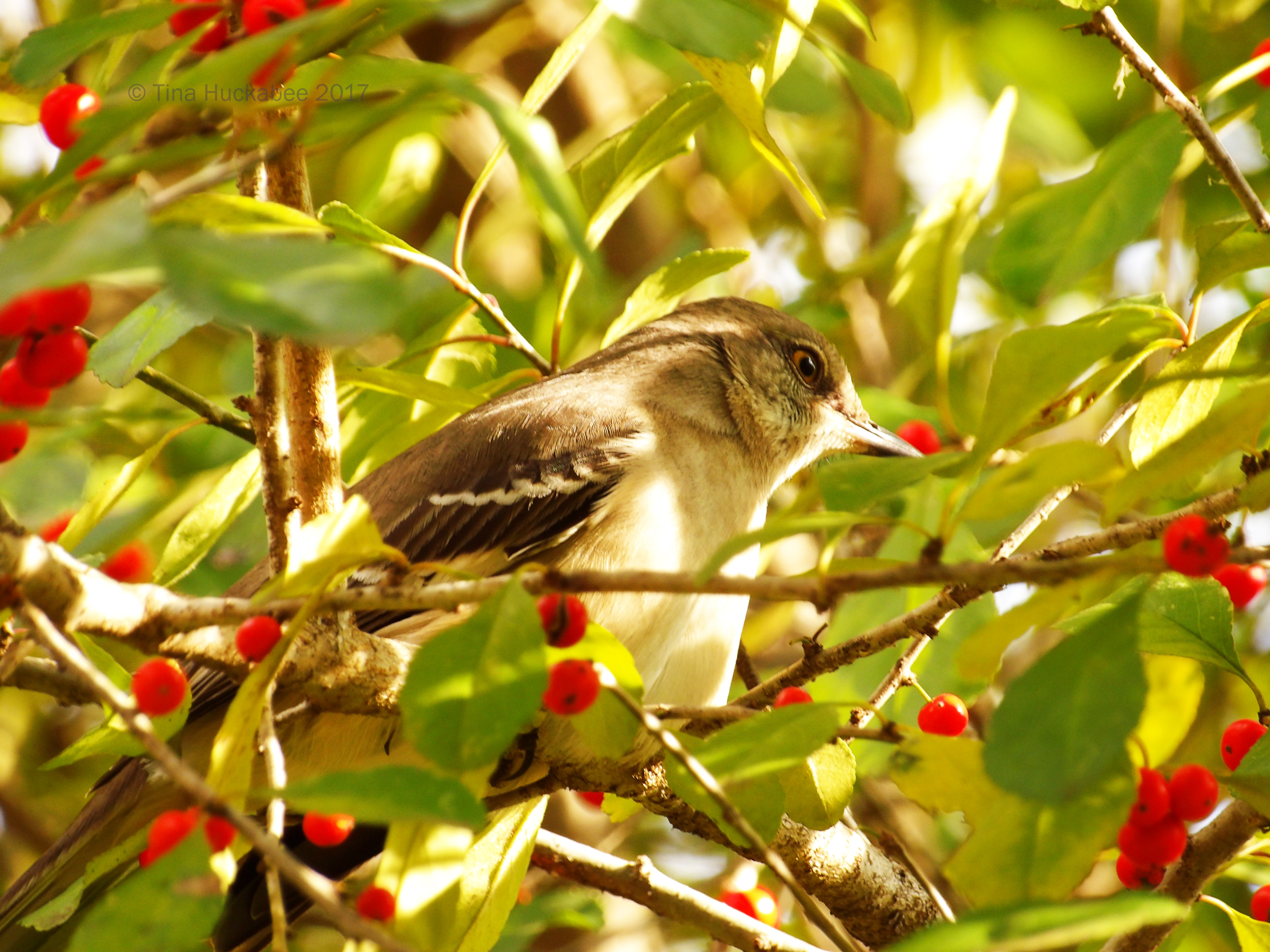
I was chasing the male Ruby-crowned Kinglet one afternoon for a photo, when a contentedly berry-munching Northern MockingbirdMimus polyglottos stopped me in my tracks.  Nestled in the branches of a native Possumhaw tree, Ilex decidua, the Mock gobbled berries within easy reach.  The Possumhaw is a small tree which produces beautiful (to gardeners) berries during winter and is a favorite of a variety of wildlife, including my friend, The Mock.
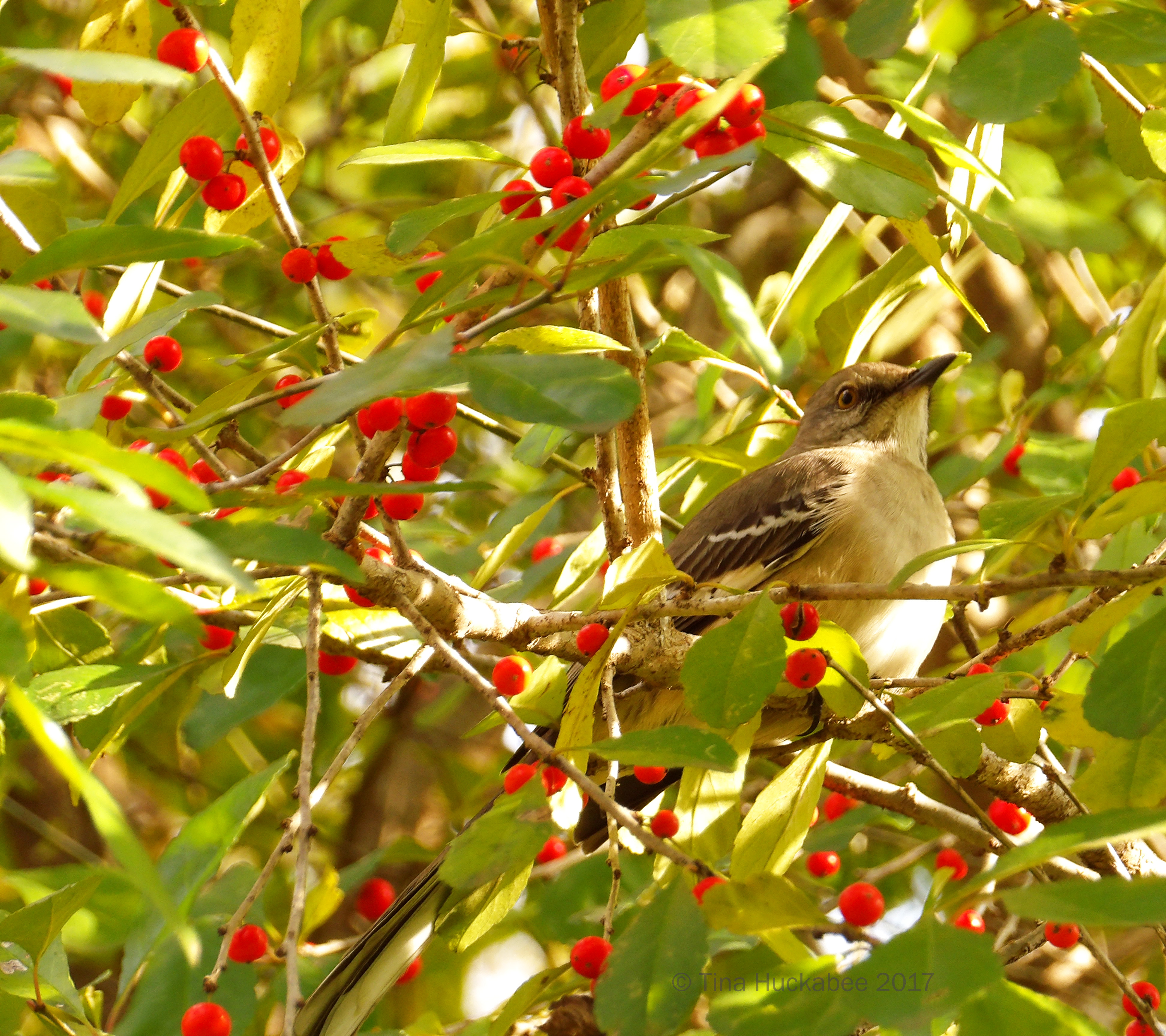
The Mockingbird is the state bird of Texas and known for its vocalization mimicry and beautiful songs.
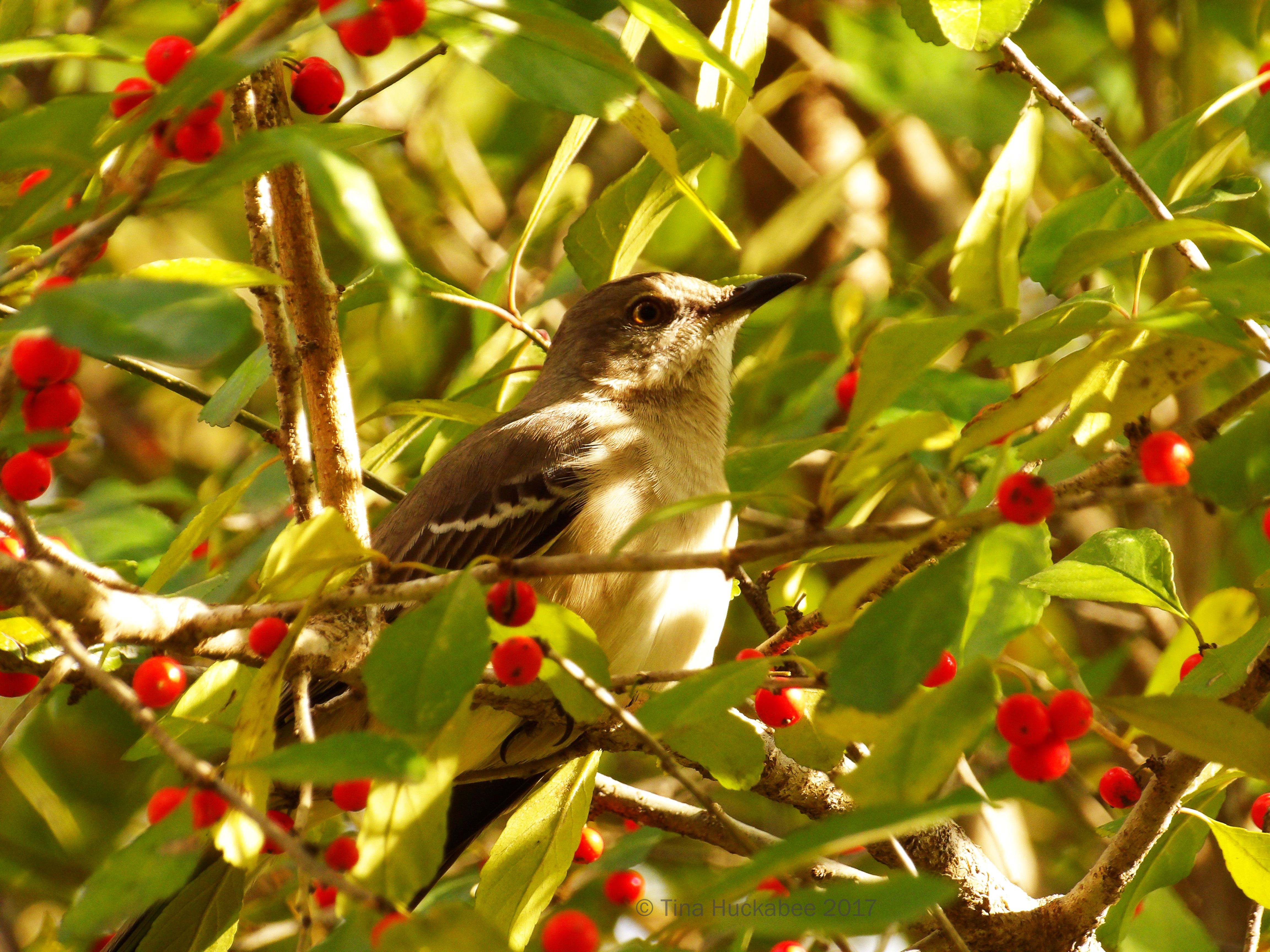
This Mock was comfortable as I stood close, probably because I told him how pretty he is.
 

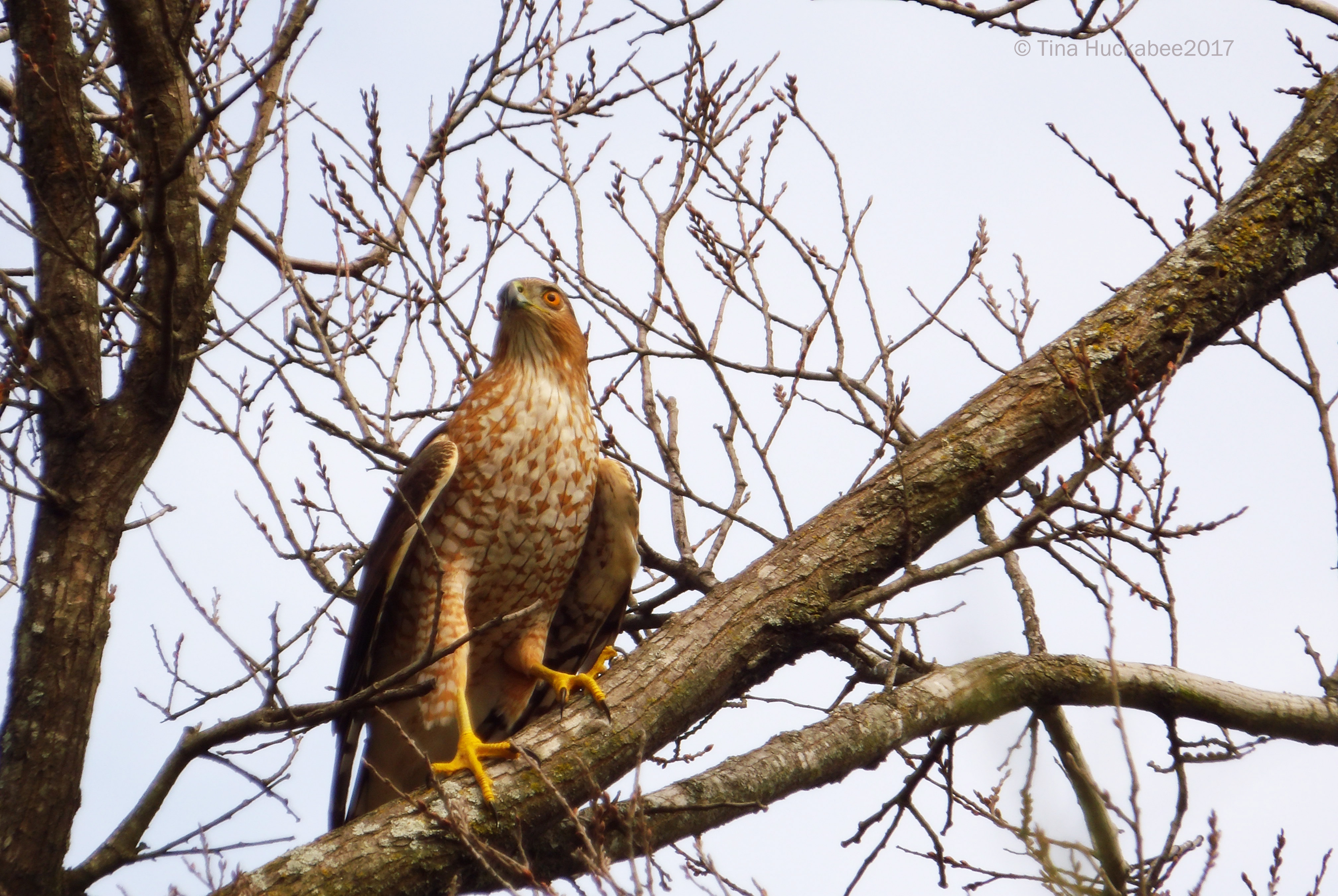
And hoping to catch and devour any, or all, of the above was this handsome Cooper’s HawkAccipiter cooperii.

Another year-round resident in urban Austin, Texas, I see these and other raptors regularly in the neighborhood, flying from tree to tree, scaring the prey birds witless.
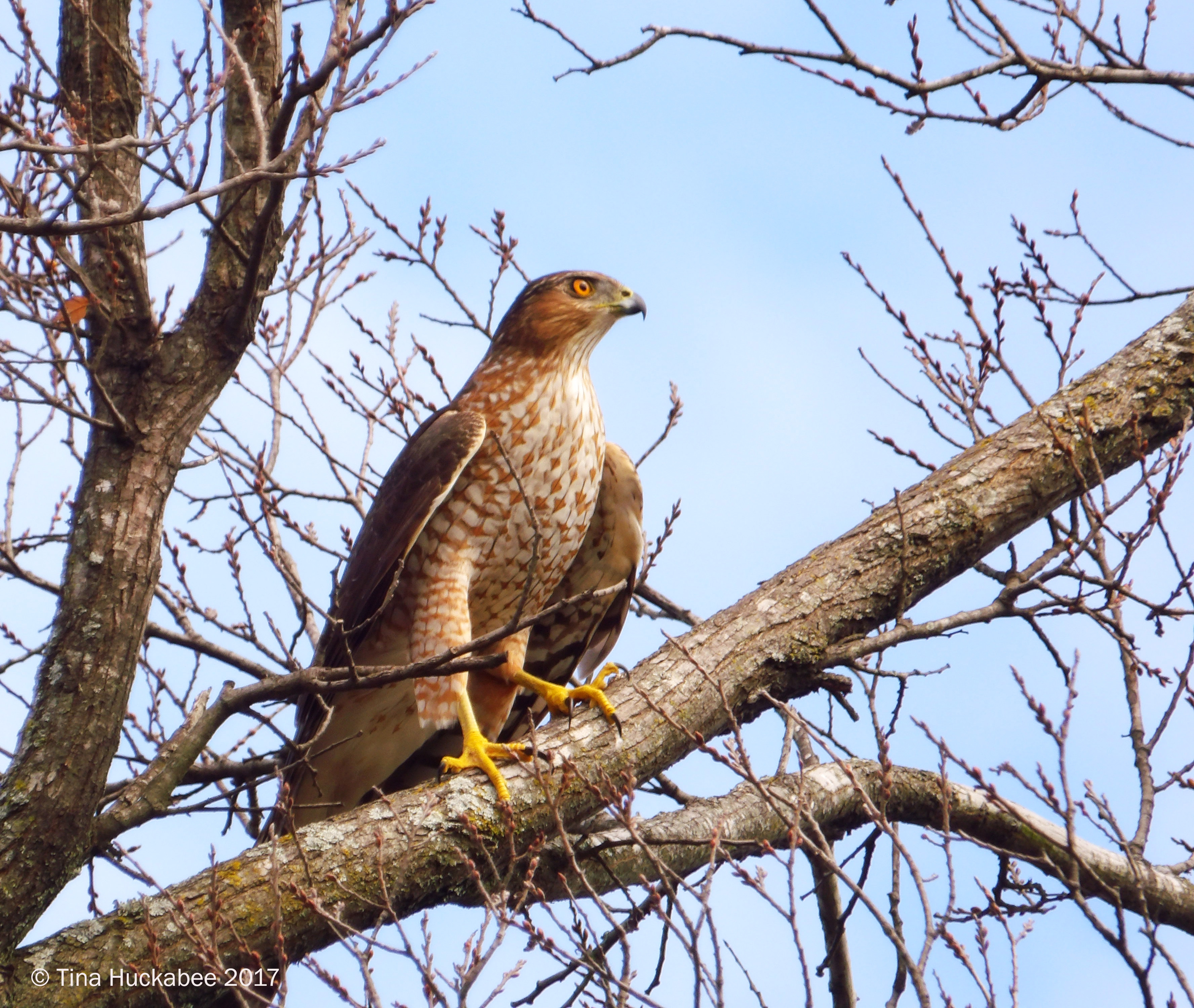
This gorgeous one perched in my back neighbor’s tall tree, remaining for several minutes, surveying its realm and allowing me to get some clear shots. The birds in my back garden remained very quiet for a time….

Wishing you a happy new year, full of wildlife in your gardens and peaceful interactions everywhere. Did wildlife visit your garden this past month? Please post for January Wildlife Wednesday. Share photos and stories of your garden wildlife to promote and appreciate your region’s natural habitat and diversity. When you comment on my post, please remember to leave a link to your Wildlife Wednesday post so readers can enjoy a variety of garden wildlife observations.

Happy wildlife gardening!

Frosty Frostweed

This past  week, winter entered the Central Texas picture with temperatures dipping to the mid 20s F/below 0 C, for several nights and mornings.  I realize that’s nothing to what the mid-west and elsewhere regularly endures, but it is a definitive so long to the blooming southwest garden!  and hello! to wilted and freeze-crisped plants.  I miss flowers in winter, but I welcome the cold(er) season exit of herbaceous perennials.  I like the bare-bones of a garden revealed, to better assess needed garden changes.

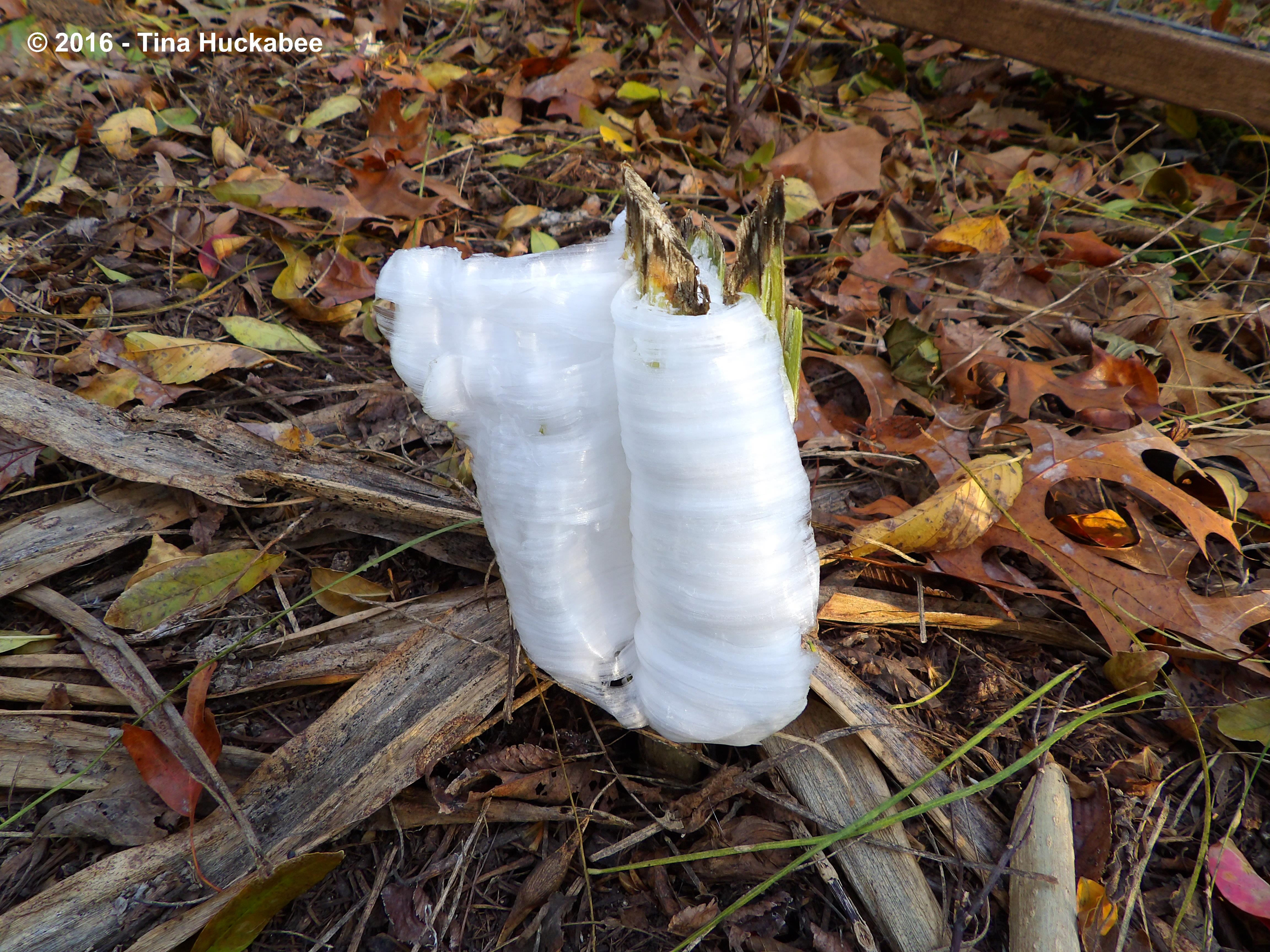
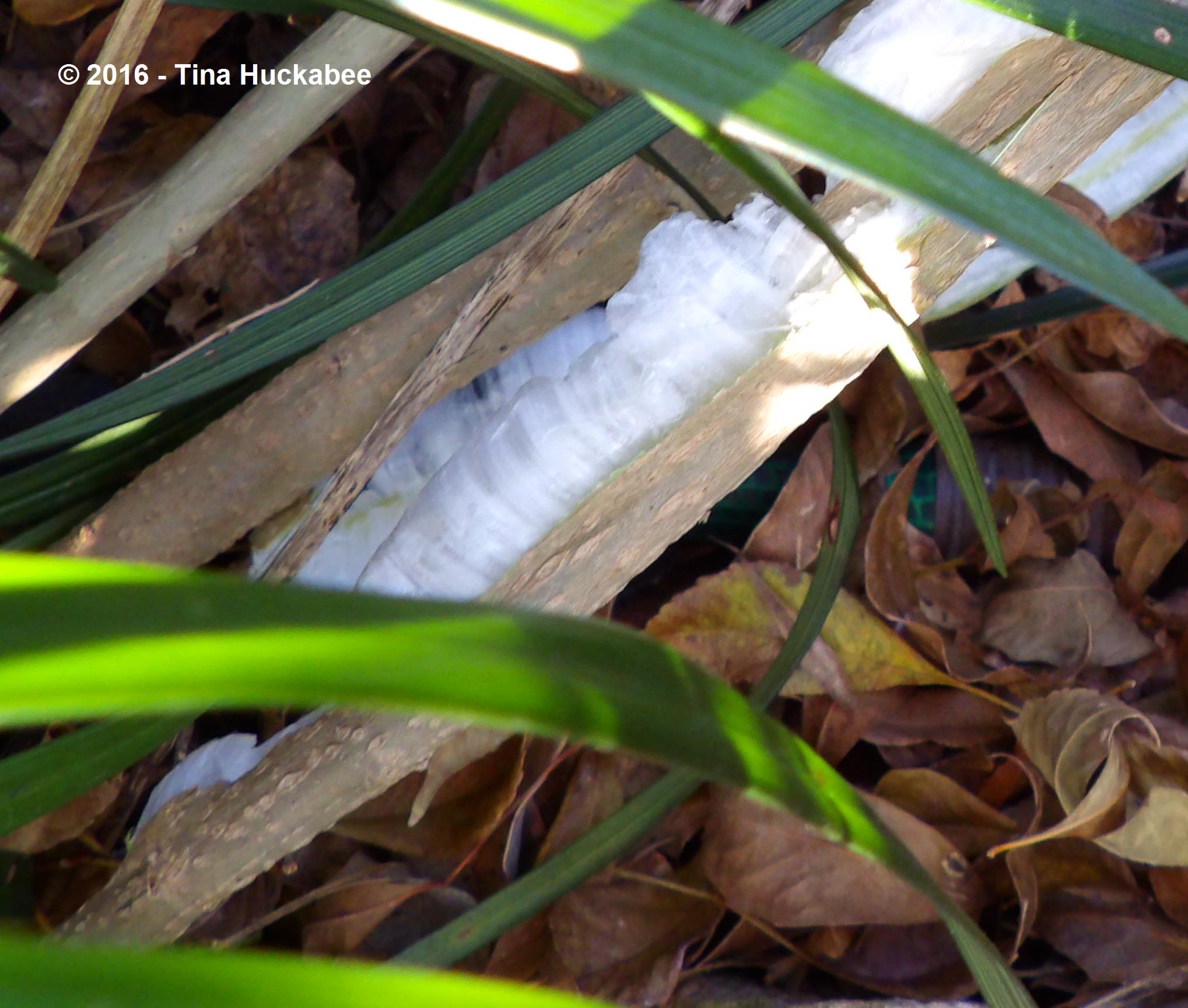
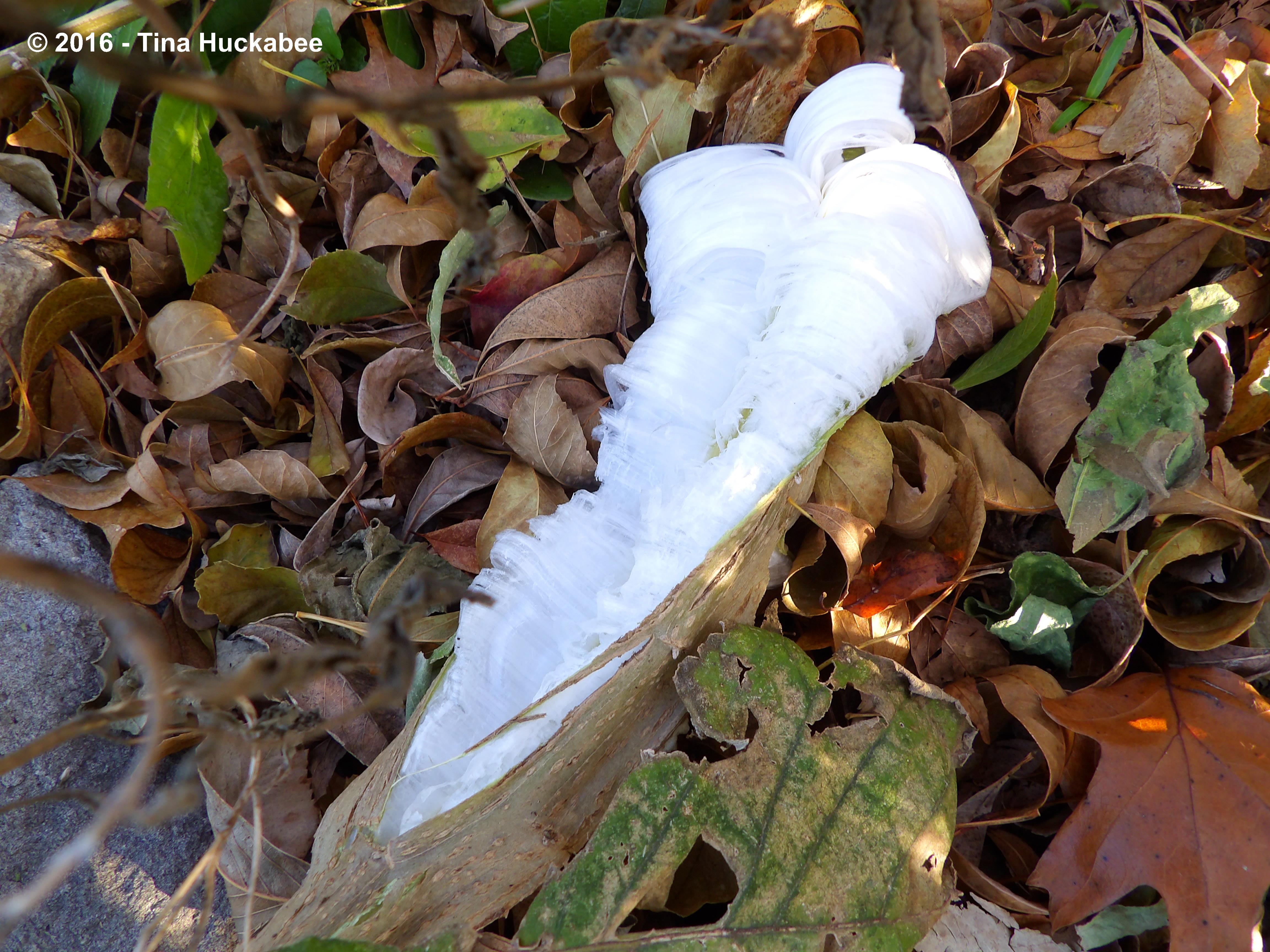
Fun to see after a hard freeze are the ice sculptured stems of FrostweedVerbesina virginica. 

imgp0020_cropped_2078x3202-new

Elegant ice ribbons form when water in the stems expands rapidly during the first hard freeze of the season, exuding sap which freezes quickly and into delicate, fantastical shapes along the length of the stems.

imgp0033_cropped_3465x2857-new

Wavy and curvy, the ice sheets are delicate and fragile.

imgp0029-new

imgp0024_cropped_3618x2913-new

This one rocks a fungal look reminiscent of an earlier, warmer time.

imgp0027_cropped_2419x2700-new

The ice ribbons usually appear near the base of the plant, but can develop along any stem–the key is plenty of sap within those epidural walls. My Frostweeds weren’t yet dormant, allowing for plenty of moisture to freeze.

I’d trimmed this Frostweed ahead of a soon-to-begin fence project.

imgp0031-new

…and ice ribbons hug the 5 or 6 inches of remaining stems, looking like a scroll which needs unrolling.

Frostweed isn’t the only plant which produces these types of frozen sculptures, but it is a reliable ice artist in my garden.

imgp0023_cropped_2037x1728-new

The ice is fragile, the sculpture ephemeral. Once the temperature rises above freezing, the natural sculpture is finished for another year.

Frostweed is an excellent plant for pollinators and birds, which is the primary reason I grow it,

imgp1162-new

…but the ice sculptures are well-worth the winter show for the gardener.

imgp0030-new

The Good Pollinators: Wildlife Wednesday, December 2016

I suppose there aren’t many bad pollinators, but I’ve certainly relished the good work of pollinators in my garden this autumn and, in fact, for the whole of this past growing season.  Today is the first Wednesday of the month and time to appreciate those who require and benefit from our efforts as gardeners.

Gardeners garden.  It’s what we do.  Neophyte gardeners are first attracted to the multitudes of choices with blooms-n-foliage, as well as the endless arrangements therein as we delve into the joys of augmenting personal outdoor space.  But sooner or later, we notice those who “visit” our gardens:  pollinators, birds, mammals, reptiles. With greater observation and understanding, the notion of garden beauty morphs into more than an emphasis on the human-focused composition of plants to a recognition of the purpose of those plants, as well as the gardener’s role in promoting a healthy, diverse environment. For many gardeners, the drive to attract wildlife to our particular slice of the Earth spurs deeper learning about plants and the processes of wildlife gardening.

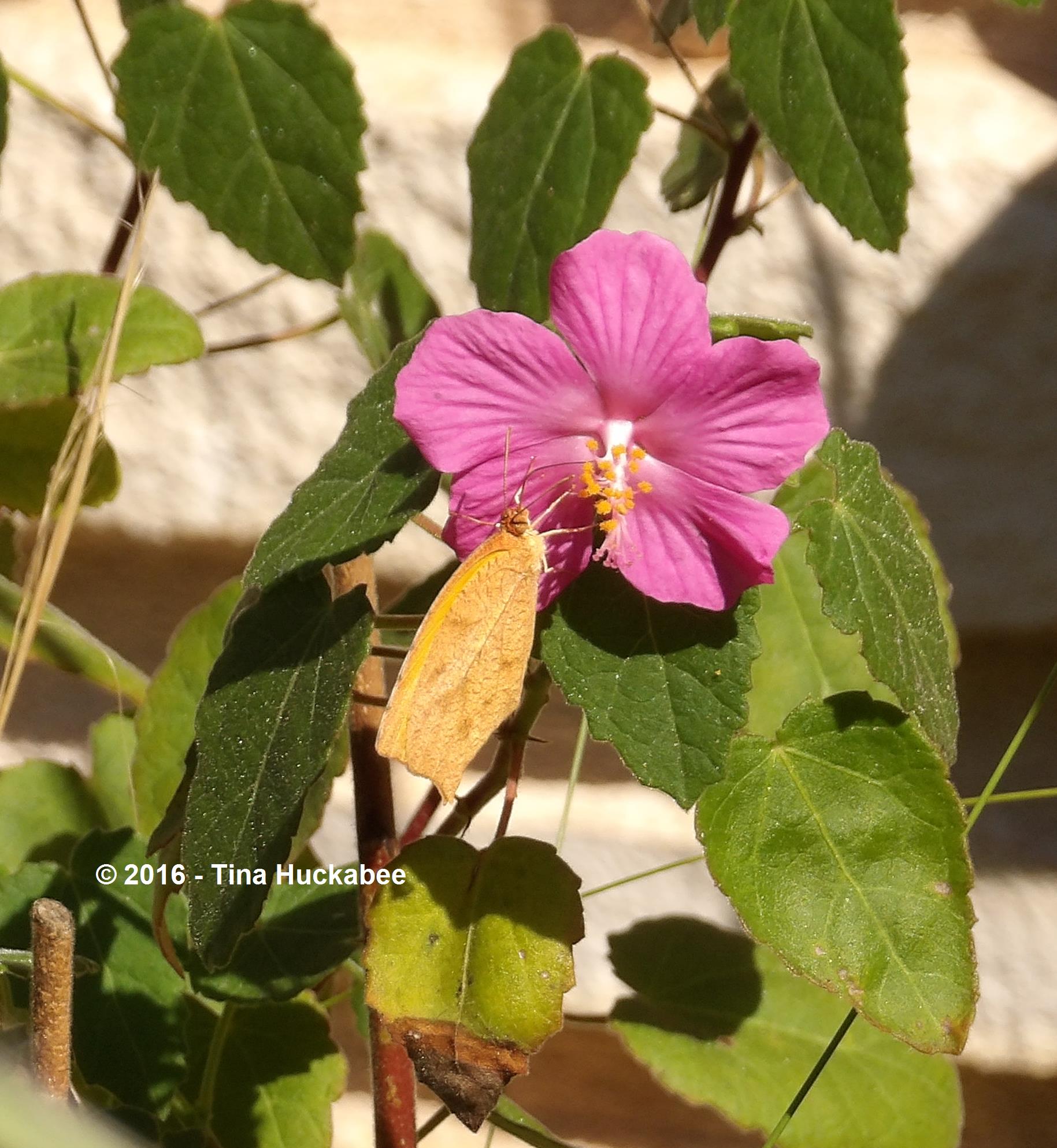
When I was traveling in October, a neighbor sent me a Facebook message with a photo attached, wondering what “this” butterfly was.  I didn’t have time during my travels to research, but did take a look at on-line butterfly sources once I returned home.   In my own garden, I observed this Tailed OrangePyrisitia proterpia, working blooms one afternoon.

imgp0853_cropped_2608x2023-new

I sent my Tailed Orange link to the neighbor and she delightedly affirmed that “my” Tailed Orange was “her” butterfly, too.  Score!  While probably not the same individual butterfly, clearly this was a species hanging around the neighborhood.

imgp0852_cropped_1829x1986-new

Tailed Orange butterflies are fast flyers, the adults nectaring on many flowers as they move rapidly from one to another. Tailed Orange butterflies prefer plants in the pea (Fabaceae) family as their hosts.

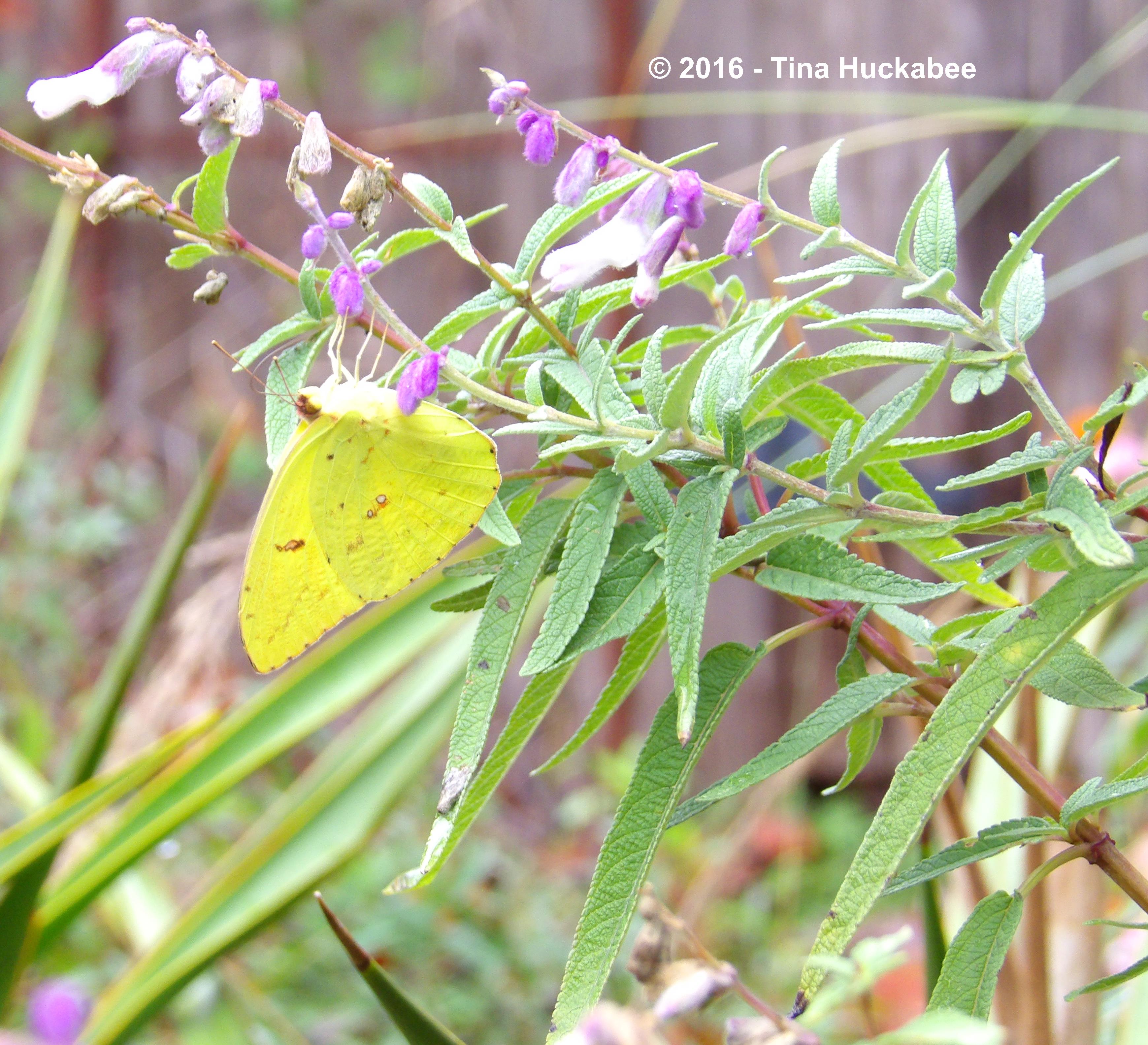
Another cheery autumn yellow butterfly common in Texas  most years is the Cloudless SulphurPhoebis sennae. 

imgp0833_cropped_3479x3166-new

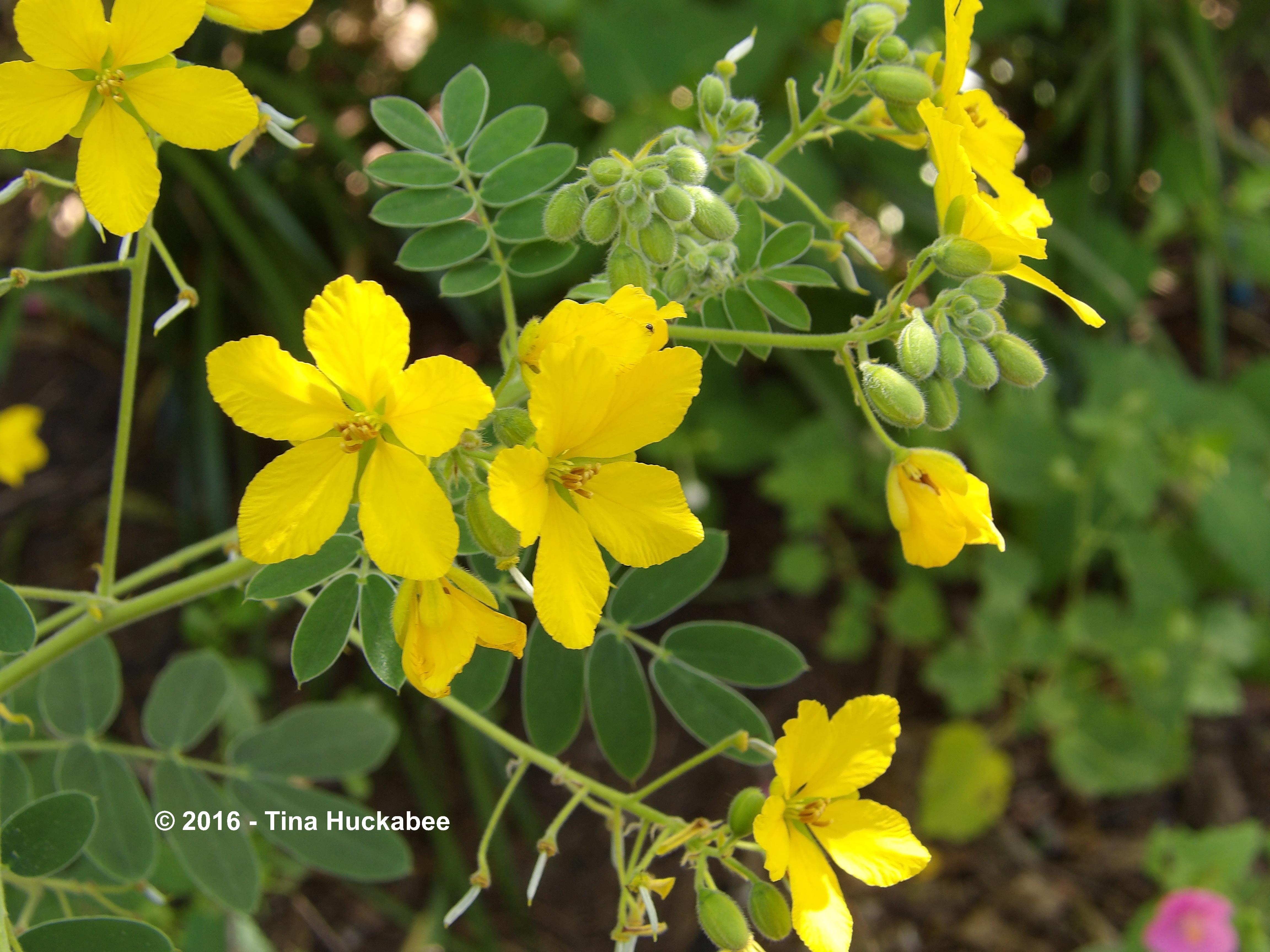
Also utilizing host plants in the Fabaceae family, this butterfly graces my garden annually from the end of summer, well into early winter.  I grow the native Lindheimer’s senna, Senna lindheimeriana,

imgp9659-new

which is a likely plant (check out the species name of the insect!)  in which these butterflies lay their eggs.  In the future, I’ll need to keep a keener eye out for the larvae on the leaves and snatch a photo of the juveniles of this insect.

QueensDanaus gilippus, which are year-round residents here,

imgp0837_cropped_3285x2788-new

imgp0897_cropped_2931x2815-new

The two black dots on the hind wings indicate that this butterfly is a male.

imgp0896_cropped_3382x3073-new

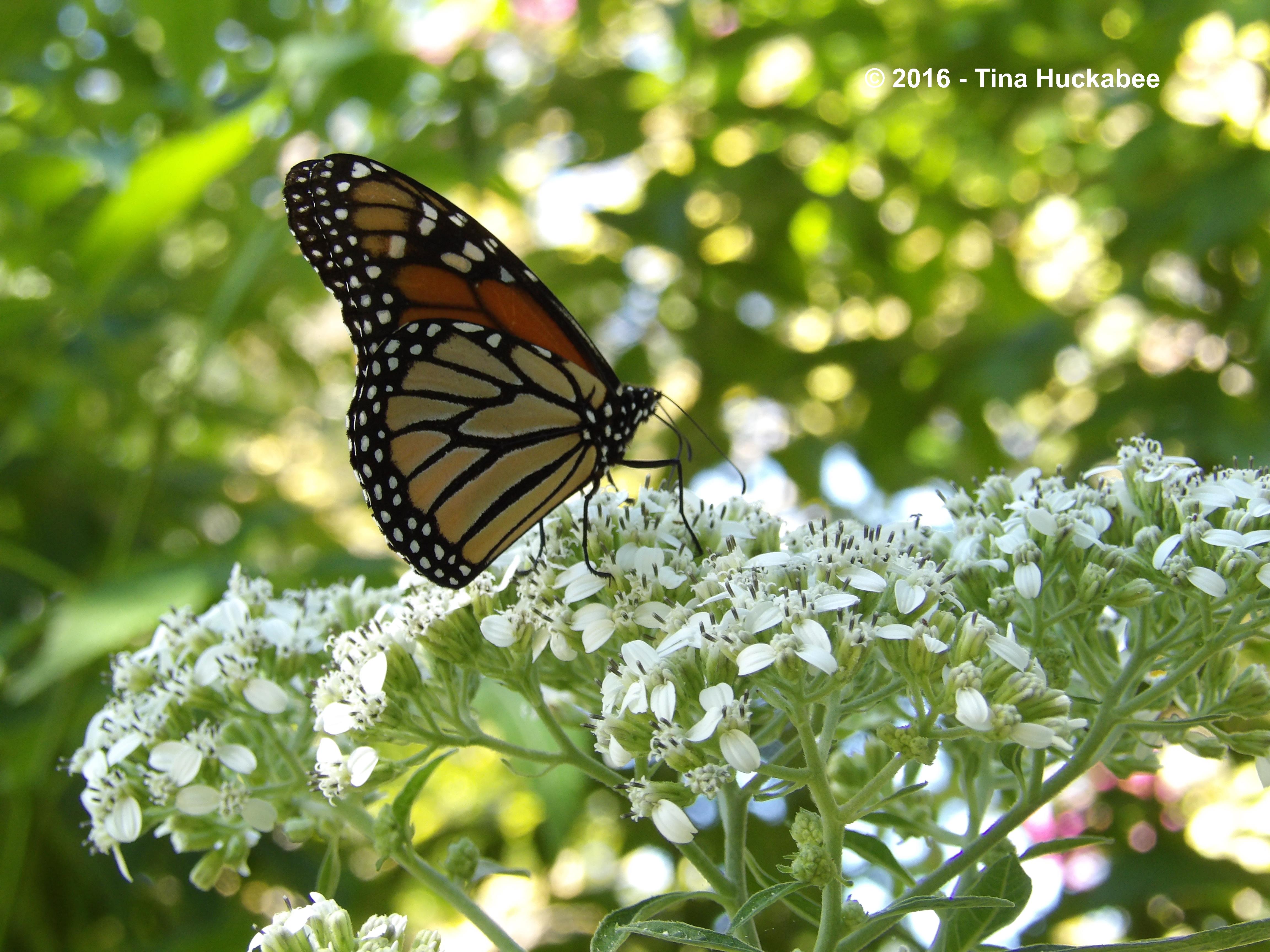
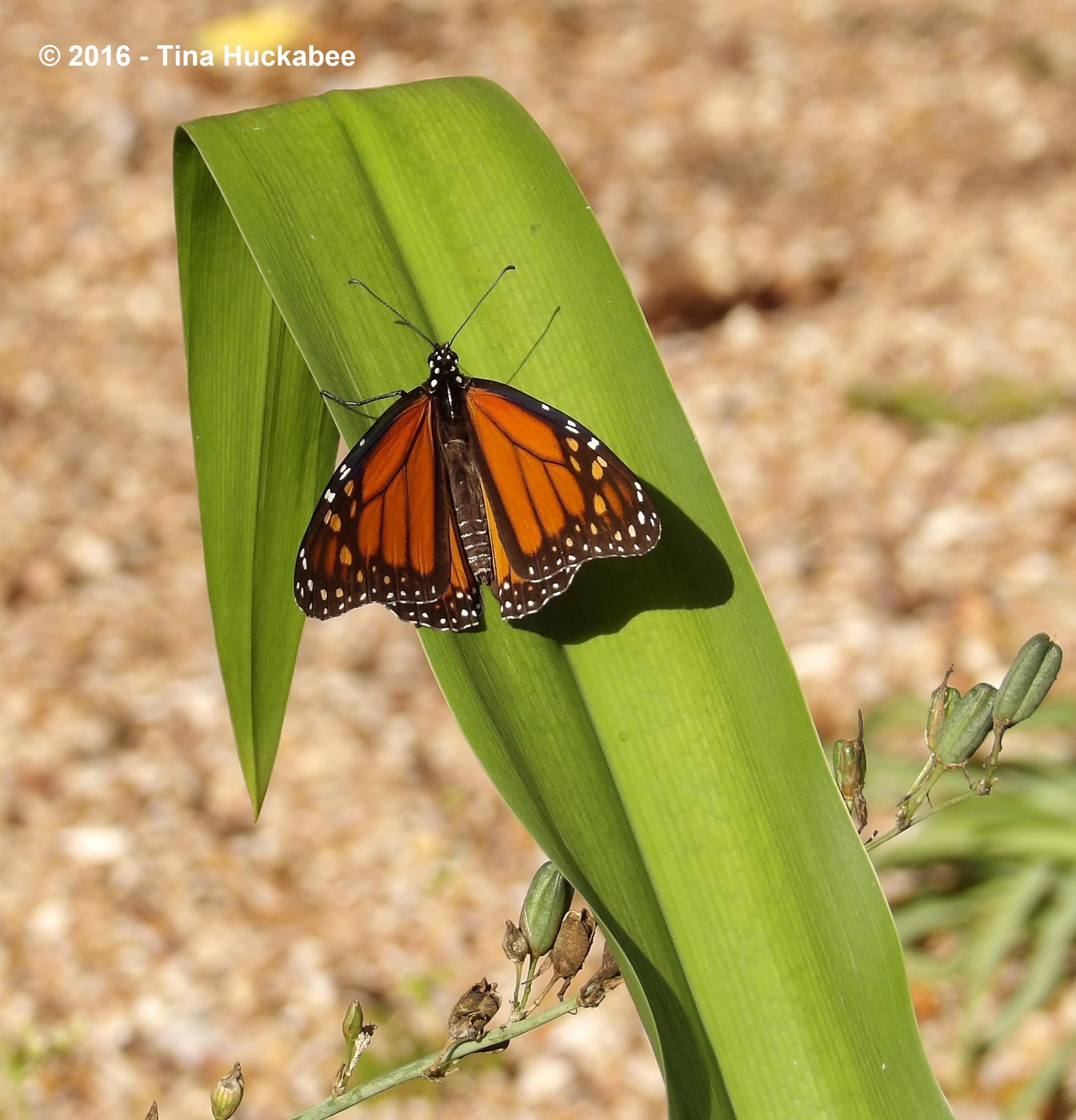
…and a few straggler migrating MonarchsDanaus plexippus,

imgp0849_cropped_2737x2848-new

The lack of black dots on the hind wings indicates that this Monarch is a female.

continued their regular visits, though I haven’t seen a Monarch since mid-November.

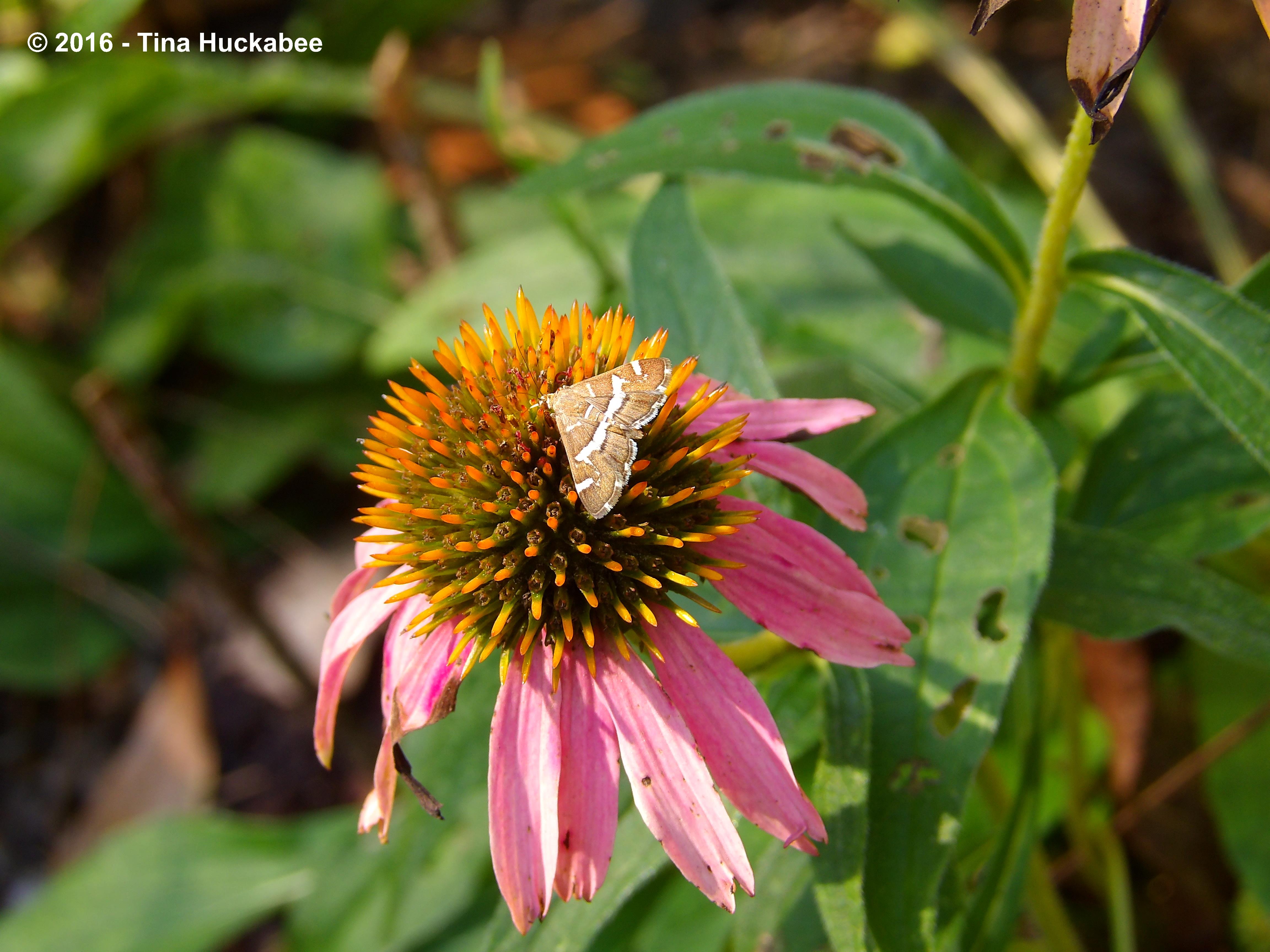
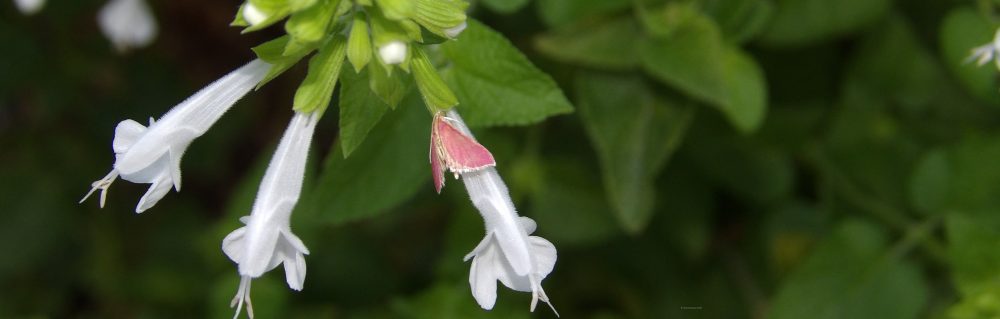
This little cutey, a Spotted Beet Webworm Moth, Hymenia perspectalis, rested on a Purple coneflower, Echinacea purpurea,

imgp0859-new

while this Clouded SkipperLerema accius, contemplated a shuttered Rock rose, Pavonia lasiopetala bloom.

imgp0902_cropped_2281x2115-new

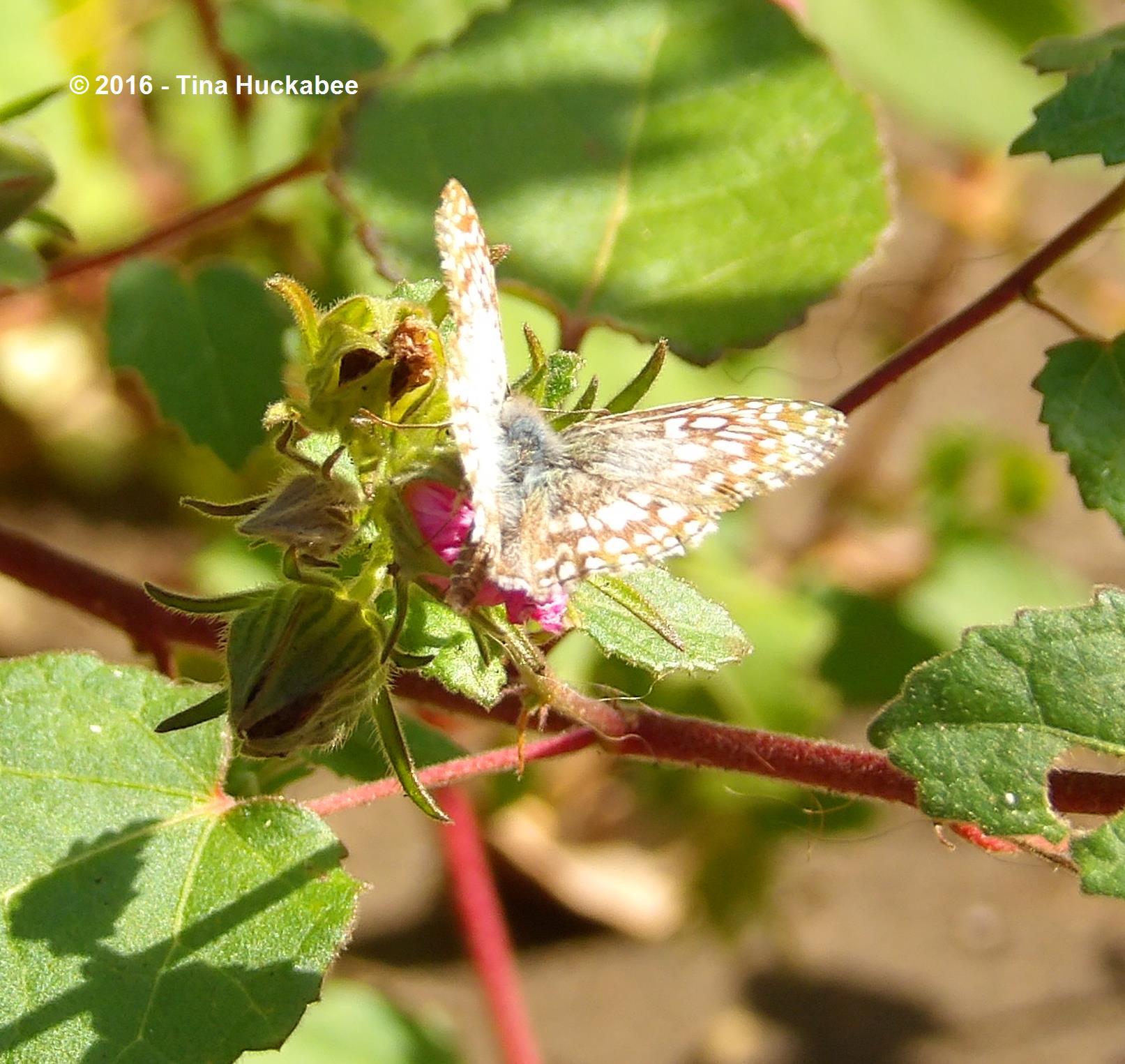
Another skipper, a Tropical Checkered SkipperPyrgus oileus, was loathed to pose for a photograph in the bright Texas sun, but eventually, relented.

imgp0911_cropped_2815x2097-new

It enjoyed the bounty of a Rock rose flower, which is a member of the family (Malvaceae) that this butterfly requires as its host.    The checkerboard pattern on the upper wings,

imgp0913_cropped_1613x1525-new

…and its “hairy” body were the keys for identifying this butterfly.

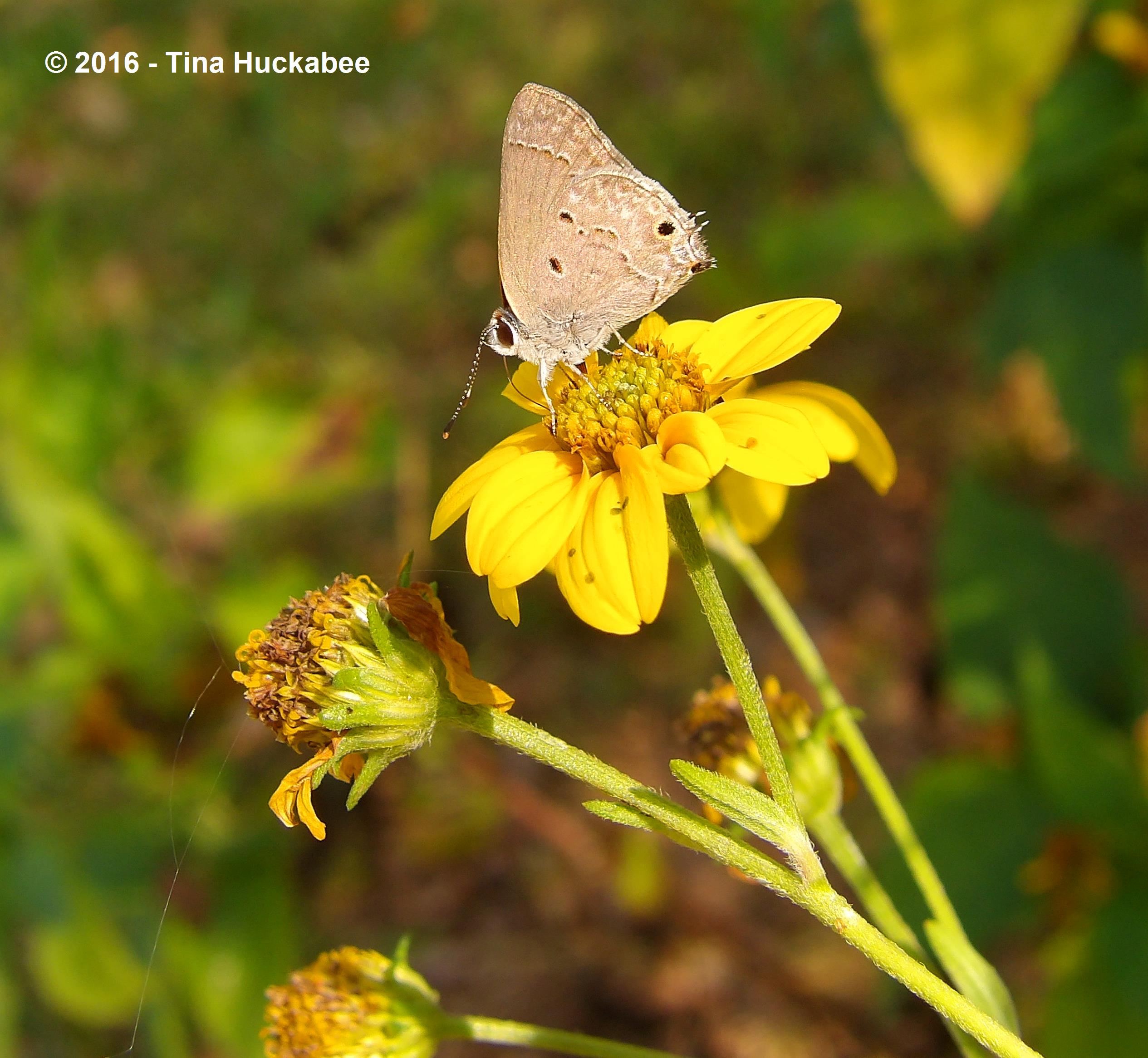
I often see Grey Hairstreaks in the garden but this past month I enjoyed a Mallow Scrub HairstreakStrymon istapa, as it visited several flowers in the aster or Asteraceae family.

imgp0910_cropped_2378x2101-new

imgp0904_cropped_2530x2332-new

Hairstreaks are such pretty butterflies, with subtle coloring and unique markings.


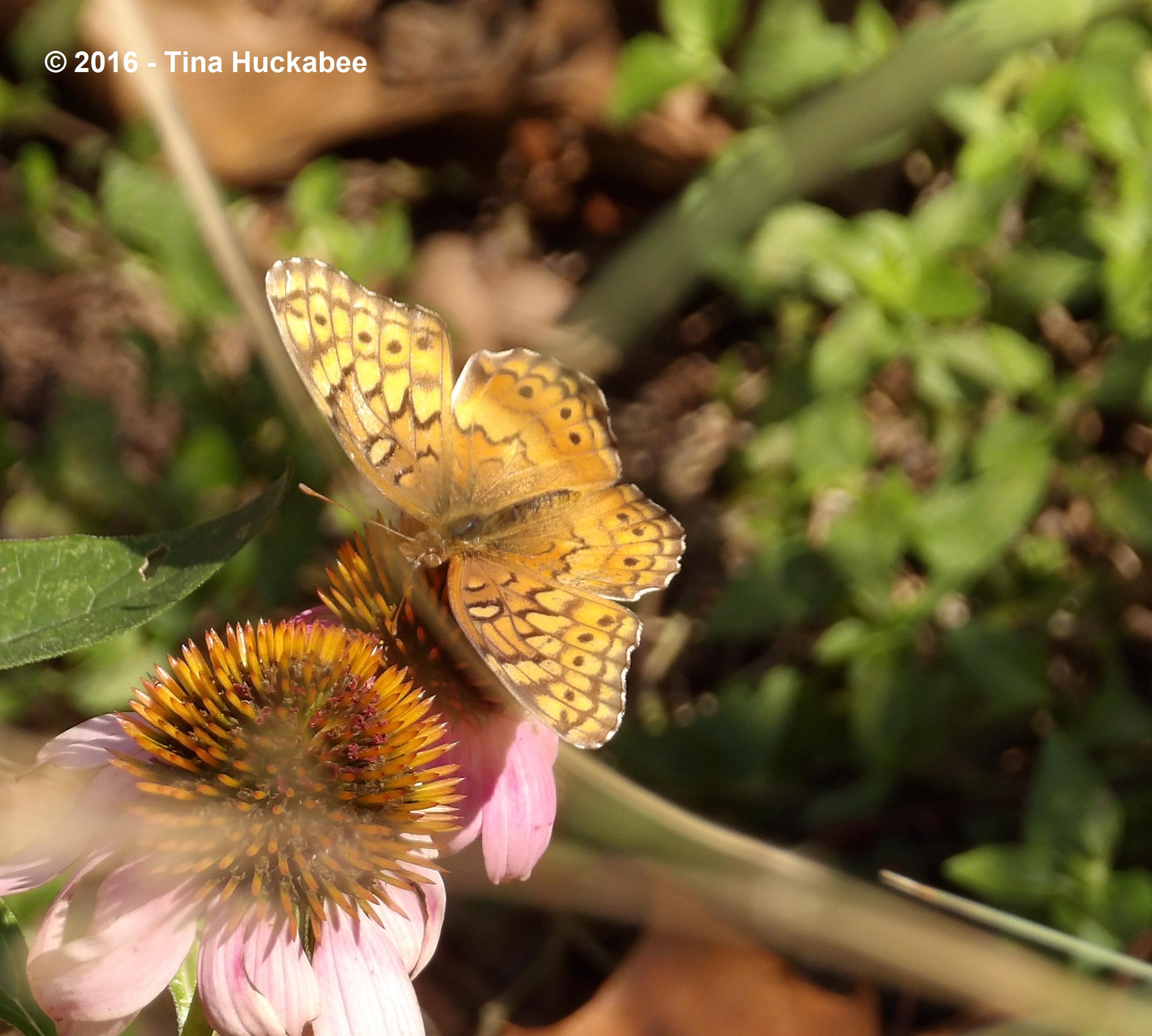
Variegated FritillaryEuptoieta claudia,

imgp0917_cropped_2558x2300-new

…a Gulf Fritillary,  Agraulis vanillae,

imgp0935_cropped_3147x2894-new

…an American Painted LadyVanessa virginiensis,

imgp0937_cropped_3139x2640-new

…and a Southern DogfaceZerene cesonia, 

imgp0931_cropped_2755x3078-new

…all are typical butterflies which contributed to the mass of butterfly/moth activity gracing my November garden.

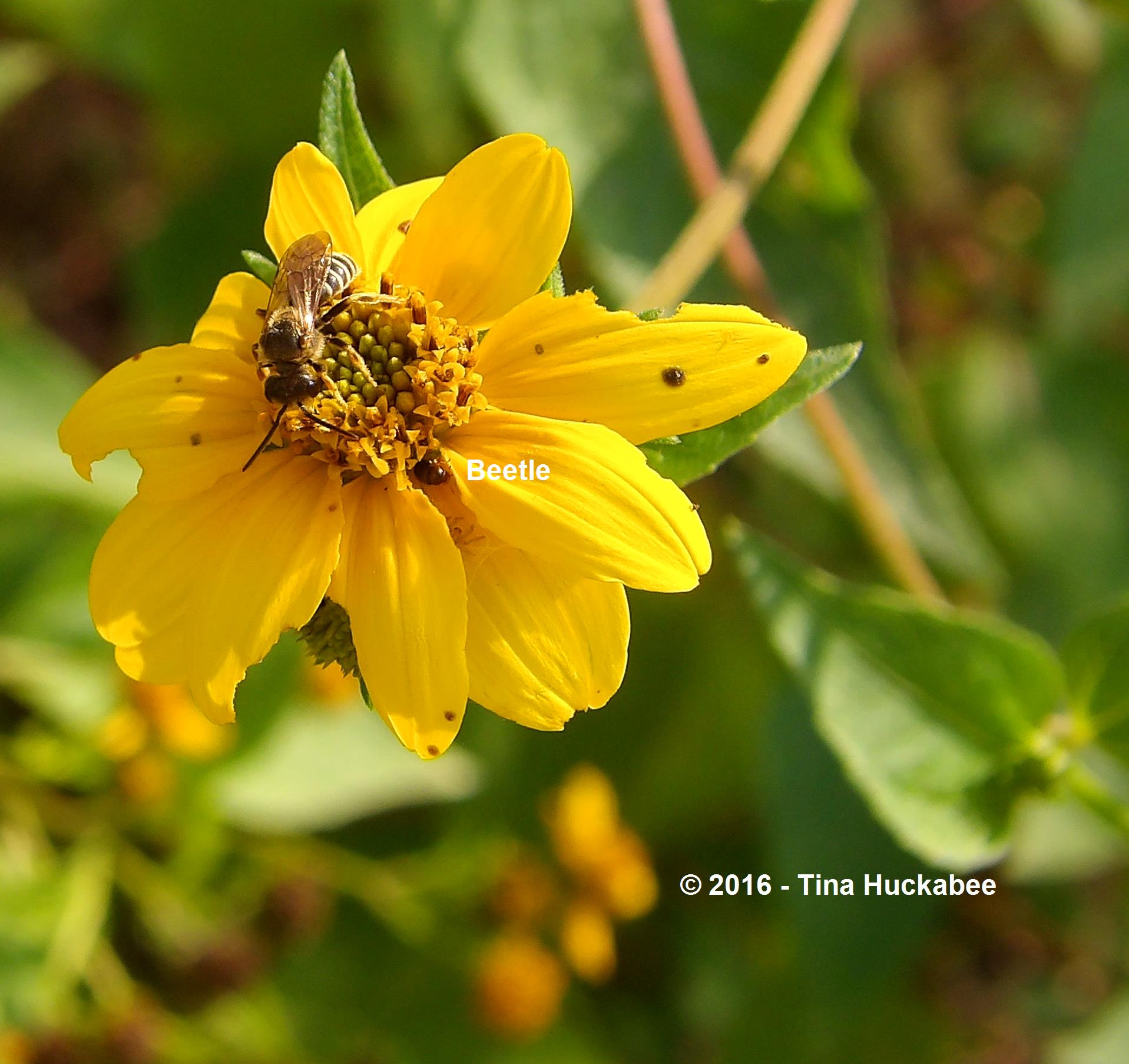
It wasn’t just about butterflies and moths this month, though. There were beetles–lots of beetles–in the garden this past month.

imgp0892_cropped_2323x2327-new

They employ some sipping of the nectar, but also cause a little damage leaves and petals during their feedings.  Does that make them bad pollinators?  Nah, I never met a pollinator that I didn’t love. Or, at least tolerate.

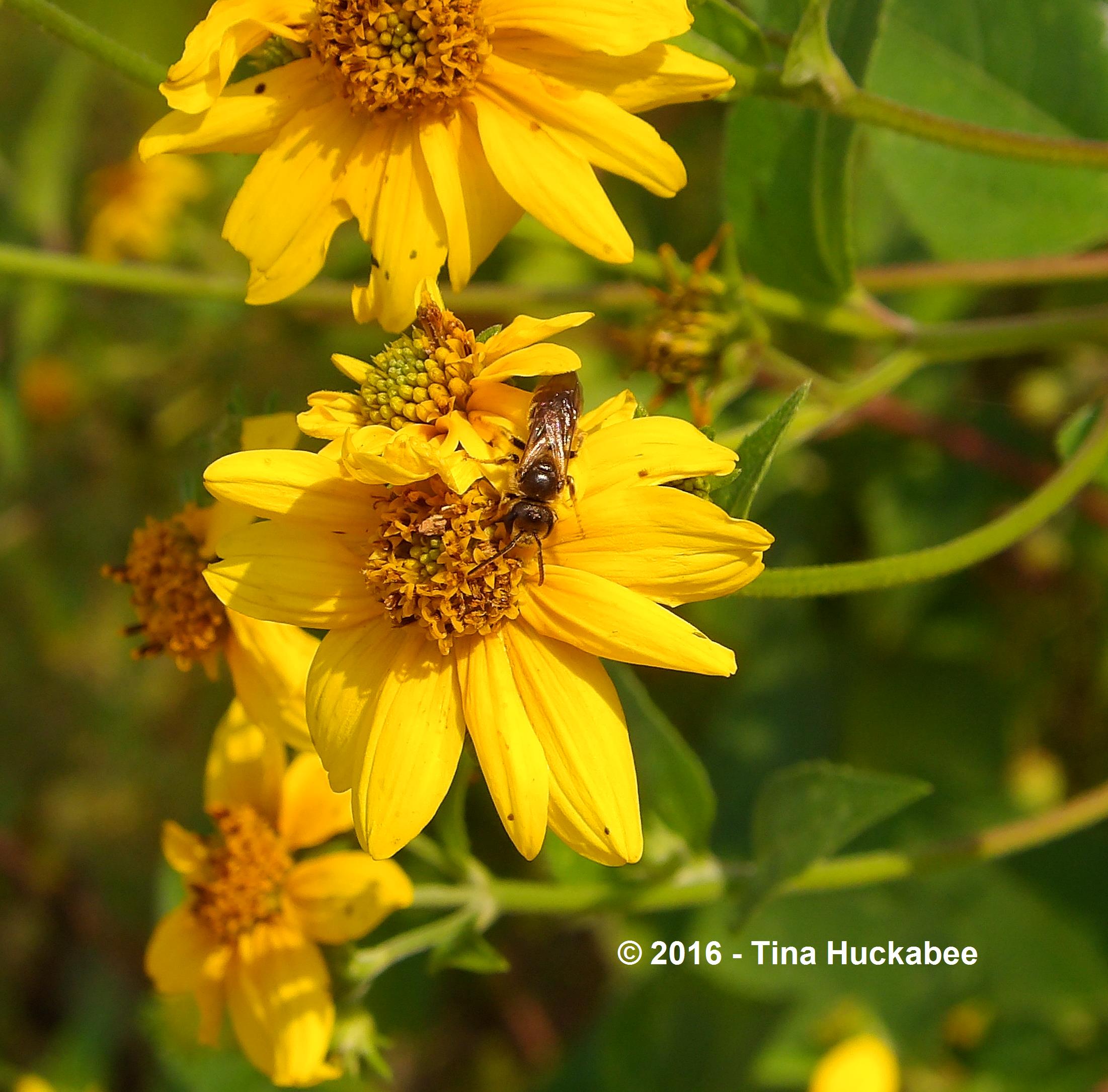
Additionally, native bees were out in force in the last weeks of full-bloom garden action.   Throughout summer, I’d catch a glimpse of a stunning metallic green bee, but I was never fast or organized enough to document its activity–until this month!

imgp0875_cropped_2871x2677-new

Bee and beetle, working side-by-side.

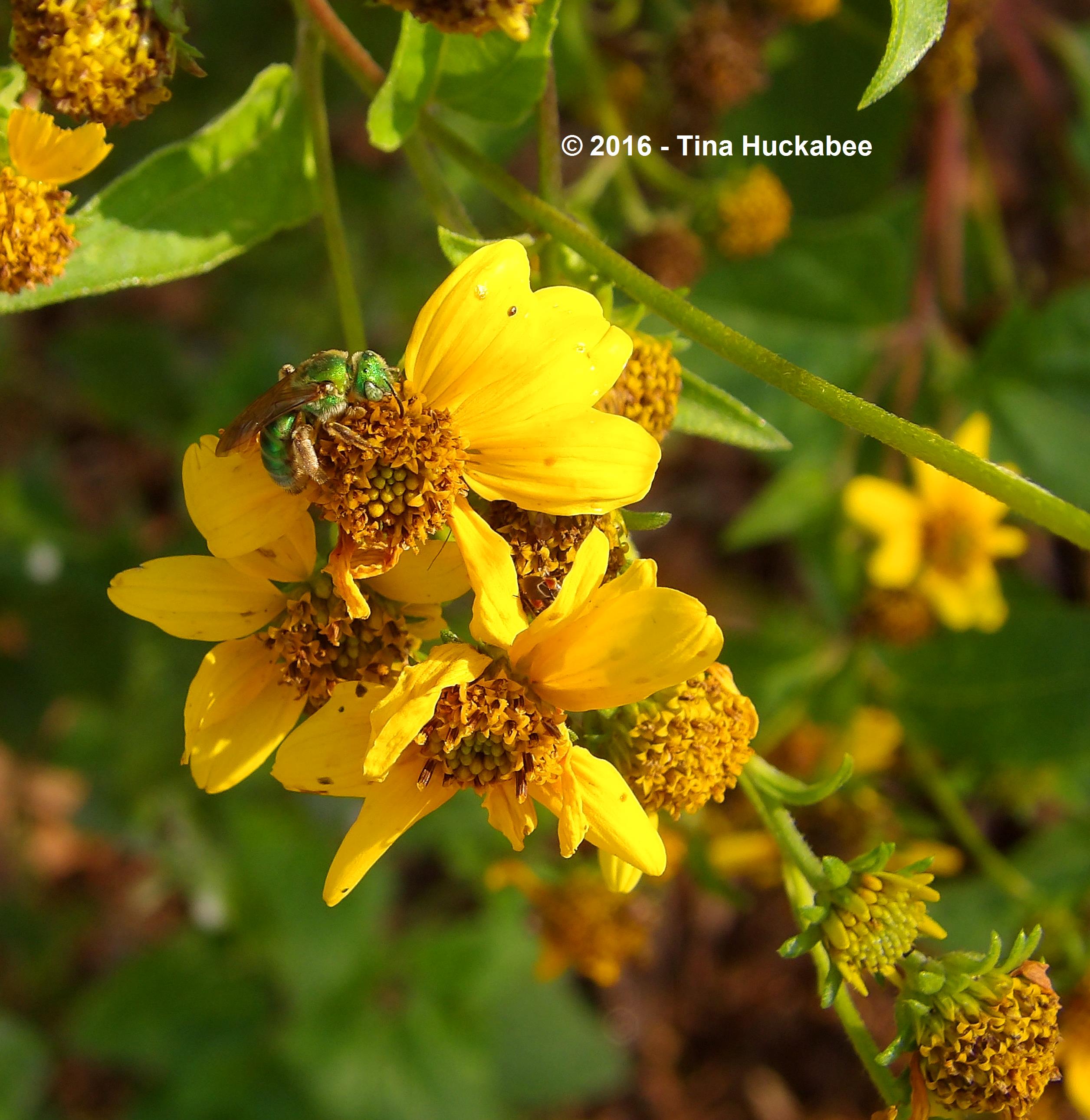
I’m fairly sure that this gorgeous bee is a Green metallic bee, Agapostemon texanus.

imgp0878_cropped_2512x2580-new

Though rare, this species of wild bee are seen in this part of Texas.  I was pleased to watch her work the flowers of a Goldeneye, Viguiera dentata.

imgp0888_cropped_2134x2152-new

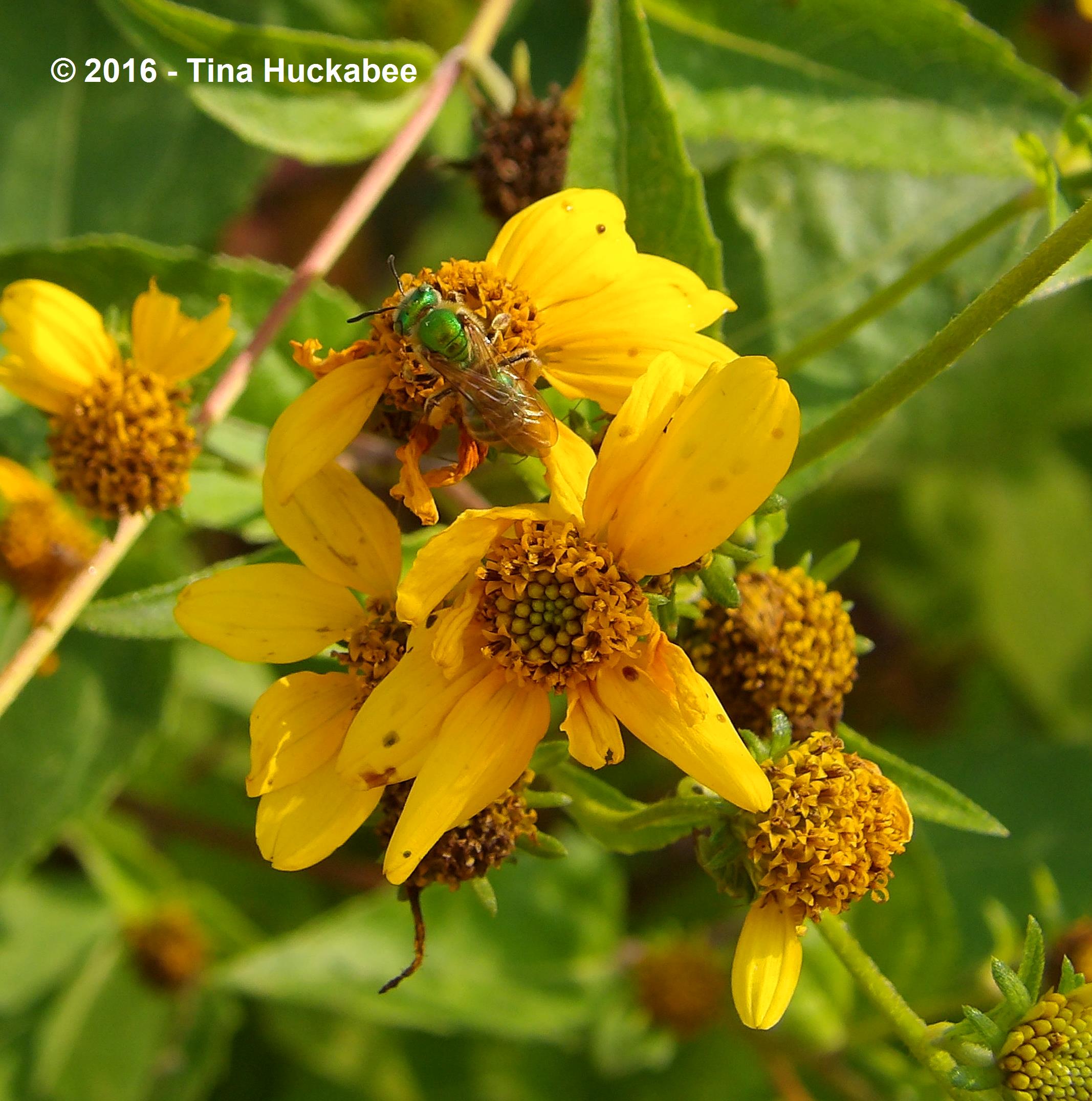
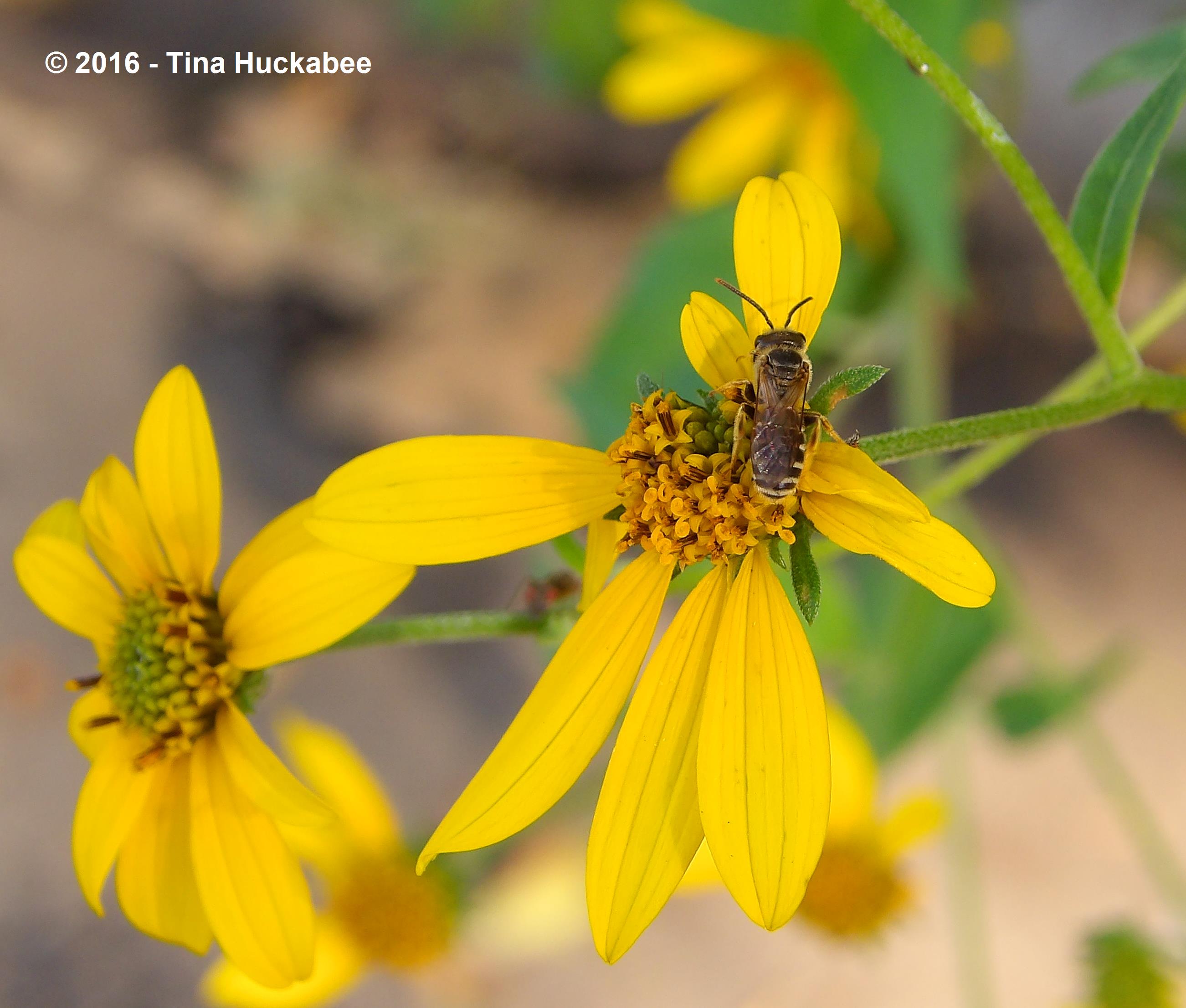
Also enjoying fall-blooming Goldeneye, were two kinds of Sweat bees:

Lasioglossum spp.

imgp0885_cropped_1539x1548-new

This sweat bee shares flower space with the Mallow Shrub Hairstreak.

imgp0889_cropped_2202x2171-new


…and Halictus tripartitus.

imgp0882_cropped_1917x1806-new

imgp0881_cropped_2129x2018-new

imgp0905_cropped_2603x2212-new


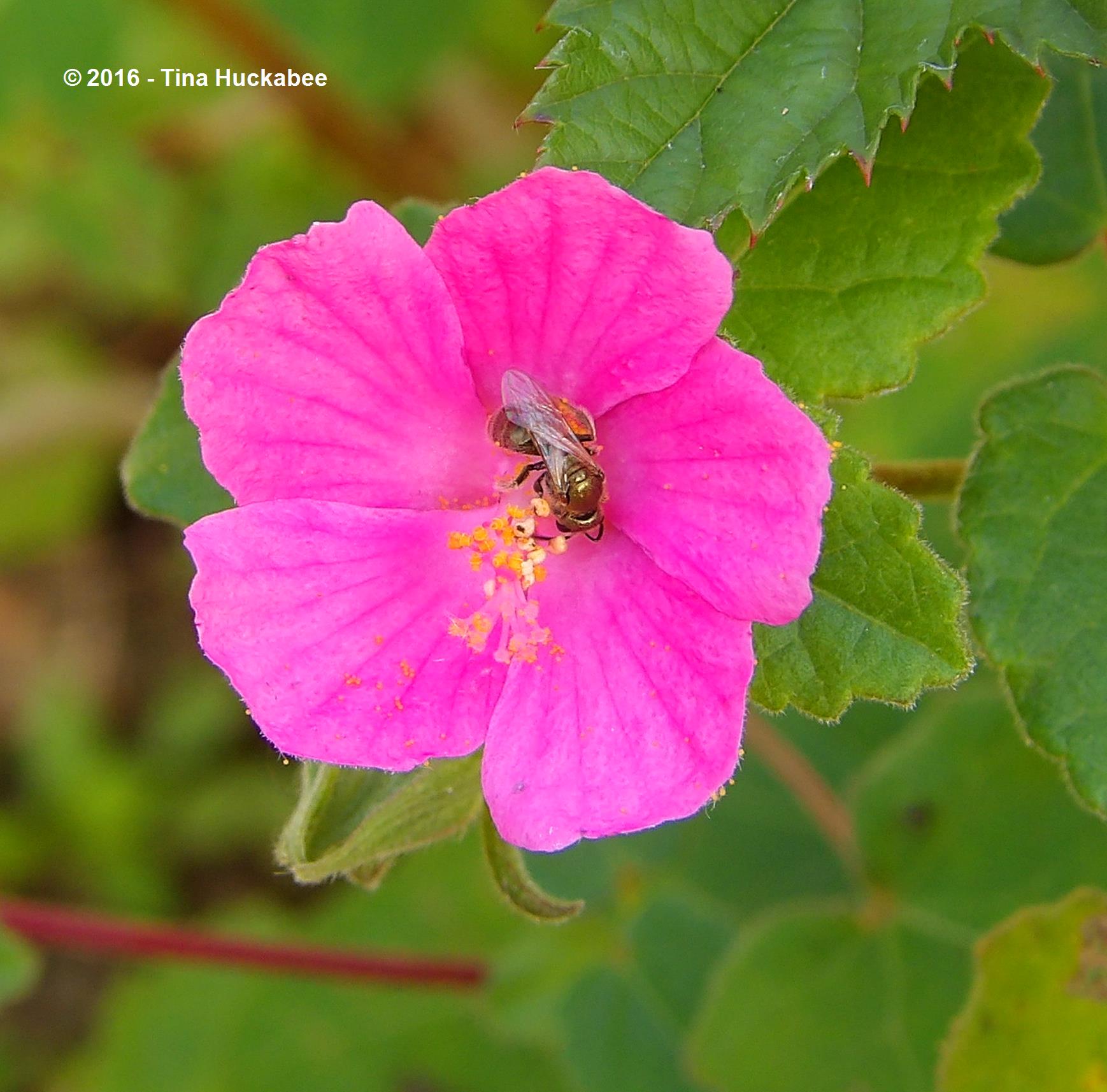
A Small carpenter bee, Ceratina sp., nectared and gathered pollen from a Rock rose.

imgp0901_cropped_1738x1714-new

Identifying native bees is tricky because there’s just not that much research on these important pollinators.  To help me figure out what I’m seeing in my garden, I use a site hosted by an entomologist at The University of Texas, Professor Shalene Jha, who studies Texas native bees.  The site focuses on native ecosystems and native bee sightings in wildlife preserves. The information on the native bees is local and relevant to Texas, the photos of these bees, remarkable.

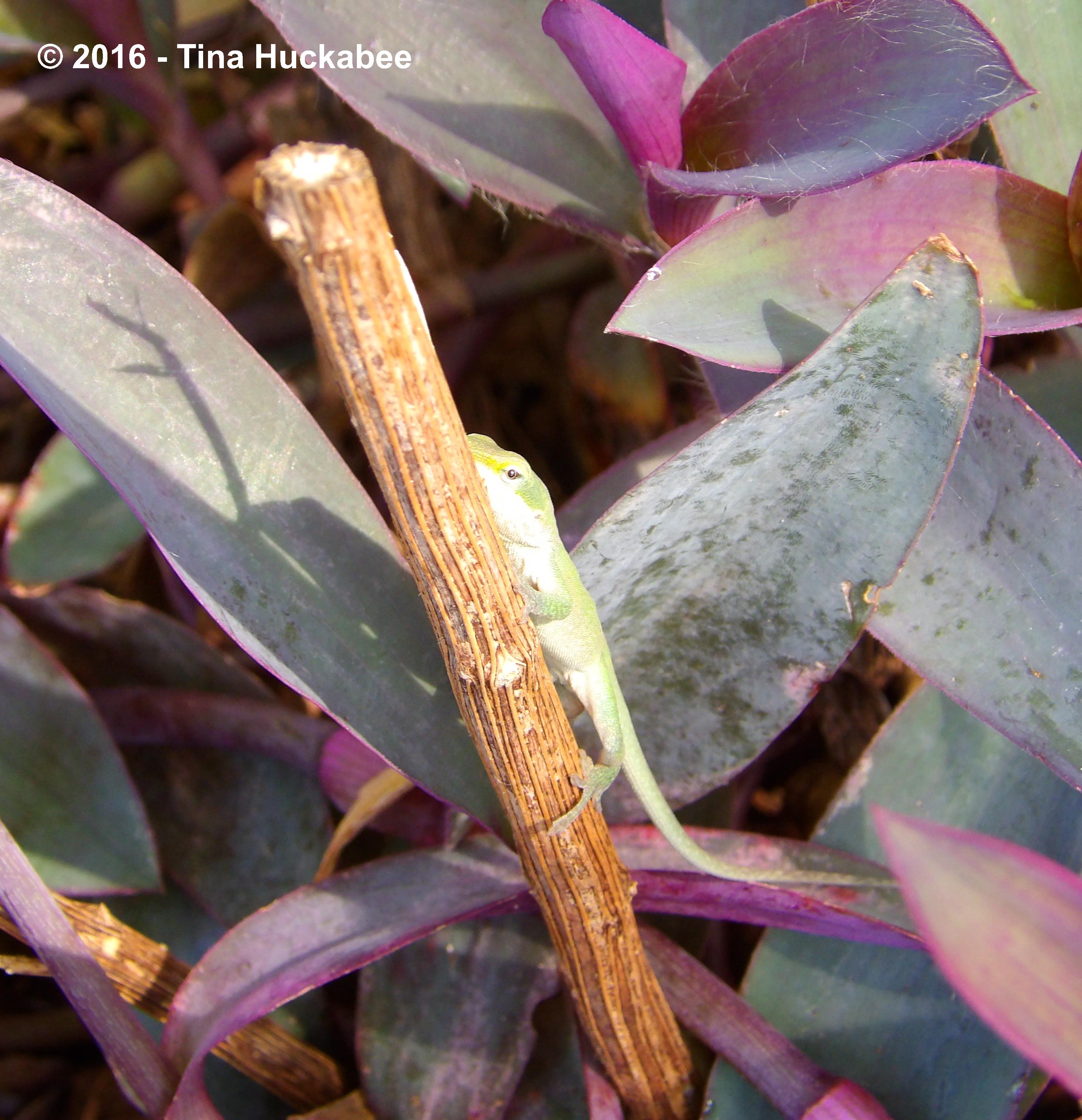
Not a pollinator, but a regular contributor to Wildlife Wednesdays, this juvenile Anole lizard is most likely making his/her last appearance for a while.

imgp0908_cropped_2871x2973-new

I might spot one from time-to-time over the course of the next few months, but they’ll be nicely tucked in for our (usually) mild winter.

Did wildlife visit your garden this past month? Please post for December Wildlife Wednesday. Share the rare or mundane, funny or fascinating, beneficial or harmful critters you encounter. When you comment on my post, please remember to leave a link to your Wildlife Wednesday post so readers can enjoy a variety of garden wildlife observations.