I wrote in the last installment of Wildlife Wednesday that the bulk of migrating birds seemed to have skipped right over my garden. Well, I was wrong–they’ve arrived for rest, water and insects throughout April and it’s been a parade of colorful feathers most days. Today is the first Wednesday of the month, the day wildlife gardeners celebrate those who require our gardens for their survival.
Gardening for wildlife is fun and an important step toward mitigating the damage to the natural environment caused by urbanization and industrialization. Attracting wildlife to the garden is a simple process, if a few basic principles are followed: providing water, cover (in the form of shrubs and trees), shelter for young, and practicing sustainable gardening methods, including utilizing native plants, limiting or eliminating chemicals, and pruning well after migration in spring and fall, leaving nutritious seeds for mammals and birds, and protection for young. Check out the National Wildlife Federation for more information on the how-tos of wildlife gardening and start your own wildlife friendly garden–you won’t regret it.
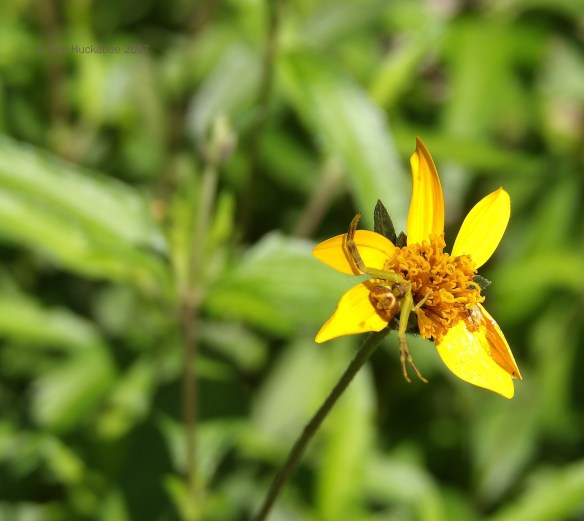
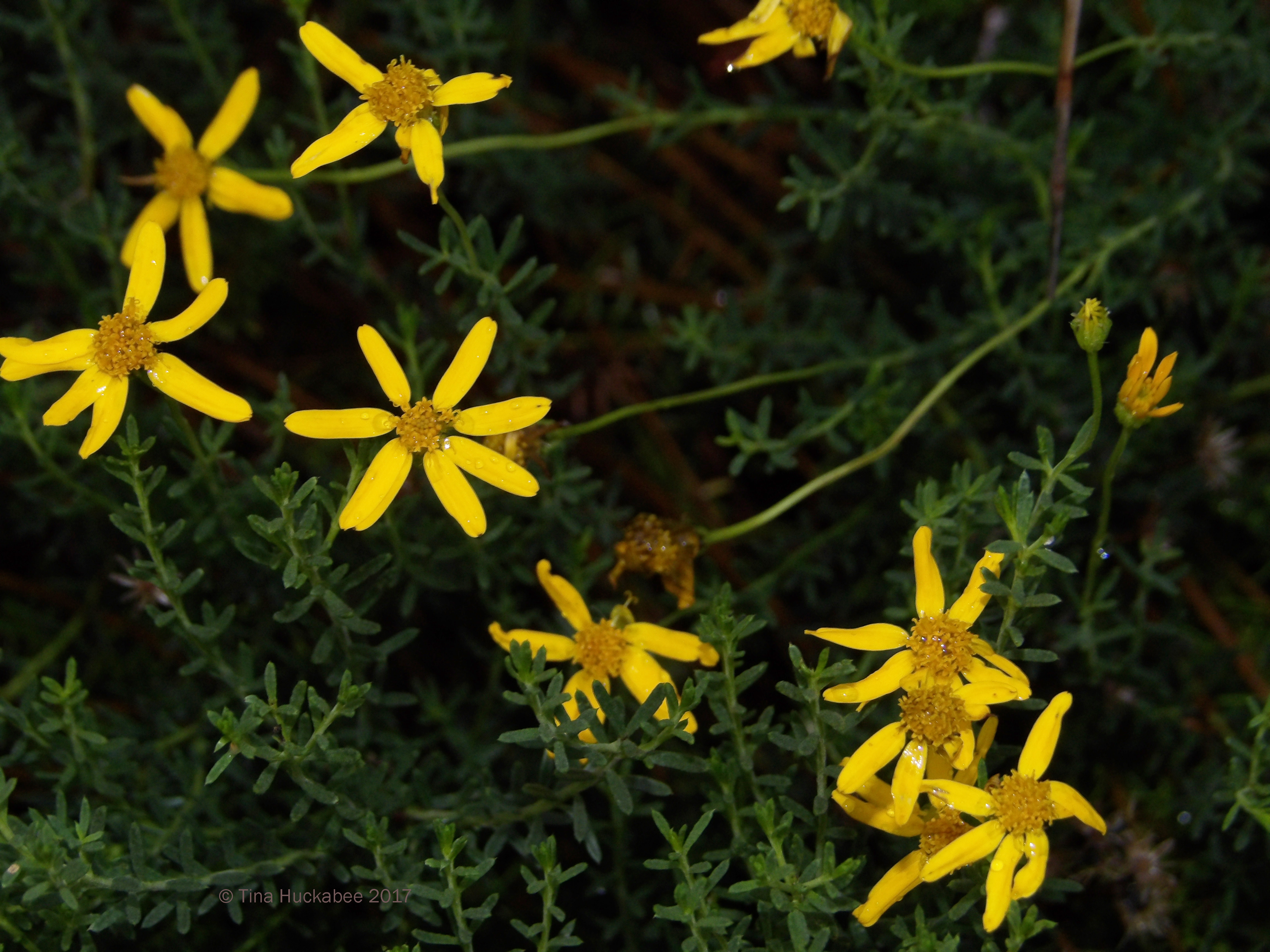
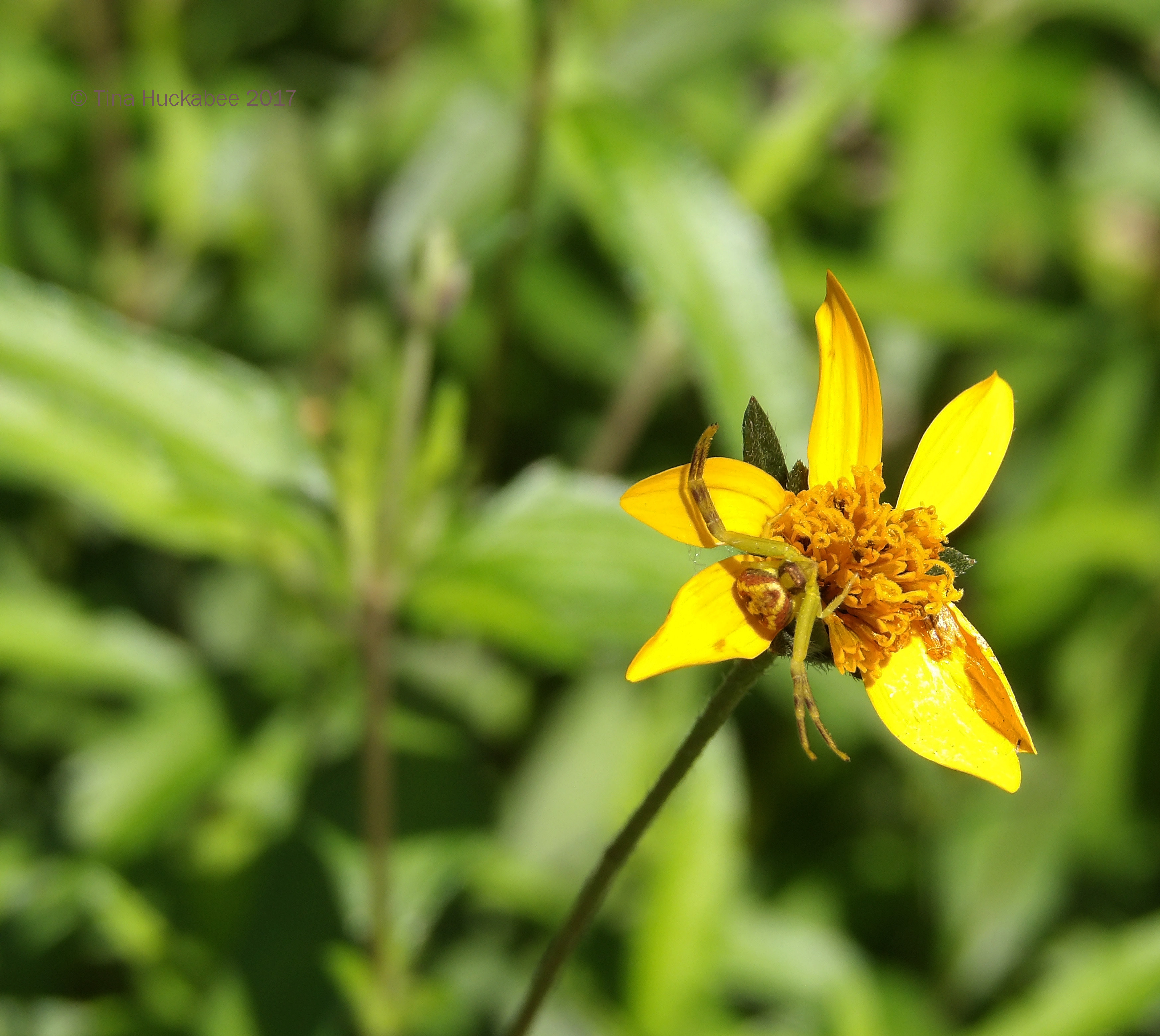
Besides the migrants, there was plenty of other “stuff” in the garden, like this little spider, lying in wait to catch-n-munch a bee or fly that might have the misfortune of landing on this Zexmenia bloom, Wedelia acapulcensis var. hispida.
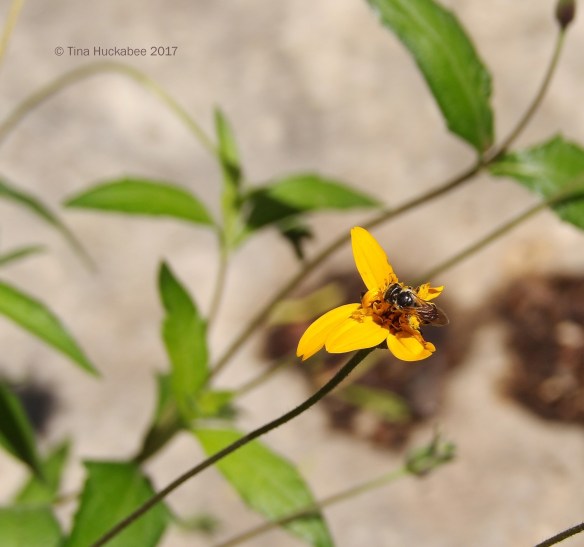
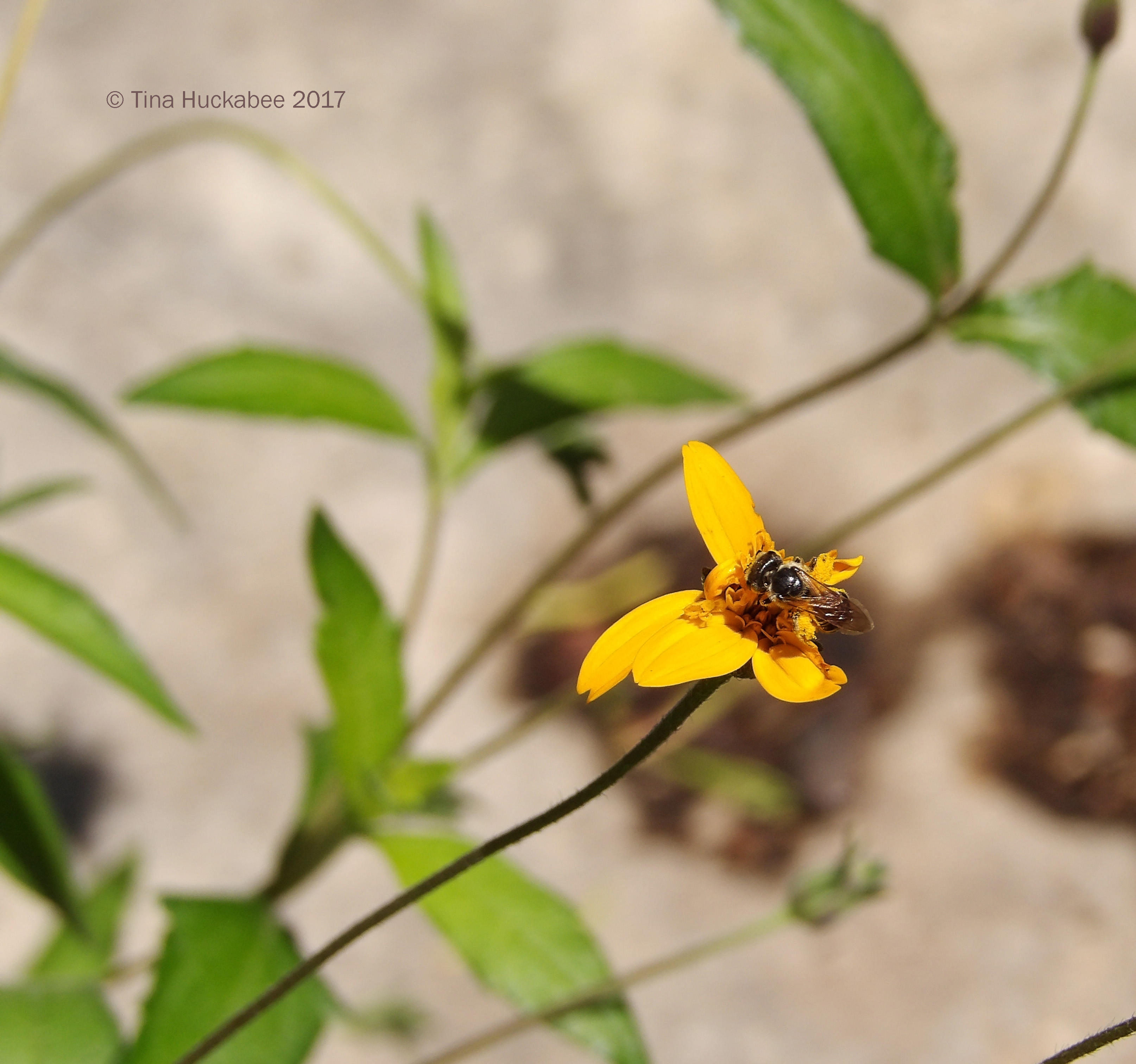
That spider would have snatched a meal if it had instead been loitering on this Zexmenia bloom, complete with native bee ready for the eating.
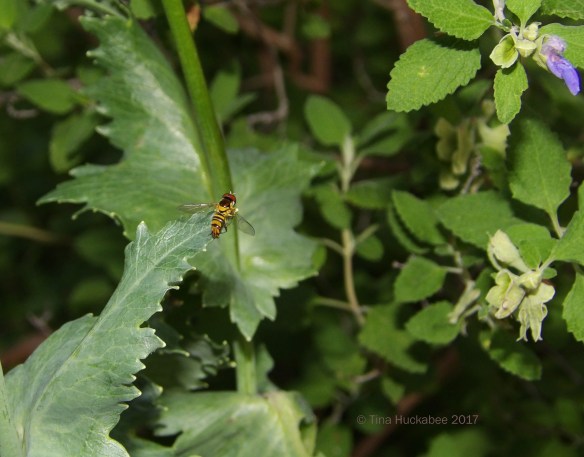
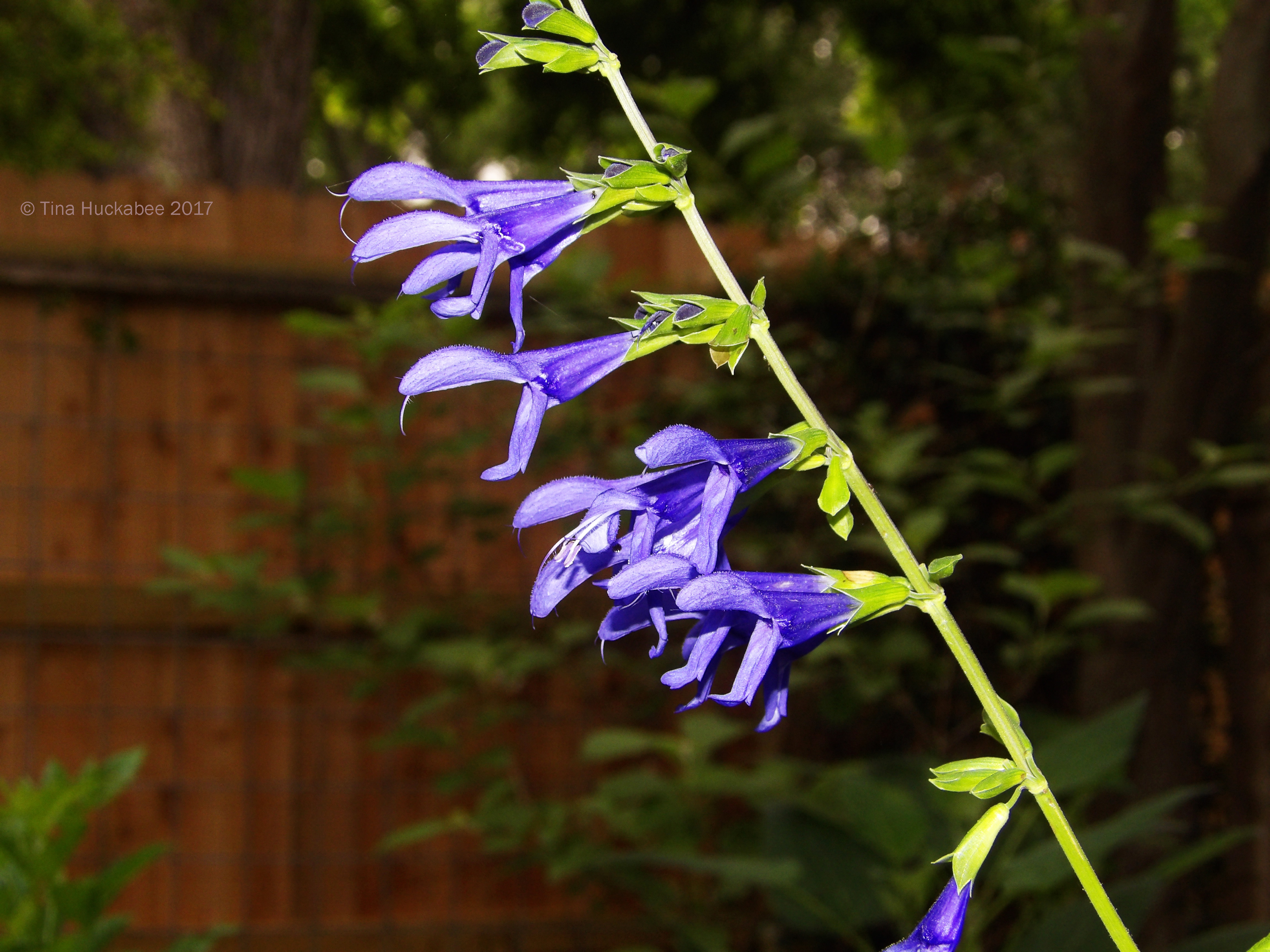
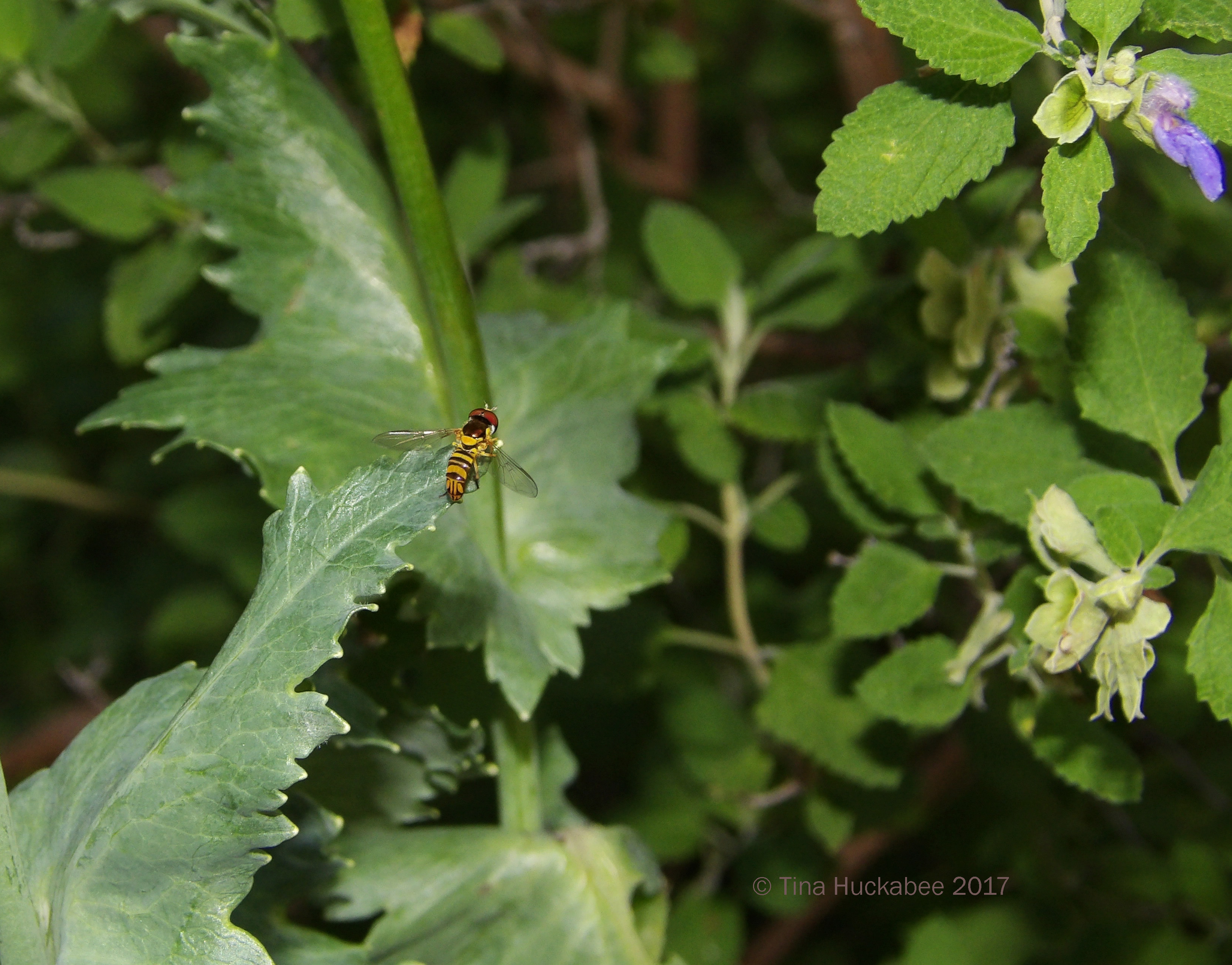
There are plenty of other native bees, as well as honeybees and butterflies in the garden now, and lots in bloom for them to eat, but this syrphid fly was a pleasure to photograph as it rested after nectaring at a non-native poppy and some native Shrubby blue sage, Salvia ballotiflora.
Pollinators and the predators are great, but in my garden this past month, the migrating birds took center stage so, let’s talk birds, shall we? Aside from the year-round resident avians, Texas lies along a major north-south migration route. During spring and autumn migration, birders flock (yuk-yuk!) to Texas to catch glimpses and glean photos of the many birds of the Americas as they make their way through Texas. Though the Gulf of Mexico coastline outshines the birding here, Central Texas has some birding game to brag about.
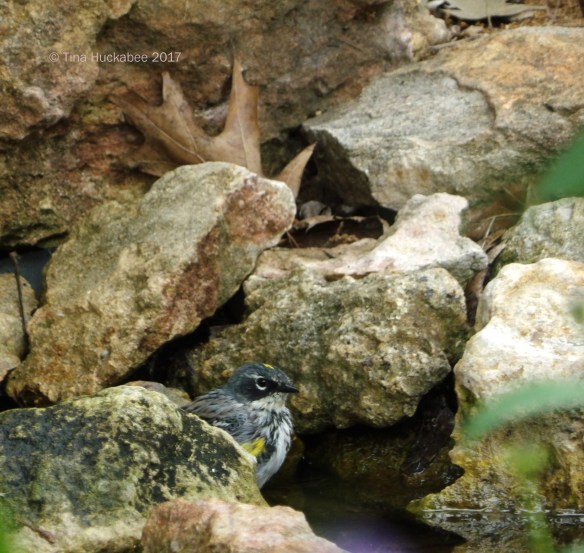
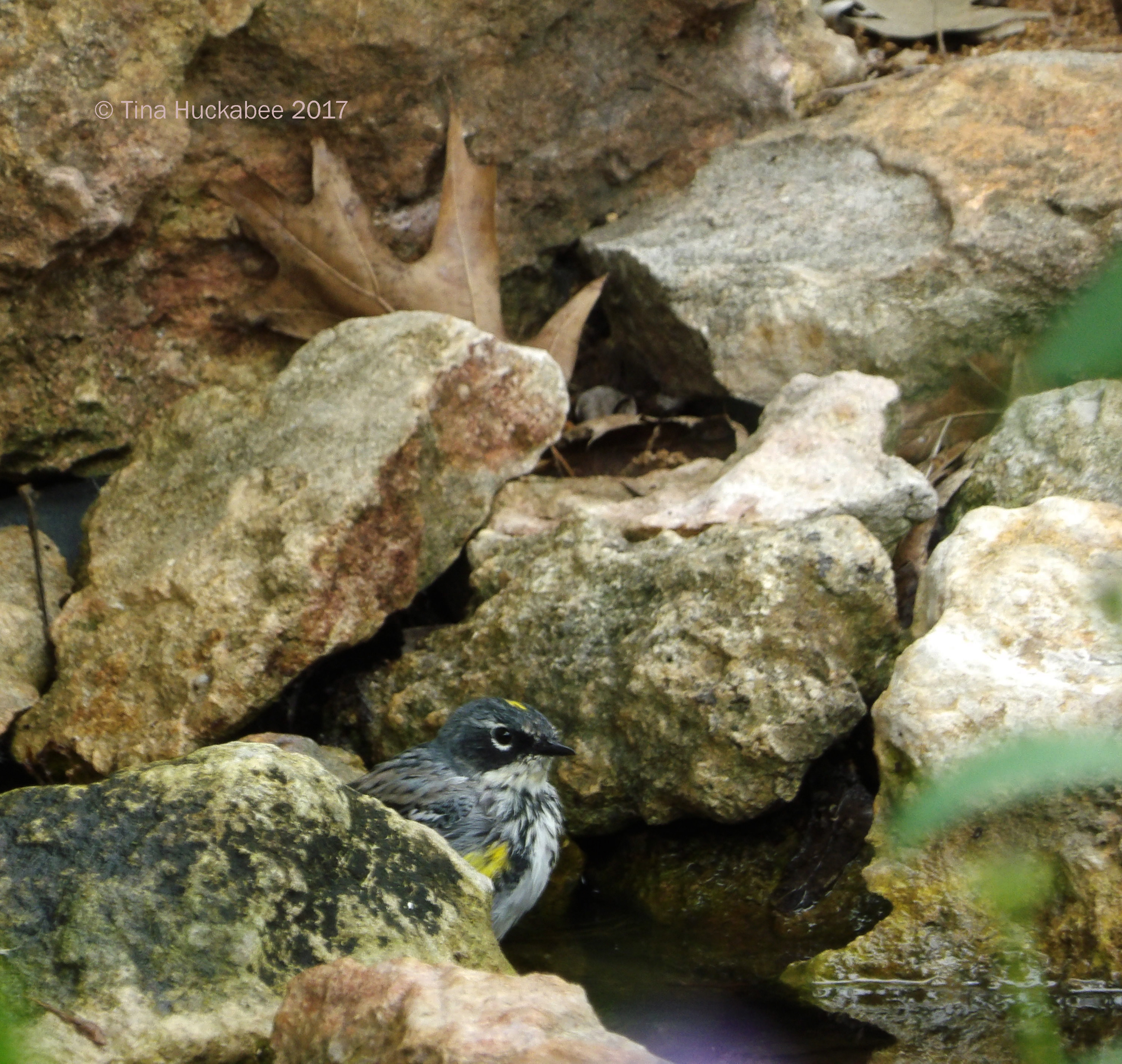
At the beginning of April, I was still enjoying visits from the Yellow-Rumped warblers, Setophaga coronata,
…and the Orange-crowned Warblers, Oreothlypis celata.
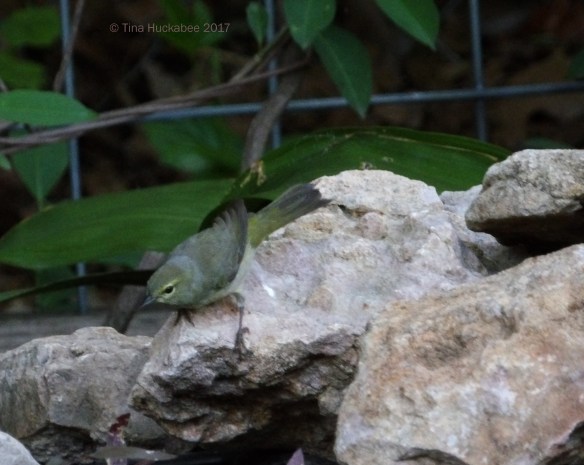
I haven’t seen either for a while and I’ll bet those cuties have headed north and their daily visits to my garden are now ended. I was glad to host these winter Texans from November into early April.
I’ve seen this handsome charmer on a number of occasions, but these were the best shots I managed:
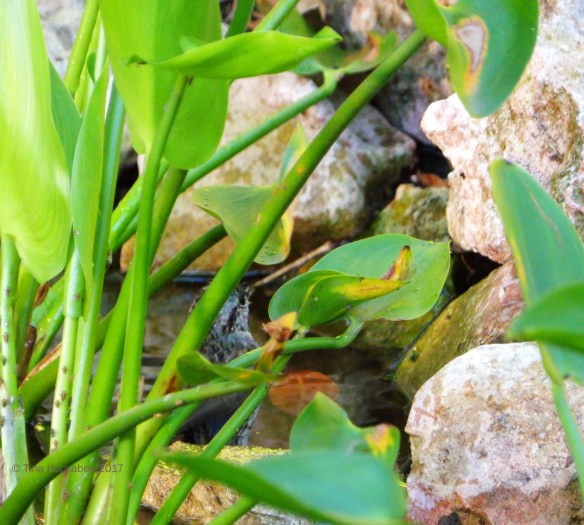
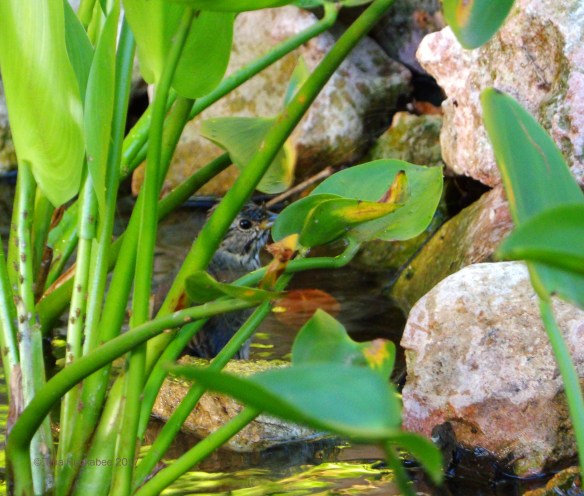
I’m fairly sure he’s a Lincoln’s Sparrow, Melospiza lincolnii. Another visited about the same time last year and was camera shy. These birds are winter Texans, not showy, but subtle and elegant in color and form. They hop along the ground, looking for seeds, in the cutest way imaginable. I’m still seeing one or two, several times each week, but they’re headed to other parts of North America and will soon be gone from my garden.
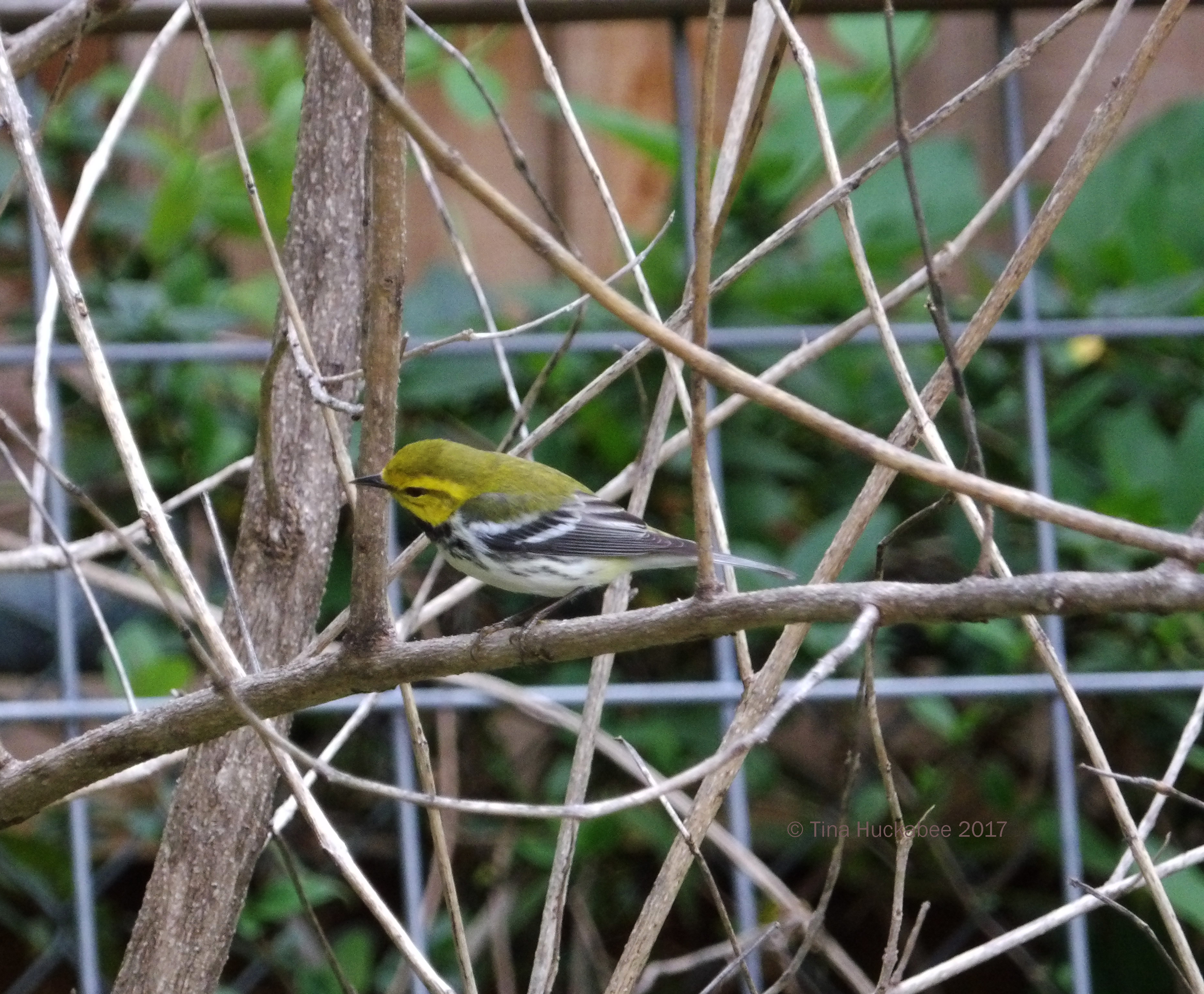
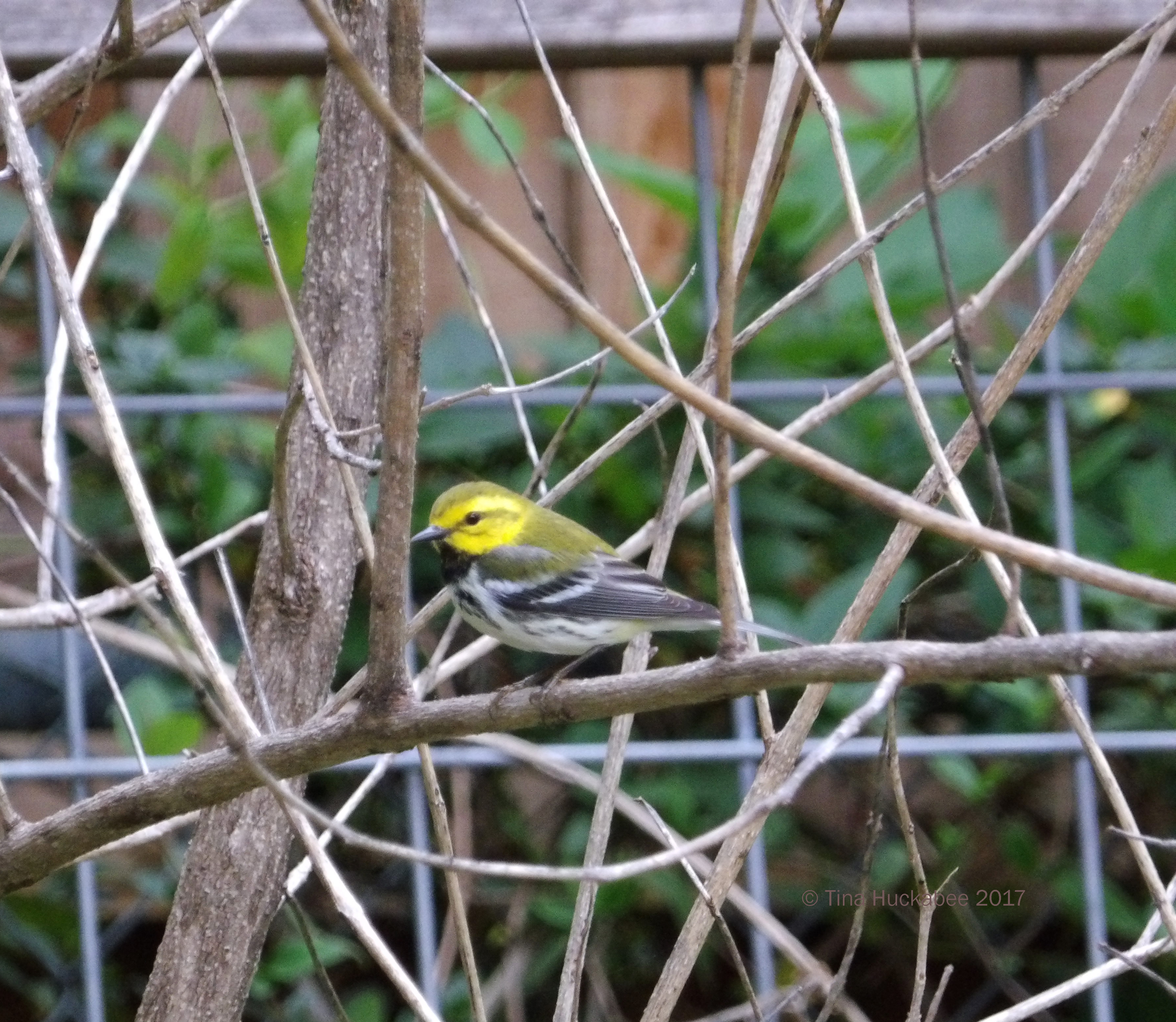
Early one morning I squealed with delight when I walked by a window and spotted this “lifer” in the back garden, eyeing my pond:
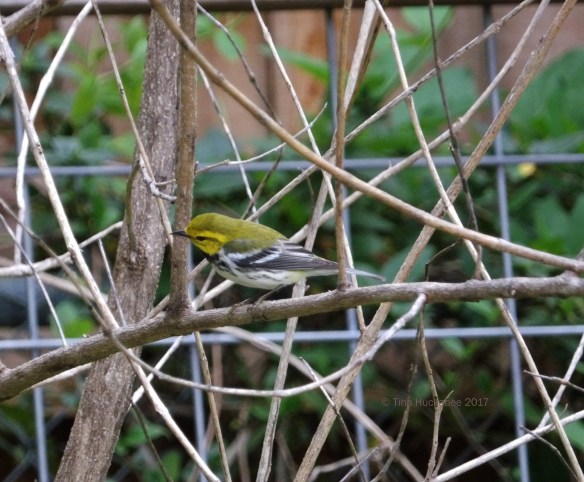
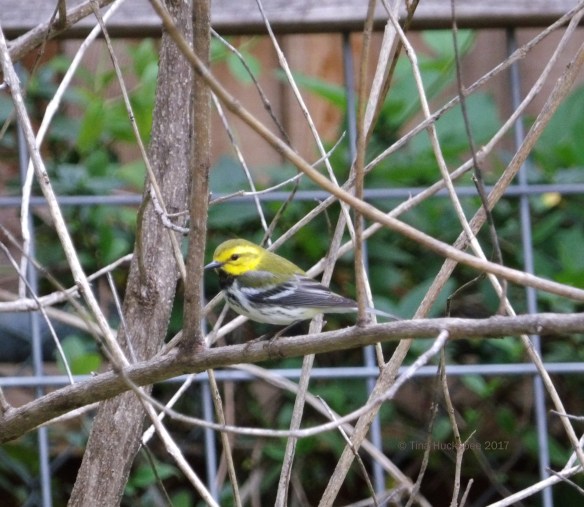
The Black-throated Green Warbler, Setophaga virens, winters primarily in Central America, migrating through the eastern half of the US, finally arriving in Canada to breed and raise young. Canada is a nice place to grow up, I hear.
And yes, you might have noticed the term “lifer” that I slipped into above. That’s a term that real birders use when they’ve seen a bird species for the first time. I’m loathed to use that term because if I do, it means I’m a birder, and I’m trying desperately to avoid that label.
How am I doing so far??
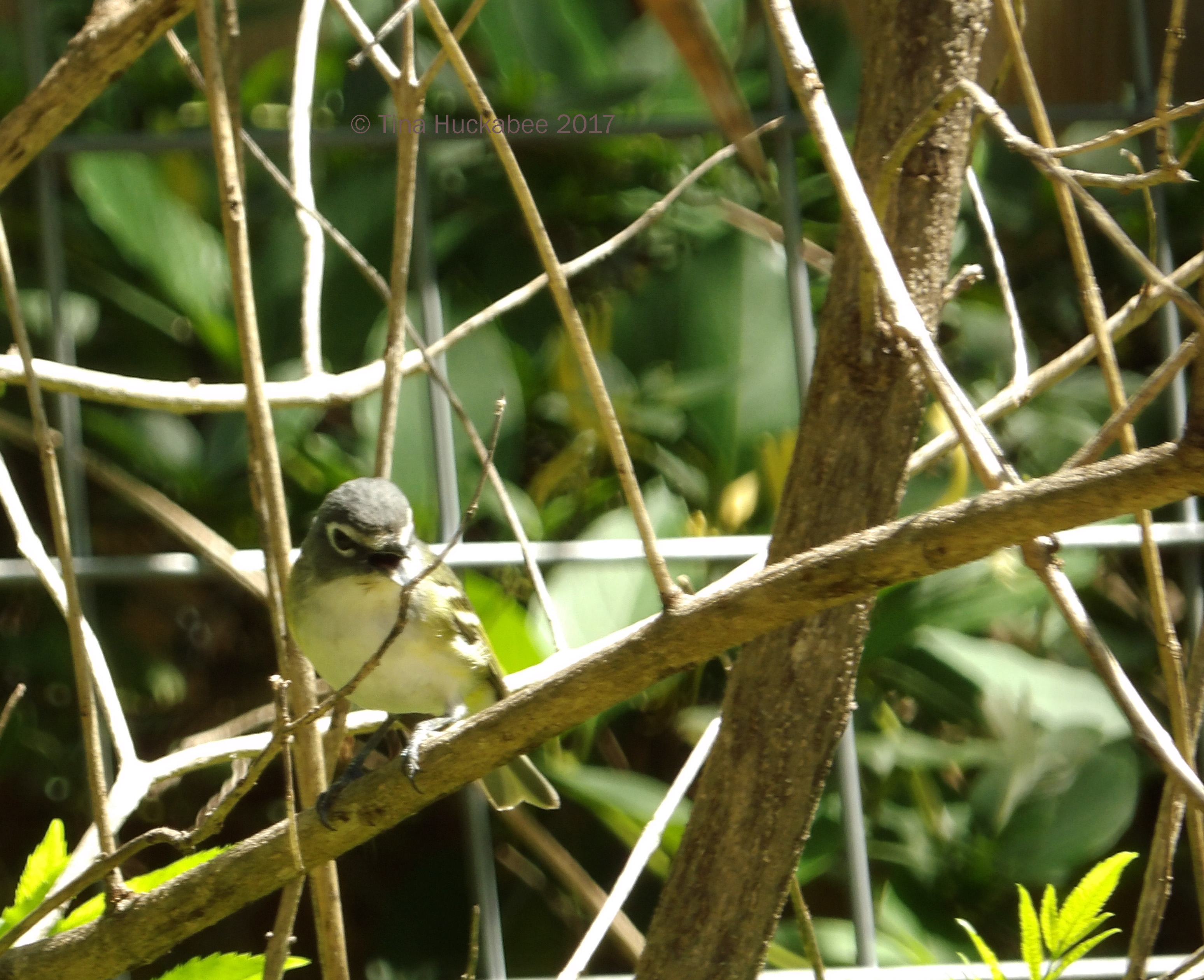
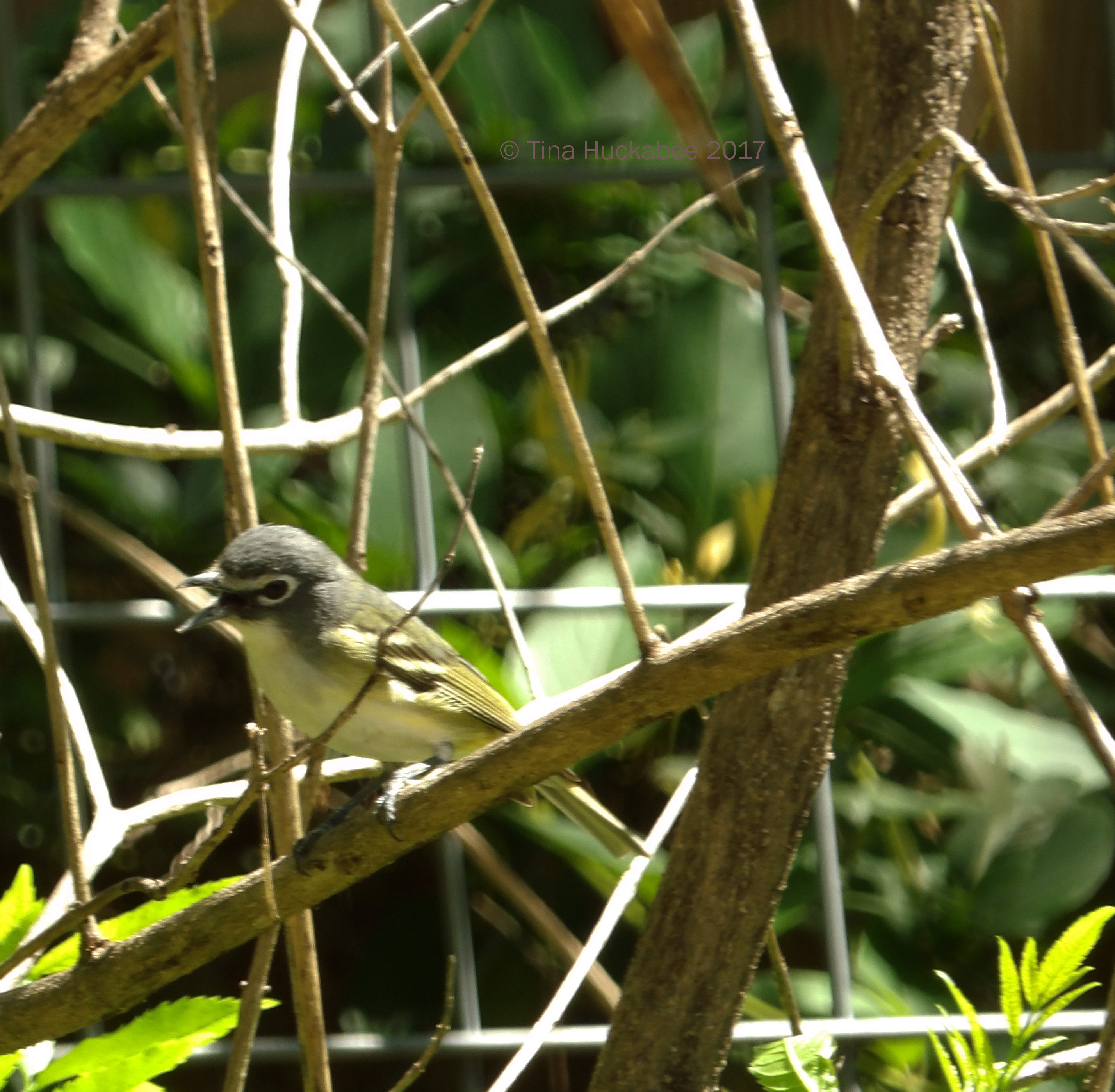
Another new bird for me is this beautiful Blue-headed Vireo, Vireo solitarius.
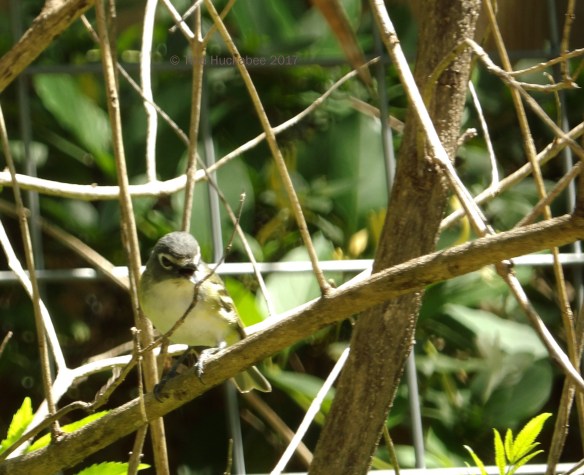
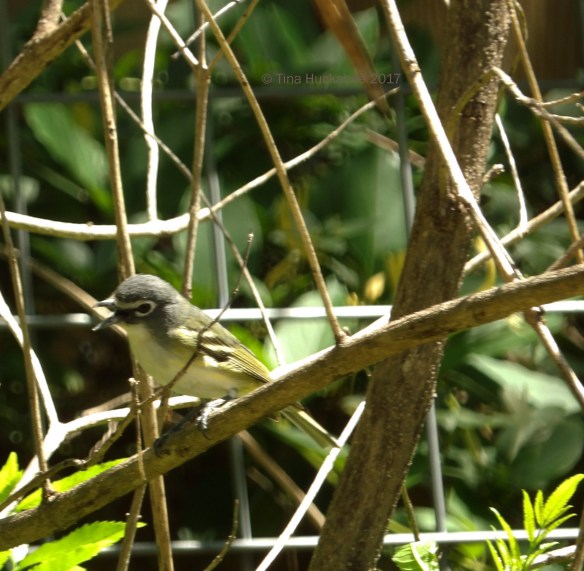
Not the best of photos because it was taken at a distance and from inside my house (sometimes that method of photo-taking works, sometimes it doesn’t), this bird’s colors and markings are striking. He’s quick and skittish and has visited a number of times, or perhaps, it’s been visits from several. The vireo and the Black-throated Green share an almost identical wintering, migrating, and breeding geographic pattern.
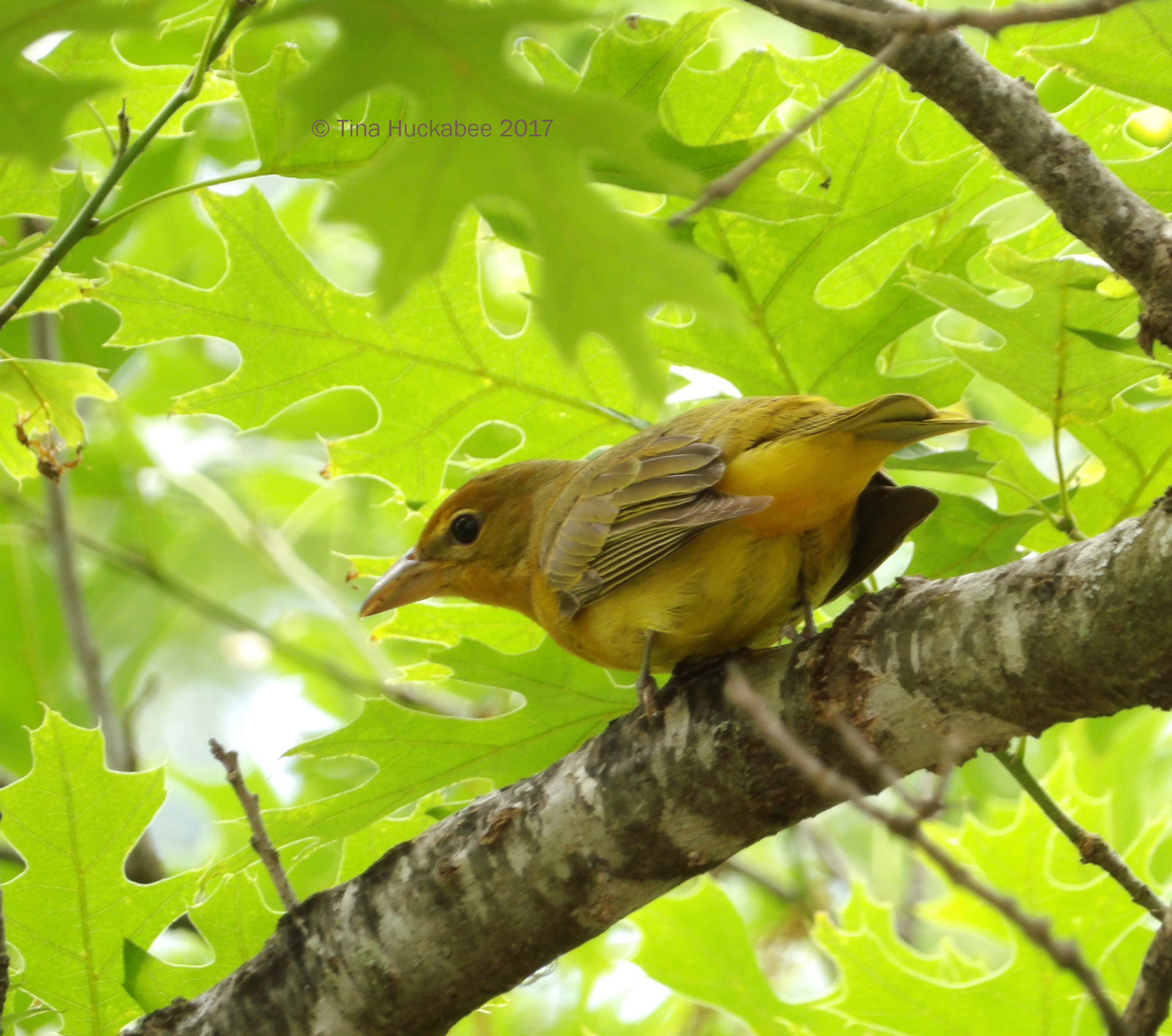
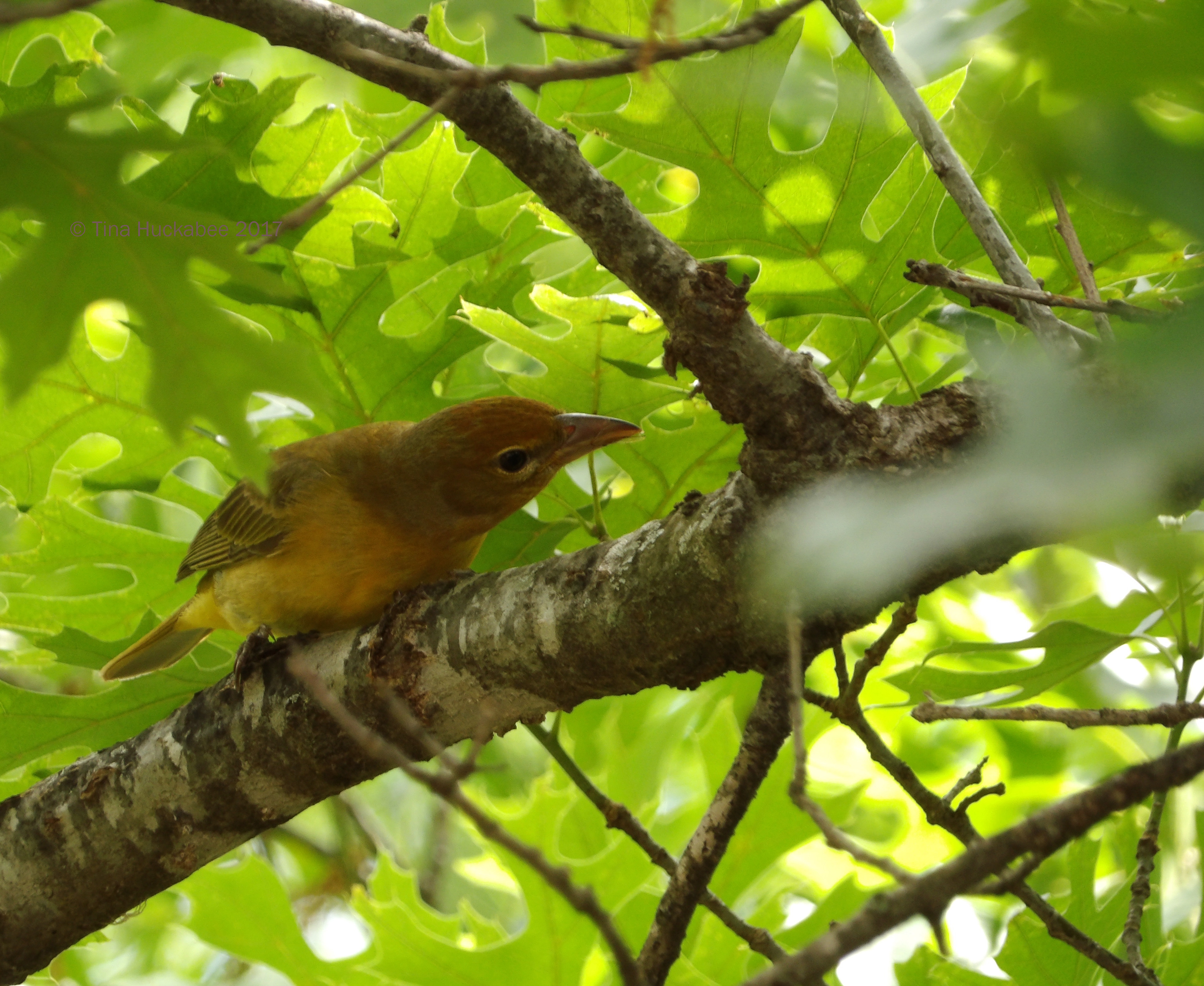
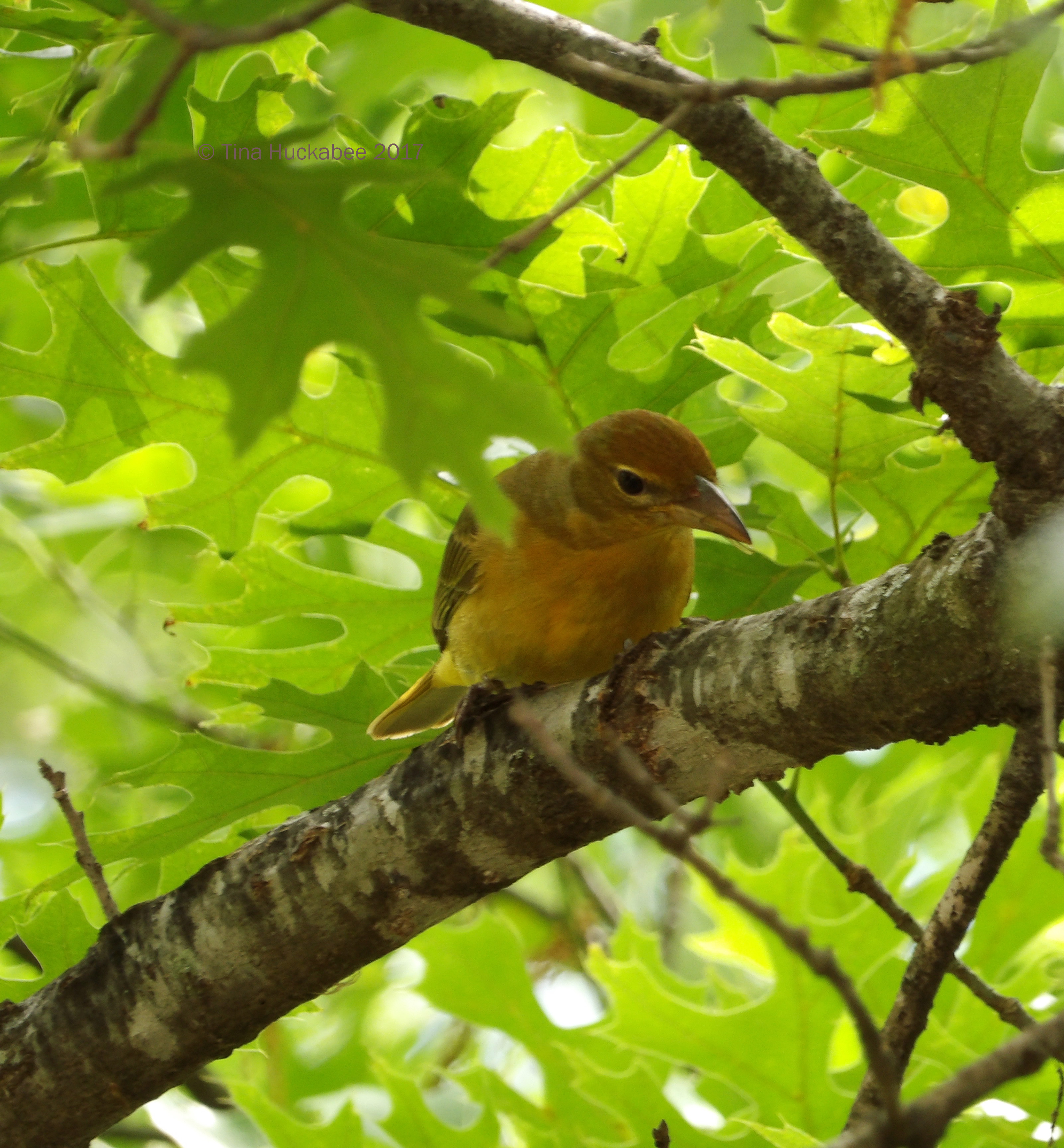
The bee hunters are back and gobbling up my honeybees and probably, some native bees as well. I first noticed this attractive female Summer Tanager, Piranga rubra, in the tree under which my honeybee hives, Buzz and Woody, reside.
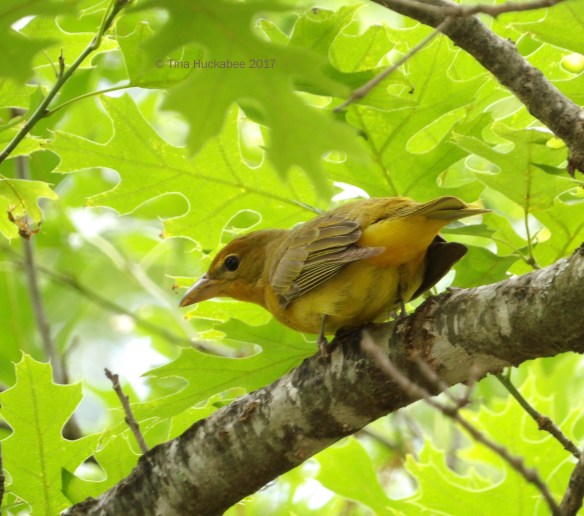
I love to watch these birds hunt.

Like most predators, they’re smart: note her bright eyes as she searches for her next buzzy snack.
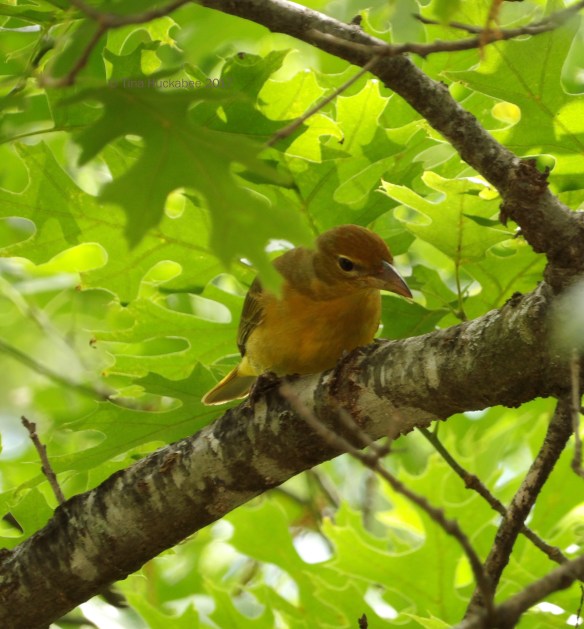
Tanagers catch bees (and wasps and other flying insects) on the wing, take their prey to a tree, bash (ooh!) the hapless critters on a branch, remove the stingers and gulp their meal. These beauties breed in Texas, as well as much of the southern part of the US, though I’ve only seen them in April and May, and coincidentally, since I started beekeeping.
Ahem.
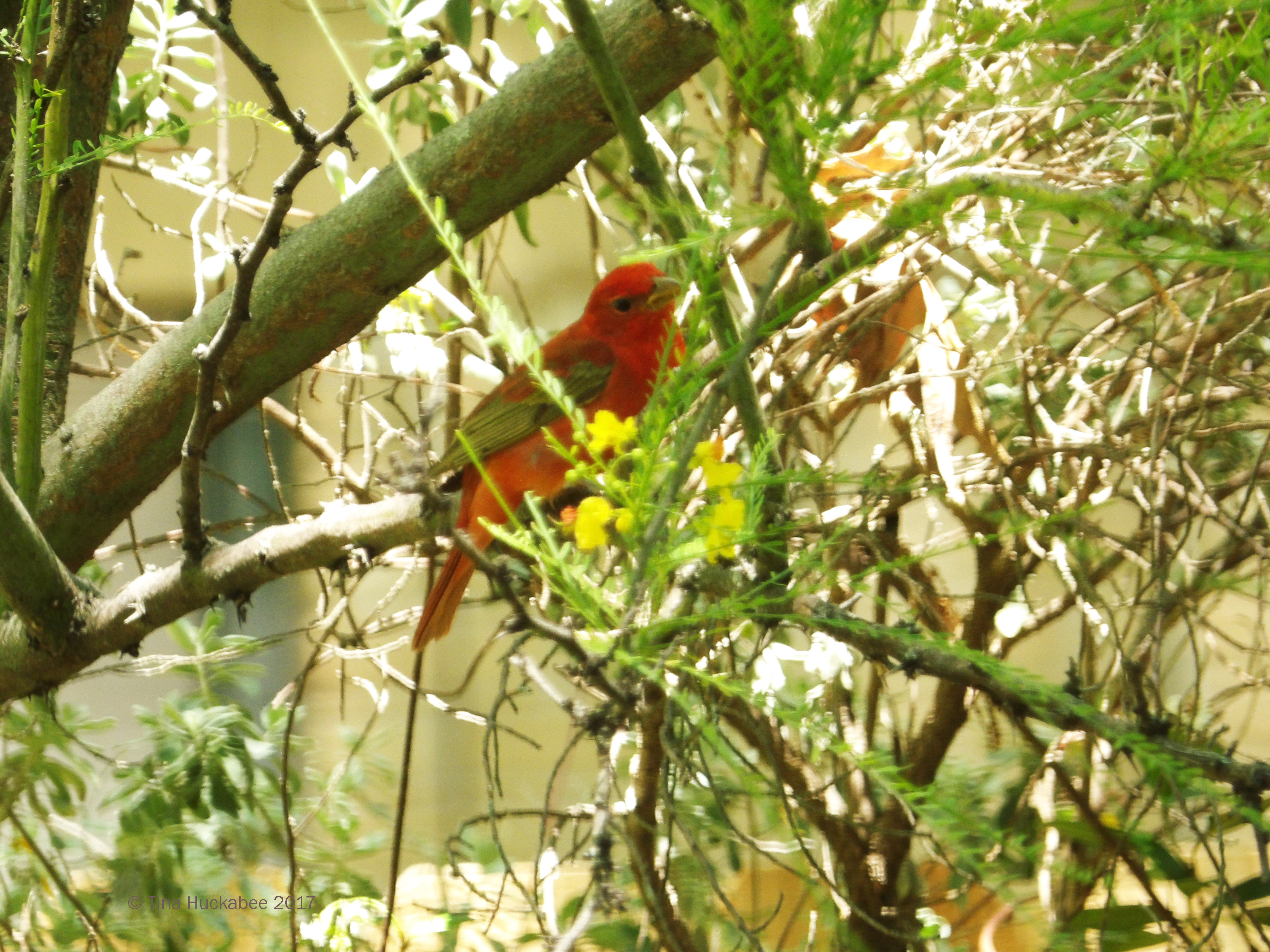
I next caught a quick look-see and shot of a juvenile male, though he didn’t stick around long.
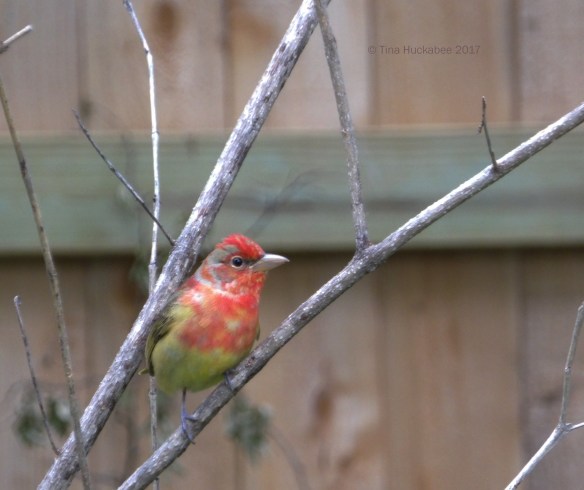
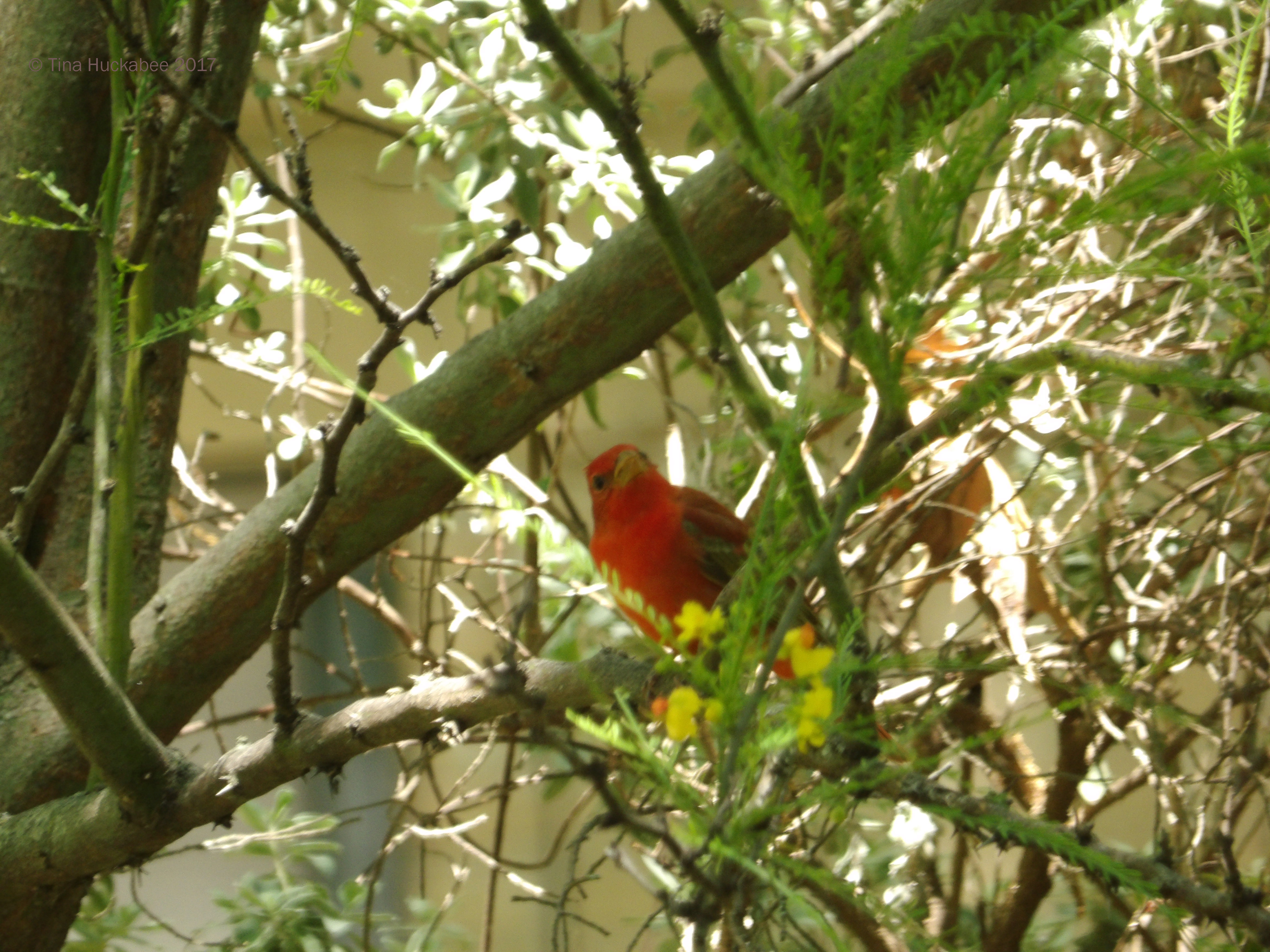
And just this past weekend, an eye-popping adult male graced my garden.
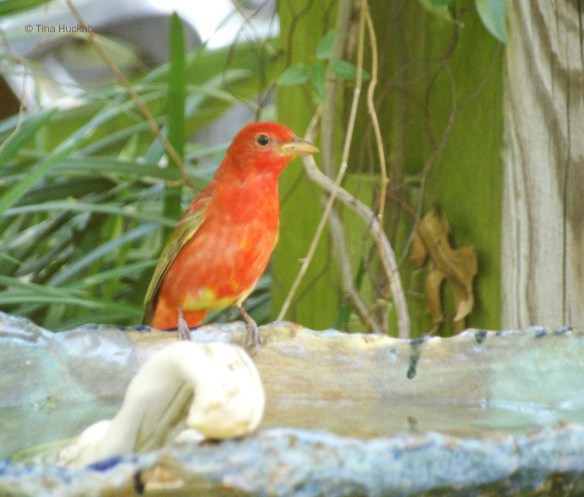
So gorgeous! He swooped and then rested, then swooped again.
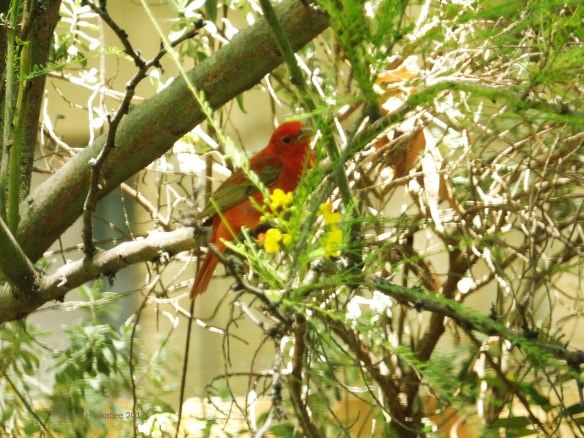
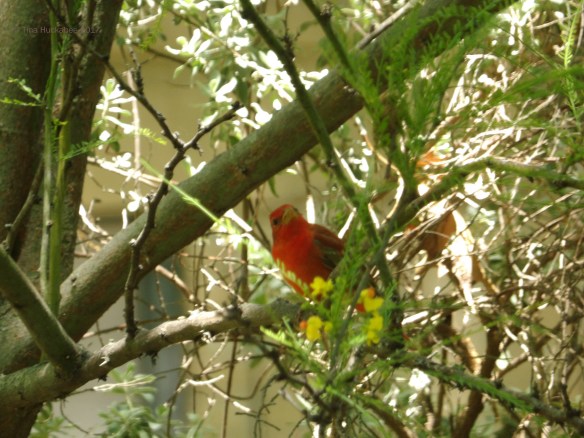
I hope a few Summer Tanagers will hang around for the duration of the season; I’d be willing to sacrifice a few of my honeybees for their company.
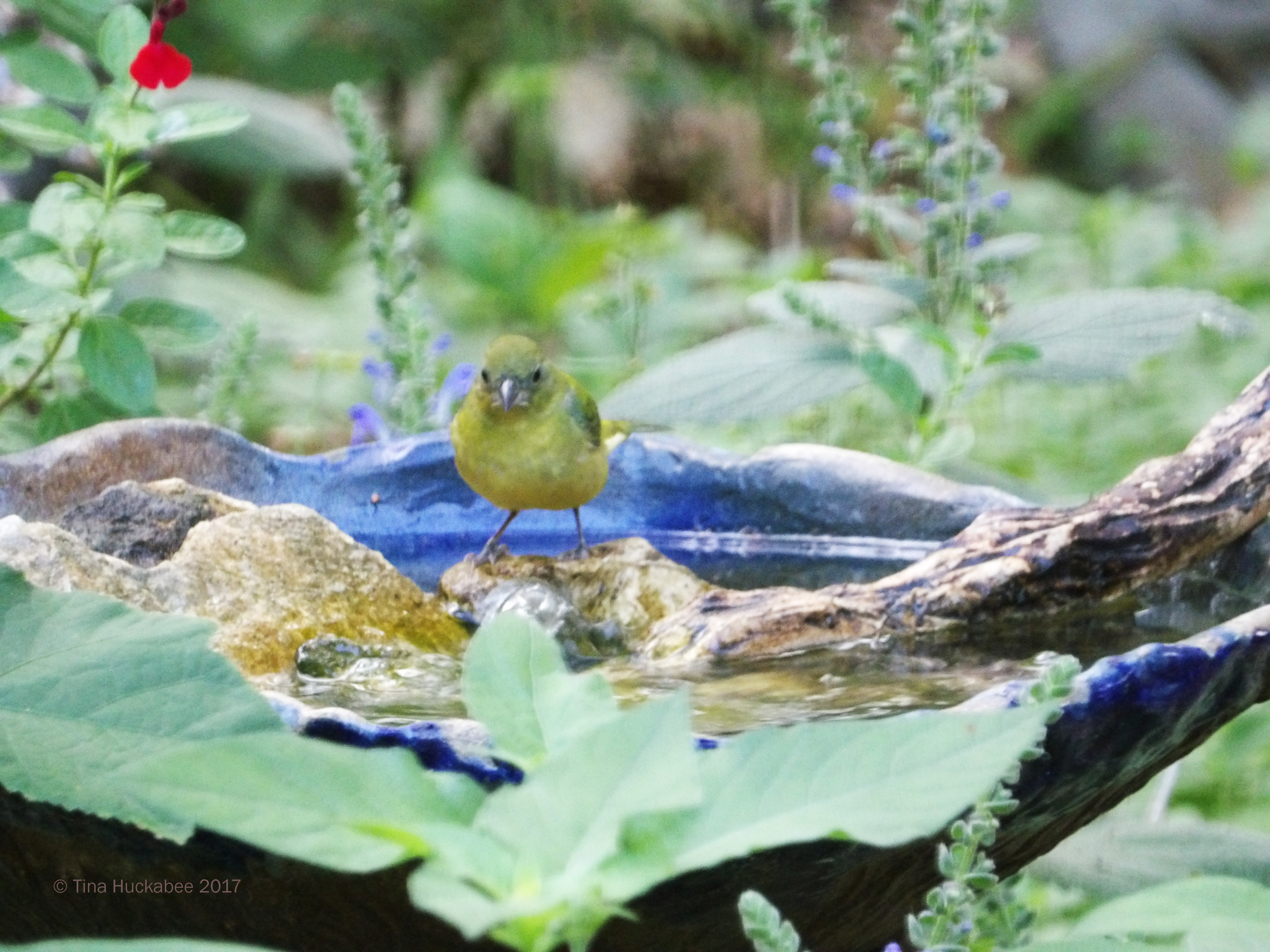
Last week, a (probably) weary migrating female Painted Bunting, Passerina ciris, bathed briefly in my water-pump infused birdbath.

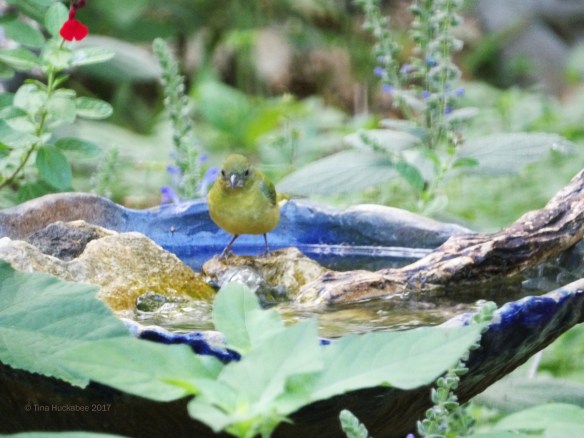
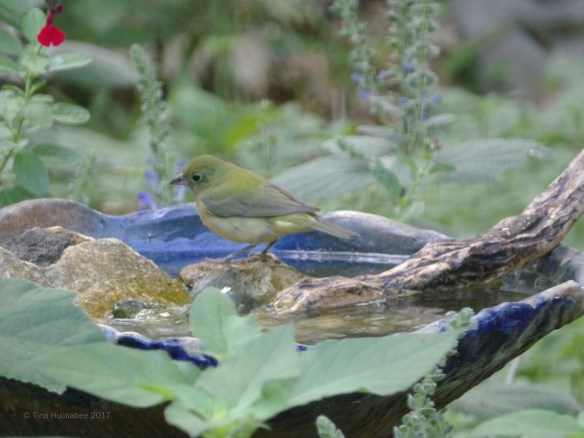
So pretty, but I still hope to see a startlingly beautiful male before the Buntings head just a little north of here to raise their families. Last year, a pair hung out in my garden for about a week, which you can see here, noshing on the seeds of the early spring blooming Gulf Coast Penstemon, Penstemon tenuis. Using native plants in your garden is a good way to attract migrating songbirds, as well as to feed the native birds of your region.
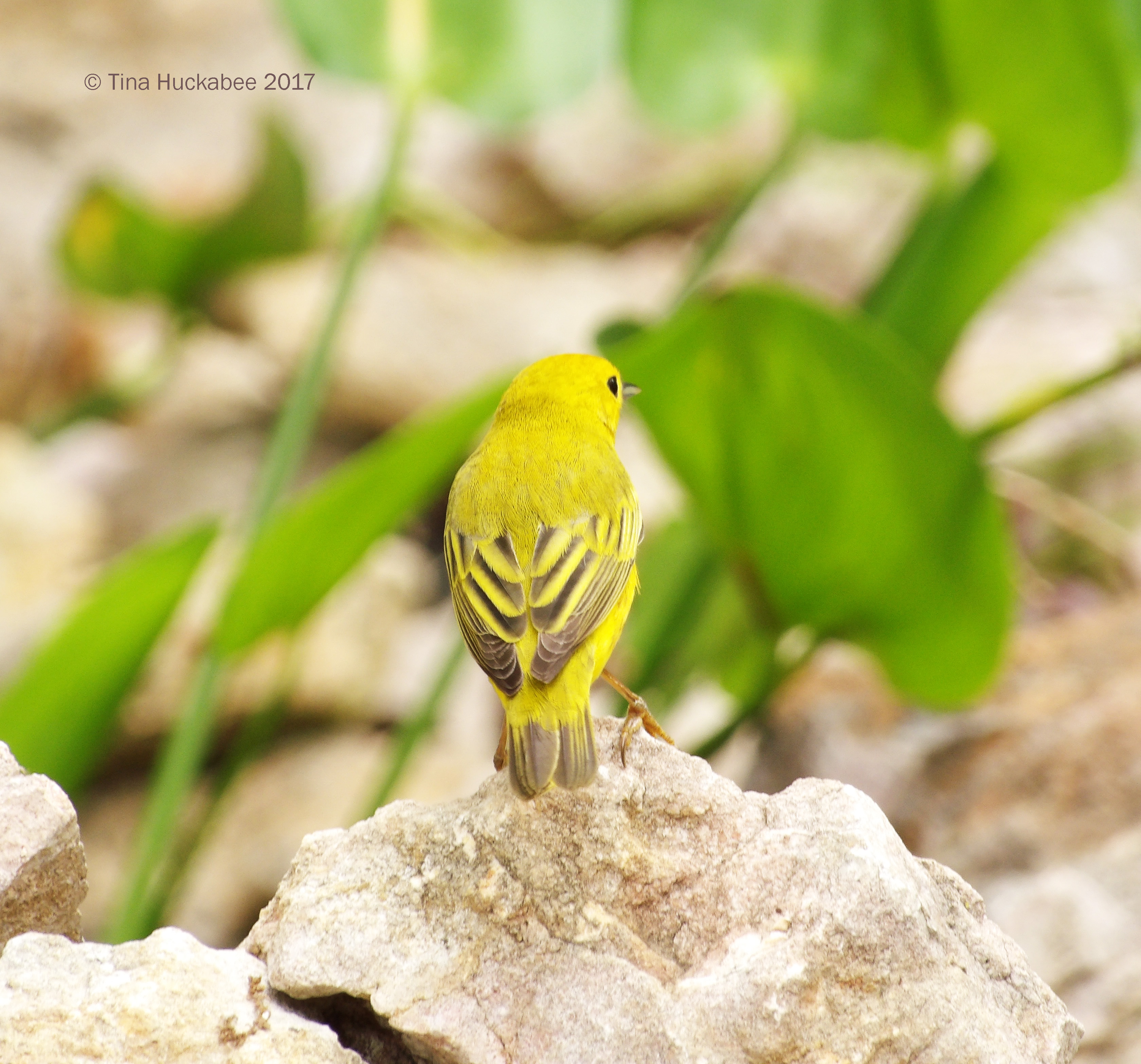
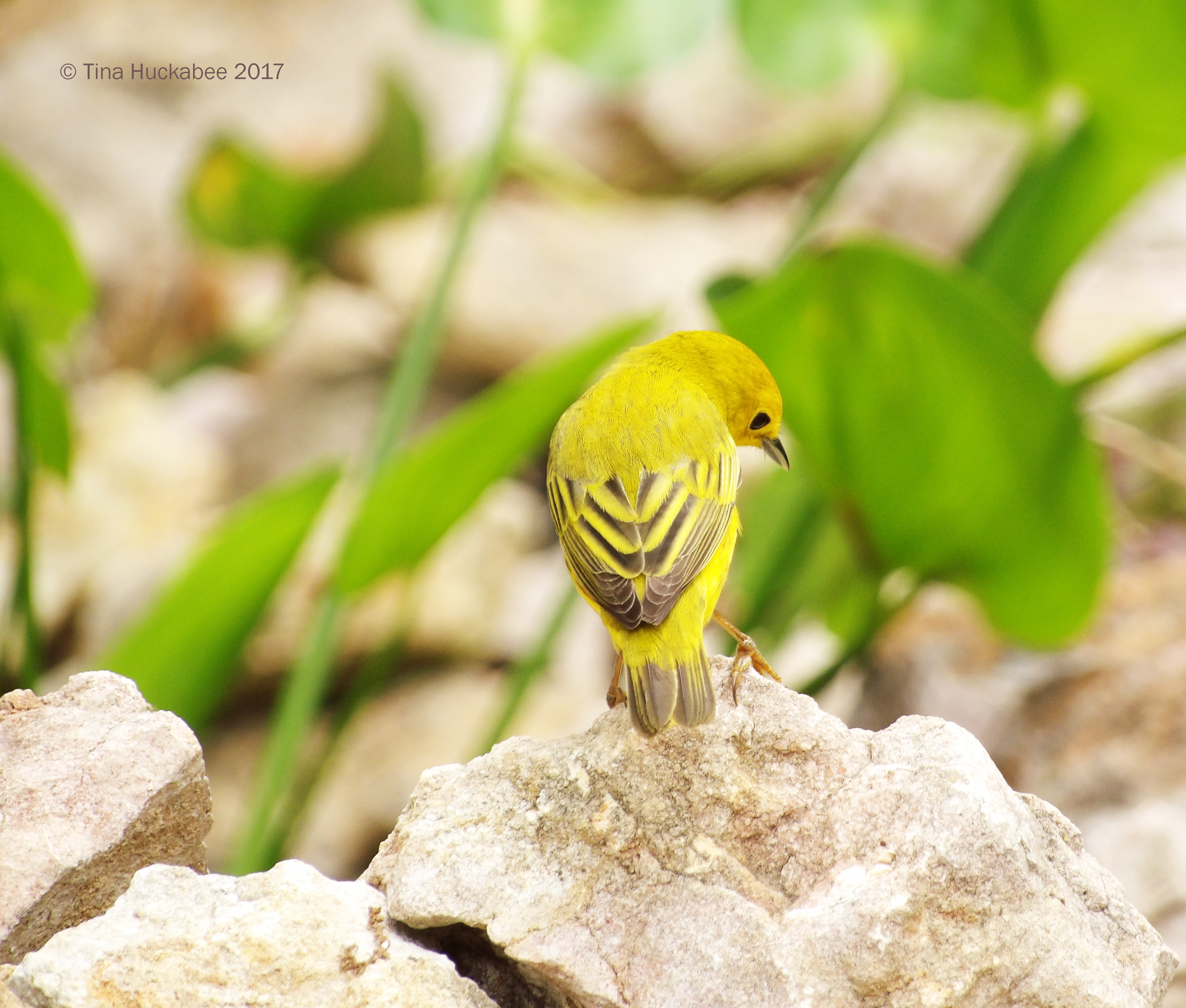
This blast of sunshine, a Yellow Warbler, Setophaga petechia, flashed through my garden this past Sunday–I’m so glad I was home to see him!
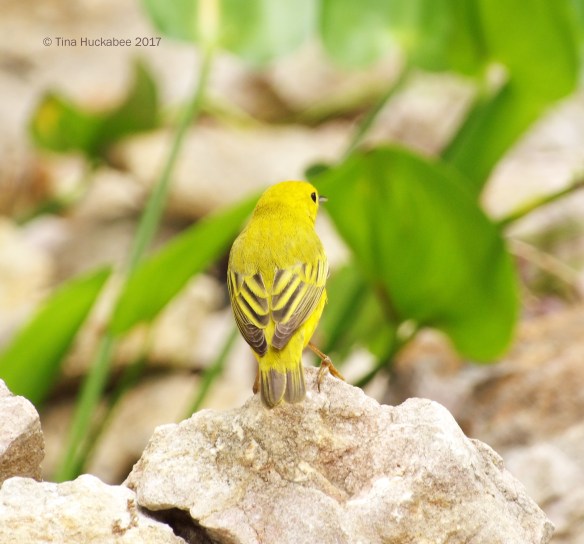
As a bonus, he stopped and posed for me at the base of the pond.
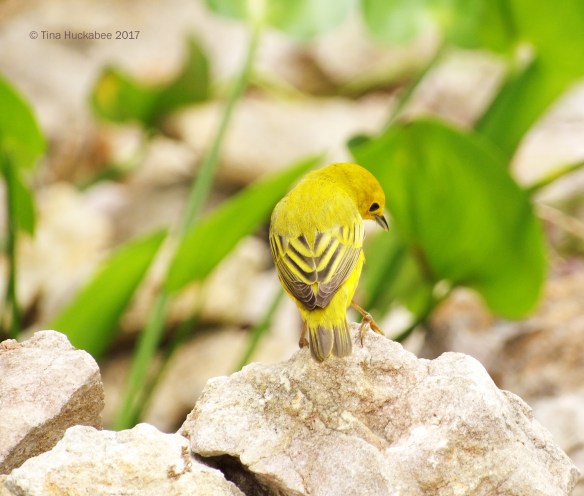
Playing at being coy, I think!
He’s a gorgeous hunk of avian masculinity and I’m sure he’ll have no trouble finding a mate. Though I suppose all of the male Yellow Warblers are just as pretty, so maybe the competition is tough? He and his partner(s) will breed far north of here and if I’m lucky, maybe another will stop and chirp at me in October, as the Yellows make their way back to Central America.
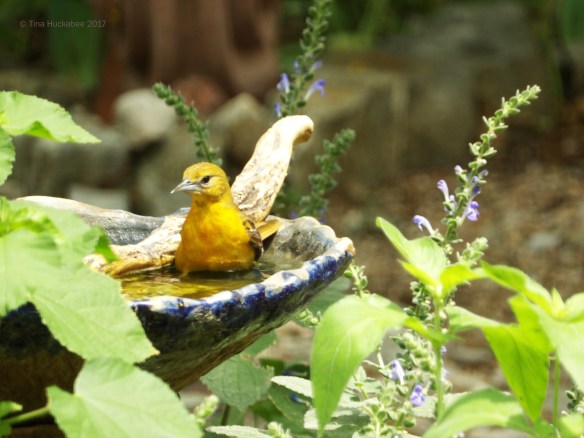
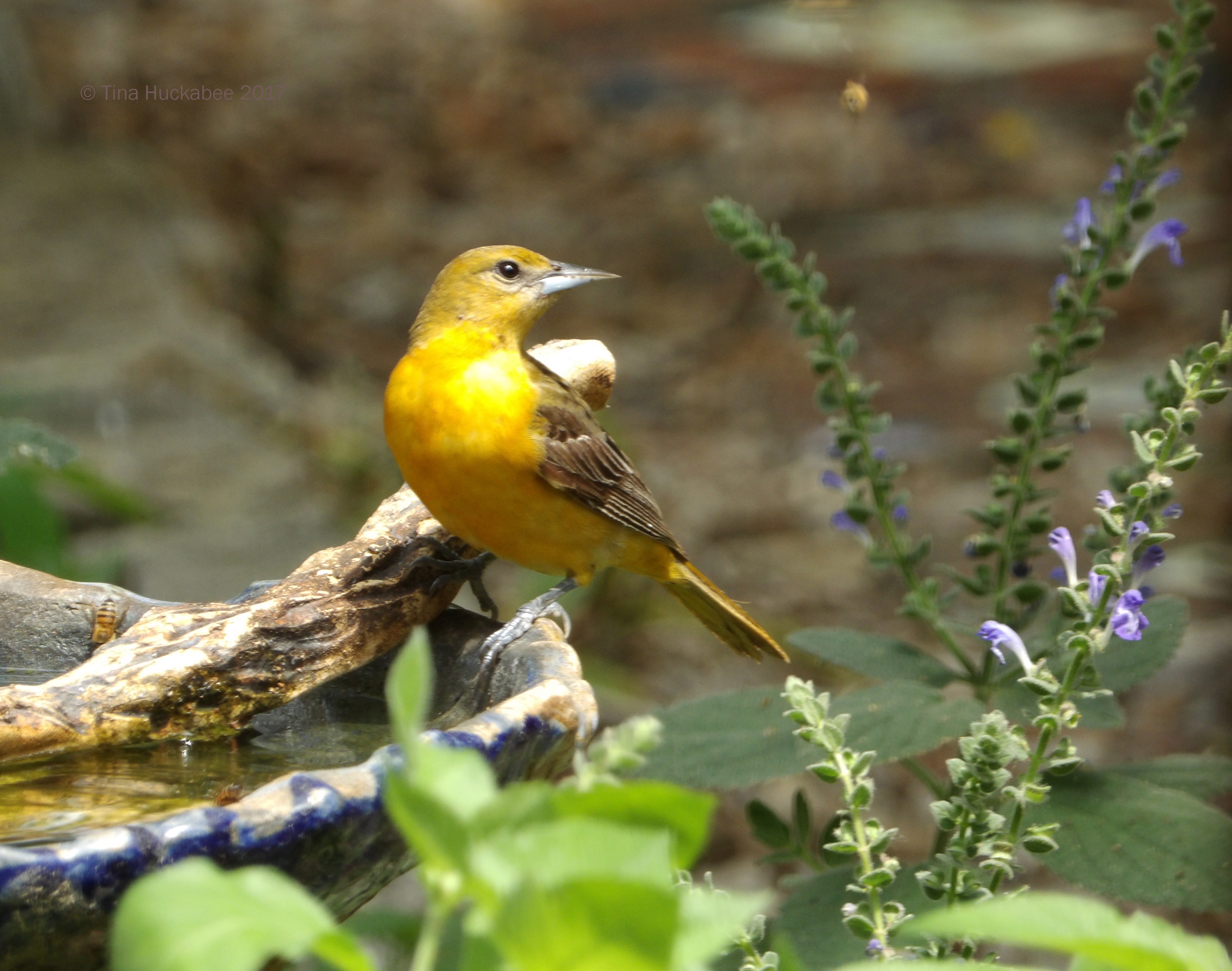
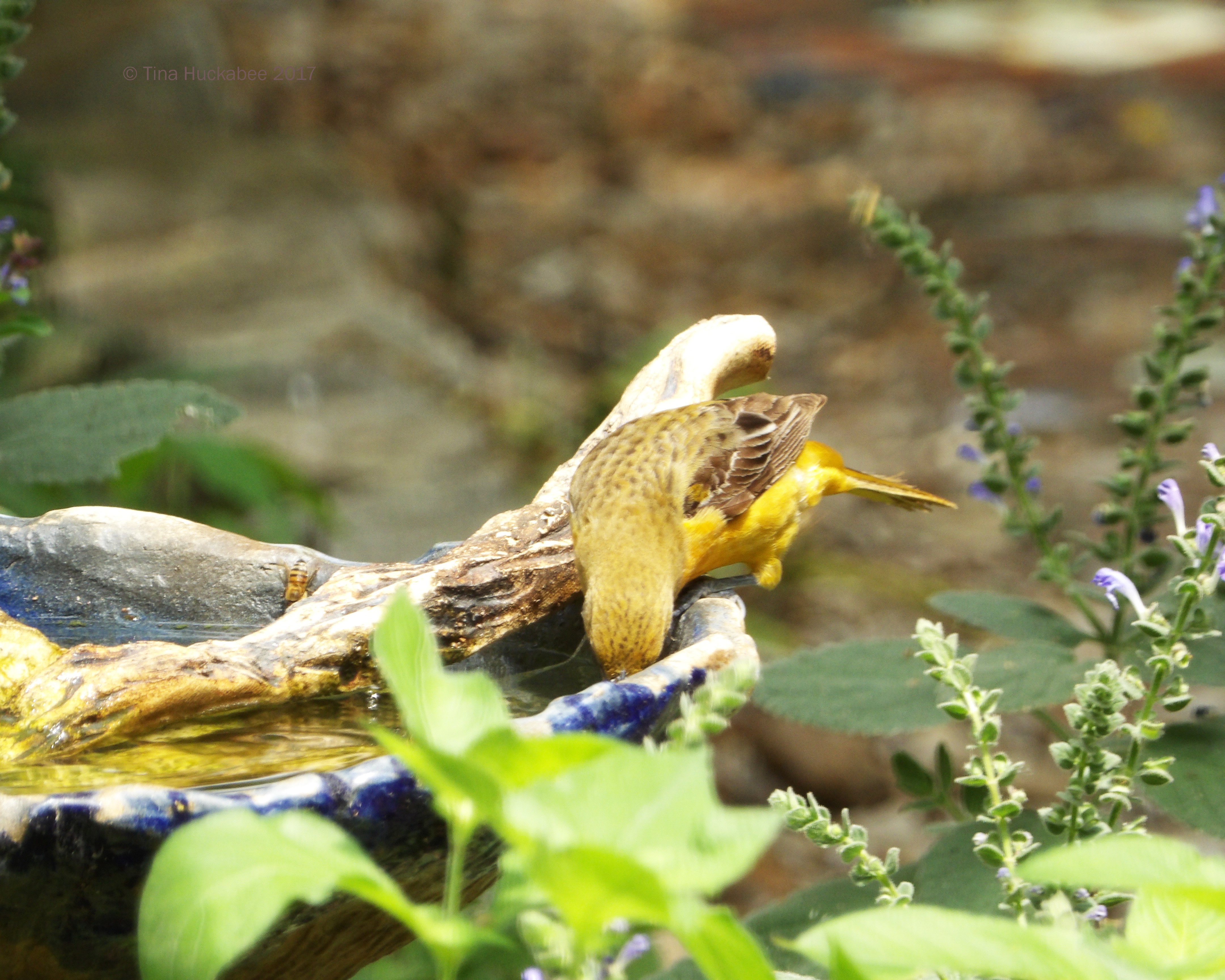
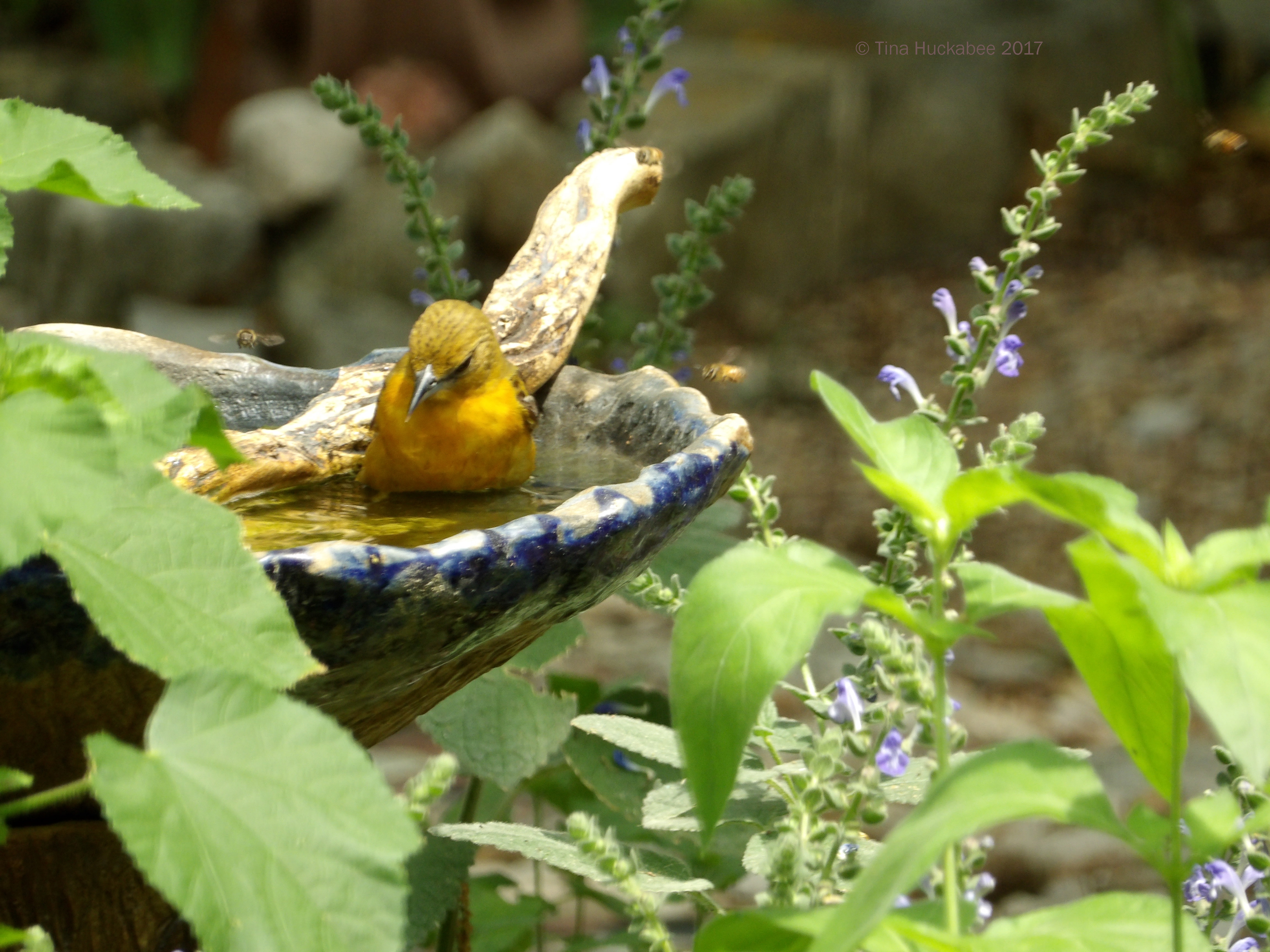
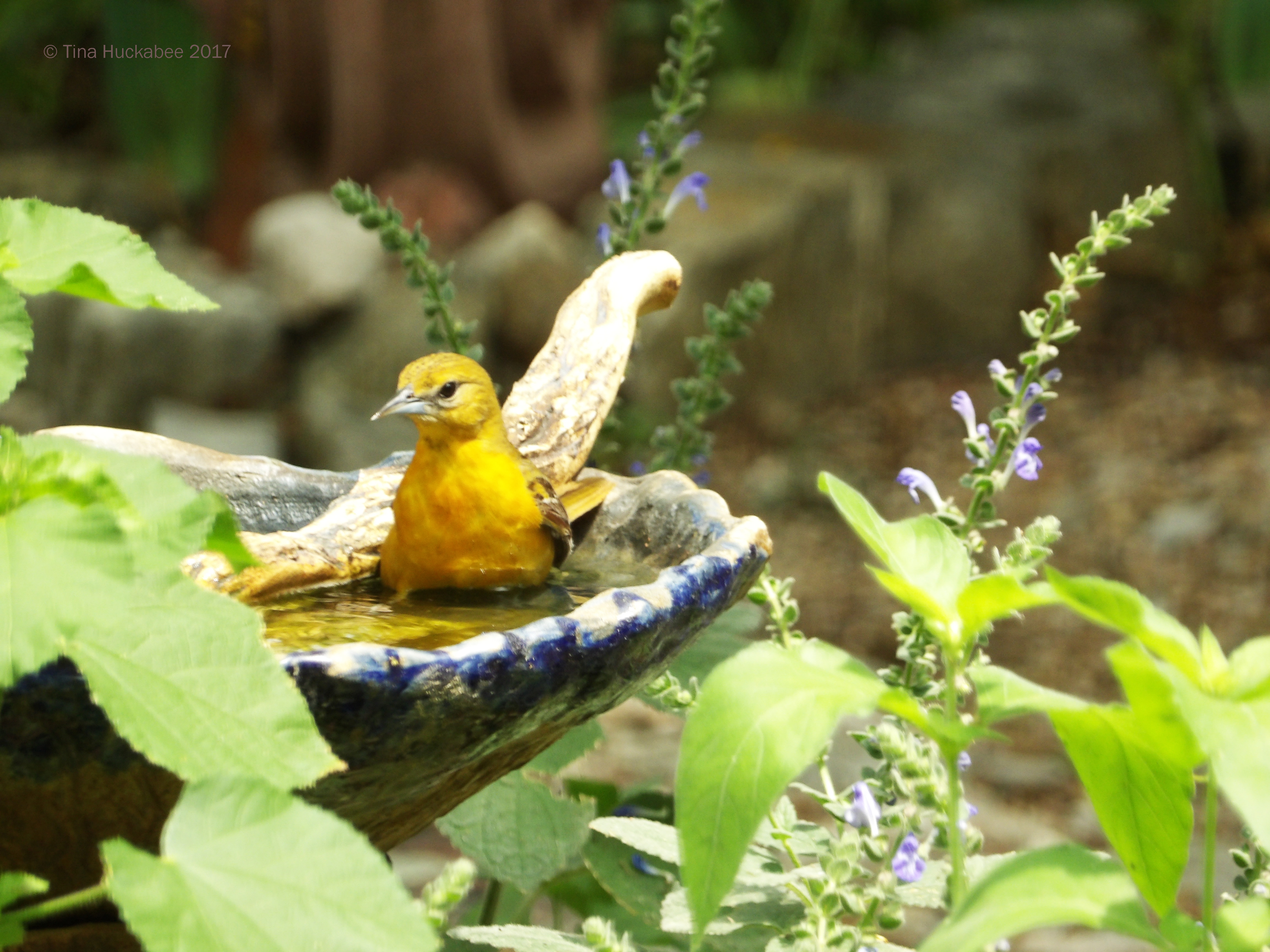
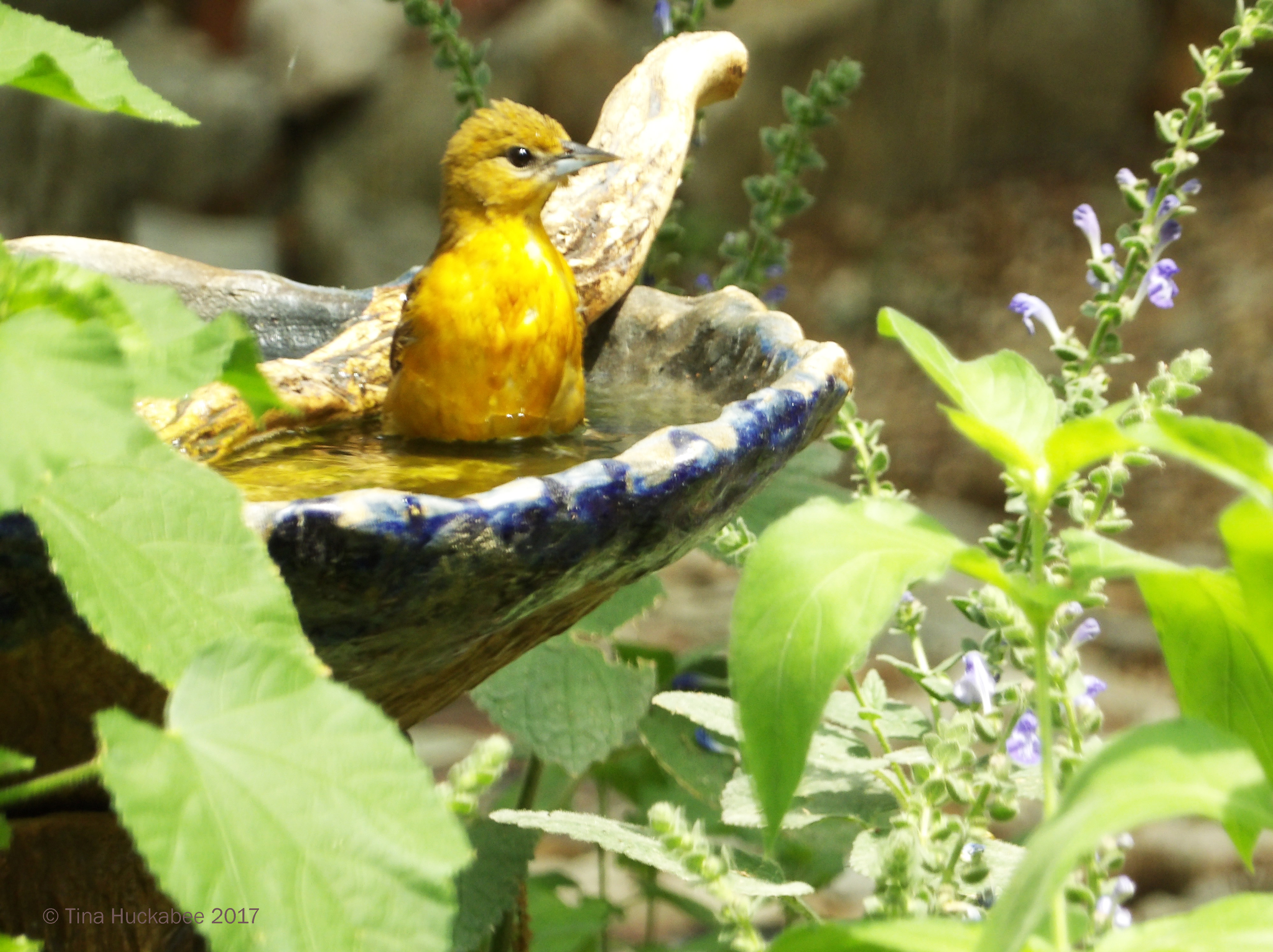
Another lifer (ugh) for me is this female Baltimore Oriole, Icterus galbula, who also visited recently. Baltimore Orioles are known for the stunning good looks of the male and the birds’ affection for orange slices in the garden. I am thrilled that this lone female spent time in the birdbath.
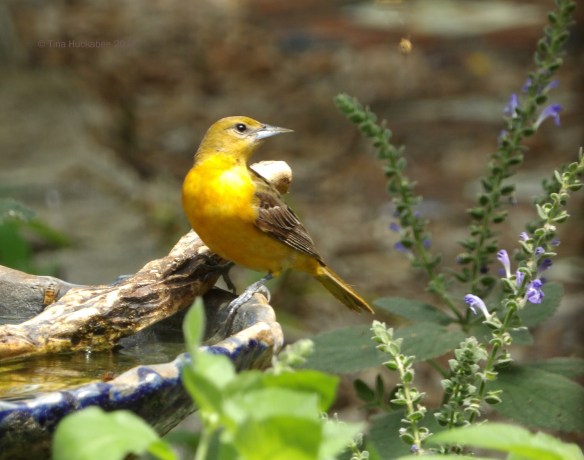
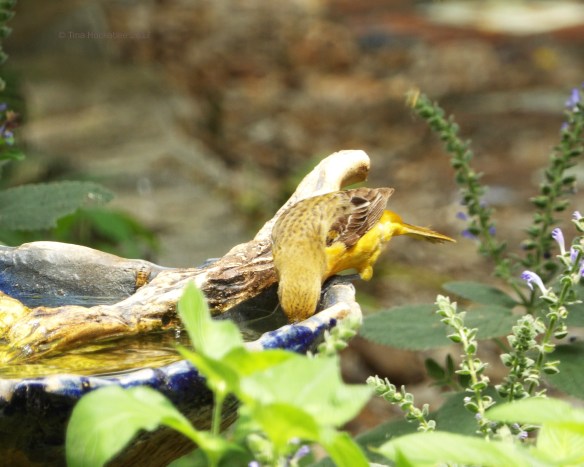
Though perhaps outclassed by her male counterpart in the looks department, I find her coloring and markings quite lovely.
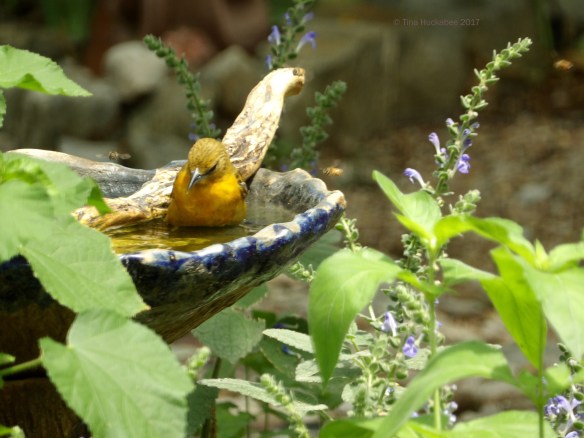
Enough with the sipping, I’m gonna bathe!
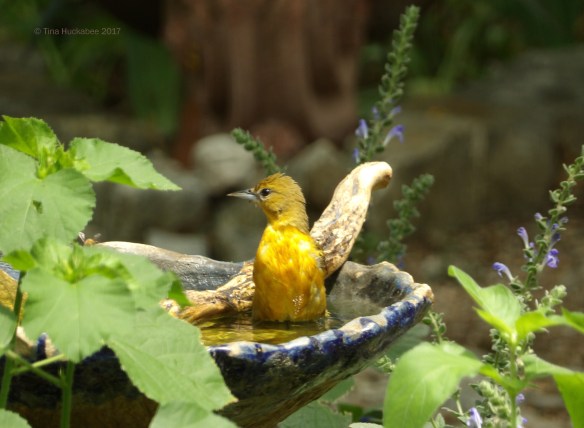
Stay alert!
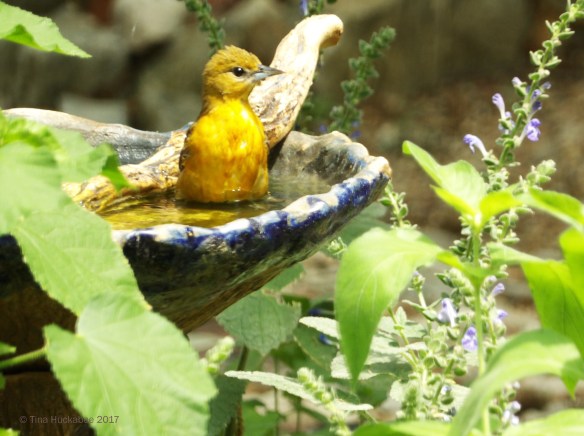
Where are those stinkin’ cats?! No worries, Ms. B, they’re in the house–bathe safely!
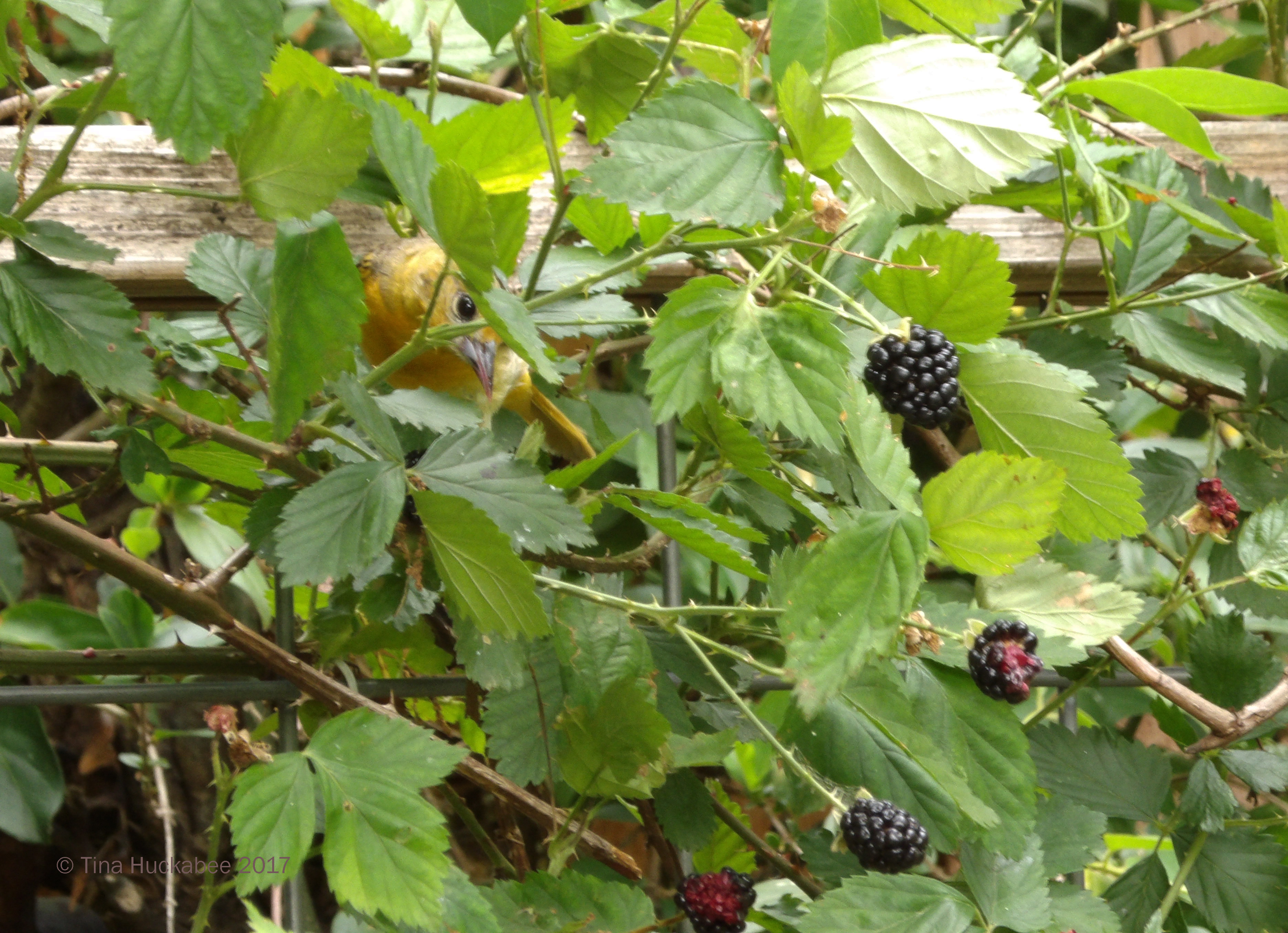
Yet another bird common to the eastern part of North America, she’s on her way north, but made a quick stop to refresh and I’m pleased my garden was a respite for her. After her drink and bath, what else would a Baltimore oriole do? Steal some yummy blackberries, of course!
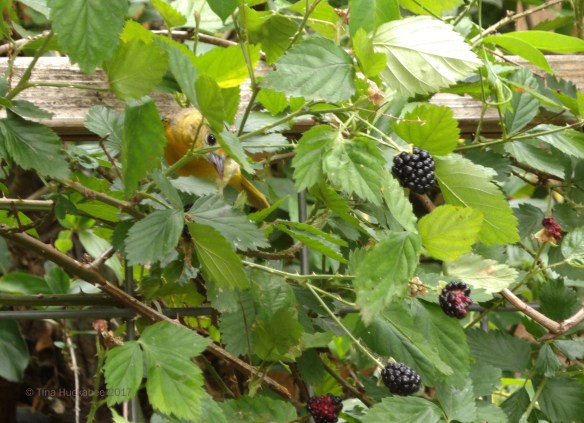
Migration is happening and the birds are moving through–I imagine in the next days, it’ll be the resident birds, and maybe their charming offspring, whose feathery presence will dominate.
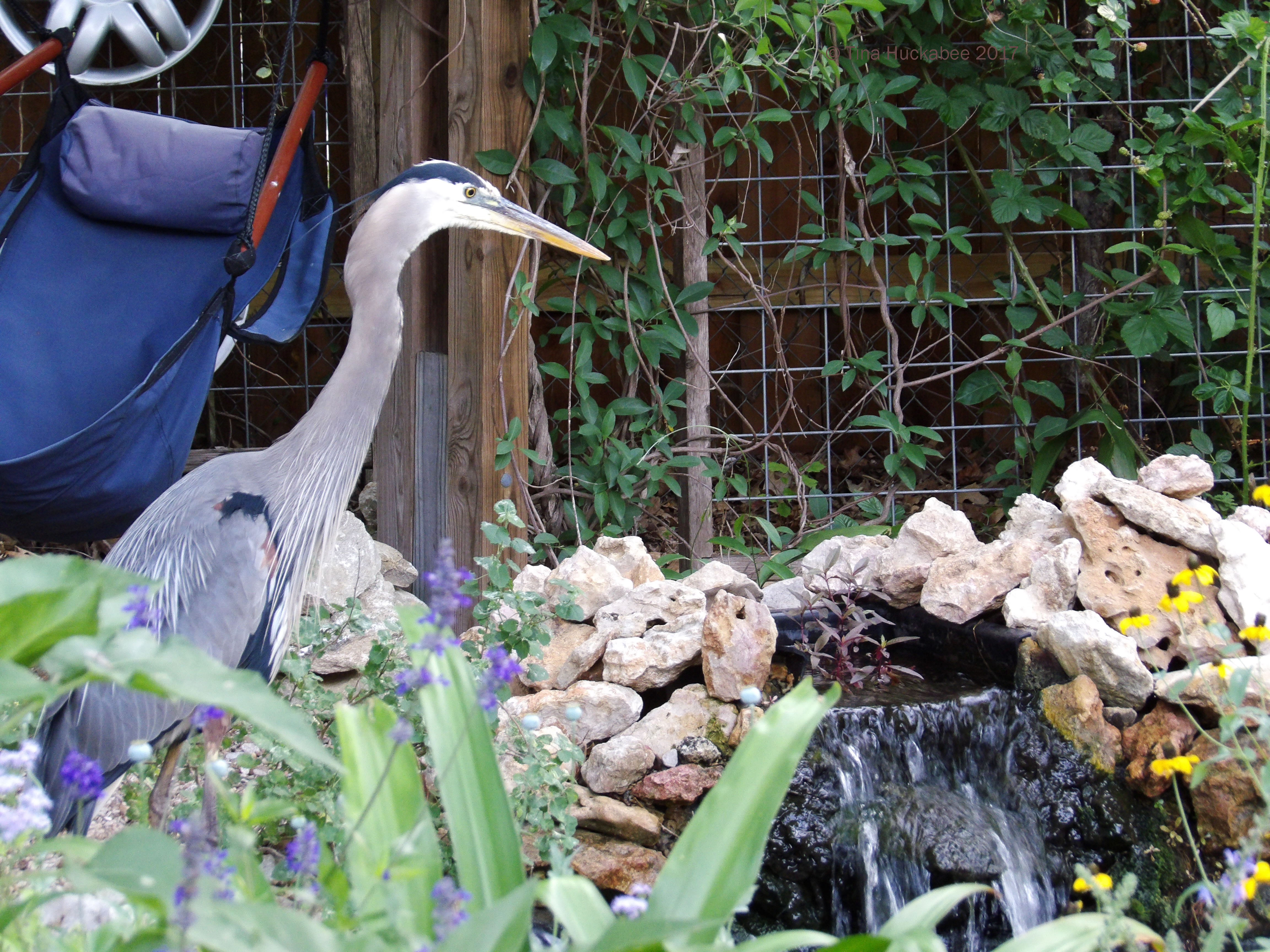
For those following the goings-on of the goldfish-snarfing heron,
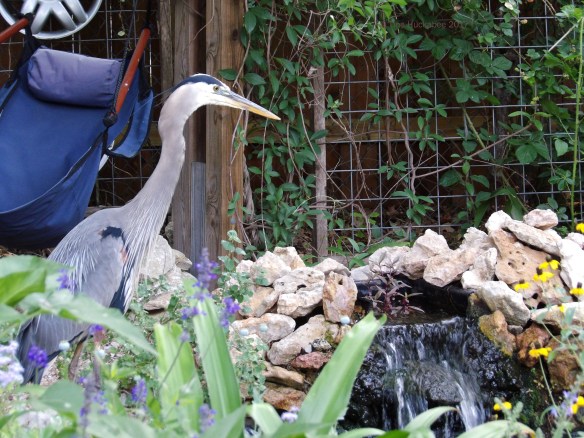
…I found two of the four goldfish hunkering under a ledge of the bog in the pond since posting about the sushi-loving bird. The lily pads are unfurling in rapid succession and I’ve witnessed the bigger of the two goldfish swimming around, no doubt feeling more confident that hiding under the leaves is a good bet for survival. I’m certain the fish are breathing a gilled sigh of relief.
Migrating or otherwise, did wildlife visit your garden this past month? Please post for May Wildlife Wednesday. Share photos and stories of your garden wildlife to promote and appreciate your region’s natural habitat and diversity. When you comment on my post, please remember to leave a link to your Wildlife Wednesday post so readers can enjoy a variety of garden wildlife observations.
Happy wildlife gardening!























 My Gardener Says...