I think we can all agree that recycling is a good thing, yes? Reusing materials, keeping waste out of landfills, and limiting extraction of and manufacture with raw materials are all laudable goals. My Social Justice Warrior self experiences a nice infusion of warm fuzzies when I place my bin out for the bi-weekly pick-up of formerly used, then discarded paper, glass, and metal stuffs. Additionally, one never knows what events will unfold while rolling the bin up the driveway, past gardens which are full of life. Two weeks ago, I was glad that I was engaged in the recycling rumba as a kerfuffle in the garden caught my eye in the movements of these two guys:
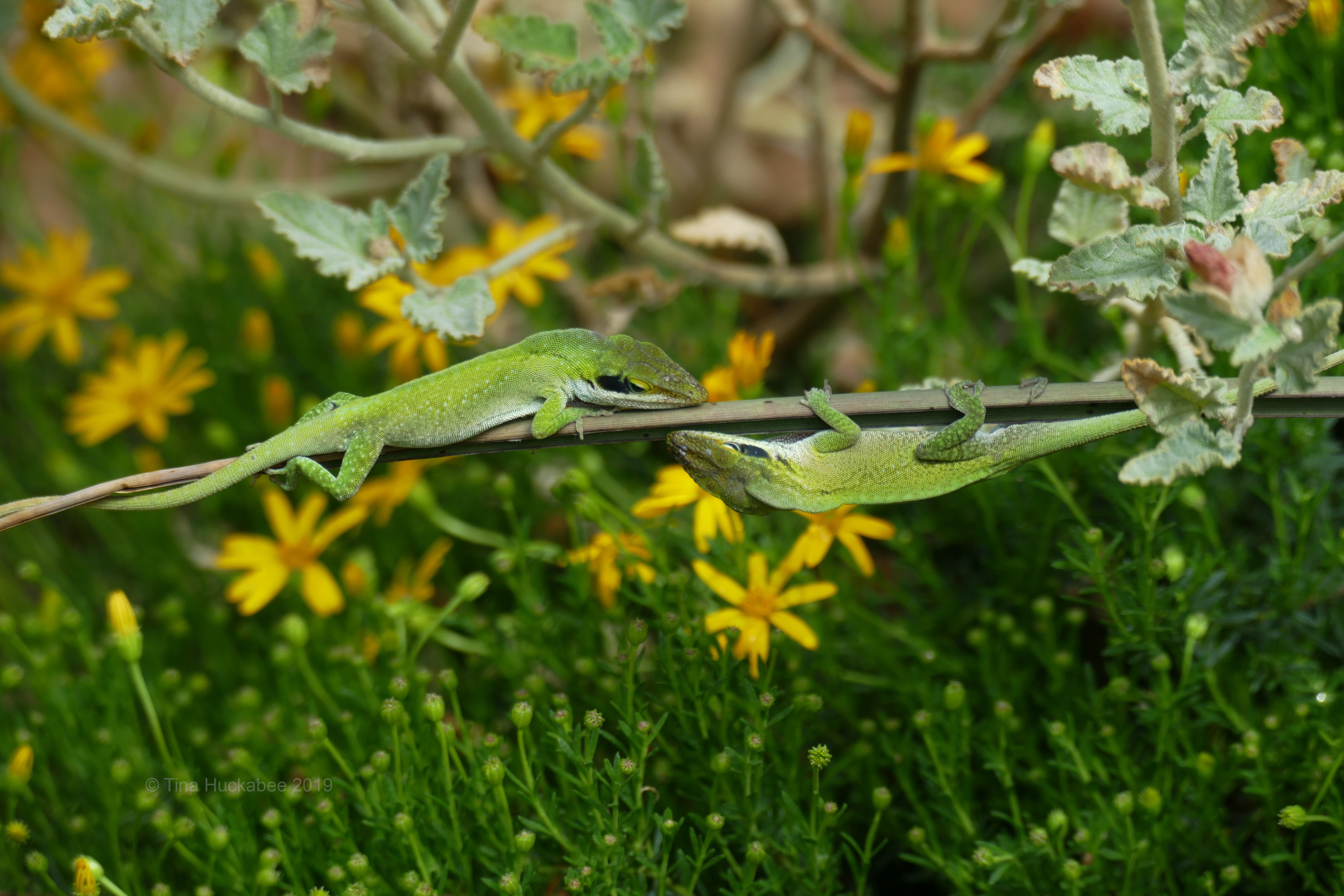
The two are Green anole, Anolis carolinensis, lizards: charmers in the garden, sometimes green, sometimes brown, sometimes fierce competitors for territory and lady anoles. These two locked eyes for a brief minute, then a second bit of brawl ensued and this resulted:

Oh dear.
I don’t think they’re buddies.
Anoles are quirky critters and fun to watch as they sun themselves or lie in wait for passing insects. They glare at me when I disturb their hunting or sunbathing, but are welcome partners in my gardening adventures. I enjoy their company and appreciate their place in the local environment. But true to their nature and like most other wildlife, they scrabble for mates, territory, and food, and spring mating season brings out aggressive lizard brain behaviors.
What I typically observe are assertion displays, like dewlap extensions, which may or may not involve another lizard.
However, this acrobatic pose is bit beyond assertiveness and happens when there are two dudes involved and the assertion displays haven’t done the trick.

According to this article on anole aggression, this is a full-on challenge display, complete with black spots which form near their eyes (eyespots), enlargement of the crests along their necks (under lizard), and the crests along their backs (upper lizard)
These fellas held the position for several minutes, even as I maneuvered around them, egging them on.
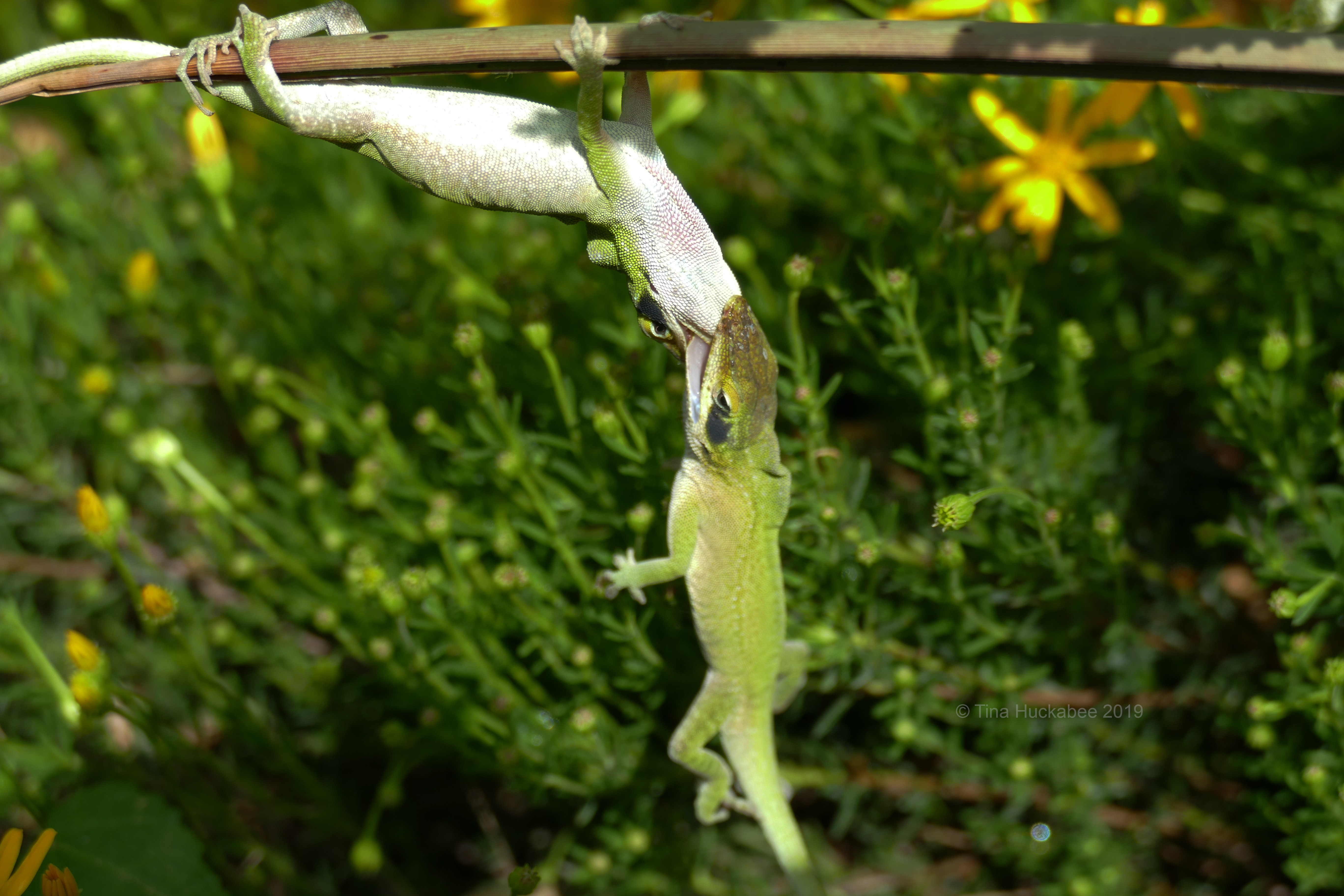
I didn’t really egg them on, but I was tickled to capture the lizard tussle. Poor hapless, helpless Lower Lizard: he dangles, little claws akimbo.
Eventually, Lower Lizard fell–or was dropped–into a bed of Damianita, Chrysactinia mexicana. According to those who study anoles, he’s the declared loser, as he was in the lower position from the get-go. He looks a little sad and maybe embarrassed as he goggles at the victor. I don’t think he had a date that night!

Meanwhile, the winner is smug,

…as he leers at the loser.

Ah, spring: flowers, butterflies, birds, fighting lizards. So much drama in the garden.
Remember to recycle–you never know what you’ll see!
What critter capers do you enjoy watching in your garden? Please share your wildlife stories and leave a link when you comment here. Happy wildlife gardening!

 My Gardener Says...