I don’t want to bore, but it’s hot here, I’ve complained about the heat in earlier posts, and I want to be done with it. That said, the heat isn’t done with me or the garden, so I’ll stop whining and get on with raptures about the awesome, heat-loving blooms of August.
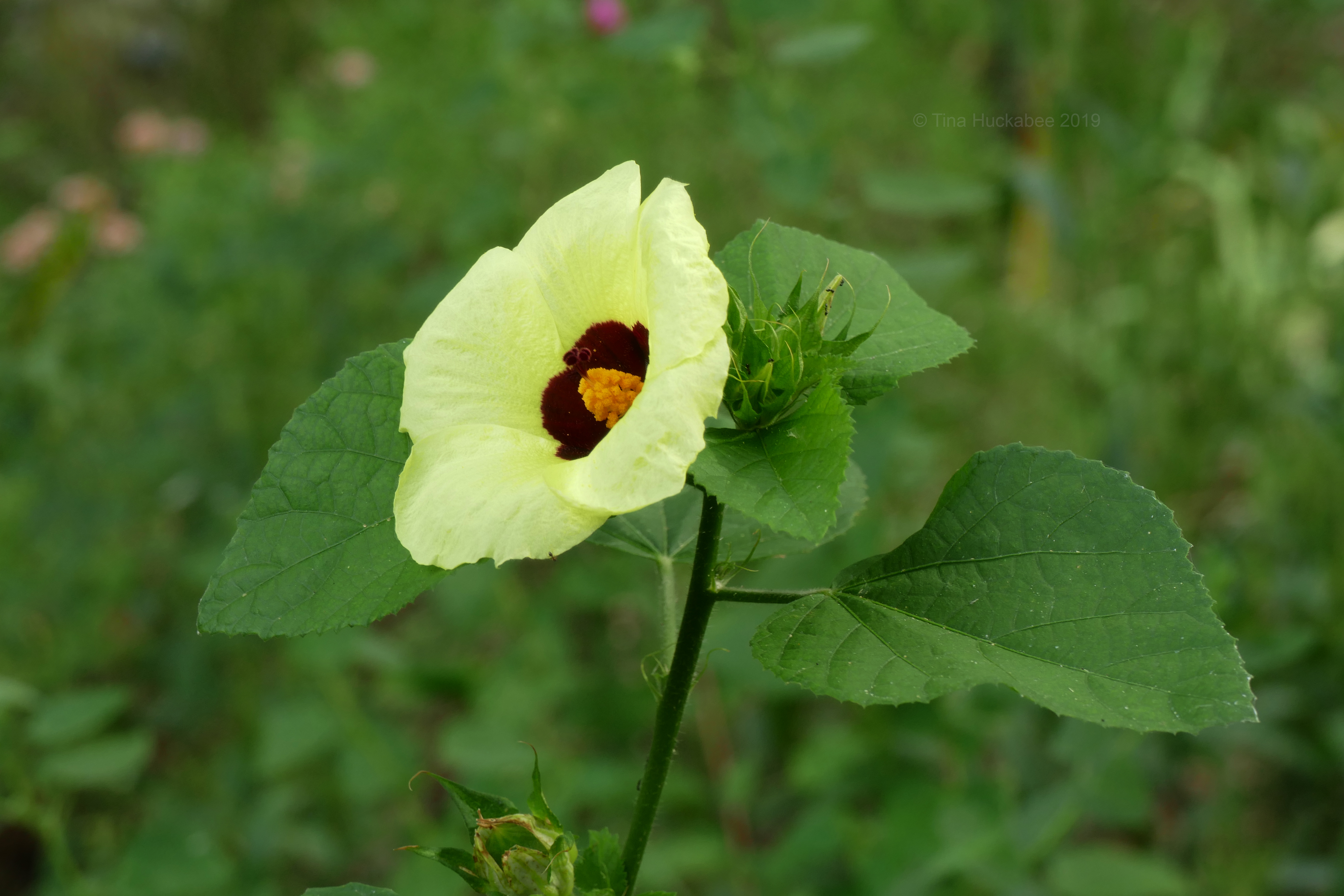
The Lemon Rose mallow, Hibiscus calyphyllus, is a perennial which grows and blooms in a fairly shady area of my garden. There aren’t blasts of blooms each day, but always one or two lovelies brightening the garden with butter yellow petals paired with a rich maroon center.
Hands-down, the best summer bloomer I grow is the Texas native Turk’s Cap, Malvaviscus arboreus var. drummondii. A perennial shrub which grows in any condition, it’s a star in my garden. Drought tolerant, it’s also an excellent wildlife plant. The petite hibiscus-like flowers are brilliant red and never open, but that doesn’t deter the pollinators.
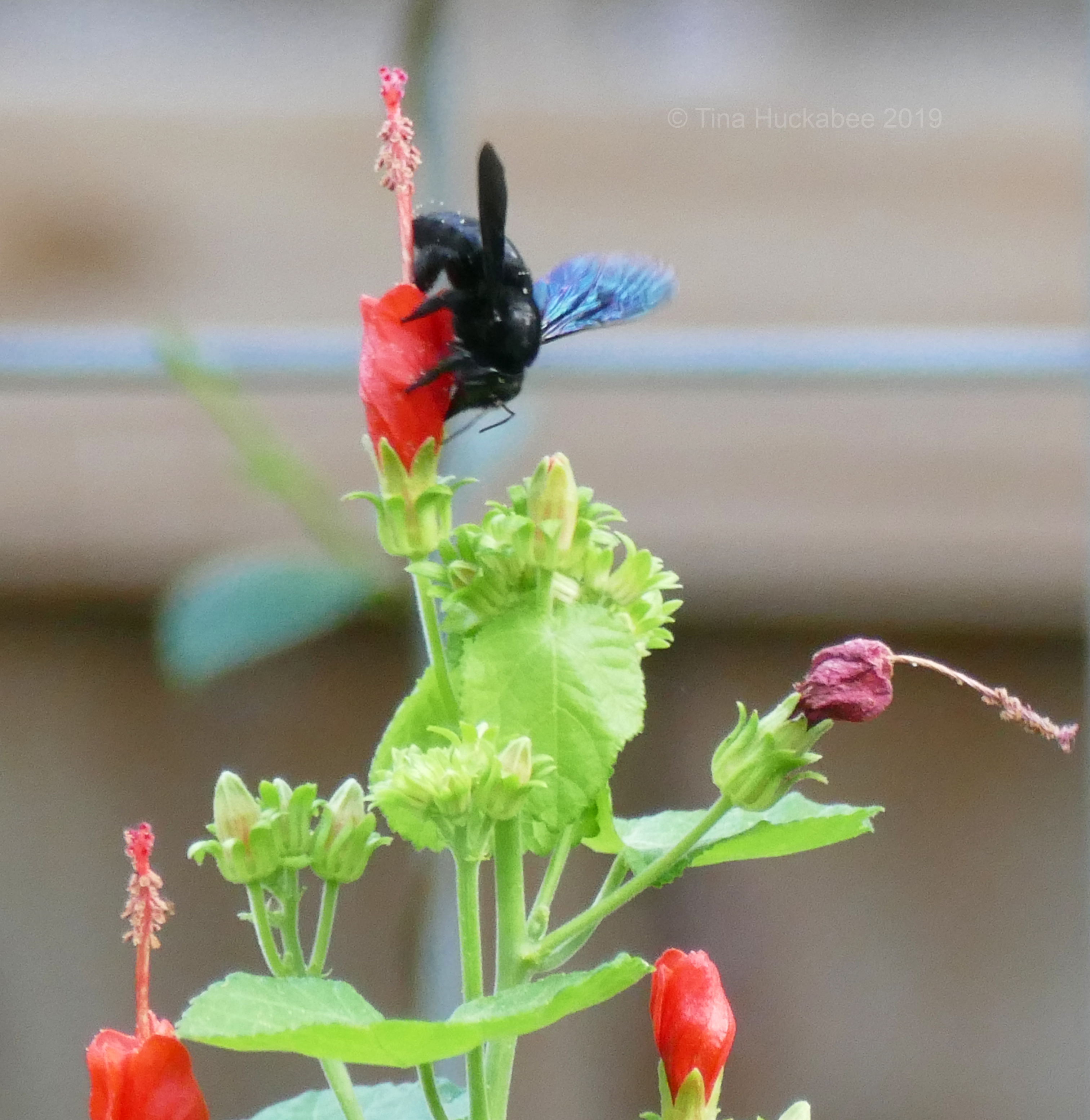
A Southern Carpenter bee nectar stealing from a Turk’s cap bloom.
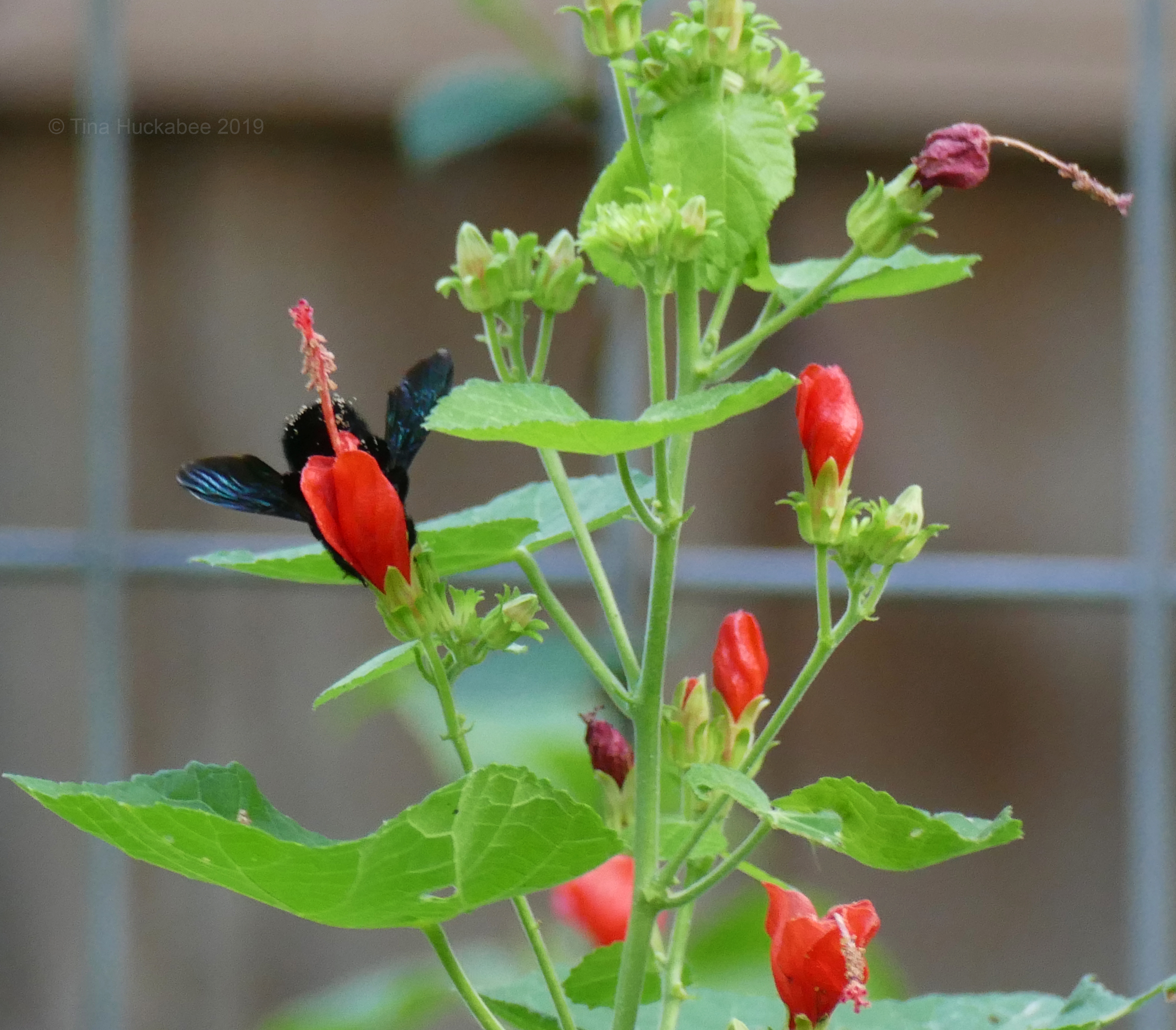
Though “stealing” nectar, the bee is pollinating. Check out the pollen grains on its bottom and wings. The pollen grains will be transferred to other flowers as the bee moves on to other flowers.
The sprinkling of red is a cheery greeting each sultry morning.

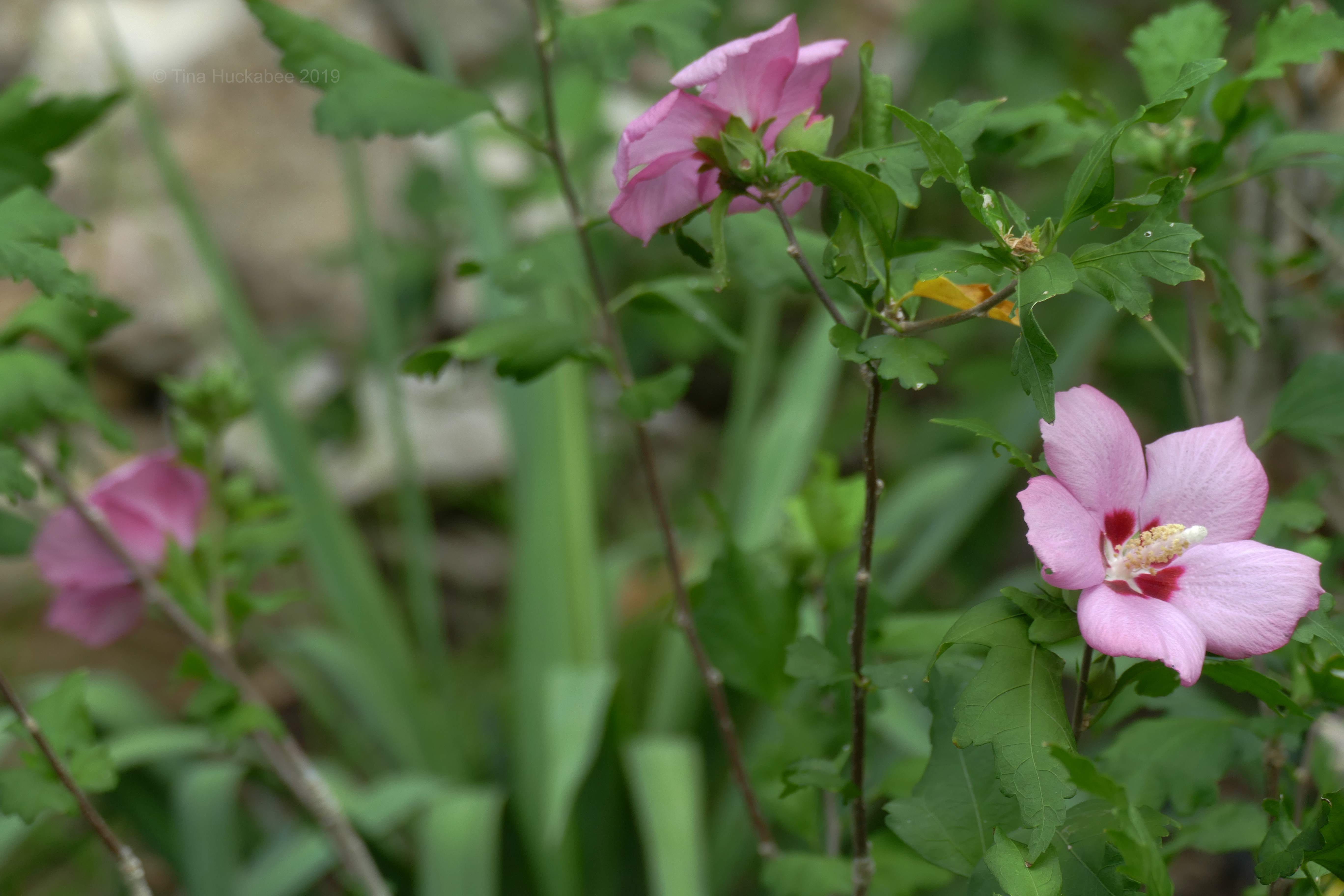
Another August-happy mallow is the Althea, or Rose of Sharon, Hibiscus syriacus. Some (like mine) are simple in petal formation, others are double-petaled and ruffly. I can’t remember what cultivar I have and I’m hopeless about keeping plant tags, especially with impulse purchases–which this was. Regardless, the Althea has proven a nice late summer flowering shrub.
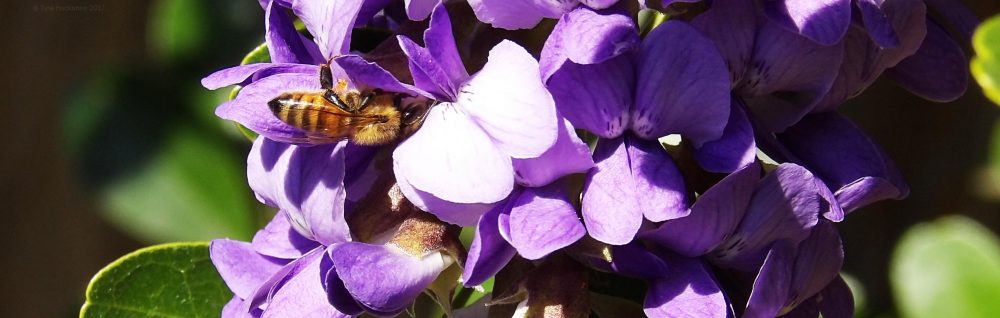
Also, my honeybees are big fans!
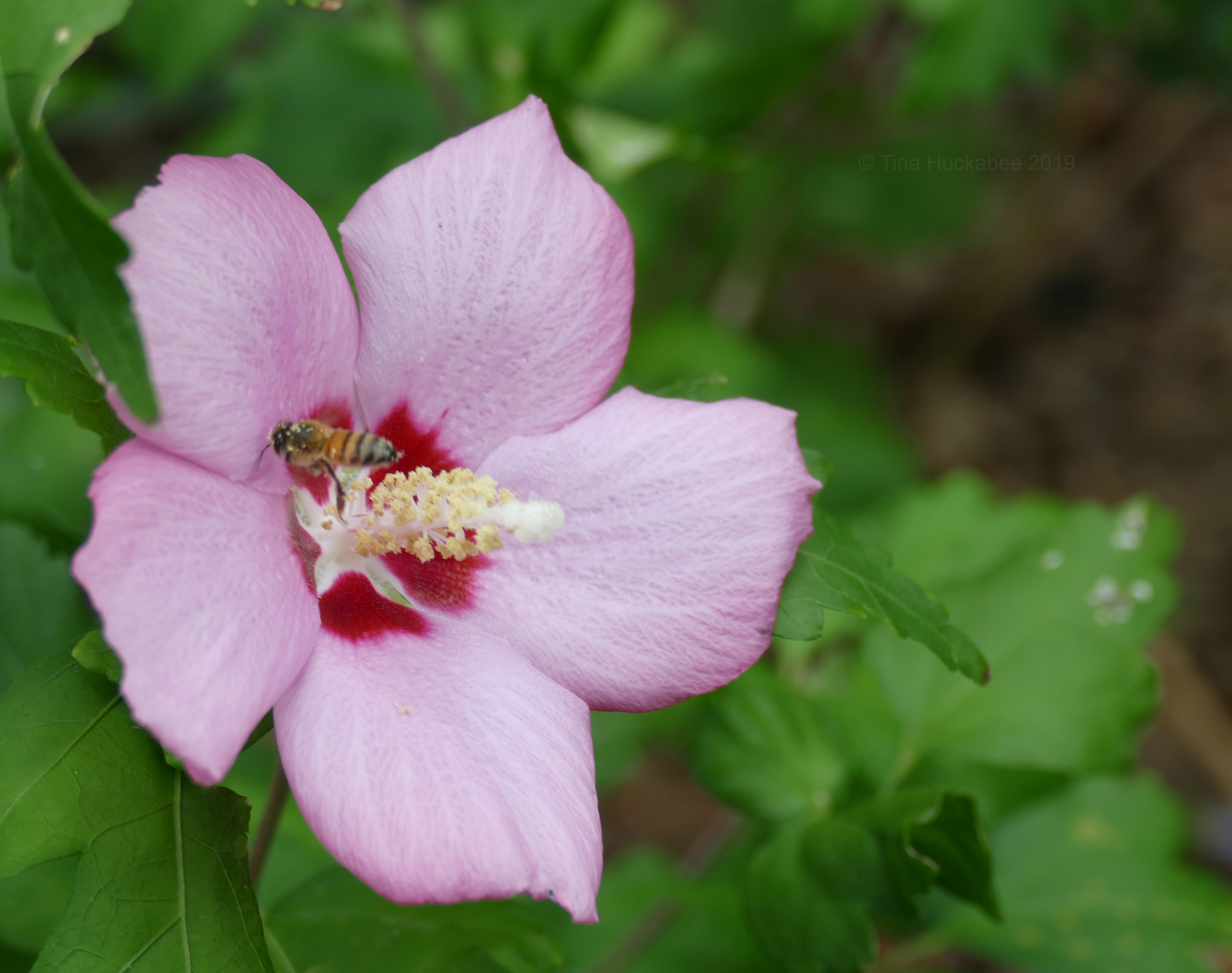
I grew up in Corpus Christi, Texas along the Gulf of Mexico. My mother grew a number of these lovely shrubs–pinks, whites, lavenders– in her garden and I always wanted one of my own. The Althea is typically a great bloomer after rains, awash in sweet lavender goodness. There hasn’t been a drop of rain since early July and I water sparingly, but the lavender ladies are open everyday for business.
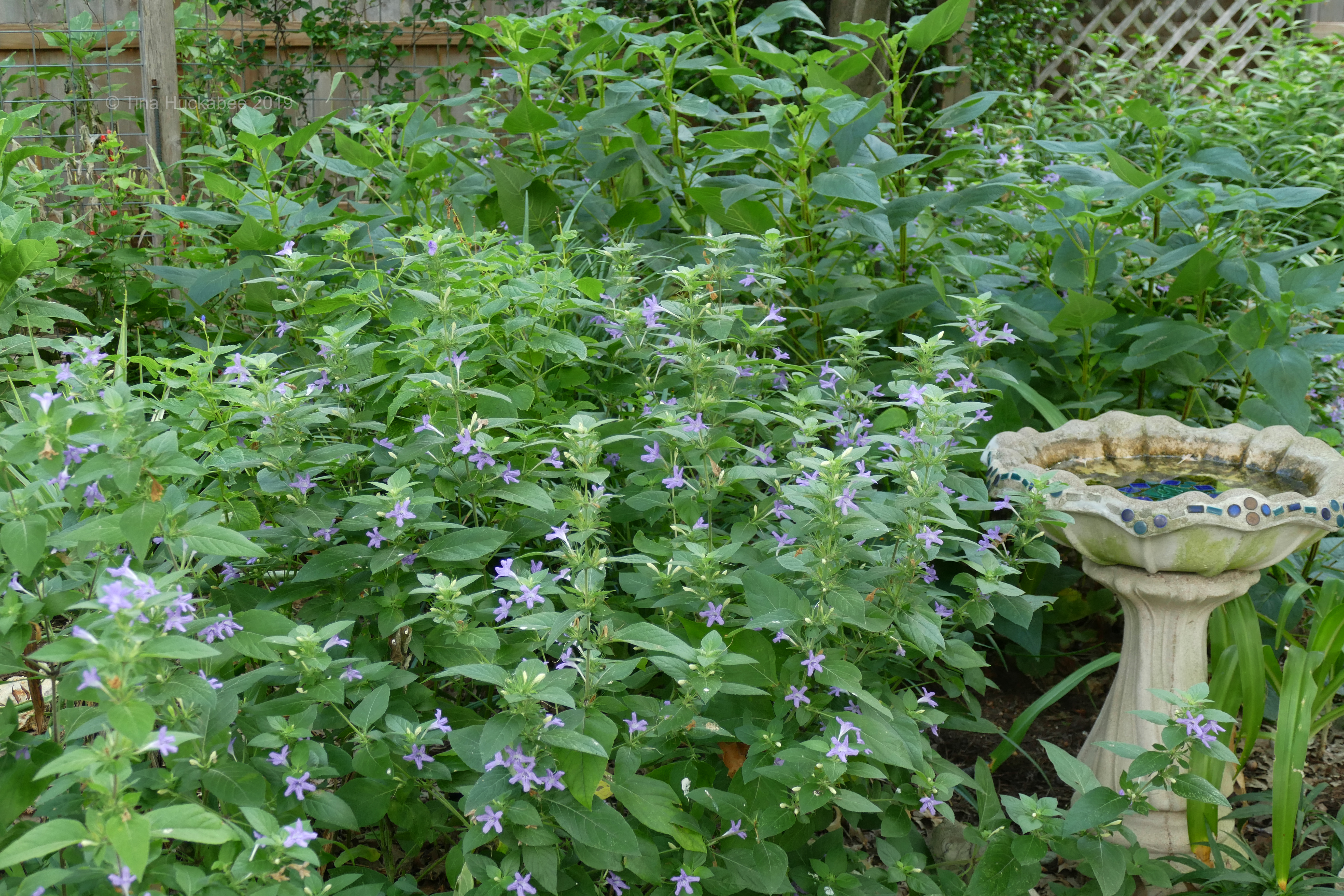
August heralds the purples in my garden: the turning from green to purple of the fruits of the American beautyberry and the blooming of native Drummond’s Wild Petunia, Ruellia drummondiana.
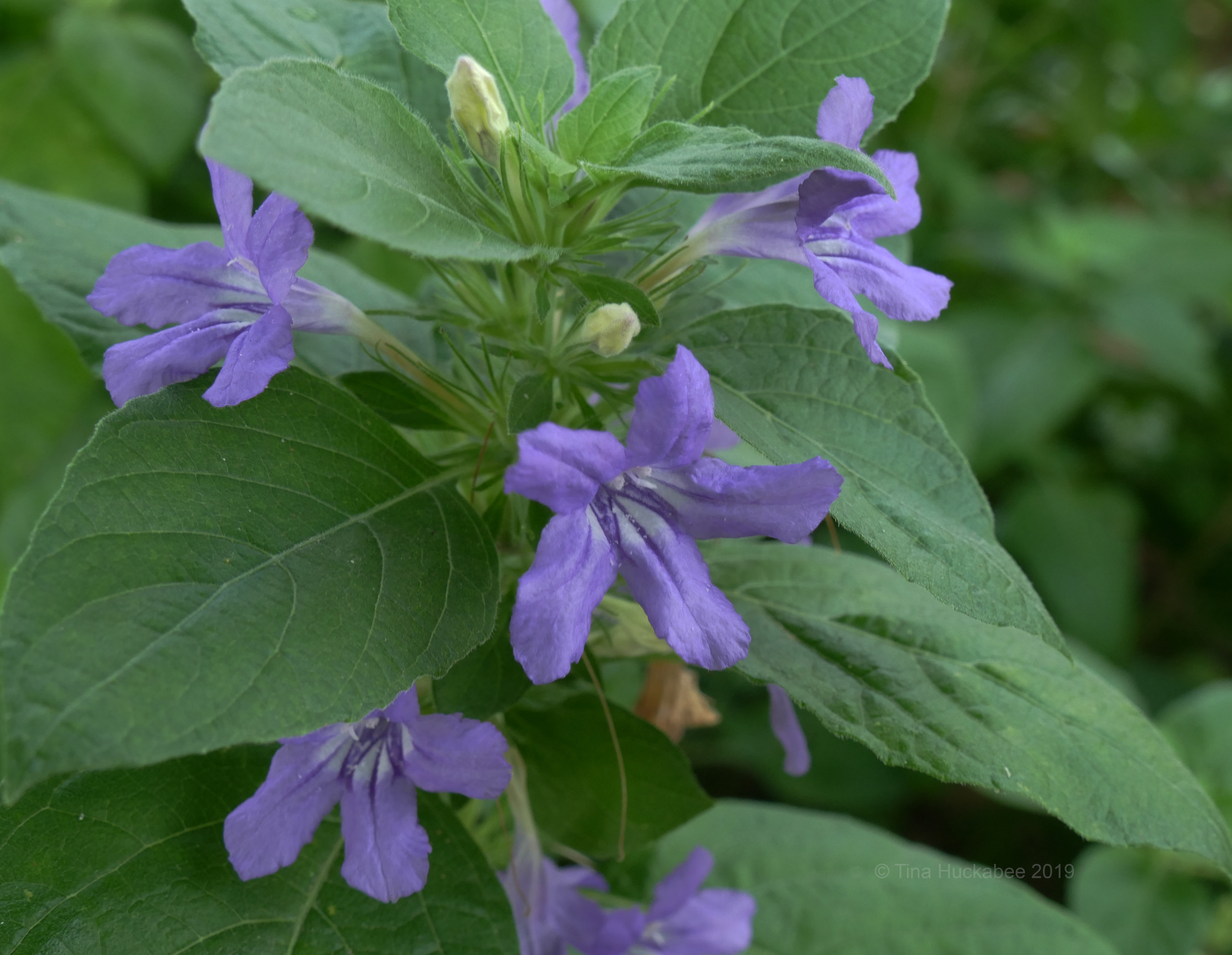
I became enamored with this perennial when I managed a garden where it grew prominently in shady areas. I left for vacation one late July-August during the typically hottest and driest time of the year and just before I left, the automatic sprinkler system stopped working and wasn’t repaired until after I returned two weeks later. Needless to say the garden was dry with wilted, unhappy plants all around–except for the ruellia. Not only were the ruellia fresh as daisies, but blooming their ruellia hearts out.
That’s a plant I want!
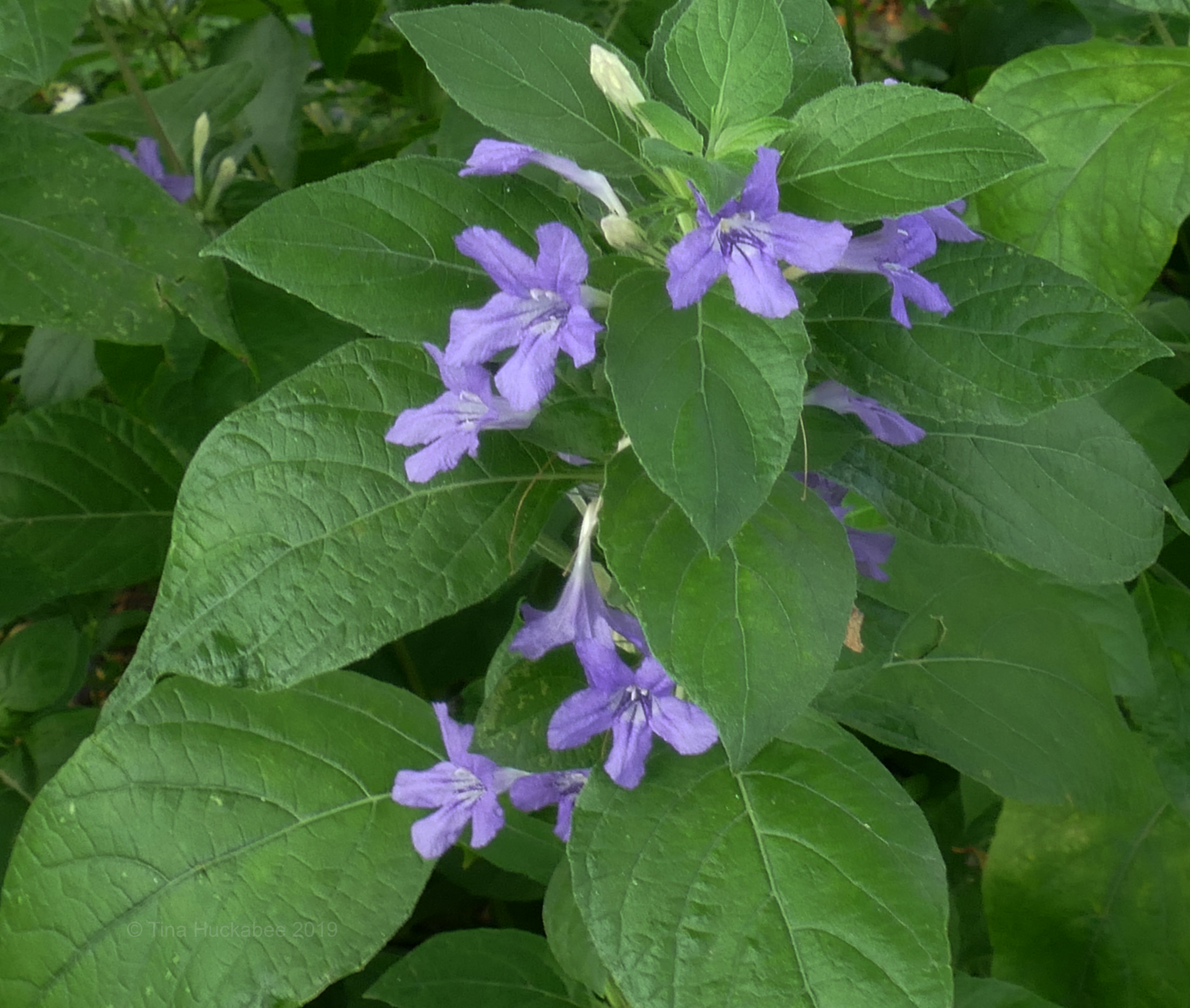
I collected some seeds and while it took a few years before I enjoyed my own wild petunia fest, they’re now a true staple in my increasingly shady garden.
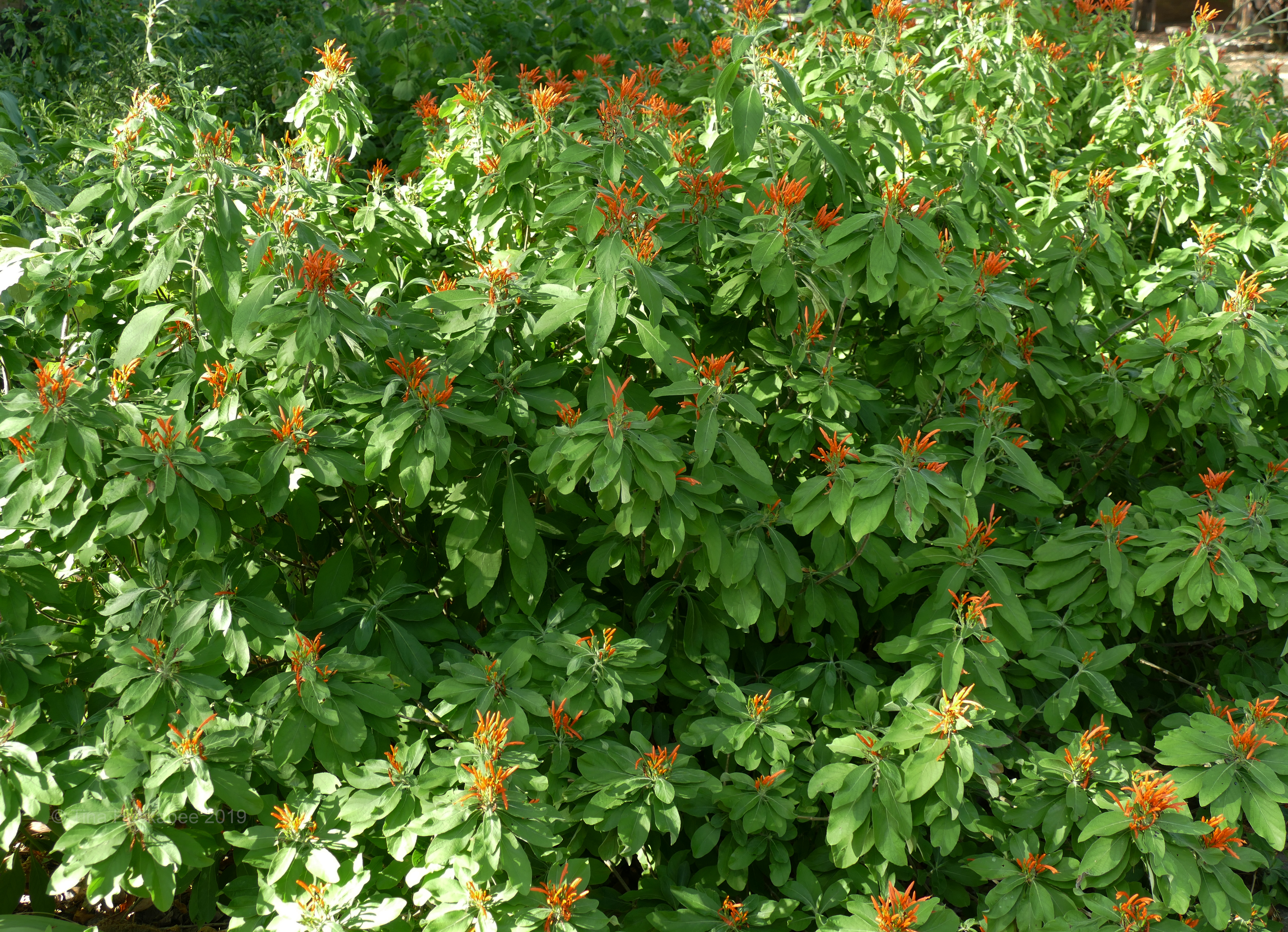
Another excellent shade-to-part-shade bloomer which scoffs at heat and drought is the Mexican Honeysuckle, Justicia spicigera.

Mexican Honeysuckle is a funny plant in that it doesn’t have particular bloom period. I’ve seen it bloom in deep winter, early spring, late fall, and at the height of summer–it seems to do what it wants, when it wants. You have to admire a plant that blooms on its own schedule.
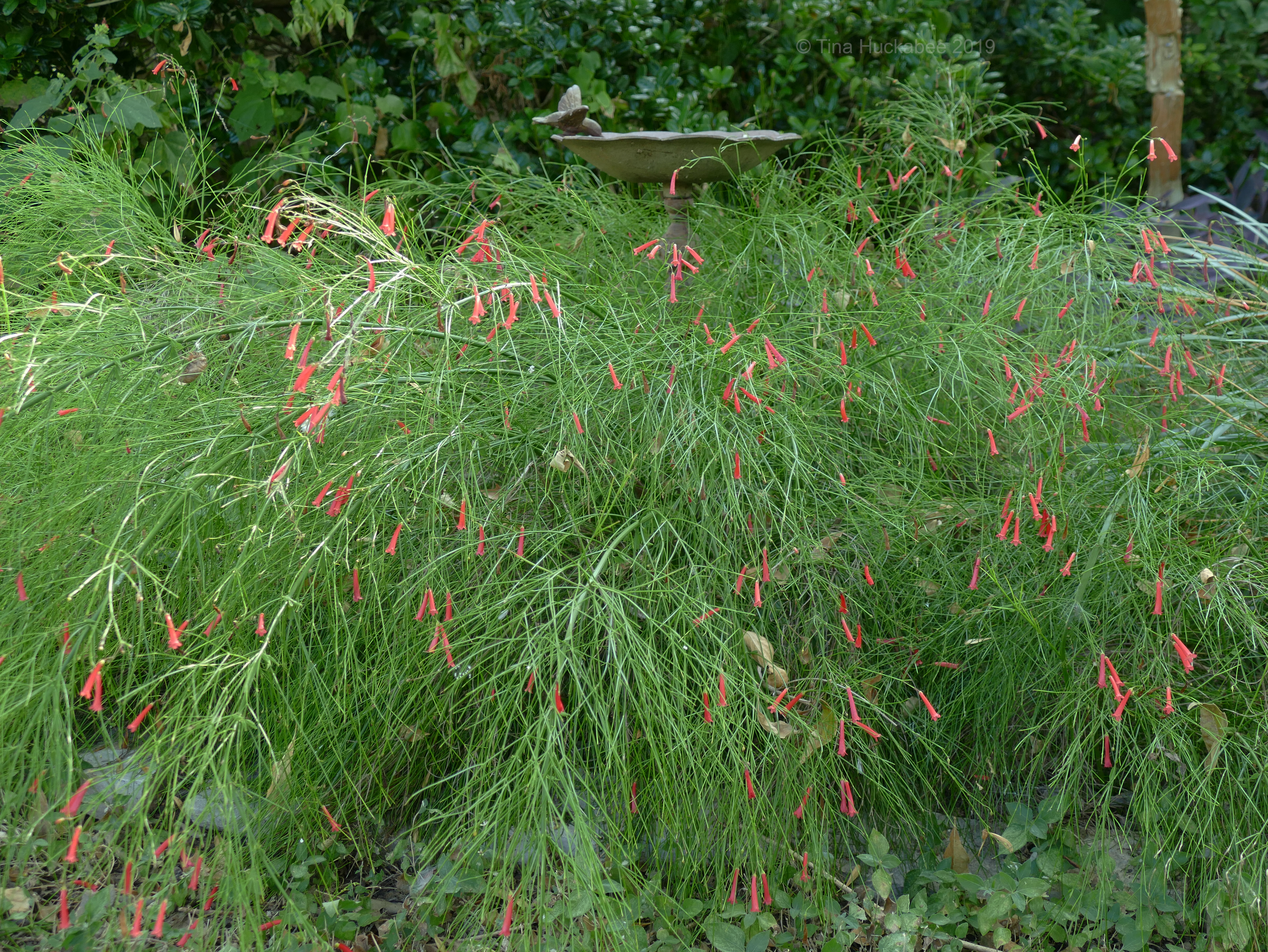
I grow Firecracker plant, Russelia equisetiformis, primarily for its ferny foliage, but when the tubular crimson flowers appear, it’s a treat. Tiny native bees also love the flowers, but are hard to catch with my camera.
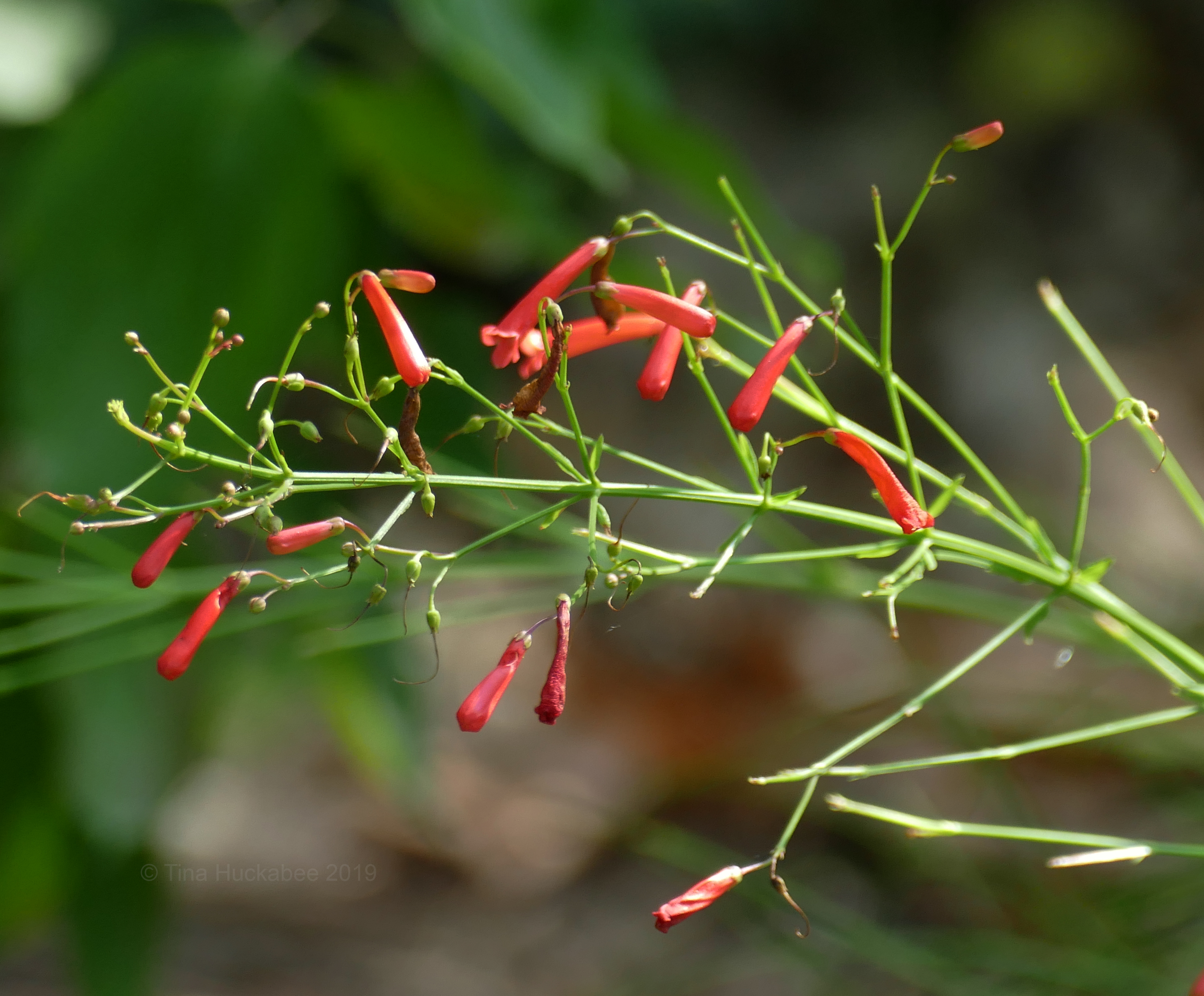
Early morning August sunshine highlights unopened firecracker blooms.
This is the last hurrah for the Big Red Sage, Salvia penstemonoides. It’s a beautiful summer bloomer, but is nearing its seasonal show for the year. I’ll leave the bloom stalks for a little longer, just in case a bird might fancy a seed snack. I look forward to their magenta magic next summer.

The Big Red sage rocks a deep, dramatic color, but the blooms of Branched foldwing, Dicliptera brachiata couldn’t be more different. I have no idea where this plant came from, I’m assuming a nice bird deposited a seed or two in my garden at some point. It took a while to identify the plant when I first noticed it growing and blooming several years ago. I look forward to seeing the delicate little flowers each August and September.
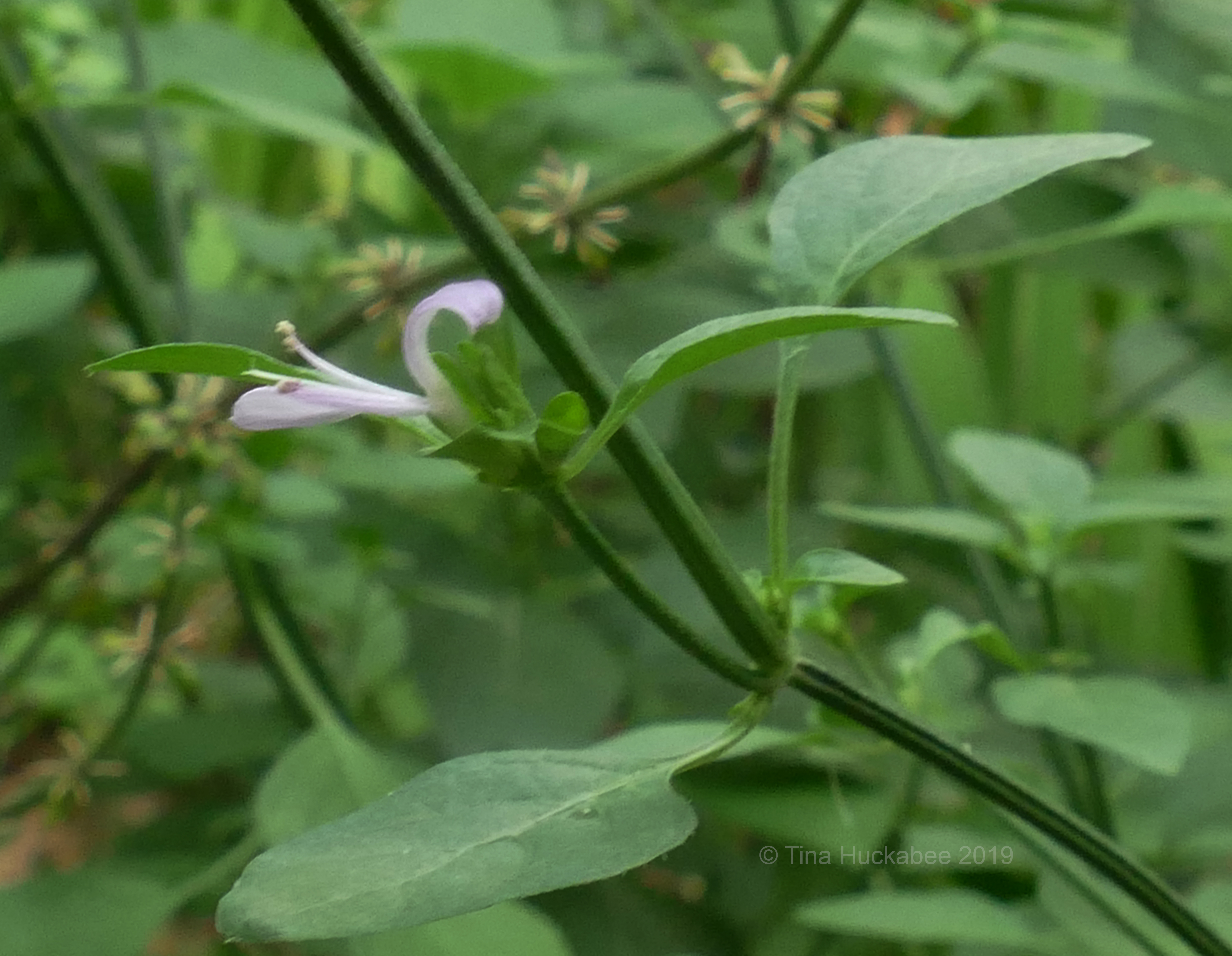
The flowers are the opposite of ostentatious. In fact, I have to search for the little blooms as they’re hidden among the foliage.
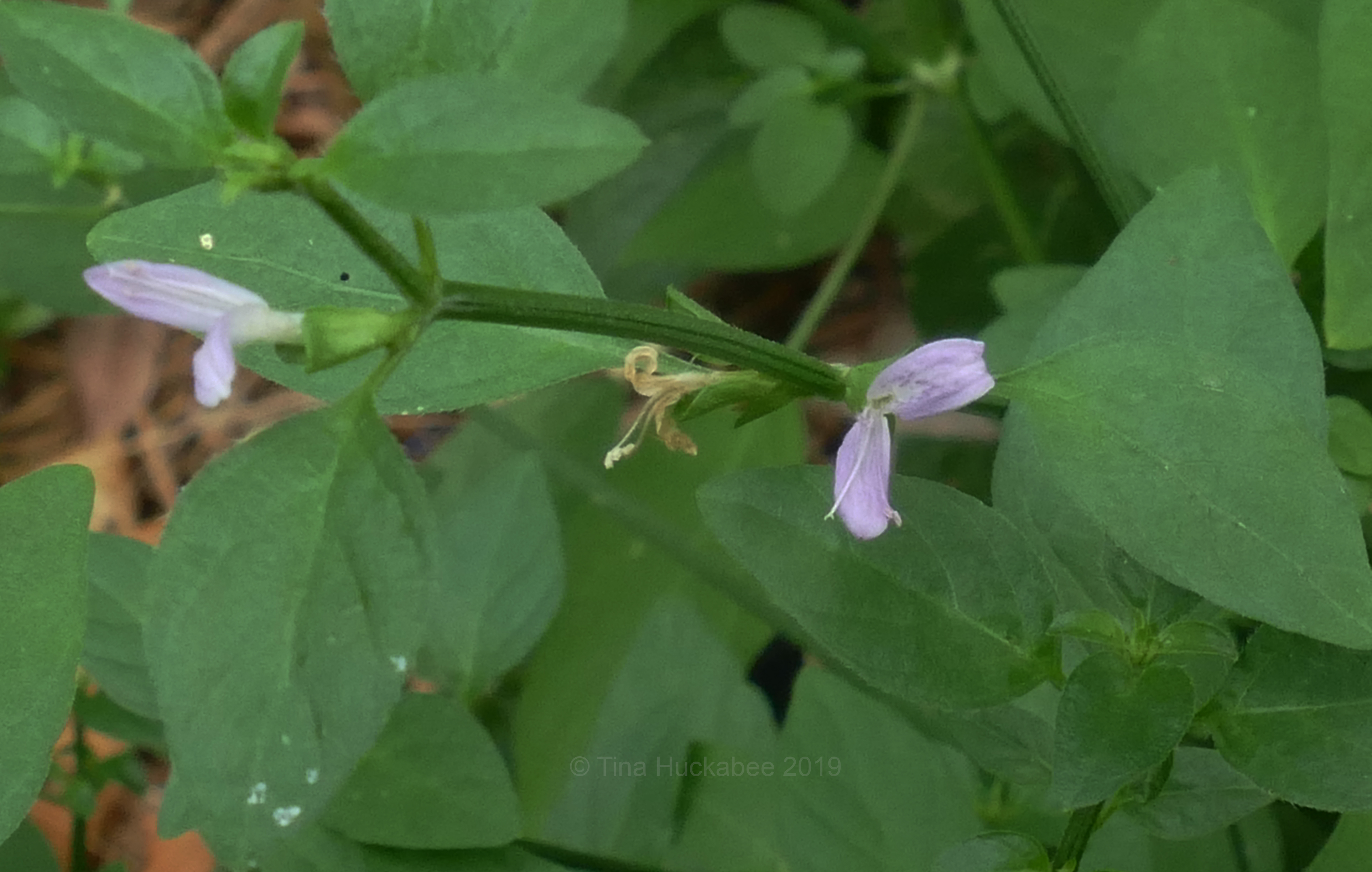
Back to the bright are the bougainvillea that I grow in containers. I’d prefer to keep them on the patio overlooking my back garden, but shade is the name of the game there, so along the driveway they sit, soaking in sunshine and calling attention to themselves.
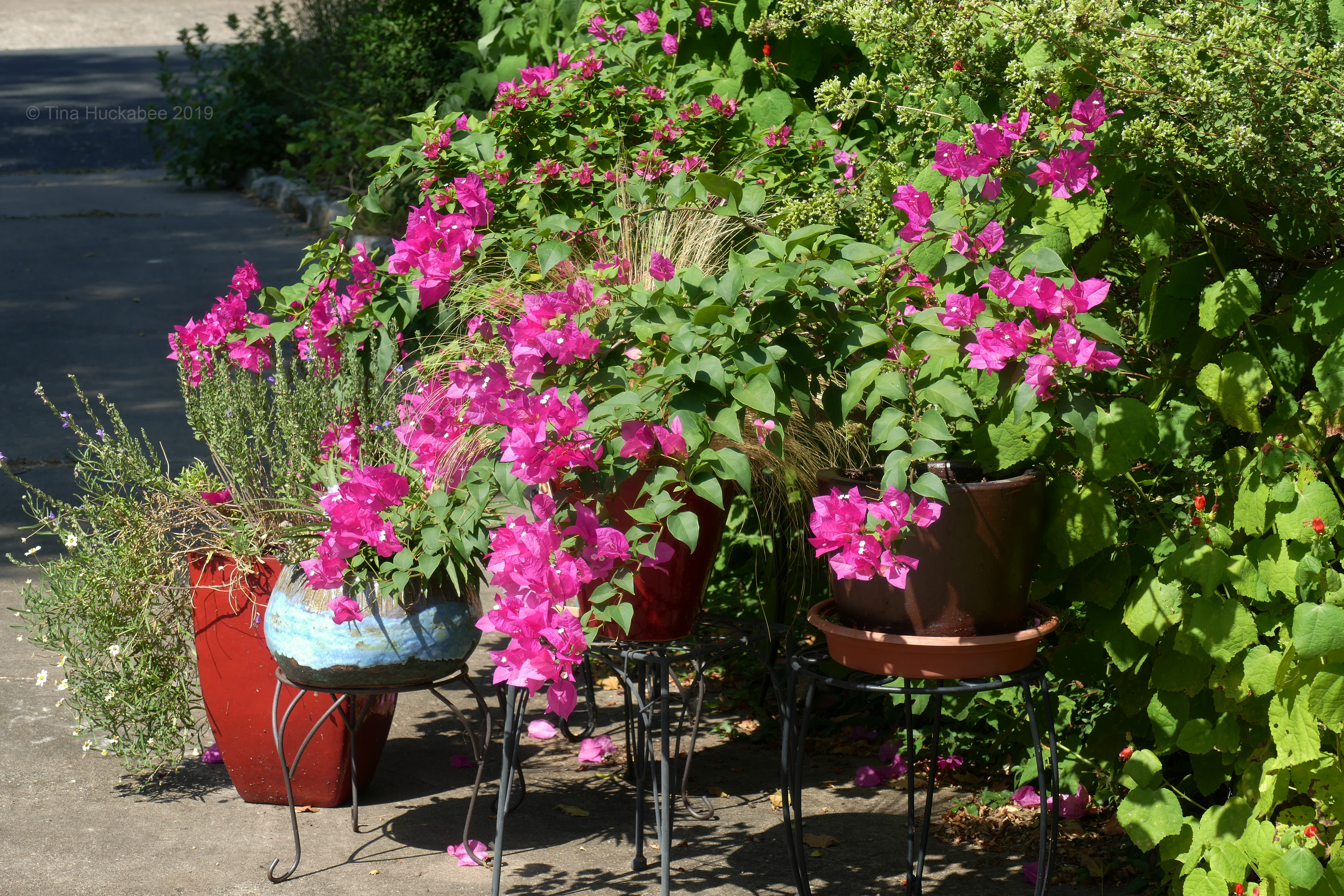
This particular bougainvillea grows in an upright form, rather than with more typical arching branches.
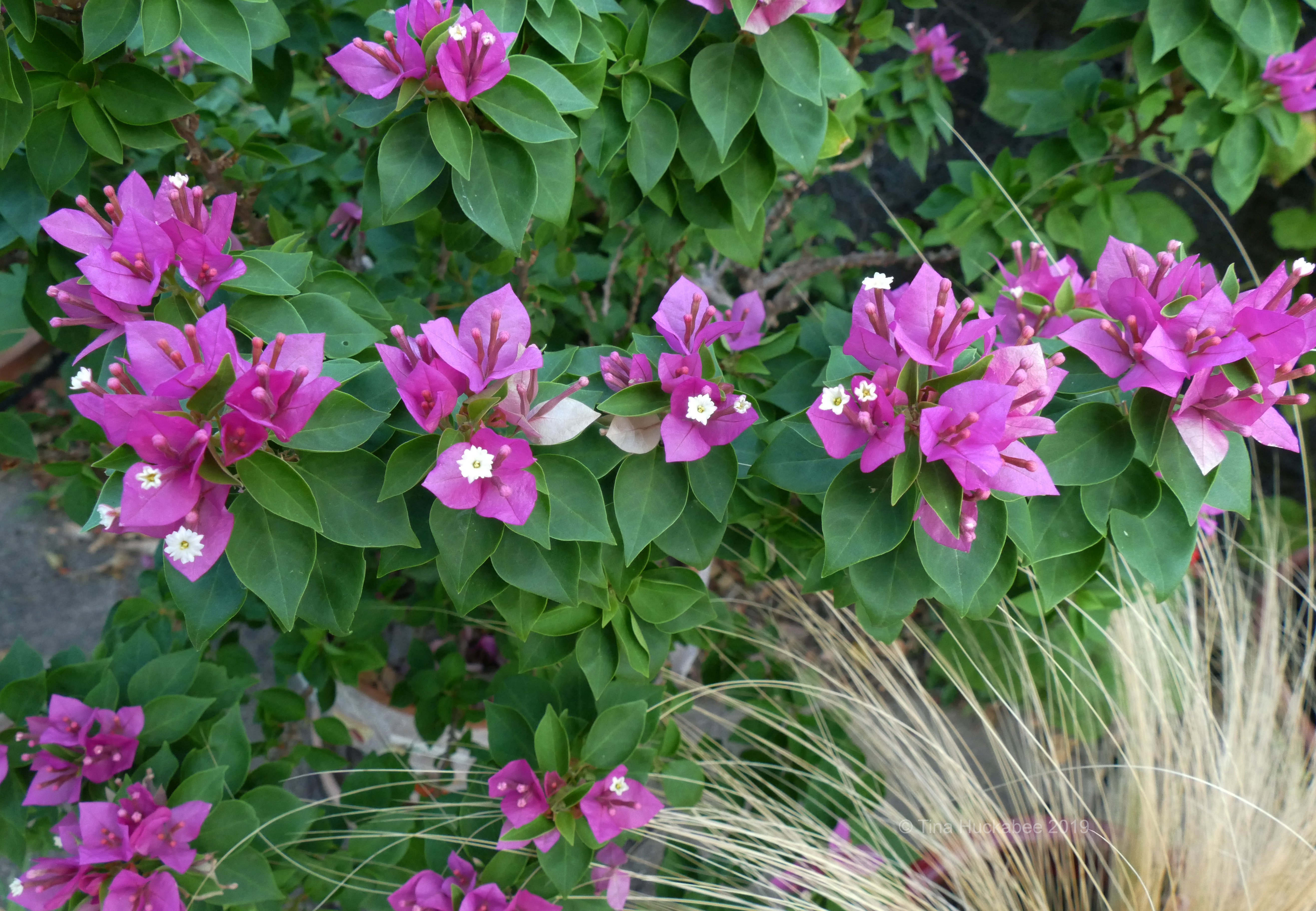
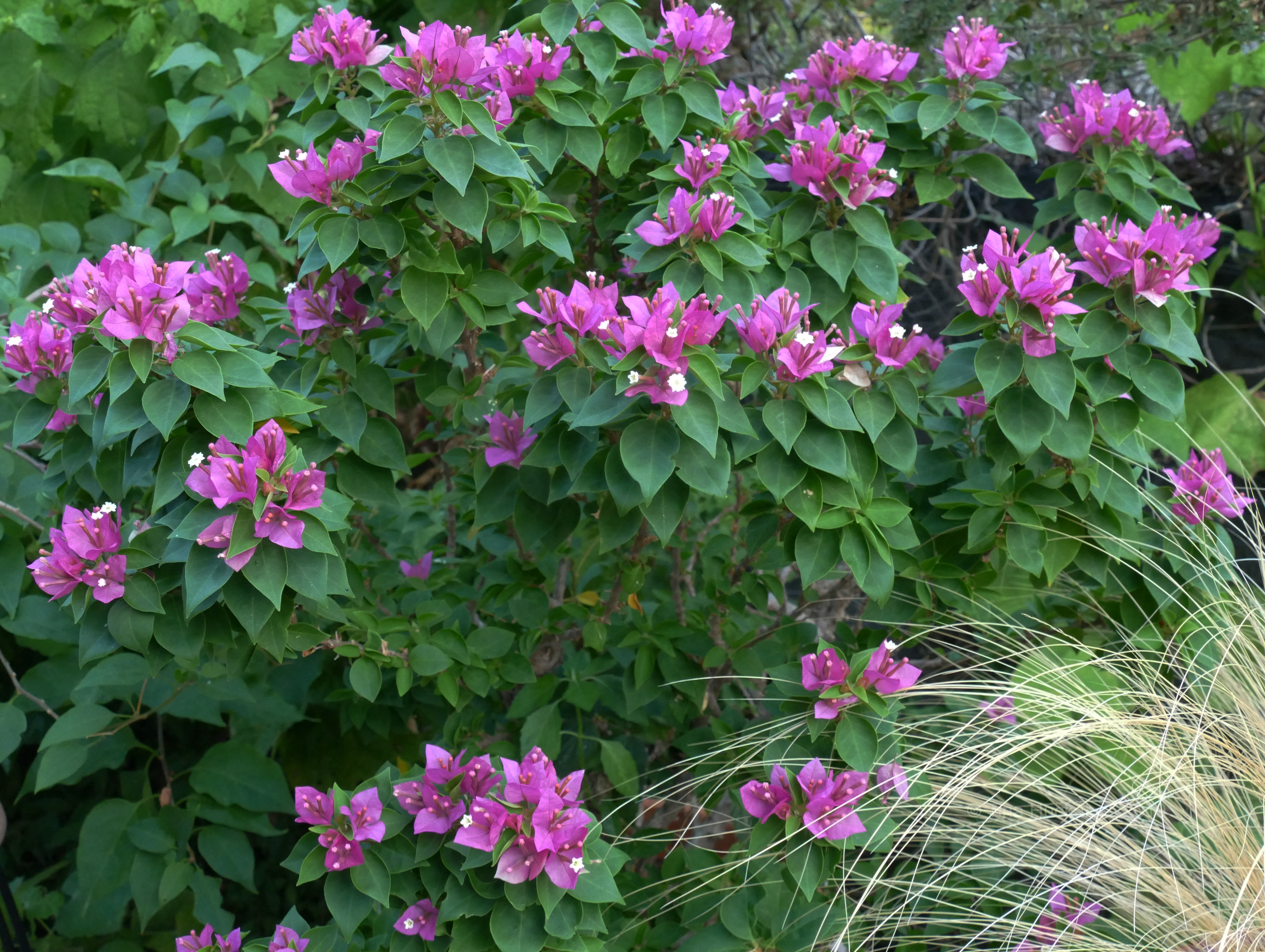
My mother-in-law gave me this bougainvillea 20-some years ago and I’ve kept it going since. I root prune every few years in early spring when I remove the bougainvillea from its garage winter home.
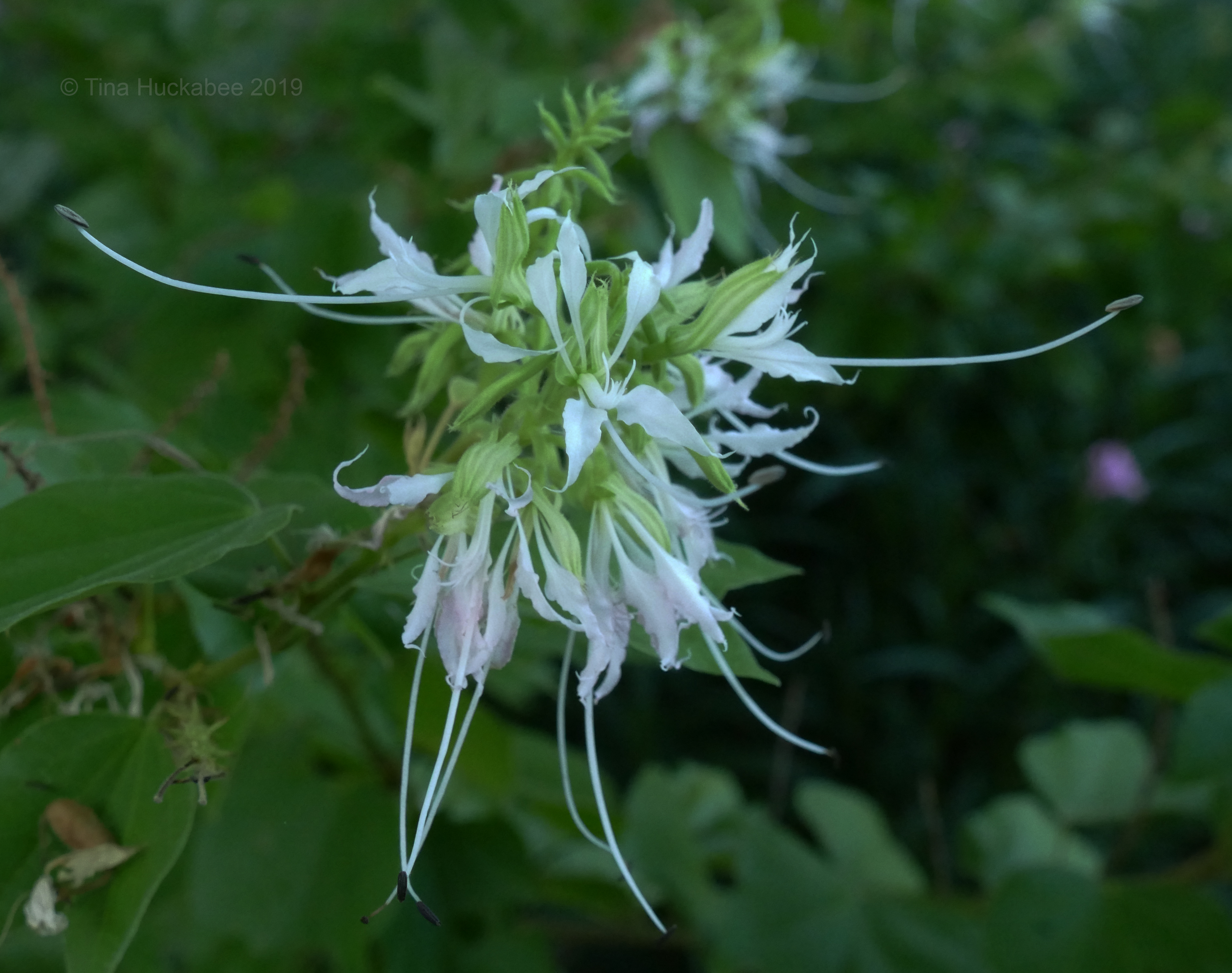
Since it’s been so hot, I’ll finish with some cool white. The two Mexican Orchid trees, Bauhina mexicana that I grow have provided spidery beauties all summer with no breaks in blooming.

The little trees are really rangy shrubs and are drought and shade tolerant. Large butterflies and a variety of bees are constants at the blooms. This particular tree’s flowers are white with a subtle hint of pink, whereas its mother plant, my other orchid tree, produces pure white flowers.
August is a tough month here in Texas, but there are blooms which make the late summer heat bearable. Please check out The Blooming Garden for profiles of monthly blooms and remember fellow Texans–autumn is just around the corner.



 My Gardener Says...