Wildlife Wednesday, February 2016: Bee House Buzz

It’s the first Wednesday of the month and time to celebrate those wild things who live in, visit, and NEED your garden!  Welcome to Wildlife Wednesday for February.   I’m still enjoying my backyard birds for Cornell Lab, but didn’t want to bore with the usual suspects from last month, though I have witnessed a Sharp-shinned Hawk, Accipiter striatus, visit a couple of times, no doubt looking for a tasty bird meal.  I was too excited to grab the camera, so there are no pics of that gorgeous raptor staring hungrily at the White-winged Doves.

Because it’s deep, dark winter,

Blog_10

…or not, I thought I’d share a project that Bee Daddy and I undertook this past year.  It’s not related to our honeybees this time ’round, but to our beautiful native bee residents. I’ve long left well-aged wood in my gardens so that bees can make a home for their offspring.    It’s easy to do:  leave wood out in the garden for bees to find.

IMGP6663.new

They drill into the wood,

IMGP6758.new

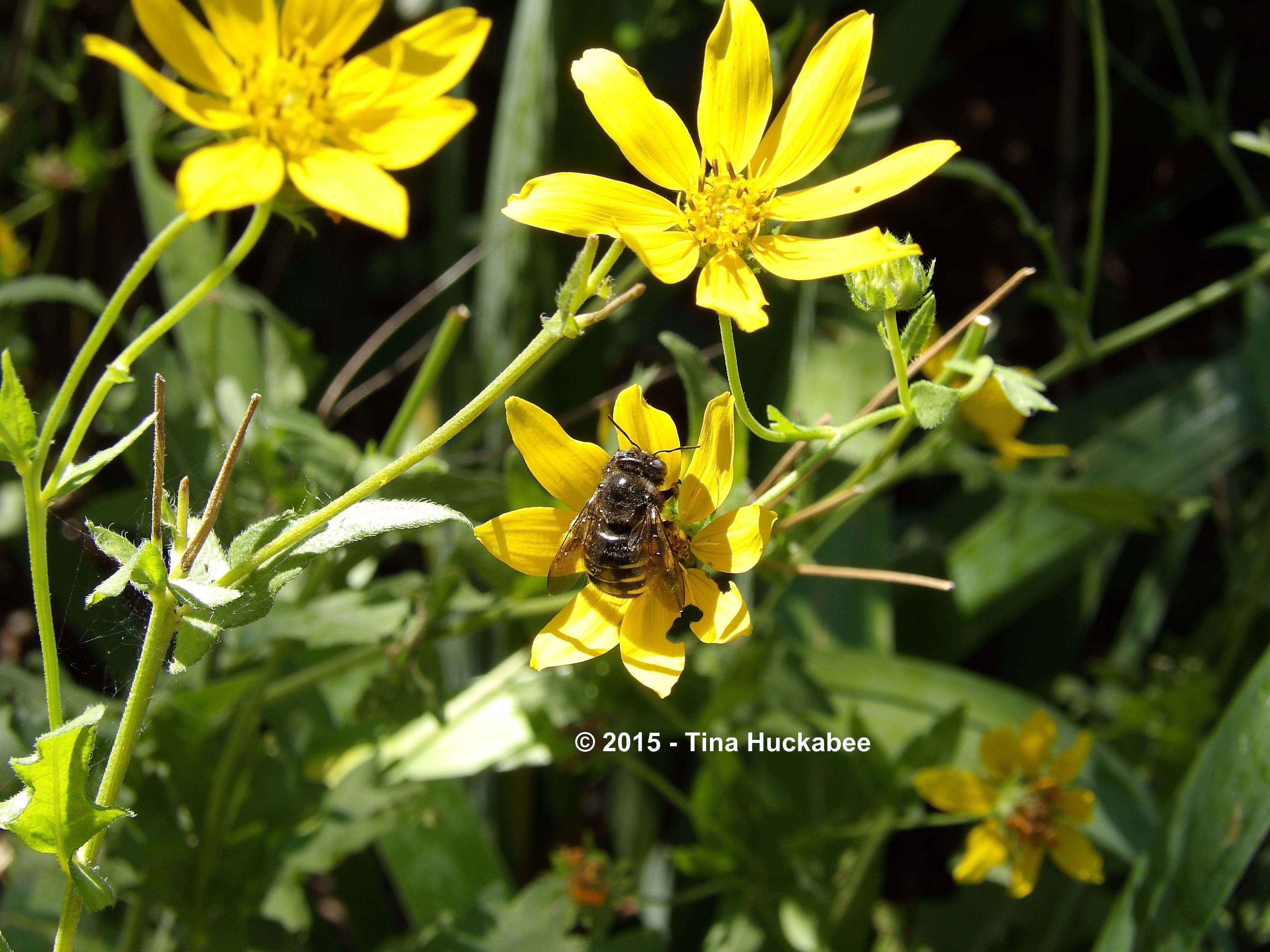
…to lay their eggs and then tuck those eggs in with pollen, soil, and such, and voilà,
IMGP8568.new

…more native bees are made.

I do so love my honeybees. But the fact is that honeys are lazy pollinators and if you want bees with pollinating pow-wow, you need to attract whatever bees are native to your area of our little planet.  Native bees are the best pollinators around.  They pollinate food sources (one in three or four bites of food, depending upon your reading source) and approximately 90% of native plants are pollinated by native bees.

Native bees are vital for the health of the world.

According to the US Geological Survey, there are roughly  20,000 native bee species in the world, about 4,000 of which live in the U.S.  They do not suffer the many maladies of honeybees, but we know that they are declining.  The decline comes primarily because of human encroachment on natural areas, the move away from using native plants in home and commercial landscapes, and pesticide use. Additionally, native bees nest  in wood and in open ground–all places and things that most folks rush to scrap in their home gardens. The sterile, pristine landscape paradigm is not kind to wildlife–of any sort–but it’s especially unkind to native bees.  Wild bees need wild space. There’s not much we can do about urbanization, but gardeners can easily make our home landscapes amenable and attractive for these incredibly valuable and fascinating insects.

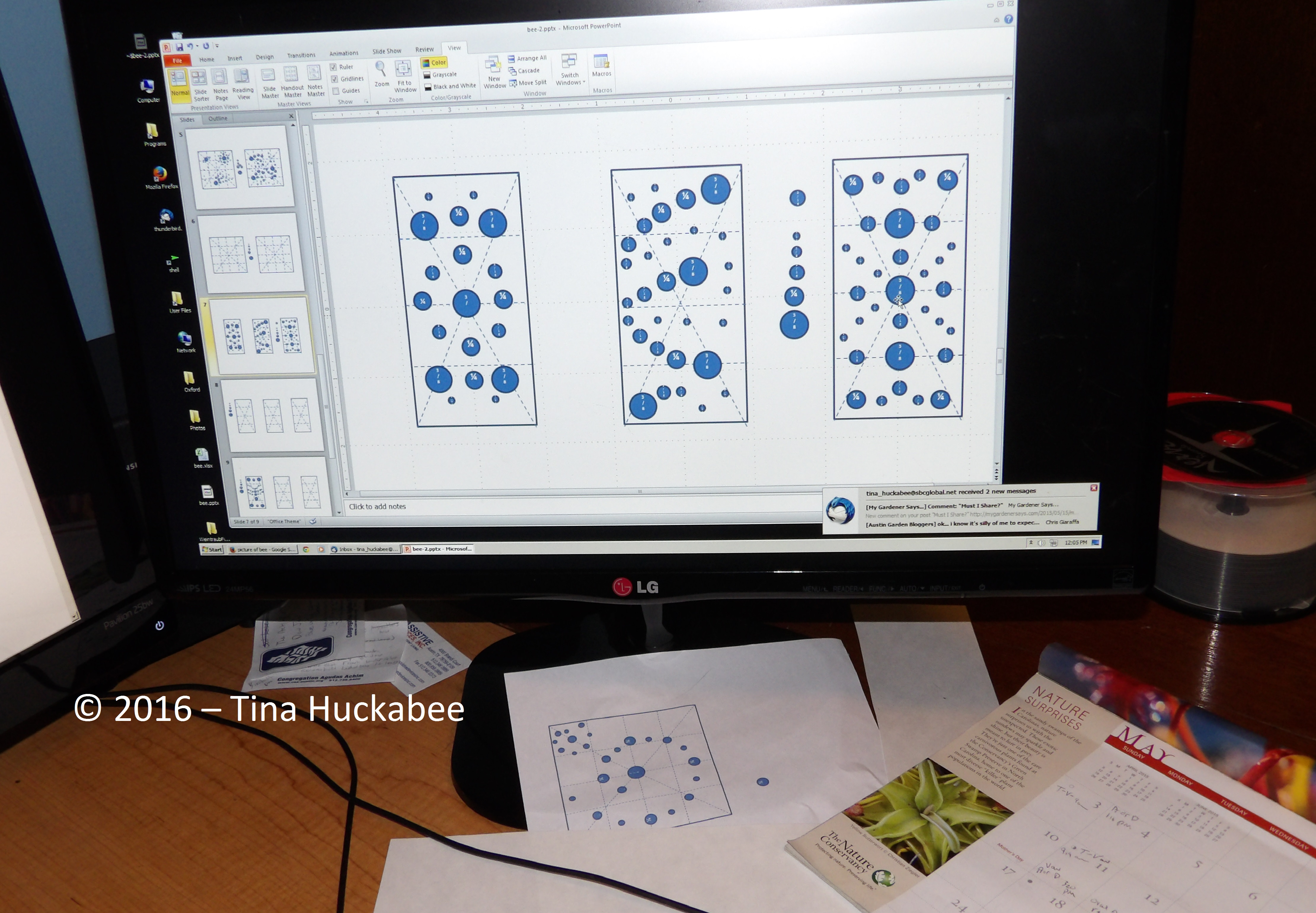
Last spring, Bee Daddy and I designed templates for wood cuts of varying circles sizes and patterns on the computer,
imgp8235-newjpg.jpg

blog_15.jpg

…that we (okay, Bee Daddy, not I) then drilled into cut, untreated wood.

Blog_03

Blog_02

The wood doesn’t need to be expensive (Bee Daddy used inexpensive fence pickets and 2×4 boards), but it shouldn’t be treated with any chemicals. Remember, we’re trying to make nice homes for bees, not homes laden with icky, insect unfriendly chemicals. You want to drill a variety of circumference sizes as well as varying depths for the holes in order to attract different species of bees.

Additionally, we (okay, Bee Daddy, not I), cut various sizes of bamboo (harvested from a friend’s home who was glad to share) to insert between the holey wood.

Blog_01

Ta da!!  A bee/insect hotel!  Or townhouse!  Or apartment!  Or condominium! Or nesting box!

wwfeb16_06.jpg

Whatever!!

What this bee house really does is create something cute for gardeners to look at and safe for bees to nest in and nurture their offspring.  Native bees rest-n-nest in  a variety of situations like the ground and natural cavities of wood or even rock. People-made insect hotels have become popular garden-art additions for those wild gardeners wanting to attract even wilder bees, as well as other  important garden residents.

blog_04.jpg

I stacked the two insect hotels for “my” native bees, one on top of the other, with both popped atop an unused and upturned terracotta pot.  Many insect hotels are free-standing and some are made to hang on fences or posts.The insect hotels can be as elaborate or as simple as your time and interests allow for.  My bee condo is situated in a shady spot and both stories have a little overhang so that the entrances to the holes are somewhat protected from weather conditions.  The different sized holes  assure that bees of all kinds can find refuge for their young.  Additionally, lizards and other insects will probably use this as a shelter and also to hunt critters who happen by.

Such is nature.

Don’t have a handy honey-do, carpenter-happy Bee Daddy to do the drill-baby-drill part of this project?  That’s perfectly okay. Aged firewood, or smaller, broken or trimmed tree limbs make great homes for native bees–and all you have to do is place these soon-to-be-bee homes in your garden and the bees will come.

blog_08.jpg

blog_05.jpg


Can you see this little gal, squirreled away in her hidey-hole?

blog_11.jpg

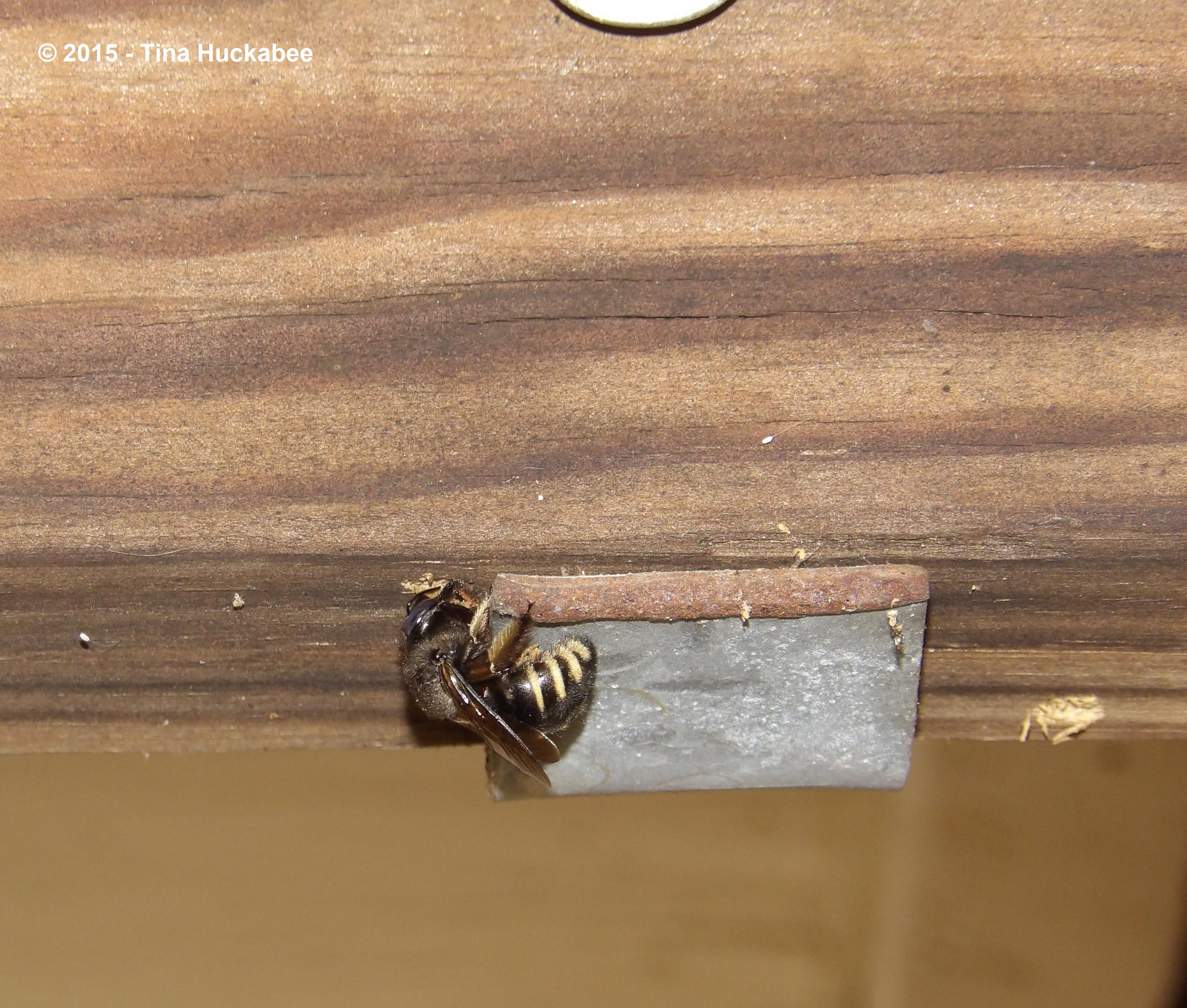
Available wood makes life easier for bees like this female Horsefly-like Carpenter bee, Xylocopa tabaniformis.            .
IMGP6707_cropped_3092x2626..new

IMGP6708_cropped_3442x3170..new

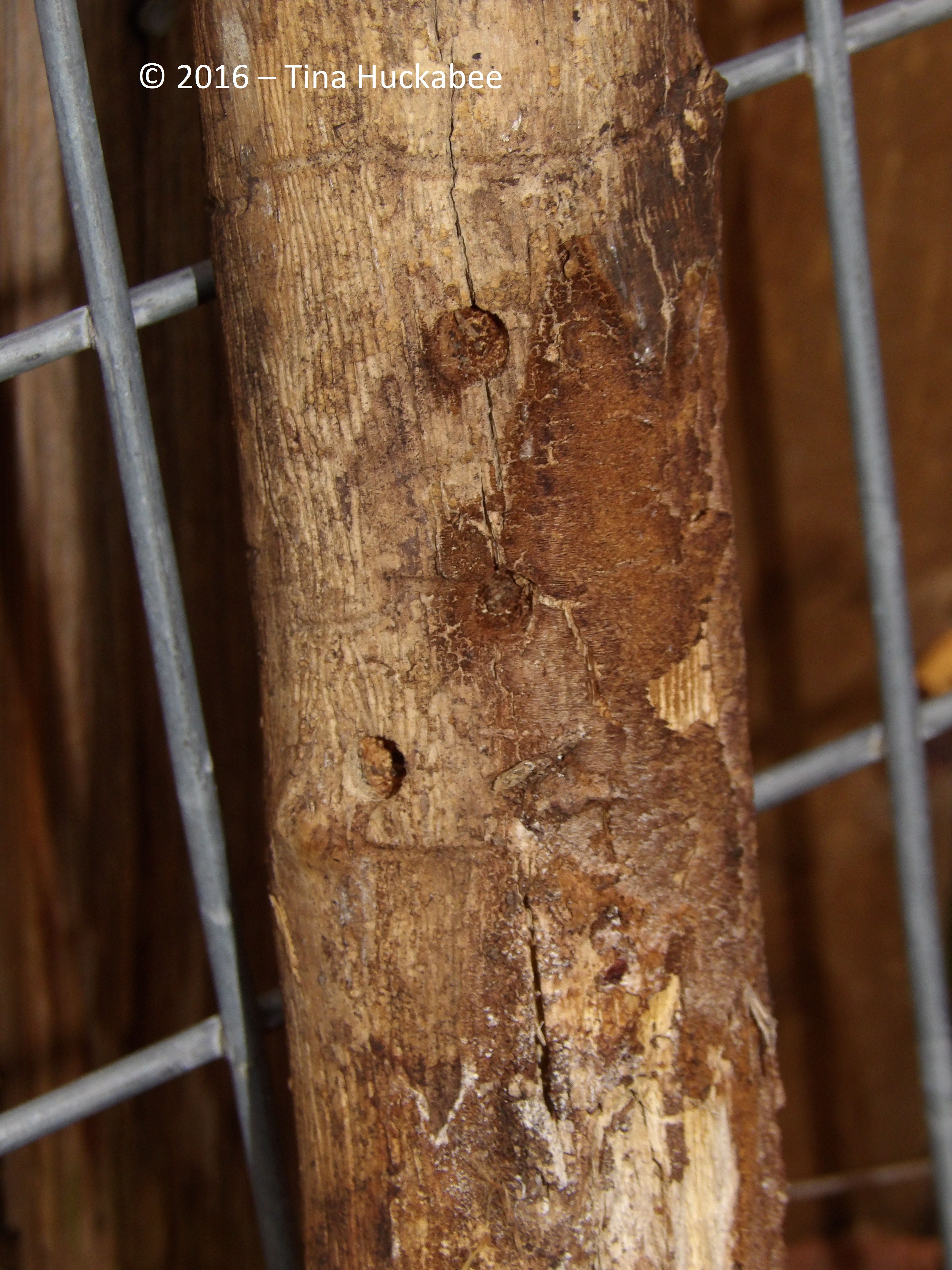
This mother-to-be drilled all afternoon one day last spring, only to abandon her nesting site. I hope she found softer wood here  in which to lay her eggs.
blog_09.jpg

On my back patio, there are holes in the limestone rock that were drilled for shelves that we removed some years ago.  Instead of filling those holes with mortar, I’ve left them open and I’ve seen several species of bees use these holes as nurseries for their off-spring.

imgp4037-new.jpg

blog15.jpg

Nice!  I’m looking forward to viewing whomever emerges from that hole and who will be a pollinating fool all spring, summer, and fall.

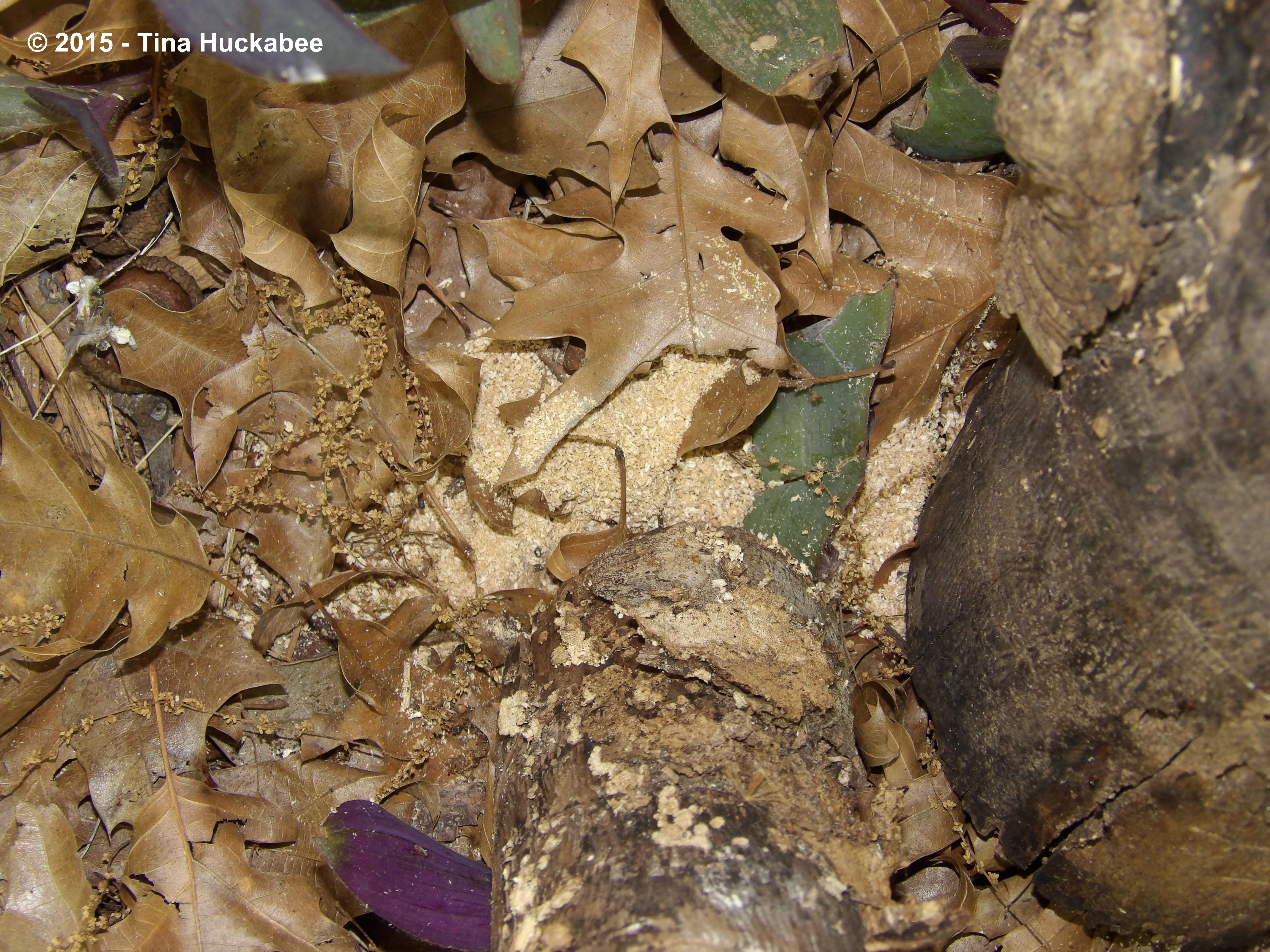
Along with setting out wood or building insect hotels, if there are fallen leaves from autumn, on the ground waiting for “someone” to pick them up–don’t!  Or, at least, leave some leaves on the ground.  Better yet, place that fallen foliage in your gardens.  Many insects, including bees, take refuge in the cover that crinkly leaves and small tree limbs provide.  Plus, the leaves don’t end up in the landfill and  it’s less work for the gardener if the leaves aren’t bagged.

“Less work” for the gardener is always a good thing.

Lastly, don’t be shy about allowing some open dirt space in your habitat.  There’s no garden rule that says every square inch of your property must be mulched, gardened, turfed, or hardscaped.  About half of native bees are ground nesters and some of the most threatened native bees are those that need bare ground, either to over-winter in or to nest in.  You’ll do everyone a favor if there’s a little naked dirt on your property, here and there.

As of now there are no residents in our native bee houses.  Because life gets in the way, it took us a while to complete this project: we made the templates last May, but we (okay, Bee Daddy, not I) finished the frames, bamboo cuts, and holes in November.  I imagine there will be some residents in place by late spring this year.

For more information about building your own native bee/insect house, check out this link from the Xerces Society for Invertebrate Conservation.  There are many Internet sites with information about native bees and how to make insect hotels.  If you have children, this is an especially fun project in which to include them and teach the importance of nurturing wildlife and providing habitat.

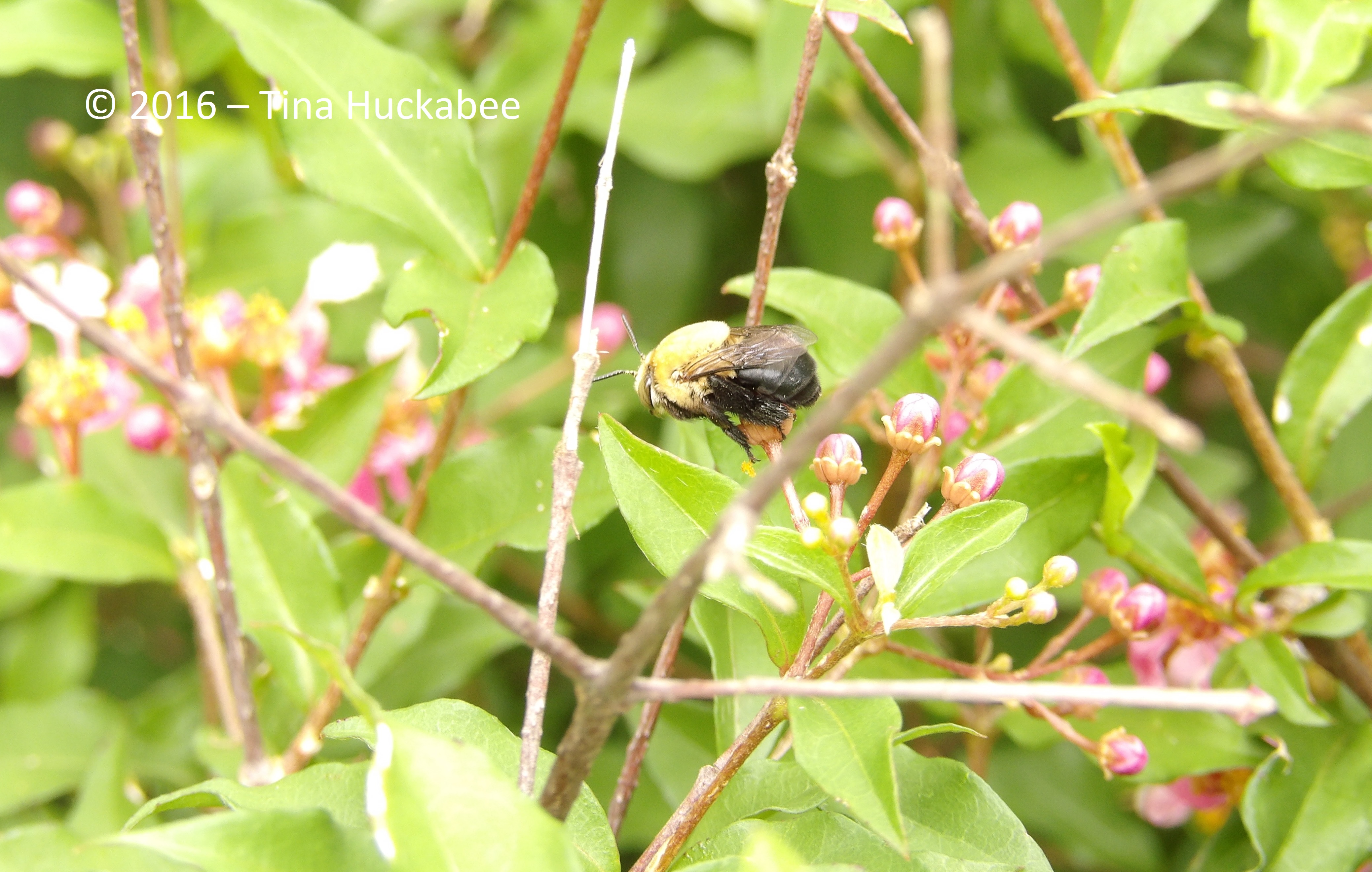
Don’t forget to plant gorgeous native plants for your bee buddies to nectar on.
Blog_13

blog_12.jpg

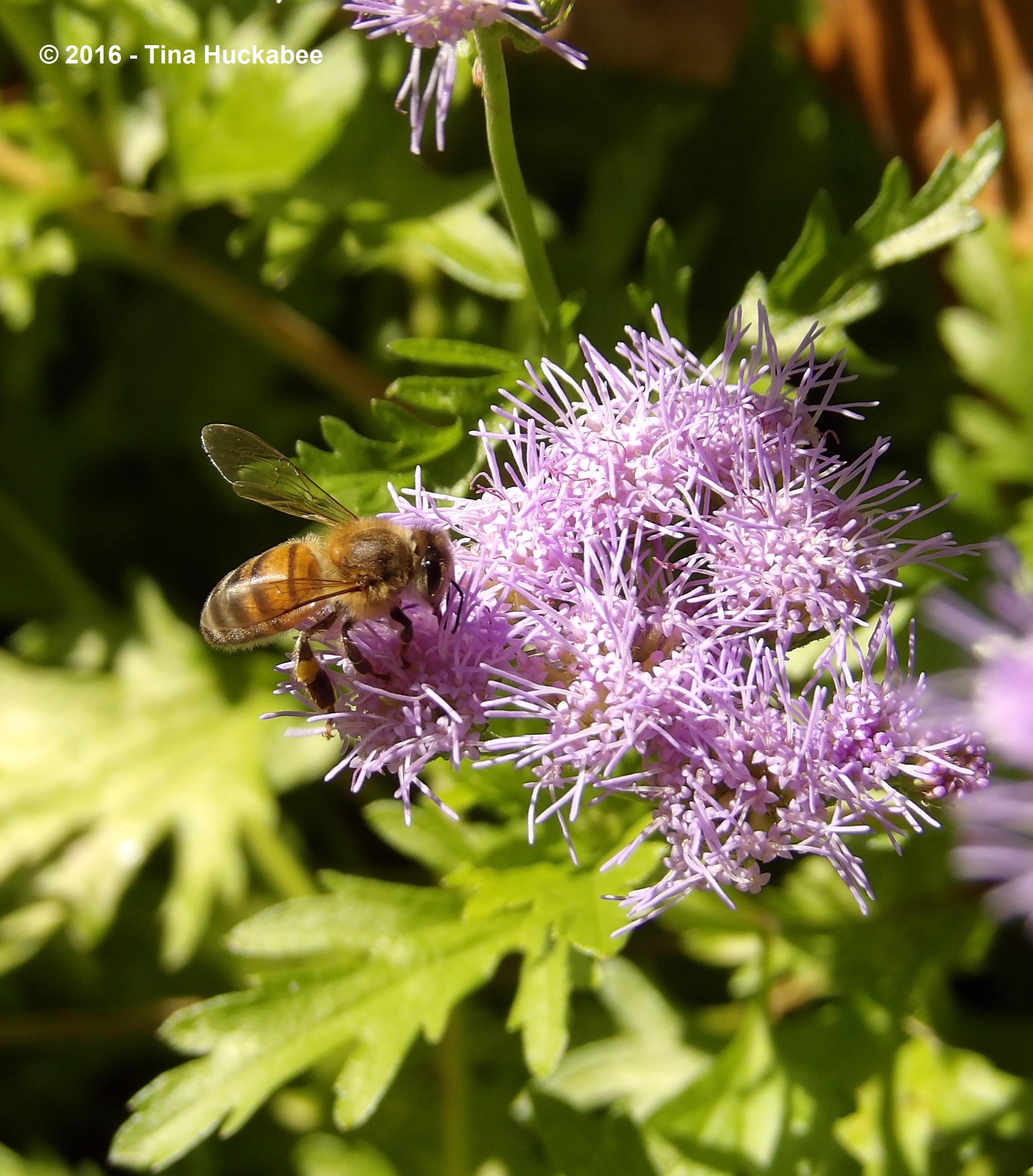
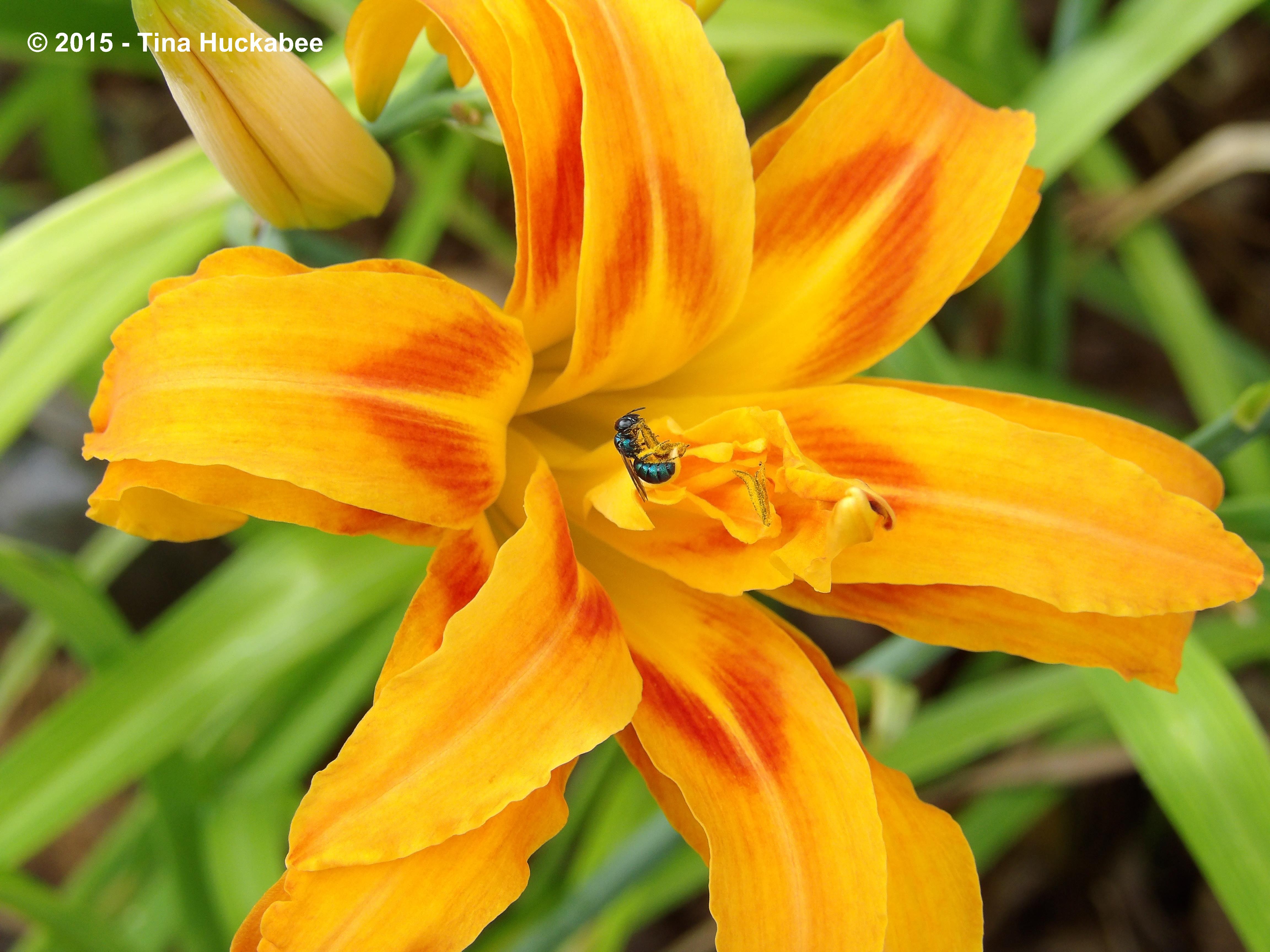
Lovely non-native bloomers also fit the bill and provide for pollinators.
IMGP8897.new

IMGP8367_cropped_3190x3258..new

The world will be a better place for their survival because of your efforts.

Did wildlife visit your garden this past month? Please post for February Wildlife Wednesday–share the rare or mundane, funny or fascinating, beneficial or harmful critters you encounter. When you comment on my post, please remember to leave a link to your Wildlife Wednesday post so readers can enjoy a variety of garden wildlife observations.

Happy wildlife gardening!
Wildlife Wednesday, January 2016: All About Birds

Welcome to a new year, with new beginnings, and new wildlife to observe and learn about.

How exciting!

In my gardens, this past month’s wildlife happenings have been all about the birds.

IMGP3020.new

Yes, I know that’s not a bird.  Nor are these.

IMGP3082.new

IMGP3094_cropped_2608x2968..new


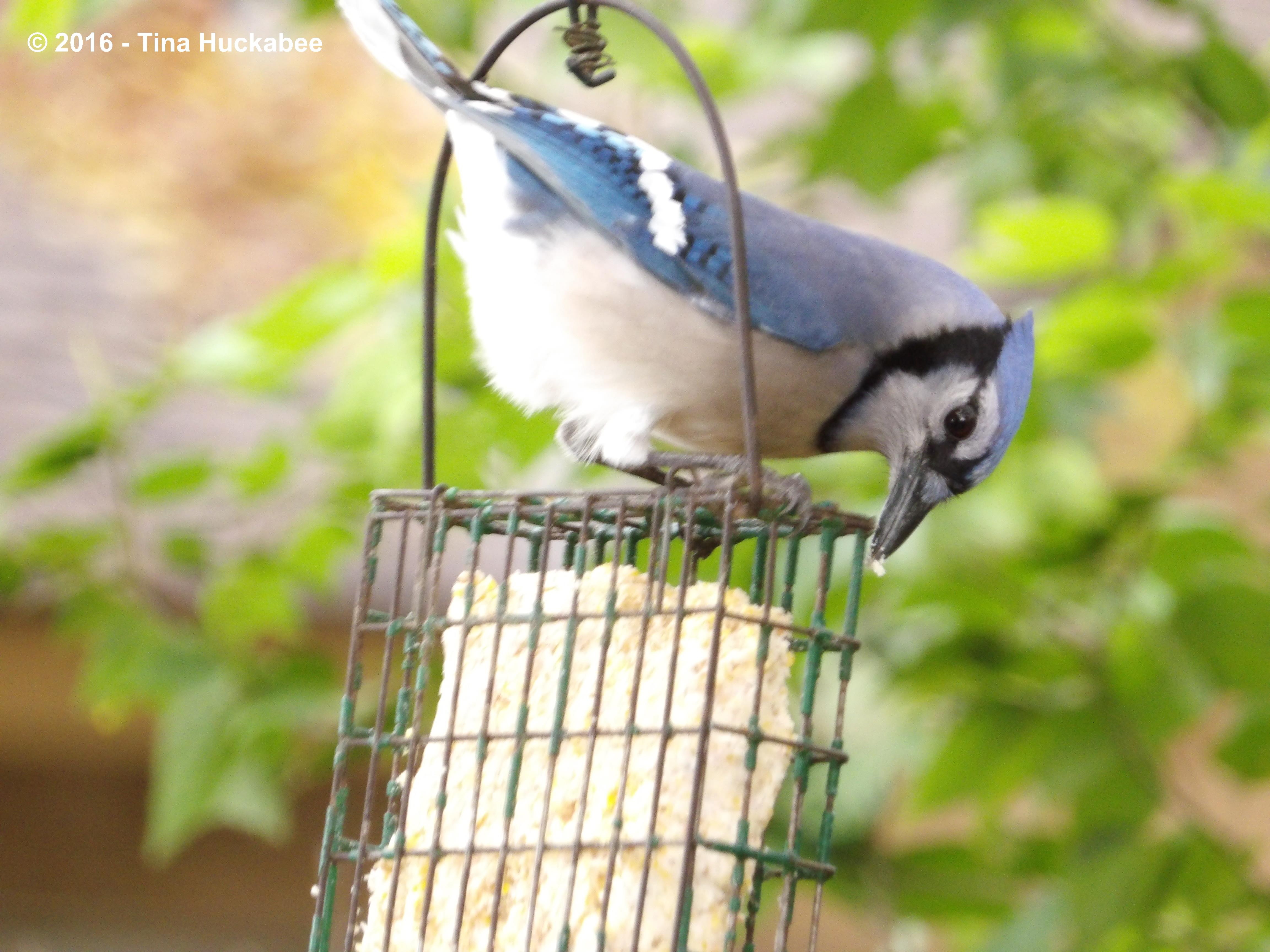
But this handsome devil is most definitely a bird!

IMGP3278.new

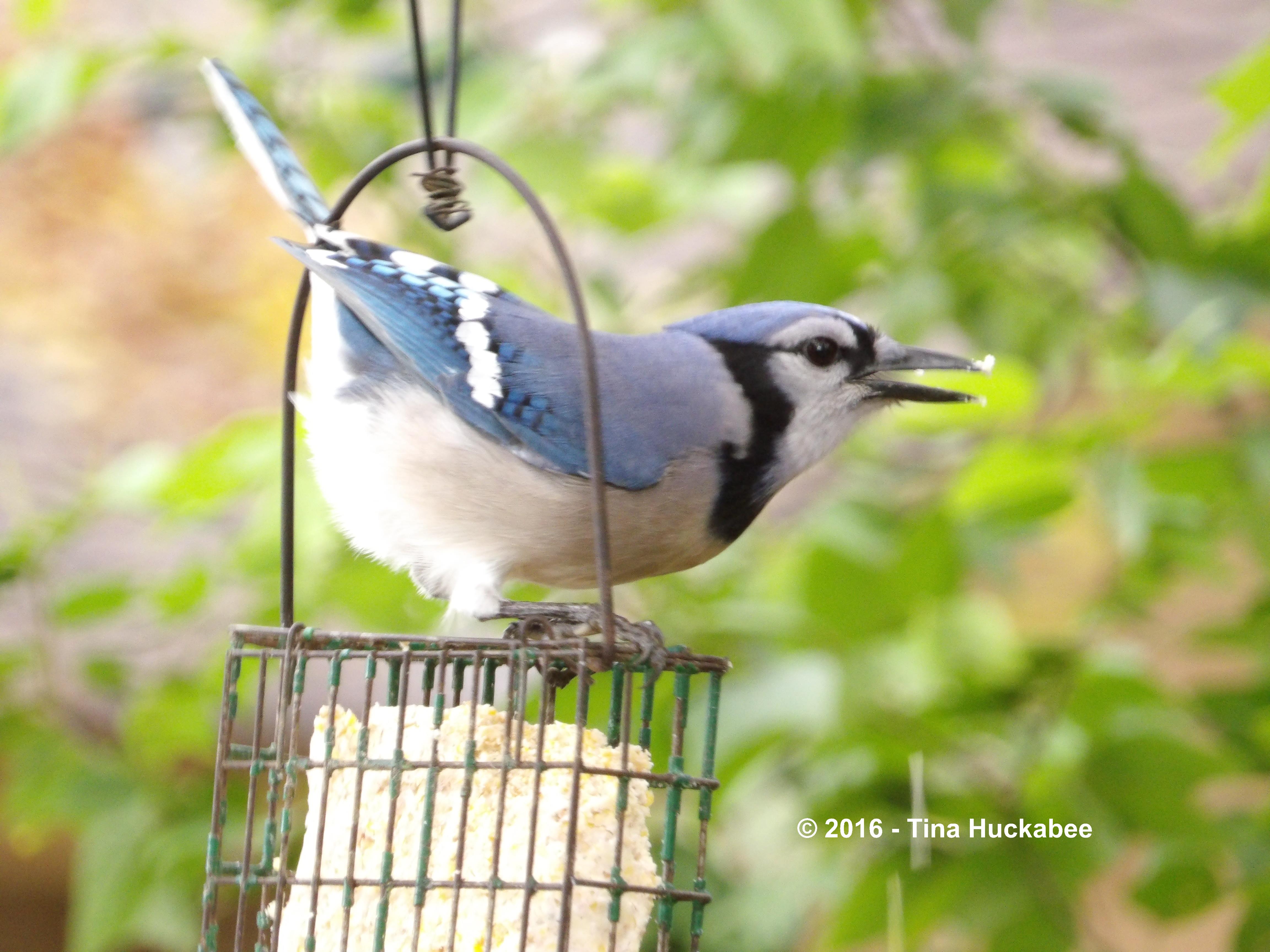
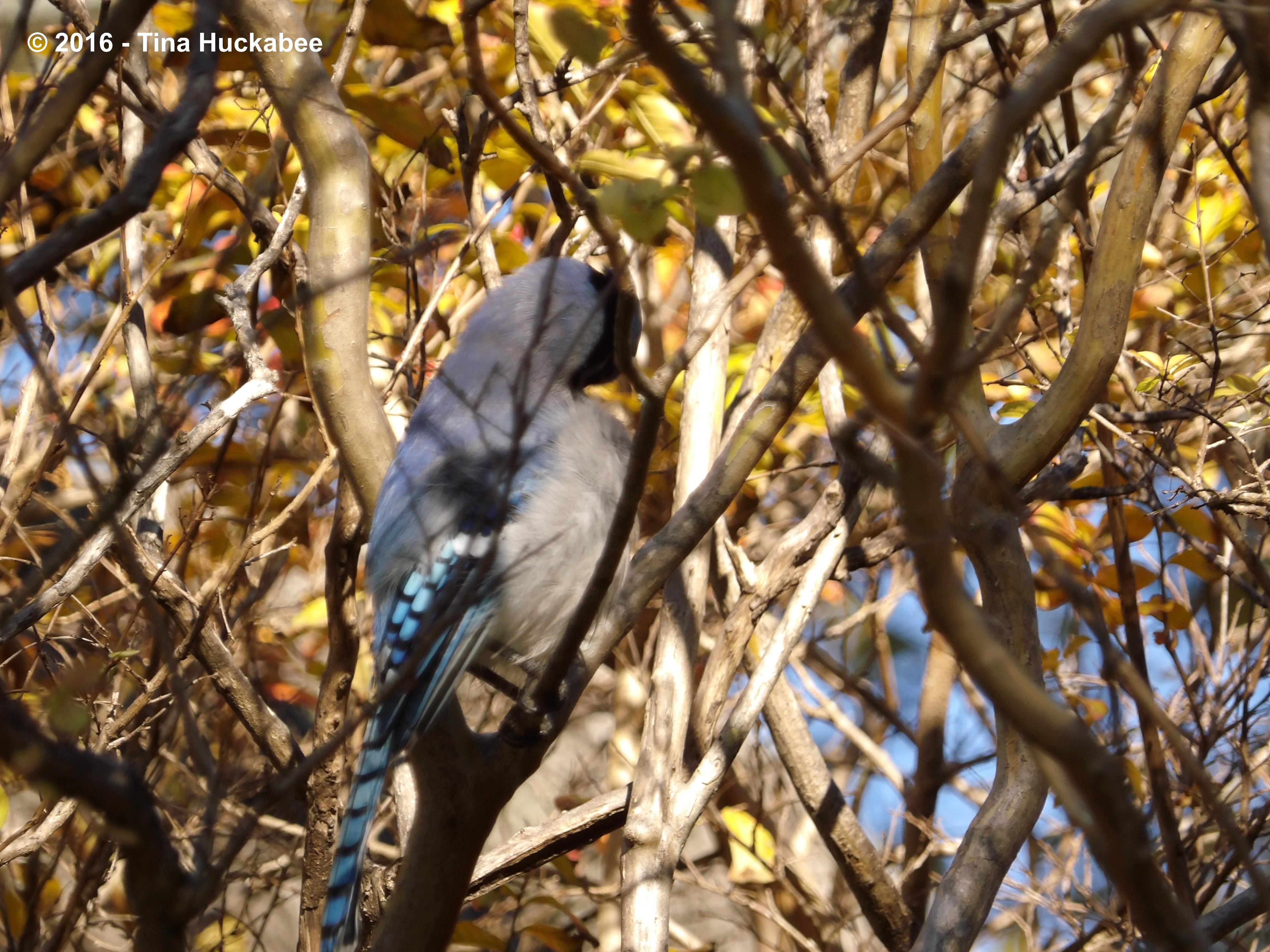
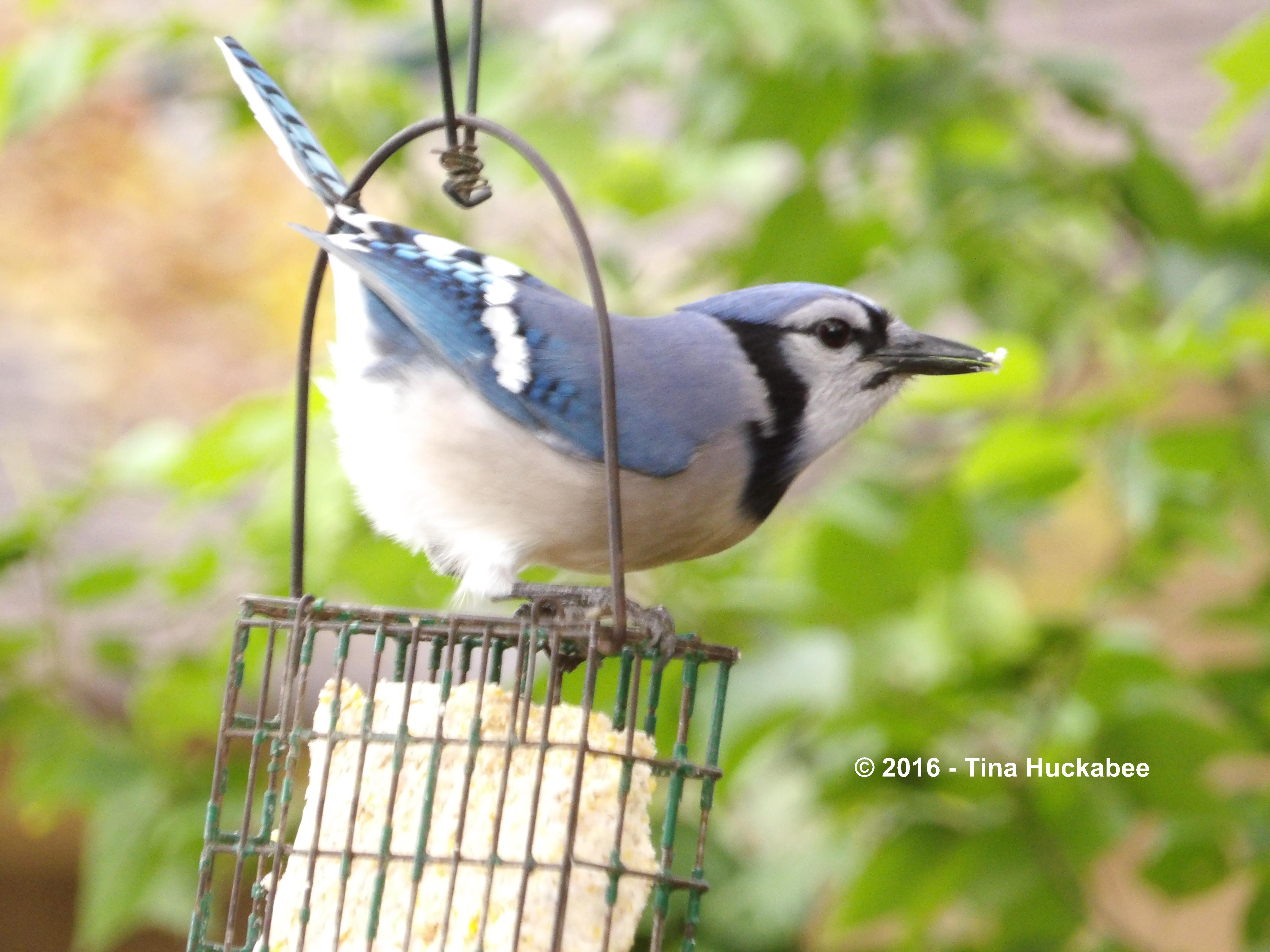
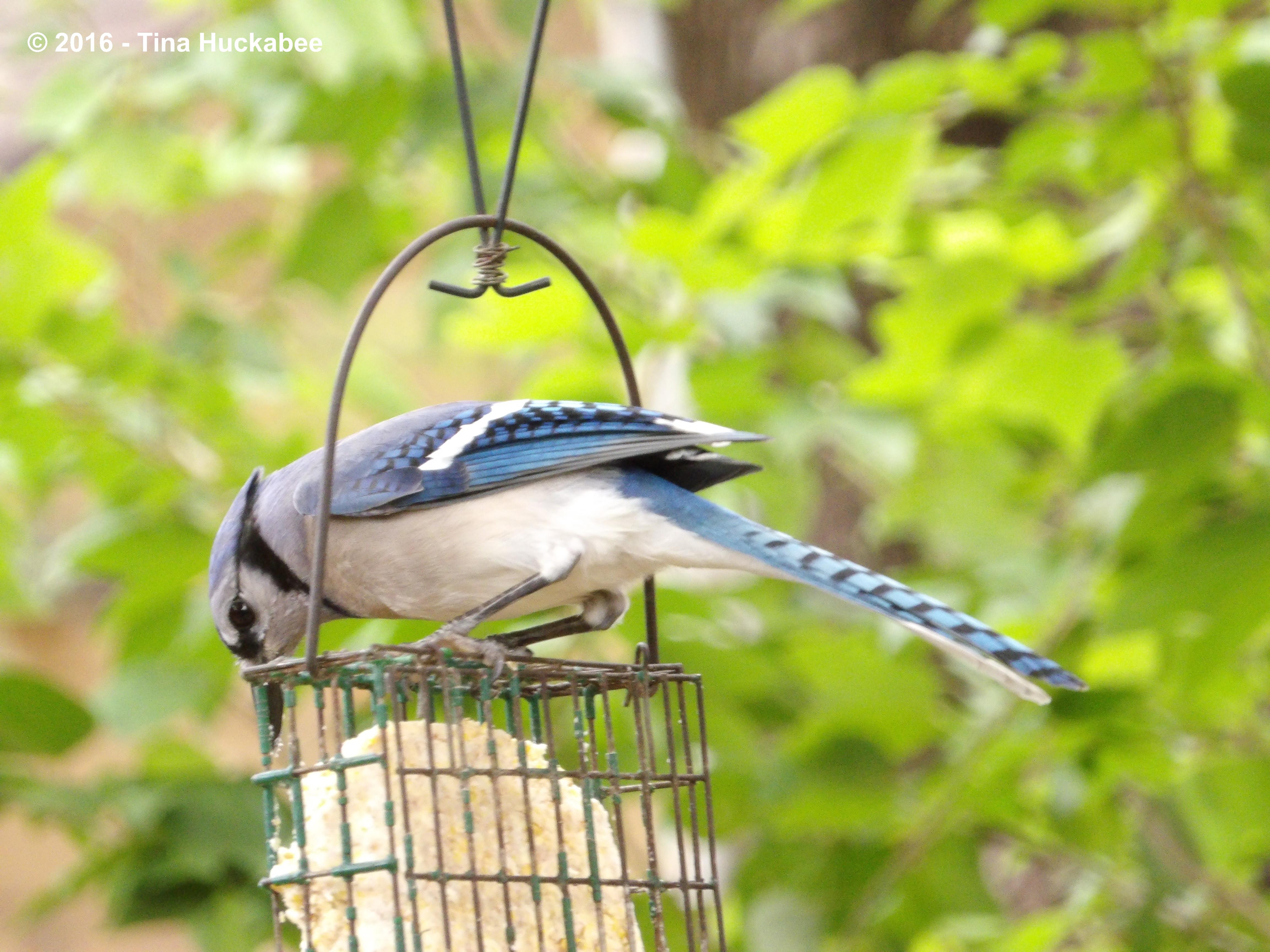
There are a number of native Blue Jay birdsCyanocitta cristata, who fly through my gardens, stopping on a regular basis to nosh,

IMGP3283.new

…and preen.

IMGP3106.new

Beautiful birds, Blue Jay males and females are difficult to tell apart.  Their feathers have the pigment melanin, which is brown, but the blue that we see and admire happens because of scattered light through specialized cells along the feathers.

Lots of folks don’t like Blue Jays because they are assertive and noisy, but I’m quite fond of them; their cheeky personalities and gorgeous good looks always cheer me.  I miss the flash of blue when I haven’t seen one swoop through the garden in a day or two, though their not being part of the landscape is rare.  Blue Jays are intelligent birds with complicated family structures and there’s still much that ornithologists don’t quite understand about their family habits and migration patterns.

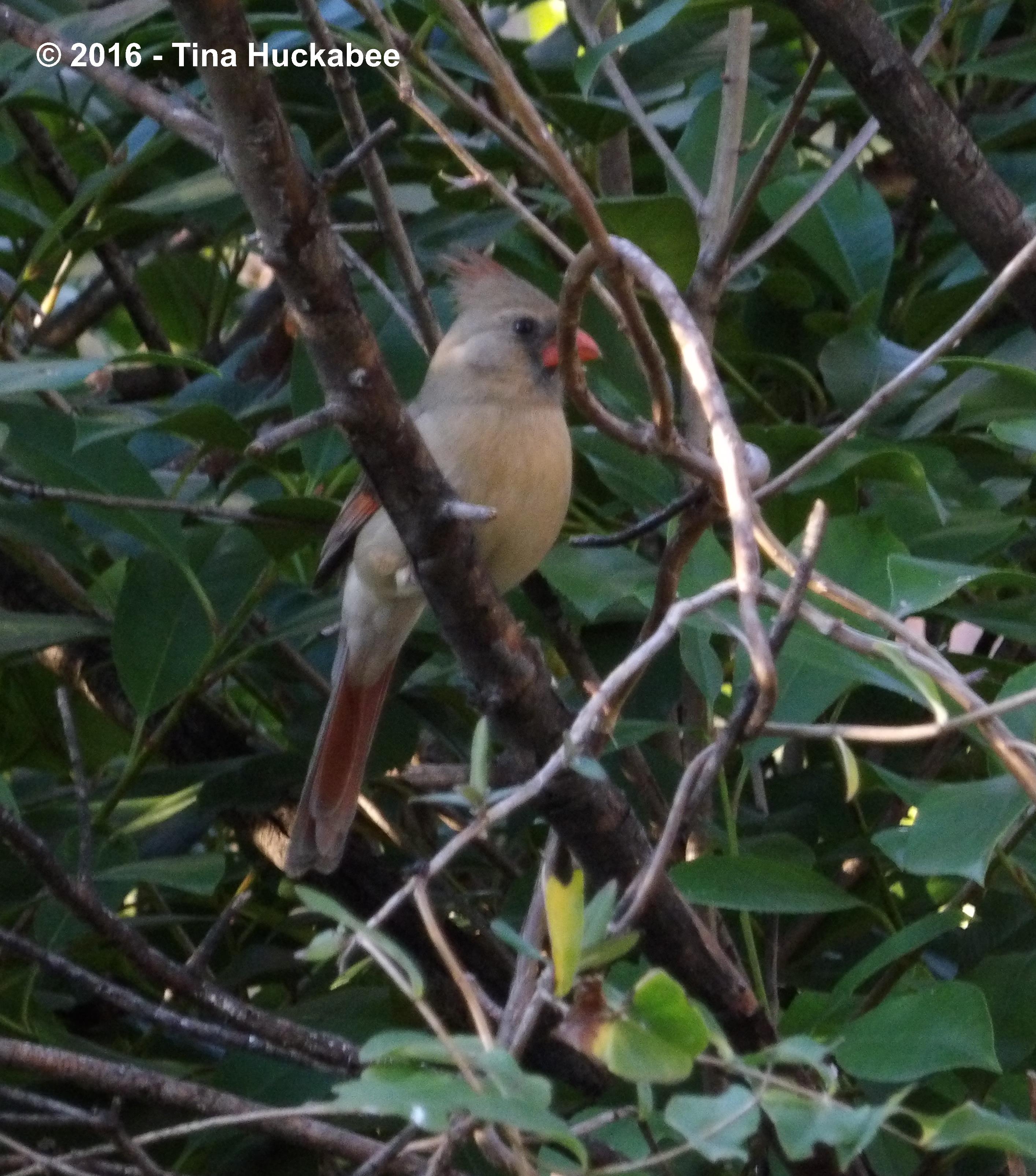
Occupying a different spot of the color wheel is this lovely girl,

IMGP3102_cropped_2829x3212..new

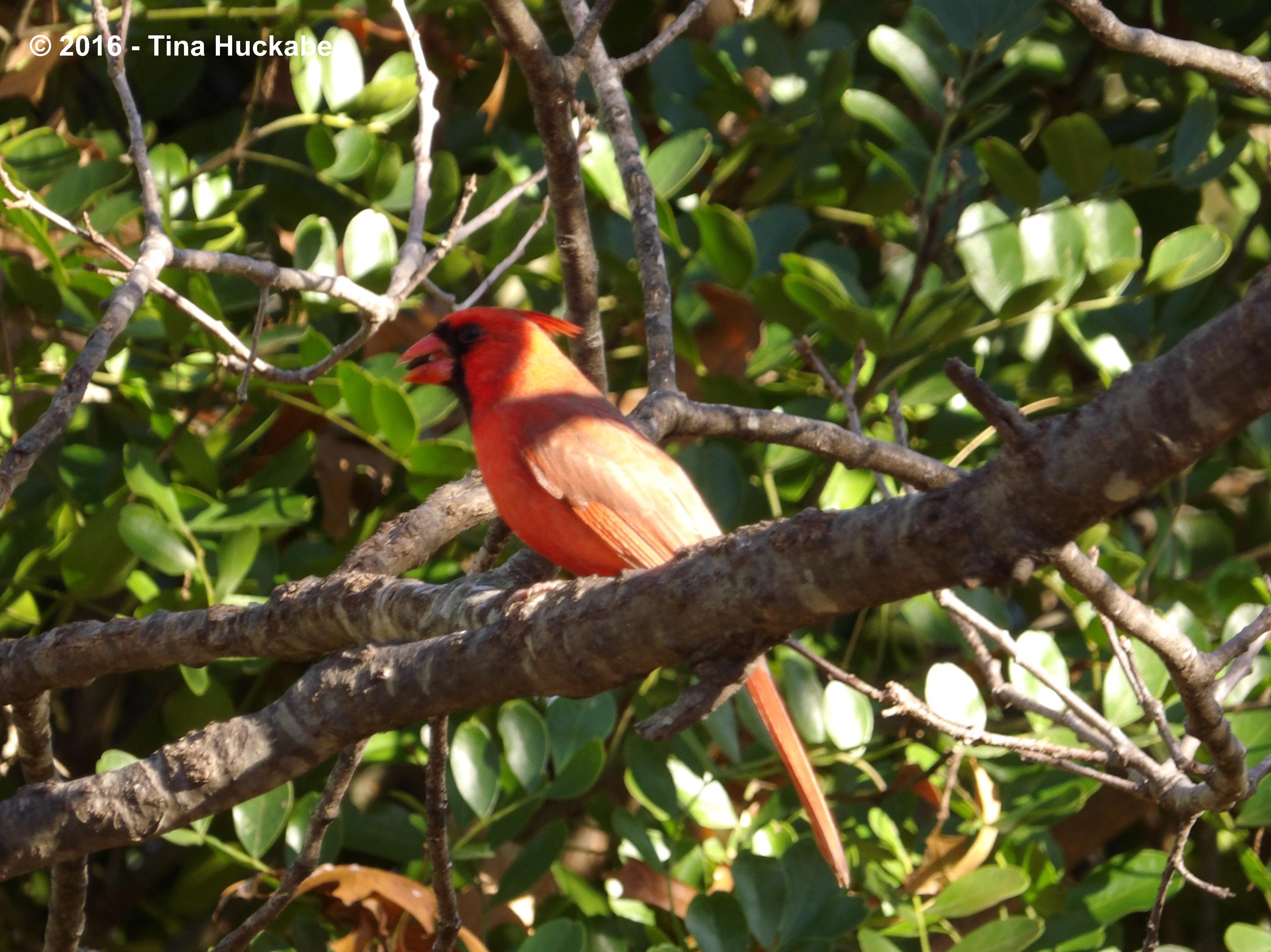
…and her male counterpart.

IMGP3613_cropped_4276x3203..new

Northern Cardinal,  Cardinalis cardinalis, birds  are common throughout  North America and adapt well to the backyard wildlife habitat.  There are two nesting pairs in my part of the neighborhood. They nest nearby and visit my gardens and feeders daily.  During summer, I’m likely to see dad training up his youngins’ on the best places to eat in the neighborhood and how to avoid the neighborhood cats.

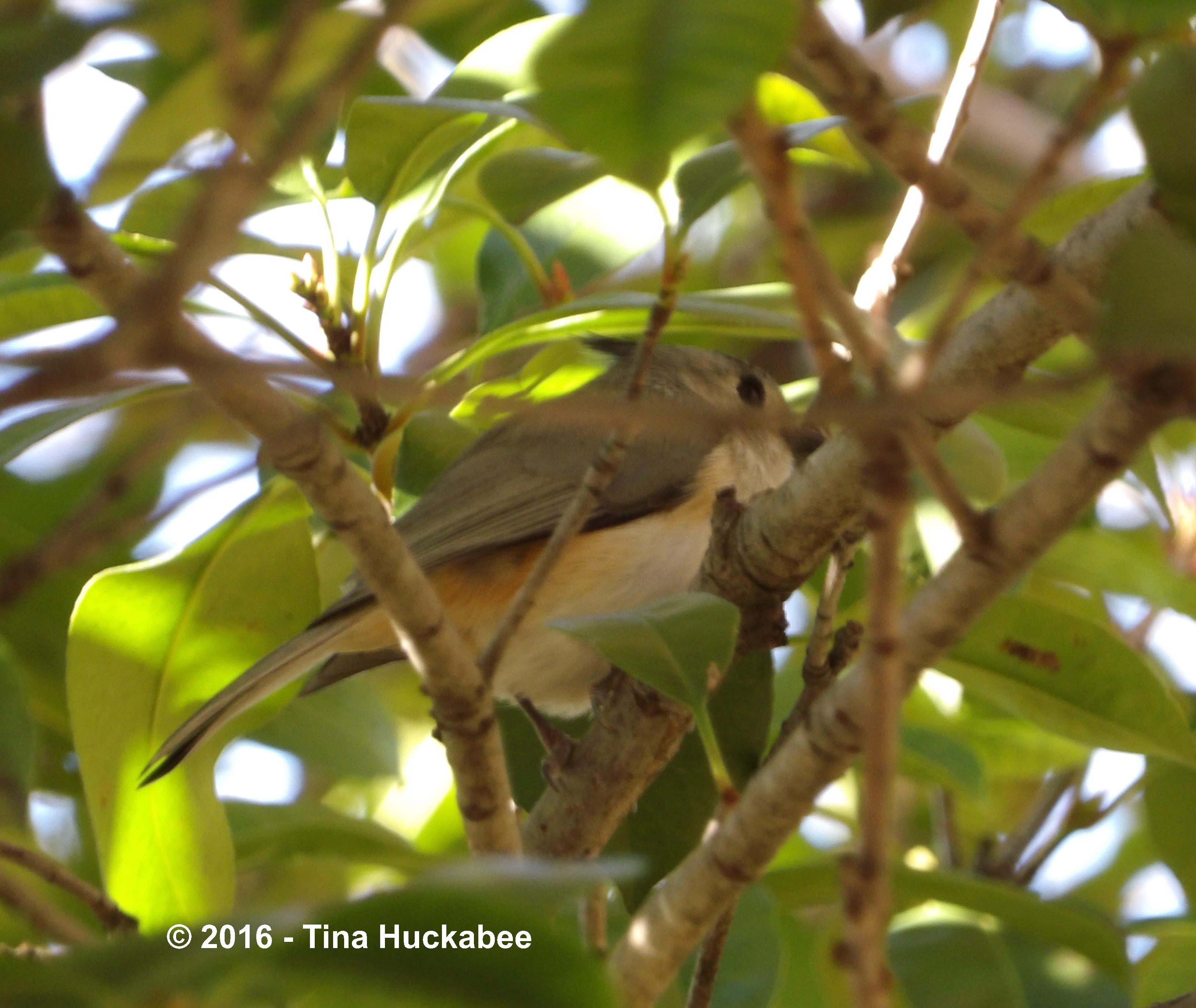
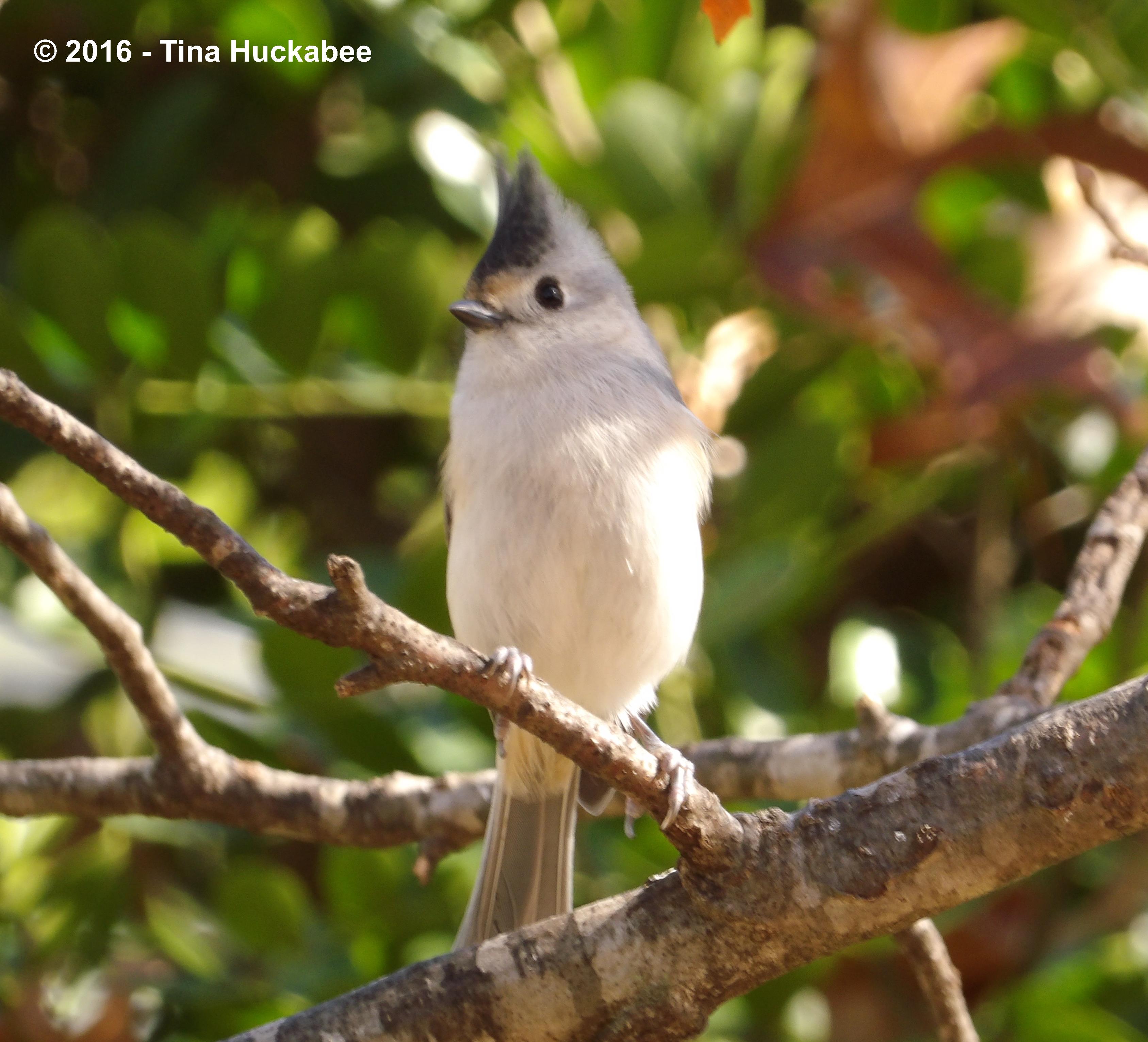
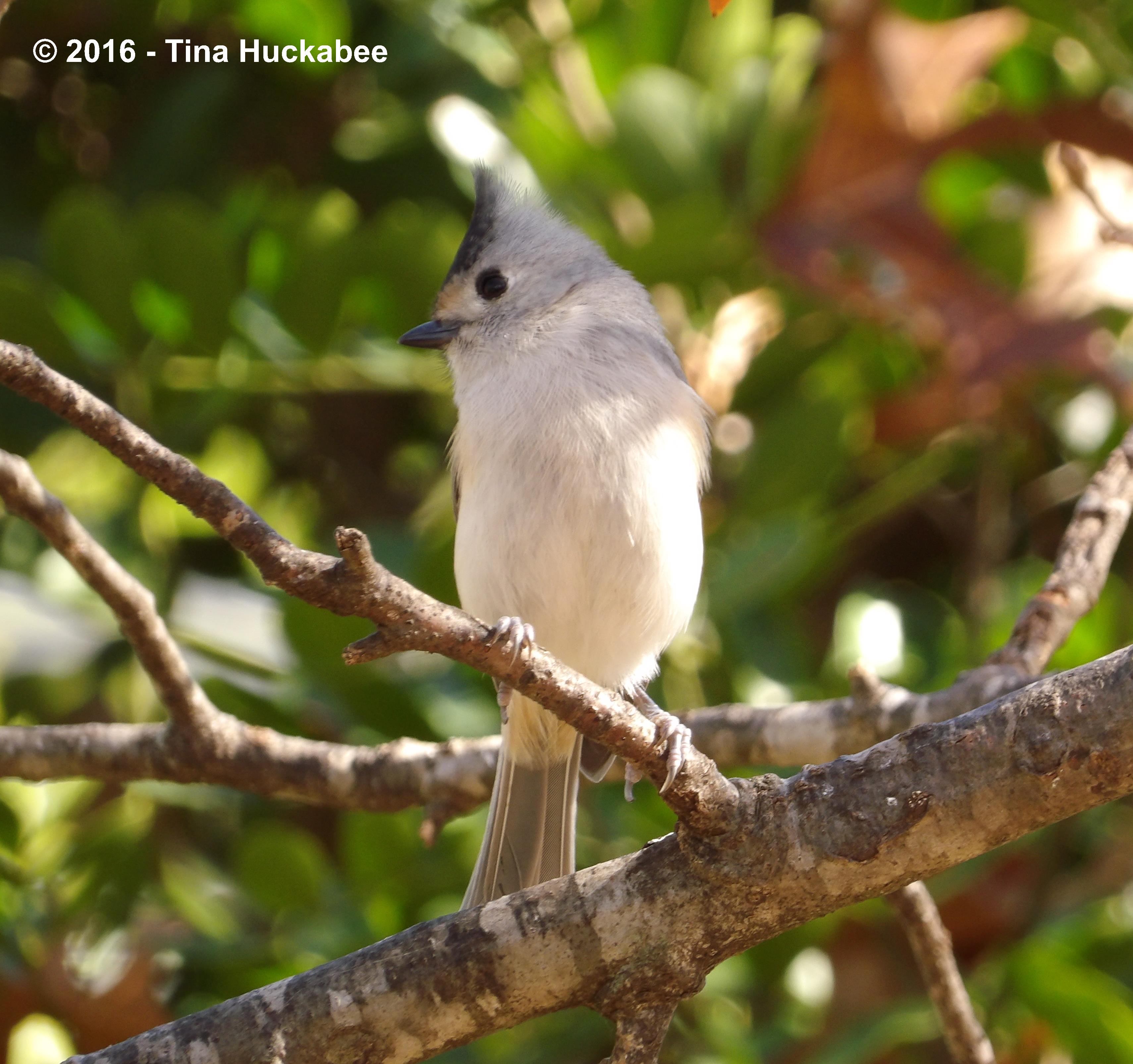
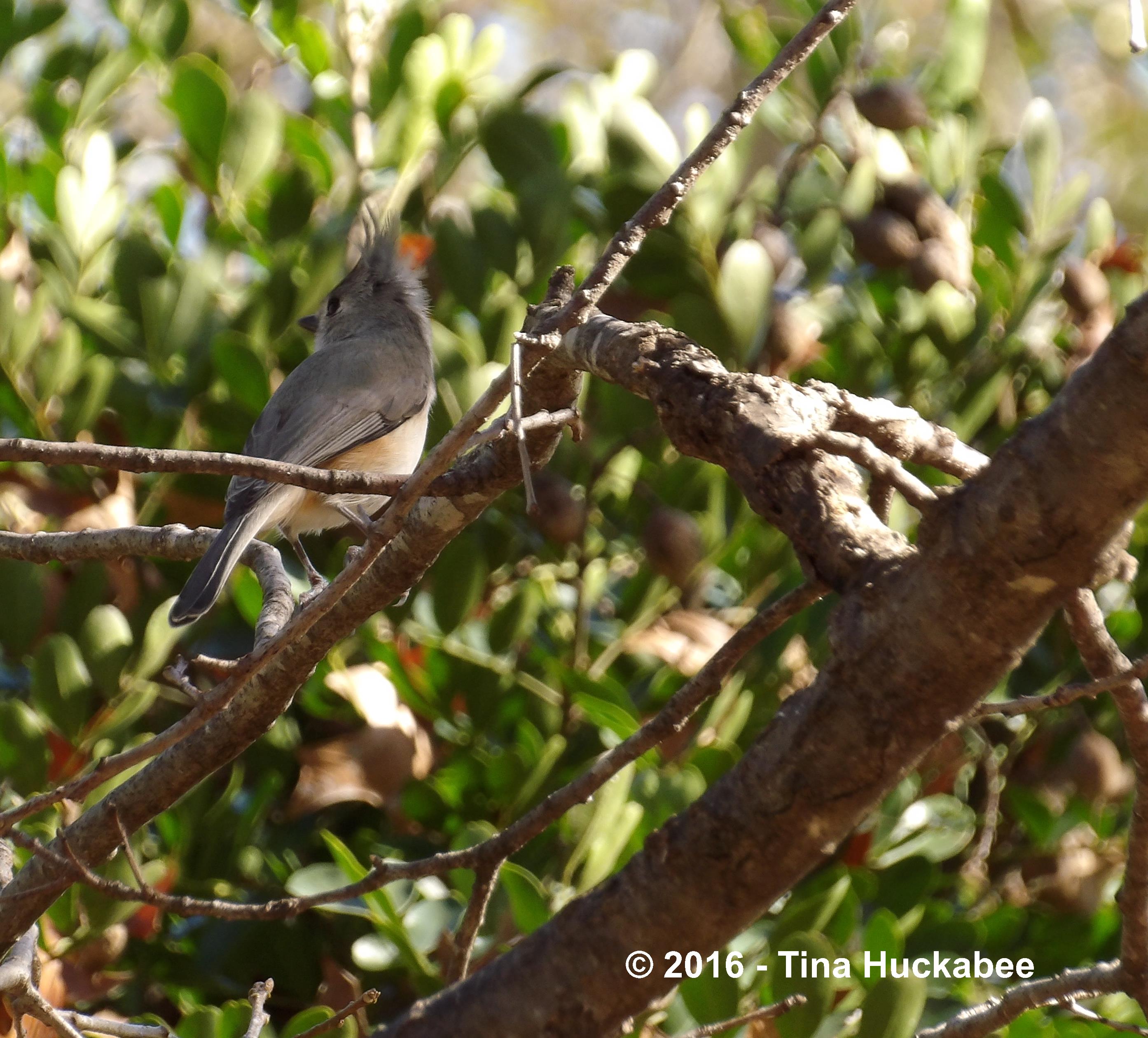
Last month, I attempted photos of the Black-crested Titmouse(s), Baeolophus atricristatus, who frequent my garden spaces. Their charming chirps allure, but their quick movements thwart photographic efforts–mine anyway.   Luckier this month, I captured some photos of some of these darling birds.  Resting between visits to a feeder,

IMGP3315_cropped_3253x2742..new

…and simply resting and looking adorable.

IMGP3576_cropped_3374x3061..new

IMGP3571_cropped_3420x3213..new

This one refused to turn around, smile and say “seeds!”  for the camera.

IMGP3542_cropped_2787x2521..new

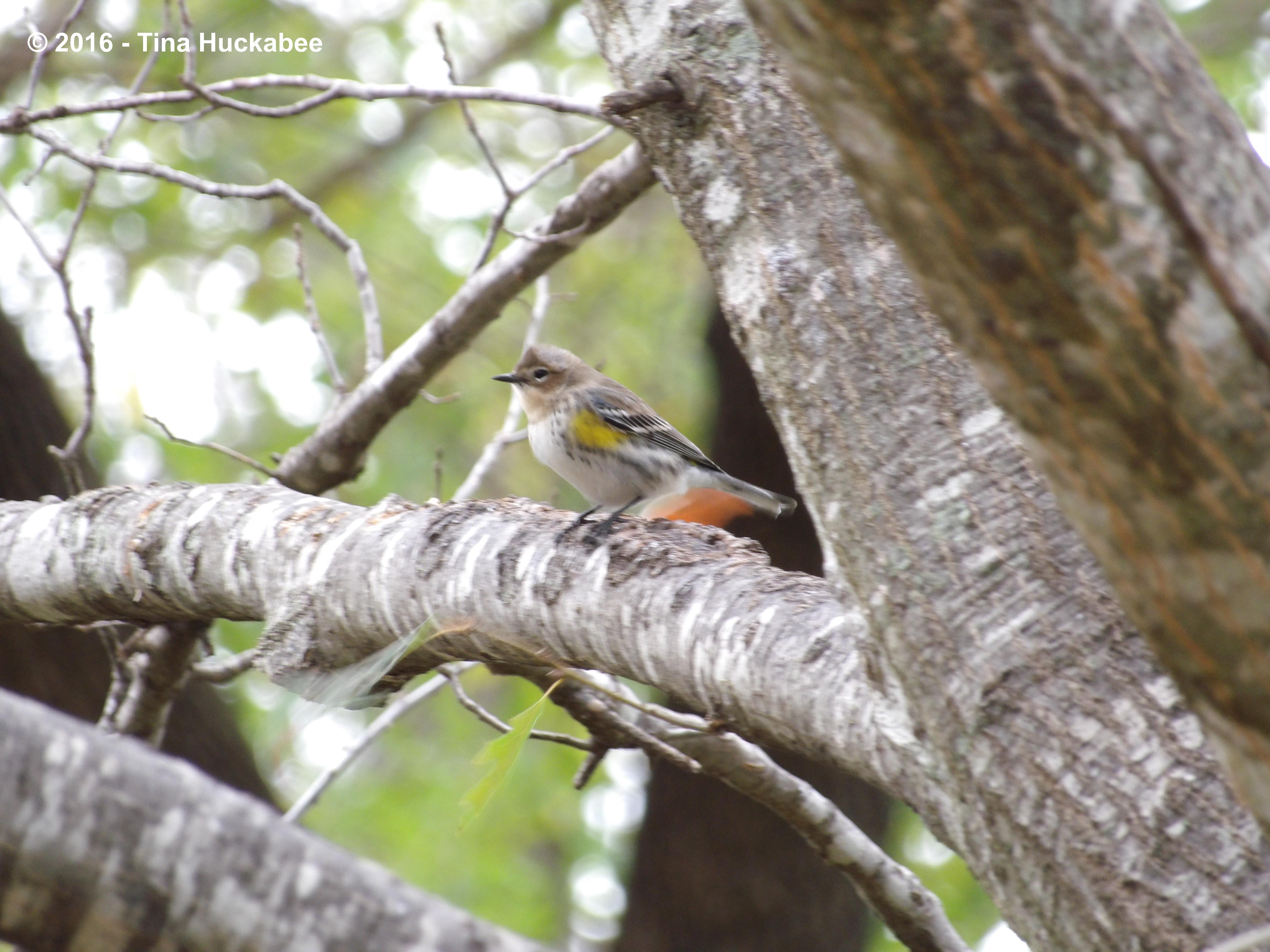
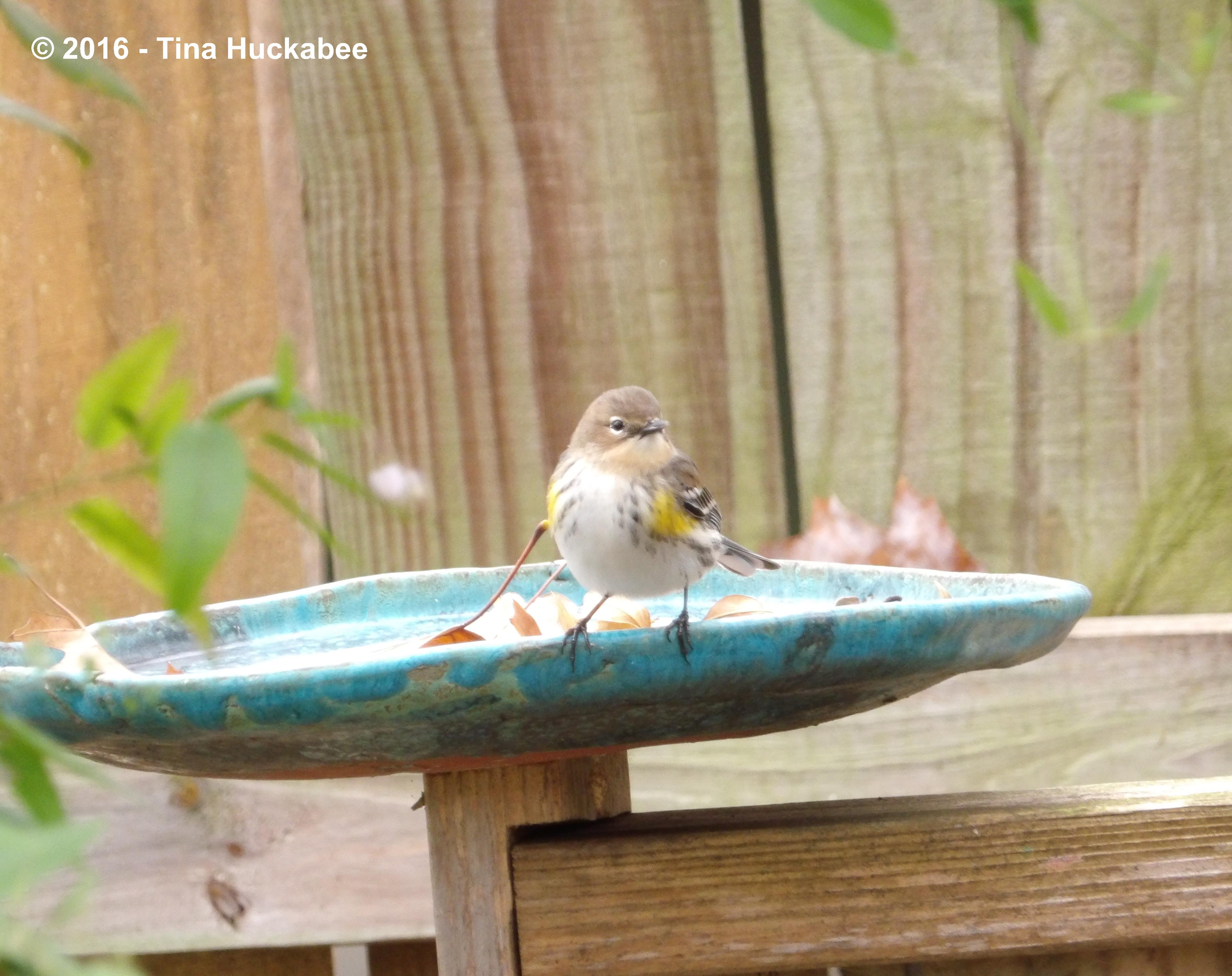
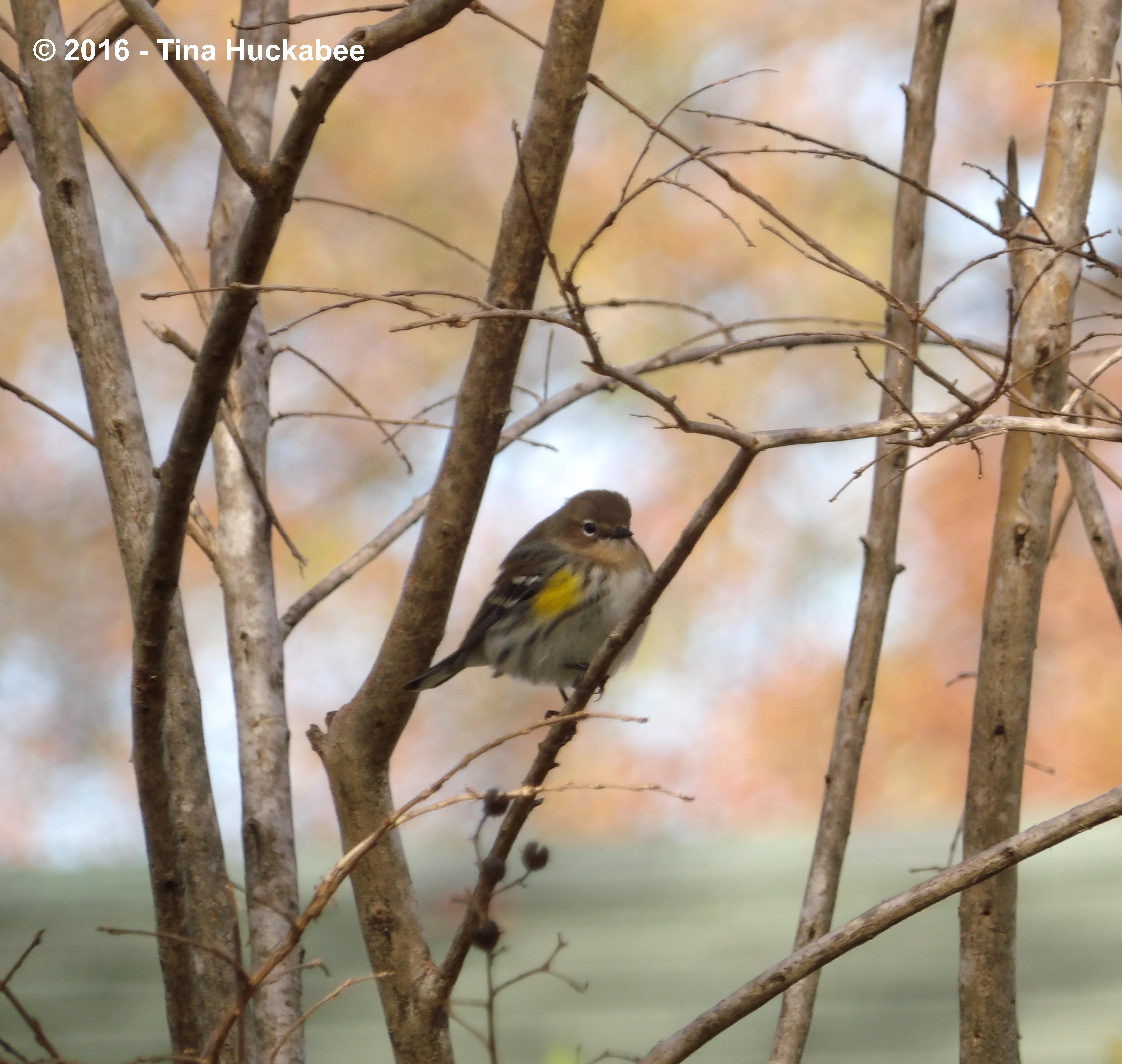
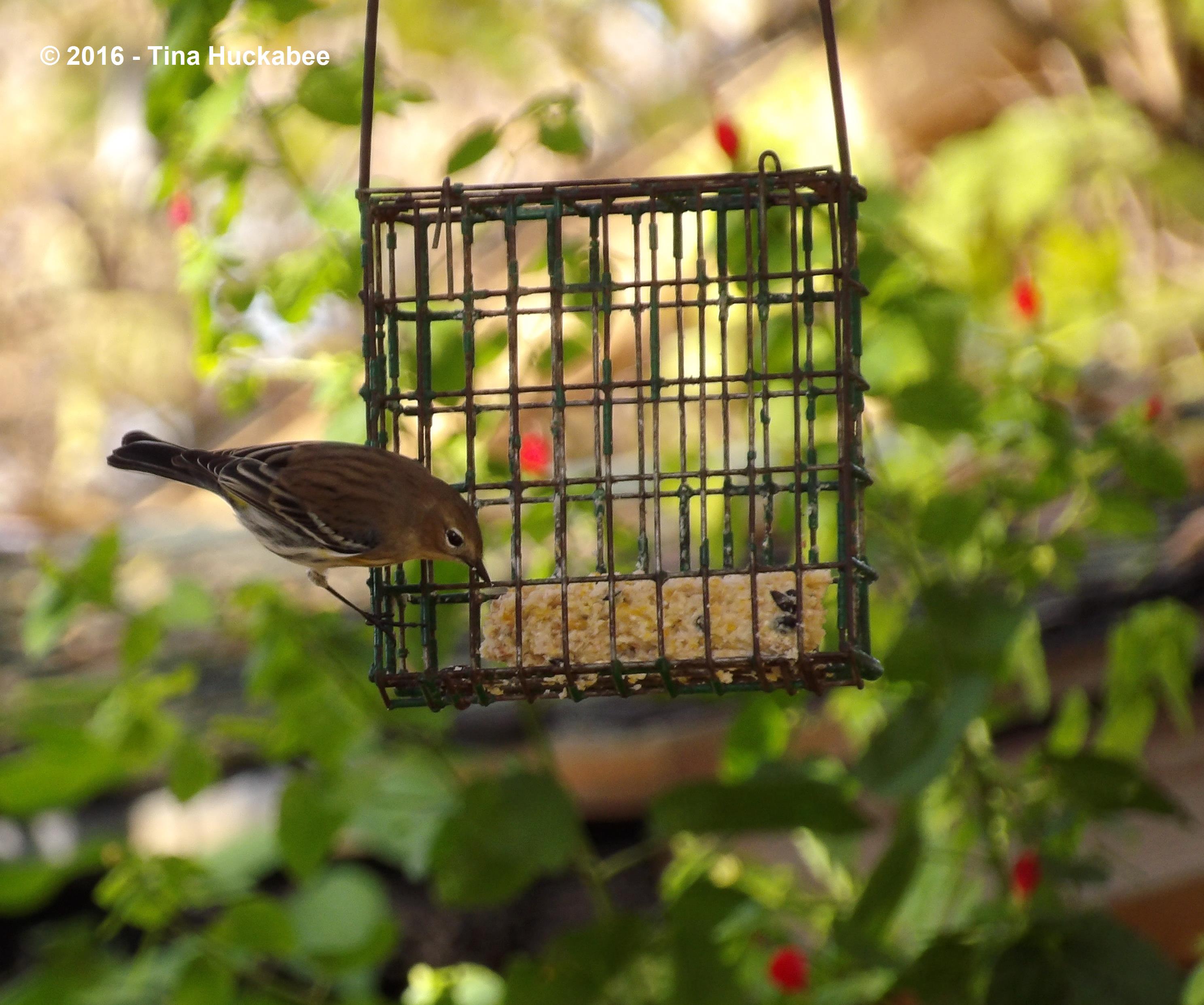
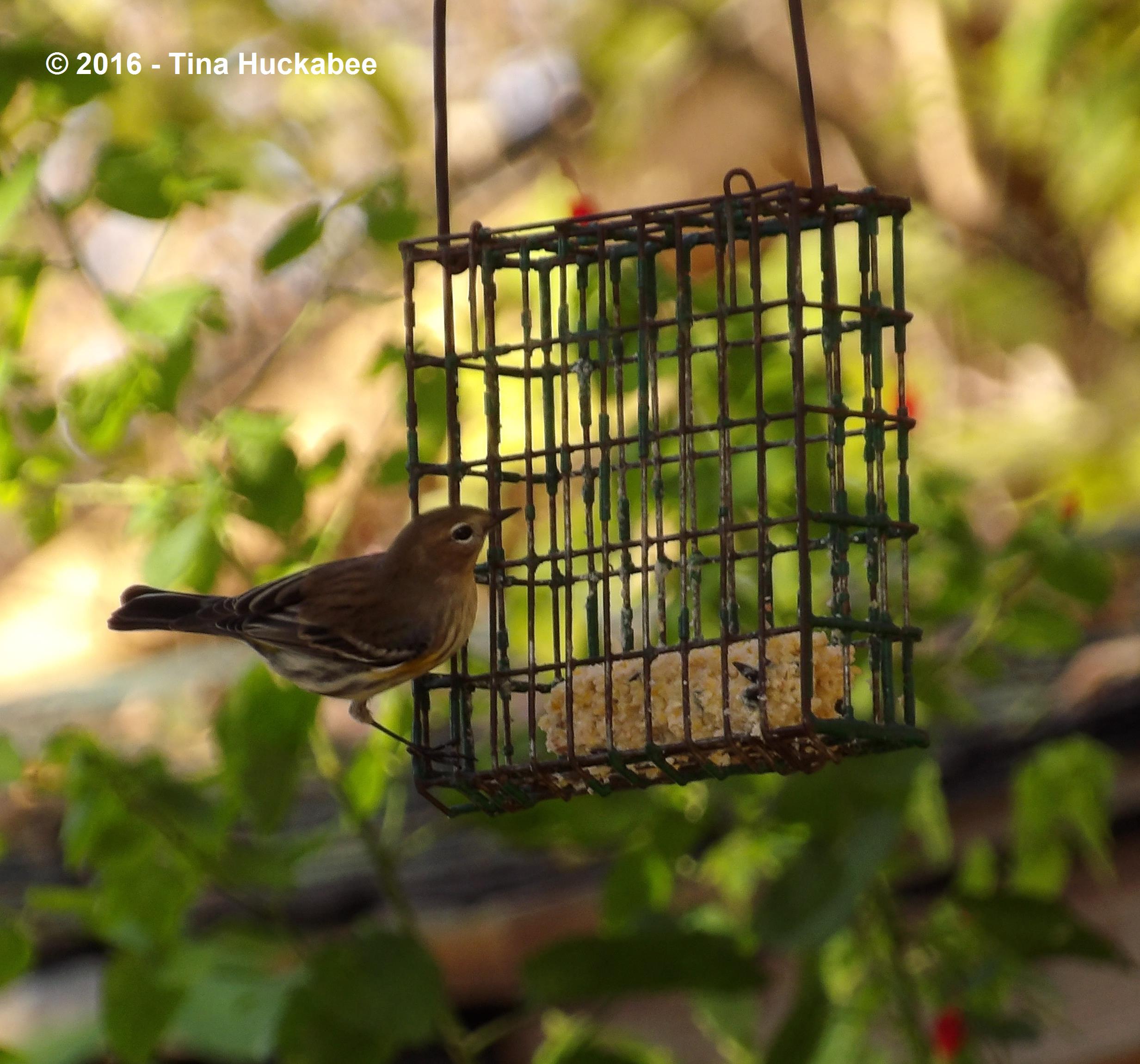
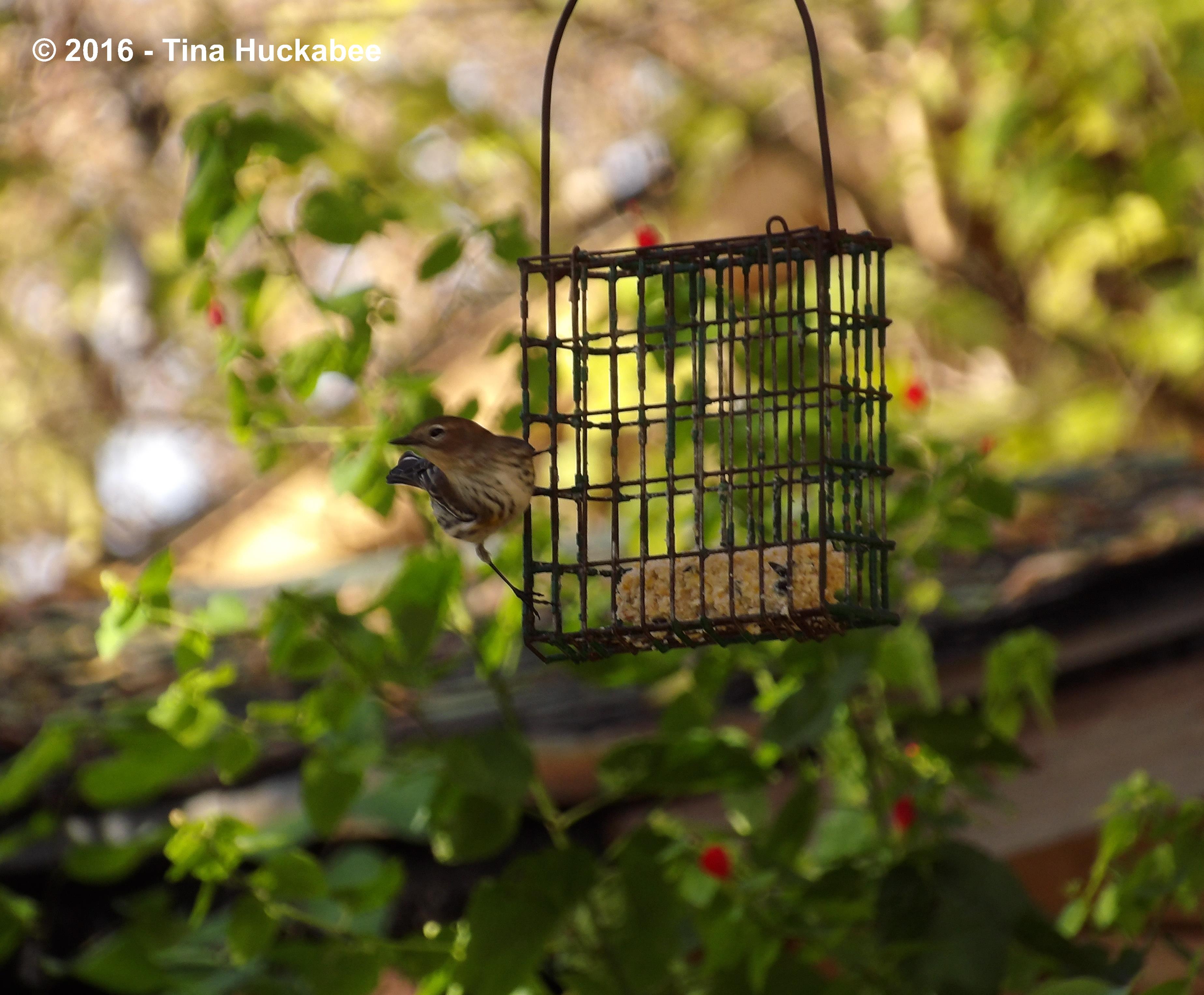
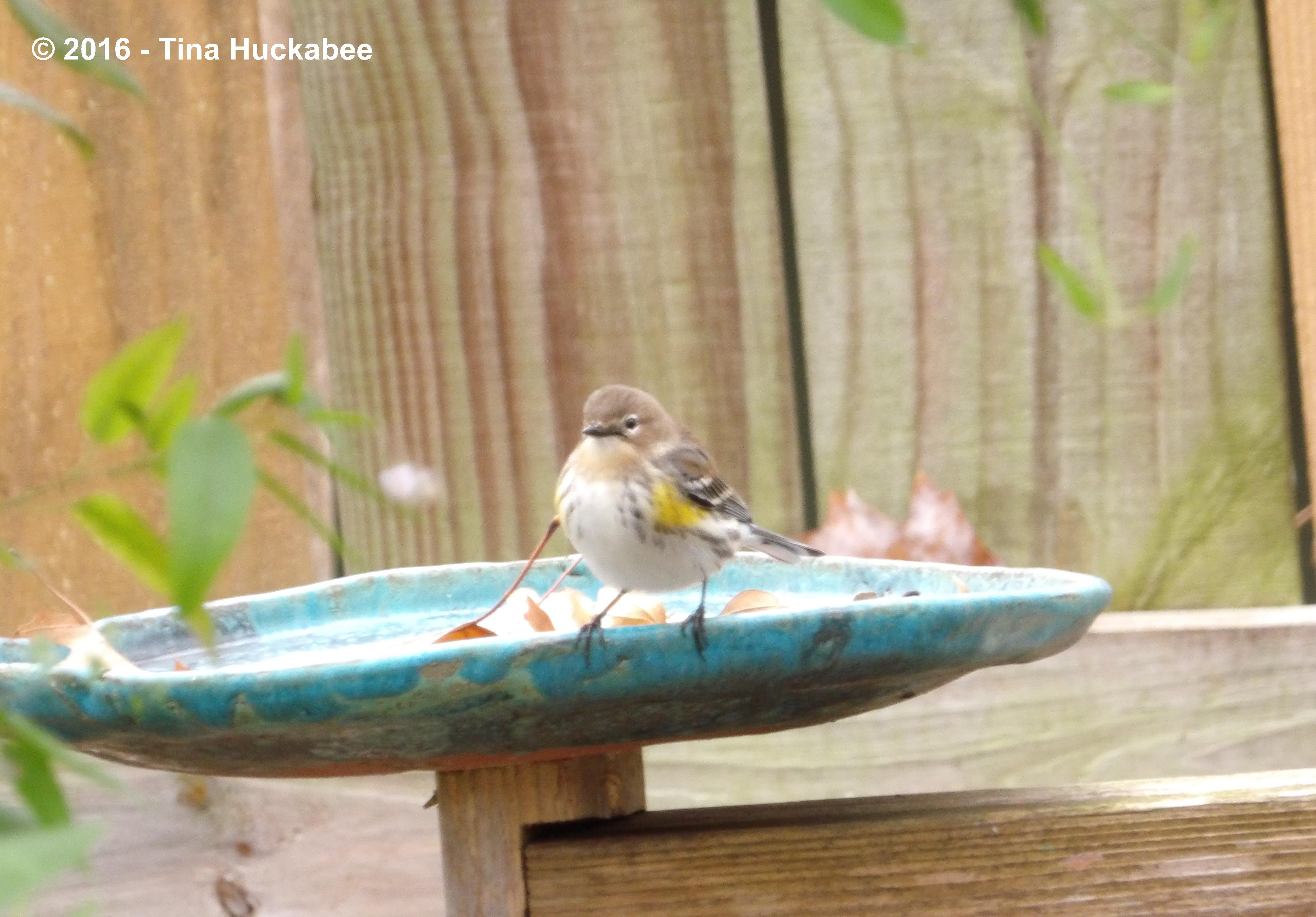
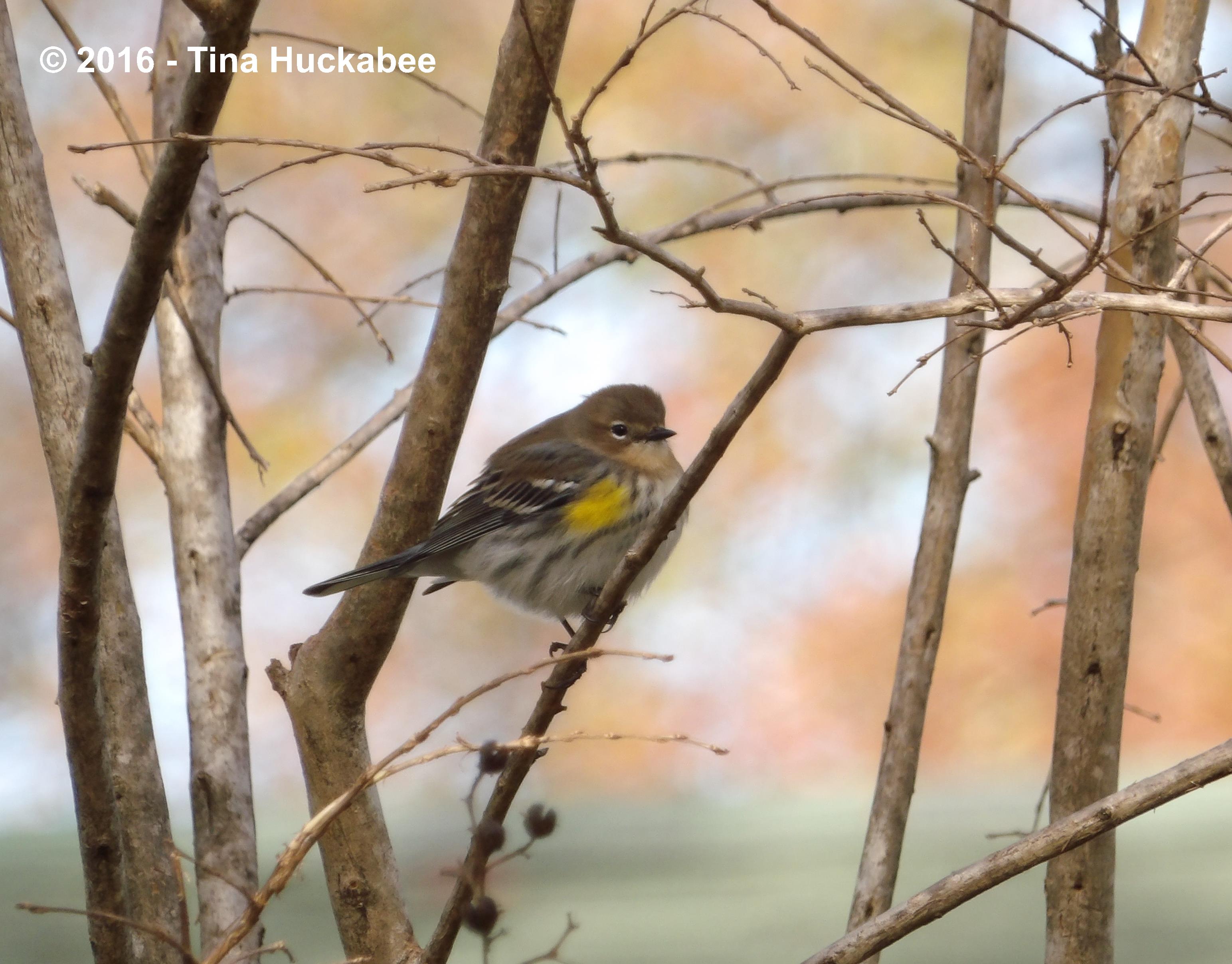
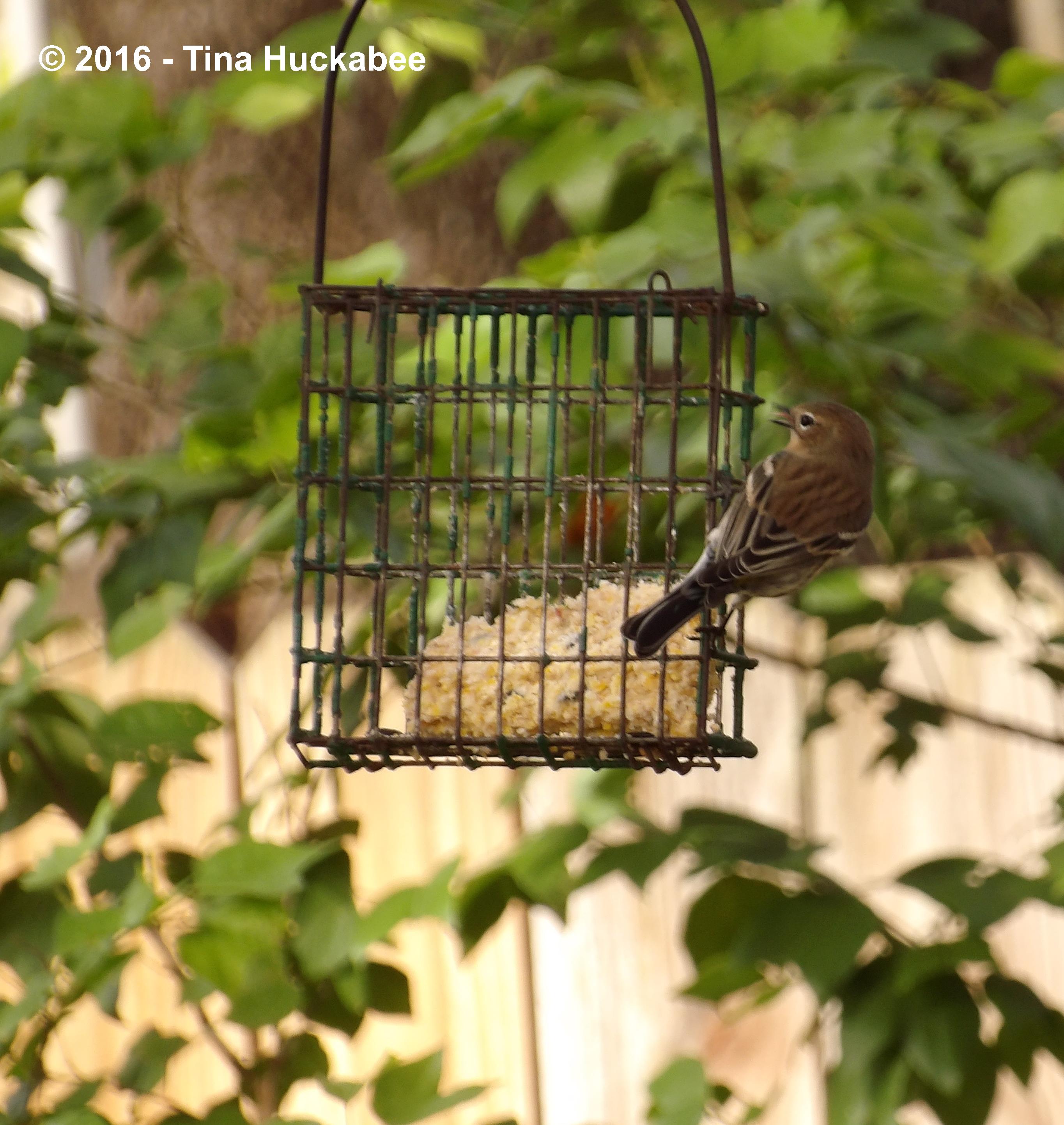
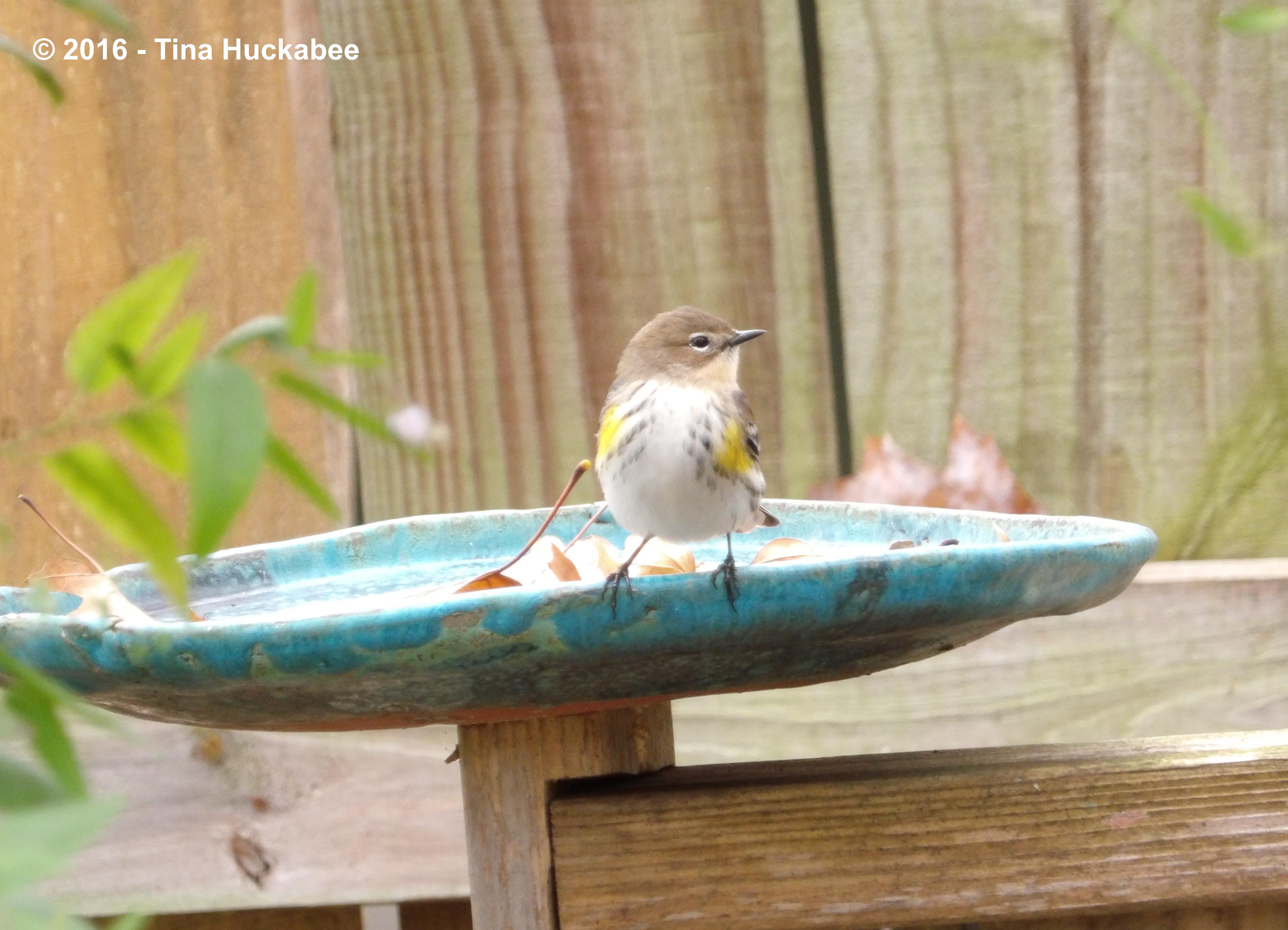
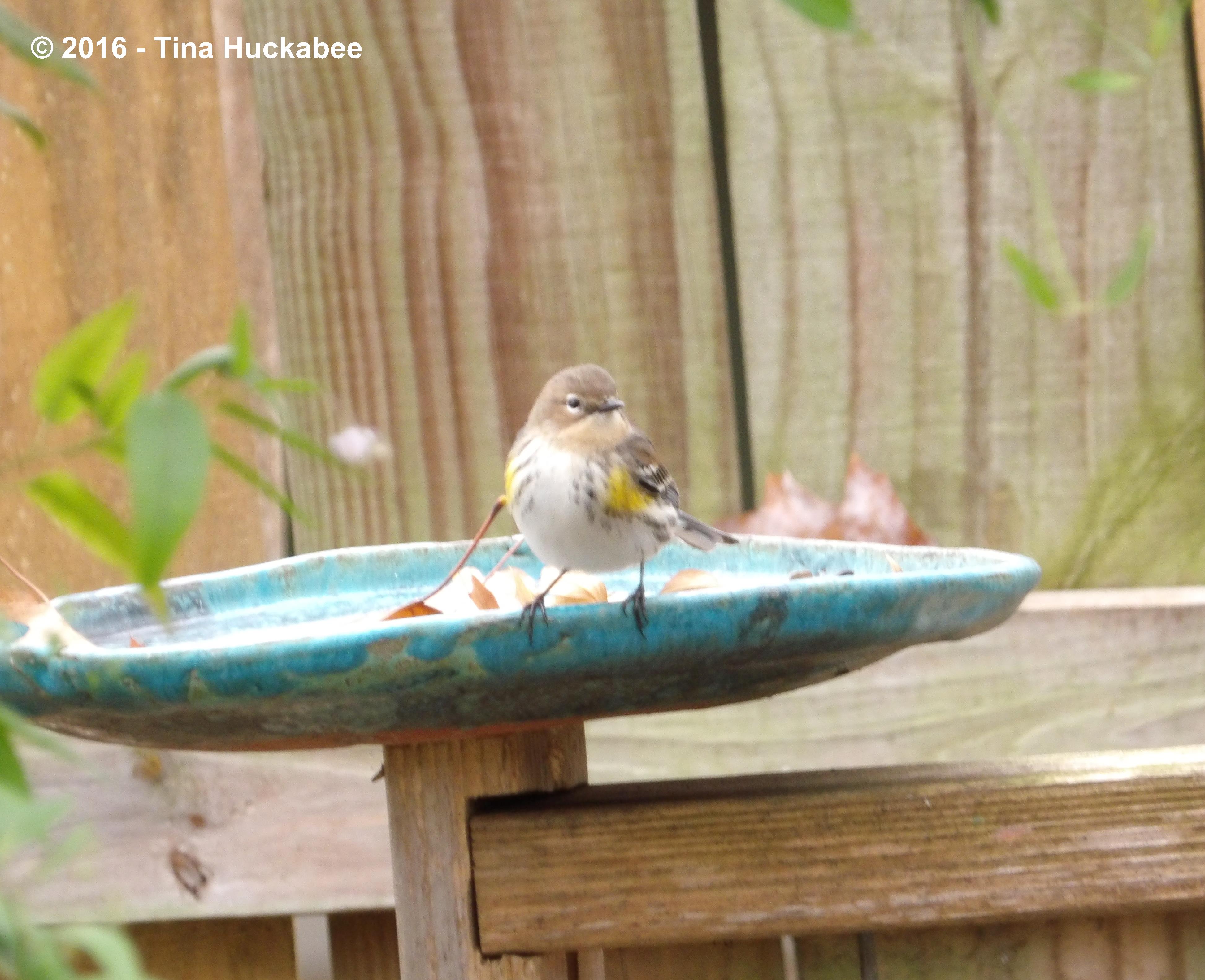
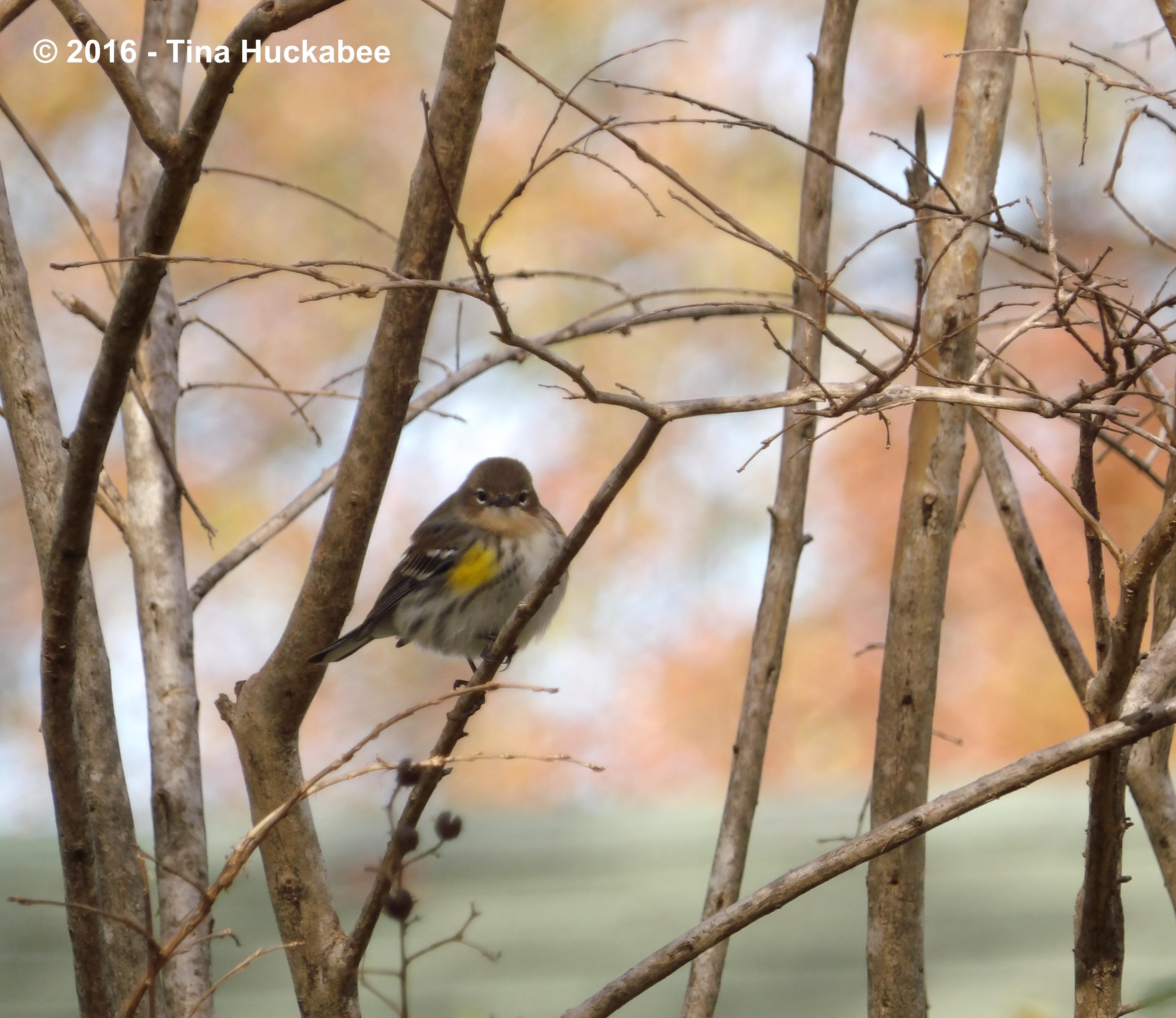
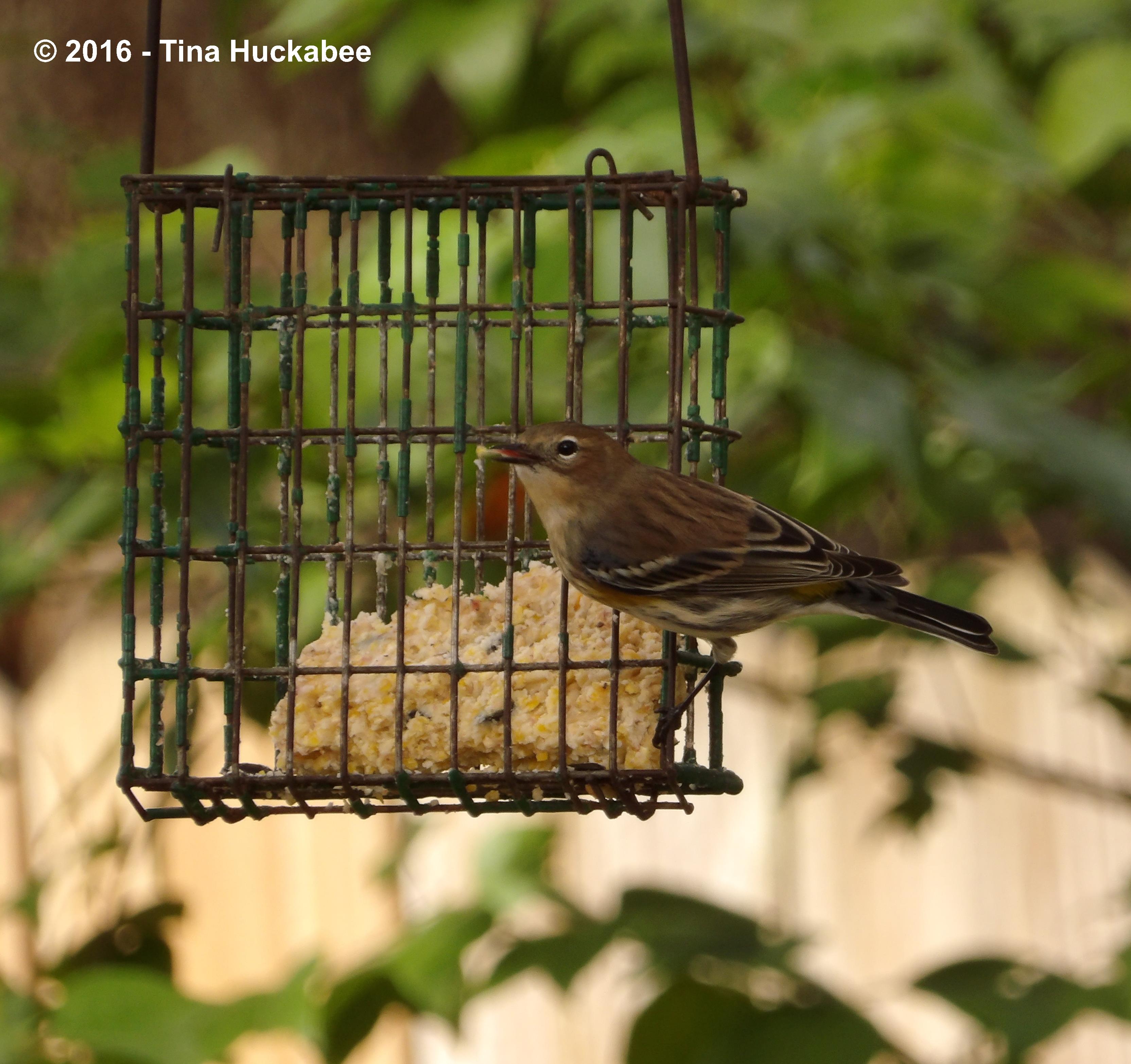
The birds I’m most excited about recently observing in my gardens are a couple of Yellow-rumped Warblers, Setophaga coronata.  This one is a male.

IMGP3508.new

IMGP3499_cropped_3922x3107..new

IMGP3389_cropped_3360x3185..new

Likely as not, I’ve seen this bird species before, because  it’s a common winter Texan.  As I’ve learned about birds, I’m becoming  aware that not all drab little birds are just more sparrows-of-some-sort.  I’m learning to discern their color patterns, size and beak differentiations, and vocalizations. The bird-learning curve is a steep one, to be sure.

IMGP3247_cropped_2976x2483..new

IMGP3235_cropped_2465x2300..new

One must observe closely and (ahem) read a bit about birds to decipher the often subtle dissimilarities between the many species of warblers, finches, and sparrows.

IMGP3226_cropped_3696x3055..new

Most of the little “brown” birds sport colorful plumage here and there,

IMGP3186_cropped_3208x2581..new

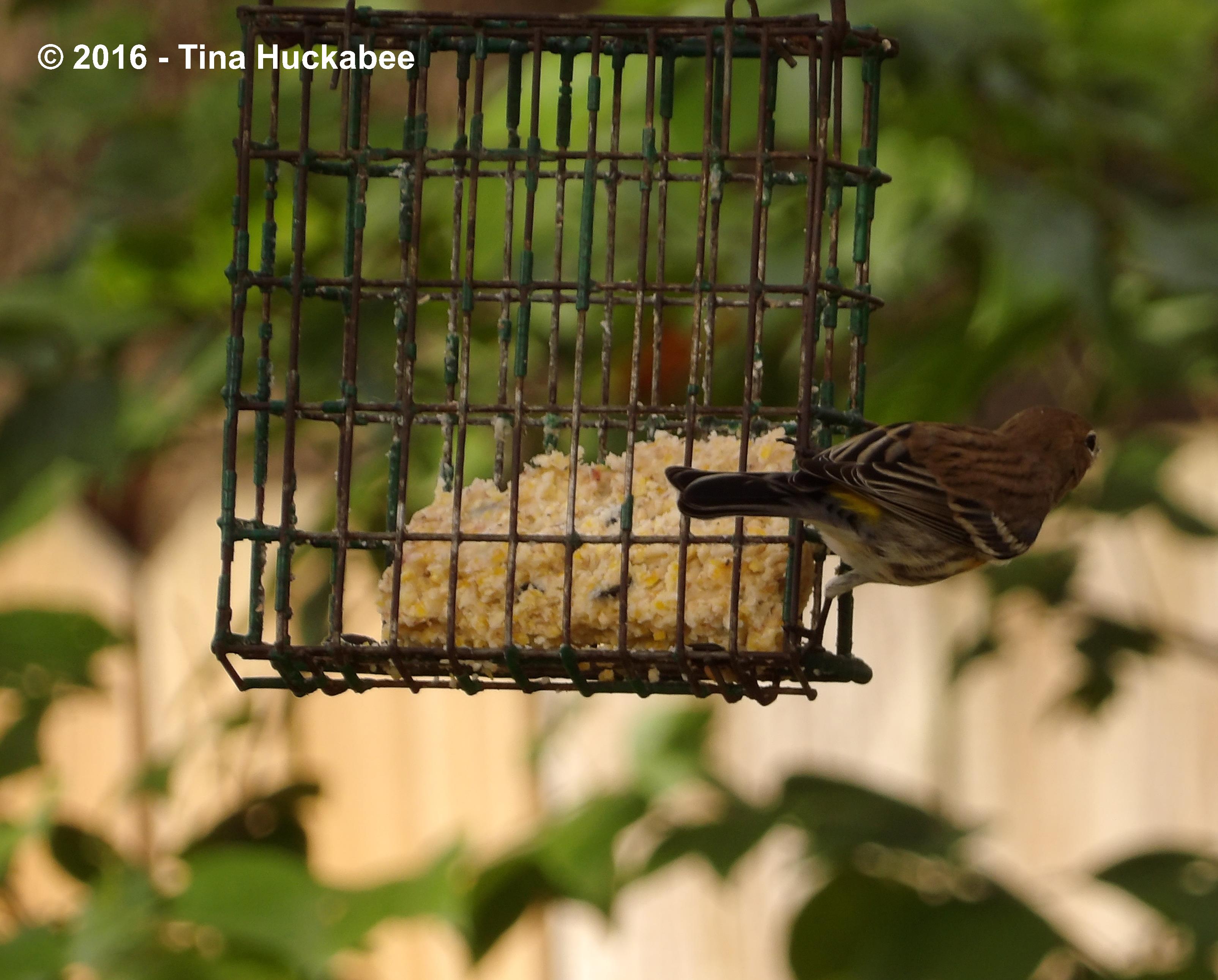
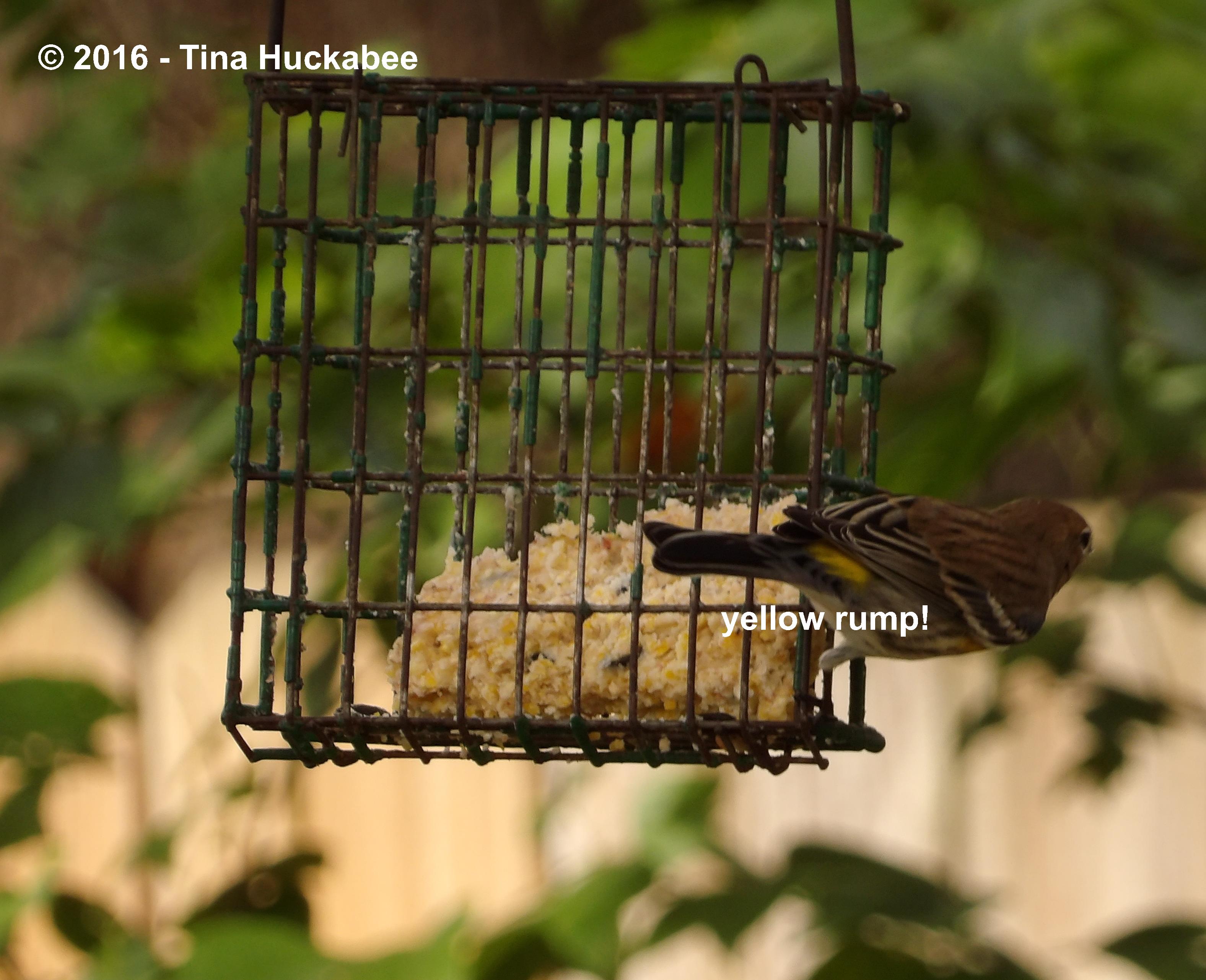
…including on their bums.   Can you see the yellow rump in the above photo?

IMGP3182_cropped_3153x2563..new

I took a lots of photos before I finally got that yellow in action. There are at least two Yellow-rumps visiting my gardens regularly. This male I see most often,

IMGP3496_cropped_4134x2881..new

IMGP3381_cropped_3087x2415..new


…and a female,  “myrtle” form.

IMGP3155_cropped_2729x2885..new

As it turns out, there are multiple sub-species related to this particular warbler and currently, I’m not nearly enough of a birder to adequately understand, much less explain, variations.  For the time being, I’m content to observe these shy little birds, all yellow rumped and sweet peeps, as they flit about my garden this winter.

While I secured a couple of decent butt shots of the female, I’m still working on a photo capture of the male’s cute yellow posterior. Heretofore, he’s been too busy showing  how pretty he is in other poses.

IMGP3504_cropped_3917x2829..new

IMGP3498_cropped_3893x3166..new


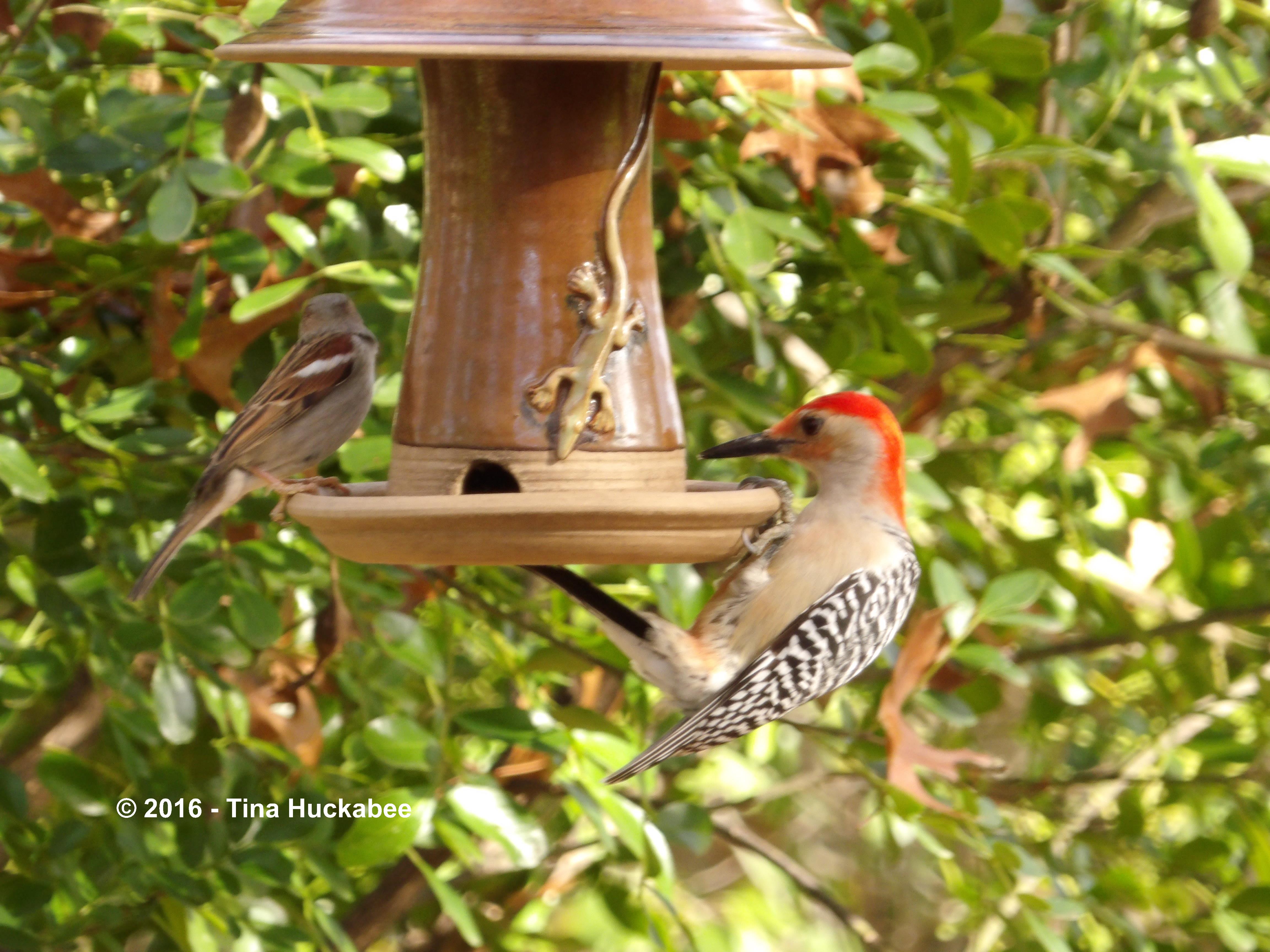
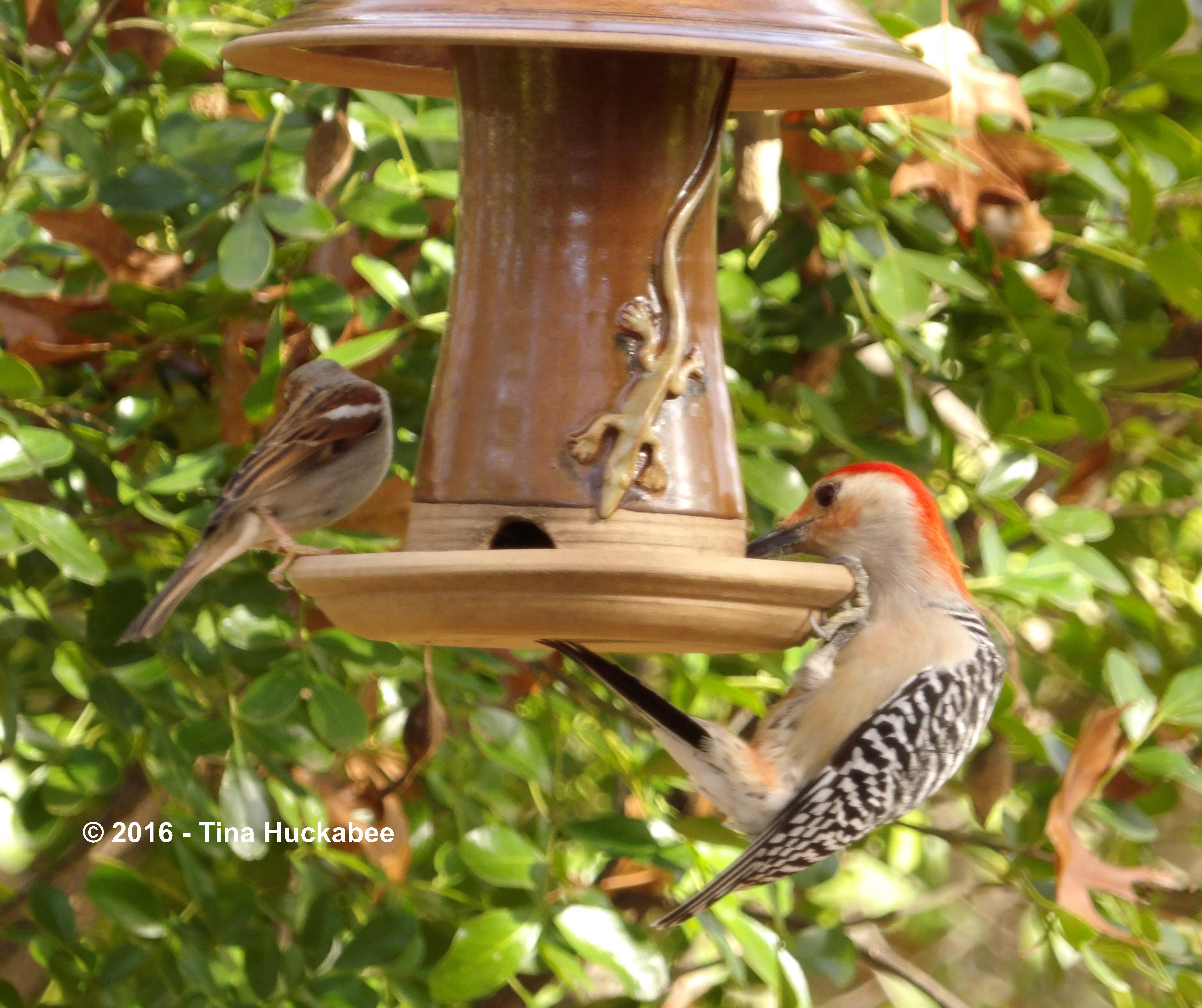
A Red-bellied Woodpecker,  Melanerpes carolinus, is another daily visitor to my feeders and up and down the oak trees.

IMGP3390.new

I love it when he is feeding at the suet and a Blue Jay flies toward and in no uncertain terms, the woodpecker lets the Blue Jay know that it’s NOT HIS TURN!

There’s plenty where that came from, so wait until Red-belly is finished, Mr. Jay.

IMGP3279.new

IMGP3261.new

At this feeder though, the Red-bellied Woodpecker doesn’t mind sharing the food bar with a House Sparrow, Passer domesticus.

IMGP3398_cropped_3830x3213..new

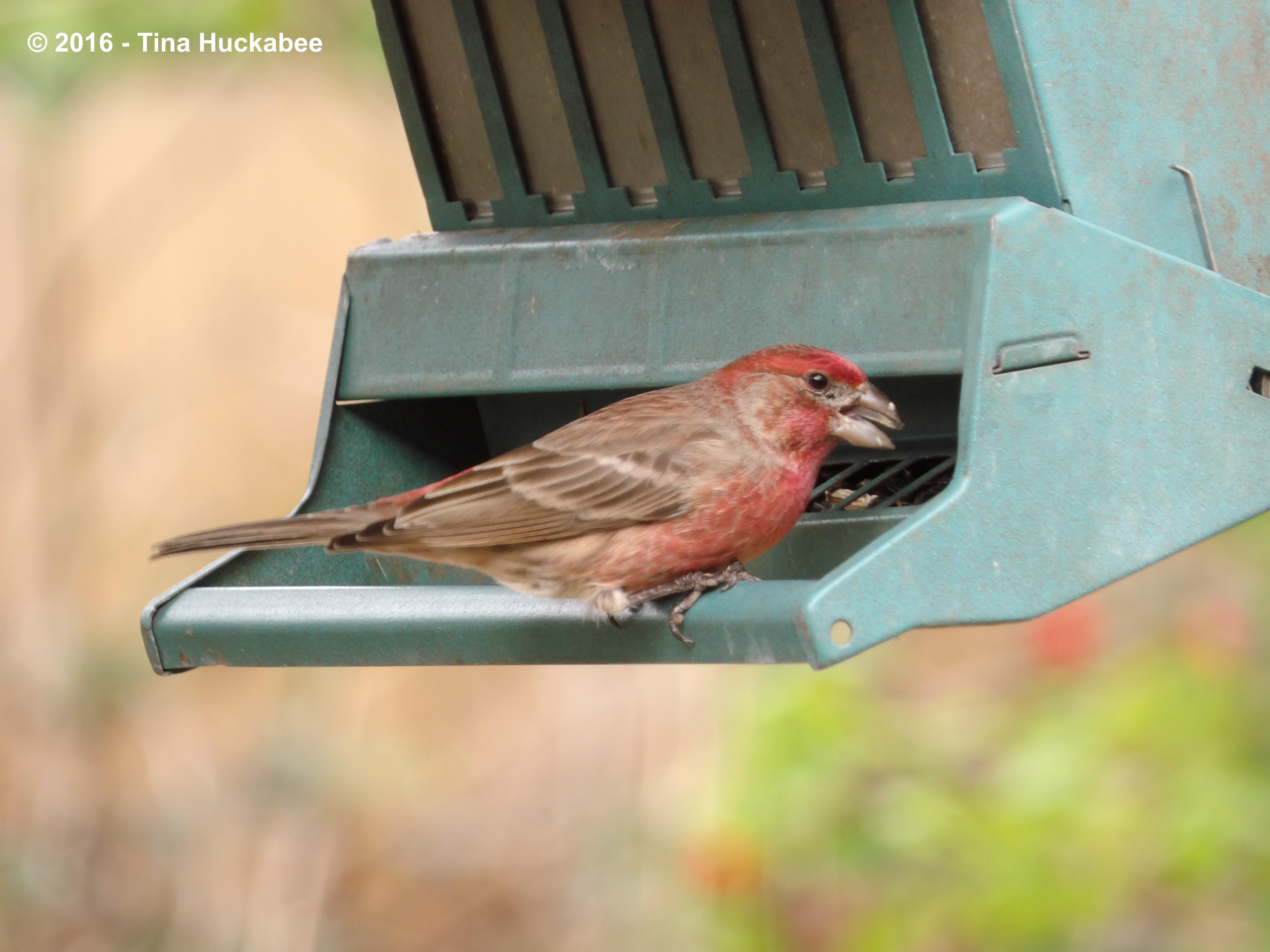
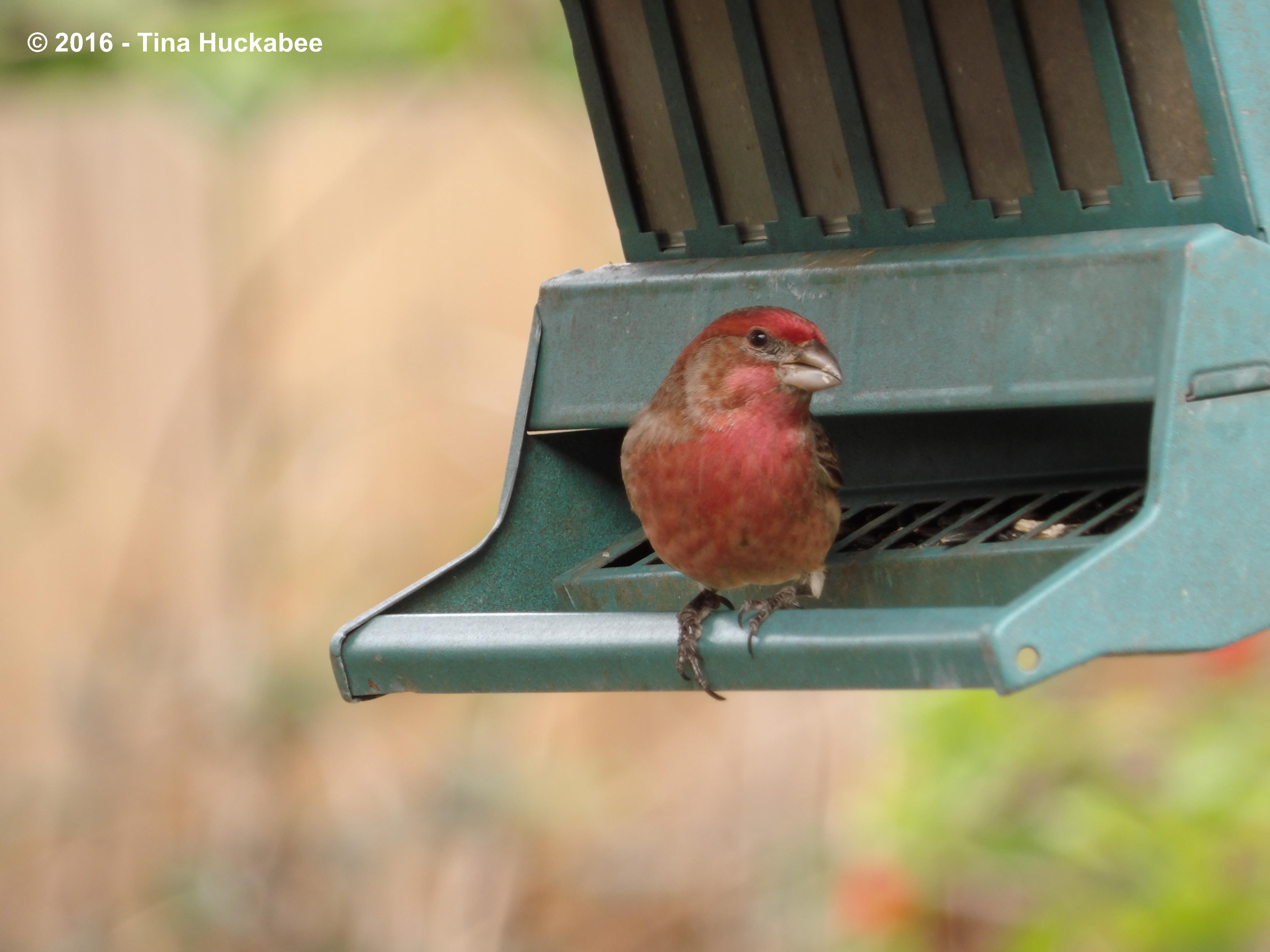
House Finches, Haemorhous mexicanus,   sit in the trees, on the ground, and at the feeders.  I love these chatty birds and I especially appreciate that they sit still, munching away contentedly for long enough to get good captures.  Usually, couples feed together, but at this particular moment, these two took turns–first him,

IMGP3633.new

IMGP3629.new

…then her.

IMGP3656.new

In November I signed up to participate in  Project FeederWatch, a yearly, months-long look at bird population trends organized by the Cornell Lab of Ornithology.  Mostly I did this because I felt the draw to participate in research on the status of North American birds, including migration and population  trends.  Also, I like the idea of being a citizen scientist.

 Snort.

Despite that trumped-up term, the information gleaned by the 200,000 participating volunteers throughout North America, is vital for research on how bird populations are trending up or down and, over time, whether native birds are declining, which, unfortunately, the project has documented.  Cornell Lab of Ornithology is all about the science of birds and through education, the conservation of our beloved and beleaguered native birds.  Cornell encourages concerned citizens to participate in this necessary research.

There are some rules and the counting method is specific and precise, though not difficult to understand or implement, even for novice bird watchers. Project FeederWatch spans November through April, book-ending the autumn and spring migration seasons, as well as the stable wintering population of your particular site. Ideally, observance is weekly, though there’s no penalty for skipping your count from time-to-time.  Cornell ornithologists are happy to get what information they can, when they can, to better understand how North American birds are faring.  Volunteers choose the same two consecutive days each week to observe and record what and how many birds are in the chosen area and for what length of time the area is observed.  Whether for one hour or many–it’s up to the volunteer–weather conditions are noted, and Cornell asks that particular rules of counting be followed to ensure no multiple counts of birds.  The process is well-tuned and the fine folks at Cornell Lab have done their utmost to make the activity easy to use and  educational. Data is either mailed in  hard copy form or entered directly into a user-friendly site; that’s my preferred method. Cornell requests an $18 participation donation for the starter kit, but  I think it’s well-worth that small amount to be part of a long-term scientific study and, like most scientific and educational organizations,  Cornell Lab of Ornithology can use all the moolah they can get.

It’s not too late to participate for this season; check out Project FeederWatch for more information.

Any excuse to watch the backyard birdies!

Oh dear.  I’m becoming one of them. Yeah, that’s right, my binoculars are on the shelf by the back door, ready and waiting.  Ready and waiting for that little female Downy Woodpecker who’s too quick in the oak trees for me to get much of a look, much less a decent photograph.

Oh well, there’s always preparation and photographs for  next month’s Wildlife Wednesday!

Did wildlife visit your garden this past month? Please post for January Wildlife Wednesday–share the rare or mundane, funny or fascinating, beneficial or harmful critters you encounter. When you comment on my post, please remember to leave a link to your Wildlife Wednesday post so readers can enjoy a variety of garden wildlife observations.

Happy wildlife gardening!
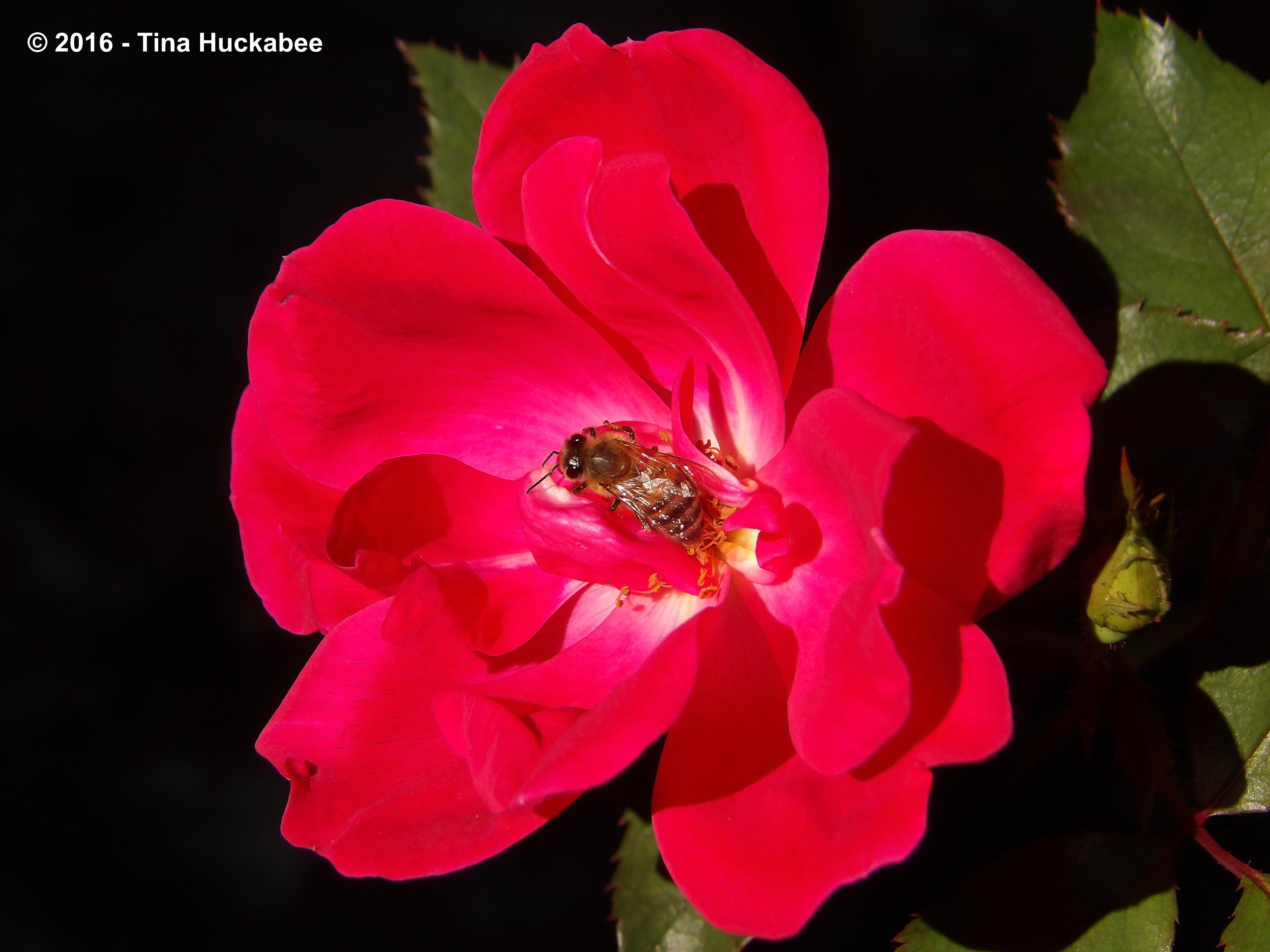
IMGP3385_cropped_3525x3051..new

IMGP3195_cropped_3328x3130..new

Wildlife Wednesday, December 2015

Welcome to Wildlife Wednesday for December where all things feathered, scaled, and furred are appreciated and lauded for their contributions to a healthy environment and simply for being.  Bees, butterflies, and birds are still active in the mid part of autumn and are visiting and/or residing in my gardens. Gardens are richest when they reflect the natural world in complexity and diversity of plant and wildlife.  A wildlife garden is a refuge for insects and animals by providing ample food, water, and protection for critters and it’s also a challenging and educational endeavor for gardeners.

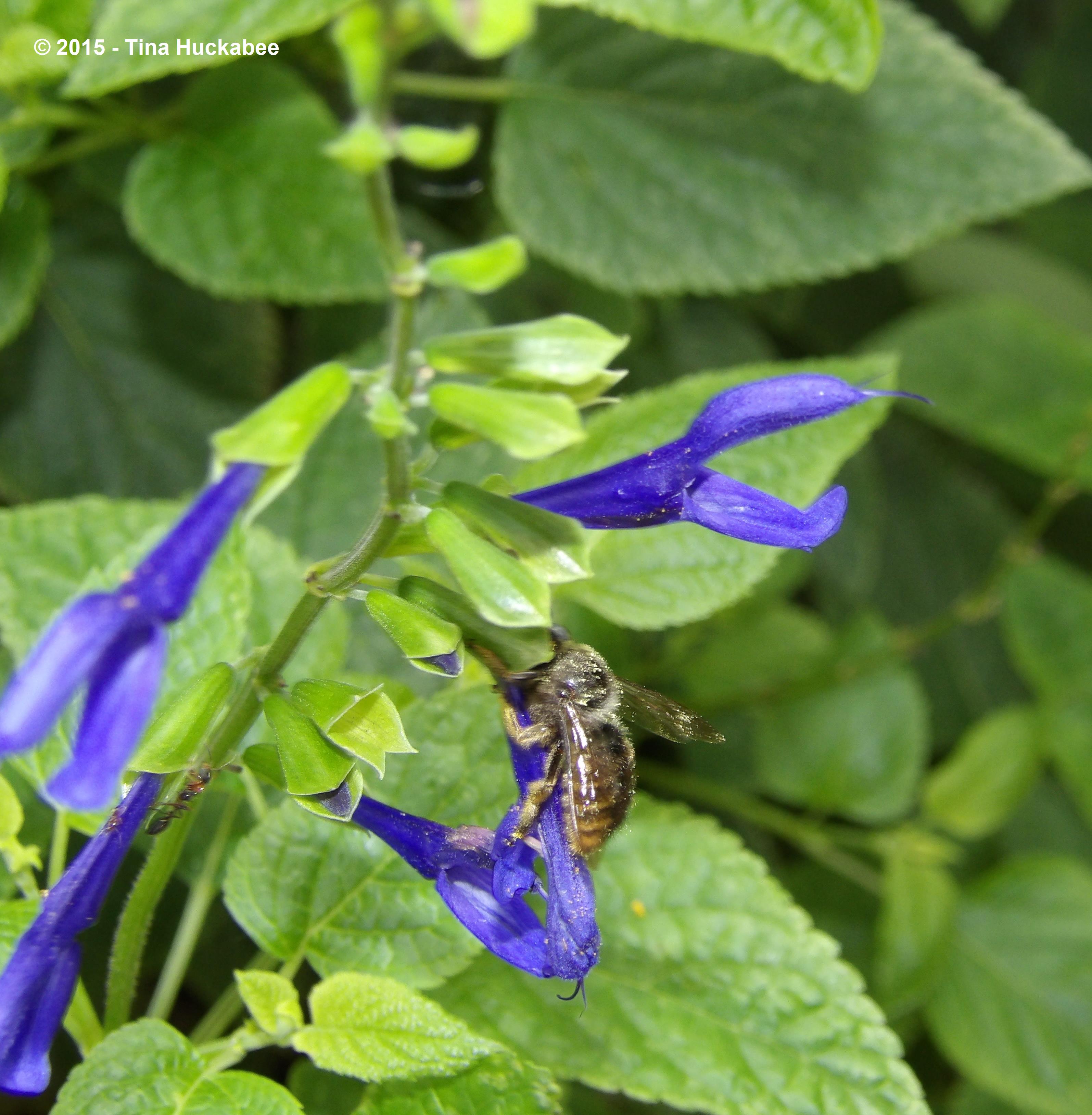
Additionally, wildlife are tricky to photograph, or at the very least, not always in cooperation with the photographer’s goal.  I was attempting a pollinating shot of this Horsefly-like Carpenter bee,

IMGP2672_cropped_2940x2410..new

…but the bee was too fast for me and my camera.  However, I’m pleased at the shot of her in flight between the blooms of white Tropical Sage, Salvia coccinea.

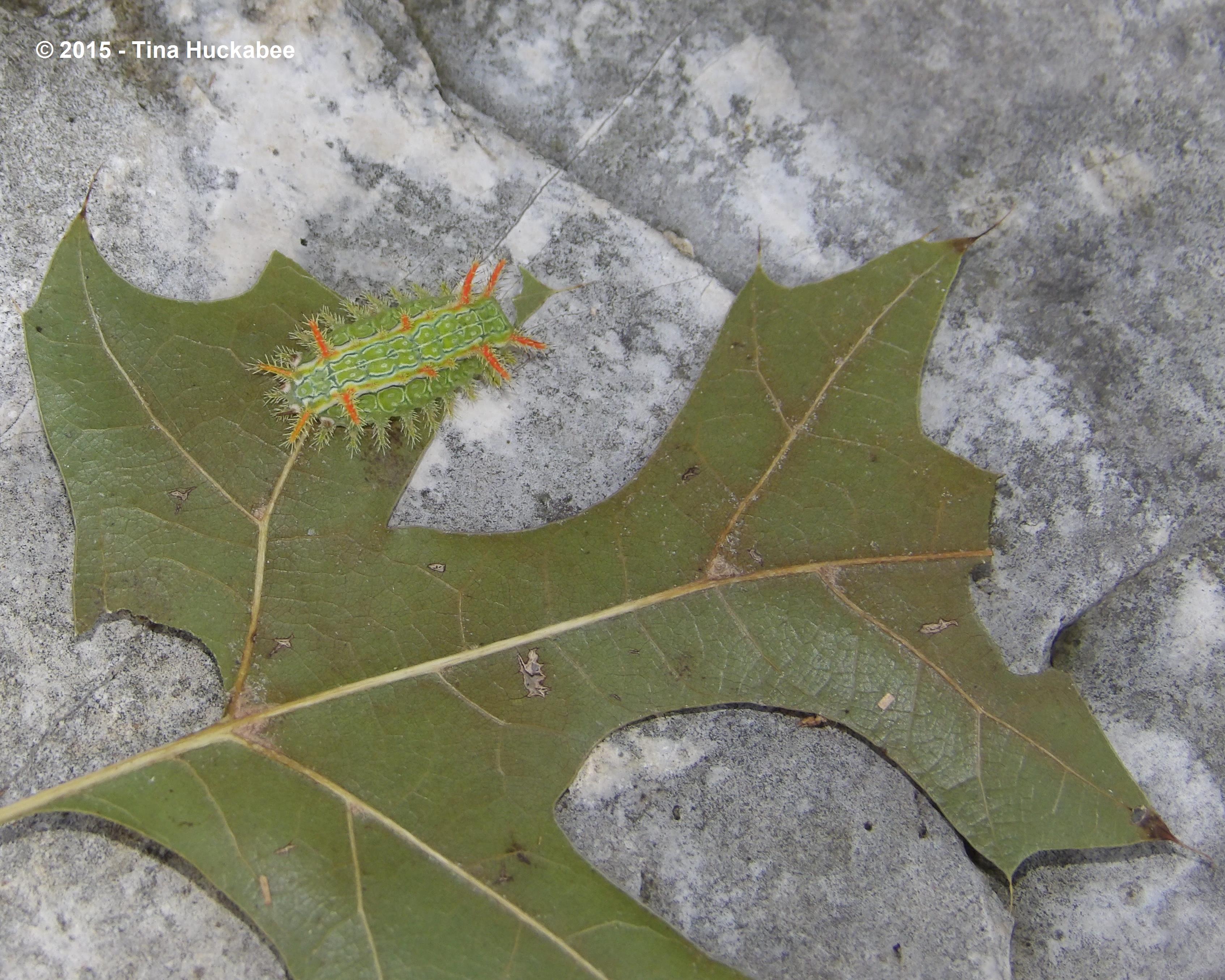
I spied this gorgeous caterpillar on  a single fallen Shumard Oak leaf.

IMGP2624_cropped_3387x2710..new

A  Spiny Oak Slug MothEuclea delphinii, I knew better than to touch this caterpillar because it can deliver a wallop of a sting–birds and gardeners alike are forewarned by coloration and spikes.  I placed the leaf up on a branch, entwining it with another leaf,

IMGP2630_cropped_3014x3244..new

…in the hopes that the moth larva would continue its eating in preparation for pupating to its adult form.  When I checked later, the moth caterpillar was off to other munching territory.  Happy trails to you, buddy!!
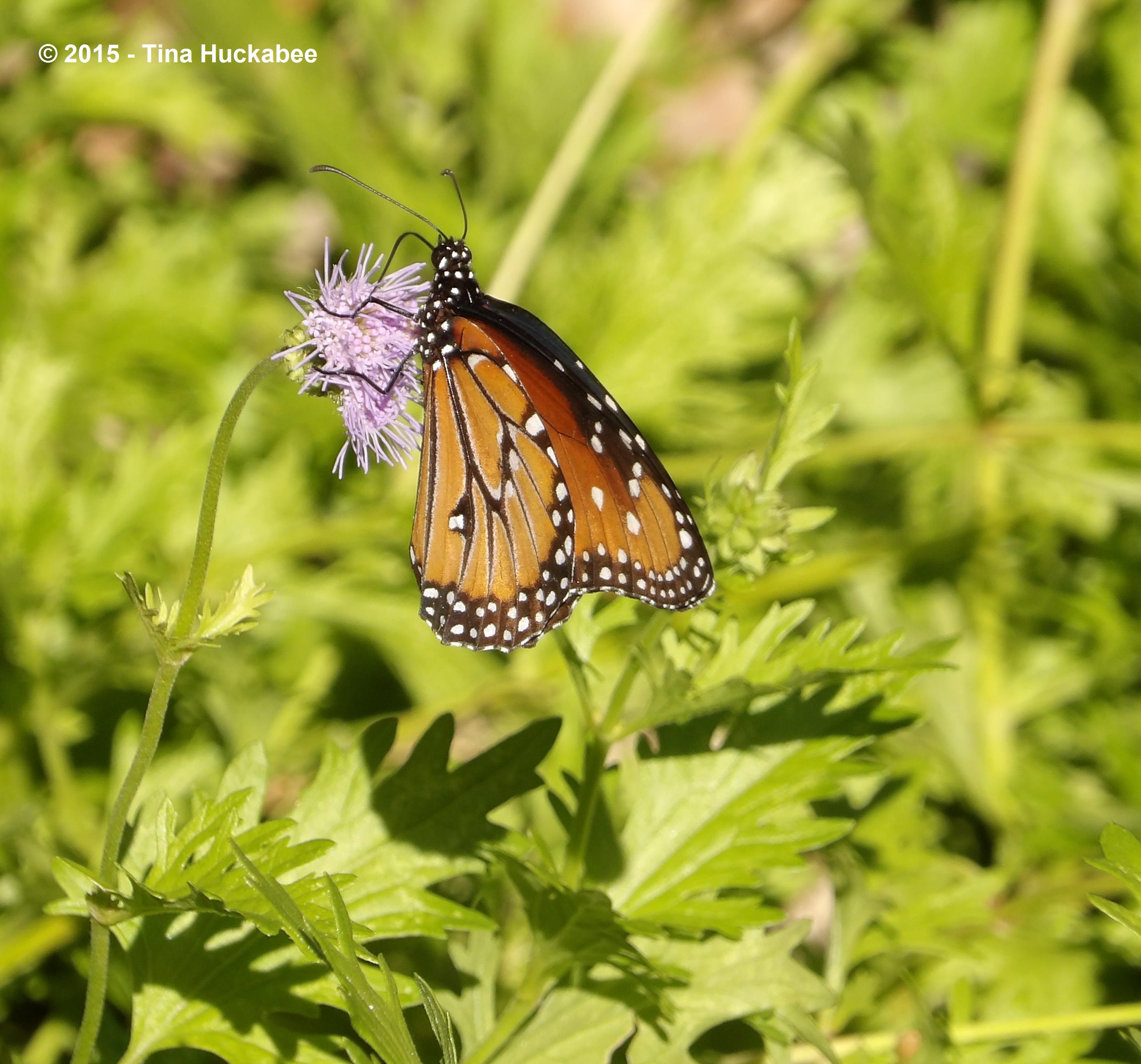
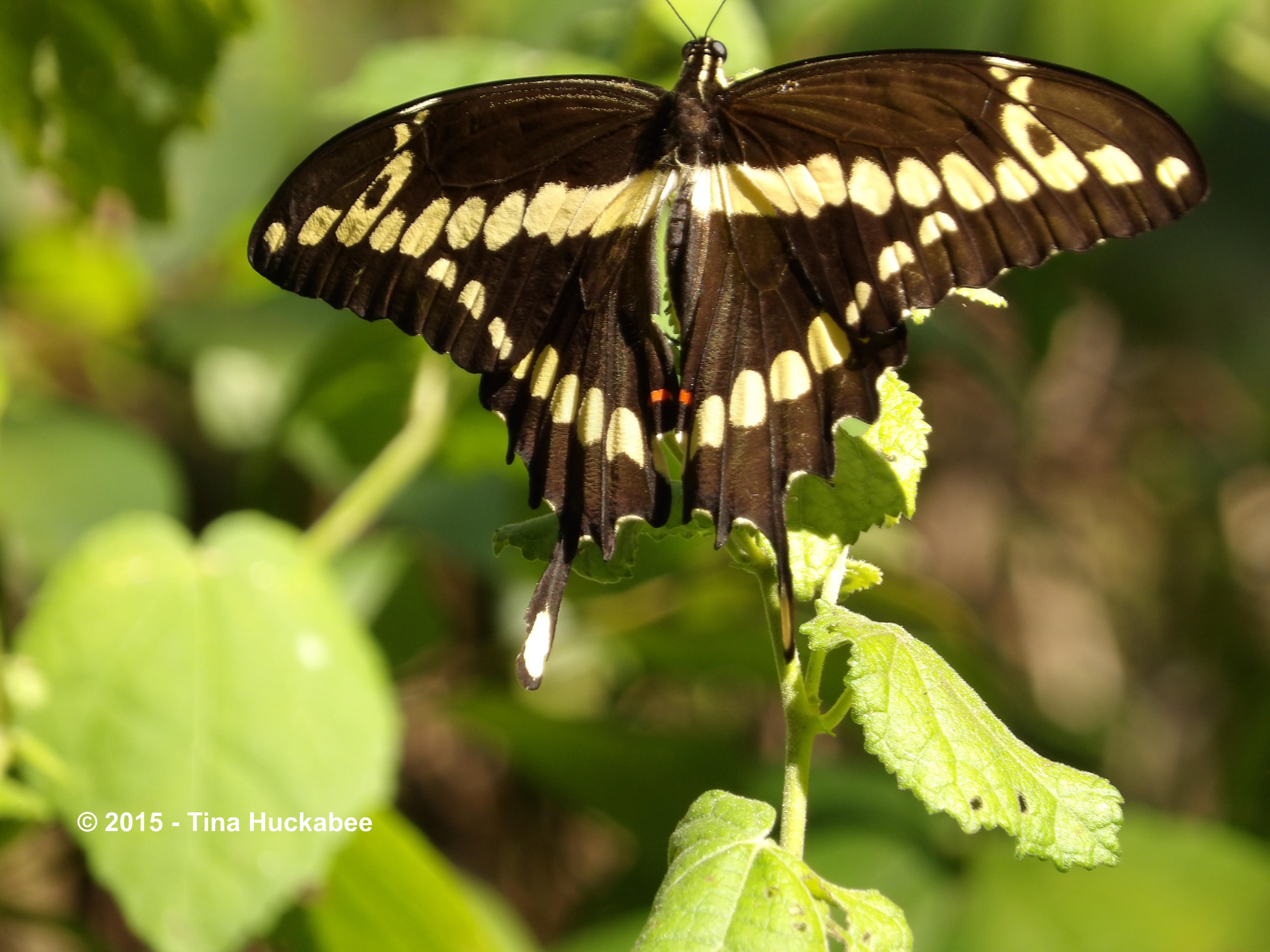
Giant SwallowtailPapilio cresphontes,  visited and pollinated before the weather turned wet and chilly,

IMGP2587.new


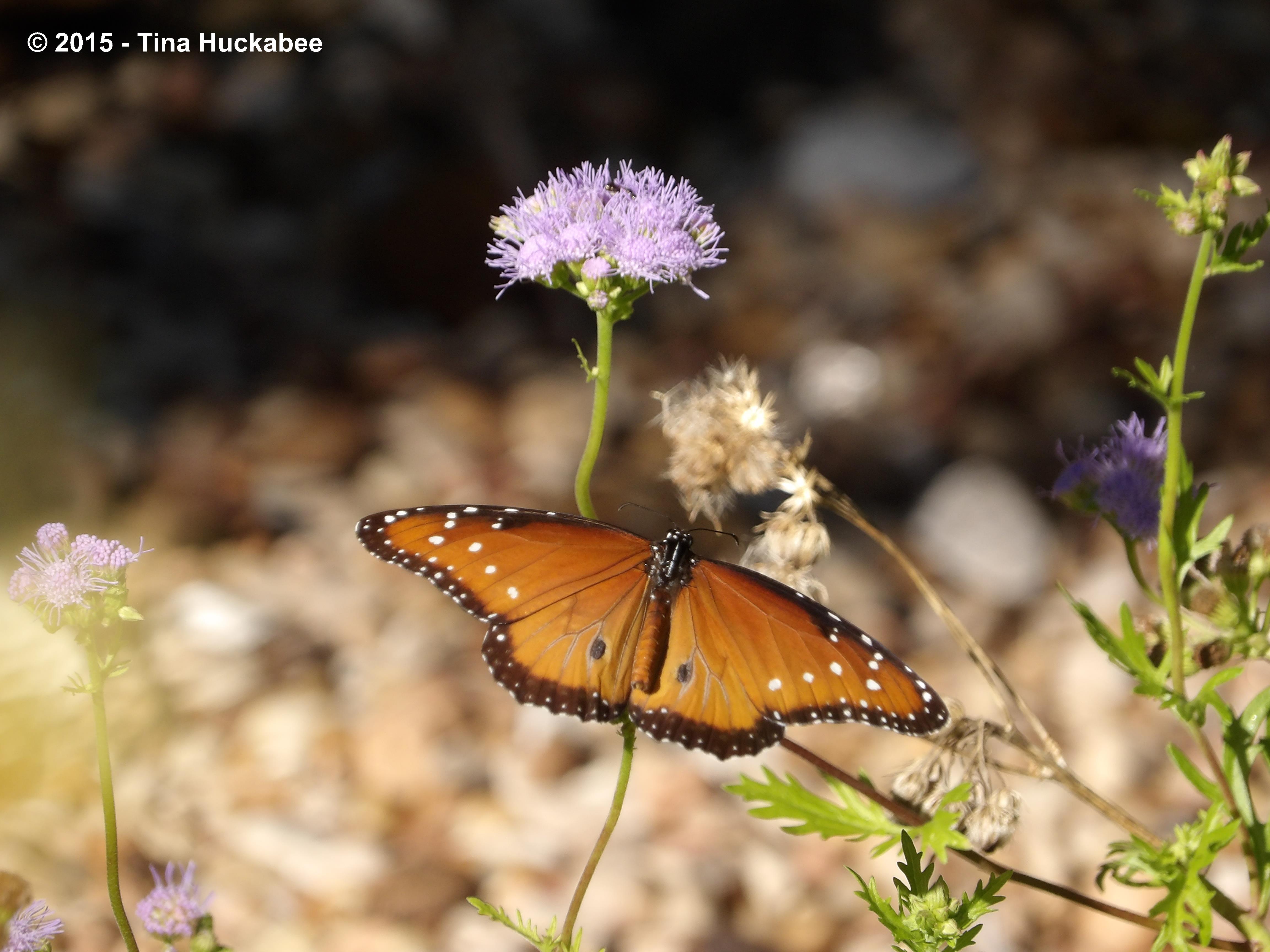
A year-round resident of Central Texas is the QueenDanaus gilippus, who is a relative of the migratory Monarch Butterfly, Danaus plexippus,  and is nectaring on Gregg’s Mistflower, a favorite nectar plant of this species.

IMGP2588_cropped_2931x2733..new

Here, a male Queen rests and poses on the same Gregg’s Mistlfower plant. IMGP2590.new

I see a few Queens on warmer days, though lately, Queens and warmer days are fewer in number.

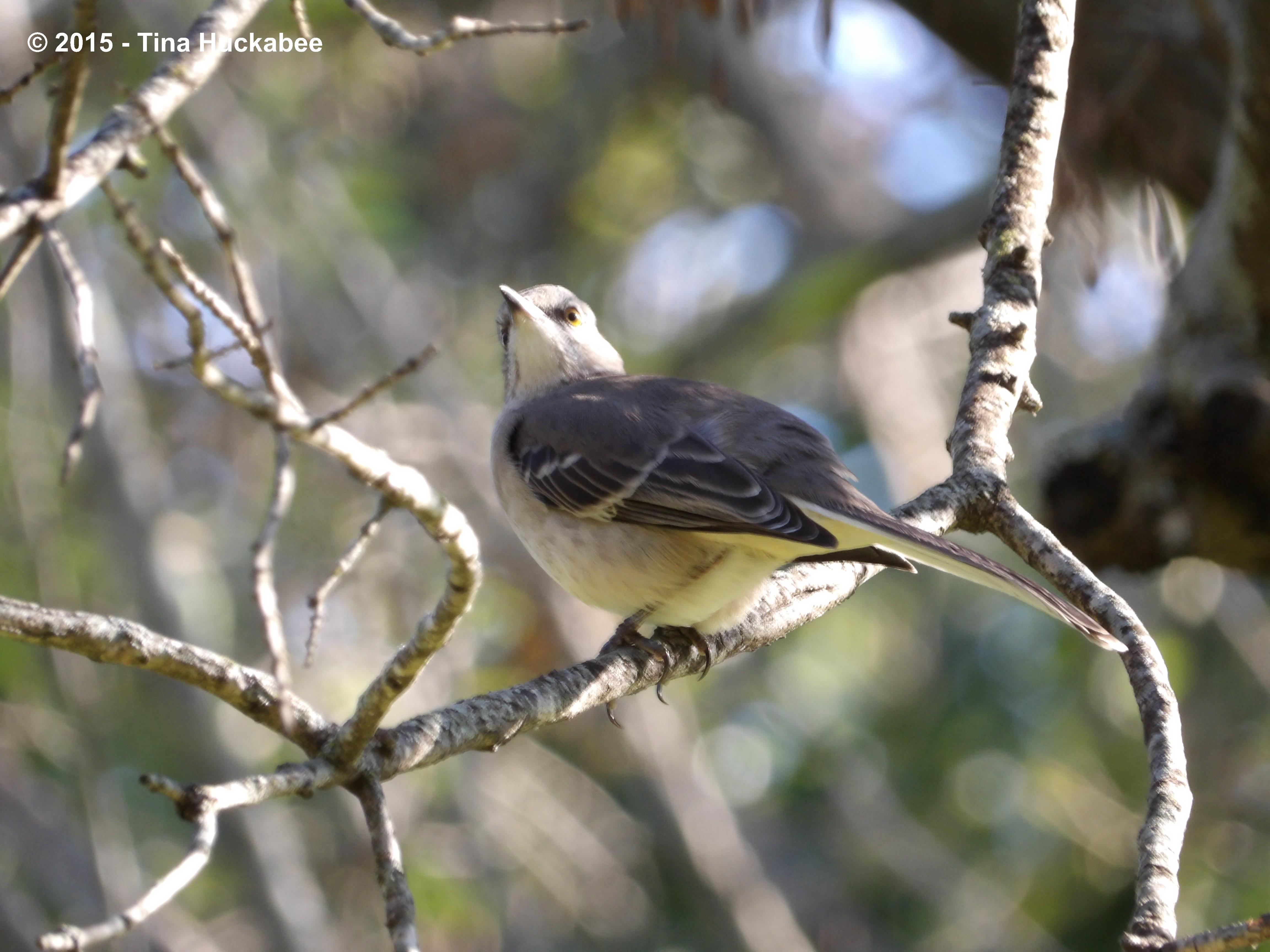
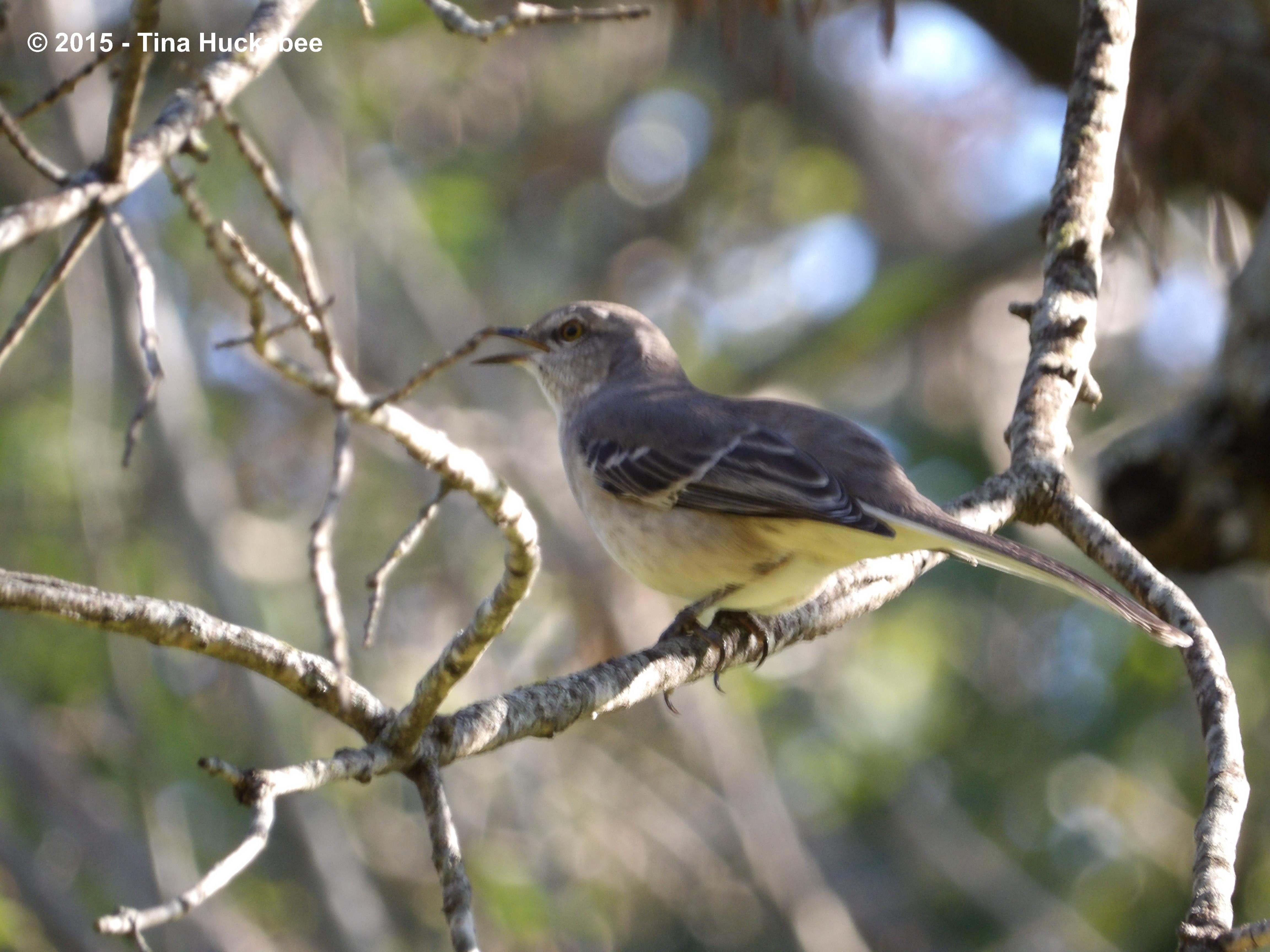
Early one morning, this  Northern MockingbirdMimus polyglottos,  landed near to where I was working and hung out, practically begging me to take some photos.  I obliged:

IMGP2604.new

IMGP2605.new

IMGP2601.new

IMGP2607.new

The belly on this beauty is a very light yellow, but often Mockingbirds sport grey bellies. The color differences aren’t entirely gender related, but judging from photos in my various bird books, might be age related.  I think this might be a first year female.

I was tickled at the success of this photo of a  Carolina WrenThryothorus ludovicianus.

IMGP2986_cropped_3479x3027..new

 These little birds are common in my garden, often announced by their lovely (and loud!) songs, but are quick-moving and hard (for me!)  to photograph.  They flit among the under-story shrubs and low branches at the back of my beds, looking for spiders and a variety of insects, but I do see them at the bird feeders, snatching sunflower seeds along with other birds.

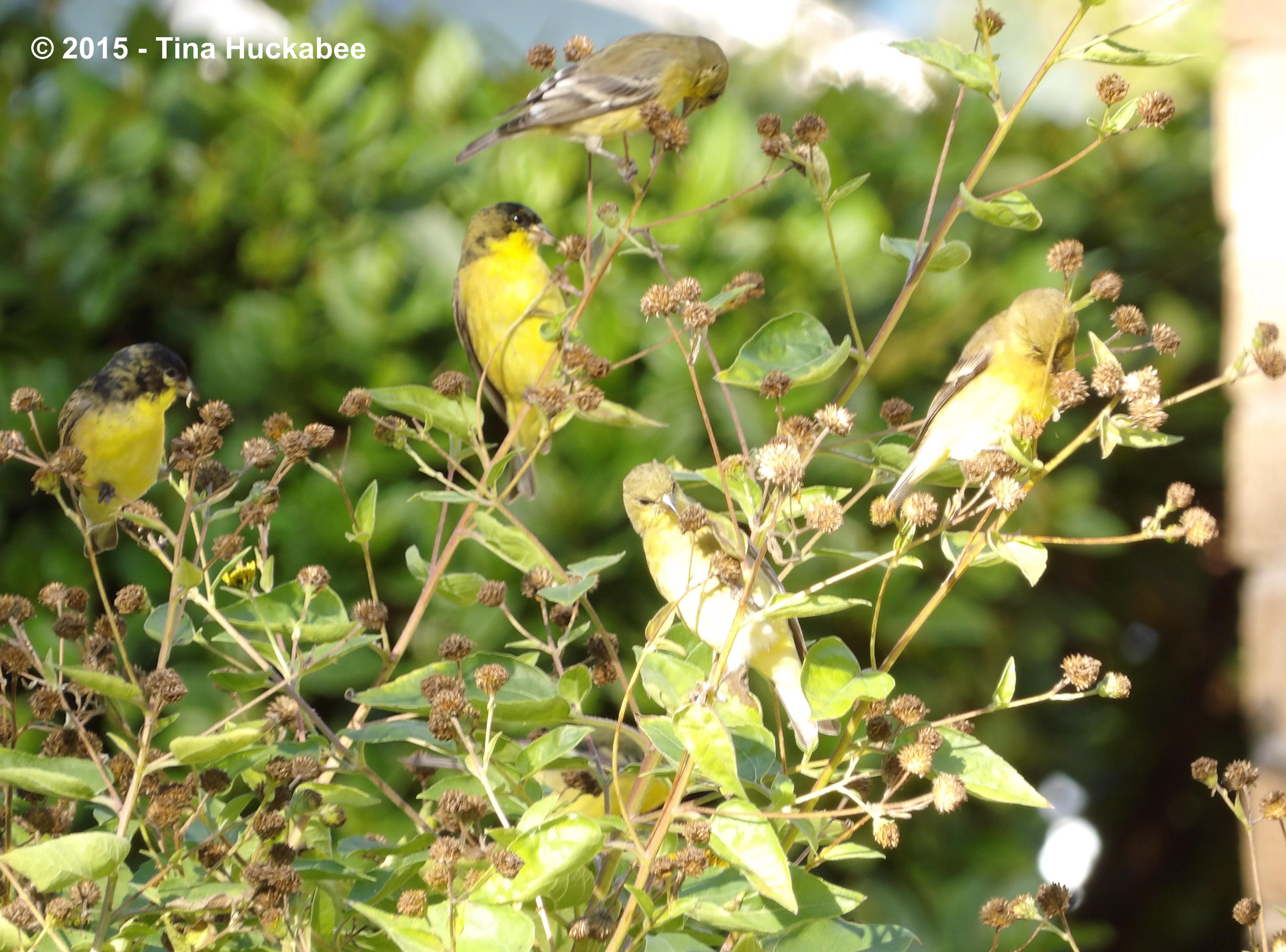
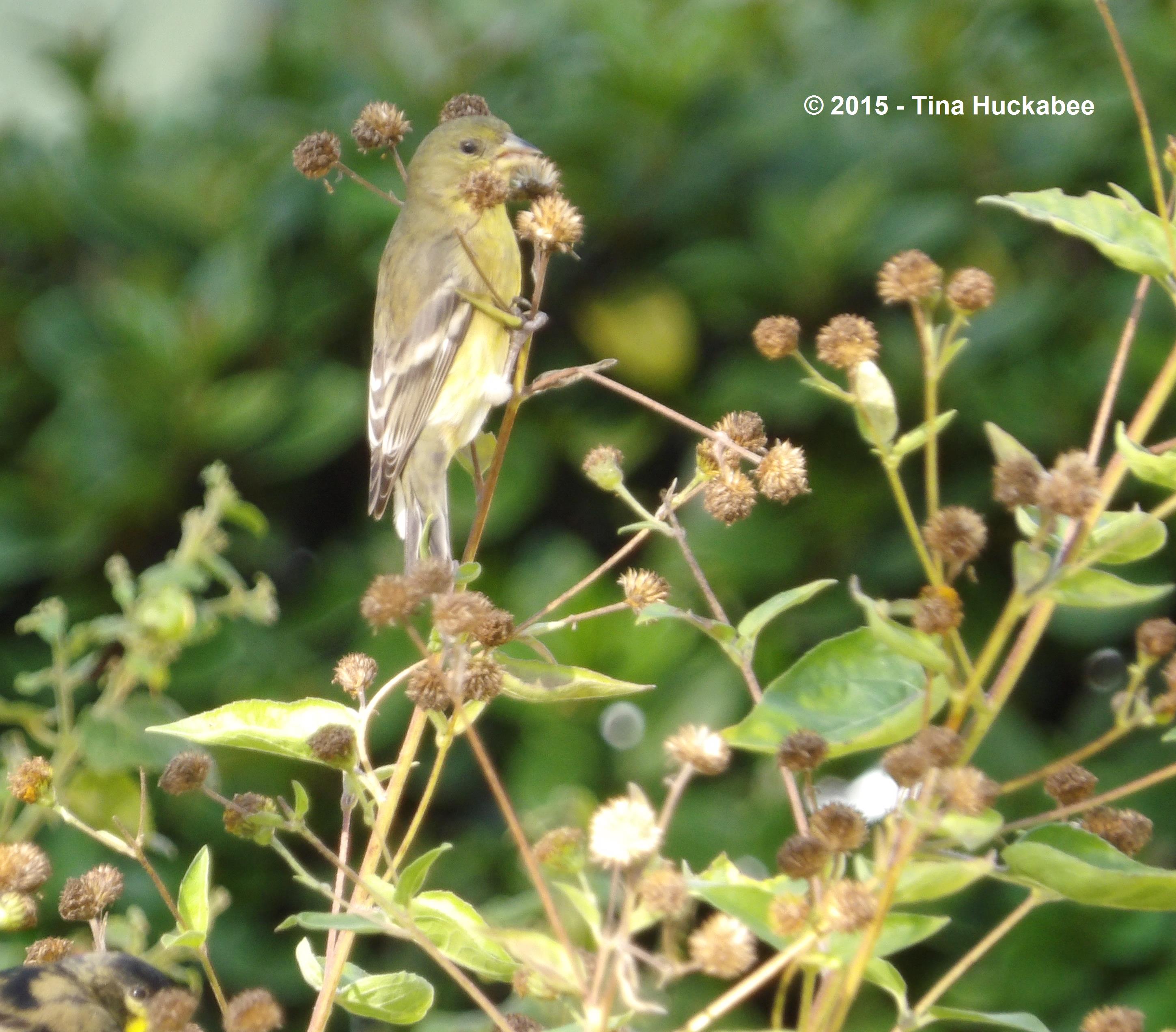
Lesser GoldfinchesSpinus psaltria,  are a favorite bird species of mine.  They love, REALLY LOVE seeds of aster plants.  In the summer, they visit my large Sunflowers and Purple Coneflowers and in the fall and winter, the seeds of the Goldeneye.

IMGP2796_cropped_4115x3046..new

IMGP2834_cropped_2898x2543..new

There are still some flowers blooming and those will seed out in the next month or so.  I should enjoy observing the Goldfinches, on and off, through much of winter.  More importantly, they’ll have a food source readily available in my gardens for a long time.

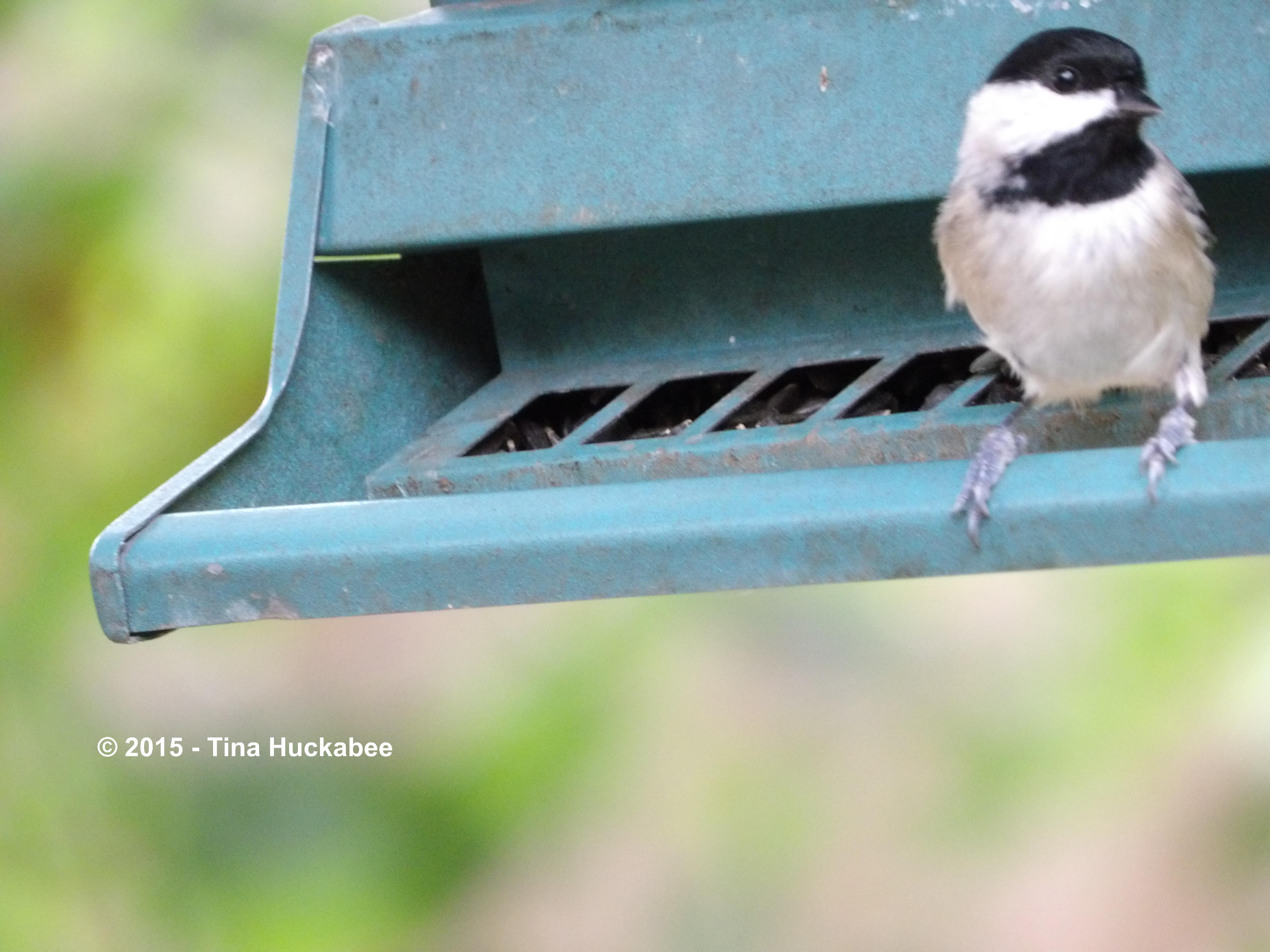
There are two Carolina ChickadeePoecile carolinensis,  pairs who regularly visit my feeder.

IMGP2920.new

Like the Carolina Wren, the Carolina Chickadee enjoy spiders and insects, but also eat seeds and visit backyard bird feeders.  “My” couples feed in tandem with a pair of Black Crested Titmice, who have been very shy with me this month, thus no photos of either Titmouse.

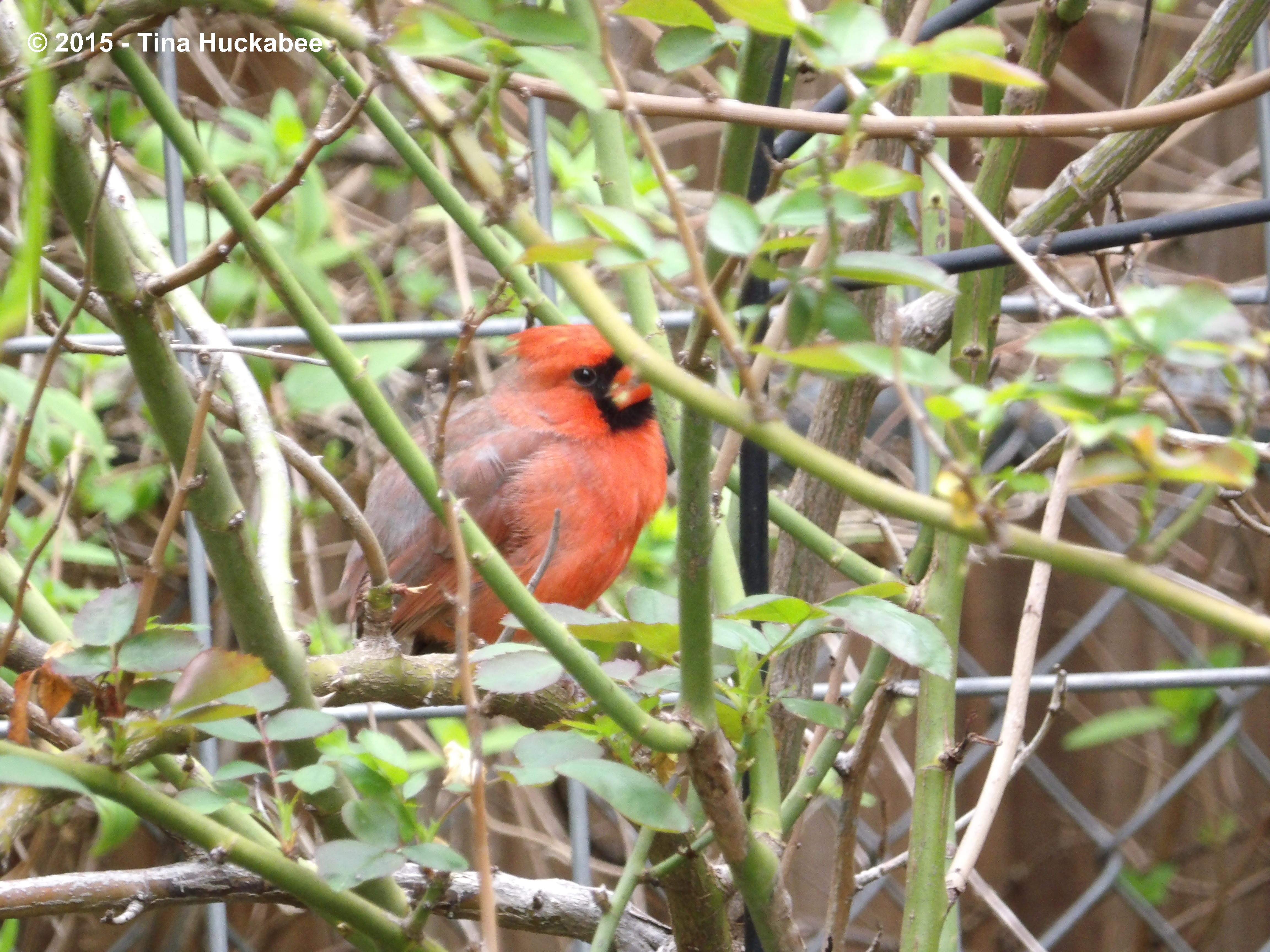
Finally, there was this Northern Cardinal, Cardinalis cardinalis.

IMGP2756.new

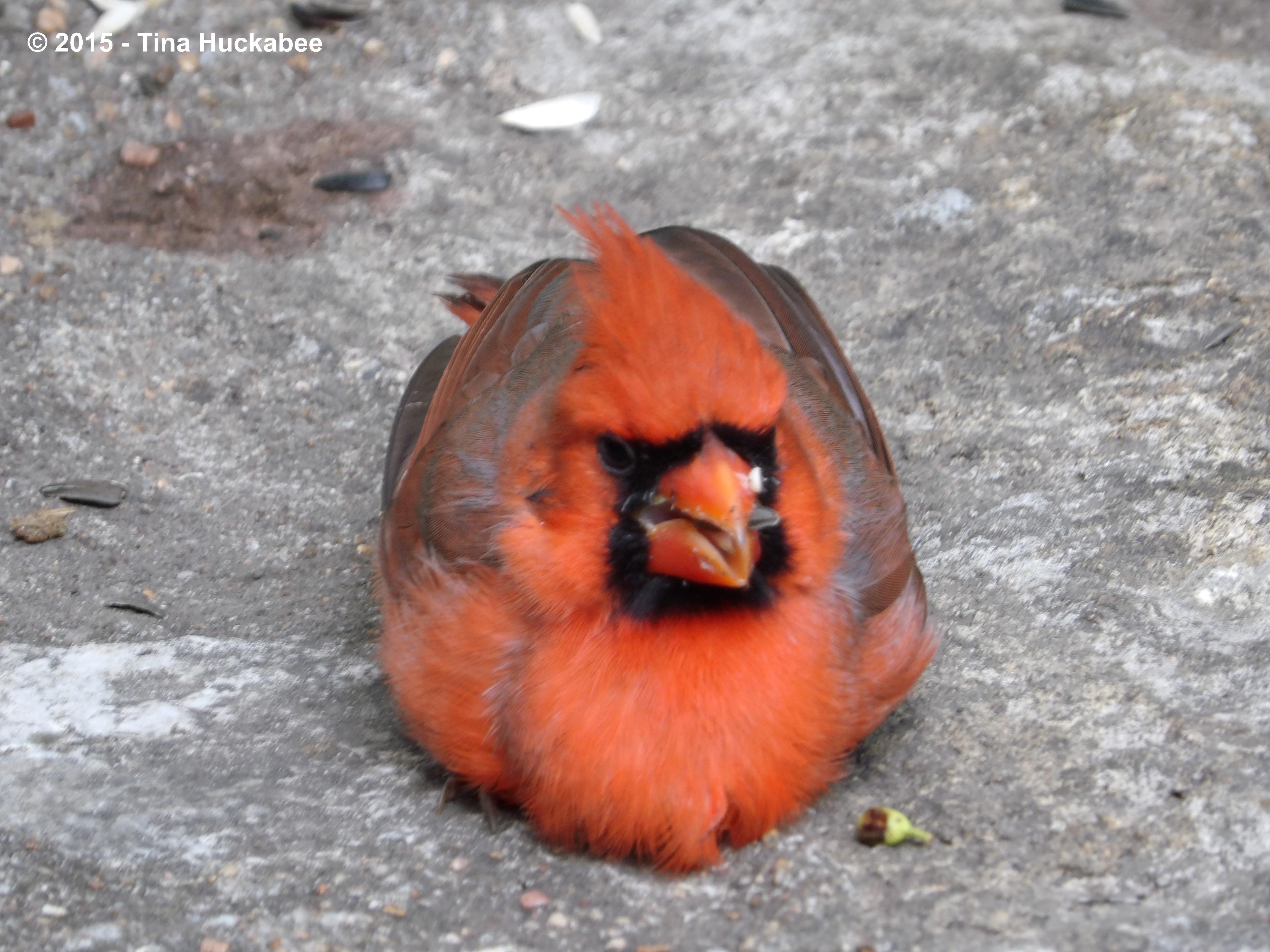
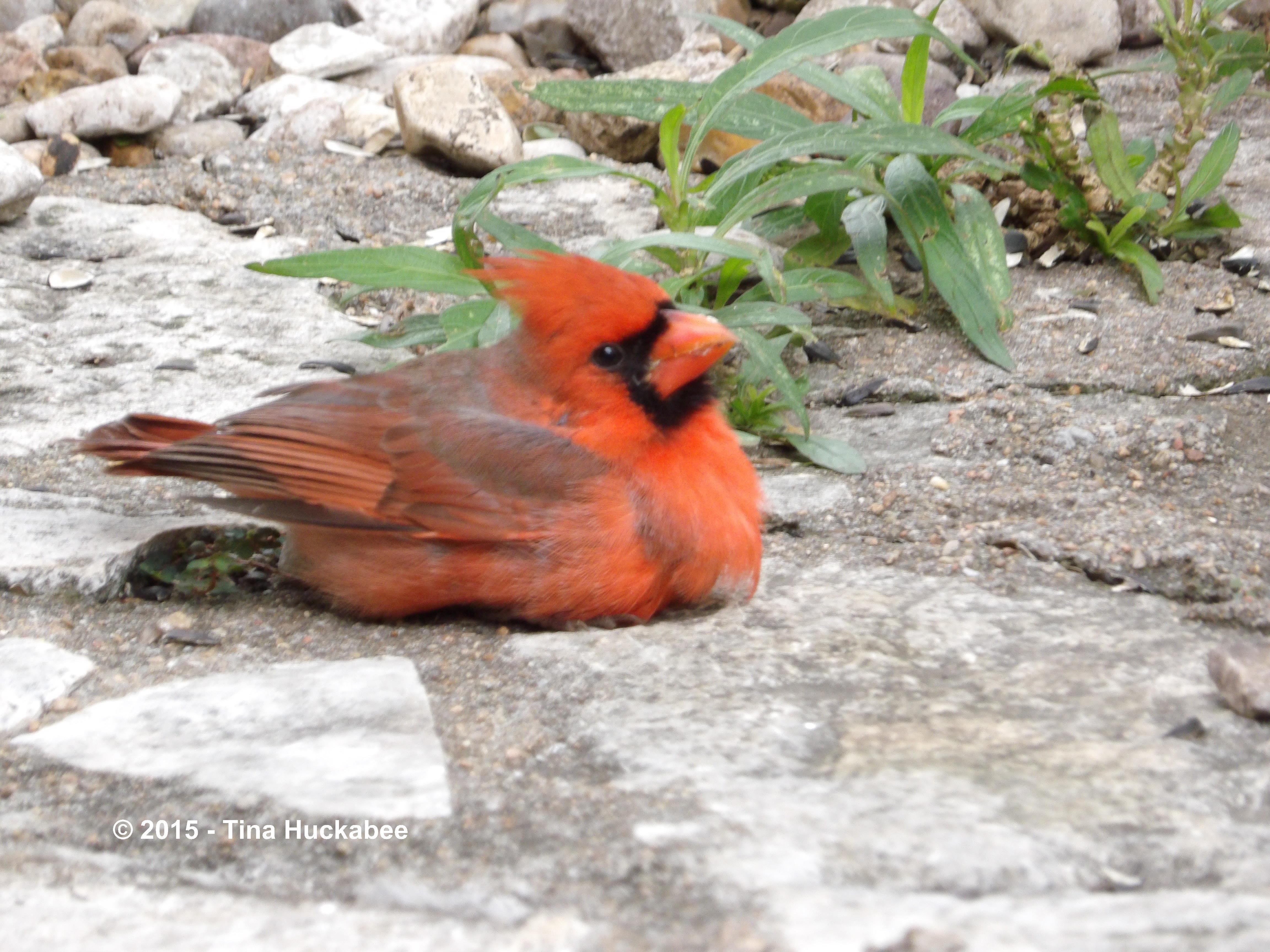
I watched this guy for about a week, mostly seeing him in the brambly part of my back garden.  I would also see him plopped on the ground, in a rather lazy dove-like position, munching away on sunflower seeds which the Blue Jays and squirrels messily and generously  knocked out of the feeder.

IMGP2976.new

I didn’t, however, see him fly.  He’d flit, low to the ground, and waddled along if I made a move toward him.  I noticed that he didn’t have tail feathers,

IMGP2939.new

…but his wings appeared to work normally, not as if he had a broken wing.  He never gained height in flight, but fluttered through the garden, and when landing, he’d tumble, as if he couldn’t quite land on his claws. I’ve wondered if he’s the mottled juvenile Cardinal that I wrote about in September’s Wildlife Wednesday, but I have no idea.

This past week, as the weather was turning wet with potential flooding (that didn’t happen) and cold (which did), I decided to intervene and catch this odd little bird, rather than have one of the neighborhood cats or perhaps a nighttime rat or raccoon do him in.  I was able to catch him very easily, which isn’t a good sign.  If  can catch a bird with little effort, how easy would it be for a predator to catch him?

IMGP2930.new

Had it been a normal week, I would have taken him to Austin Wildlife Rescue, but the Great Cardinal Catch was the day before Thanksgiving.  I’ve volunteered at Wildlife Rescue in the past and though I didn’t often work with birds, I know the basics of provisions:  gentle handling while wearing gloves, a quiet, protected spot for the bird to rest, water and food.   Ironically, my best cage is my cats’ carrier–but I don’t mention that to the birds that I’ve rescued.   Nor do I mention the trapped and vulnerable birds to my cats.

The Cardinal seem to do well for the first 24 hours–from Wednesday through Thanksgiving Day. He ate and I thought that I would take him in to Wildlife Rescue on Friday, or perhaps, if he improved, release him.  Alas, he was dead by Friday afternoon. I’m not quite sure what was wrong with him, but he wasn’t a normal looking or acting Cardinal from the first.  Post-mortem, I looked over his body and didn’t see any obvious signs of injury and I’m sure of his wings were in good shape.  That he couldn’t fly well or land properly and that he didn’t have tail feathers, which makes me think that he was askew in his development or may have had an injury that wasn’t obvious.

Should I have nabbed him and placed him in the cage?  I don’t know.  I am sorry for his death, but I don’t think he would have survived in my garden in the cold and wet weather and it’s probable that even the dedicated staff at Wildlife Rescue couldn’t have helped him.

This is a sad note to end on for this month, but a realistic one.  There are many factors that impede the health and normal lifespan of wildlife; I sometimes wonder that any  survive the myriad day-to-day obstacles they face.  Northern Cardinals aren’t in any way threatened or endangered–they thrive in a wide geographic range and have adapted well to human urban development.   But that’s not true for many bird (and everything else) species.   North American bird species are in serious decline and that’s been happening for 5-6 decades.   With the advent of industrial farming and urbanization (both of which are major ingredients in climate change), as well as habitat destruction and widespread chemical use in gardens–the list of damaging factors to the natural world, unfortunately, goes on and on–insects, birds, amphibians, and mammals need our support and consideration.

We don’t want to be responsible for creating a silent spring.

If you don’t yet grow for wildlife, why not give it a whirl?  It’s easy:  plant natives and non-invasive, non-native perennials which provide nectar, pollen, seeds, fruits, and cover.  Get rid of some (or all!) of your sterile lawn–there’s nothing in a typical mono-culture lawn that feeds wildlife.  Plant large native shade trees, under-story shrubs and small trees, perennials (evergreen and herbaceous), and ground-cover. Avoid using any poisons for insects (or any other critters, for that matter) because most insects are, in fact, beneficial.  They pollinate, feed on other insects which can damage plants, and comprise a major food source for all species of animals.  Most insects live and feed on native plants (remember my Spiny Oak Moth Slug from earlier in this post?) and rarely, if ever, “kill” a host plant–insects and host plants usually engage in beneficial symbiotic relationships. If the balance of the food chain is maintained, everyone wins:  critters, people, and the environment!

Make water available for your wildlife visitors; it is the stuff of life.

If you provide these things, no matter where you live, wildlife of all sorts will settle in your garden.  You will learn about your garden residents and visitors and also help repair the world, just a little and in your own plot of the Earth, by assisting those who cannot speak for themselves.

IMGP2961.new

Did you have wildlife visit your garden this past month? Please post for December Wildlife Wednesday–share the rare or mundane, funny or fascinating, beneficial or harmful critters you encounter. When you comment on my post, please remember to leave a link to your Wildlife Wednesday post so readers can enjoy a variety of garden wildlife observations.

Happy wildlife gardening!