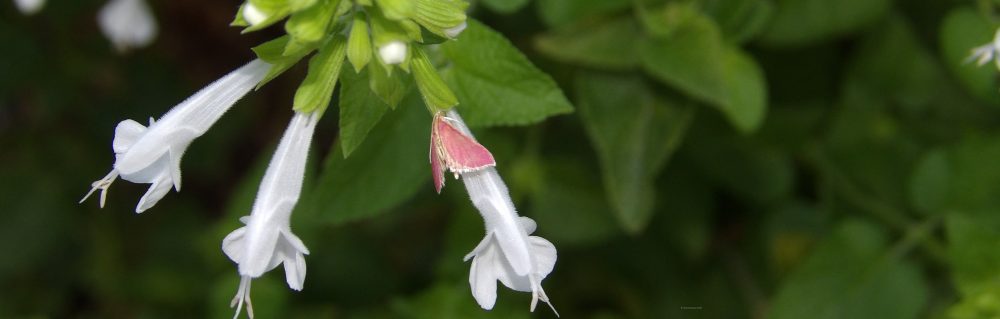
“Well, here’s another nice mess you’ve gotten me into!”
Except I got myself into this mess and have no one else to blame!
Wildlife Wednesday debuts today and I’m committed to following through with photos and identifications of some of the many wild creatures who share my garden space. As an avid gardener, I encourage and appreciate the critters inhabiting my gardens. I’ve planted trees and perennials with the purpose of attracting wildlife to my habitat. Over the years I’ve developed a special affection for bees, butterflies and moths. I bird watch and am thrilled when birds enjoy my gardens and especially when “new” birds visit. Underlying all that though is my passion for perennial and native plants gardening.
As I began the process of viewing my garden with a keen eye toward wildlife in preparation for this meme, I realized how much I don’t know about the “wildlife” in my gardens.
When I cruise my gardens and spot spiders, insects, amphibians, birds and mammals, I categorize with generalities: Oh, there’s a spider! Wow! Look at those bees! Oh, the toads are out! You get the drift. I’ve developed a general working knowledge about the creatures in my gardens–who they are, what they eat, how they benefit, or not, my gardens and how, what I plant in my gardens, benefits them.
But rarely do I immediately jump on the Internet or crack open my wildlife-related books and pour through information about what I’ve observed. I can distinguish a garden spider from a beetle and a bee from a butterfly, but do I usually know what species that spider or beetle is or how it uniquely operates? No, mostly I don’t. I can describe some differences between a honeybee and a native bee, but do I know which specific native bee is pollinating alongside the honeybee? Not always and I don’t necessarily have time to research that information. That I have wildlife (of all sorts) in my gardens is enough for me. I have a rough understanding that most insects are beneficial, so I leave them alone. I grow hardy, tough plants and virtually never resort to chemical warfare. The few “harmful” critters in my gardens (aphids, sucking insects, raccoons) I dissuade from my gardens easily, by spraying with water or making noise or occasionally deleting what draws them to my gardens. Sometimes, I squish’em with my fingers. (Don’t try that with raccoons–it’s not a good idea.)
I not only tolerate, but in fact, welcome, wildlife to my gardens Gardens are ecosystems. Gardens are multilayered with life because of the creatures who visit and inhabit. Without wildlife, a garden doesn’t exist–it is merely a collection of plants.
So I thought it would be interesting and cool to profile members of the Kingdom Animalia who benefit and support the gardens I’ve encouraged and developed. That is, until I began the identification process.
Science is hard. Studying plants for my gardens differs from studying the wildlife which arrives as a result of those plants. Except with wind, flowers generally stay still for photographs; not true of butterflies, bees and birds and the other creeping, crawling, flying things in a garden. They move and often, very quickly. My friend, Linda Hardison of the Oregon Flora Project, told me once that she thinks she was attracted to botany as a scientific pursuit because, unlike any the study of wildlife, plants don’t move and there’s plenty of time to identify and study them. I really appreciate that sentiment now, as I embark on researching the many, many creatures in my gardens. Gardening is one part creative design–planting and arranging in a pleasing, structurally aesthetic form and one part scientific–understanding the life and life-cycles of plants and the creatures the plants serve and benefit. It is the symbiosis of the two processes, the creative and the scientific, that constitutes gardening in its most complete form.
I hope I’m up to the task!
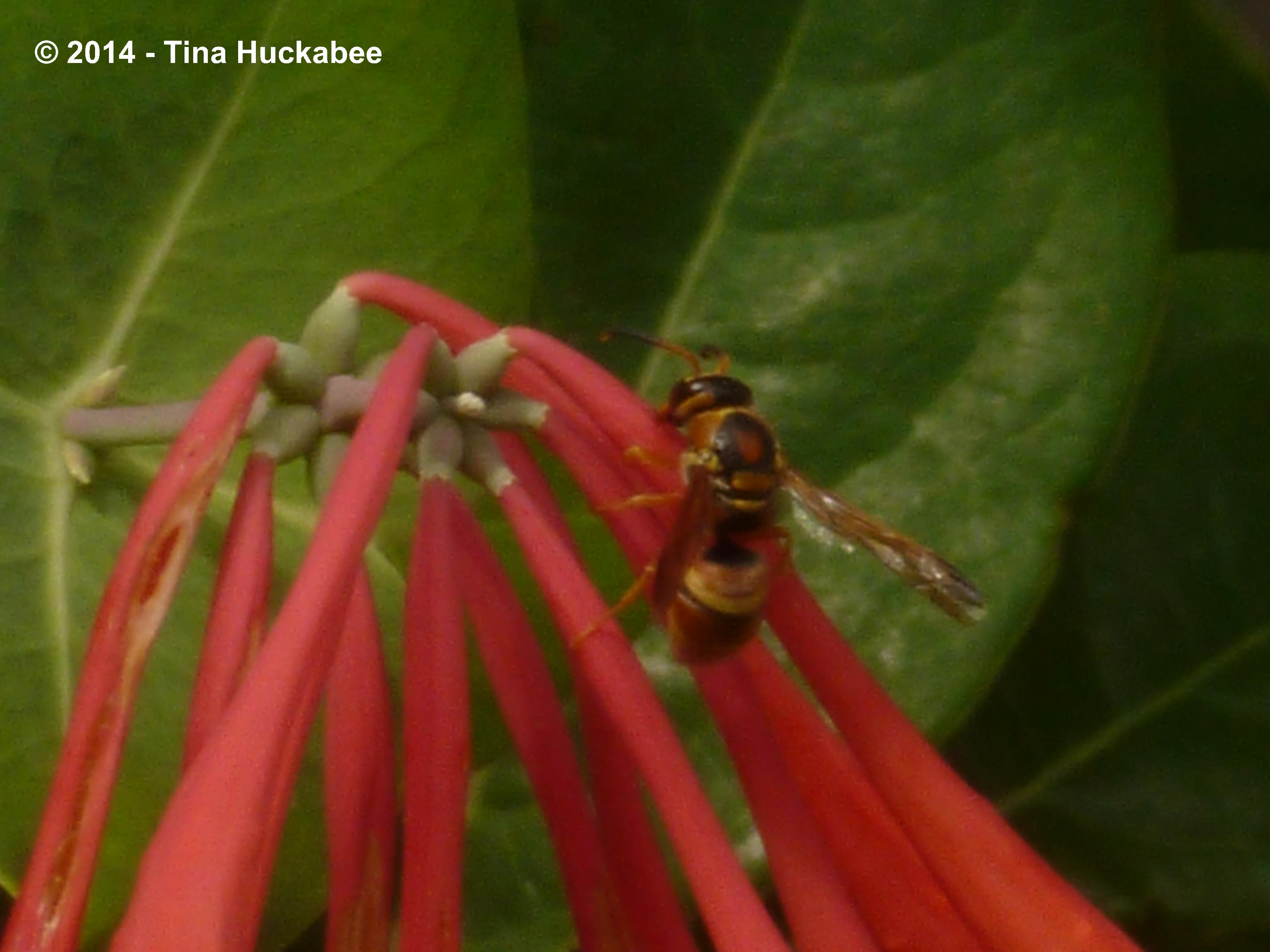
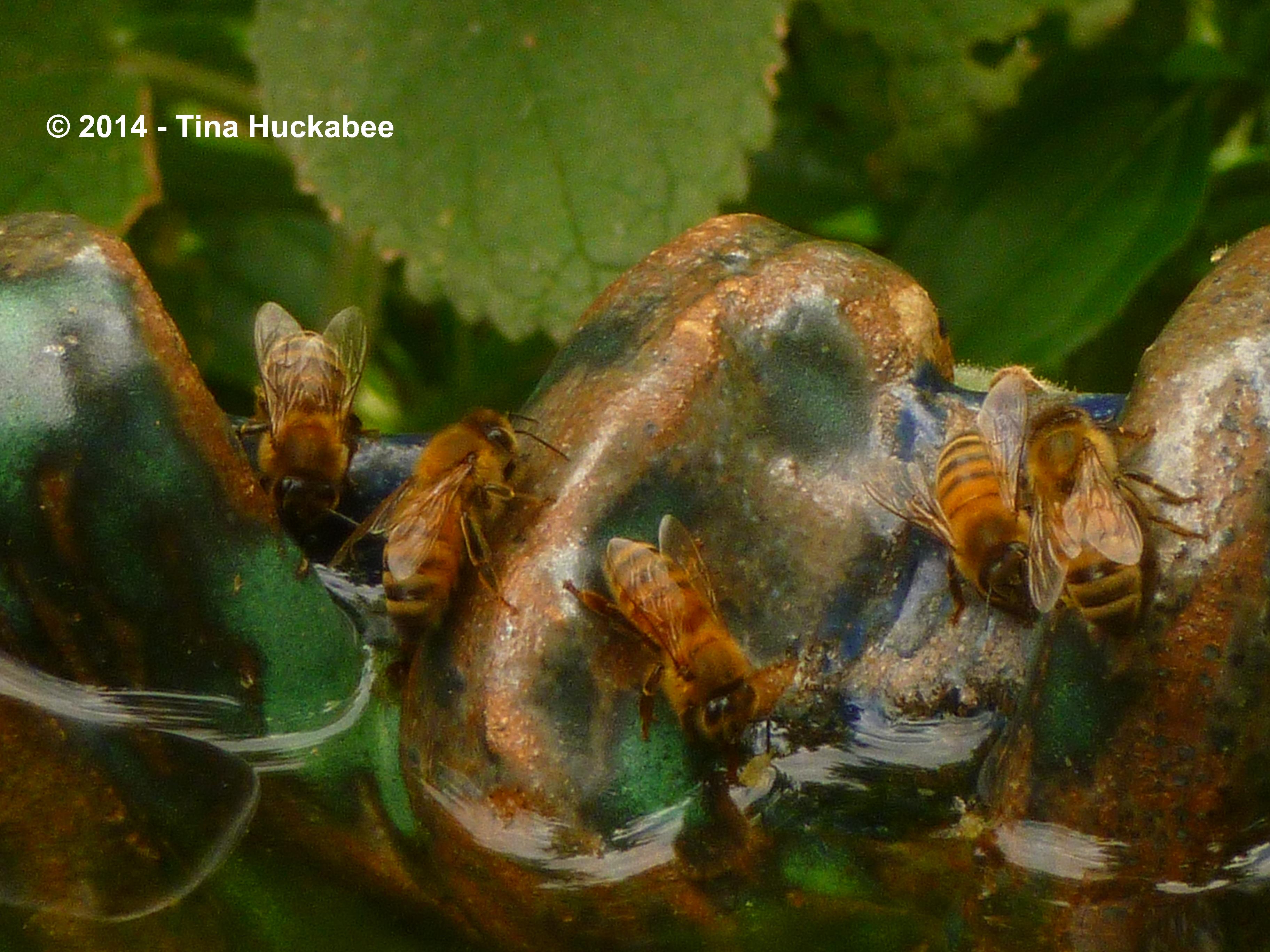
Not to anthropomorphize, but I love to see critters sharing space on a plant, seemingly enjoying the beneficence of what the plant (Coneflower) provides for each.

On the other hand, it could be that Ms. Honeybee decided to skedaddle before the crab or flower spider, genus Mecaphesa, attacked her. Wise little bee.
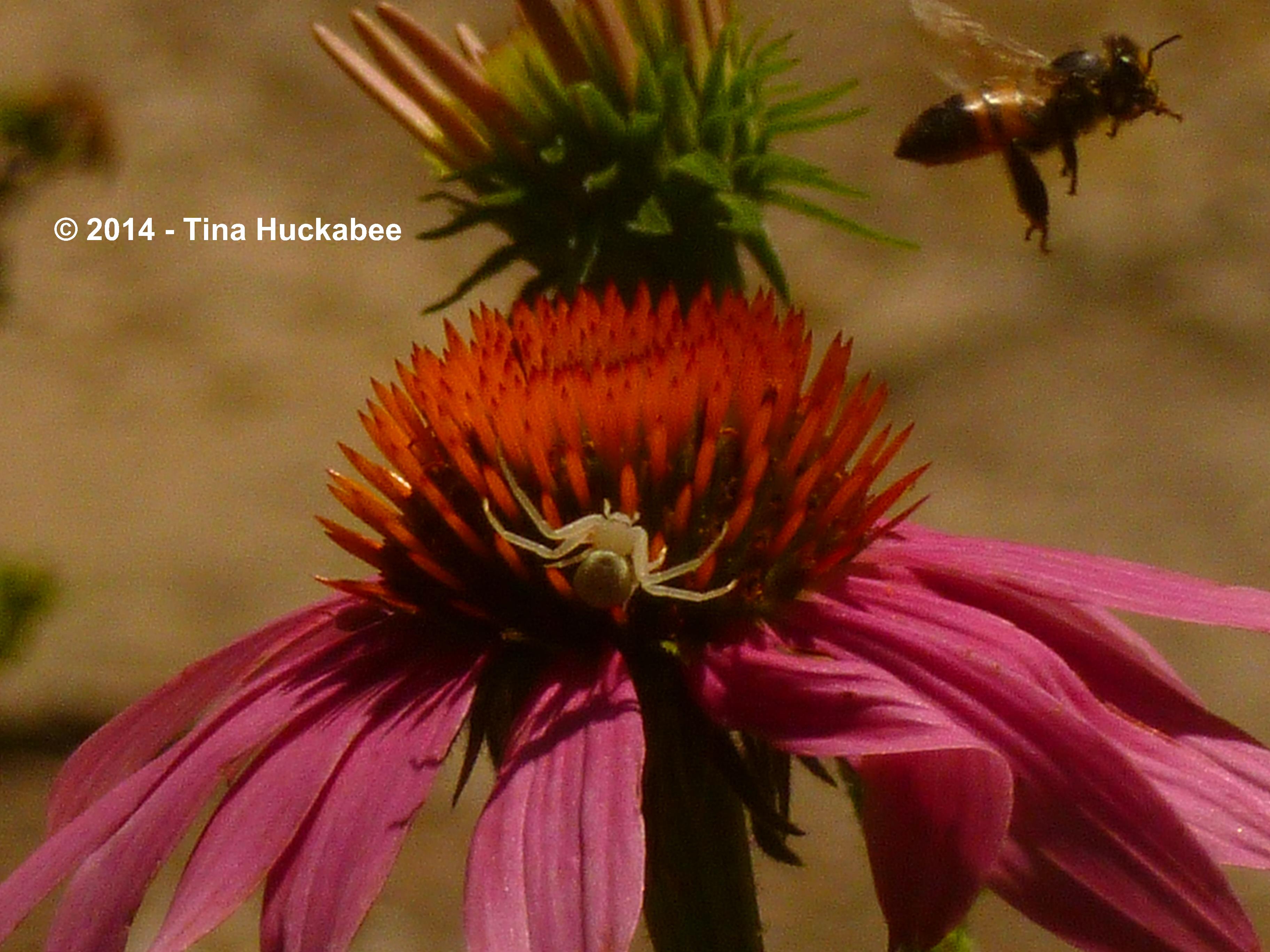
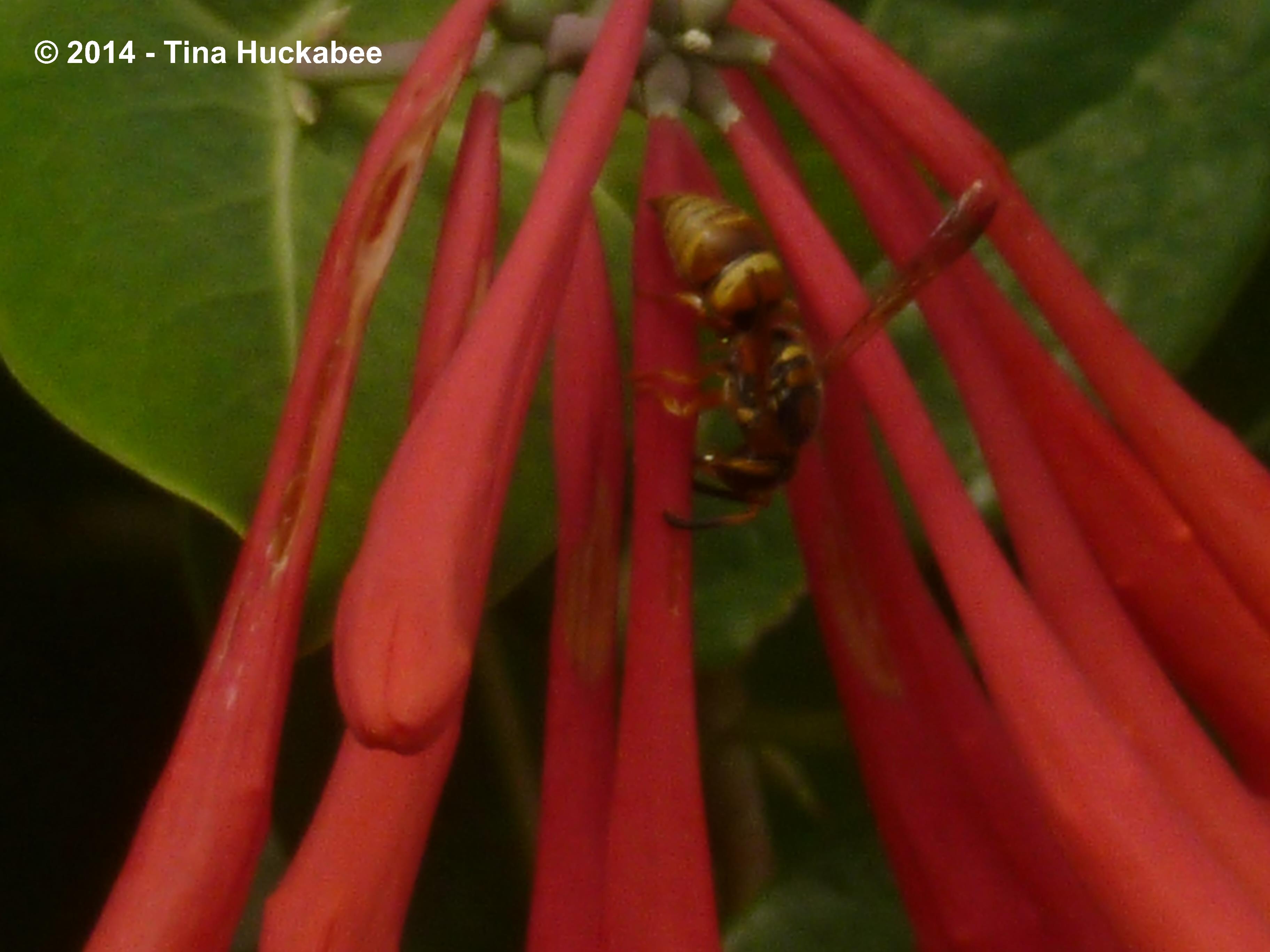
I think this is a type of Mason Wasp, Euodynerus pratensis, working some Coral Honeysuckle blossoms,

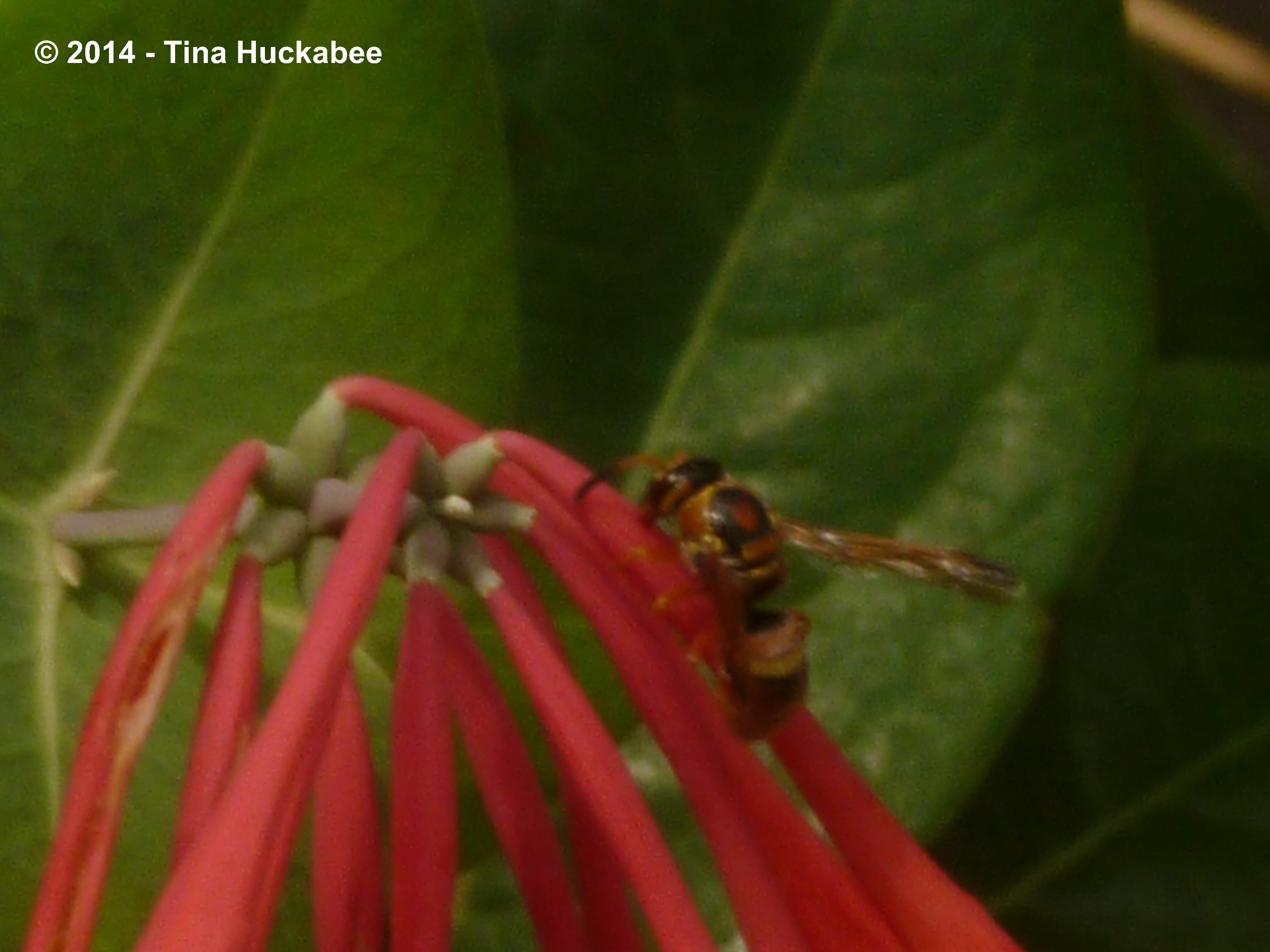
presumably sipping nectar. I know that many wasps, including Euodynerus, will insert their eggs in hosts like caterpillars, but I’m not sure that’s what this one was doing. Not to mention that I have no idea whether it’s male or female. Gender identification of insects: I guess that needs to be on my bucket list of things to learn.

These photos were taken some weeks ago and I haven’t seen this wasp (or any like him or her) since.
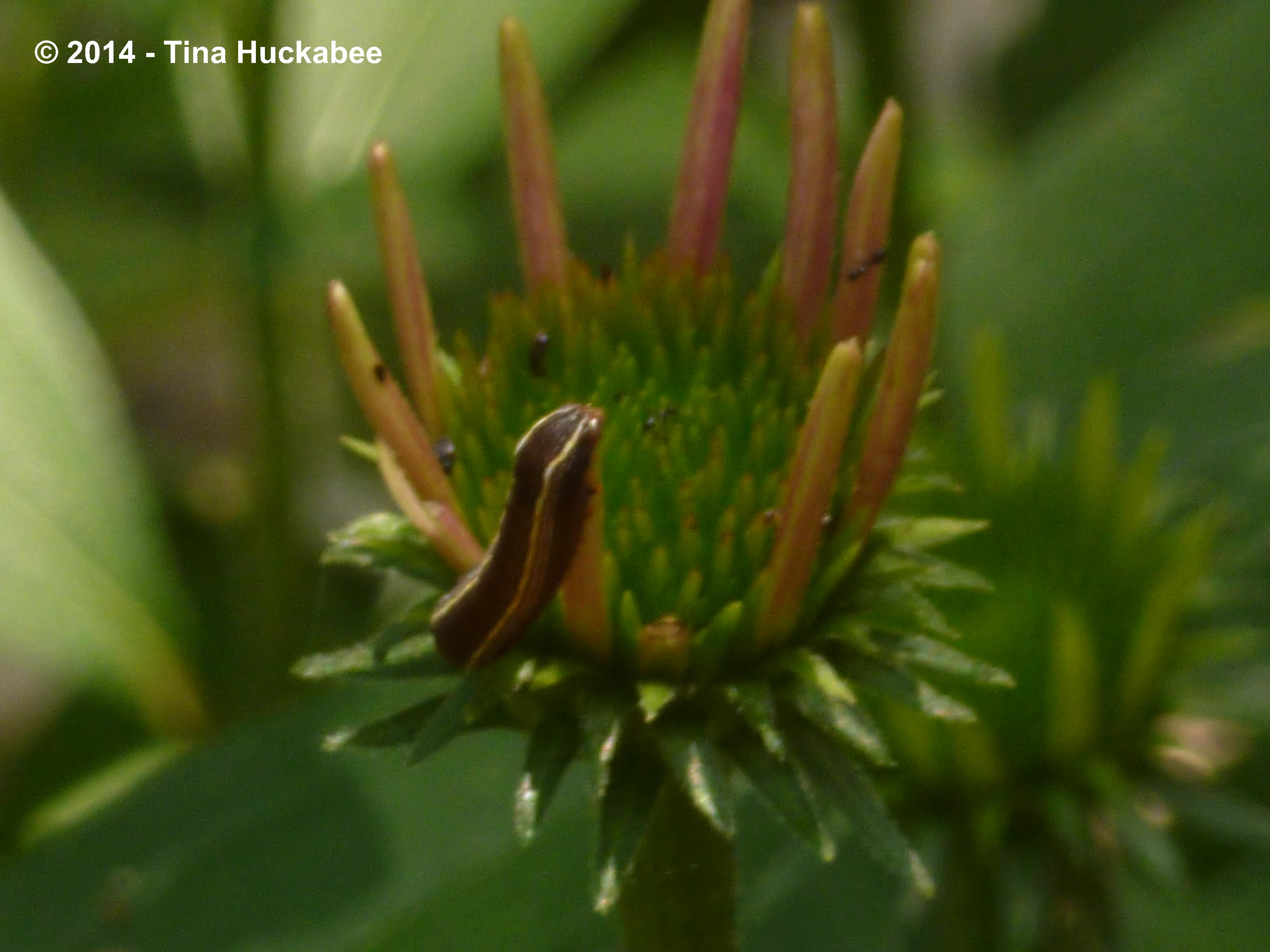
This unfamiliar caterpillar on a Coneflower bloom is possibly that of the Yellow-striped Armyworm Moth, Spodoptera ornithogalli.

I don’t usually see caterpillars on the Coneflowers–I prefer pollinators only, please. But when researching this one, I’m fairly certain that I’ve seen the adult in my gardens in recent weeks.
I found another Crab Spider, Mecaphesa dubia, awaiting something yummy to eat on this happy sunflower. I was picking blackberries when I saw her.

Everyone must eat, I guess.
I find little snakes in my gardens throughout the year–sometimes under rocks when I move them or under un-raked leaves. This little one is a common my gardens. I believe it’s a Rough Earth Snake, Virginia striatula.
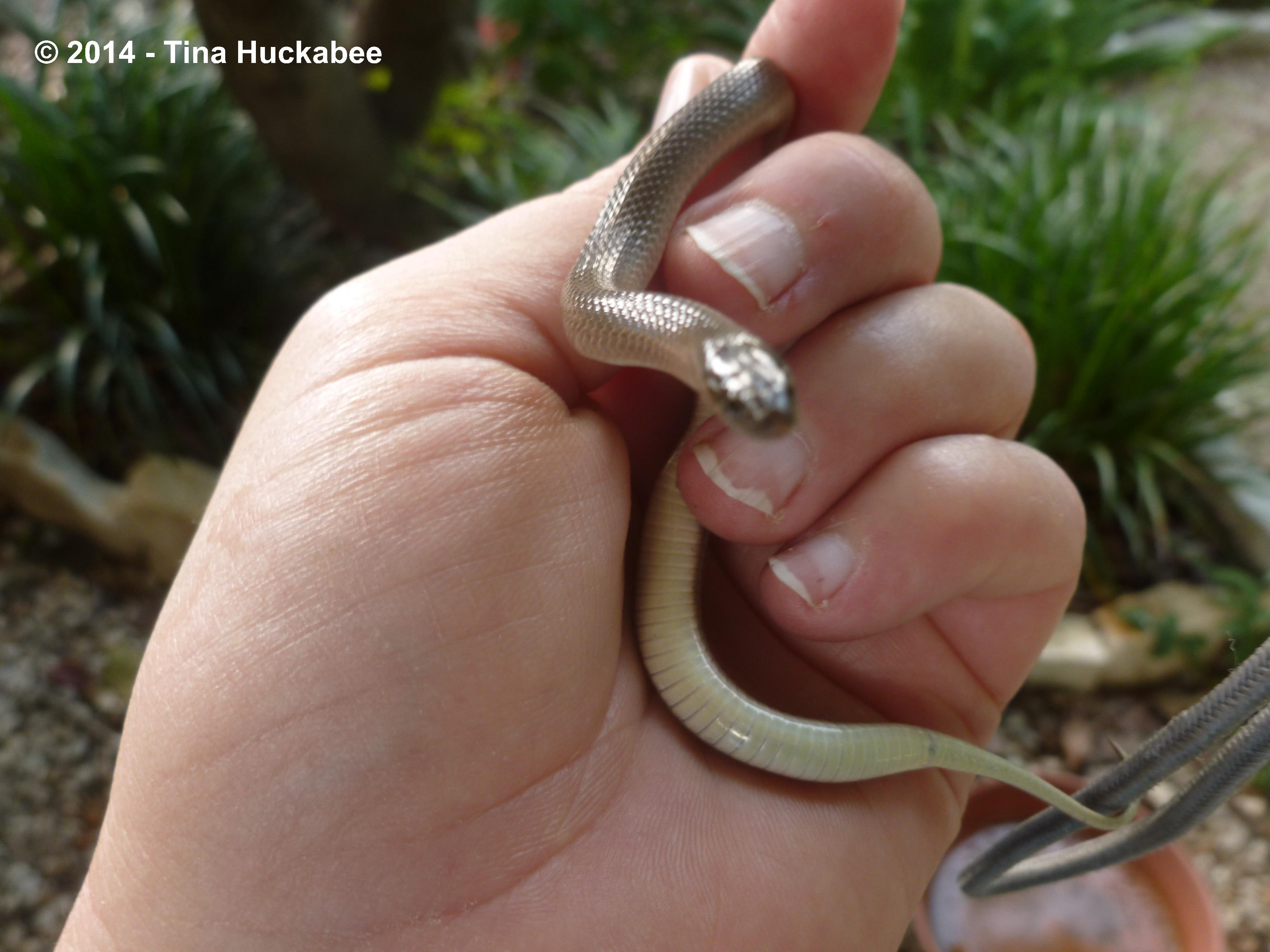
He was coiled happily under the dog’s outdoor water bowl and slithered away (obviously not quickly enough) when I dumped out the water. I won’t introduce the cats to the snake.
So, there we are.
Wildlife Wednesday. I dearly hope I identified the chosen critters correctly. If not, feel free to correct me.
A big thank you to Deb at austinagrodolce for inspiring me with beautiful photographs of her own wild garden visitors and her encouragement in the development of Wildlife Wednesday as a regular garden blogging meme.
Please join in posting about the wildlife visiting your gardens for July Wildlife Wednesday. Share the rare or mundane, funny or fascinating, beneficial or harmful wildlife you encounter. When you comment on my post, leave a link to your post for Wildlife Wednesday.
Happy Wildlife Wednesday and good wildlife gardening!





 My Gardener Says...