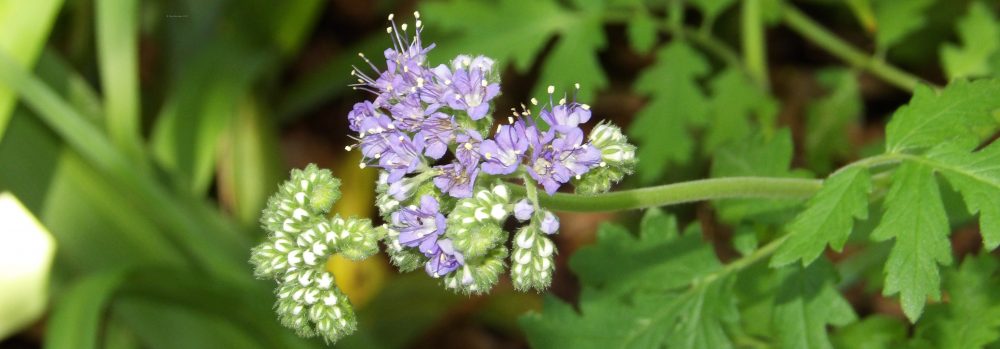
July’s Parade: Wildlife Wednesday, July 2016

Welcome to the July 2016 edition of Wildlife Wednesday.  The United States marked its 240th birthday on Monday and today we mark the 2nd birthday of this wildlife gardening meme! I appreciate and thank all who’ve participated in Wildlife Wednesday.  Each first Wednesday, I’m impressed and inspired by the fabulous photos and compelling anecdotes that avid wildlife gardeners share when they post for the meme.  And for those who’ve tuned in each month to read–a big kiss on the cheek for your interest in and love for wildlife.

Kudos to you all!

Wildlife gardening is an activity that everyone can take part in.  Especially in urban areas, planting for birds, pollinators, and other wild animals helps balance ongoing damage to natural zones and allows our world to heal–if just a little bit–by providing for those who can’t speak for themselves and with whom we share our world.

As July sees celebratory parades with accompanying banners and fireworks, I thought I’d host my own parade of critters that I’ve profiled during this past month.  So, strike up the band and wave your gardening flags, here are July’s wild things!
IMGP8735.new

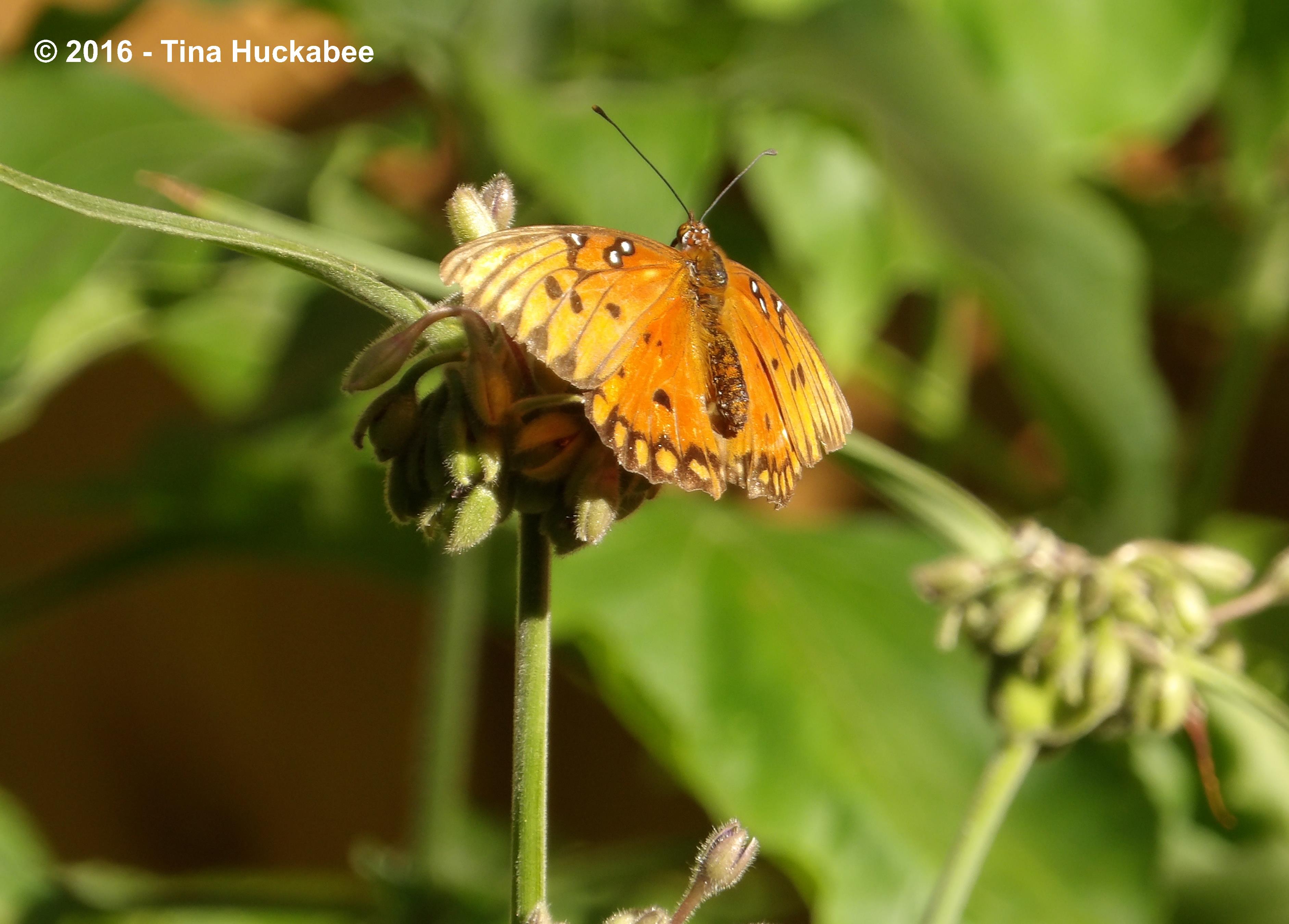
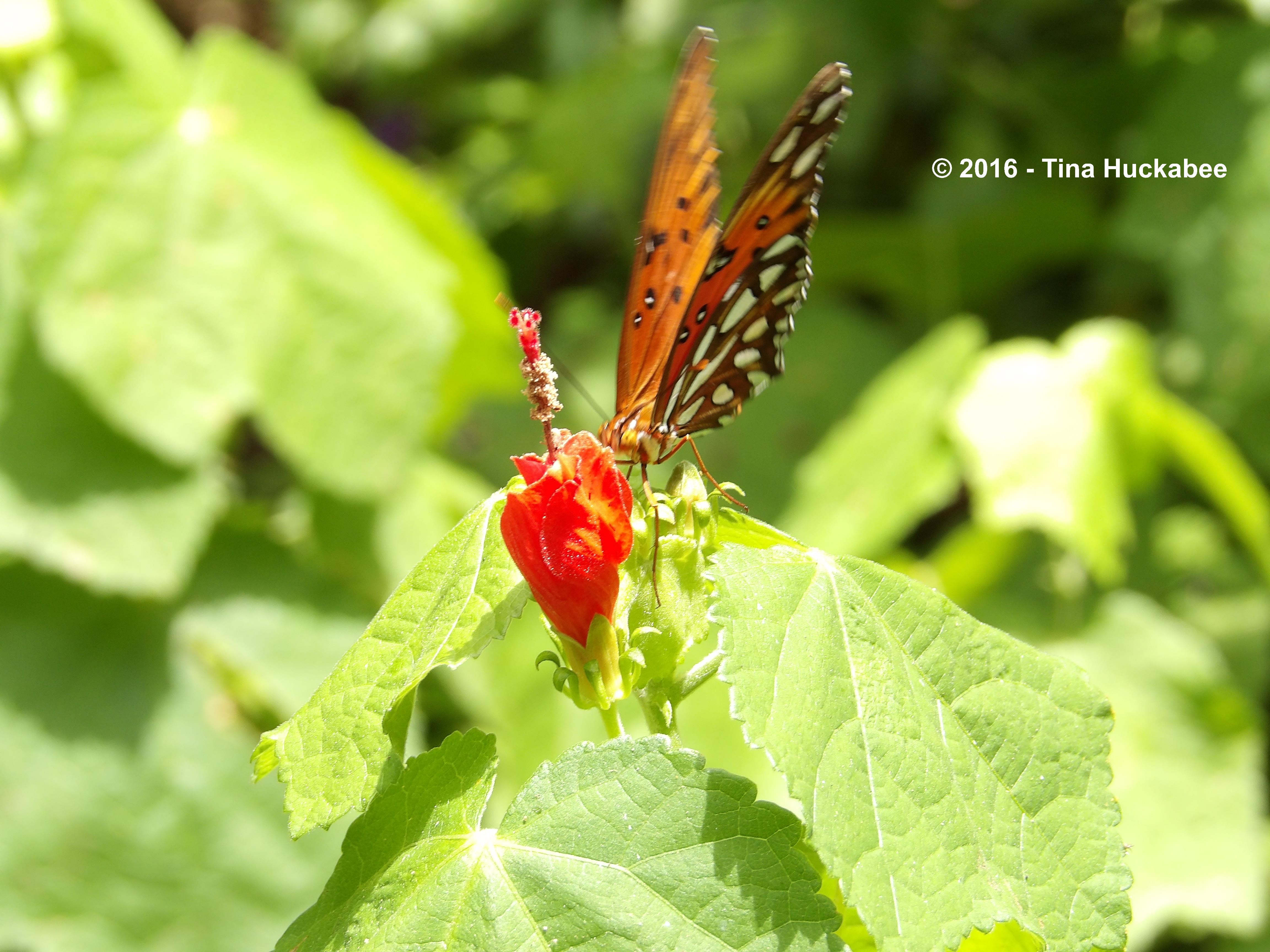
The garden has been full of Gulf Fritillary (Agraulis vanillae) flitting and feeding this past month.

IMGP8734_cropped_2410x2221..new

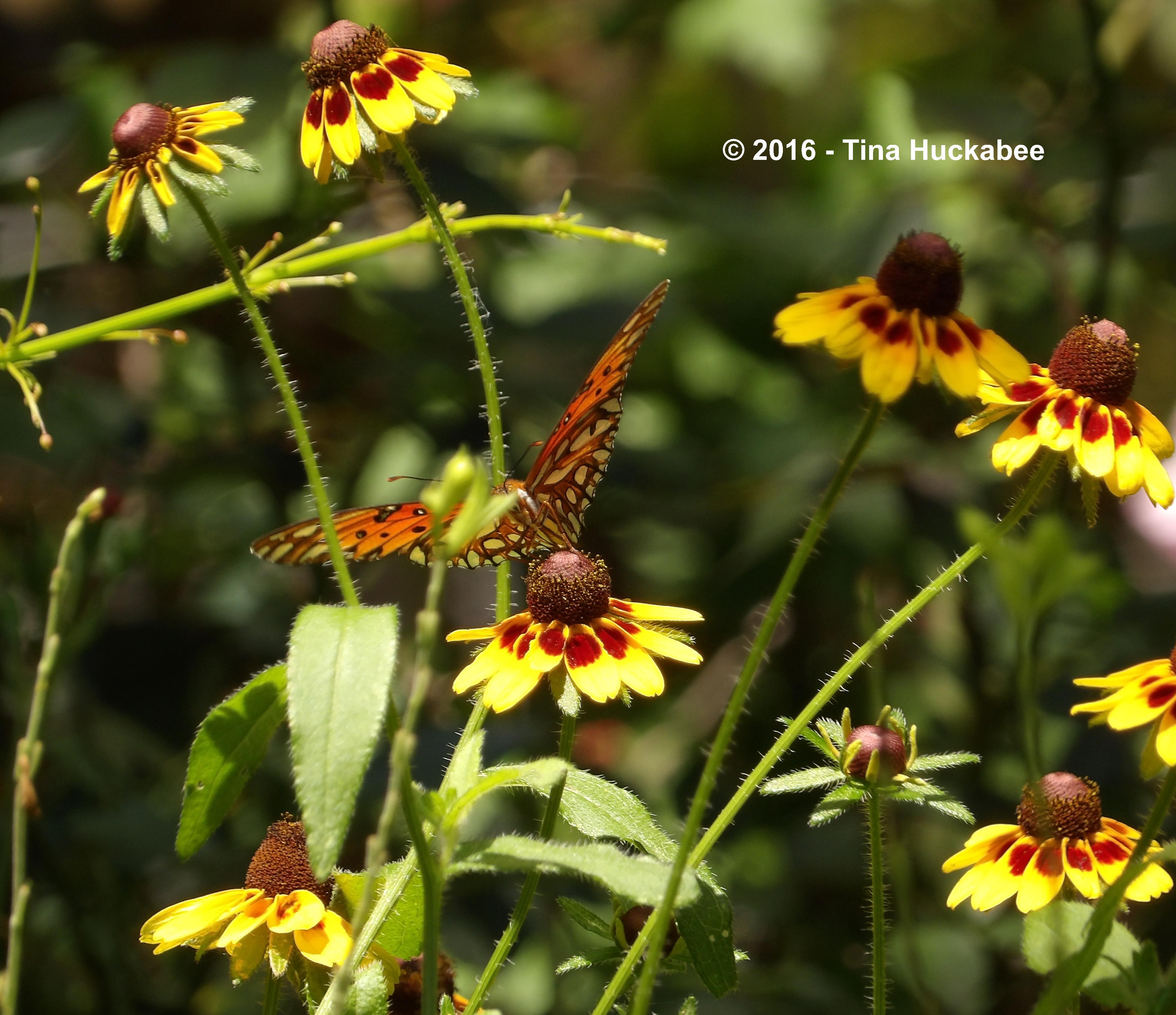
Gulf Fritillary nectaring on a Turk’s cap bloom (Malvaviscus arboreus). Look at that long proboscis.


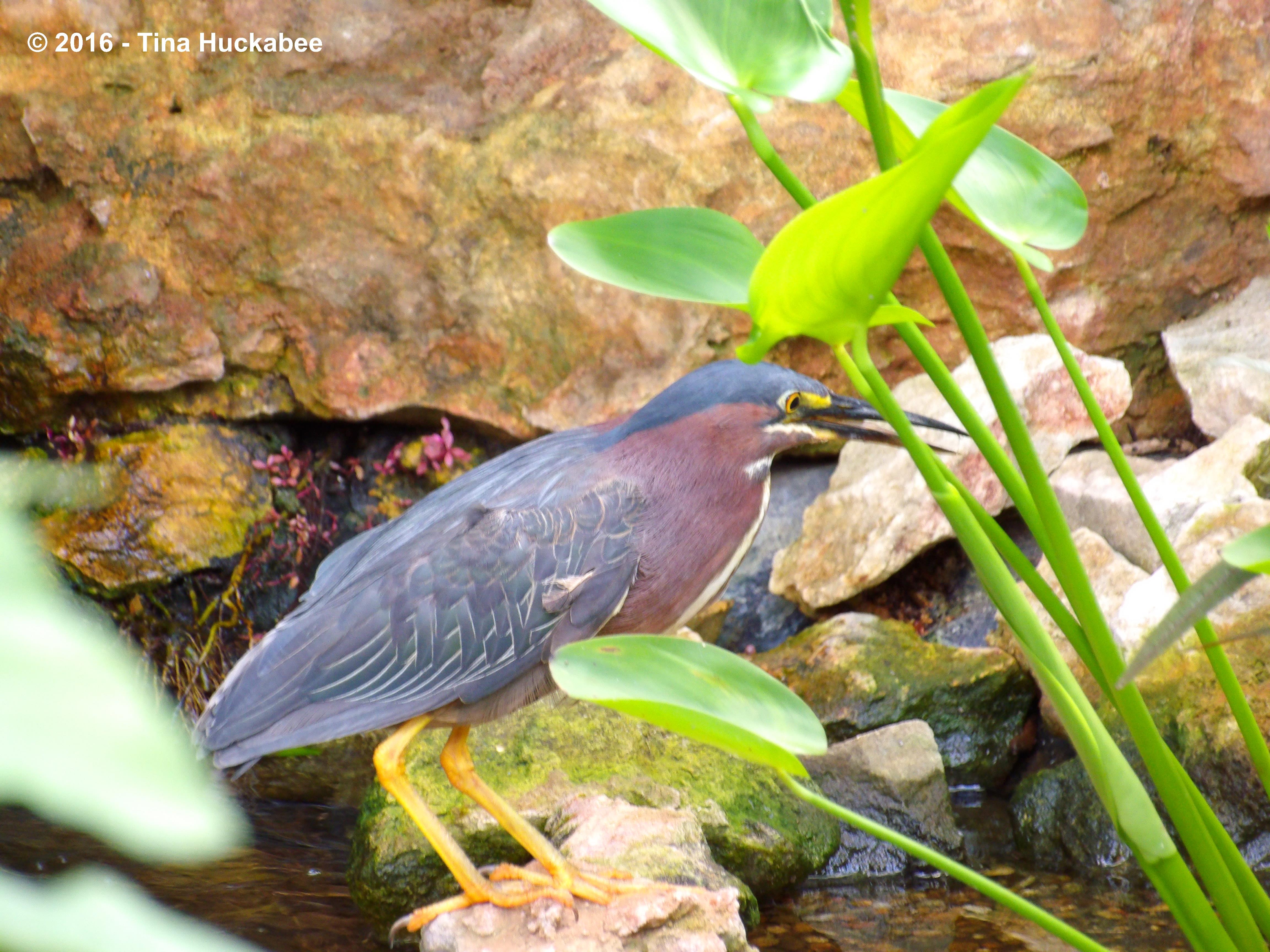
I enjoyed this guy’s visit earlier in the month: Green Heron, Butorides virescens.

IMGP8590.new

Standing stalwart, ready to pounce in the bog.

IMGP8578.new

Impressionist coloration.

IMGP8570.new

“I spy with my yellow eye…a gambusia!”
 

IMGP8700.new

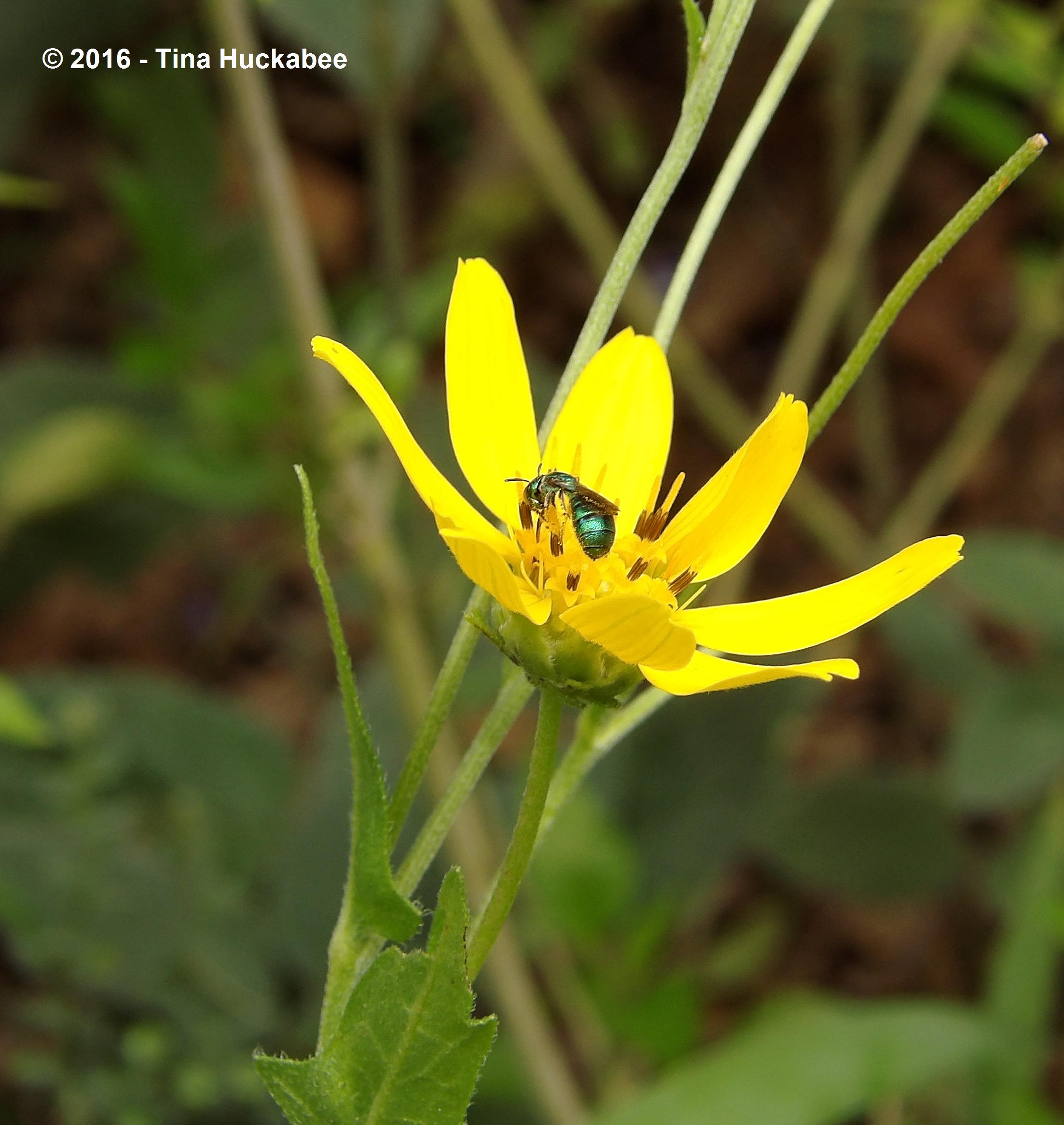
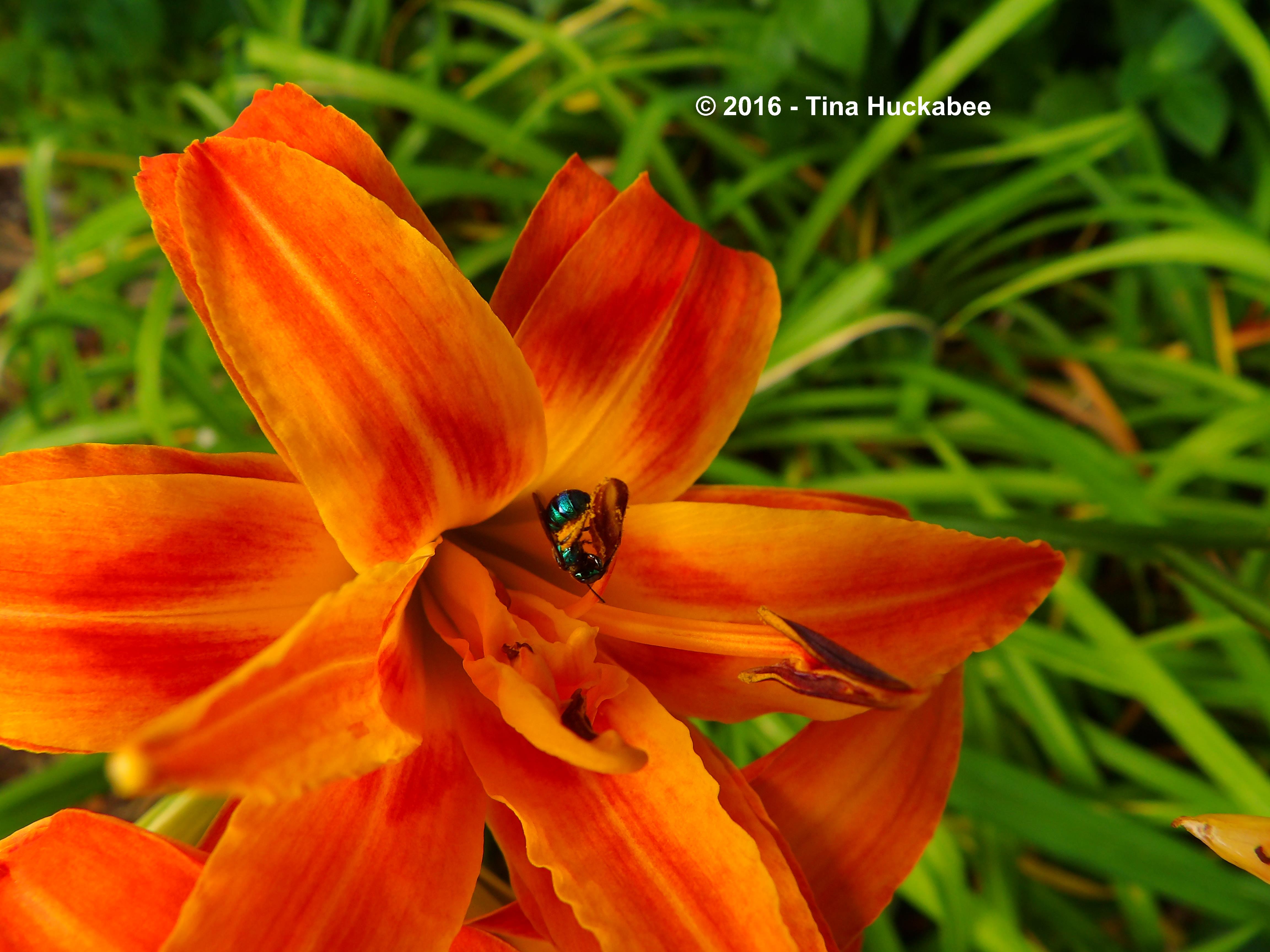
Beautiful metallic native bee enjoying the bounty of a passalong daylily.


IMGP8478.new

Female leafcutter bee, also a native, gathering pollen for her offspring from a Purple coneflower (Echinacea purpurea).


IMGP8425_cropped_3534x2175..new

Pipevine Swallowtail (Battus philenor) showing off pretty wings.


IMGP8449_cropped_3092x2400..new

Soldier beetle (Cantharidae family), one of many pollinators who live and thrive in my garden.


As June progressed and summer has settled in for the duration, damsels and dragons zoom around in the garden, landing here and there on pond and plants, adding their special charm to summer’s wild festivities.

This dreamy (ahem, unclear) shot is, I believe, an Eastern RingtailErpetogomphus designatus.  

IMGP8727.new

Supposedly common in the Austin area, I’m not sure I’ve enjoyed the privilege of meeting this kind of dragonfly before.  According to several sources, the males have a slightly larger “club” at the end of the abdomen, also orange-colored, but this one has neither quality.  My guess is that she’s a she.

Giving firework colors a run for their money, Neon Skimmers, Libellula croceipennis, grace my garden regularly from June to November and are always welcome.

IMGP8549.new


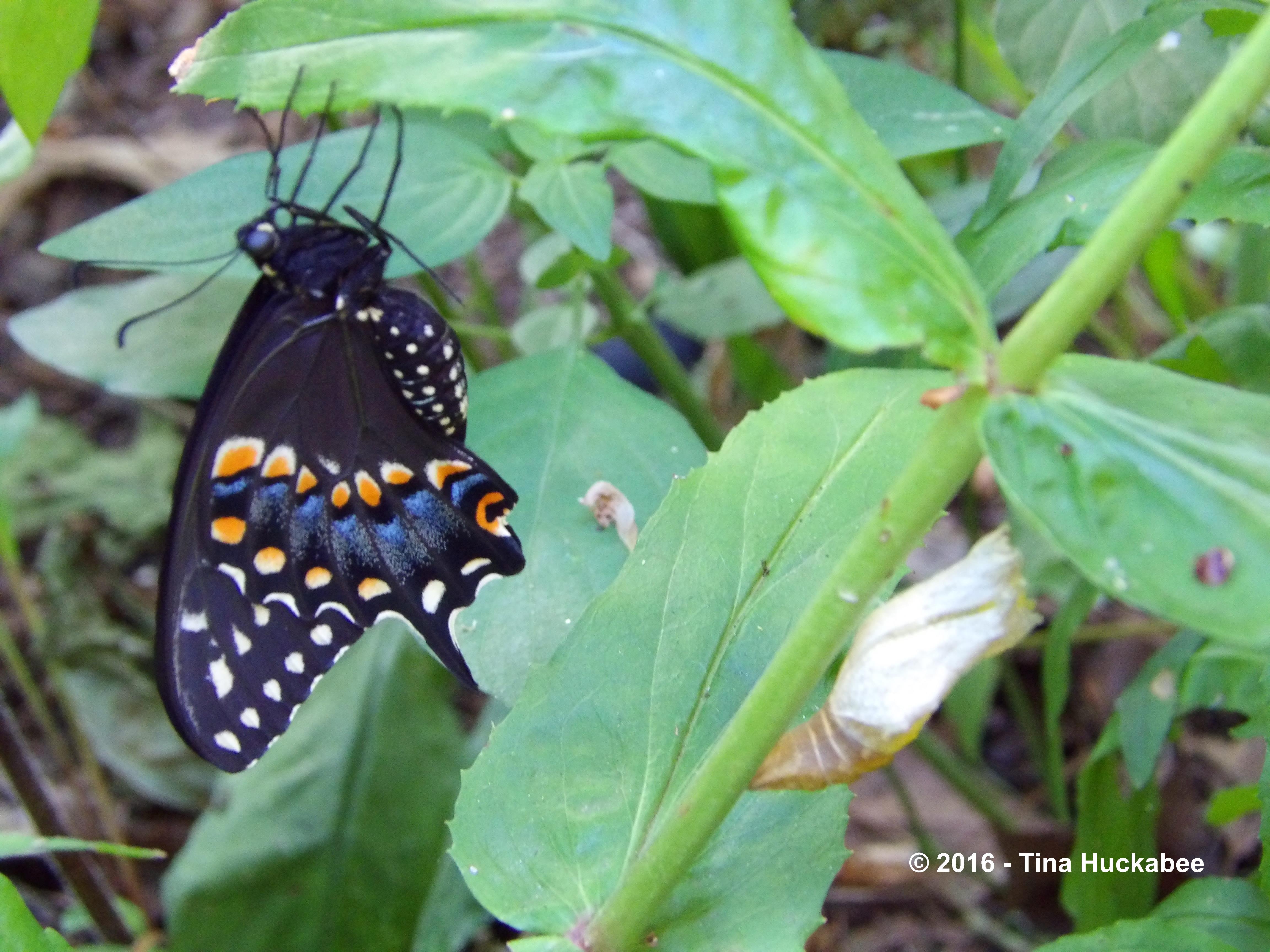
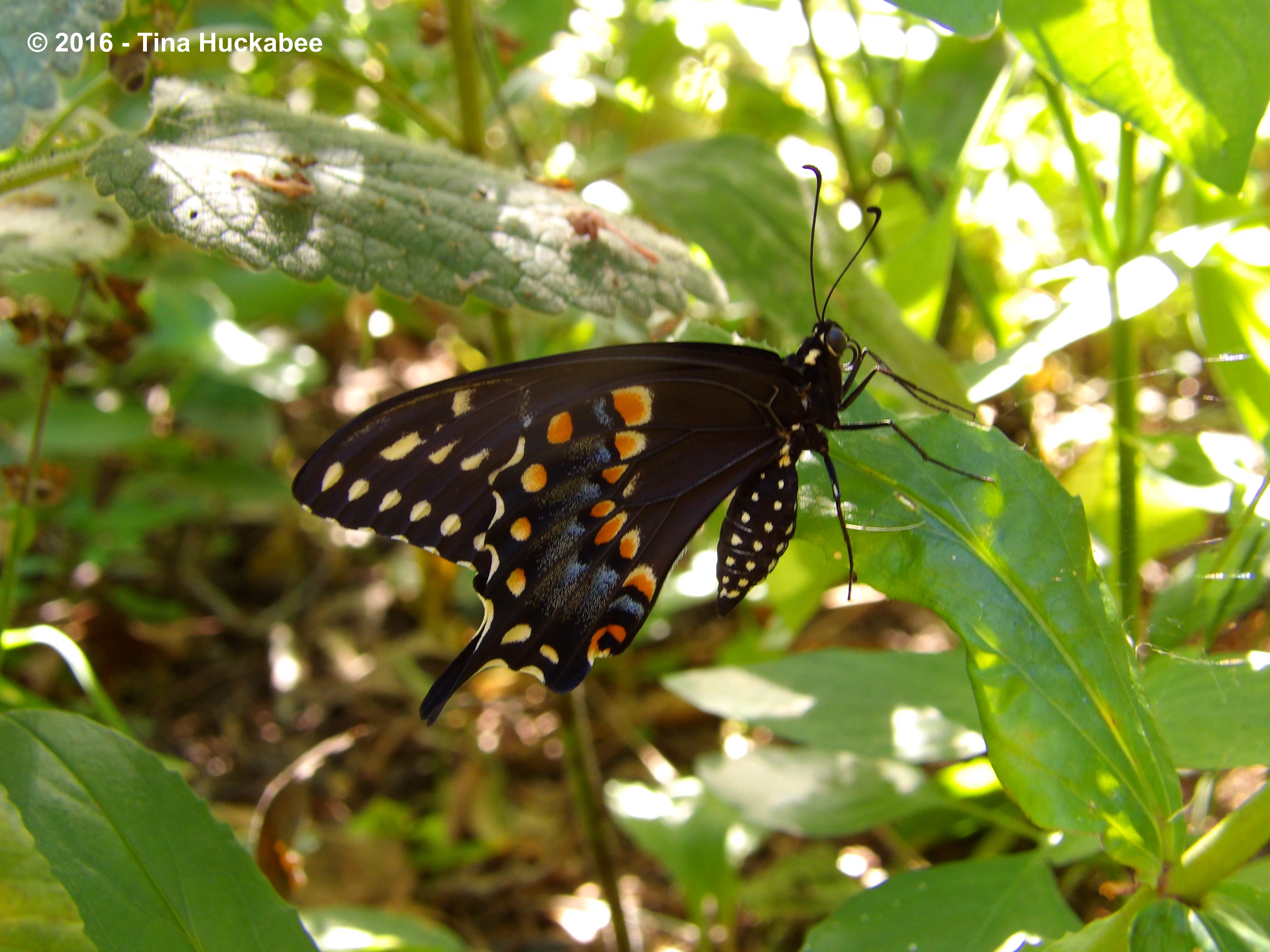
During National Pollinator Week, I profiled the Black Swallowtail, Papilio polyxenes,  butterflies who make their nurseries in my garden, but who travel as adults throughout the neighborhood to nectar and mate.  In my garden, there are several currently in metamorph stage, attached to stems and hidden from predators.  I photographed this winged jewel on the morning of emergence.
IMGP8724.new

A newly emerged adult, drying its wings near its former home.
IMGP8725.new

IMGP8726_cropped_2432x2147..new

A newly vacated chrysalis.

Butterfly and moth chrysalises are so well camouflaged that it’s a gift to find them–lucky me this time!!

Butterflies are easy to appreciate because of their beauty and daytime winging and nectaring habits.  But moths, common at dark and more subtly pattered and colored, also contribute to pollination and play an equally important role in a balanced ecosystem. Like many, my knowledge of moths is woefully inadequate.  I can tell you that this is a moth, but haven’t found the exact identification.

IMGP8650_cropped_2401x1991..new

It reminds me though of a rock climber, sans ropes, hanging on to the rock, before advancing upwards.

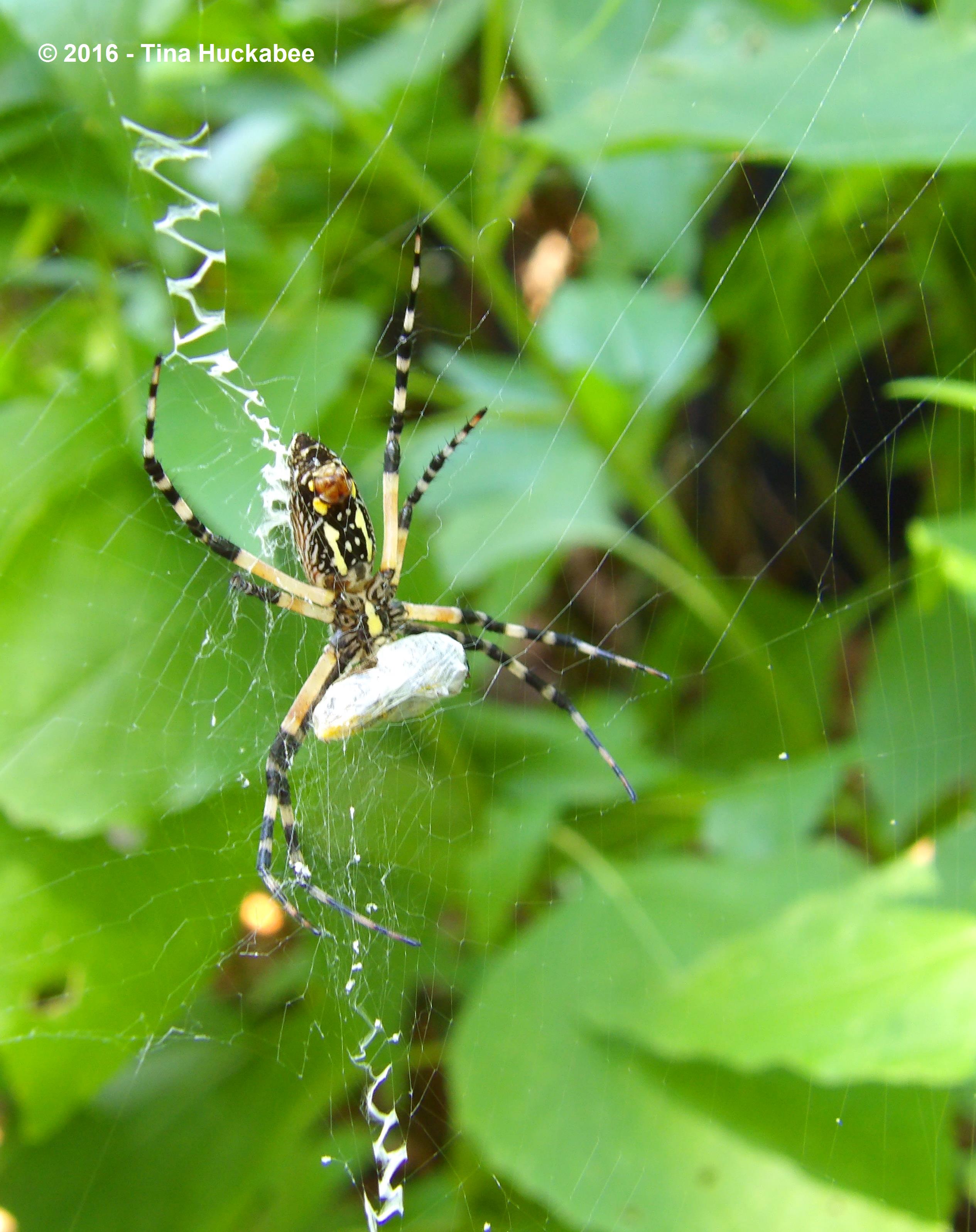
Spiders are back!  I enjoy watching the Black-and-yellow Argiope spiders that are common in Austin gardens, including my own.  I was frustrated that I couldn’t get a clear shot of the top, more decorative part of the spider, and then realized that I was quite fortunate to have a clear view of the usually hidden underside of this female argiope.
IMGP8756_cropped_2530x3193..new

It looks like she’s snagged one of my darling honeybees for a meal.  Well, I’m not so crazy about that part of a garden spider, but tolerance of hunting and acceptance of the fate of prey is part of wildlife gardening.  Everyone must eat, which usually means that something was alive and no longer is.


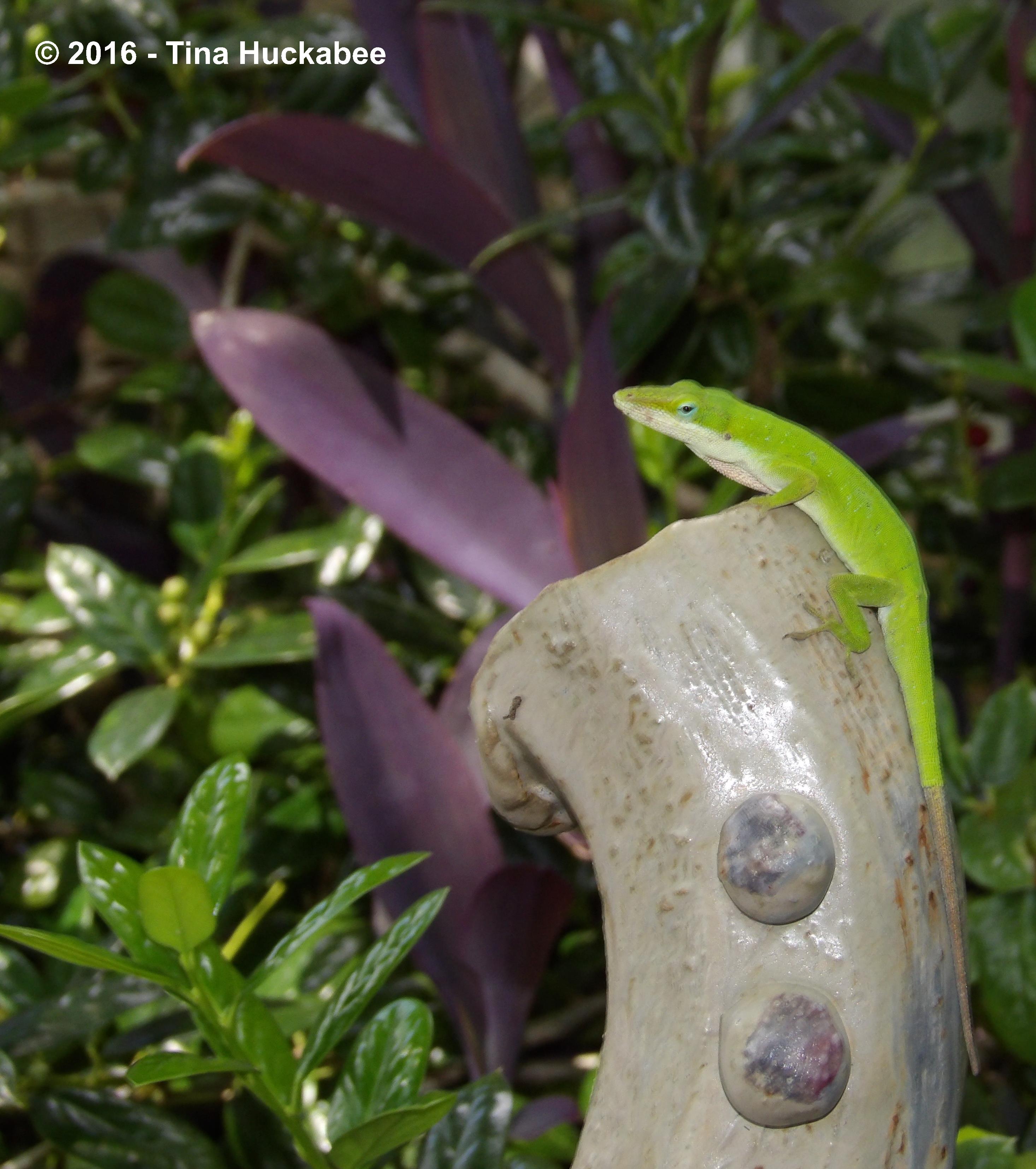
I usually observe and photograph the green form of the Green anole lizard, Anolis carolinensis, like so:

IMGP8732_cropped_3157x3222..new

IMGP8733_cropped_2932x3309..new

But these cheeky ones also blush brown when necessary, as camouflage from predators.

IMGP8653.new

This anole blends in well with the wooden fence.

IMGP8656.new

This anole hides with the backdrop of a limestone wall.

And gardeners!

And finally, there was this dude:
IMGP8460.new

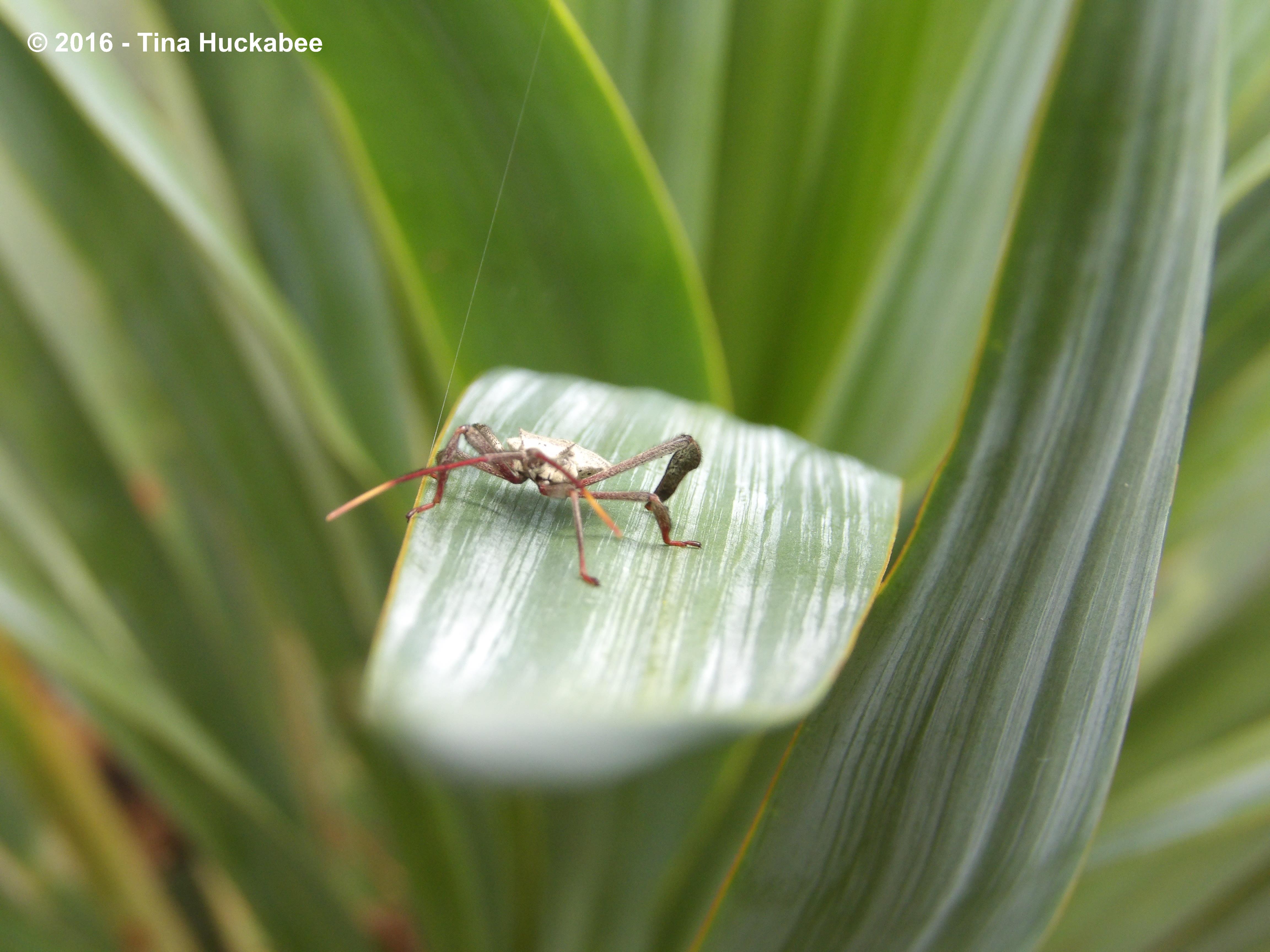
You want a piece of me?!

IMGP8458_cropped_2543x2341..new

YOU WANT A PIECE OF ME?!

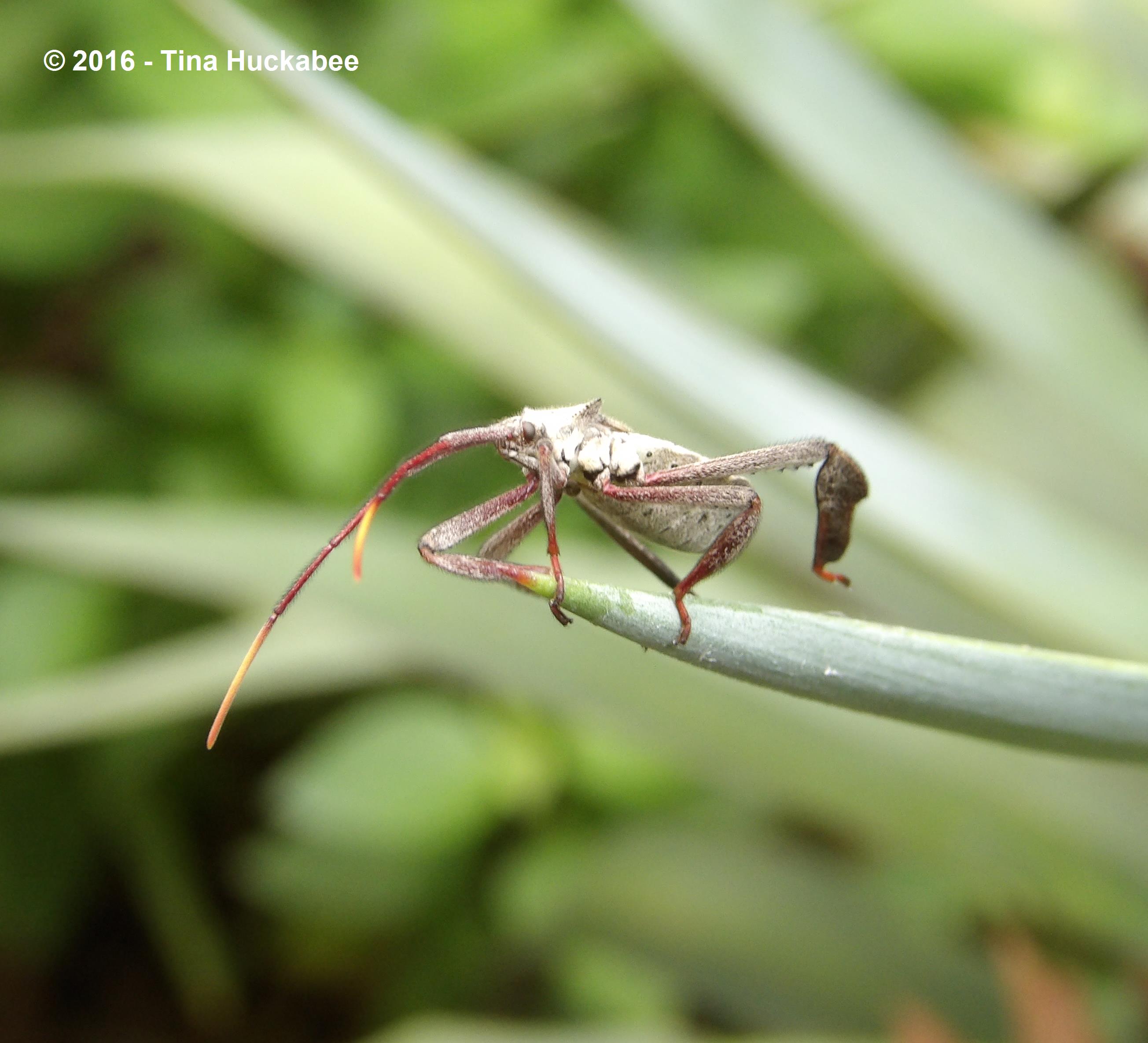
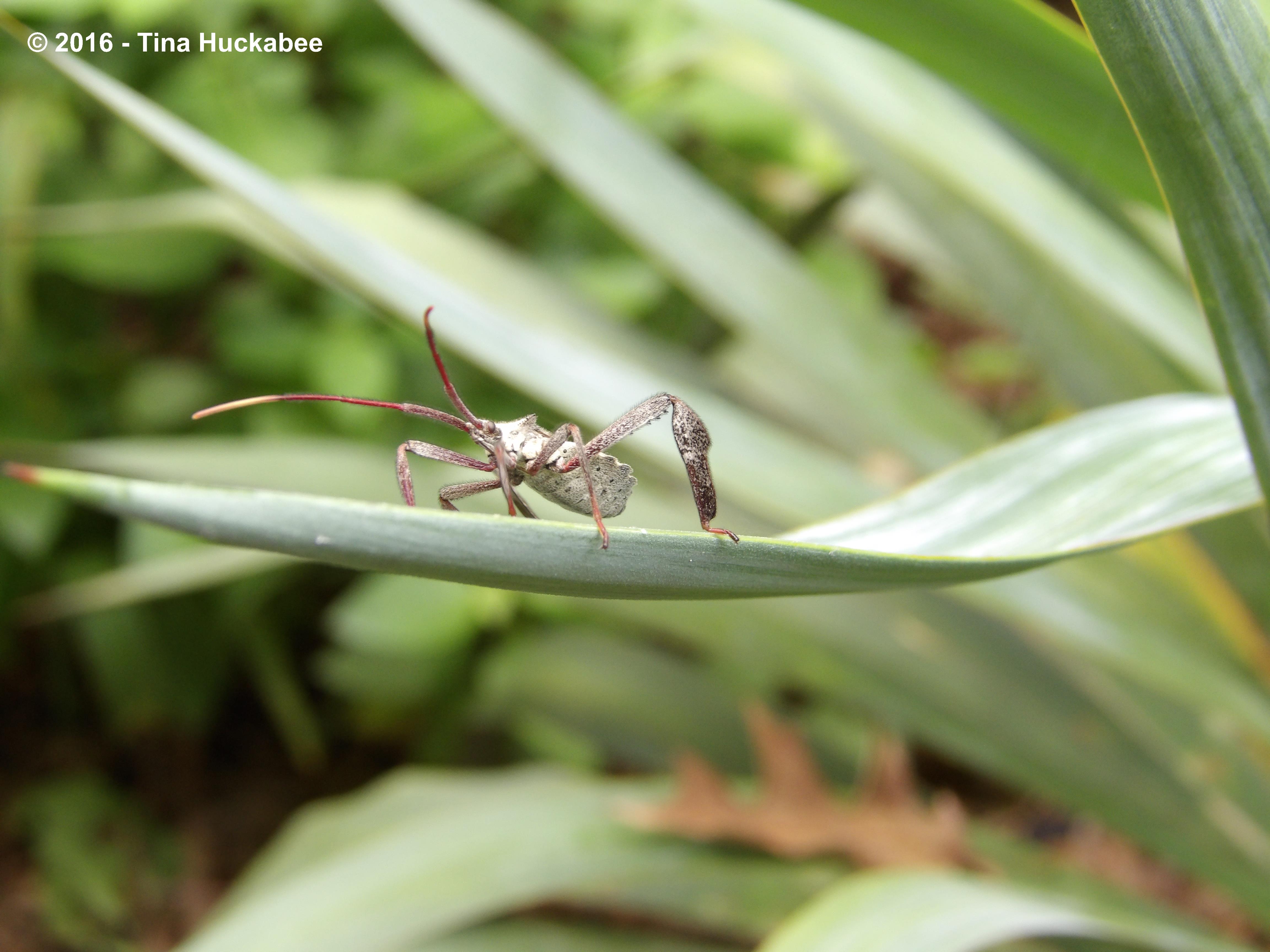
This Leaf-footed bugAcanthocephala terminalis, practically dared me to catch a photo as it traveled the length of a Soft-leaf yucca leaf, toward this camera-wielding gardener.
IMGP8462.new

I’m walkin’ here!

IMGP8463_cropped_2608x2369..new

It looks like he’s dancing a jig as he made it to the end of the leaf.

But in the end, I’m bigger, more technologically advanced (sort of…), and higher up on the food chain, so yeah, I was able to catch him/her in a plucky stance.

IMGP8454_cropped_2415x2530..new

This bug sports decorative feet and antennae.

There are a wide variety of Coreidae, or Leaf-footed bugs, in this area and I enjoy seeing them in my garden.  They do feed on plants, but I’ve never seen serious foliage damage from them, or at least, none that I’m aware of.   I’m sure there are some leaves, less than pristine, which owe their damage to the bugs’ meal preferences, but it’s nothing that I lose sleep over.  Keeping abreast of who inhabits and visits your garden will ensure that no serious “pest” damage occurs.  Usually, a spritz of water, once or twice, is all that is needed to discourage less-than-welcome marauding insects. Pesticides, even “organic” pesticides are highly damaging to many garden creatures, and not only the ones targeted.  A garden is alive and fulfilling its purpose when it nurtures a wide diversity of critters–insects, spiders, birds, mammals, and reptiles, and chemicals are anathema to a healthy, diverse wildlife community.

Did wildlife visit your garden this past month? Please post for July Wildlife Wednesday Share the rare or mundane, funny or fascinating, beneficial or harmful critters you encounter. When you comment on my post, please remember to leave a link to your Wildlife Wednesday post so readers can enjoy a variety of garden wildlife observations.

National Pollinator Week

June 20-26 is the week set aside this year to celebrate pollinators and the important work they do.

IMGP7078_cropped_3087x2286..new

Syrphid or Flower fly nectaring at a Zexmenia (Wedelia hispida)

EVERY week should be a week to celebrate pollinators and the important work they do.

IMGP8526_cropped_2350x2060..new

Miner bee (Perdita ignota)(?)  visiting a Fall aster (Symphyotrichum oblongifolium)

IMGP8420.new

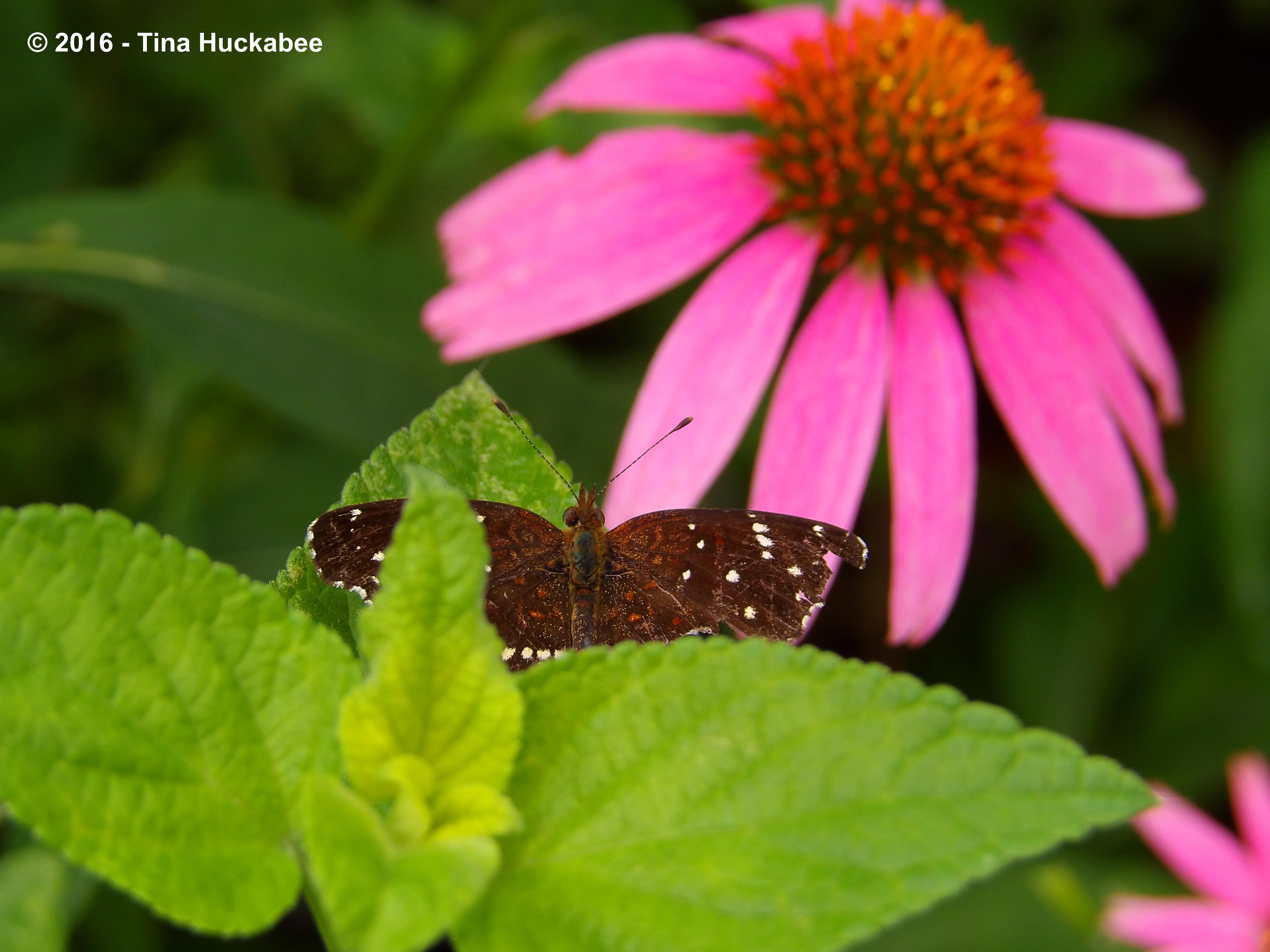
Texas Crescent (Anthanassa texana) considering a trip to the Purple coneflower (Echinacea purpurea)

Pollinators constitute the thread that holds together the world’s food web and native plants production.  Upwards to 90% of native plants are pollinated by insects, birds, and bats; 1 out of every 3 bites of food humans partake of is pollinated by (primarily) bees–honeybees, and wild, or native bees.  According to Pollinator Partnership, 1,000 different plants that humans use in a variety of ways are pollinated by pollinating animals,

IMGP7455_cropped_3234x2903..new

American lady (Vanessa virginiensis) at a Purple coneflower bloom

…and in the U.S. alone, pollinators produce products worth $40 billion annually.

IMGP8417_cropped_3903x2968..new

Two-spotted Long-horned bee (Melissodes bimaculatus) at a Purple coneflower

The bottom line is that pollination and pollinators are principal players in the good health of all eco-systems.

IMGP8272_cropped_2498x2640..new

Sweat bee (Augochloropsis metallica)(?) and an Engelmann’s daisy (Engelmannia peristenia)

What is pollination?  It’s the process whereby pollen is moved, usually either by pollinating animals or the wind, to other plants thus assuring reproduction of the plants with development of seeds and fruit–and the next generation of viable plants.

IMGP8527_cropped_2594x2170..new

Fly and Fall aster

Pollination produces new plant life.

IMGP7316_cropped_3765x2700..new

Gulf fritillary (Agraulis vanillae) resting on a Giant spiderwort (Tradescantia gigantea)

What are pollinating animals?  Pollinators include, but are not limited to: birds, bats, moths and butterflies, flies, mosquitoes (Boo!), native/wild bees, and honeybees.  There are many, many other insects that pollinate.  Additionally, in parts of China where overuse of chemicals has killed all natural pollinators, people must hand pollinate some agricultural fields.

That frightening fact should scare all of us into taking care of the Earth’s pollinators.

IMGP8648.new

Honeybee (Apis mellifera) nectaring at a Blue passion-flower (Passiflora caerulea)

We know that pollinators are declining throughout the world because of habitat destruction, over and mis-use of chemicals, certain big agriculture practices, the unfettered spread of invasive plant species and the decline of native-to-region plant species, as well as other reasons, like pollinator diseases.

IMGP8399_cropped_2608x2382..new

Orange Skipperling (Copaeodes aurantiaca) working at a Rock rose (Pavonia lasiopetala)

The outlook for the health of pollinators and therefore, the rest of us, is tricky at best.

IMGP7340_cropped_3074x3189..new

Sweat bee (Lasioglossum) (?) collecting pollen from a Clasping coneflower


So, what can we do?  The easiest thing is to plant for pollinators in our own home gardens, or neighborhood school gardens, or local parks–or all three, plus anywhere else you can think of.

It’s so simple!

Get rid of some (or all!) of the water-wasting turf so common in home and commercial landscapes.  Mono-culture turf feeds nothing, except for problematic insects, and requires more irrigation, more chemicals, and more effort than planting native or well-adapted flowering perennials and annuals.

Once your garden bed is prepared and planted, sit back and watch the show.  If you plant it, they will come.

IMGP8472_cropped_3540x3282..new

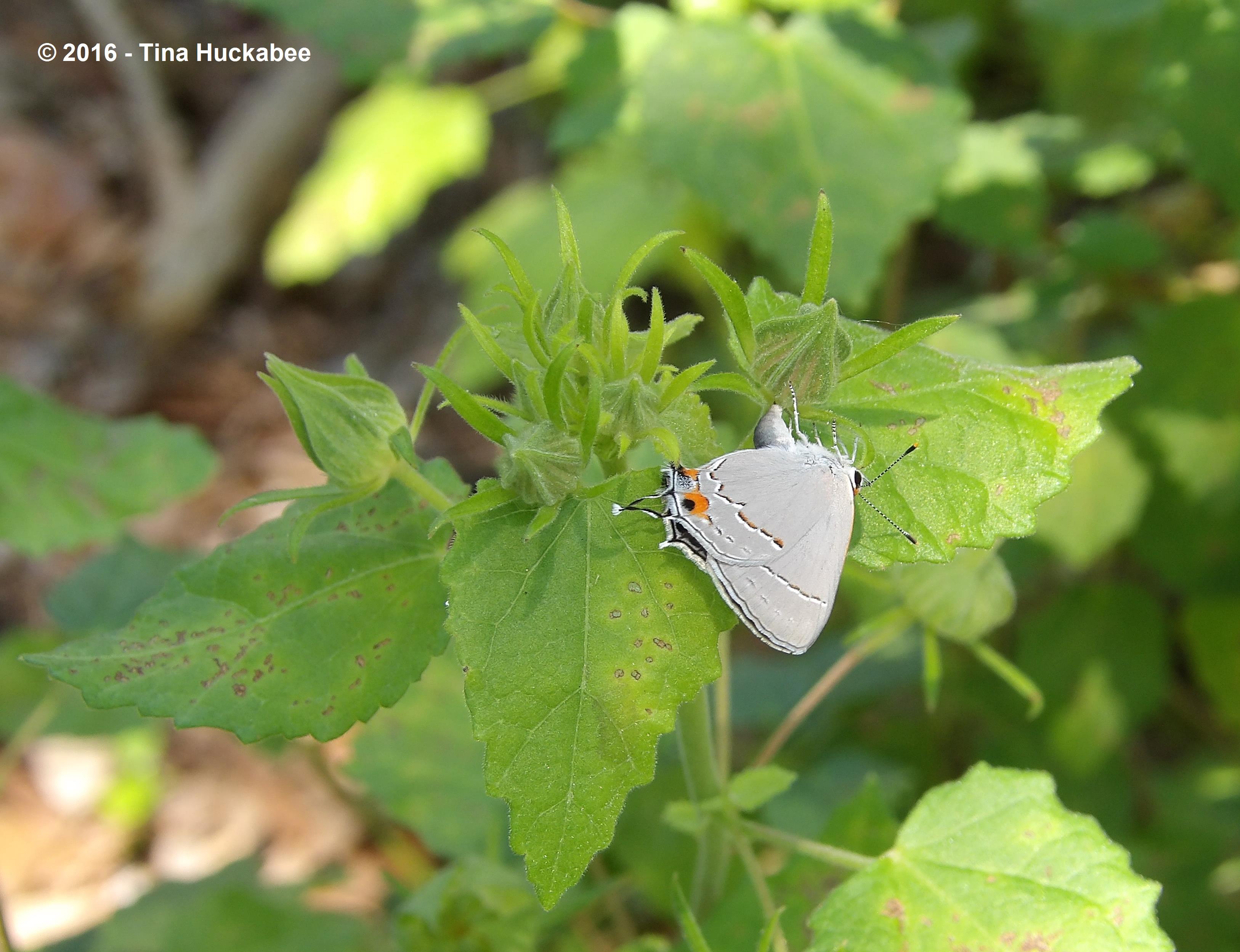
Gray Hairstreak (Strymon melinus) working a Purple coneflower

Your garden doesn’t have to be huge, but do plant a variety of blooming plants for the whole of your growing season–the more, the merrier!

IMGP7460.new

Red Admiral (Vanessa atalanta) visiting a Purple coneflower

It’s always best to use native plants if you have access to a local seed source or a nursery that promotes native plants.  But non-native, well-adapted blooming annuals and perennials will also do the pollinator trick.  Ask the nursery or plant provider if any pesticides were used when growing the plants you want to buy.  If so, don’t buy them and TELL the nursery why.  Pesticides and insects are not a good combination–EVER.

IMGP7429_cropped_3567x2839..new

Minor bee (?) nectaring at a Zexmenia flower

Contact your County Extension Agent’s office for a list of good pollinator plants for your area.  As well, locally owned nurseries are usually great sources of information on pollinator plants.  The Pollinator Partnership, Lady Bird Johnson Wildflower Research Center, and National Wildlife Federation are all excellent on-line sources for learning about pollinators and how you can be a part of the solution to their problems.

IMGP7463_cropped_3544x2867..new

Three honeybee amigos hanging out with three Purple coneflowers .


Pollinators are beautiful.

IMGP8394_cropped_3913x3378..new

Gulf fritillary visiting Clasping coneflowers


Pollinators are vital links in the fitness of the Earth’s eco-systems.

IMGP8397_cropped_3253x2498..new

Gray hairstreak resting on the foliage of Rock rose

IMGP8402_cropped_3382x2876..new

Minor bee (?) heading for the nectar and pollen of a Winecup (Callirhoe involucrata)


Pollinators deserve to live and thrive.

IMGP8450_cropped_2488x2373..new

Soldier beetle  (Cantharidae family) sipping nectar from a Purple coneflower

IMGP8451_cropped_3005x2723..new

Plant for pollinators in your garden.  Encourage neighbors and community organizations to do the same.  Lobby your local, state, and national representatives to set aside land so that these essential creatures can continue their work and contributions to the well-being of our world.

Happy National Pollinator Week!

IMGP8426_cropped_3240x3222..new

Pipevine Swallowtail (Battus philenor) resting on Turk’s cap (Malvaviscus arboreus) foliage

Fishin’

This fine-feathered Green Heron, Butorides virescens, was creeping in the bog, no doubt angling for some fish for lunch.

IMGP8584.new

He flew off after spotting me (I attempted unobtrusiveness, but obviously failed!).  The heron returned to the pond shortly afterward–the allure of a fish meal greater than wariness of the gardener.

Smacking his beak in pleasure, the pond is now short a few gambusia (mosquito fish).

IMGP8594.new

Everyone has to eat!