We’re Not Hobbits

I let it happen again.

Somehow I managed not to notice that the Coral Vine (Antigonon leptopus),  was draping, ever-lower, over the rickety arch.

Every year, I promise myself that in August, as the Coral Vine begins its fall growth spurt and bloom-up, that I’ll control the vine so that it doesn’t grow too low into the arch.

And once again, I was so entranced with this lovely vine and its sweet, little blooms, that I didn’t have the self-discipline to better control its growth.  So, until it freezes, we have to bend over to walk through the arch.  We’re not a tall family, but we’re not hobbits, either.

Well, there are worse things to deal with in the garden.

My garden hasn’t experienced the first frost of the year.  I know some outlying areas around Austin dipped below the freeze point, but  in central Austin, we’re still green ‘n growing.  Even so, I thought it best to snap a few photos of my Coral Vine before winter’s chill.

This gorgeous vine is native to Mexico, but very common in the mid-to-southern parts of Texas.  It has lovely heart-shaped leaves,
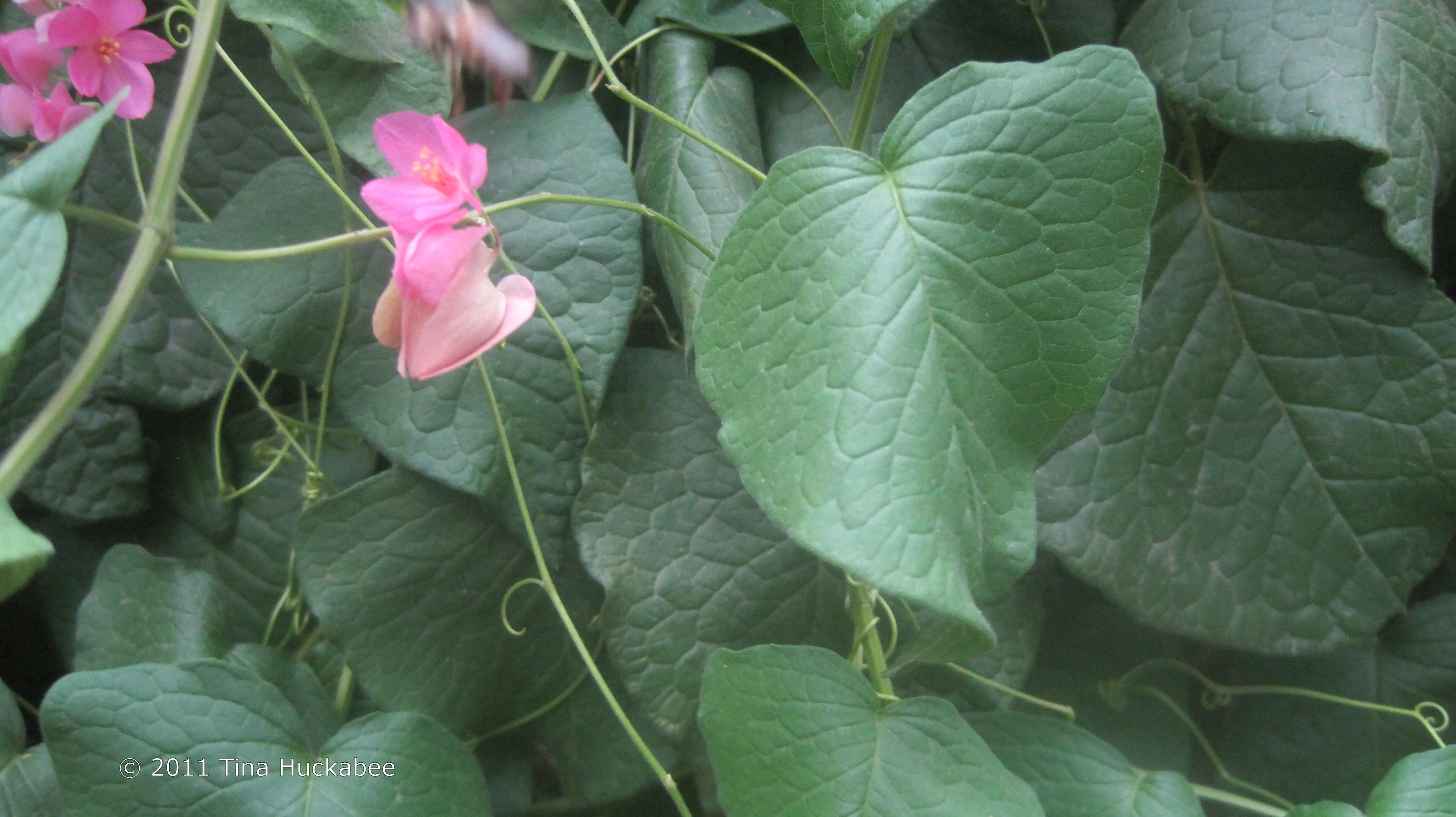
and strands of lacy, pink blooms.
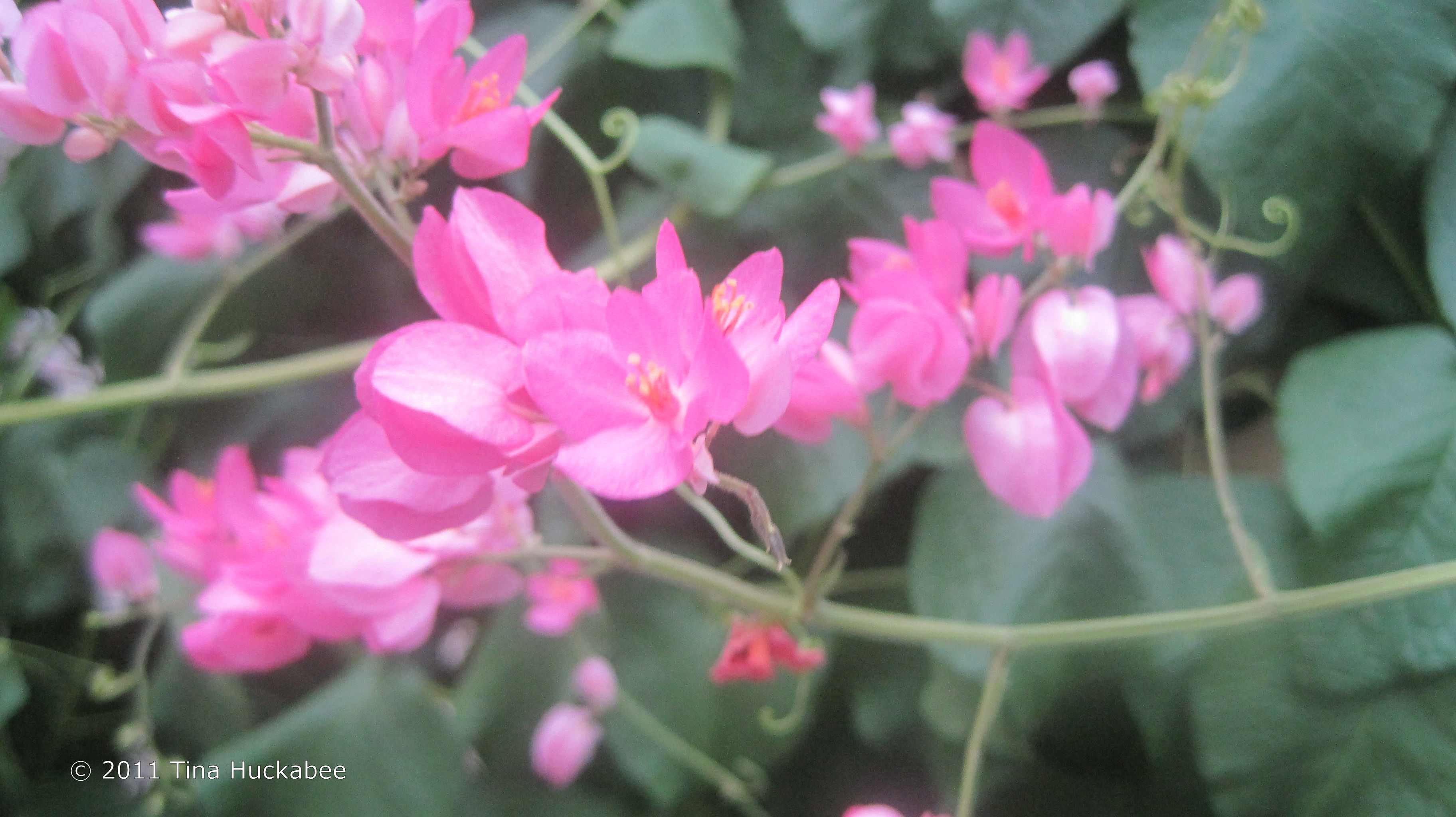
In Austin, it tends to bloom in the latter part summer and into fall, until the first freeze and then, it’s a goner.  It grows from a large tuber and the new strands will appear late in the spring.  Established plants grow remarkably quickly once the temperatures warm.  I  don’t spy new growth until late April and my arch is usually covered within a month.   Coral Vine is drought and heat tolerant.  It will produce a smattering of blooms in the summer,
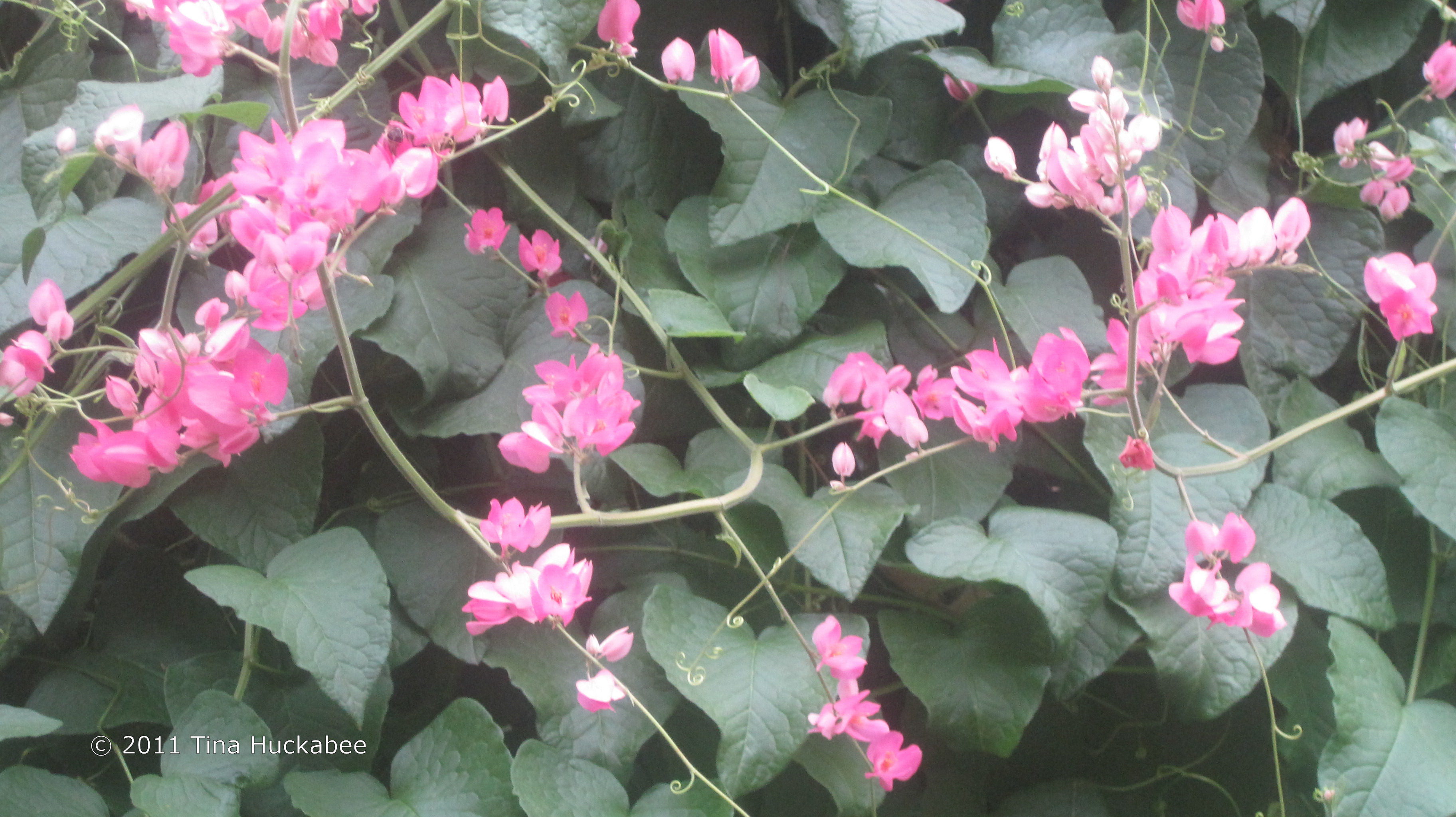
but its main bloom time begins in August.  Mine is usually swarming with bees–so much so, that the arch is animated with movement.  However, in this drought year, the vine didn’t grow quite as rampantly, didn’t bloom as prolifically  and there weren’t as many bees buzzing about.  Still, Coral Vine remains a favorite of those who do visit.

About three years ago, the Coral Vine was completely covered with blooms and therefore, with bees.  I frequently observed an anole lizard, who apparently lived in the vine.  He would saunter out from somewhere in the vine to bee hunt.  I only saw him actually snatch a bee once for his meal, but he was a big, healthy guy, so I guess he was getting plenty of bees to eat.

Coral Vine is a wonderful vine to grow on a trellis or fence.  It’s beautiful, easy, fast-growing, a great wildlife plant.
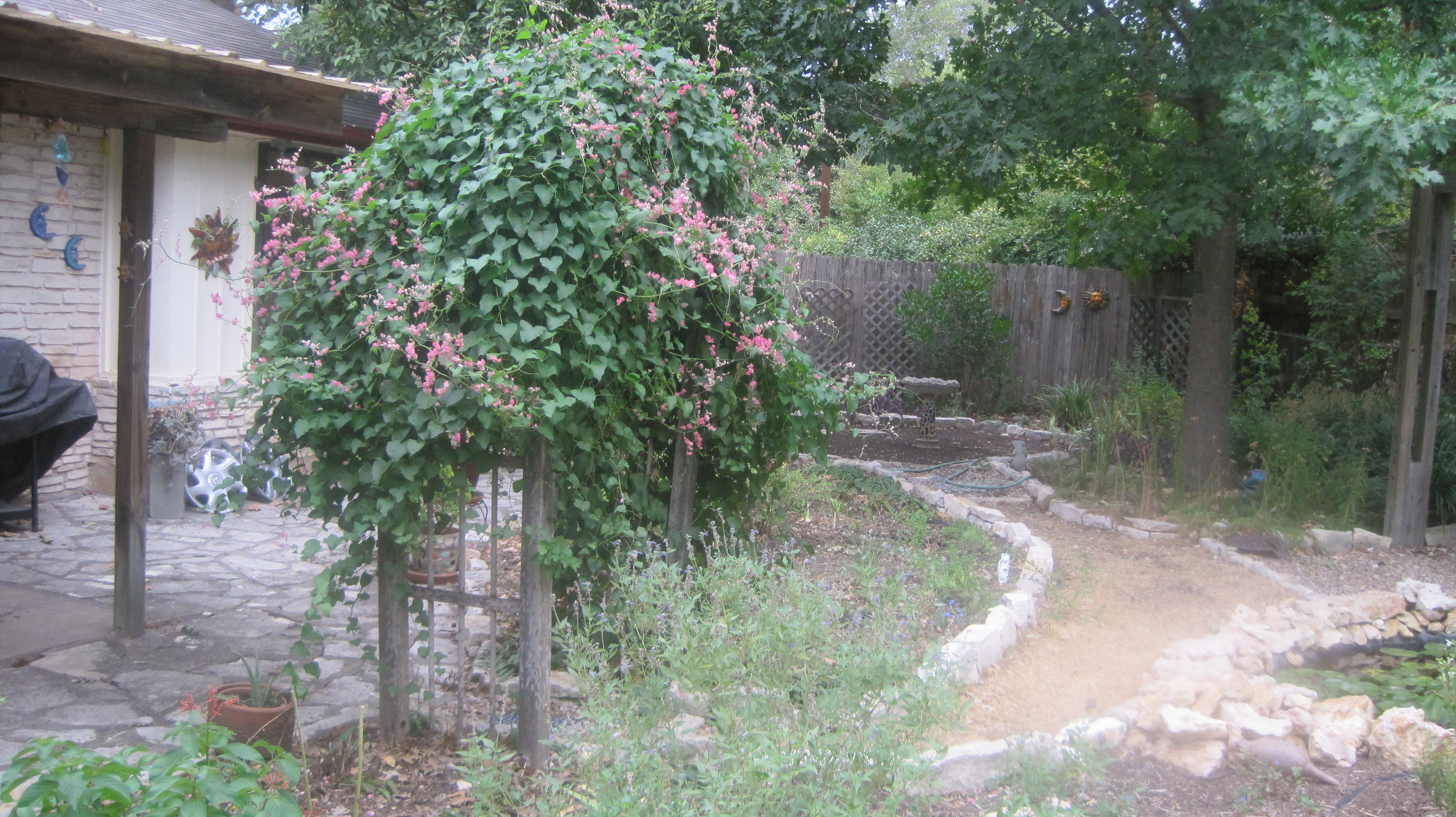
Just make sure that it doesn’t grow so much that you have to machete your way through its thicket.
Patience, Young Padawon

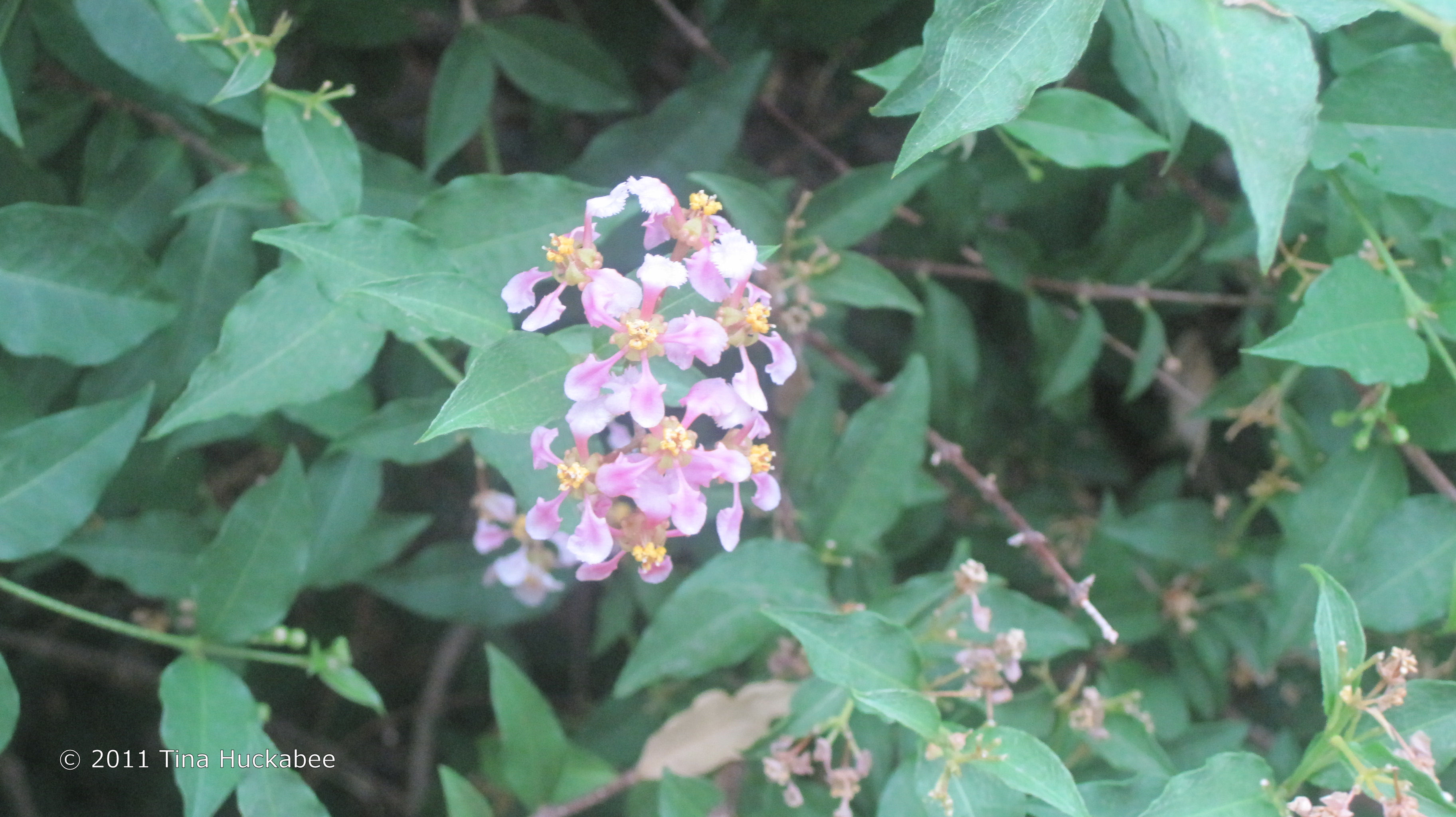
Recently, several people have mentioned to me that they’ve planted Barbados Cherry (Malpighia glabra) and asked, “why is it taking so long to grow and bloom?”

It’s a pokey little puppy, that’s why.

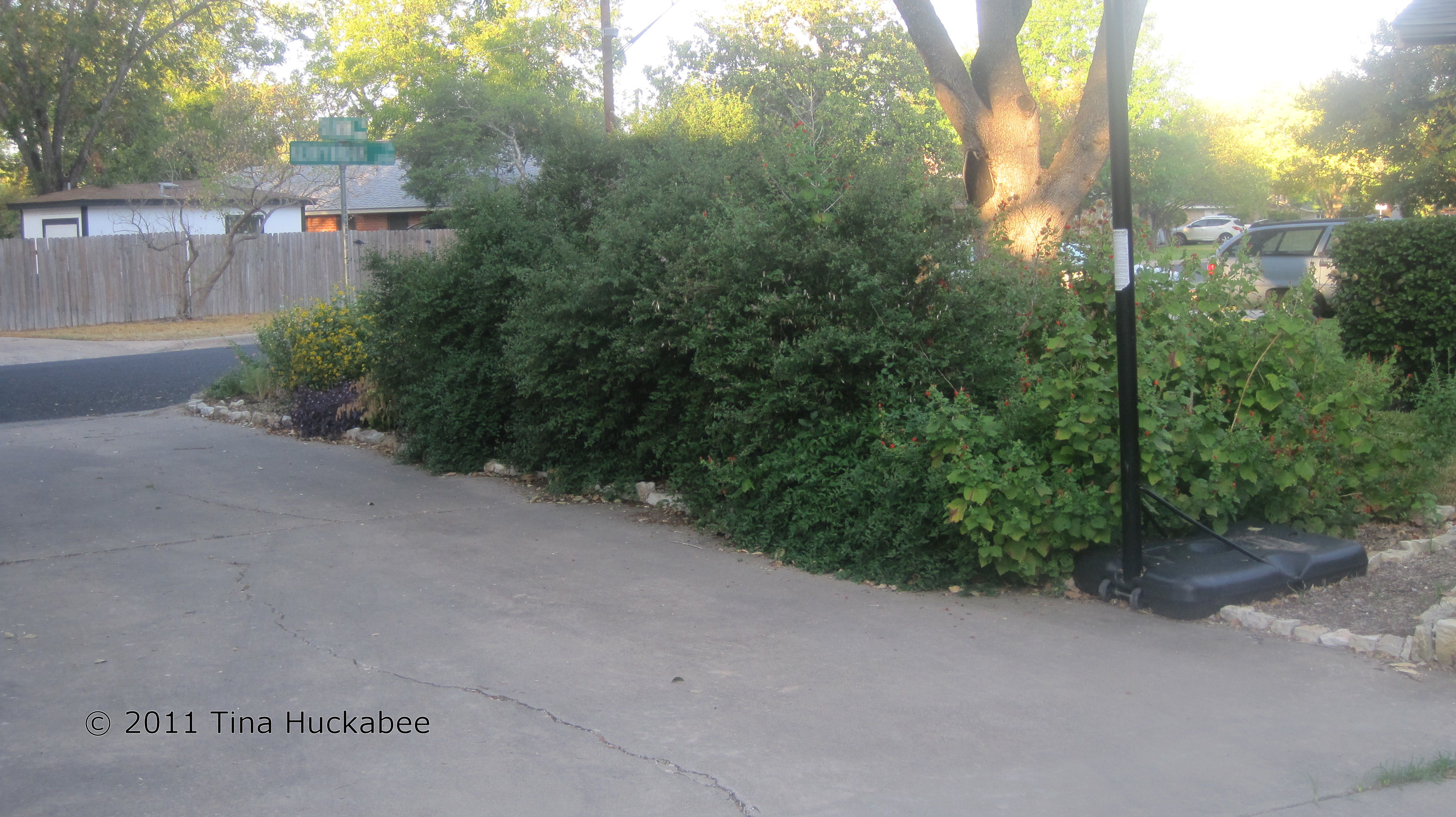
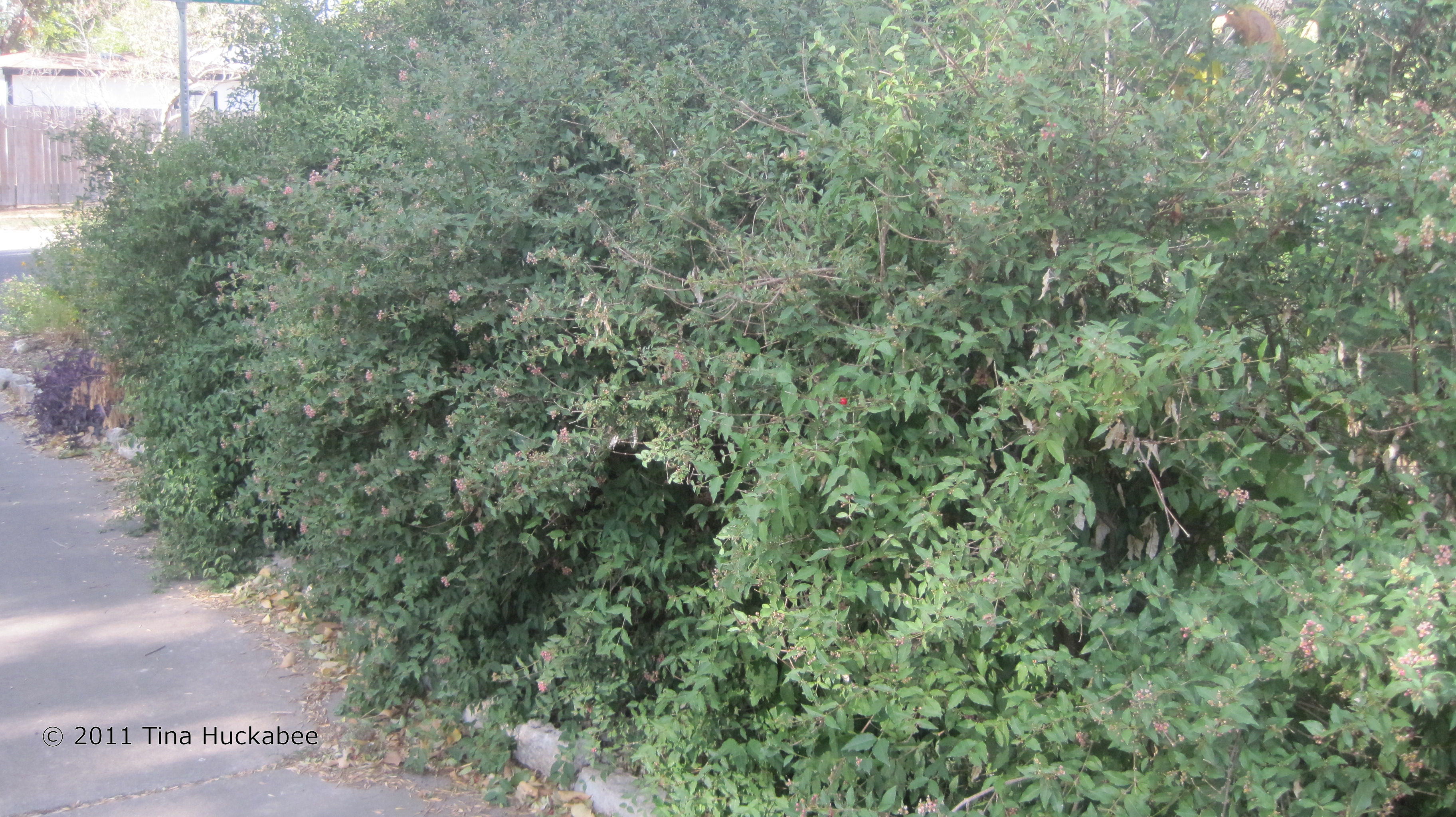
Barbados Cherry is a slow-growing, mostly evergreen shrub, native to Texas and Lands South Of The Border. It isn’t an exciting plant.  It’s not something that catches the eye and takes the breath away.  But for a tough and hardy hedge for privacy, you’ll find none that serves better.   It’s also an excellent plant for attracting wildlife to your garden.

In Austin, Barbados Cherry will freeze when it gets below 32 for any length of time.  I’ve never had it die back completely–usually it stays leafy on at least some parts of the shrub.  I used to prune at the end of winter, but now  I just  wait until spring and reliably, the leaves flush out–bright, cheery, little  green leaves all over the branches.  I  prune only for shape, (or if the branches are rubbing up against a car, since mine is planted along the driveway).

I planted this group about fifteen years ago.  It took FOREVER for them to do anything.  After year four–Boom! The group really took off. This has been a great hedge for privacy and the birds love to hang out in its thicket.  Birds also love the bright red fruit that develops after the blooms.    Currently this is the only fruit on any of my plants.

I’ve observed some mockingbird action lately, so he/she/they might have gobbled the others up.  (There is also a Turk’s Cap planted in the same area and a mockingbird has been dining on that fruit too.)  Additionally, Barbados Cherry is a  host and nectar source for bees  and butterflies. The flowers look like tiny Crapemyrtle blooms to me.

According to  the NPIN site, one of the common names for Barbados Cherry is Wild crapemyrtle.  The bloom-time  lasts four to six weeks during both spring and fall and appear all over the shrub.  Usually, though not this year,  there are both blooms and fruit on the shrub and this red-pink combination is striking.

I planted this group at the back of my garage about four years ago.

They have a while to go before they reach the mature height of five to six feet.

Barbados Cherry is a stalwart plant. I don’t have a sprinkler system and I don’t have a soaker hose in this group of plants.

This past Summer From Hell, I watered four times, by hand.  That’s it.  There was a point, in early August when the shrubs were droopy–I don’t think I’ve ever seen that in this plant before.  But with a little drink,  they perked up and survived the heat.  They’re still surviving the drought.

So, if you’ve planted lovely Barbados Cherry recently, be patient–with time, it will grow up to become a large shrub that requires very little care.

And may the (gardening) force be with you.

Mistflower Palooza

Aah, fall!  We glory in cool breezes, soft light (well, okay, light in Texas is rarely “soft”), and  the resurgence of the perennial bloom cycle.  Additionally, fall blooming plants burst out dramatically, a reminder of our two temperate growing seasons in Central Texas.  One of the best of the bloomers in late summer/fall is the in the Aster family.  Conoclinium  boasts three great plants which  are readily available at  independent nurseries and for the first time ever, I have all three mistflowers residing in my gardens.  Two of these perennials are ground covers, one is a shrub.

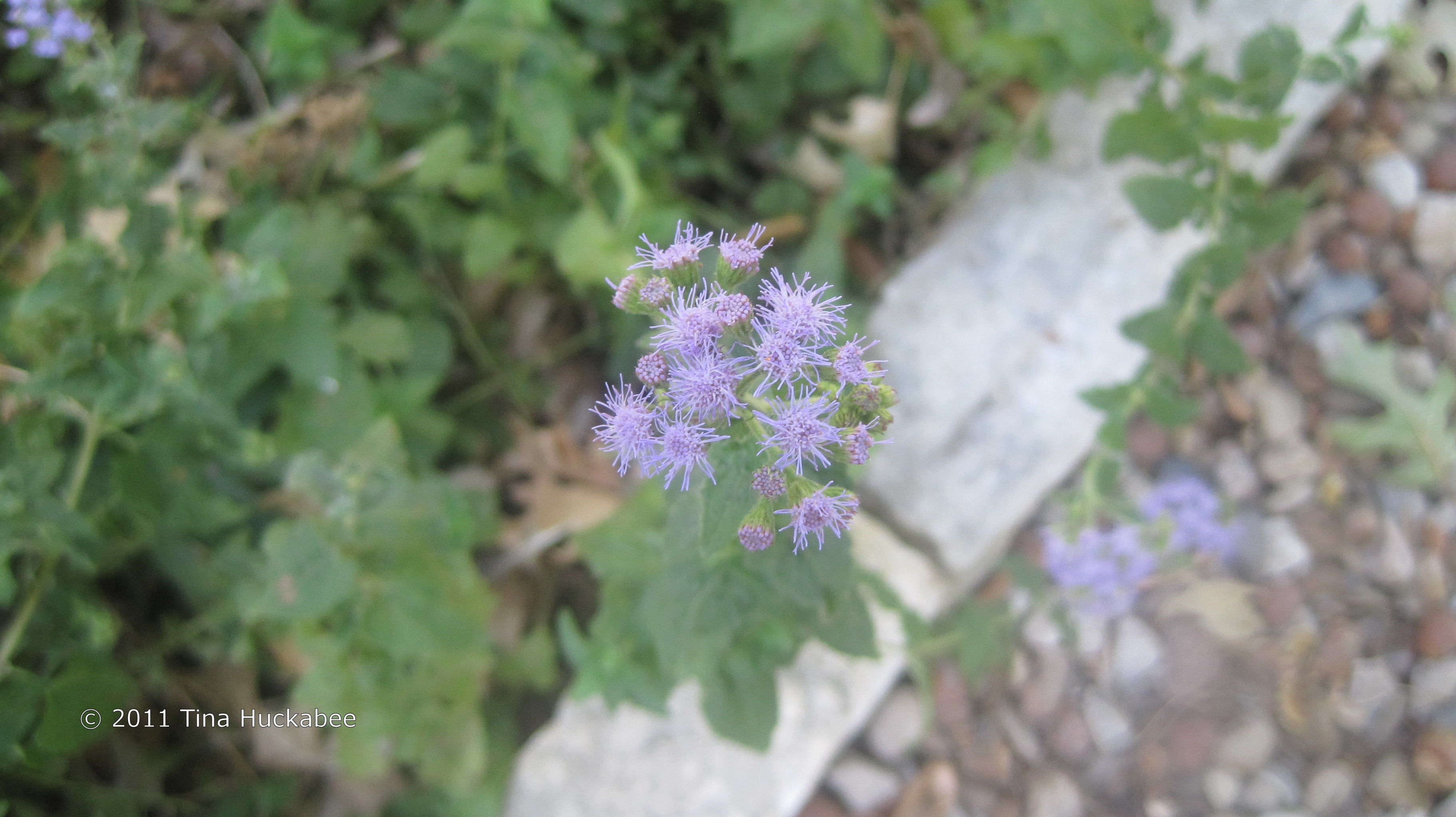
For years, I’ve grown the Blue Mistflower (Conoclinium coelestinum).

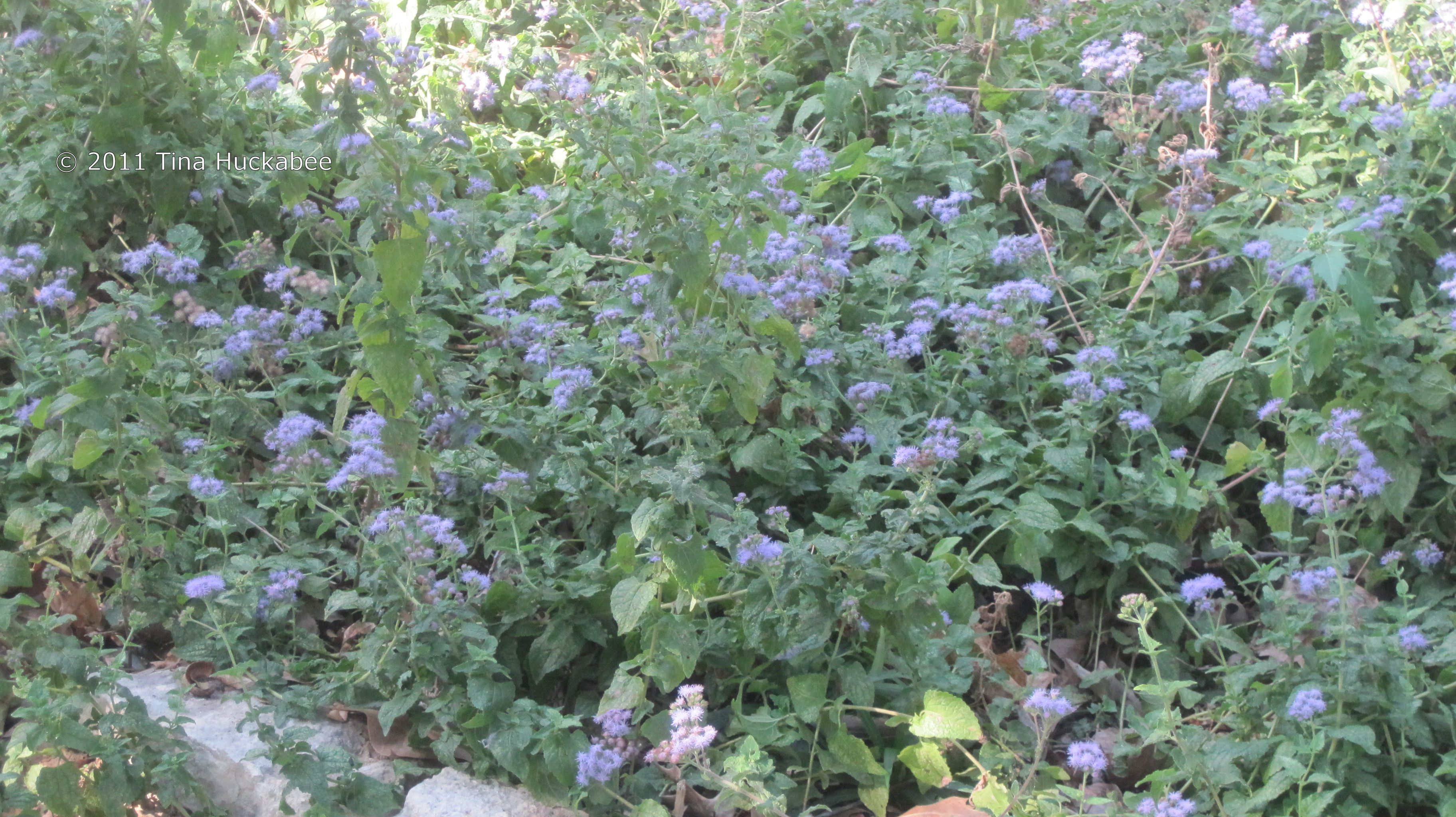
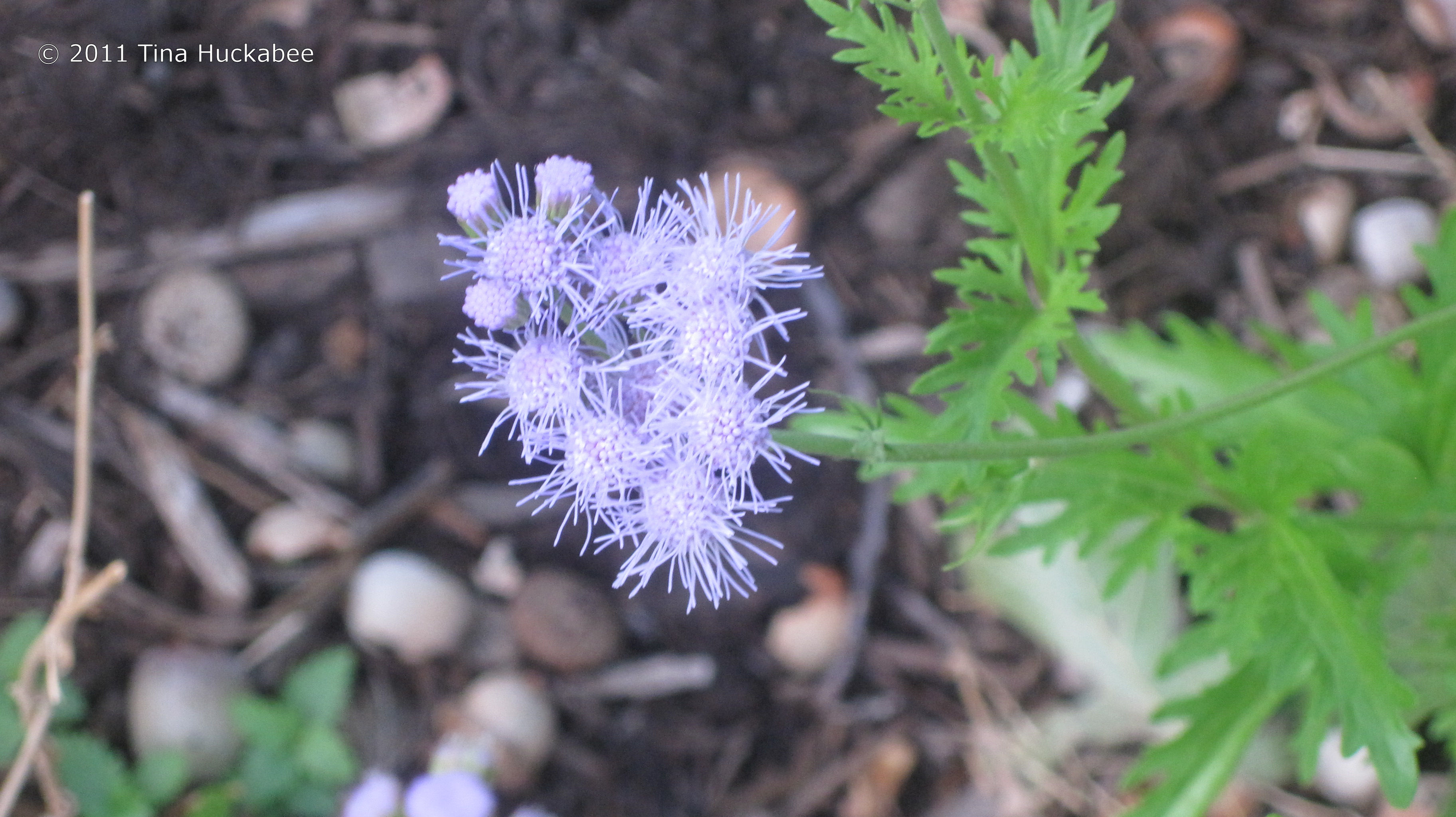
I adore blue flowers and this has long been a favorite of mine.  I bought a four-inch pot twelve or thirteen years ago and planted it in a back corner of my gardens. About three  years ago, it didn’t come back from winter with the vigor usually displayed. For various reasons,  I decided to move the remaining sprigs-with-root to a new perennial bed so that this  mistflower would border a walkway.  The color doesn’t translate well in these photos, but it’s a beautiful deep blue-purple,

All mistflower blooms are fuzzy, puffy and unusual looking.

Blue Mistflower begins blooming in August-September, depending upon rainfall. But, it is at its zenith of beauty in October.

After the first hard freeze, the blooms turn a warm, toasty brown. I’ll usually prune the remains to the ground in late winter and new green sprouts emerge in late spring.  It can be spready, so it’s a great pass-a-long plant–just yank a sprig out of the ground, with some root and share.

Personally, I’ve always found this mistflower easy to transplant.  A year ago, as I was expanding an existing bed, I pulled up five sprigs-with-roots and planted them.

These three survived the Summer From Hell and I expect this area to be lush with mistflower by this time next year.

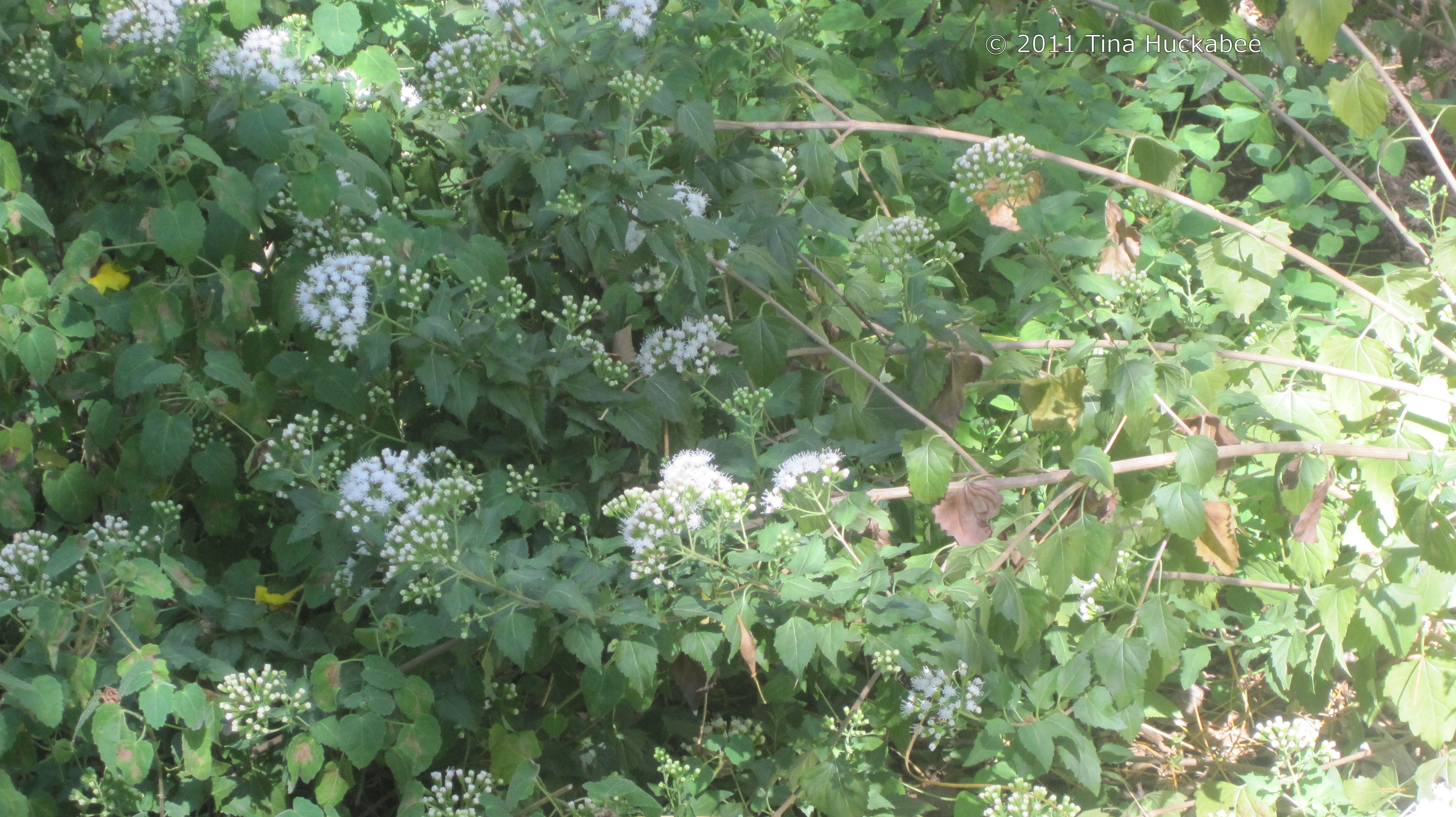
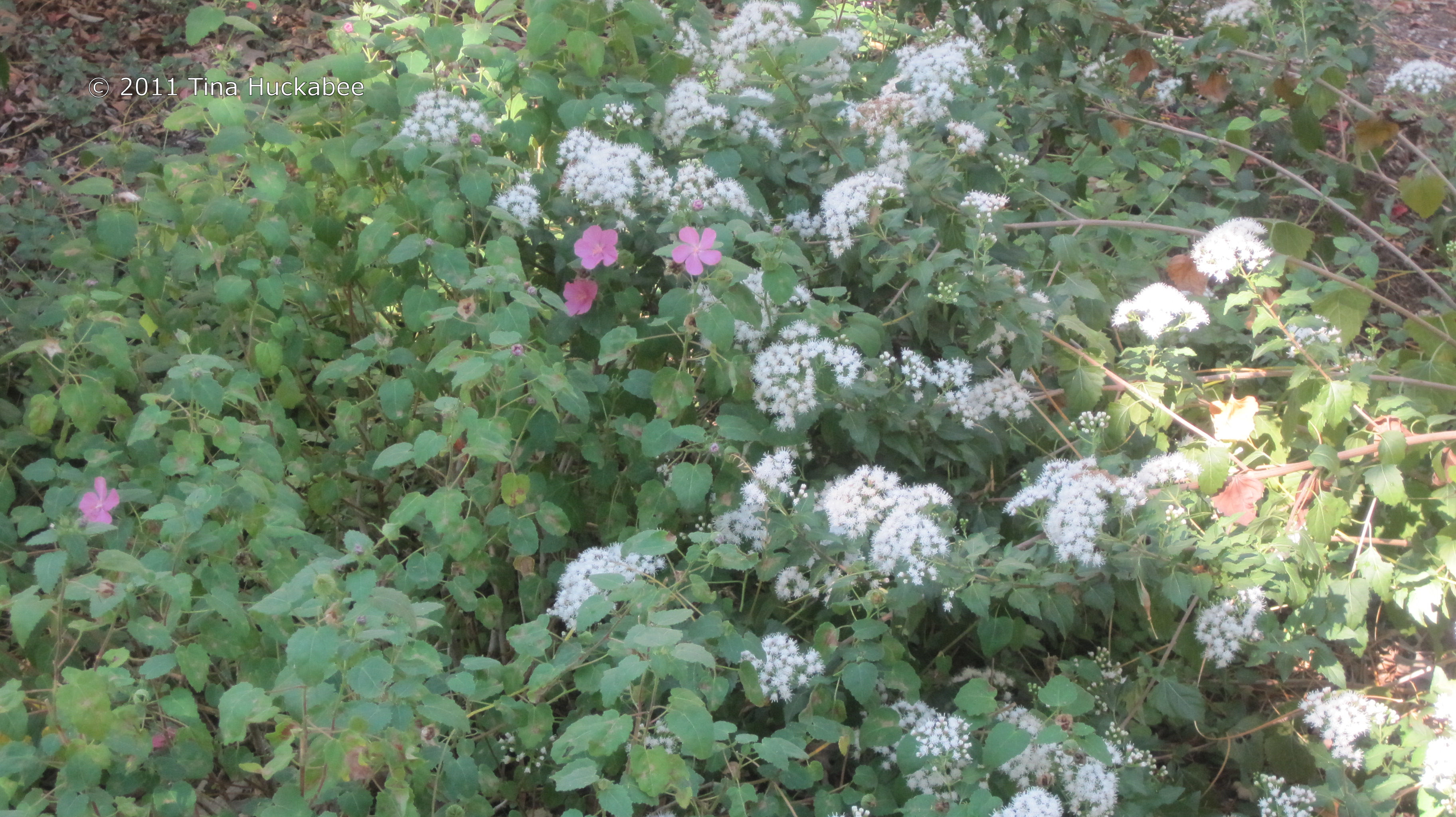
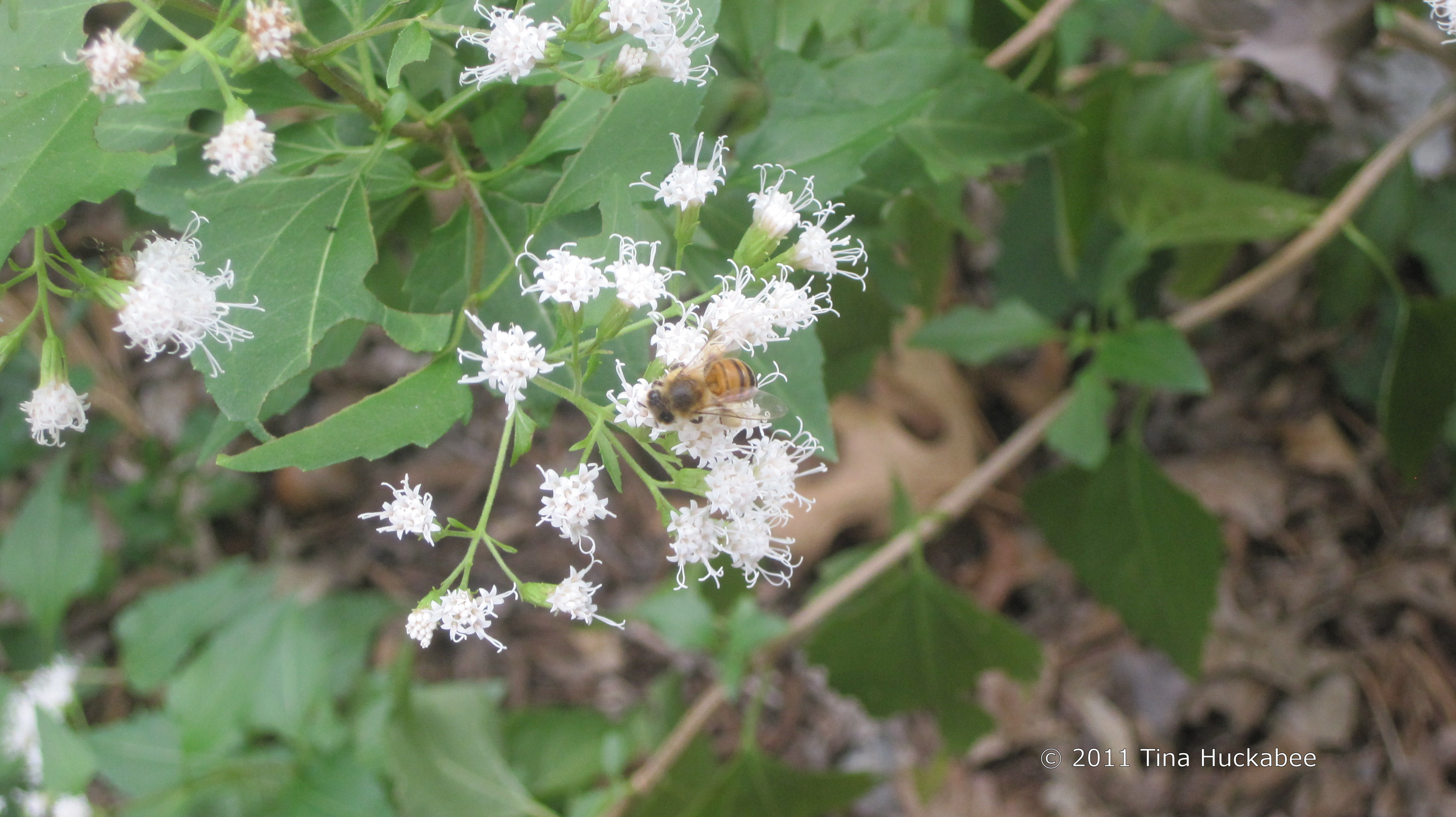
The newest mistflower addition to my gardens is the White Mistflower (Ageratina havanensis).  The blooms are fragrant–they smell like vanilla to me. This plant is more shrub-like, rather than the Blue Mistflower ground cover.

I planted this one about a year and a half ago, it bloomed last year and is even lovelier this year, especially as it happily mingles with Rock Rose (Pavonia laseopetala). The white blooms are especially pretty when contrasted with other bright colors.

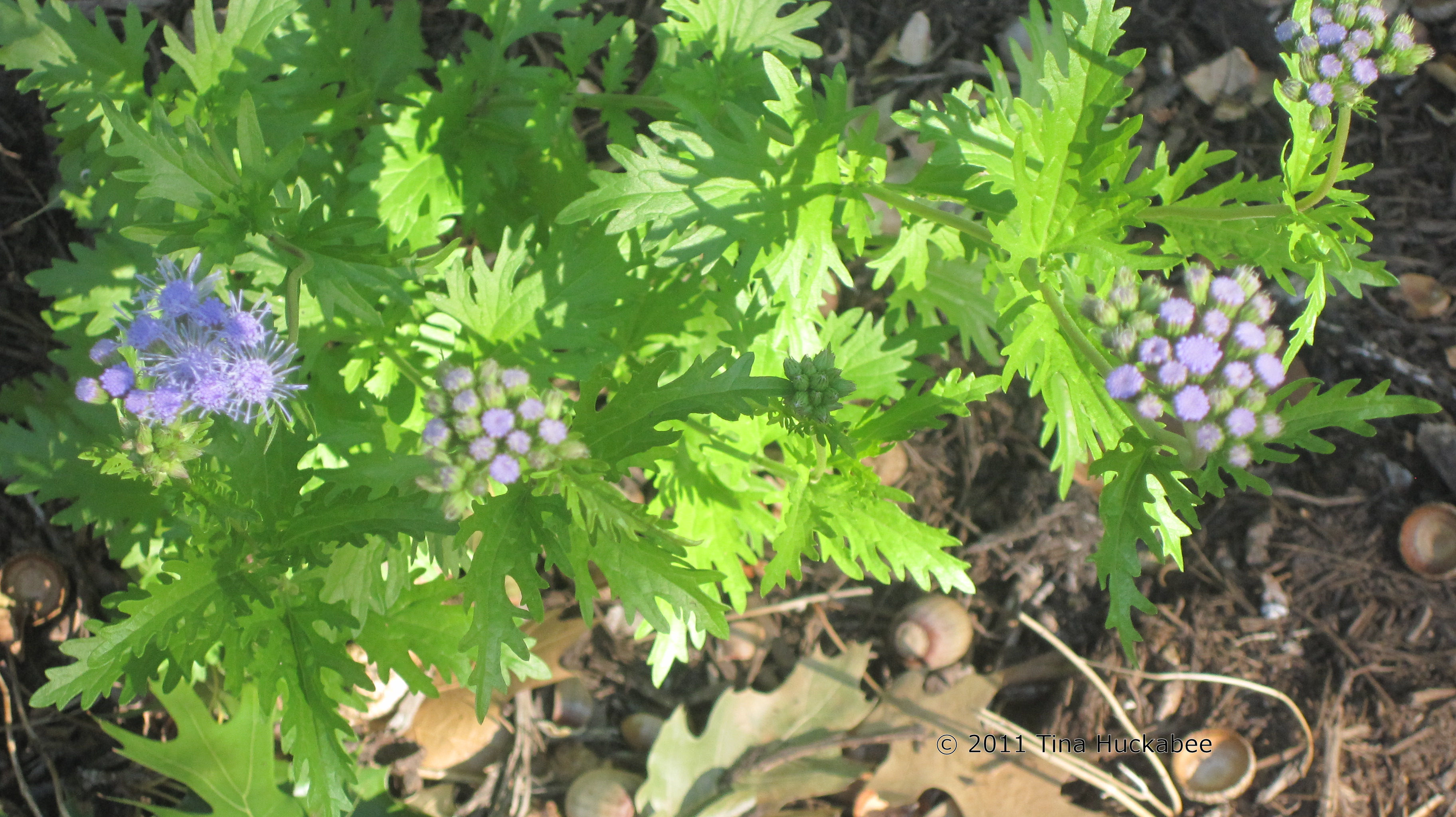
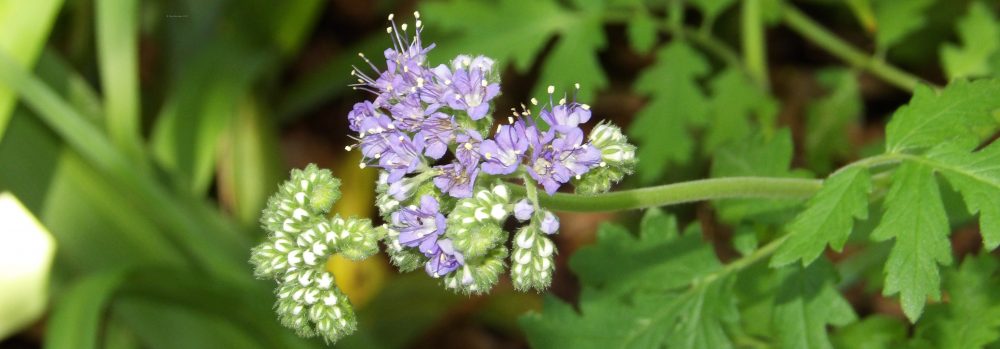
Another mistflower common in Austin area gardens is the Gregg’s Mistflower (Conoclinium greggii). Like the Blue Mistflower, it’s a ground cover that dies after a freeze and returns in the spring.  Also like the Blue, it spreads and (at least for most gardeners), is easy to transplant. The color is a lighter blue than the Blue Mistflower and the leaves are bright green and palmated.

Unlike every other gardener in Austin, I’ve never had much luck with these guys.  Years ago, I planted a four-inch pot–it died.  Last fall, I bought two, four-inch pots–both died in the freezes of January/February.  Sigh.   A nice friend gave me  some sprigs-with-root this summer, so, ever the optimist, I planted.

The sprigs are blooming and doing well.  I’ll see how this little group fares over the coming winter–I dearly hope each sprig survives.  The Gregg’s Mistflower isn’t my favorite, but it is favored by the butterflies, (especially the Queen), when we have them.

All three mistflower species are deciduous in the winter and have low to moderate water needs. These plants attract butterflies and bees and are beautiful additions to any perennial garden.

Mistlfowers are also very tough plants.  I hiked at Hamilton Pool Nature Preserve in early September and of the two plants that I saw blooming, one was a Gregg’s Mistflower.  After the Summer From Hell and the exceptional drought that Central Texas is experiencing, to see a plant bloom without rainfall or irrigation is a testament to its durability.

The beauty of mistflower speaks for itself.