I can’t lay claim to any true relationship with this young Carolina Chickadee, Poecile carolinensis. Though it isn’t my little chickadee, I confess an affection toward the little bird as it satisfied my selfish desire to observe as it perched, relatively still, and fed for a period of time, long enough for this watcher to watch.

The neophyte chickadee sat at the feeder, nibbling at the small pieces of peanut available. No adult chickadee would consent to spend that much time at a feeder; adult chickadees dash and perch, grab and go. A mature–and wary–Carolina Chickadee would dart to the feeder, and lickety-split, grab a peanut, or part of a peanut, and sprint out of clear sight to a safe place to eat. The young chickadee’s inexperience at peanut picking allowed me to watch for several minutes, appreciating its birdie beauty, even though I also recognize that it must be more careful: move fast or become someone’s meal.
I observed, then realized that maybe, just maybe, I could capture some of this darling since it was spending an un-chickadee-like amount of time at the feeder.
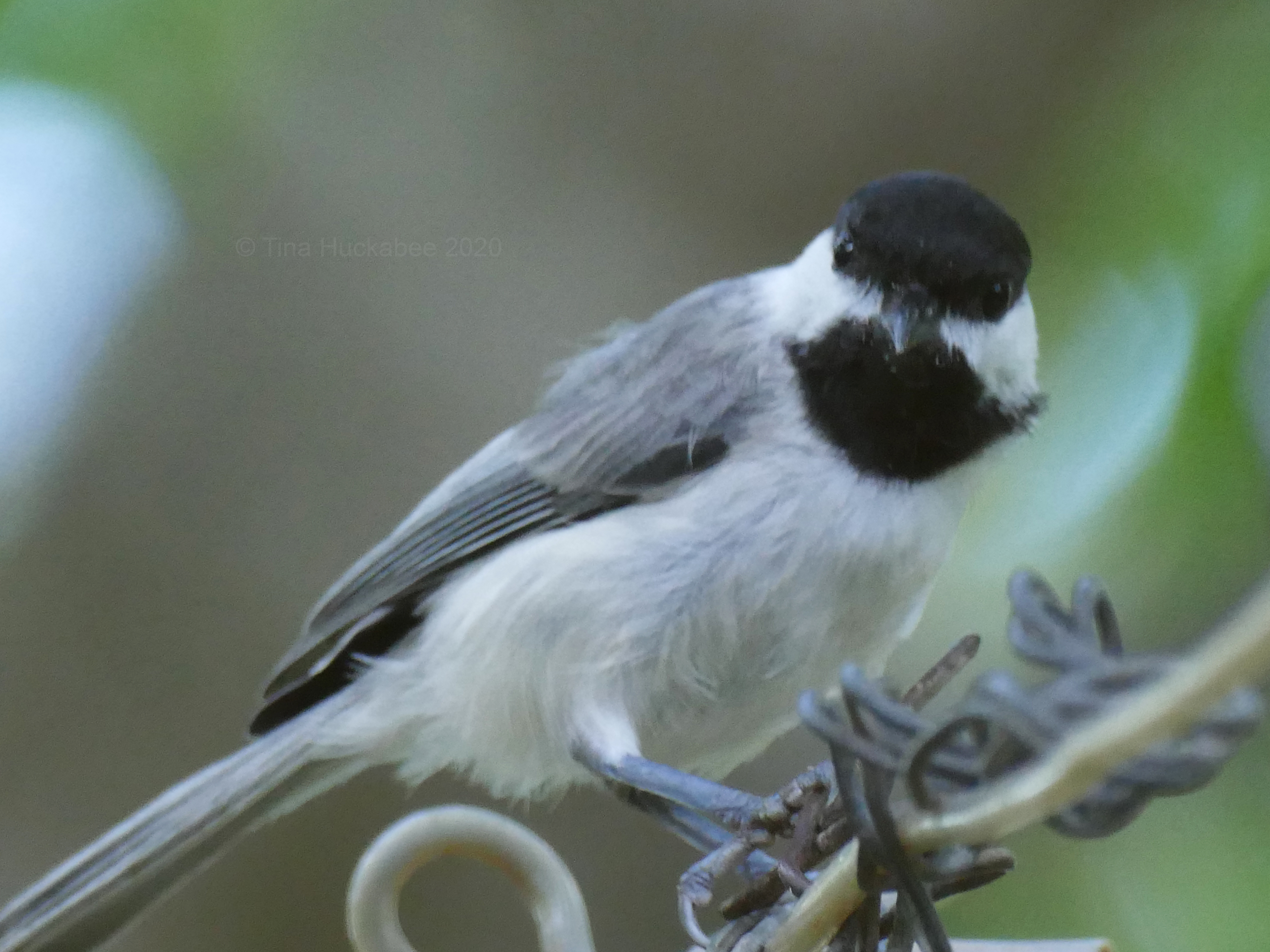
Successful photos of a Carolina Chickadee? That’s a rare treat for me!
To its credit, when a parent Blue Jay muscled its way onto the feeder, the young bird flit to the tree, then to the cord from which the feeder hangs, then safely to an evergreen shrub. Once the jay was done, the chickadee settled in for more of the peanut treats.
Chickadees’ tiny beaks are better suited for gleaning spiders and other small insects from trees and shrubs, the birds protected by cover of foliage. Their beaks are not as well designed to quickly dismantle a hard-coated seed or good-sized peanut, especially while acting as a sitting duck at a feeder. A wise and experienced chickadee will snatch, fly, and eat under cover–and live to raise a clutch of his or her own.

A week or so ago, I watched as an adult Carolina Chickadee zoomed in from a neighbor’s property, grabbed a nosh–sometimes a peanut, sometimes a black-oiled sunflower. It then zoomed back in the same direction, followed immediately by another adult, completing the same set of actions. I realized that it was a couple, working in tandem, probably feeding hungry and growing chick(s). I don’t know if this chickadee belonged to that clutch, but I’m confident that it is young, newly experiencing a dangerous world, finding its way to food and cover.
Fledgling birds must learn many survival skills, including making high–speed trips to feeders and lightening retreats to safety. As they perfect those skills, my ability to easily observe diminishes–as it should.

My little chickadee’s life depends on well-learned lessons and well-executed skills.




 My Gardener Says...