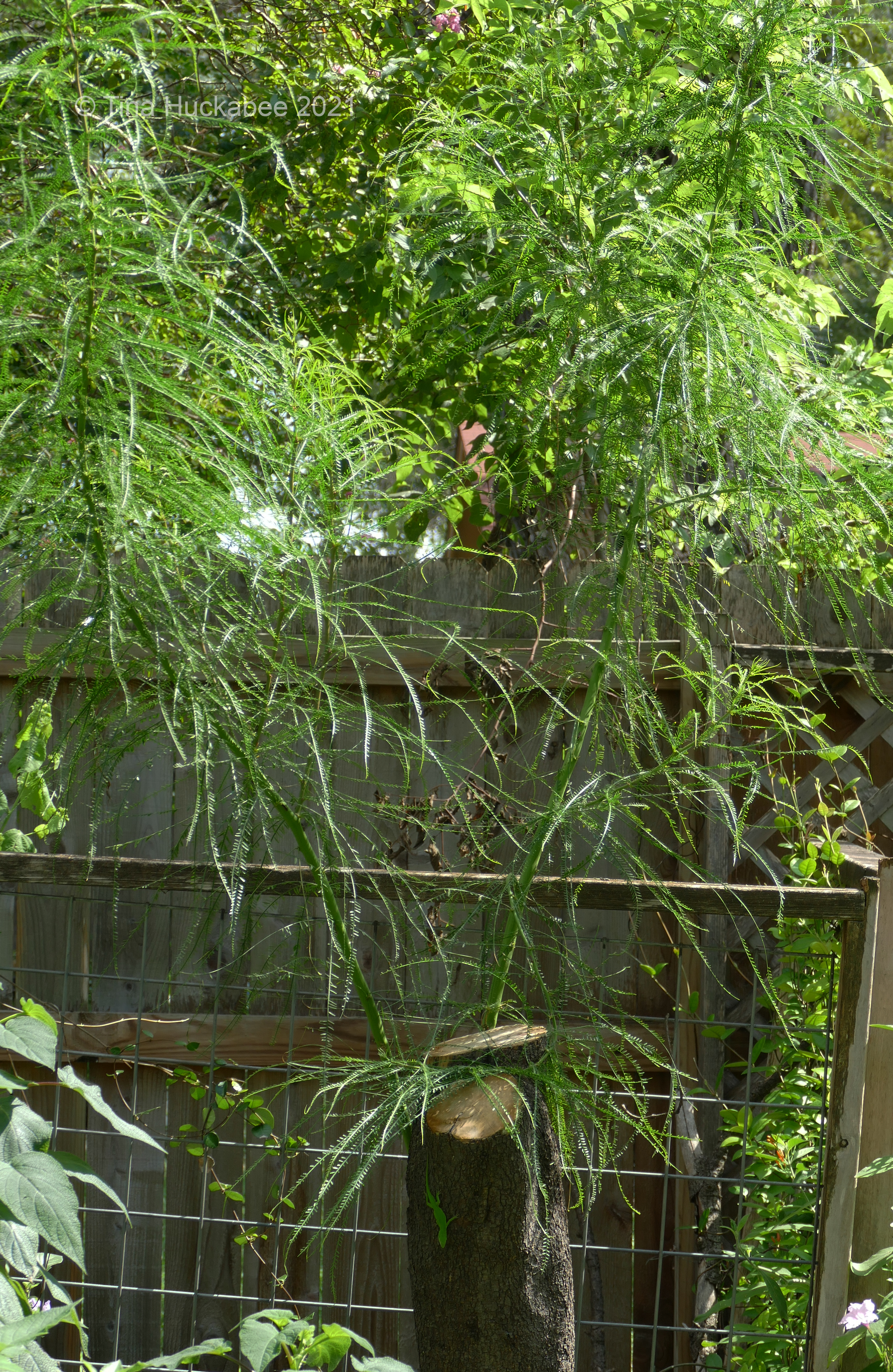
I wonder if the Green Anole, Anolis carolinensis, is baffled? It was once a larger tree, but now is only a trunk and some foliage, where is the rest of it?
This mature Retama, Parkinsonia aculeata, froze during the winter storm in February. I assumed it was a lost cause and that the dead trunk and limbs would need removing. But in late April, new growth burst upwards from the base of the plant and shot toward the sky with speed. In July, the Hub and I finally had time to remove the dead portion of the tree and I also pruned the multitude of shoots from its base, leaving a single strong one with an attached second branch which will serve as the trunk of the “new” tree and its two lead branches. The crotch of the new trunk is just a few inches below the crotch of the original trunk. The two main limbs are now about 6 feet tall and growing by the day.
There’s a lot of green in this photo, but the feathery foliage forms a V from behind the original trunk and is loving the plentiful sunshine. At some point later in autumn or winter, I’ll have the Hub don his lumberjack hat and saw the original trunk to the ground.
By next summer, the tree should be even taller, maybe with more limbs, and covered in its signature yellow blooms. Pollinators will join with anoles in enjoying its presence.
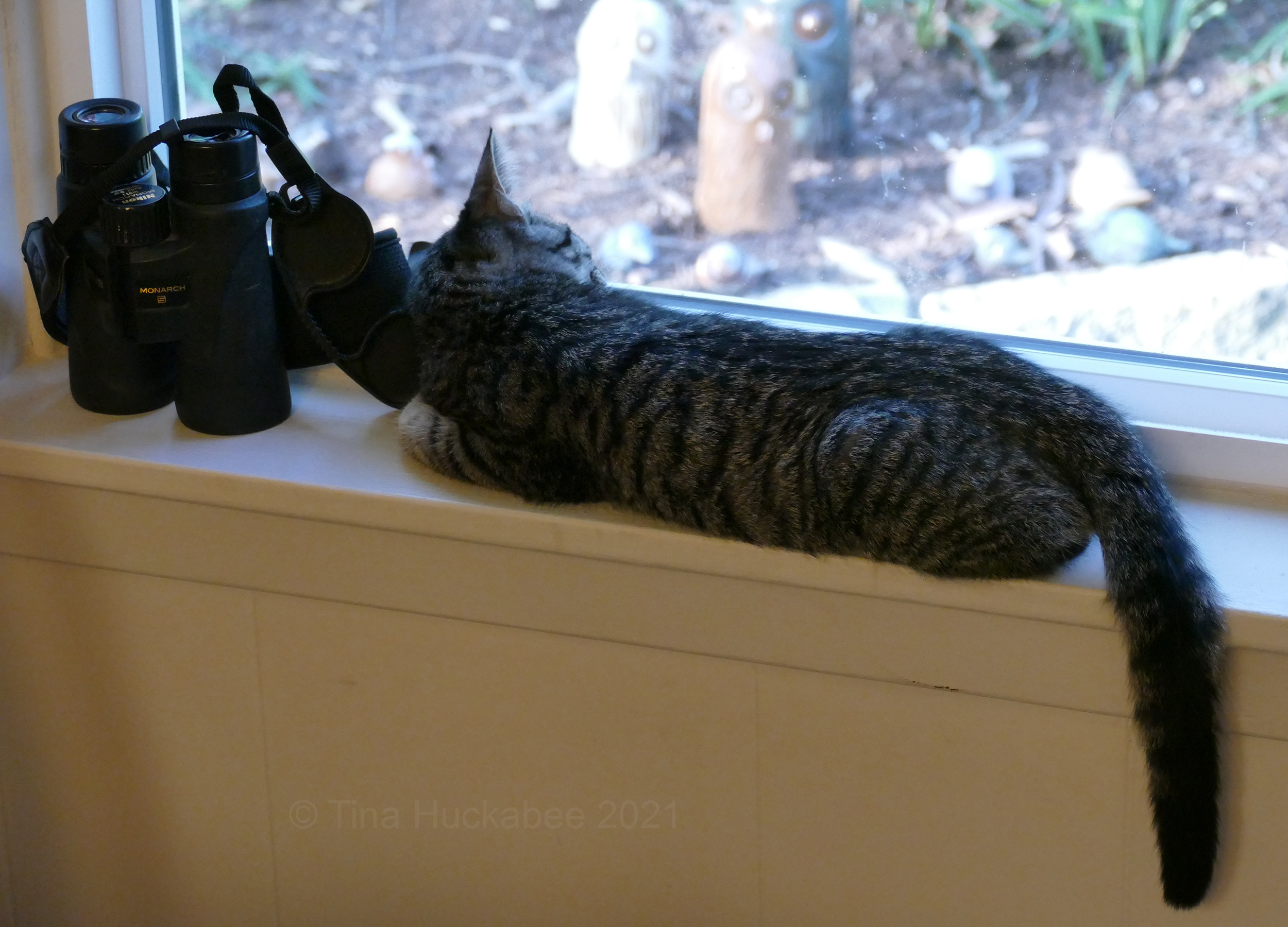
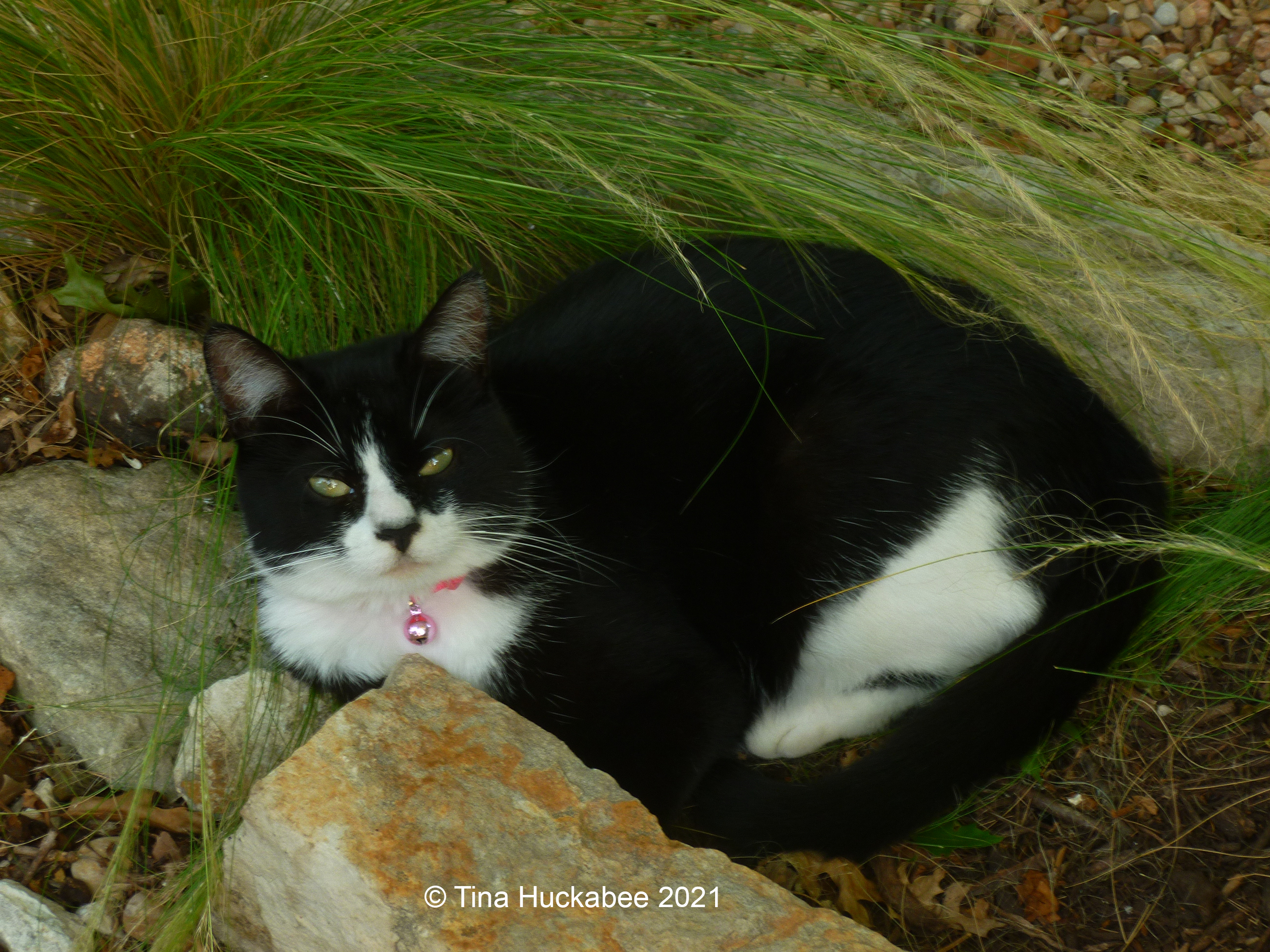
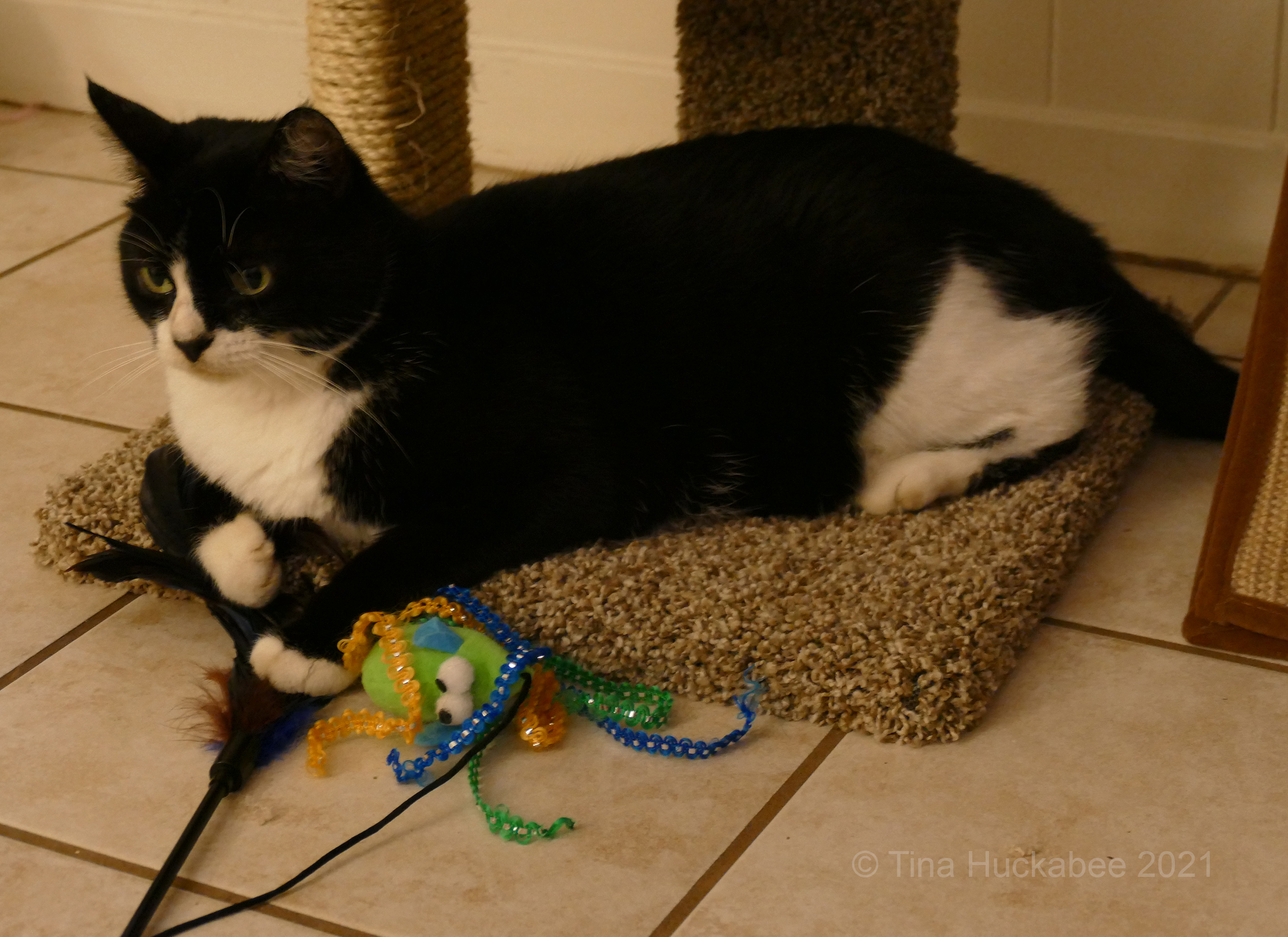
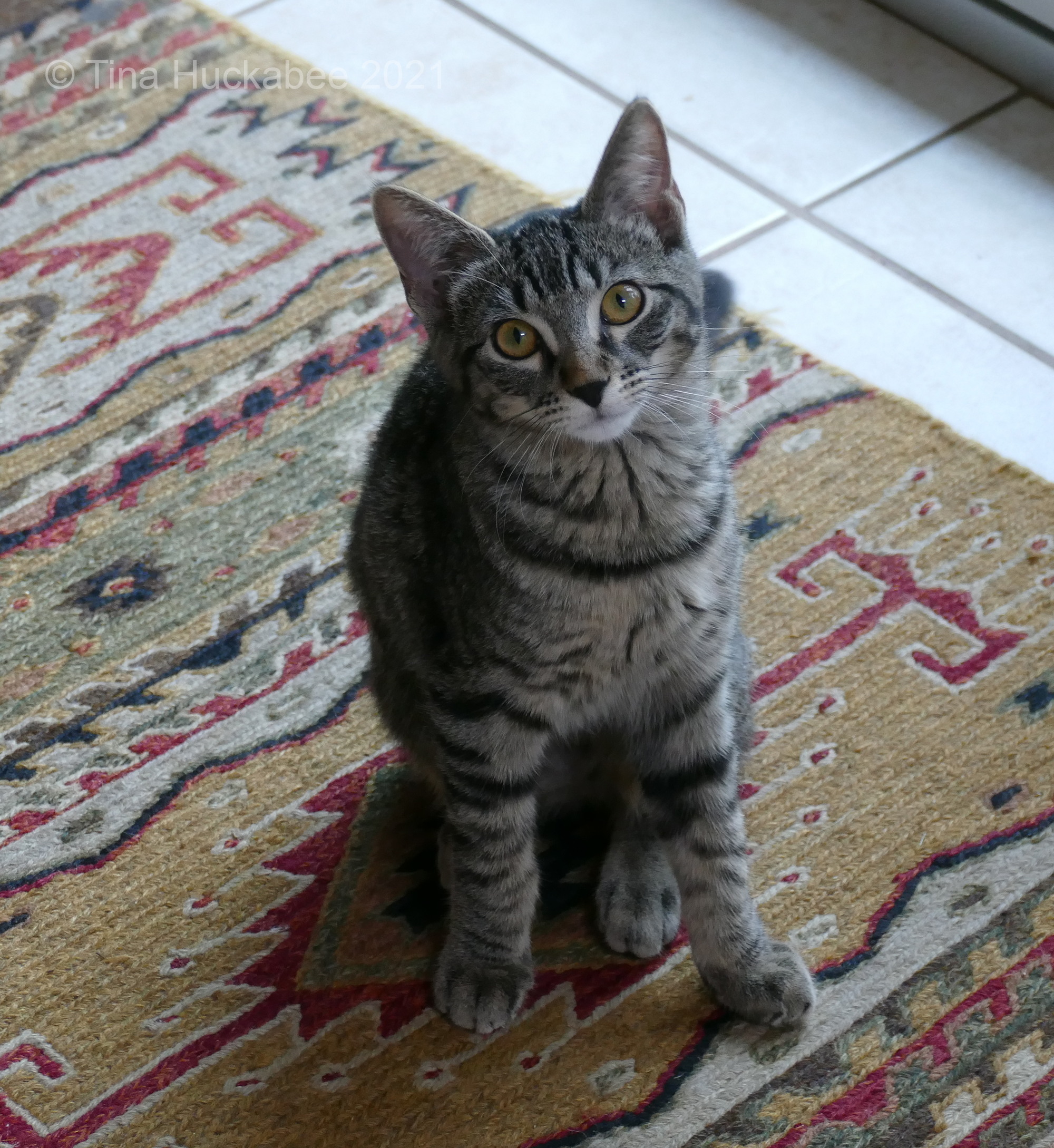
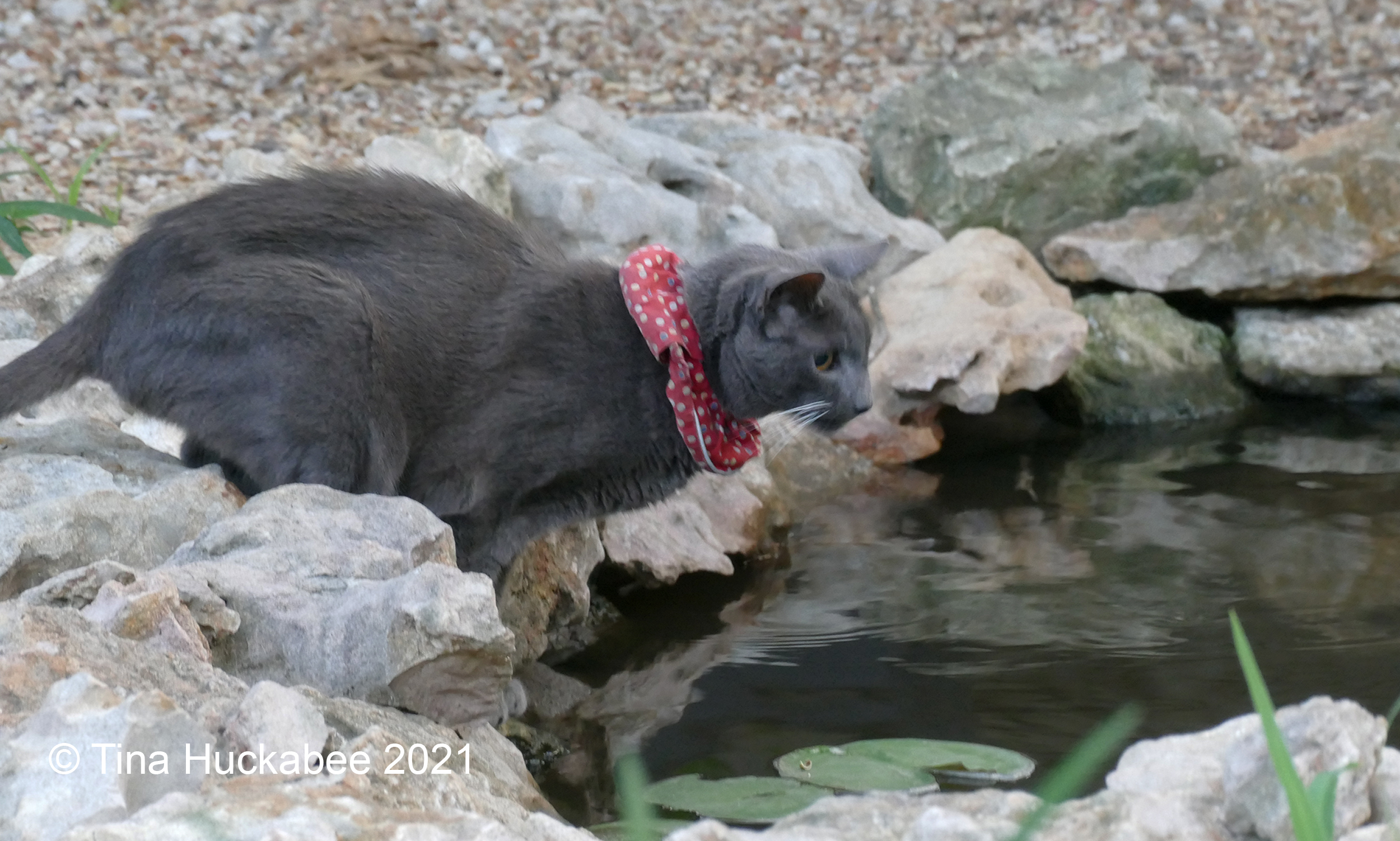
We have a new kitty and she likes to watch birds. She’s such an avid bird watcher that it tires her out!
We’ve had the new kitty, Lena, since June. We adopted her a few months after our beautiful, beloved Nuri died. He was 15 years-old, diagnosed with heart failure 2 years before his death, but he lived beyond all expectations of his prognosis, living his happy life until the end.
Our son chose Nuri in 2006 from a local shelter the same year our daughter, Shoshana, died. Truthfully, I didn’t care at all about getting a new pet at that time (we had two dogs and our older cat had died), but our son was 11, bereaved, and adopting a new life was a small and positive thing we did to ease some of the pain. Nuri came into our lives and though there was nothing that could fill the abyss of grief, he was a light in a dark time. Nuri was the smartest cat, maybe the smartest pet, we’ve ever had. Lovely, soft and affectionate, he was also quite funny. He got along well with our dogs, made us laugh, and cuddled like a champ.
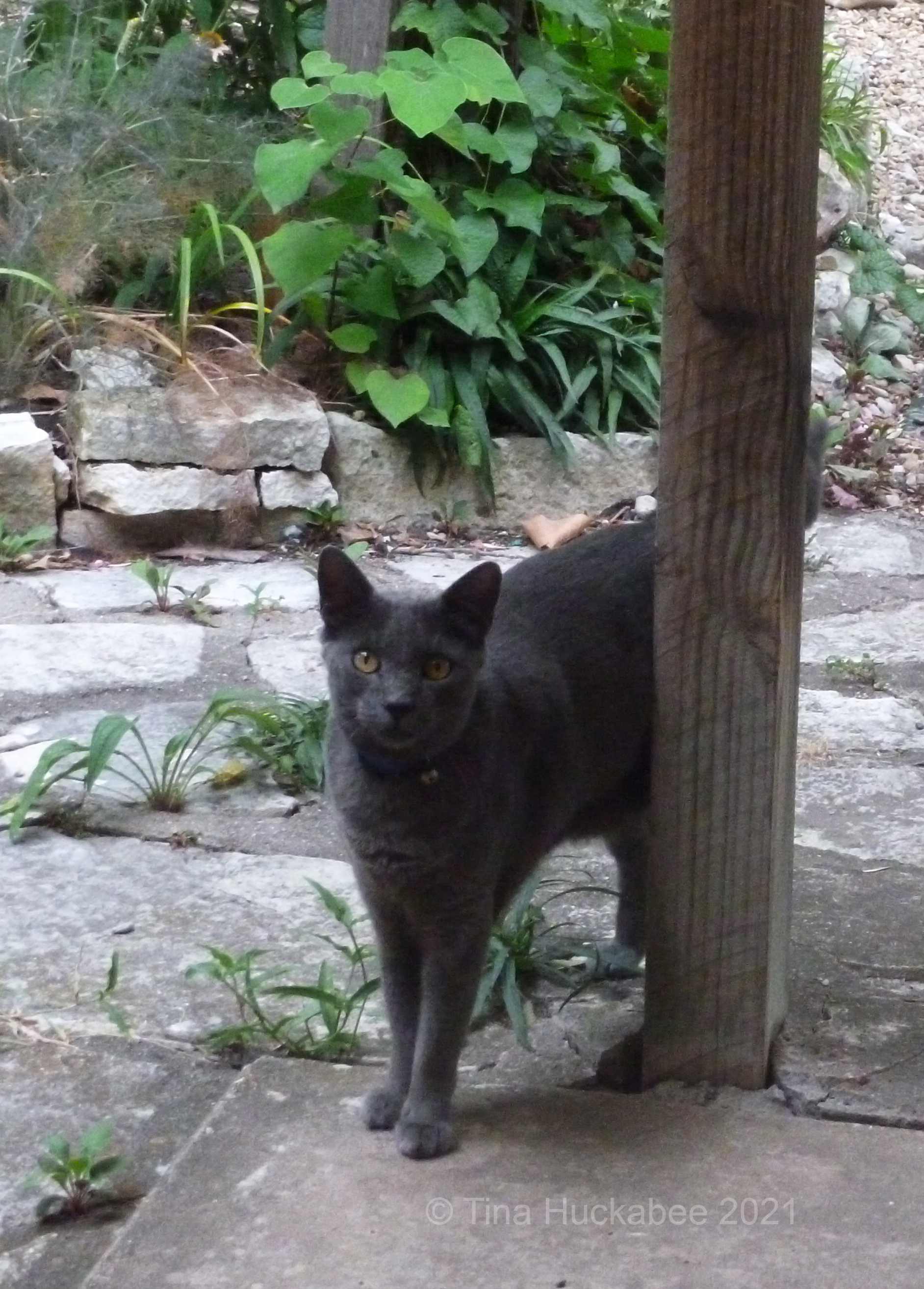
During the course of Nuri’s life we adopted another cat, a tiny foundling, our sweet Astrud. Named after the jazz singer Astrud Gilberto for her dulcet meows and chirrups, she’s now 8 years-old and has missed for Nuri since his death. Mournful mews replaced musical meows.
I wasn’t sure I wanted another cat, but a nice neighbor was fostering a mama and 4 kittens, and we visited them and, well, you know the ending to that story. As expected, the adjustment between mature cat and rambunctious kitten has had its challenges. Astrud will play with Lena, but the play is limited and only on her own terms. After all, she’s now alpha and she’s the boss cat. There are some growls and hisses on one side and lots of boundary pushing on the other, but they’re figuring out their relationship and generally getting along. Sort of.
Our cats have always been indoor/outdoor cats, with the emphasis on indoor. Nuri liked to tour his territory, but rarely strayed beyond, and Astrud only goes in the back garden, usually in the afternoons, snoozing under select, favorite shrubs. Neither were/are avid hunters, though Nuri was a ratter. Good Nuri! We’d already decided that if we adopted another cat, he/she would be indoors-only; our garden attracts myriad wildlife and we don’t want a feline invasive species messing with the ecosystem. As Lena has demonstrated lightening speed, tremendous jumping ability, and an interest in stalking and hunting, she will definitely reside indoors. Birds, lizards, insects, and toads will be safe from her skulking through the garden, searching for prey.
Though she is a darling, she’s probably a killer kitty.
Lena is named after another jazz singer, the fabulous Lena Horne. Like the singer, our Lena is beautiful, smart and charming, though I don’t know if she sings as well; she does have a quirky, squeaky-sweet voice. Lena is a charismatic little cat and we’re quite taken with her. She’s been a great addition to our household, though Astrud probably has a different opinion.
Like our dog, Asher, who died 3 years ago, we still miss Nuri, and mourn his loss. Accepting the relatively short duration that pets spend with us and grieving when that ends is the price we pay when we love animals and welcome them into our lives.
It’s been a bright and sunny sunflower summer. I always have sunflowers in my summer garden, presumably gifts from the digestive systems of a variety of birds and their fuzzy-tailed sunflower seed-loving friends, the squirrels. These urban dwelling critters disperse the remains of black-oiled sunflower seeds taken from feeders, dropped unceremoniously to the soil, which then fulfills its role in nurturing growth. This year, the numbers and sizes of sunflowers are over-the-top–literally. Each stalk is huge and there are scads of them. I pulled out quite a few, some when were very small and others as they grew taller, but my pruning shears were no match for the sunflowers determination to define my summer garden.
I kept most of the sunflowers at the center and back of my gardens so they wouldn’t interfere too much with beloved seasonal perennials like creamy Yarrow, Achillea millefolium and cheery Zexmenia, Wedelia acapulucensis var. hispida.
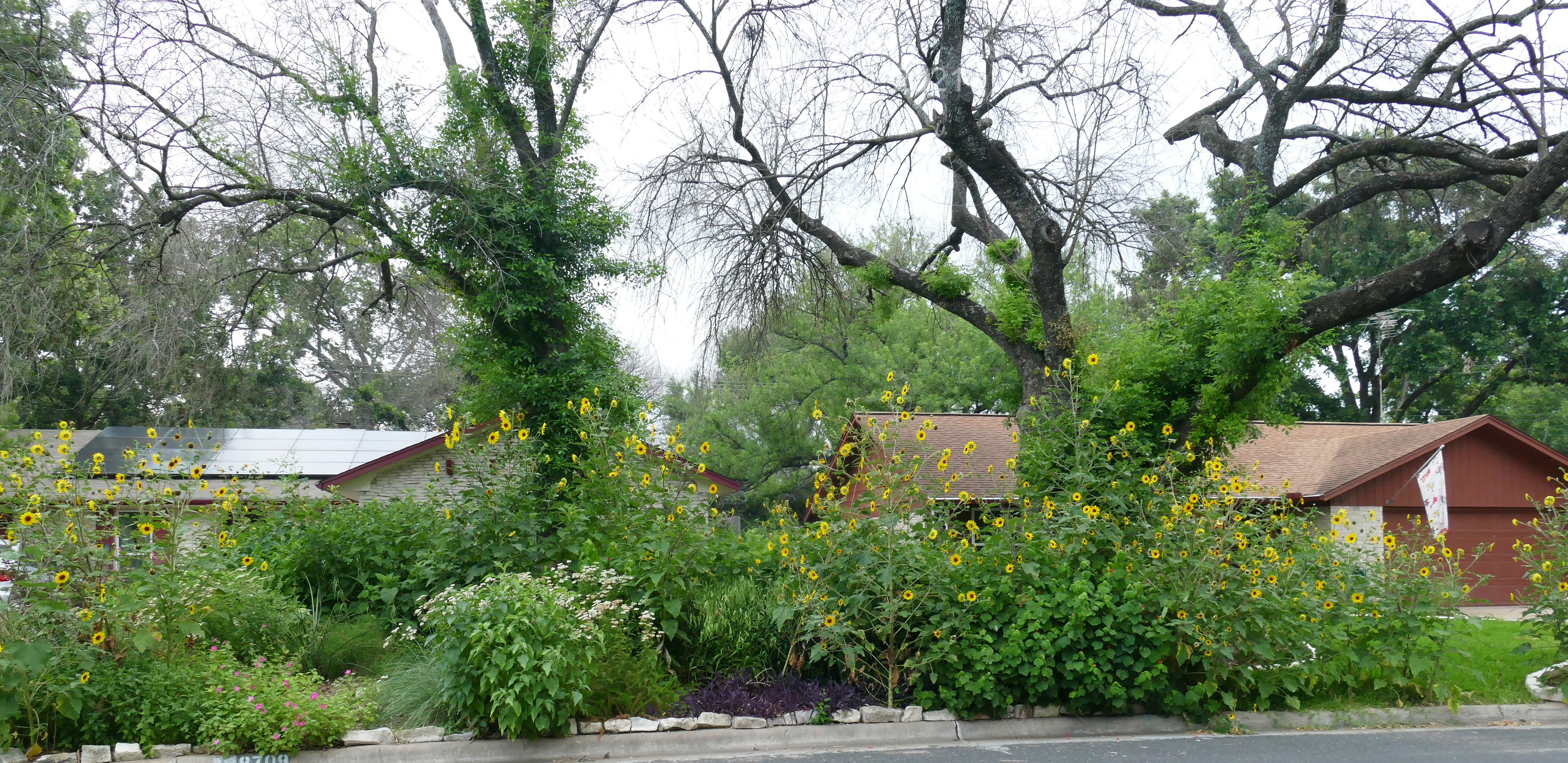
My home sits on the curve of the street and has no sidewalk. Toward my sister-in-law’s (SIL) home (right side of photo), I allowed the sunflowers to reach their sunny faces to the sky and form a floral barrier to the end of the garden.
From the other side, you can see that my SIL also took a pruning shears-off attitude toward the sunflowers in her garden (again, right side of photo). If anything, she may have more of these yellow monsters than we do!
A head-on photo of our two gardens gives you some idea of the statements these sunflowers make!
Also, you’ll notice that the trees look like it’s still we’re still in winter. Arizona Ash trees are the signature trees in both our front gardens and these two trees were badly damaged by February’s winter storm. They will never recover and will never again be fully foliaged trees. The green that you see, along the trunks and the lower branches, is all the trees will ever produce. We’ll be removing our trees later in in autumn. My once shady, west-facing front garden will become a full sun garden and changes are required. Some of the current garden inhabitants won’t like the Texas sun beating down everyday and will be removed; sun-lovers like native grasses and sun-worshipping perennials and shrubs will thrive in the heat and blossom with the blasts of daily sun. I’m sure whatever sunflowers show up next year will be perfectly happy in the new conditions. The end of a tree is a sad, sad thing and the end of two adjacent trees doubly so. I’ll miss their cooling effects, sweet movement of foliage in the wind, and the activities and songs of birds taking refuge in their canopies.
The pollinators have worked the sunflower since opening day in April or May. Honeybees are especially fond of sunflowers and are often covered with pollen after they’ve spent some time nuzzled in the flowers.
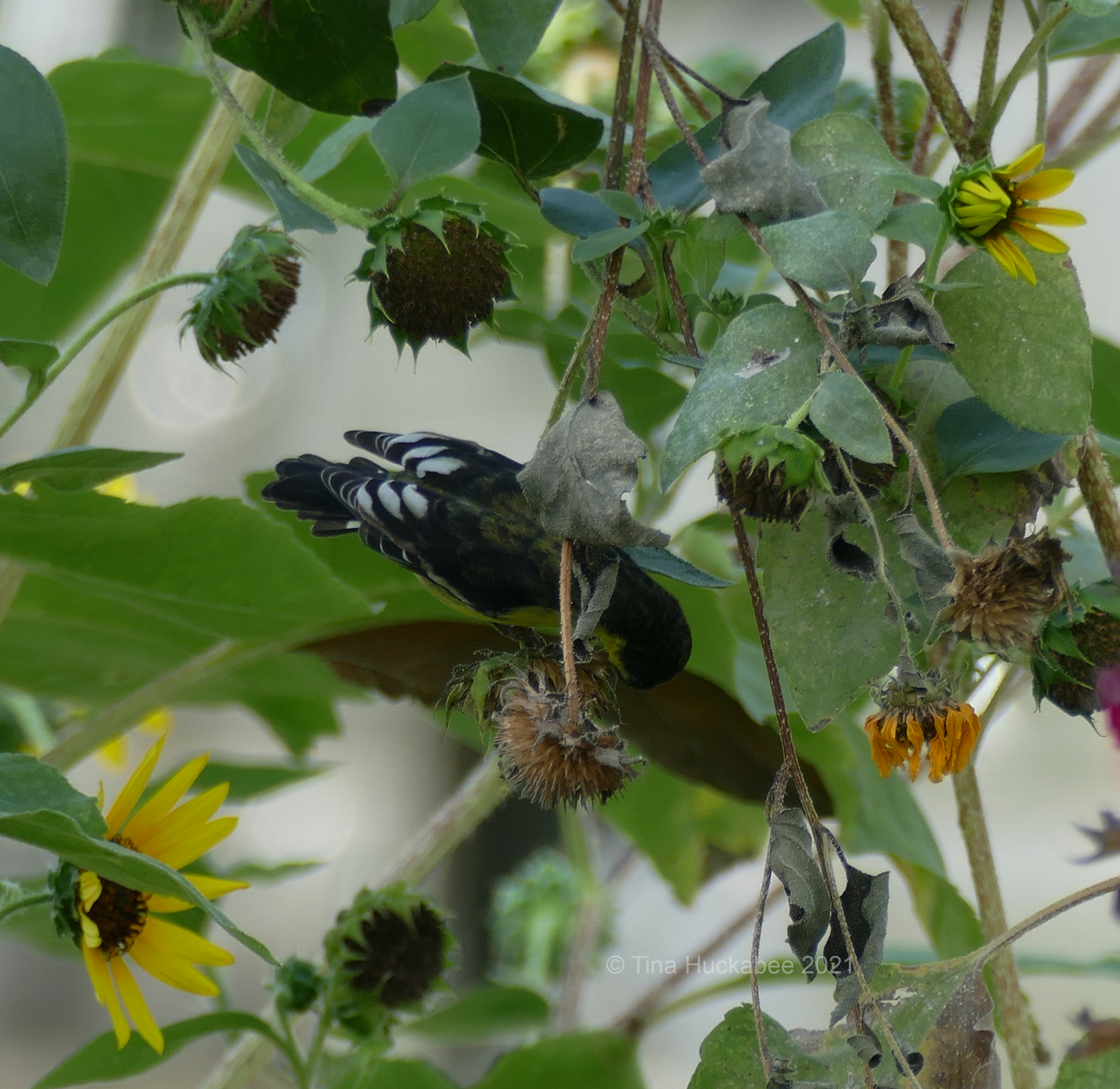
As blossoms fade, seeds develop and a new set of feeders show up for that bounty. This male Lesser Goldfinch, Spinus psaltria, is one of many birds who’ve enlivened the fading stalks with their busy munching. Feeding alongside the goldfinches are doves (both White-winged and Mourning), House Finches, House Sparrows, and Carolina Wrens. Often when I step outside, there’s a whoosh of wings and scatter of birds as all the eaters take flight.
As the Lesser Goldfinch perches prettily, his belly is yellow; when he bends to eat seeds, his back sports cool white racing stripes!
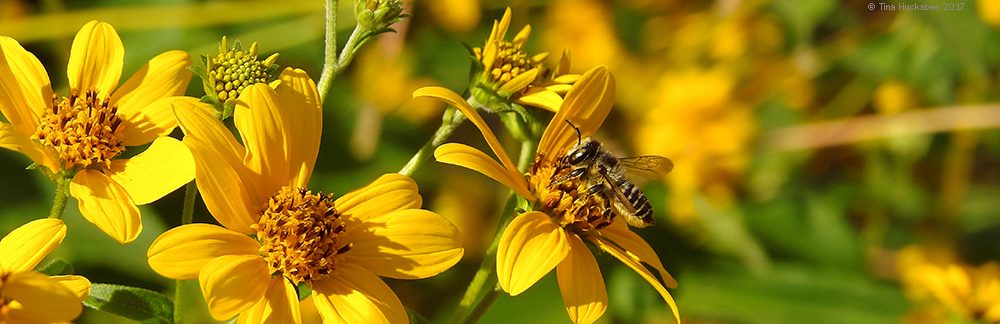
The sunflowers are definitely the stars of the garden show, but it hasn’t been all sunshine with the sunflowers. For about 18 months, I’ve experienced random outbreaks of itchy, angry red rashes, typically on my legs and arms. I couldn’t figure out what was triggering the annoying and very uncomfortable rashes–until this summer. In conversations with my SIL and other sunflower-growing neighbors, I learned that they were experiencing reactions to the sunflowers, resulting in itchy rashes. I realized that it was the sunflowers that were causing my itchy-scratchies, but it couldn’t only be the sunflowers. The rashes have occurred in autumn and late summer, too, when these particular sunflowers (that come from bird feeder black-oiled sunflower seeds), are done for the year and pulled from the garden. With observation, I then recognized that the native Plateau goldeneye, Viguiera dentata that I grow and which blooms in late summer and fall, also was resulting in my rashes. Both plants are in the Aster, or Asteraceae, family of plants, and I grow quite a few other Aster plants: Purple coneflower, Zexmenia, Gregg’s mistflower, Blue mistflower to name a few. So far, I think I’m safe with most of the Aster family plants, as long as my contact is limited; just brushing against most of them (not the two main culprits) doesn’t to end with me scratching for days and looking for relief. When I have experience outbreaks, I’ve taken Allegra and I have a prescription hydrocortisone cream; both are helpful. Even so, it takes a week or more for the rashes to clear up.
I’ve always been a t-shirt and shorts girl-in-the-garden, but I’m now covering up when I have work to do: long linen pants, some shirts from The Hub, and equestrian gloves which cover my arms to the elbows. And, when it’s hot and sunny, a hat. In the new gardening get-up I’m avoiding new rash outbreaks and it’s good to know that I can still garden, even if I look ridiculous.





 My Gardener Says...