Pacific Sunsets

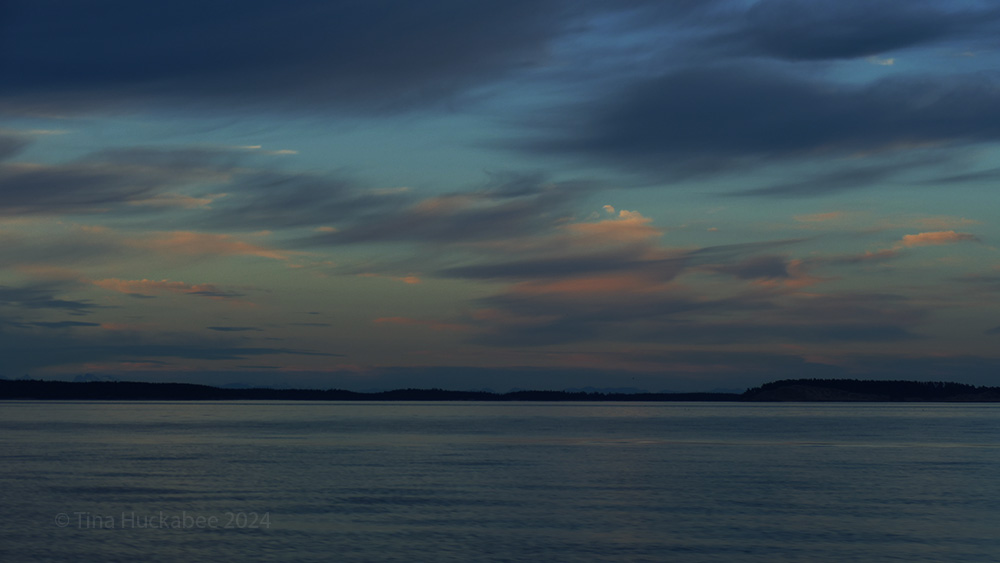
On a recent June whale watching evening, somewhere between the United States and Canada, the sun set. Though the boat barreled back to Victoria, British Columbia with speed and determination, the sunset lingered, colors and clouds mingling in slow-motion, northern lights fashion.

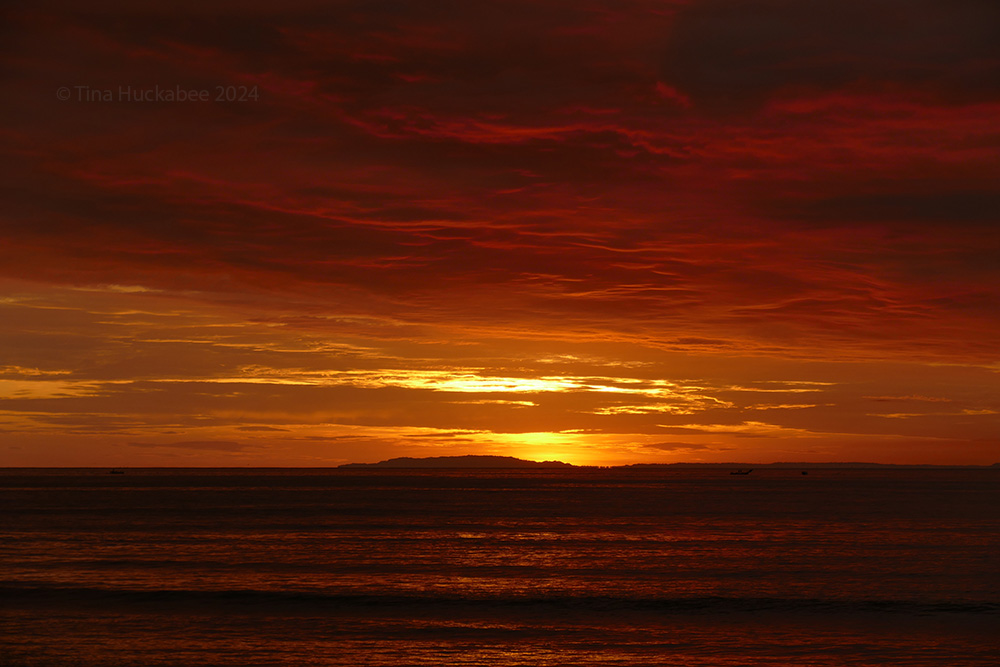
Seven months earlier and thousands of miles south along the Pacific coastline, the sun also set, showcasing fiery, tropical color at the Central Pacific coastline of the Puntarenas region in Costa Rica.

Maybe there will be a next time. That next time might be even further south or perhaps mid-way on the Pacific coast, and either will deliver equal beauty and awe.

Pollinator Week

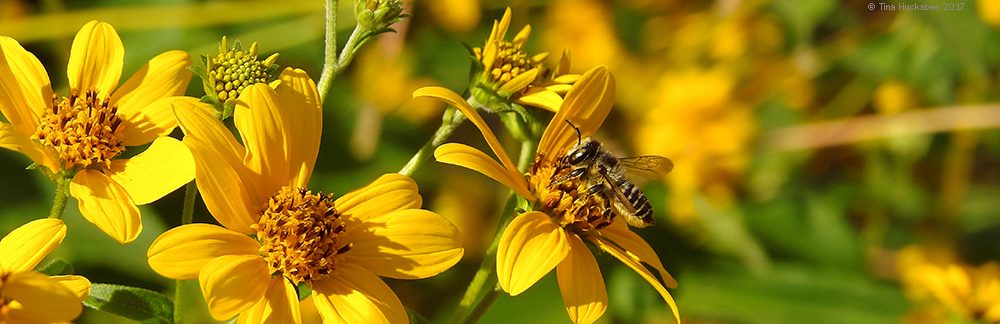
Hosted by Pollinator Partnership, June 17-23 is a week to celebrate pollinators in the garden. It’s easy to nurture a pollinator garden: plant flowers and the pollinators will come. Every season provides opportunities to grow plants that pollinators need for survival. Some pollinators are common throughout the growing season, while others appear only when certain flowers are available. Still others are migratory, showing up in the garden as they travel to other destinations to complete their life cycles. Pollinators add beauty and movement to a garden, and are indicator species of a healthy ecosystem; good gardeners always strive for a healthy ecosystem. Choose native plants in your garden, if available, but many non-native plants are excellent pollinator providers. Seasonal wildflowers, perennials and shrubs, as well as flowering trees will all attract and sustain pollinators of every stripe, wing, and kind. Pollinator insects include beetles, bugs, bees, flies, butterflies and moths. And don’t forget that bats and birds also pollinate.

So if you want something like this:

Gray Hairstreak, Strymon melinus on Zexmenia, Wedelia acapulcensis var. hispida

…or this:

Honeybee on Spiderwort, Spiderwort sp.

…or these:

Honeybee and Monarch Butterfly, Danaus plexippus, on Gregg’s Mistflower, Conoclinium greggii

…or this:

Red Admiral, Vanessa atalanta on American Basket Flower, Centaurea americana

…or these:

Two different native bees on Four-nerve Daisy, Tetraneuris scaposa

…or these:

Checkered White, Pontia protodice (R) and Dainty Sulphur, Nathalis iole (L) on Zexmenia bloom

…or this:

Queen Butterfly, Danaus gilippus, on Blue Curls, Phacelia congesta

…use native and well-adapted plants in your garden and the pollinators will come.

Insects and plants evolved together and form an interdependent partnership. Good gardeners accept that plants are eaten by beneficial insects, including those that become pollinators. So a little garden patience is required, understanding that some plants will show foliage damage–and that’s just fine. In particular, native plants are resilient and a little foliage munching by a pollinator juvenile won’t kill the plant.

Before they become jeweled and winged things, butterflies and moths are caterpillars, like this stripey beauty, an Eastern Black Swallowtail, Papilio polyxenes, caterpillar or larva. It will eat and eat, then grows and grows. Yes, the very hungry caterpillar causes some damage to the foliage, as well as leaving some poop, but look at that fat, healthy caterpillar!

Fennel is a host plant for Eastern Black Swallowtails

In time, a nice home will chemically form for the transformation from larva to adult butterfly.

Eventually, the adult insect emerges and joins the throngs of other pollinators in the diverse and thriving garden, nectaring from a wide array of plants, for both its and the plants’ benefit.

Eastern Black Swallowtail on American Basket flower

Pollinator gardening is a win for everyone! Pollinator gardening is easy, rewarding, and will usher the gardener to observe and appreciate a whole new community–right on their own plot of the Earth.

If you plant them, they will come.

Happy pollinator gardening!

A Lost Boat

A new-to-me bird has visited the back garden this past week. I thought it kinda looked like a grackle, but it’s larger than either the Common Grackle or Great-tailed Grackle that are the usual grackle suspects here in Central Texas. Also, it has a mottled coloring, which I assume means either a juvenile or a female bird. It likes water. A lot. From the waterfall and bog of the pond, to the shallow bird baths nearby, this bird likes to bathe, spending most of its time splashing and dipping its impressive beak.

And look at those big feet!

I checked my go-to resource for all about birds and Cornell Lab of Ornithology identifies this fella as a Boat-tailed Grackle, Quiscalus major; the Merlin app categorized this bird as rare for Central Texas.

This is the Cornell map of Boat-tails’ range and it’s clear that this Boat is out of its normal stomping and bathing grounds. Along the east coast of Texas, some hundreds of miles east of my garden, one blob of blue indicates a non-breeding area for these birds, and nearby, a smidge of lavender, which is part of the Boats’ breeding range. Neither of these are anywhere near my pond!

I wonder how and why this juvenile male Boat-tailed Grackle wandered so far away from home?

He’s a bit aggressive with other birds, particularly the White-winged Doves (who are a bit aggressive themselves), though that might just be the teenager in him. I like how he looking at the dove, who who managed to plop itself in the cooling spillway of the pond’s waterfall ahead of Mr. Boat.

If looks could kill…

A nice rear view shows the tail feathers, which are beginning their turn to rich, luscious black that he will carry as an adult. Adult Boat-tailed Grackles are handsome birds, particularly the males with their long, dramatic tails, glossy in sunshine. Females are smaller and copper colored, though sweet-looking in their own way.

While perhaps not the prettiest bird in the back garden at the moment, this juvenile male does exhibit a kind of presence that foreshadows his adult self. Bright-eyed, strong of beak and profile, these birds are good-sized songbirds.

Along with bathing, he has eaten safflower and sunflower seeds on the ground. Grackles are also known for their preference for garbage, though currently, I’m not offering that delicacy for him.

It was interesting to see him hanging out, but I hope he finds his way back home to a mate and community. Fly to the coast Mr. Boat–where your birds are!