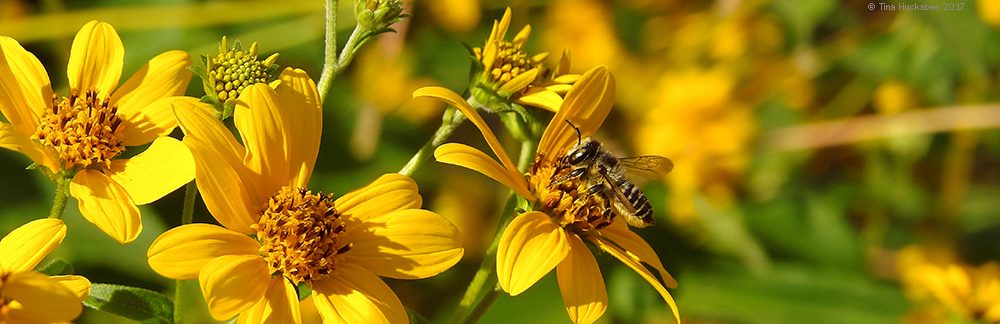
Blues In The Garden

I love blue. Blue flowers, especially.

Blue–Plumbago (Plumbago auriculata),
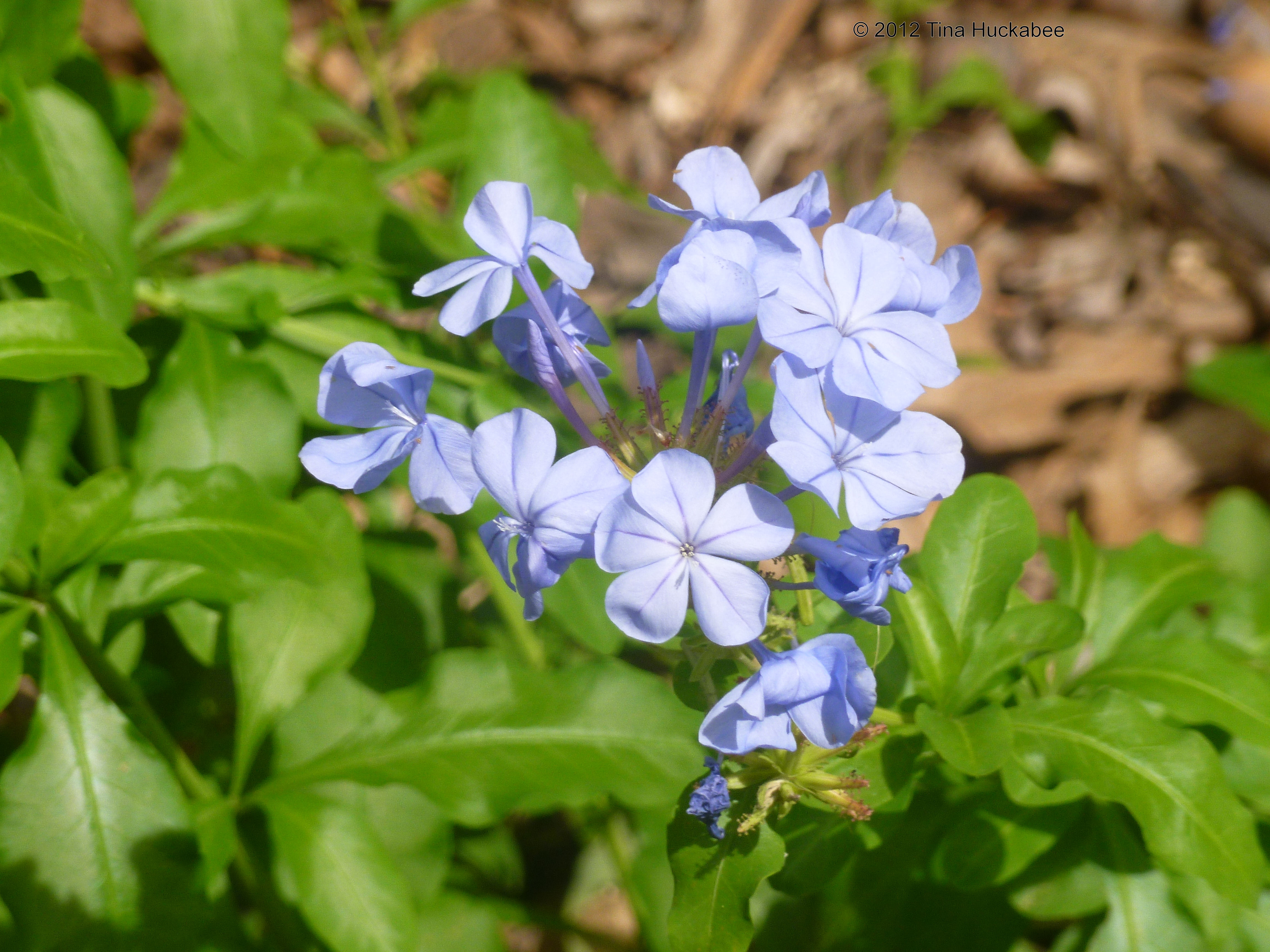
Blue–Majestic Sage (Salvia guaranitica),

and Blue–Heartleaf Skullcap (Scutelleria ovata sp.bracteata).

In truth, most of what I consider “blue” in my gardens has a tinge of lavender or purple,  like this Heartleaf Skullcap,

which is currently at its peak of  loveliness in gardens all around Austin.

It’s difficult to capture the beauty of this plant with my little point ‘n shoot camera because of the subtlety of the blue/lilac bloom paired with the grey/green foliage.

I especially love it with my bright blue, well-used (by the birds, not me!)  bird bath.

Or combined with the cultivar Mealy Blue Sage and small, light blue bird bath situated on a bed of City of Austin recycled glass.

The  Henry Duelberg Sage is a great blue-blooming perennial for Central Texas.  This particular plant is the most purple of the Henrys in my garden,

but, it’s still mostly blue to my eyes.

I’ve noticed that the blues that I grow in my gardens are blue in real-time, but often show purple in photographs.  Conversely, the native bog plant, Pickerel Weed (Pontederia cordata), is blue to me in this photo,

but in real life, I see it as purple.

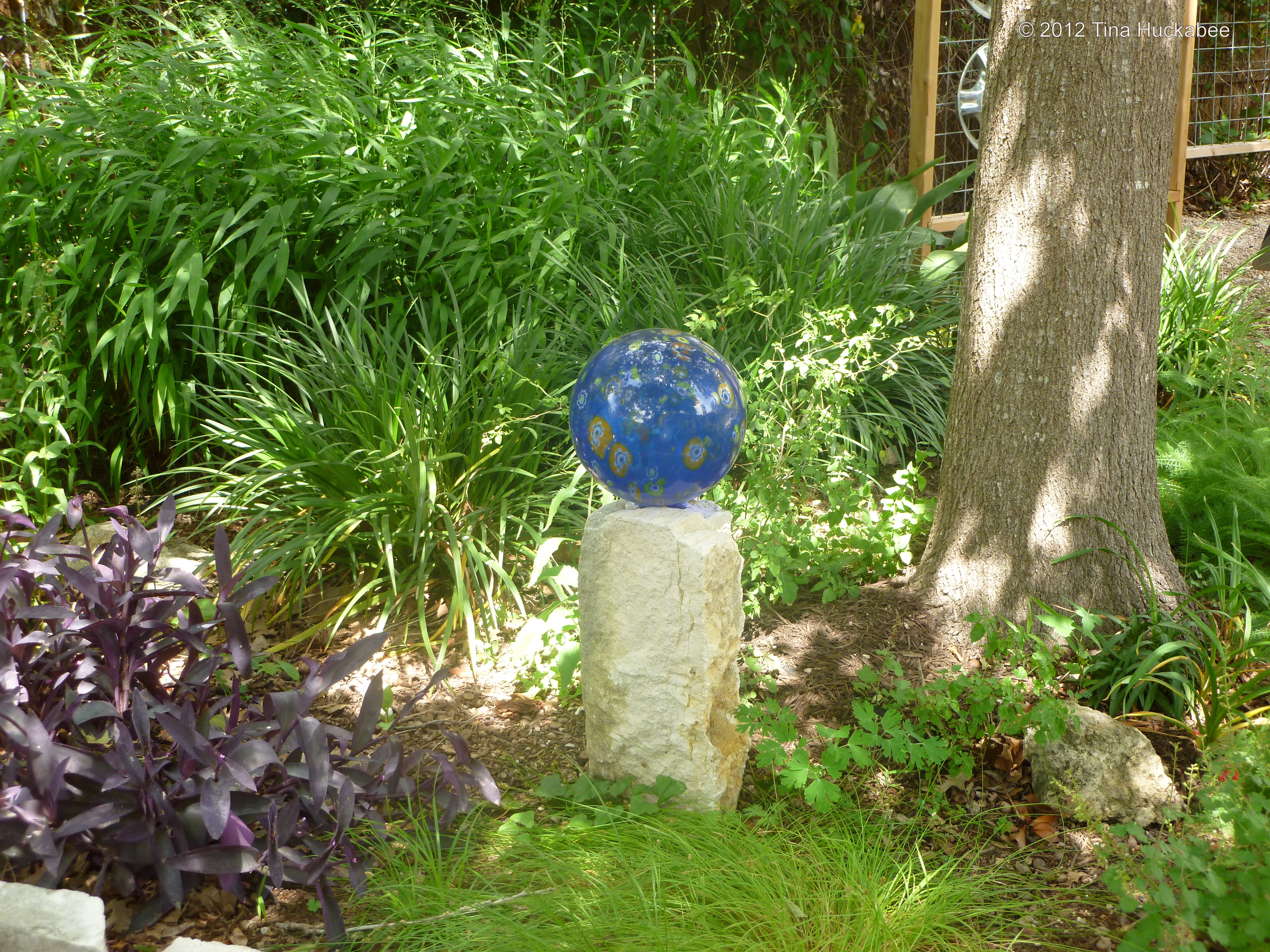
I favor blue accents in my  garden art as well.  I usually refer to accent  items as my garden ‘do-dads’.  I’m easy to buy gifts for because it’s fun to have funky or silly or interesting do-dads in the garden.  Do-dads–like my groovy gazing ball,
or my blue glazed pots for plants,
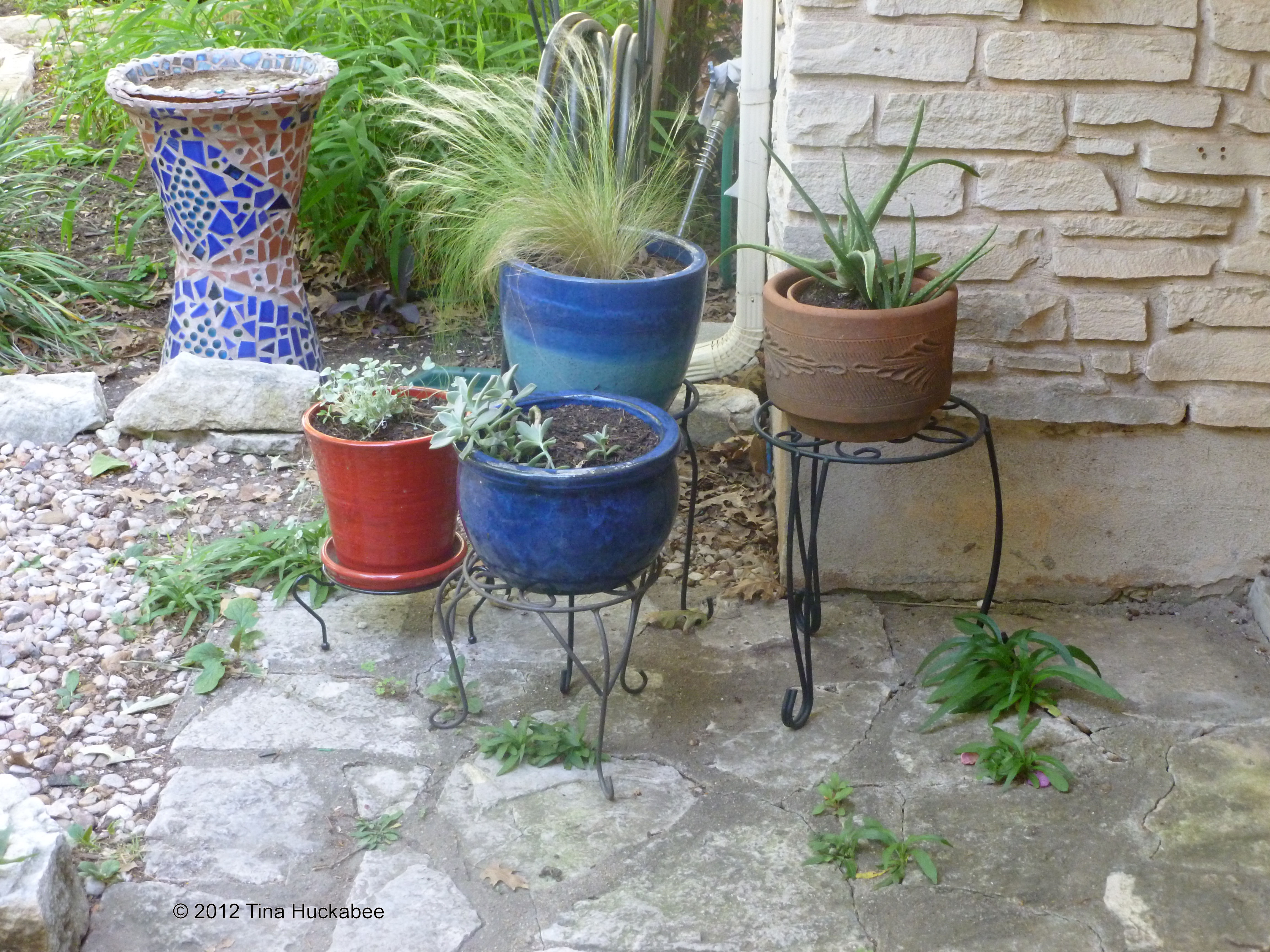
flanked by pots in the other colors I gravitate toward. I augment the blues in the garden with do-dads in these other colors.

But I tend to prefer garden accent pieces in hues of blues.  I chose tile and glass pieces  primarily in blues for the mosaic stepping stone under the archway,

although I could use a few more blue bottles on the bottle tree.

My tree tipped over during a heavy wind a few weeks ago and  two of the four blue bottles that were on the tree smashed–I’m still finding shards of blue glass in that bed.  Sigh.  I’ll have to buy more of this high sugar/caffeine soda for the bottle tree.  I’ll let The Boy drink those, though.

Oops.  Well, this isn’t in the garden and my favorite thing here isn’t the blue wall, either.  He’s studying hard for the SAT.  (More like hardly studying….)

Oh, and not to forget, my wonderful new, blue Sky Chairs.

My old ones finally ripped through ‘n through, requiring replacement.  I loooove these soporific chairs.  Many a snoozy (usually) weekend afternoon/evening I’ve spent lolling about in one or the other of these chairs–listening to the waterfall of the pond, watching birds/owls/bees/butterflies  and enjoying the fruits (or veggies) of my gardening labors.

What colors do you love in your gardens?

Kiss My Grass…Goodbye

I’ve recently rid myself of the last remaining turf on my property by building a pathway where the grass was.  It’s easy to lay a pathway, especially if the topography is flat. Adding a pathway is also a good way introduce structure to a garden.  A defined pathway gives visitors a specific route for meandering a garden space.

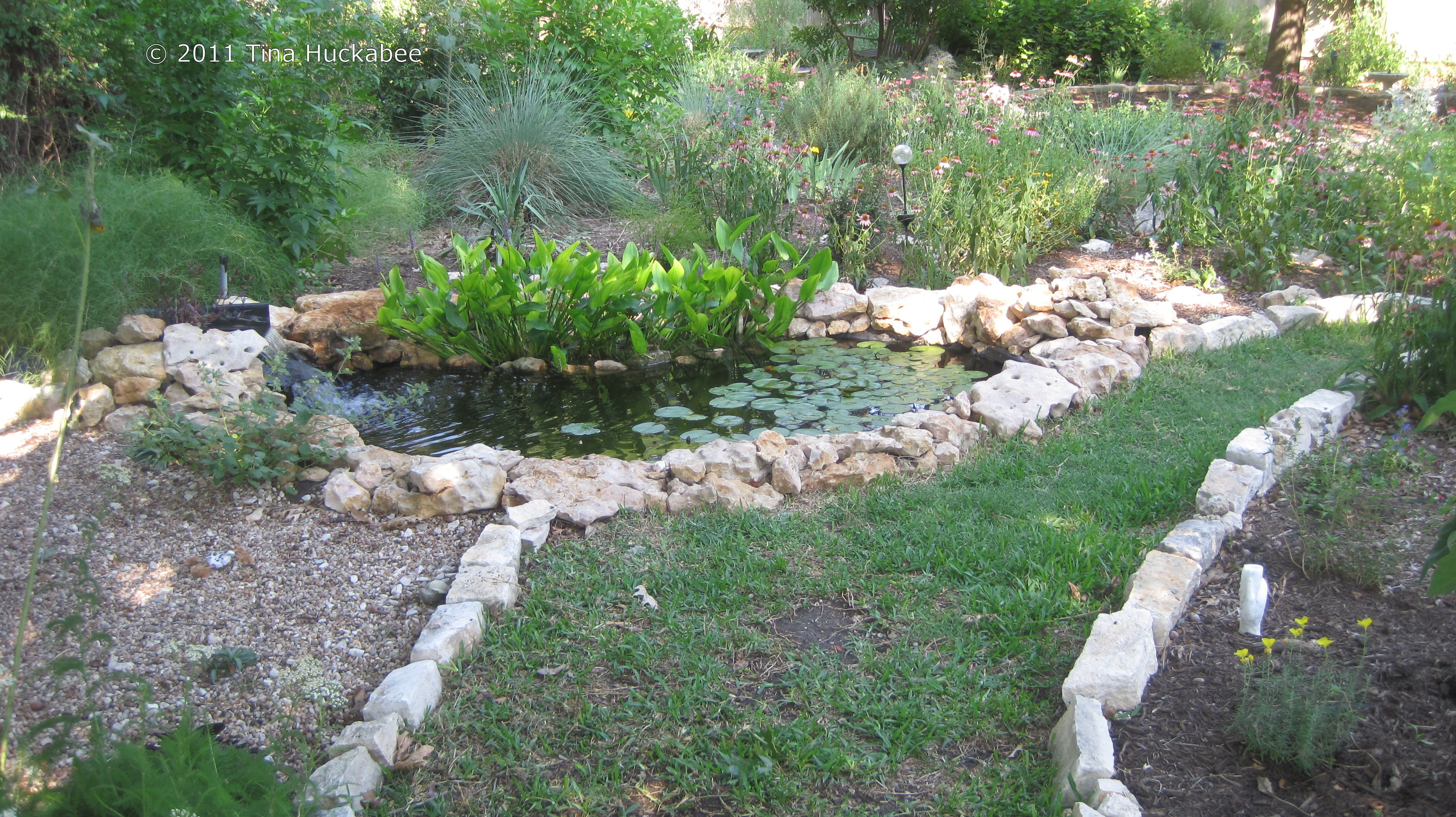
When we built our pond three years ago, we placed it within the border of an established, large perennial garden and adjacent to the remains (swing beam and pea gravel) of the kids’ play-scape.  We hung some nice hammock chairs so that we can sit by the pond and enjoy the fish, flowers and sleep.  (Inevitably, that’s what I end up doing when I sit there and (ahem!) read.)

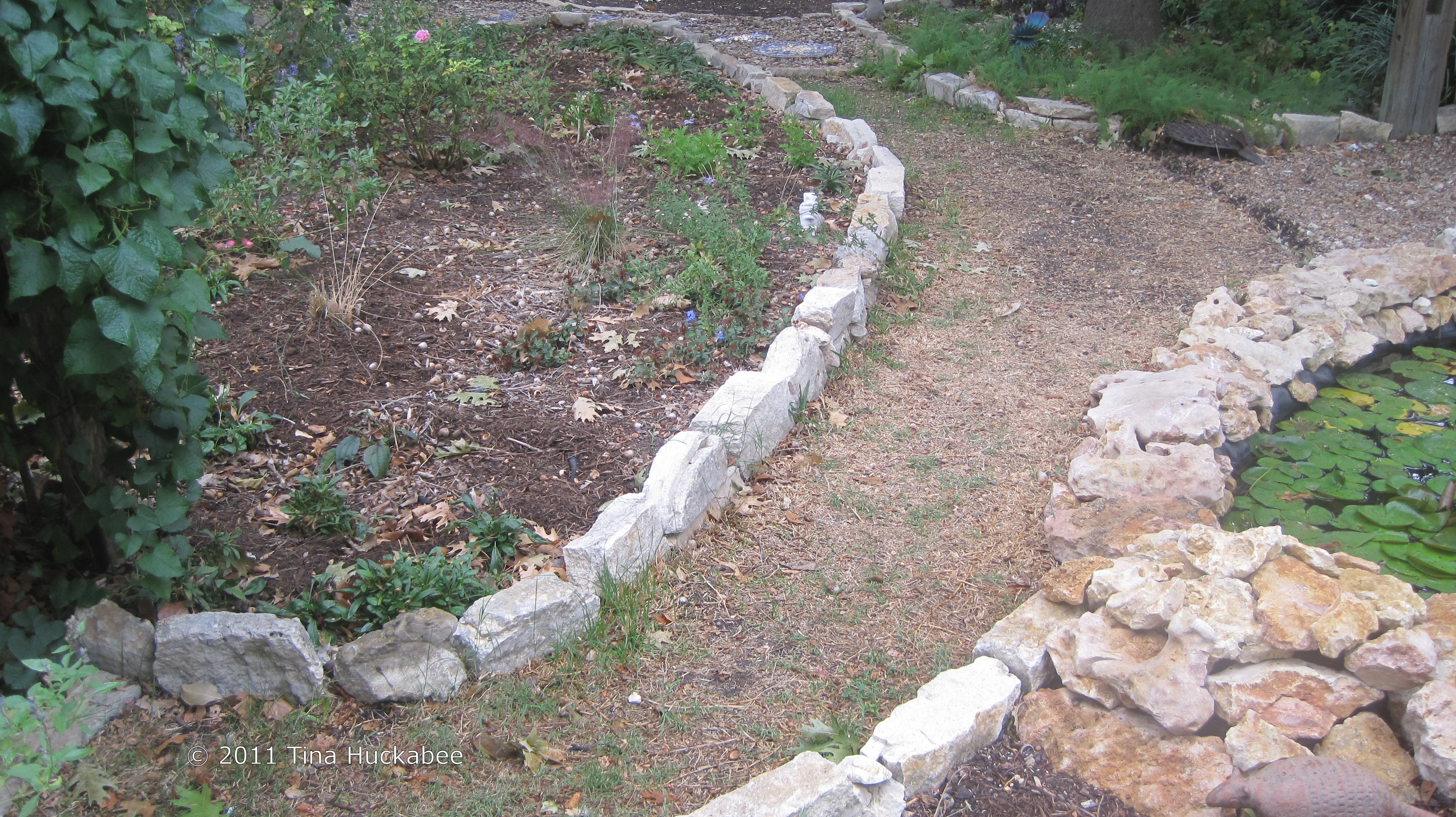
Because I haven’t been able to decide exactly what I wanted for the pathway, I left a (roughly) half-moon shaped patch of mostly Bermuda grass which leads  from the patio/archway to the sitting area by the pond,

and then onto the next walkway/mulched area.

Other than occasional hand and automatic weed-eating at the border of the pond and gardens, I haven’t done anything to maintain this grass area.  After the Summer From Hell of exceptional drought and almost 100 days of over 100 degree temperatures, coupled with no additional irrigation, the grass died.

Good riddance.

It’s time to build a pathway–I just have to decide what my building material will be.  So…mulch?  Or gravel, (pea or larger?)?  Crushed granite? Or City of Austin crushed, recycled glass?

I prefer mulched areas because I like to walk barefoot and I don’t mind walking on mulch, plus I like the warmth of the earth tones in a landscape.  But I have two large mulched areas already and want something different.  Plus, my sweet dog loves to roll around in the mulch and I have enough problems with indentations in the mulched soil from his back-scratching antics that I don’t want to give him more opportunities to dirty himself.  (More on that in another post.)

I love the look of crushed granite, but I don’t like walking on it barefoot and the dog is still going to roll in it, so no solution there.  And as beautiful as recycled glass is, I don’t think it’s practical for a walkway where we’re going to be barefoot.

Gravel it is!!  I like to walk on pea gravel (feels good on the feet!) and the area where the play-scape was/hammock chairs are, is covered with pea gravel, so this choice simplifies the layout of this area.  My original plan was to have something other than pea gravel for the formerly grass area, but I prefer to keep the lines simple and pea gravel fulfills that desire.

The downside to using gravel is that it will be hot in the summer from about 10 am to about 3pm because of the direct sun.  The area is mostly shaded after that and gravel cools quickly, so other than a few hours during the day where it will be necessary to wear shoes, it won’t be a difficult place in which to walk.  Another related problem is that  the heat generated from the rock might contribute to some evaporation from the pond.  However, I don’t think the evaporation will  be that significant

This was an easy project to complete.

1) I hand pull and weed-eat remaining grass (which there was not much of) and start laying  weed-block.

2) My weed-block of choice has always been newspaper.   I use fifteen layers and overlap the sheets so that the more ambitious weeds can’t get through.  It’s best not to do this on a windy day….

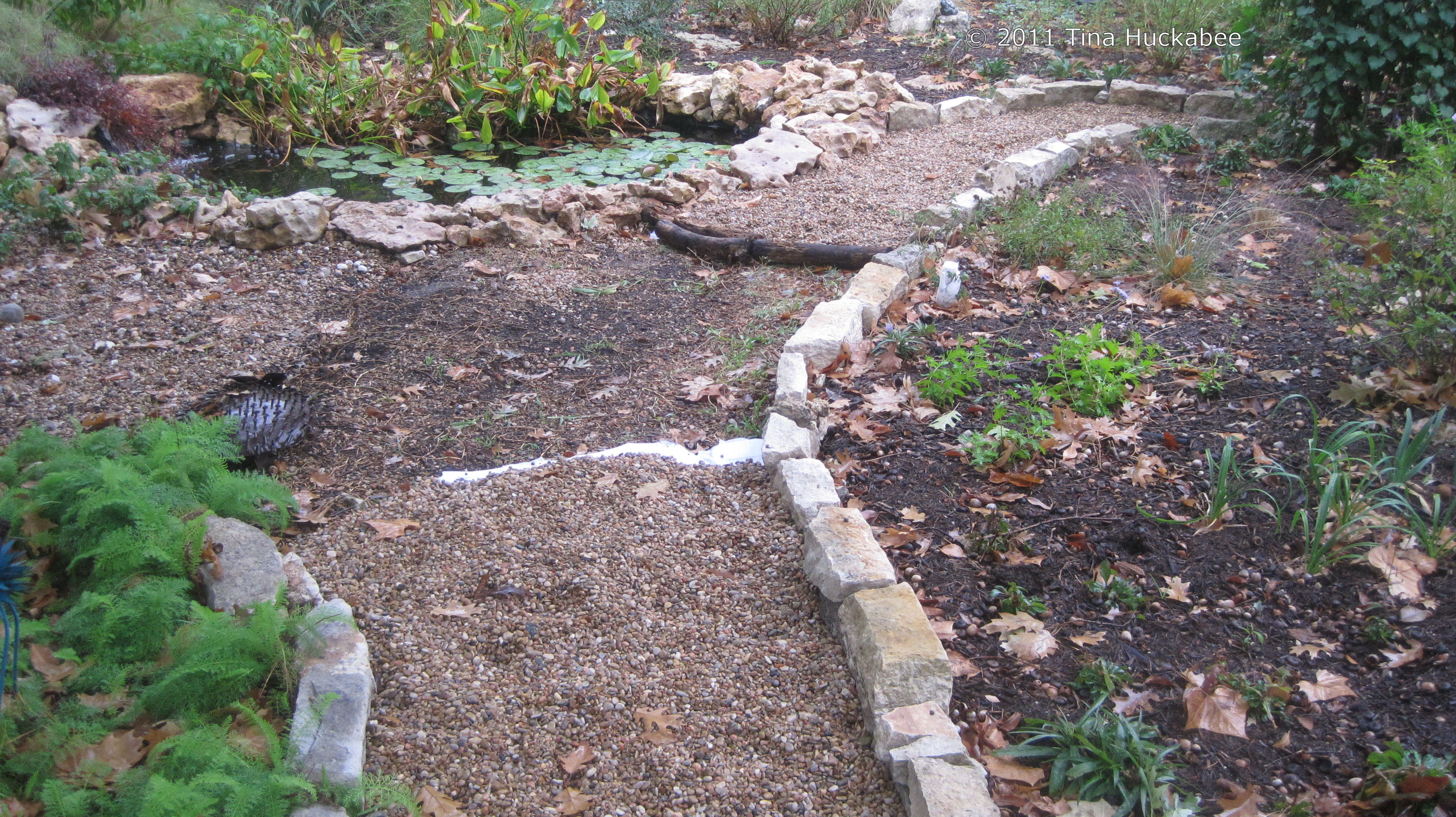
3) I have to excavate about four square feet along the pathway, just past the arch.  That area is flush with the river rock and an embedded stepping stone under the arch.  I don’t want to add weed-block and pea gravel directly adjacent because it will be higher than the stepping stone and that won’t work.

4) I dig out the soil with a sharp-shooter and use the straight-edge of a hoe to even the soil and keep the slope consistent.  I excavate about three inches deep, for about one and one-half feet in length, gradually sloping upward to the top of the soil where it meets the remainder of the established path.

5) The remaining pathway is bordered by five-to eight inch high limestone chopped rock and the ground is flat, so I can simply add weed-block and pea gravel directly on top of the soil.

6) I open bags of pea gravel and pour.  The total pathway area is about twenty square feet, so I purchase individual bags from a nearby nursery.  If it was a larger project, it would be more economical to order gravel from a local landscape supply company.  Except for the excavated area (where I use three and one-half inches of gravel), the pea gravel on the pathway is two and one-half inches deep.

I complete one end,

then the other.

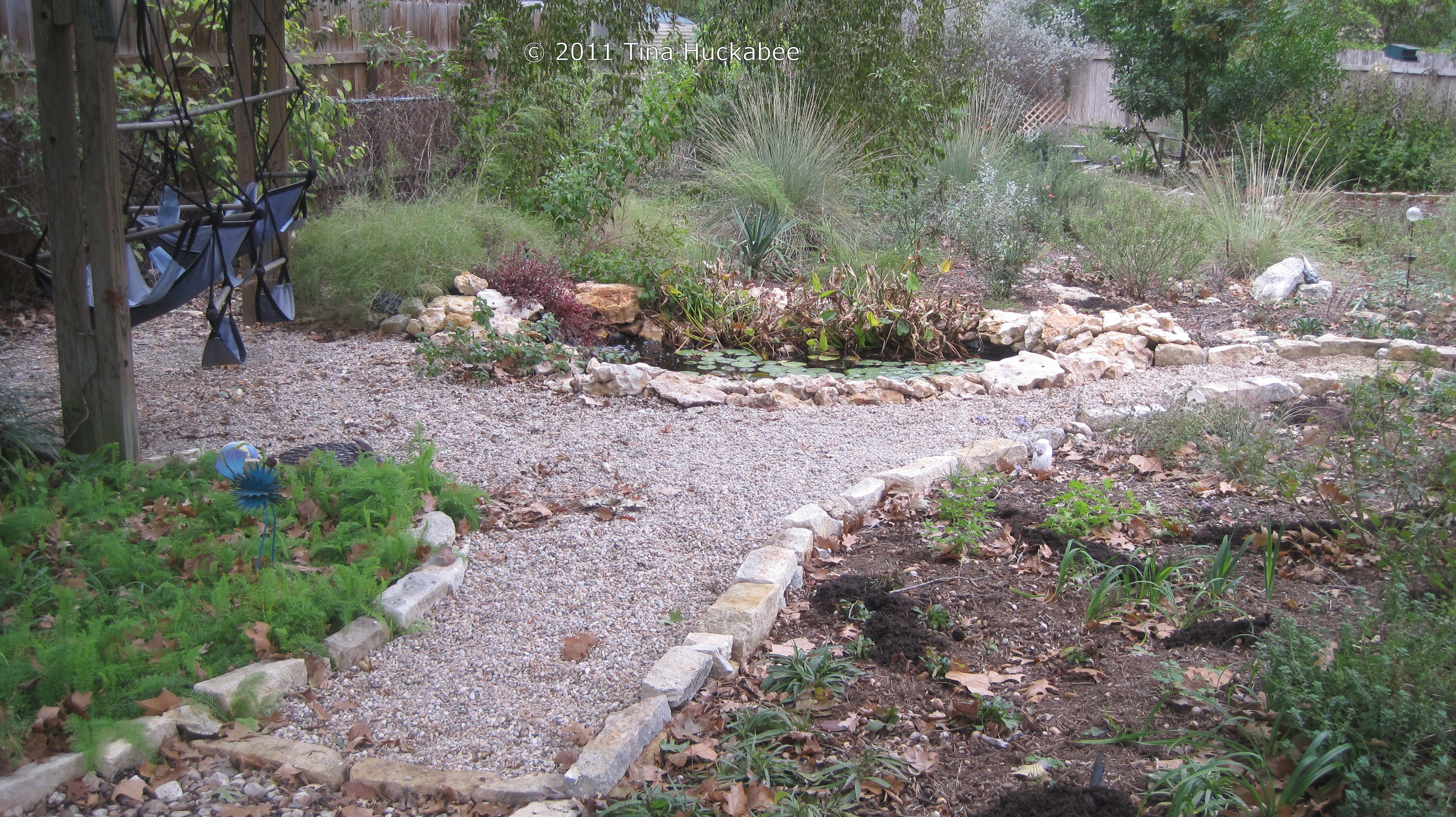
Finally, I finish the whole deal!

I built the pathway in two or three afternoons, working for an hour or two each, as I had time.

No more grass!  Just nice pea gravel that requires no maintenance and that feels good on the tootsies.  The dog can roll around in it (it’s become his favorite spot) and all it needs is the occasional rake pulled over to keep it level and tidy.

Now it’s time to clean up the billions of Red Oak leaves which are currently falling to the ground and covering everything.  Ugh!

There’s never an end to garden projects…

A Flock of Fall Fruits

There are an abundance of berries on shrubs and trees in my gardens this fall.  I choose to believe it’s because they are happy, loved and established rather than some exhibition of desperation, a last-ditch effort to reproduce, given the exceptional drought they’ve lived through this past year or so.

I didn’t expect much of a berry show this year because of the drought, so I’m glad that I was wrong.

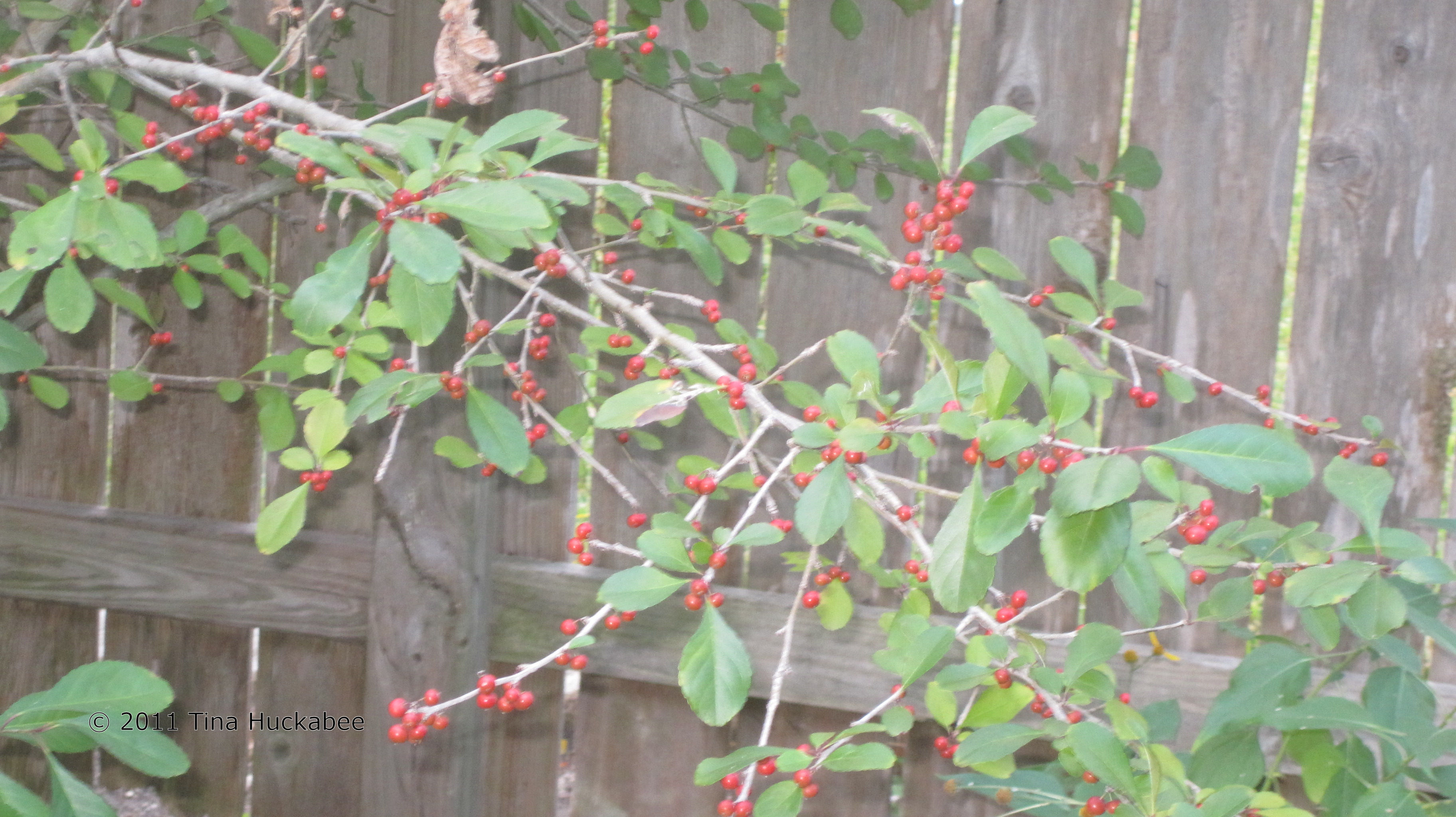
My Possumhaw Holly (Ilex decidua) has been an inveterate berry producer for some years now.

It’s about eleven years old and usually by  November, it showcases its lovely, lush red berries.

The birds (mockingbirds, bluejays and cedar wax-wings) love this berry and are very generous with me:  they don’t eat these fruits to extinction until early spring so I get to enjoy the beauty of the berries throughout winter. Interestingly,  many of the berries that developed last fall stayed on the tree well into this past summer, a surprise to me given the limitations of wildlife food available this year.

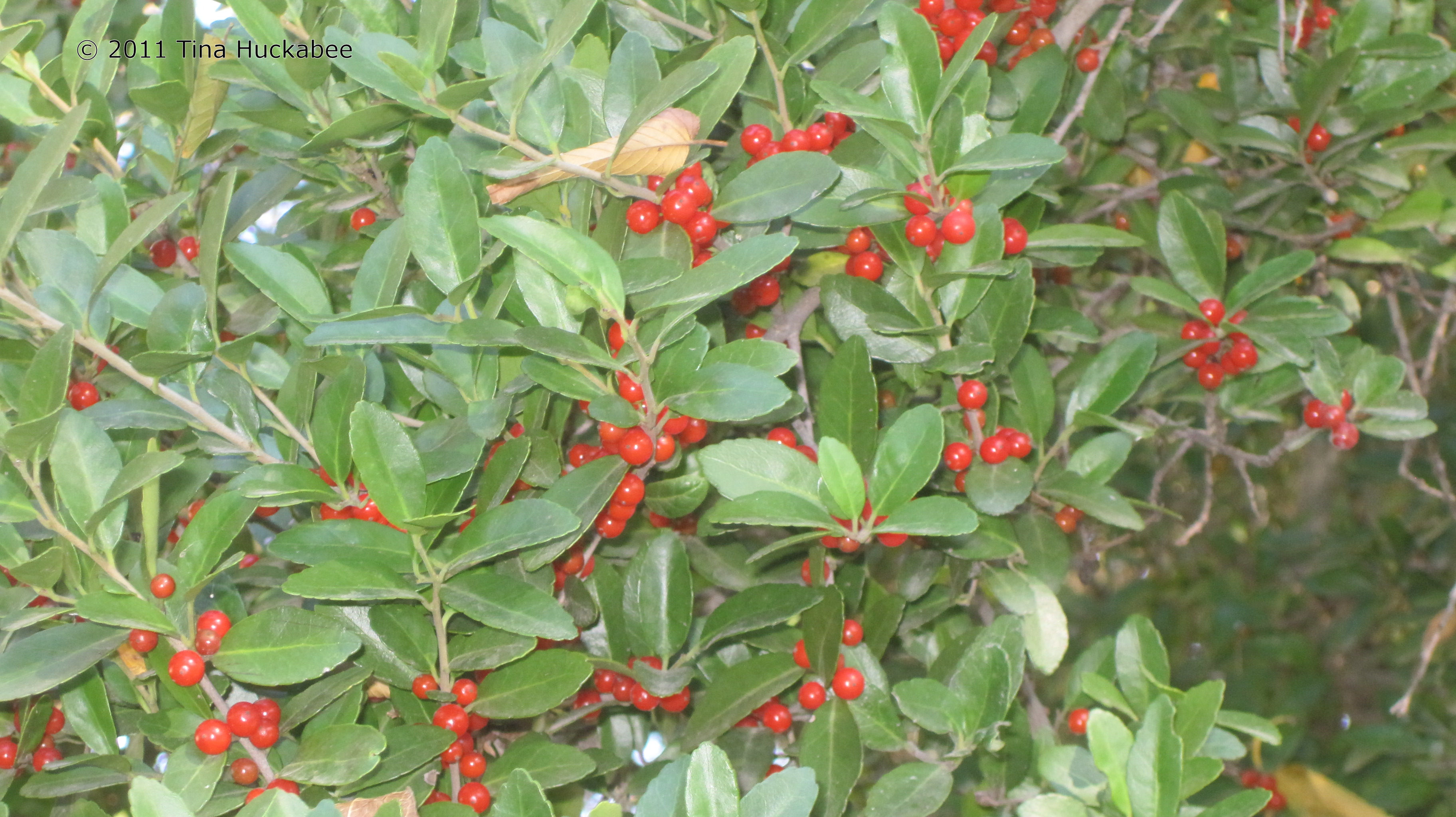
My neighbor has the related Yaupon Holly (Ilex vomitoria), just over the fence which separates our property.

I like these two small, native trees planted so closely together.

The Yaupon remains evergreen during winter and the Possumhaw is deciduous after our first hard freeze.  The berries will remain on both trees until birds and squirrels devour them.  The Possumhaw has slightly larger and darker red berries,

while the Yaupon’s fruits are smaller, scarlet red and shiny.

Both trees are excellent landscape and wildlife plants for Central Texas.

The non-native, but well-adapted Dwarf Burford Holly (Ilex cornuta ‘Dwarf Burford’ ), is also exhibiting a bumper crop of berries this year.

Typically, these berries stay on the shrubs until the cedar wax-wings swoop, en masse, and eat them all, usually in one afternoon, sometime in late February or March.  These shrubs are very slow-growing.  I planted them in 1990 and it took  many years for them to reach their mature size.  They’ve always been good berry producers though.

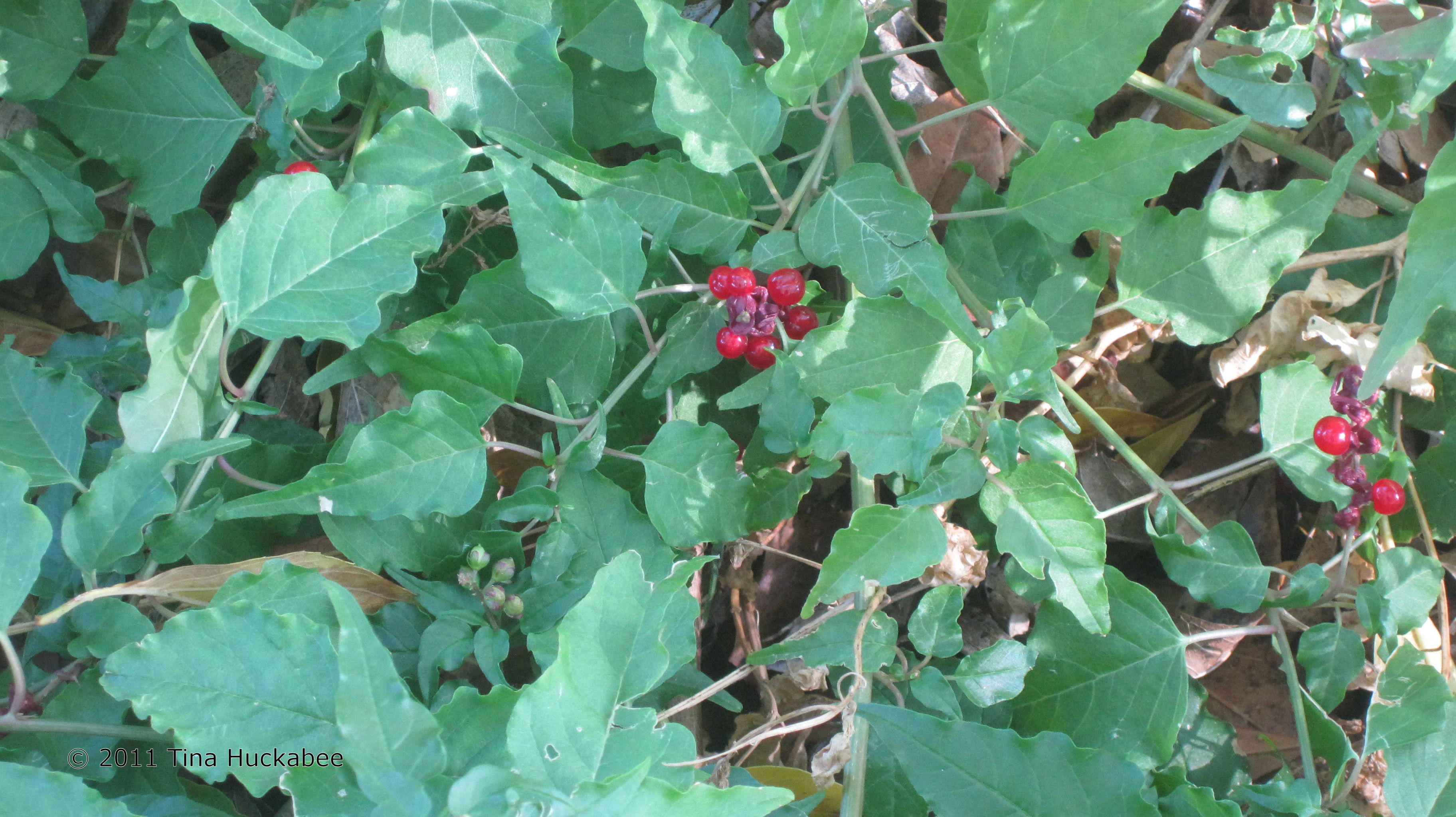
Pigeonberry (Rivina humilis) are still producing their little, brilliant red fruits this year as well.

I’m guessing that the recent rains we’ve had contributed to the slightly longer bloom ‘n berrying time for this plant.

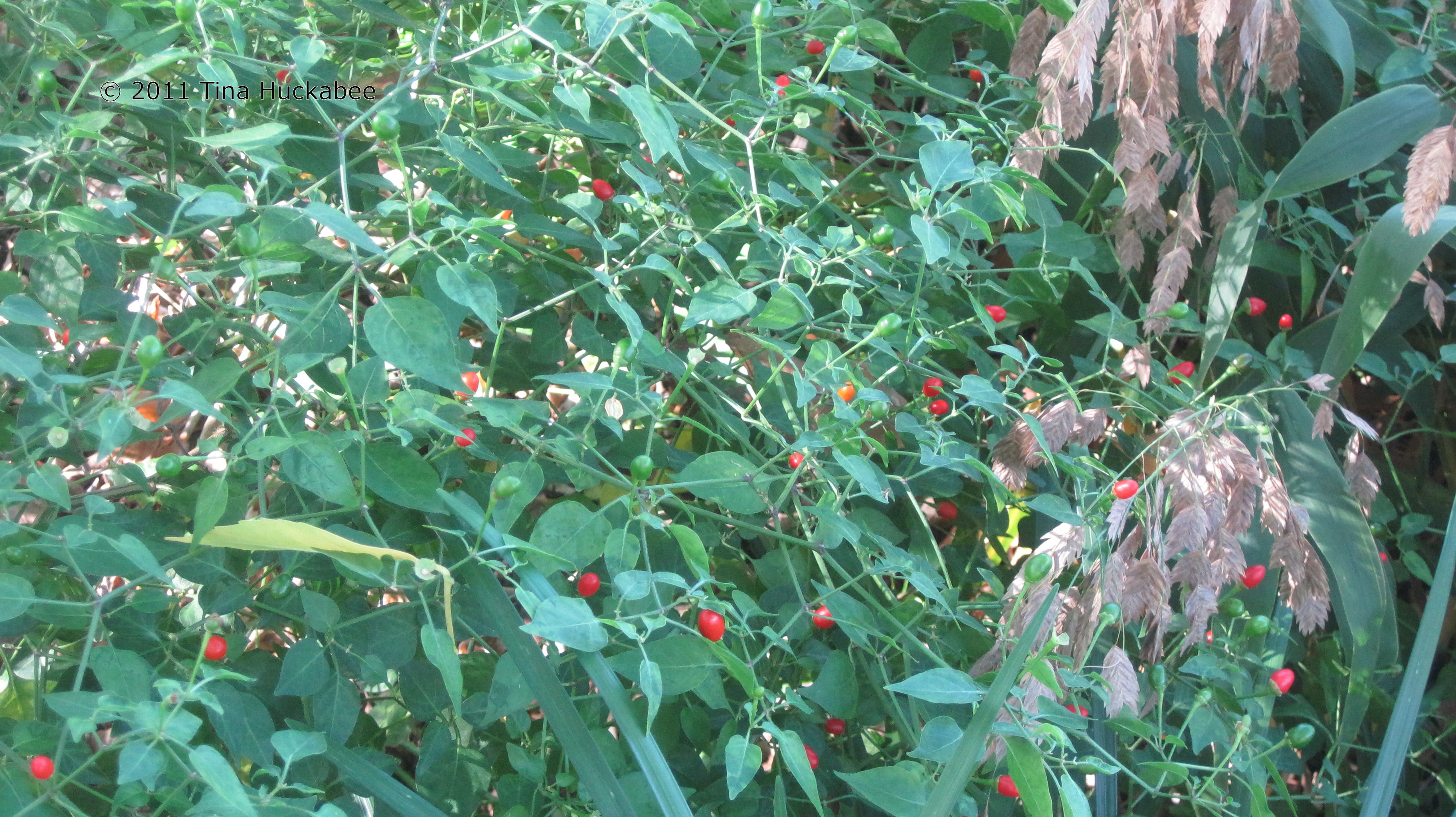
The Texas native pepper, Chile Pequin (Capsicum annuum), also is a reliable fruit producer, although this year (at least in my garden), the fruits (peppers) developed a little later than usual.

Typically, the peppers develop in the summer months, turning red by late August/September.  Aside from the later ripening time, there aren’t as many peppers on my Chile Pequin plants this year as in others.  The mockingbirds have visited these plants recently, so it’ll be interesting to observe whether the fruits remain throughout winter.  Usually they do, that is until a very hard freeze.

Conversely, some of the other fruit producers  have had their fruits gobbled up (seemingly) about three seconds after ripening.  I haven’t seen a Turk’s Cap (Malvaviscus arboreas) fruit or a Barbados Cherry (Malpighia glabra) fruit since earlier in October.  I did however, see a mockingbird flitting about those plants, often with a fruit wedged firmly in his beak.  I wonder if there’s a connection??

What berries to you and your wildlife enjoy?