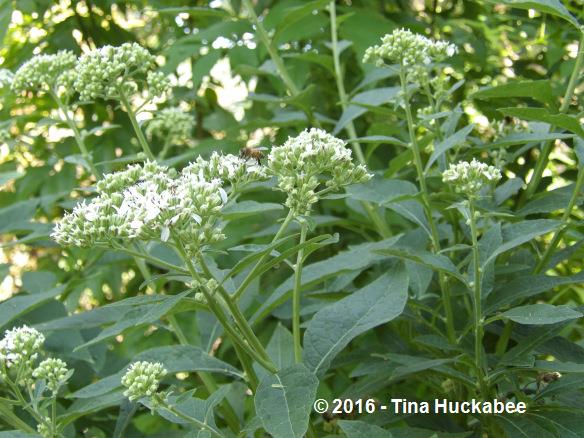
It’s seldom frosty here in temperate Austin, Texas, but when Frostweed, Verbesina virginica, graces a garden, it beautifies with icy-white, frothy flowers from late summer through autumn.
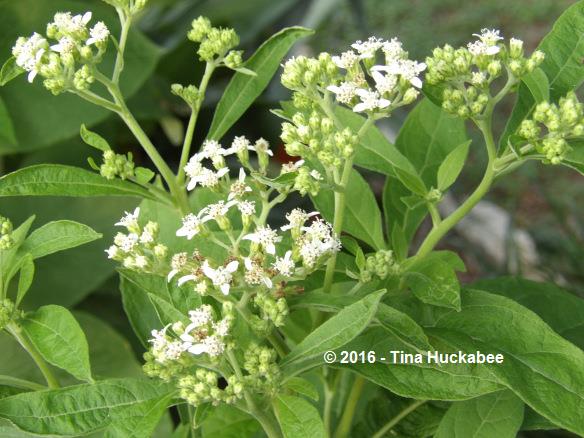
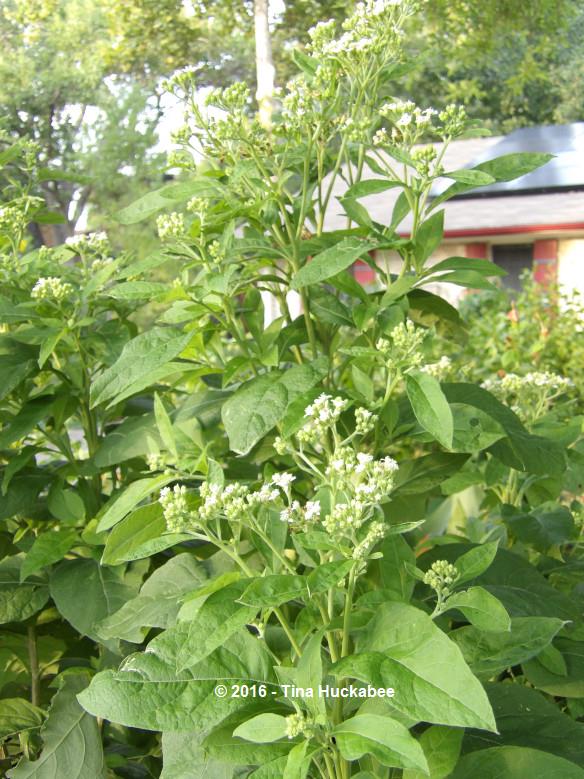
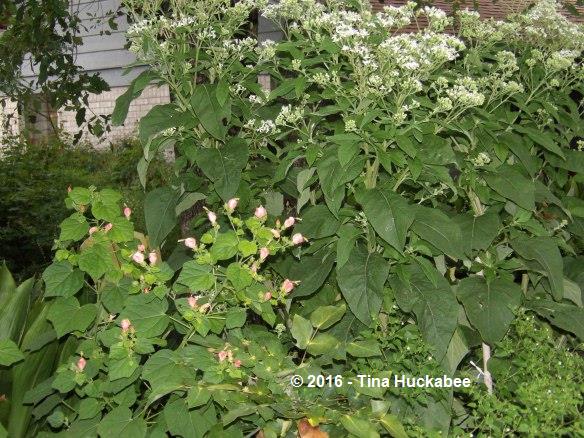
A native North American herbaceous perennial, Frostweed is a great plant to profile for A Seasonal Look, because it’s lovely, interesting, and home gardeners, as well as visiting pollinators and birds, should enjoy this plant.
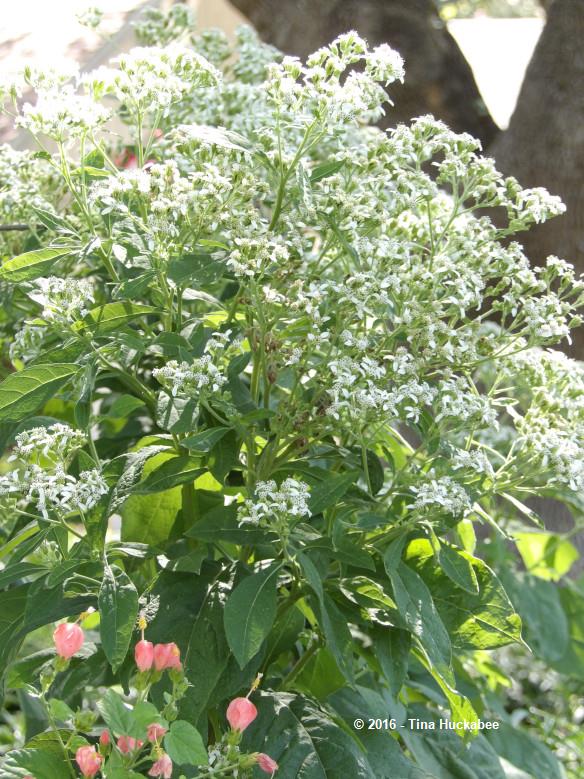
The most common of the common names for V. virginica is Frostweed, but according to the LBJ Wildflower Center, it also goes by the names White Crownbeard, Iceplant, Iceweed, Virginia Crownbeard, Indian Tobacco, Richweed and Squaweed. While I don’t know this for certain, I’m guessing that the Crownbeard variations might refer to the clusters of lovely autumn blooms that V. virginica displays.
Additionally, Frostweed leaves provided a tobacco source for some Native Americans, which presumably gave rise to those last two common names. On a healthier note, Frostweed was also traditionally used as a fixative for gastrointestinal issues, urinary, and eye problems.
I like it because it’s pretty and tough and a great wildlife plant.
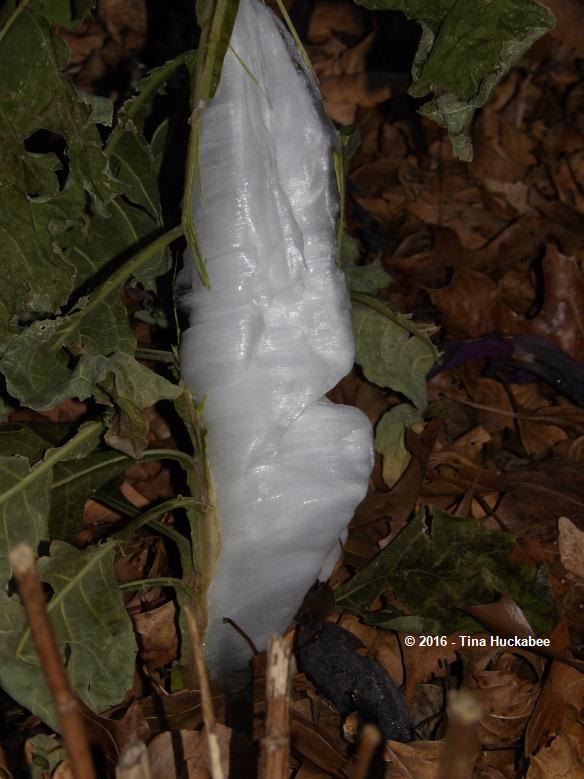
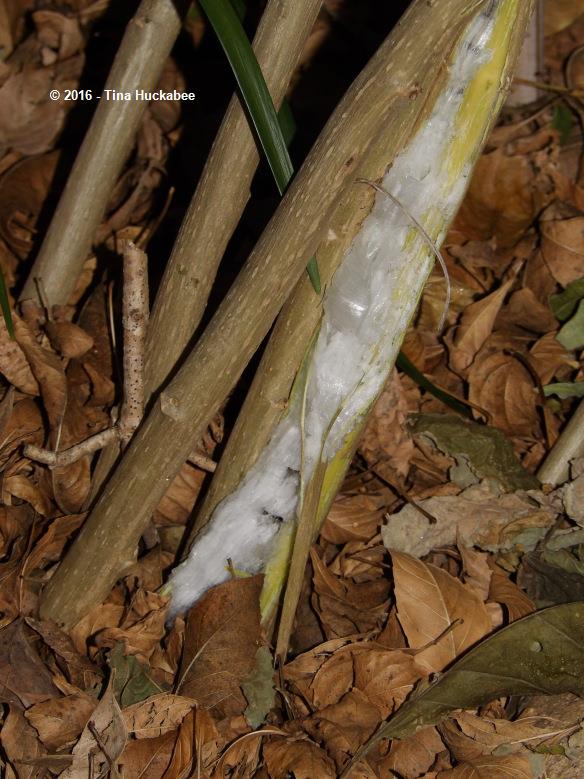
As for the various names suggesting more frigid attributes, those names are not referring to the cool white of the flowers, but instead to an unusual process that occurs with this plant early in winter, at the first hard freeze. As the temperature plummets , sap in the trunk cools and expands, eventually breaking through the epidermis of the plant. The sap hits the freezing air, solidifies in thin sheets, moving up along the vertical structure of the plant.
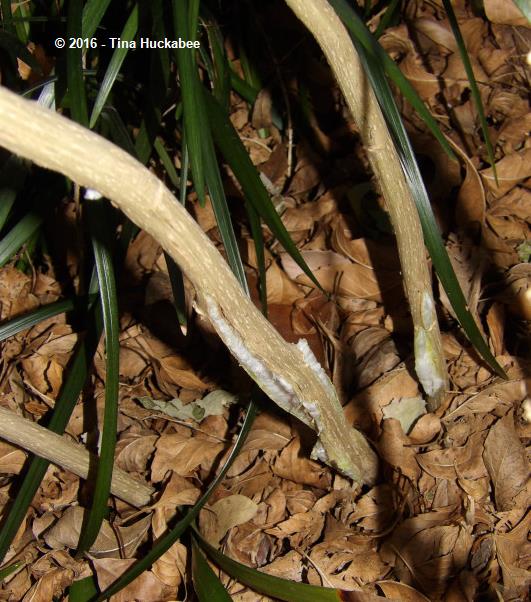
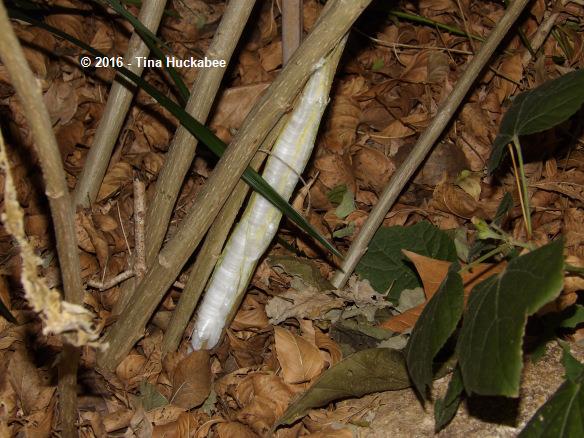
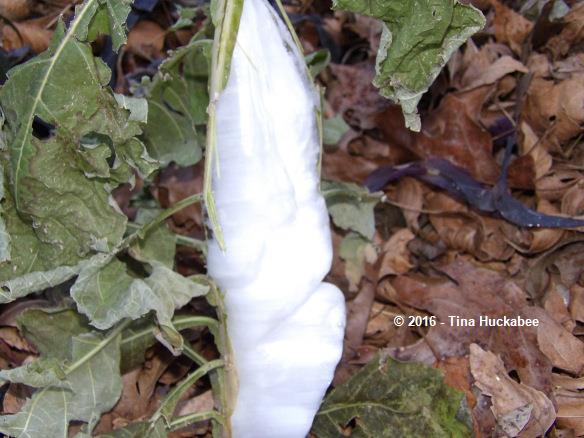
The ice sculptures freeze in a ribbon-like design. Conditions for this awesome display are particular: the ground must be moist, assuring the roots are actively drawing water into the plant. Also, the temperature drop must be relatively rapid.
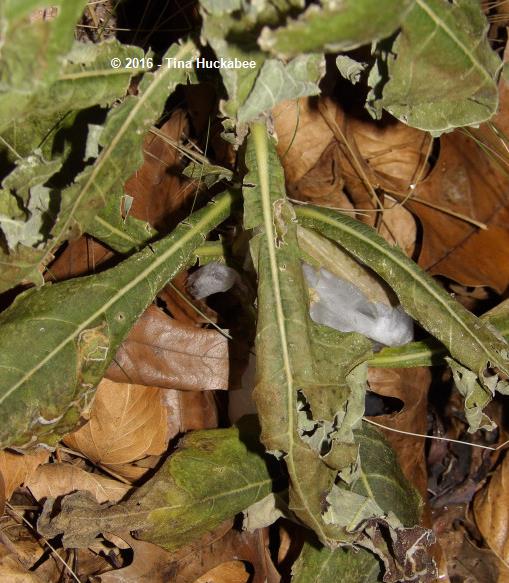
The ice ribbons are fragile and thin, melting at the touch or quickly by air once temperatures rise above freezing. The Frostweed ice extravaganza is an ephemeral event. Not many plants ice dance this beautifully, but Frostweed is one that does. If you’d like to see more wavy-groovy Frostweed ice sculptures, click on the LBJ Wildflower Center’s Frostweed, 68 photo(s) available in the Image Gallery.
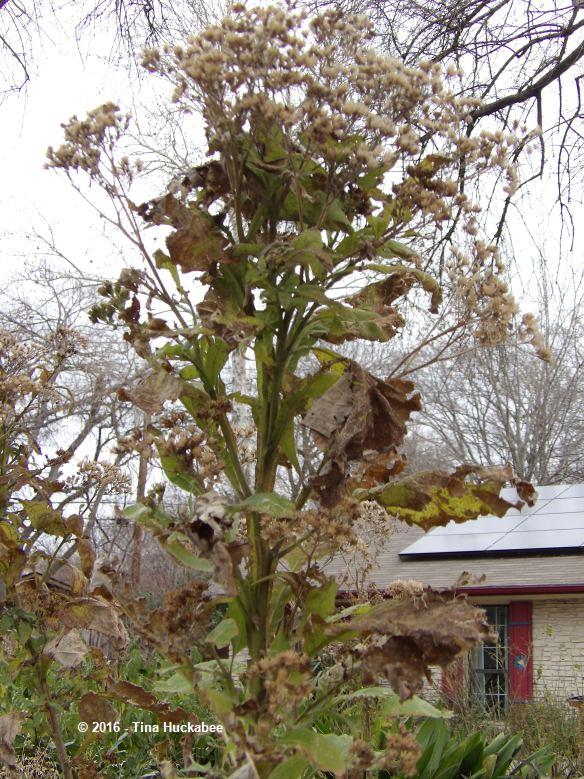
Once a hard freeze occurs and Frostweed concludes its frozen display for the year, the plant is rendered dormant. I don’t necessarily prune my plants at that point, but one can–it’s a matter of your aesthetics and time. Some winters are mild and in those conditions, Frostweed doesn’t produce ice sculptures, but the plant will become dormant, or mostly so, even with a light frost.
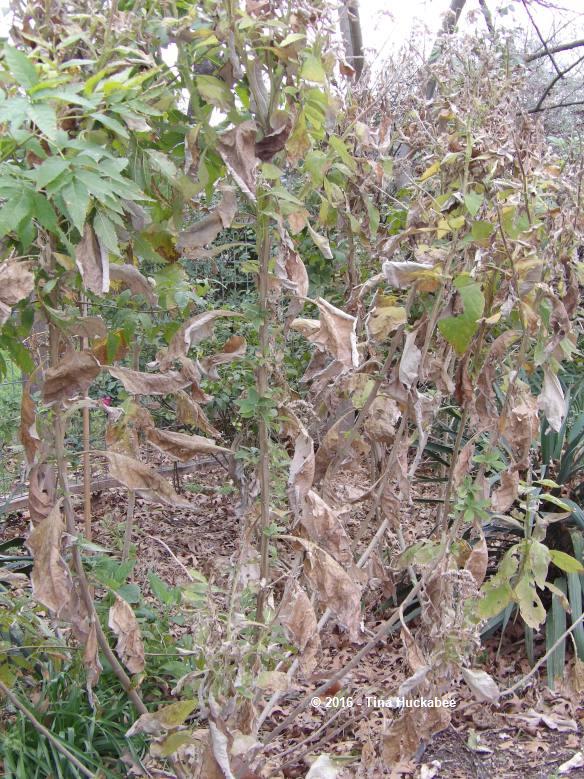
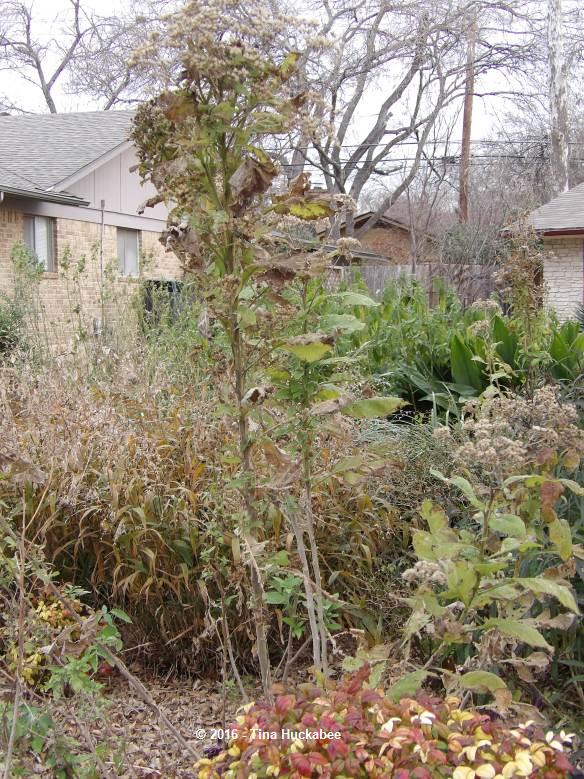
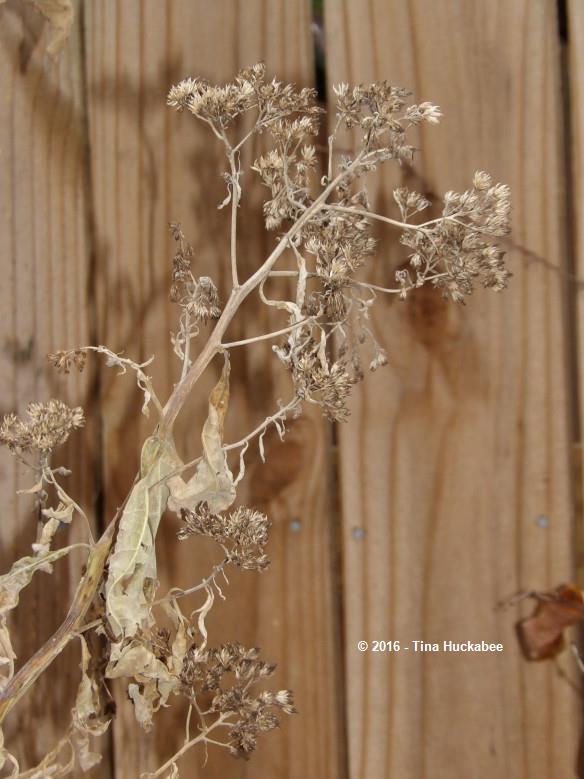
Additionally, in mild winters even after Frostweed is dormant, new growth can appear from the ground when temperatures are warm enough, well before calendar springtime.
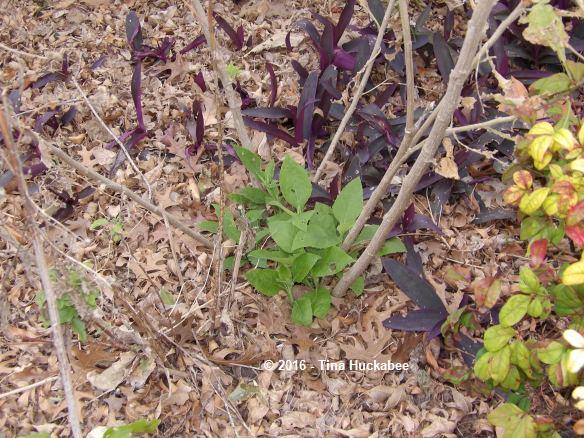
That’s always tricky because if a late hard freeze occurs, the Frostweed will die back again. An established Frostweed plant is robust enough to overcome that shock, but new plants might succumb. So, the stalwart gardener rolls up his or her sleeves and plants more Frostweed.
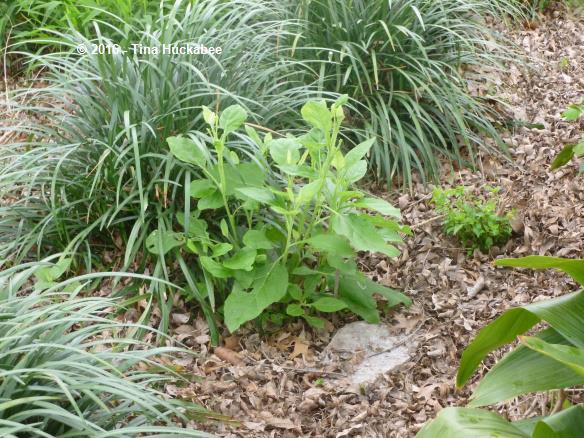
Newly emerged foliage is exuberant and verdant, but like others in the Asteraceae (Aster) family of plants, Frostweed’s leaves are sandpaper rough. The leaves are also a bit awkward because they’re also quite large, even those on the new spring plants. Frostweed is the plant version of a puppy with large paws.
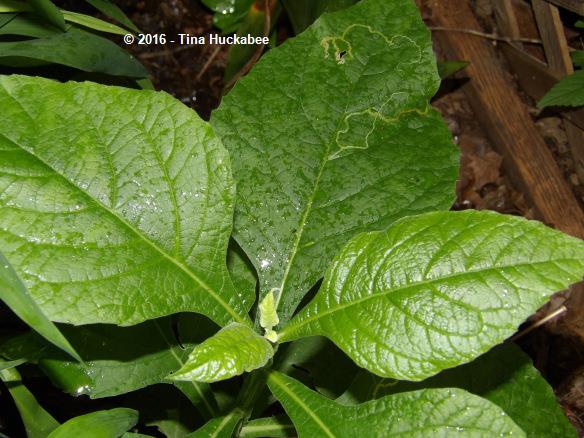
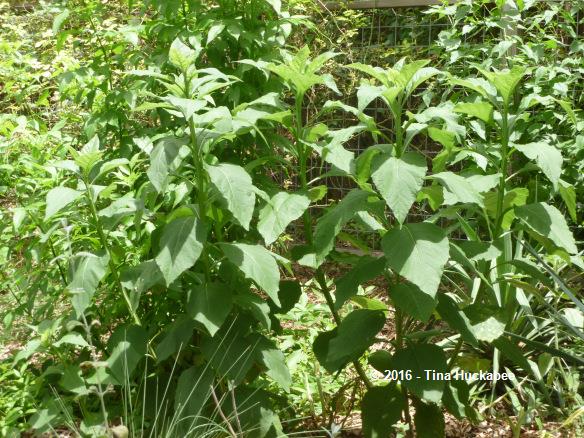
I like the showy, scrappy foliage. I plant my Frostweed with complementary fine or small leafed shrubs and grasses, and also mix it with evergreens (when possible), since Frostweed itself is pruned back in winter.
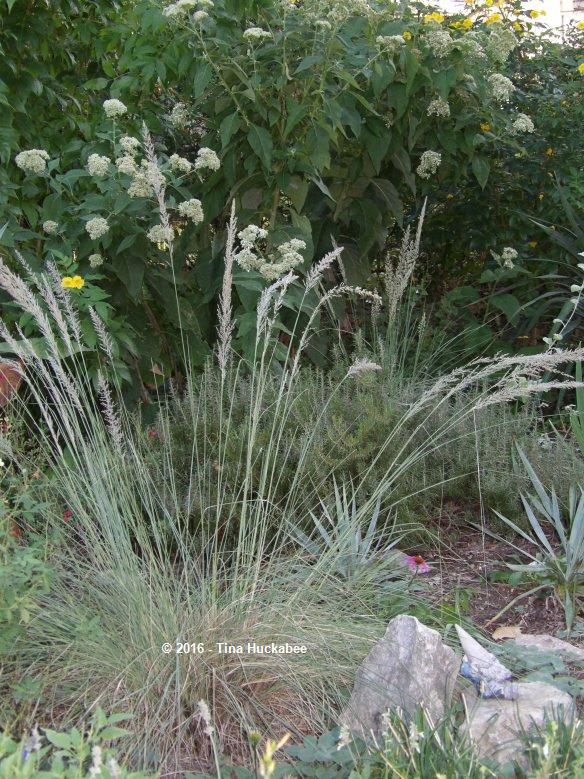
Throughout the late spring and summer months, Frostweed grows and the plant eventually catches up to the leaf size. The puppy grows into its feet.
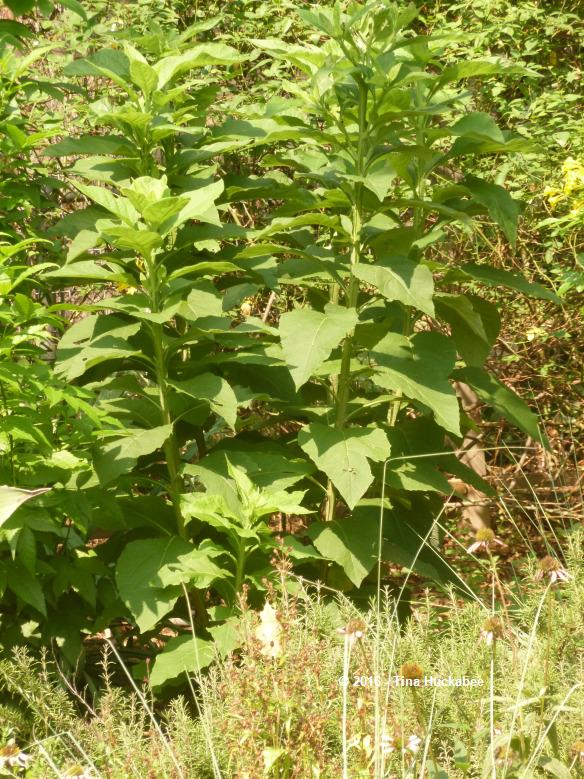
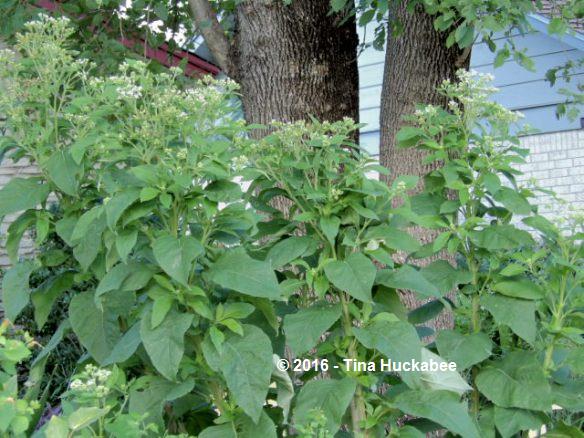
Frostweed’s height ranges from 3 feet to about 6 feet, depending upon soil, sun, and moisture. It’s a woodland plant and considered an understory, so it grows and blooms well in shade–with or without extra watering. It’s an excellent dry-shade plant. Some of my Frostweed get a reasonable amount of afternoon (Texas!!) summer sun and those specimens tend to grow to about 6 feet. Some years (depending upon rainfall) I stake with rebar because at the first heavy fall rains, Frostweed can flop a bit and I prefer their stand-at-attention persona.
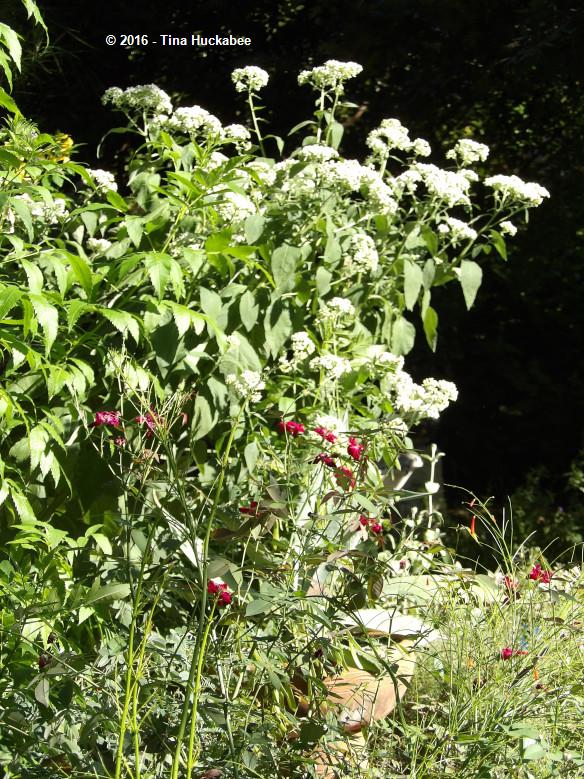
By early August, here in Central Texas, regardless of whether it’s been a dry or a wet (hah!) summer, Frostweed flowering begins. At first, a tiny bit of bloom.
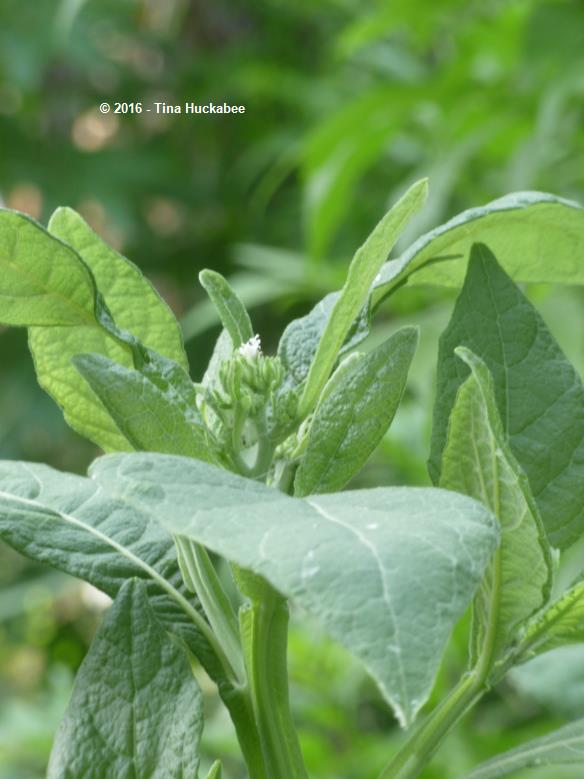
…then more.
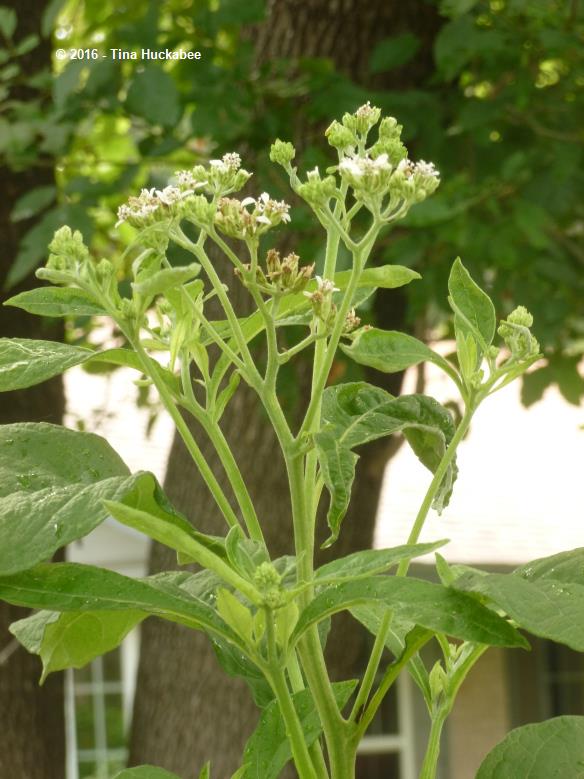
And more.
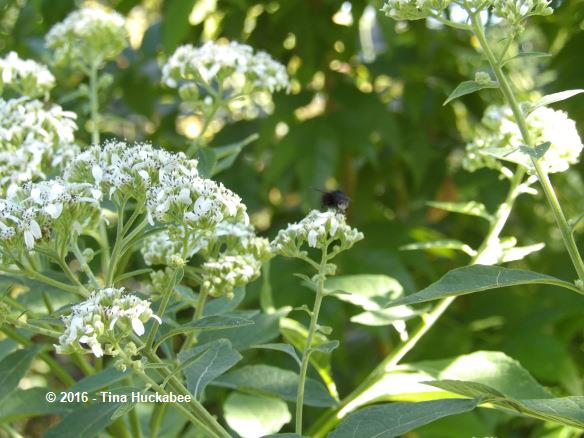
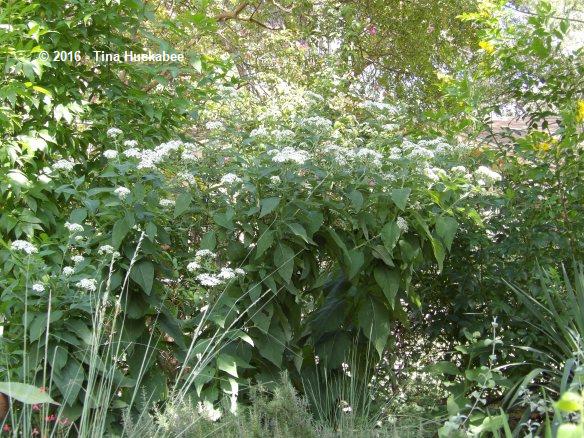
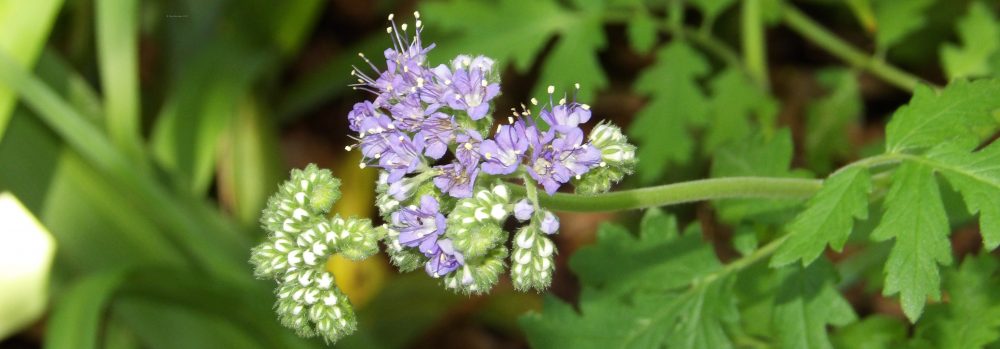
It can take 6-8 weeks from those emergent blooms for the whole set of flowers to burst forward in full cauliflower-style glory, but when they do, stand back and enjoy.
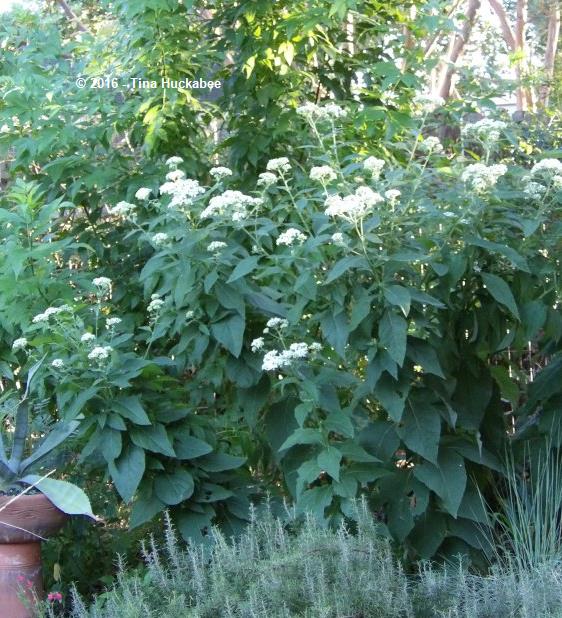
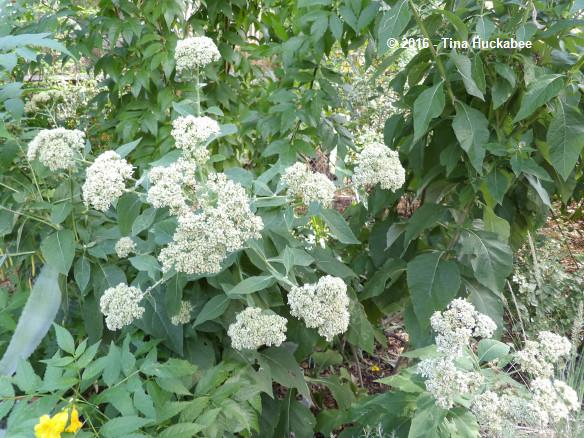
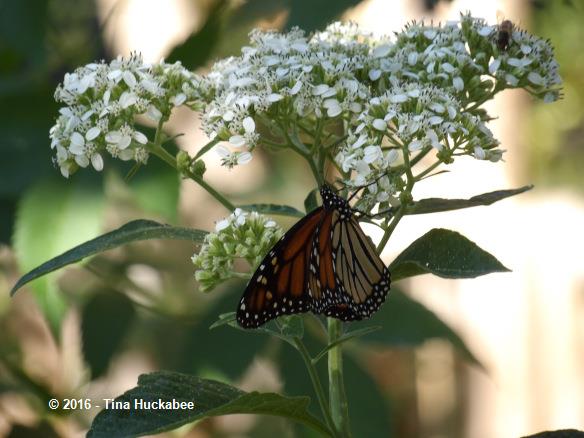
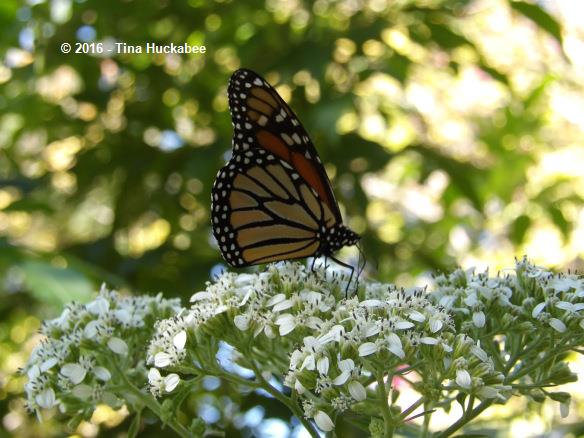
A favorite of many pollinators, Frostweed’s blooms are timed for the autumn Monarch migration.
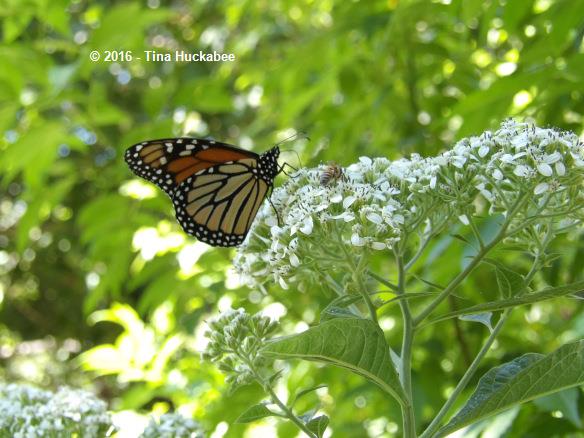
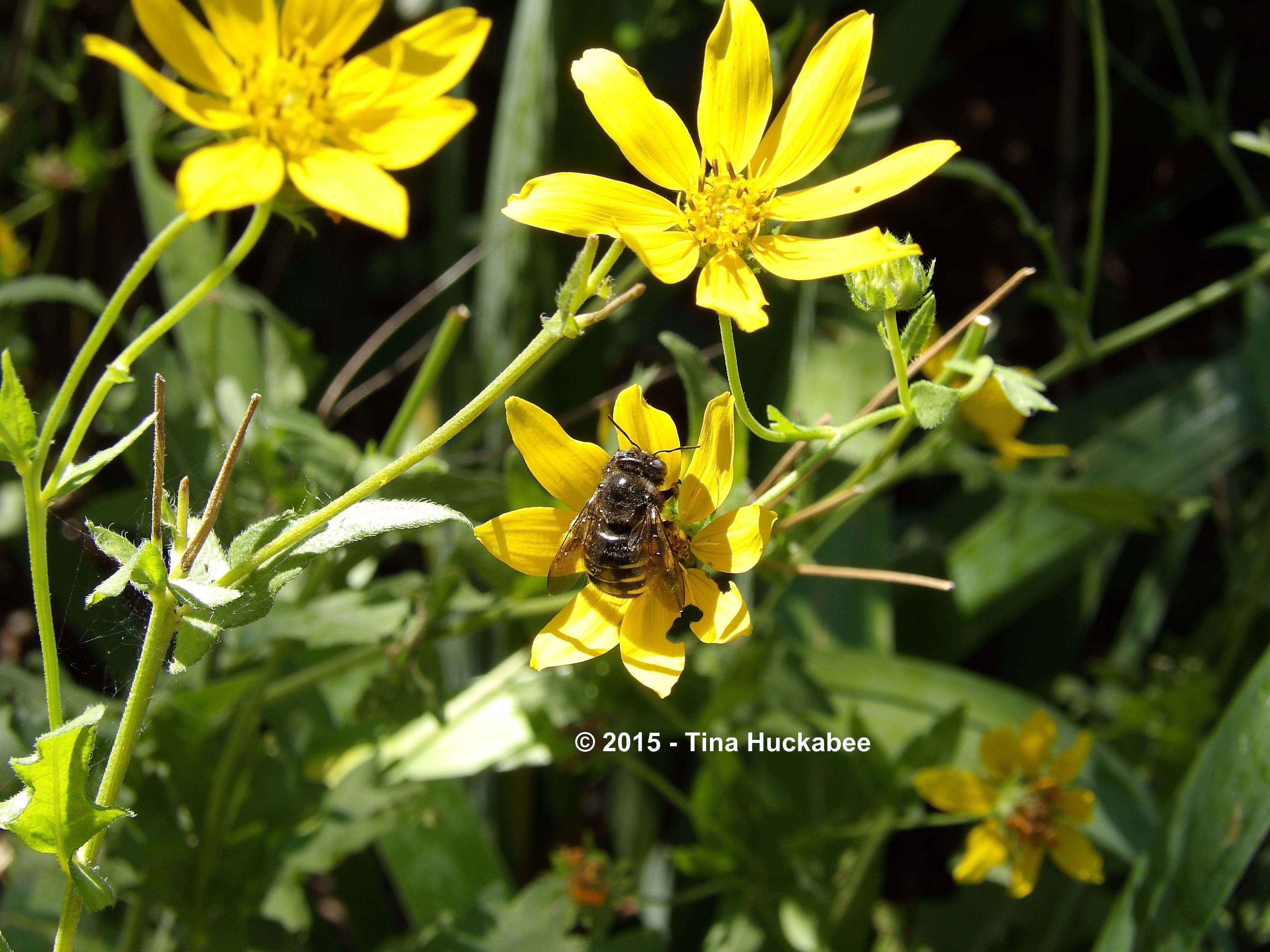
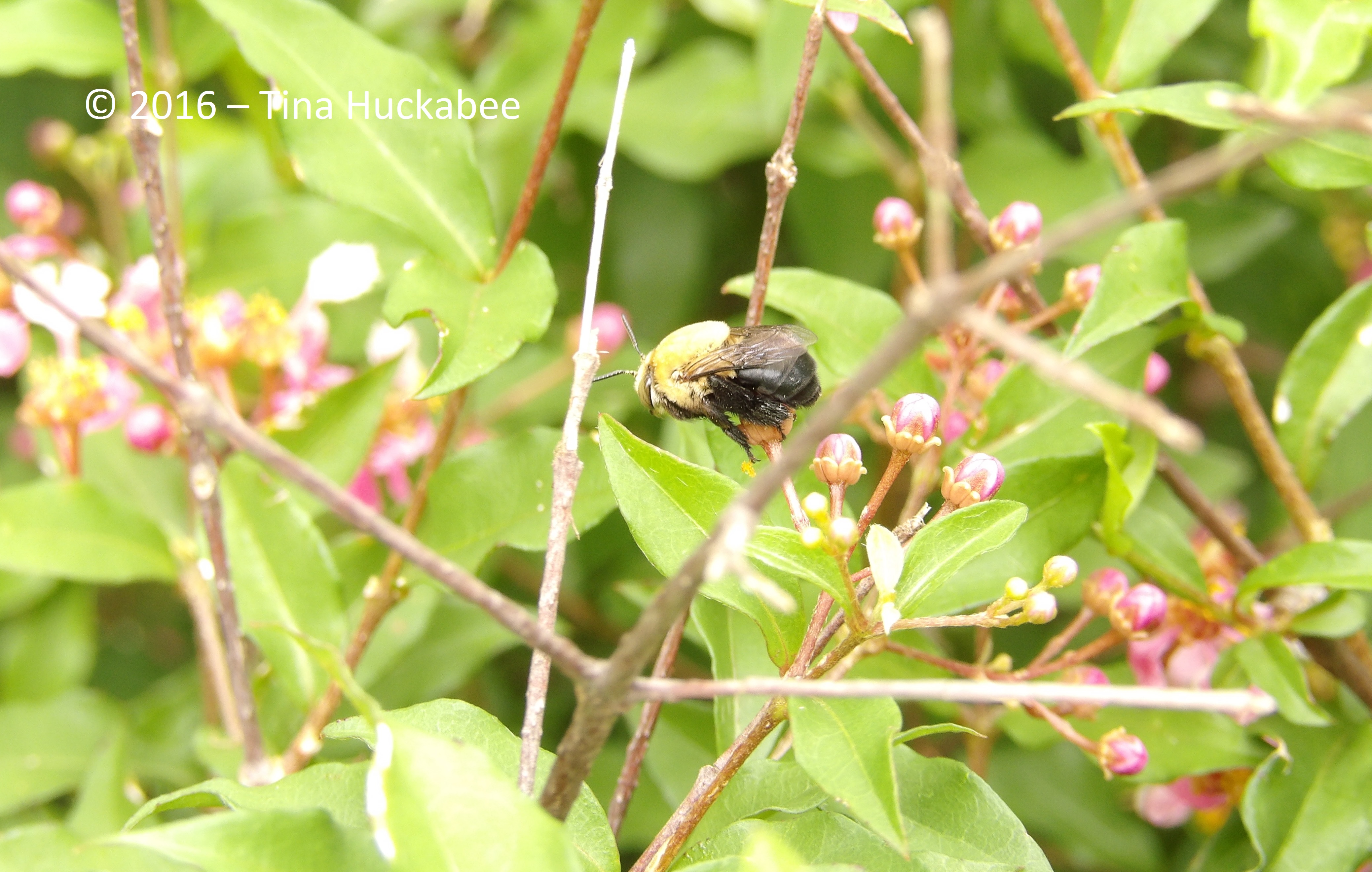
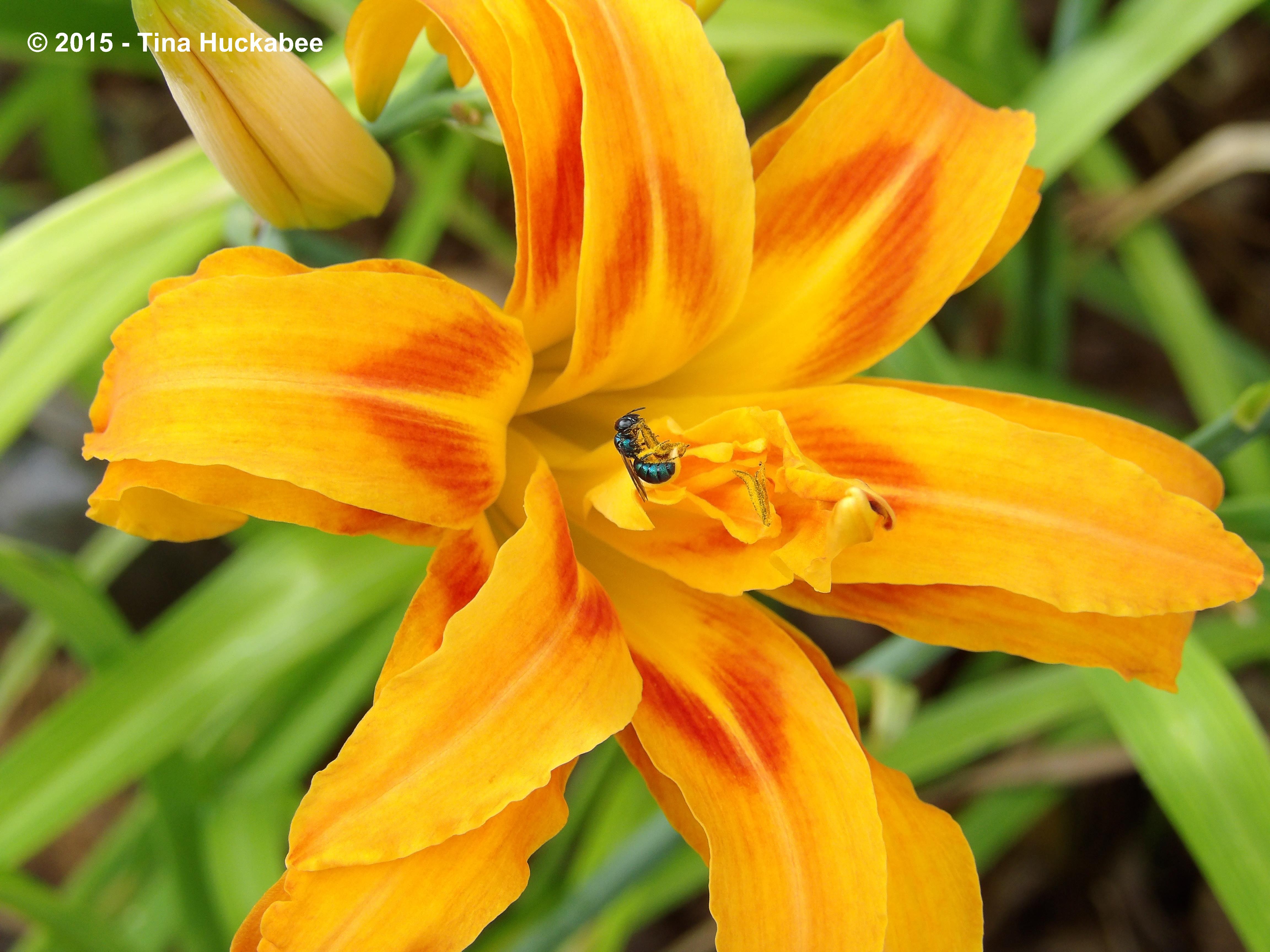
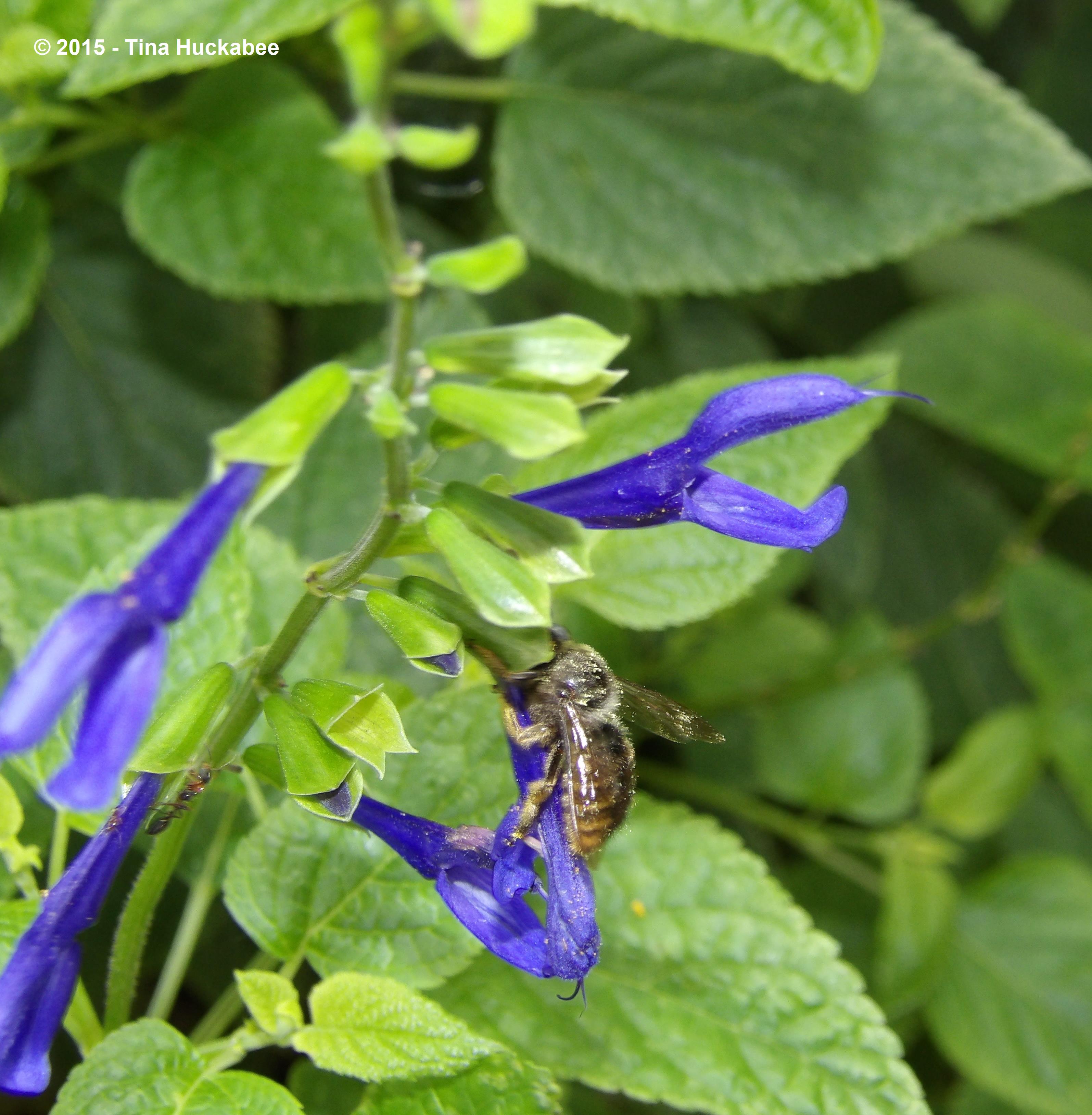
Many other pollinators visit too:
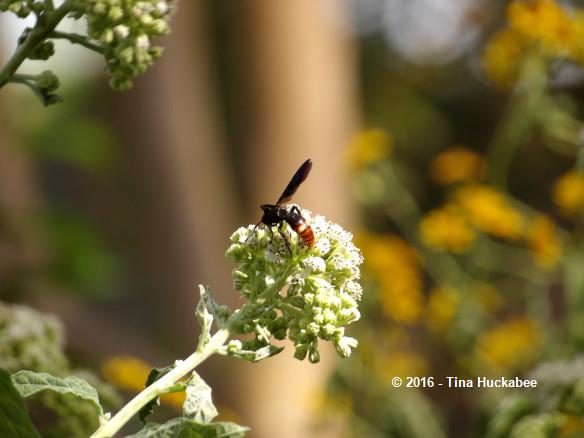
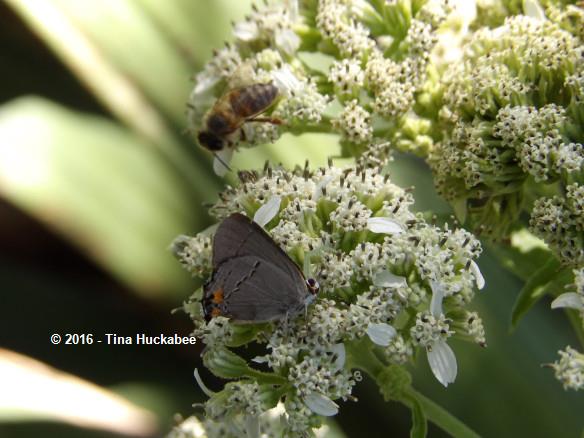
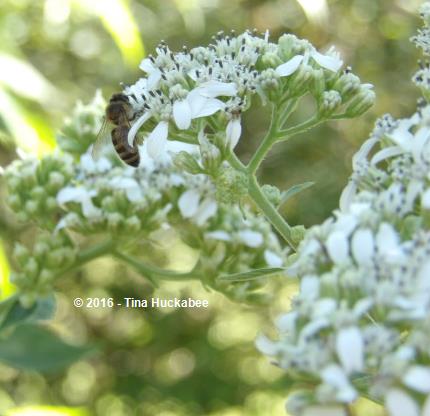
This Tachnid fly is one that I never see–except when Frostweed blooms.
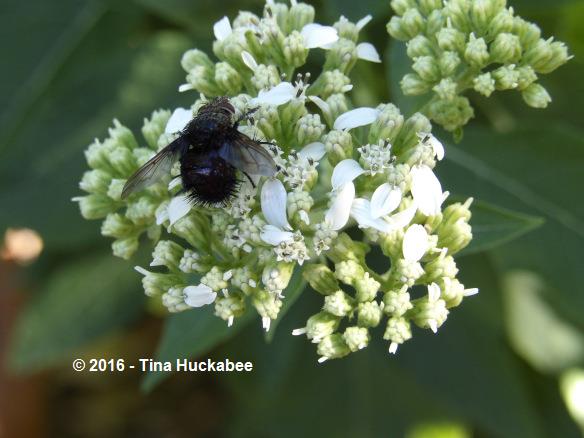
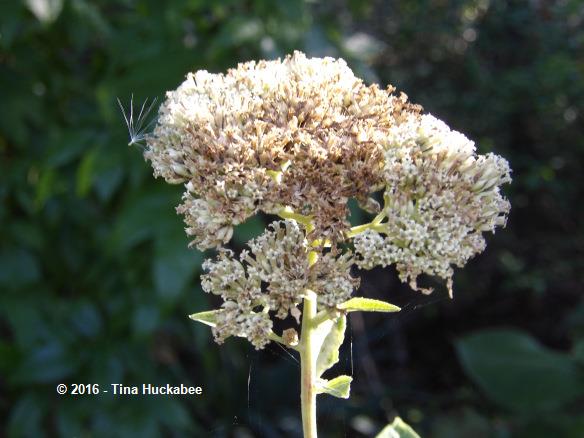
Frostweed blooms from August through early November. Once the blooms begin fading, they turn a pale green,
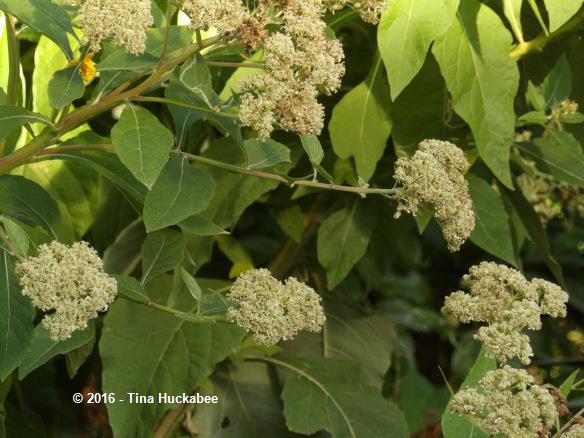
…then toasty brown.
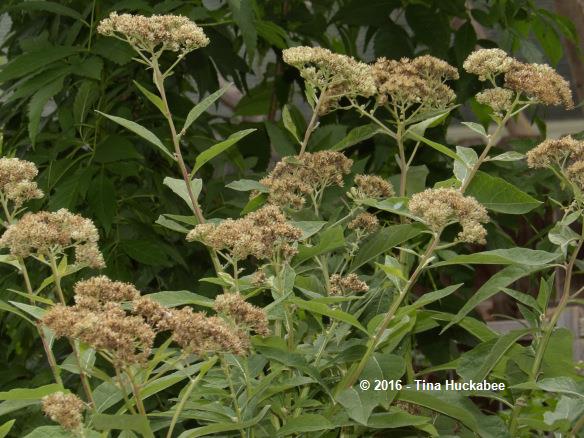
At this point in late autumn, seed development is well underway; finches and warblers are present and snitch Frostweed seeds from time-to-time.
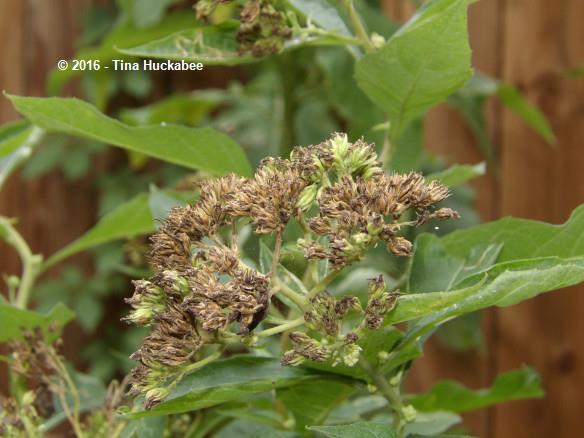
Still, there are plenty of seeds that drop, germinate, and produce seedlings for the next growing season–either to give away or to transplant to other places. Overall, I think that Frostweed is a superb insect nectar source, but it’s also a fair seed provider for the avian set and for future Frostweed production. In short, Frostweed is a great wildlife plant addition to any garden.
Frostweed is found throughout a large area of North America, from Texas to the deep South and northwards to the mid-states of the US. I would imagine that in the areas where freezes are a sure thing, Frostweed’s ice show is always a winner, though that’s not always true where I live in Austin.
I would also suggest that Frostweed is a casual plant. In literature about using Frostweed in the garden, it’s often suggested that it’s best planted in an informal setting or as a transitional plant situated between a cultivated garden and a more natural wildscape.
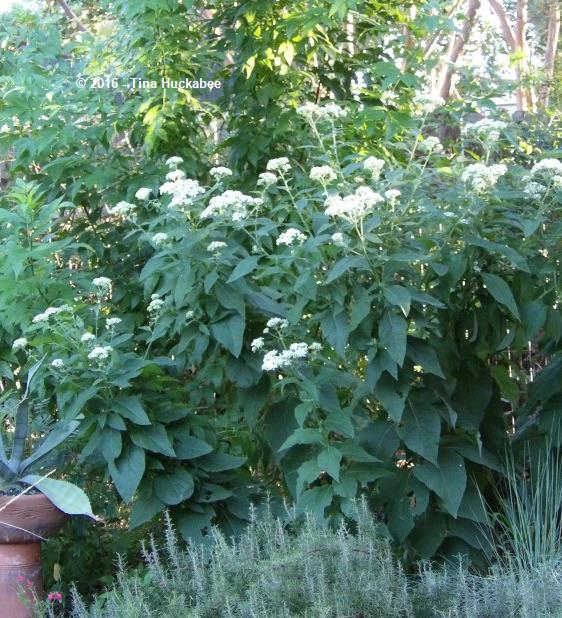
Frostweed is not something that is pruned and shaped, nor is it something that you want to tidy too much. For the more formal garden and gardener, Frostweed’s crinkly winter leaves won’t appeal,
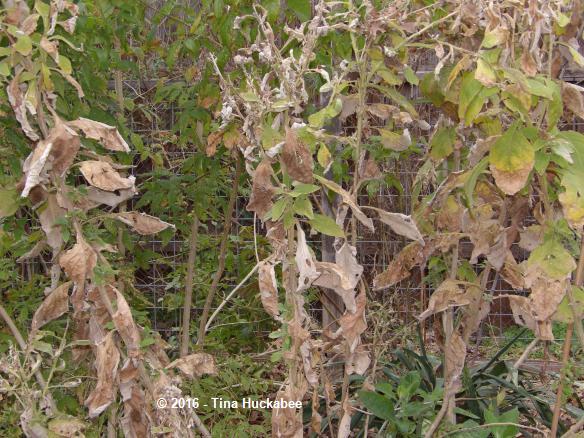
…nor will its rangy growth be a desired outcome. Frostweed’s beauty lies in its hardiness and value as a wildlife food source,
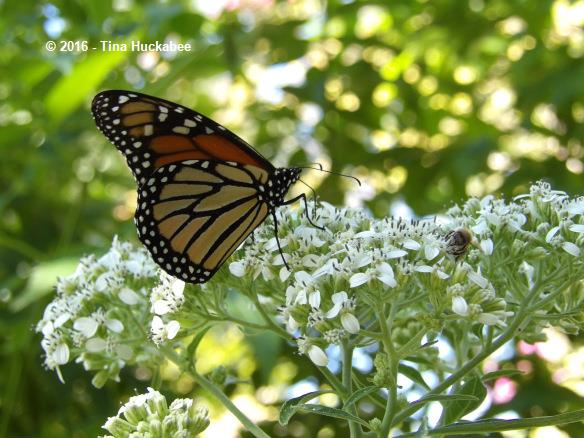
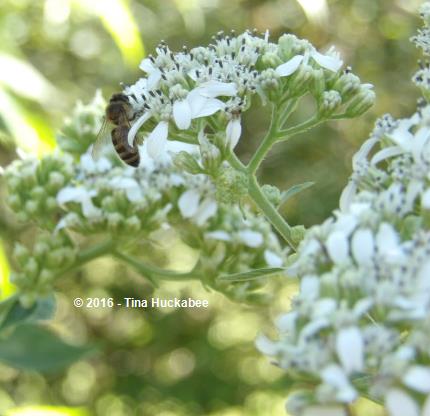
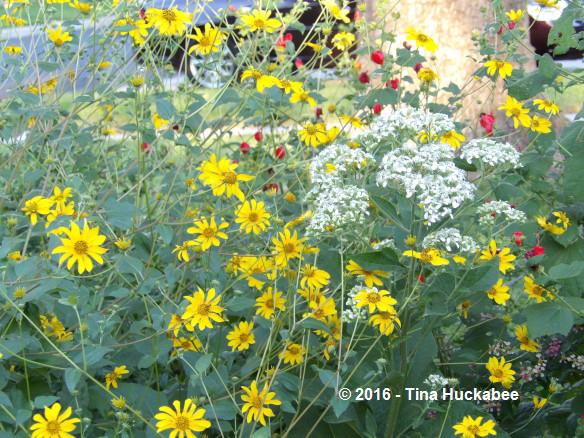
..and of course, those pretty, pretty blooms.
Left to its own devices, Frostweed will create a thicket and that is typically how you’d find it growing in a wild area. It’s deer resistant and needs no irrigation–gosh, the perfect plant! So where do you get this perfect plant? If you’re in or around Austin, I’ve seen it for sale at the LBJ Wildflower Center’s spring/fall plant sale. If you live in Frostweed’s native range, check out your locally owned nurseries and if they don’t carry Frostweed plants or seeds, request that they do. Native American Seed, an online native seed source, carries Frostweed, as well as many other native North American seeds. In my quick Google search on where to buy Frostweed, I noticed that Amazon also carries them, along with everything else. No word though whether a drone would drop off seeds at your house. Best bet? Find a garden buddy who’ll share his/her seeds–and enjoy the results.
A year in the life of Frostweed, Verbesina virginica:
Winter:
Spring:
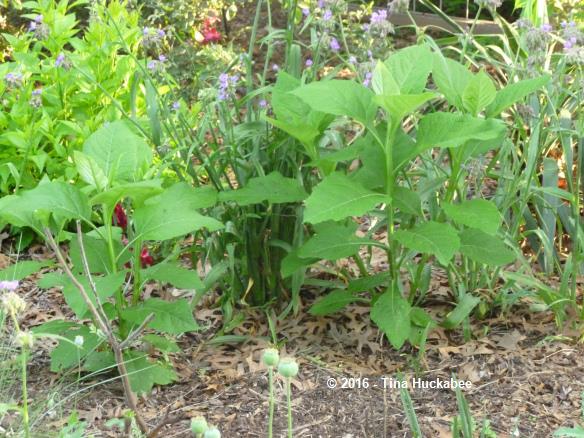
Summer:
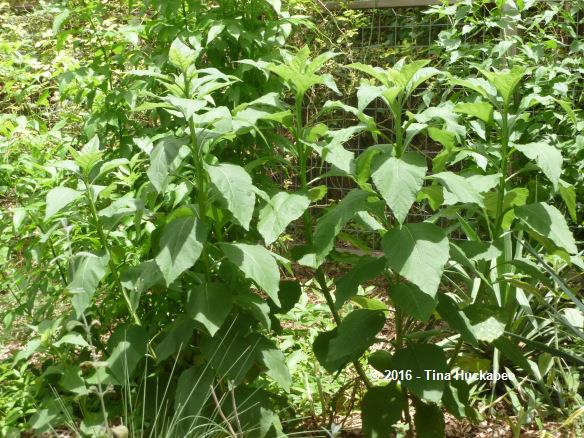
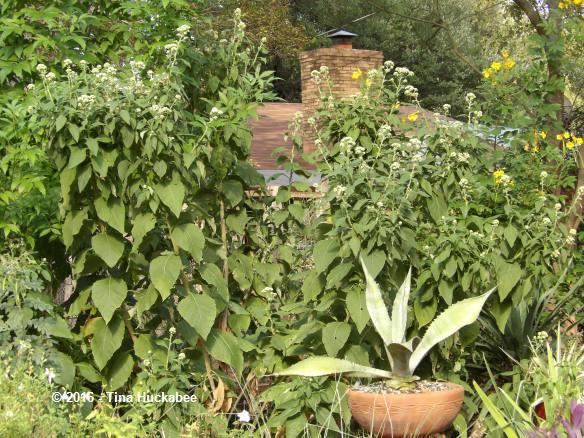
Autumn:
Plant it!