Frostweed (Verbesina virginica): A Seasonal Look

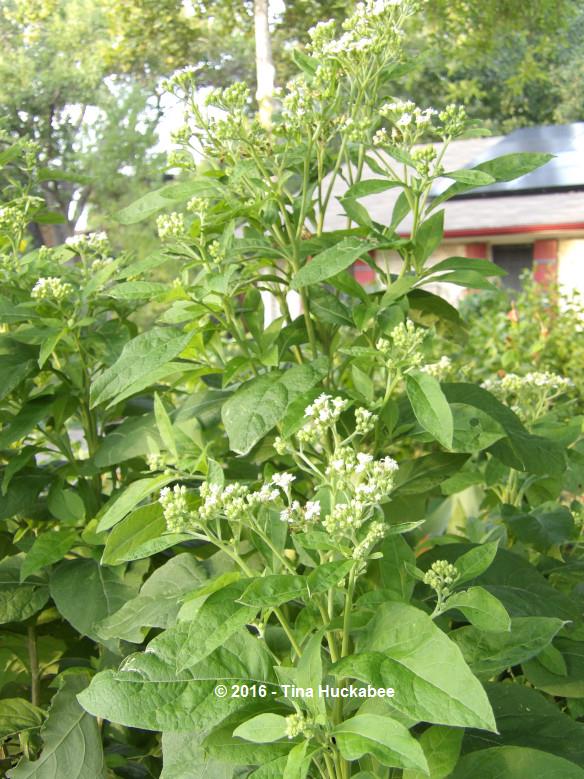
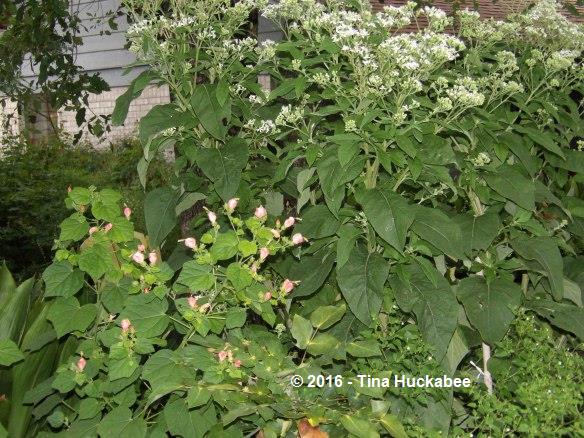
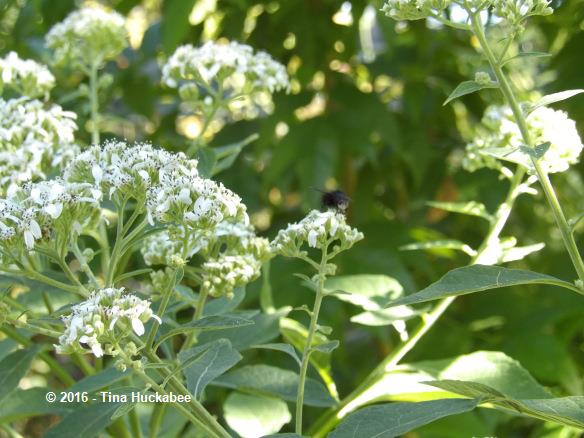
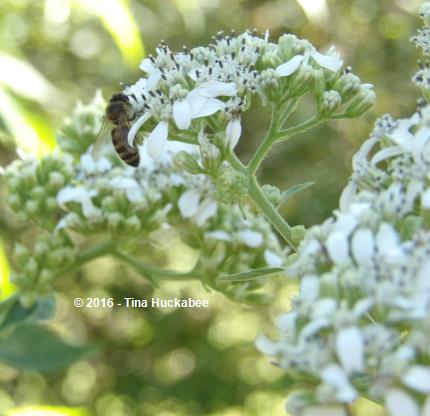
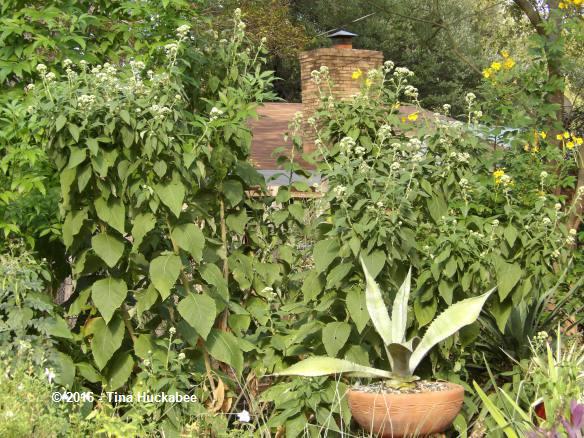
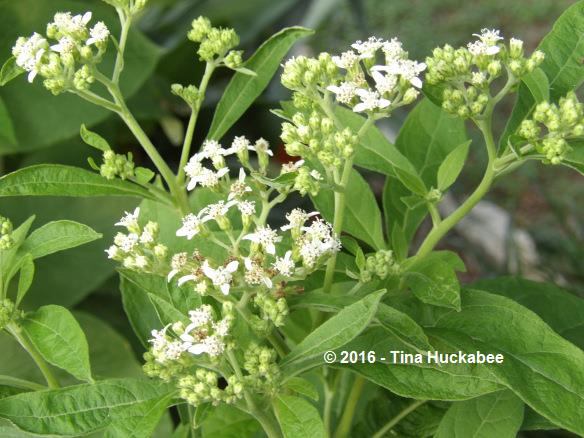
It’s seldom frosty here in temperate Austin, Texas, but when FrostweedVerbesina virginica, graces a garden, it beautifies with icy-white, frothy flowers from late summer through autumn.
imgp0497.new

imgp0498.new

imgp0841.new

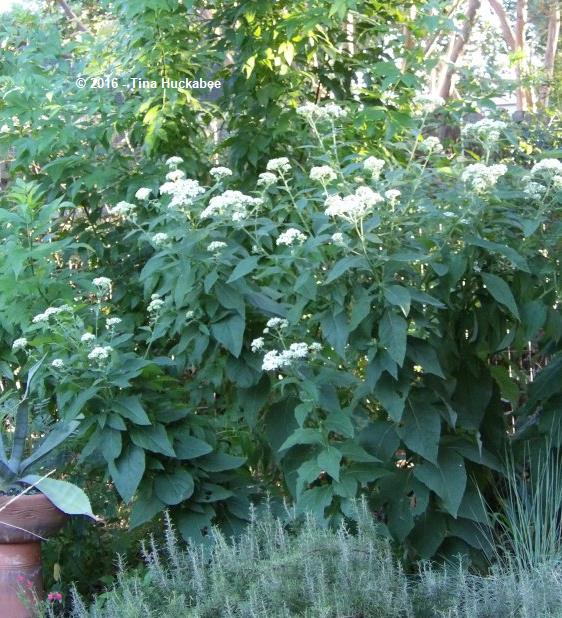
A native North American herbaceous perennial, Frostweed is a great plant to profile for A Seasonal Look, because it’s lovely, interesting, and home gardeners, as well as visiting pollinators and birds, should enjoy this plant.
imgp1169.new

The most common of the common names for V. virginica is Frostweed, but according to the LBJ Wildflower Center, it also goes by the names White Crownbeard, Iceplant, Iceweed, Virginia Crownbeard, Indian Tobacco, Richweed and Squaweed.  While I don’t know this for certain, I’m guessing that the Crownbeard variations might refer to the clusters of lovely autumn blooms that V. virginica displays.
imgp1284.new

Additionally, Frostweed leaves provided a tobacco source for some Native Americans, which presumably gave rise to those last two common names.  On  a healthier note, Frostweed was also traditionally used as a fixative for gastrointestinal issues, urinary, and eye problems.

I like it because it’s pretty and tough and a great wildlife plant.
imgp0970.new

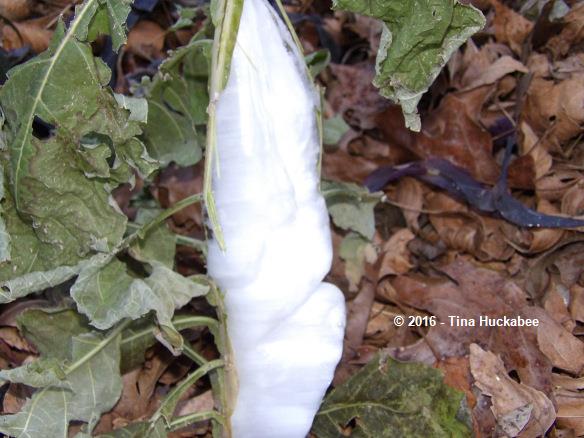
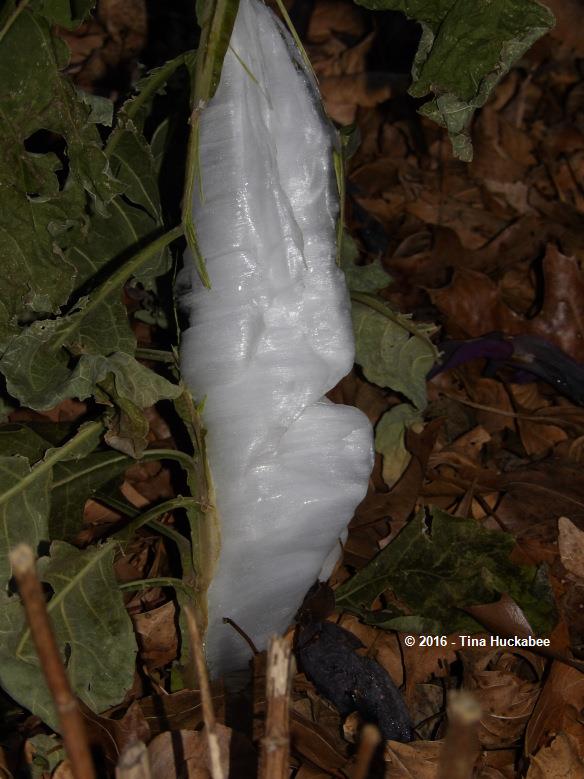
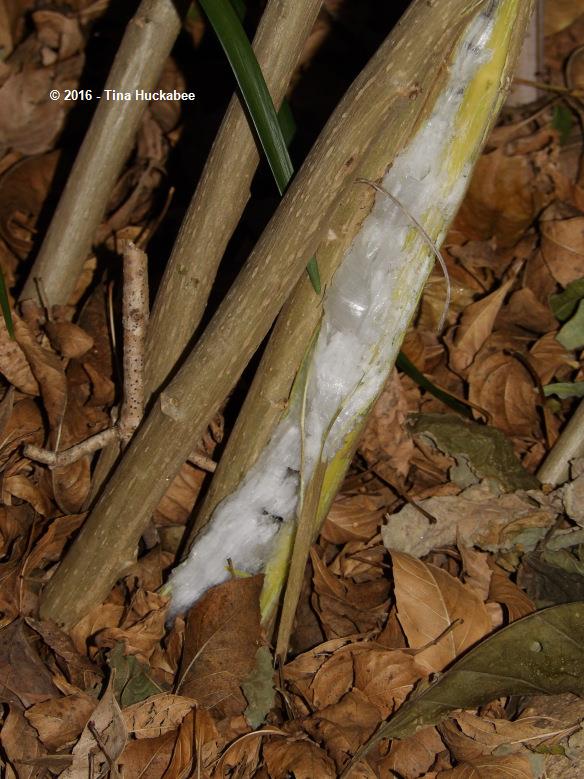
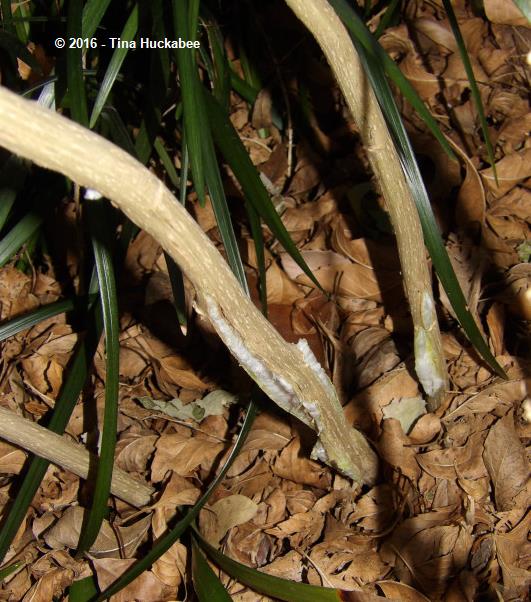
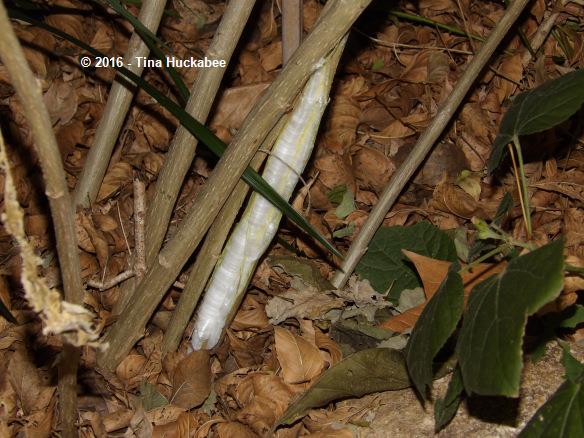
As for the various names suggesting more frigid attributes, those names are not referring to the cool white of the flowers, but instead to an unusual process that occurs with this plant early in winter, at the first hard freeze.  As the temperature plummets , sap in the trunk cools and expands, eventually breaking through the epidermis of the plant.  The sap hits the freezing air, solidifies in thin sheets, moving up along the vertical structure of the plant.
imgp4494_cropped_531x602..new

imgp4489.new

imgp4509.new

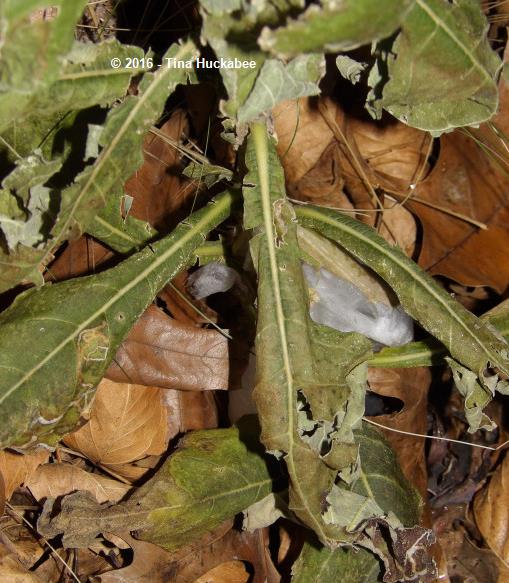
The ice sculptures freeze in a ribbon-like design.  Conditions for this awesome display are particular:  the ground must be moist, assuring the roots are actively drawing  water into the plant.  Also, the temperature drop must be relatively rapid.
imgp4528_cropped_509x583..new

The ice ribbons are fragile and thin, melting at the touch or quickly by air once temperatures rise above freezing. The Frostweed ice extravaganza is an ephemeral event. Not many plants ice dance this beautifully, but Frostweed is one that does. If you’d like to see more wavy-groovy Frostweed ice sculptures, click on the LBJ Wildflower Center’s Frostweed,  68 photo(s) available in the Image Gallery.

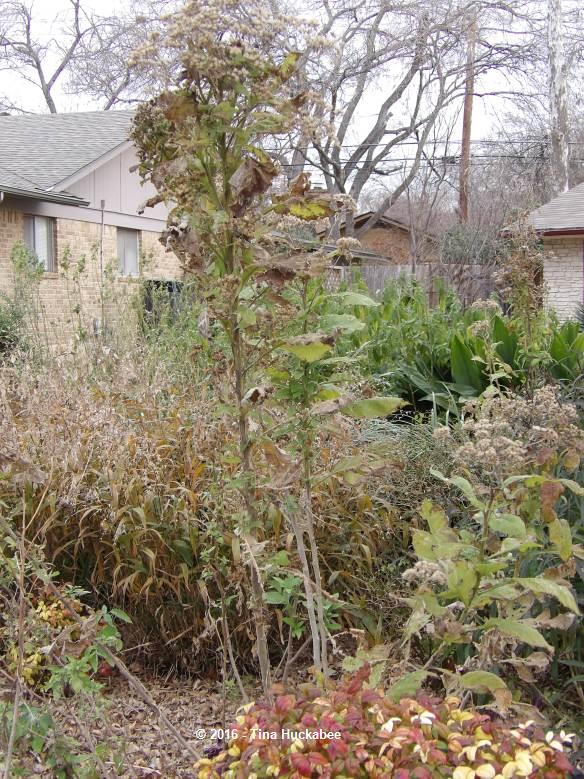
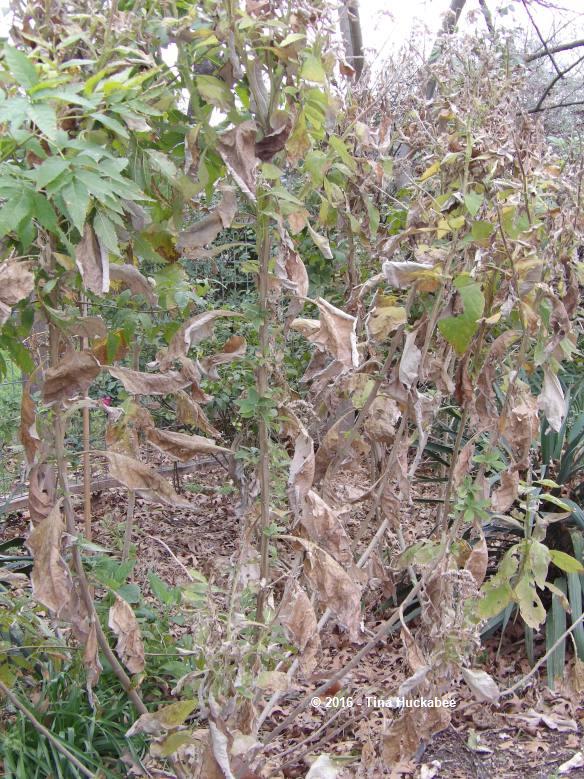
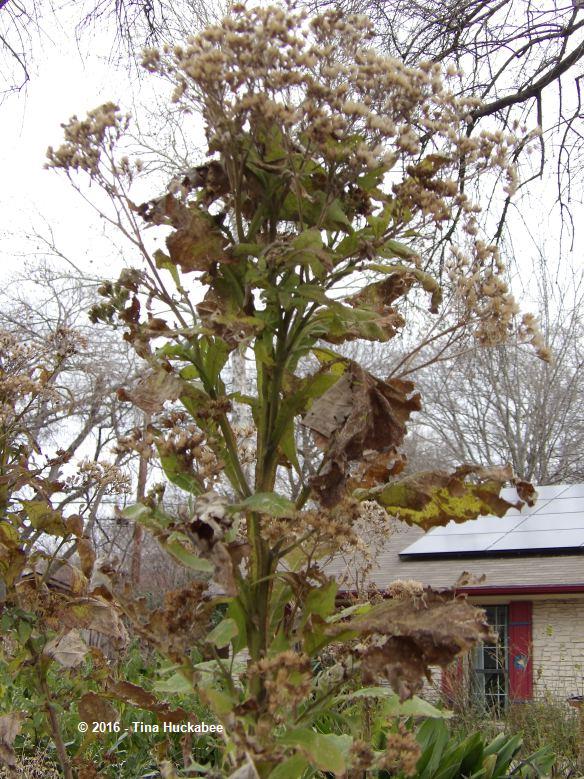
Once a hard freeze occurs and Frostweed concludes its frozen display for the year, the plant is rendered dormant.  I don’t necessarily prune my plants at that point, but one can–it’s a matter of your aesthetics and time.  Some winters are mild and in those conditions, Frostweed doesn’t produce ice sculptures, but the plant will become dormant, or mostly so, even with a light frost.
imgp3971.new

imgp3977.new

imgp3969.new

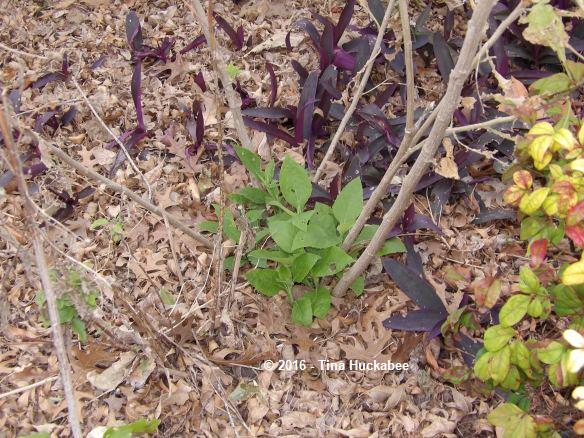
Additionally, in mild winters even after Frostweed is dormant, new growth can appear from the ground when temperatures are warm enough, well before calendar springtime.
imgp3982.new

That’s always tricky because if a late hard freeze occurs, the  Frostweed will die back again. An established Frostweed plant is robust enough to overcome that shock, but new plants might succumb. So, the stalwart gardener rolls up his or her sleeves and plants more Frostweed.

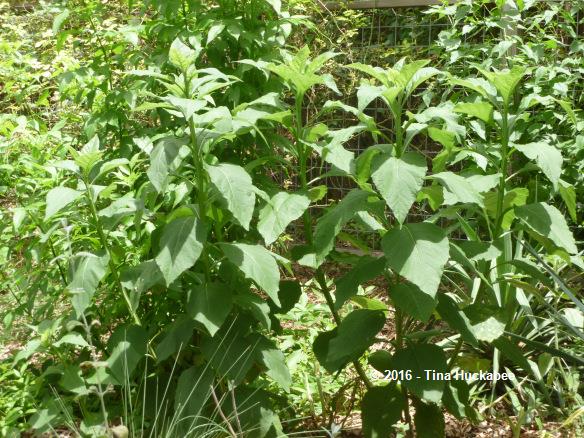
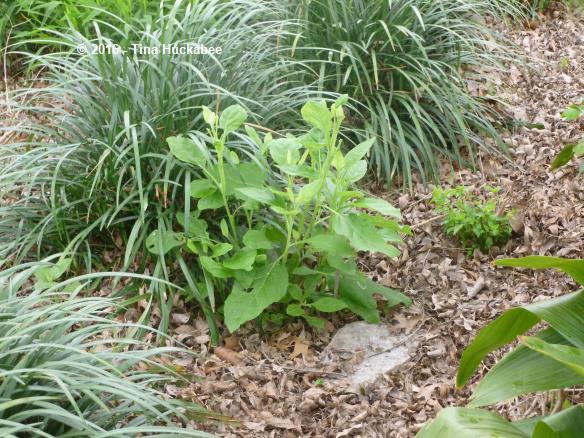
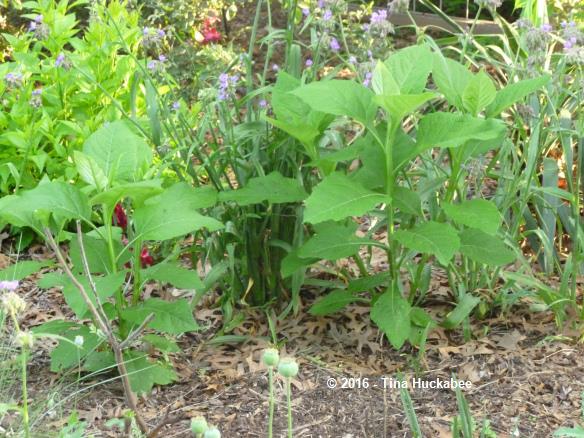
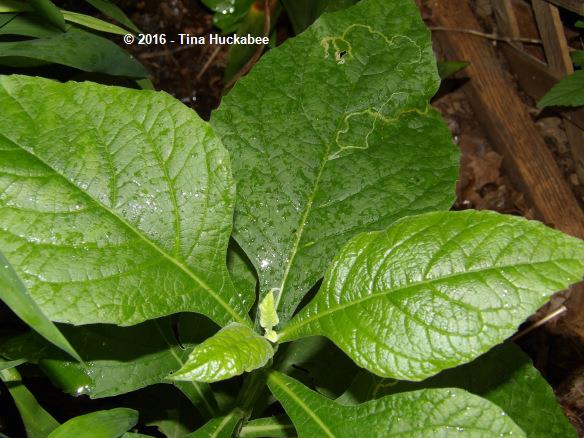
Newly emerged foliage is exuberant and verdant, but like others in the Asteraceae (Aster) family of plants, Frostweed’s leaves are sandpaper rough.  The leaves are also a bit awkward because they’re also quite large, even those on the new spring plants. Frostweed is the plant version of a puppy with large paws.
imgp8315.new

p1050297.new

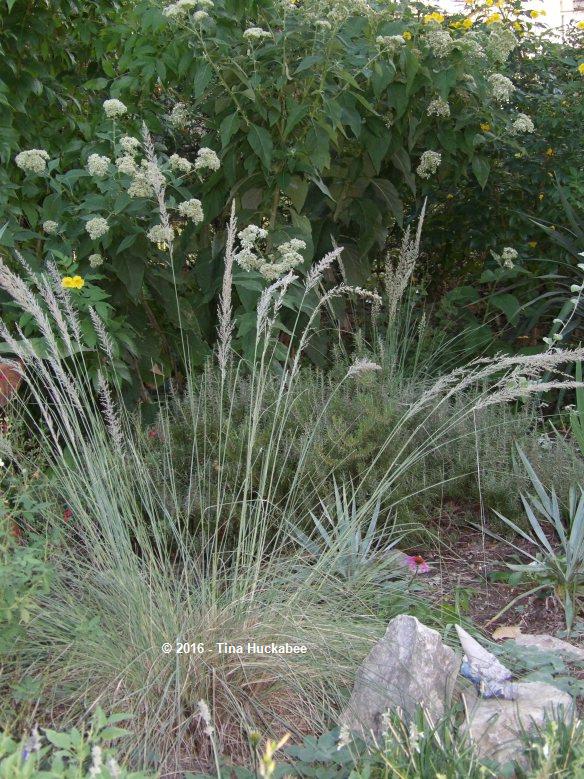
I like the showy, scrappy foliage. I plant my Frostweed with complementary fine or small leafed shrubs and grasses, and also mix it with evergreens (when possible), since Frostweed itself is pruned back in winter.
imgp2128.new

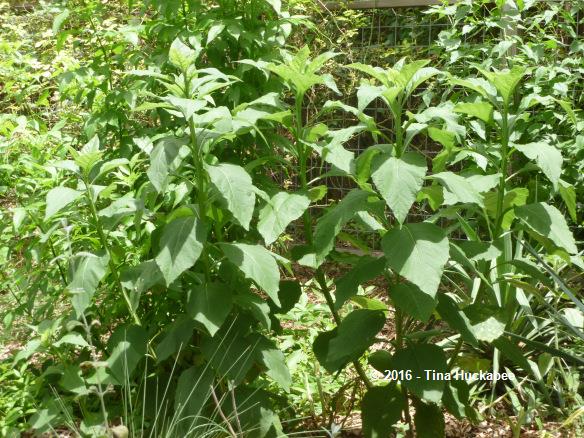
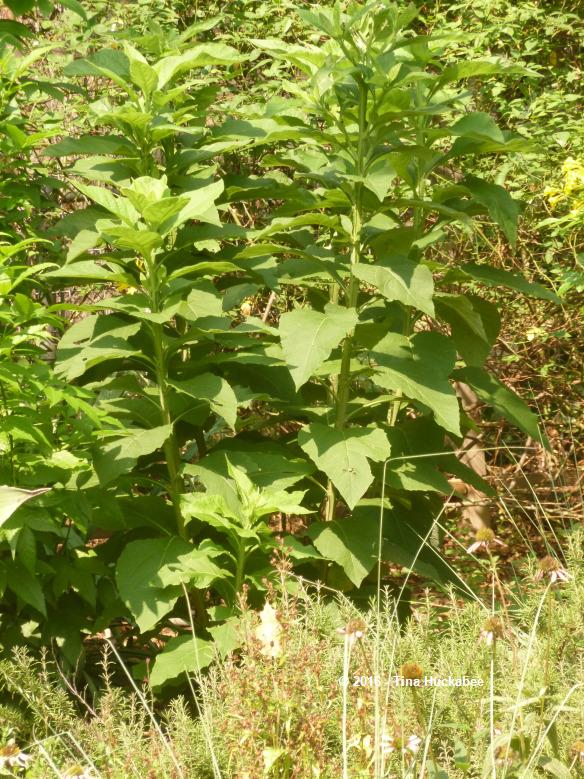
Throughout the late spring and summer months, Frostweed grows and the plant  eventually catches up to the leaf size.  The puppy grows into its feet.
p1050983.new

imgp0340.new

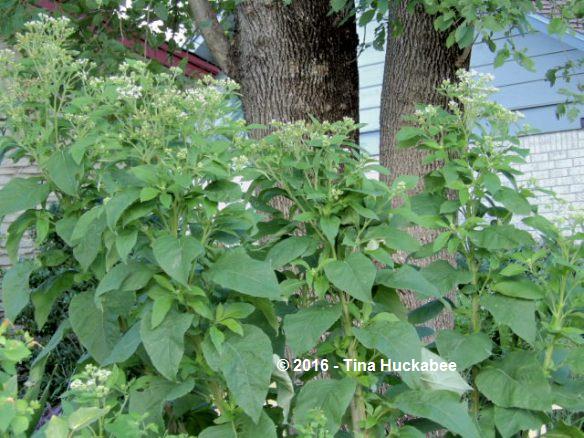
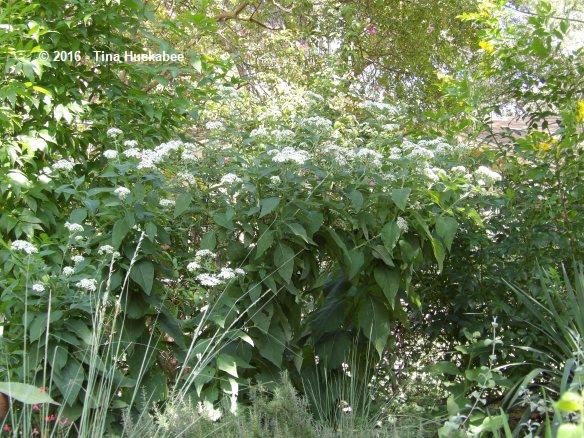
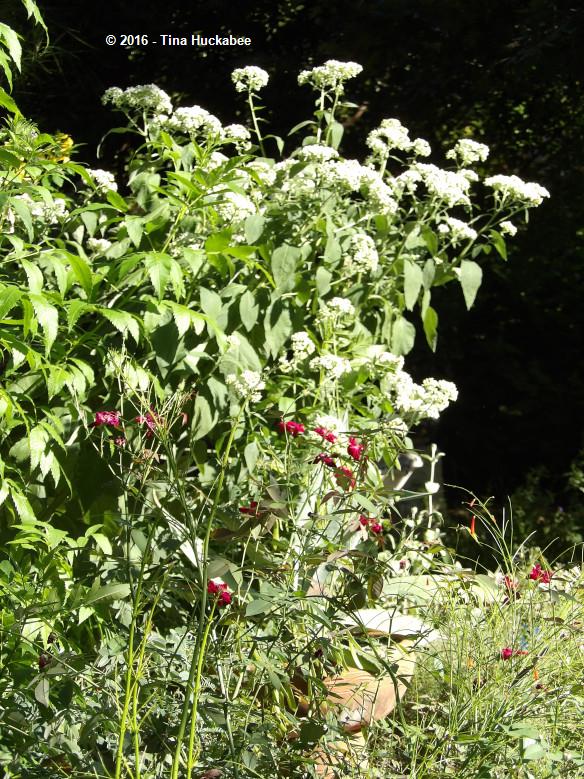
Frostweed’s height ranges from 3 feet to about 6 feet, depending upon soil, sun, and moisture.  It’s a woodland plant and considered an understory, so it grows and blooms well in shade–with or without extra watering.  It’s an excellent dry-shade plant.  Some of my Frostweed get a reasonable amount of afternoon (Texas!!) summer sun and those specimens tend to grow to about 6 feet.  Some years (depending upon rainfall) I stake with rebar because at the first heavy fall rains, Frostweed can flop a bit and I prefer their stand-at-attention persona.
imgp1252.new

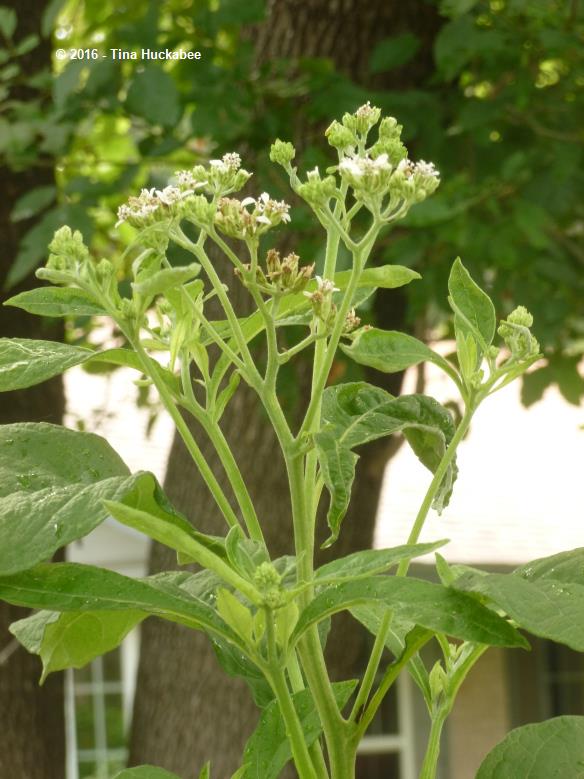
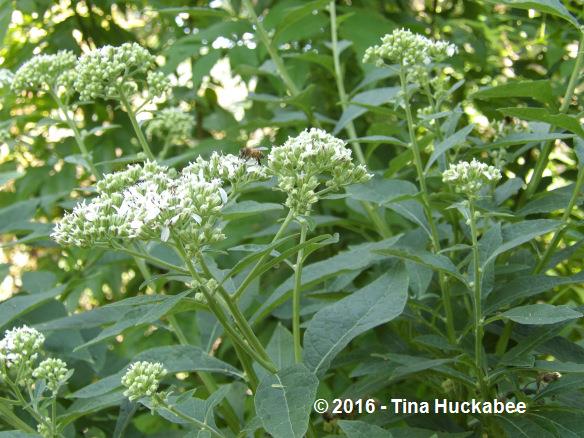
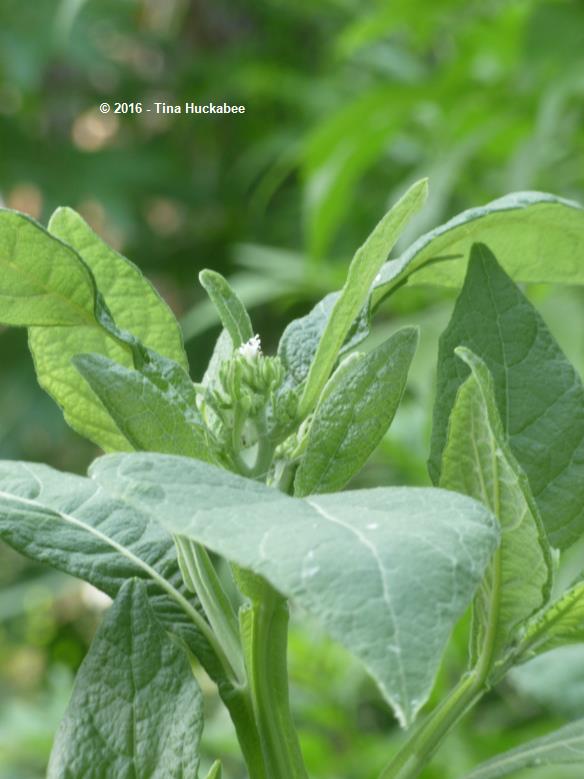
By early August, here in Central Texas, regardless of whether it’s been a dry or a wet (hah!) summer, Frostweed flowering begins. At first, a tiny bit of bloom.
p1050741.new

…then more.

p1060015.new

And more.

imgp1059.new

imgp1227.new

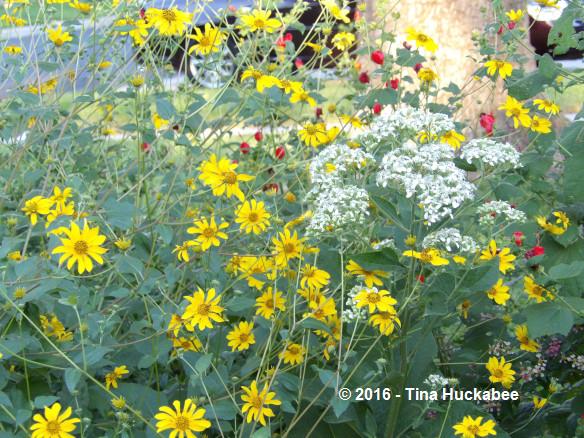
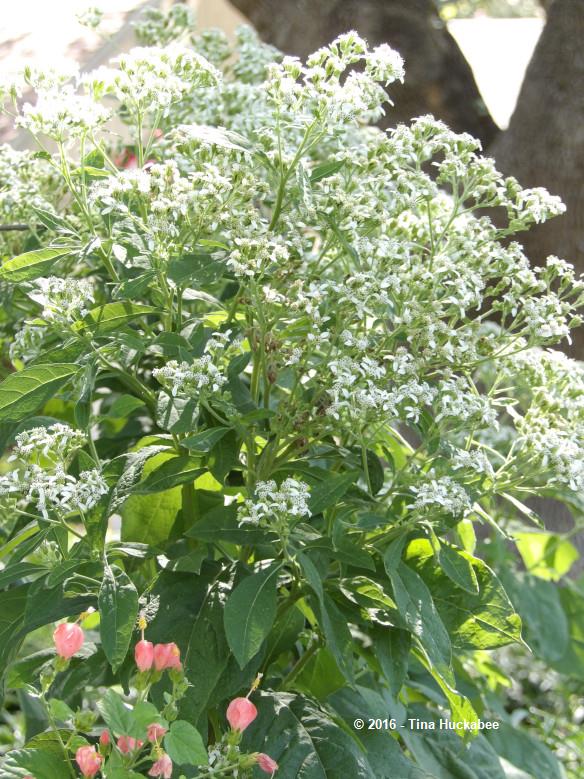
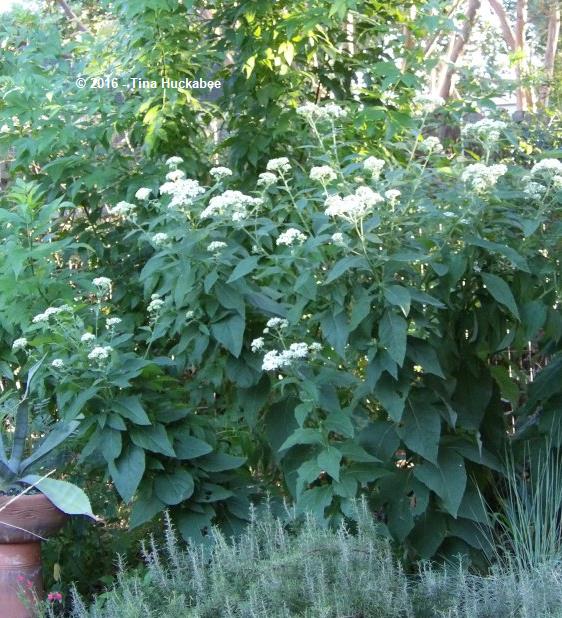
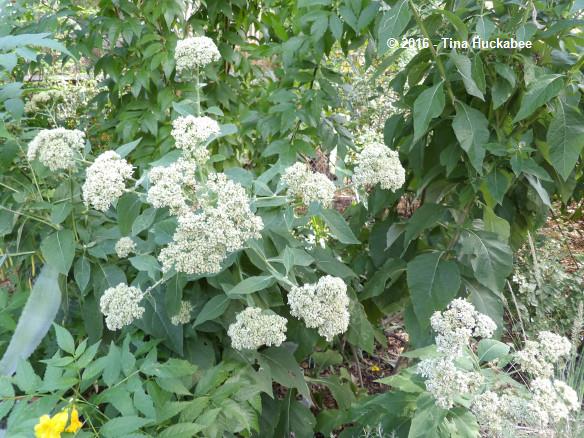
It can take  6-8 weeks from those emergent blooms for the whole set of flowers to burst forward in full cauliflower-style glory, but when they do, stand back and enjoy.
imgp1007_cropped_562x618..new

imgp2175.new

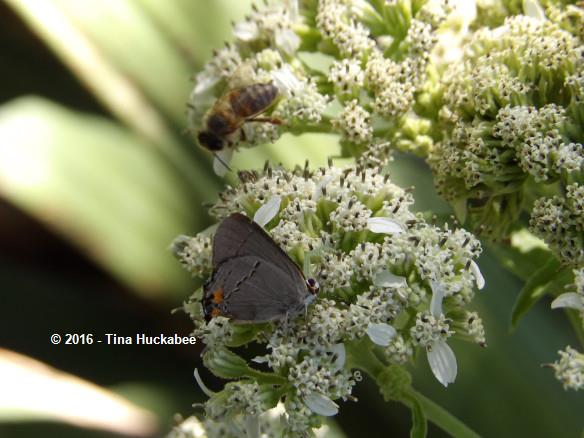
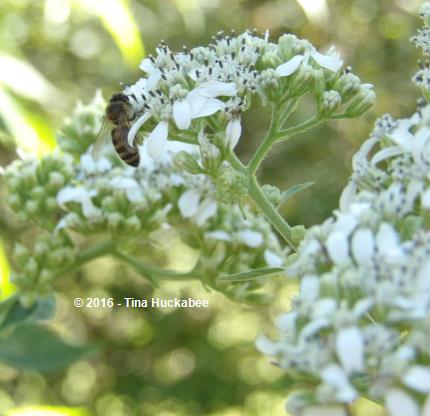
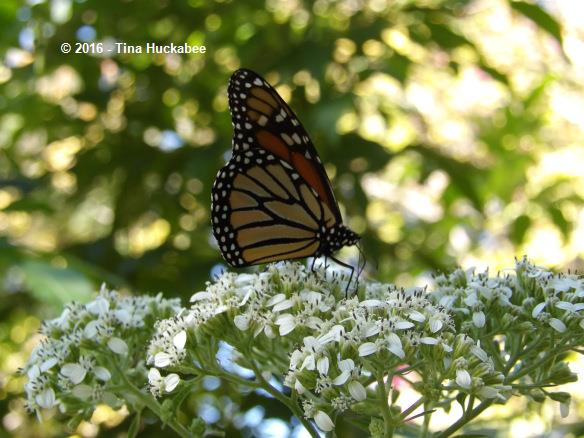
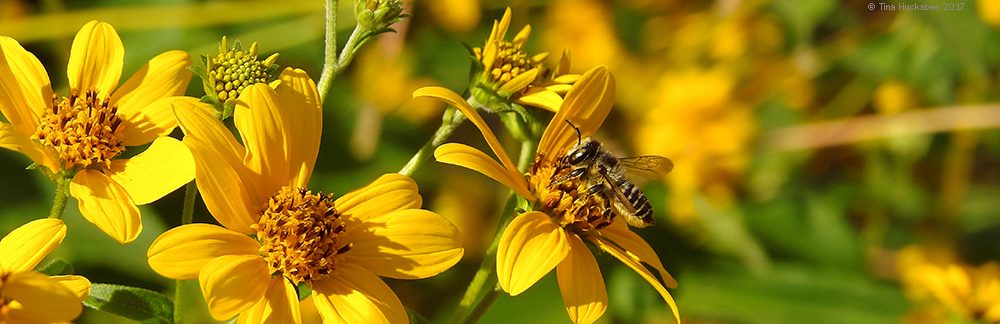
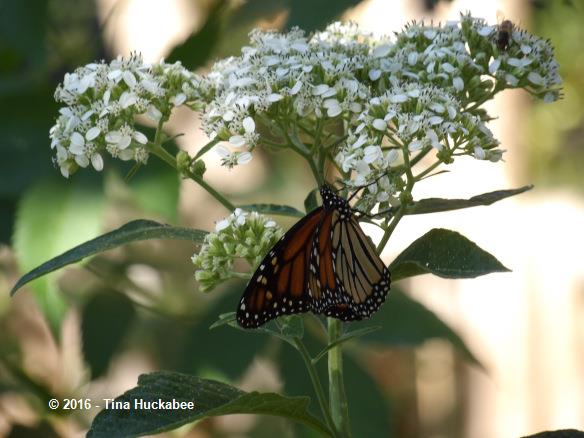
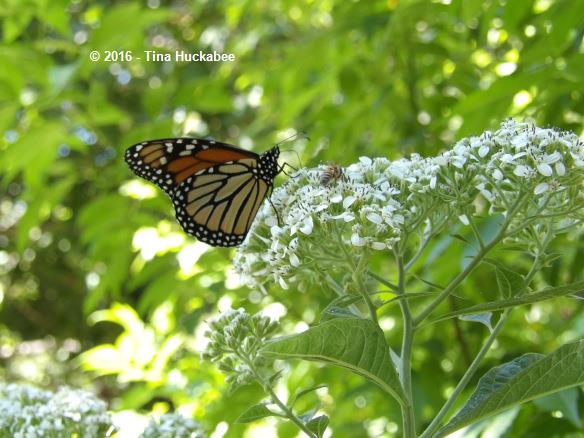
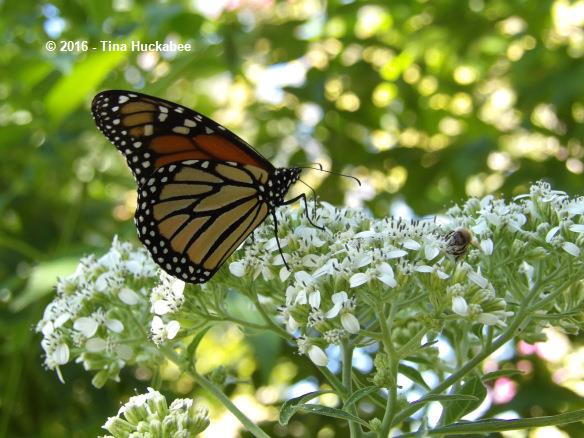
A favorite of many pollinators, Frostweed’s blooms are timed for the autumn Monarch migration.
imgp1151.new


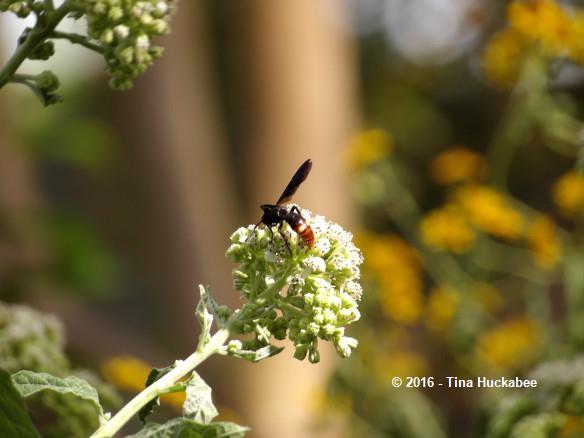
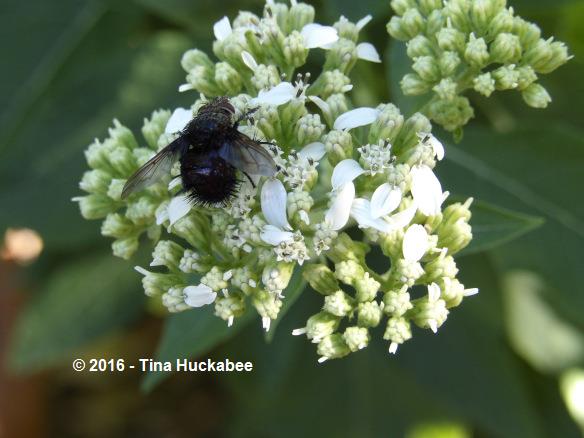
Many other pollinators visit too:

imgp1969.new

imgp2067.new

imgp1077_cropped_430x416..new


This Tachnid fly is one that I never see–except when Frostweed blooms.
imgp1065.new

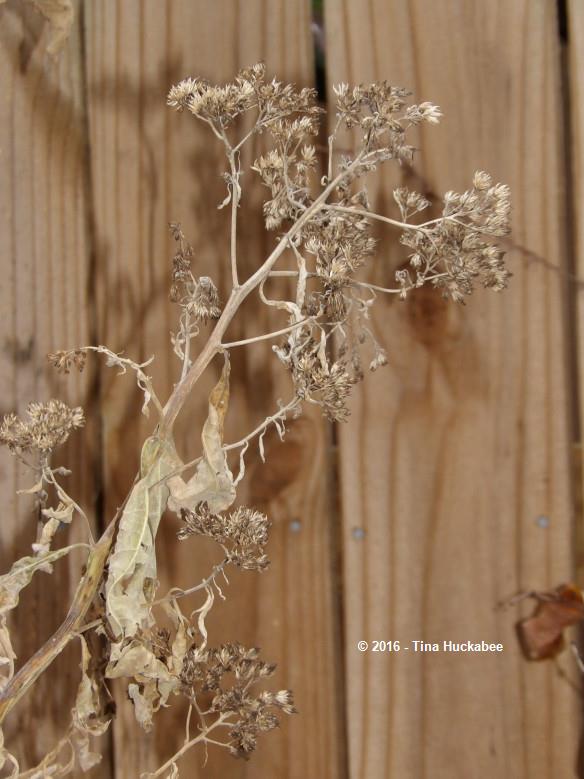
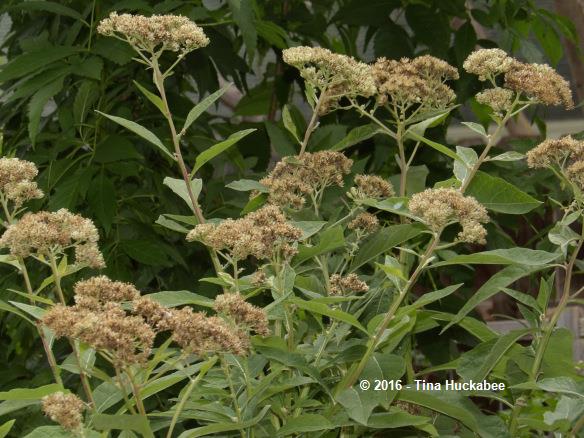
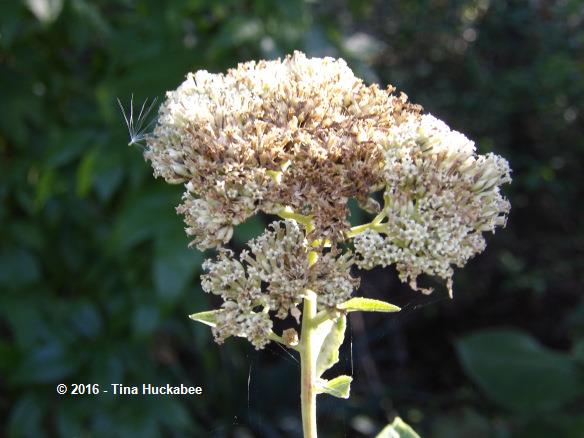
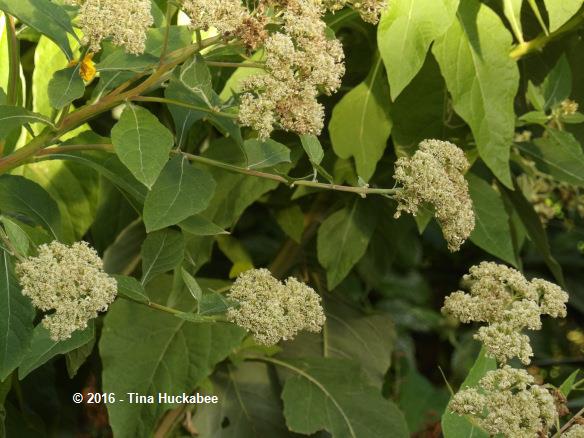
Frostweed blooms from August through early November.  Once the blooms begin fading, they turn a pale green,
imgp2295.new

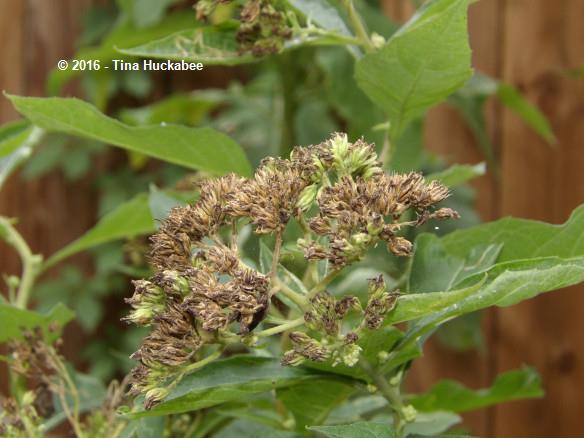
…then toasty brown.

imgp2542.new

At this point in late autumn, seed development is well underway; finches and warblers are present and snitch Frostweed seeds from time-to-time.
imgp2681.new

Still, there are plenty of seeds that drop, germinate, and produce seedlings for the next growing season–either to give away or to transplant to other places. Overall, I think that Frostweed is a superb  insect nectar source, but it’s also a fair seed provider for the avian set and for future Frostweed production.  In short, Frostweed is a great wildlife plant addition to any garden.

Frostweed is found throughout a large area of North America, from Texas to the deep South and northwards to the mid-states of the US.  I would imagine that in the areas where freezes are a sure thing, Frostweed’s ice show is always a winner, though that’s not always true where I live in Austin.

I would also suggest that Frostweed is a casual plant.  In literature about using Frostweed in the garden, it’s often suggested that it’s best planted in an informal setting or as a transitional plant situated between a cultivated garden and a more natural wildscape.
imgp1007_cropped_562x618..new

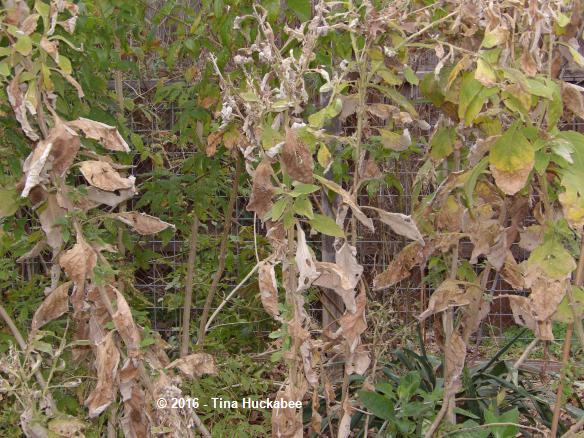
Frostweed is not something that is pruned and shaped, nor is it something that you want to tidy too much.  For the more formal garden and gardener, Frostweed’s crinkly winter leaves won’t appeal,
imgp3973.new

…nor will its rangy growth be a desired outcome.  Frostweed’s beauty lies in its hardiness and value as a wildlife food source,
imgp1159.new

imgp1077_cropped_430x416..new

..and of course, those pretty, pretty blooms.

Left to its own devices, Frostweed will create a thicket and that is typically how you’d find it growing in a wild area.  It’s deer resistant and needs no irrigation–gosh, the perfect plant! So where do you get this perfect plant?  If you’re in or around Austin, I’ve seen it for sale at the LBJ Wildflower Center’s spring/fall plant sale.  If you live in Frostweed’s native range,   check out your locally owned nurseries and if they don’t carry Frostweed plants or seeds, request that they do.  Native American Seed, an online native seed source, carries Frostweed, as well as many other native North American seeds.  In my quick Google search on where to buy Frostweed, I noticed that Amazon also carries them, along with everything else.  No word though whether a drone would drop off seeds at your house. Best bet?   Find a garden buddy who’ll share his/her seeds–and enjoy the results.

A year in the life of Frostweed, Verbesina virginica:

Winter:
imgp3981.new

imgp4526.new

imgp4532.new


Spring:

p1030207.new

p1030461.new


Summer:

p1050297.new

imgp1791.new


Autumn:

imgp1227.new

imgp1163.new

imgp1026.new

imgp2469.new

Plant it!

Bee Mama Missive: Mufasa No More

Mufasa, one of the two beehives that Bee Daddy and I have fretted and fussed over, has died, or if not dead,  is mostly on her way out.  Unlike her namesake, she wasn’t pushed off a steep edge by a rival, but sadly succumbed to an all too common infestation of honeybees:  varroa mites.

That’s what we think, anyhow.  In December, long after our last hive check of the year before the days grew chilly, I was out and about in the back garden.  I noticed some bees crawling along an open space in the garden a little ways in front of where Scar and Mufasa are situated.  Then I realized that it was more than just a few bees–indeed, there were hundreds of bees crawling along the ground.  I observed this massive and confused exit from the hive for several days, reading what I could about what I was observing.  I contacted a leader of the Austin Area Beekeepers Association and he confirmed what I suspected:  my honeys were abandoning the hive because of sickness from a varroa mite infestation. Varroa mites, Varroa destructor, are probably the greatest single threat to honeybees.  The mites have a complicated life cycle, but essentially they  feed on the blood of adult bees and the brood, causing disease, deformities, and general mayhem in honeybees.  I didn’t witness any deformed wings which is a common visual symptom of disease, but Mufasa’s honeys exited the hive in droves and that’s another sign that the bees are infected and dying.

The honeybee expert I consulted called the  honeybees leaving Mufasa, “walkers.”

Zom-bees.  That can’t be good.

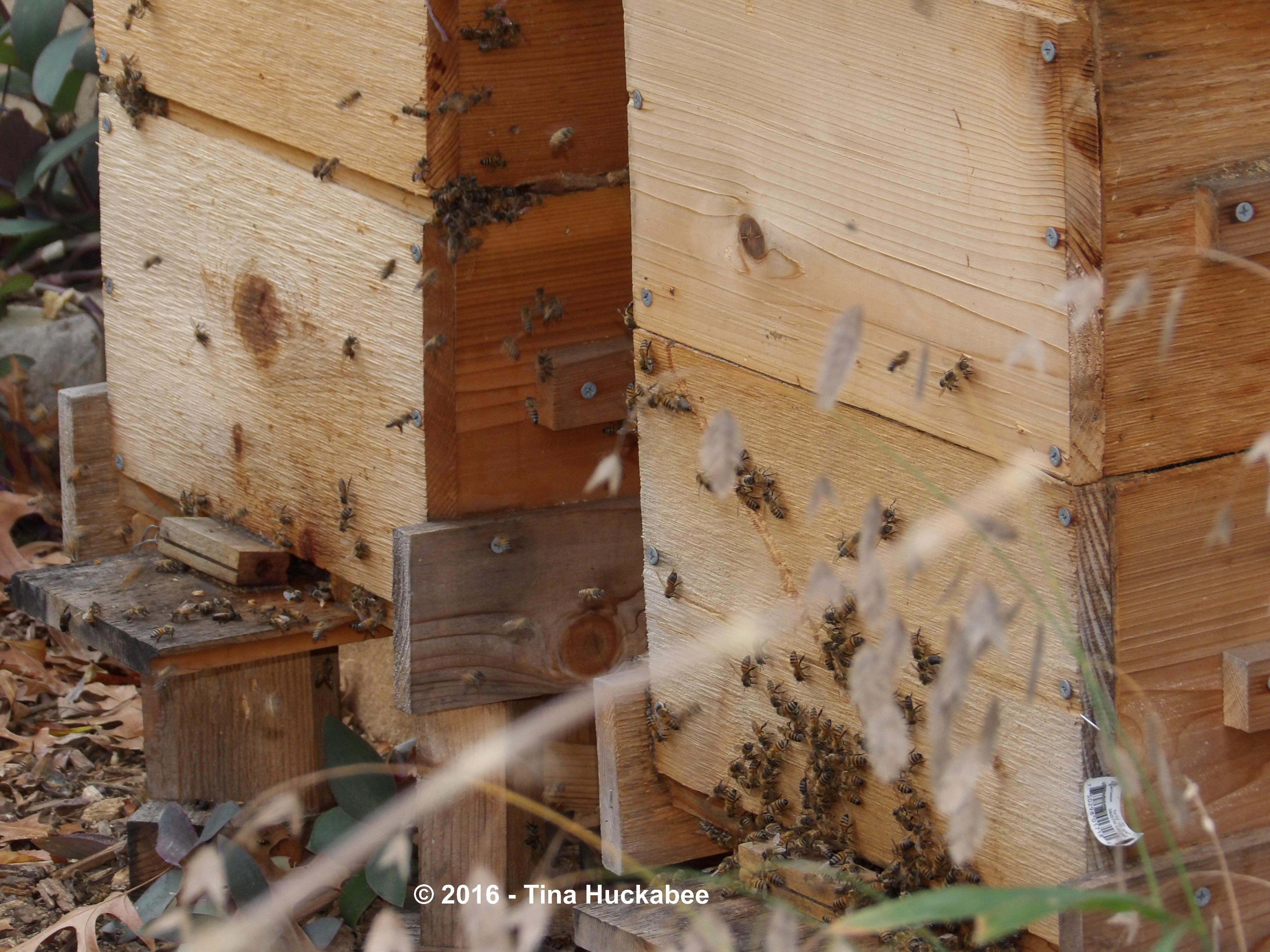
Not only were the bees walking out of the hive, but they were dying in droves.  They died along the landing board,

IMGP3287.new

IMGP3285.new

…and were in piles on the ground around the beehives.

IMGP3288.new

Sob.

My bees are BeeWeaver bees, touted as  varroa resistant through genetic selection of queens resistant to the varroa mites.  Of course varroa resistant doesn’t necessarily mean varroa proof.  BeeWeaver claims that fewer than 5% of their queens will succumb to varroa mites and apparently, Mufasa’s queen landed in that statistical range.

BeeWeaver bees are the descendants of bees who survived the initial onslaught of varroa mites in the late ’80s.  An idea behind their survival is that they’re particularly tidy bees and they rid themselves of varroa when the varroa arrive–and sooner or later, varroa mites will arrive.  Varroa mites are the biggest invasive scourge that North American honeybees and their keepers must deal with.  Bee Daddy and I have been fortunate–this is the first hive we’ve lost in the almost two years since we began this buzzy backyard adventure.

In fact, in early summer of 2014 shortly after we started beekeeping, we removed a couple of frames of comb from one of our new hives and on some of the larvae  I saw several  varroa mites; I just knew that the hive was a goner right then and there. But true to their varroa resistant genetics, the bees rid the hive of the mites and the hive continued successfully,  despite occasional (some might say, constant) beekeeper ineptitude.

Until now.

I think my mistake was in assuming that my bees were immune to an infestation, rather than keeping a keen watch on the goings-on of the hive, year-round, winter included.  I became a complacent bee keeper.

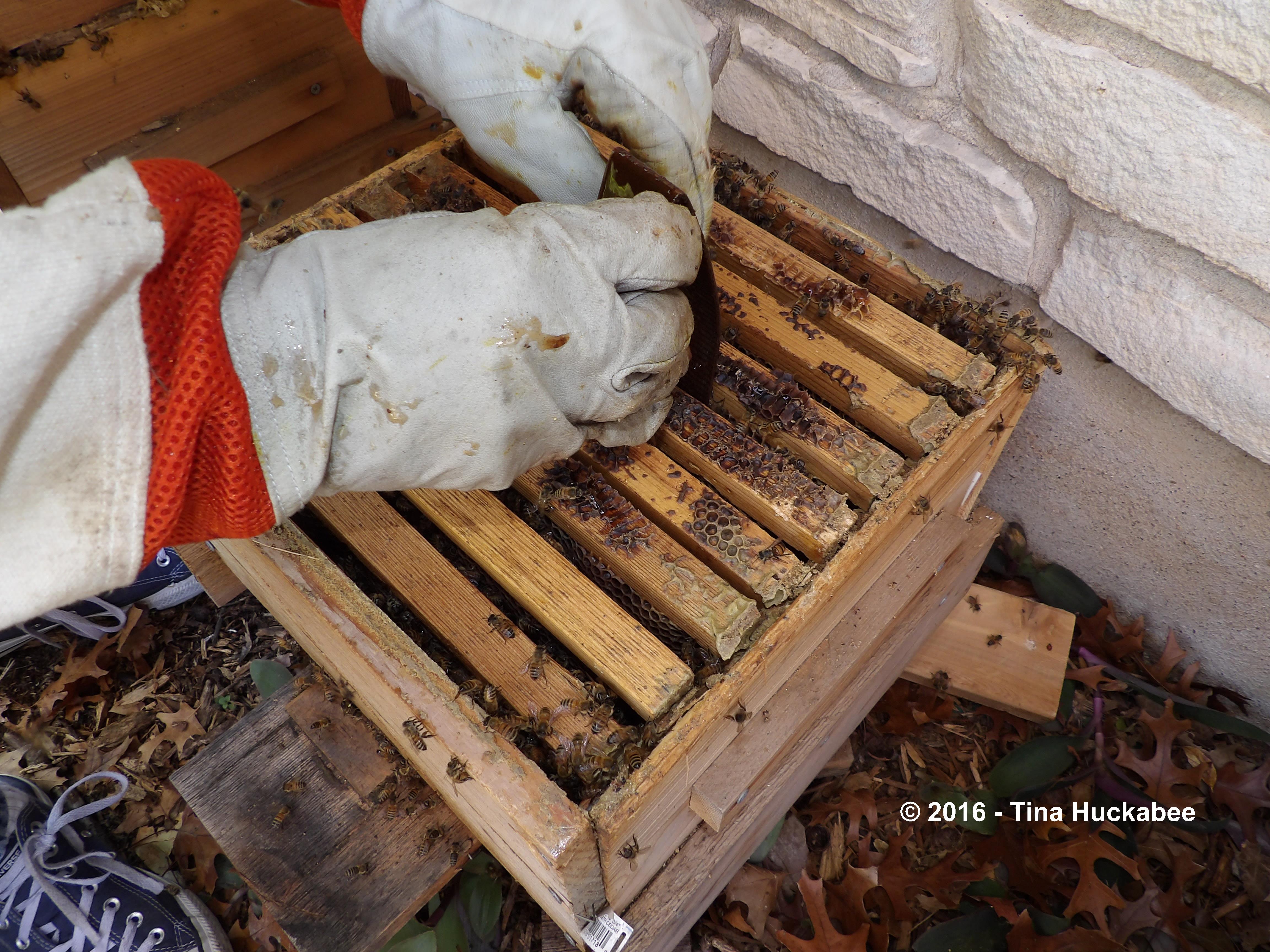
We treated Mufasa with an organic product called HopGuard II, which is made from hops.

IMGP3340.new

Apparently, beer helps all situations.

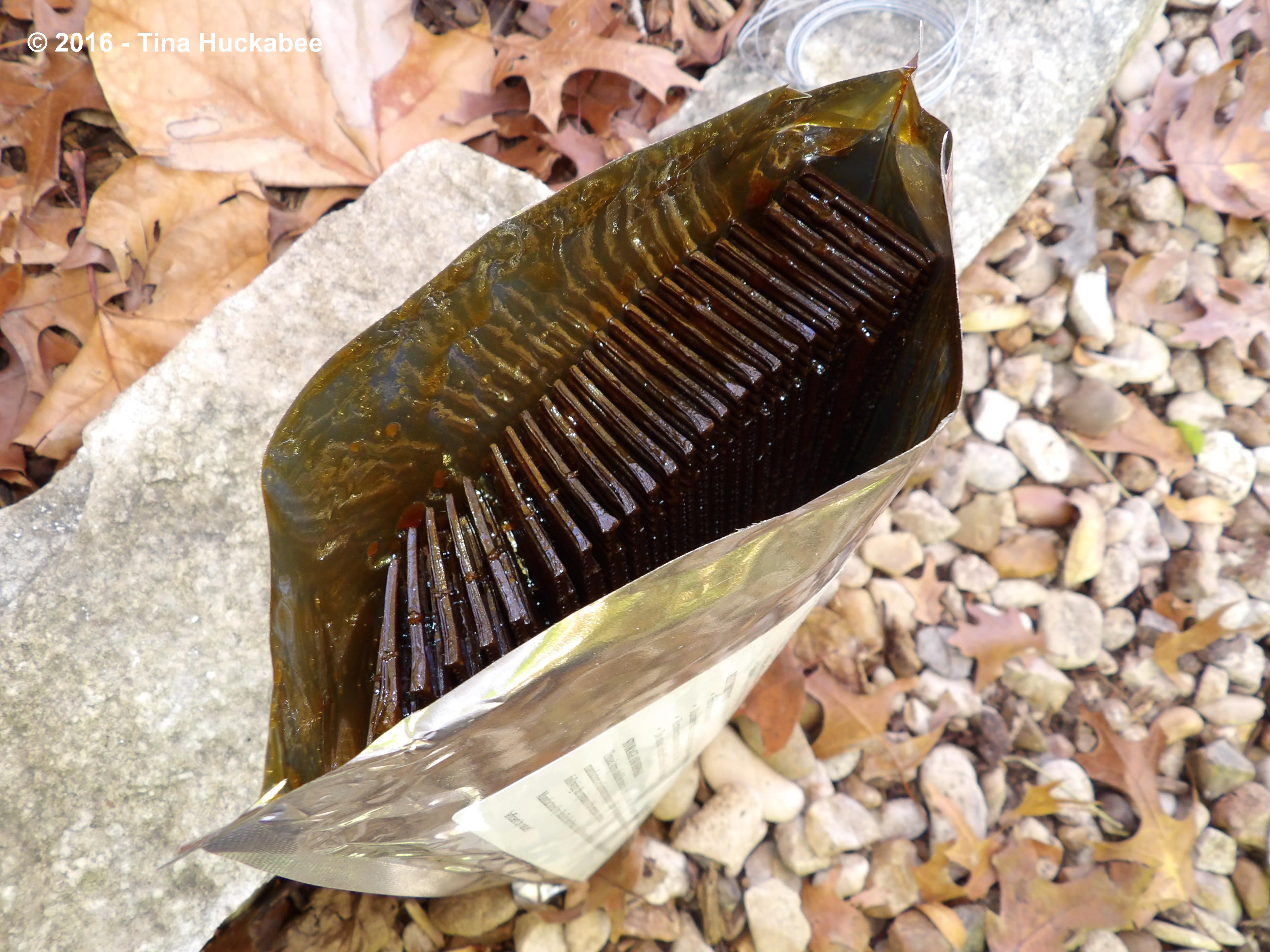
HopGuard comes in a sealed package and contains a series of strips coated with a thick and sticky hops solution.

IMGP3346.new

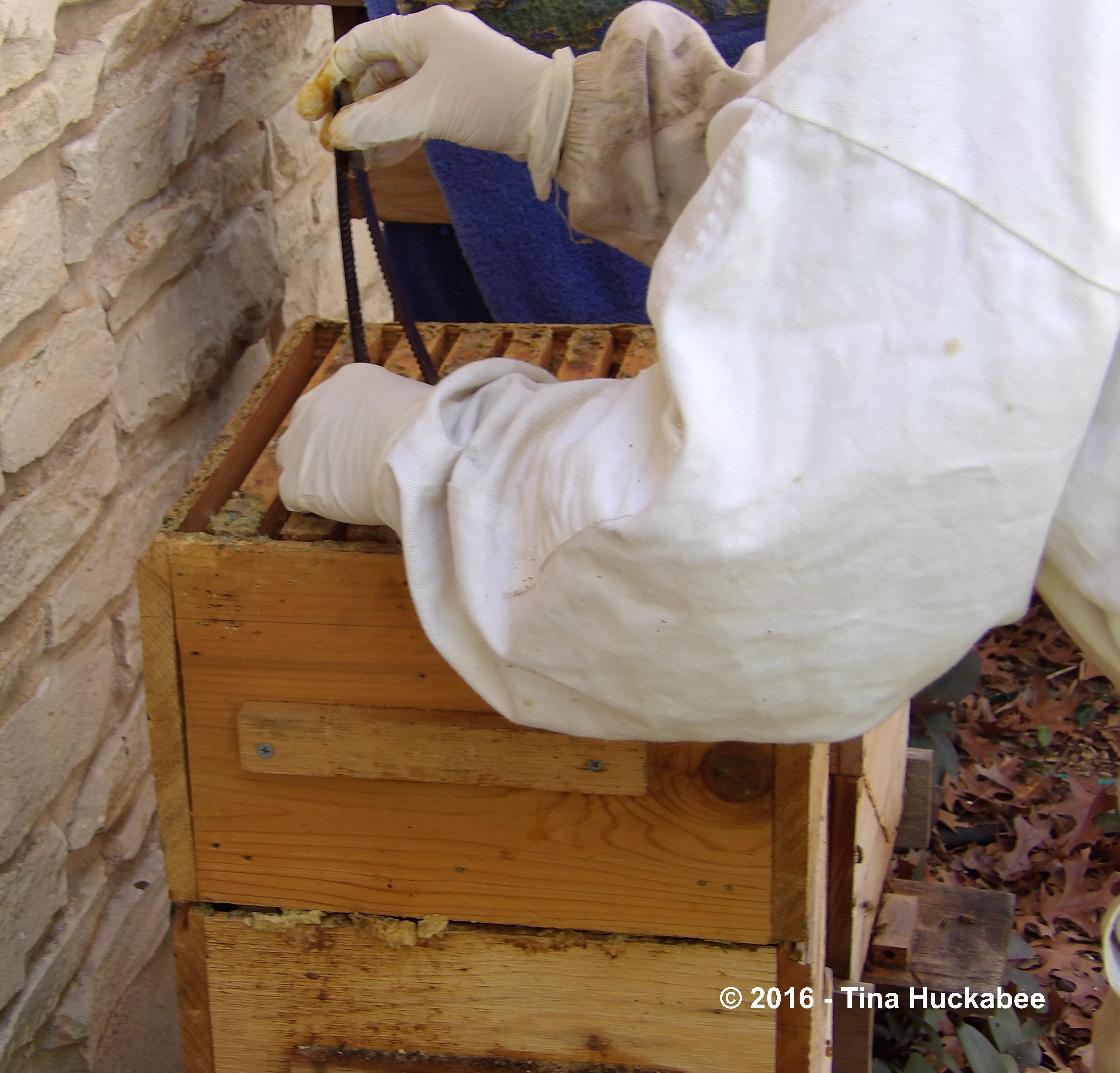
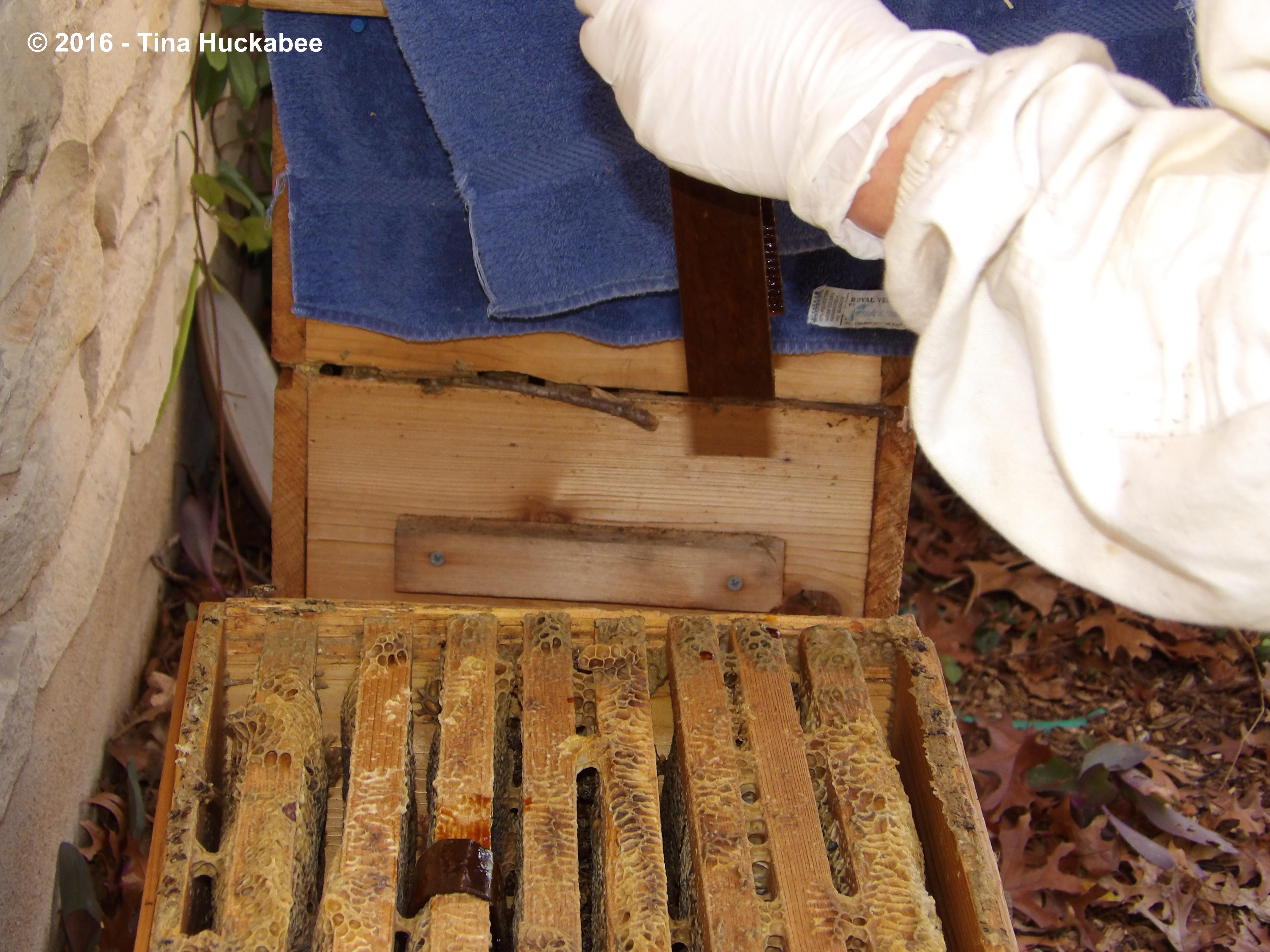
We placed two gooey hops strips in each box of each beehive, each draped over a comb.

IMGP3355_cropped_3419x3276..new

IMGP3351.new

IMGP3353.new

Though not showing any symptoms of infestation, we treated Scar because as Mufasa was dying, she was also robbed of her stores of honey (yes, honeybees do that) and it’s possible the mites could migrate from Mufasa to Scar if we don’t stay ahead of the mite situation.

IMGP3373.new

IMGP3375.new

IMGP3376.new

In this picture,

IMGP3514.new

…there are lots of bees buzzing around Mufasa (left in the photo), but this was taken after many (most?) of Mufasa’s bees absconded and died.  I’m guessing that the bees are Scar’s bees, or even bees from another nearby hive, robbing poor Mufasa with abandon.

The HopGuard procedure was simple enough, though it’s messy.  I could smell the grainy fragrance for a day or so afterwards.

For the moment, Scar appears healthy and we’ll treat with HopGuard II again when temperatures are appropriate.  I’m sad about Mufasa’s death, but life is full of loss and one must learn from experience and move forward.  If we’re going to lose a hive, now is not a bad time.  Bee Daddy is busy making two new Langstroth hives and we’ll have two new  honeybee packages (mated queens each with 10,000 workers) delivered in April. With our plans in place to hive new honeybees in more easily managed and efficient hives, we were going to let Scar and Mufasa just…bee,  allowing them to swarm (if they want) or to just hang out to pollinate and nectar as they see fit.  For Scar and Mufasa we would become honeybee havers rather than honeybee keepers.

There is a bit of activity in Mufasa even now, though very little; the difference between Mufasa (left) and Scar (right) is telling.

IMGP3379.new

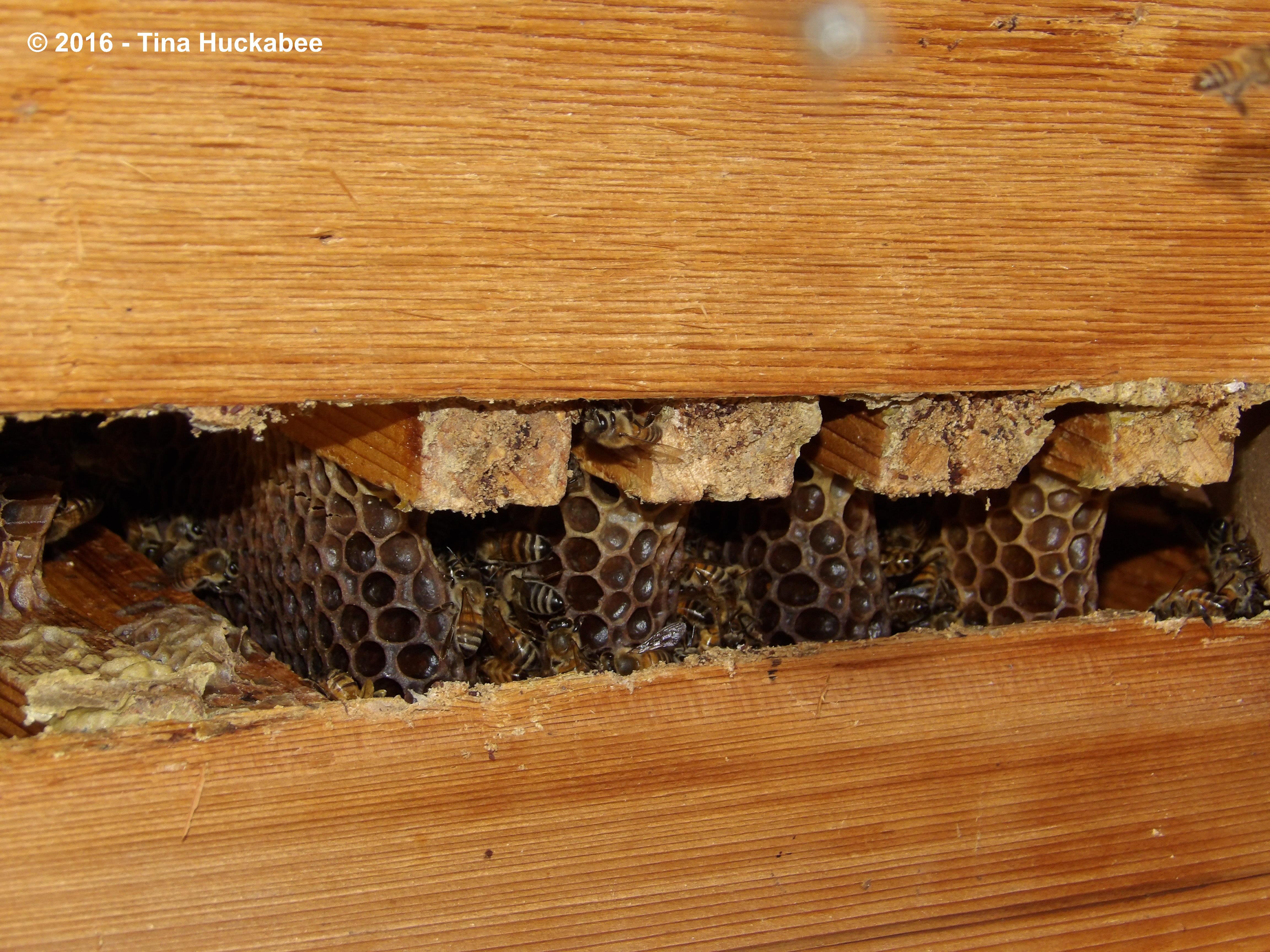
As of this post, I haven’t opened the hive up fully since treating with the HopGuard, but I did peek in about 10 days after treating and things were very quiet, certainly in the top two boxes–I can’t  see into the bottom box.  There was no buzzing and no concerned guard bee coming to the top to check me out, bum in the air ready to warn the rest of the hive of an invader, so I’m guessing there’s little life left. If this winter continues mild, it’s possible that there might be a bit of Mufasa by springtime, but I’m not hopeful about that.  We’ll just have to wait, be patient, and accept the outcome.

In the days that followed the revelation that we were losing Mufasa, I was out dealing with  leaves in the garden.  I spied a probable drowned honeybee in one of my birdbaths.  I hate to see their floating bodies, so I always fish them out and deposit them in a garden;  a garden  seems like an appropriate resting place for a dead bee.  This little girl vaguely waved a leg at me, so I cradled her in my palm in the hopes that my warm skin might revive her,  all the while depositing rakes and other garden utensils in their appropriate places with my other hand.  Within about 5 minutes, she’d revived, was licking off the offending bird bath water and then, without so much as a by-your-leave, she flew off to  her next pollinating date.

The resilience of that little bee was affirming in the wake of Mufasa’s death.  Her drive to live  and continue her community responsibilities and her acceptance of life in that moment, was touching and a good reminder of the importance of purpose.  It’s been a transformative adventure to learn about honeybees–to work in the garden closely with them and to learn about their remarkable lives.  Becoming a backyard bee keeper has also strengthened my commitment to providing for native bees and all the other pollinators so important to the health of our ecosystem.  I’ve loved and planted native plants, focusing on gardening for wildlife in my personal garden and beyond. By actively encouraging pollinators to live and breathe in my gardens by what I choose to plant–or not–I hope to continue an intentional repair of the world, in my own small space, giving respite and nourishment to wildlife despite occasional losses and setbacks.

Lastly, Bee Weaver shared a lovely and locally produced film by  Dylan Tidmore profiling two Austin beekeepers, Tanya Phillips and Chuck Rayburn–and of course, the real stars of the production: honeybees.

Enjoy…learn…appreciate.

Tree Following in January: Big Dudes

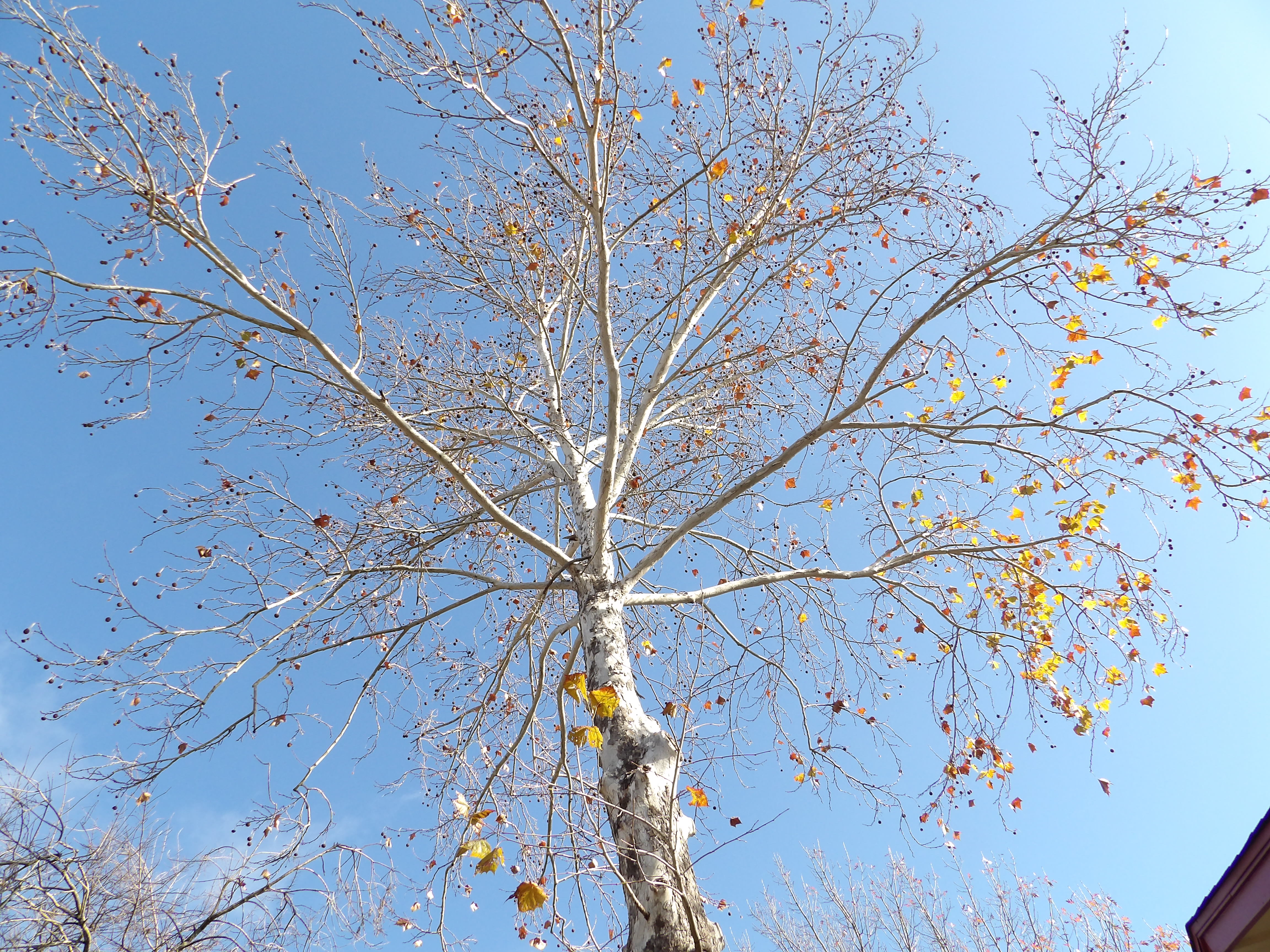
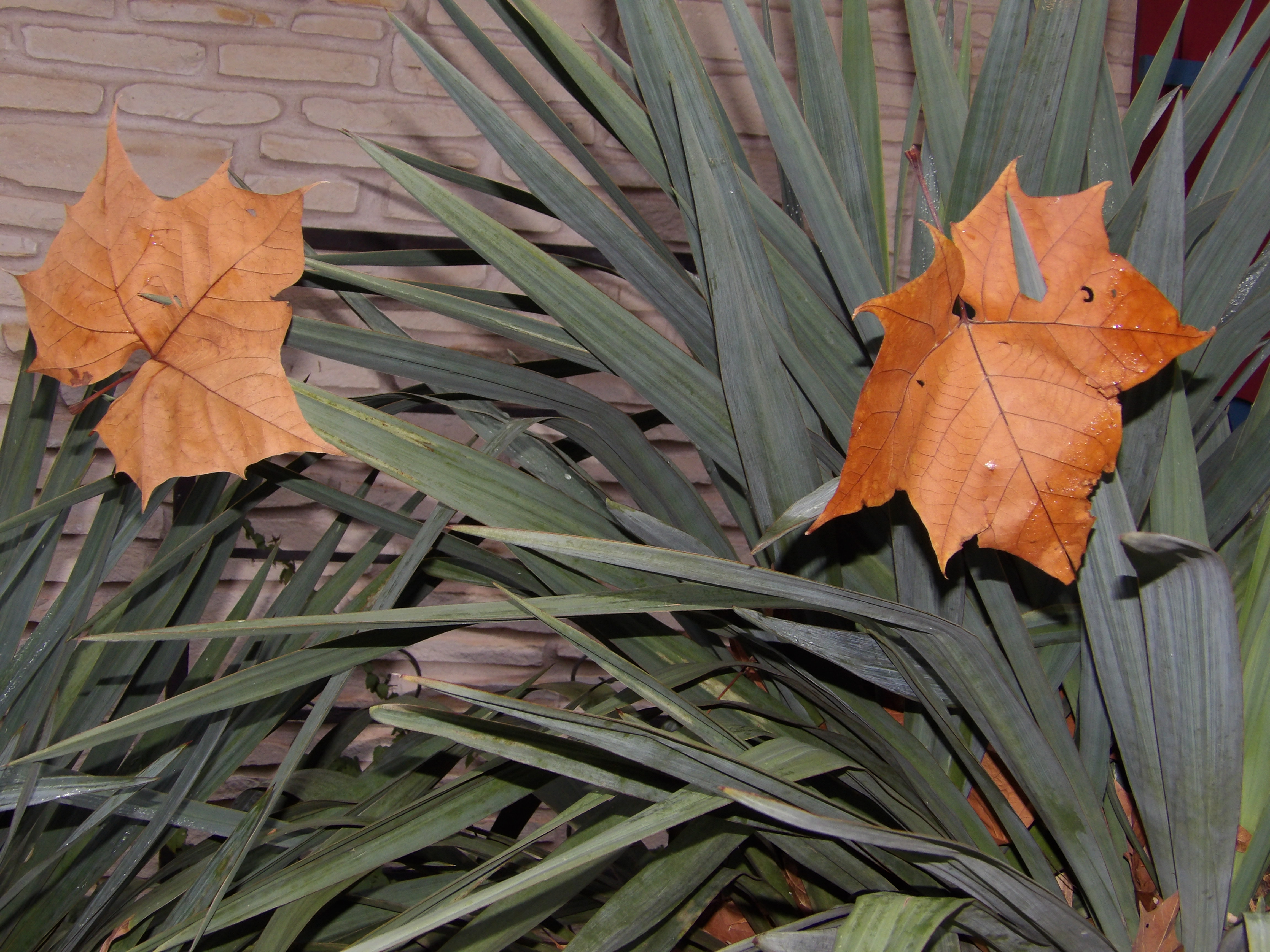
The American Sycamore,  Planatus occidentalis, has big dude leaves.

RICOH IMAGING

It has a few little dude leaves too.

RICOH IMAGING


My Sycamore still hosts some leaves, both big and small, though most of its leaves are now on the ground.RICOH IMAGING

Shed has shed.

RICOH IMAGING


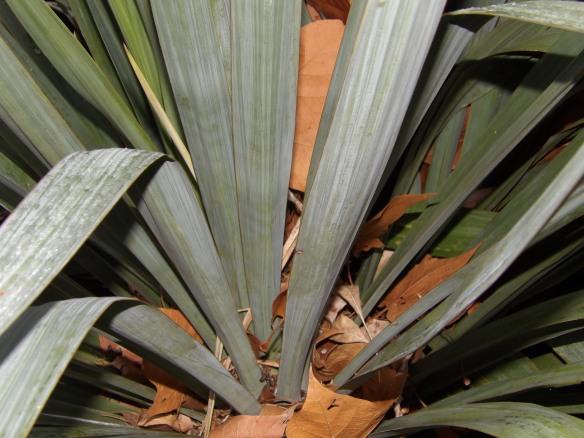
There are leaves over, under, and around shrubs, yuccas and all manner of plant material, as well.

RICOH IMAGING

RICOH IMAGING

RICOH IMAGING

RICOH IMAGING


Some have sacrificed their all for the life cycle of the deciduous tree.

RICOH IMAGING

In December’s Tree Following post, the Sycamore’s foliage had begun its autumnal color turn, courtesy of the slow down chlorophyll production and the visual uptick of carotenoid manufacture, but now that turn is essentially complete and leaf function for the tree is concluded for the year.  In botany, the process of leaf drop is called abscission.  Leaf drop typically occurs in late fall and winter, mostly in response to the lessening of light, but also in response to colder temperatures. Abscission also happens during tree stress and, despite its native tree status, the American Sycamore stresses during the hot and dry Texas summer months, some years more than others.  Many of these leaves dropped during July and August when our temperatures soared and the rain ceased.

RICOH IMAGING

RICOH IMAGING

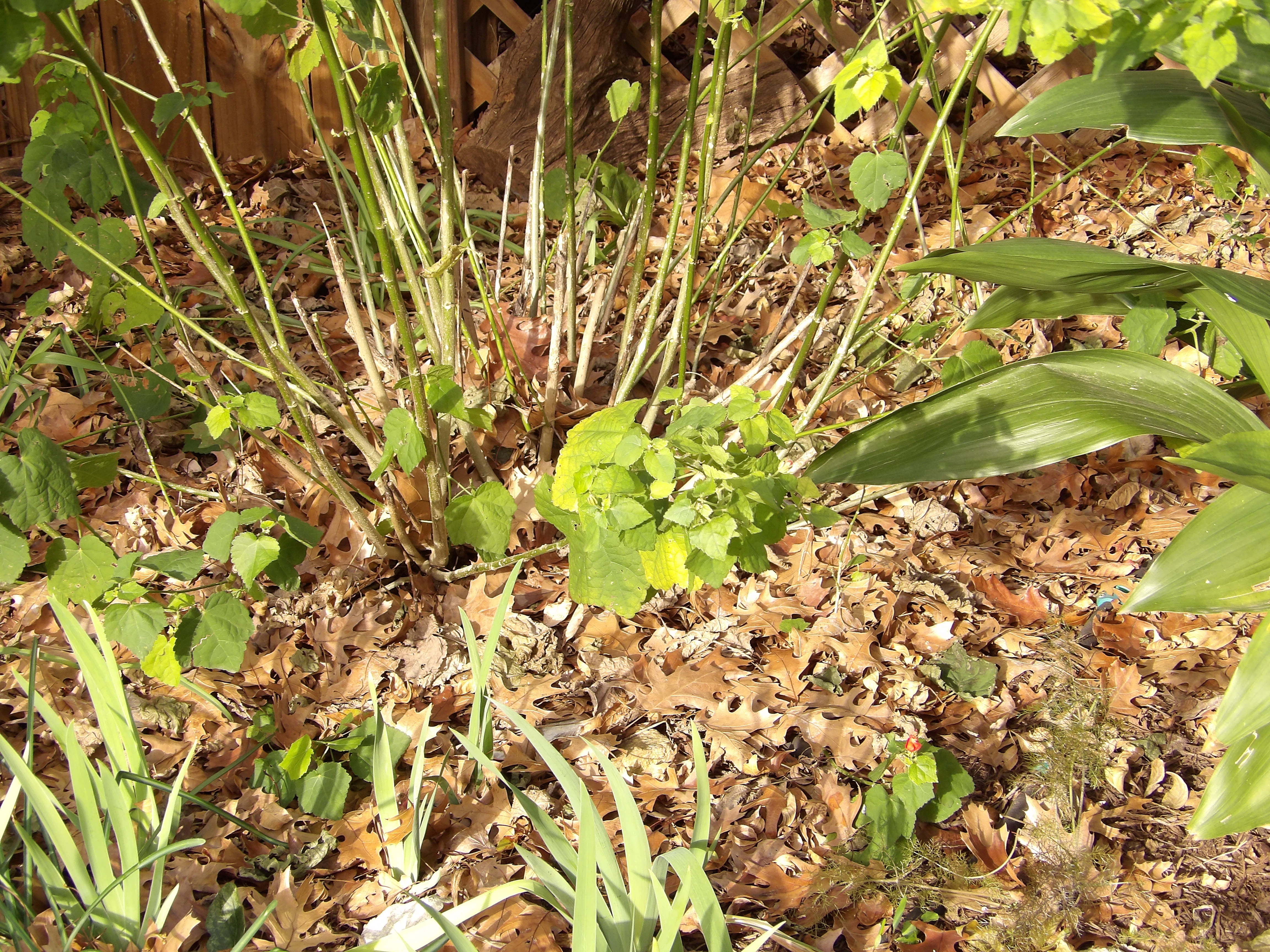
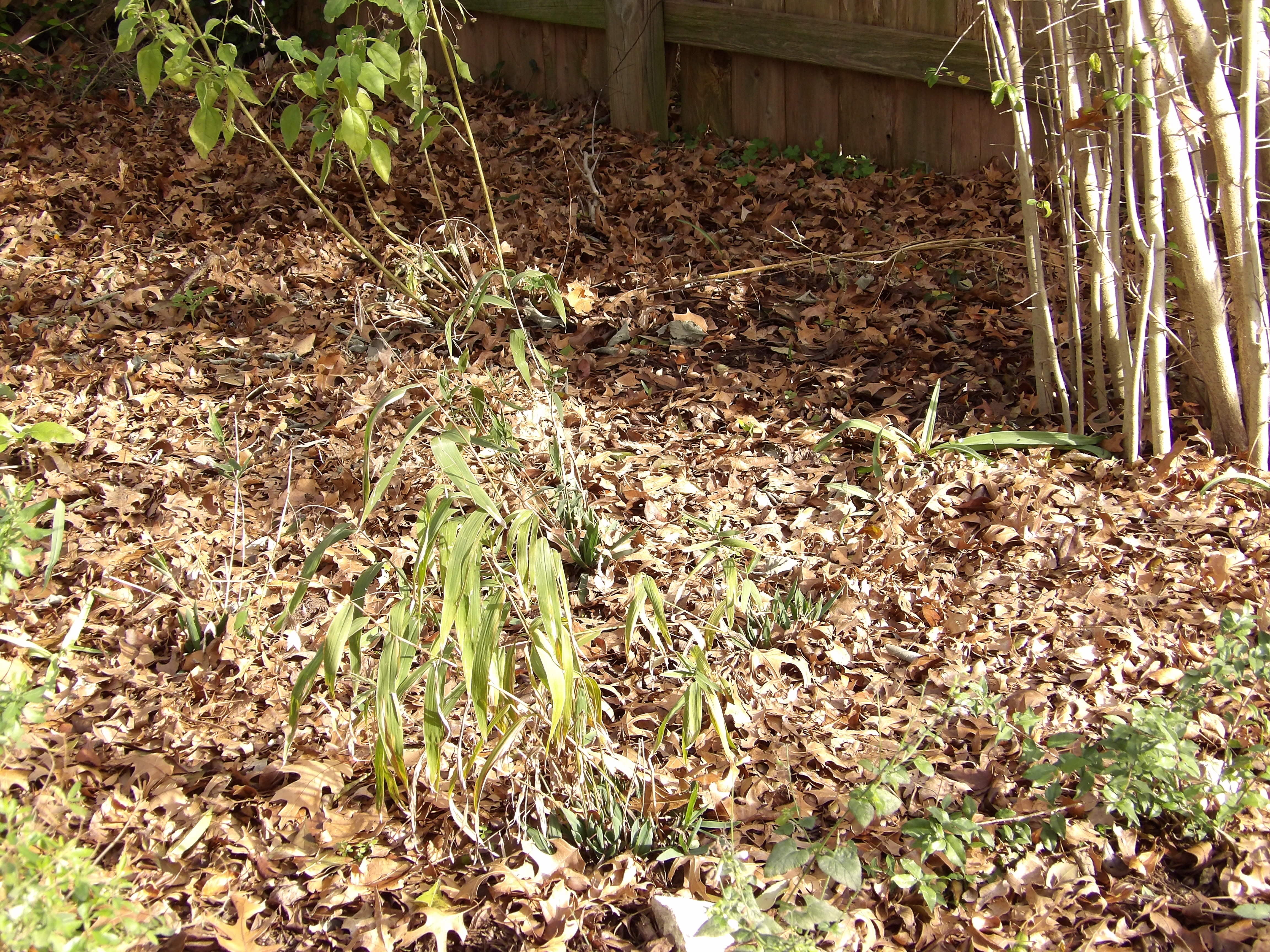
Except where I find them annoying (clustered ahead of the front and back doors, ready to hitch a ride on the dog’s fluffy tail or to get blown in with the slightest puffy breeze as the door opens), I allow leaves to stay on the ground to become leaf mold and to decay.  That’s especially true in the wildscape part of my urban property which doubles as a work area.

RICOH IMAGING

Leaf litter, as part of a wildlife habitat philosophy, is a good thing.  Somehow in the past decades, American society was sold on the idea that leaves on the ground are bad and ugly and must be aggressively removed.  With great fanaticism, we crank up the gas-guzzling blowers and mowers, add massive noise levels to all of our towns and cities, and spew fossil fuel exhaust into our world to rid ourselves of the offending masses of leaves.  Whatever happened to using a rake?

Yes, dropped  leaves are a little messy to the human eye,

RICOH IMAGING

RICOH IMAGING

…but leaf litter serves as mulch, as protection for insects during winter, and a part of the system of biological breakdown–all good for those who make nature their home.

RICOH IMAGING

Within reason, I let leaves lay where they fall. Giving in to my neat-freak tendencies and urban neighborhood standards,  I vacuum up large leaves (Sycamore and Oak) with an electric (though still noisy) shredder and place that shredded stuff in spots of my gardens,

RICOH IMAGING

RICOH IMAGING

…pathways,

RICOH IMAGING

…and compost bin.

As for the last of the leaves, especially the larger of the Sycamore beasties, I rake them up along with other garden detritus for yard waste pick up.  No worries  about garden “waste” being buried in a municipal landfill, the ex-garden stuff will be combined with treated sewage sludge and sold as a soil amendment.

RICOH IMAGING

My American Sycamore is nearly barren of foliage now. Leaves have blown away, are blanketing gardens and pathways, or are mingling with other rotting material in the compost. Abscission is when the cells connecting the leaf petiole to the stem are sufficiently weakened and the leaf breaks from the branch. This process naturally occurs over the course of the growing season and when the cells are done-for,

RICOH IMAGING

…so are the leaves on the tree. Though most are down, some of my Sycamore leaves hang tough.

RICOH IMAGING

I expect the hangers-on to drop soon–today, tomorrow, this week–soon. Then all that will be left will be those dangly, decorative seed balls. Shall we count them?

Perhaps that’s better left until next month.

Many thanks to  Pat at The Squirrelbasket for hosting Tree Following.  Please pop over to her blog and learn what her tree and many others are up to for January’s Tree Following.