On the heels of the Intergovernmental Science-Policy Platform on Biodiversity and Ecosystem Services (IPBES) report about the potentially catastrophic worldwide decline of pollinators, I’d like to offer some gentle reminders to home gardeners and all others concerned about the health and maintenance of our food supply and the natural world as a whole. The report paints a dire prediction of decline and extinction of pollinators–honeybees, wild bees, butterflies and moths, and all other pollinating animals who play a vital role in production of managed crops and propagation of native plants and trees. I certainly hope that this report will bolster efforts to support educational and research organizations in their work toward encouraging local, state and federal authorities to set aside land for prairies, native grasslands, and wild space in general, and to manage that space in appropriate and sustainable ways.
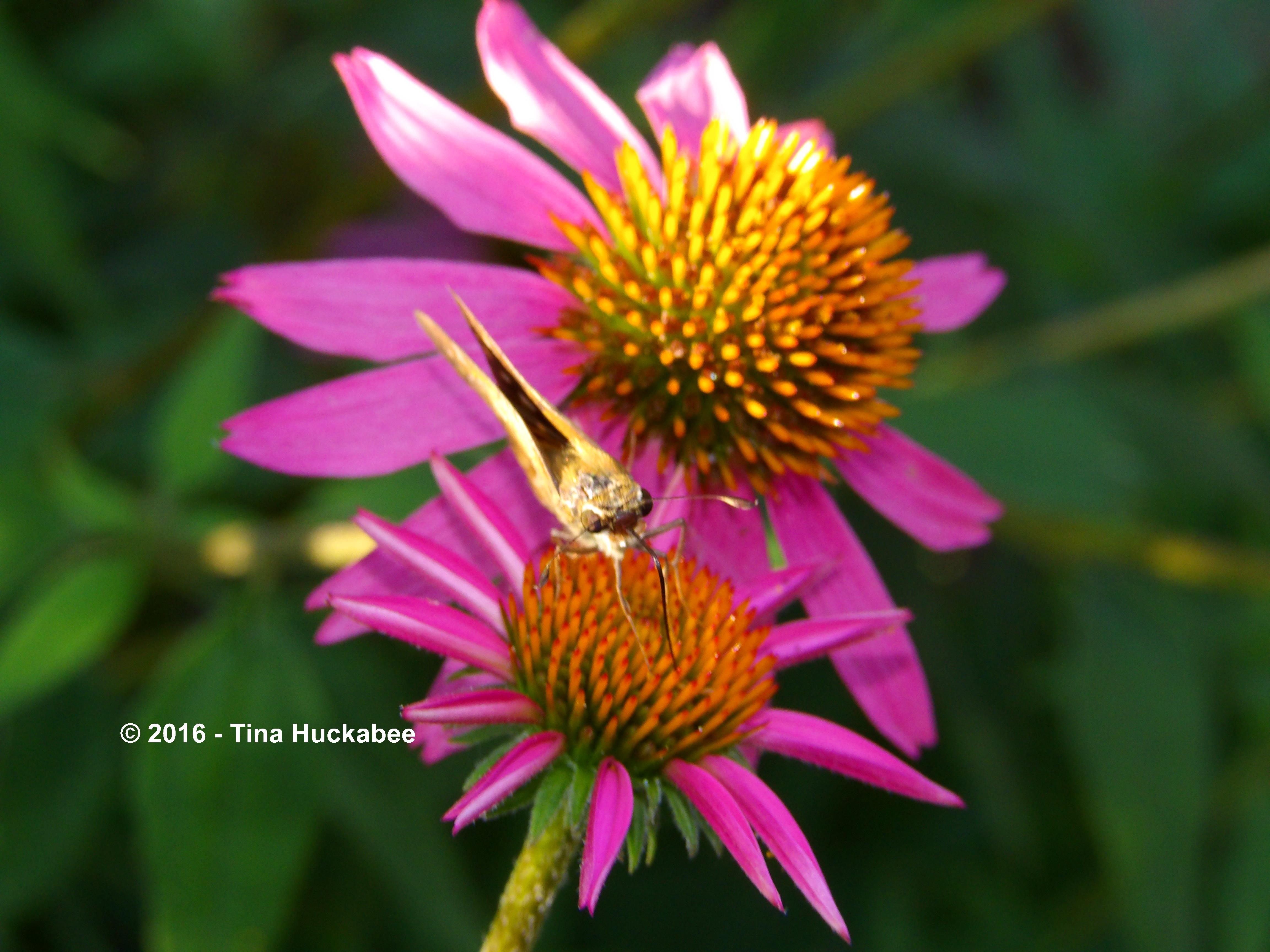
Skipper nectaring at Echinacea purpurea, Purple Coneflower.
There are simple practices that the home gardener can engage to assure a safe haven for pollinators and all wildlife in general:
Refrain from pesticide and herbicide use. Not only will abstaining from chemicals save you money and time, but usually, these chemicals create more problems than they fix. If you plant appropriately for your region, the need for chemicals in the garden decreases or disappears.

Osmia ribifloris (?), Megachilinae, sp. preparing a nest in the mortar of the outside wall of a house.

Use native plants! There is no easier way to attract and sustain wildlife than to plant native plants–for pollinators, birds, bats, reptiles–every native critter will visit when their preferred food source is available. Where native plants are hard to find, plant non-invasive, well-adapted pollinator-friendly perennials and annuals. When replacing shade or ornamental trees, plant native trees; a large native tree is life-giving in so many ways. Your locally owned nurseries and Agricultural Extension Agent offices and websites are excellent sources of information on appropriate plants.
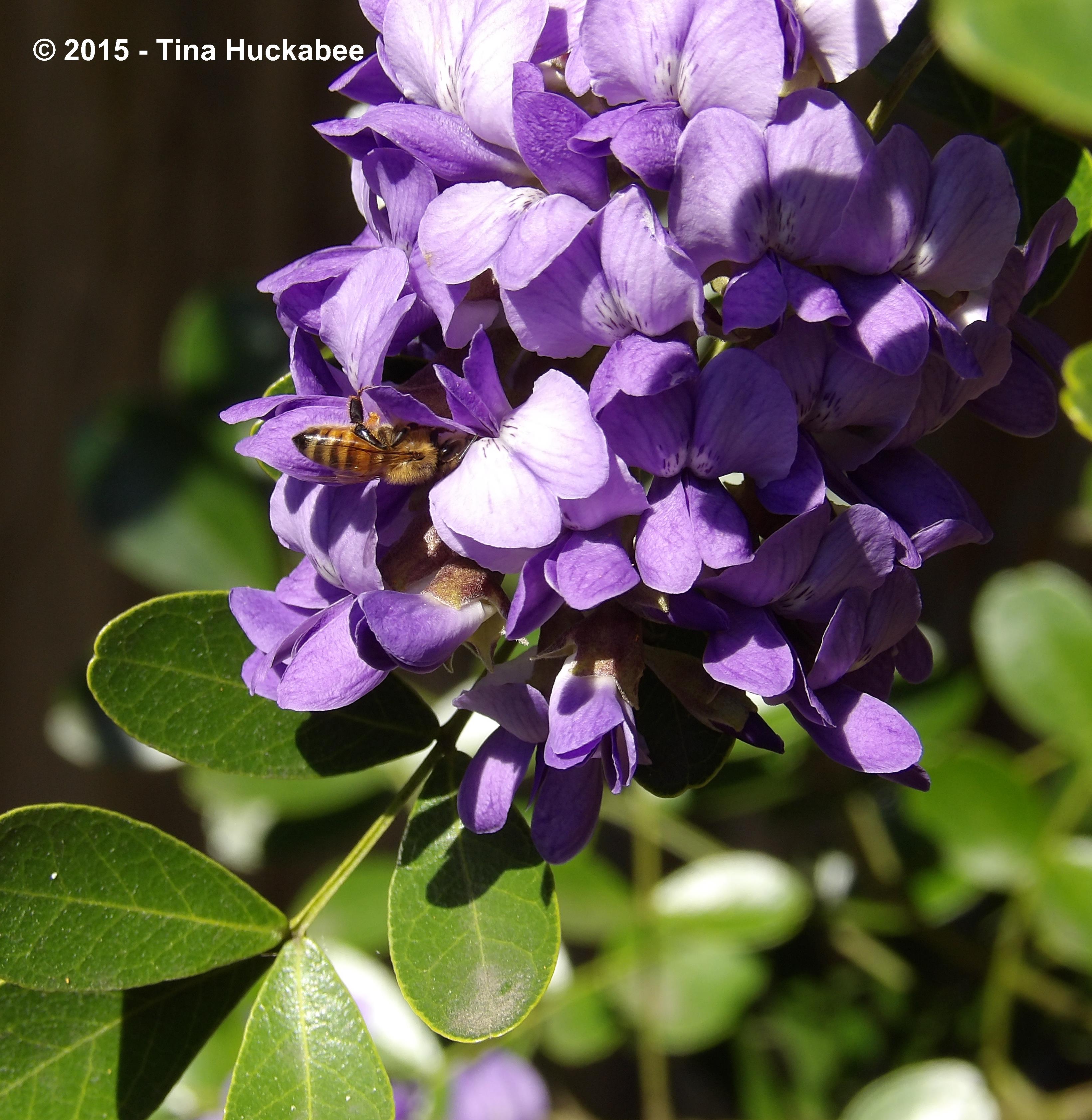
Honeybee working the blooms of a Sophora secundiflora, Texas Mountain Laurel.
Allow some “nature” in your garden. It’s perfectly fine to have a few leaves, branches, and garden detritus in your garden for critters to use as cover and for nesting purposes. The 1950’s swath of lawn and scraped garden are so…yesterday. A water-hogging, sterile lawn coupled with a few pristine, non-nectar producing plants (usually sold at big box stores) and placed solely at the foundation of a house, are antithetical to how nature exists and functions. Birds, mammals, amphibians, reptiles, and beneficial insects have no place to live and thrive in that kind of “garden.”
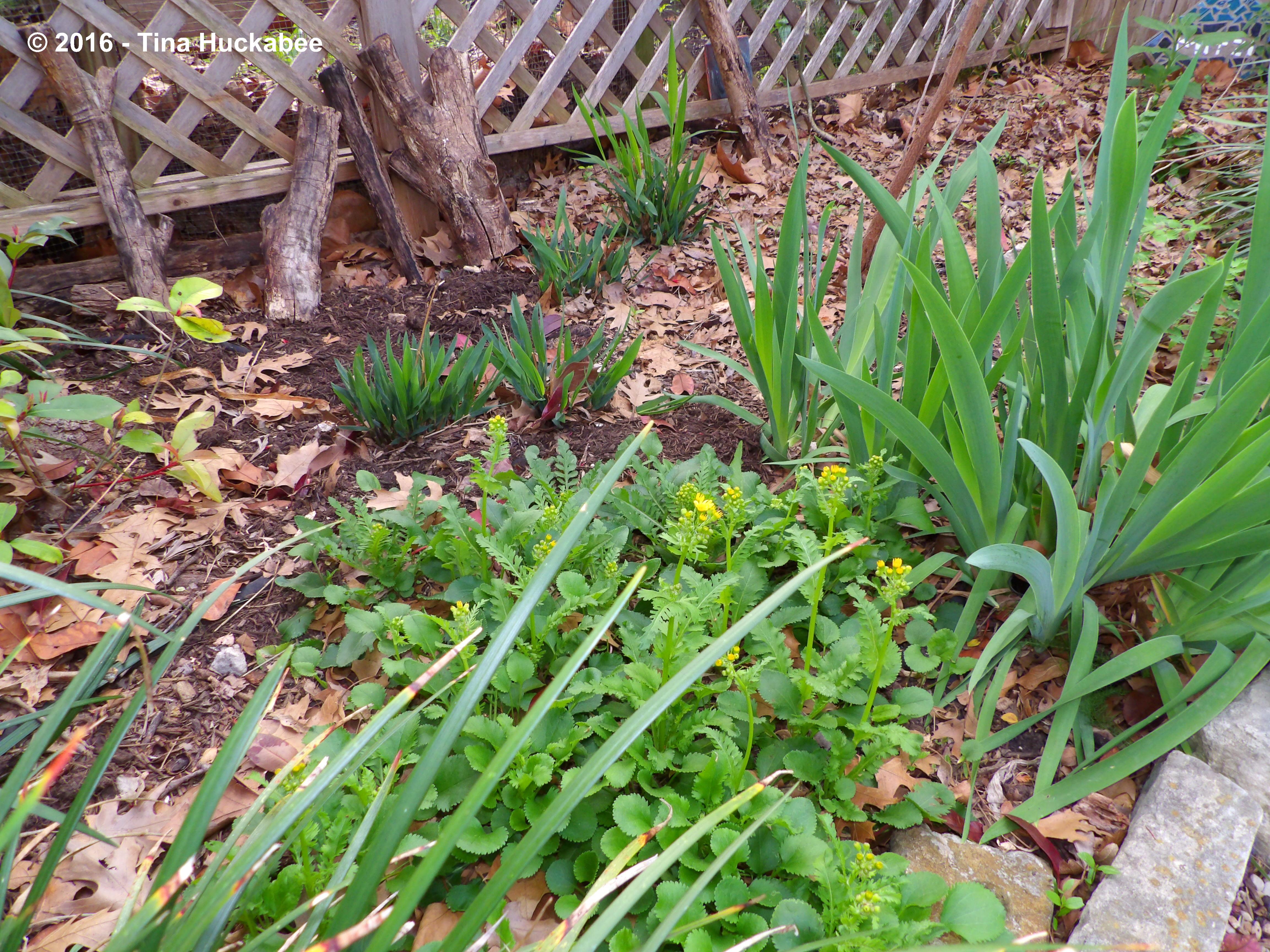
Leaf litter and rotting wood as part of the garden design and structure.
Your garden doesn’t have to be wild to attract wild. No matter what garden style the gardener appreciates and aspires to, incorporating plants that are beneficial to wildlife–those providing nectar, seeds, berries, and cover–is easily accomplished as time and budget allow. Whether in a formal or a cottage garden style–or anything in between–using wildlife-friendly plants, pruning after seed production, and refraining from chemical use is the ticket to a successful and life-nurturing garden. And isn’t that what gardening and gardens are all about? The creative endeavor of nurturing and sustaining life and beauty.
Provide water! As simple as a bird bath or as complicated as a series of ponds with attached streams and waterfalls, water is a requirement for life and should be a part of any garden. ‘Nuff said.

Honeybee drinking from a bird bath.
There are already places in the world where, because of mismanagement of land and misuse of chemicals, there are no pollinators available. None. They’re all dead. Crops grown are hand-pollinated by people. Surely this is not what we want worldwide, but that scenario is exactly where we are headed. We can choose a different route and it doesn’t require great inventions or new technologies, but instead, thoughtful gardening and agricultural practices, as well as the political will to acknowledge and edit the environmental costs of industrialization.

Honeybee gathering pollen at Tradescantia gigantea, Spiderwort.
Please consider the health of your local environment when you plan a garden. Support private, municipal, and federal efforts to set aside land for wildlife. Our survival, as well as the maintenance of the remarkable and diverse biology of the Earth, depends upon our acting NOW. This is a solvable problem. Let’s solve it.

Osmia ribifloris (?), Megachilinae, sp. flying into an insect hotel, preparing a nest.
Pollinators are our friends and co-workers. It’s in our interest to do right by them.

Xylocopa tabaniformis, Horsefly-like Carpenter Bee, at a Salvia guaranitica, Blue Anise Sage.





 My Gardener Says...