Fab Foliage

I was recently visiting with a neighbor as we stood in front of one of my gardens and she commented that a rosette of American Basket flower, Centaurea americana, looks deliciously edible. (I’m not sure if I’d add Basket flower to my salad greens, but it has been used for traditional medicine purposes.) As we chatted, I realized the particular specimen that was the focus of our conversation also shared close space with several other lovely foliage types.

Basket flower forms a dramatic rosette, but peeking through those glorious leaves are ferny Common Yarrow, Achillea millefolium, rounded, lobed Henbit, Lamium amplexicaule, and palmate-leafed Carolina geranium, Geranium carolinianum. Except for the non-native Henbit–one of our earliest bloomers and welcomed by pollinators–all of these plants are native to Texas and in many parts of the Americas.

A closer look at these luscious leaves shows another in their midst, also wanting attention for its leafy action–Caterpillars or Blue Curls, Phacelia congesta

A different Blue Curls planted itself directly on a Basket flower rosette, both settled in the crack of a cement driveway, no less. They’ll have to battle it out for survival once spring growth and blooming begins. The smart money is on the Basket flower, as it tends to get much larger than the Blue Curls–but I wouldn’t count out the curls, they’re a tough bunch.
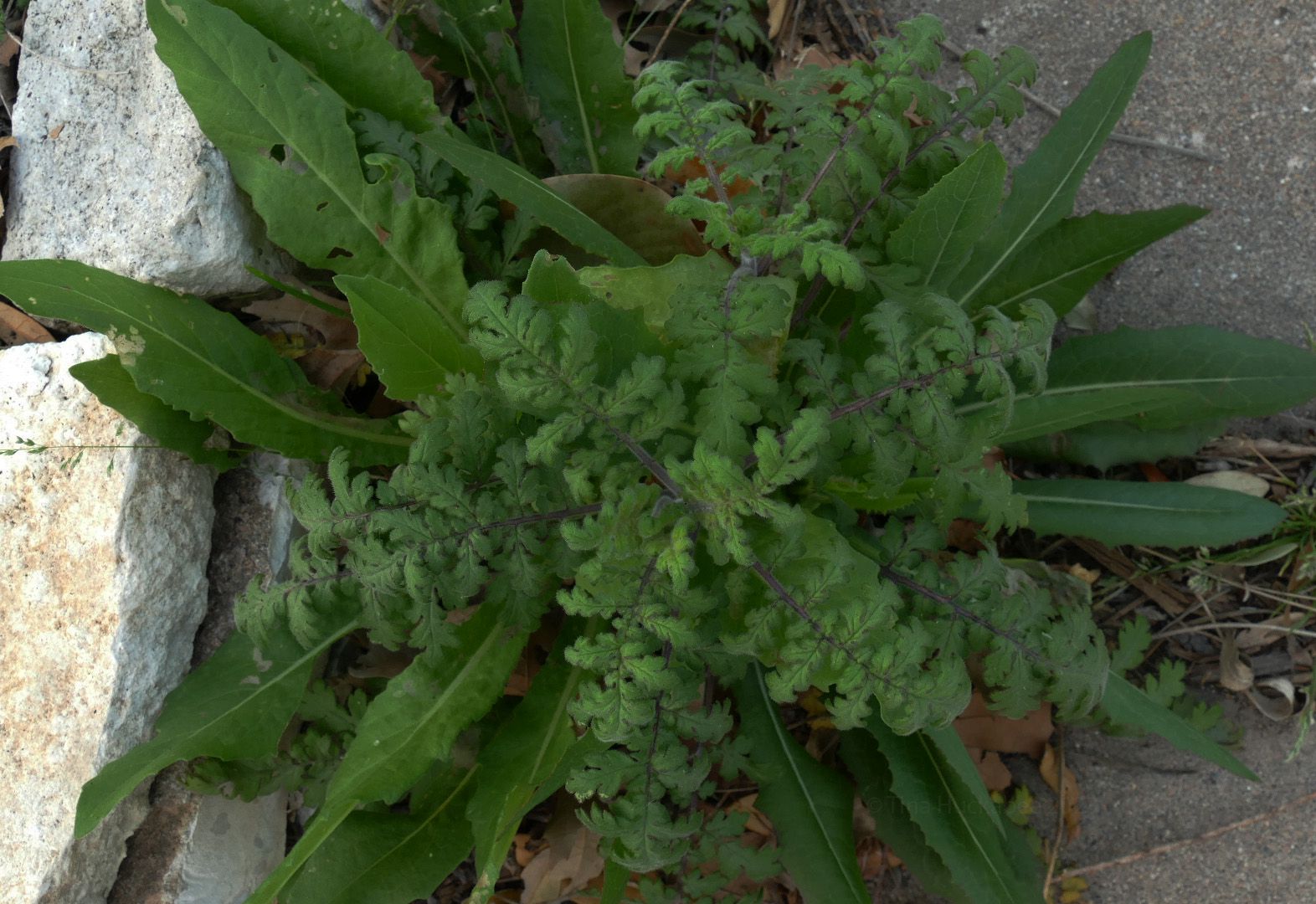
Both Henbit and Blue Curls are having a moment this year in my garden. Scads of them have seeded out and are growing in profusion!

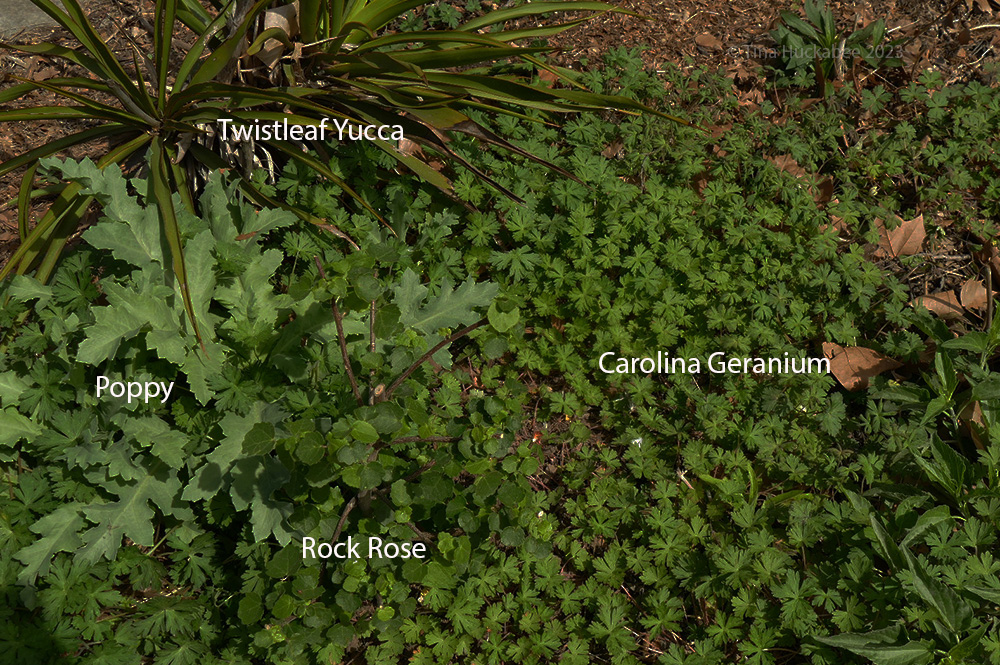
Another nice foliage vignette in a different area of the garden features a purposely planted Twistleaf Yucca, Yucca rupicola, overseeing two volunteer annuals (poppies and geraniums) and one volunteer perennial shrub, Rock Rose, Pavonia lasiopetala. All will bloom in spring, two will disappear afterward (poppies and geraniums), but the Rock Rose will be foliaged and floraled through the growing season.
Spring flowers are bursting out of their winter doldrums and the foliage of those bloomers is also revving up for its part in the garden show. Foliage and flowers form a partnership that are the stuff of gardens, each adding their particular beauty and role in a diverse community of plants.
While I Was Gone

Vacations are great, especially when parents meet up with an adult child living in a far-flung place. We connected with that character-of-a-child in Vienna, Austria, not quite mid-way between where he lives and where we live, adding a side jaunt to Salzburg (with him), and a week-long dash of Paris before Austria. I won’t get out the white sheet to hang on the wall and bore you with my vacation slides, but I will lament my freeze-damaged garden with readers who probably suffered the same, or something similar.

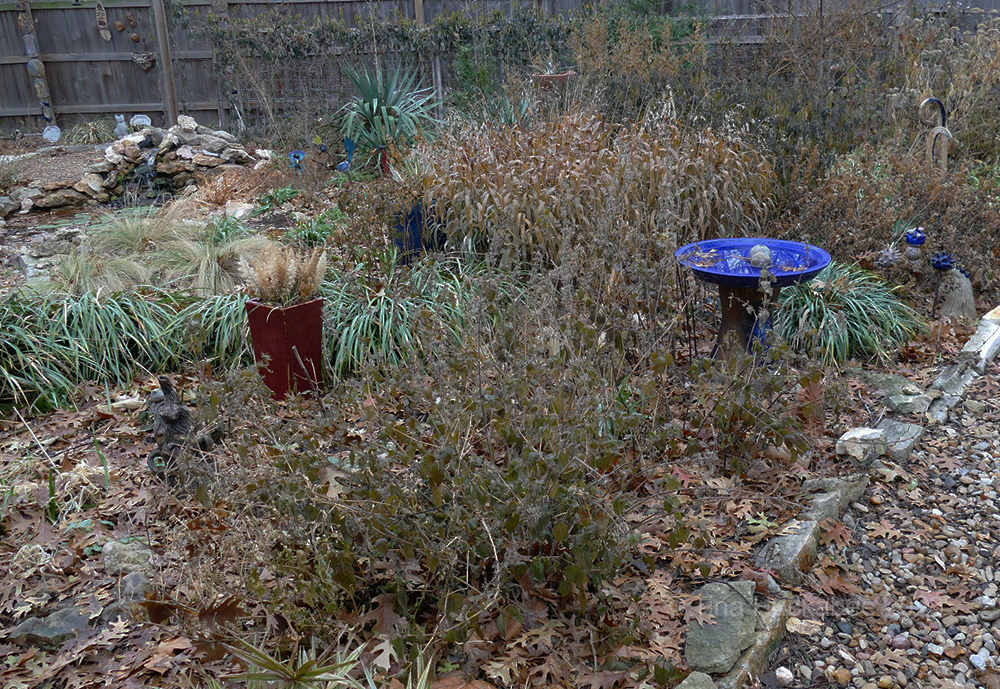
While I enjoyed balmy 40s F in Vienna, Austin dipped to 15 F overnight and remained below freezing for several days over the Christmas weekend. The garden is now a palette of brown, beige, and grey, bits of green suggesting that life exists.

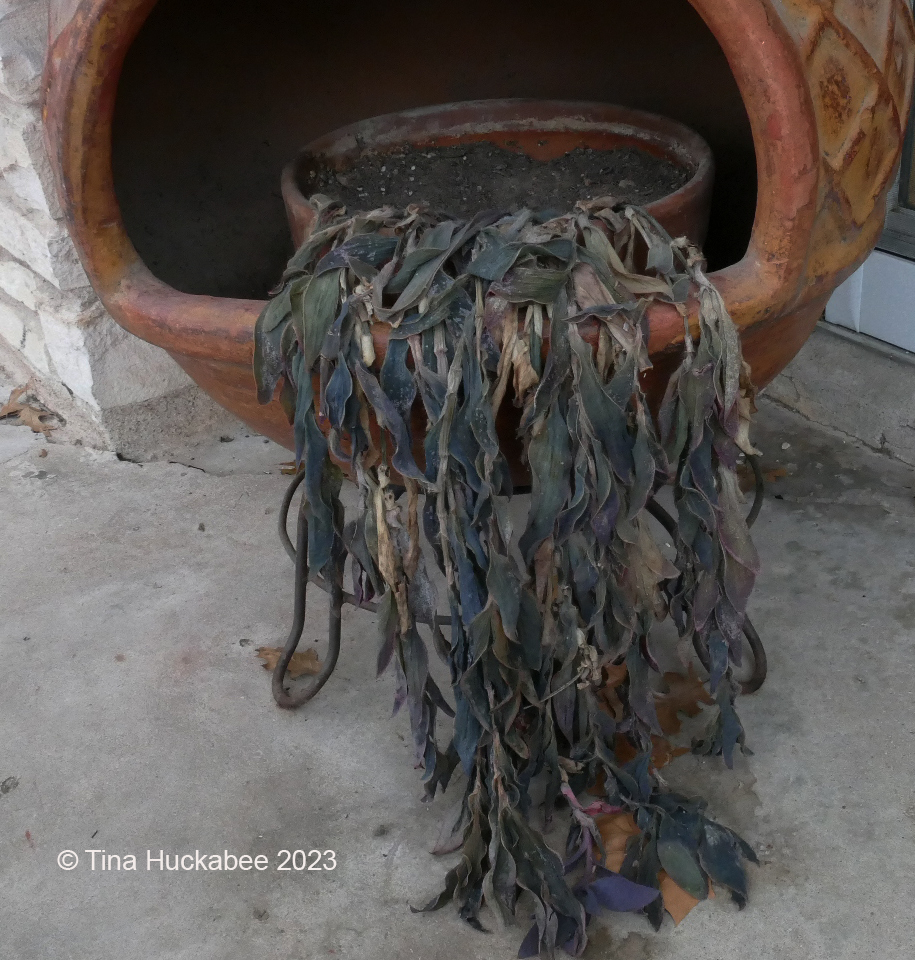
This Purple Heart, Tradescantia pallida, reflects my feeling about the garden when I arrived home and got my first look!

Native plants and those from Mexico or Western U.S will be fine. In fact, all of the annual Texas wildflowers are green and gearing up for a nice show,

Blue Curls or Caterpillars, Phacelia congesta. I have scads of these throughout my front garden.

Evergreen native perennials, even if freezer-burned, are returning from their roots or flushing out new foliage. I’m also seeing a few blooms pop up. Yay!

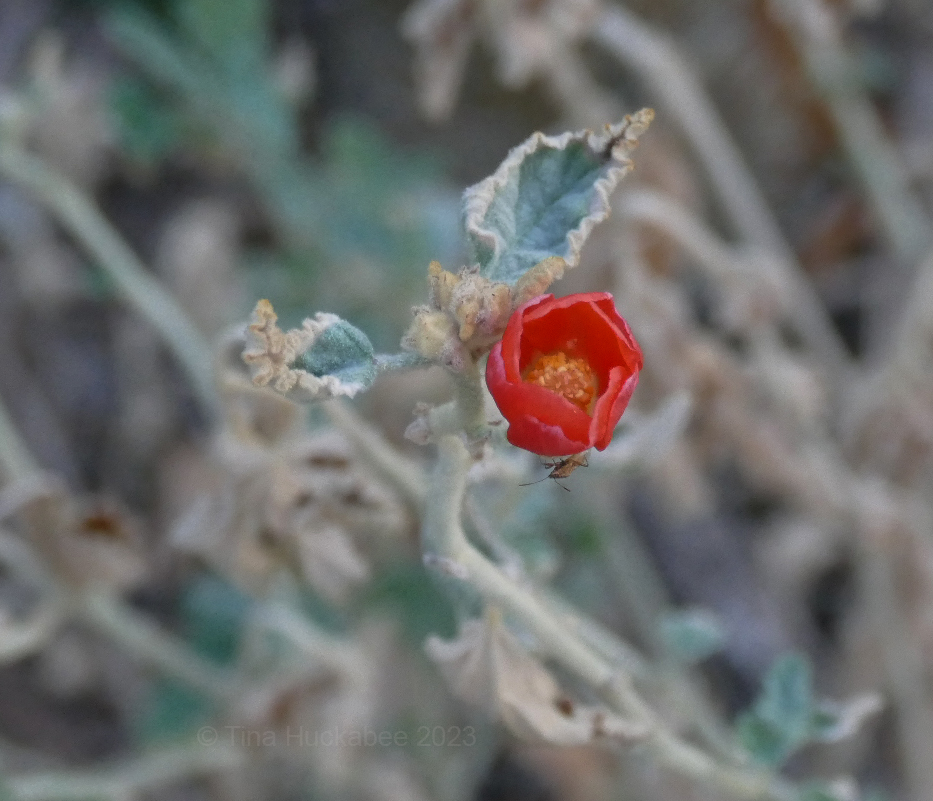
Native to Arizona, Globe Mallow, Sphaeralcea ambigua, is typically a cool season bloomer.

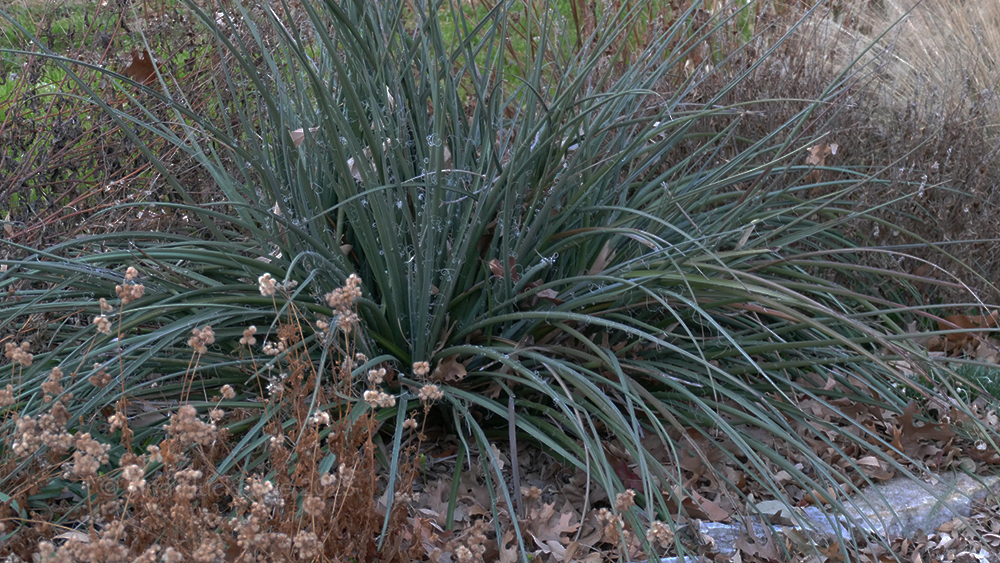
Some evergreen plants are truly evergreen. This young Softleaf Yucca, Yucca recurvifolia (left) and mature native Basketgrass, Nolina texana (right) are green year-round no matter how hot or cold,

…as is this Red Yucca, Hesperaloe parviflora. Huzzah for the green stalwarts!

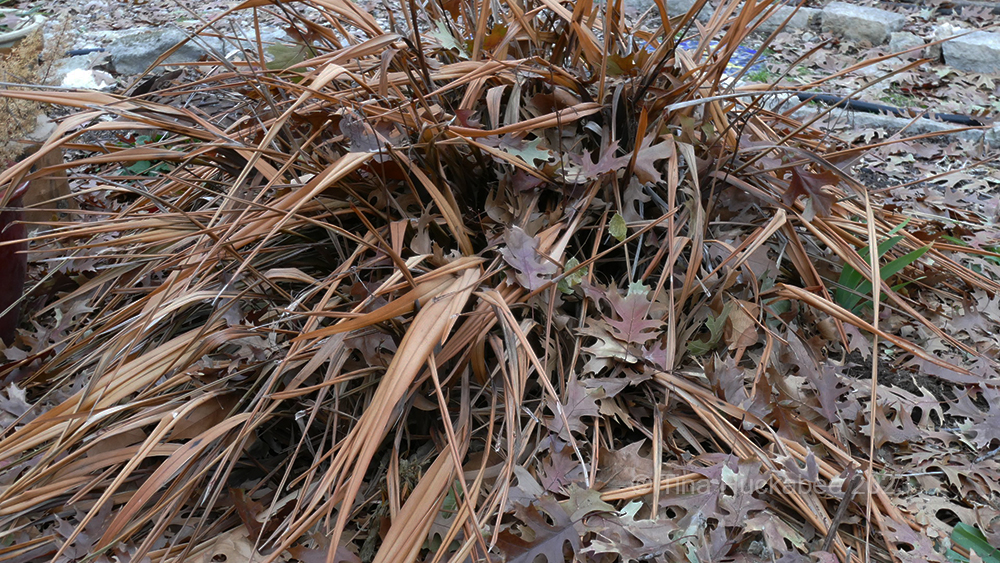
The plant that suffers most are the clumps of Flax lily, Dianella tasmanica, in my back garden. This summer drought-tough non-native is the only plant that I always cover before a hard freeze. My peach of a sister-in-law prepared my garden and pipes for the freeze, but some plants just had to weather the cold, come what may.

Sad as this and the other flax lilies look, I’m already seeing some of their striped foliage emerging from the frozen apocalypse. Going forward, I guess I don’t actually need to cover these, which is great news!

The garden is in a dull state, but there are birds (chirping), squirrels (chasing) and even a few butterflies (flitting). The honeybees forage on warmer days.

Bright spots in my garden are silvery grasses. They’re not green and lush of the growing season, but they’re still full and graceful, moving in the breeze, rustling with the wind.

Since those cold, cold few days, Austin’s weather has been mild and dry. I returned from my trip during the first week of January and have worn shorts and t-shirts often. I’ve also begun the pruning process which will require time and patience to help the garden prepare for the upcoming growing season.

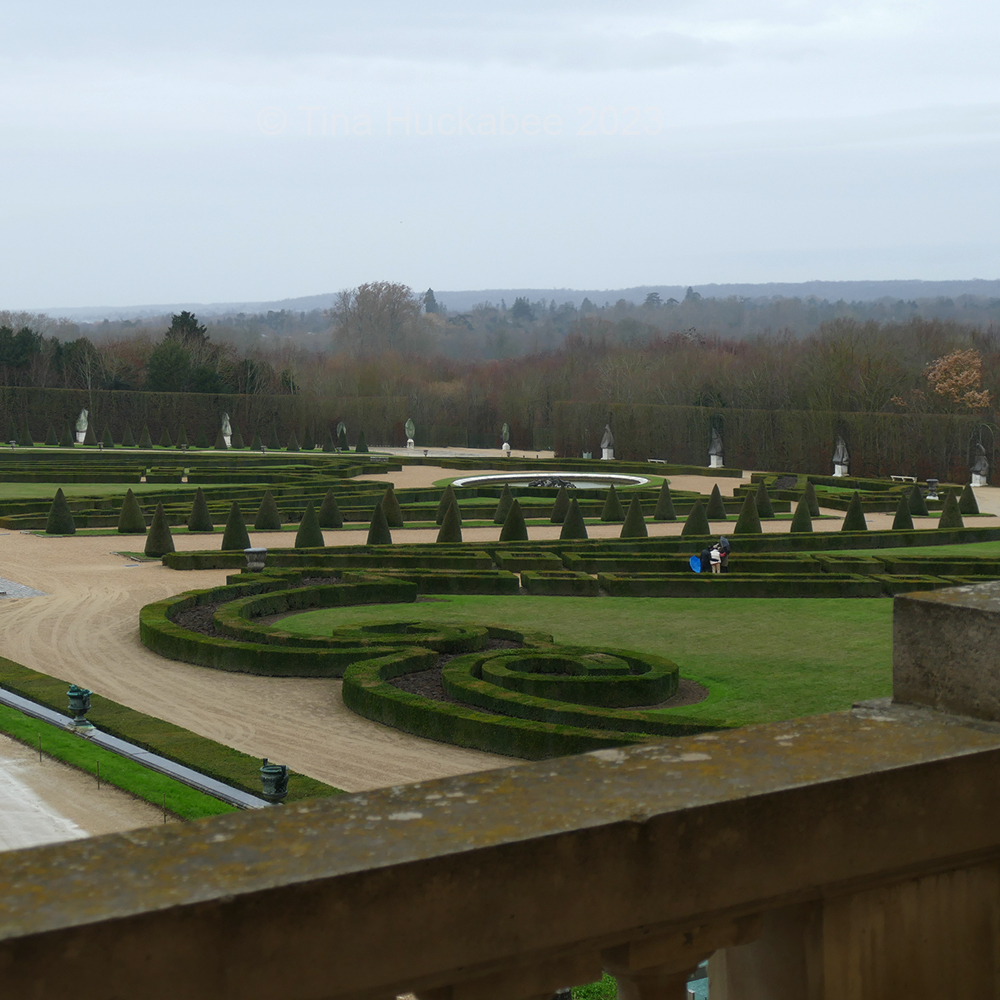
I have my work cut out for me in the next 6-8 weeks. Virtually everything will need pruning to the ground. What fun! Would that I could be a resident of old Versailles, France gazing out at the gardens, concerned only with court intrigue and how much powder to put on my wig!

Frost After the Freeze

On Saturday, January 1, 2022, it was 78 F. The next morning I awoke to a garden at 26 F. Brrrrr! Shorts and t-shirts one day; leggings, layered jackets, cap and gloves the next!

The first thing I saw when I walked into the front garden was a hummingbird zooming past me heading straight for Mexican Honeysuckle. Unfortunately, the orange flowers were freezer-burned and the poor little bird, after trying several blooms and clearly not finding any nectar, flew off to find his breakfast. My SIL ambled over I and pointed to the hummer and suggested she put out her hummingbird feeder so the hummer could get its energy drink.

After this freeze, there’s little for pollinators. Hello winter! Sunday was a cold, windy day and it was clear that most perennials in the garden would have some freeze damage, time would tell just how much.

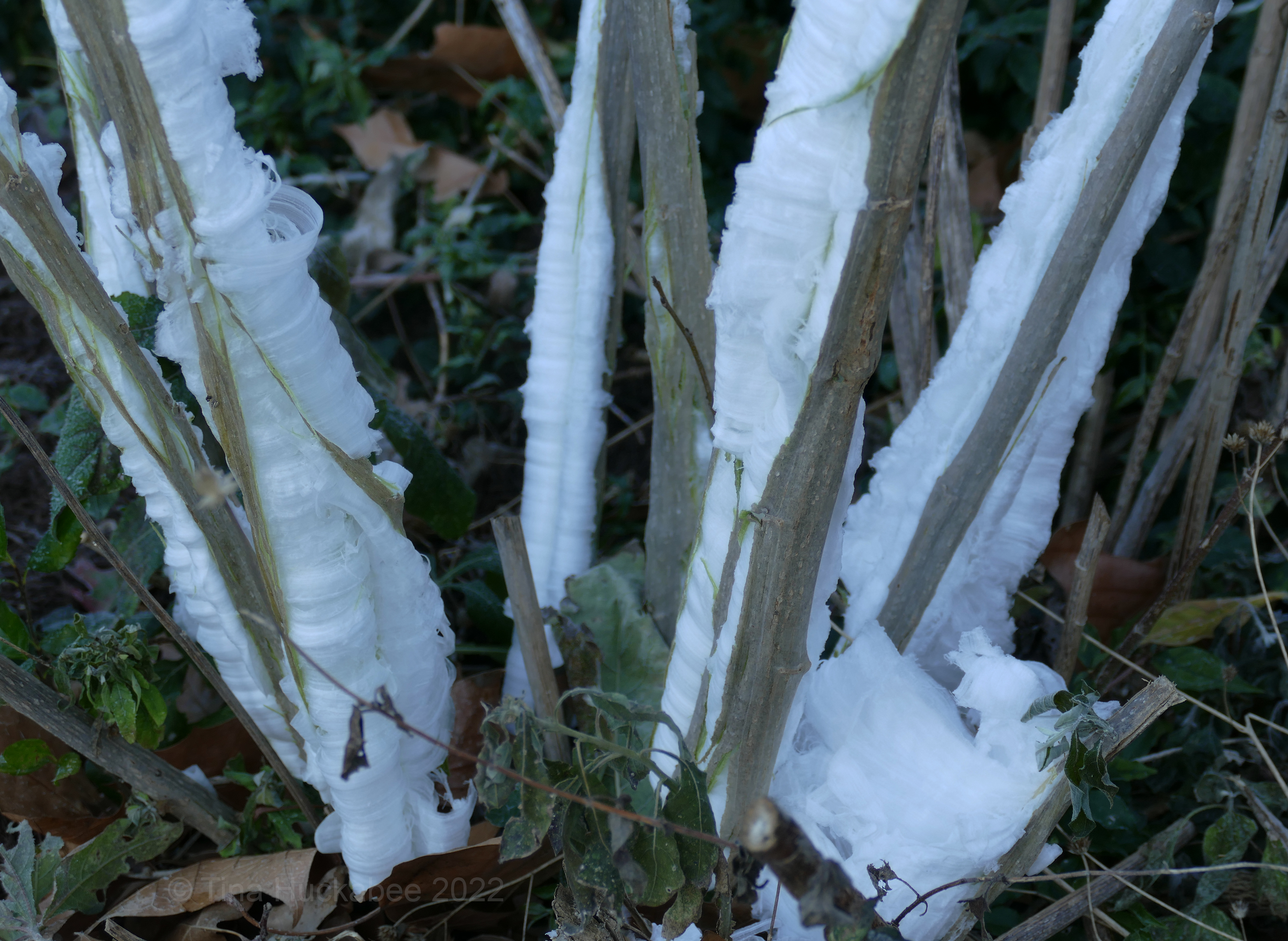
By Monday morning the wind had died down, but it was another very cold day, 26 F, a hard freeze. What brought me into the garden so cold and early was the appearance of the frost sculptures of Frostweed, Verbesina virginica. So named ‘frostweed’ this particular plant is known for its elaborate ice sculptures along the stems, caused by the first hard freeze of a season. The sculptures develop when water in a stem freezes and expands, breaking through the stem’s epidermis. As the water moves up the stem, it freezes into thin, fragile ribbons. The curls of ice that develop are delicate and can be quite elaborate, though I thought this year’s ice show was a bit restrained.

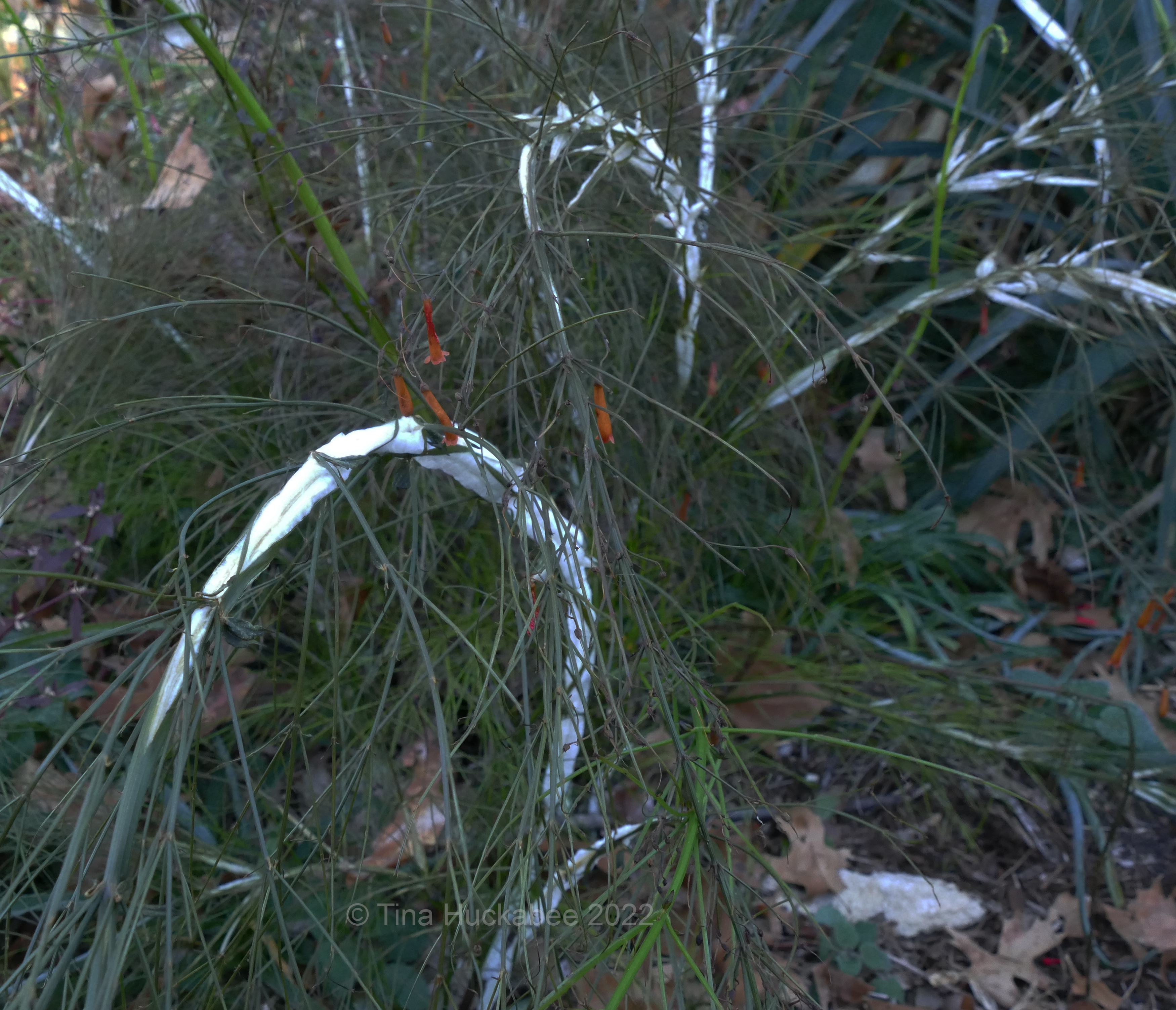
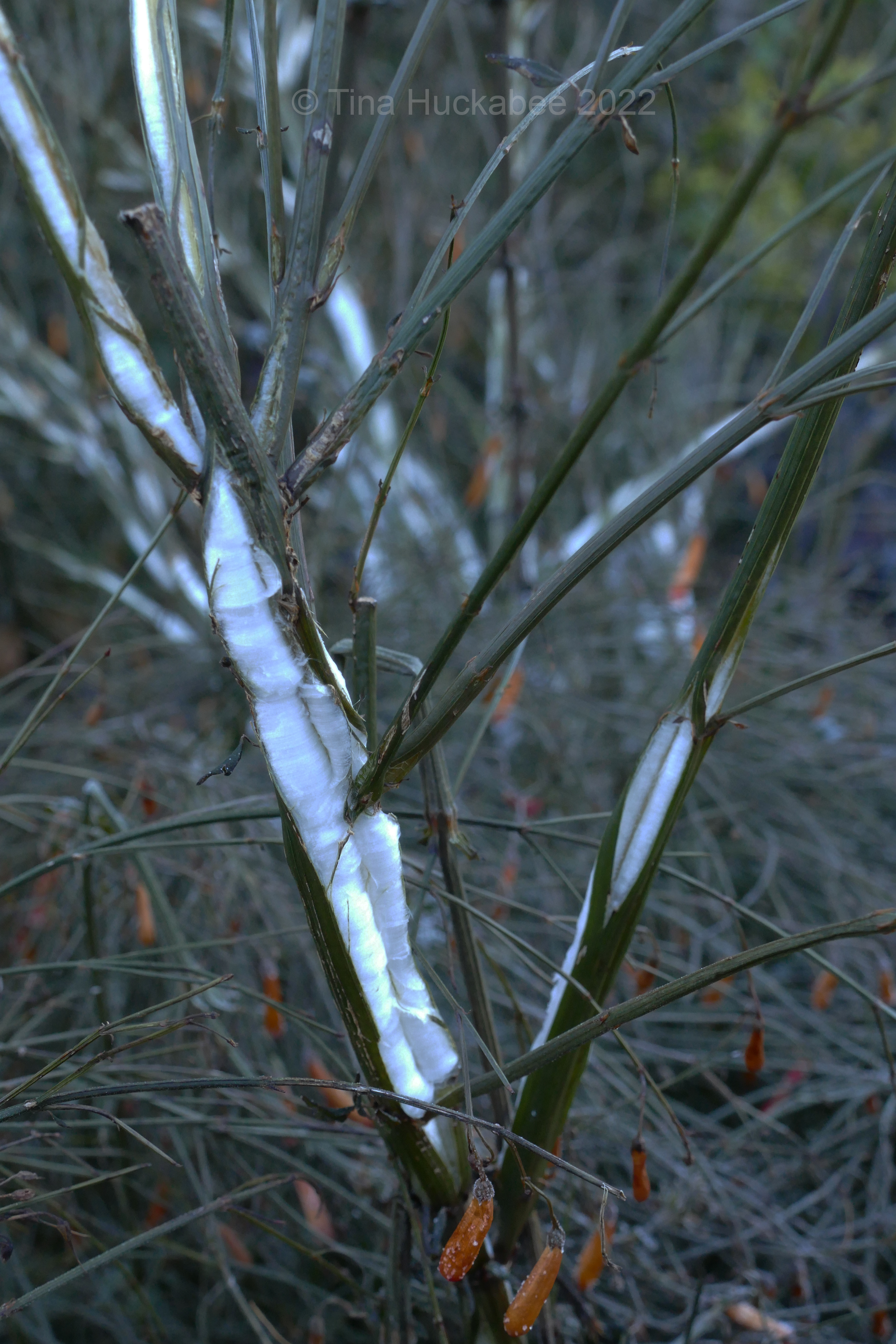
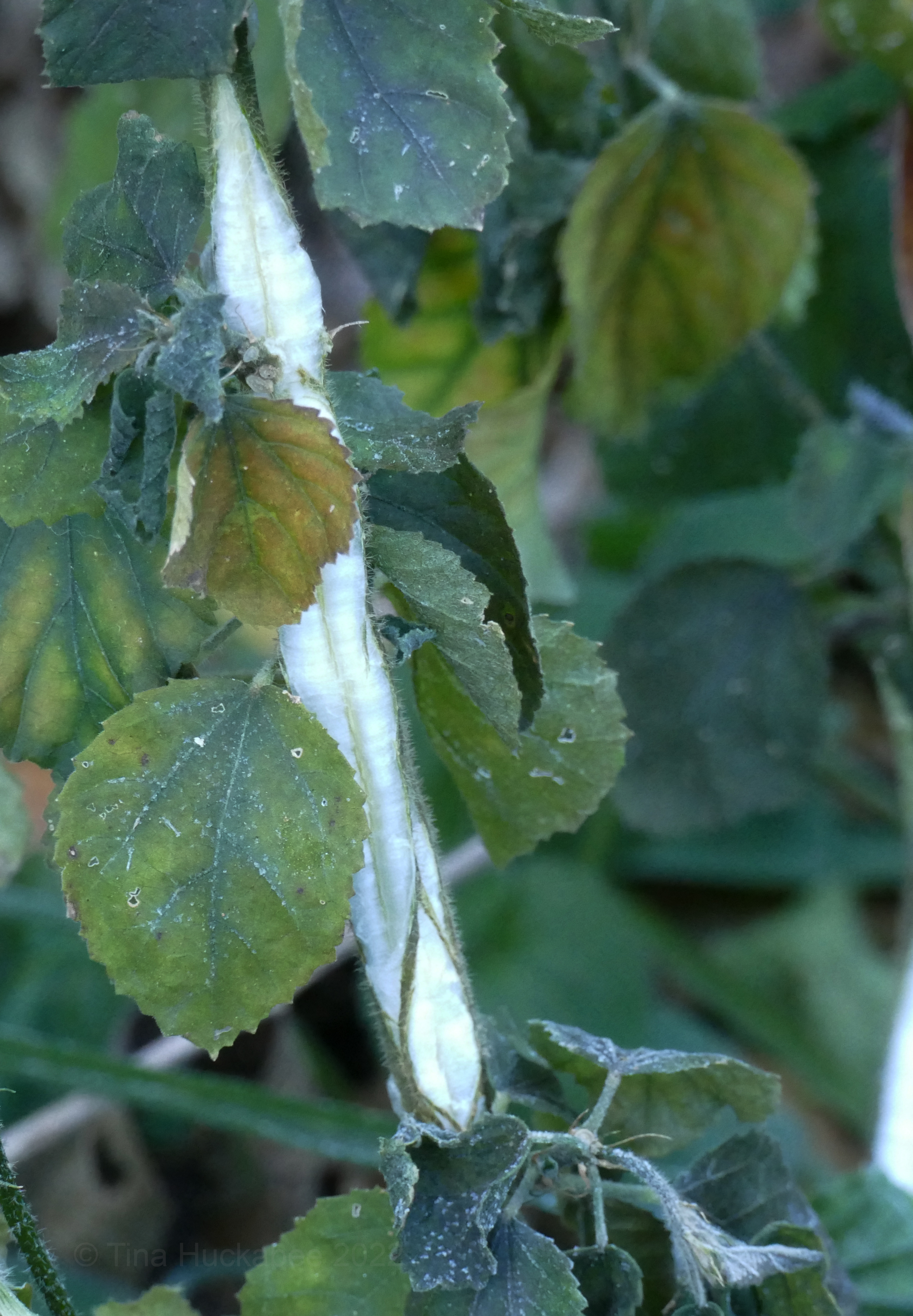
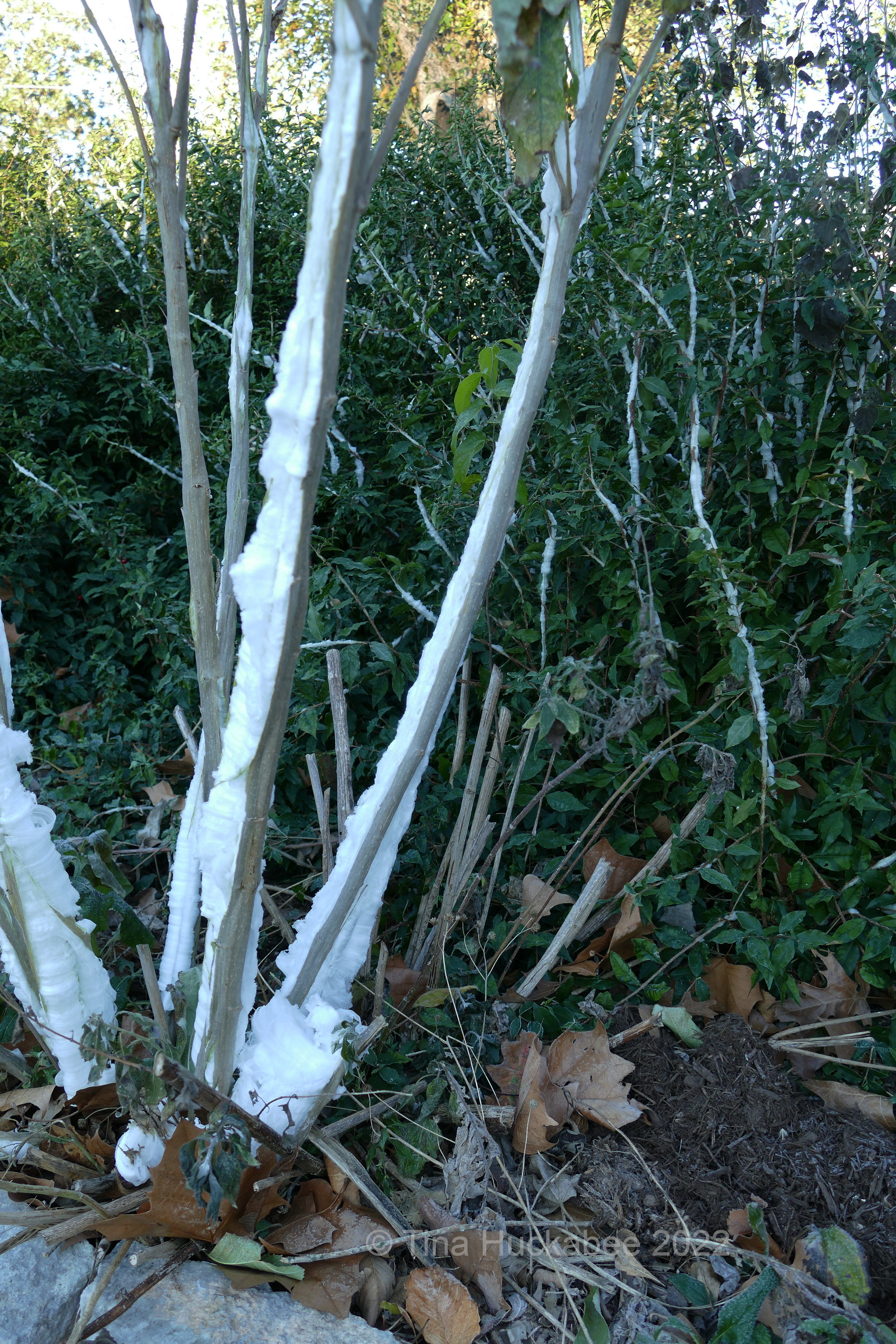
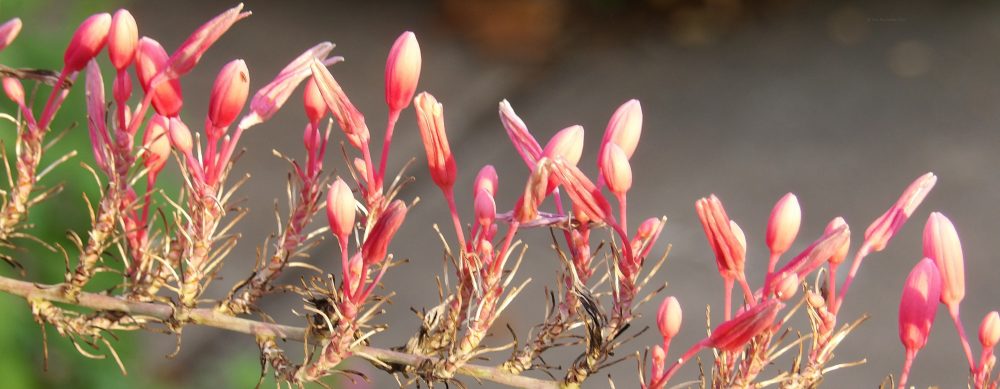
Frostweed produces substantial ice sculptures along its main stems, but it isn’t the only plant to rock these ice designs. On Sunday morning several perennials burst outward in icy winter performance art.

Firecracker Plant, Russelia equisetiformis:

Lemon Rose Mallow, Hibiscus calyphyllus:

Behind the frostweed, the stems of Barbados Cherry, Malpighia glabra:

The destruction of these stems means that a complete pruning to the ground is now required. The stems that grew during the year are permanently damaged and new spring growth will come from the roots. If the freeze wasn’t so hard, the plants might have suffered some freezer burn (like the aforementioned Mexican Honeysuckle), but not the bursting of the plants’ frozen pipes, effectively killing the plant above the ground. These plants are hardy, at least to 8F, so they’ll come back with warm spring breezes and longer days.

What I found interesting is that the ice sculptures happened on Monday, the second day of the freeze, not on Sunday, the first day of the freeze. Typically, it’s the first hard freeze that produces the ice sculptures. Best guess? I think because our fall and early winter has been very warm, the ground temperature prevented the stems from freezing that first night/morning, therefore there was no breakage and no ice. By the second morning, warmth from the soil had dissipated and all bets were off–it’s ice art all around!

The winter gardening chores are now set: raking and shredding of leaves, most of which go into the gardens, the rest into the compost; pruning of perennials, which is a weekly chore through February, and cleaning the pond which will be a very long, stinky day, indeed!