I was recently visiting with a neighbor as we stood in front of one of my gardens and she commented that a rosette of American Basket flower, Centaurea americana, looks deliciously edible. (I’m not sure if I’d add Basket flower to my salad greens, but it has been used for traditional medicine purposes.) As we chatted, I realized the particular specimen that was the focus of our conversation also shared close space with several other lovely foliage types.

Basket flower forms a dramatic rosette, but peeking through those glorious leaves are ferny Common Yarrow, Achillea millefolium, rounded, lobed Henbit, Lamium amplexicaule, and palmate-leafed Carolina geranium, Geranium carolinianum. Except for the non-native Henbit–one of our earliest bloomers and welcomed by pollinators–all of these plants are native to Texas and in many parts of the Americas.
A closer look at these luscious leaves shows another in their midst, also wanting attention for its leafy action–Caterpillars or Blue Curls, Phacelia congesta

A different Blue Curls planted itself directly on a Basket flower rosette, both settled in the crack of a cement driveway, no less. They’ll have to battle it out for survival once spring growth and blooming begins. The smart money is on the Basket flower, as it tends to get much larger than the Blue Curls–but I wouldn’t count out the curls, they’re a tough bunch.
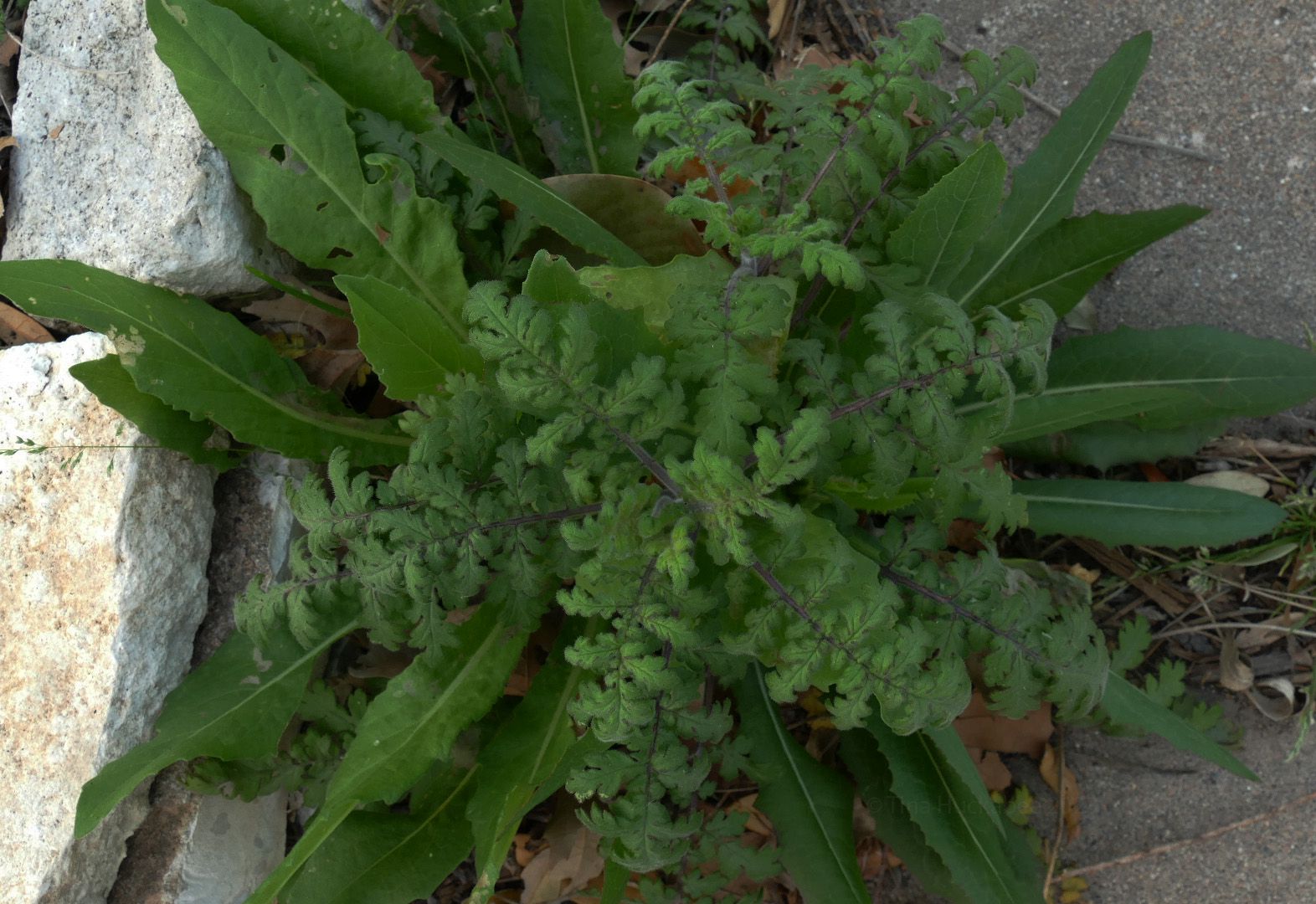
Both Henbit and Blue Curls are having a moment this year in my garden. Scads of them have seeded out and are growing in profusion!
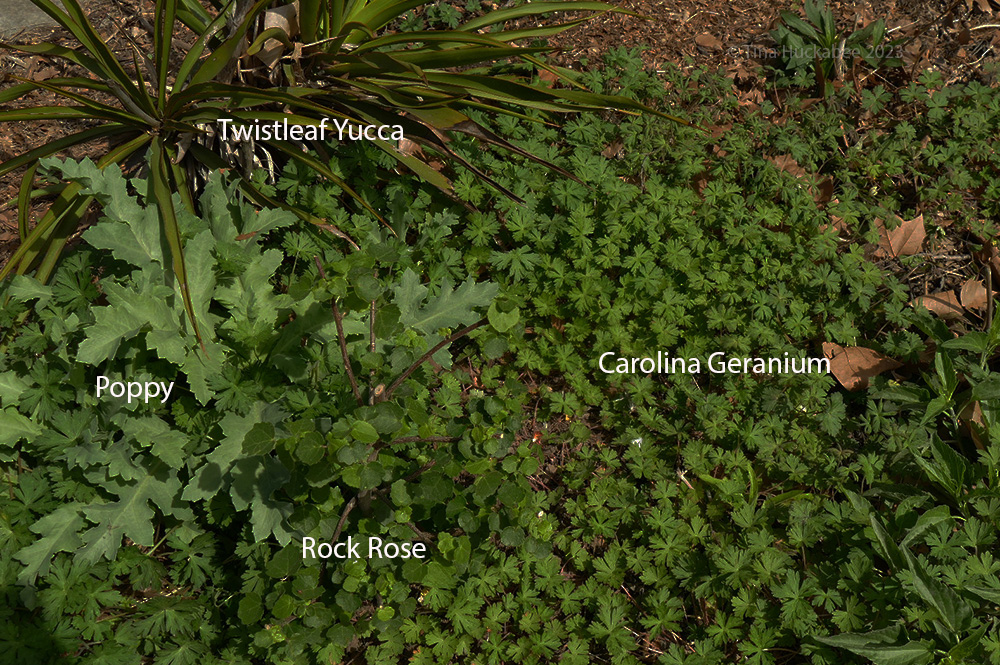
Another nice foliage vignette in a different area of the garden features a purposely planted Twistleaf Yucca, Yucca rupicola, overseeing two volunteer annuals (poppies and geraniums) and one volunteer perennial shrub, Rock Rose, Pavonia lasiopetala. All will bloom in spring, two will disappear afterward (poppies and geraniums), but the Rock Rose will be foliaged and floraled through the growing season.
Spring flowers are bursting out of their winter doldrums and the foliage of those bloomers is also revving up for its part in the garden show. Foliage and flowers form a partnership that are the stuff of gardens, each adding their particular beauty and role in a diverse community of plants.





 My Gardener Says...