Garden Blues

My garden has the blues and I couldn’t be happier about it.
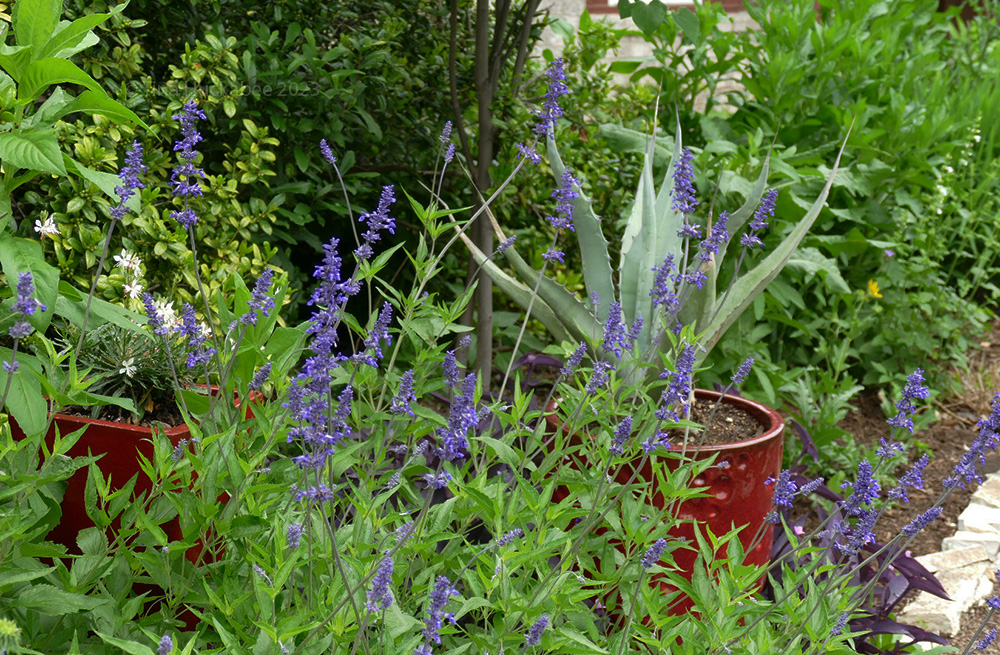
The full sun front garden is bursting with color in its second year of being, the blues not depressing either the garden or the gardener. I’m fond of blue flowers and grow several different species, most of which are native to Texas.
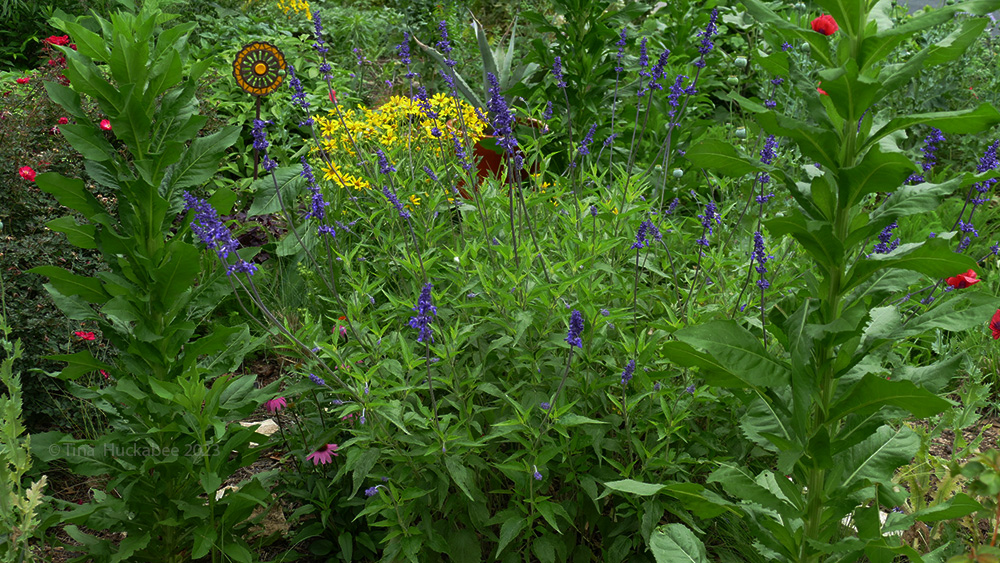
In this new garden I’ve planted five clumps of perennial Mealy Blue Sage ‘Henry Duelberg’, Salvia farinacea; all come from a plant I purchased years ago. This salvia is a late spring/summer/early fall bloomer and spreads by both seed and root. I should add that while it spreads, I don’t consider it aggressive; if a sprig pops up, it’s easy-peasy to yank out. It’s a dream to transplant: pull up a clump with roots, stick said clump in the ground, water a few times and it grows and blooms, beckoning the pollinators!

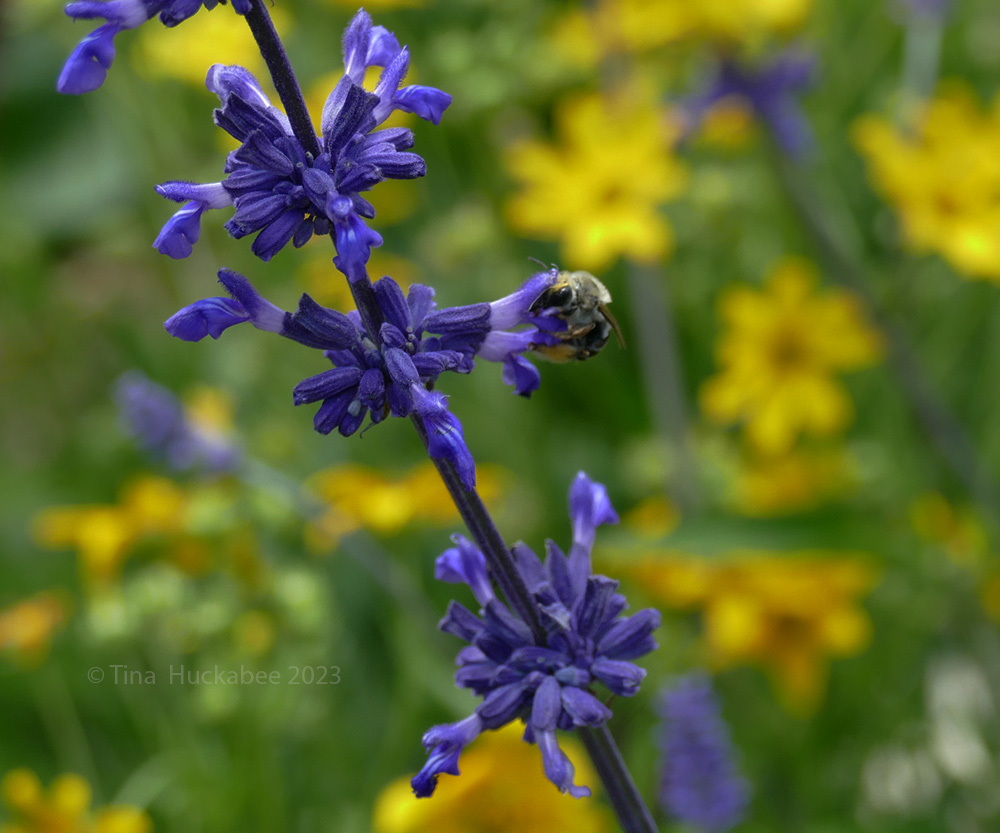
Mealy Blue Sage is favored by a wide variety of pollinators, like this honeybee. She is all-in for these small blooms.
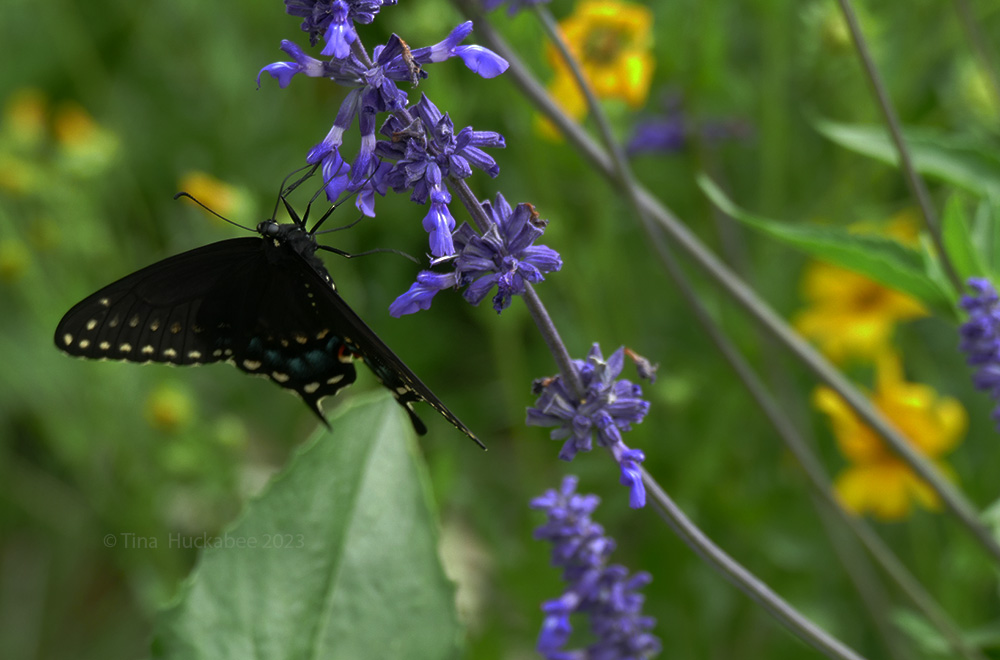
Bigger pollinators, like this Black Swallowtail, Papilio polyxenes, are fans of the mealy blues, too.
Another blue that makes me cheerful is Indigo Spires, Salvia x ‘Indigo Spires’. This perennial is a hybrid cross of the native Salvia farinacea and Salvia longispicata. I planted this specimen in my back garden a couple of years ago where it received some afternoon sun, but when the front garden morphed to full sun, I moved it there where it would get most-of-the-day sunshine, be a happier plant, and bring on the blues. Indigo is bigger than the ‘Henry Duelberg’, with longer bloom spikes and larger leaves.
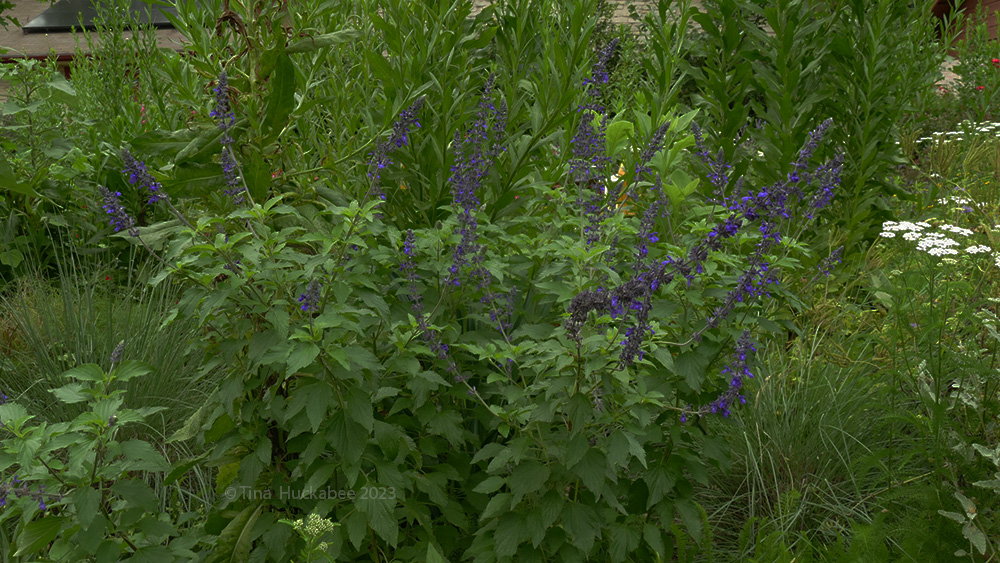
Many years ago when my back garden was full sun, I grew an Indigo Spires. In late summer and fall afternoons, there were often fifteen to twenty American Bumblebees working these blooms. Sadly, I haven’t seen that many bees on this plant, but the bees that are around definitely make a bee-line for these blues.

If there was an award for blues in the garden, I think it would go to the Blue Curls, Phacelia congesta. I didn’t mean to have so many this year and I should have culled some of the seedlings, but I am a softy. I have a hard time removing seedlings of desirable plants unless I have someone who will take them to another garden space. These are Texas annual wildflowers, so leaving them in place didn’t stress me too much as I knew that they’d be done with their show by mid-May when I could remove them, making room for the summer perennials.
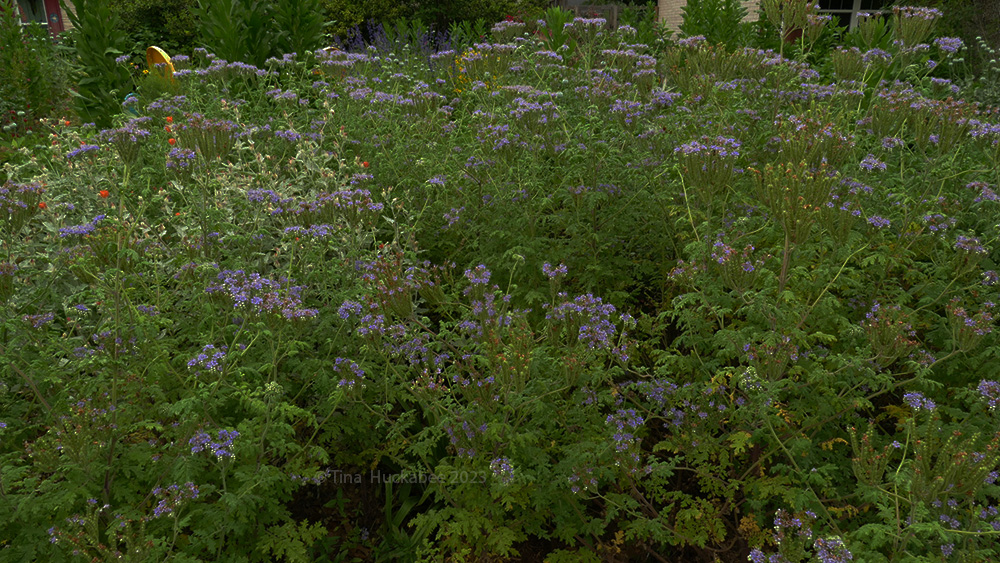
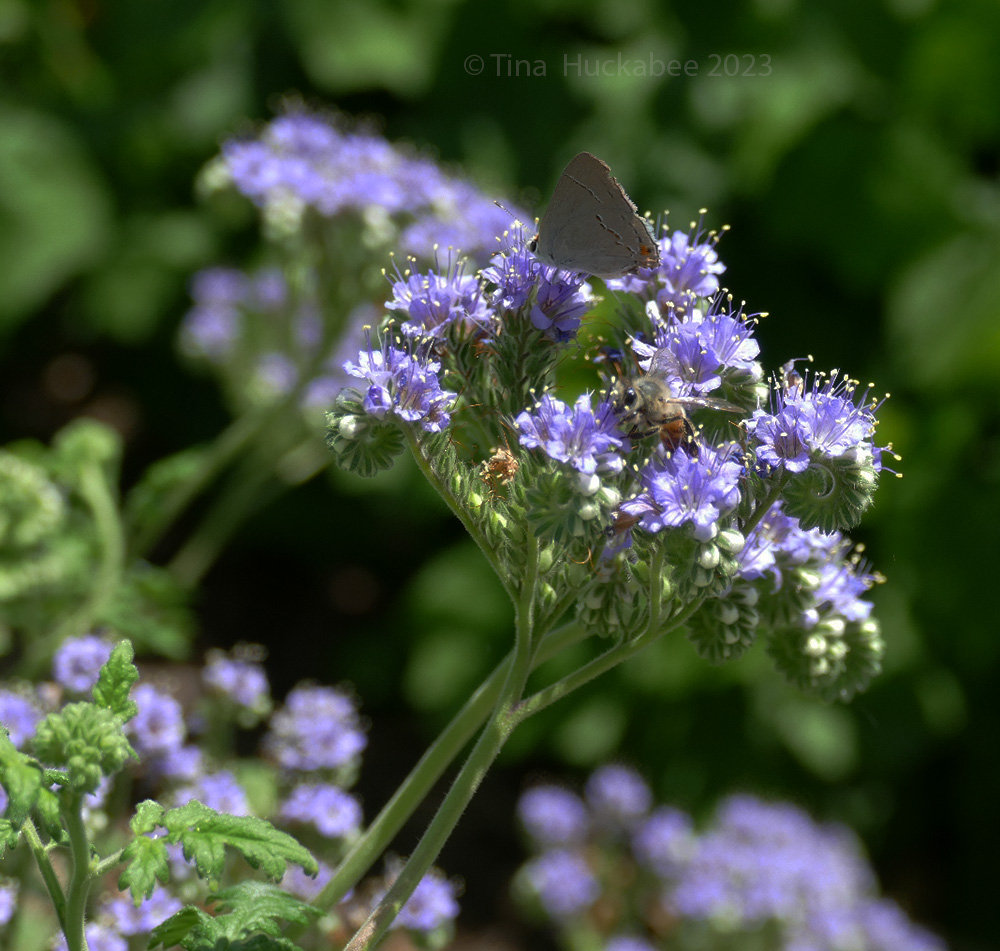
When the Curls reached the zenith of their flowering, there was a constant gentle buzzing in the garden and movement throughout the garden’s air. Honeybees, Carpenter bees, a myriad of tiny native bees, skippers and larger butterflies all flock to partake of these charming blue-violet flowers.
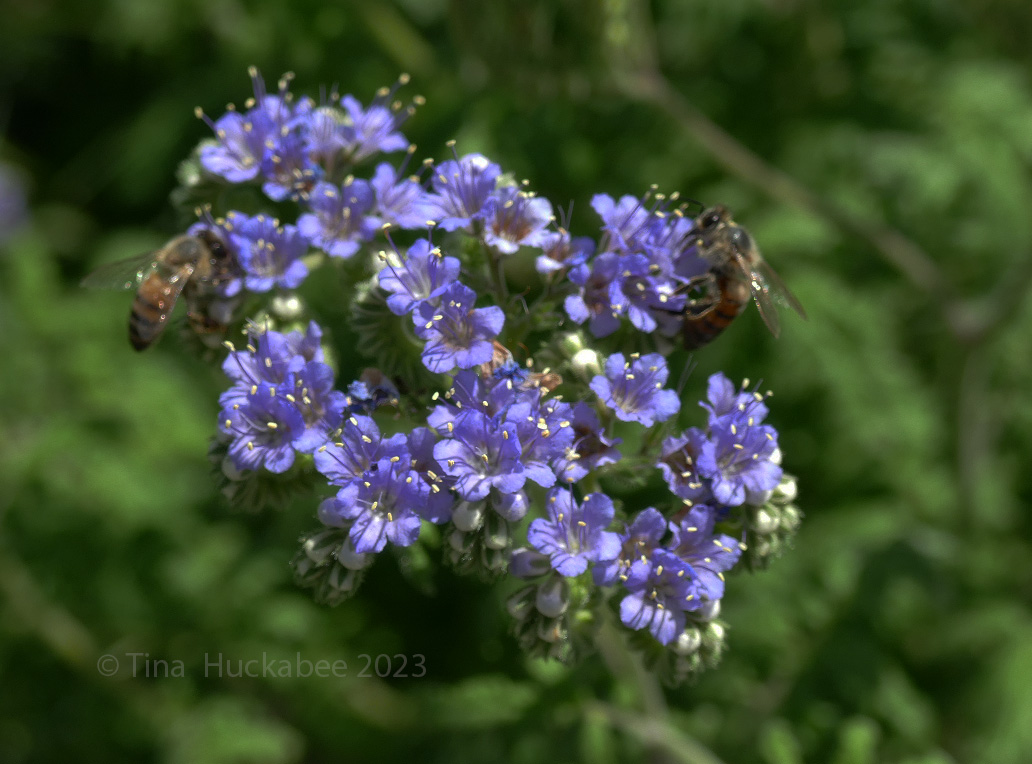
Honeybees sharing a meal of Blue Curl nectar and pollen.
Honeybee and Grey Hairstreak each mind their own business as they sip the sweet stuff.
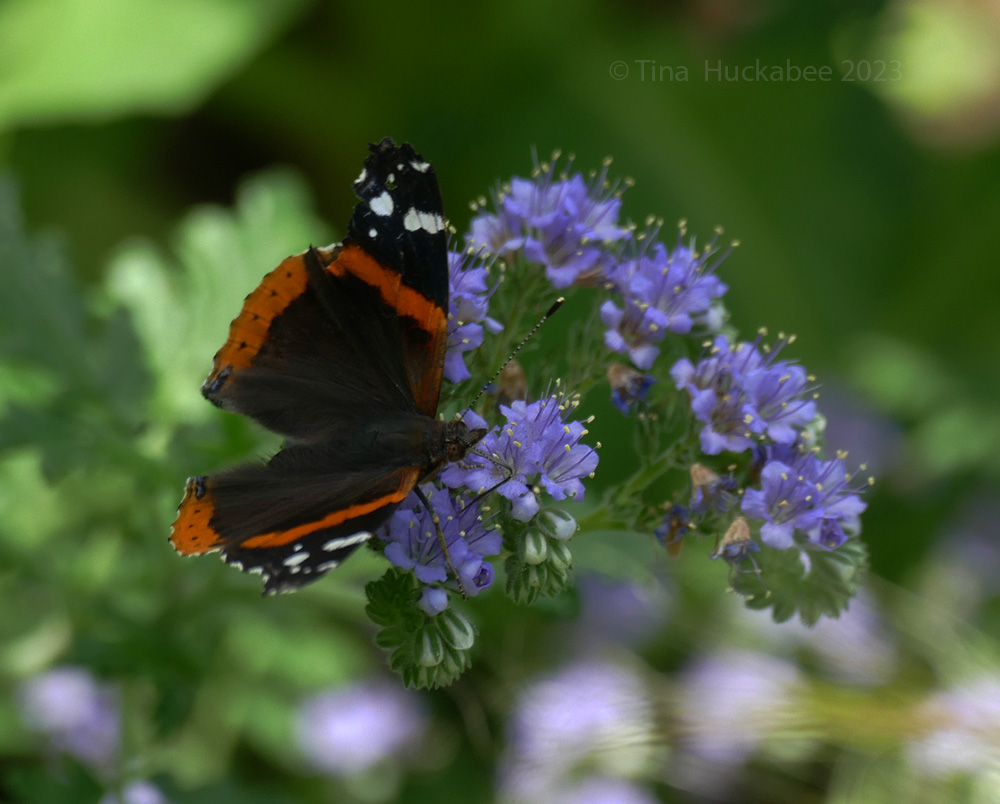
Red Admiral (Vanessa atalanta) on a Blue Curl.
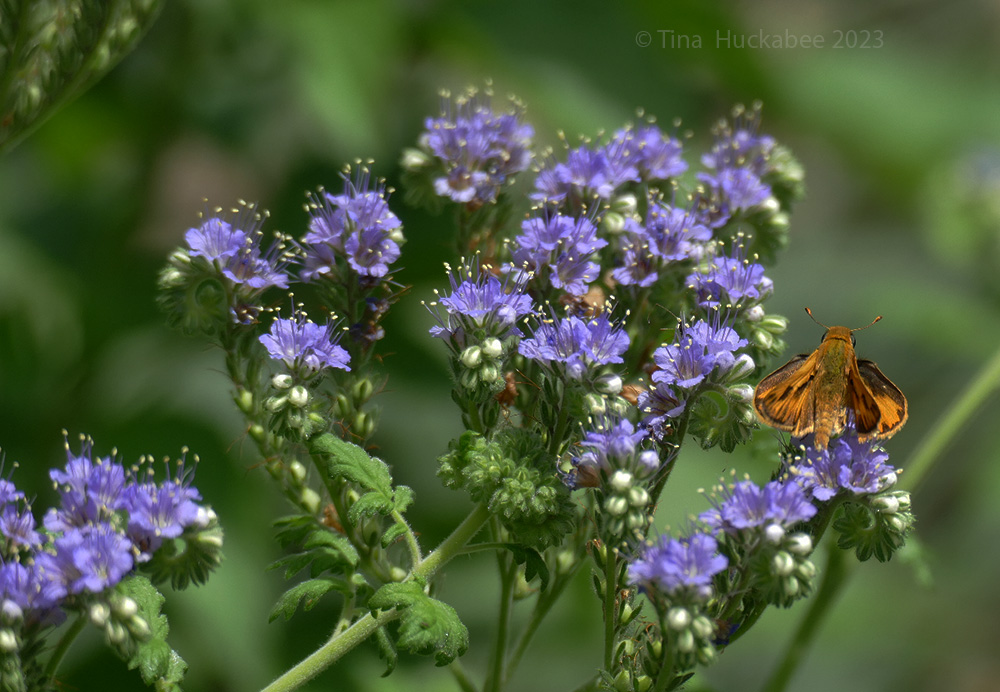
Fiery Skipper (Hylephila phyleus) lights up the blues!

A variety of beetles and leaf-footed bugs got into the act of working these sweet blue blooms! Everybody, it seems, loves Blue Curls.
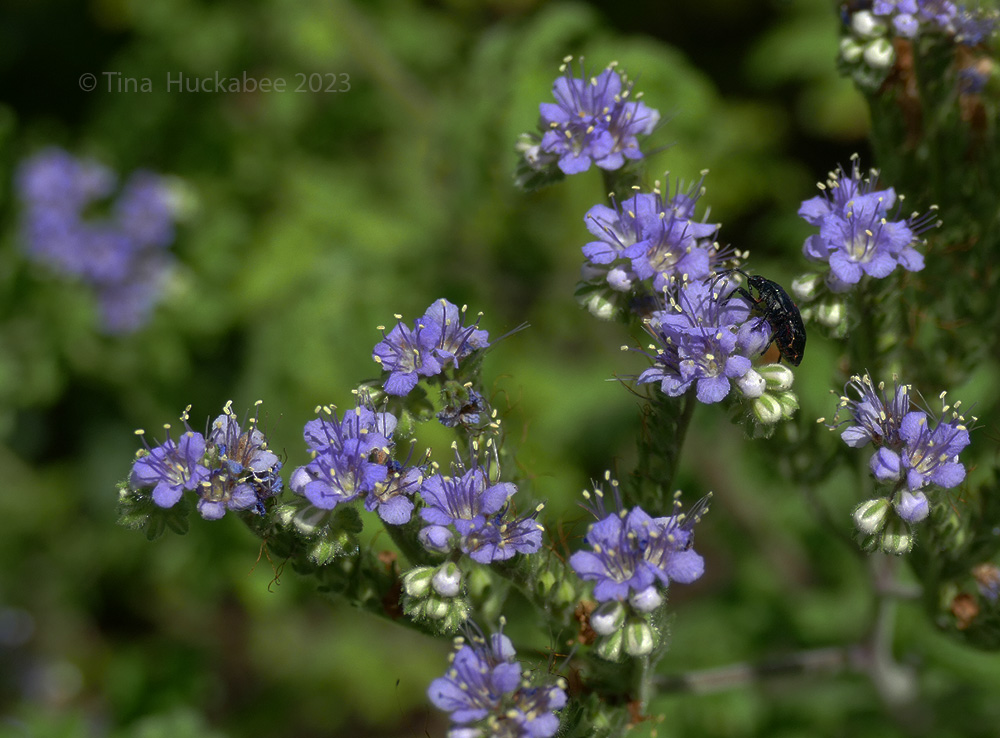
As the Curls’ blooms faded and the seeds developed, migrating songbirds were in the garden from dawn to dusk. I witnessed Common Yellowthroats, Lincoln’s Sparrows, Clay-colored Sparrows and Lesser and American Goldfinches noshing on the seeds and, no doubt, some of the tiny insects that were also on the plants. As these migratory birds fly northbound from my garden, they’ll pass along seeds to other places for next year’s wildlife.

Blue Curls are a cornucopia for wildlife. The insect and bird song, color, and life that these blue beauties brought to the garden during March and April eclipsed all other plants in the garden.

That’s why I didn’t remove them!

In the back garden, things are shadier, but the blues reign. Another violet-blue flowering plant is the perennial Heartleaf Skullcap, Scutellaria ovata and it thrives in part-shade.
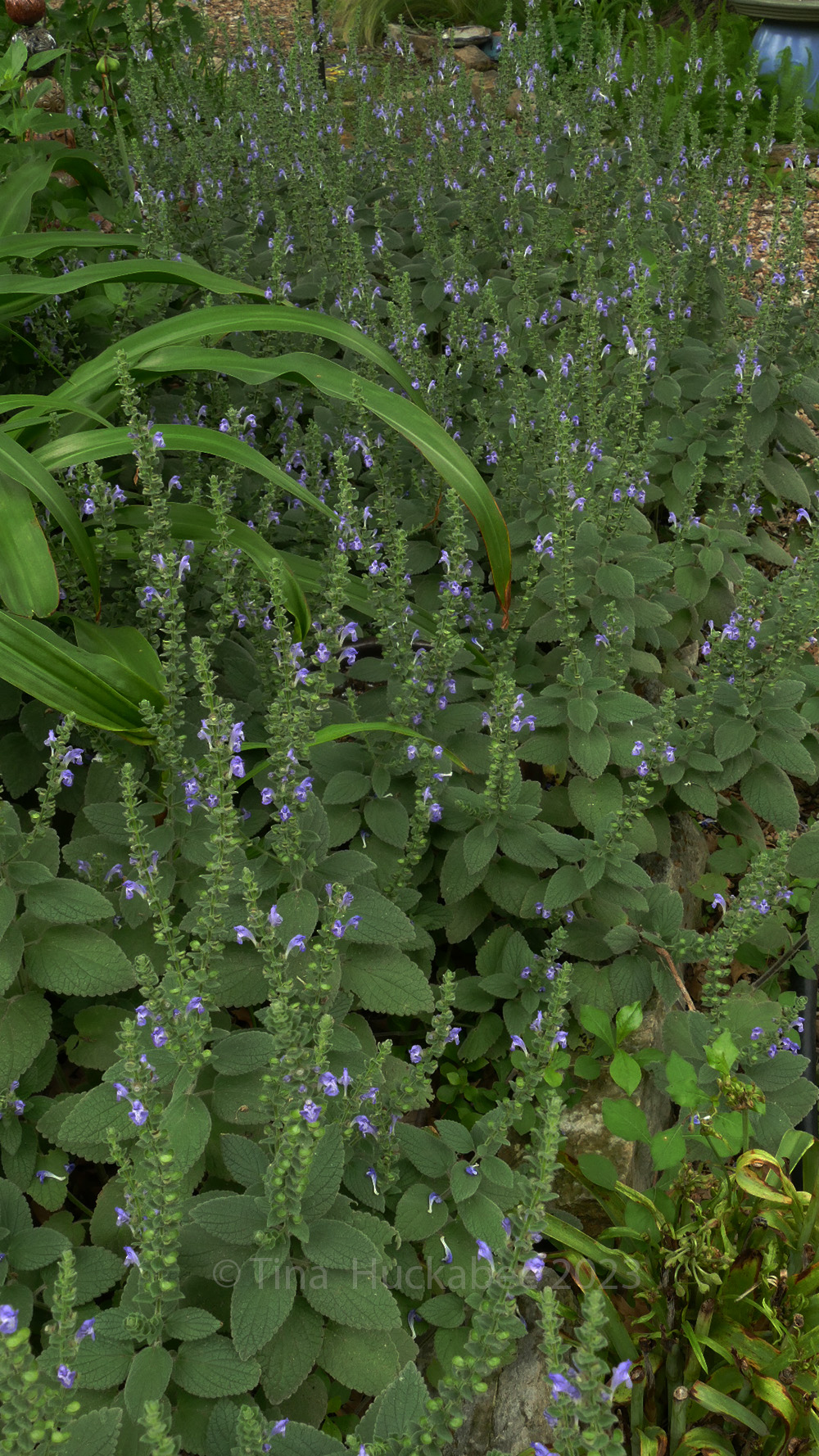
Velvety, grey-green foliage accompanies these diminutive blooms.
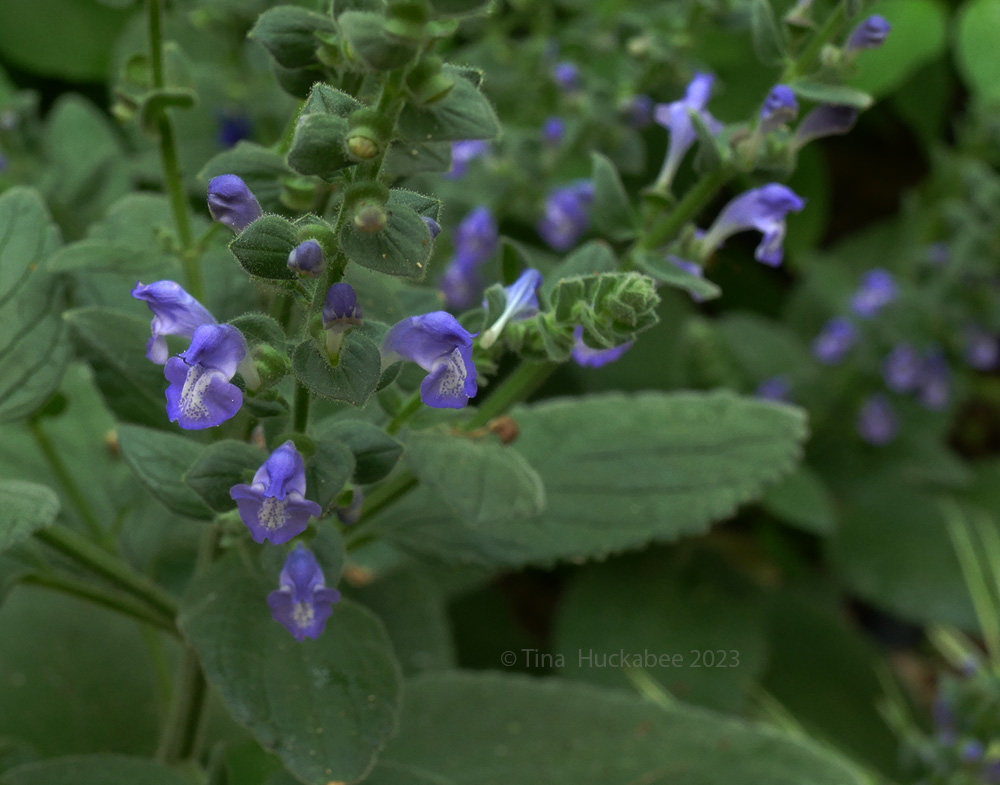
The grey-green stalks with fuzzy foliage appear in winter, fresh color against the freeze-rendered browns and tans. Heartleaf Skullcap spreads as a ground cover, adding blue bloom spikes atop the foliage from late spring through mid summer. Summer’s heat ends the blooms and fades the foliage; the plant eventually disappears. The gardener helps that process by shearing to the ground or pulling up the plant. Thick roots lie dormant in the soil, safe from the Texas heat, waiting patiently until cool winter, when it emerges with fresh stems and foliage, ready to grow and begin its cycle in the garden for a new season.

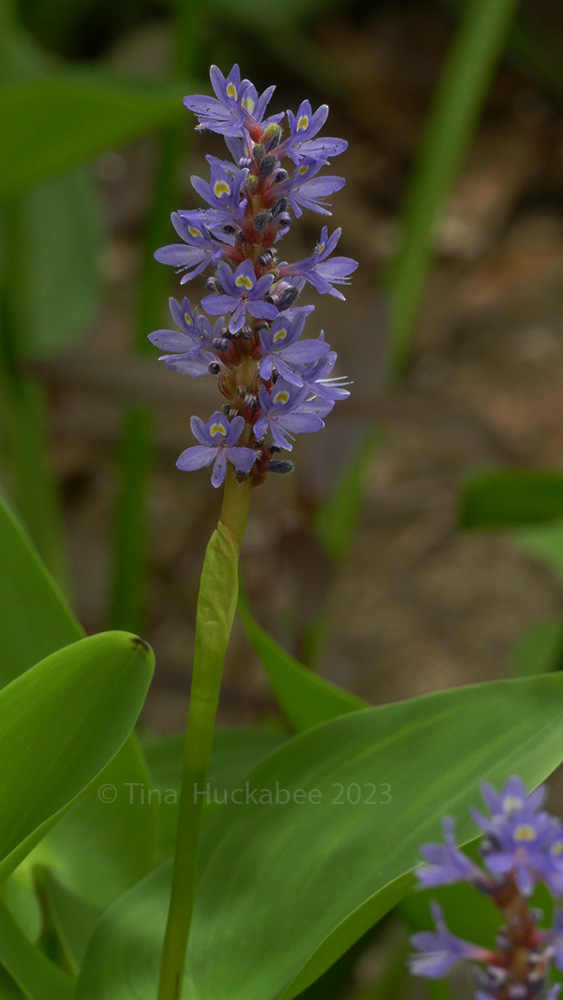
The pond’s water lilies are pink and yellow, but its bog plant, Pickerelweed, Pontederia cordata, rocks teeny violet-blue flowers borne on spiky stems. The plant sits in slow-moving water, blue spikes rise above luscious foliage.
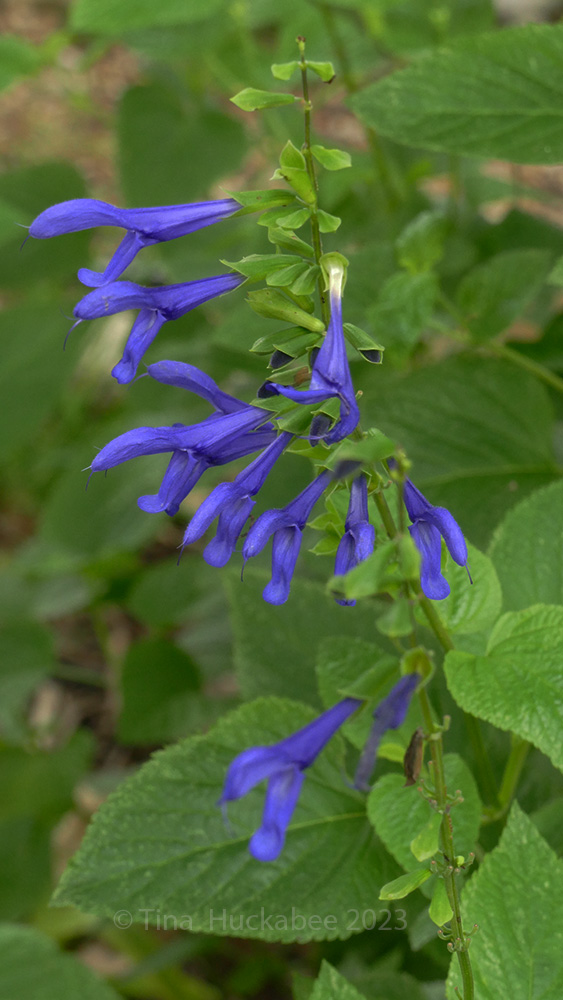
Many of my blues suggest a liaison with lavender or violet, but this final blue is a true blue: spring and autumn blooming Majestic Sage, Salvia guaranitica.
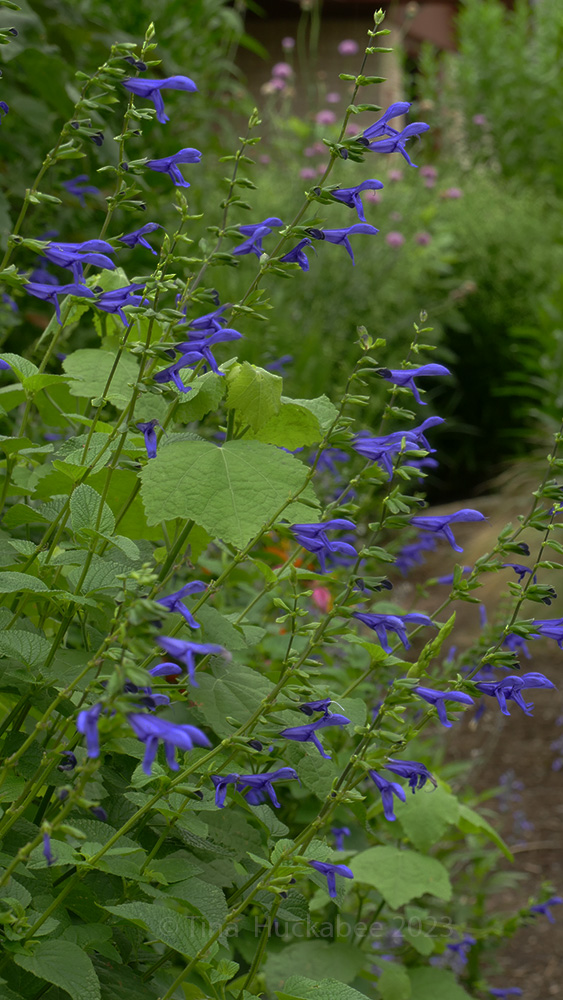
This is the only non-native blue that I grow; its home base is in Central and South America. A gorgeous, rich blue, the plant is colorful in spring and autumn, choosing to rest during the sweltering summer months. Most of the bees that visit nectar steal, though my honeybees and some of the tiny native bees crawl deep into the blooms for their sweet treat.
I grow a few other blues that will sing their songs in late summer and fall. The blues in a garden are the kind of blues we should welcome–for their beauty and for what they provide for the wild things we share space with. Add some blues to your garden, you’ll be happy you did!
We’re Back, Baby!

In February, once the snow cleared and the ice melted from wicked winter storm, Uri, I assessed the damaged garden–and damaged it was. I guessed (correctly–yay!) that my native plants would endure. But I wondered if the plants I grow which are native to regions south of the Texas border might succumb to the way-out-of-wack deep-freeze week. Minimally, I assumed it would be autumn or even next growing season before the pollinators and gardener would once again enjoy the gorgeous blooms from Mexican and Central American plants.

I’m so glad that I was wrong!

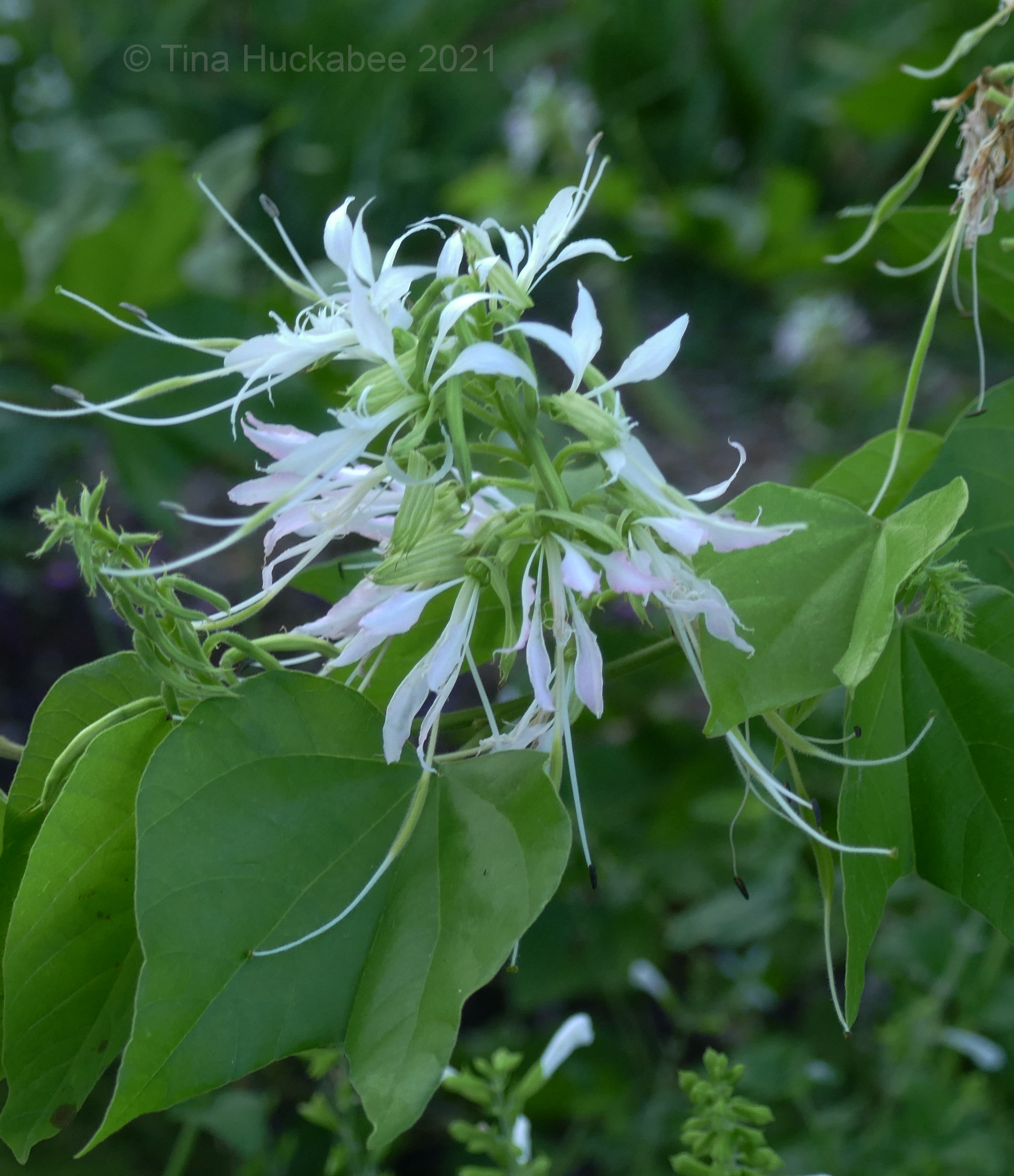
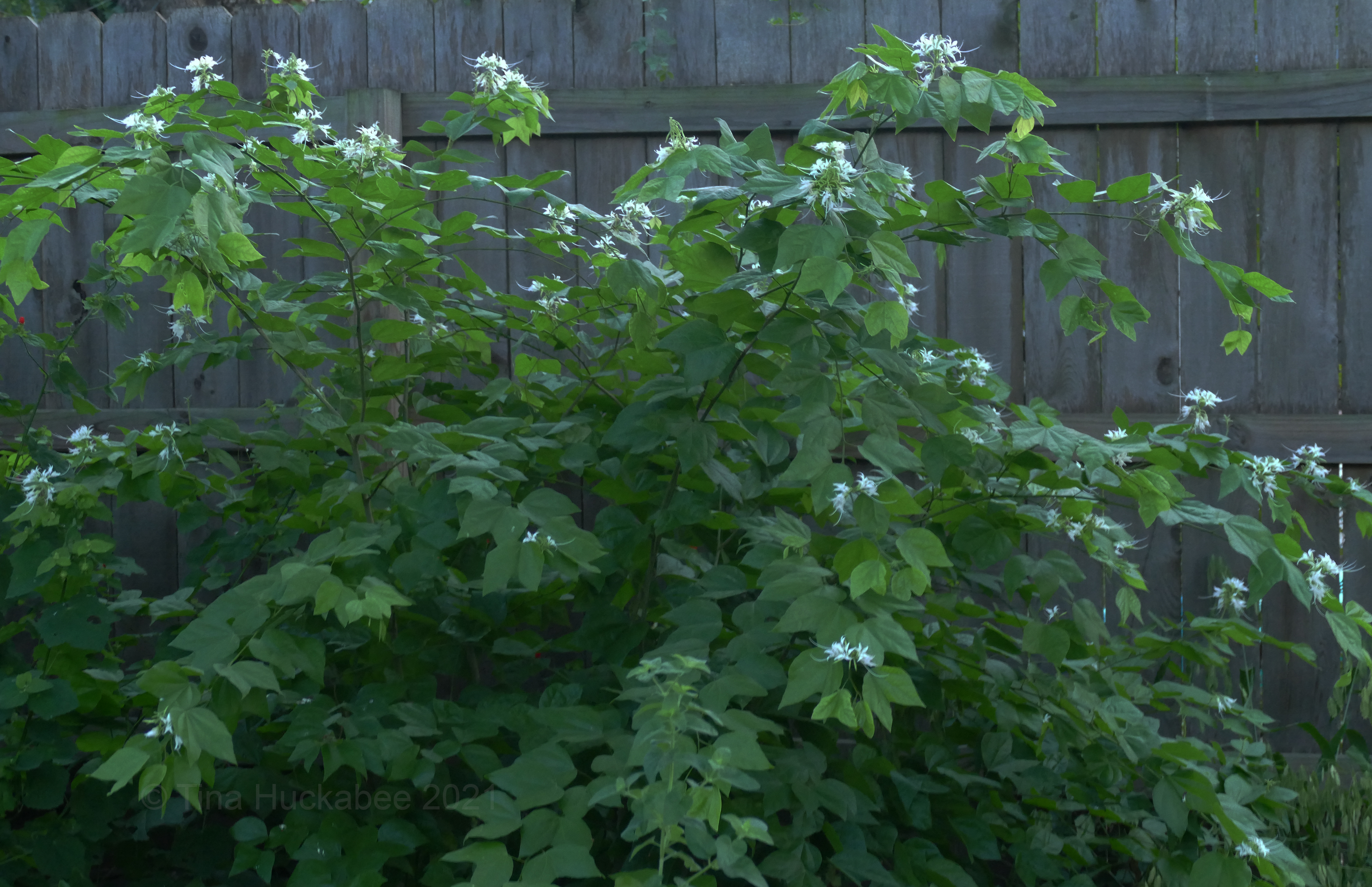
I grow two Mexican orchid trees, Bauhinia mexicana, and both emerged from the soil in late spring and there’s been no stopping their growth. This one is my oldest tree and has been blooming since June. Here in Central Texas, the “tree” is really a large shrub.

The blooms are snowy white, but the plant loves the heat.

Foliage of Turk’s cap photo-bombs the orchid tree. Do you see it?

My other mature orchid tree receives more sun, growing a little faster and flowering more. This tree is a seedling from my original tree.

The orchid tree is partnered with a cluster of native White Salvia coccinea.

Rather than the pure white of the mother tree, this tree’s flowers are white with a subtle blush of pink.

Another Mexican perennial that I thought wouldn’t bloom until fall is the Mexican honeysuckle, Justicia spicigera. In this part of my garden, it’s paired with the South American beauty, Majestic sage, Salvia guaranitica, which grows just behind it.

Majestic sage and Mexican honeysuckle are perennials that have proven themselves reliable, even after a week of sub-freezing temperatures. The rich blue of the sage blooms complements the cheery orange honeysuckle flowers. Both plants are pollinator magnets; the sage is a favorite of various butterflies, but the bees are all about the honeysuckle blooms.

When Mexican Honeysuckle blooms, it really blooms!

Honeybees have been all over the Honeysuckle flowers. Usually, I also see plenty of native carpenter bees at these blooms, but sadly, their population is decreased this year. While the plants returned with vigor, some insect species have been slower to recover.

Native to parts of the Carribean Islands and Mexico, Pride of Barbados, Caesalpinia pulcherrima, lives up to its botanical moniker, very pretty. This one is tall and truthfully, a little past its blooming prime for the year. Still, it’s topped with dramatic orange and yellow flowers that usually have pollinator attendants.

Early in the morning, only the honeybees are at work.

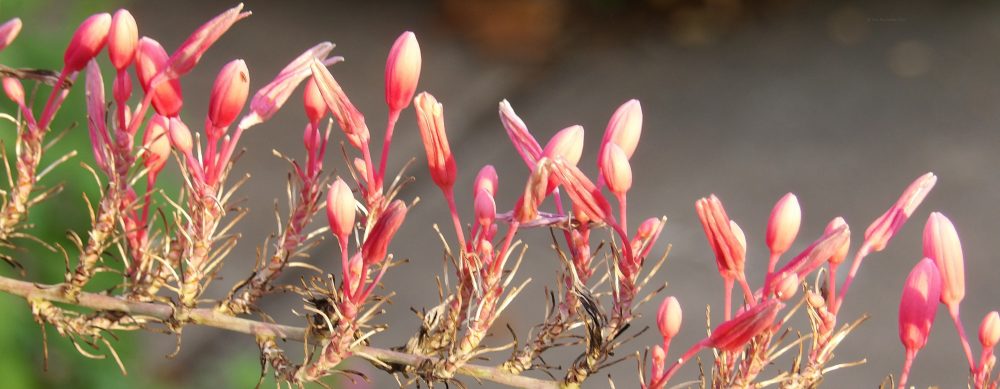
One more Carribean-to-South American plant that has weathered well in my garden during both hot and cold is the Firecracker fern, Russelia equisetiformis. Not only did its ferny foliage pop up from the ground after the winter storm, but its fire-engine red blooms have popped with color all hot summer.

All of these plants are tough, beautiful perennials that return after the hardest freezes and grace the hottest summers; I’m glad they’re a part of my garden palette.

I’m happy to link with Carol and her Bloom Day for August. Check it out to see lovely blooms from many gardens! Happy gardening!

Bloom Day, October 2014

Summer has been reluctant to release its toasty grip on us in Texas, but the cool of autumn has mostly arrived. We’ve enjoyed a couple of refreshing cold fronts, dropping our temperatures into the ’50’s, with highs in the 70’s and ’80’s. The lingering warmth of September and early October didn’t damper blooms in my gardens, though. Joining Carol at May Dreams Gardens, I’m celebrating blooming stuff on this 15th of October.

There is no shortage of blooming native Texas plants in my gardens. Let’s take a tour, shall we?

Barbados Cherry, Malpighia glabra, has blossomed its dainty, pink clusters for a month or so now.

IMGP0216_cropped_3829x2521..new

Soon, cherry red fruits will replace blooms, feeding a whole different crop of critters. Barbados Cherry is lovely in tandem with Turk’s CapMalvaviscus arboreus.

IMGP0218.new

A cultivar of the native red Turk’s Cap, the Pam’s Pink Turk’s CapMalvaviscus ‘Pam Puryear’, blooms as heartily as the red,

IMGP0235_cropped_3548x3355..new

…but with softer pink swirls perched atop the long branches.   In my gardens, the Pam’s Pink is planted with FrostweedVerbesina virginica,

IMGP1283.new

….and it’s a successful pairing.   Frostweed is an excellent wildlife plant.   Attracting butterflies, like this migrating Monarch,

IMGP1166.new

IMGP1149.new

…and bees,

IMGP1077.new

…and this guy, a Tachinid fly,

IMGP1072.new

…who you can see again on Wildlife Wednesday, a fun little wildlife gardening meme I host.  The next Wildlife Wednesday is November 5th.  Frostweed a stalwart native perennial; it’s drought hardy and works well in either shade or sun.

IMGP1031_cropped_3429x3208..new

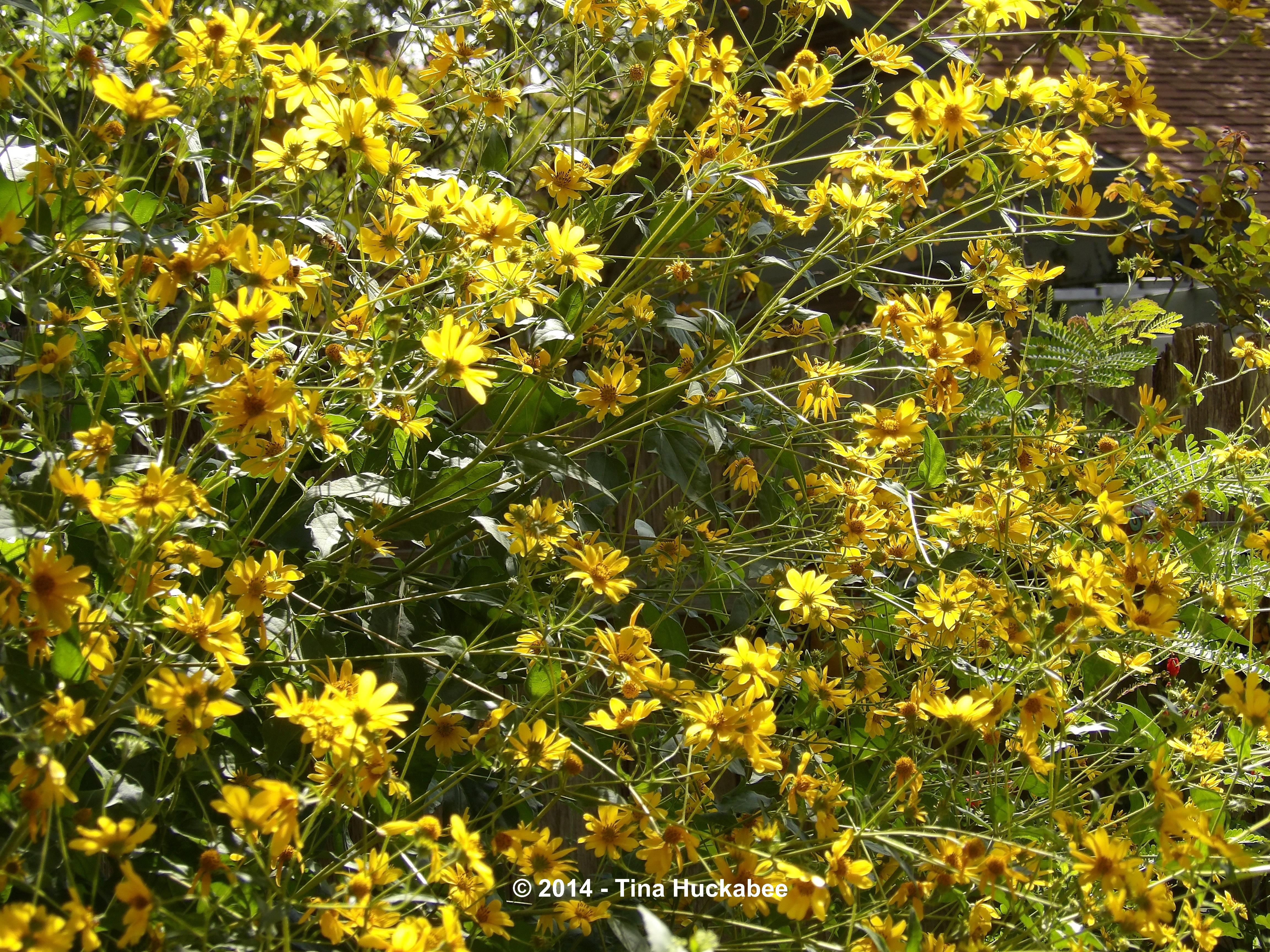
The GoldeneyeViguiera dentata, is photogenic in the fall garden.

IMGP1236.new

Another perennial which attracts its share of pollinators,

IMGP1241.new

…these pretty yellow flowers evoke glorious autumn sunshine.

IMGP1008_cropped_4129x3078..new

IMGP1342.new

They work and play well with other natives in my gardens,

IMGP1185.new

…like the Rock RosePavonia lasiopetala and Barbados Cherry. And who doesn’t love the tried and true combination of yellow and blue?

IMGP1277_cropped_3129x3382..new

This Goldeneye’s companion is the non-native Blue Anise Sage, Salvia guaranitica.  

The roses in my gardens are awake again after the heat of summer. I grow only water–wise antique or cultivar roses in my gardens.  If a rose can’t shrug off the heat and dry of the Texas summer, it’s out!  The Martha Gonzales Rose is one such beast.

IMGP1208.new

Named after a Navasota, Texas gardener, Martha Gonzales,

IMGP1204.new

…this rose is beautiful, fragrant, and tough. Martha grows in USDA zones 7a to 10b so it it’s appropriate in a wide range of situations.  If you only grow one rose, make it the Martha!

The Belinda’s Dream Rose, which is appropriate for USDA zones 5a to 10b,

IMGP1612.new

is the quintessential elegant pink rose. Fragrant and downright luscious, Belinda isn’t quite as hardy as the Martha, but still performs well for me.  Belinda gets a little peeky in summer, but picks up again with rain and softer temperatures.  Caldwell Pink Rose,

IMGP0975.new

looks dainty, but it’s no wilting beauty.  This poor thing, I’ve moved it four times–I think I’ve finally found its forever home.

IMGP1014.new

A migrating Monarch finds this Old Gay Hill Rose delightful,

IMGP1724.new

…and so do I.  Similar to the Martha Gonzales, the shrub is larger and the petals slightly (but only slightly) more pink than the Martha’s fire engine red petals.

I’m not a grow-only-native purest and host a number of non-native perennials in my gardens, like these Four O’Clocks, Mirabilis jalapa.  Considered a staple of the Southern garden, these are new to my gardens and were gifted to me by a gardening friend, TexasDeb at austin agrodolce.

IMGP1180.new

IMGP0856.new

IMGP0858_cropped_3419x3414..new

These lovely trumpets open late in the day, bloom all night, and close in the morning. Four O’clocks are fragrant and are such lovelies–I’m tickled to make room for them in my gardens.

Jewels of OparTalinum paniculatum, are another new-to-my-gardens perennial from TexasDeb.  Jewels are also an old-fashioned flower of the Southern garden.

IMGP1369.new

IMGP1380.new

I love the teesny flowers, the “jewels” seeds, and chartreuse foliage. Both Four O’Clocks and Jewels of Opar are potentially invasive, so I’ll keep them in check–ripping out uninvited extras who crash my garden party!

It’s now that my Coral Vine, Antigonon leptopus, shines,

IMGP1413.new

IMGP1415.new

…or is that a sparkle?  Whatever it is, the bees love this bloomer.

After each rain, the Almond Verbena, Aloysia virgata, flowers and its fragrance graces my garden.  Shown here in partnership with Turk’s Cap blooms, the Almond Verbena is favored by honeybees.

IMGP0918.new

My Almond Verbena is the anchor plant in a group of native shrubs and perennials.

IMGP0910.new

It fits quite well, I think.

Quoting another garden blogging buddy, Debra of Under the Pecan Trees,  we enjoy a “second spring” in Texas–a  lush blooming autumn gift, after the heat, when all, including gardeners, perk up anew.

What’s blooming in your gardens this October Bloom Day?  Check out May Dreams Gardens for blooms from everywhere.