National Pollinator Week

June 20-26 is the week set aside this year to celebrate pollinators and the important work they do.

IMGP7078_cropped_3087x2286..new

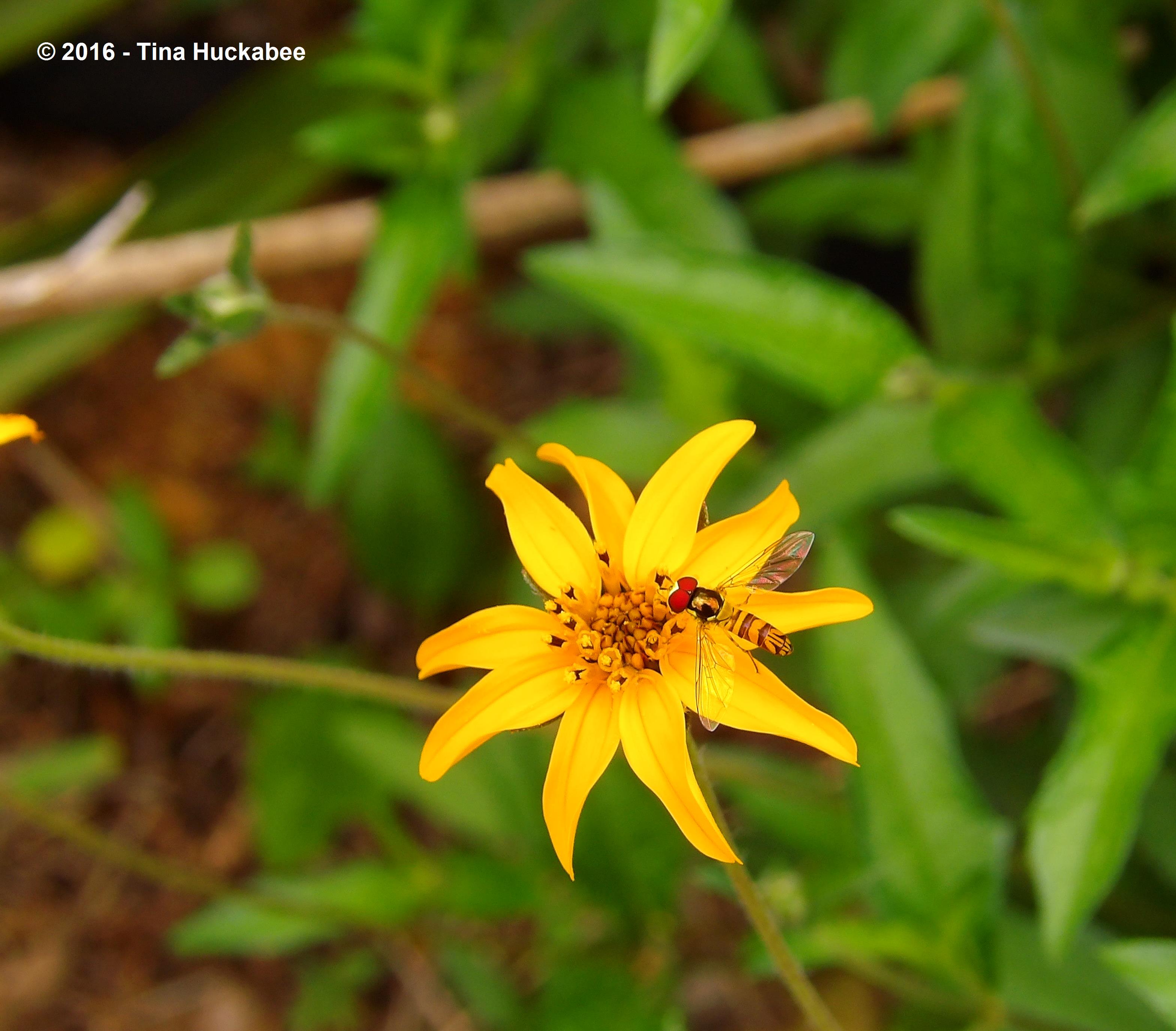
Syrphid or Flower fly nectaring at a Zexmenia (Wedelia hispida)

EVERY week should be a week to celebrate pollinators and the important work they do.

IMGP8526_cropped_2350x2060..new

Miner bee (Perdita ignota)(?)  visiting a Fall aster (Symphyotrichum oblongifolium)
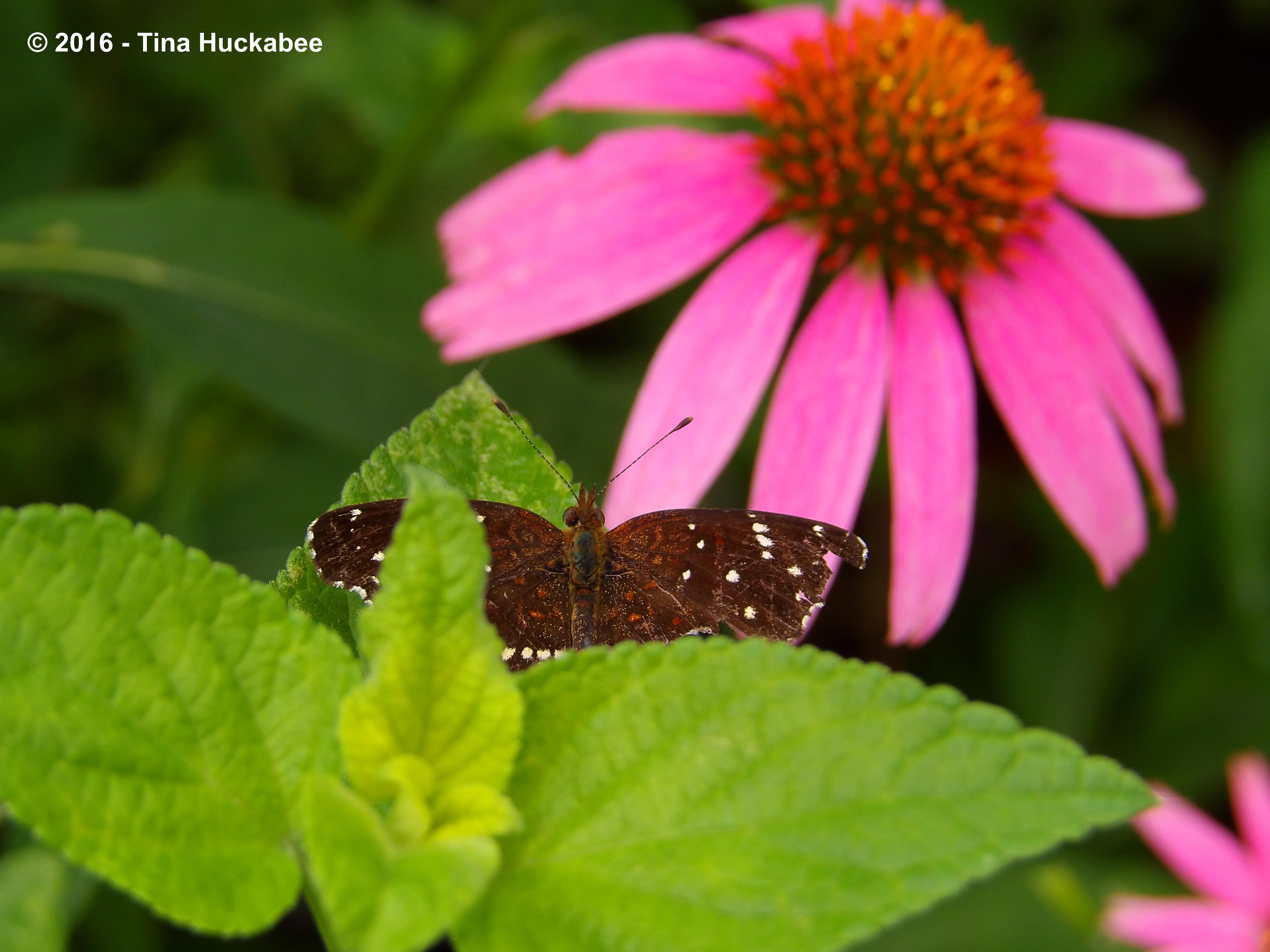
IMGP8420.new

Texas Crescent (Anthanassa texana) considering a trip to the Purple coneflower (Echinacea purpurea)

Pollinators constitute the thread that holds together the world’s food web and native plants production.  Upwards to 90% of native plants are pollinated by insects, birds, and bats; 1 out of every 3 bites of food humans partake of is pollinated by (primarily) bees–honeybees, and wild, or native bees.  According to Pollinator Partnership, 1,000 different plants that humans use in a variety of ways are pollinated by pollinating animals,

IMGP7455_cropped_3234x2903..new

American lady (Vanessa virginiensis) at a Purple coneflower bloom

…and in the U.S. alone, pollinators produce products worth $40 billion annually.

IMGP8417_cropped_3903x2968..new

Two-spotted Long-horned bee (Melissodes bimaculatus) at a Purple coneflower

The bottom line is that pollination and pollinators are principal players in the good health of all eco-systems.
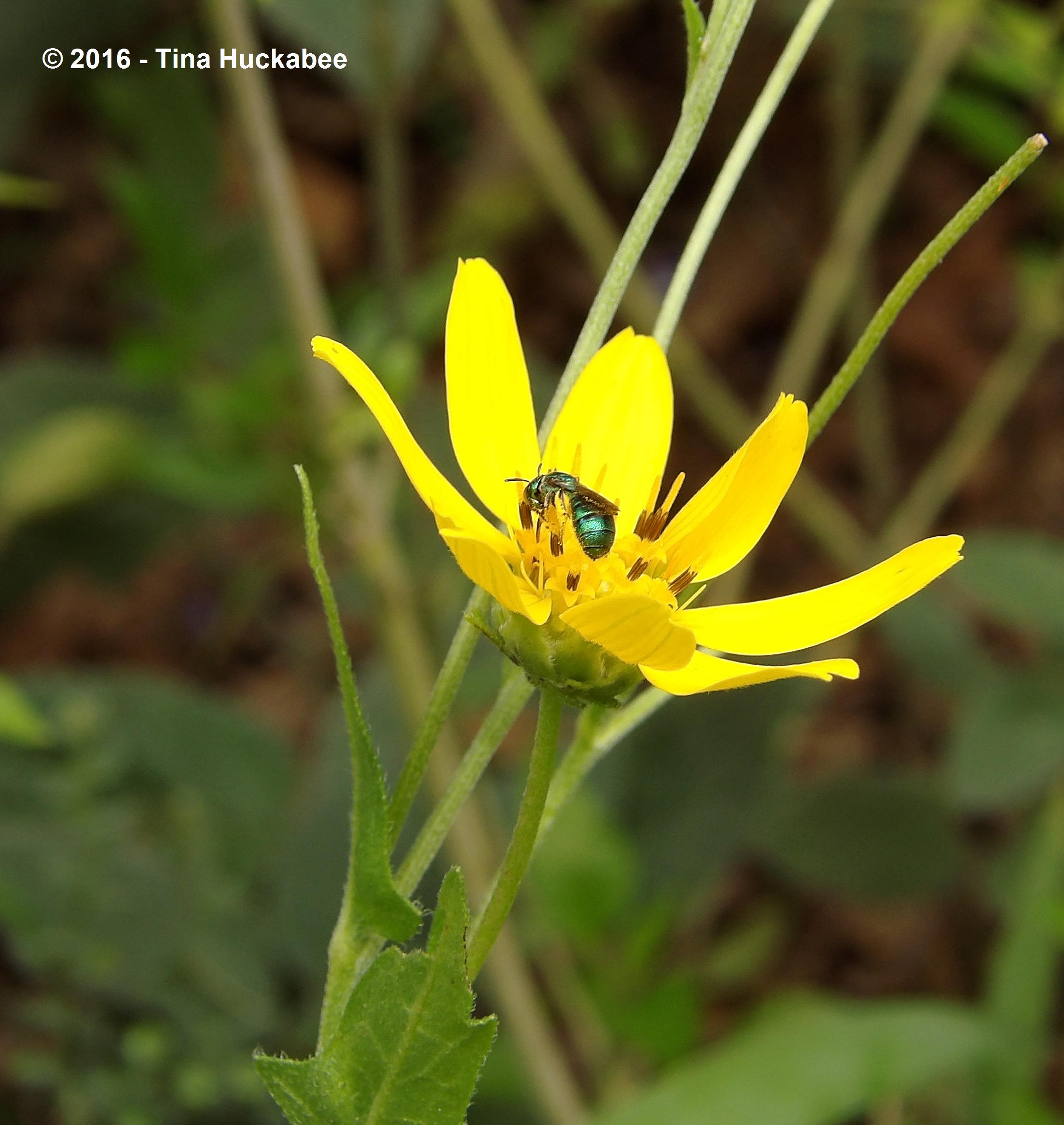
IMGP8272_cropped_2498x2640..new

Sweat bee (Augochloropsis metallica)(?) and an Engelmann’s daisy (Engelmannia peristenia)

What is pollination?  It’s the process whereby pollen is moved, usually either by pollinating animals or the wind, to other plants thus assuring reproduction of the plants with development of seeds and fruit–and the next generation of viable plants.

IMGP8527_cropped_2594x2170..new

Fly and Fall aster

Pollination produces new plant life.
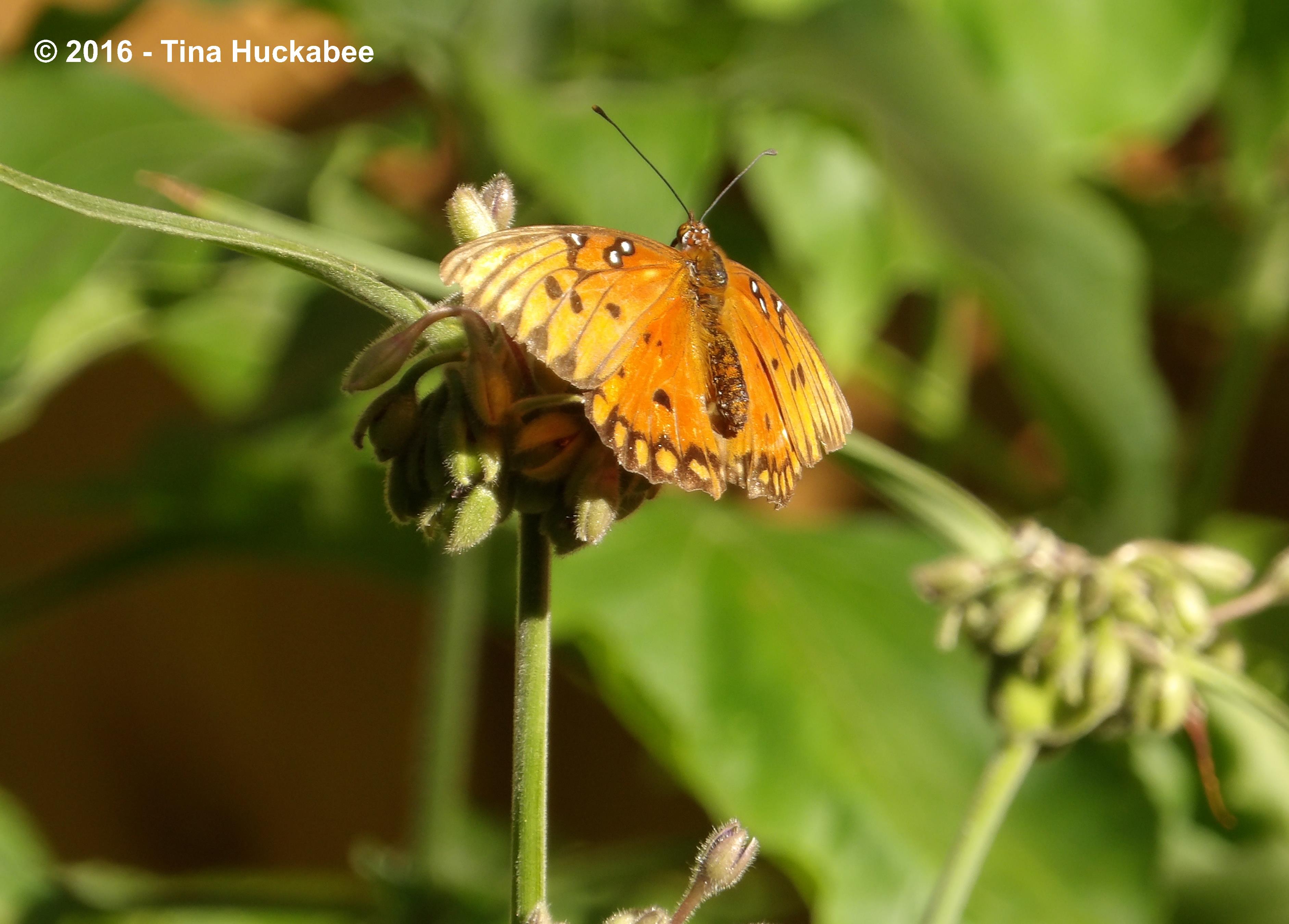
IMGP7316_cropped_3765x2700..new

Gulf fritillary (Agraulis vanillae) resting on a Giant spiderwort (Tradescantia gigantea)

What are pollinating animals?  Pollinators include, but are not limited to: birds, bats, moths and butterflies, flies, mosquitoes (Boo!), native/wild bees, and honeybees.  There are many, many other insects that pollinate.  Additionally, in parts of China where overuse of chemicals has killed all natural pollinators, people must hand pollinate some agricultural fields.

That frightening fact should scare all of us into taking care of the Earth’s pollinators.

IMGP8648.new

Honeybee (Apis mellifera) nectaring at a Blue passion-flower (Passiflora caerulea)

We know that pollinators are declining throughout the world because of habitat destruction, over and mis-use of chemicals, certain big agriculture practices, the unfettered spread of invasive plant species and the decline of native-to-region plant species, as well as other reasons, like pollinator diseases.

IMGP8399_cropped_2608x2382..new

Orange Skipperling (Copaeodes aurantiaca) working at a Rock rose (Pavonia lasiopetala)

The outlook for the health of pollinators and therefore, the rest of us, is tricky at best.

IMGP7340_cropped_3074x3189..new

Sweat bee (Lasioglossum) (?) collecting pollen from a Clasping coneflower


So, what can we do?  The easiest thing is to plant for pollinators in our own home gardens, or neighborhood school gardens, or local parks–or all three, plus anywhere else you can think of.

It’s so simple!

Get rid of some (or all!) of the water-wasting turf so common in home and commercial landscapes.  Mono-culture turf feeds nothing, except for problematic insects, and requires more irrigation, more chemicals, and more effort than planting native or well-adapted flowering perennials and annuals.

Once your garden bed is prepared and planted, sit back and watch the show.  If you plant it, they will come.

IMGP8472_cropped_3540x3282..new

Gray Hairstreak (Strymon melinus) working a Purple coneflower

Your garden doesn’t have to be huge, but do plant a variety of blooming plants for the whole of your growing season–the more, the merrier!

IMGP7460.new

Red Admiral (Vanessa atalanta) visiting a Purple coneflower

It’s always best to use native plants if you have access to a local seed source or a nursery that promotes native plants.  But non-native, well-adapted blooming annuals and perennials will also do the pollinator trick.  Ask the nursery or plant provider if any pesticides were used when growing the plants you want to buy.  If so, don’t buy them and TELL the nursery why.  Pesticides and insects are not a good combination–EVER.

IMGP7429_cropped_3567x2839..new

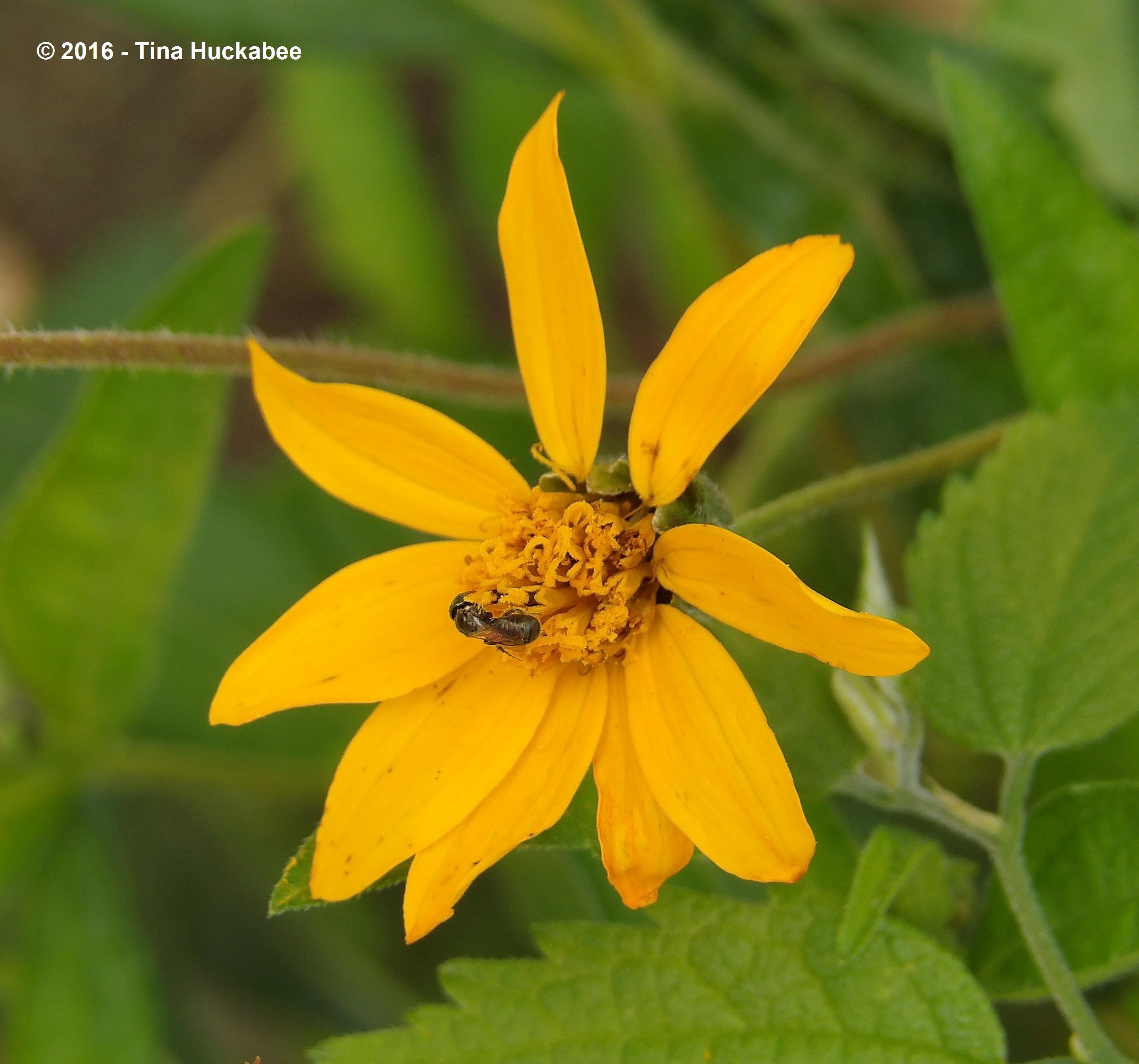
Minor bee (?) nectaring at a Zexmenia flower

Contact your County Extension Agent’s office for a list of good pollinator plants for your area.  As well, locally owned nurseries are usually great sources of information on pollinator plants.  The Pollinator Partnership, Lady Bird Johnson Wildflower Research Center, and National Wildlife Federation are all excellent on-line sources for learning about pollinators and how you can be a part of the solution to their problems.

IMGP7463_cropped_3544x2867..new

Three honeybee amigos hanging out with three Purple coneflowers .


Pollinators are beautiful.
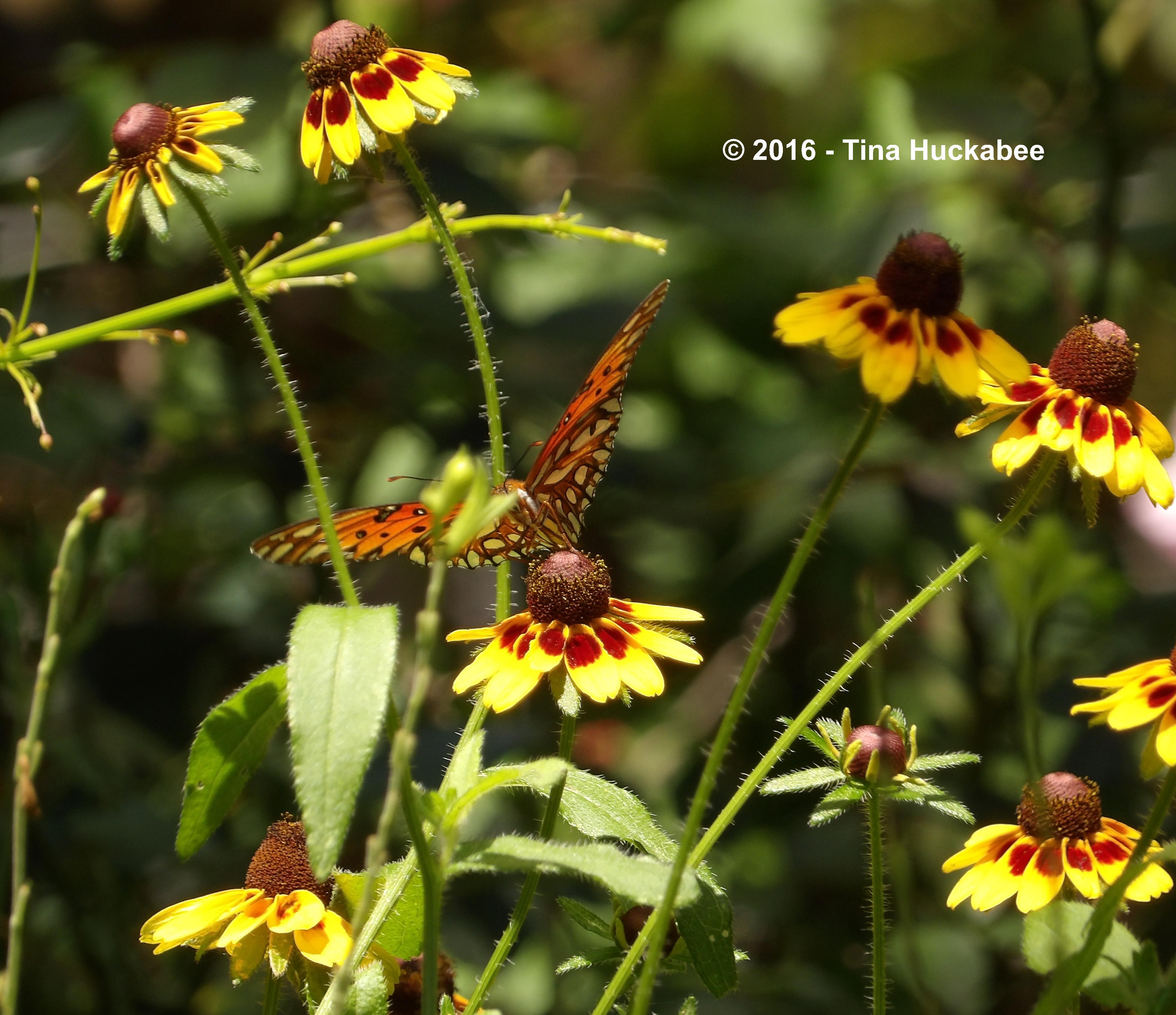
IMGP8394_cropped_3913x3378..new

Gulf fritillary visiting Clasping coneflowers


Pollinators are vital links in the fitness of the Earth’s eco-systems.
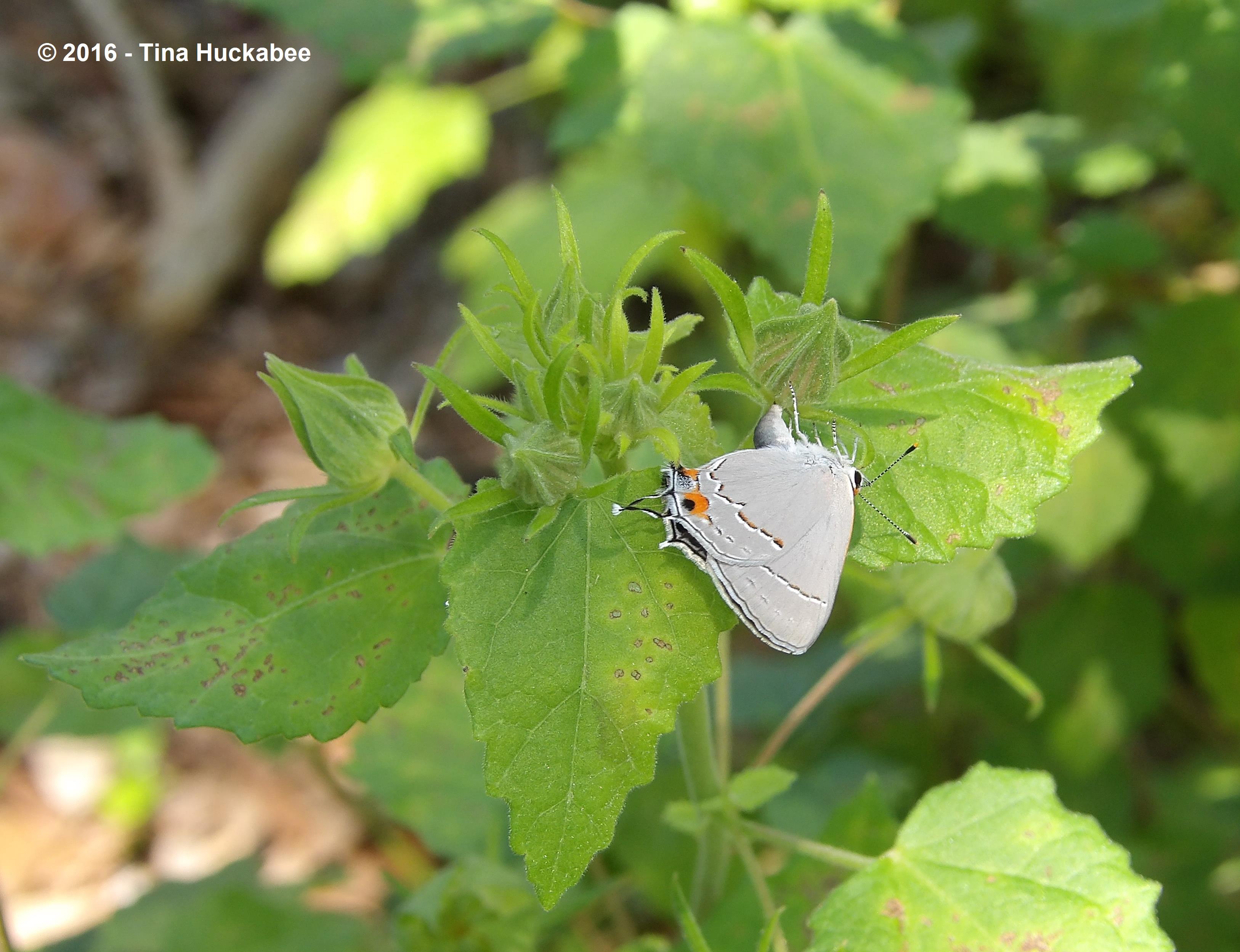
IMGP8397_cropped_3253x2498..new

Gray hairstreak resting on the foliage of Rock rose

IMGP8402_cropped_3382x2876..new

Minor bee (?) heading for the nectar and pollen of a Winecup (Callirhoe involucrata)


Pollinators deserve to live and thrive.

IMGP8450_cropped_2488x2373..new

Soldier beetle  (Cantharidae family) sipping nectar from a Purple coneflower

IMGP8451_cropped_3005x2723..new

Plant for pollinators in your garden.  Encourage neighbors and community organizations to do the same.  Lobby your local, state, and national representatives to set aside land so that these essential creatures can continue their work and contributions to the well-being of our world.

Happy National Pollinator Week!

IMGP8426_cropped_3240x3222..new

Pipevine Swallowtail (Battus philenor) resting on Turk’s cap (Malvaviscus arboreus) foliage
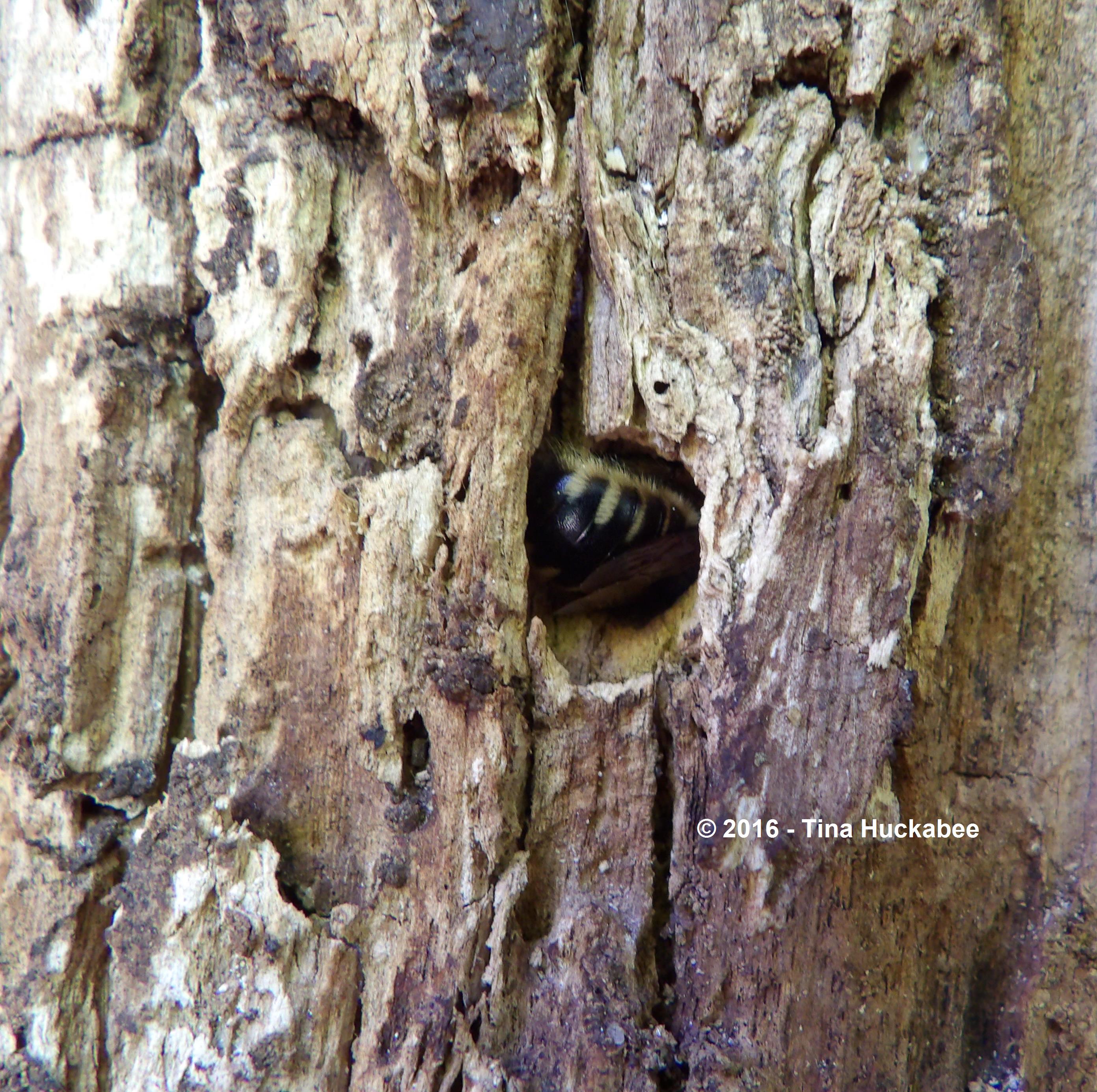
Wildlife Wednesday, May 2016: Plenty

It’s been an odd and distracted month for me and one where events out of my control took time away from following the plentiful goings-on of wildlife in the garden.  I won’t bore you with the details, but sometimes life really does get in the way of watching wildlife, photographing wildlife, and the blogging about it all.  Sheesh!

Ah well.   My various difficulties didn’t deter the nesting activities of a Horsefly-like Carpenter Bee,  Xylocopa tabaniformis, as she packed in material to nourish her young in a decaying log.

IMGP6970_cropped_2783x2770..new

Nor did the big problems of the world (or the relatively small problems of mine) prevent this Syrphid, or Hover fly from pollinating a Zexmenia, Wedelia acapulcensis var. hispida.

IMGP7076_cropped_3138x2752..new

On a different Zexmenia flower, a Small carpenter bee, Ceratina, sp., went about her business, too.

IMGP7428_cropped_3078x2876..new

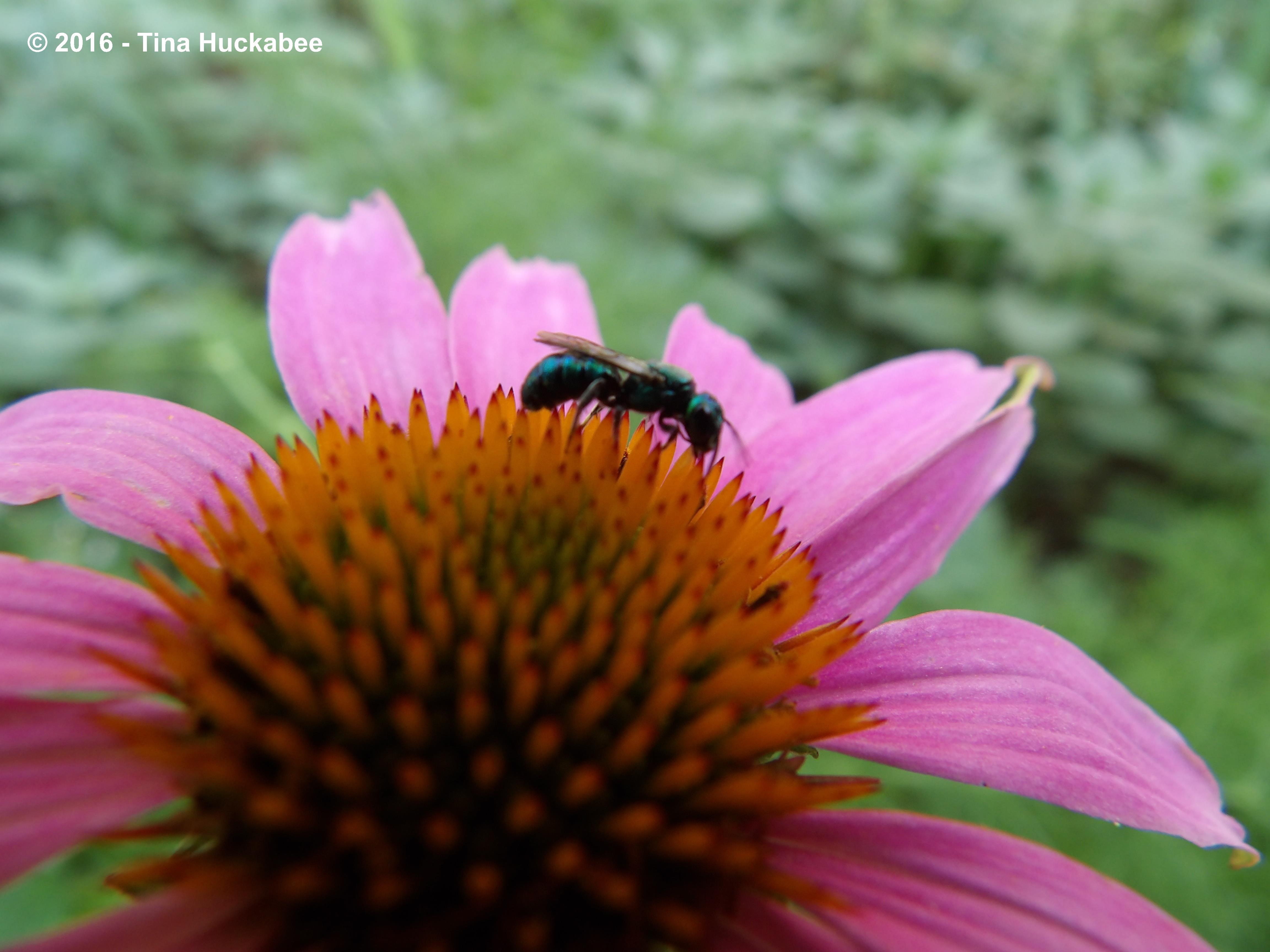
Other native pollinators, like this Sweat beeAugochloropsis metallica, worked a Purple Coneflower, Echinacea purpurea,

IMGP7312.new

…while a Mason beeOsmia subfasciata, favored a Blackeyed Susan, Rudbeckia hirta var. pulcherrima.

IMGP7335_cropped_2871x2908..new

IMGP7336_cropped_3124x3070..new

After pollination, this little bee is covered in pollen grains.

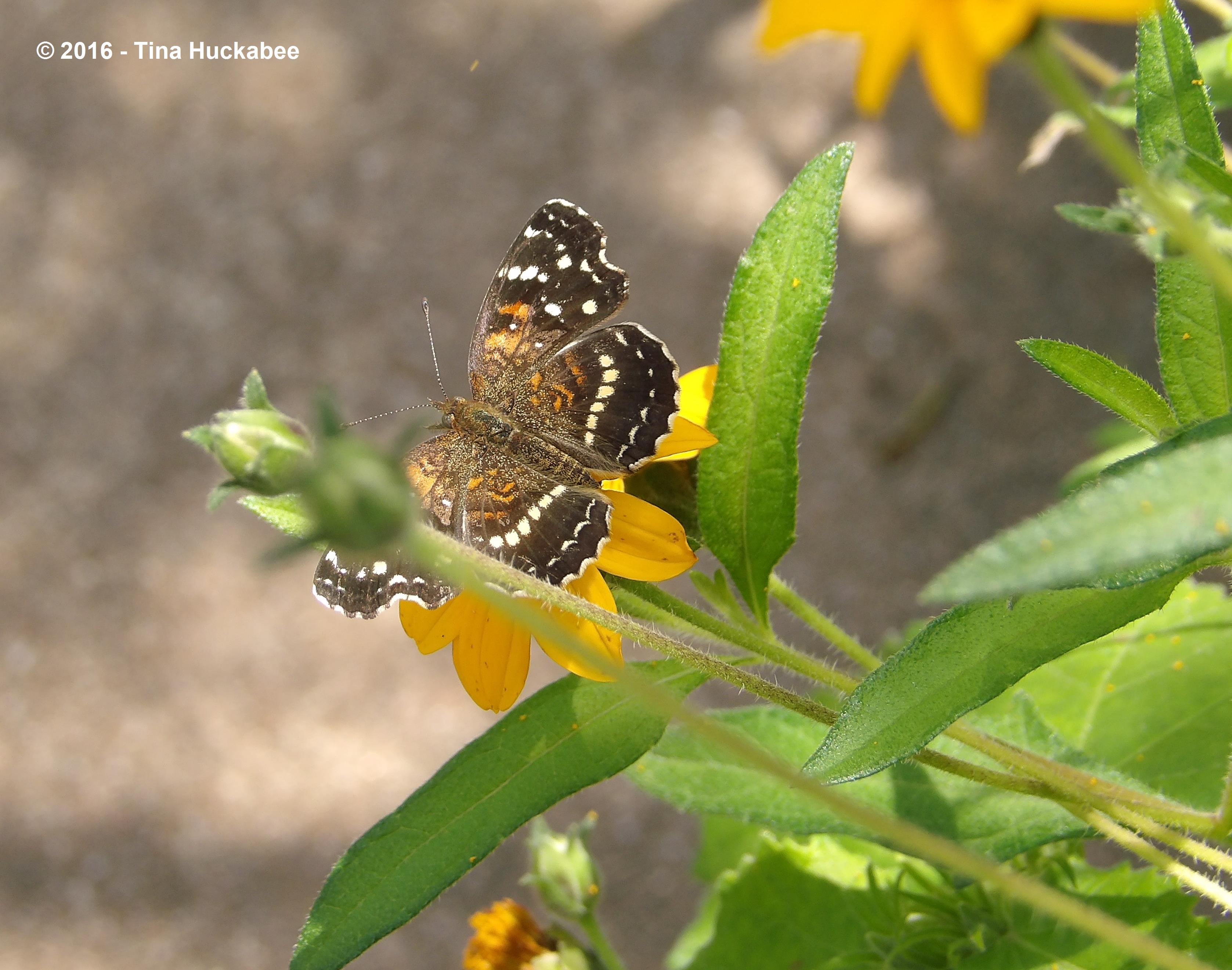
April has seen plenty of butterfly action, as well.  Texas Crescents, Anthanassa texana,      are flitting all over the garden, enjoying the bounty of flowers like the Zexmenia.

IMGP7441_cropped_3355x2641..new

Hmmm.

IMGP7437_cropped_3327x2557..new

It seems that Zexmenia is a good plant for pollinators.

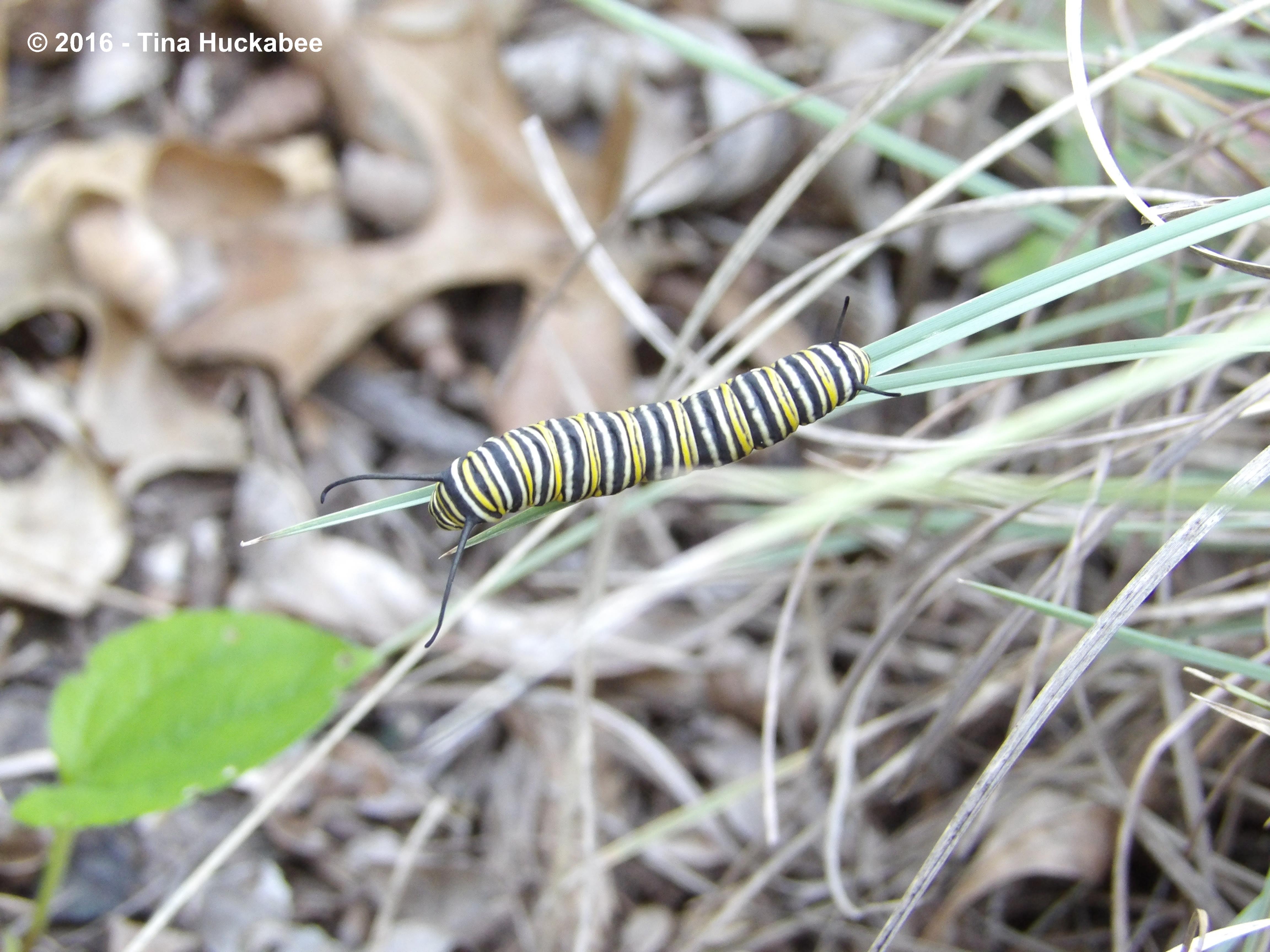
I don’t have a single photo of the few Monarch butterflies, Danaus plexippus who’ve wafted through my garden, but I do have photos of their offspring.

IMGP7598.new

I love the book-ending mode of these two monarch cats.

Those few winged visitors managed to lay eggs and the 5 Monarchs  caterpillars that hatched devoured my Tropical Milkweed, Asclepias curassavica plants.   The cats completely obliterated the foliage, but I transferred 2 cats to a neighbor with milkweed-a-plenty to offer the voracious larvae.

IMGP7610.new

This caterpillar lost his way and ended up on the strand of a Lindheimer’s muhly (Muhlenbergia lindheimeri).

IMGP7613.new

Peeking over the  edge, wondering where all the milkweed is, this cat landed on the underside of a culinary sage leaf.


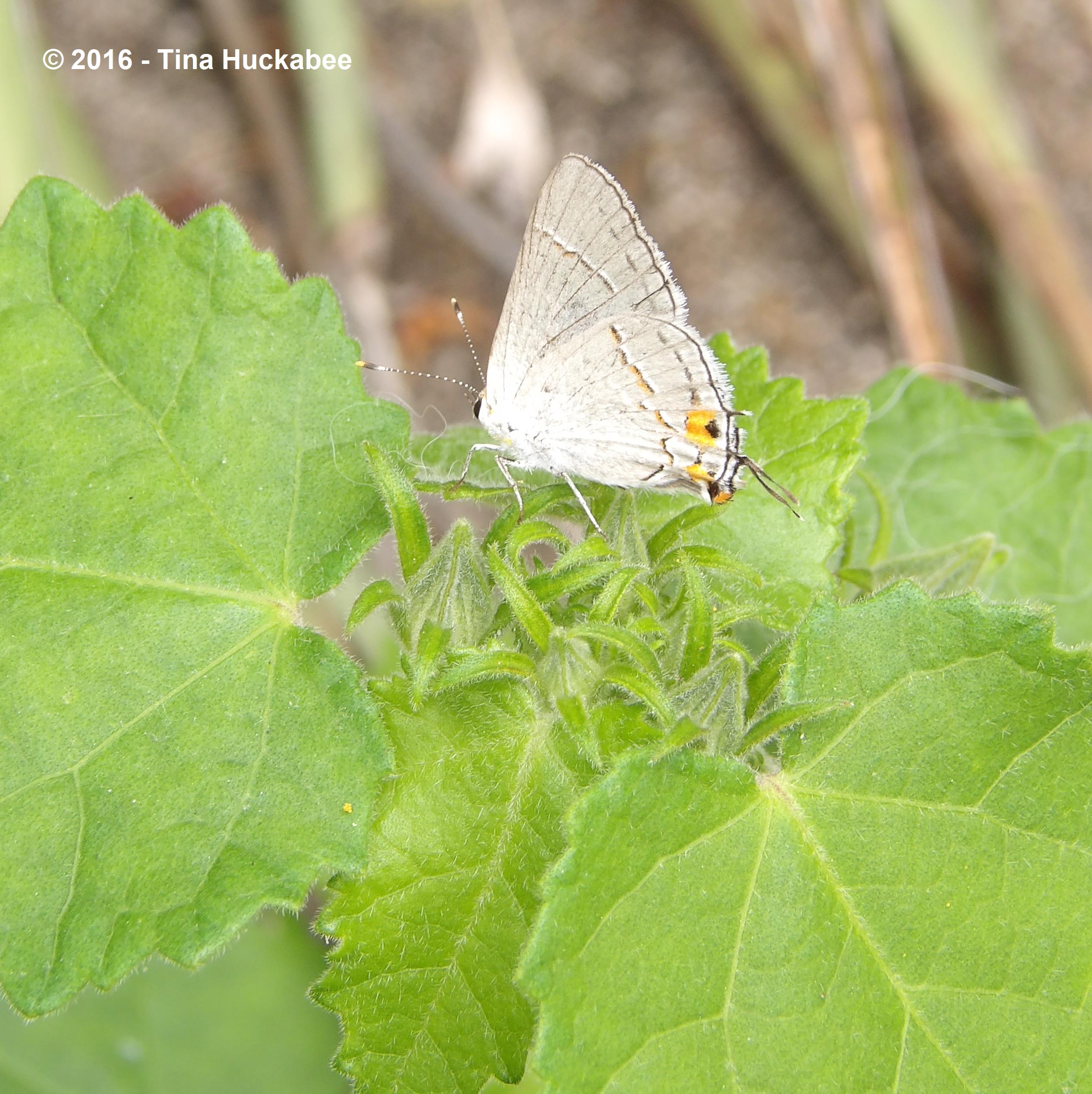
I didn’t catch this Grey Hairstreak, Strymon melinus, nectaring on anything, but she did pose for me, opening and closing her wings coquettishly,

IMGP7624_cropped_2530x2534..new

IMGP7618_cropped_3120x2789..new

IMGP7614_cropped_3111x2484..new

IMGP7616_cropped_2729x2599..new

…while she lounged on Rock Rose, Pavonia lasiopetala foliage.

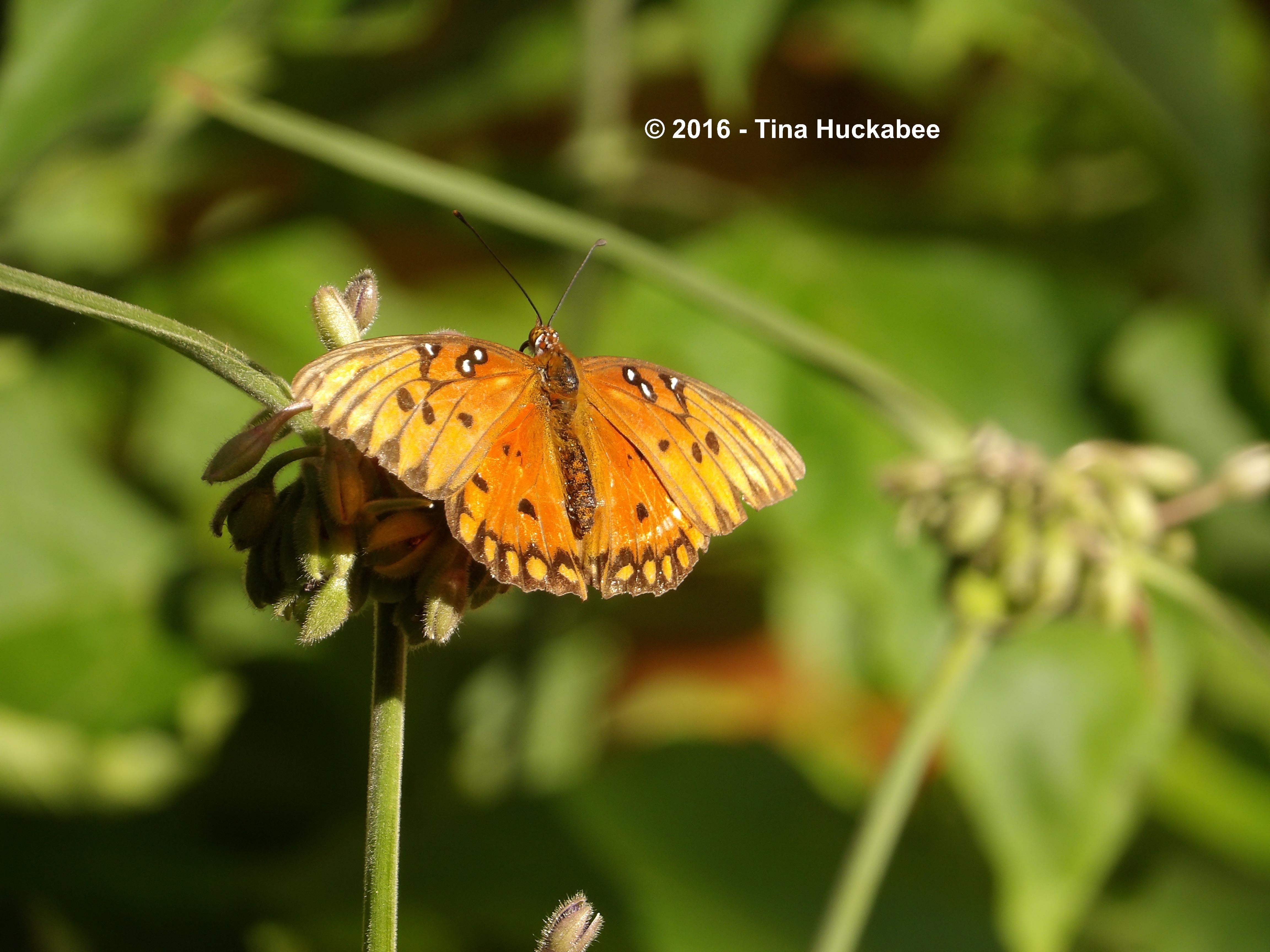
I’ve allowed rogue Passion Vine, Passiflora incarnata to pop up here-n-there in my gardens because it’s the host plant for this pretty pollinator, the Gulf FritillaryAgraulis vanillae.  Whether in its adult form,

IMGP7317.new

…or its larval form,

IMGP7657.new

… it’s a beautiful winged jewel and a great pollinator partner.

And yes, there were birds this month and plenty of them!  The Red-bellied Woodpecker, Melanerpes carolinus, remains a consistent, if not daily, visitor.

IMGP7118_cropped_2903x3120..new

IMGP7114_cropped_3124x3240..new

I’m not sure where this guy nests, though I’ll bet he has a family holed away somewhere nearby , because he’s always on the lookout for a full bird feeder.  There are plenty of older trees in my neighborhood, which, thankfully, the owners have kept rather than removing.  In many those trees are definite woodpecker holes and if the Starlings haven’t bullied the Woodpeckers away, one of those holes is where this handsome guy and his family reside.

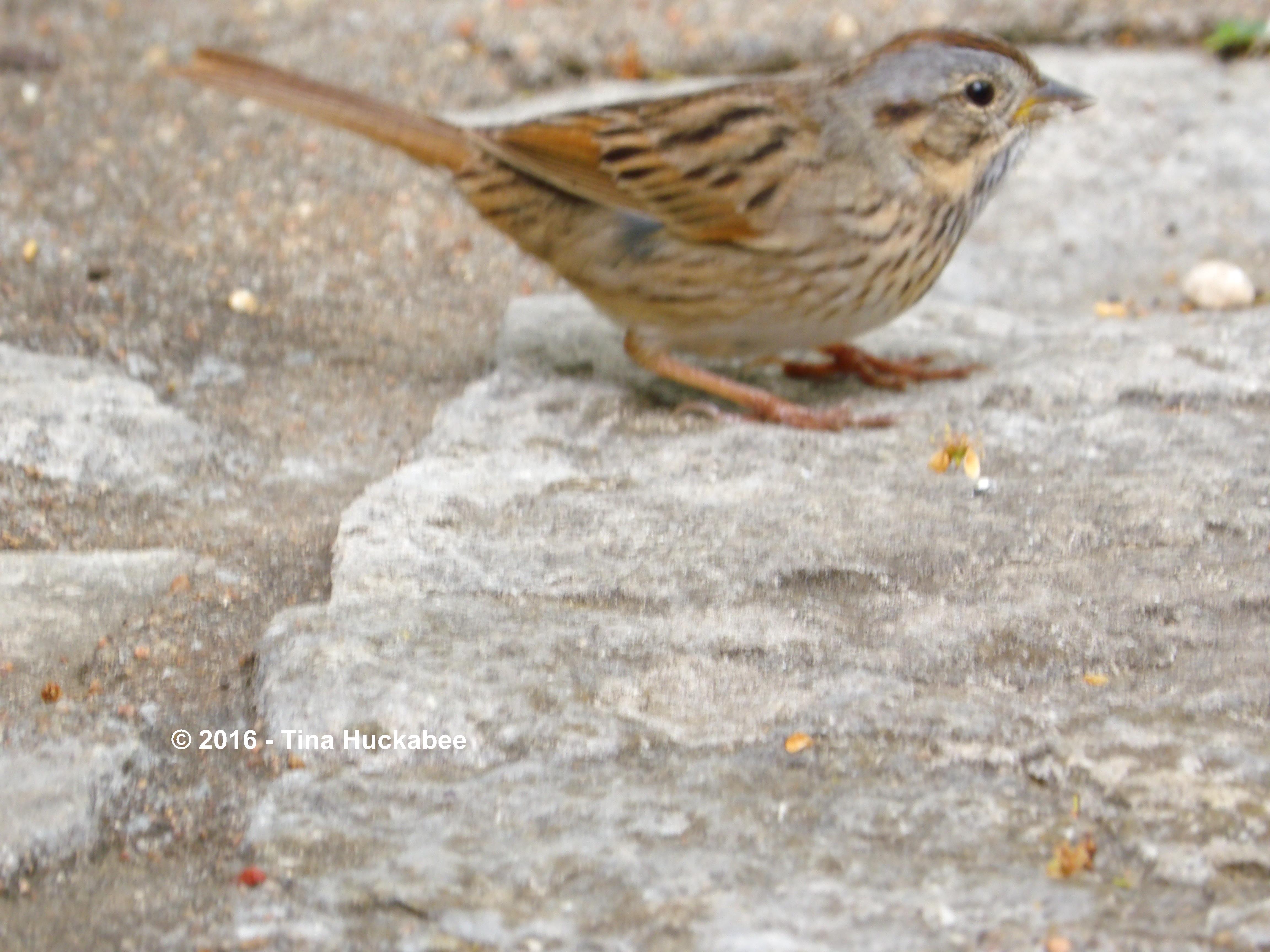
I never was able to capture a clear photo of this sweet little thing, but I found the coloring and markings elegant.

IMGP7145.new

He’s a Lincoln’s Sparrow, Melospiza lincolnii, and one of those birds that I noticed… because I’m noticing birds.  This species winters here in Central Texas, breeding far north into Canada during summer.  I don’t recall seeing any during winter,  but he bopped along the ground hunting and pecking for seeds this past month.

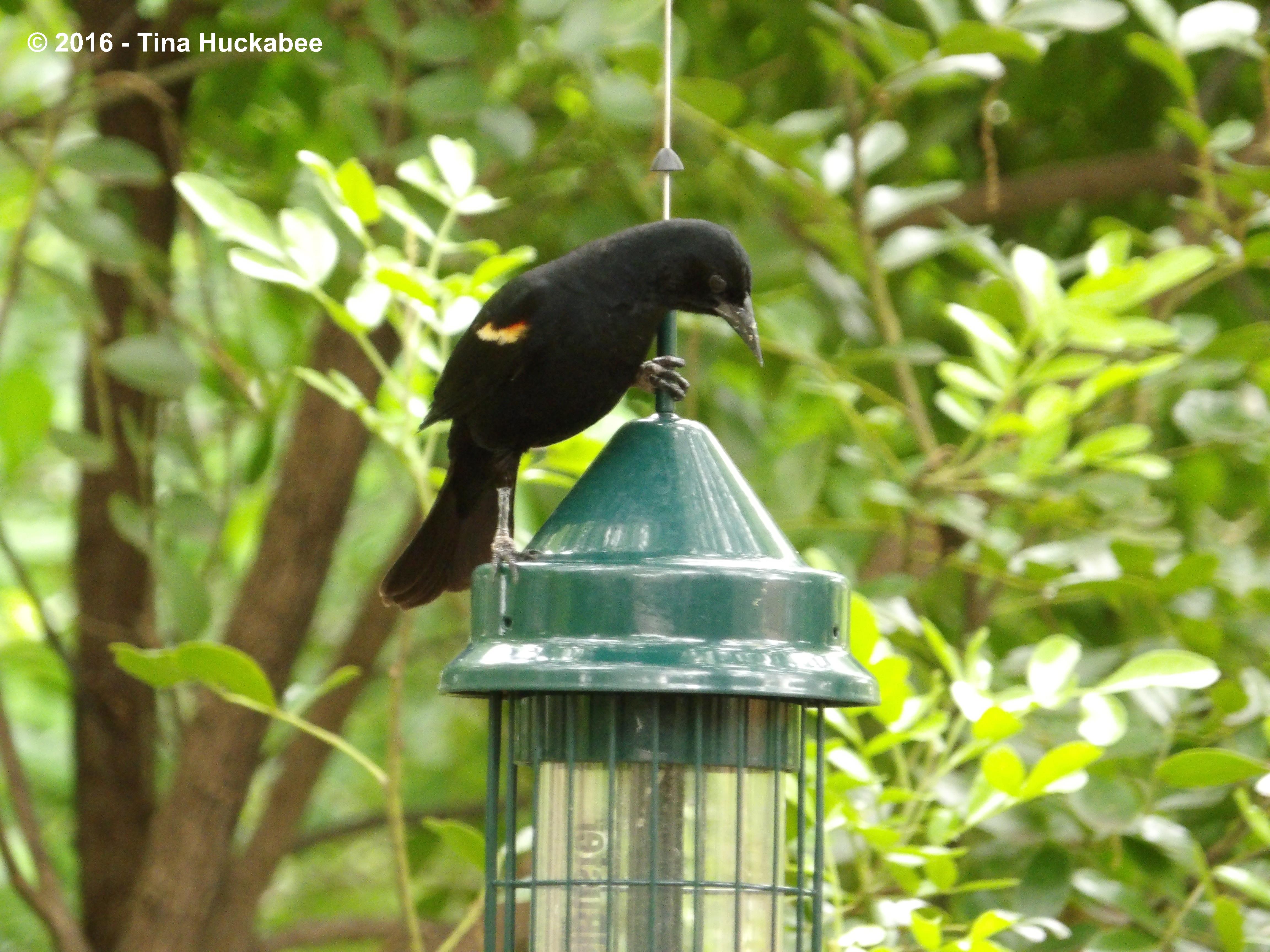
A fairly common visitor is the Red-winged Blackbird,  Agelaius phoeniceus.

IMGP7371.new

I’ve only see a few individuals this year.

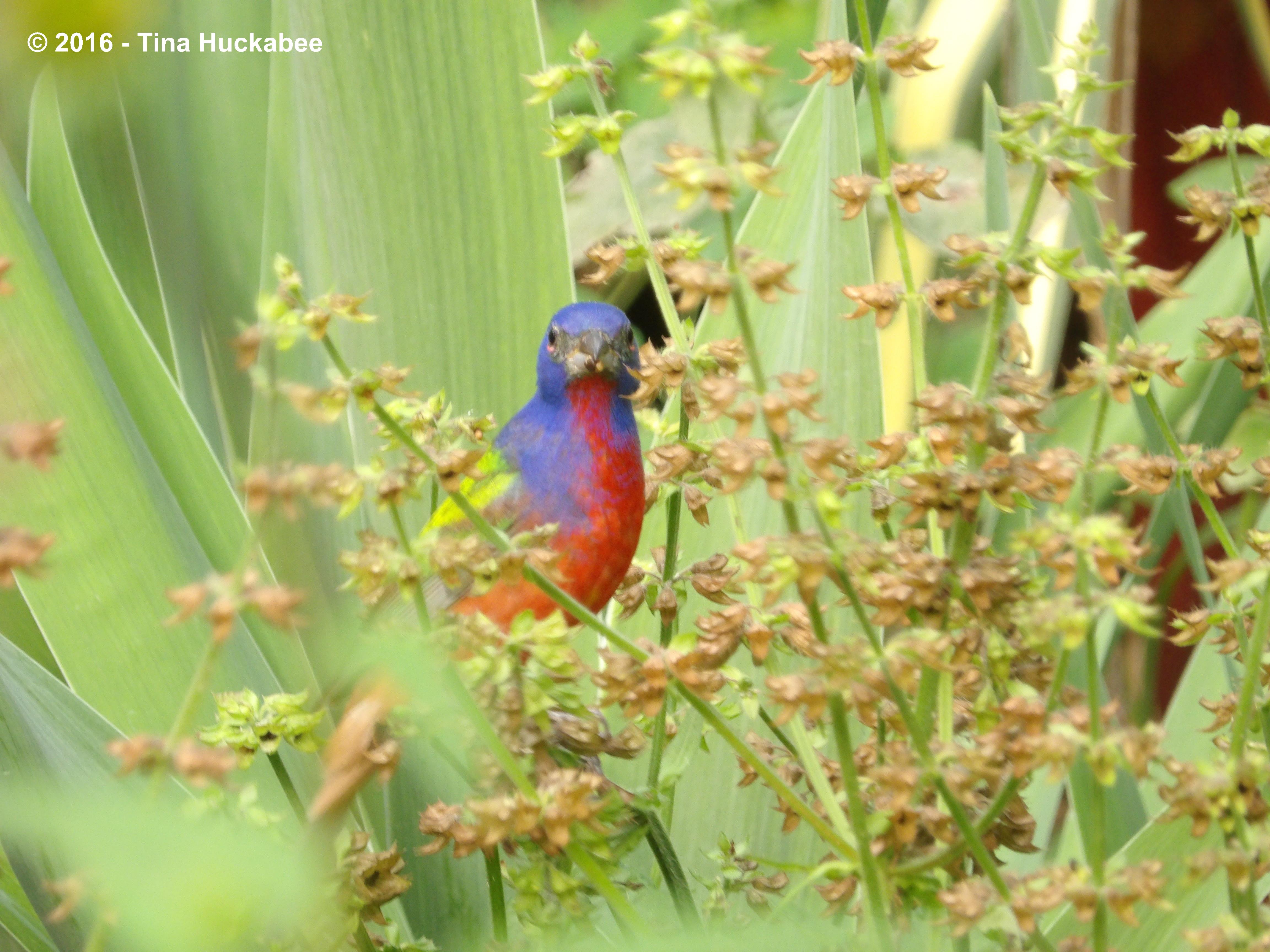
Aside from “my” Eastern Screech Owls–which I wrote about here and here, I’m most excited about sightings of a pair of Painted Buntings,  Passerina ciris in my garden.
The mature male Painted Bunting is a showstopper bird of the New World.

IMGP7394_cropped_3268x2913..new

IMGP7400_cropped_3374x3291..new

This guy knows he’s totally a gorgeous dude.

I love the description on The Cornell Lab of Ornithology’s All About Birds page on Painted Buntings, specifically regarding the males’ coloring:  With their vivid fusion of blue, green, yellow, and red, male Painted Buntings seem to have flown straight out of a child’s coloring book.

IMGP7776_cropped_3351x2687..new

IMGP7782.new

Yeah, that’s about right.    One can’t miss this splash of feathered color as he flutters from one seed-bearing plant to another.  I’ve noticed that both the male and the female in my garden favor the seeds of the native-to-Texas Lyre-leaf Sage, Salvia lyrata.

IMGP7757.new

IMGP7752.new

IMGP7719_cropped_2696x2755..new

Buddy, you’re really good-looking, but you might want to wipe your chin….

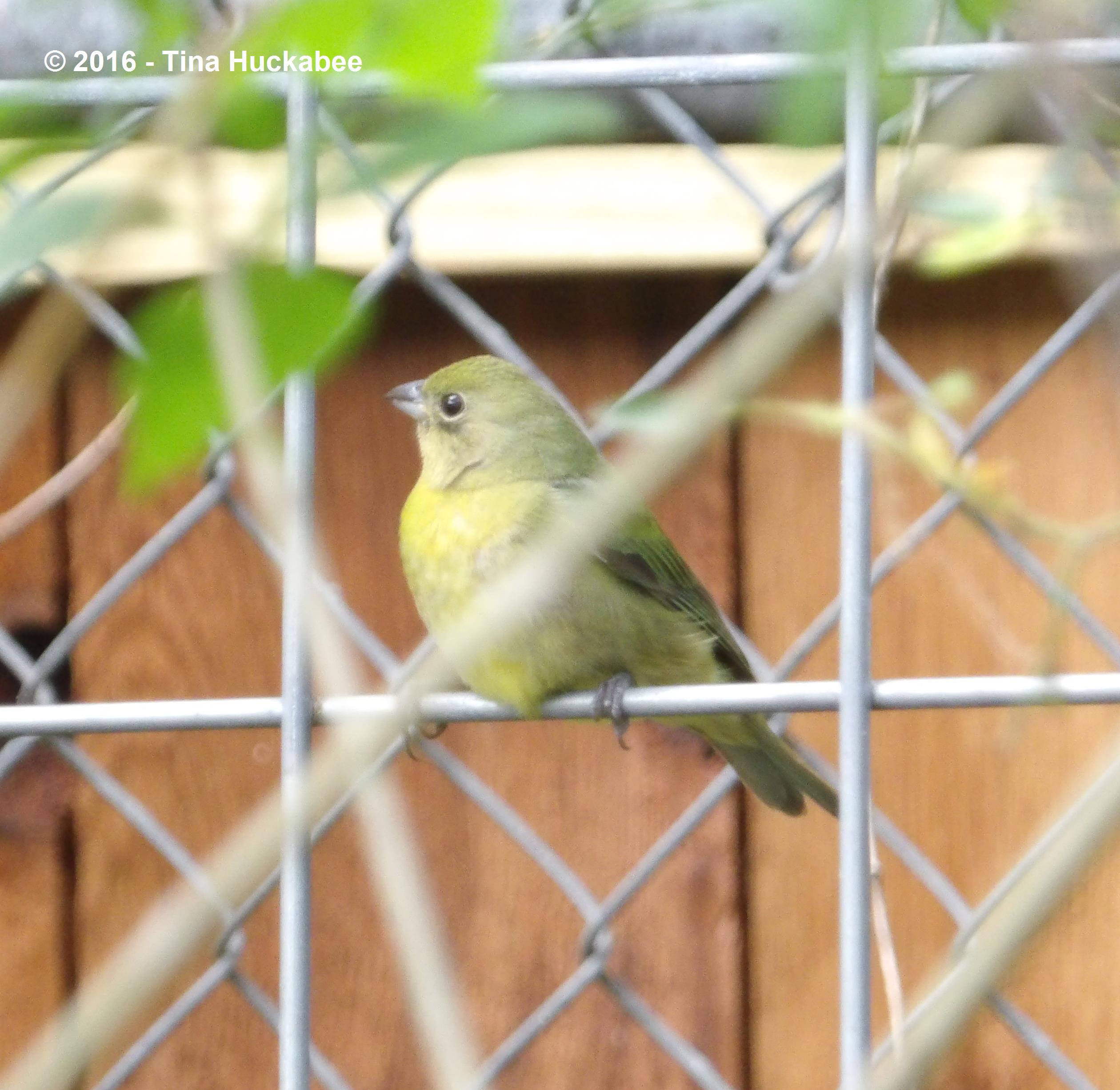
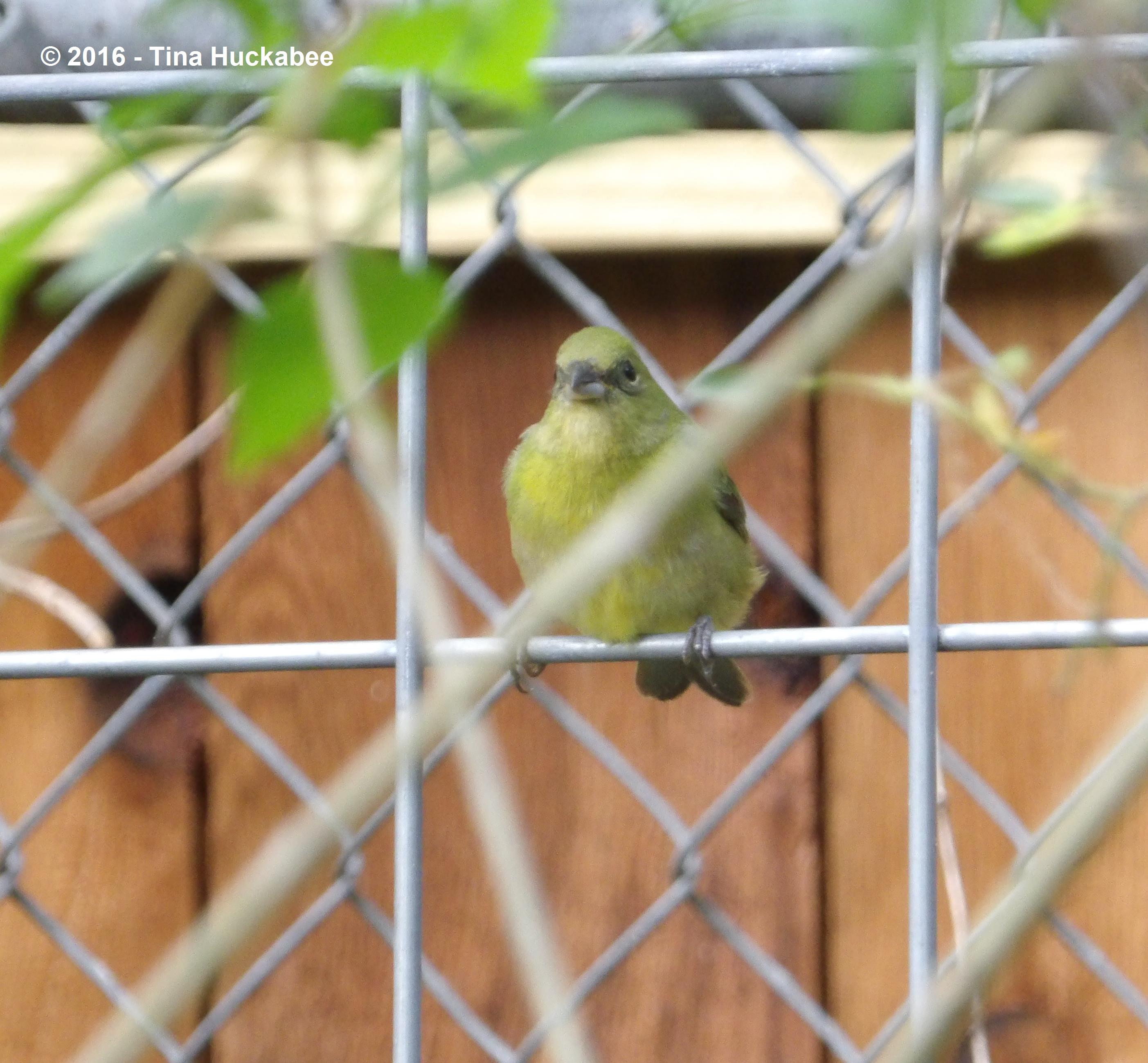
The female is not as flashy as her mate, but certainly fetching in her green and yellow swag.

IMGP7669_cropped_3396x2419..new

IMGP7668_cropped_2520x2452..new

IMGP7663_cropped_2806x2598..new

Long ago there were a couple of consecutive years during spring migrations when small flocks of these gorgeous passerine birds visited my garden, each time for a few days. They nibbled on the seeds of a cool season non-native grass that sometimes appeared when I grew mostly grass, rather than a real garden.  I’m glad that I can now offer them  something nutritious, native, and not-grass on their migratory pathway.

One of a nesting pair of Carolina Wrens,Thryothorus ludovicianus,  posed for me the other evening as I was watching for owlets.

IMGP7686.new

These charmers are a favorite bird of mine.  They seem playful and cheeky as they hop around the ground and pop through the shrubs, snatching up insects for themselves and their babies.  Carolina wrens have the loudest songs and calls–and for such a wee bird!  They are my usual wake-up call, singing just outside my bedroom window.  Loudly.  The couple in my garden have a nest somewhere nearby and are always singing and chittering.  After I took the above shot, this wren gleefully (or so it seemed to me) shook out his feathers.

IMGP7693.new


And maybe next month, I’ll know what these are….

IMGP7612_cropped_3124x3134..new

Did wildlife visit your garden this past month? Please post for May Wildlife Wednesday Share the rare or mundane, funny or fascinating, beneficial or harmful critters you encounter. When you comment on my post, please remember to leave a link to your Wildlife Wednesday post so readers can enjoy a variety of garden wildlife observations.