In November 2015, I wrote about the golden glory that is Plateau Goldeneye, Viguiera dentata, or as I usually call it–Goldeneye.
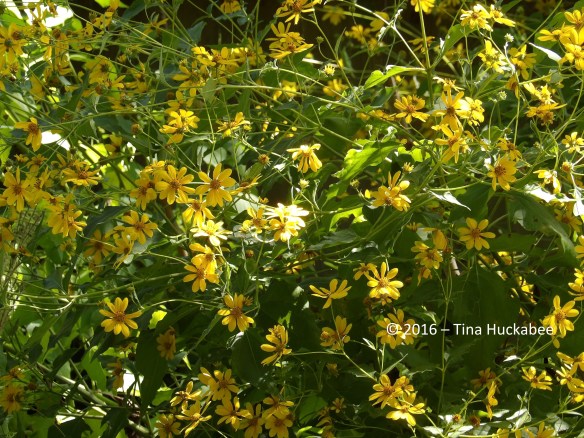
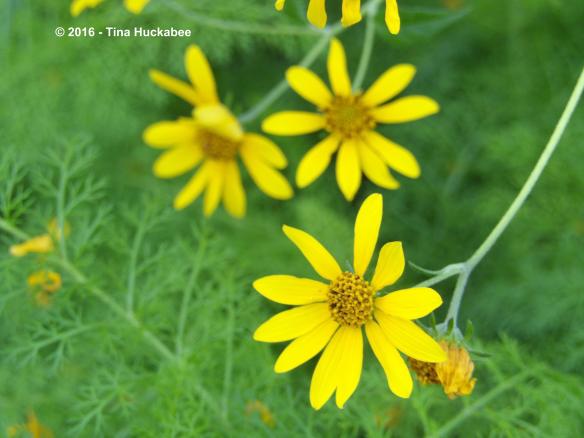
A native to the Southwestern U.S., specifically Arizona, New Mexico and Texas, Plateau Goldeneye is a bright and sprightly autumn bloomer which graces the likes of roadsides, plains and valleys, and home gardens equally.

In profiling this perennial for A Seasonal Look, I realize that it has a limited area in which it grows naturally, but it’s an interesting plant and if you garden in its range, it’s one that dry-garden gardeners should grow, especially those who wish to attract a range of wildlife.
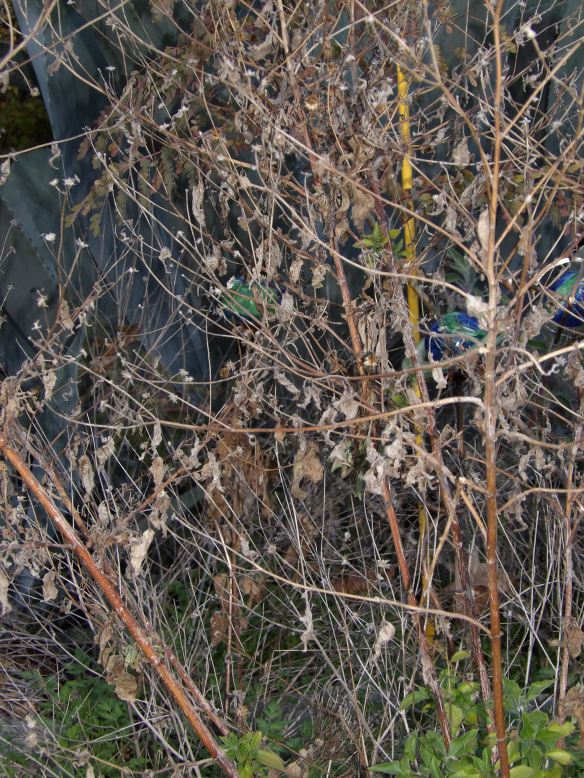
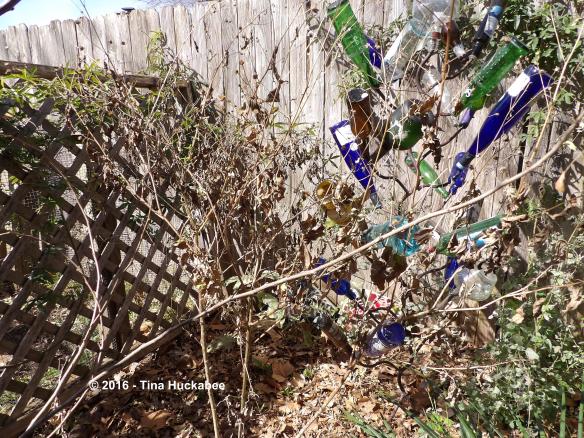
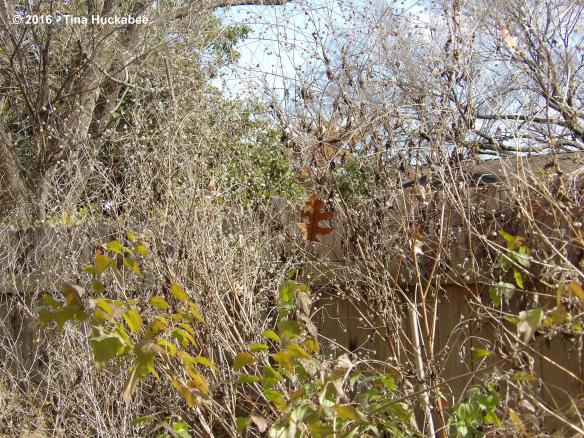
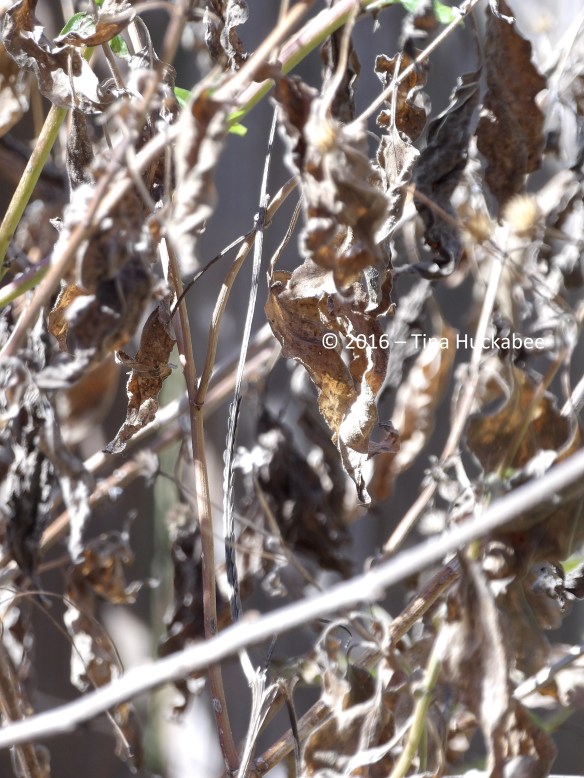
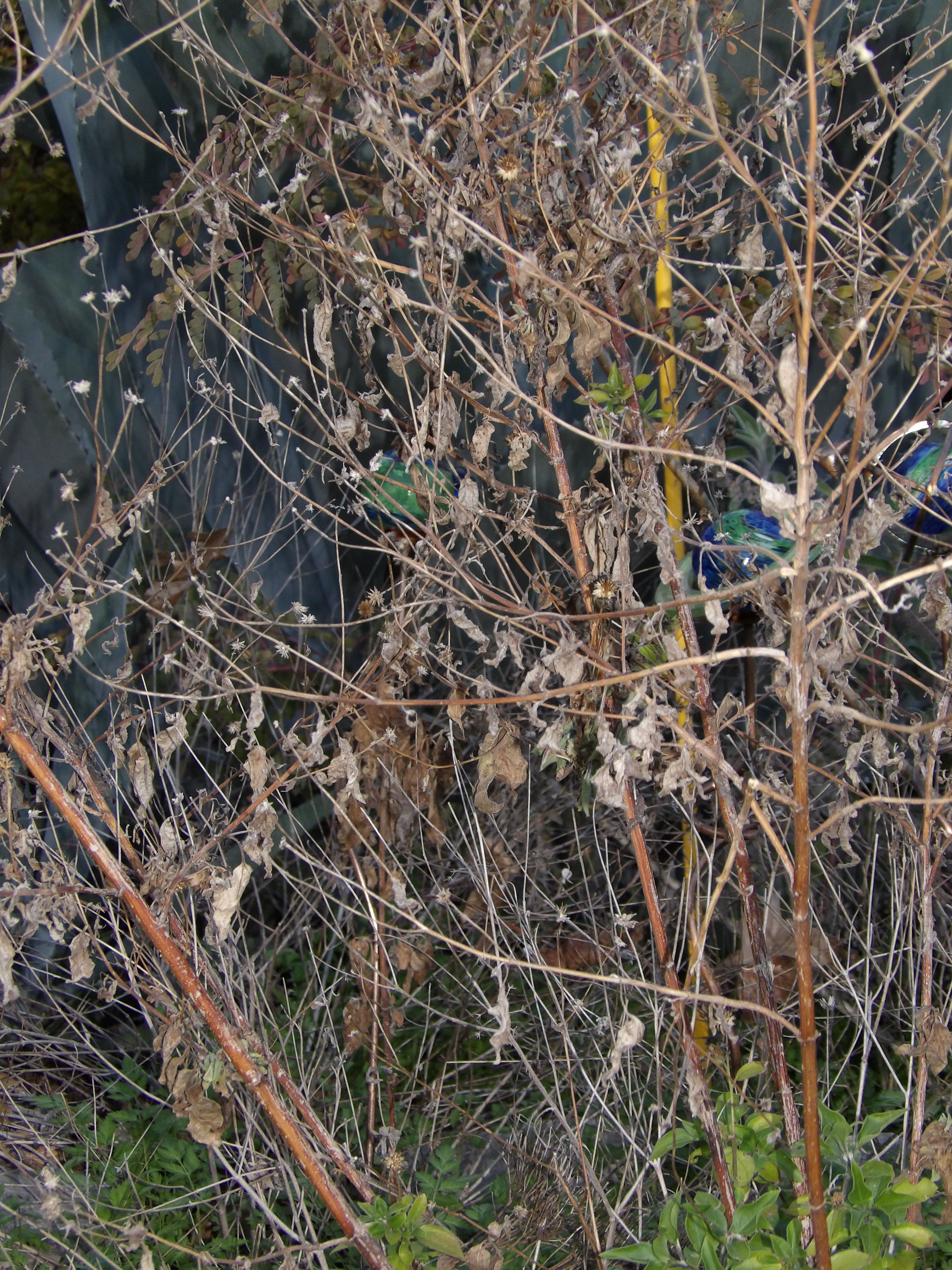
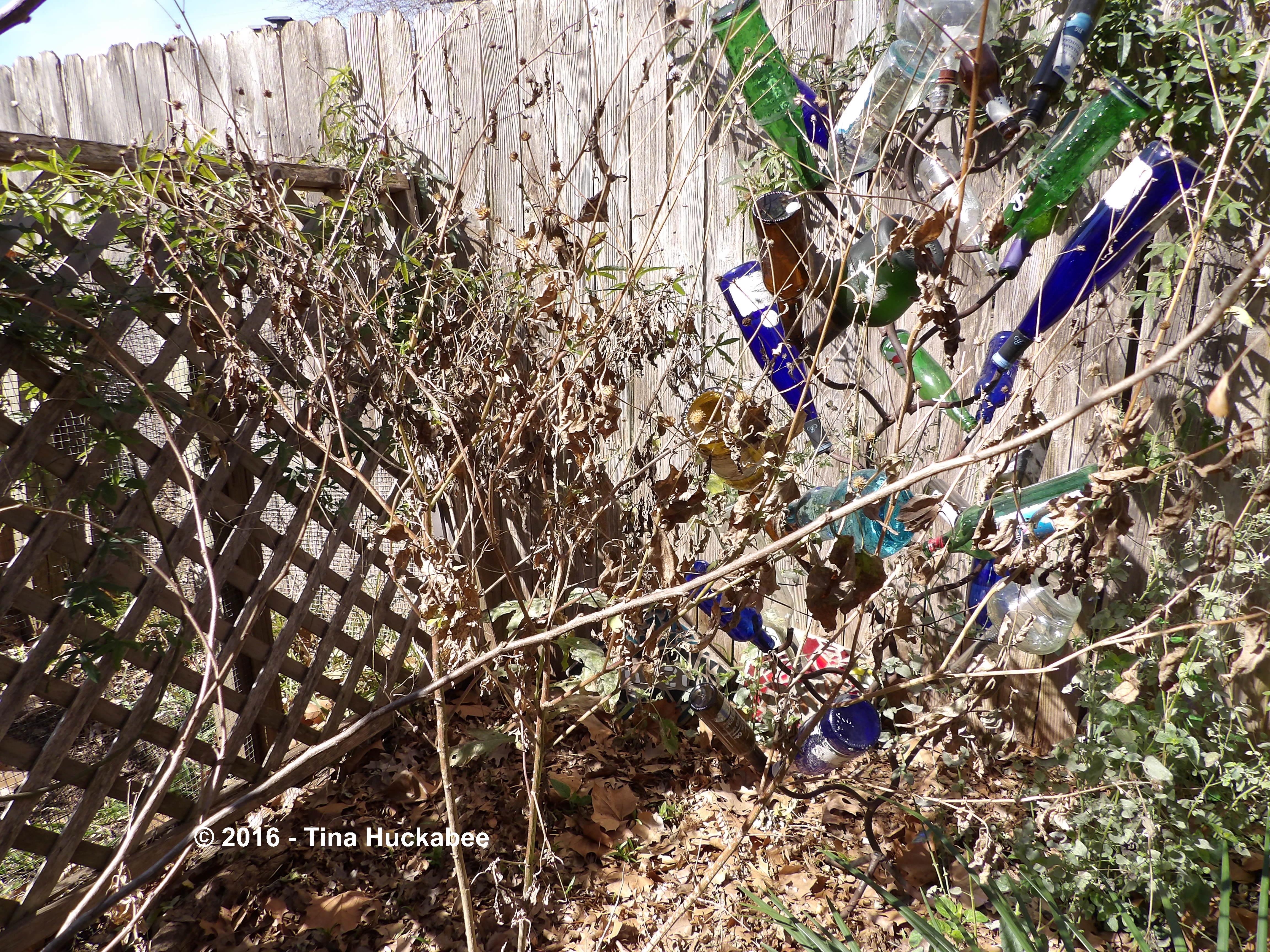
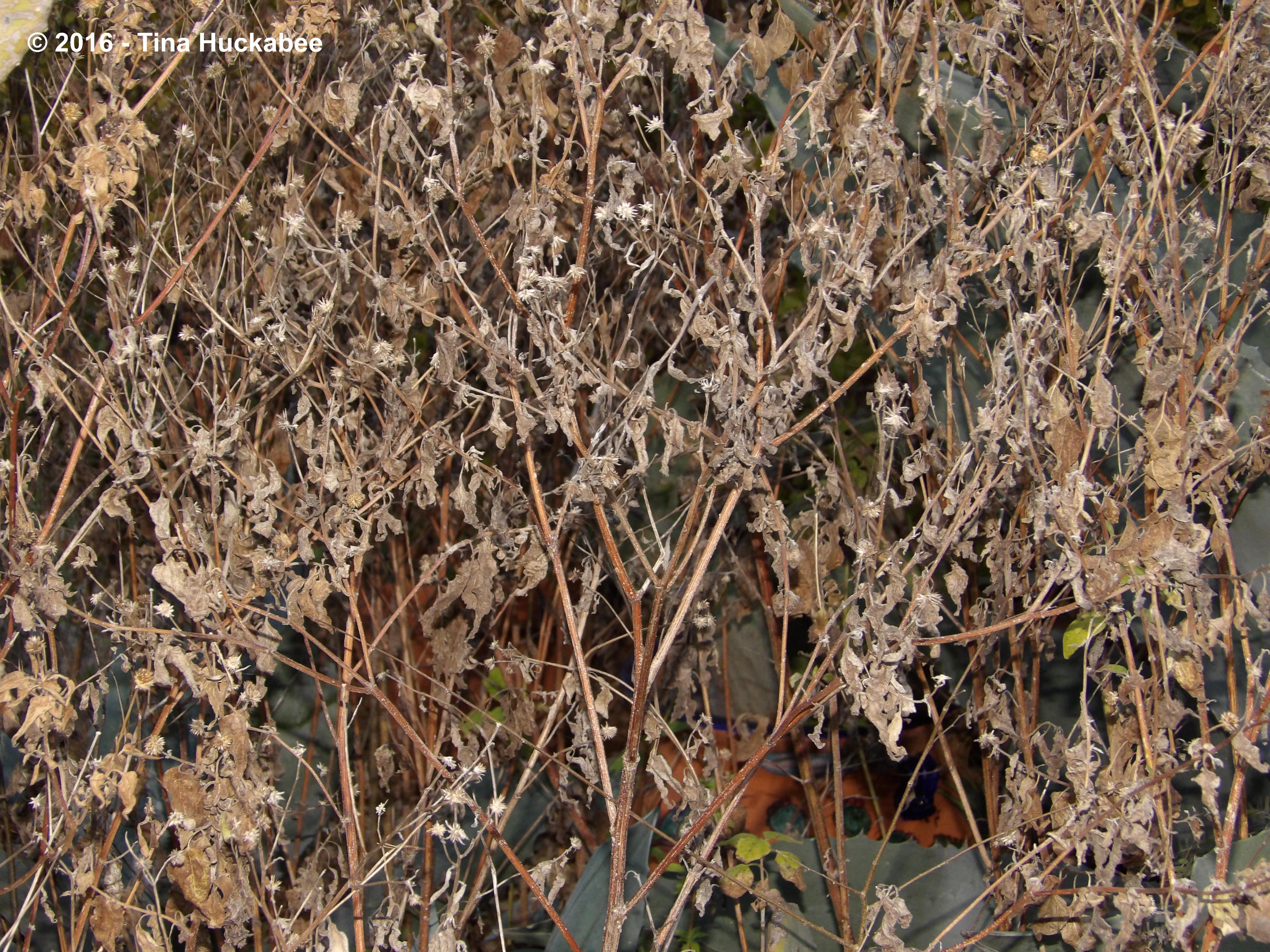
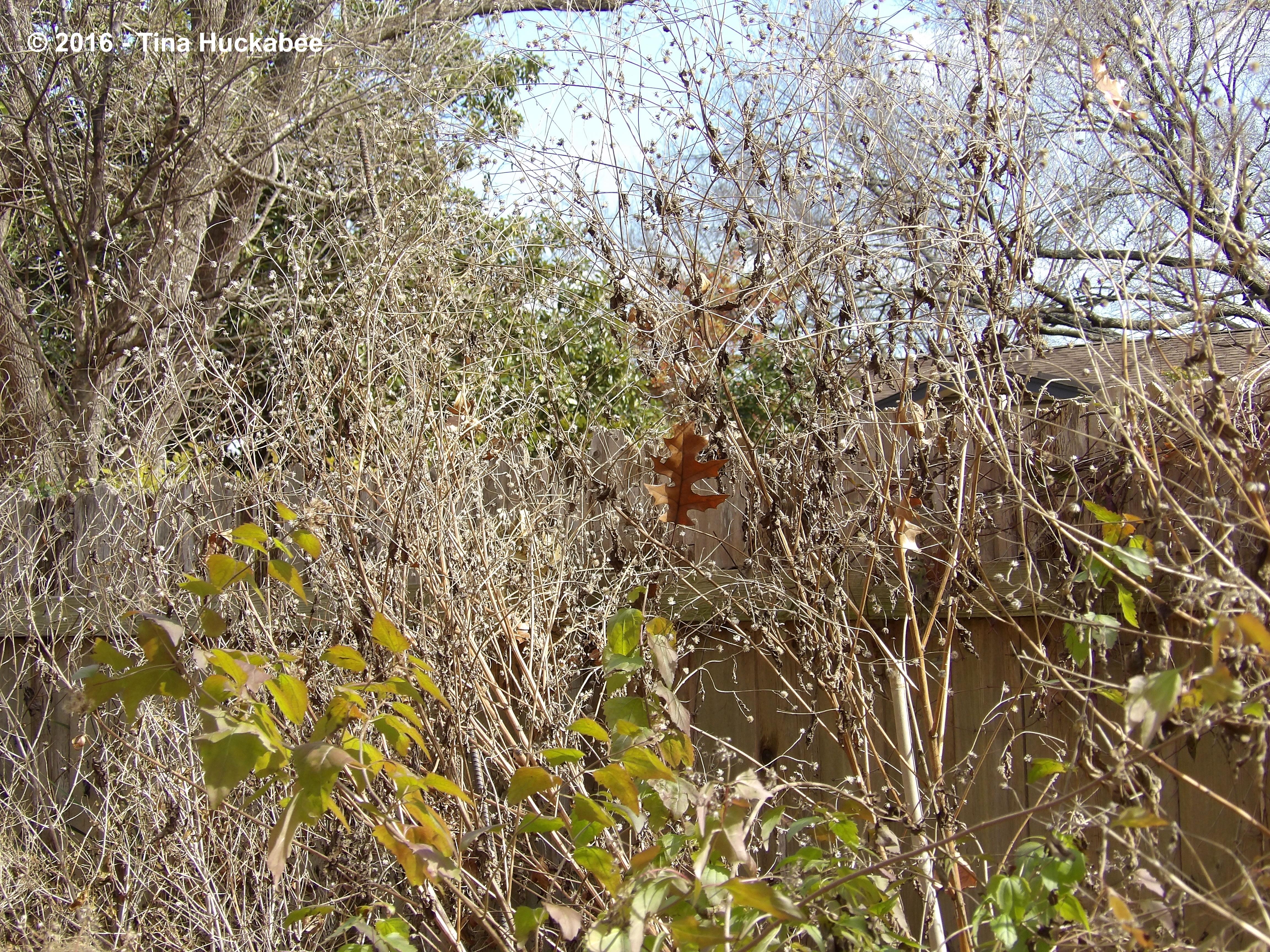
In winter after a reasonable freeze, the plant is done for the year.
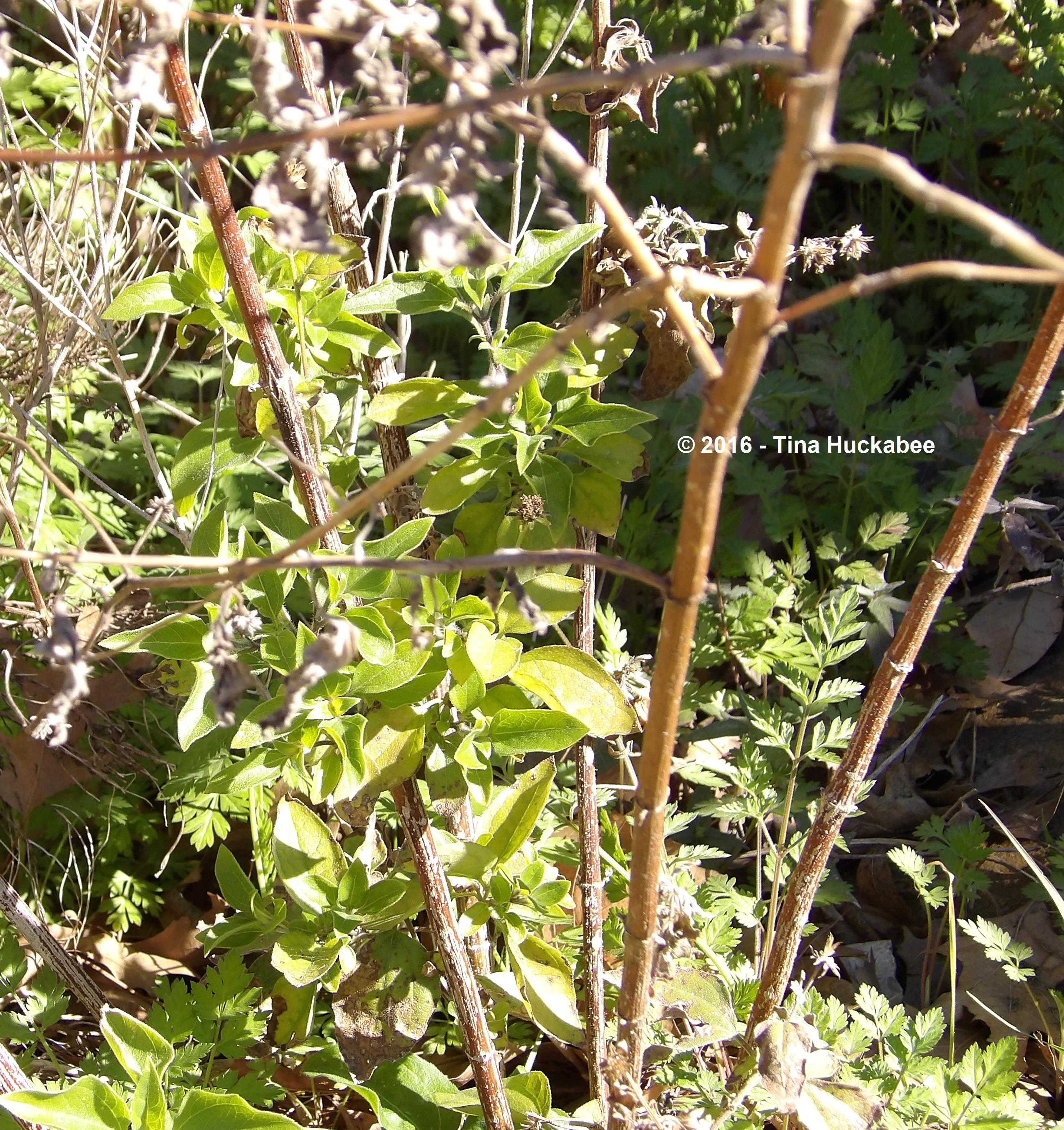
In milder winters (like that of 2016) there may still be some green leaves and canes,
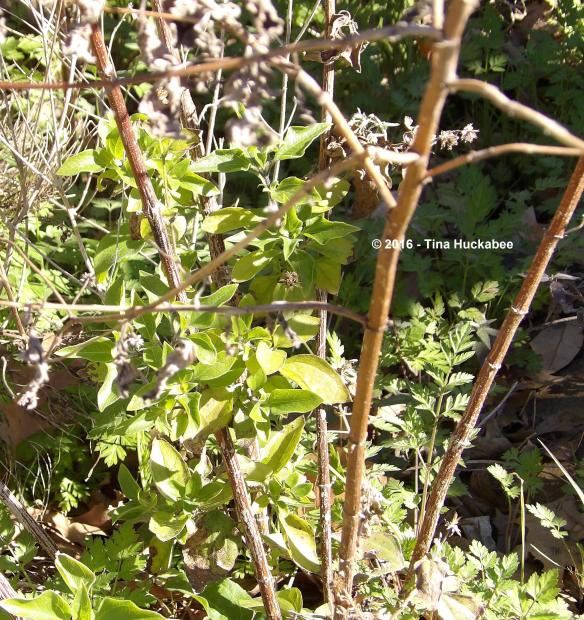
…and a flush of new growth in January or February.
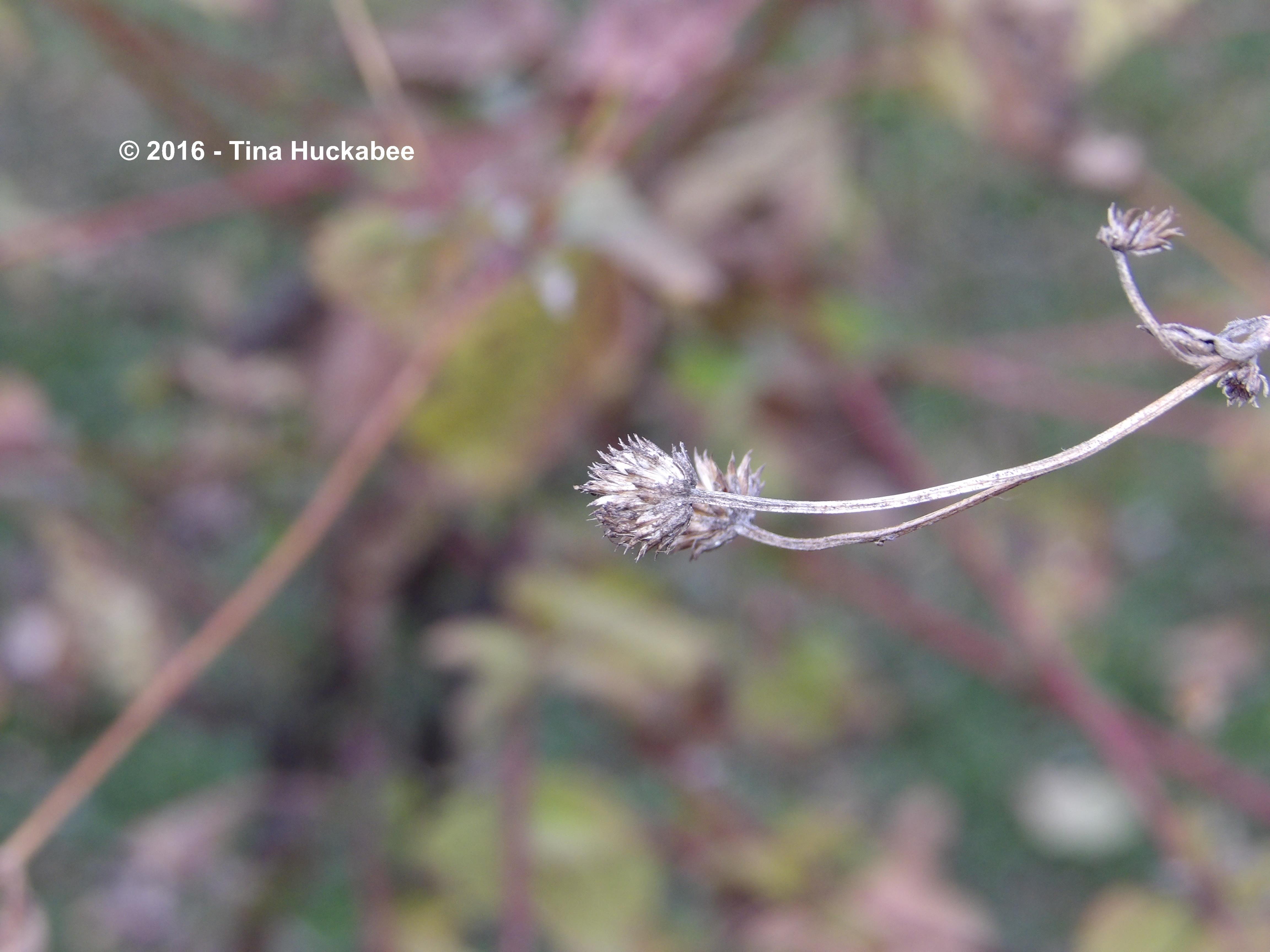
I typically leave my Goldeneye for as long as possible because I’ve read that finches will take strips of leaves for their nests as they prepare for spring breeding season. Also, there are often seeds available throughout much of winter for birds to snack on–and they do partake of those seeds. So, in spite of its skeletal, freezer-burned appearance, I keep mine around until mid-to-late February, or as long as I can stand to look at them.
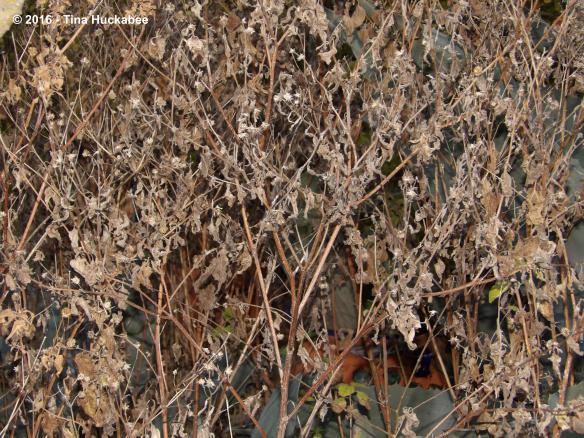
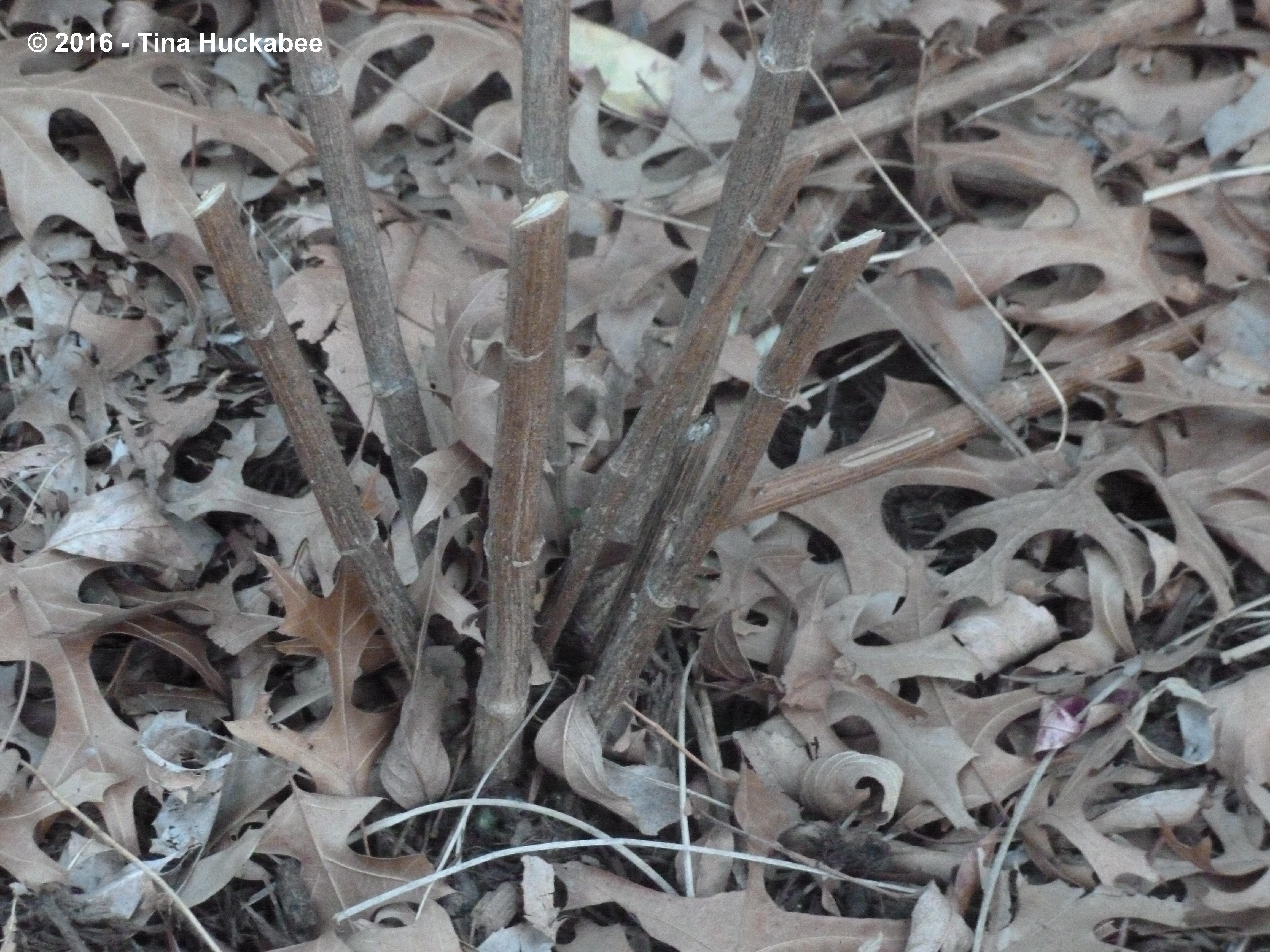
However, there arrives a day when it’s time to whack back the remains of the year’s growth. And whack I do.
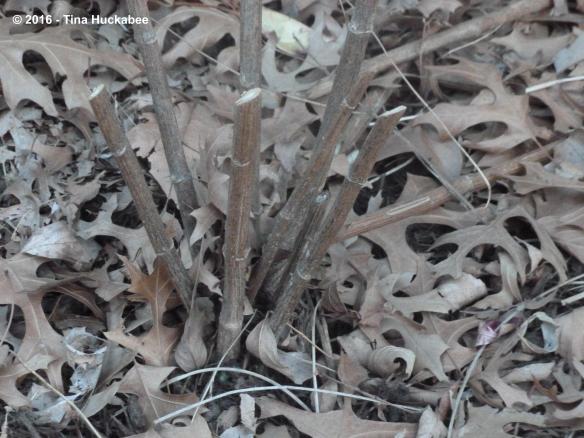
Does that make me whackadoo??
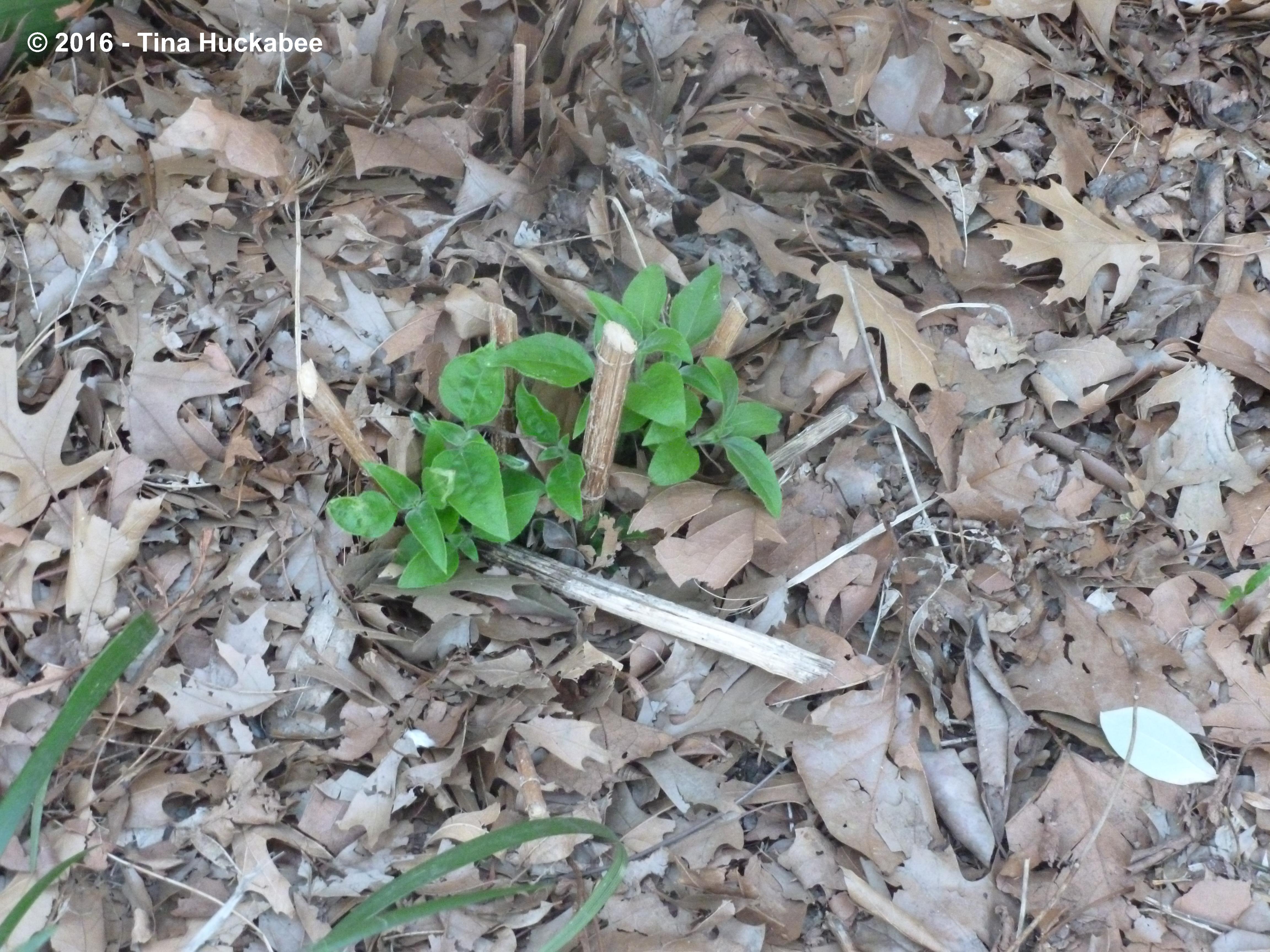
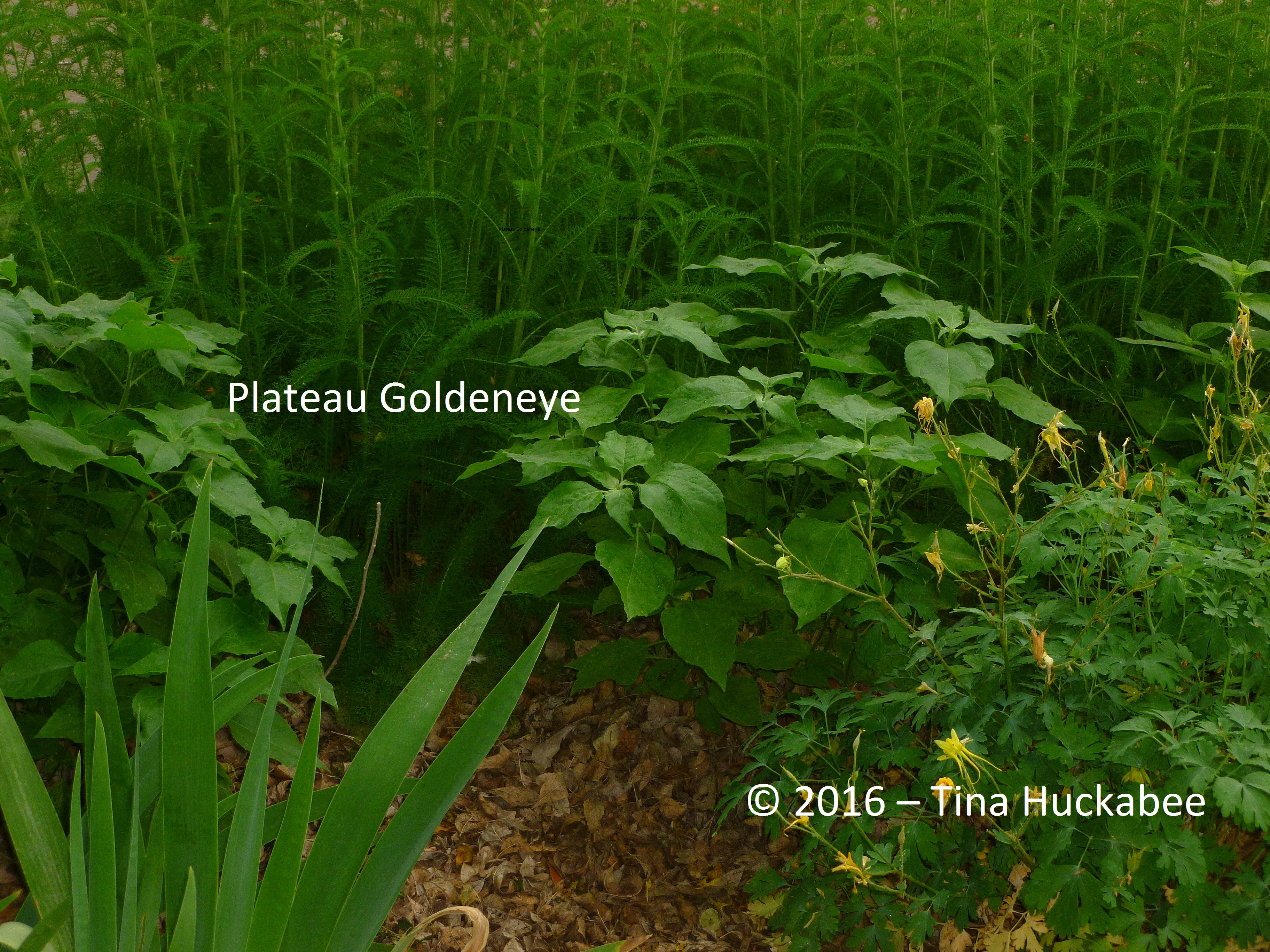
Here in Central Texas, in normal winters with regular freezes, Goldeneye remain dormant until March. It’s a nice garden design practice if planted with evergreens or more structural plants as companions, but the dormant period isn’t all that long. Once spring warmth envelops Central Texas, the arrival of Goldeneye foliage is not far behind.
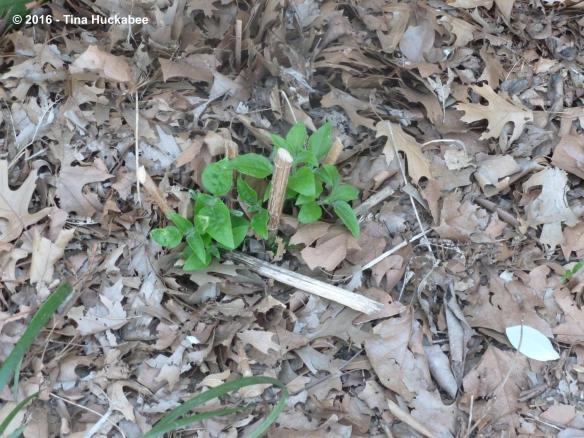
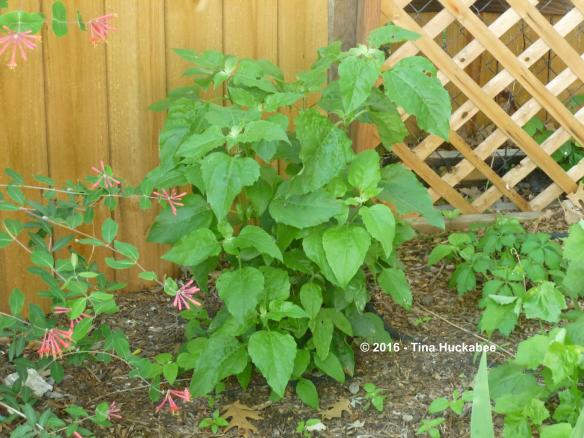
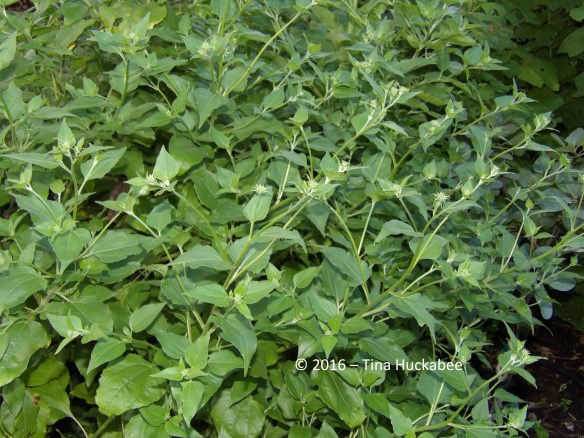
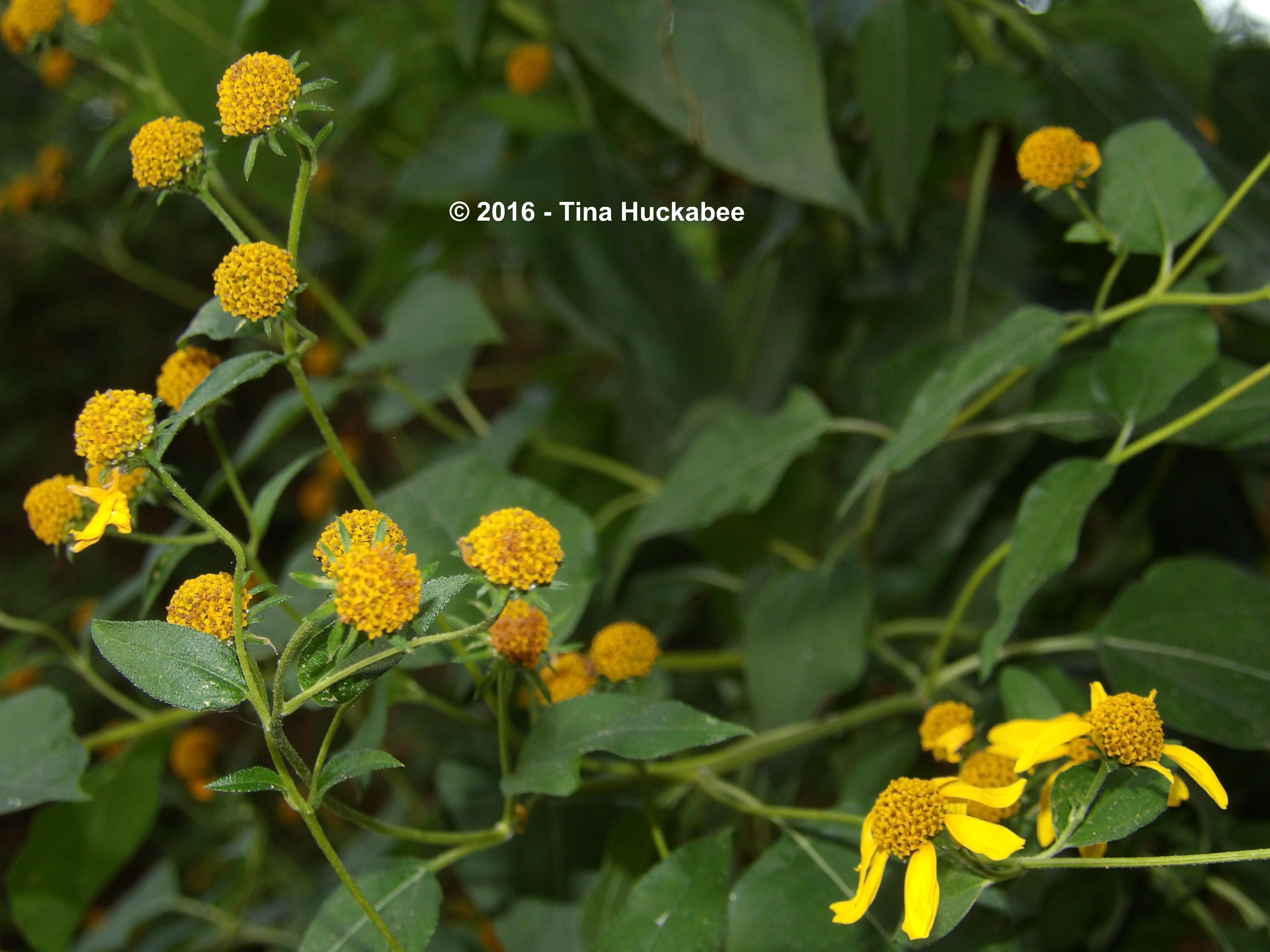
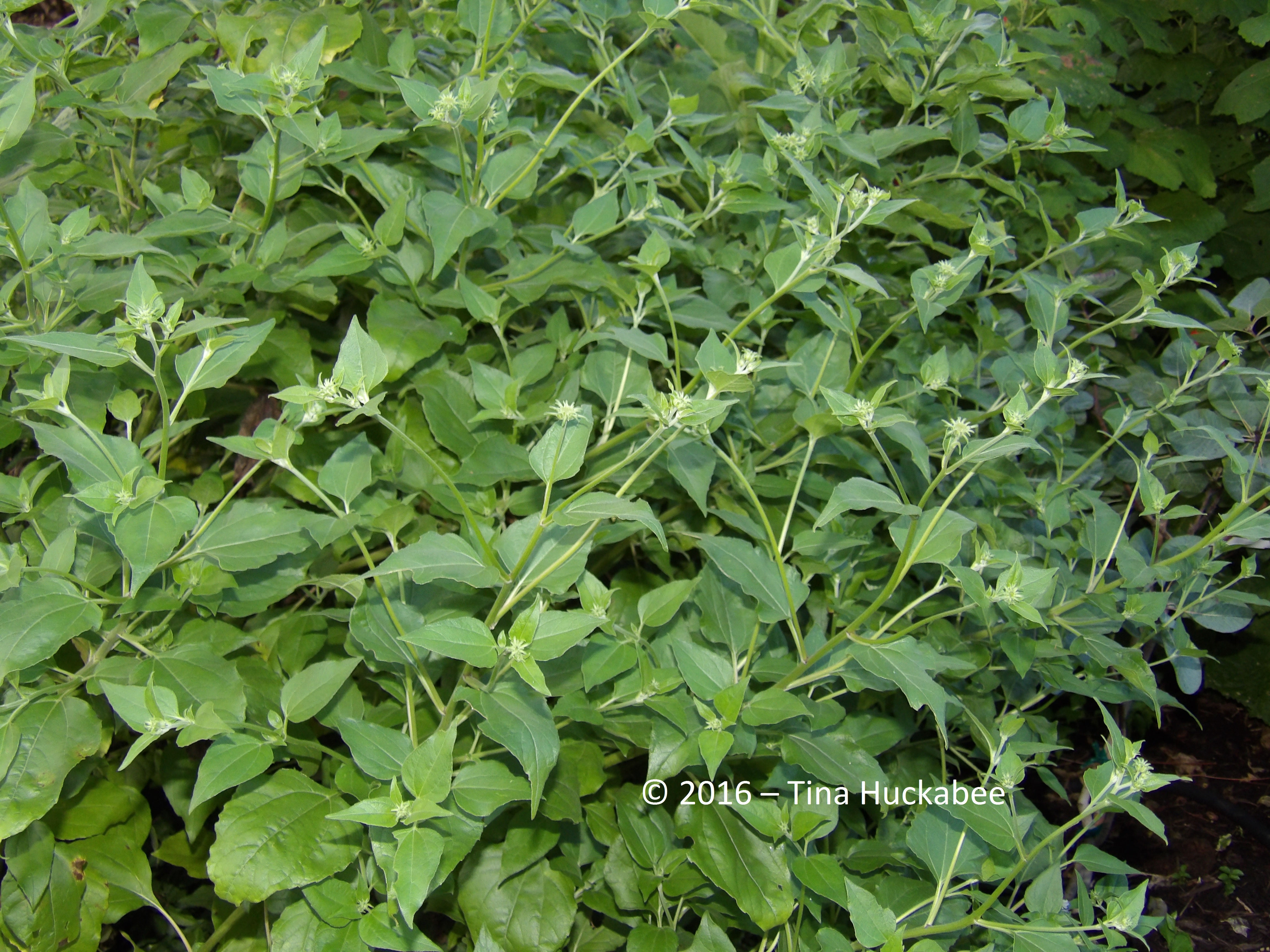
Plateau Goldeneye belongs to the Asteraceae family and shares the qualities of other sunflower-type perennials–lovely, cheery blooms coupled with somewhat large, sand-papery leaves.The leaves are attractive for most of the growing season–they’re a rich green, especially in early spring, then border on grey/green later in the growing season.
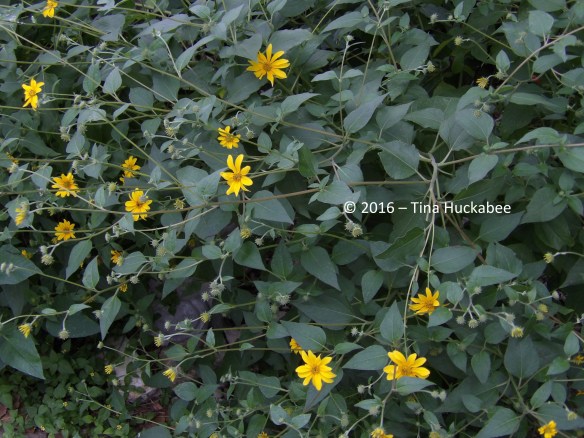
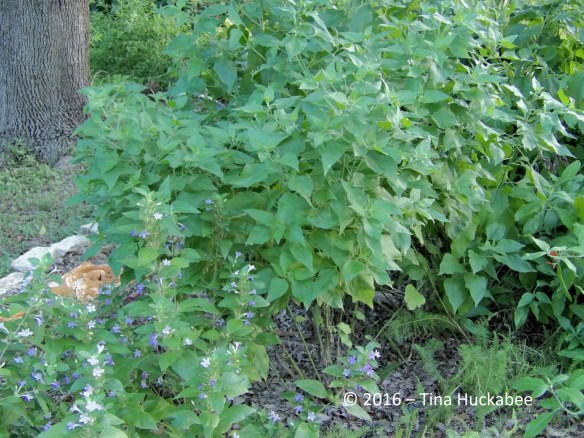
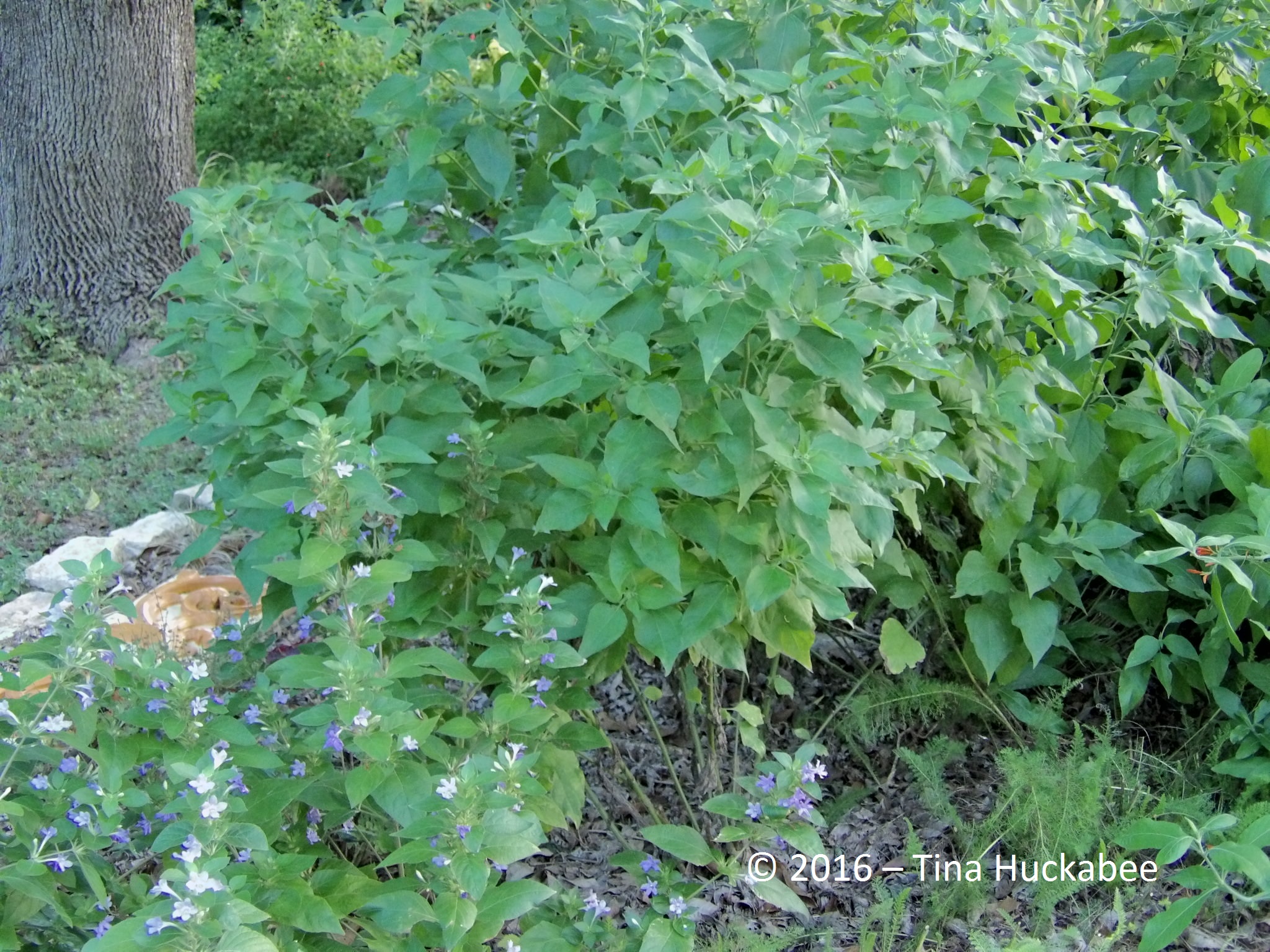
The leaves grow opposite and full along the stems of the plant, leading to a bushy, upright growth habit for the individual plant. Throughout spring and summer, the plant grows,
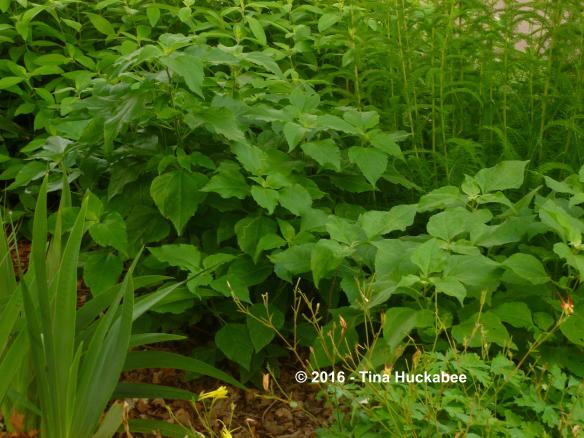
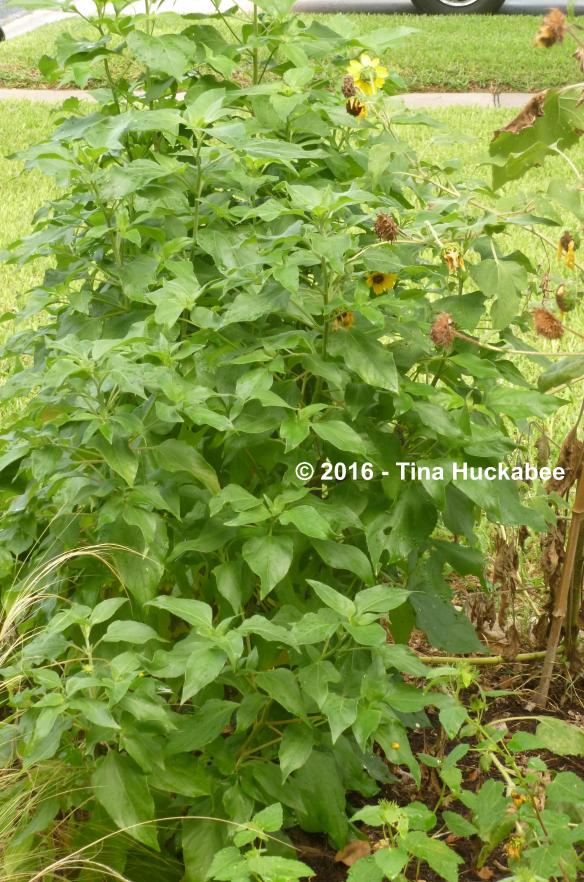
…and grows.
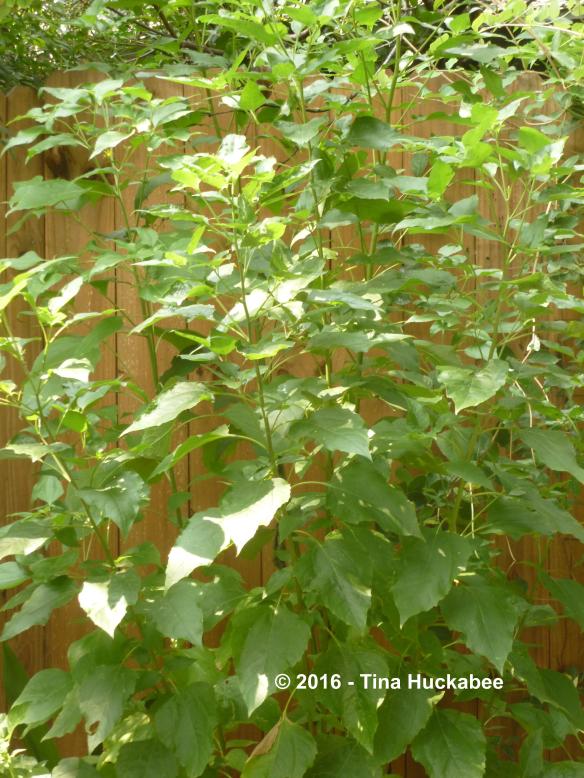
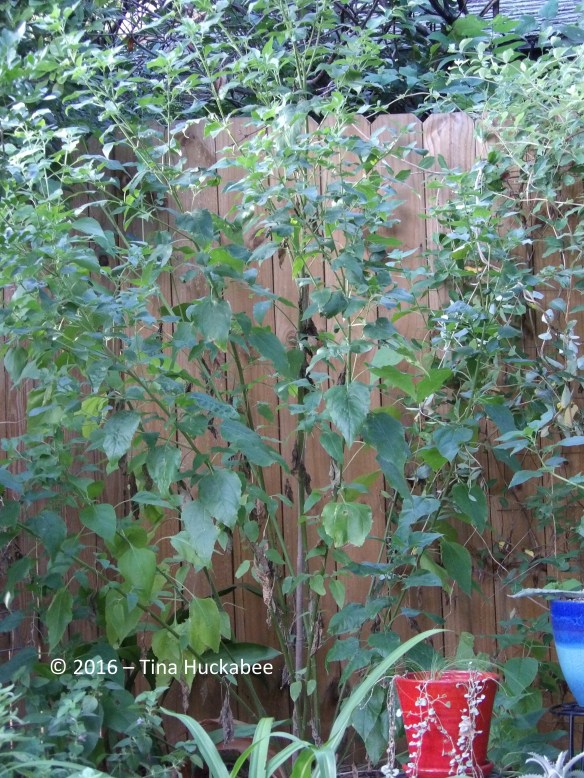
Goldeneye plants typically reach 3-4 feet tall in my gardens, but can grow as tall as 6 feet.
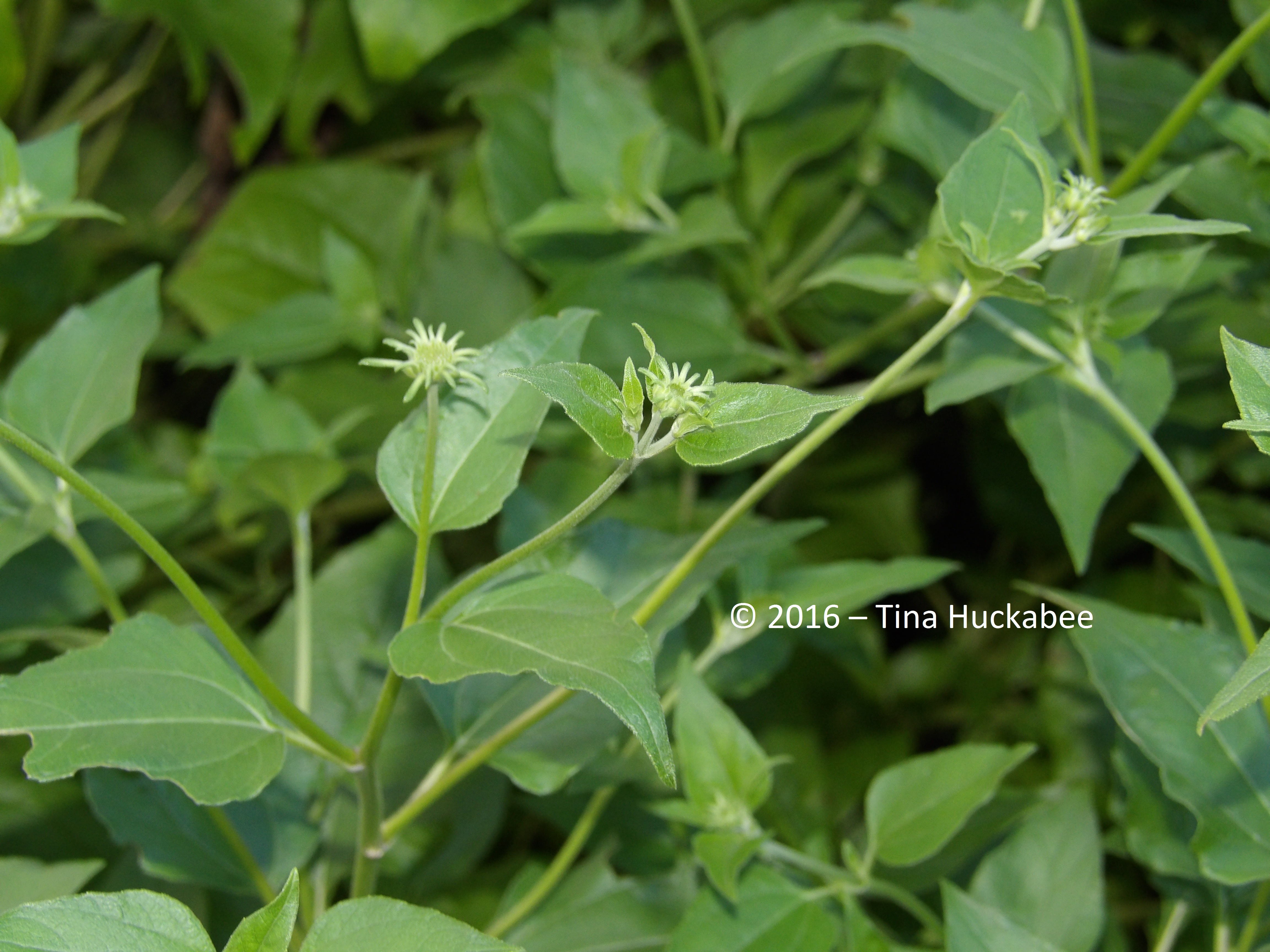
It’s exciting when I spy my first Plateau Goldeneye bloom, usually in August, but sometimes as early as June or July.
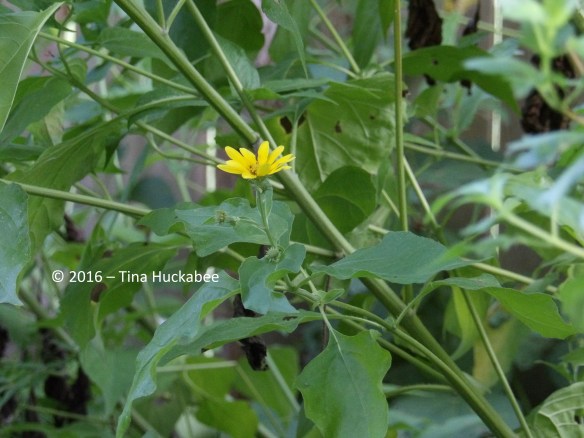
There are a smattering of blooms in summer, but only enough to hint at the beauty to come.
In September, though the days are warm, the light changes and the buds of Goldeneye form.

The anticipation of those shorter autumn days, combined with the flowering Goldeneye, are just compensation for the long Texas summer. And well-worth waiting for!!

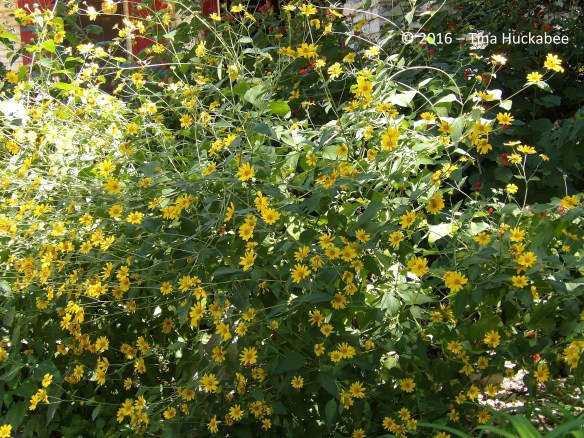
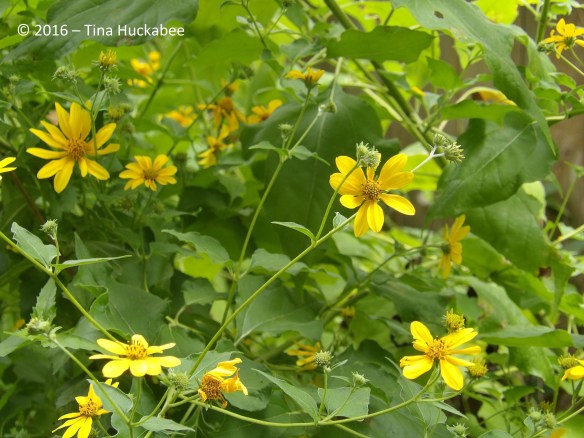
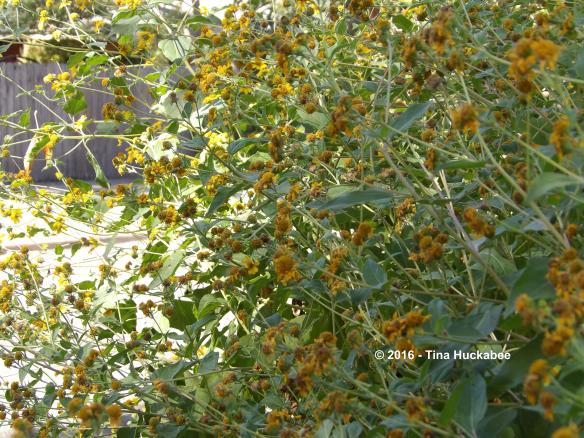
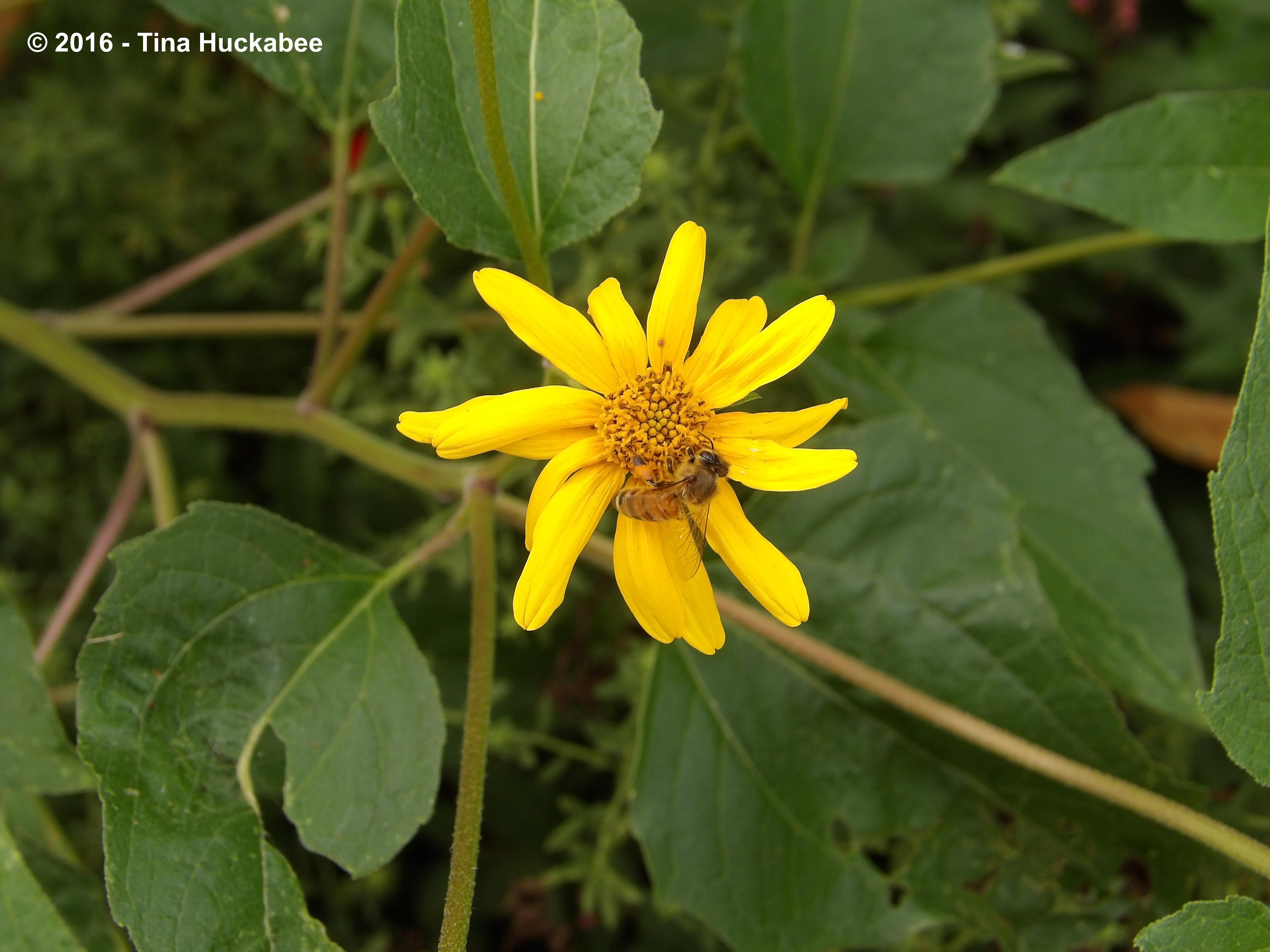
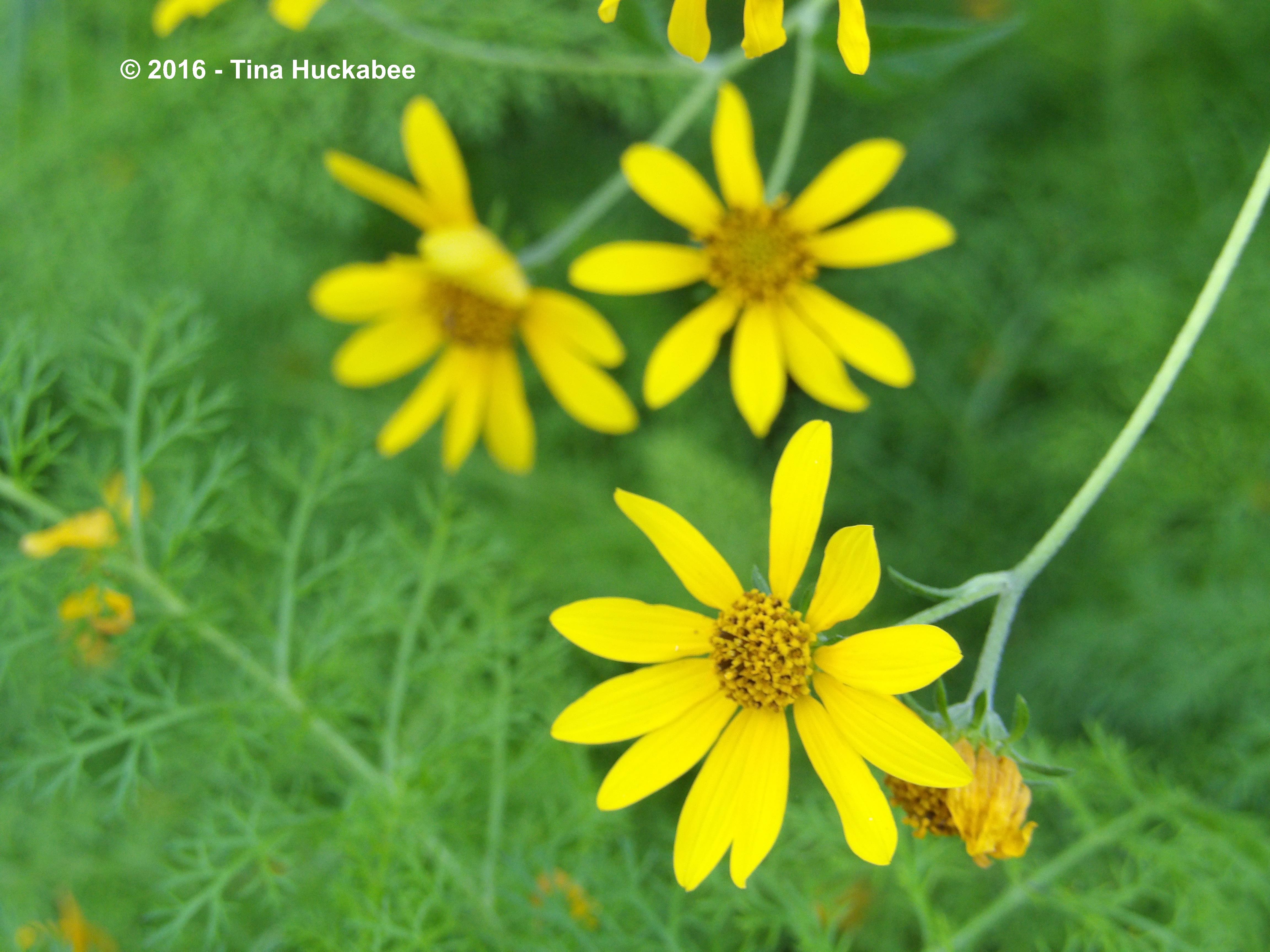
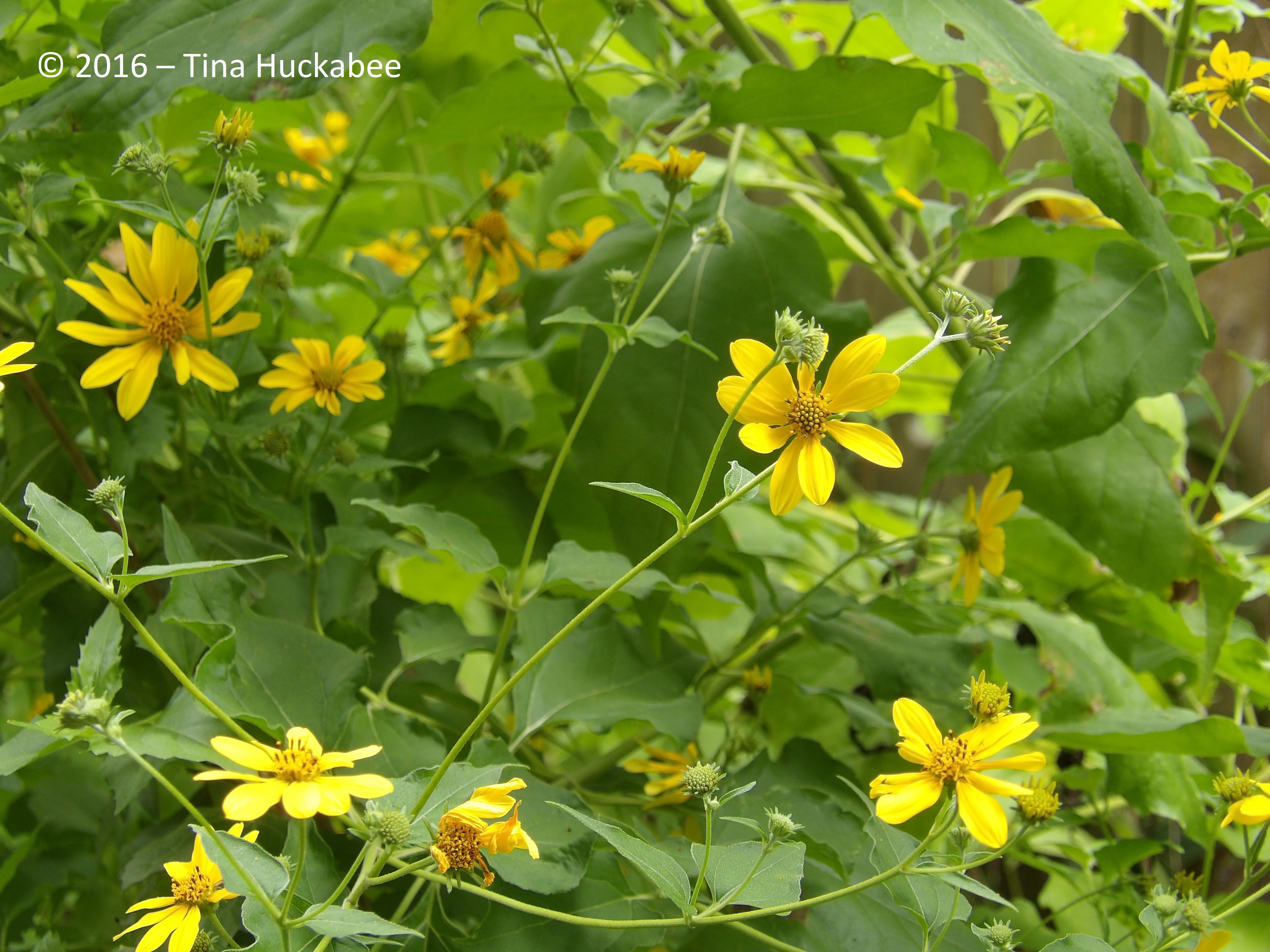
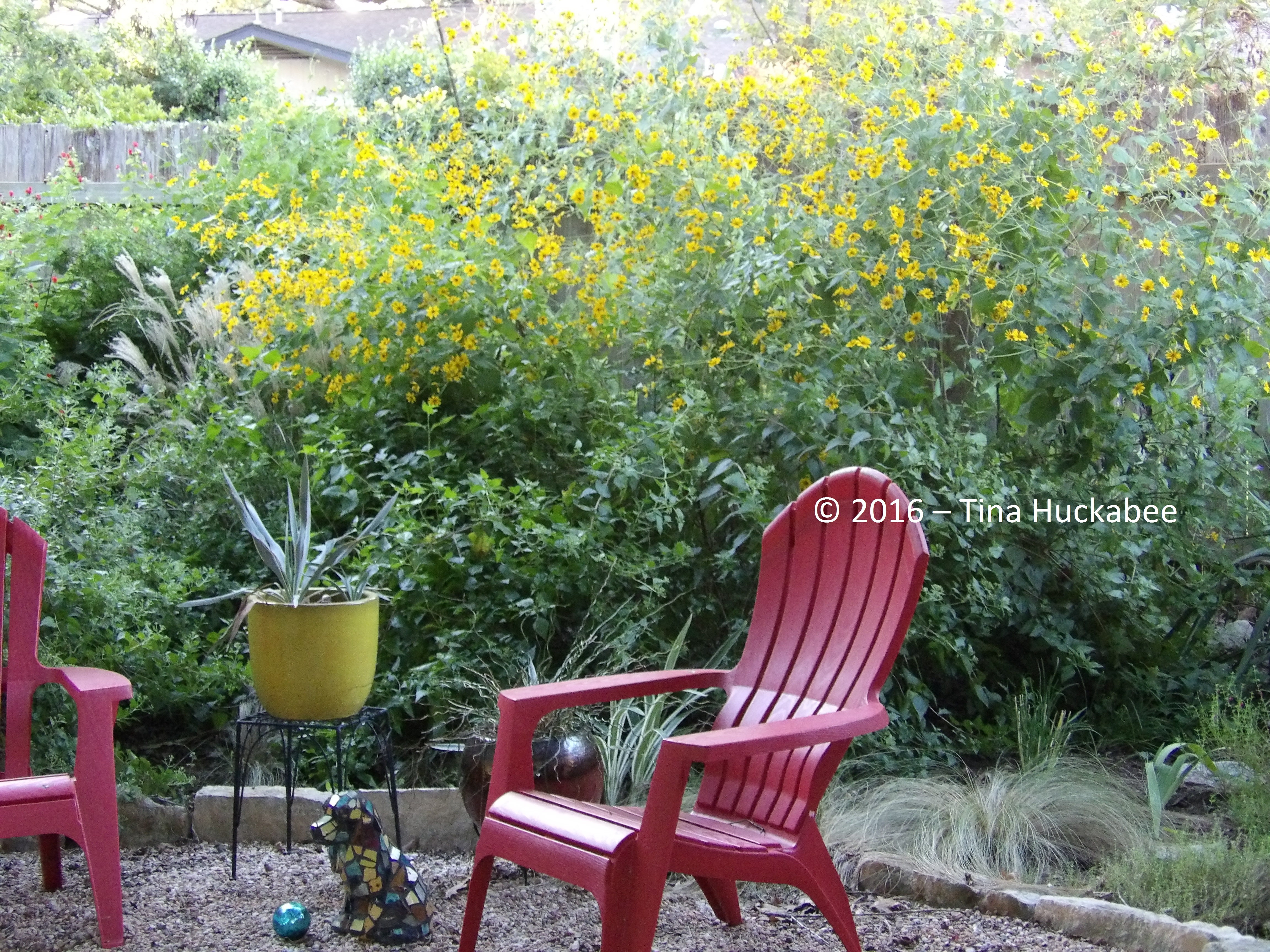
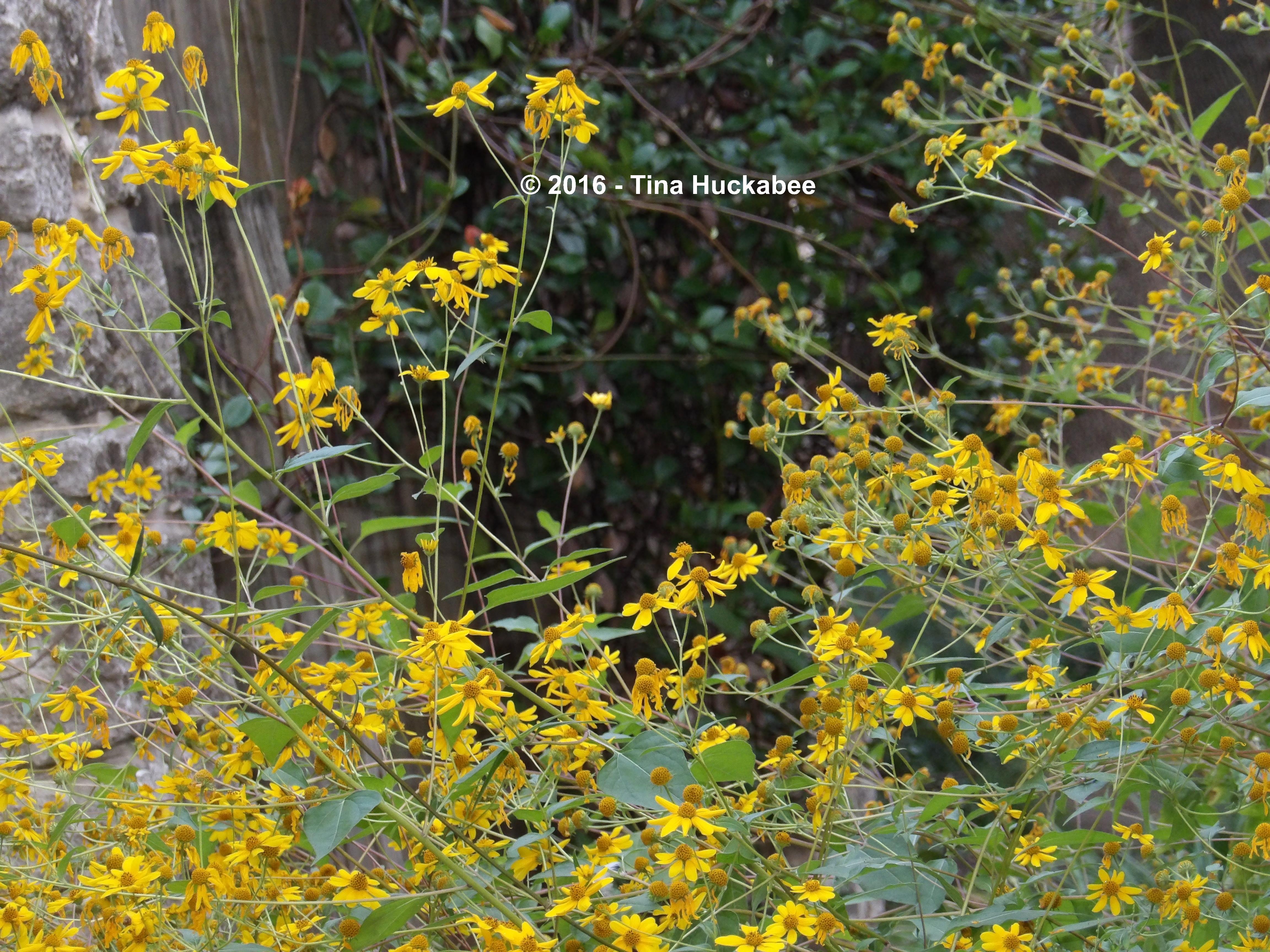
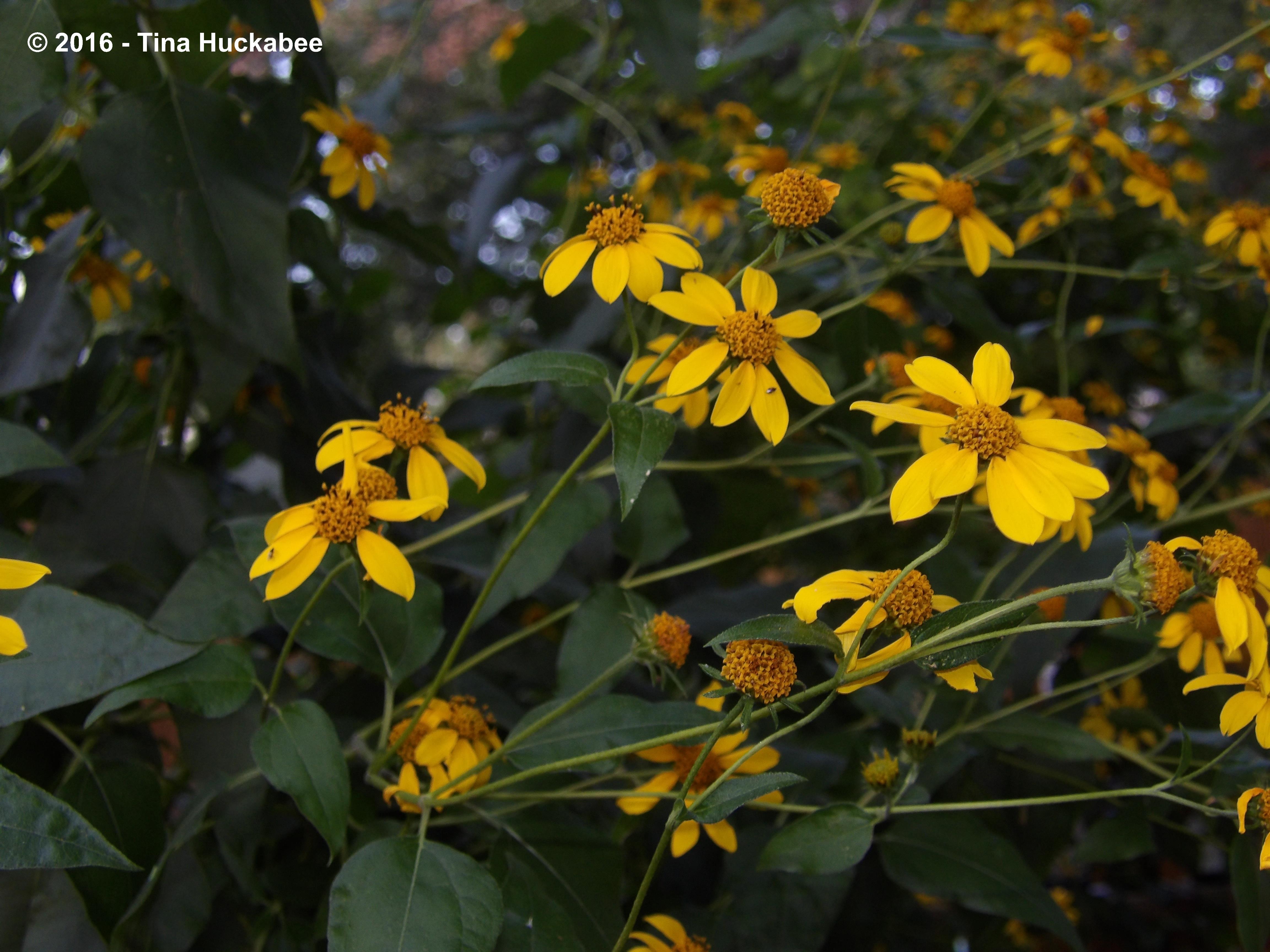
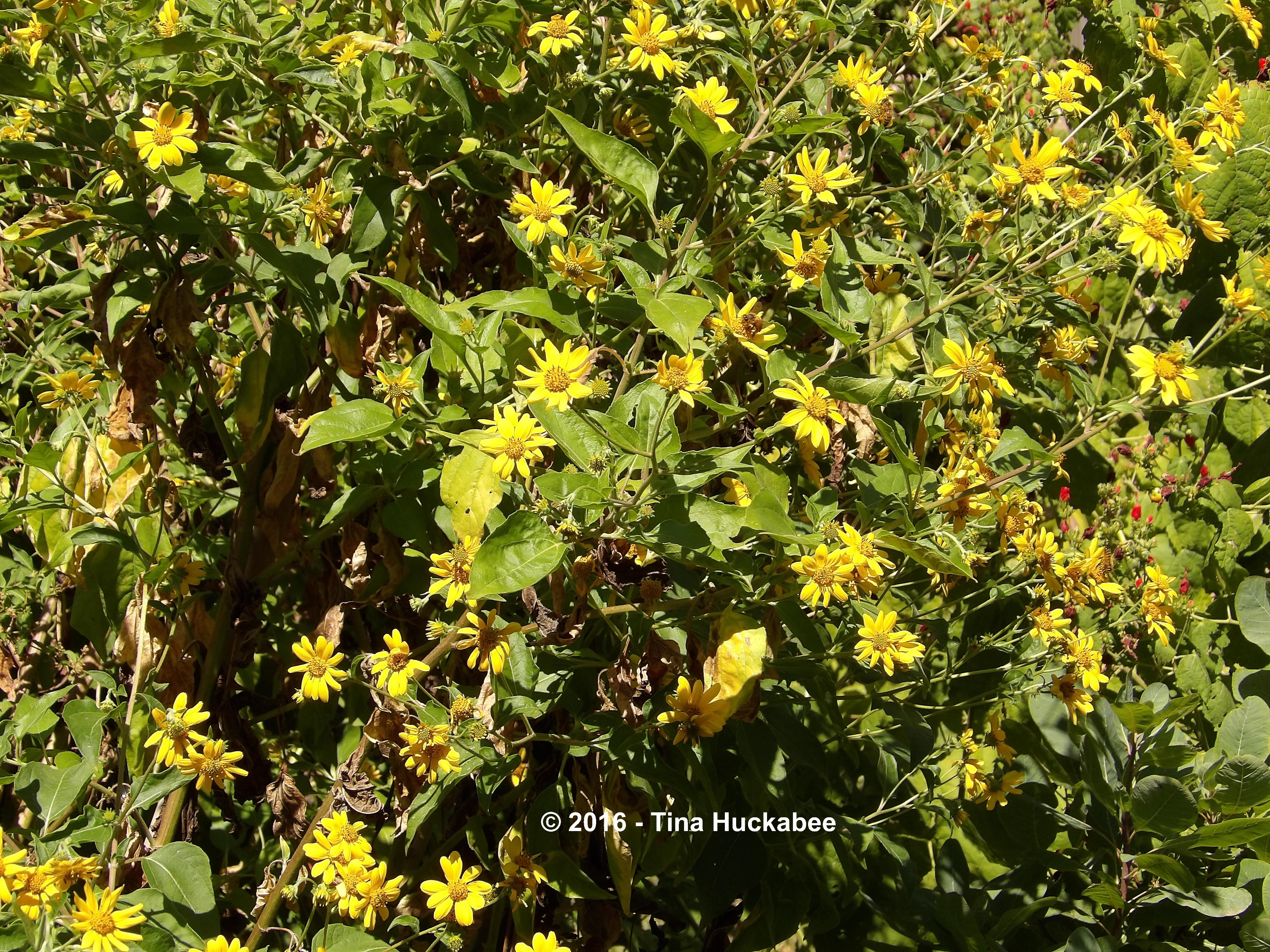
BOOM!! Plateau Goldeneye flowers appear and brighten the world.
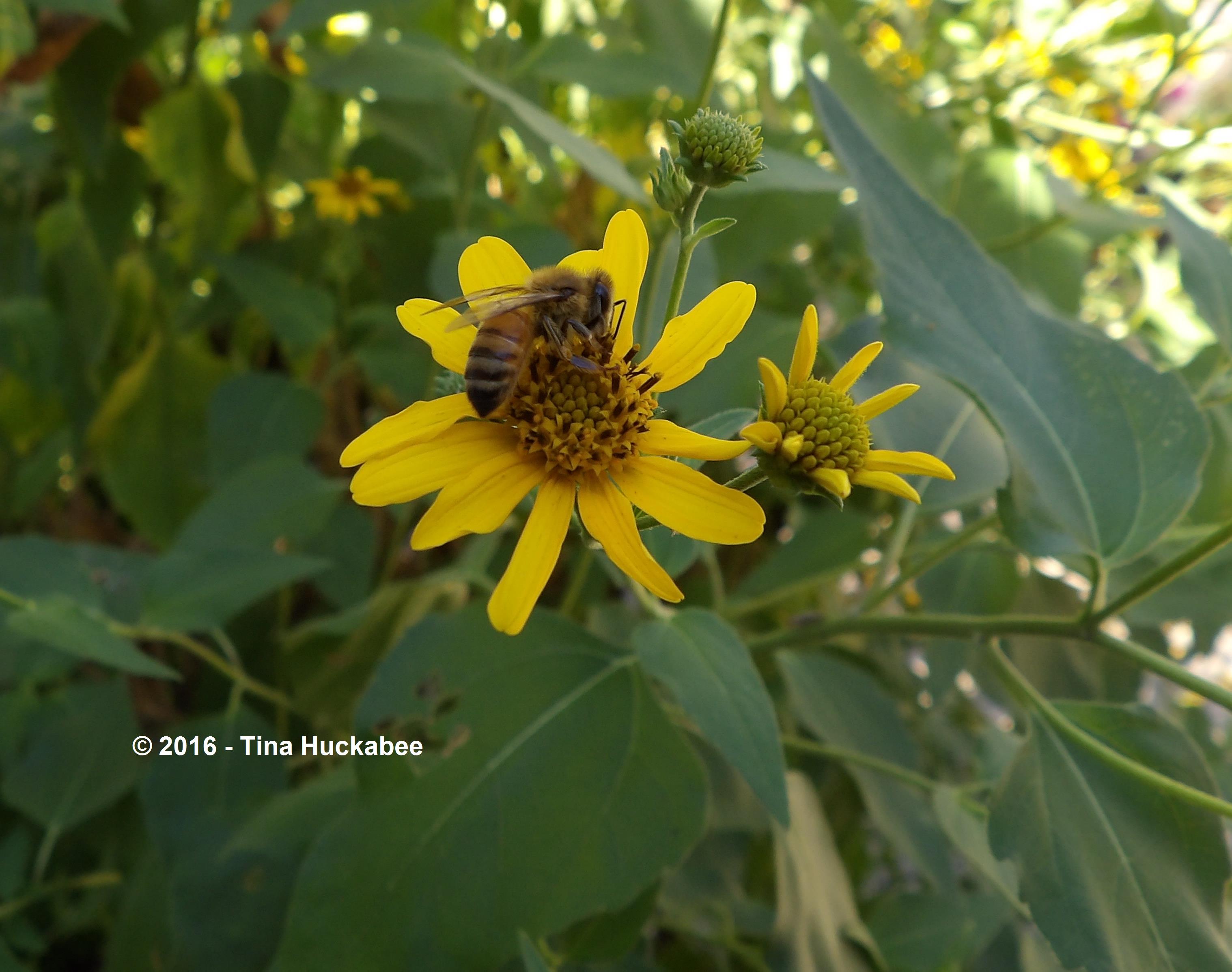
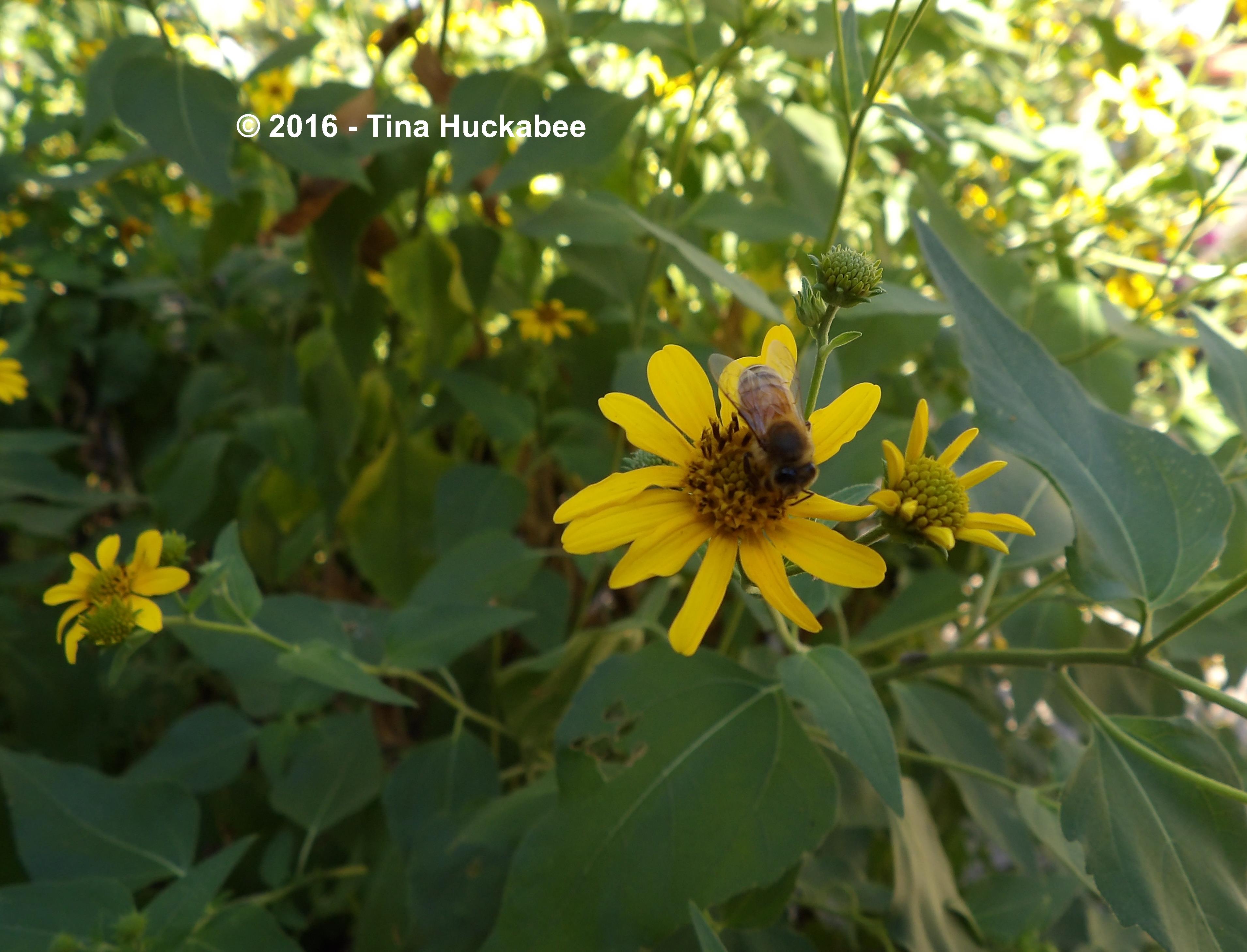
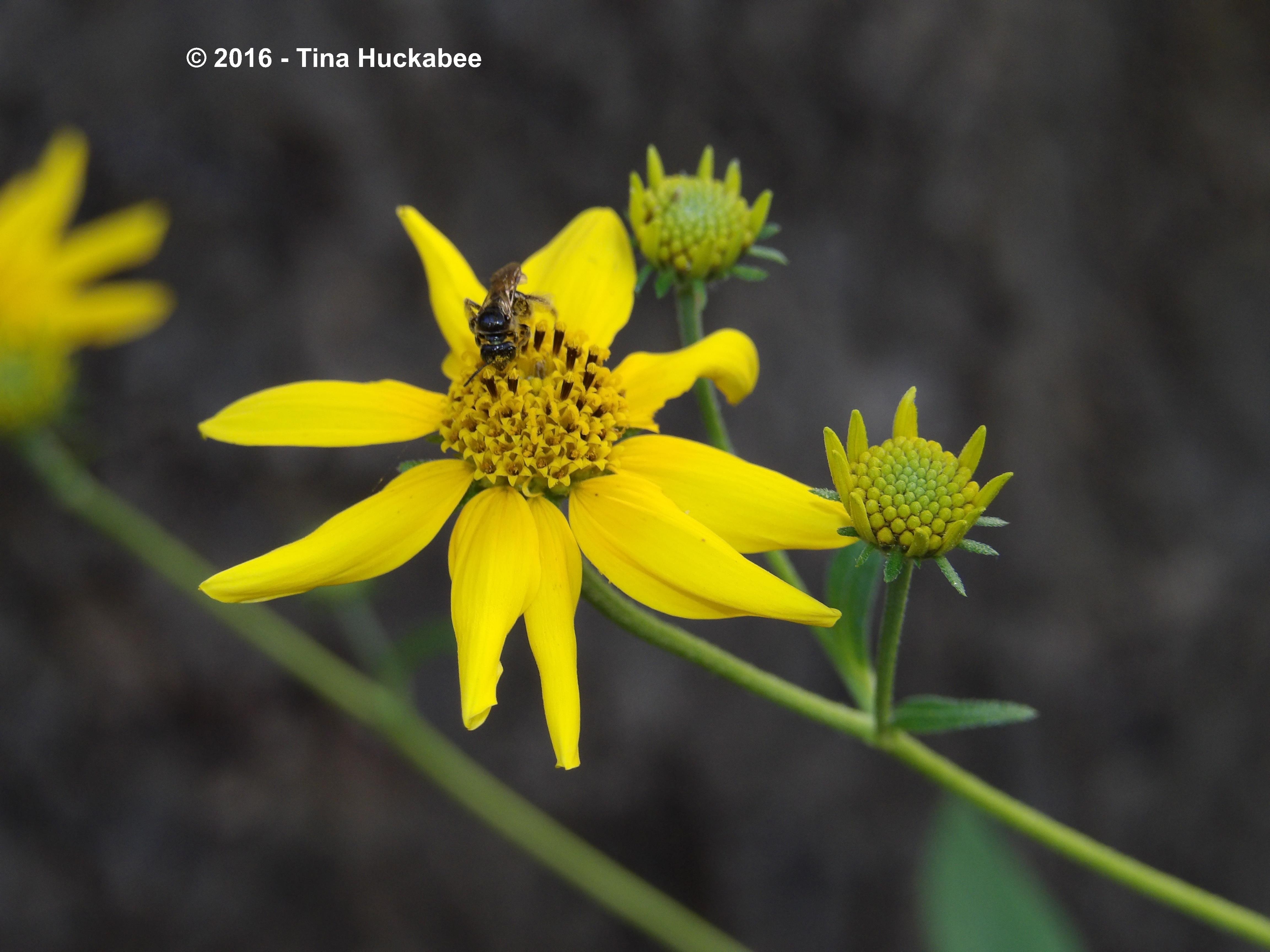
A variety of bees nectar and gather pollen from this nurturing plant.
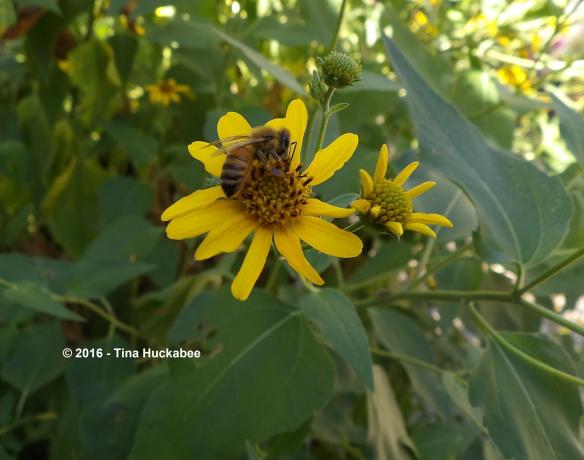
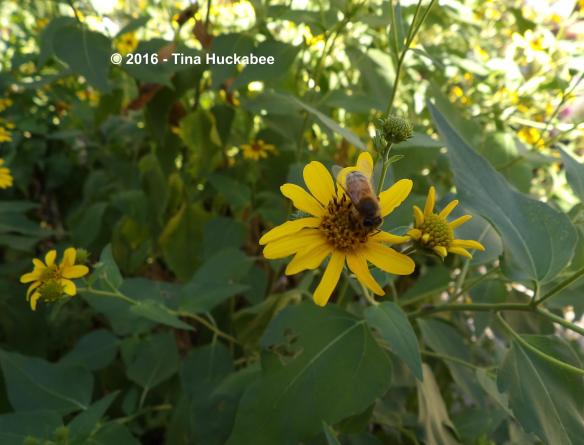

Small carpenter bee, Ceratina sp., working a Goldeneye bloom.
Goldeneye is also the host plant for two butterfly species, Cassius Blue, Leptotes cassius and Bordered Patch, Chlosyne lacinia. I’ve seen Bordered Patch butterflies and their eggs on Goldeneye, but never the Cassius Blue. I’ve seen butterflies of many species working Goldeneye blossoms, but oddly, never took a photo. My bad.
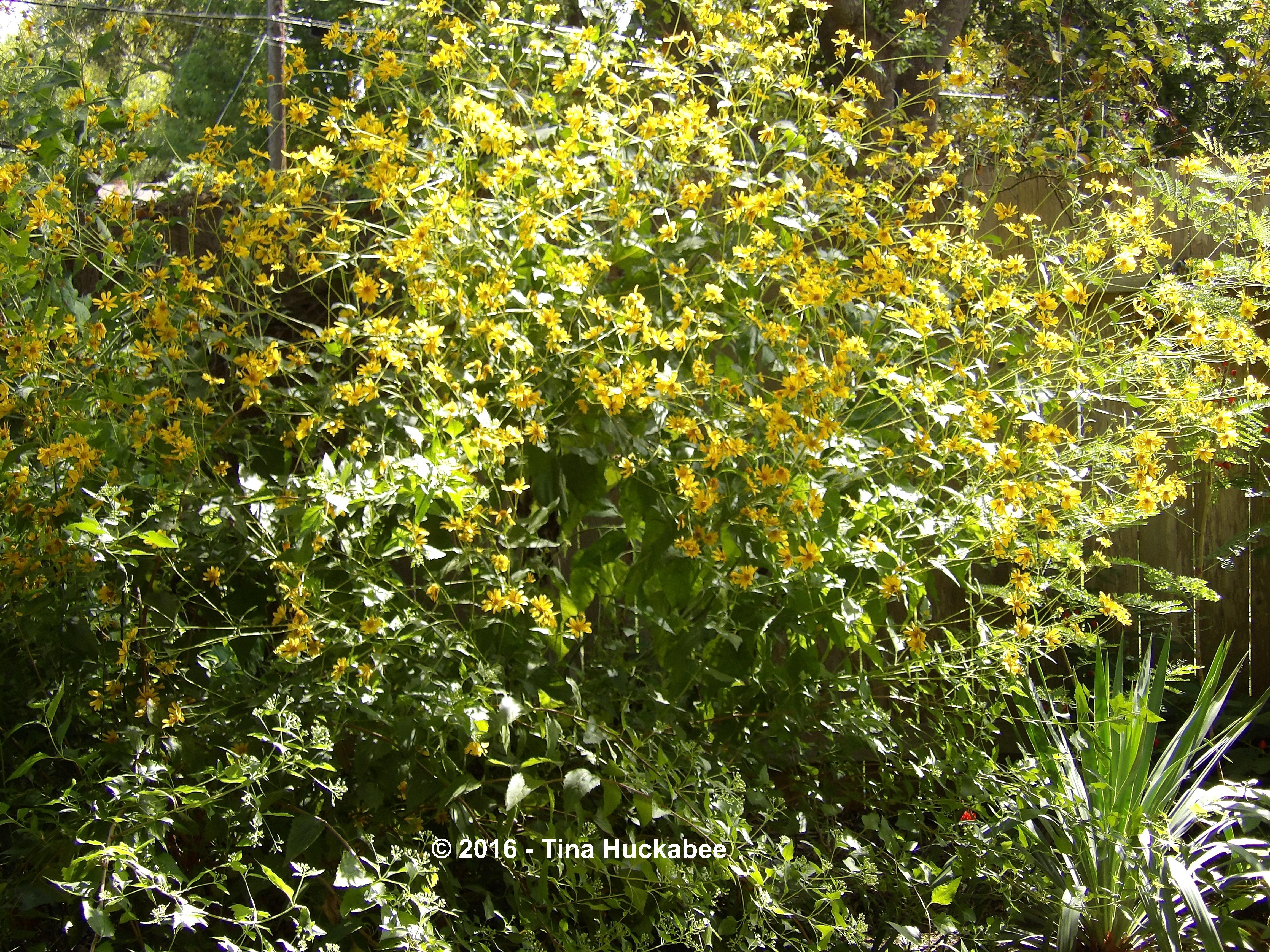
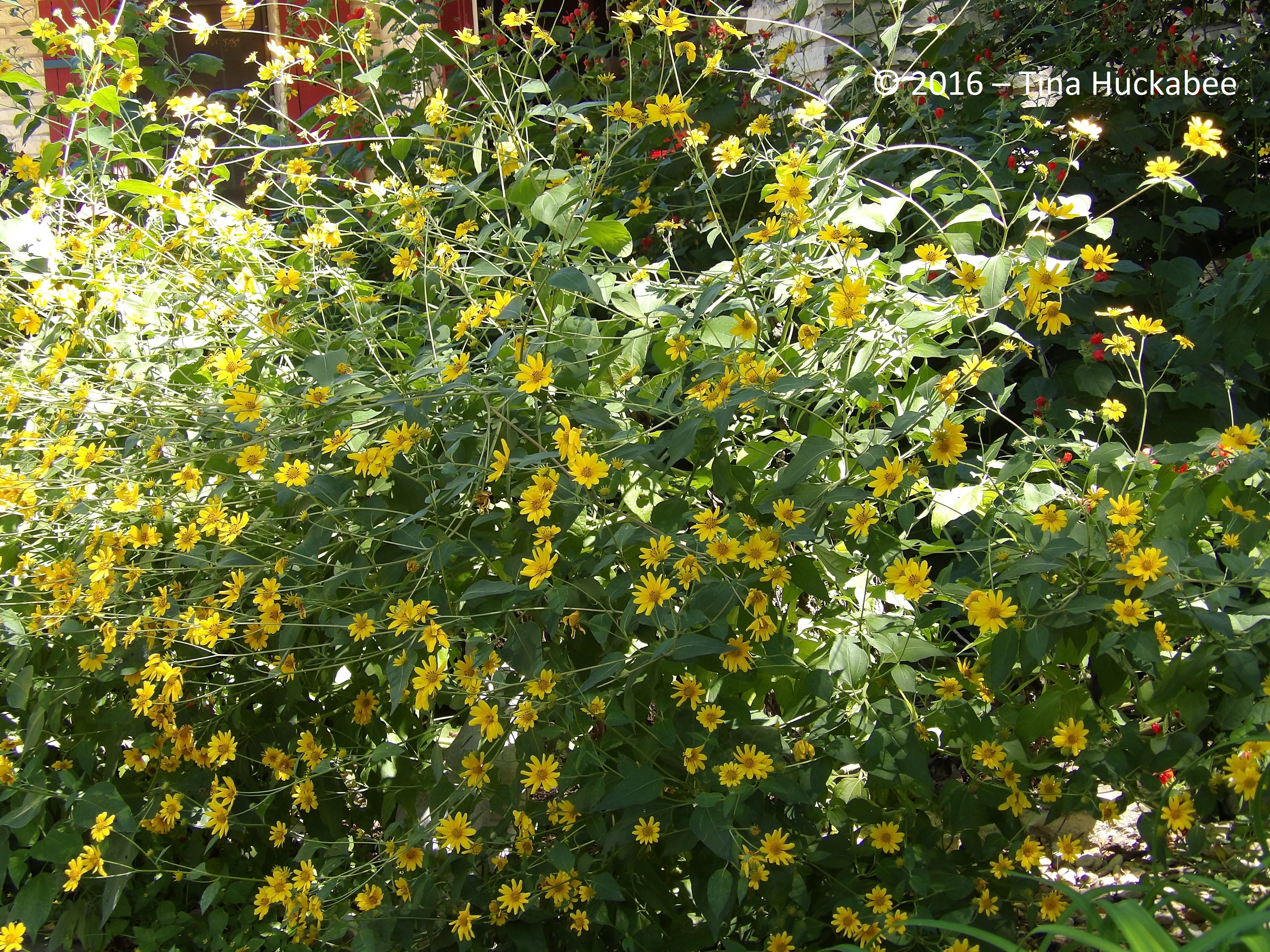
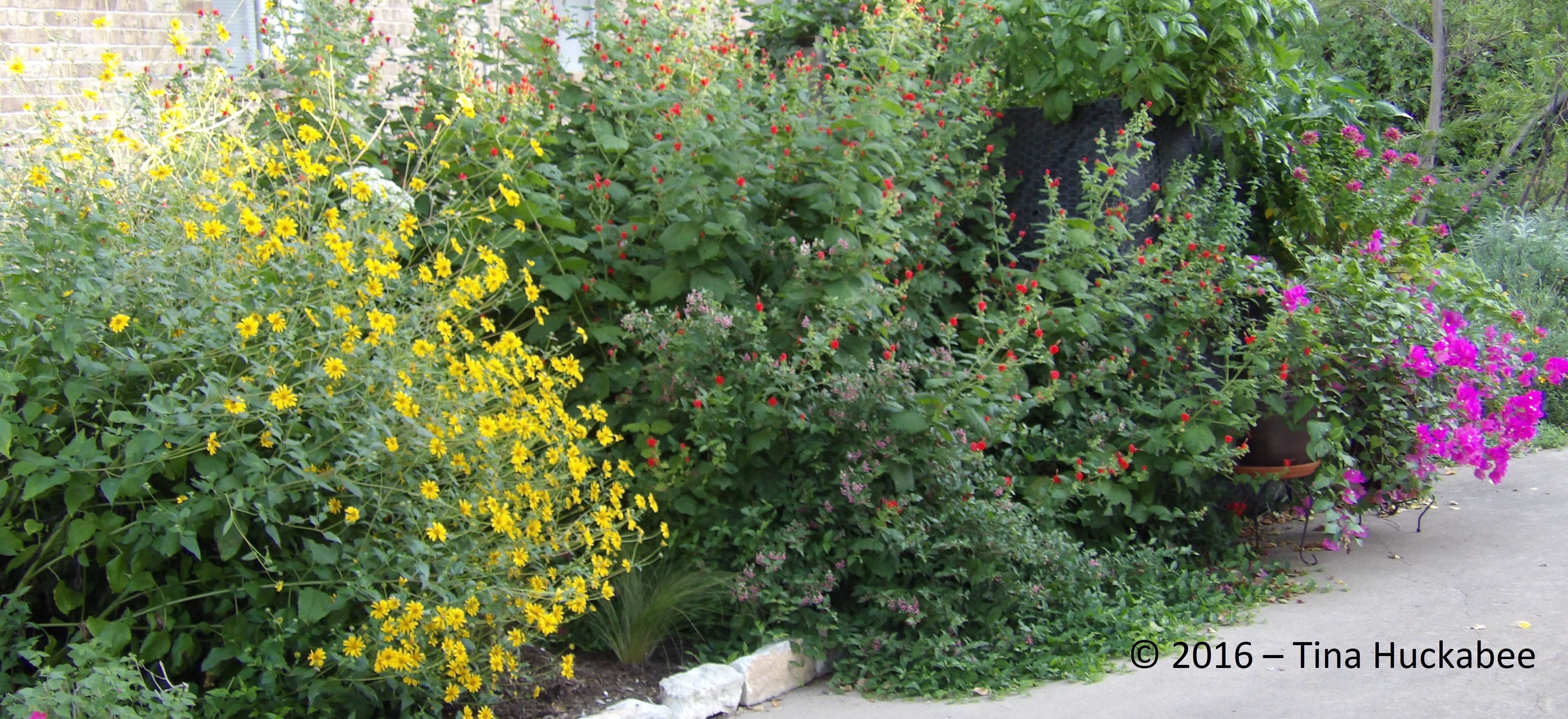
The Goldeneye sunshine show lasts for 4-6 weeks. It’s a plant that mixes well with other bloomers, too.
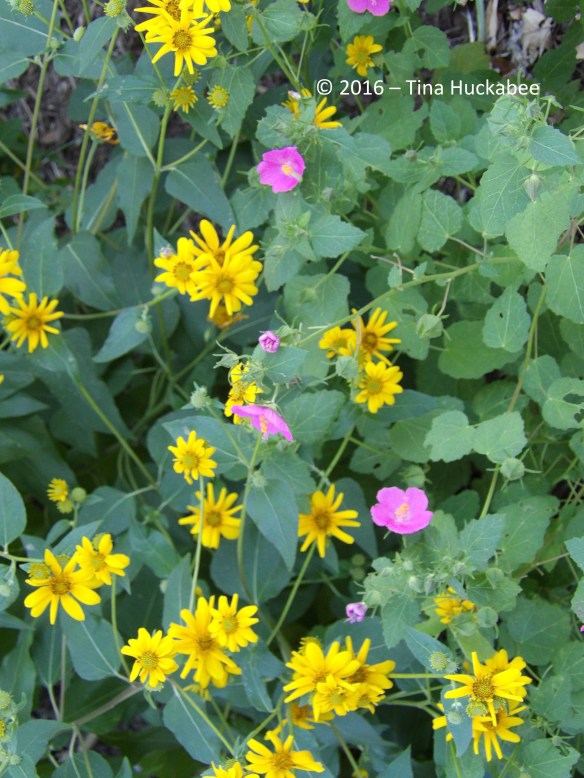
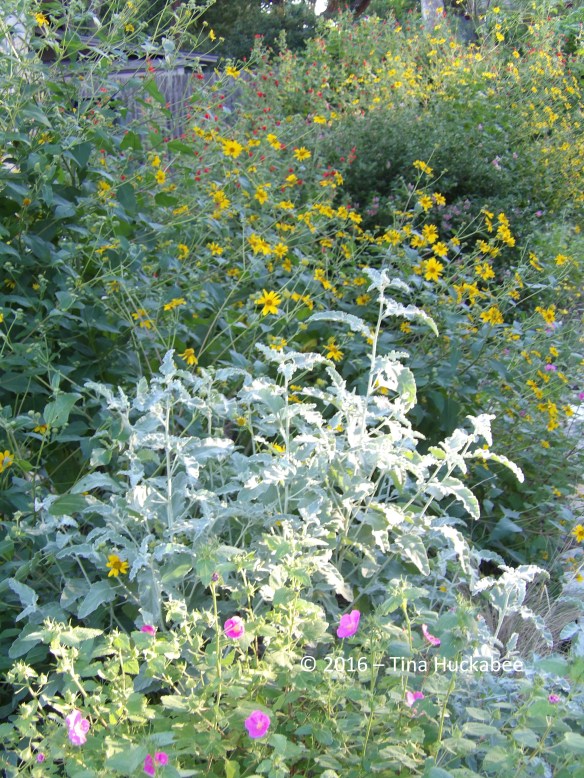
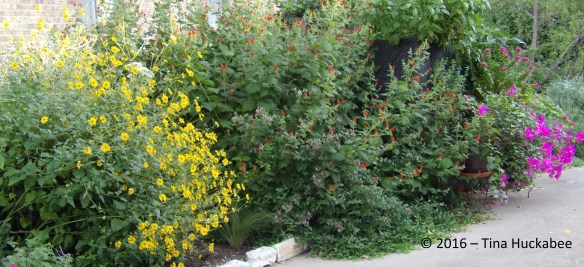
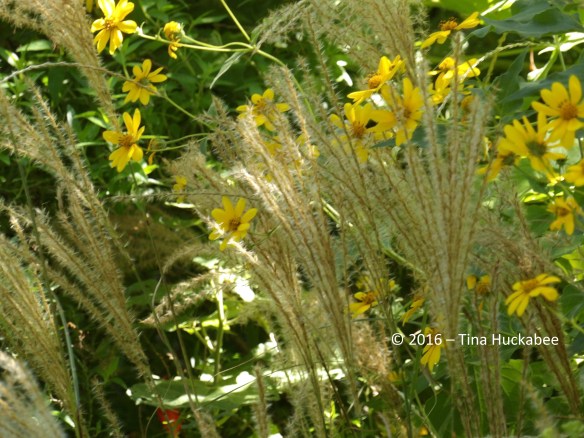
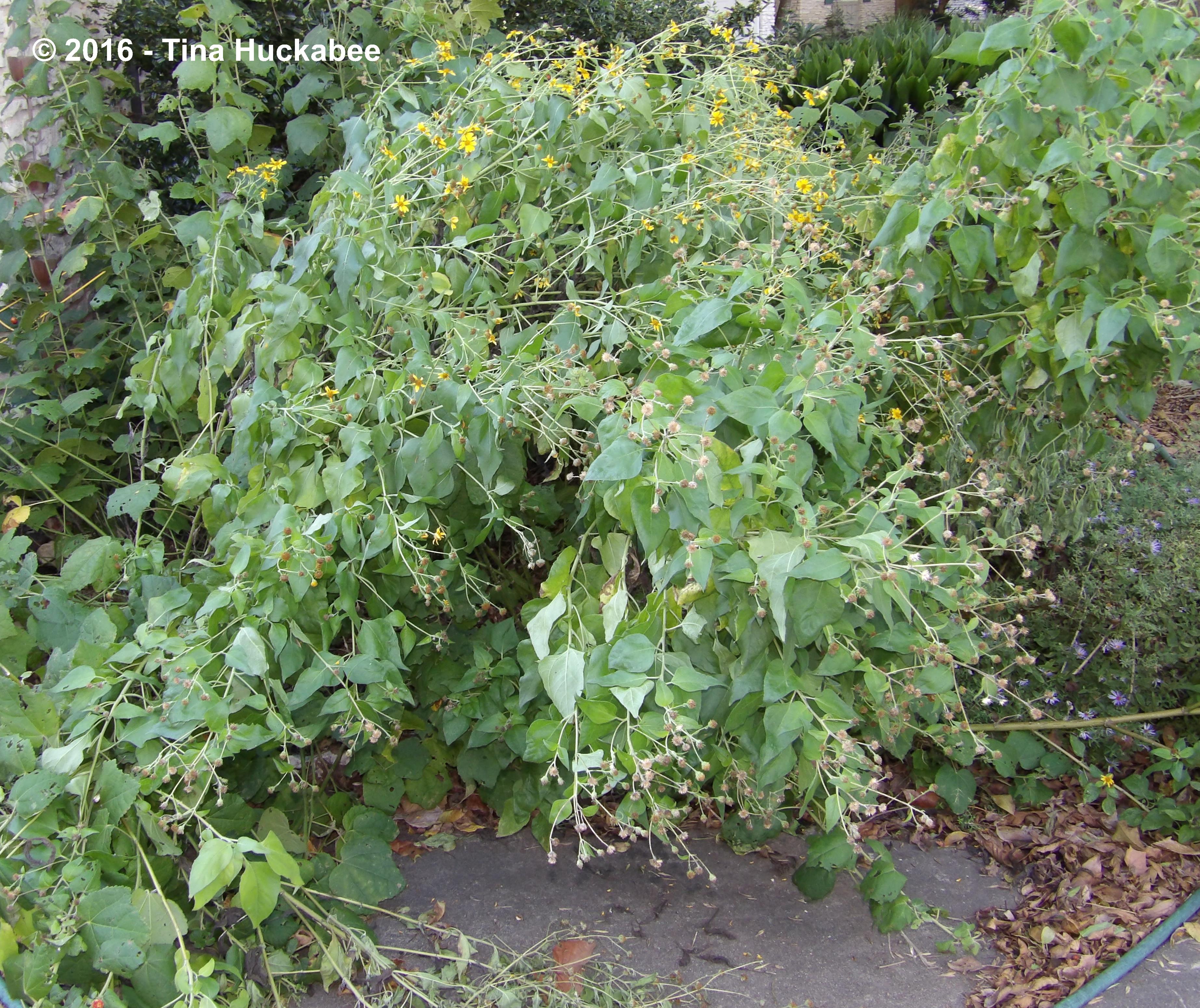
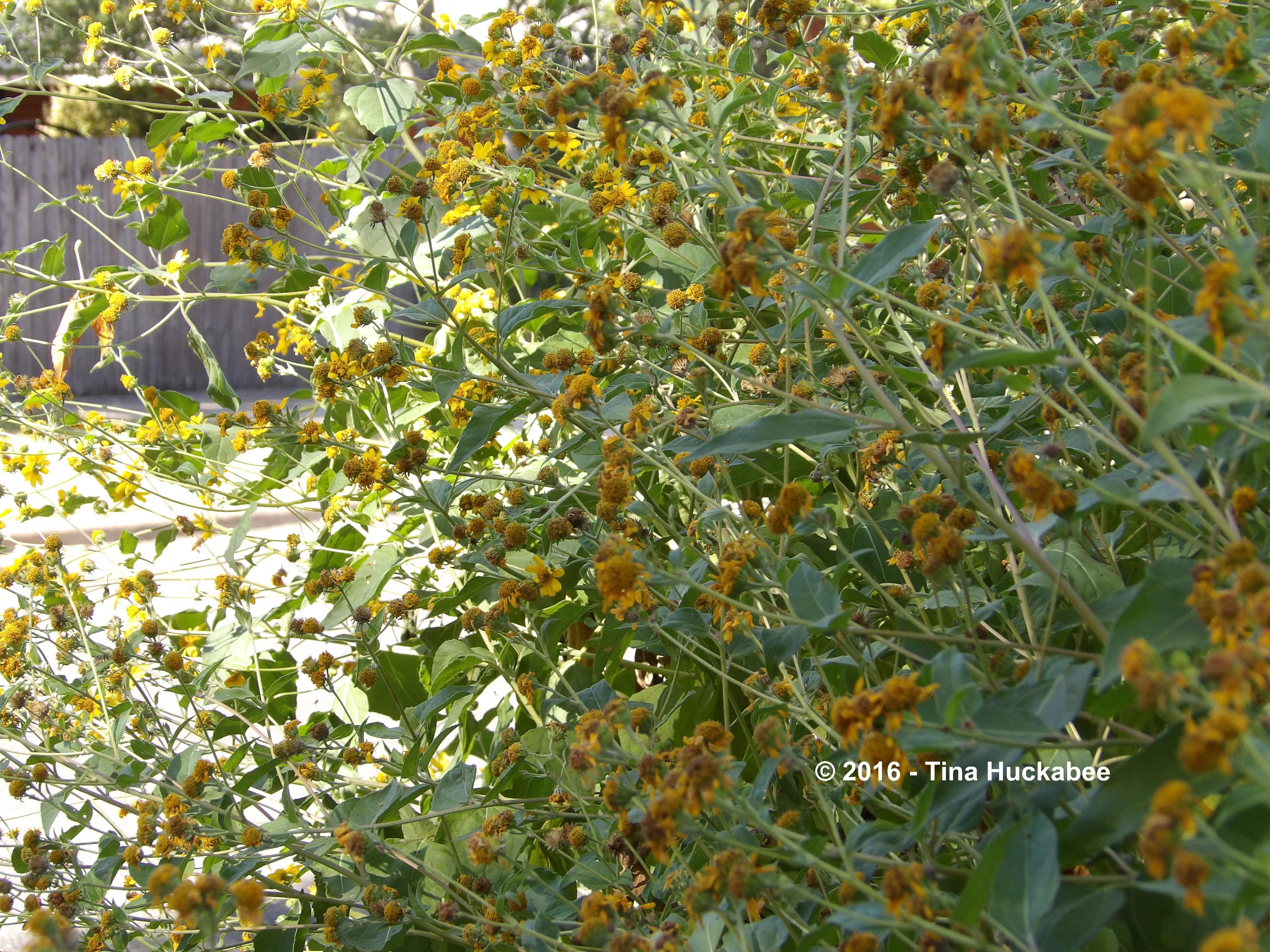
Sometimes my Goldeneye require staking, especially in a wetter-than-normal year. The bushy quality of Plateau Goldeneye lends itself to a lush, but well-appointed mien throughout summer, which is deceptive because once the fall growth spurt occurs and the masses of blooms develop and open, the weight of those blooms can cause the plants to lean over.
In more shade, the plants grow taller, thinner, and they lean more. In fuller sun, the plants remain upright and generally keep their form, even when the flowers appear.
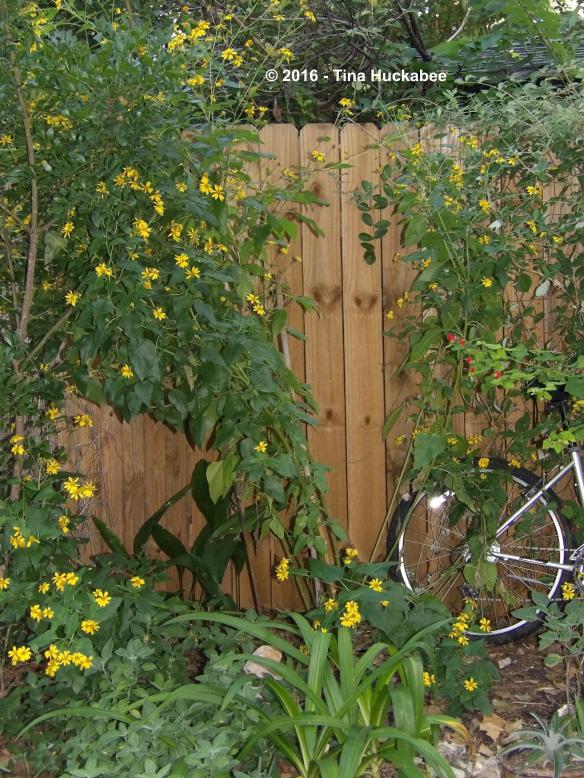

Pruning Goldeneye in July or August by about 1/3 is one method of preventing Goldeneye floppiness and sloppiness once the October explosion of yellow flowery joy happens. After a light pruning, the plant continues growing, but more compactly and seemingly able to handle the onslaught of flowers. But if there are heavy fall rains during the height of blooming (which happens here in Central Texas) the floral-laden Goldeneye stems tend to flop over and sometimes break at the base of the plant. I boost the stems by staking if I can and don’t fret about it if I can’t. For those gardeners who want a totally tidy plant, you’ll need to prune in mid-to-late summer. If you’re fine with some seasonal fall wonkiness, just let the plants do what they want.

Every fall, the bloom decline seems sudden, though it’s probably because I enjoy the flowers so much that I’m sorry to see them go for the year.
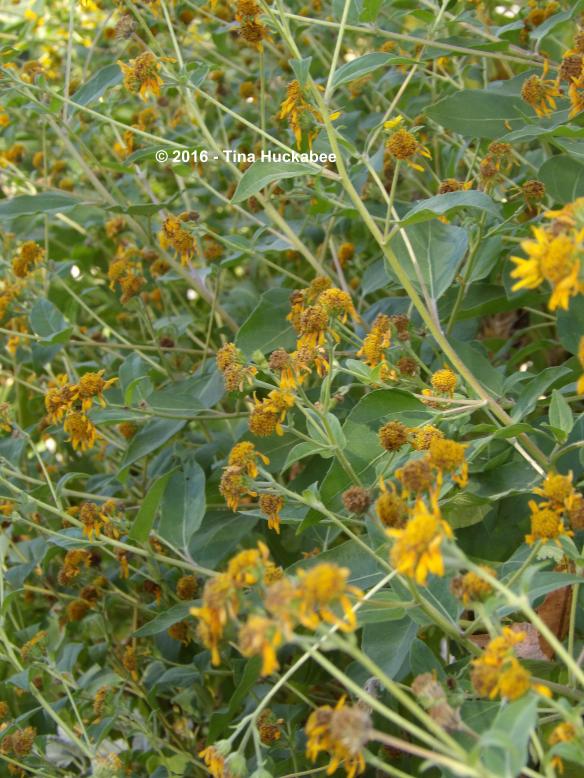
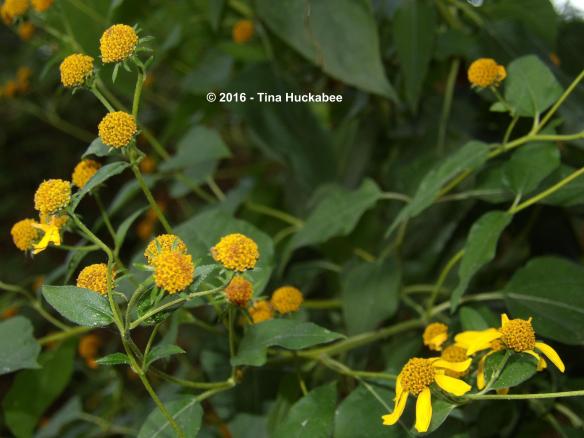
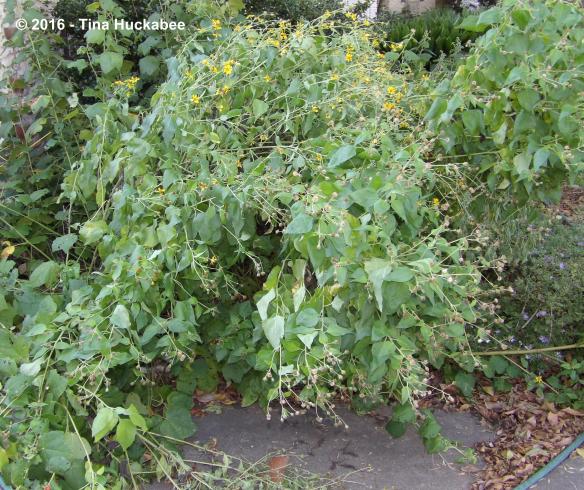
However, once seed development is in full swing,
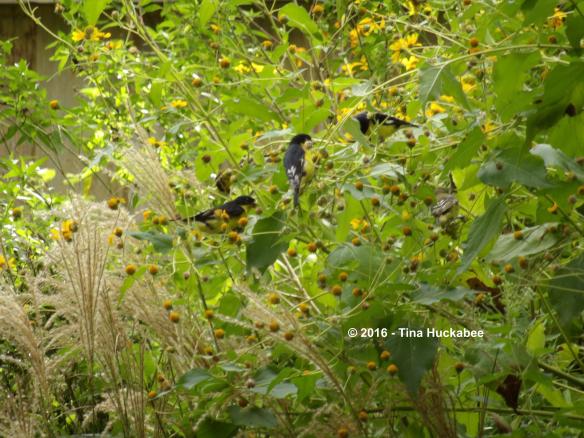
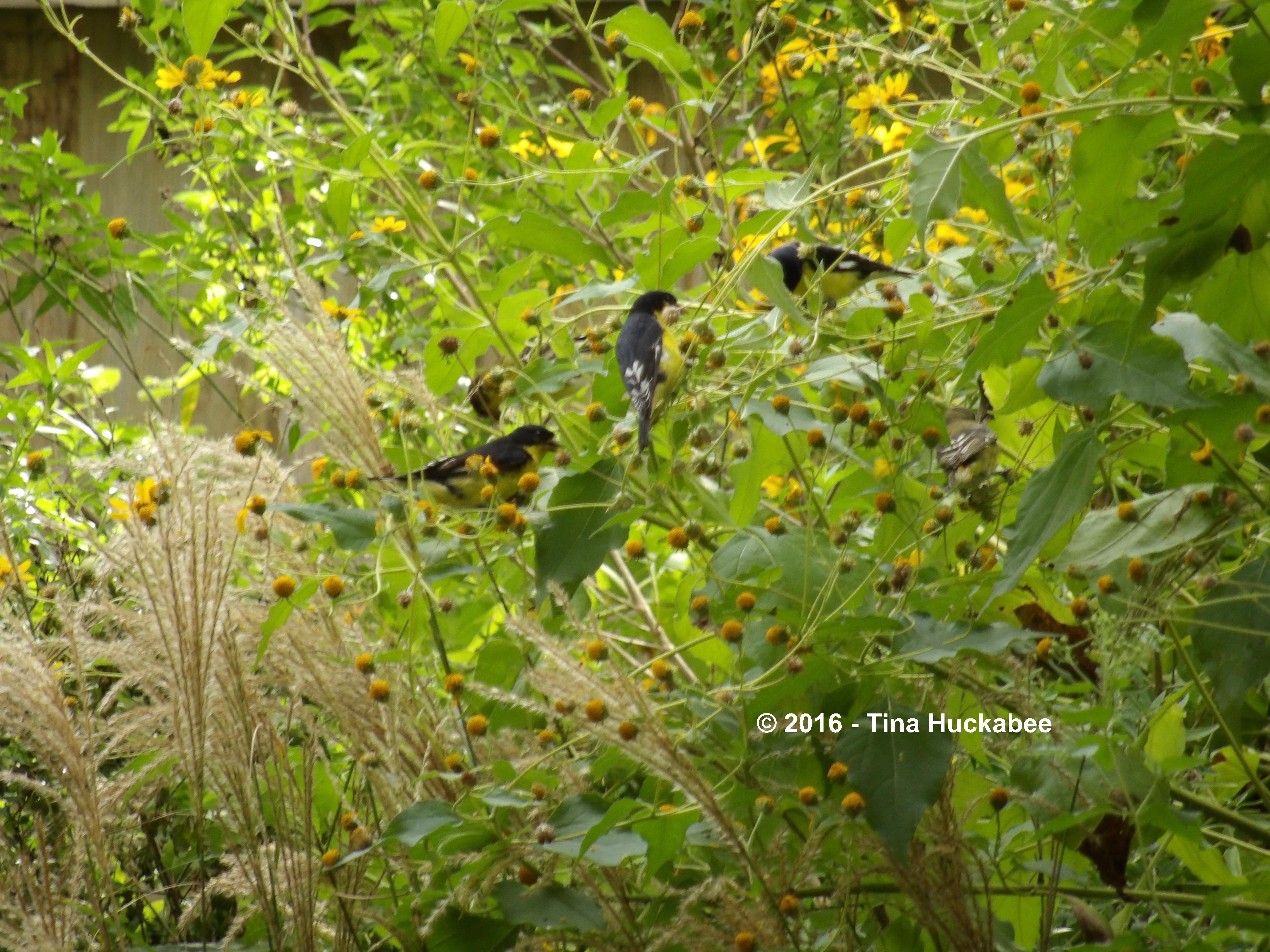
Male Lesser Goldfinches feeding on Goldeneye seeds.
…a second wildlife performance is definitely worth watching. Entertaining and biologically important, feeding finches of several varieties adore the seeds. In my garden, it’s usually the Lesser Goldfinch, Spinus psaltria, who are the main, though not the only, visitors of the Goldeneye food bar for weeks. Eventually, the finches clean out the seeds and/or move on to riper pickings and the plants are left to the whimsy of colder temperatures.
The two major problems I find with Goldeneye is that they re-seed prolifically, especially in wet years, and the aforementioned flopping over once the blast of blooms appear. I haven’t found the seedlings onerous to weed, and timely, judicious pruning mostly takes care of the wayward limbs.
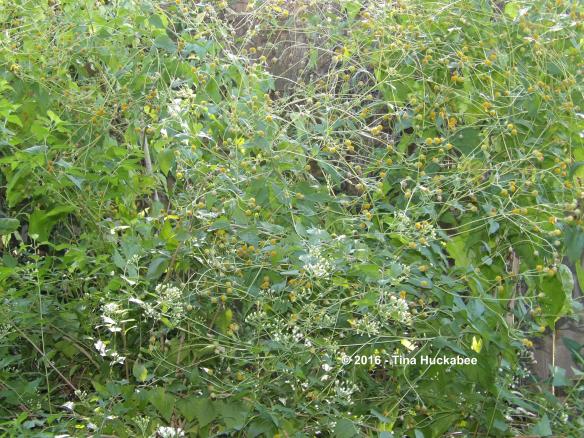
Plateau Goldeneye is an extremely drought tolerant plant–very appropriate for someone who doesn’t want a water-needy perennial. Because it’s such an attractive plant for so many species of wild critters, it’s a must-have addition for a wildlife garden. It’s casual growth habit could be an issue for those wanting a more formal garden,
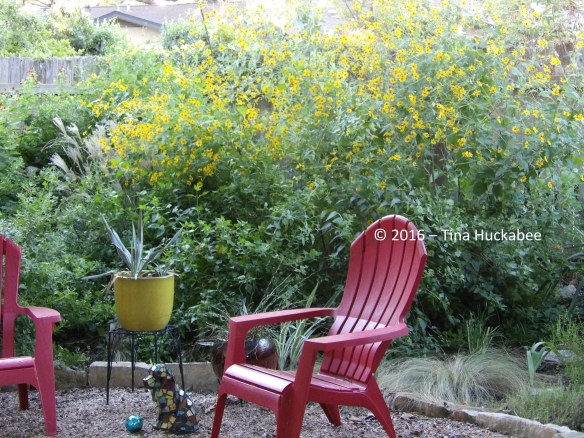
…but placing plants at the rear of a bed, fronted by other shrubs and perennials can solve the issue of their loosey-goosey growing nature.
According to the Lady Bird Johnson plant database, Goldeneye have only “minimal” deer resistance.
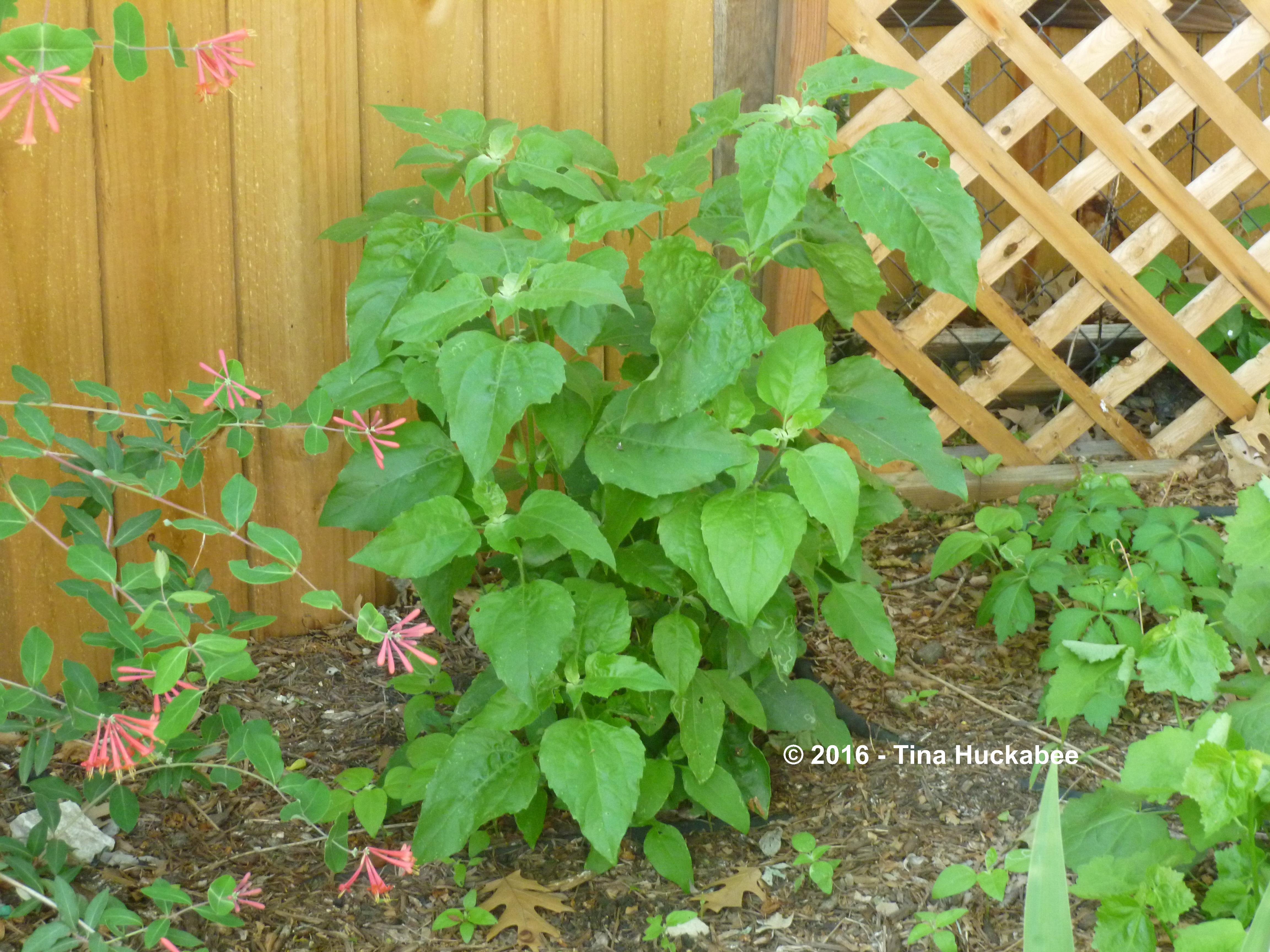
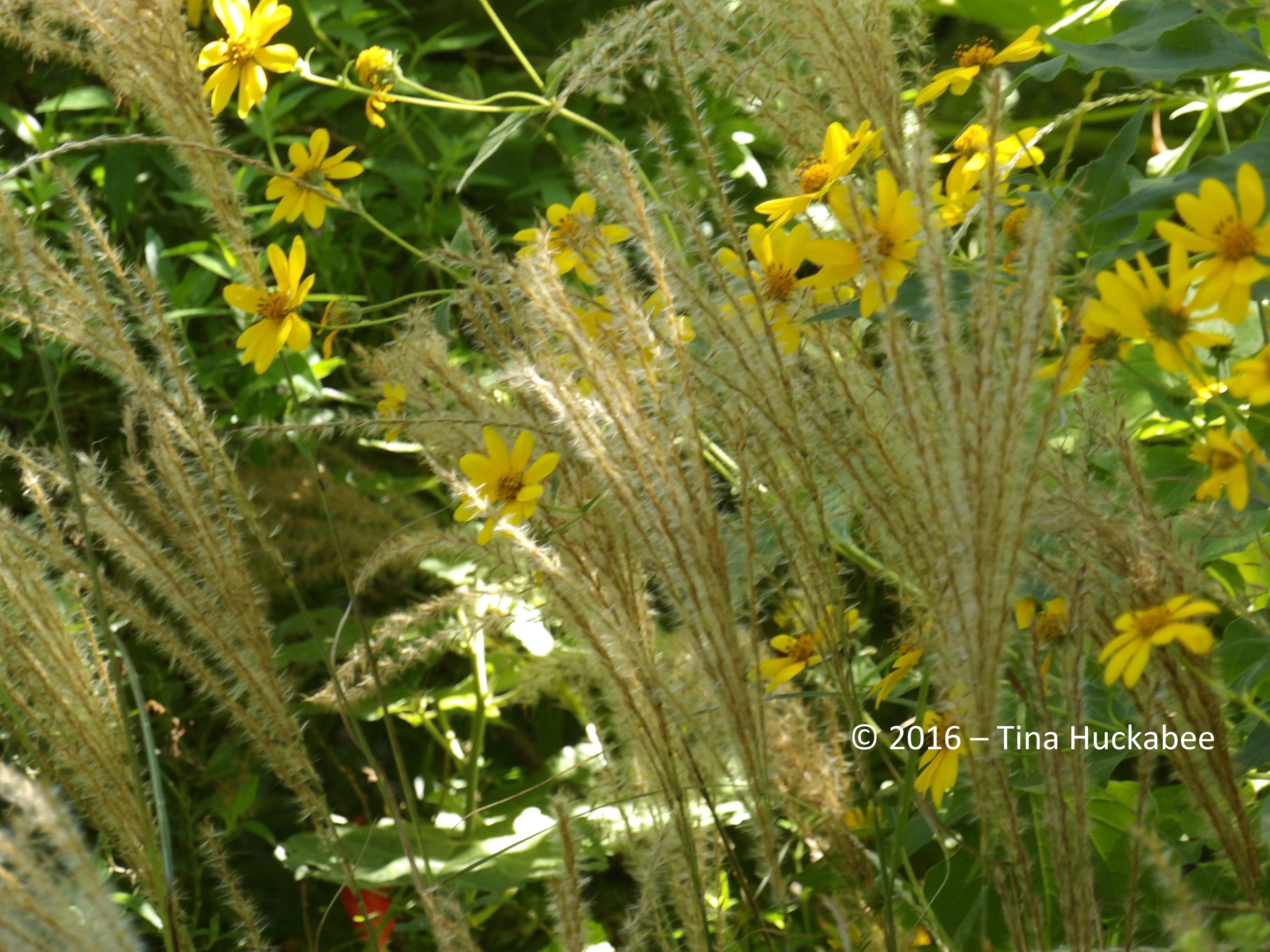
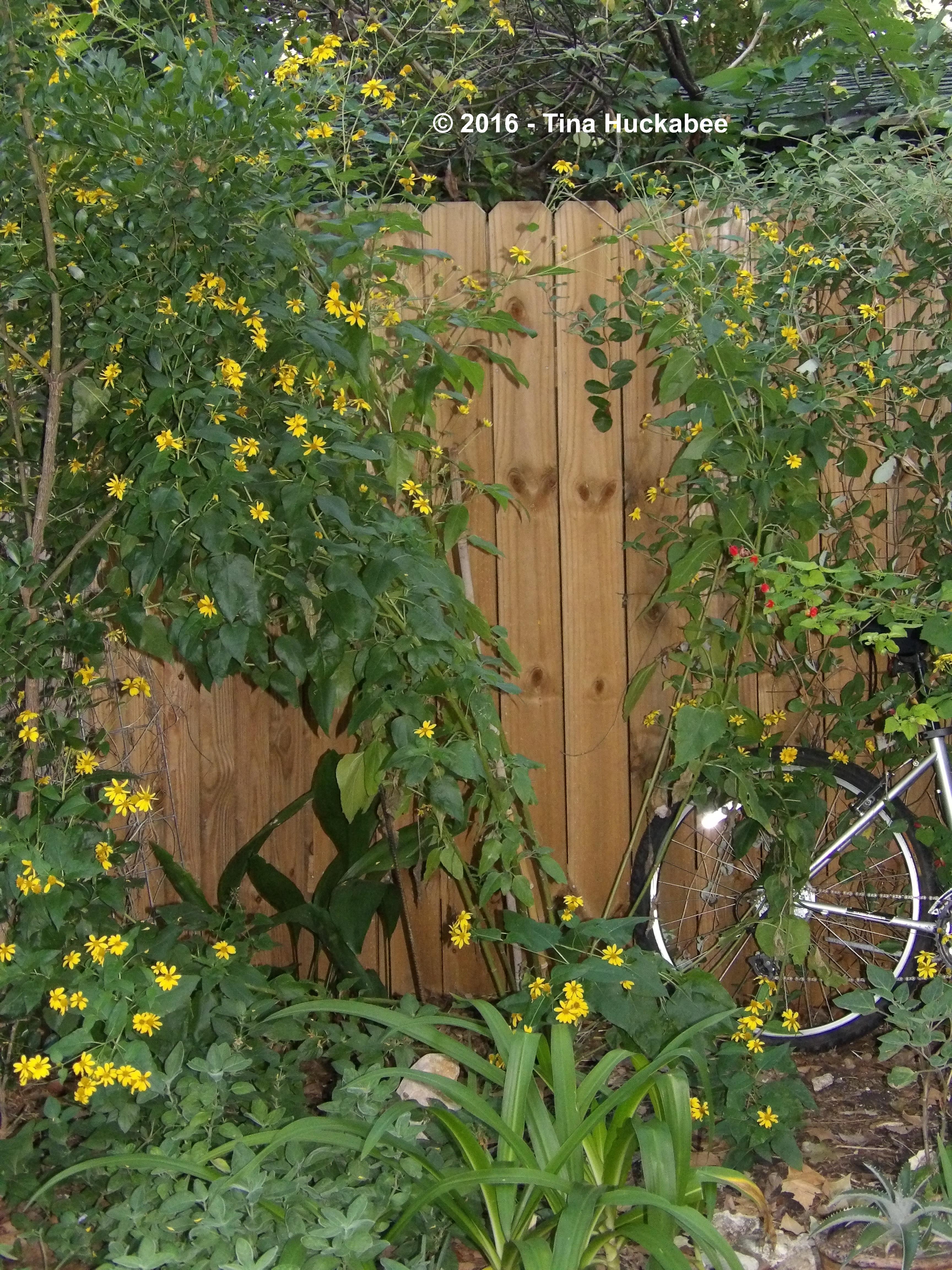
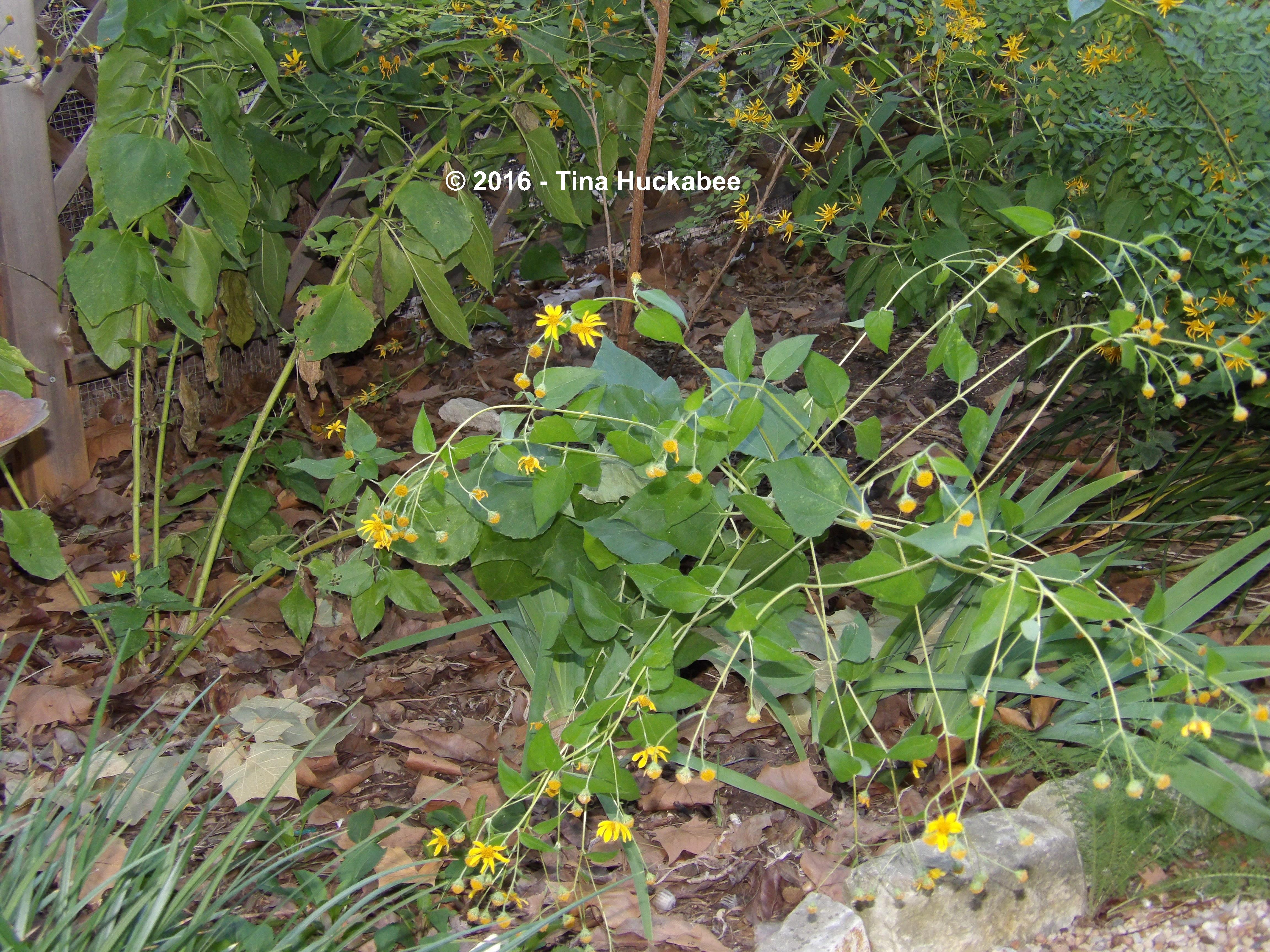
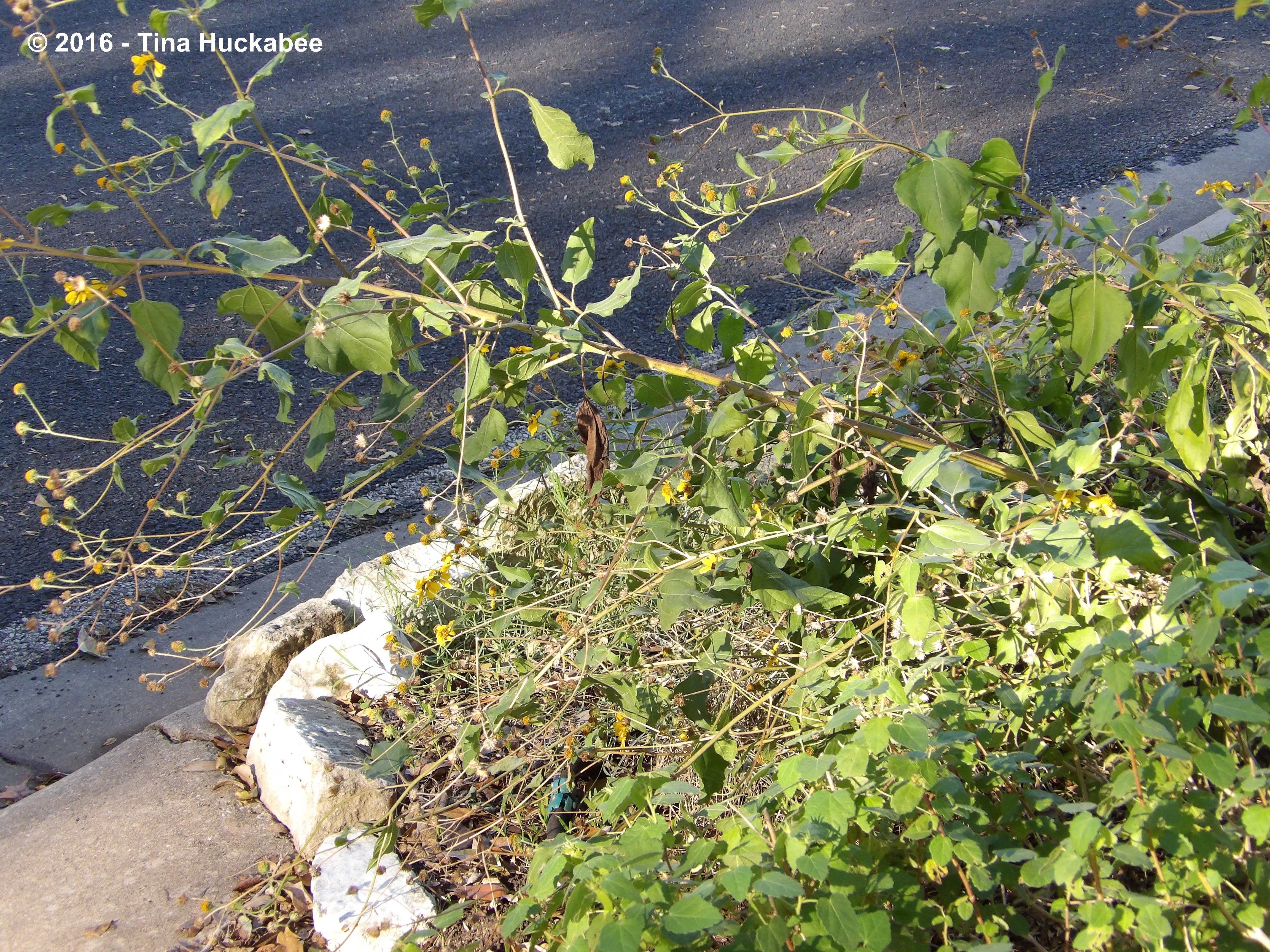
In Winter,

Spring,
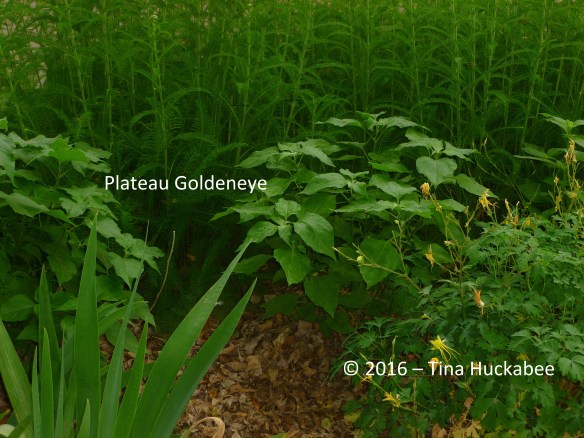
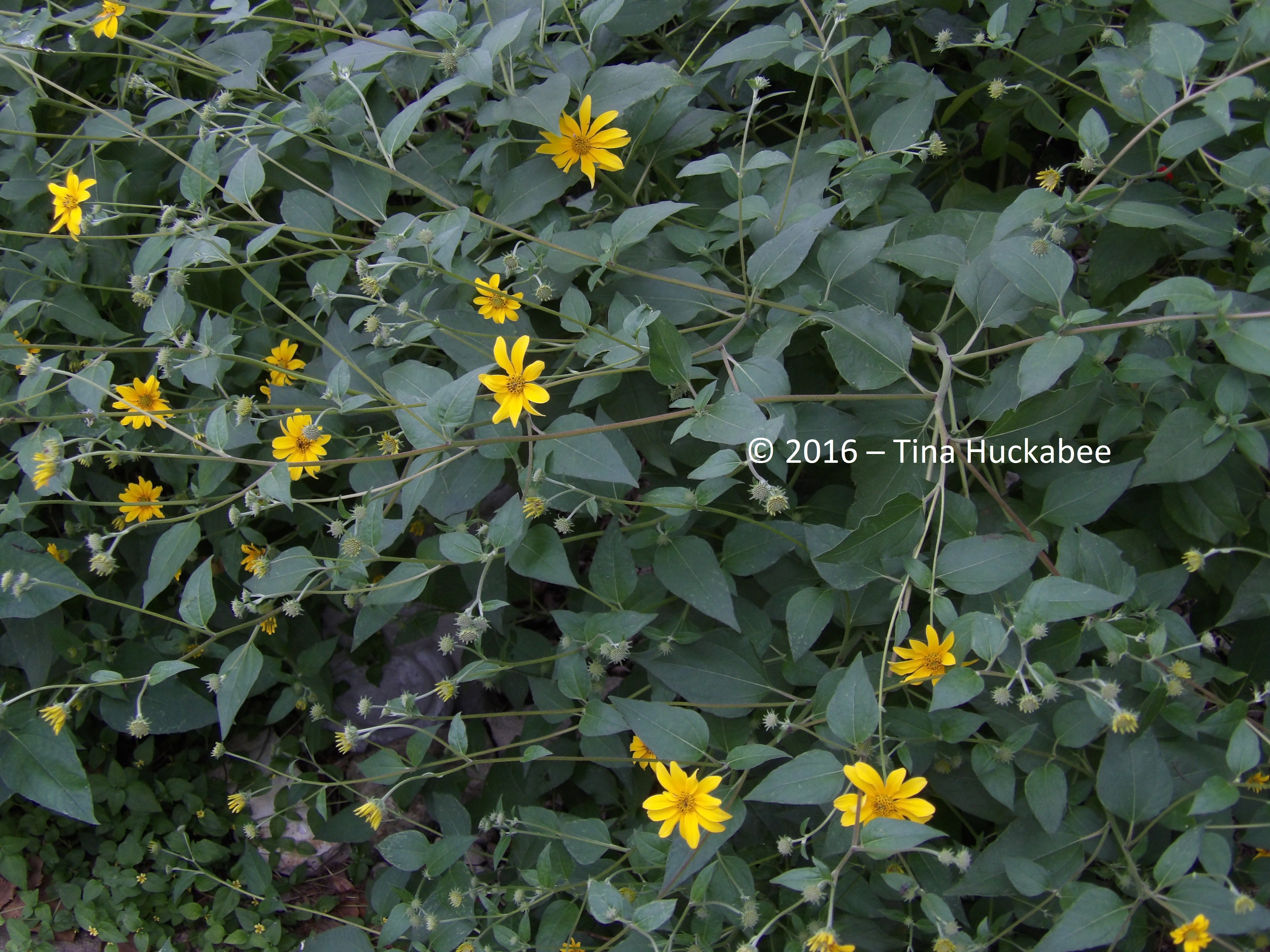
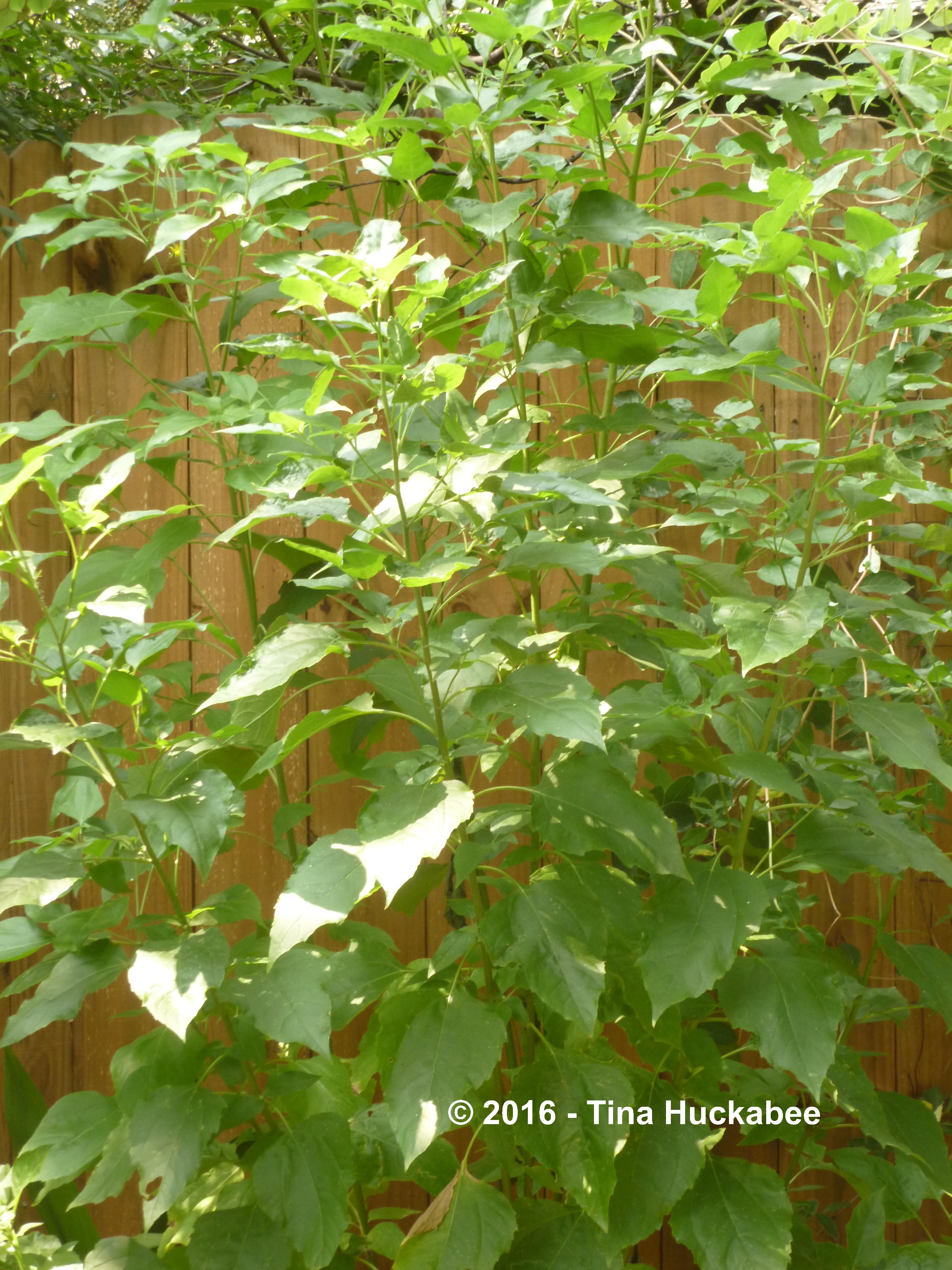
Summer,
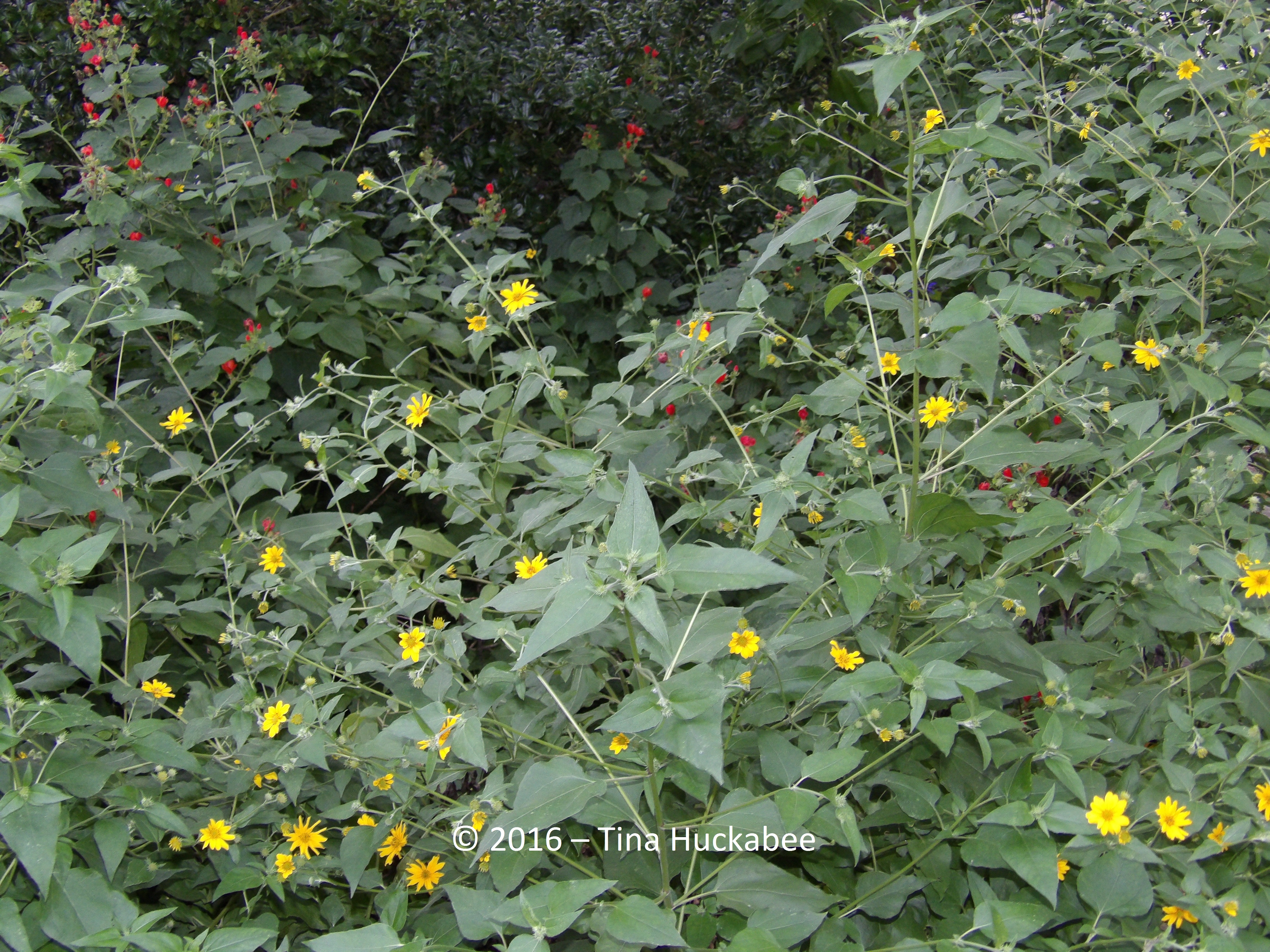
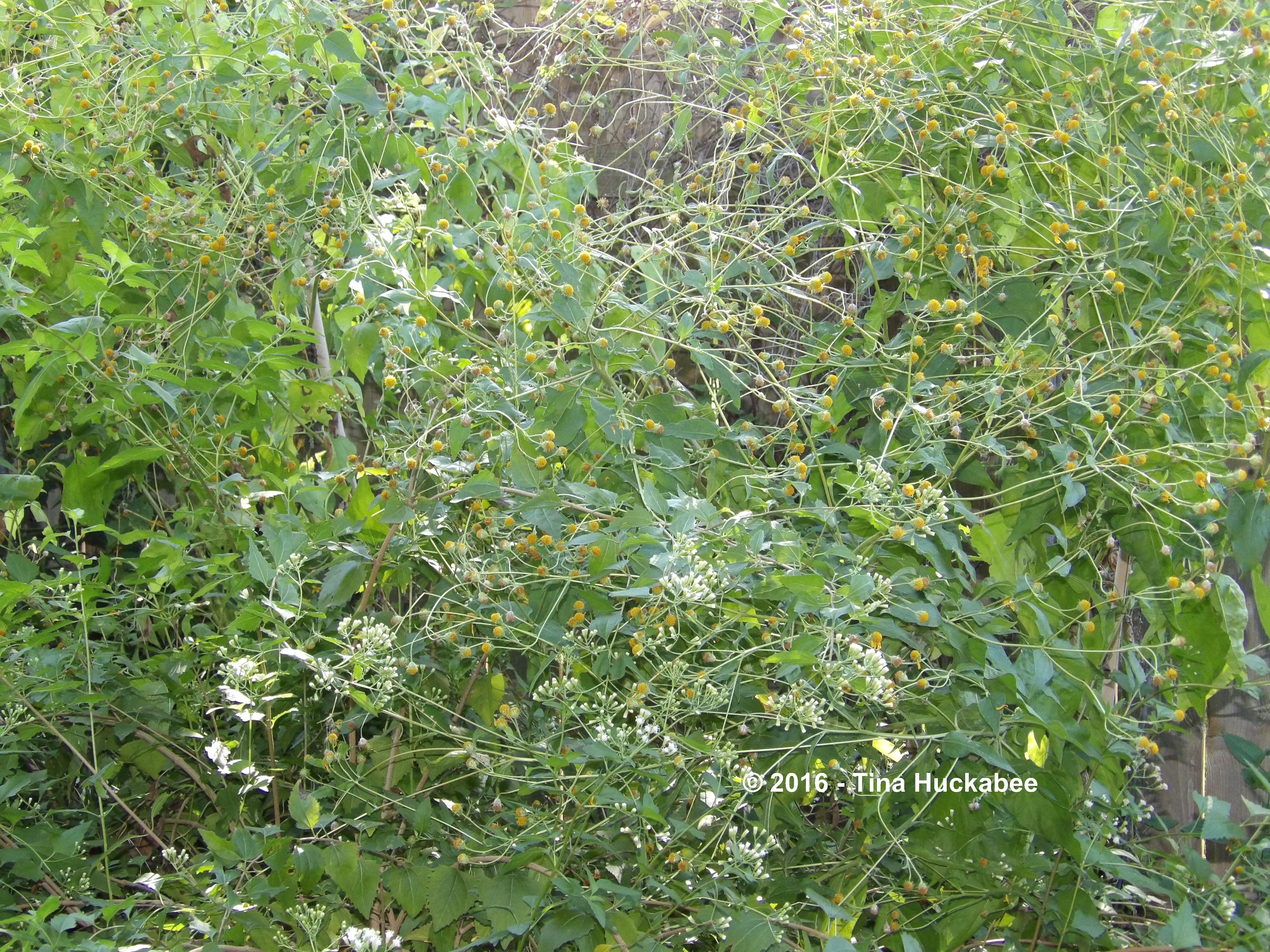
Autumn,
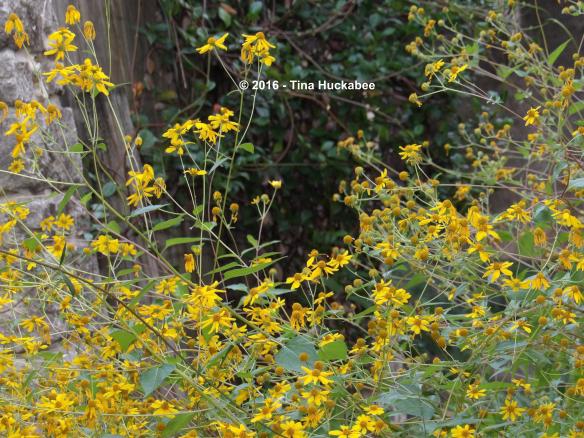
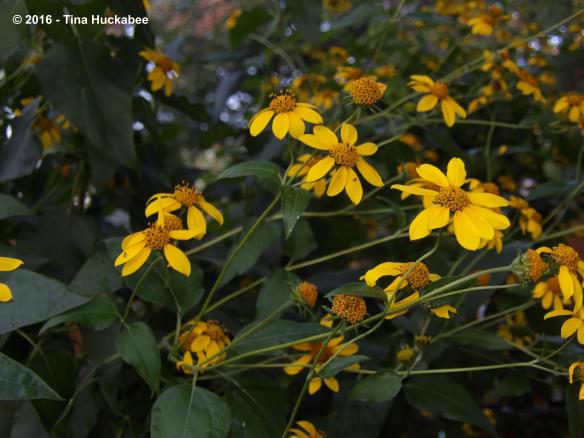
…Goldeneye is a tough survivor, beautiful bloomer, and a valuable resource for wildlife. If you live in its native range, try this perennial in your garden. It grows easily by seed or transplants. Commercially, you’re most likely to find seeds or seedlings at a locally owned nursery, or if you live near Austin, Goldeneye are usually on sale at the LBJ Wildflower Center’s fall or spring plant sale. Goldeneye is also a common passalong plant in its native range.
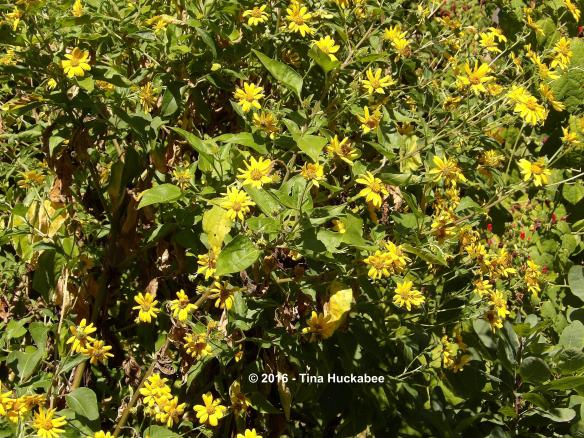
Plant and enjoy these gleeful blooms!






















 My Gardener Says...