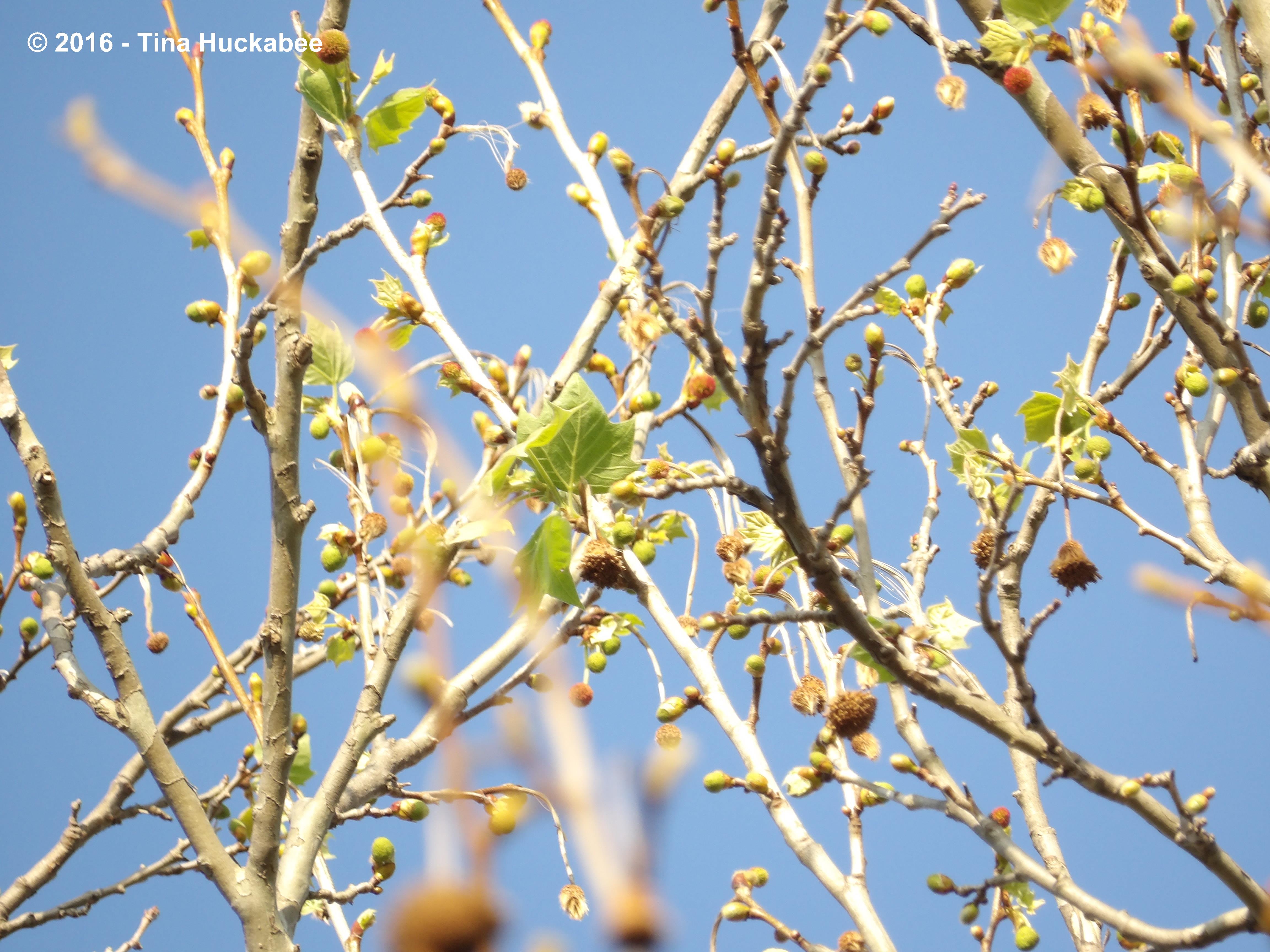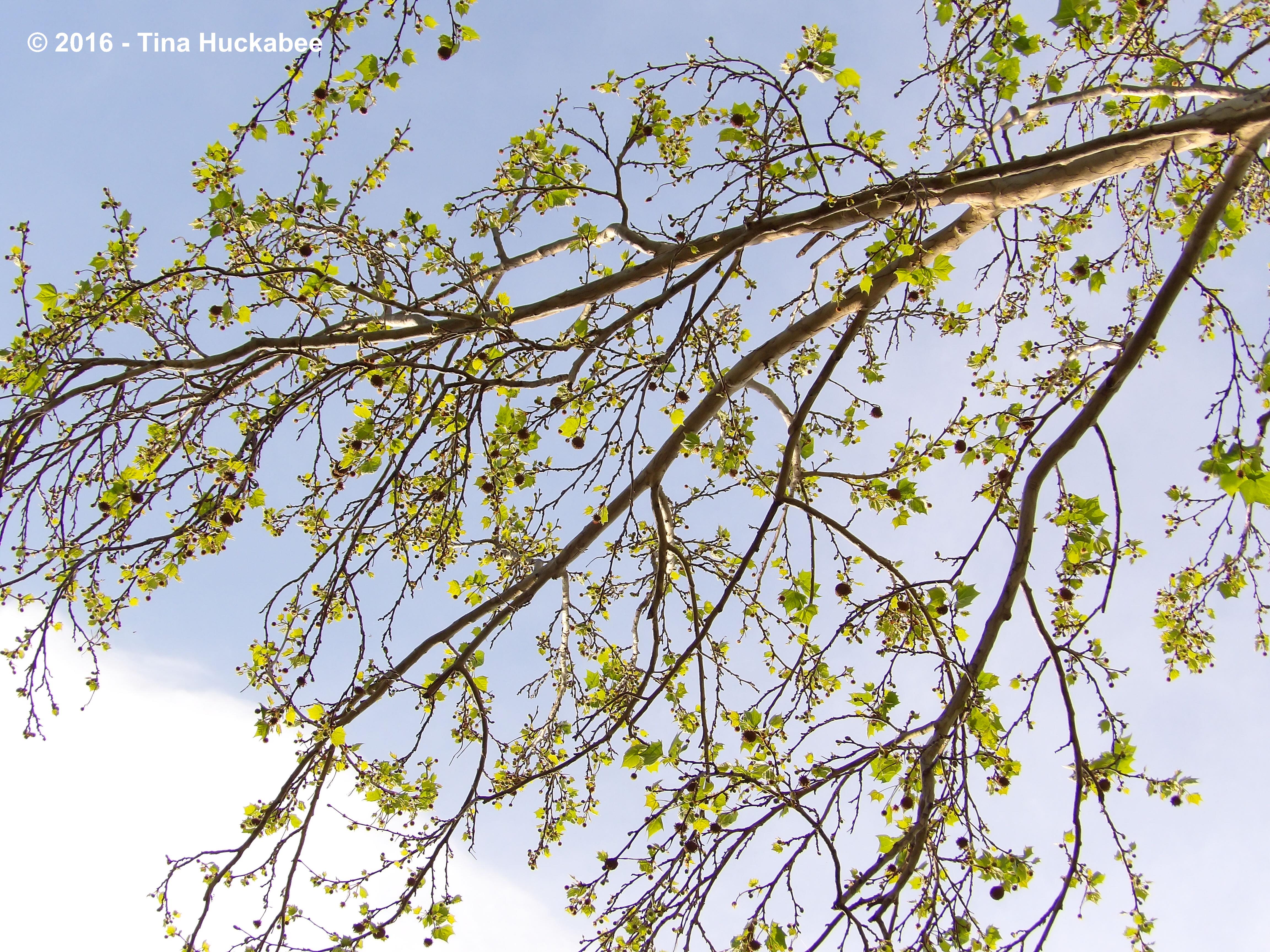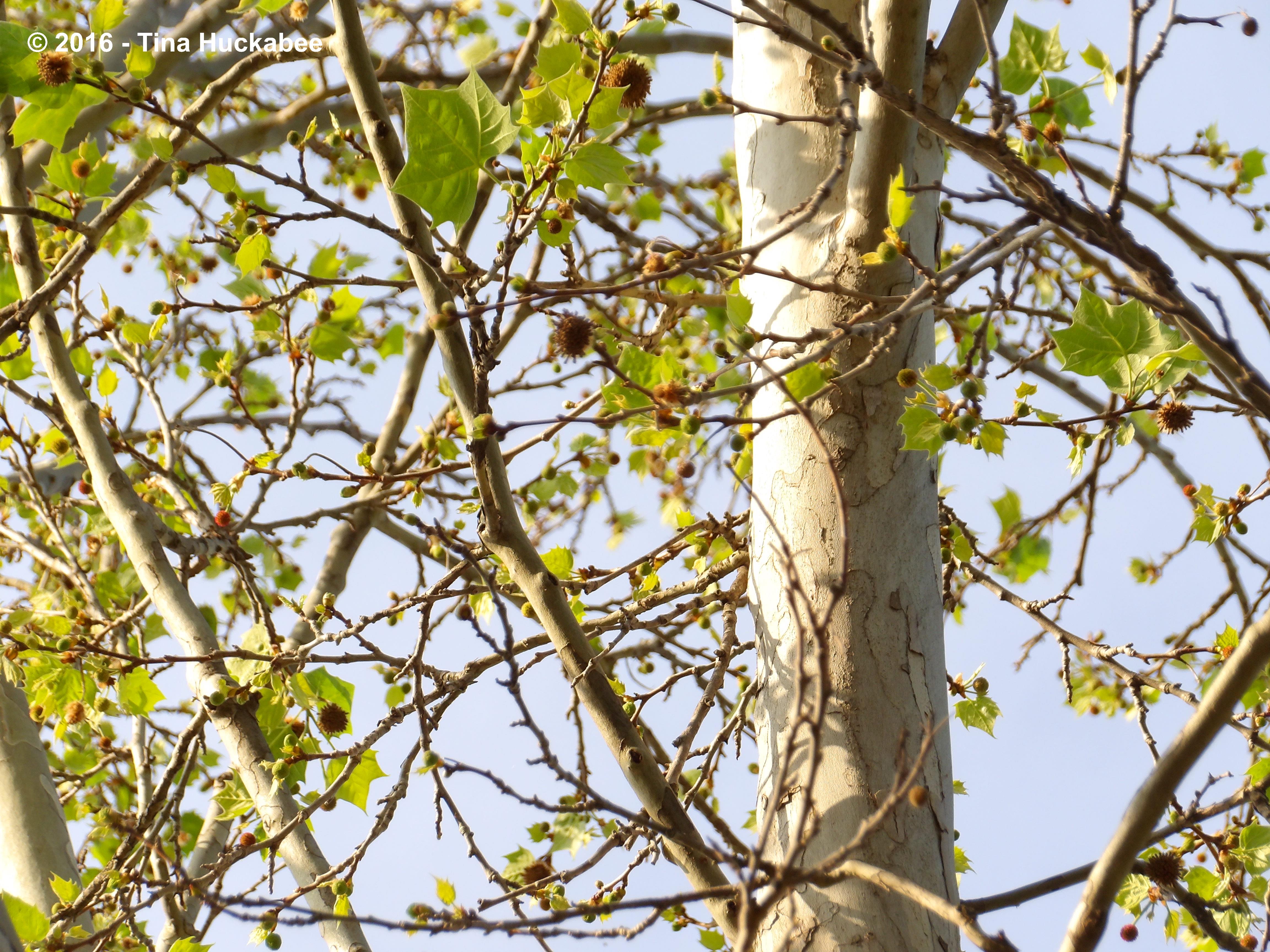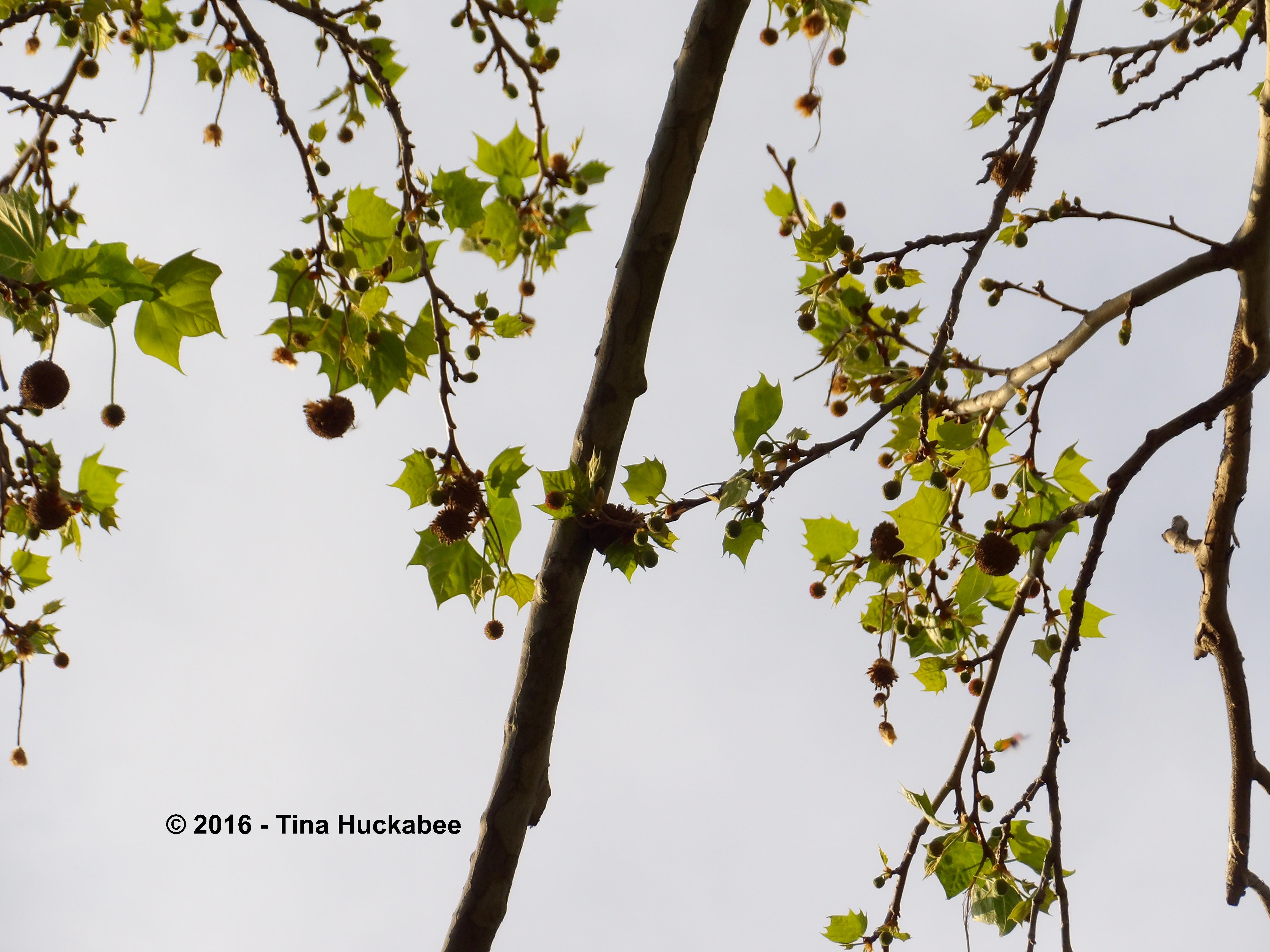
Leafed Out in Full

Spring has sprung, rain has fallen, temperatures have climbed and here in Austin, Texas, we’re mostly through our beautiful and glorious spring weather and headed into the lovely–though admittedly somewhat less pleasant–summer season.    Summers in Texas are hot and humid and that’s one reason why Texans have historically liked trees; trees provide respite from the sun and cool our souls.  The American Sycamore,  Platanus occidentalis is a tree that the Native Americans and later, European and American pioneers, scouted for when they wanted to find water and shade in Texas.

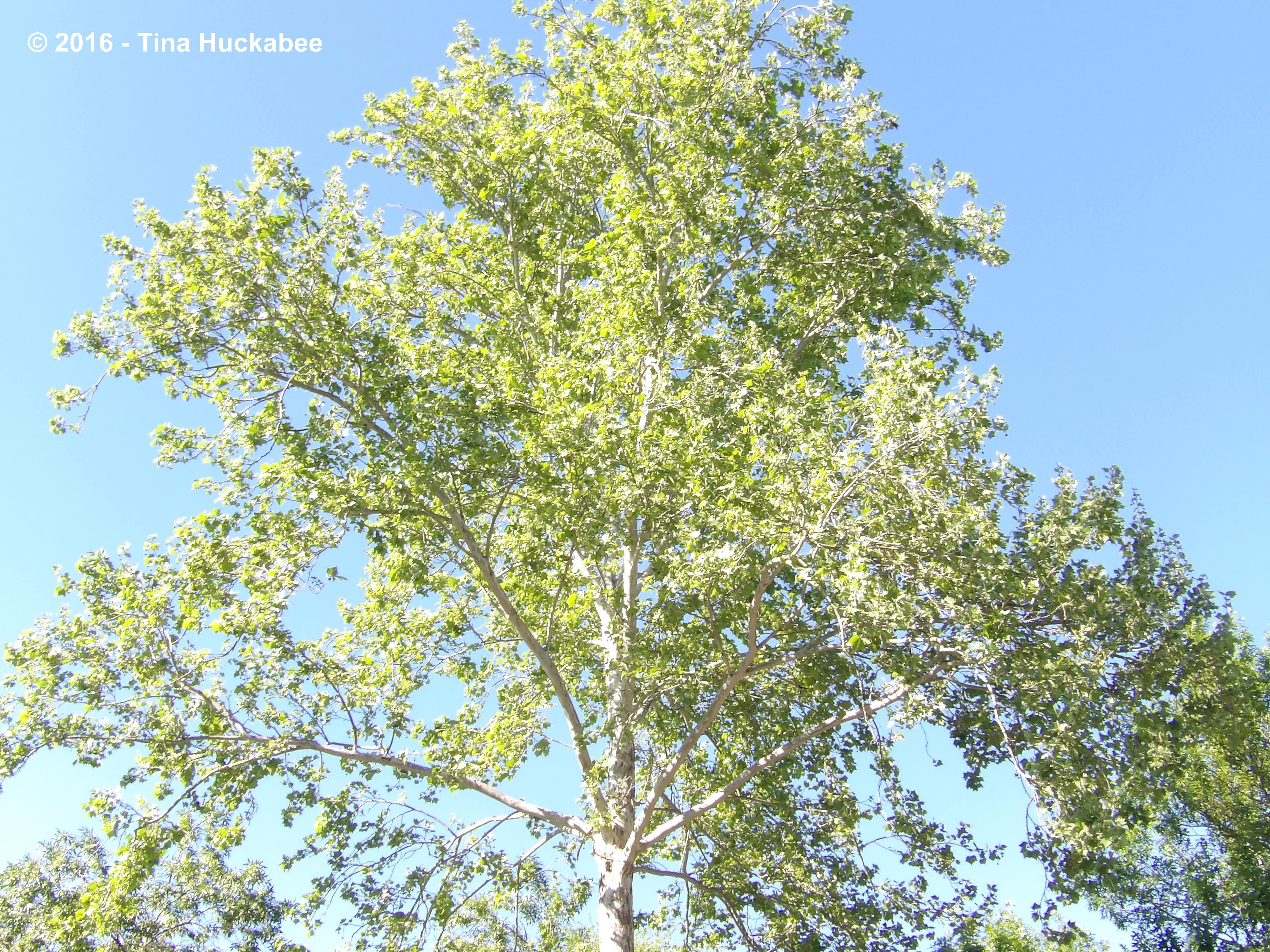
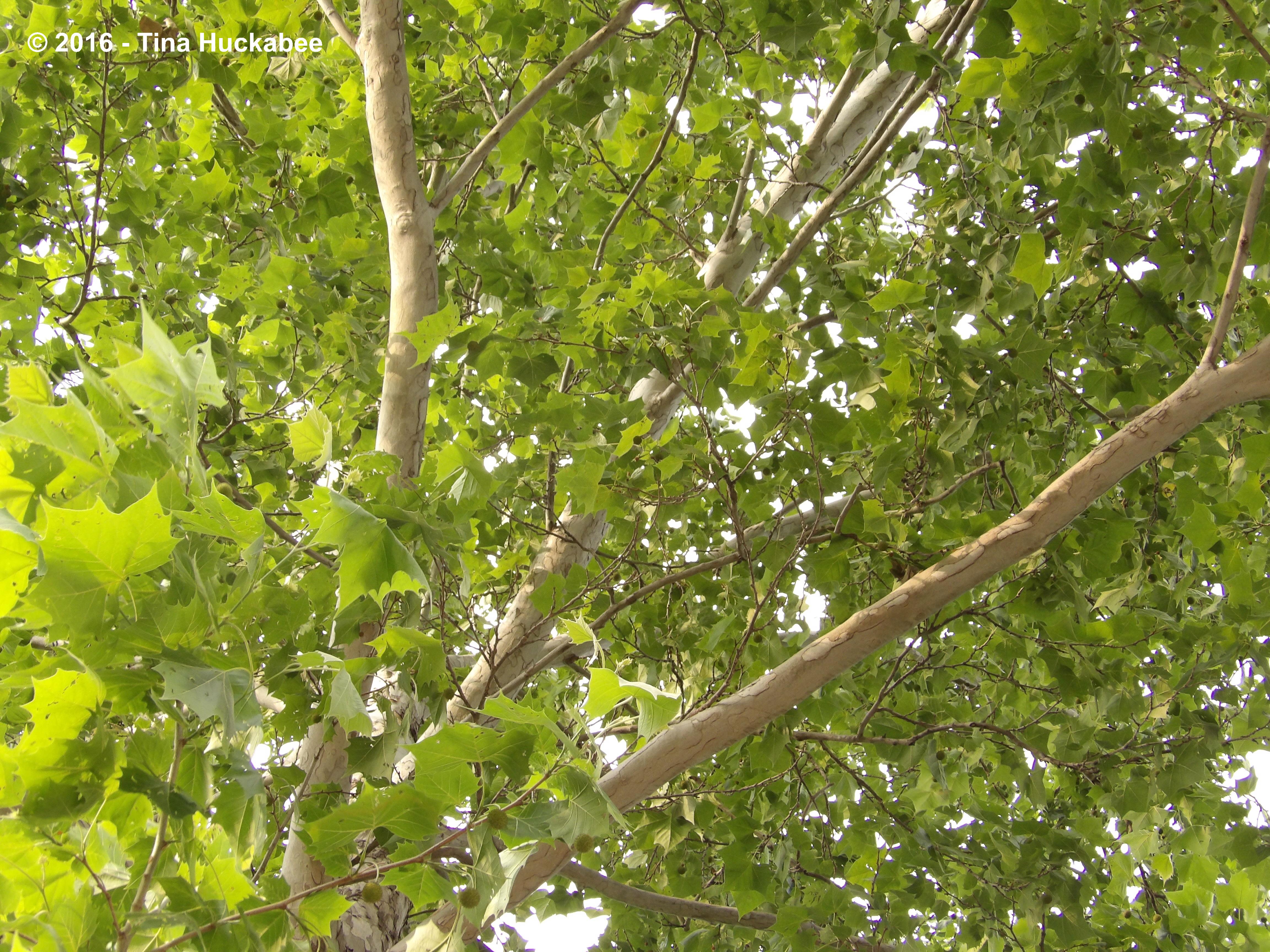
Stately and tall, the American Sycamore is springtime resplendent in its lush, green foliage, all leafed out and ready to provide protection for critters–large and small, furred and feathered, two-legged and four-legged.

IMGP7907.new

IMGP7913.new

The limbs are graceful as they reach into and support the canopy.

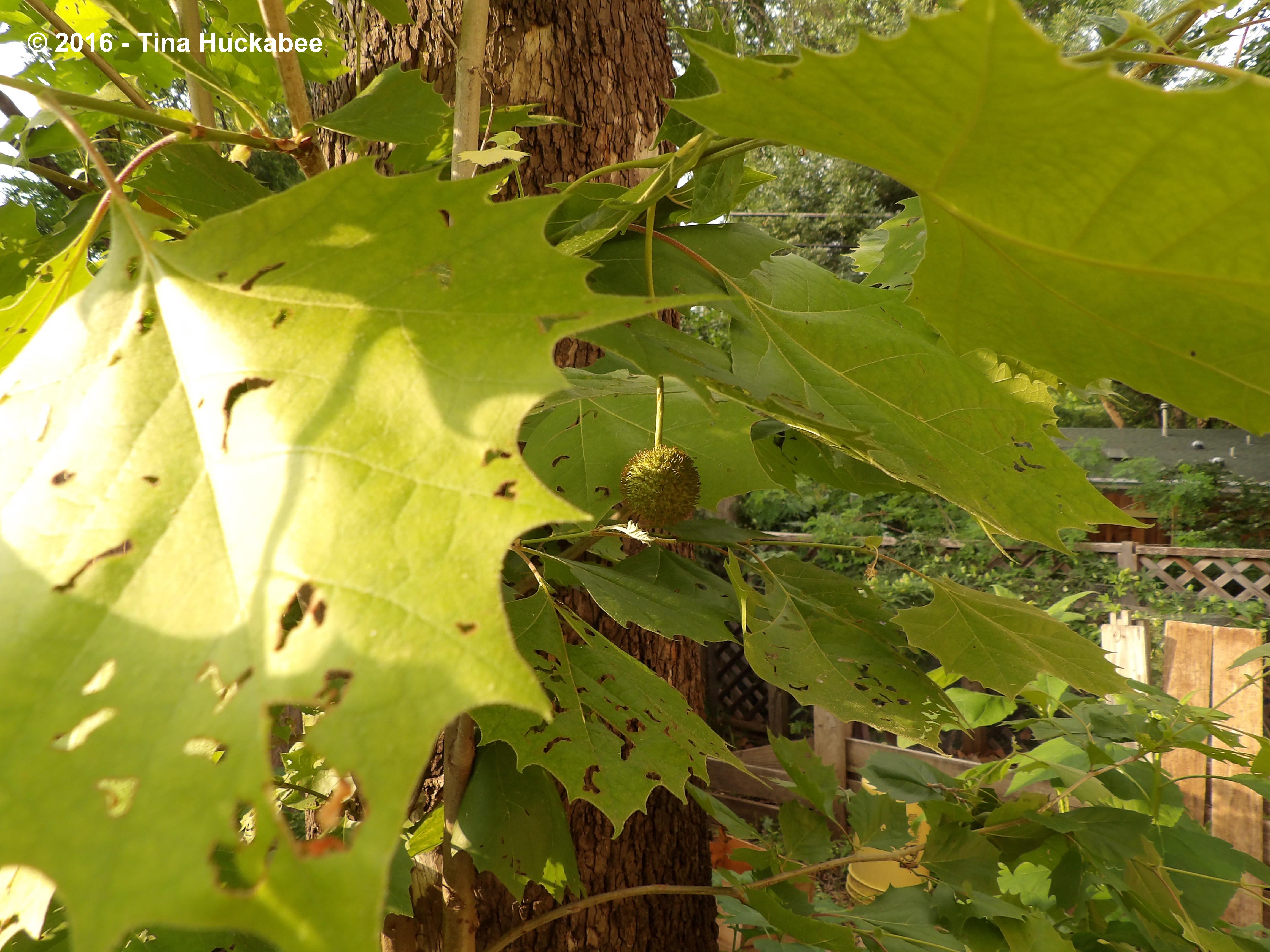
This month, the leaves have been munched upon and are a bit holey.

IMGP7905.new

IMGP7906.new

I’m not sure exactly who’s been eating the leafy greens, though I know I’ve seen this sort of damage in previous years on the Sycamore’s leaves.

IMGP7909.new

The mature leaves have some damage, but there are new leaves, too.

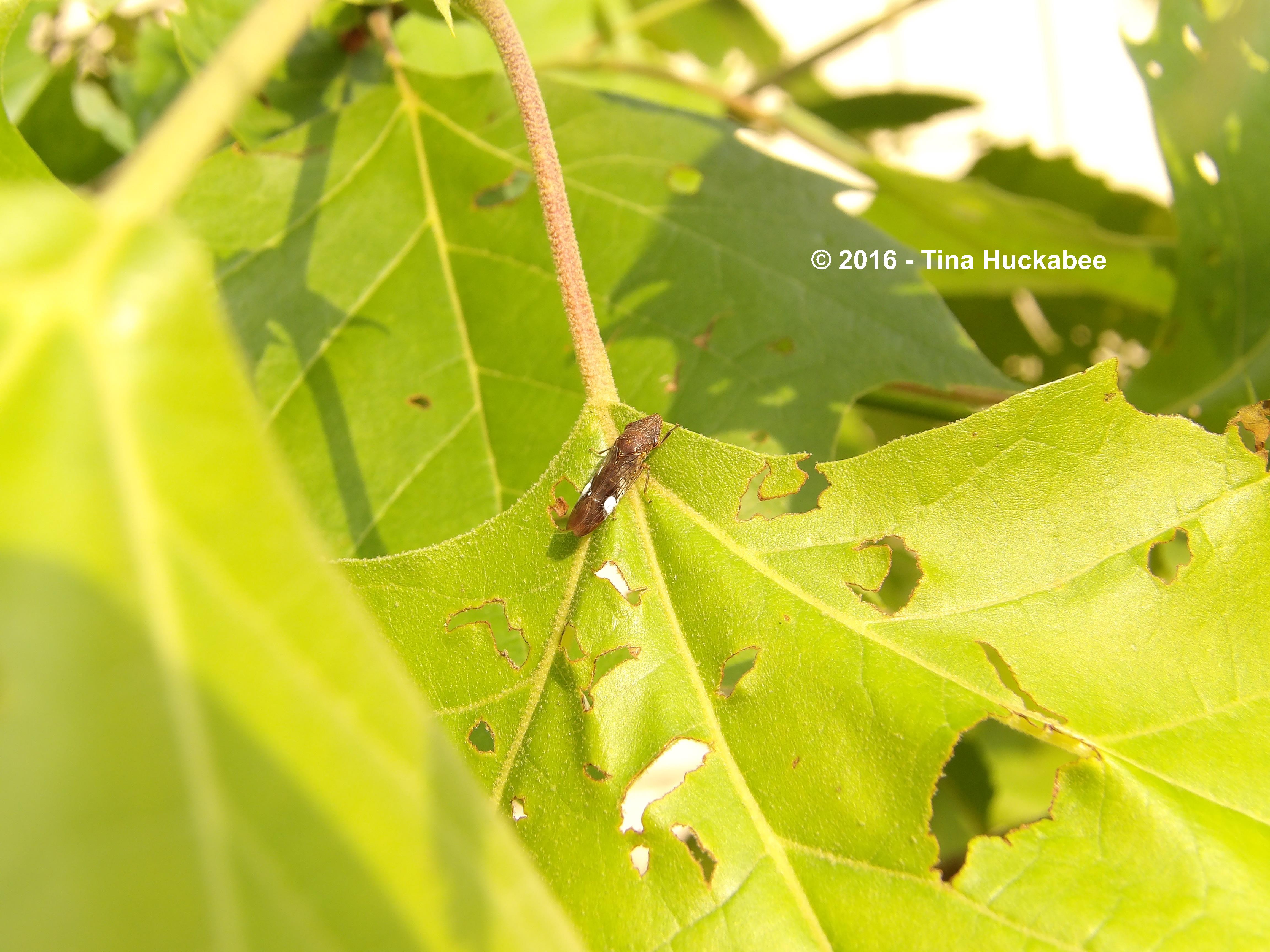
I did see this fella, a Glassy Winged SharpshooterHomalodisca vitripennis,  on one of the leaves.
IMGP7911.new

Now, I’m not suggesting that this particular one is responsible for all the holes, but apparently, the Sharpshooter undergoes several molts in its trip toward adulthood and it had to eat something, so I think the leaves are a good bet.  Since I caught the Sharpshooter near the holes, he gets the blame for making the holes.

The Glassy Winged Sharpshooter is a type of leafhopper insect, of which there are a bunch who munch on shrub and tree foliage here in Central Texas.  I’m not one to fret about a few holes in leaves–everyone has to eat and one function of foliage is to feed insects.  The Glassy Winged is common here in Central Texas and according to literature, they do little long-term or serious damage to trees and shrubs.

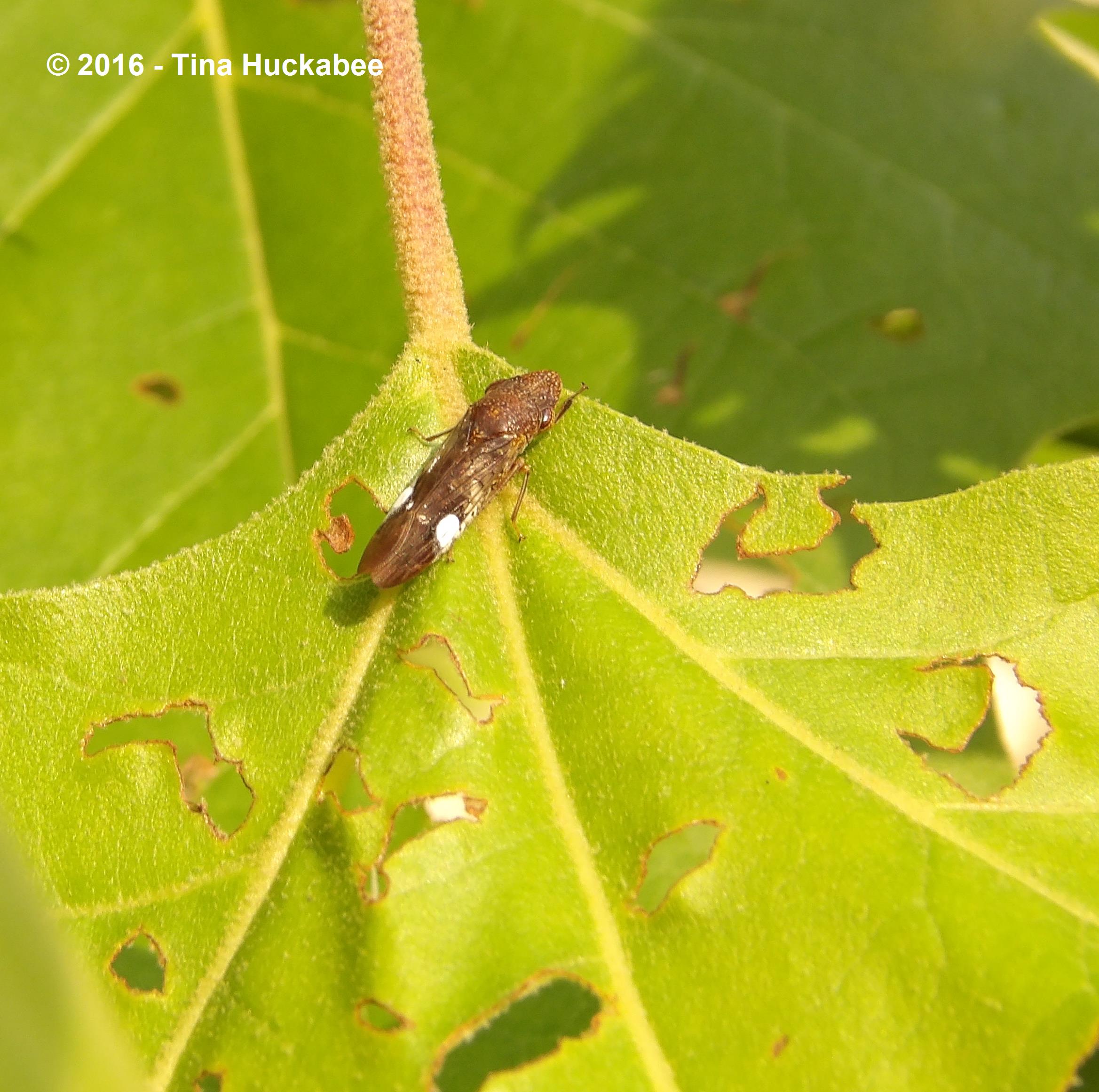
This one–the one I referred to earlier as a “fella” and “he”–is actually a female.  The white patches on her wings are call egg brochosomes.
IMGP7912_cropped_2337x2322..new

Most leafhopper species have brochosomes, which produce a sticky substance used to coat their bodies for waterproofing.  Additionally, the female stores and then uses the substance she holds in the brochosomes to cover her eggs once she lays them.

Also, if you stand under the Sycamore (and my oak trees, too) right now, you might feel a few “drops” from the trees, sort of like rain drops, but with a clear, blue sky above. No, the drops aren’t rogue precipitation, but, more than likely, are leafhopper excrement.

Well, that’s nice.  Just don’t host your next picnic underneath a tree with “drops” coming out of it.

The Sycamore in May is in full leaf, foliage, and life.

IMGP7910.new

Not all the leaves have been insect damaged.

It will be a harbinger of safety, food, and protection for many and for months to come.

Thanking Pat of The Squirrelbasket for graciously hosting this fun meme about trees. Check out her blog for interesting information about trees from all over the world.

 

Green It Is: Tree Following in April

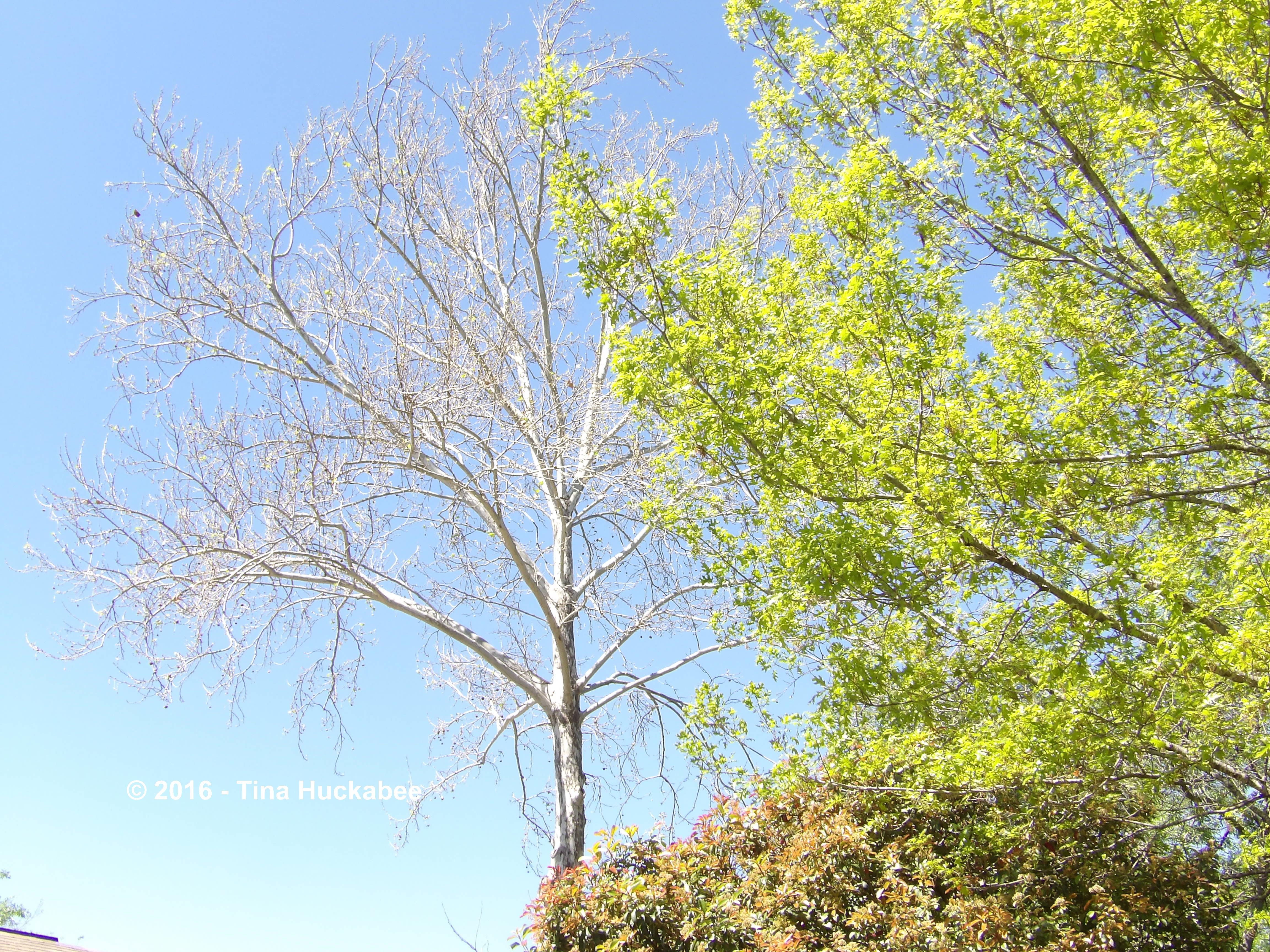
My  American SycamorePlatanus occidentalis, leafed out this past month.  It began the month in a  mostly leafless state.

IMGP5164.new

The Shumard Oak (Quercus shumardii), leafed out much earlier this spring, though it's always ahead of the Sycamore.

The Sycamore, at the center-left, leafs out later than the Shumard Oak (Quercus shumardii).

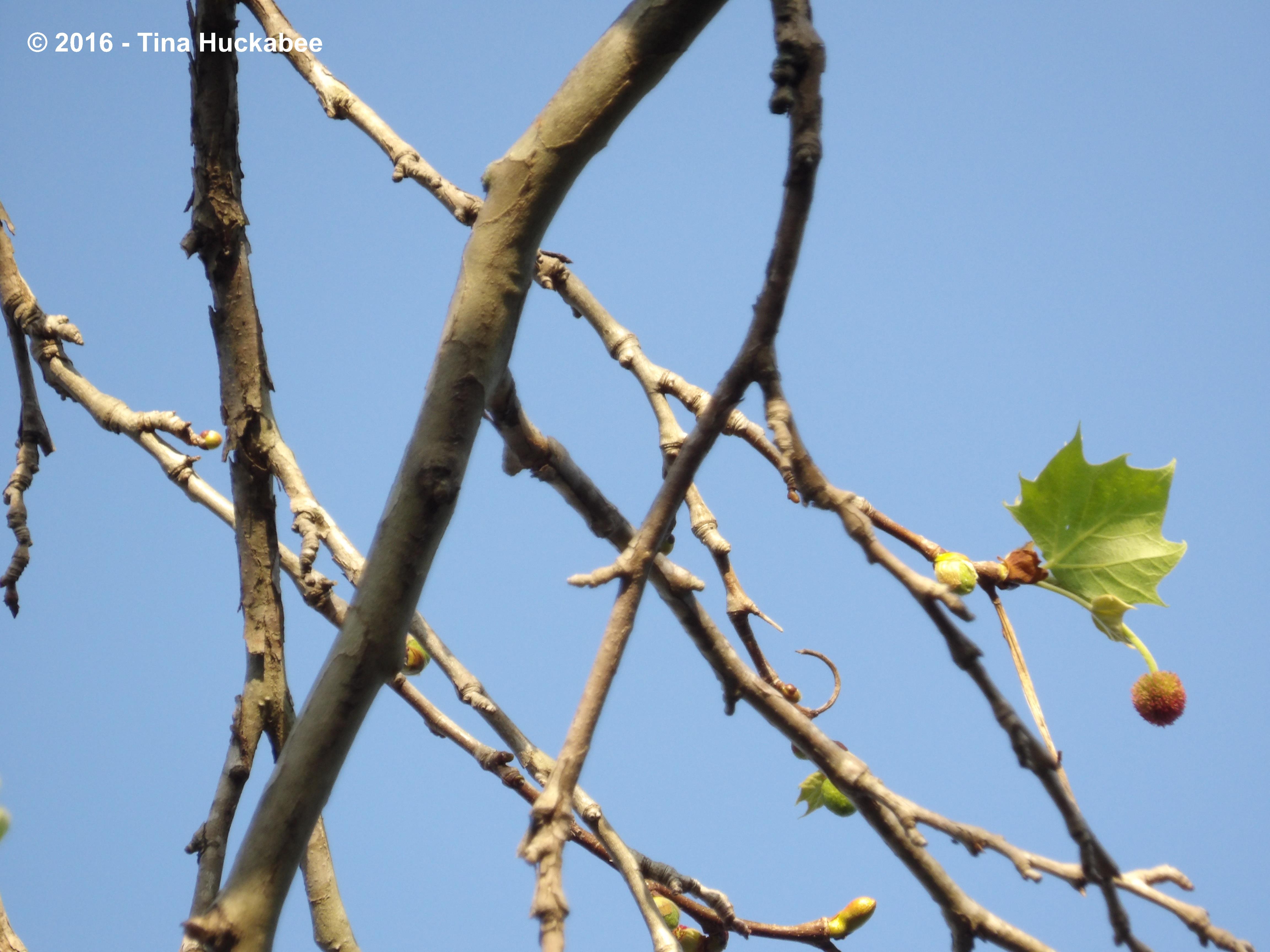
It wasn’t too far into March before dots of new green appeared.  I caught the beginning of the leafy action, snapped photos, then went on with my life.

IMGP5165.new

IMGP5158.new

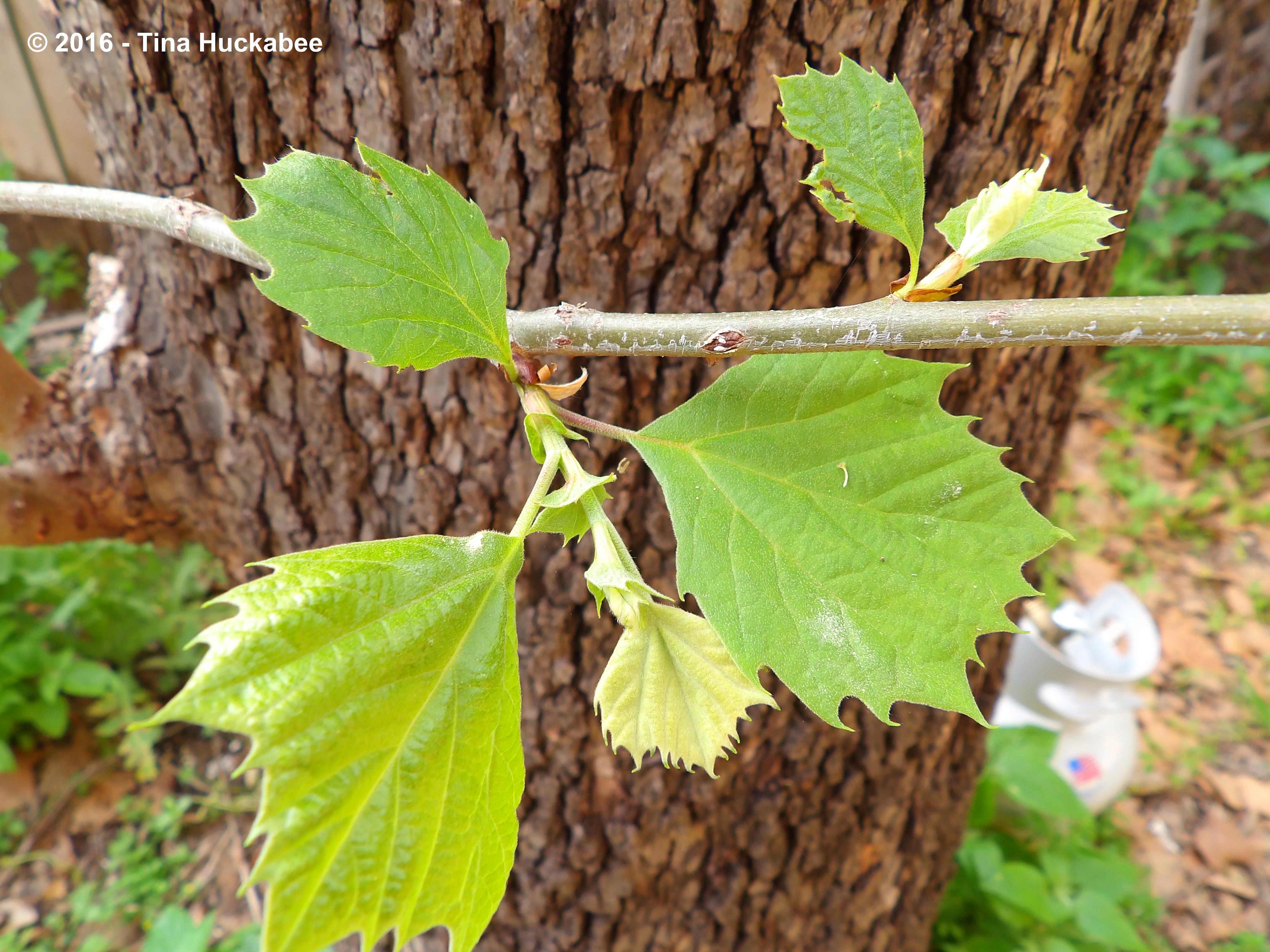
This branch is the only one that is below the roof of my house and easily accessible. No, I'm not going to climb on my roof for my blog or for Tree Following.

This branch is the only one that is below the roof of my house and therefore, easily accessible. I have no plans to climb on top my roof to get photographs of leaves for this blog.

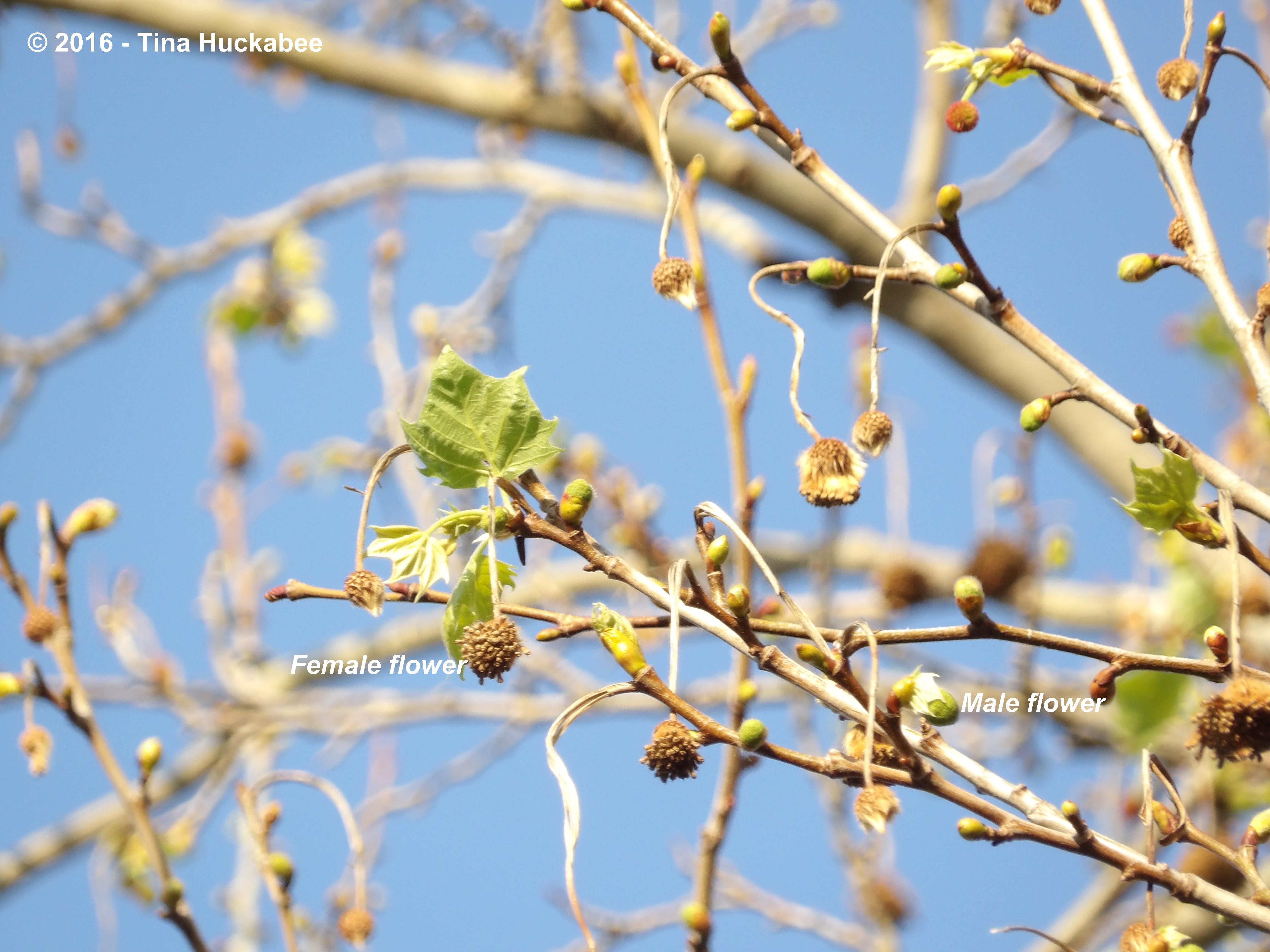
Sycamore, like most plants, is a monecious plant, which means that each tree has both female (pistillate) flowers and male (staminate) flowers.  As an aside, another way that plants function reproductively is by being dioecious–which means that the individual plants are either female or male.  Fewer plants are dioecious.

I knew that American Sycamores were monecious, but seeing that the tree is monecious is another thing entirely–and that’s the great thing about tree following: I notice these things because I’m paying attention. I assumed that because my tree is tall that I wouldn’t get a good photo of the male and female flowers.  Additionally, I wasn’t trying to get photos of the flowers.   But during in the photo-snapping session mentioned above, I caught both the male and female flowers.

IMGP5152.new

The male flowers grow on newer, shorter branchlets and the female flowers grow on older branchlets.

IMGP5154.new

The male flowers sport a sort nubby look along the branches, while the female flowers are fuzzier.  The male flower will break and release its pollen load, usually by wind, but also, by water.  If you recall from our March visit to the Sycamore, we learned about dispersal of seeds by wind, anemochory, and dispersal by water, called hydrochory.  The American Sycamore does both; it’s a good survival strategy to employ a couple of methods of reproduction–it certainly keeps the options open.

IMGP5156.new


Sycamore leaf production soon overtakes any flower show, though.

IMGP6171.new

IMGP6169.new

You can see that there are plenty of seed-balls for next year’s Sycamore seed dispersal.   For now, the new ones are spring green,

IMGP6170.new

…but eventually they’ll turn a toasty, autumn brown.

I’ve never seen a nest in the Sycamore, but it serves as a consistent resting spot for a variety of birds like this male Great-tailed Grackle,  Quiscalus mexicanus.                    .

IMGP6198.new

His glorious, purple-black plumage pairs well with the new leaves.  Other birds like White-winged Doves, House Sparrows, Blue Jays, and Cardinals, are year-round visitors to my Sycamore.  As the leaves grow larger and the foliage thickens, it will become more difficult to spot birds resting in the tree.

The foliage is now almost fully flushed out.  Sycamore is usually planted as a shade tree, but also as a tree for urban areas used to thwart air pollution.

IMGP6172.new

Maybe those big leaves will save us all.

IMGP6985.new

IMGP6988.new

IMGP6986.new

This is the American Sycamore as it enters late spring heading toward the summer months.

IMGP6982.new

Thanking Pat of The Squirrelbasket for graciously hosting this fun meme about trees. Check out her blog for interesting information about trees from all over the world.
 

Tree Following in March: A Whole Lotta Nuthin’

I suppose to suggest that there’s nothing going on with my American Sycamore,  Platanus occidentalis, would be erroneous. Truthfully, in its outward appearance, not much has changed since we last engaged in the monthly Tree Following musings.

IMGP4924.new

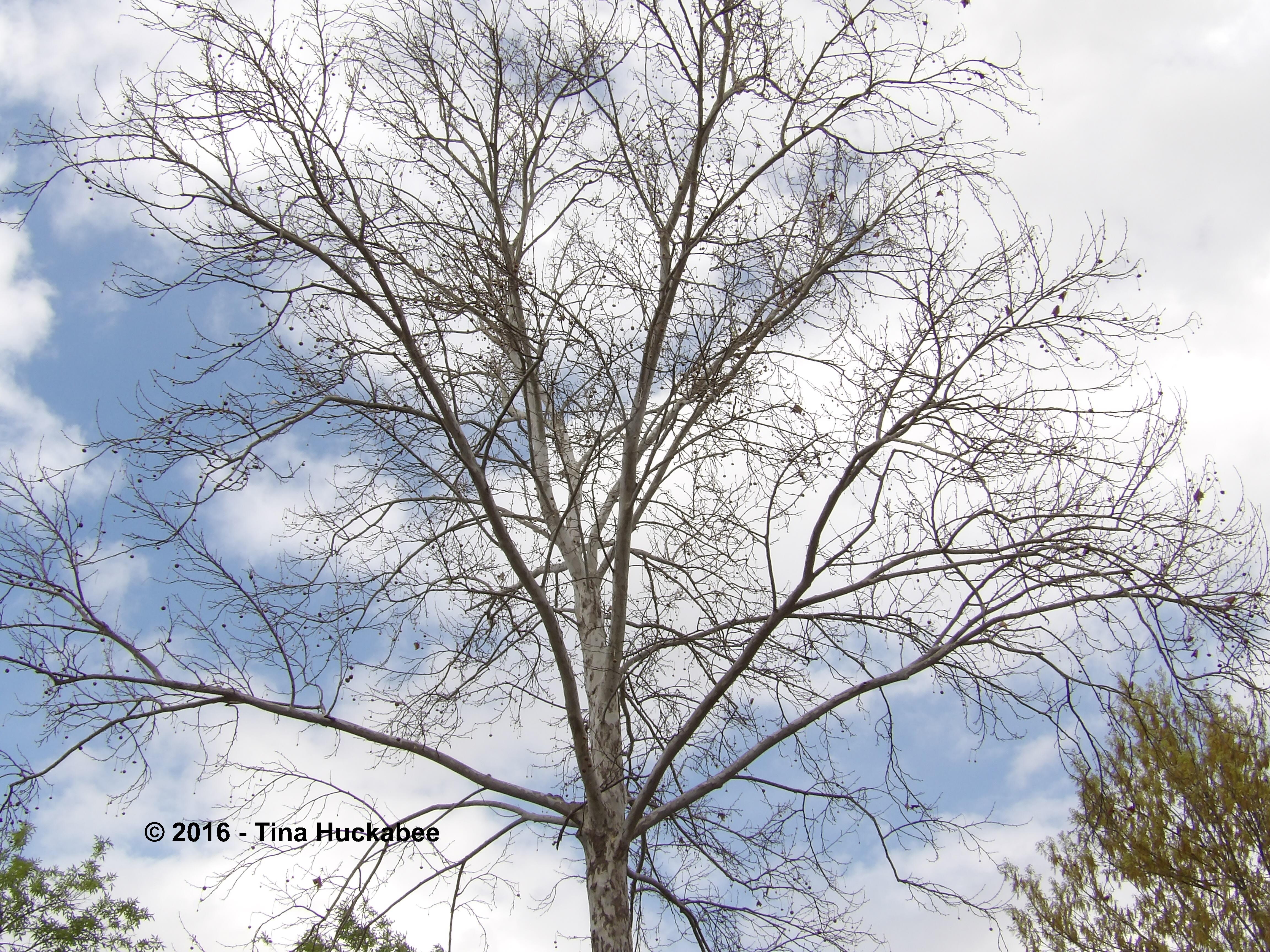
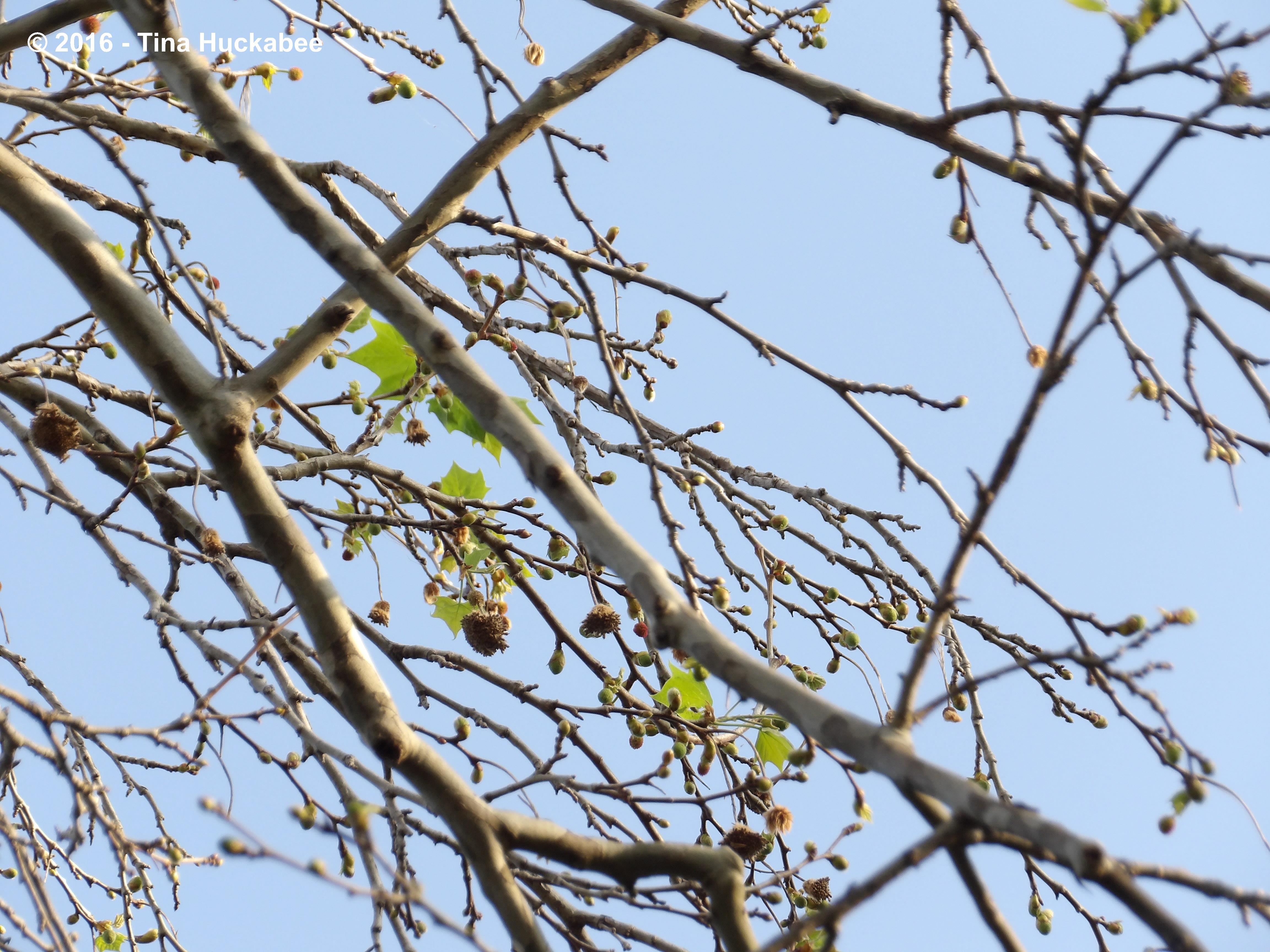
The American Sycamore stands stalwart and skeletal, beautiful in its simplicity.  It’s always one of the last trees to leaf out in my neighborhood, along with the native Pecan, Carya illinoinensis, trees.  I’m not seeing much, if any, thickening of bud development for ultimate leaf-making.

IMGP4763.new


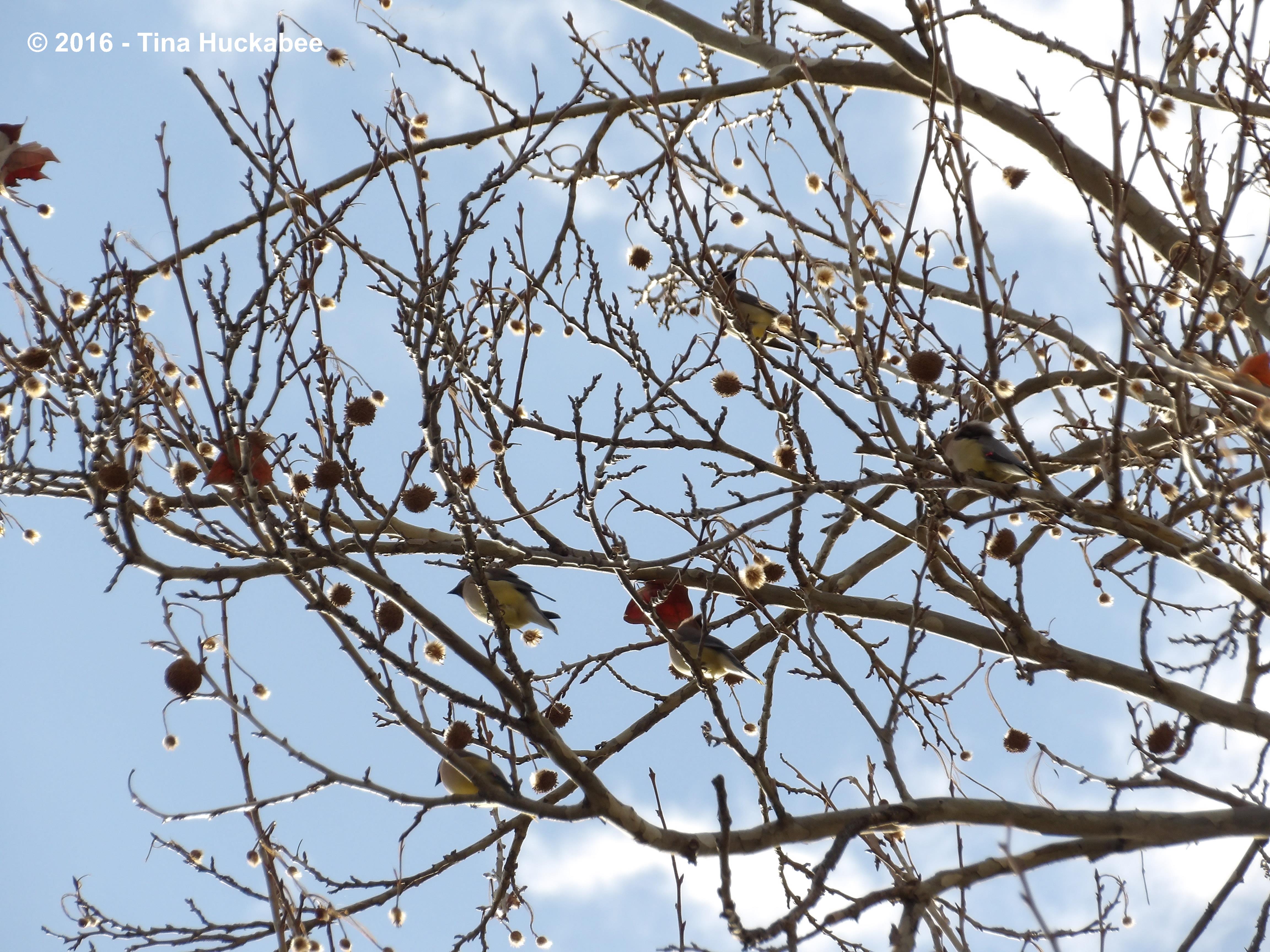
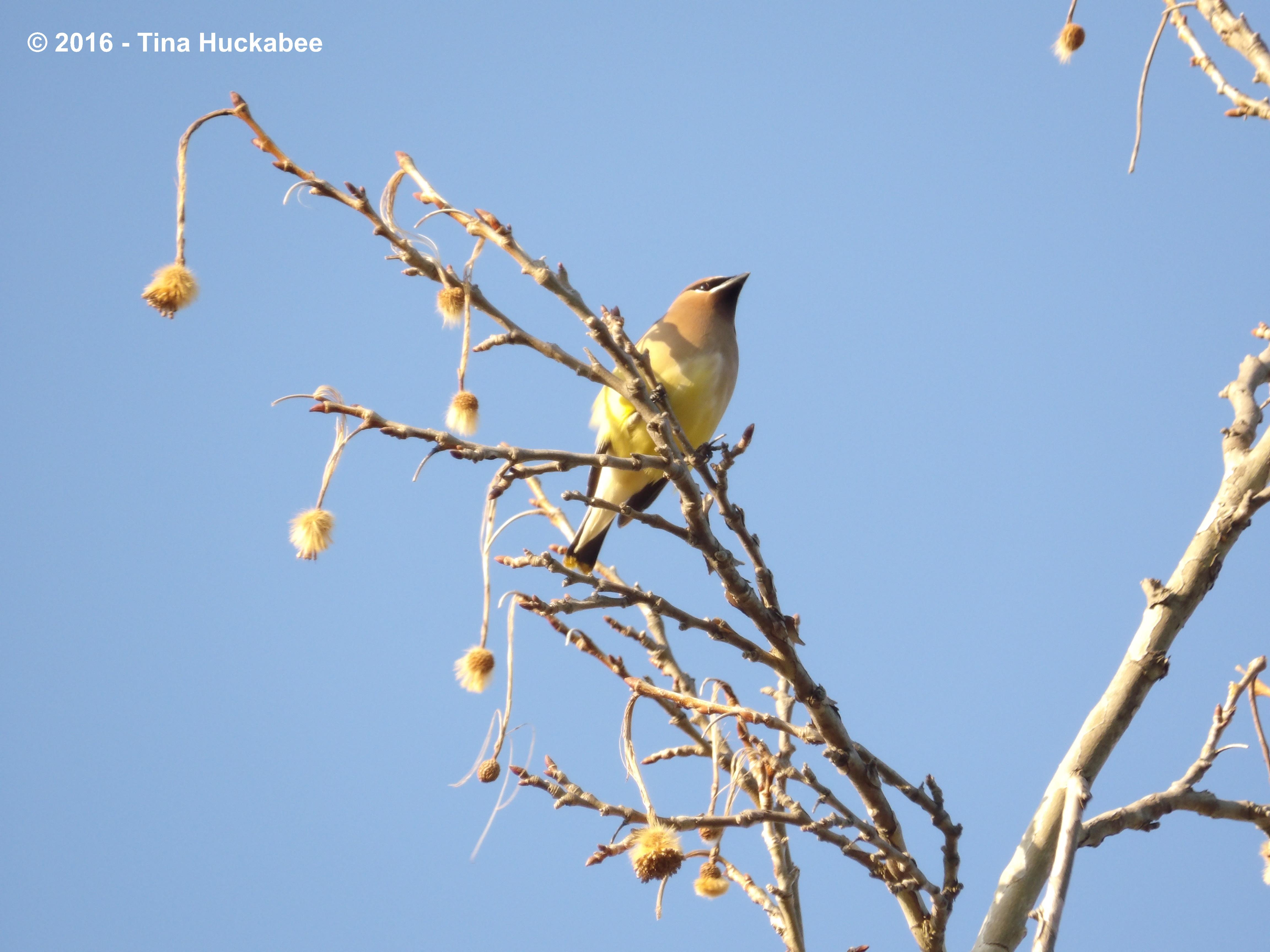
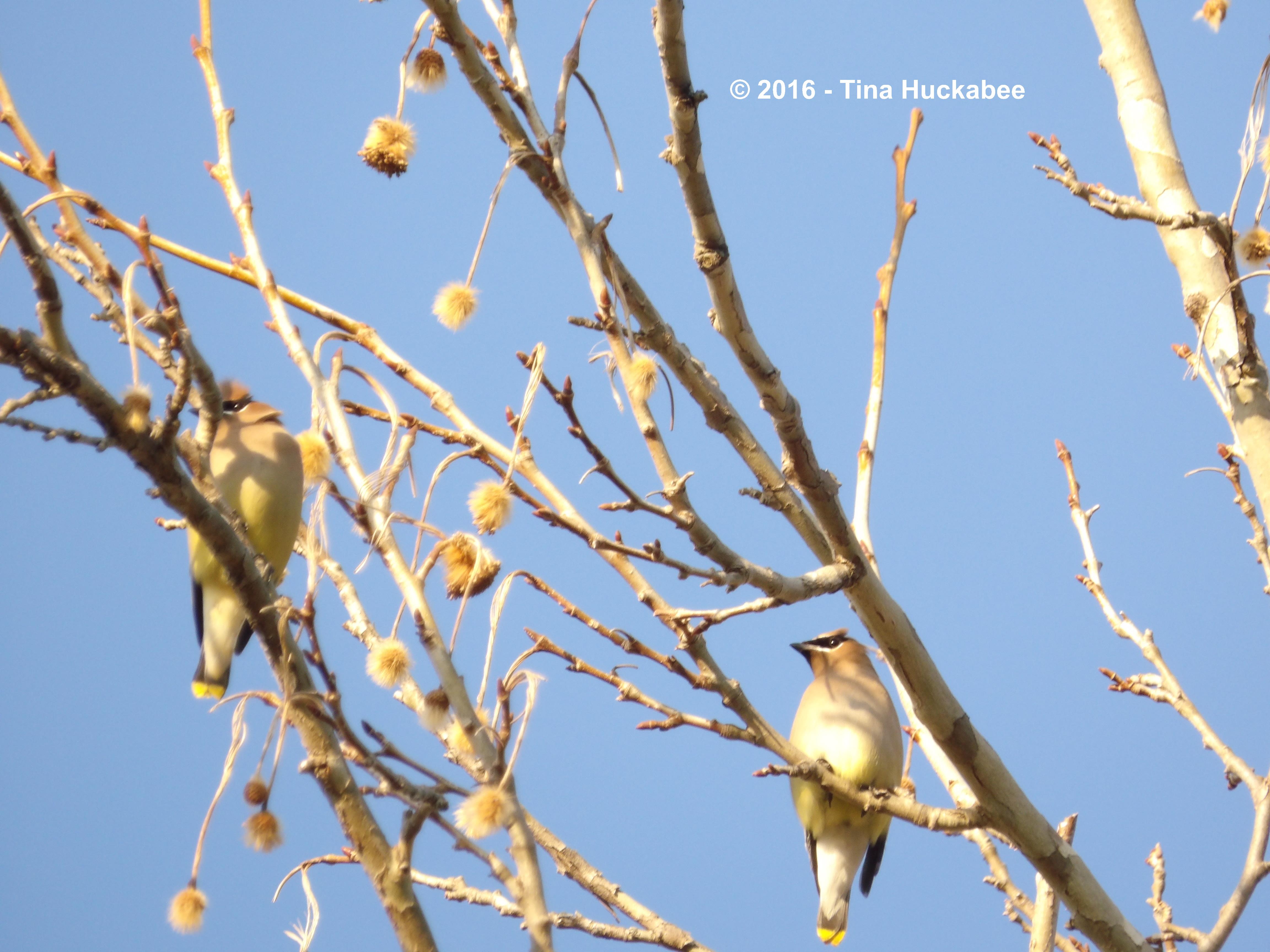
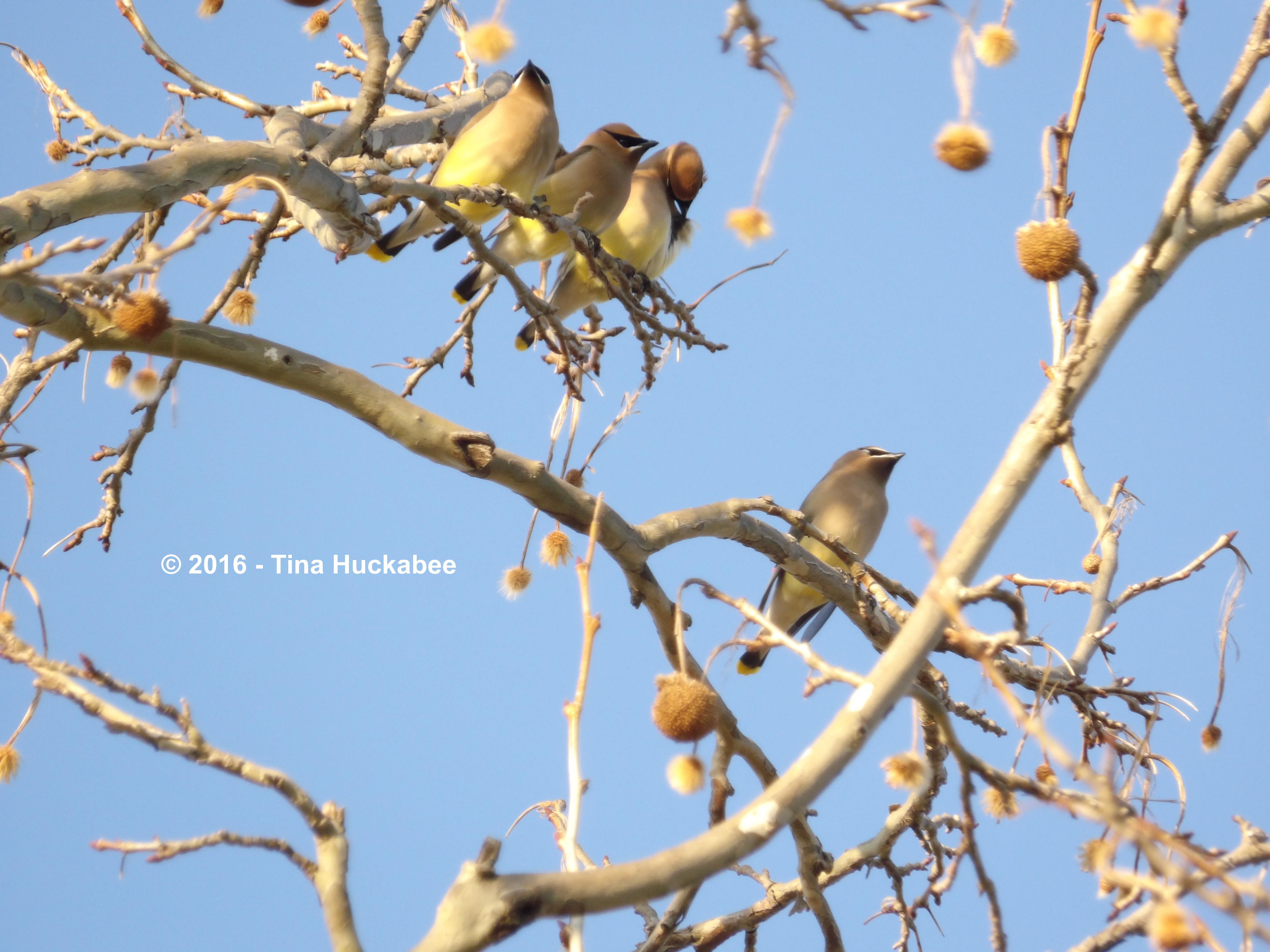
But there is some action in the goings-on of birds.  Cedar Waxwings,  Bombycilla cedrorum, rest and chatter on  the limbs.

IMGP4762.new

One,

IMGP4540.new

…two,

IMGP4611.new

…four,

IMGP4565.new

…four more,

IMGP4577.new


…and six.  Yes, there are six in the photo, though I cut the head off of one lad and another preens behind two full seed balls, to the amusement, or irritation, of a companion.

IMGP4568.new

There have been more birds at other times too, but on such windy days all that photographed was a smear.

The seed balls, or fruits, which never dangled in quite their usual numbers this year, are fewer on the tree now. Some are on the ground in my gardens, either whole or not.

IMGP4912.new

The Sycamore seed is an achene attached to hairy strands which help with seed dispersal.

The Sycamore seed is an achene attached to hairy strands which help with seed dispersal.

There have been days when I noticed a light snowfall of individual seeds floating on the wind, wafting to unknown destinations, but this year, there was no ticker-tape celebration of normal early spring wind dispersal.  The dispersal of seeds by wind is called anemochory, but American Sycamore seeds also disperse by water, called hydrochory.

IMGP4923.new

The Sycamore will leaf out during the next month.  The foliage will be lush, providing months-long shade for animals and people.

Thanking Pat of The Squirrelbasket for graciously hosting this fun meme about trees. Check out her blog for interesting information about trees from all over the world.