Texas Native Plant Week

The third week of October is Texas Native Plant Week.  School children and their teachers, native plant organizations, and individual gardeners are encouraged to learn about and then plant natives in eagerly awaiting gardens.  Aside from their beauty, native plants are a snap to grow with our capricious Texas weather patterns and difficult soils.  Native plants also provide sustenance and protection for endemic and migrating wildlife; diversity in all forms improves when gardeners go native in their landscapes.  Throughout the year and in every part of Texas, native plants are a key driver for conservation of our unique natural landscapes.

If you don’t live in Texas, celebrate the native plants of your region by growing natives in your garden and encouraging neighborhood and school groups to do the same.

Below are but a few of the native plants that I grow in my garden.  Many are passalong plants, shared with me by keen and generous gardeners.  Some are plants that I started from seeds, testing my gardener’s patience as I’m always excited to see how something fares as it grows and matures.  A couple of these plants appeared–unplanned, but very welcomed–by serendipitous acts of birds or the wind.  Many of these plants were purchased at Austin’s awesome locally owned nurseries.  All of these plants grow with little effort and less water than what a typical lawn demands. Ease of endeavor notwithstanding, my garden is alive with pollinator and bird activity, which is how a garden should exist.

No matter where you live and even if some of your plants’ ancestors hail from far away places, make room in your plot of the Earth for native plants.  You’ll help heal the world substantially, by conserving water and natural habitat, and by increasing local diversity of plants and wildlife.

Native plants are beautiful and belong where you live and garden.

Spring:

Pipevine Swallowtail on a Giant spiderwort (Tradescantia gigantea)

Southern Pink Moth on a Lyreleaf sage (Salvia lyrata).

Yellow columbine (Aquilegia chrysantha)

Honeybee working a Gulf coast penstemon (Penstemon tenuis).
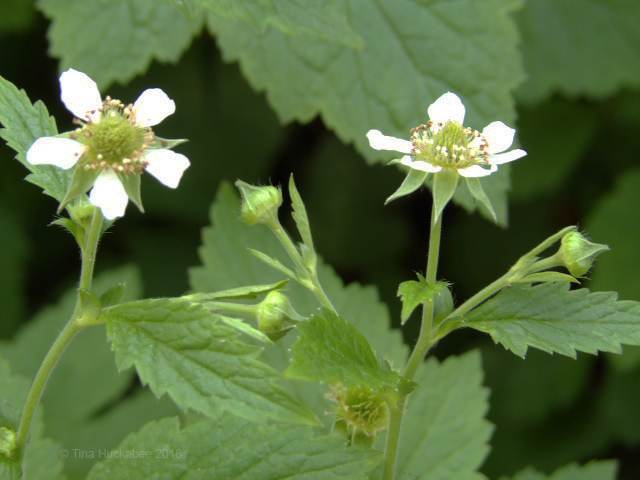
White avens (Geum canadense)


Late spring, early summer:
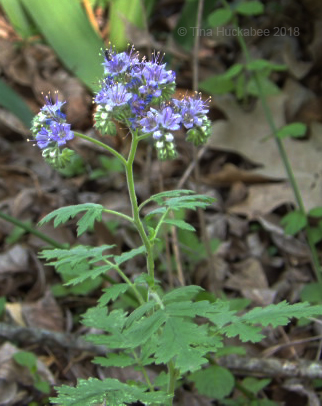
Blue curls (Phacelia congesta)

Red yucca (Hesperaloe parviflora)

Purple coneflower (Echinacea purpurea)


Summer:
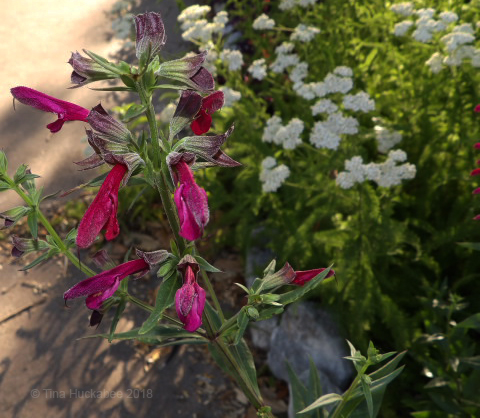
Big red sage (Salvia pentstemonoides) and Yarrow (Achillea millefolium)

Big red sage, bog plant Pickerelweed (Pontederia cordata), with  non-native waterlily, ‘Colorado’.
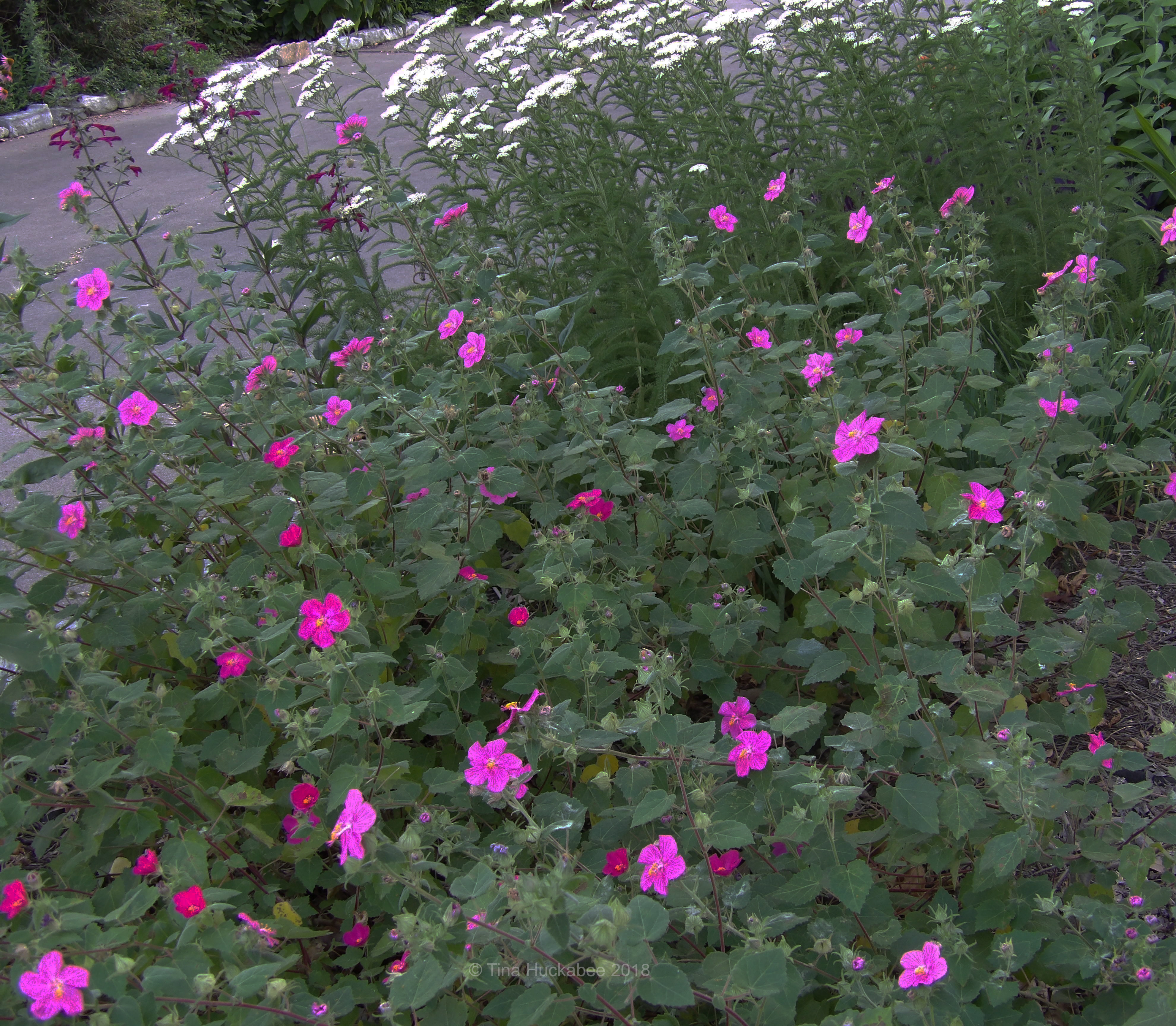
Rock rose (Pavonia lasiopetala) and Yarrow
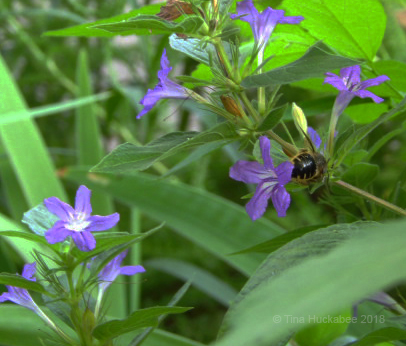
Drummond’s ruellia (Ruellia drummondiana) with attendant Carpenter bee.

Henry Duelberg sage (Salvia farenacia) and nectaring Eufala skipper.

White tropical sage (Salvia coccinea)

Red tropical sage (Salvia coccinea)

Pigeonberry (Rivina humilis) bloom spikes


Autumn:

Fruits of Pigeonberry
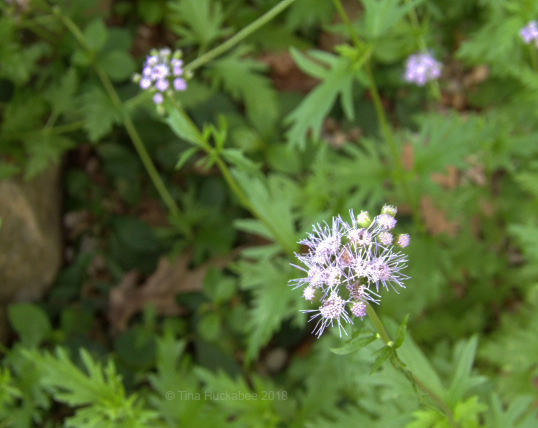
Gregg’s mistflower (Conoclinium greggii)

Texas craglily (Echeandia texensis)

Lindheimer’s muhly (Muhlenbergia lindheimeri)

Inland sea oats (Chasmanthium latifolium)
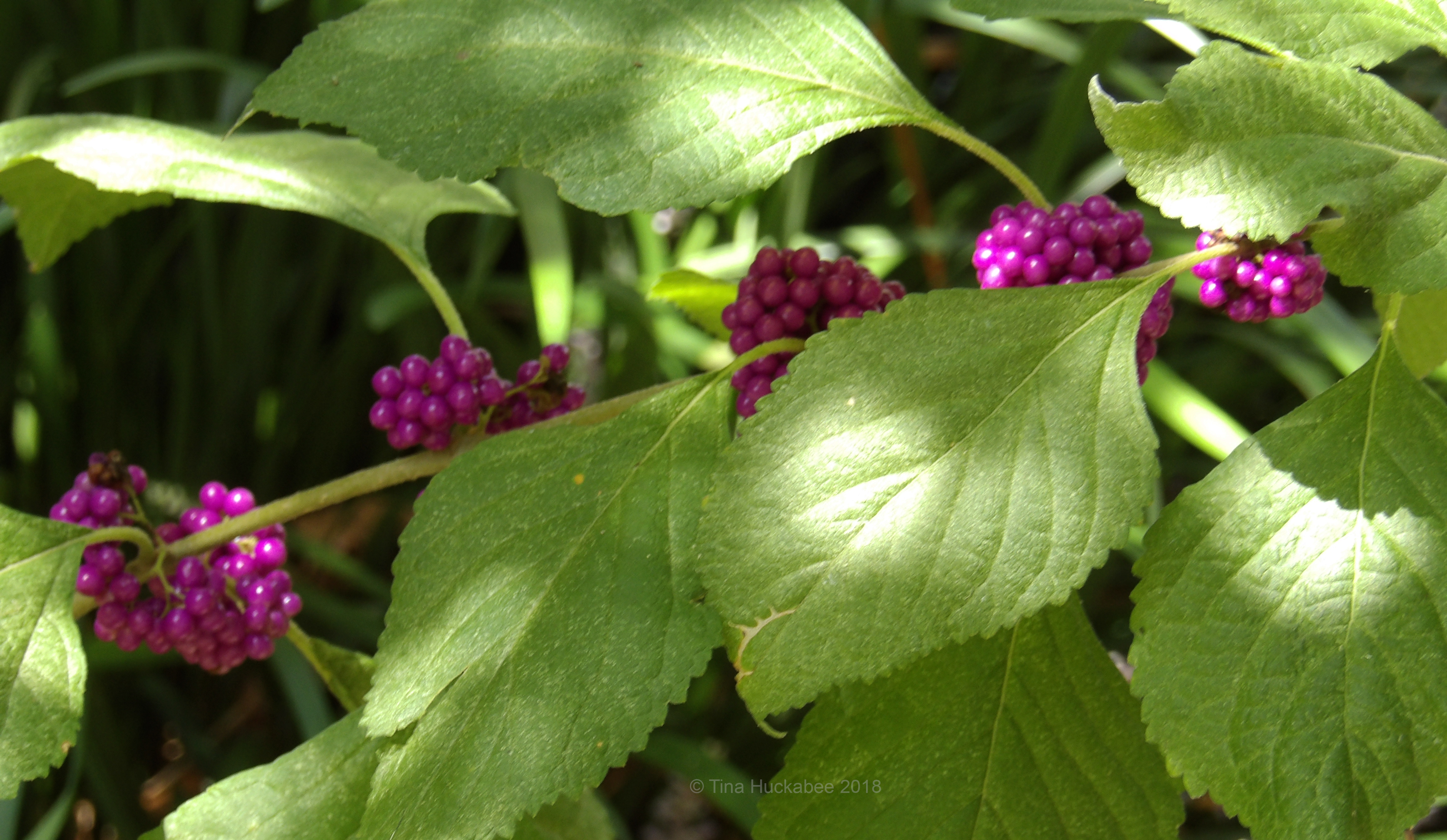
American beautyberry (Callicarpa americana)

Foliage of Texas red oak (Quercus texana).


Winter:

Possumhaw holly (Ilex decidua)

Ice formations in the stems of Frostweed (Verbesina virginica).

Seed heads of Frostweed, with bare stems of Red oak tree to the left, and Retama (Parkinsonia aculeata) to the right.

Green It Is: Tree Following in April

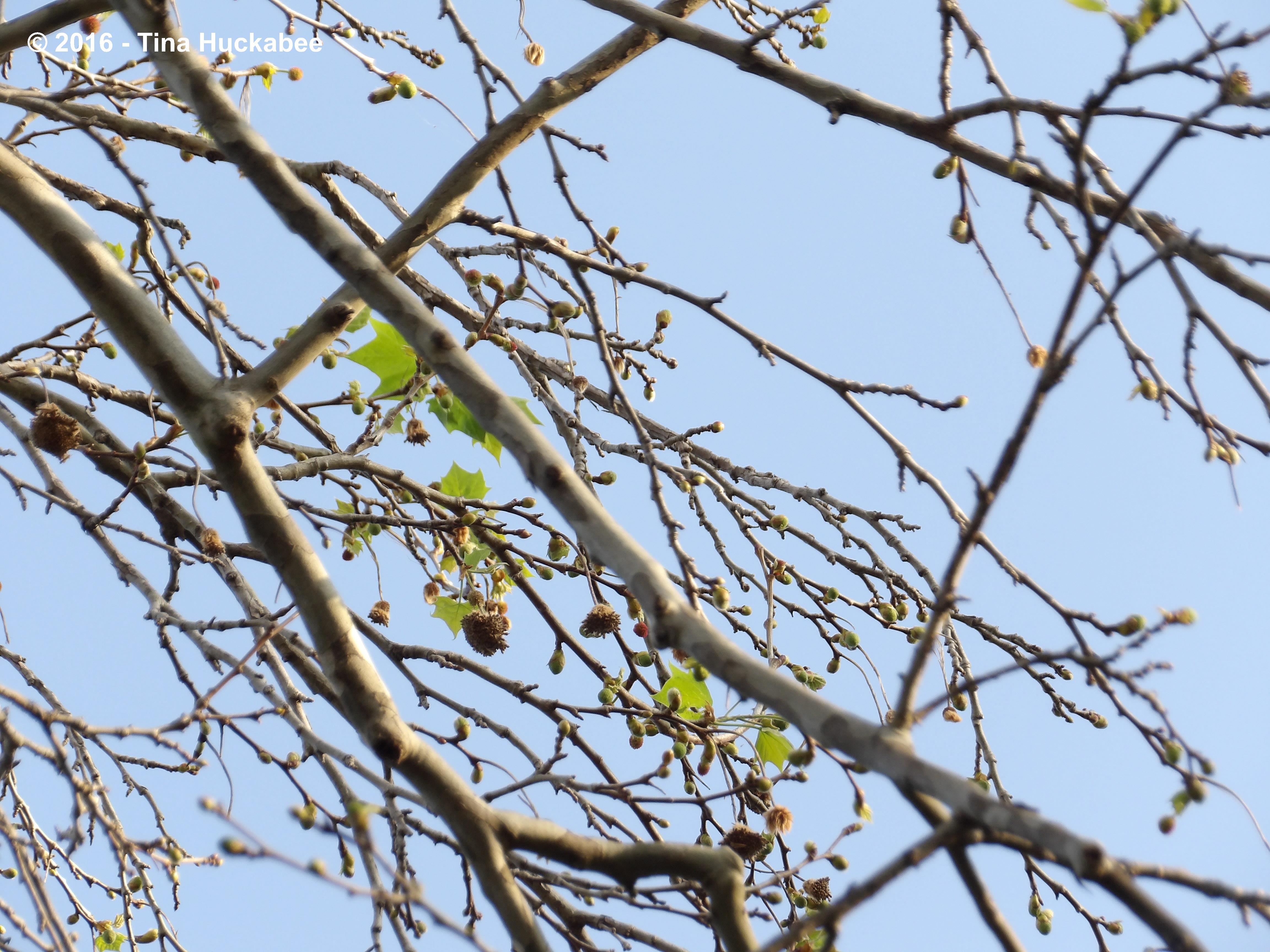
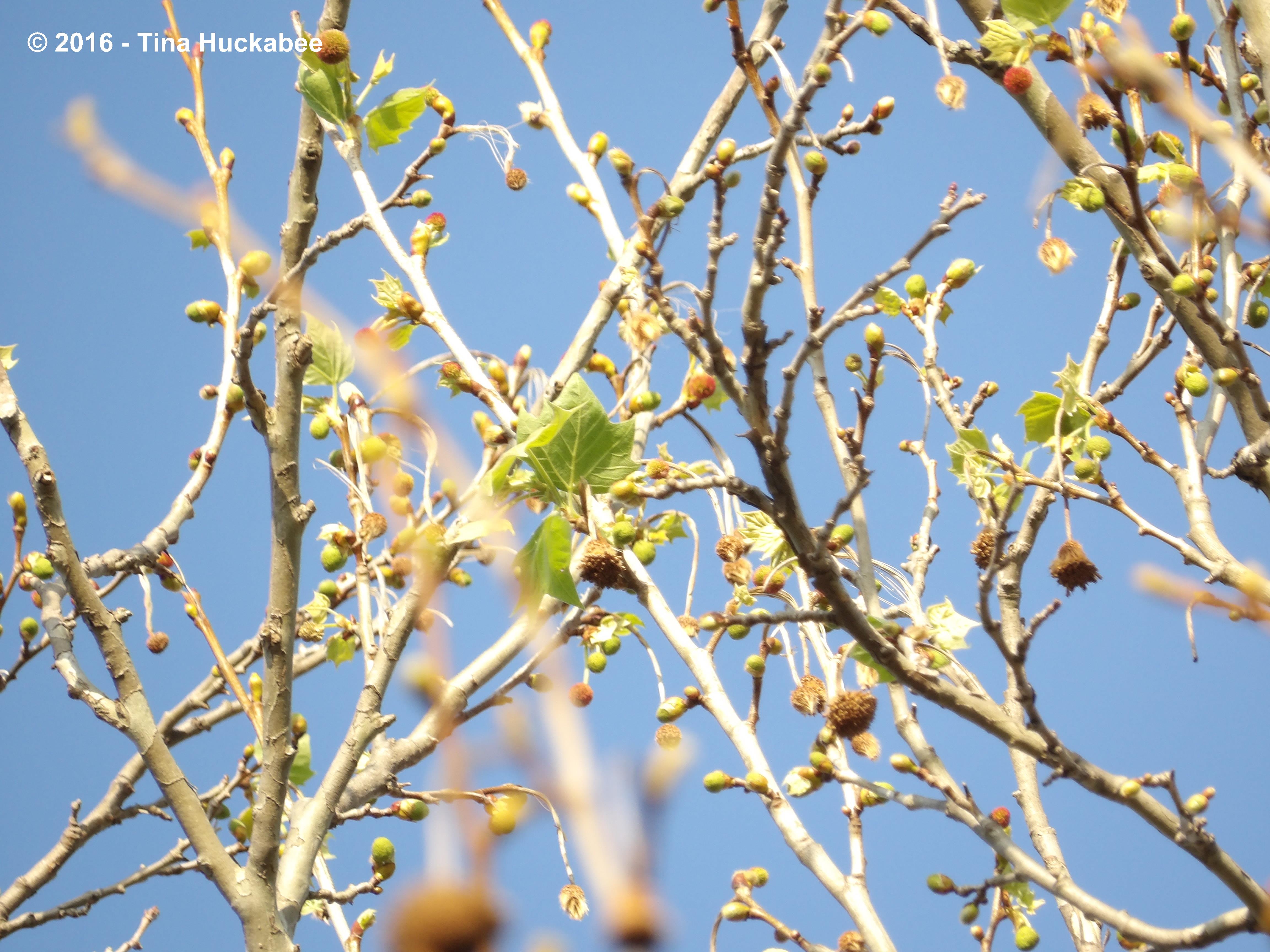
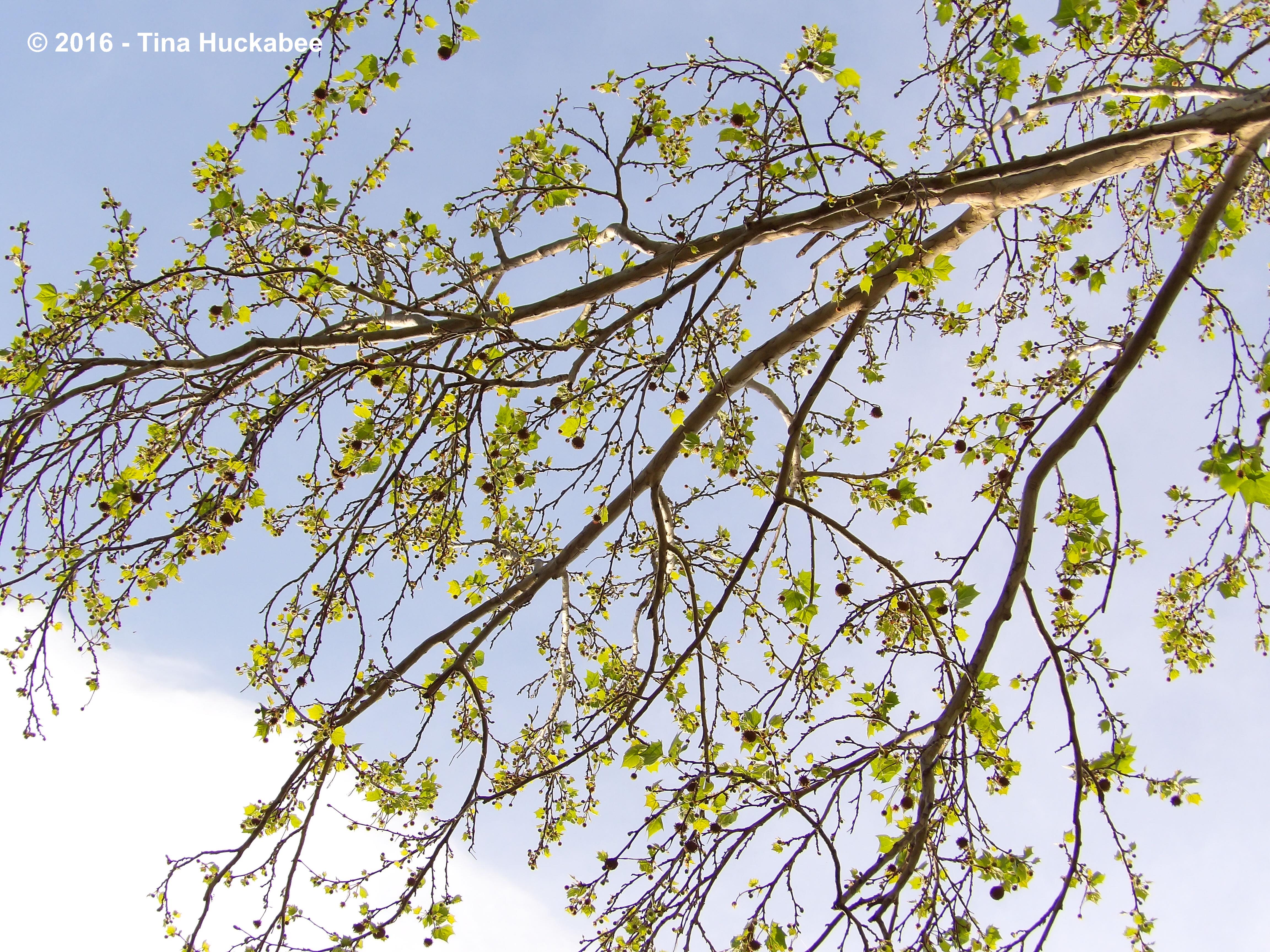
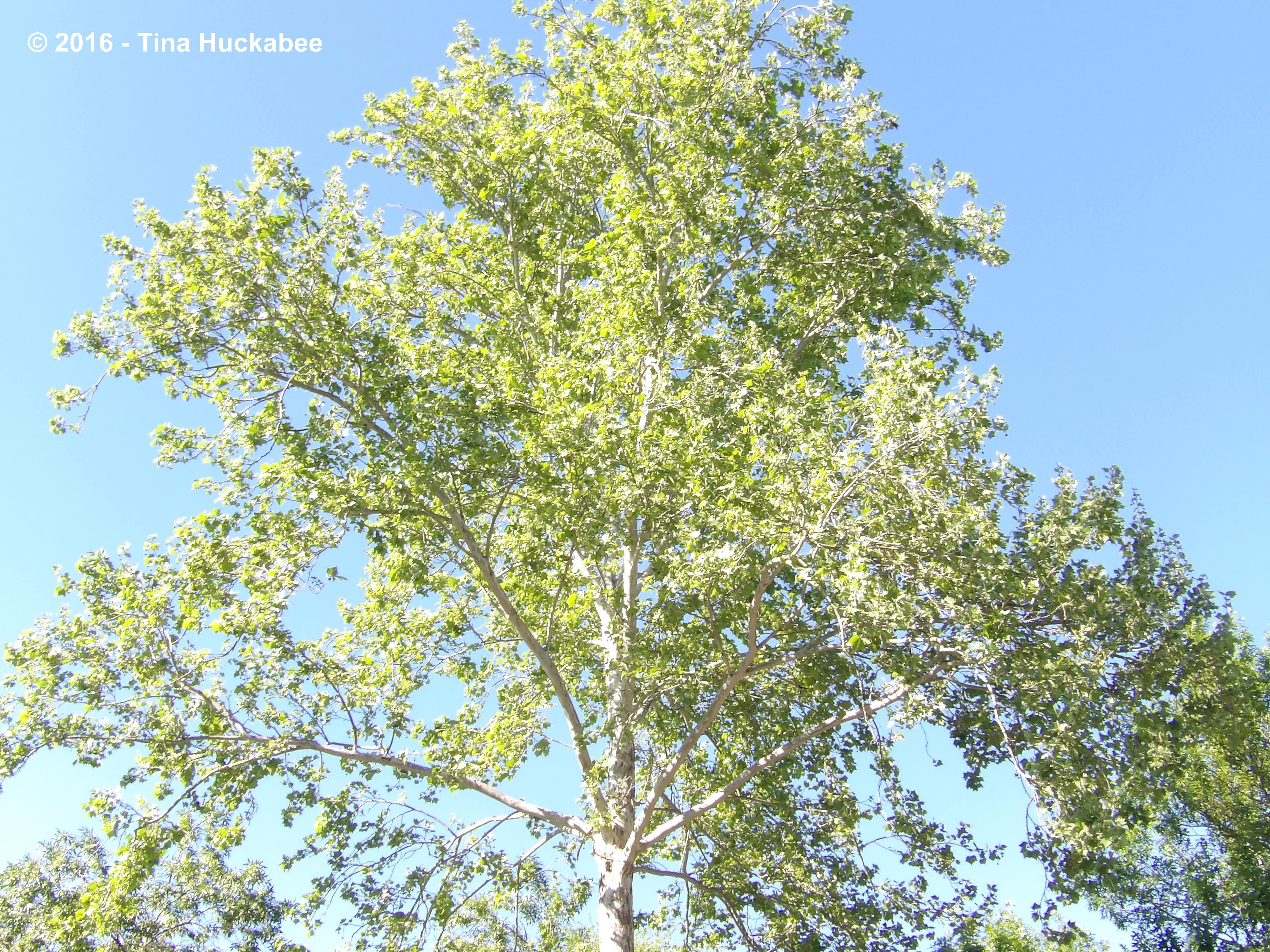
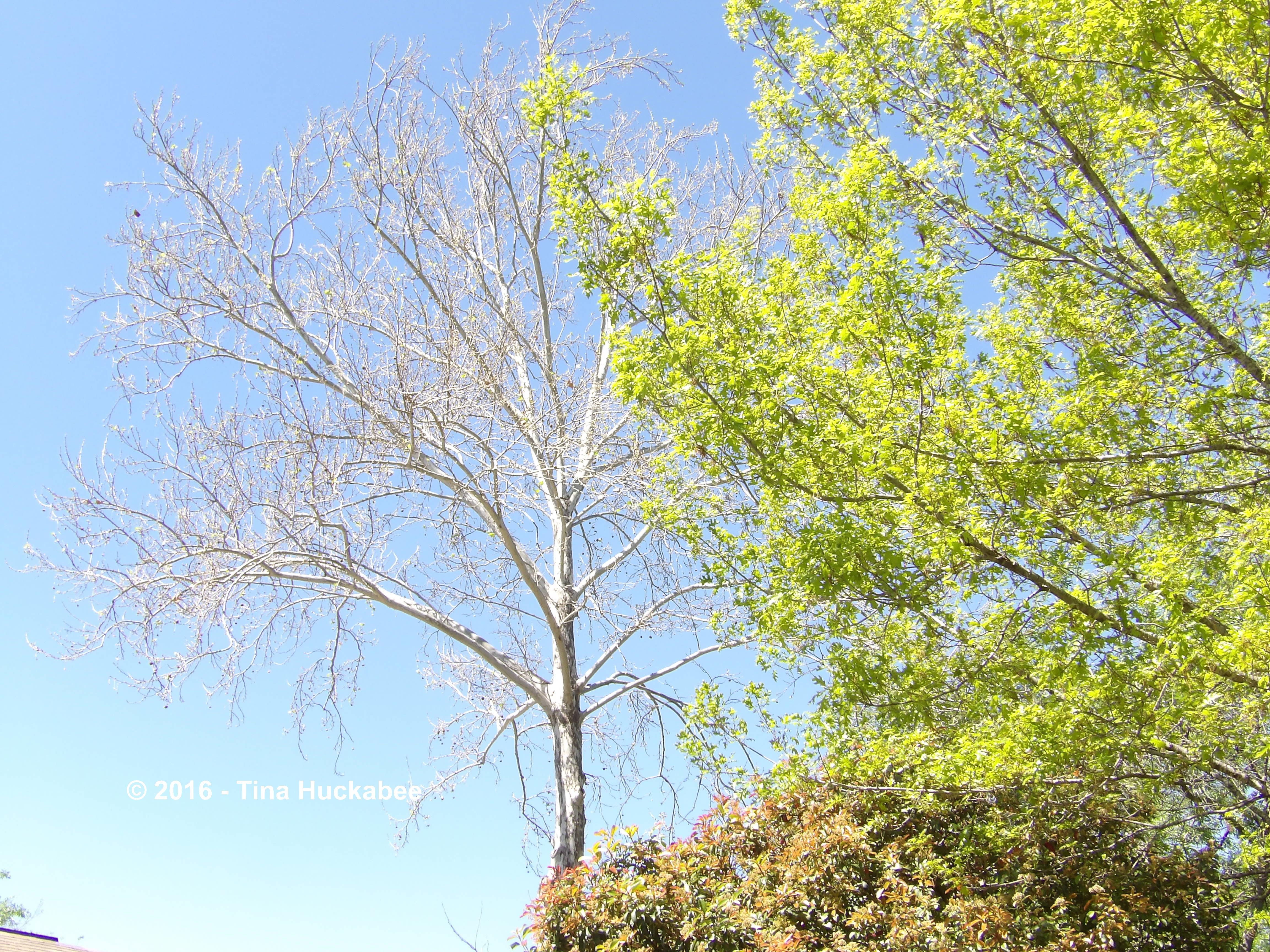
My  American SycamorePlatanus occidentalis, leafed out this past month.  It began the month in a  mostly leafless state.

IMGP5164.new

The Shumard Oak (Quercus shumardii), leafed out much earlier this spring, though it's always ahead of the Sycamore.

The Sycamore, at the center-left, leafs out later than the Shumard Oak (Quercus shumardii).

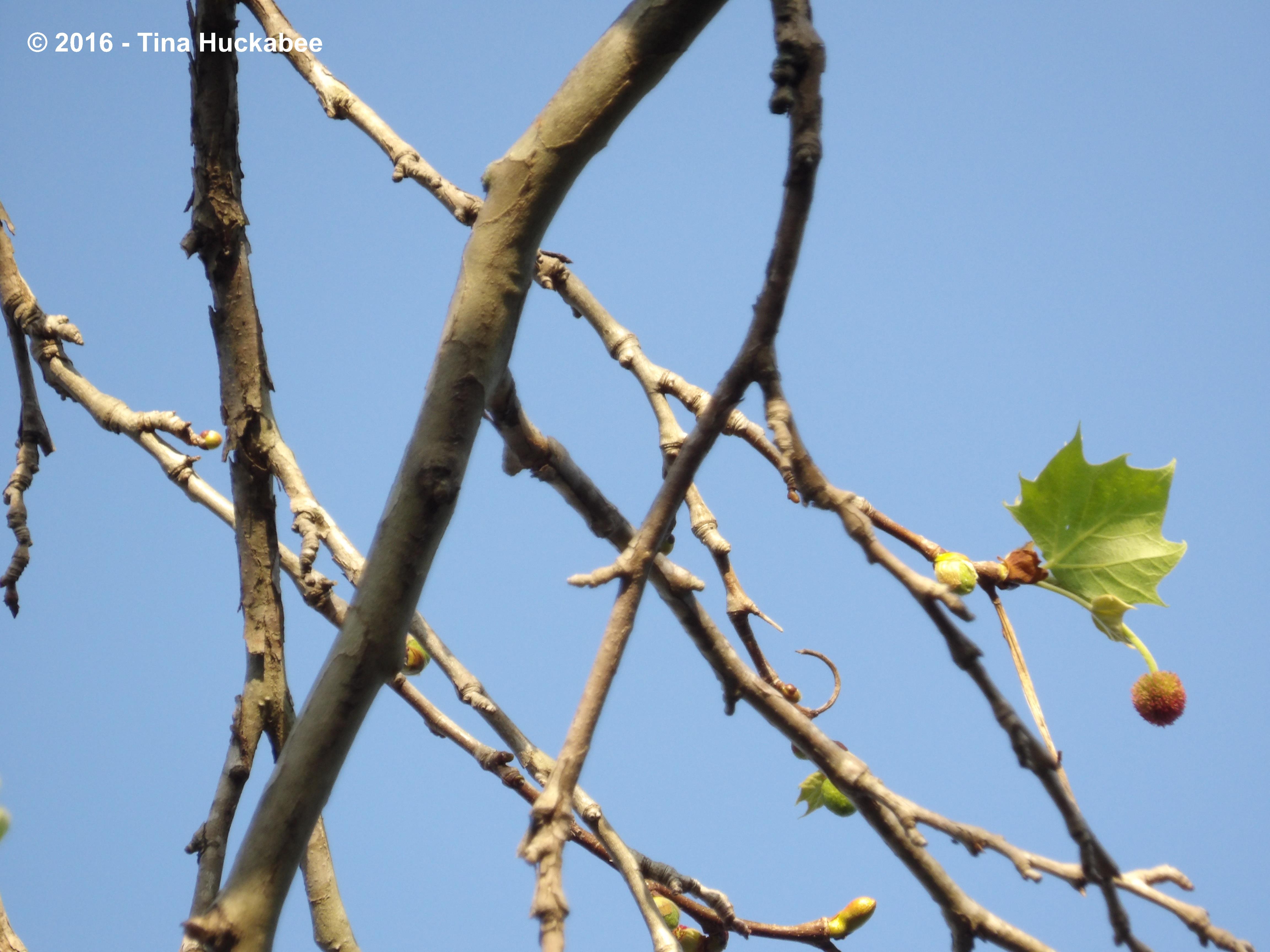
It wasn’t too far into March before dots of new green appeared.  I caught the beginning of the leafy action, snapped photos, then went on with my life.

IMGP5165.new

IMGP5158.new

This branch is the only one that is below the roof of my house and easily accessible. No, I'm not going to climb on my roof for my blog or for Tree Following.

This branch is the only one that is below the roof of my house and therefore, easily accessible. I have no plans to climb on top my roof to get photographs of leaves for this blog.

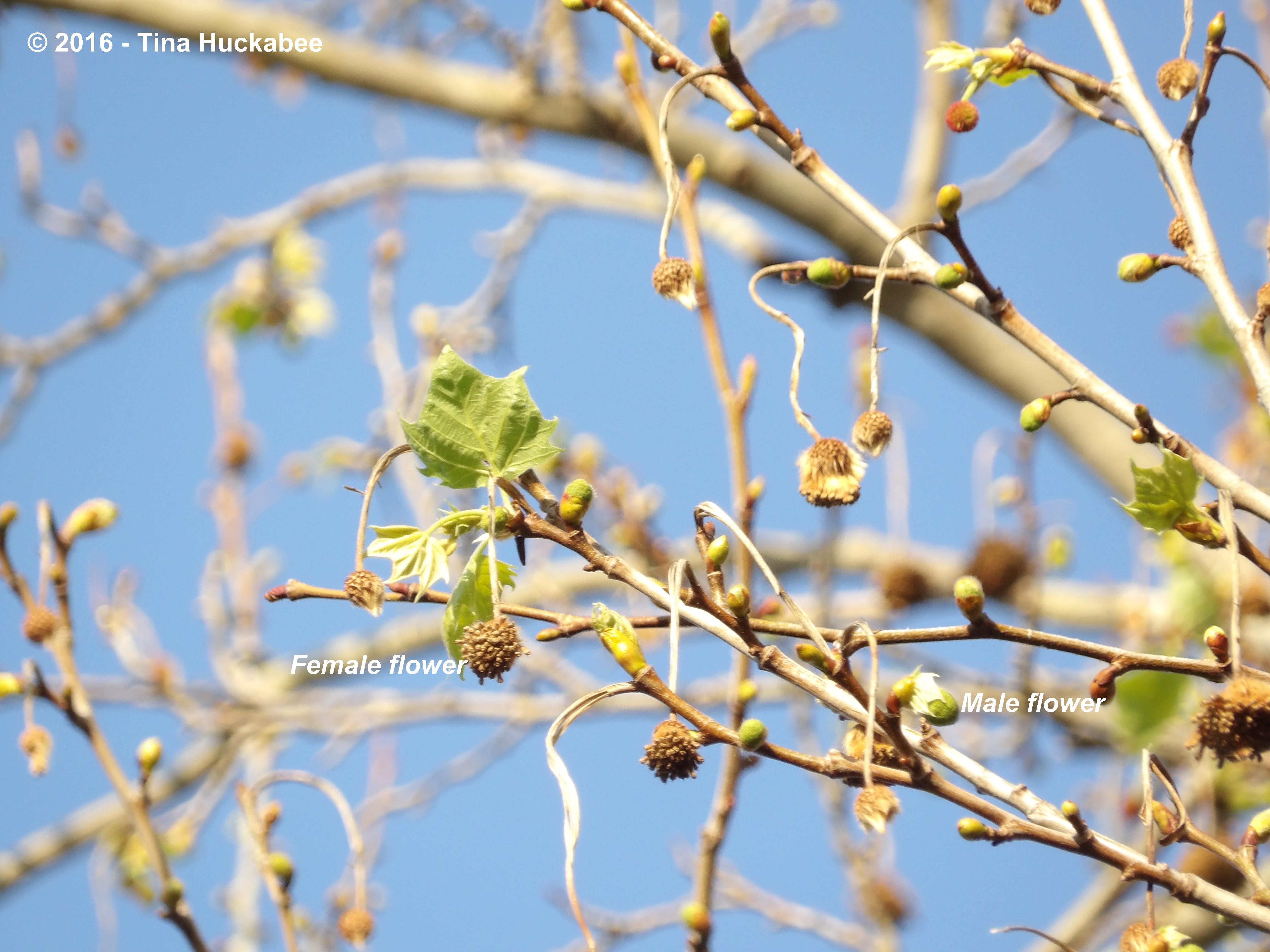
Sycamore, like most plants, is a monecious plant, which means that each tree has both female (pistillate) flowers and male (staminate) flowers.  As an aside, another way that plants function reproductively is by being dioecious–which means that the individual plants are either female or male.  Fewer plants are dioecious.

I knew that American Sycamores were monecious, but seeing that the tree is monecious is another thing entirely–and that’s the great thing about tree following: I notice these things because I’m paying attention. I assumed that because my tree is tall that I wouldn’t get a good photo of the male and female flowers.  Additionally, I wasn’t trying to get photos of the flowers.   But during in the photo-snapping session mentioned above, I caught both the male and female flowers.

IMGP5152.new

The male flowers grow on newer, shorter branchlets and the female flowers grow on older branchlets.

IMGP5154.new

The male flowers sport a sort nubby look along the branches, while the female flowers are fuzzier.  The male flower will break and release its pollen load, usually by wind, but also, by water.  If you recall from our March visit to the Sycamore, we learned about dispersal of seeds by wind, anemochory, and dispersal by water, called hydrochory.  The American Sycamore does both; it’s a good survival strategy to employ a couple of methods of reproduction–it certainly keeps the options open.

IMGP5156.new


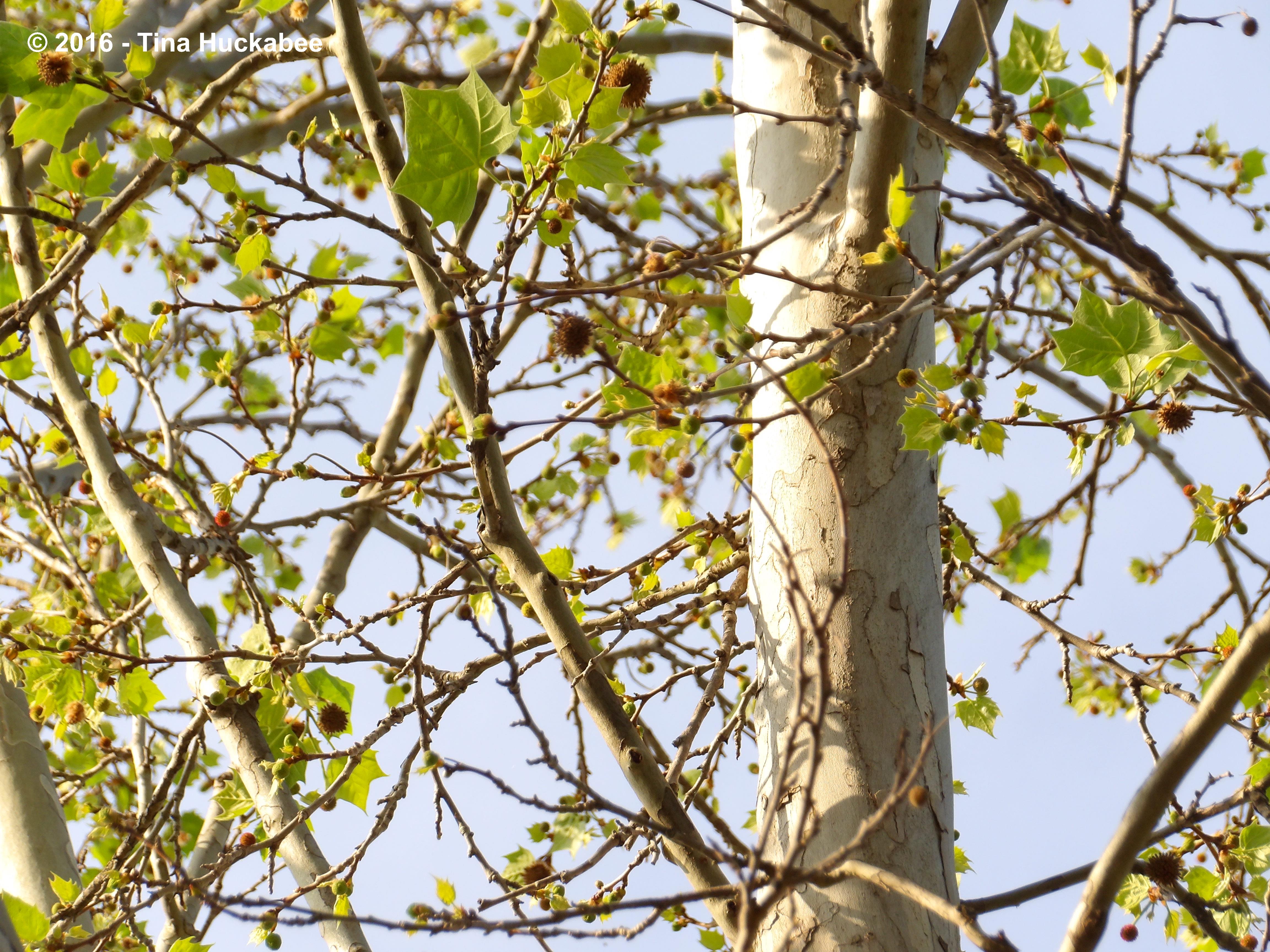
Sycamore leaf production soon overtakes any flower show, though.

IMGP6171.new

IMGP6169.new

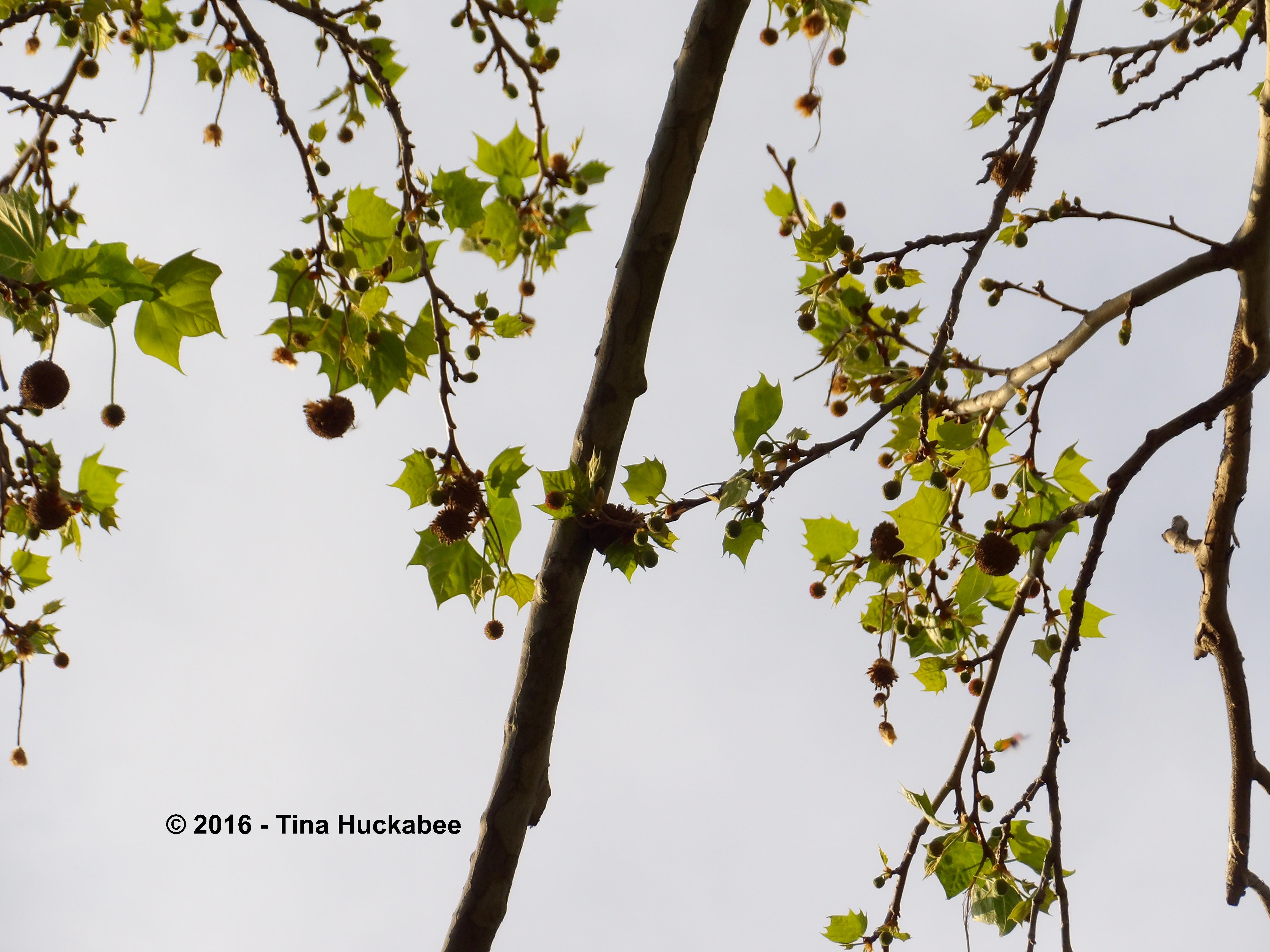
You can see that there are plenty of seed-balls for next year’s Sycamore seed dispersal.   For now, the new ones are spring green,

IMGP6170.new

…but eventually they’ll turn a toasty, autumn brown.

I’ve never seen a nest in the Sycamore, but it serves as a consistent resting spot for a variety of birds like this male Great-tailed Grackle,  Quiscalus mexicanus.                    .

IMGP6198.new

His glorious, purple-black plumage pairs well with the new leaves.  Other birds like White-winged Doves, House Sparrows, Blue Jays, and Cardinals, are year-round visitors to my Sycamore.  As the leaves grow larger and the foliage thickens, it will become more difficult to spot birds resting in the tree.

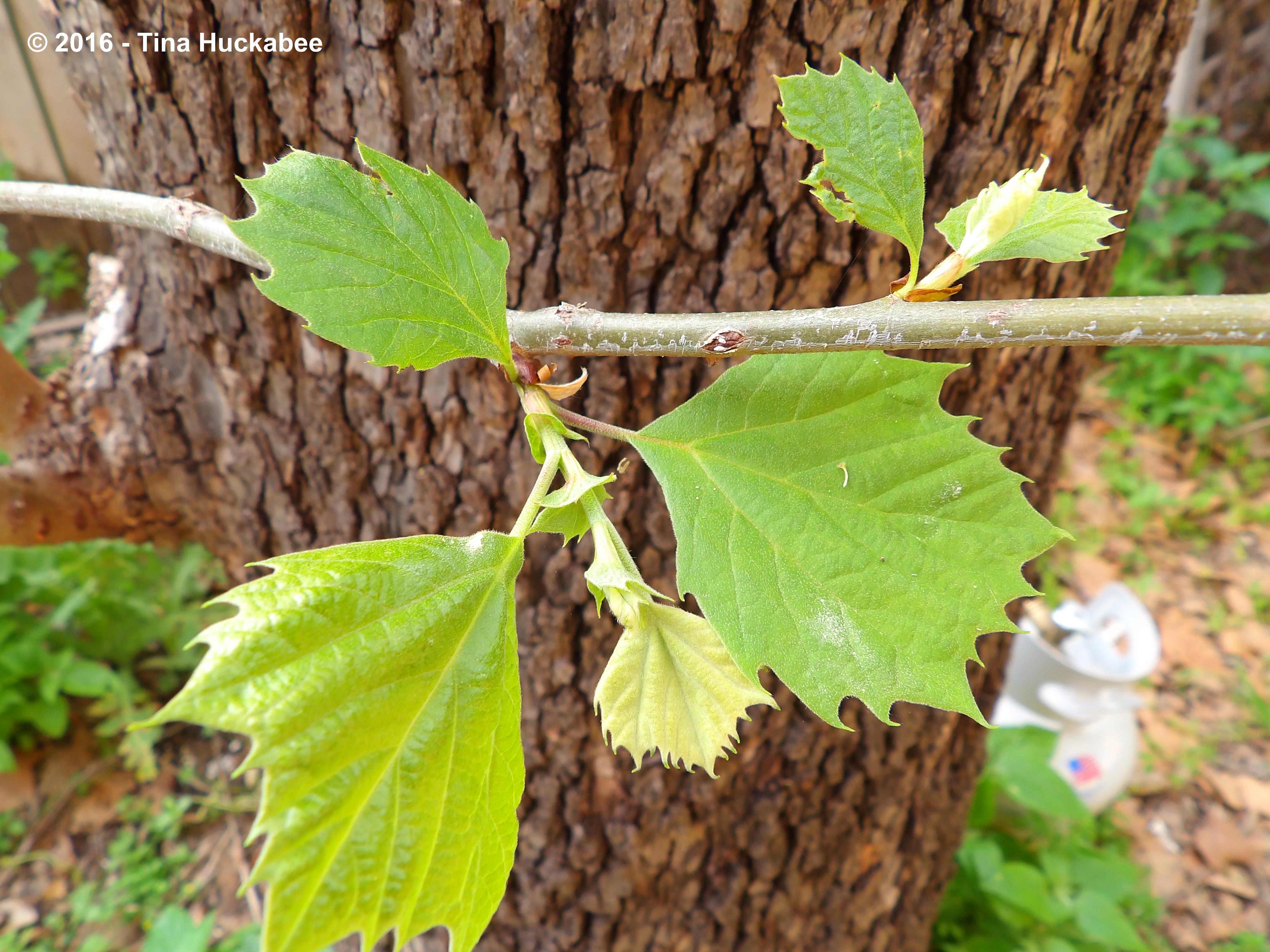
The foliage is now almost fully flushed out.  Sycamore is usually planted as a shade tree, but also as a tree for urban areas used to thwart air pollution.

IMGP6172.new

Maybe those big leaves will save us all.

IMGP6985.new

IMGP6988.new

IMGP6986.new

This is the American Sycamore as it enters late spring heading toward the summer months.

IMGP6982.new

Thanking Pat of The Squirrelbasket for graciously hosting this fun meme about trees. Check out her blog for interesting information about trees from all over the world.