Texas Native Plant Week

The third week of October is Texas Native Plant Week.  School children and their teachers, native plant organizations, and individual gardeners are encouraged to learn about and then plant natives in eagerly awaiting gardens.  Aside from their beauty, native plants are a snap to grow with our capricious Texas weather patterns and difficult soils.  Native plants also provide sustenance and protection for endemic and migrating wildlife; diversity in all forms improves when gardeners go native in their landscapes.  Throughout the year and in every part of Texas, native plants are a key driver for conservation of our unique natural landscapes.

If you don’t live in Texas, celebrate the native plants of your region by growing natives in your garden and encouraging neighborhood and school groups to do the same.

Below are but a few of the native plants that I grow in my garden.  Many are passalong plants, shared with me by keen and generous gardeners.  Some are plants that I started from seeds, testing my gardener’s patience as I’m always excited to see how something fares as it grows and matures.  A couple of these plants appeared–unplanned, but very welcomed–by serendipitous acts of birds or the wind.  Many of these plants were purchased at Austin’s awesome locally owned nurseries.  All of these plants grow with little effort and less water than what a typical lawn demands. Ease of endeavor notwithstanding, my garden is alive with pollinator and bird activity, which is how a garden should exist.

No matter where you live and even if some of your plants’ ancestors hail from far away places, make room in your plot of the Earth for native plants.  You’ll help heal the world substantially, by conserving water and natural habitat, and by increasing local diversity of plants and wildlife.

Native plants are beautiful and belong where you live and garden.

Spring:

Pipevine Swallowtail on a Giant spiderwort (Tradescantia gigantea)

Southern Pink Moth on a Lyreleaf sage (Salvia lyrata).

Yellow columbine (Aquilegia chrysantha)

Honeybee working a Gulf coast penstemon (Penstemon tenuis).
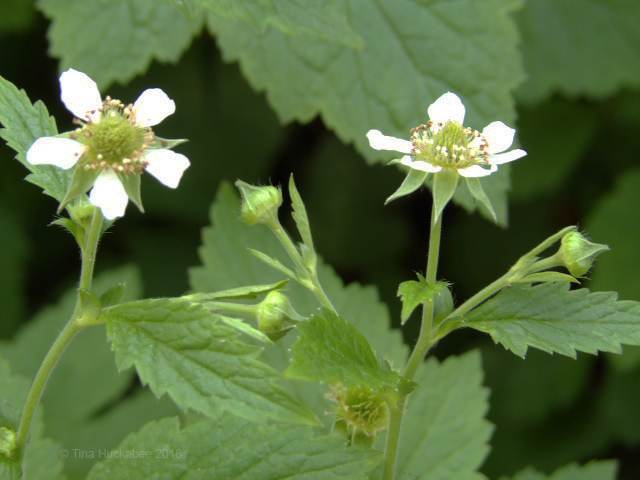
White avens (Geum canadense)


Late spring, early summer:
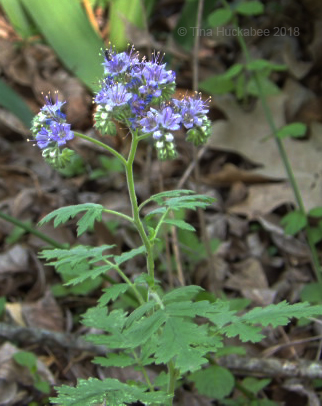
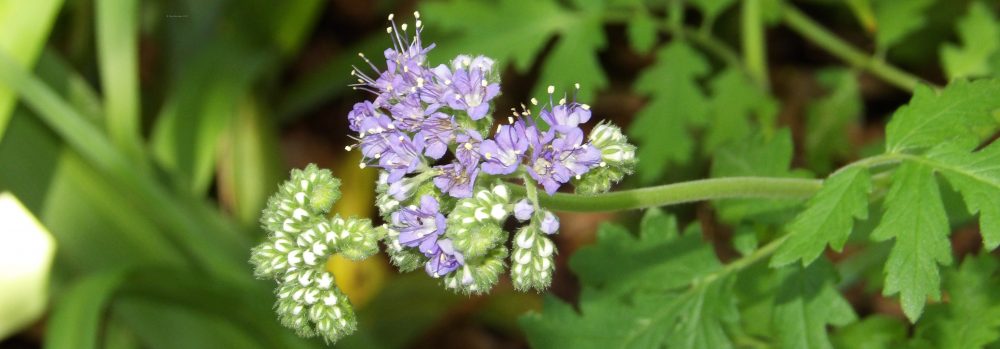
Blue curls (Phacelia congesta)

Red yucca (Hesperaloe parviflora)

Purple coneflower (Echinacea purpurea)


Summer:
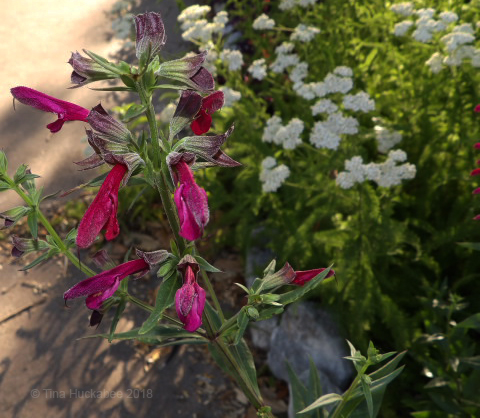
Big red sage (Salvia pentstemonoides) and Yarrow (Achillea millefolium)

Big red sage, bog plant Pickerelweed (Pontederia cordata), with  non-native waterlily, ‘Colorado’.
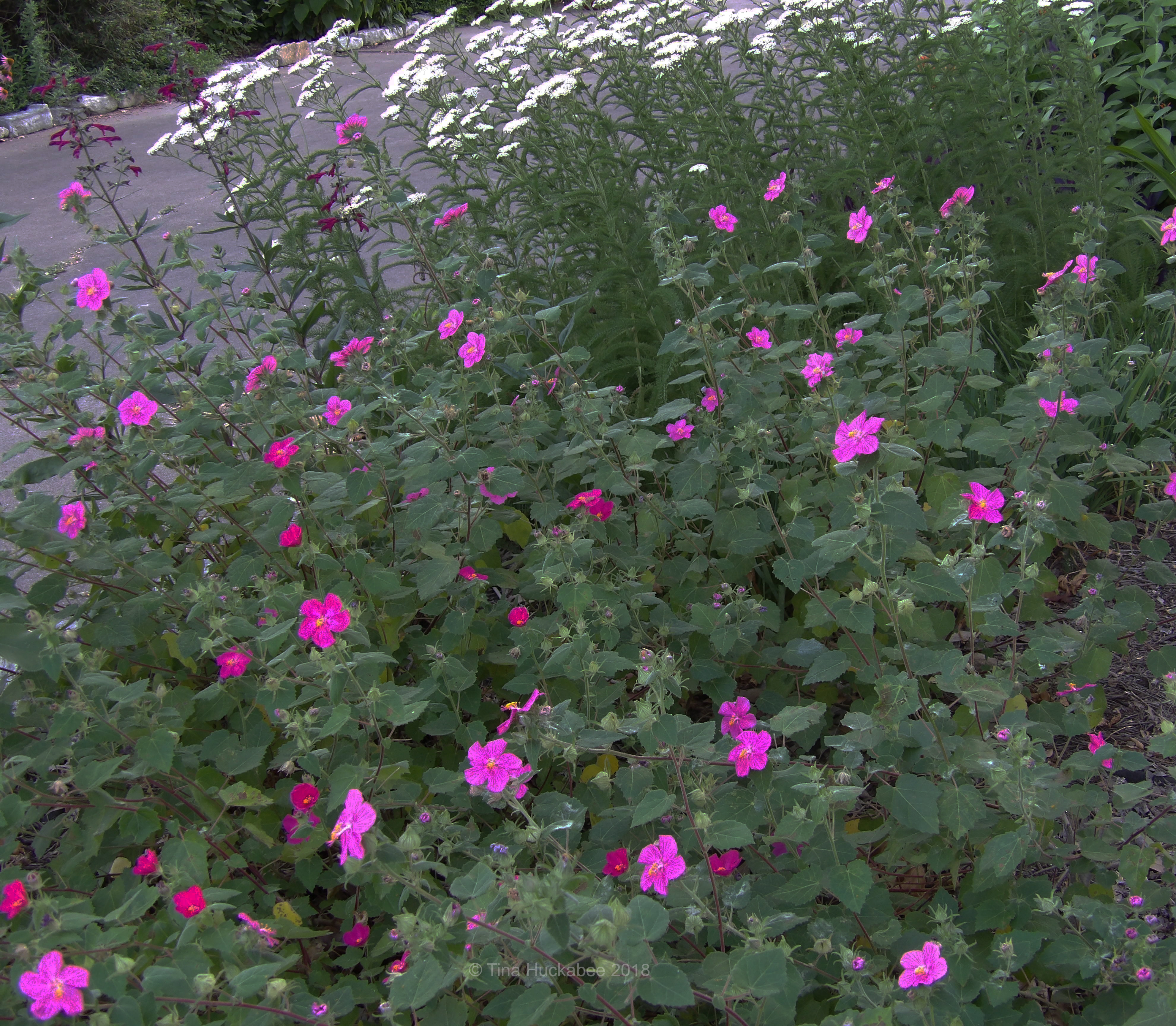
Rock rose (Pavonia lasiopetala) and Yarrow
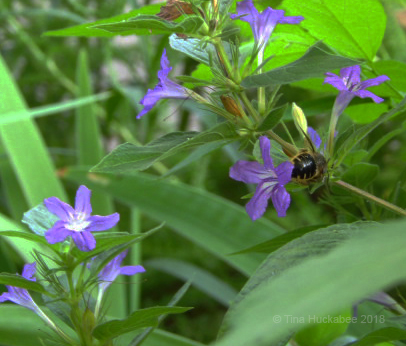
Drummond’s ruellia (Ruellia drummondiana) with attendant Carpenter bee.

Henry Duelberg sage (Salvia farenacia) and nectaring Eufala skipper.

White tropical sage (Salvia coccinea)

Red tropical sage (Salvia coccinea)

Pigeonberry (Rivina humilis) bloom spikes


Autumn:

Fruits of Pigeonberry
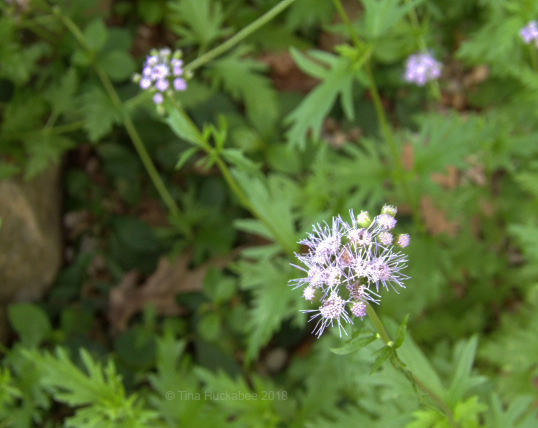
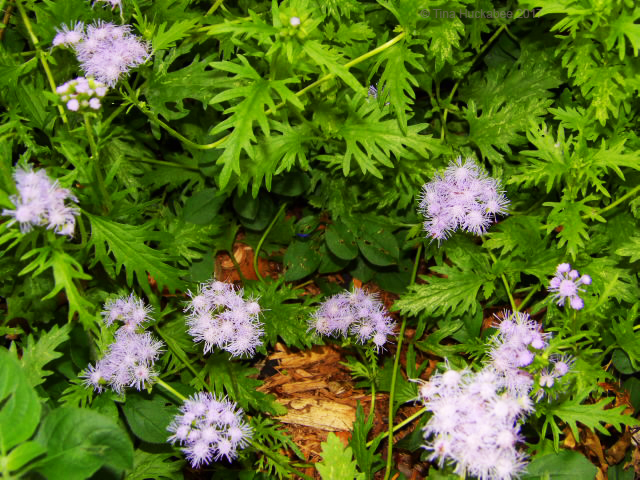
Gregg’s mistflower (Conoclinium greggii)

Texas craglily (Echeandia texensis)

Lindheimer’s muhly (Muhlenbergia lindheimeri)

Inland sea oats (Chasmanthium latifolium)
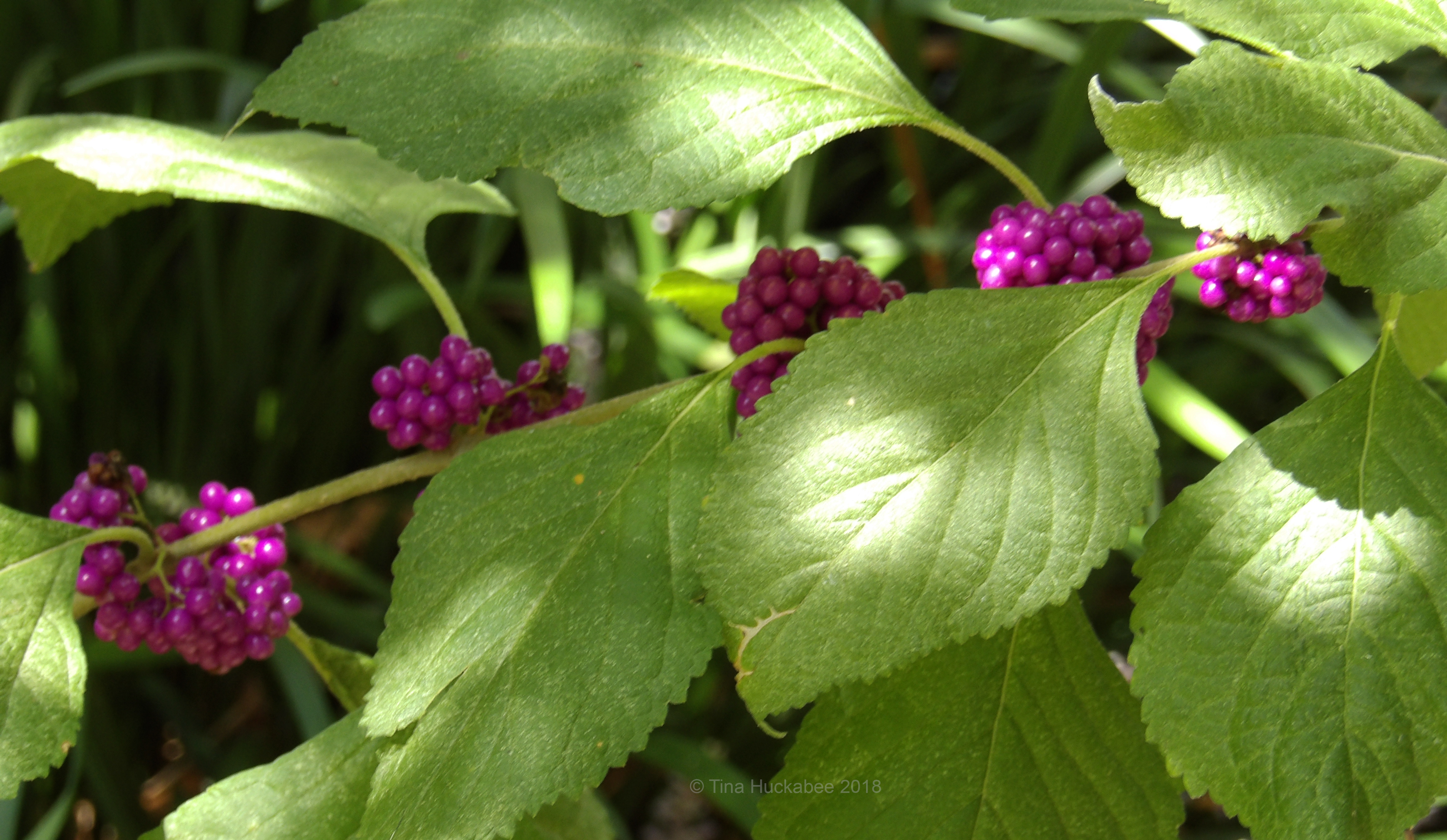
American beautyberry (Callicarpa americana)

Foliage of Texas red oak (Quercus texana).


Winter:

Possumhaw holly (Ilex decidua)

Ice formations in the stems of Frostweed (Verbesina virginica).

Seed heads of Frostweed, with bare stems of Red oak tree to the left, and Retama (Parkinsonia aculeata) to the right.
Native Texans

In this post you won’t find any cowboy boots or hats, nor plates of barbecue and bowls of salsa, and certainly no funny, twangy accents, but you will see plenty of beauty and Texan toughness.  What is this you’ve stumbled across?  It’s an homage to Texas native plants and to the celebration thereof:  Texas Native Plant Week marked annually during the week of October 16-22.

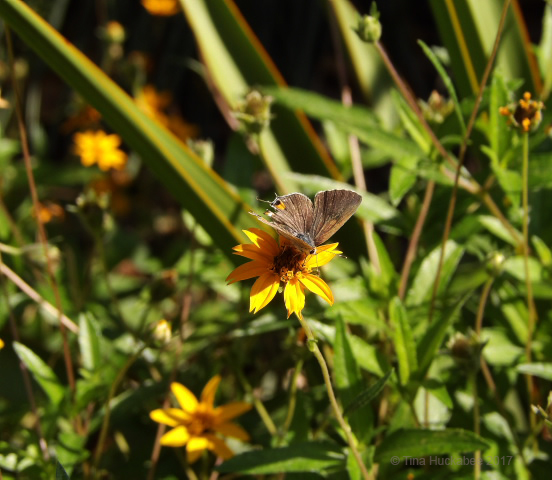
Nectaring Gray Hairstreak (Strymon melinus) on Zexmenia (Wedelia acapulcensis var. hispida).  Twistleaf yucca (Yucca rupicola) serves as a backdrop

Established to educate and encourage Texans to recognize and utilize our lovely, valuable native plants in personal and public gardens, many communities in Texas sponsor events promoting the use of native plants during this week of native plant love.

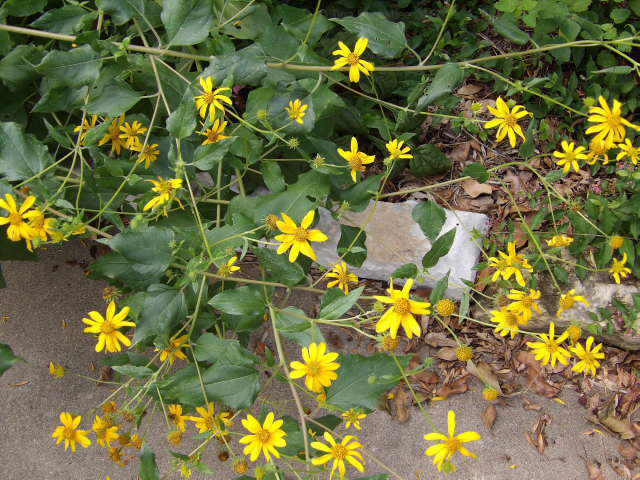
Plateau goldeneye (Viguiera dentata)


Native plants are valuable for many reasons:  they’re easy to grow and maintain, and require less irrigation; they feed and protect native fauna; they’re key to biological diversity, and vital for a healthy environment.

Shrubby blue sage (Salvia ballotiflora)


Plants can be native to a wide geographical area–like the whole of North America–or specific to a small, confined eco-system–like the area in which you live.

Texas Craglily (Echeandia texensis)


Natives belong where you live, whether you’re in Texas or some other fabulous place.

Turkscap (Malvaviscus arboreus var. drummondii) and White tropical sage (Salvia coccinea)

Gregg’s mistflower (Conoclinium greggii)


Do we need to practice purity in our gardening aesthetics and utilize only natives in our gardens? Well, it would be nice if we planted all natives, all the time, but for many gardeners, that’s simply not possible because native plants aren’t always as commercially available as non-native plants.  And it’s true that there are many non-native, well-adapted plants which enrich our gardens and beautify our world; it’s perfectly fine to garden with both natives and non-natives.

Red tropical sage (Salvia coccinea) paired with non-native, potted Yucca filamentosa ‘Golden Sword’

But when you plant natives in your garden, you help define the place you live. What grows for me here in urban Austin, Texas doesn’t work–or may not fit–for gardeners in Chicago, Illinois,  Eugene, Oregon, or Bangor, Maine.  What grows here, doesn’t necessarily grow there; plant diversity makes the world go ’round.  All regions enjoy unique botanical flavor and that should be appreciated–and practiced–by those who’re driven to create gardens.

Blue mistflower (Conoclinium coelestinum)


Plant natives in your garden for ease and practicality.

Rock rose (Pavonia lasiopetala)


Plant natives to protect and nurture wildlife.

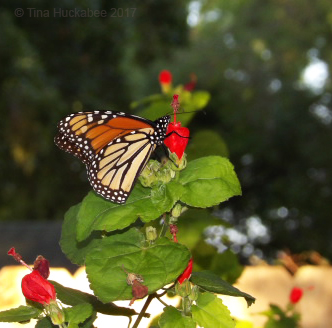
Migrating Monarch (Danaus plexippus) nectaring on Turkscap


Plant natives for seasonal interest and to elicit a sense of place.

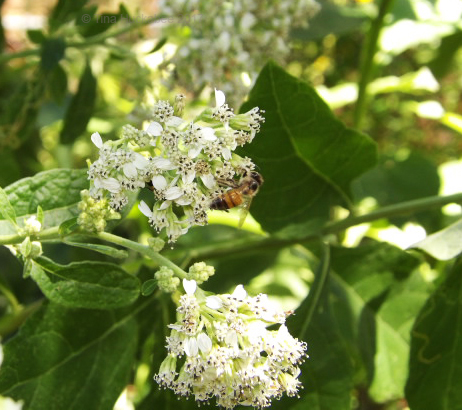
White mistflower (Ageratina havanensis)


Especially in urban areas, the use of native plants helps restore wildlife habitat and regional character.

Migrating Monarch on Plateau goldeneye


Flowers in the city are like lipstick on a woman–it just makes you look better to have a little color.  Lady Bird Johnson

Plateau goldeneye


For more information about Texas Native Plant Week, check out these links:

Lady Bird Johnson Wildflower Center

Native Plants of Texas

Frostweed (Verbesina virginica)


Today I’m also linking with Carol of May Dreams Gardens for Garden Bloggers’ Bloom Day.  Check out flowers from all over the world, honoring all things blooming–native or otherwise.

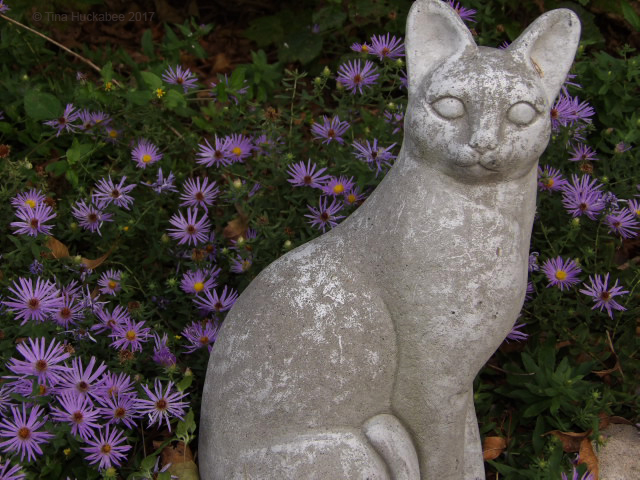
Wild blue aster (Symphyotrichum oblongifolium)

Fatal Attraction

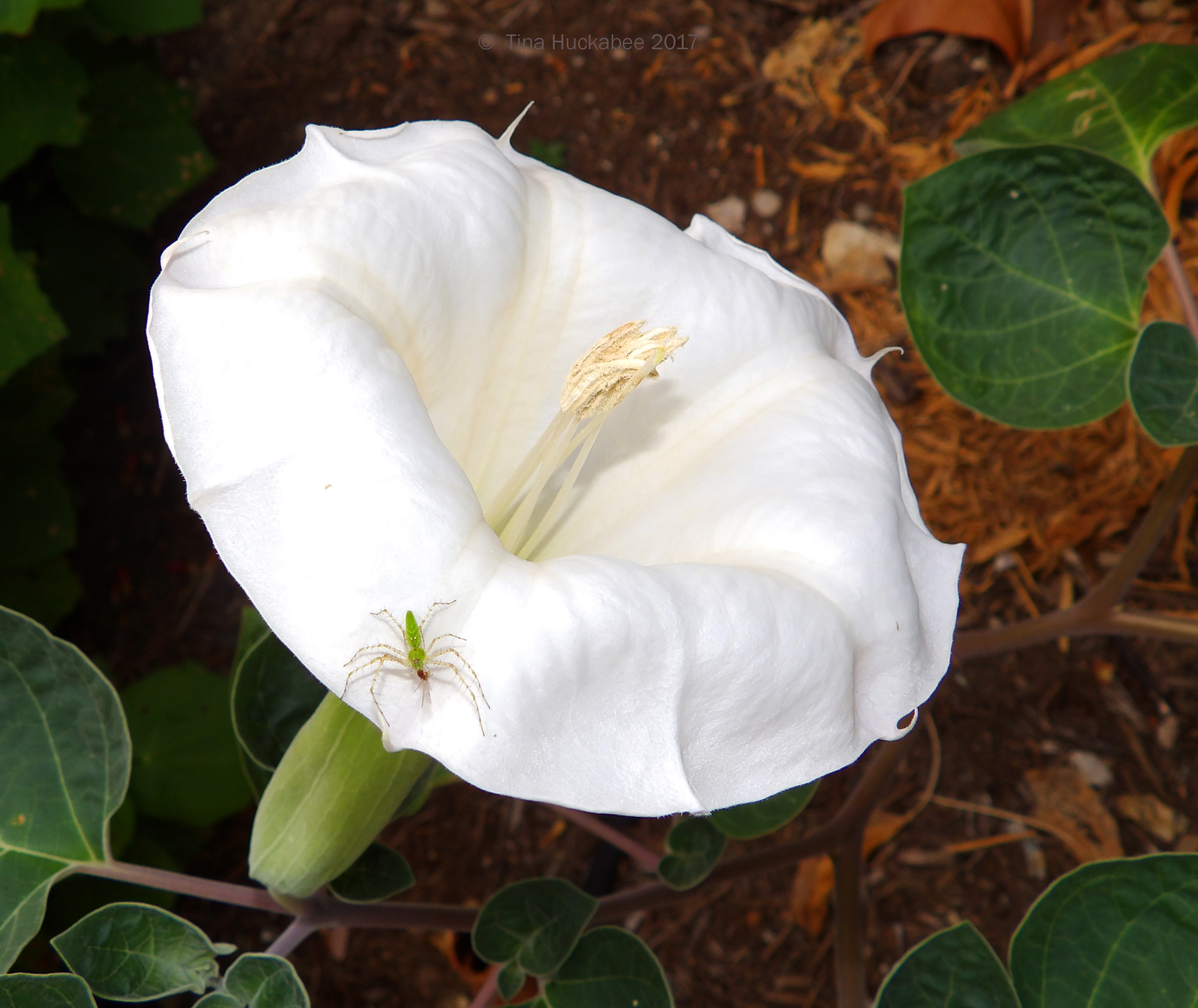
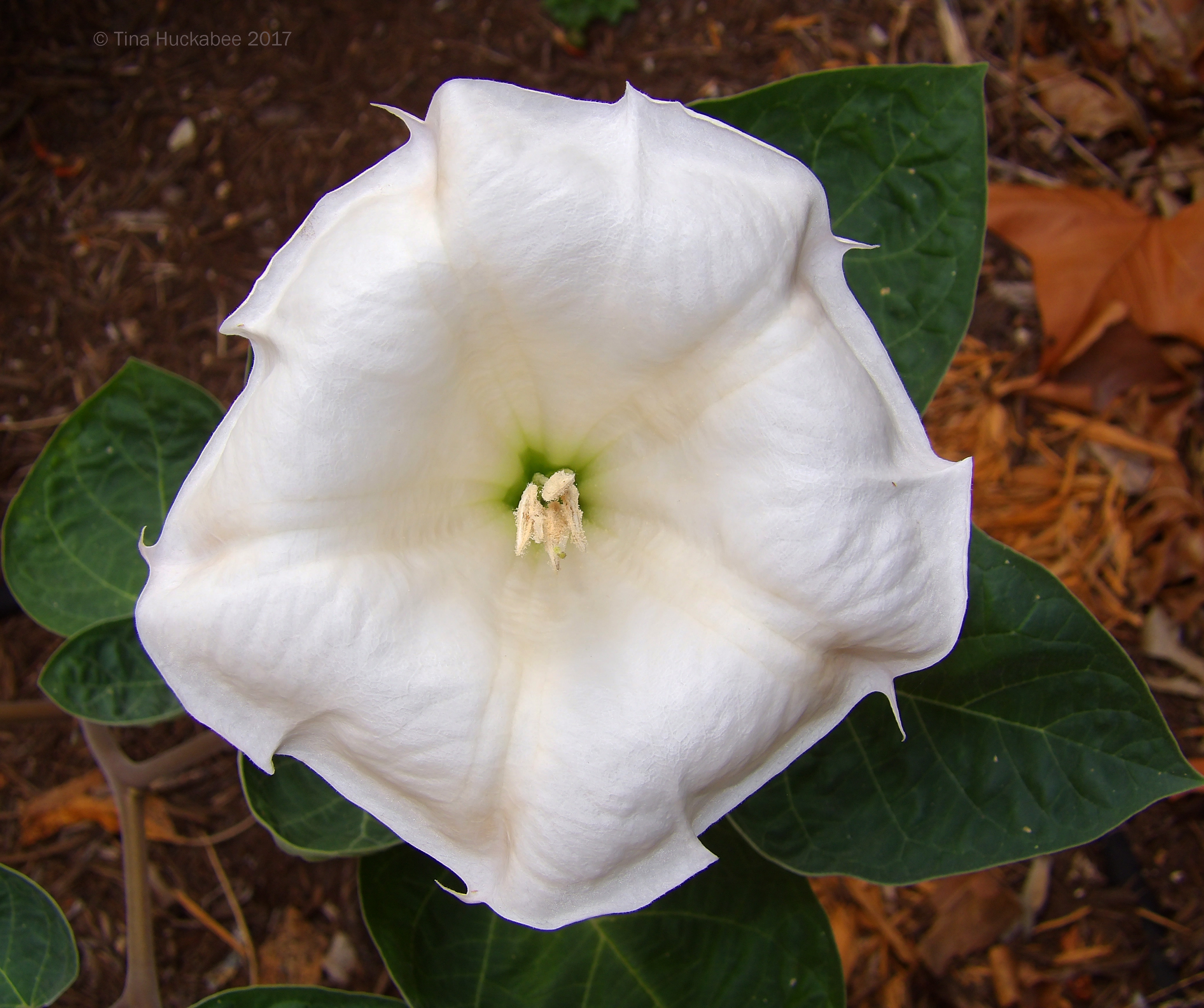
Sultry and steamy are the norm for July summer mornings in Austin, but the open blooms of Jimsonweed, Datura wrightii, deliver a dose of cooling bloom to the garden.

Large and glowing, Jimsonweed flowers open at night and close by mid-day.

These two petulantly refused to greet me as I trundled along the path for closer look and a breath of their intoxicating fragrance.

What is this?

A Green Lynx spider, Peucetia viridans rested on the creamy expanse, clutching what looked like a breakfast tidbit.  As I leaned in for a look, Ms Lynx skittered to the underside of the petal, prey in hand.   We briefly played photographer/spider hide-n-seek, but I succeeded in snagging a couple of photos of her–and her intended meal.

The wings of the victim are visible and I suspect the spider’s snack is some sort of small fly.

I didn’t figure out what she captured; it was probably a small bee, gnat, or fly, but she certainly wasn’t going to share with me, nor did she want to dine while I was loitering around her choice of dining establishment.

The spider proved lethal for its winged prey, but Jimsonweed (also known as Sacred Thorn Apple, Thorn Apple, Angel Trumpet, and Sacred Datura) has always been recognized for its toxic properties–all parts of this tough native are poisonous. Southwestern Native Americans utilized the narcotic qualities of Jimsonweed for religious ceremonies, but if prepared improperly (I don’t know what improperly means in this context), the dosage is fatal.

Reveling in the heat of arid summer, my one shrub blooms from July until September, typically with 5-10 flowers each week.  If Jimsonweed grows in full, blasting sun, the plant flowers more, and for a longer period of time.

I’ll need to pop out at night during the next set of blooms and perhaps I’ll observe a pollinating moth.  Until then, I’ll stick with coffee and some fruit for my breakfast and leave the spiders to their own meals.