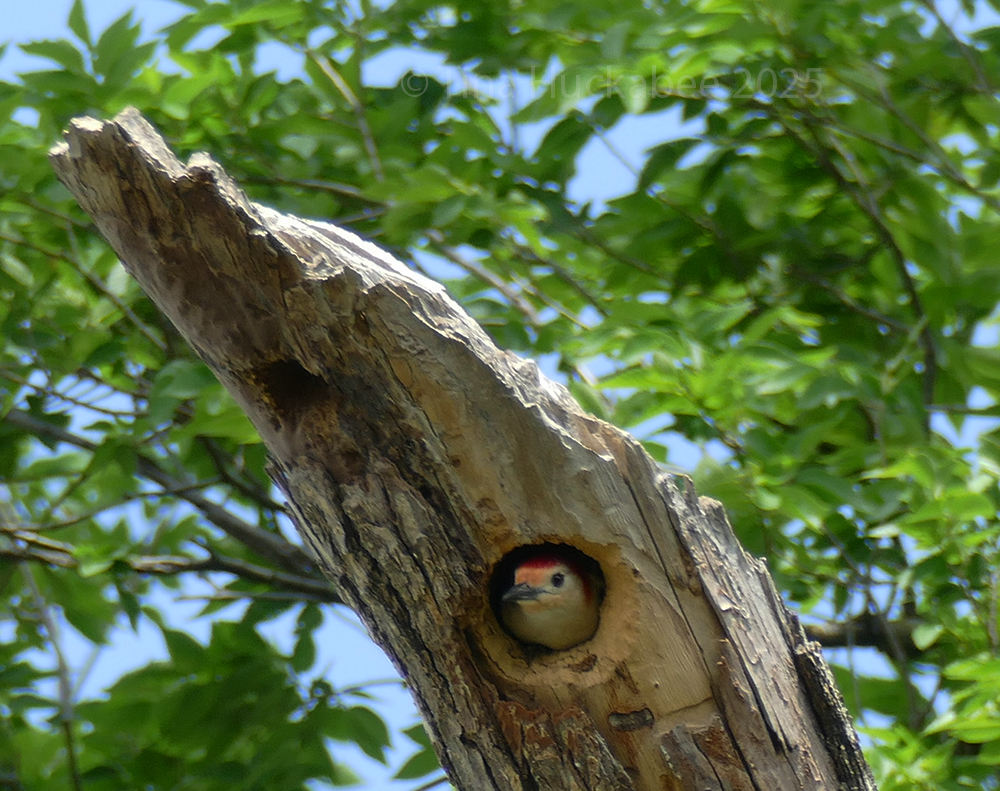
I’d heard the call when I was out and about in the back garden, but Red-bellied Woodpeckers, Melanerpes carolinus are common in my neighborhood and I didn’t pay much attention. After an extended session of woodpecker monologue, I looked up and sighted this cutey calling from a nesting site hole high up in my back neighbor’s tree.

In January or early February, I’d seen a male Red-belly hammering away, creating a nice little niche for a future family. Then the stinkin’, bullying European Starlings began harassing the would-be dad, eventually driving him off to some other tree. Of course, the starlings didn’t even settle in the tree; I’m sure they moved on, looking for some other hapless native bird to harass.
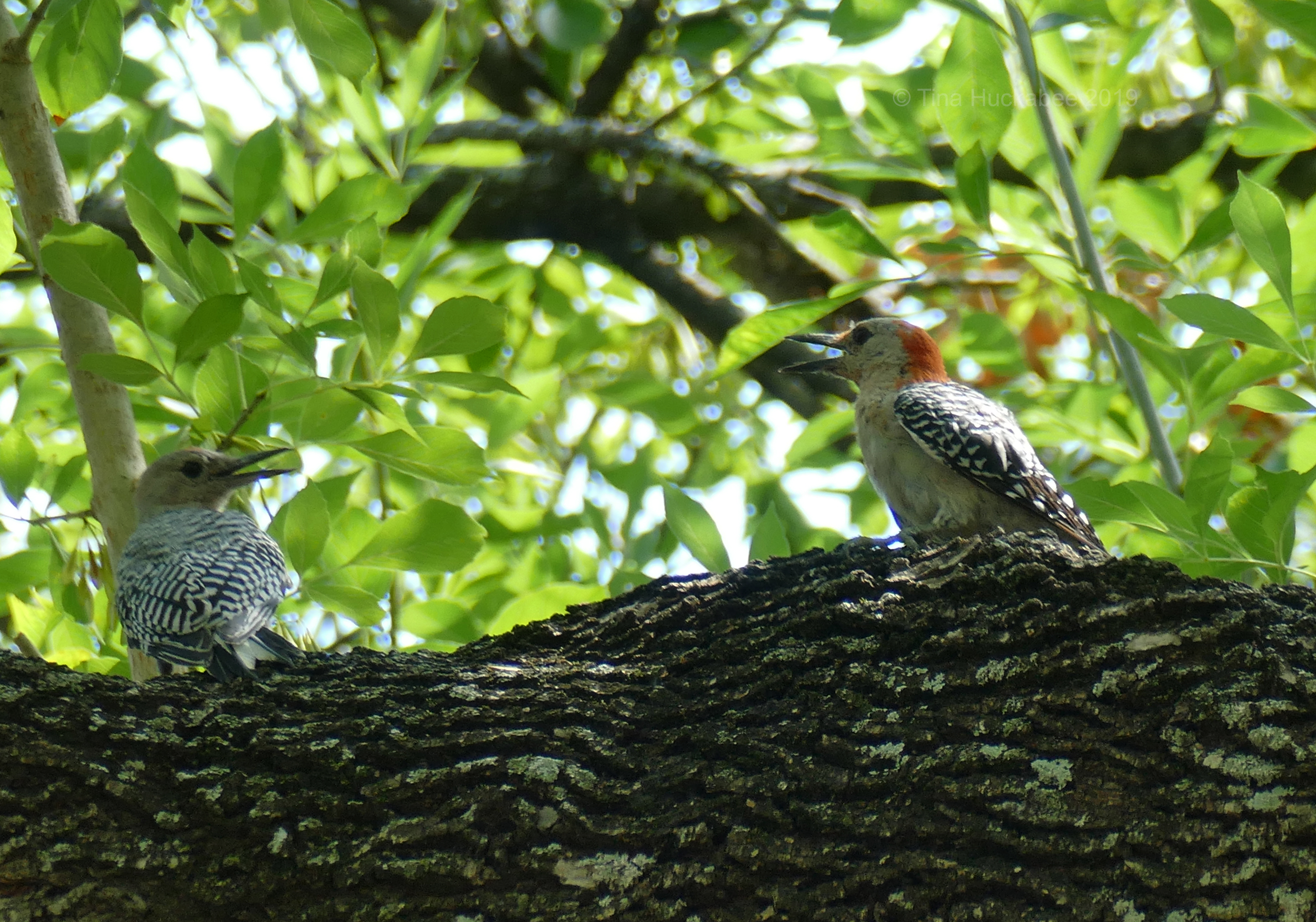
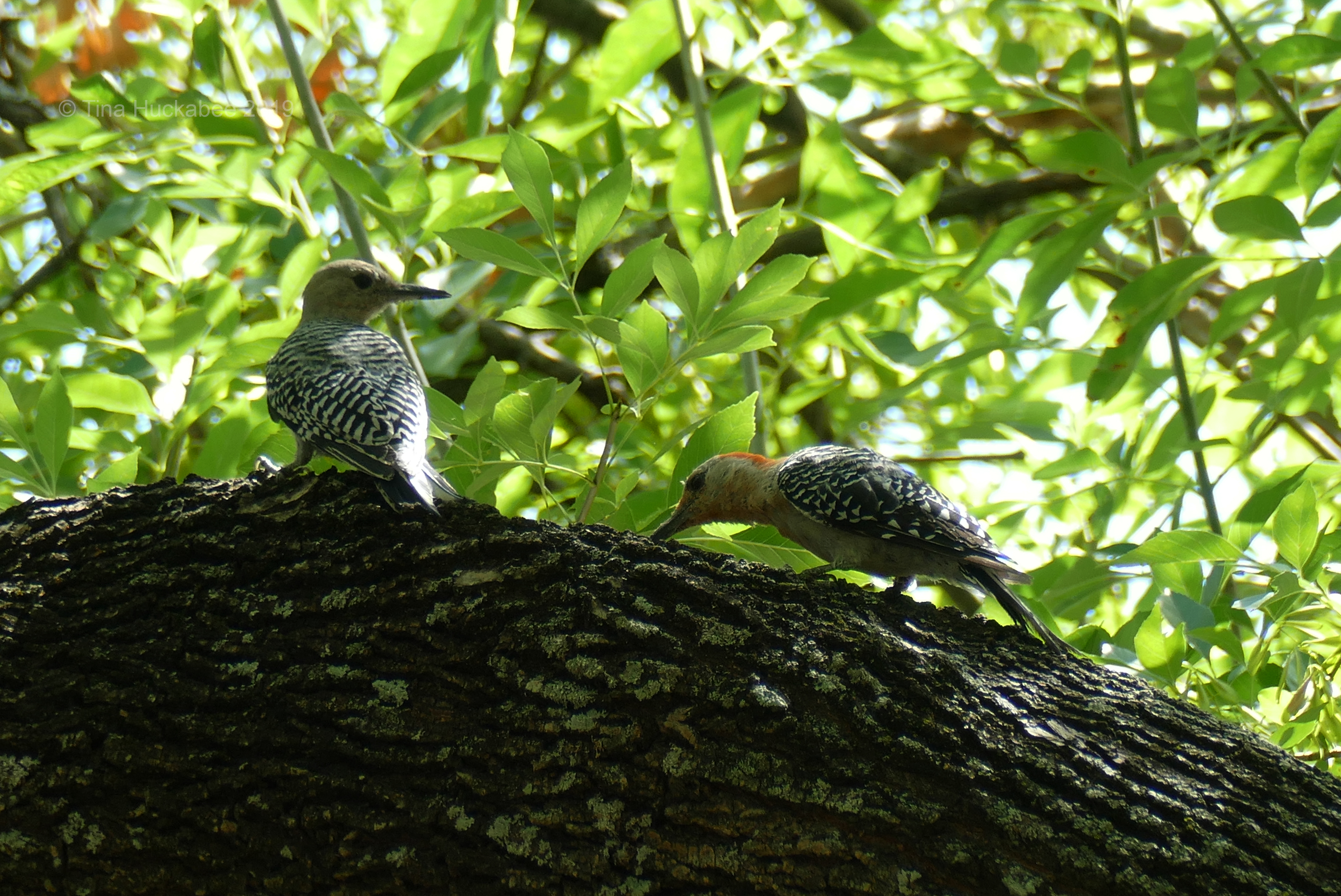
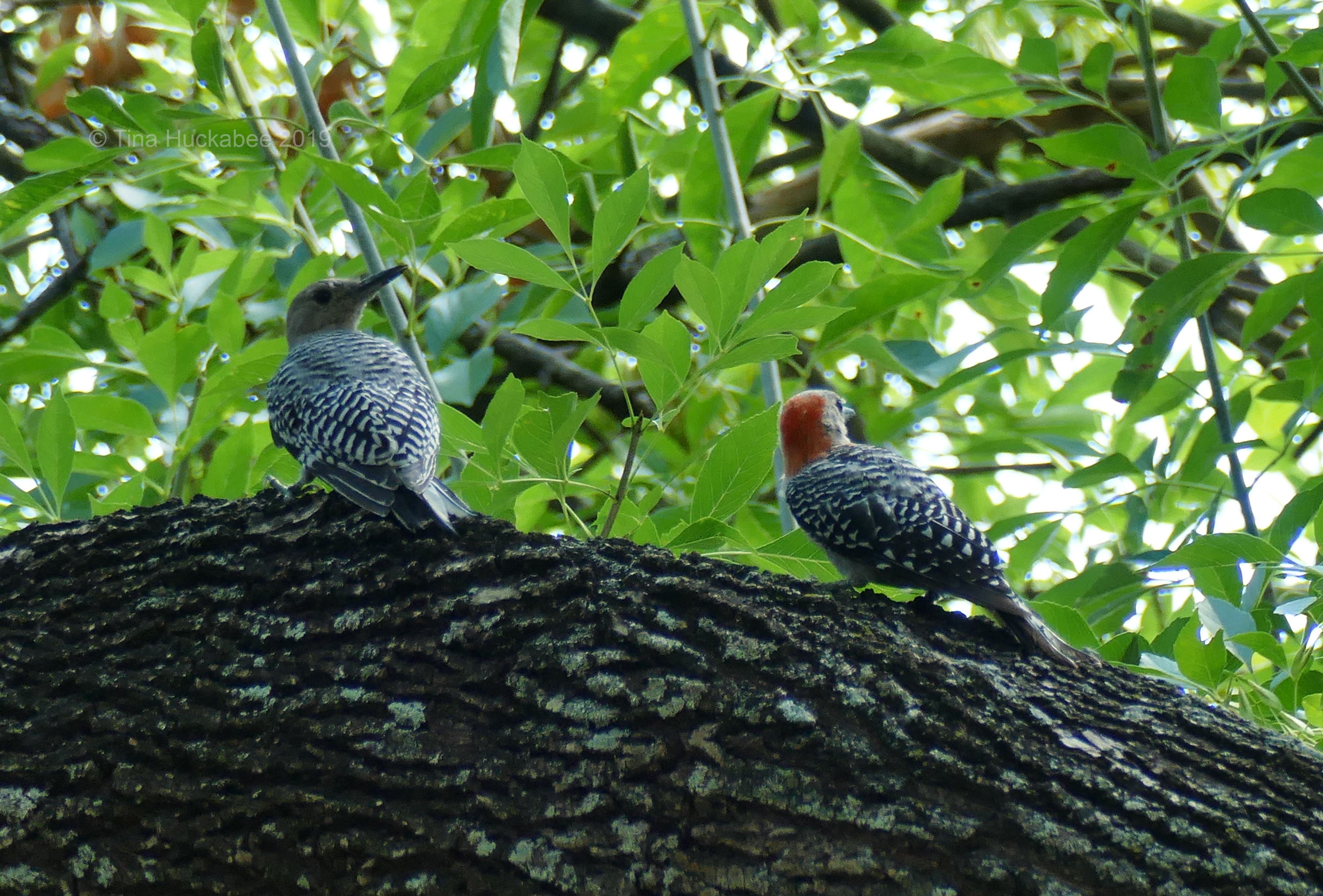
His head is red from just above his eyes, completely covering the back of his head. Female Red-bellies’ red begins toward the top of their heads and doesn’t extend quite so far down.
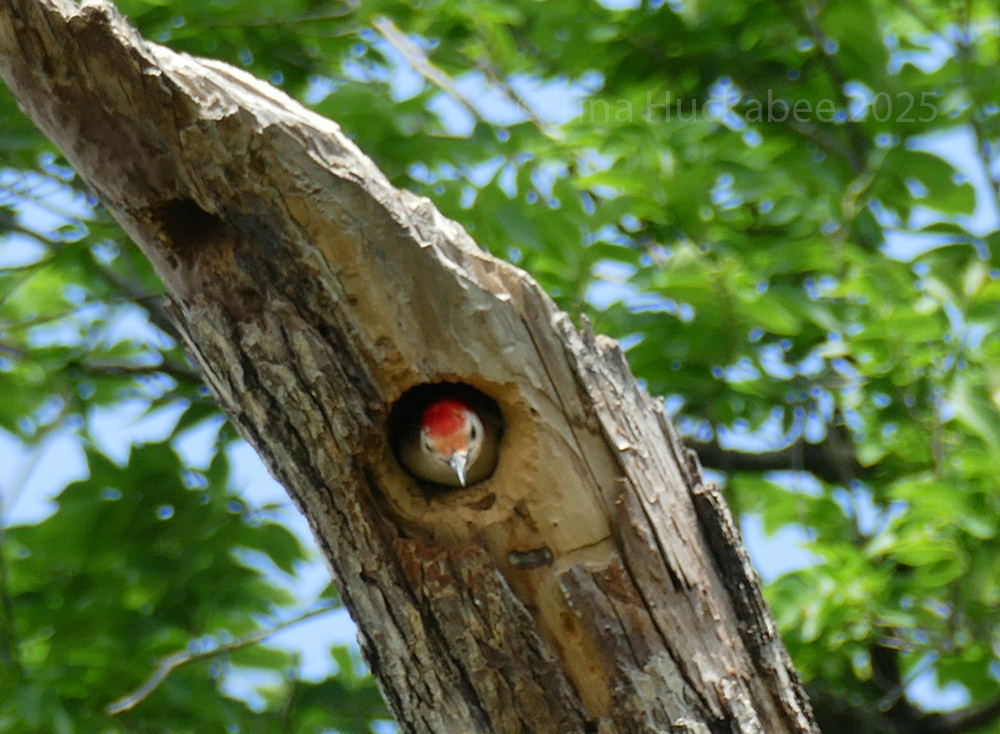
Such a pretty fella. I don’t know if there’s missus; I’ve only spied this guy in his well-rounded hole, calling for anyone who will listen. I hope he finds a compatible gal-pal and they raise a family; woodpeckers are particularly charming birds. This could be his second go-round in the family business, as Red-bellies produce between one and three broods each year.

It’s been a disappointing spring in my garden regarding observing birds and their family ways. A pair of Bewick’s wrens sang, chirped, and brought grass and twigs to a little bird house at my back patio, then abandoned that effort. I suspect the Red-shouldered Hawks that were interested in my tall Sycamore tree might have given the wrens doubt about the neighborhood. But in recent days one is continuing the work, so maybe a second brood is planned or a different pair of wrens are reconsidering the real estate now that the hawks have removed to another place?
The majestic Red-shouldered Hawks that swooped, called, and mated in every tree in the vicinity, eventually relinquished the lame nest they occupied in my Sycamore after several days of high winds. They stayed nearby though, choosing a new nesting site in a large Red Oak just around the corner. This morning, I was alerted to their presence by noisy Blue Jays in the luscious oak, loudly voicing their opposition to the hawks’ nesting site. A stately adult hawk perched on a branch near the nest, tricky to spot in the foliage–a formidable sentry. I’m glad these two hawks didn’t opt for a chickless, carefree lifestyle, as young adults will do. They’ll be excellent parents, to the concern and detriment of other birds, small mammals and reptiles in the neighborhood. Such is the circle of wildlife.
Our Screech owl box remained owl-less this year, the couple choosing instead a hole further down this same tree now hosting the Red-belly. Just last night, looking for the owls, I saw both parents and two fledglings! They made it easy for me to observe them, as they were on utility wires, rather than in the trees. The owlets were calling for food, parents obliged with snacks. I mentioned to them that they’re welcome to the rat who visits the pond area each night.
I’m glad I listened and sighted this woodpecker in his chosen site. I wish him all good luck with a mate and brood. There’s plenty of time in the season to rear more darling woodpeckers.
 My Gardener Says...