Foliage Follow-up, May 2014

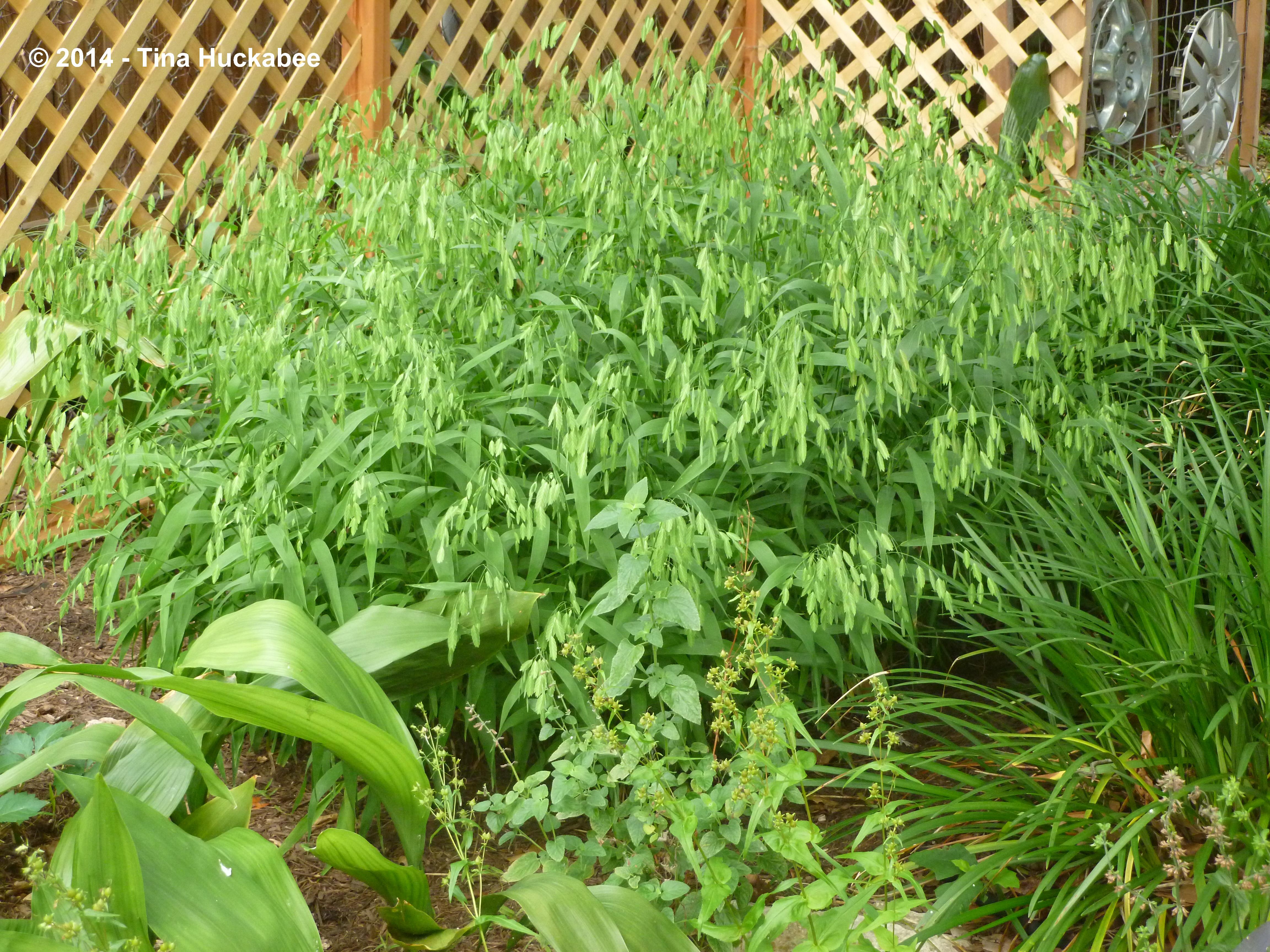
We’ve received a little rain here in Austin, Texas and so continue our verdant spring before the summer heat fries everything in the garden.  I particularly like this lush threesome of the glossy, dark green-leafed Star Jasmine vine, Trachelospermum jasminoides, fronted by the soft, graceful Inland Sea Oats, Chasmanthium latifolium, further fronted by an arching American BeautyberryCallicarpa americana.

P1030420.new

I’ll remove the Inland Sea Oats next year to give the Beautyberry room to grow. For now, I  like the array of foliage these three plants provide in this shady spot.

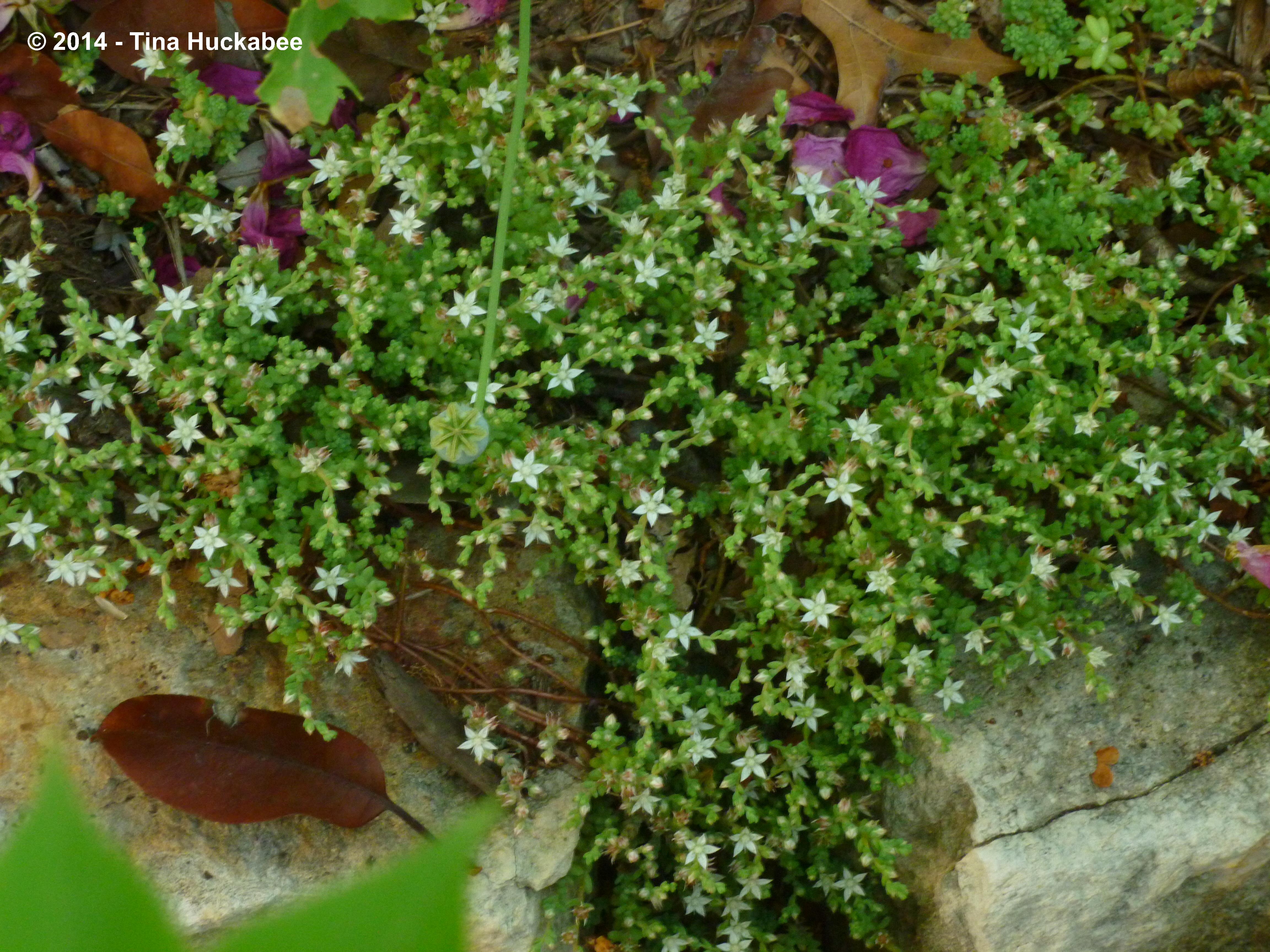
Sedum, Sedum potosinum, is delightful in the garden; its delicate, fleshy foliage hugs the ground and rocks as it spreads.  It is attractive before it blooms,

P1030427.new

and during bloom time.

P1030686.new

All of the Fennel plants in my gardens are still gorgeous this May.

P1030470.new

I’ve seen a few butterfly caterpillars chomp, chomp, chomping, but apparently not enough to eat the Fennel to the ground.

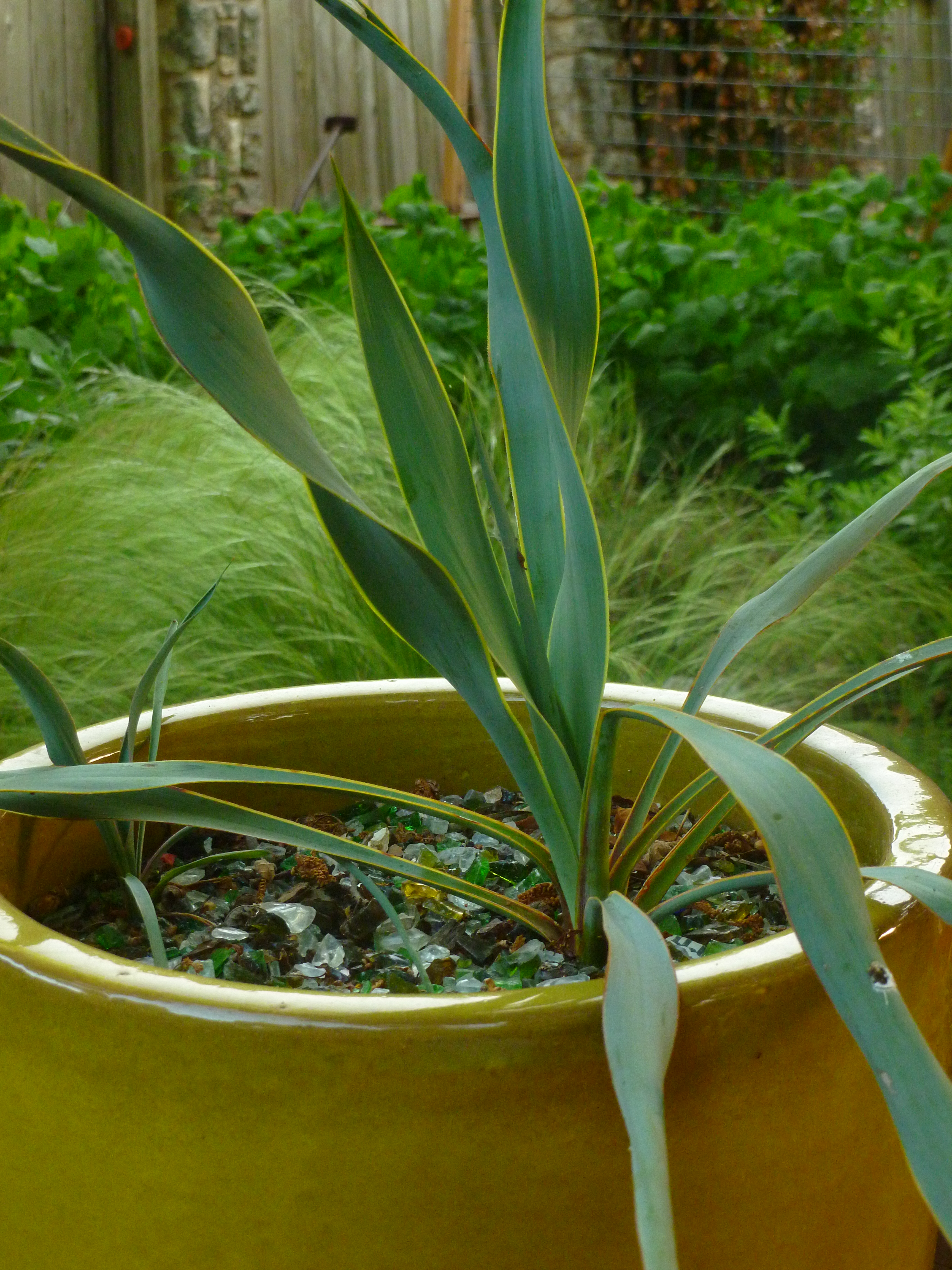
This Pale-leaf Yucca, Yucca pallida,  

P1030668 - Copy

echoes the yellow of its home with stripes along the edges of its leaves.

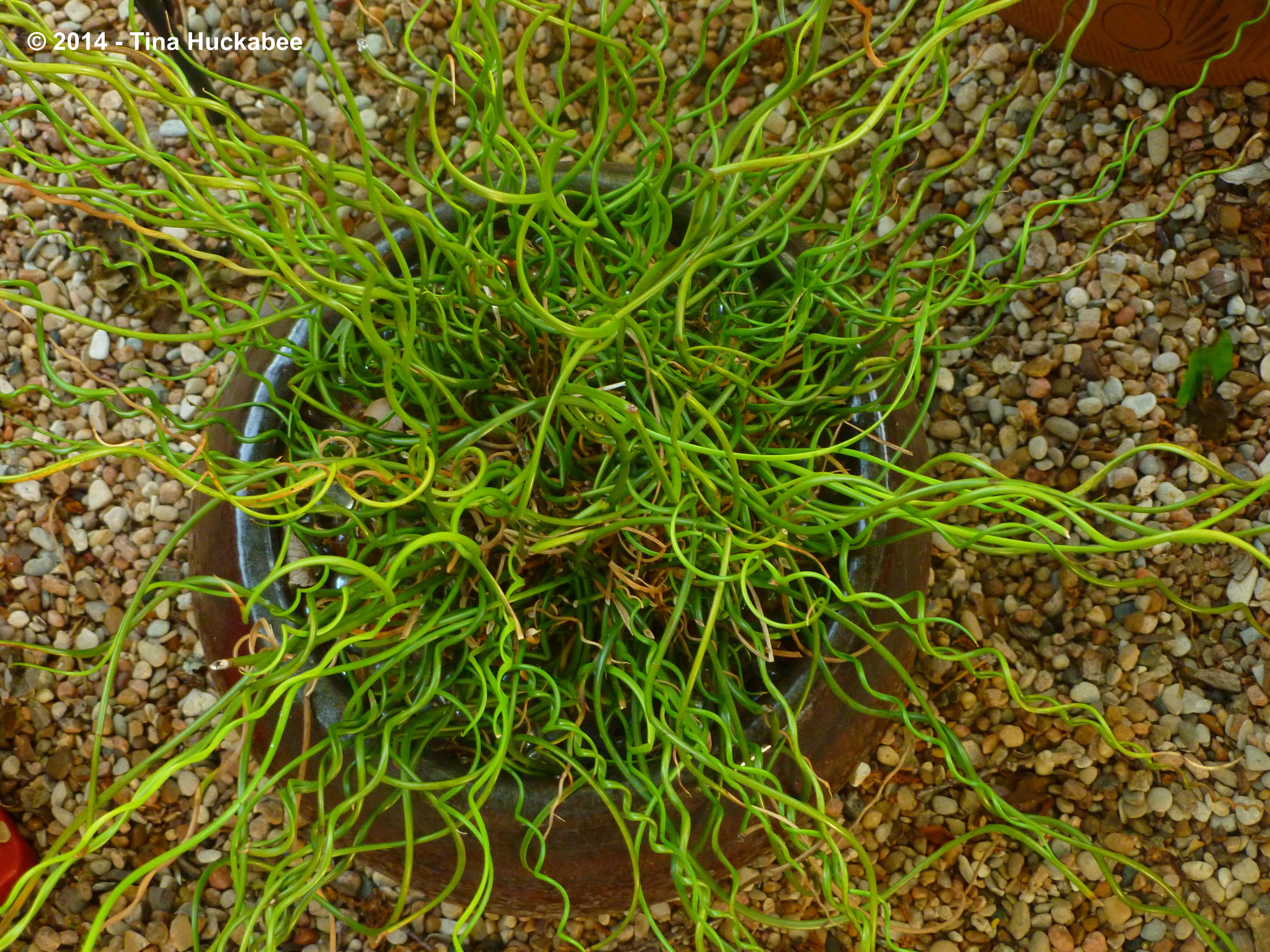
I fell in love with the Corkscrew Rush, Juncus effusus, when I visited another garden.

P1030673.new

It requires more watering than I typically tolerate from my plants (twice/week during our summers), but I don’t consider that onerous and this sedge plant is a fun addition to my gardens.

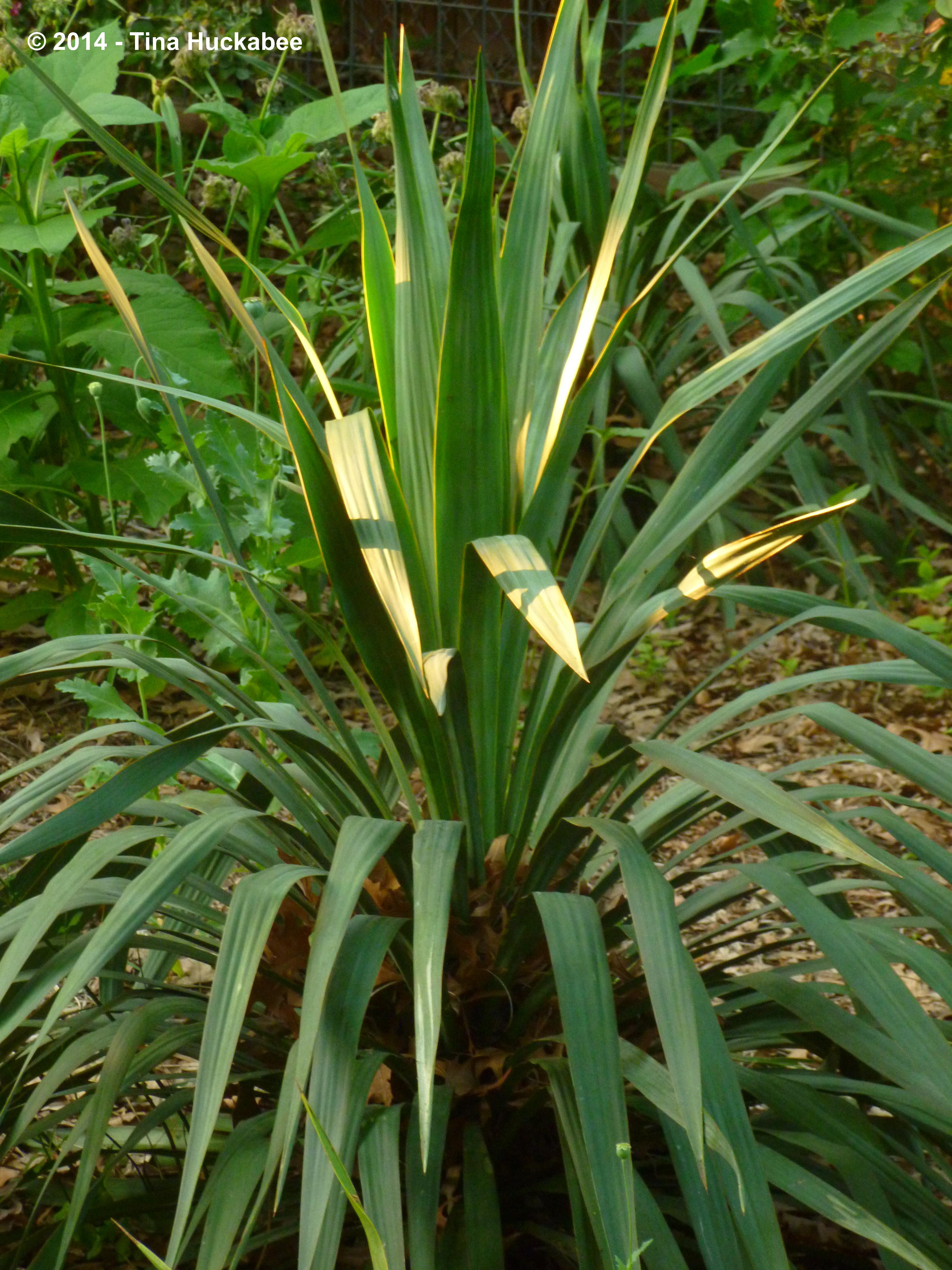
I enjoy the play of late afternoon light on this Soft-leaf Yucca, Yucca recurvifolia.

P1030676.new

I have several of these non-native yuccas in my gardens and appreciate their tolerance of my somewhat heavy soil.

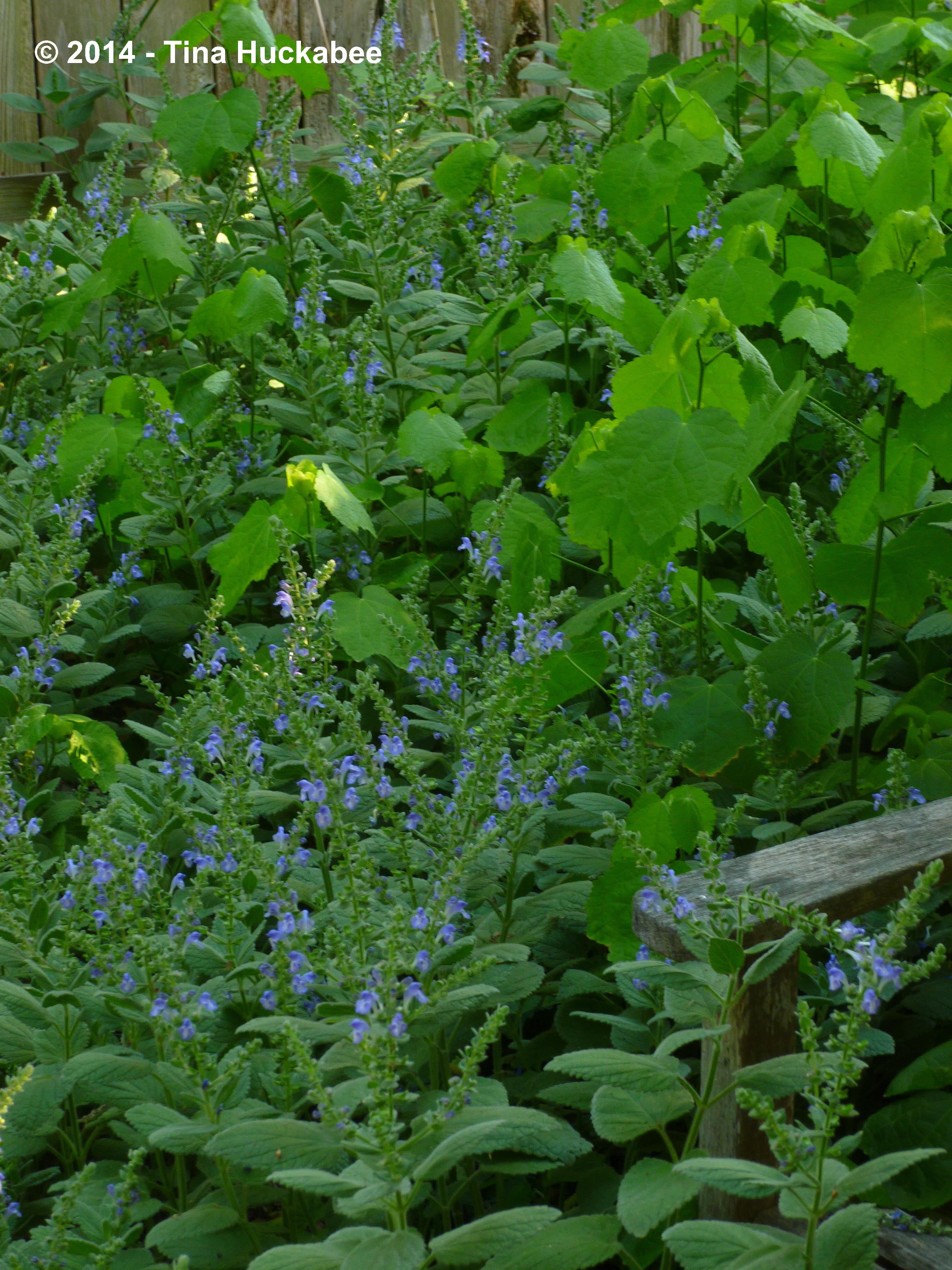
The pairing of the bright green, tropical foliage of the not-yet-in-bloom Turk’ s Cap, Malvaviscus arboreus, with the gray-green, fuzzy Heartleaf Skullcap, Scutellaria ovata ssp. bracteata, was a gardening serendipity that I’ve encouraged.

P1030773.new

P1040232.new

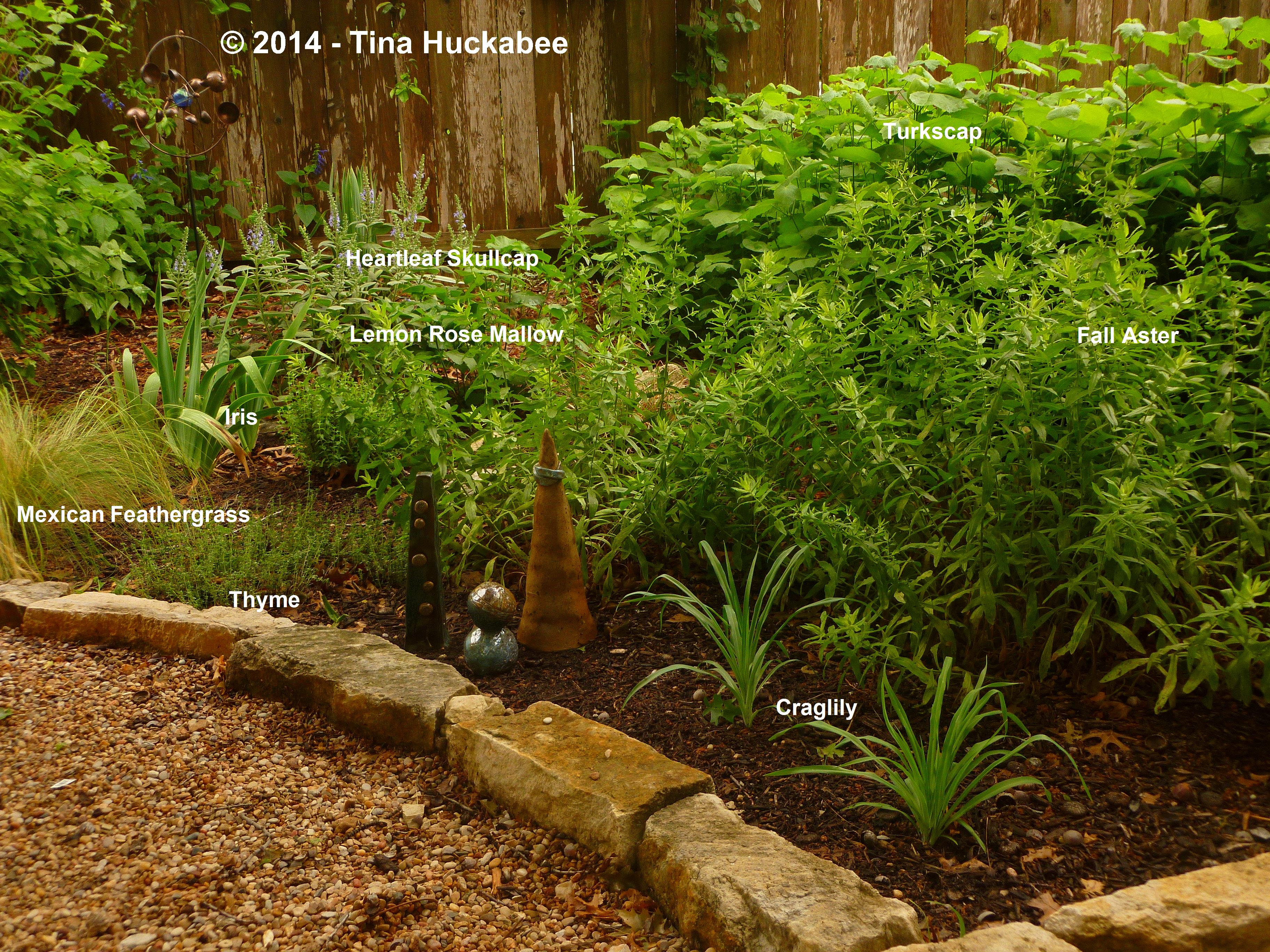
Finally, there’s little but foliage going on here–and such a nice variety of shape and form, if not color.

P1040211.new

At the far left is the soft, silvery Mexican Feathergrass, Nassella tenuisima, with spiky  Iris flanking its right.  A tiny-leafed, ground-hugging Thyme completes the trio.  Two plants from the Malvaceae family, Lemon Rose MallowHibiscus calyphyllus, and Turk’s Cap fill the center/right section of the photo.  The foliage of those two are similar–wide and heart-shaped.  To the right and front of the photo, Fall Aster, Symphyotrichum oblongifolium and Texas Craglily, Echeandia texensis, both sport foliage which contrasts with the tropical looking Malvaceae plants: the Craglily’s slender grass-like lily leaves and the perennial aster’s narrow leaves.

Actually, if you look closely, you can see some blooms–at the top-center of the plant group is a cluster of Heartleaf Skullcap–its blue/purple flowers and fuzzy, gray-green foliage in total contradiction to everything else.

Thanks to Pam at Digging for hosting the May salute to foliage.

Permanent Impermanence

Recently I read the delightful biography about and  chronicle of Beatrix Potter and her life as a gardener and naturalist: Beatrix Potter’s Gardening Life, by Marta Mcdowell. Most people know Beatrix Potter through her “Peter Rabbit” series of children’s books, but she was also an important conservationist whose land comprises most of the Lake District National Park in Great Britain.  In one chapter of Beatrix Potter’s Gardening Life, McDowell is discussing Potter’s penchant for a garden “makeover.”  McDowell called that need for change in the garden “a permanent impermanence.”  Those  who garden understand that gardens are journeys, not destinations. We continually amend and refresh sections or entire gardens and for many different reasons.  We augment our gardens because of overgrown plants or development of too much or too little shade or sun. We refine our gardens as our aesthetic choices evolve or because we want plants appropriate for the changing needs or conditions of our gardens.

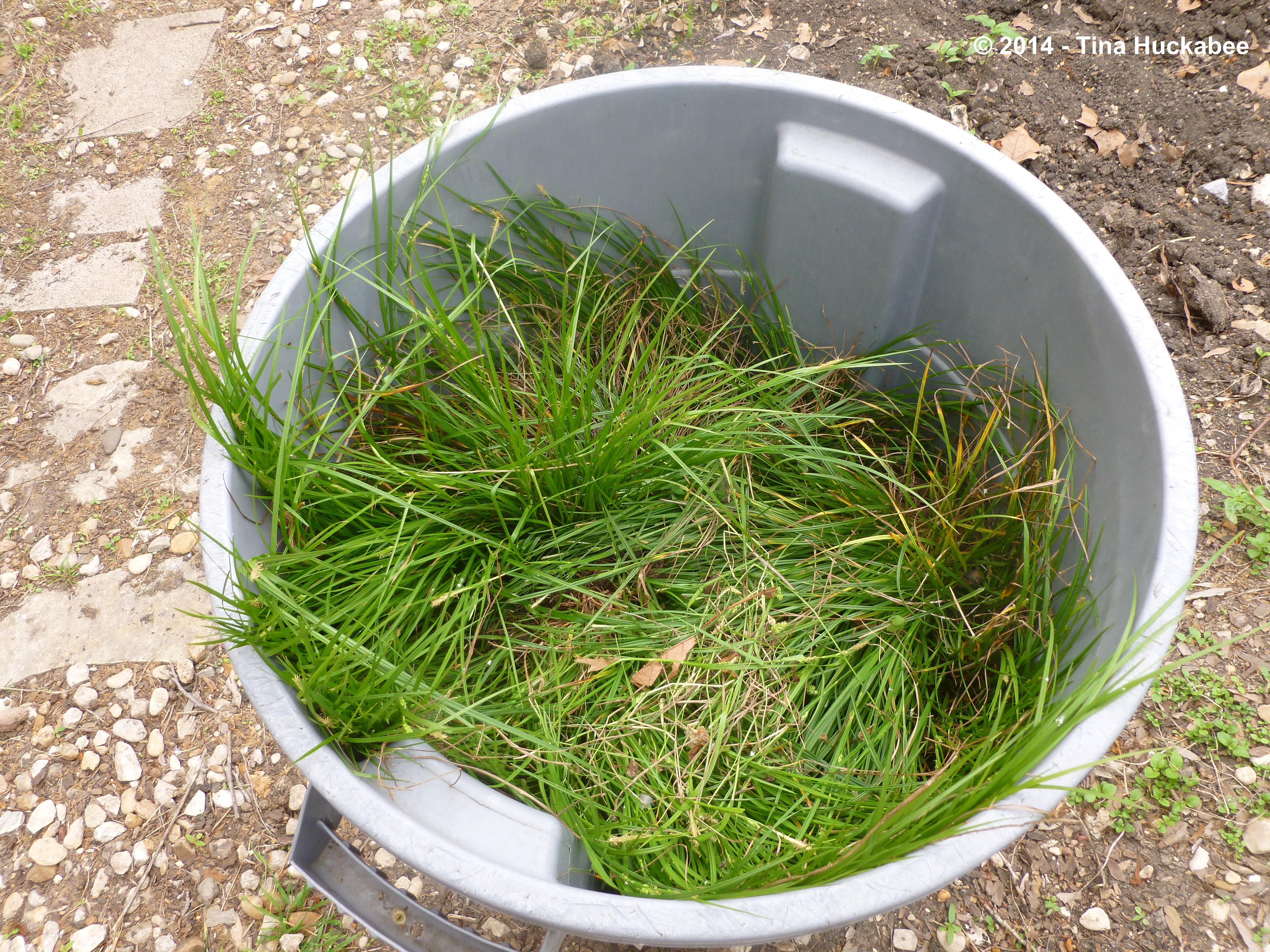
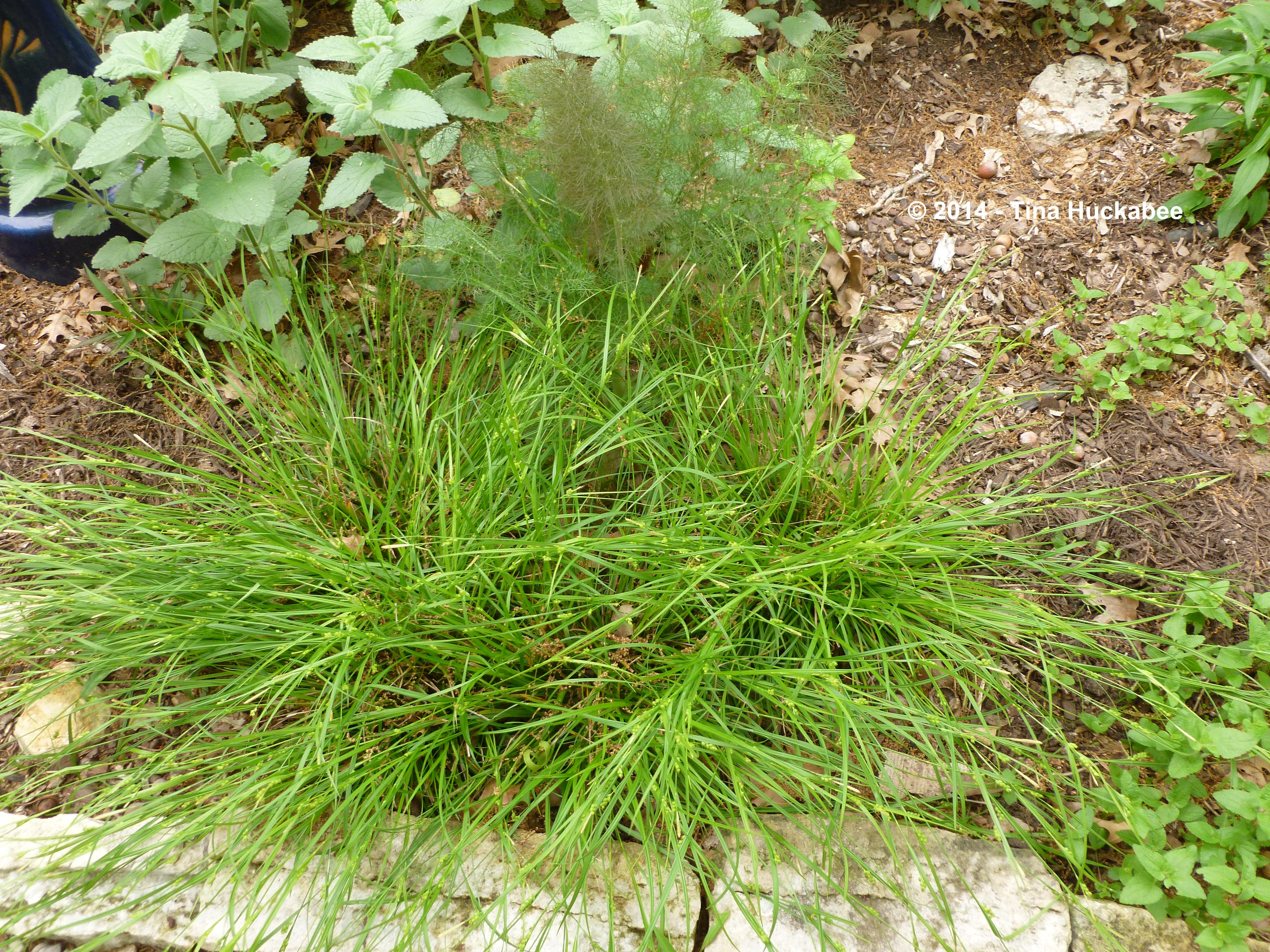
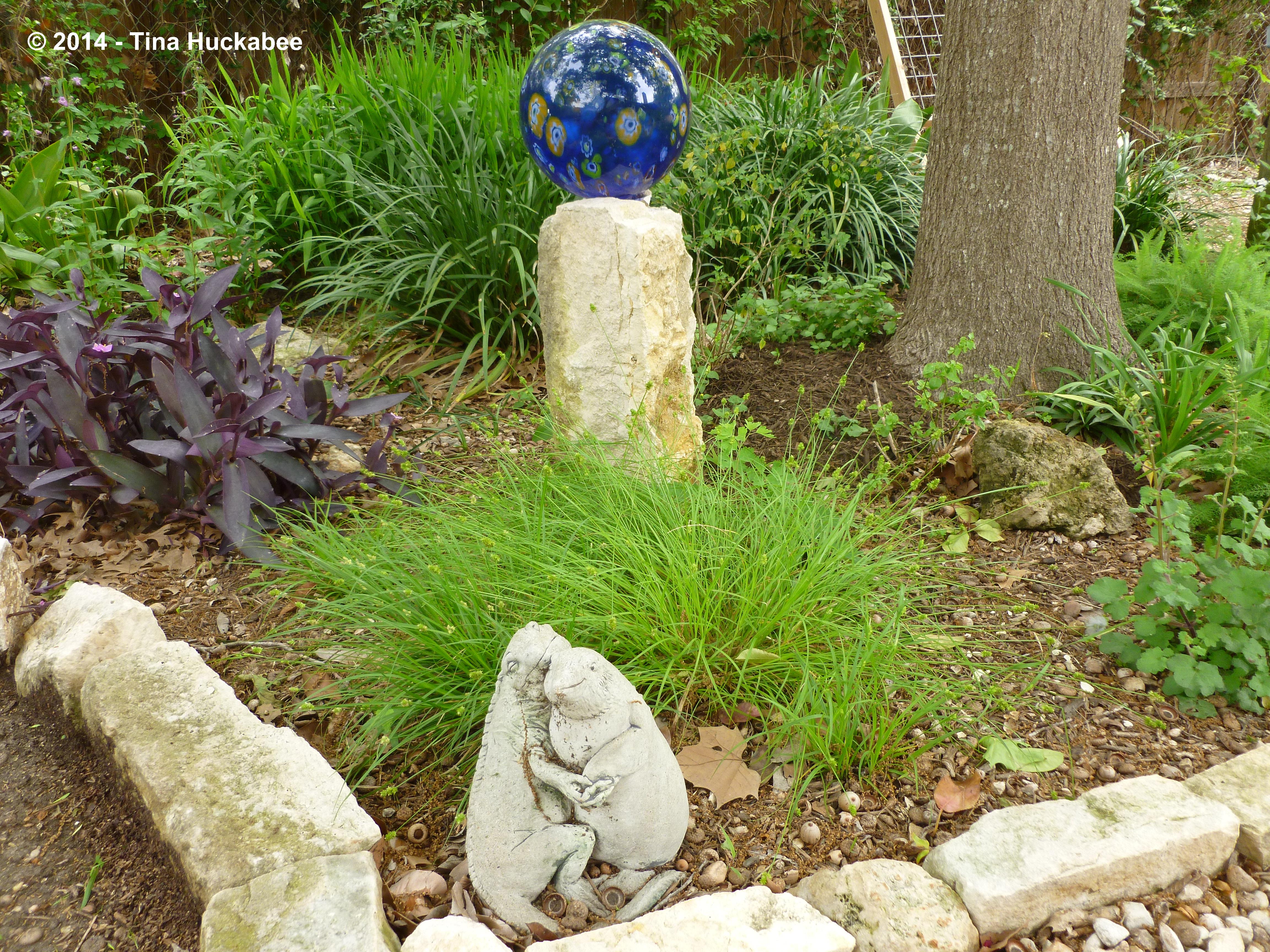
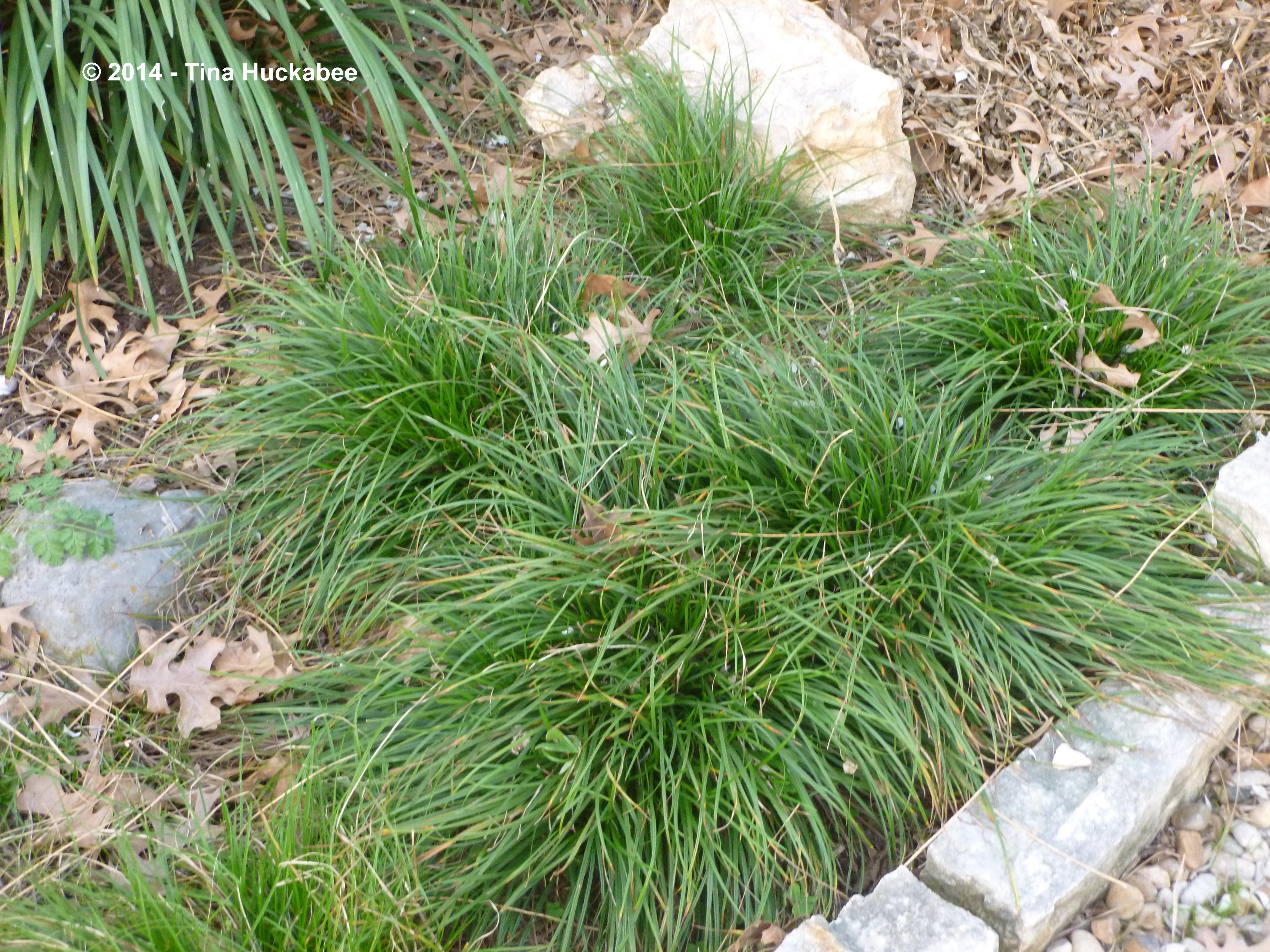
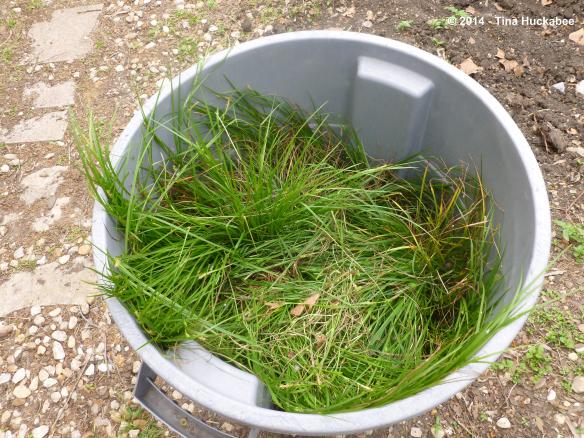
Earlier this spring, I decided to remove all of the Berkeley Sedge, Carex divulsa, that I had planted in my gardens.
20100911_1.new

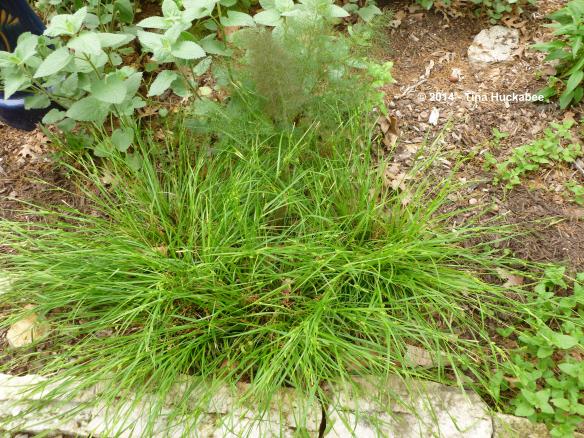
I discovered  Berkeley Sedge while employed at the  Green Garden at Zilker Botanical Garden  and liked its hardiness, evergreen growing habit and attractive seed-heads. I bought small pots and planted them in various places on my property.
20120327_24.new

20120327_39.new

P1020658.new

20100911_4.new

In the first few years, I was pleased with the sedge; it added structure and foliage interest  and Berkeley Sedge is drought tolerant.

P1020836_cropped_3174x2539..new

There is a garden space in the Green Garden titled “Hill Country Shade” in which scads of  Berkeley Sedge seeded out.  Aside from the fact that I philosophically disagreed with the non-native Berkeley Sedge  planted in a garden touted as “native,” I also found I was constantly weeding out the seedlings produced by those sedge plants.  It was one of the more persistent chores of that job–pulling one seedling up, it seemed as if six more appeared.  One winter day, I met a California landscape designer and we visited about that plant.  She mentioned that the Berkeley Sedge was labeled as invasive in California and asked if it was labeled so here in Texas.  I later checked and according to TexasInvasives.org Berkeley Sedge, Carex divulsa, is not considered an invasive plant in Texas.  San Marcos Growers in California originally tagged Berkeley Sedge as a native, later concluding that it is not a native sedge.  A quick Google search shows two different sites, Pacific Horticulture and californiabotany.blogspot.com  which state definitively that this plant is an invasive non-native and spreading throughout California.

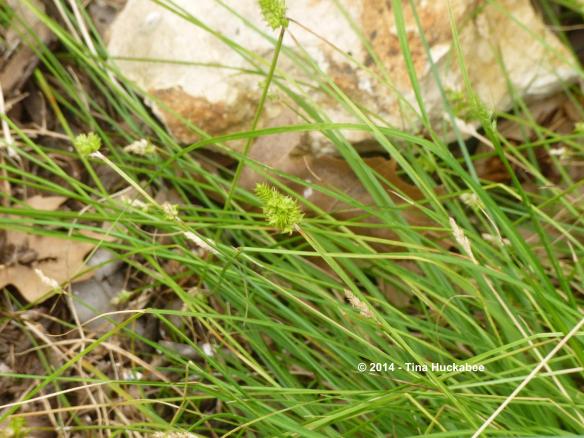
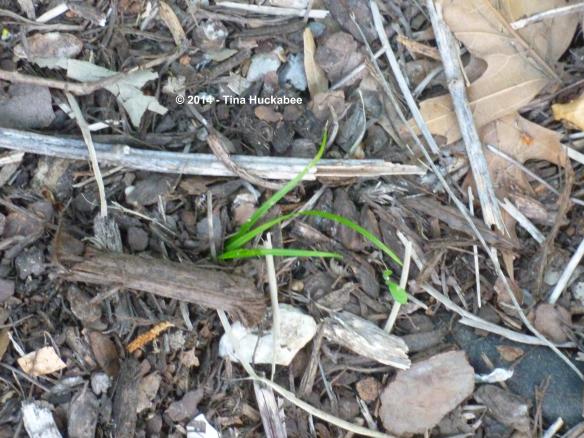
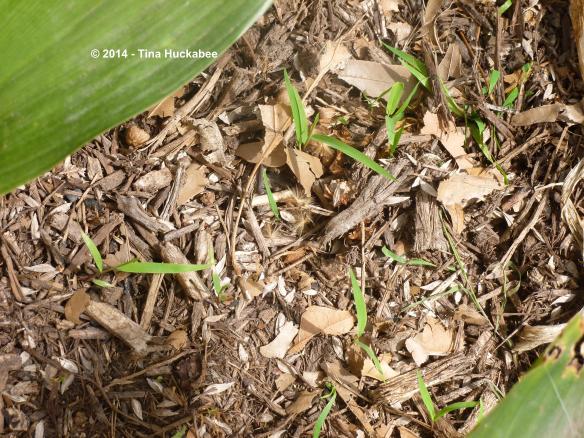
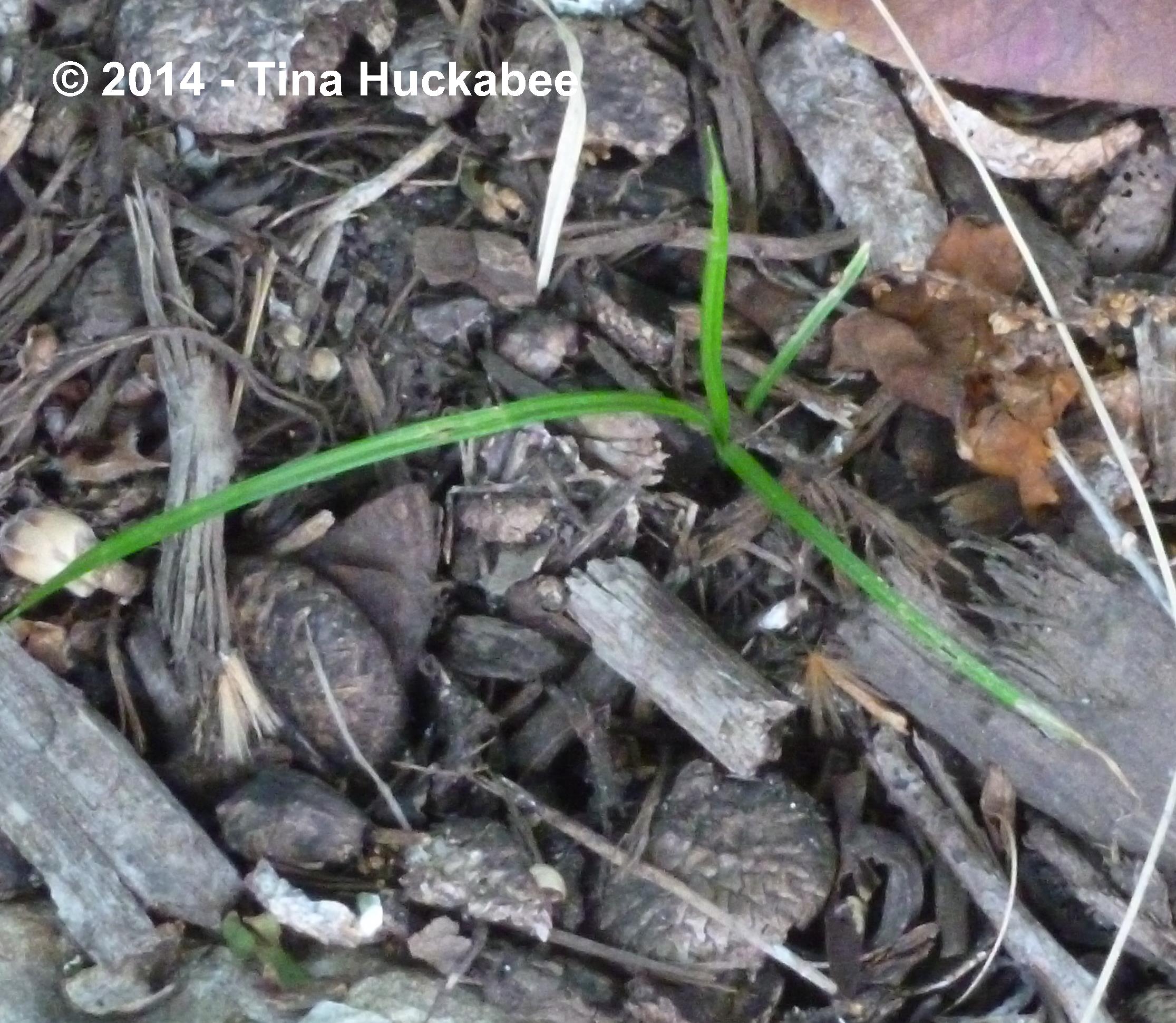
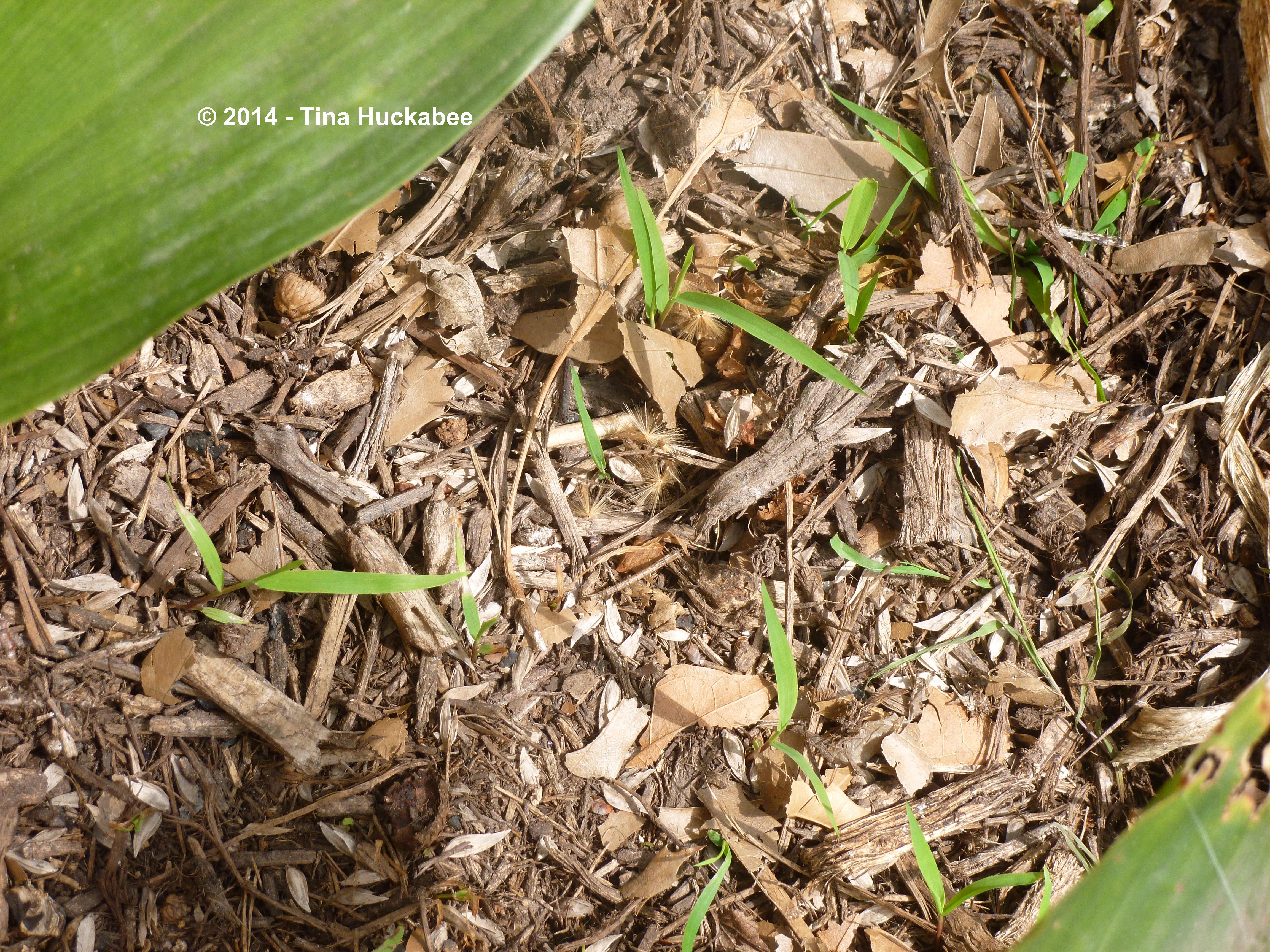
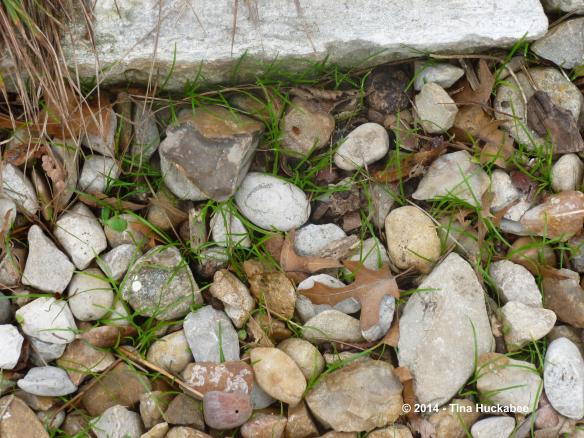
Back to my gardens. After several growing seasons in which those attractive seed-heads developed and dropped seed, I noticed baby Berkeley Sedge everywhere.
P1020803.new

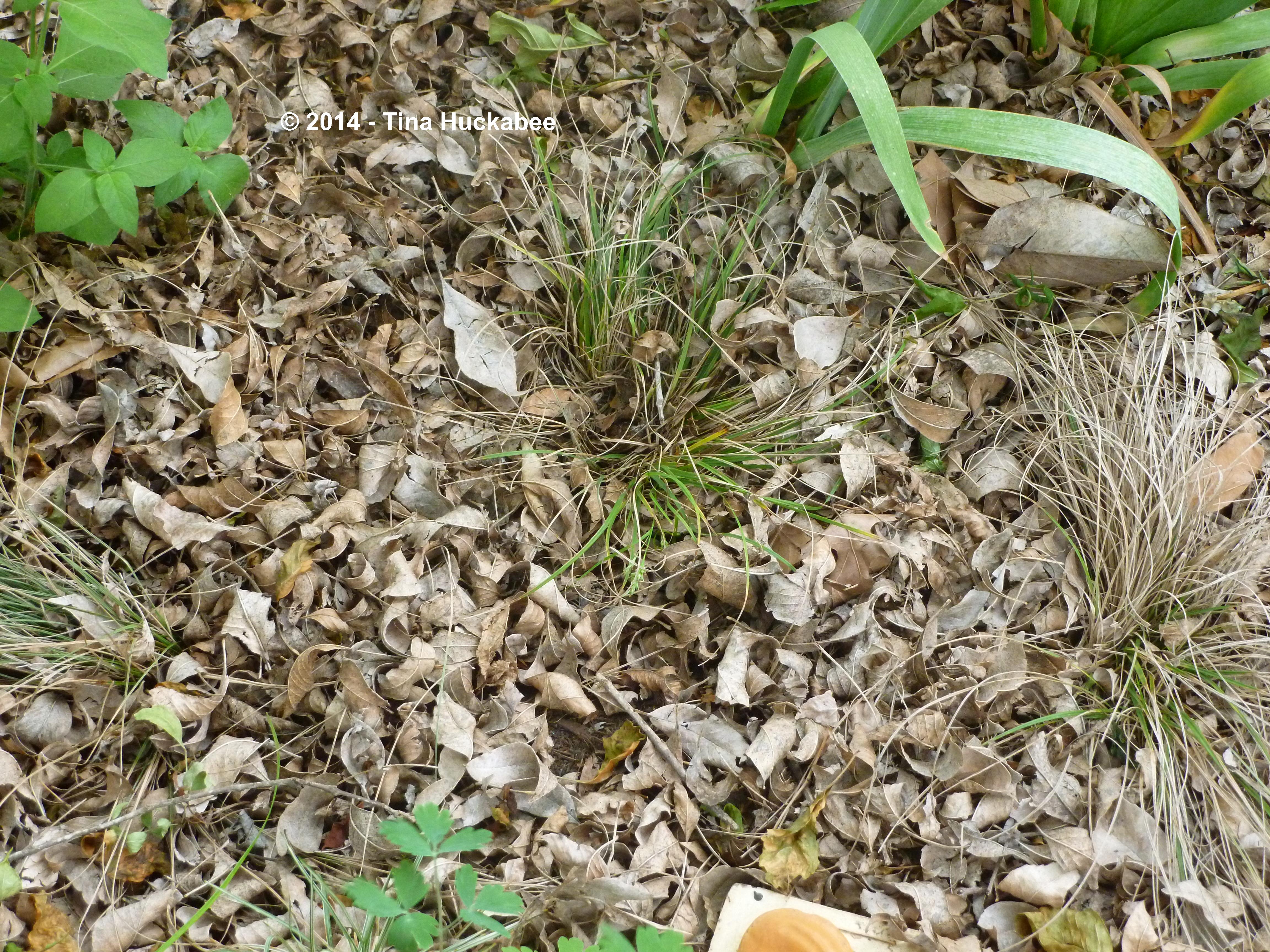
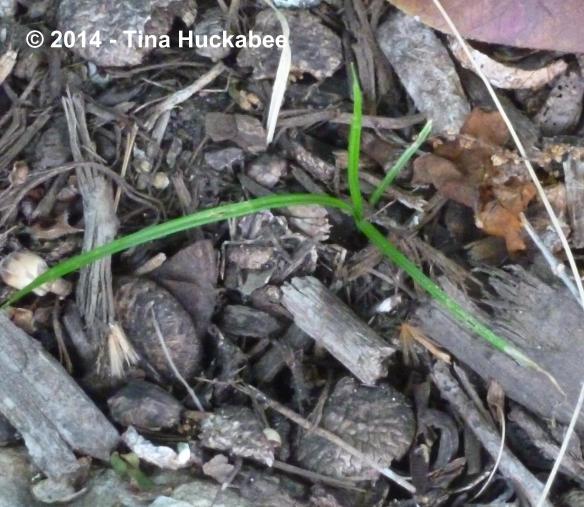
Obviously, the density of seedlings was greatest near the spots where the sedge was growing, but I’ve found rogue seedlings in all parts of my gardens.  I water my gardens infrequently and for several groups of  Berkeley Sedge, the only water received comes from the sky.  And still, lots of seedlings.
P1030981_cropped_2231x1940..new

P1030983.new

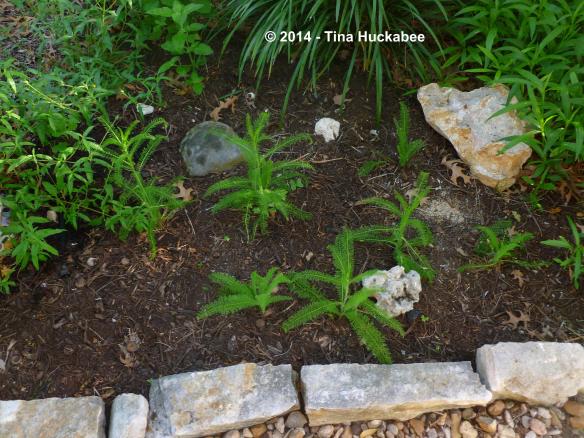
I’m in the process of pulling those seedlings as I see them and as new seedlings develop, but it will take some time.

To be clear, I have other plants that could be described as invasive:

Heartleaf Skullcap, Scutellaria ovata ssp. bracteata,

20100911_16.new

definitely qualifies as an aggressive grower and invader!

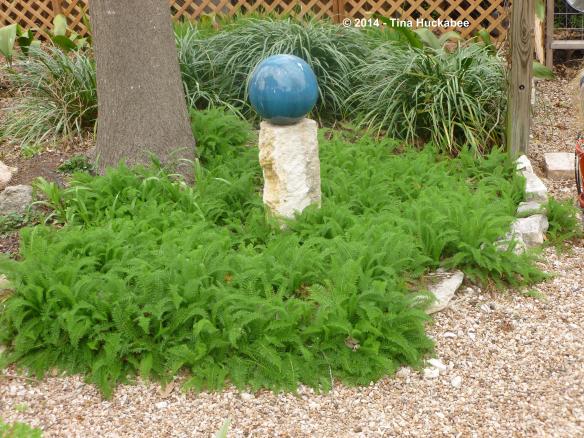
Yarrow, Achillea millefolium,
20100911_20.new

spreads magnificently.

I continually weed out the always obnoxious, except when beautiful,  Inland Sea Oats, Chasmanthium latifolium.

20100911_21.new

20100911_22.new

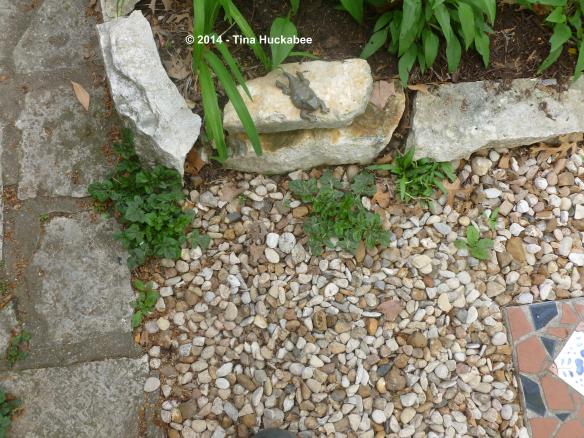
And the ubiquitous (in my gardens), Lyreleaf Sage, Salvia lyrata, appears throughout my property.
P1030142.new

These plants seed out or spread  and I don’t mind. Perhaps I’m more tolerant of these particular “invasive” plants because they are all native to this area–they belong here and I’ve cultivated a situation in which they thrive.   I use them as I see fit in the garden–pulling them up where I don’t want them and transplanting them where I do.  I am a practitioner of  the constant refreshing and reworking which is that gardeners’ creed of permanent impermanence.  I have no choice.  The garden is dynamic– an organism in perpetual, organic motion, responding to environmental changes and sometimes, gardener whimsy.

Or not.  I routinely pass plants which spread  to other gardeners or toss unwanted seedlings in the compost for future use as soil amendments. But with the Berkley Sedge, I decided that I didn’t want a non-native to become a pest plant in my gardens or possibly, surrounding landscapes.  Much like my decision to remove the Berkeley Sedge in the “Hill Country Native” space, I  removed a potentially aggressive plant because of my concern about its spread  and because I prefer to use mostly native and non-invasive non-natives in my personal gardens.  Taking out the sedge and adding “new” plants to the area will alter the feel of those spots–adding blooms and varying foliage.

One of my last projects at the Green Garden was removing the Berkeley Sedge in the “Hill Country Native” garden and transplanting as much as possible to a formal, rocked in space, located in deep shade, to serve as a demonstration of a low water lawn alternative to the water-hogging St. Augustine grass so common here in Texas.  Despite some misgivings about Berkley Sedge in a garden, I think it has value as a an alternative “grass” lawn–especially if the seed heads are kept in check and not allowed prolific procreation.  I haven’t visited ZBG since leaving that job a year ago, so I don’t know how that Berkeley Sedge lawn has fared, but I’ll bet it’s growing well.  I only hope it isn’t spreading too much.

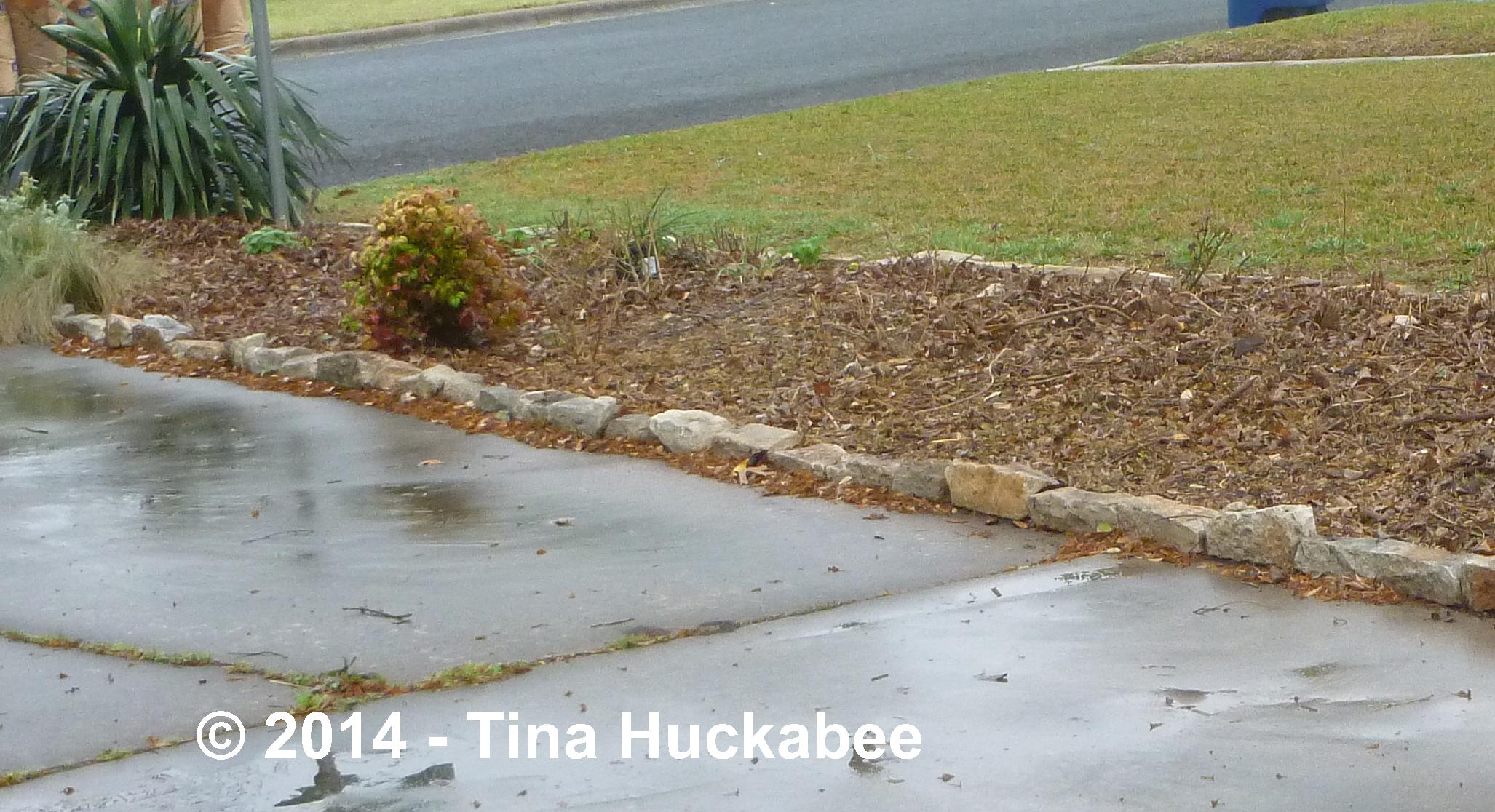
Removing the Berkeley Sedge in my gardens allows me the opportunity to rethink some small sections of larger garden spaces. I didn’t run out and purchase anything new,  I dug up and separated favorites from my gardens and recycled them in place of the sedge.  I’ve planted Heartleaf Skullcap paired with a common, non-native pass-along day lily,
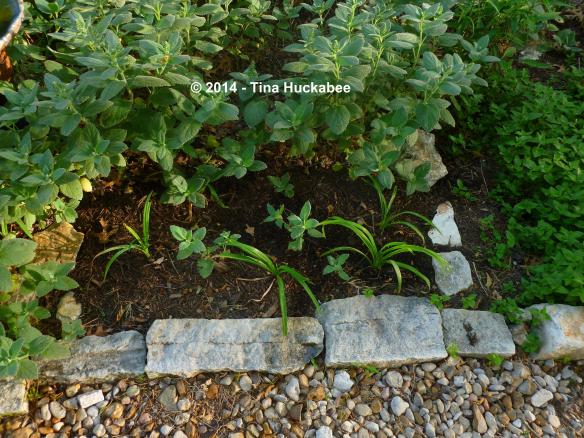
P1030920.new

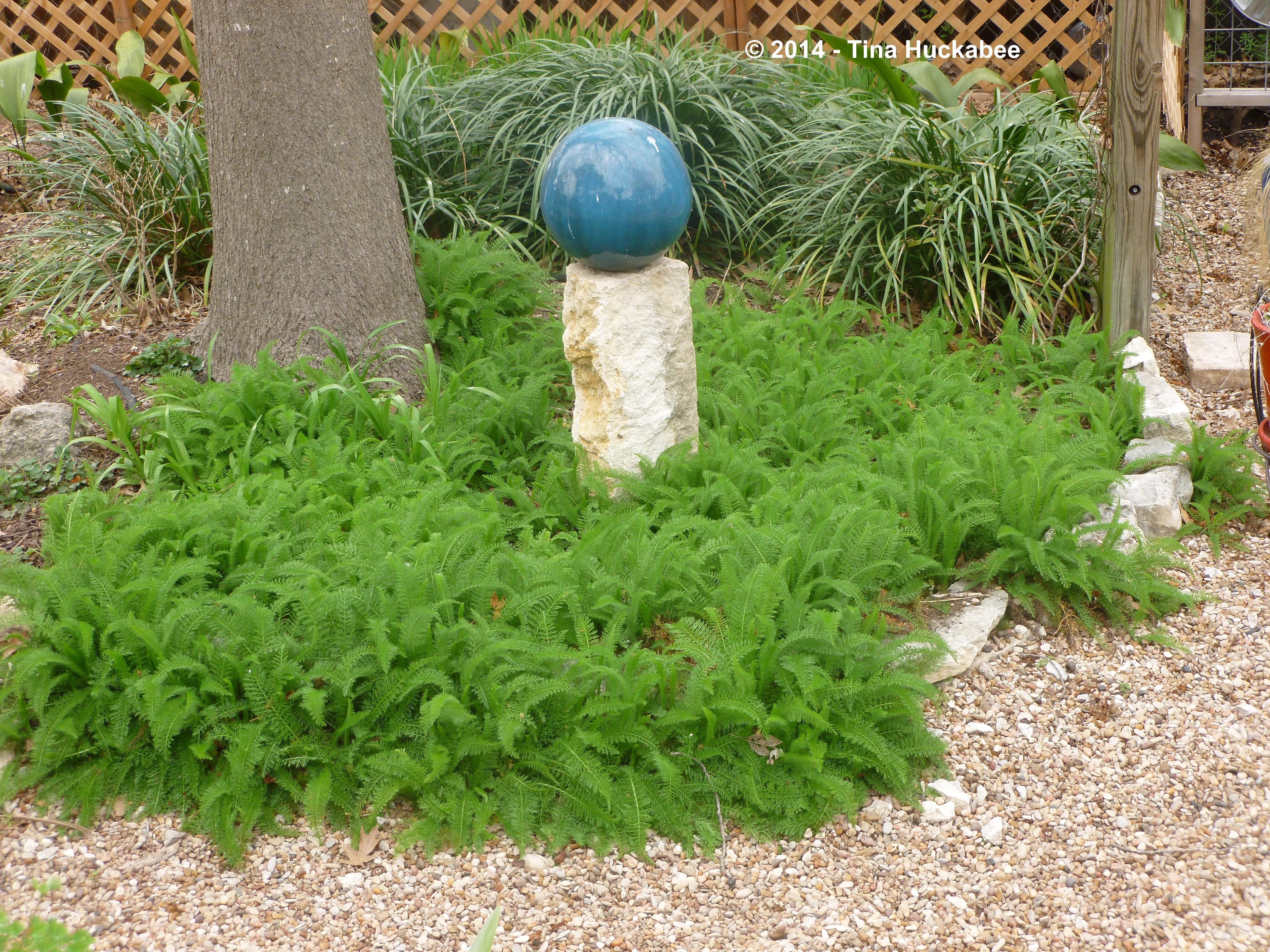
…some lovely native Yarrow,

P1030921.new

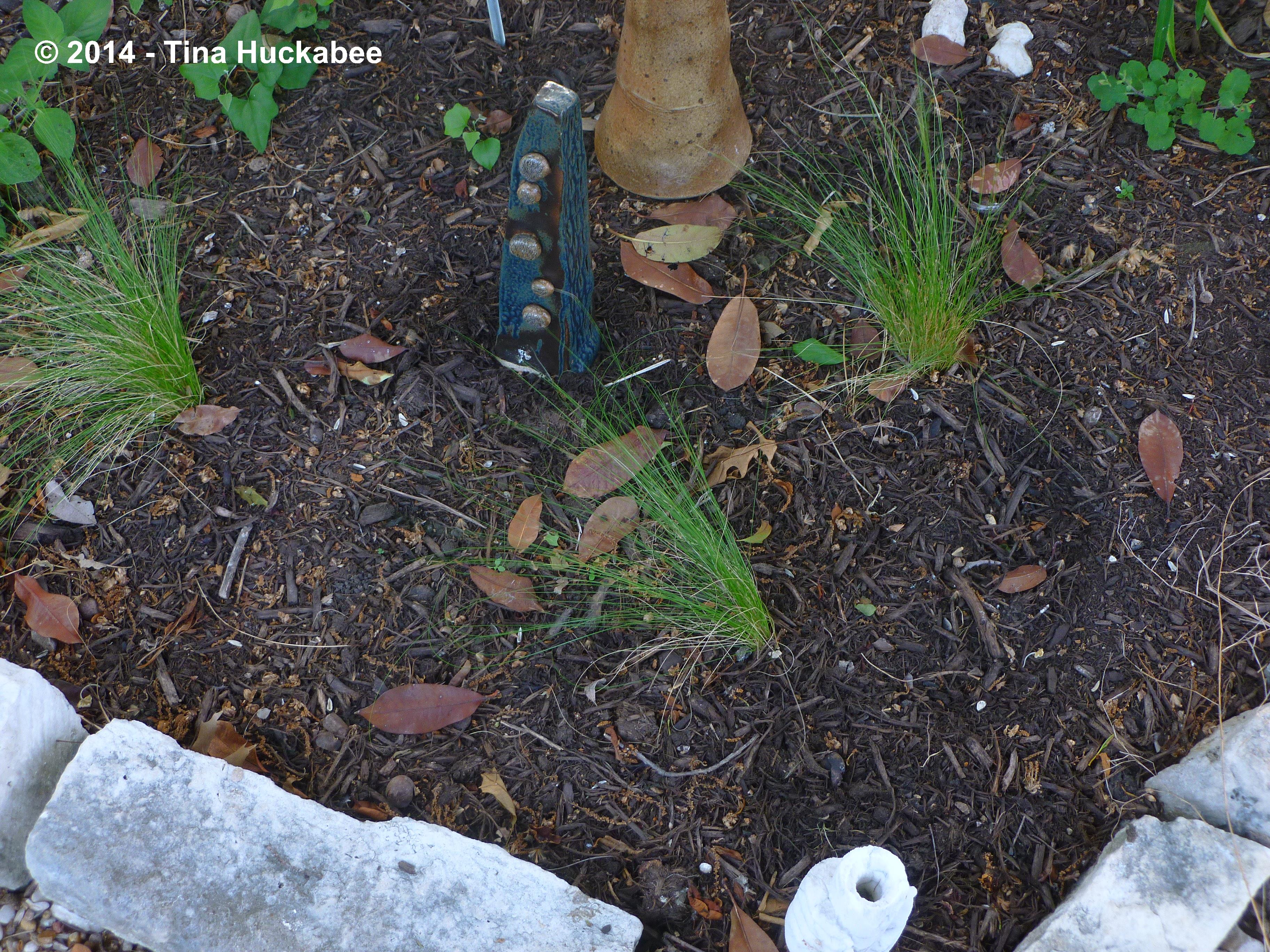
…and native to West Texas, Mexican Feathergrass, Nassella tenuisima. 
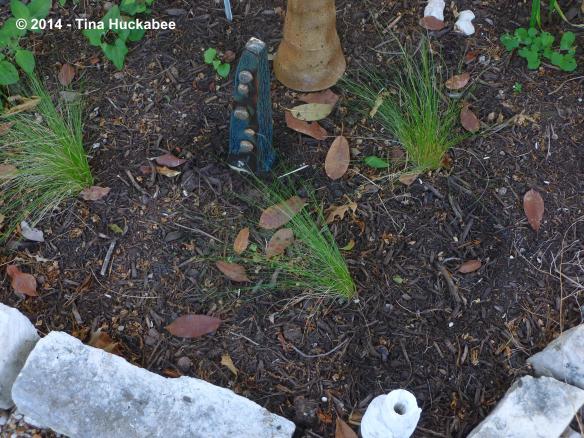
P1030922.new

I love all of these plants and use them repeatedly in pockets throughout my gardens.  Each will require reining in at some point, but that will be another opportunity to observe, learn and experiment. And maybe, to garden with something new.

Permanent impermanence:  As the Berkeley Sedge established and multiplied itself, I wrest control of the developing problem (as I defined it) and revised the landscape to better reflect my desires for my garden.

I’m not a purest, I grow many non-natives in my gardens.  I transplanted a ‘Nana’ Nandina from a  garden  in which the signature plant, Barbados Cherry, froze completely this past winter. When I thought the Barbados Cherry died, I welcomed the opportunity to diversify  and redesigned the garden with a more varied set of native plants.  In re-imagining that garden, I understood how out-of-place the ‘Nana’ would be,

P1030045_cropped_2054x1116..new

so after I pulled up two more Berkeley Sedge in another section of the front garden, I transplanted the ‘Nana’ to that spot.
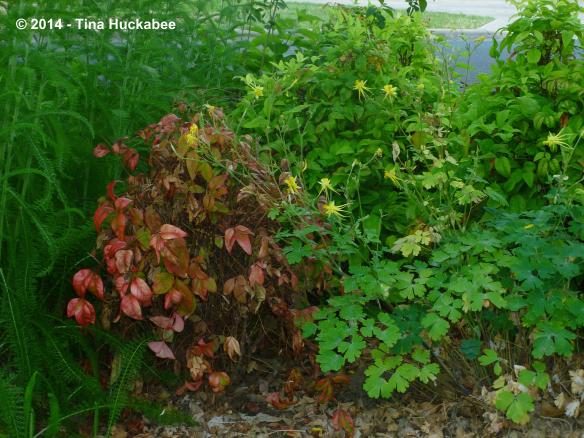
P1040064.new

Permanent impermanence: I augmented two gardens to better reflect their evolution and my desires.

Several years ago, the native Texas Sedge, Carex texensis, moved into my front garden, but inconveniently and stubbornly, in a pathway. As part of my recent garden reconfiguration,  I transplanted the Texas Sedge clumps to a different spot. They’ve struggled a bit, but  I think they’ll survive.
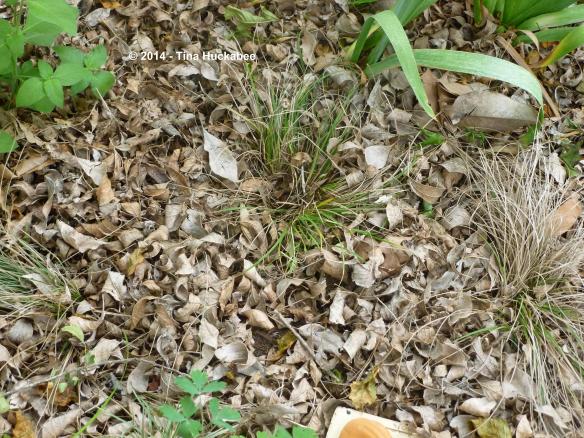
P1030996.new

The foliage is finer than the Berkeley Sedge and they aren’t as consistently evergreen– they were nipped by the last hard freeze on March 2. Texas sedge doesn’t spread rapidly, either.  I don’t find them quite as attractive as the B. Sedge (sacrilege!) and I suspect that’s why they’re not commonly found in the commercial nursery trade.  Pretty sells.

Constantly evolving, the garden reflects life and nothing is permanent.  Conditions change and the gardener responds. Gardeners follow fads and styles of gardening, always longing for that newest, cool plant to pop the palette of the landscape, sometimes regretting that decision and action.

Tastes change.  Styles change.  Needs change.   We learn as we garden and our gardens reflect our growth.  Nothing in gardening is permanent.
Fire!

In late February 2013, on a windy, dry Monday afternoon, I walked into my backyard to assess damage from the gales of the day.  I noticed the fence bordering the north side of my property pulled out from the four-by-four post in the ground and  in danger of falling.  As I contemplated repairing the fence, I was hearing a tssst, tssst, tssst sound.  I finally  realized that a neighbor’s large elm tree branch was being blown against the live electric wires over the boundary of my northern neighbor’s back property line.  Each time the branch hit the wire, there were sparks, a small fire which almost immediately blew out, and smoke.  I immediately called 911 and was transferred to the Austin Fire Department.  Because there were other fires that afternoon, as well as downed electric wires, the dispatcher told me that a crew would be there as soon as possible, but not immediately.  I nervously observed the increasingly scorched branch for the next hour.  Within that hour, a group of firefighters arrived and viewed the branch, but by that time, the branch had apparently burned through and fallen to the ground. It probably fell onto the neighbor’s property directly behind my north-most neighbor.  The firefighters left–I assumed they were going to check out property where the limb most likely landed, but didn’t (and don’t) know that.
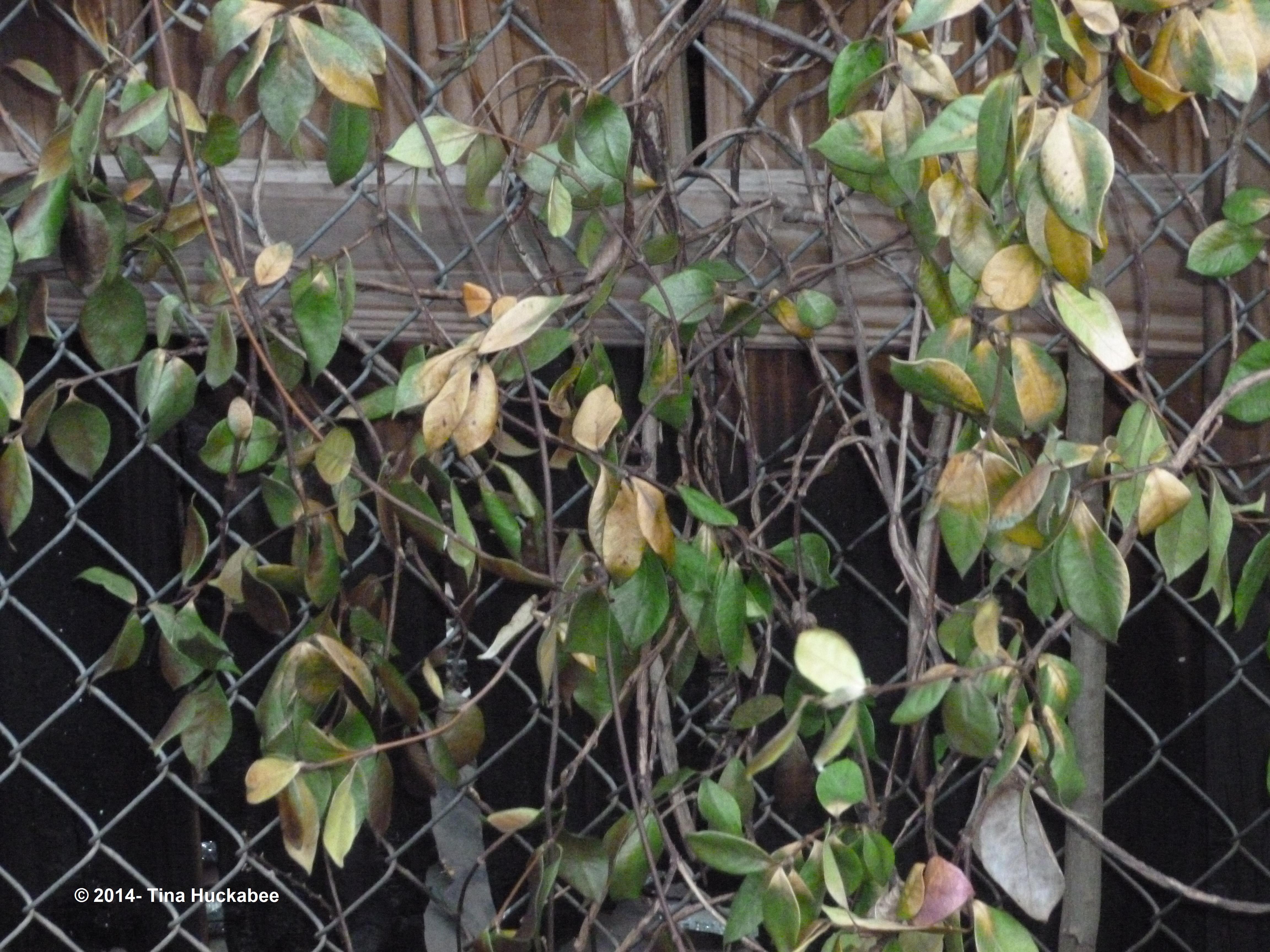
Not long afterward, another neighbor called me and asked what was “going on” in my backyard.  I walked to my back door and was shocked to see the backyard filled with smoke, flames whipping along the fence line.  I called 911 and reported the fire.  In those few minutes, as I watched the fire spread, not only along the fence, but into a garden IN my backyard, all I could think of was the devastating 2011 fire in Bastrop, Texas. For the first time in my life, I witnessed how quickly fire spreads and I feared that if the fire fighters couldn’t contain it, the wind would spread the flames throughout my property and the entire neighborhood.  My (much calmer than I)  teenage son helped me leash the dog, then he grabbed my arm and ushered me out of the house, to the front garden.  There was still no fire truck screaming to my house, so I called 911 again.  The dispatcher insisted that there was a fire truck at the address of the fire.  I looked into my backyard and saw that firefighters were fighting the fire from the house directly behind mine. As it was late afternoon when the fire started, there were numerous calls about the fire. Eventually, another truck came to my house and firefighters tramped through with a long hose and were able to extinguish  the fire.   Later that evening, a captain told us that the fire department was shutting off electricity for the entire area because the tree was “electrified” and they had to wait for a City of Austin tree trimming crew to prune the offending tree far from the wires.  As the crews were also overloaded with damaged trees, our electricity would be off until the crews arrived.  By 2 am, our electricity was back on and the tree no longer a danger.

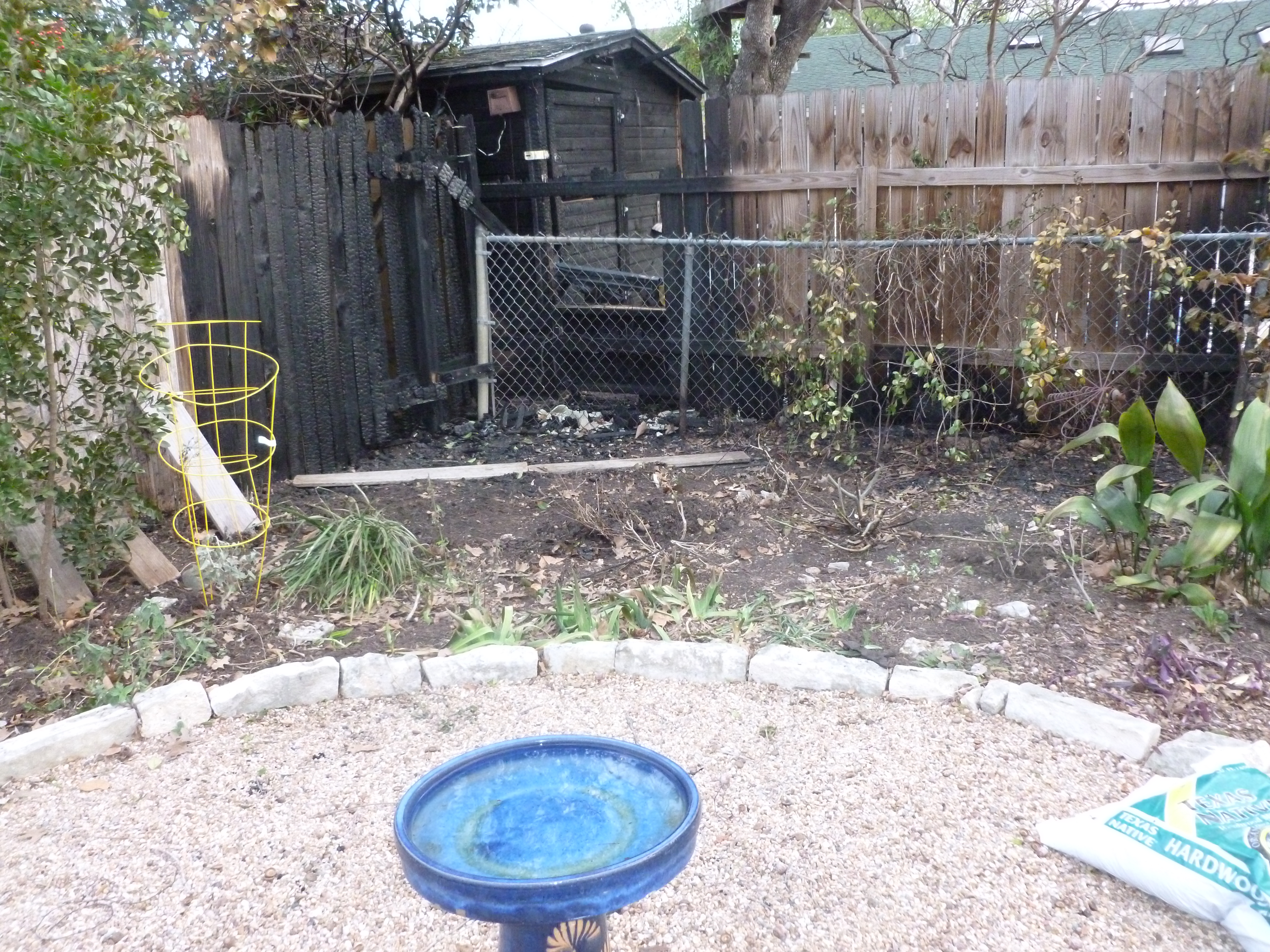
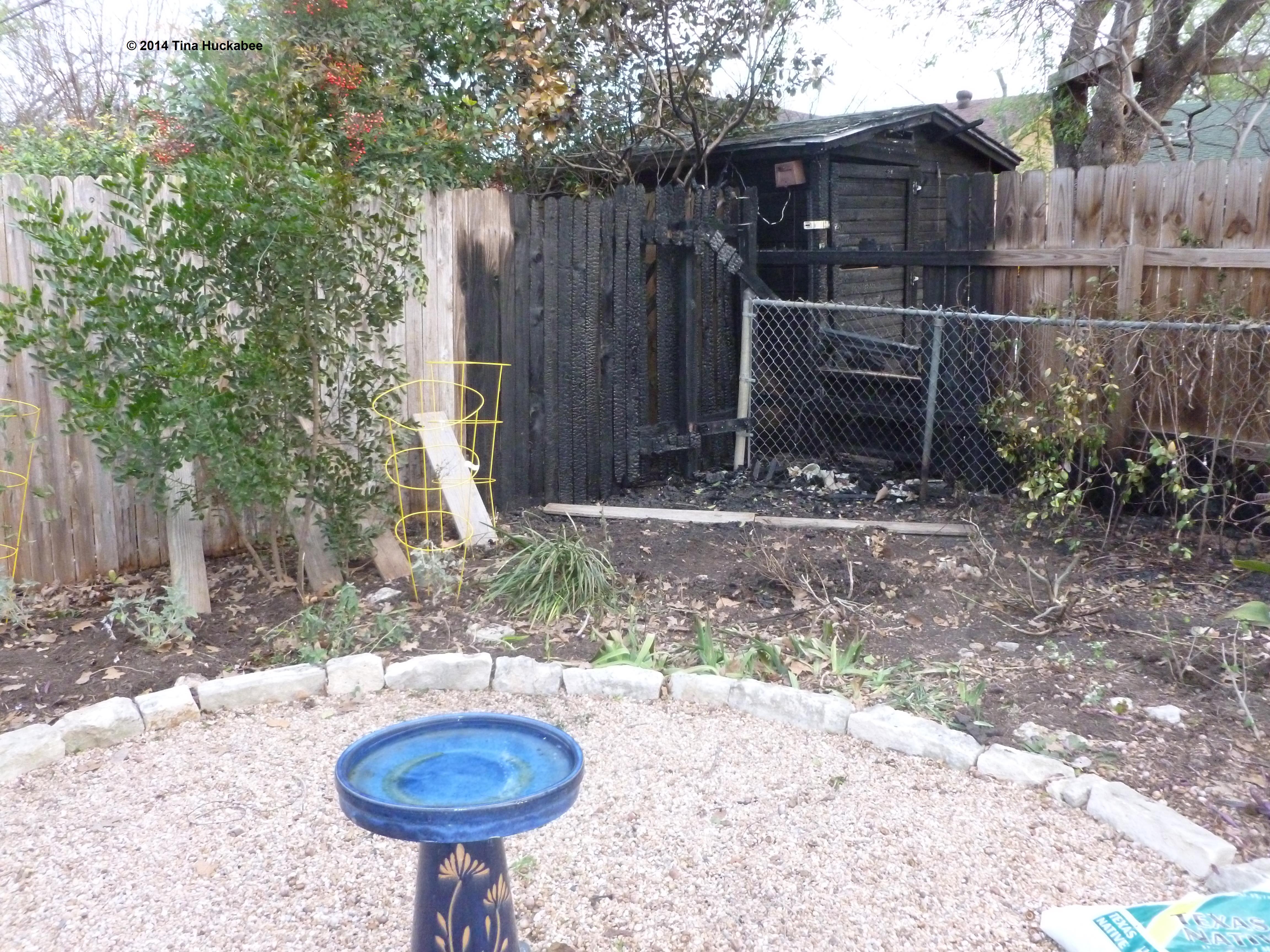
This is how my little garden was left:

20130302_9

20130302_4.new

20130302_2.new.new

The Feline Fire Inspection Crew, checking out the damage:

20130406_7.new

What a mess!  But, my OCGD (Obsessive Compulsive Gardening Disorder) kicked in at full force and I got to work re-vamping that area over the next few weeks.  Truthfully, the garden needed updating. It had always been a very shady garden (in the shade of both a Red Oak and  Eastern Sycamore), but we drastically pruned the Sycamore when we installed solar panels in November 2012.  The garden would now receive more western sun and I realized before the fire happened that I could add more sun-loving plants.  Yippy!  Who doesn’t love  a challenge?  So, the fire damage proved the impetus of change.

My poor Star Jasmine (Trachelospermum jasminoides),  planted along the ugly chain link fence, was ruined.

20130302_8.new

20130302_10.new

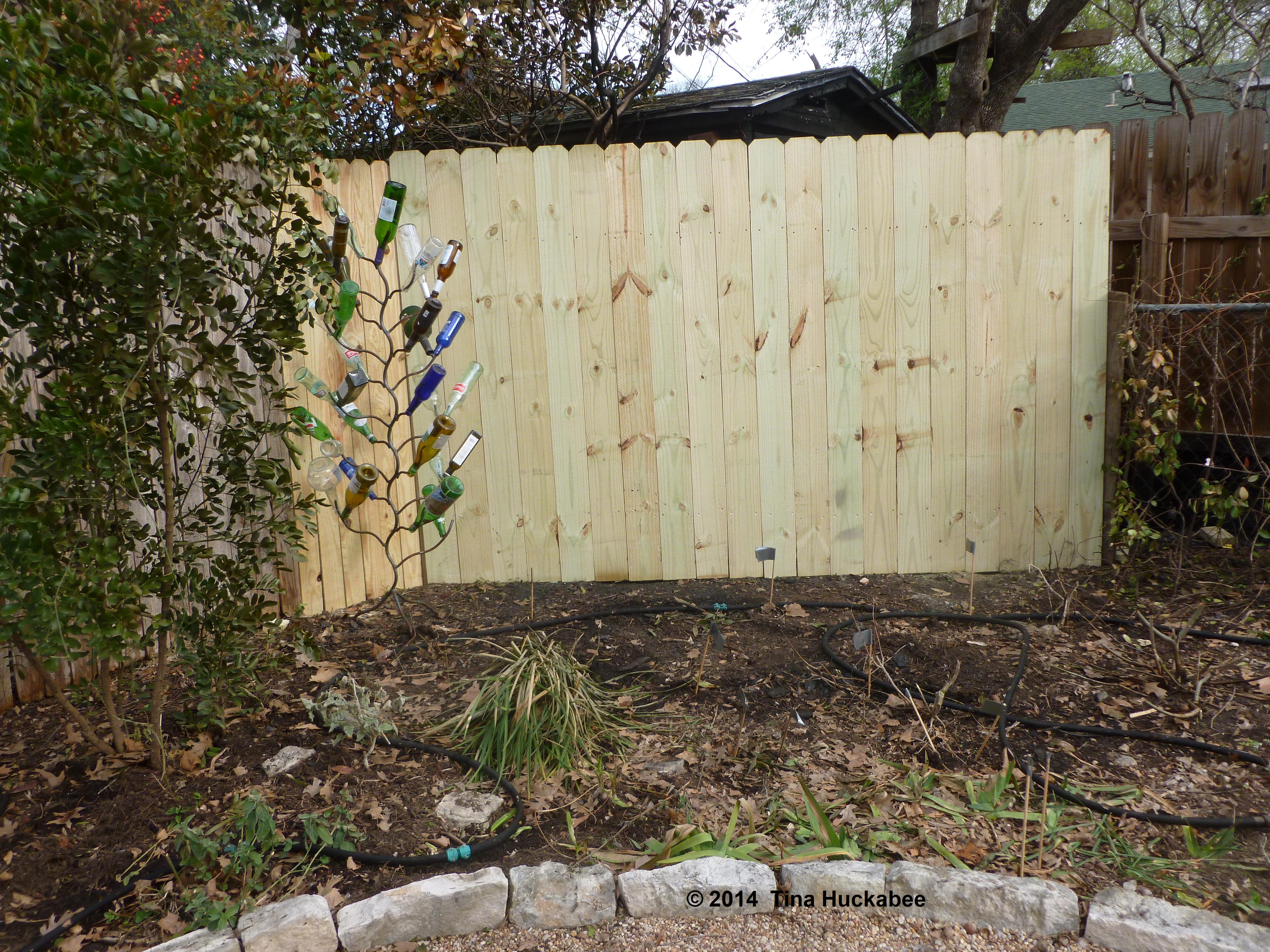
I long regretted that we hadn’t remove that nasty fence.  It spans the entire length of my property at the back, abutting two different neighbors’ back yards.  I’ve always had a  congenial relationship with one of the neighbors in particular and never wanted to limit that physical connection.  So I planted shorter screen plants along the fence line to obscure the chain link monstrosity.  The Star Jasmine vines planted in this area matured very slowly and this  this was the year that the vines would finally cover the fence.  However, fire and heat wrecked havoc and I was left with the chain link exposed, as well as the unsightly back neighbor’s fire damaged wood fence.  I hired a fence builder to replace the wind/fire damaged northern section and add a corner where the original wood fence and the chain link fence meet.

20130302_18.new

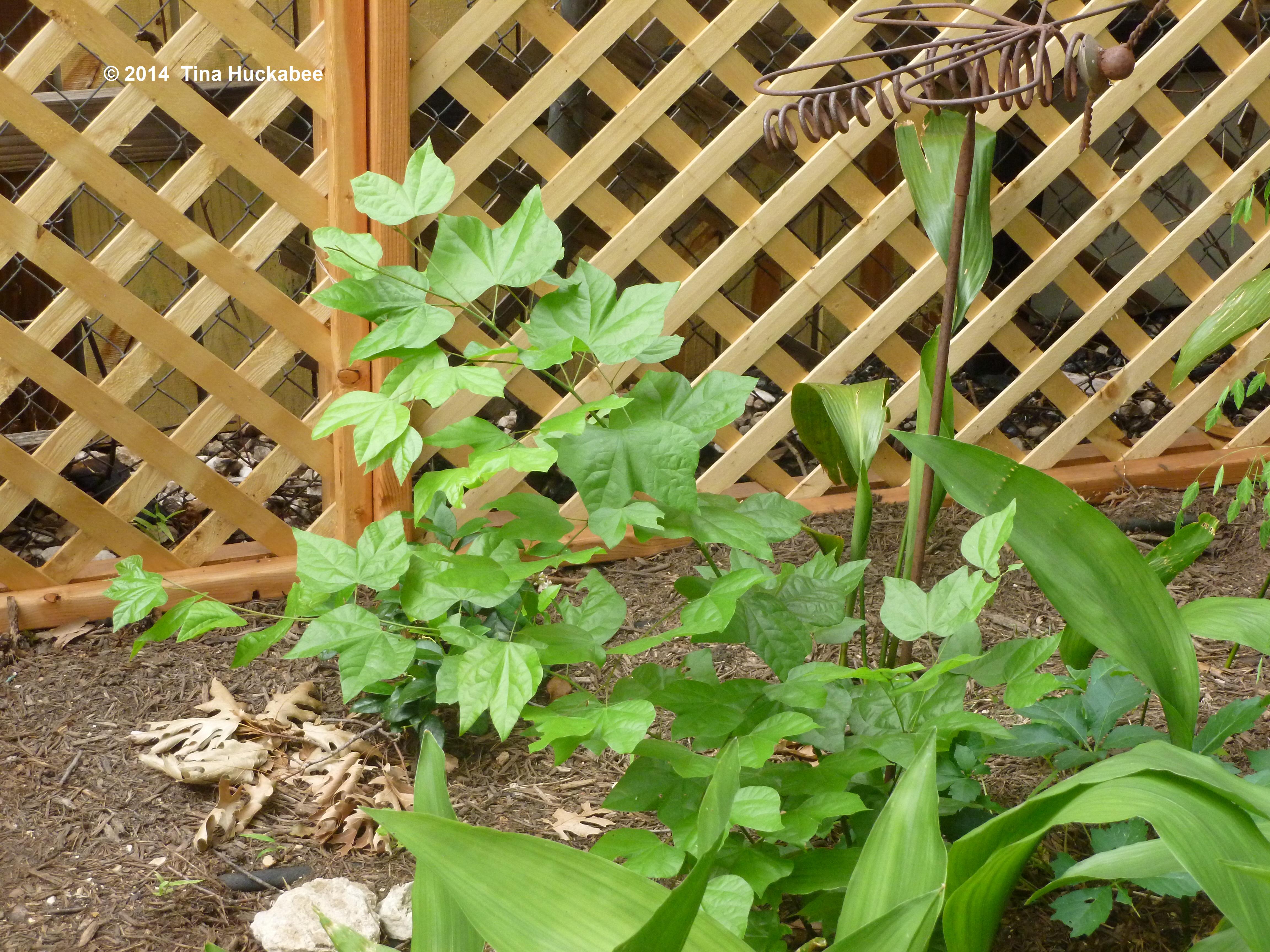
Then, The Nice Husband build a lattice screen in front of the chain link fence.  It is opposite  another screen he’d built earlier to separate the garden from the compost area. The space now evokes an enclosed, secret garden.  And, the screen hides (not completely, though) the unattractive chain link and fire damaged wood fence that the neighbor still has not replaced. Later, I  planted two more Star Jasmine vines to trail up the lattice. Remarkably, in late summer, I noticed that at either end of the lattice screen, two of the original Star Jasmine vines reappeared–I was amazed that they returned from the roots so long after the fire.

My Mexican Orchid Tree (Bauhinia mexicana) also suffered heat and some direct fire damage:

20130302_11.new

While most other plants returned quickly, it was late spring before the Orchid Tree grew from its roots.

P1020547.new

I don’t have photos of this past growing season, but the Orchid Tree enjoyed several bloom cycles.

The heat damage to the Texas Mountain Laurel (Sophora secundiflora) occurred  primarily on the right side of the tree.

20130406_2.new

Eventually, that side of the tree defoliated, though it  recovered and there is new growth.

I had pruned the Inland Sea Oats (Chasmanthium latifolium) to the ground prior to the fire, but the early new growth was damaged.

20130406_8.new

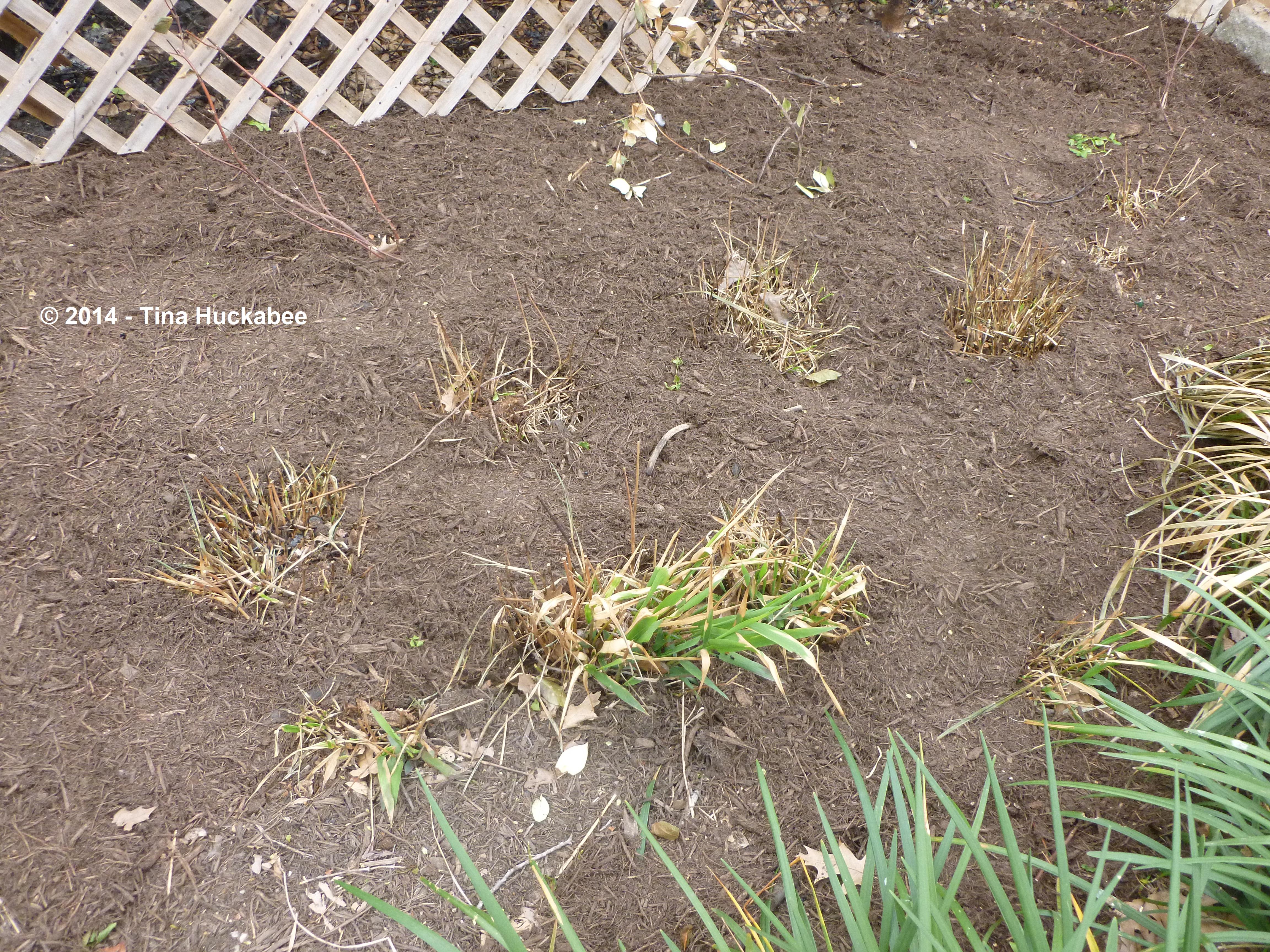
I re-laid my soaker hoses, composted and mulched, plus we experienced good rainfall, so they recovered nicely.

P1020442.new

P1020553.new

The Shoshana’s Iris wasn’t damaged by the fire, but were on the receiving end of firefighter boots,

20130302_15.new

and didn’t bloom in the spring.  They have recovered well and I hope to enjoy blooms this spring.

P1020447.new

I planted a Coral Honeysuckle (Lonicera sempervirens) on the new corner fence, flanked by four Goldeneye (Viguiera dentata) and they grew and bloomed magnificently.  So much so, that I’ve recently removed two of the Goldeneye–they  grow too large for that area.  I also added some Mexican Feathergrass (Nassella tenuissima), White Tropical Sage (Salvia coccinea) and some Crinum Lily. By early summer, this is what the fire garden looked like:

P1020548.new©P1020549 -

For now, with the “cold” winter we’ve had, the garden is barren, except for the evergreens.

P1020594.new

P1020593.new

The discoloration between the new and old fence sections annoys me.  I added bottles across the top of the lattice screen, in the hopes of distracting from the fire damaged neighbor’s fence and the little bit of the chain link that is visible.  Also, as I age, kitsch  appeals to me.

Still, I’m grateful that our damage was  minor, appreciative for the quick response of the Austin Fire Department and glad to have successfully re-gardened this area.