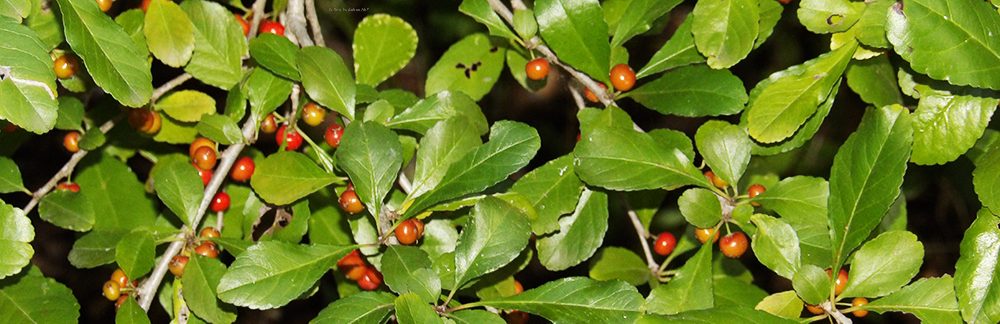
As summer wrapped up and autumn commenced, the neighborhood birds quieted their activities. They’re around–nibbling here, noshing there–yet have been infrequent visitors to the sunflower and safflower feeders that hang in the garden. I do see plenty of bird activity midst the seed and berry producing perennials–that’s why I planted them! As I stroll through, rustling in the underbrush produces a flight of feathers to higher perches, but it’s difficult to catch good glimpses or clear photos of these winged wild things.
Autumn’s migratory season is a memory. I observe fewer birds in both number and variety during autumn migration compared with during spring migration. This autumn there was a quick look-see of a Baltimore Oriole, Icterus galbula, and brief barely-there view of a Yellow-breasted Chat, Icteria virens. Smaller, muted-colored birds are always a challenge to watch, but they were here, in limited numbers: Nashville Warblers, Lincoln Sparrows, Common Yellowthroats, and the like. Some moved on to winter homes south of Central Texas, but others remain, settling in for winter, before spring beckons to recreate their families. There’s at least one Orange-crowned Warbler, Leiothlypis celata, and one Ruby-crowned Kinglet, Corthylio calendula, in my back garden on a regular basis. Whether these two are males or females, I have yet to discern.
The migrant who stayed long enough for the watcher to watch was this handsome Hermit Thrush, Catharus guttatus. What a sweet little face it has and how about those breast/tummy spots?
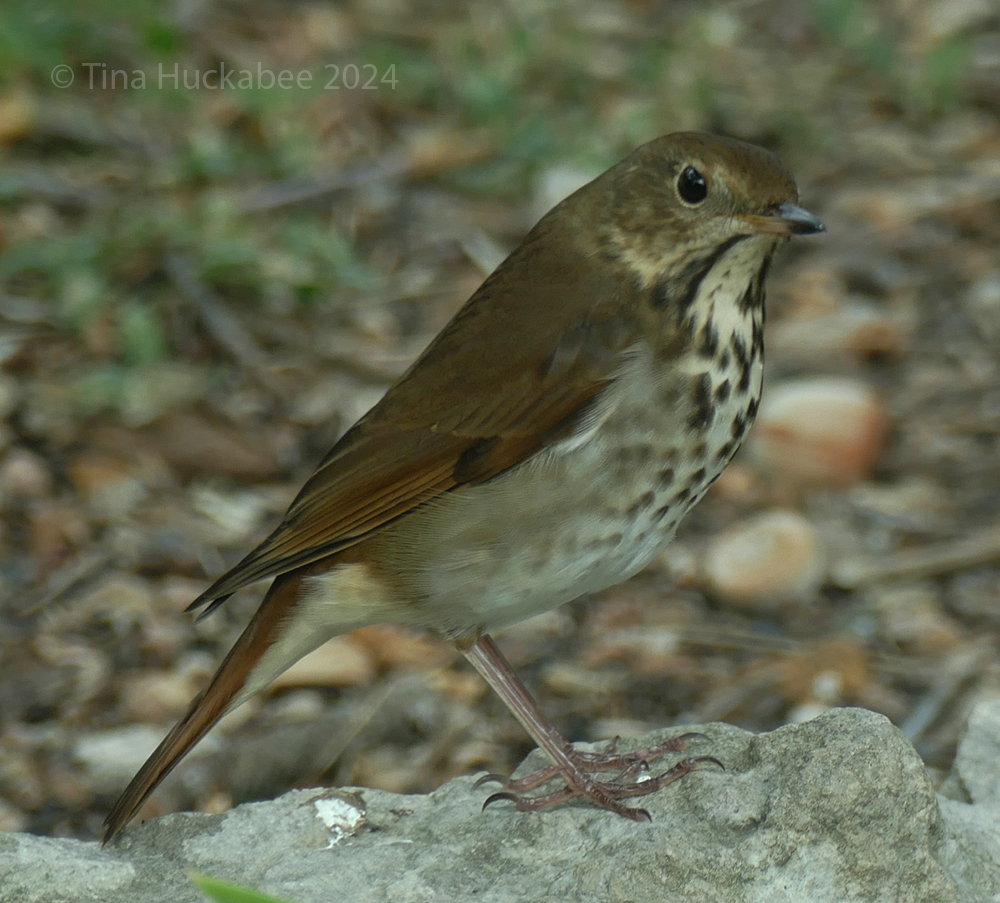
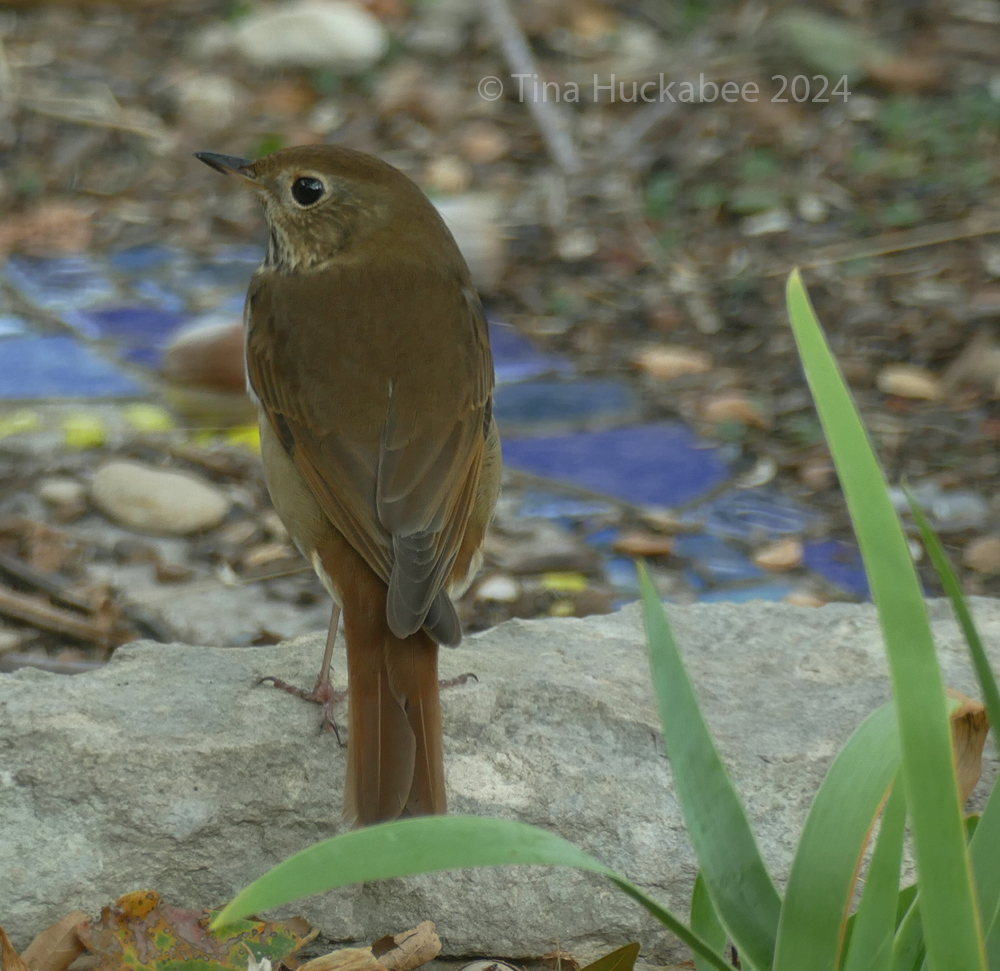
It mostly hunted and pecked along the ground, looking for seeds and small insects as its busy beak swept back and forth along the ground and through mulched areas. After a while, it took a break from its meal-finding to splash in a bath. Here, resting, it shows off its rufous backside. Hermit Thrush’s tails show a redder hue than other thrush tails.
September through November is a quiet time, an empty nest time, for the resident birds and I miss their feathery antics and calls. During this time, they rest, their adult bird needs minimal. As the days grow shorter, then lengthen, the birds become more active, preparing for the territorial-defending and calorie-consuming seasonal mating and chick rearing responsibilities revisited on an annual basis in spring and summer. The increased attentiveness in the garden, coupled with winter-visiting migratory birds, will make for interesting bird watching in the coming months.
 My Gardener Says...