I was puttering in the garden recently and came across this Green Anole, Anolis carolinensis ambling along the bark of a Flameleaf Sumac, Rhus lanceolata. He and I exchange looks, while he postured with his rosy dewlap. I wondered if he was annoyed at my presence–that’s certainly happened before.
I greeted him with a howdy bud, what’s up? but he only offered me a side-eye glare. After a minute or two and a rustle from a nearby shrub, I spied another anole dropped to the soil and skittering away.
I wonder if the Green Anole, Anolis carolinensis, is baffled? It was once a larger tree, but now is only a trunk and some foliage, where is the rest of it?
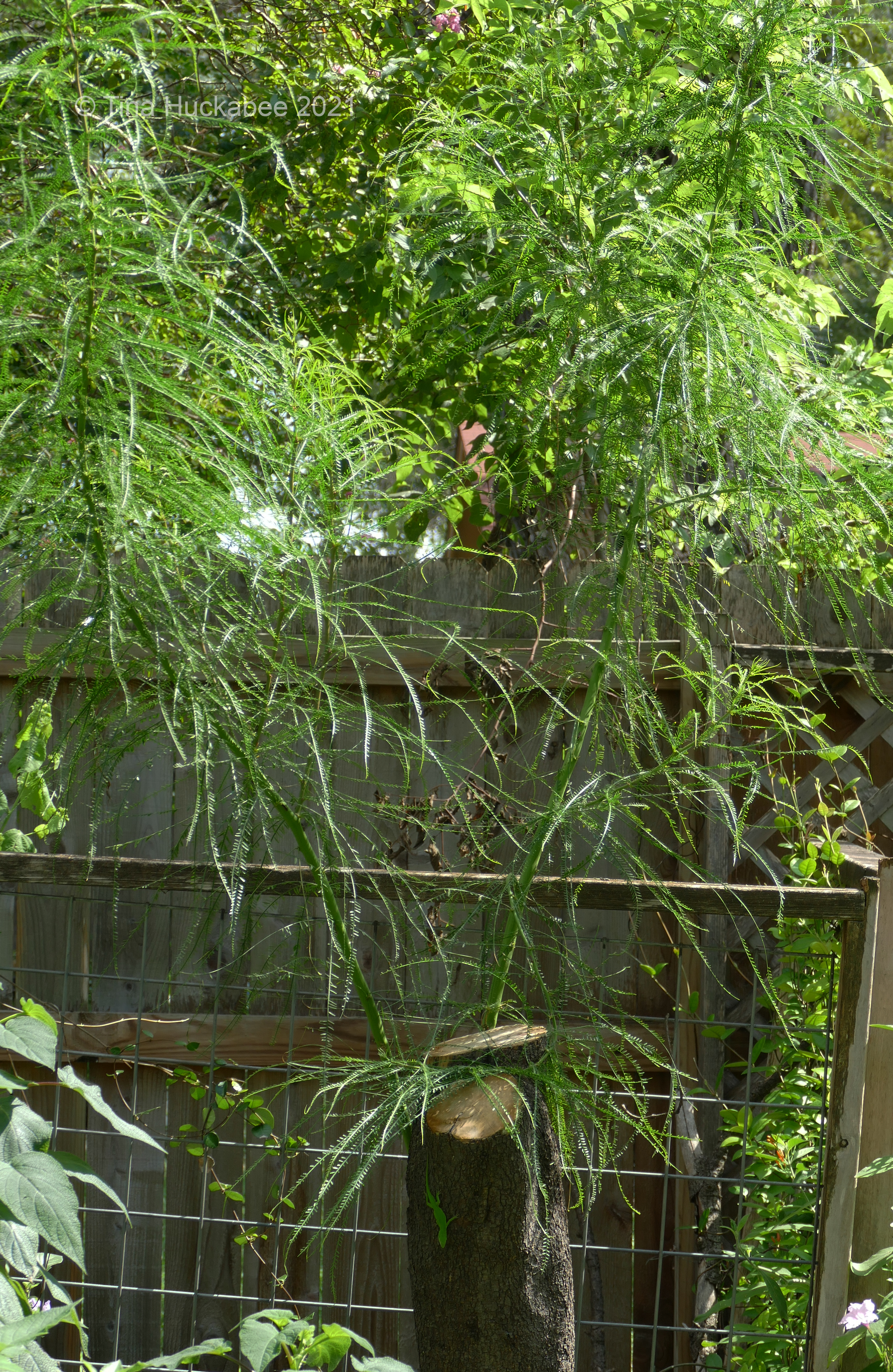
This mature Retama, Parkinsonia aculeata, froze during the winter storm in February. I assumed it was a lost cause and that the dead trunk and limbs would need removing. But in late April, new growth burst upwards from the base of the plant and shot toward the sky with speed. In July, the Hub and I finally had time to remove the dead portion of the tree and I also pruned the multitude of shoots from its base, leaving a single strong one with an attached second branch which will serve as the trunk of the “new” tree and its two lead branches. The crotch of the new trunk is just a few inches below the crotch of the original trunk. The two main limbs are now about 6 feet tall and growing by the day.
There’s a lot of green in this photo, but the feathery foliage forms a V from behind the original trunk and is loving the plentiful sunshine. At some point later in autumn or winter, I’ll have the Hub don his lumberjack hat and saw the original trunk to the ground.
By next summer, the tree should be even taller, maybe with more limbs, and covered in its signature yellow blooms. Pollinators will join with anoles in enjoying its presence.


 My Gardener Says...