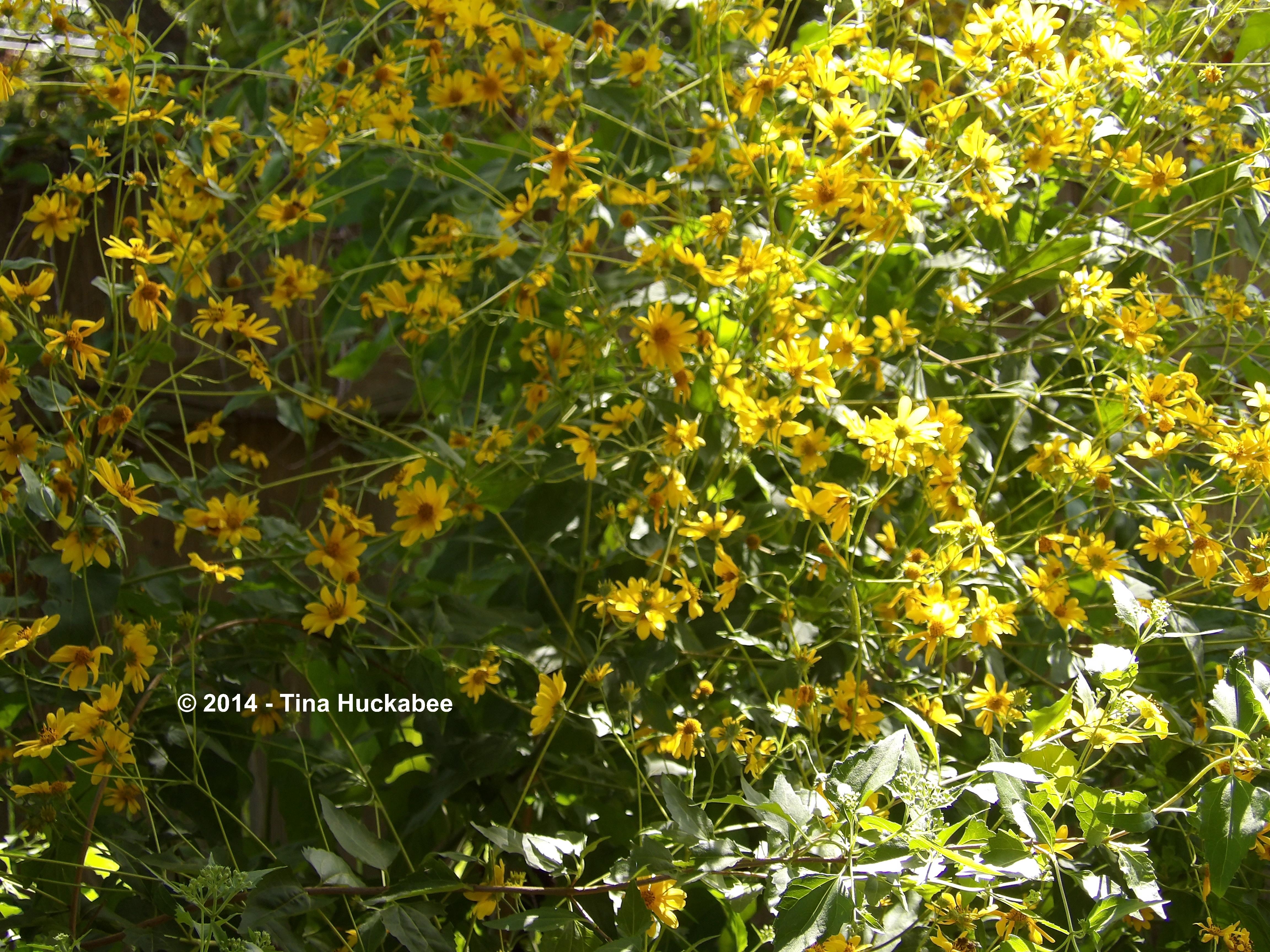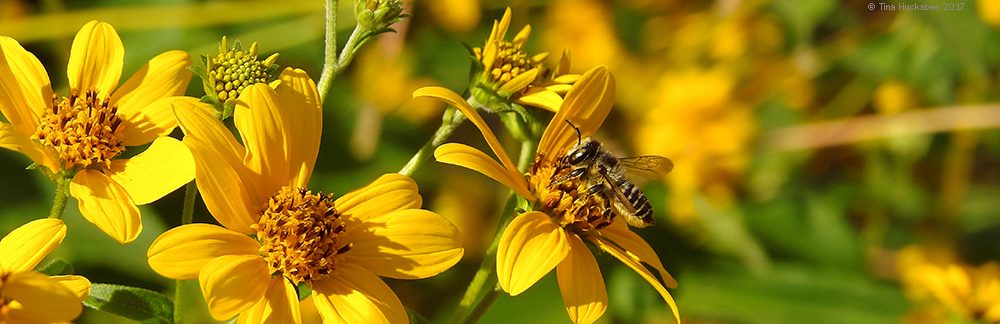
Texas Native Plant Week-Goldeneye, Viguiera dentata

I’m continuing to mark Texas Native Plant Week which I began on with this post on Sunday. This week, I’ve written about Rock RosePavonia lasiopetala and Turk’s CapMalvaviscus arboreus.  Today, we visit Sunflower Goldeneye or Plateau GoldeneyeViguiera dentata. Also, today is Wildflower Wednesday, so I’m joining with Gail at clay and limestone for our monthly tribute to all flowers wild.

Wildflower double prizes!

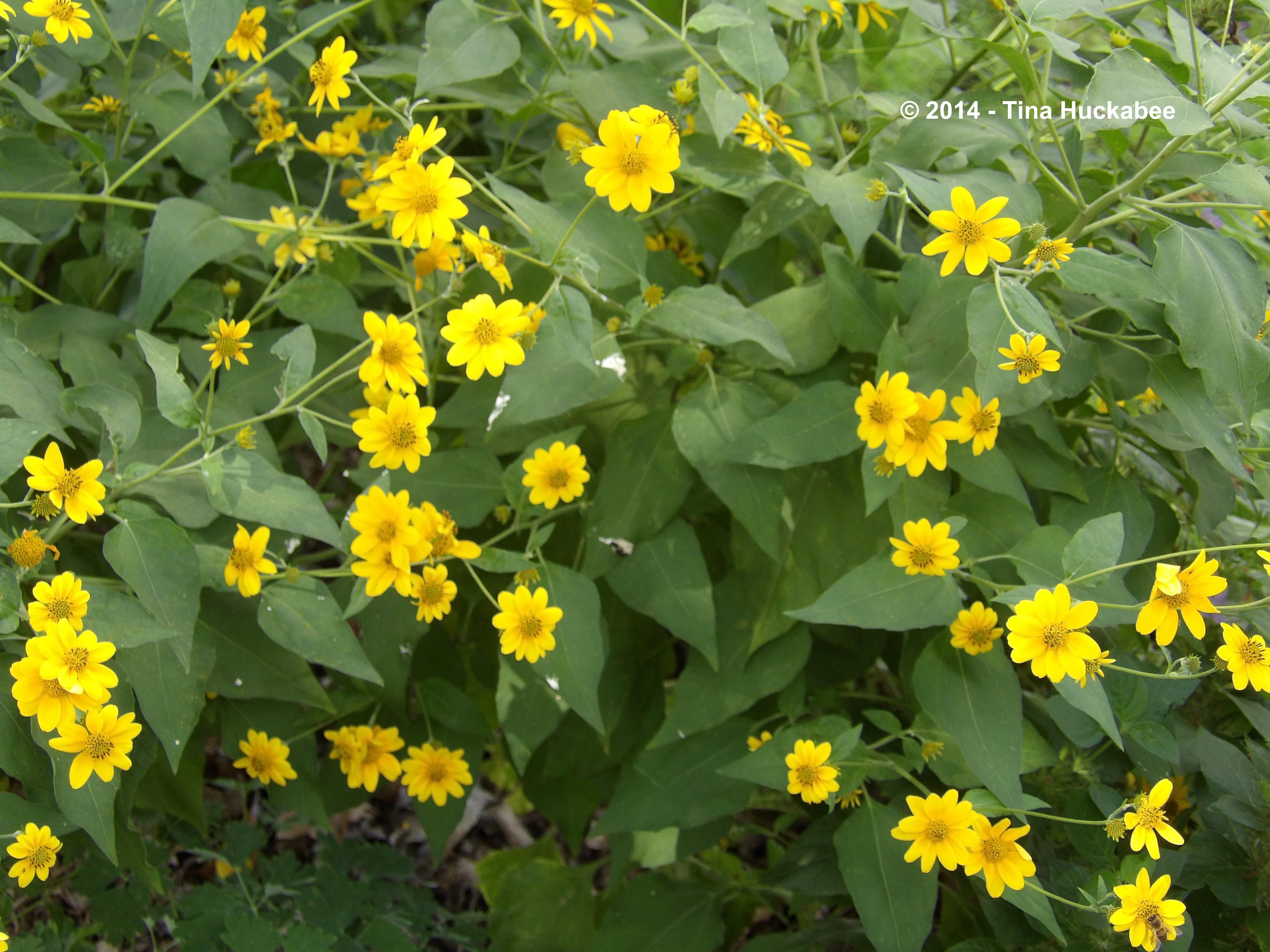
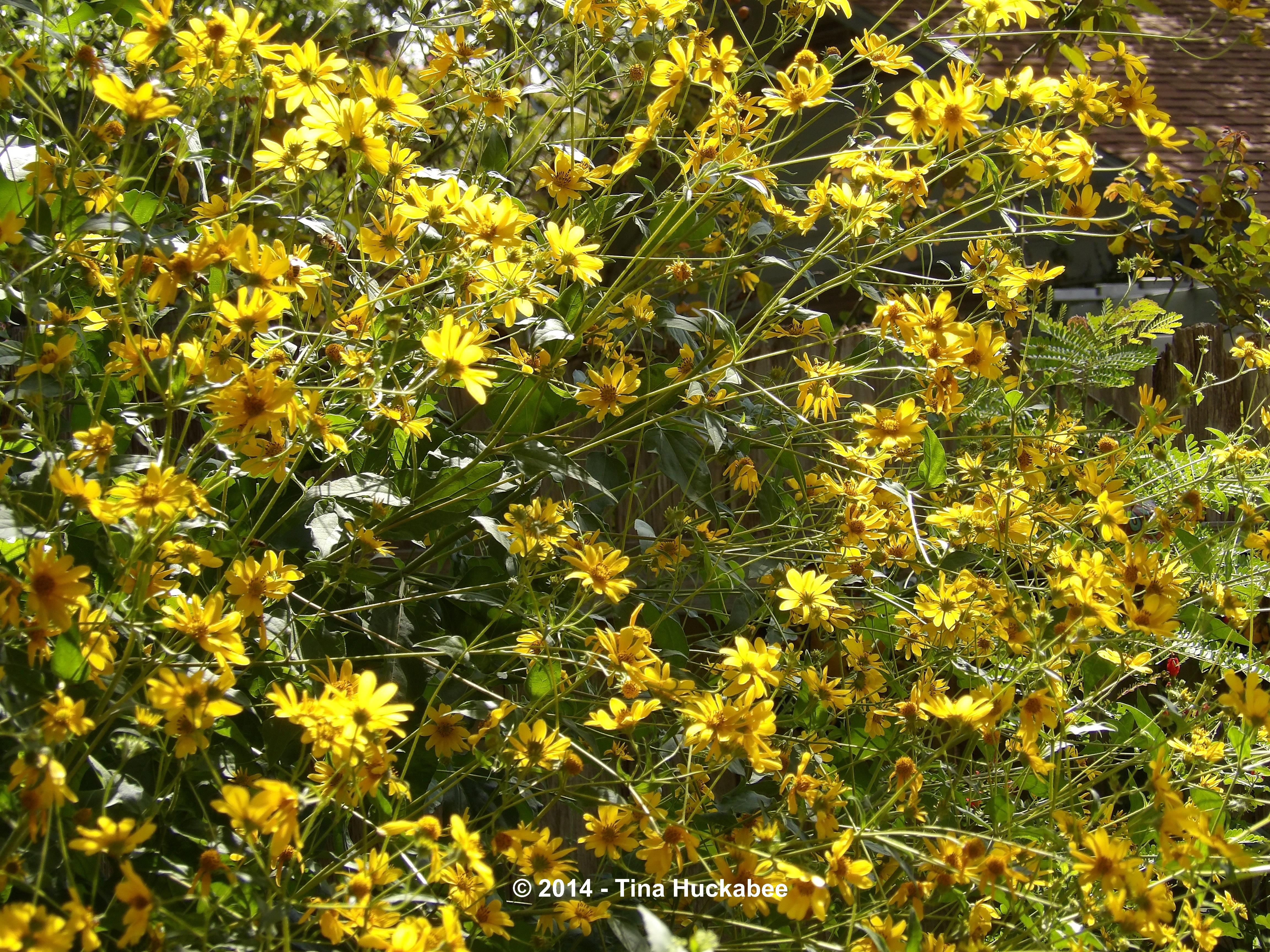
There are lots of lovely fall bloomers here in Central Texas, but none which brighten the garden more than the Sunflower Goldeneye–which I usually shorten to just plain old Goldeneye.
IMGP1297.new

There’s nothing plain about this eye-catching ray of sunshine!

IMGP2146.new

IMGP1312.new

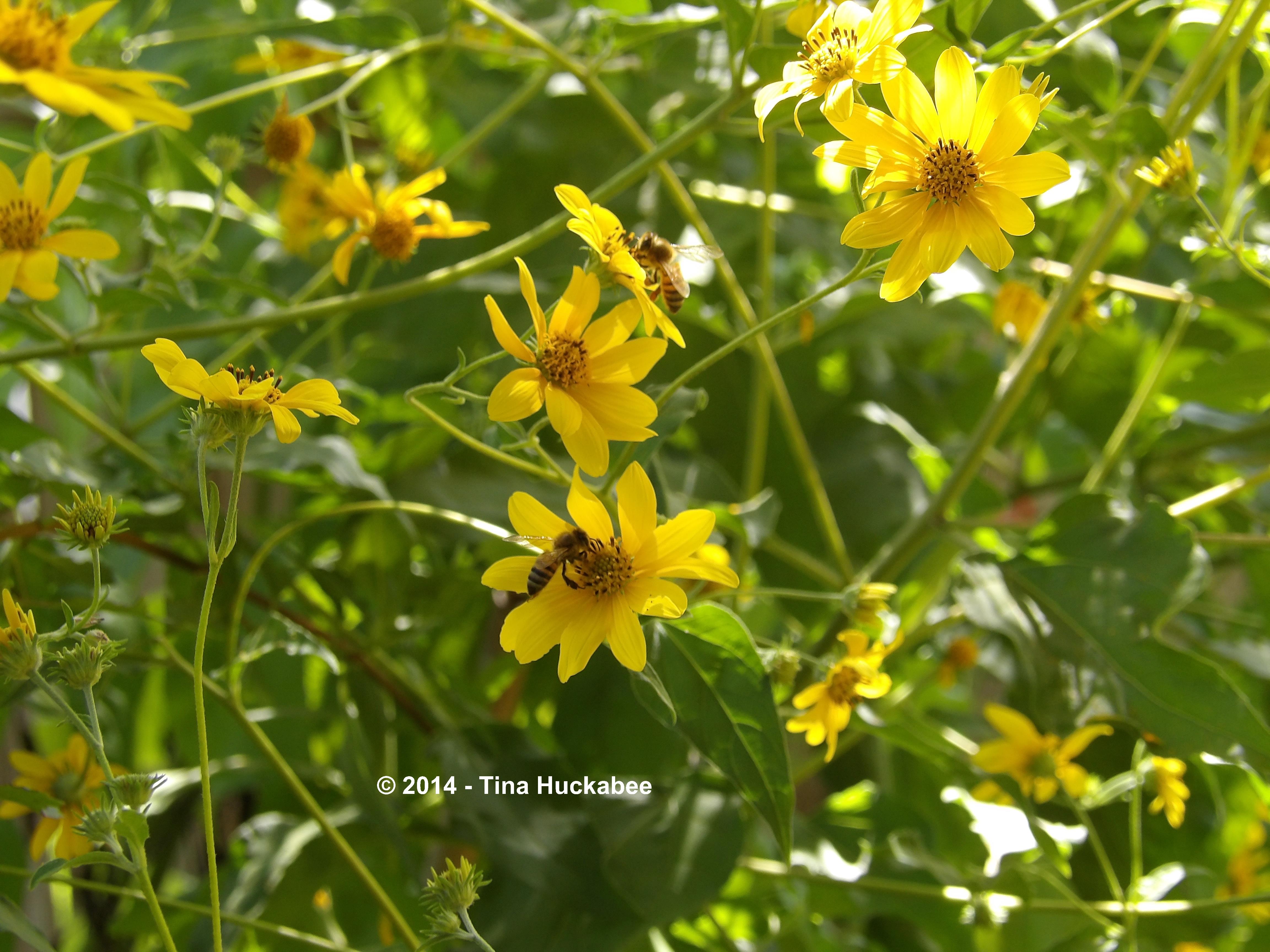
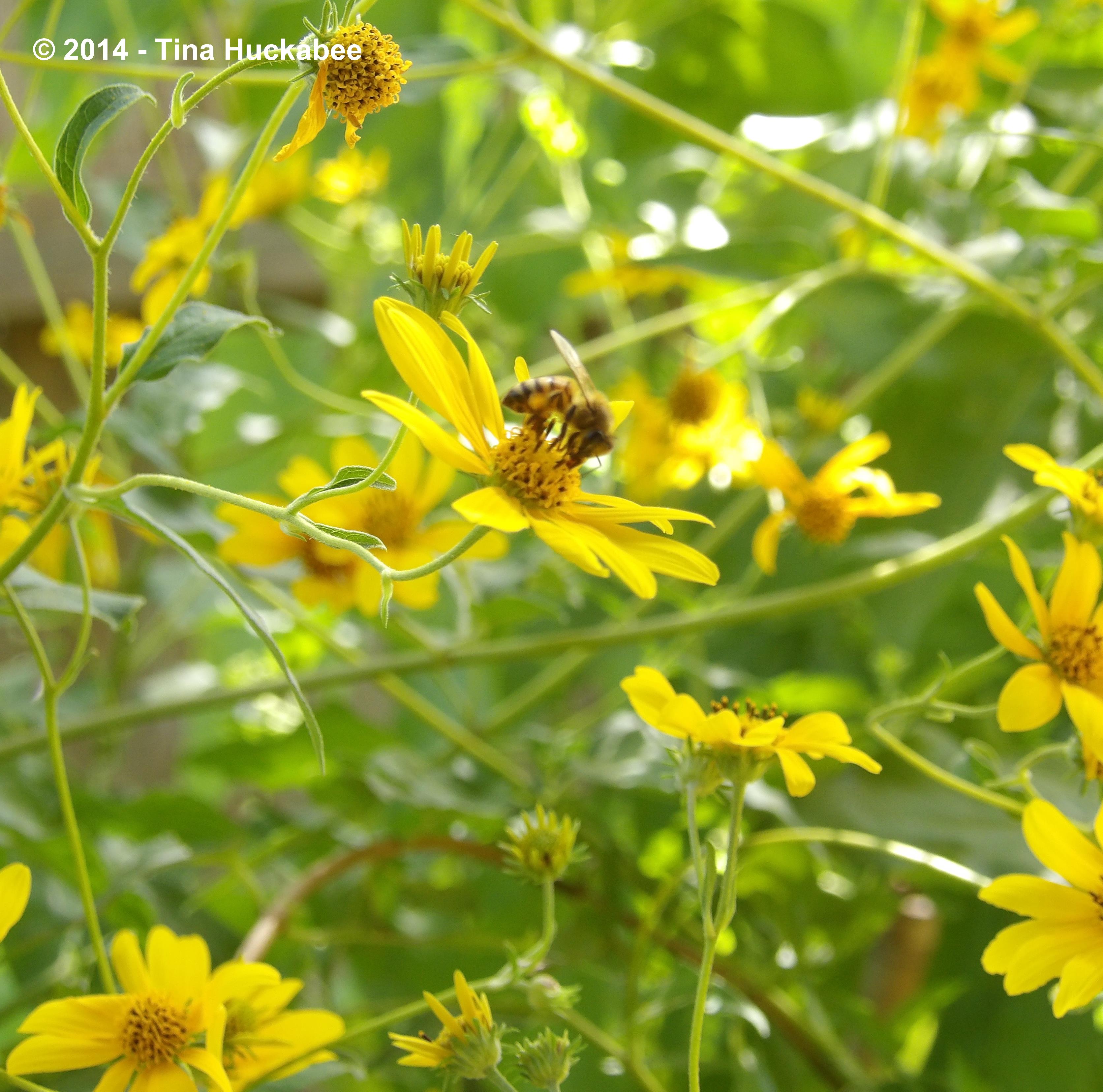
I love this blindingly cheery perennial sunflower!  Native to Central Texas, west to Arizona and southward through Mexico and Central America, this plant packs a powerhouse of wildlife goodness.  Goldeneye is the host plant for two butterflies, the Cassius Blue and the Bordered Patch (neither of which I’ve ever observed around my Goldeneye), but is also favored by bees and other butterflies.  In my gardens, my hived honeybees are so all over the Goldeneye that often the plants look like they’re  moving.

IMGP1404.new IMGP1534.new

IMGP1531.new

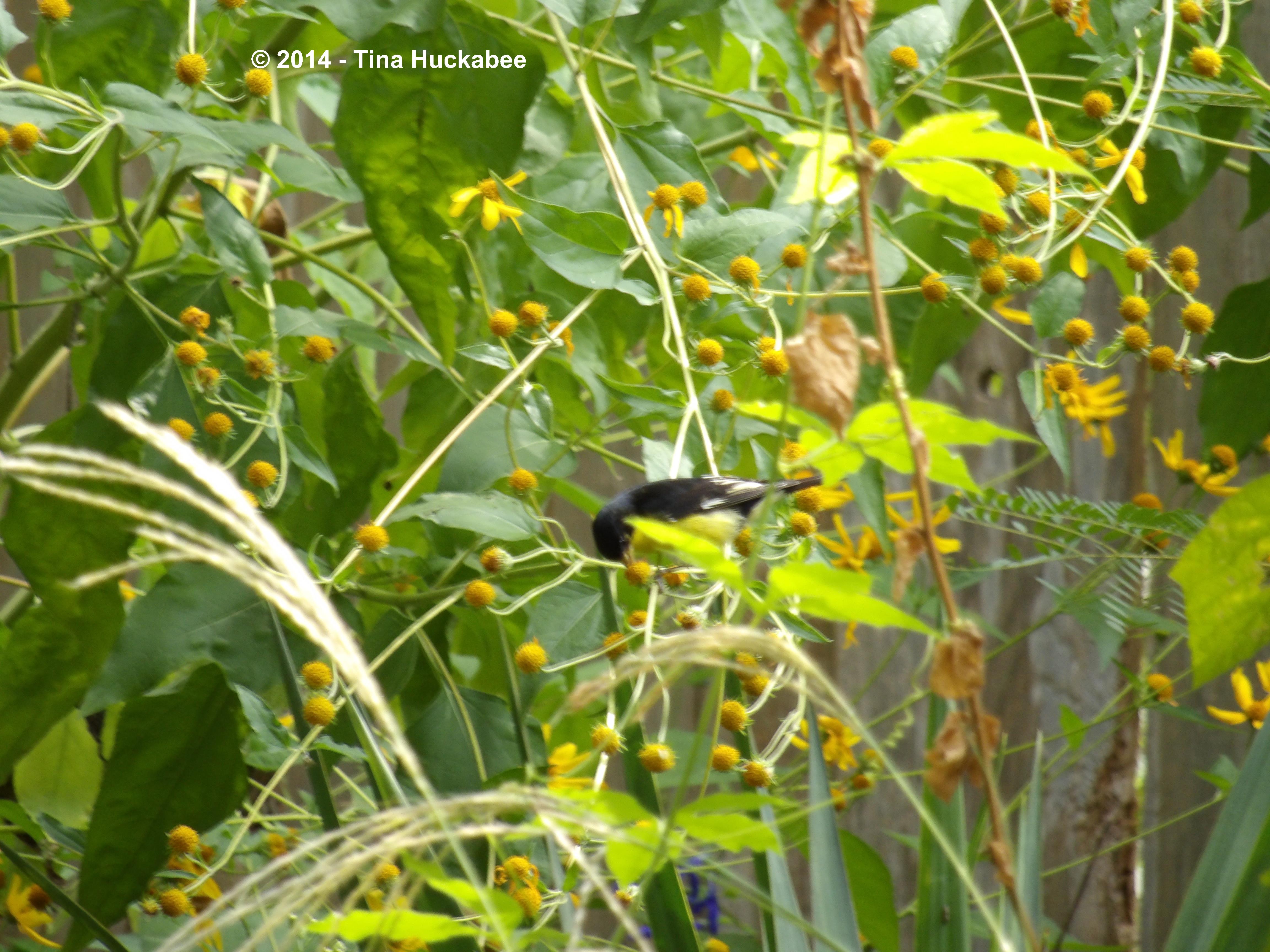
And once the flowers are spent and seed production begins?   It’s a finch feeding fest!

IMGP1939.new IMGP2064.new

Specifically, the Lesser Finch really love the seeds of Goldeneye.  They’ve entertained me well this past week.

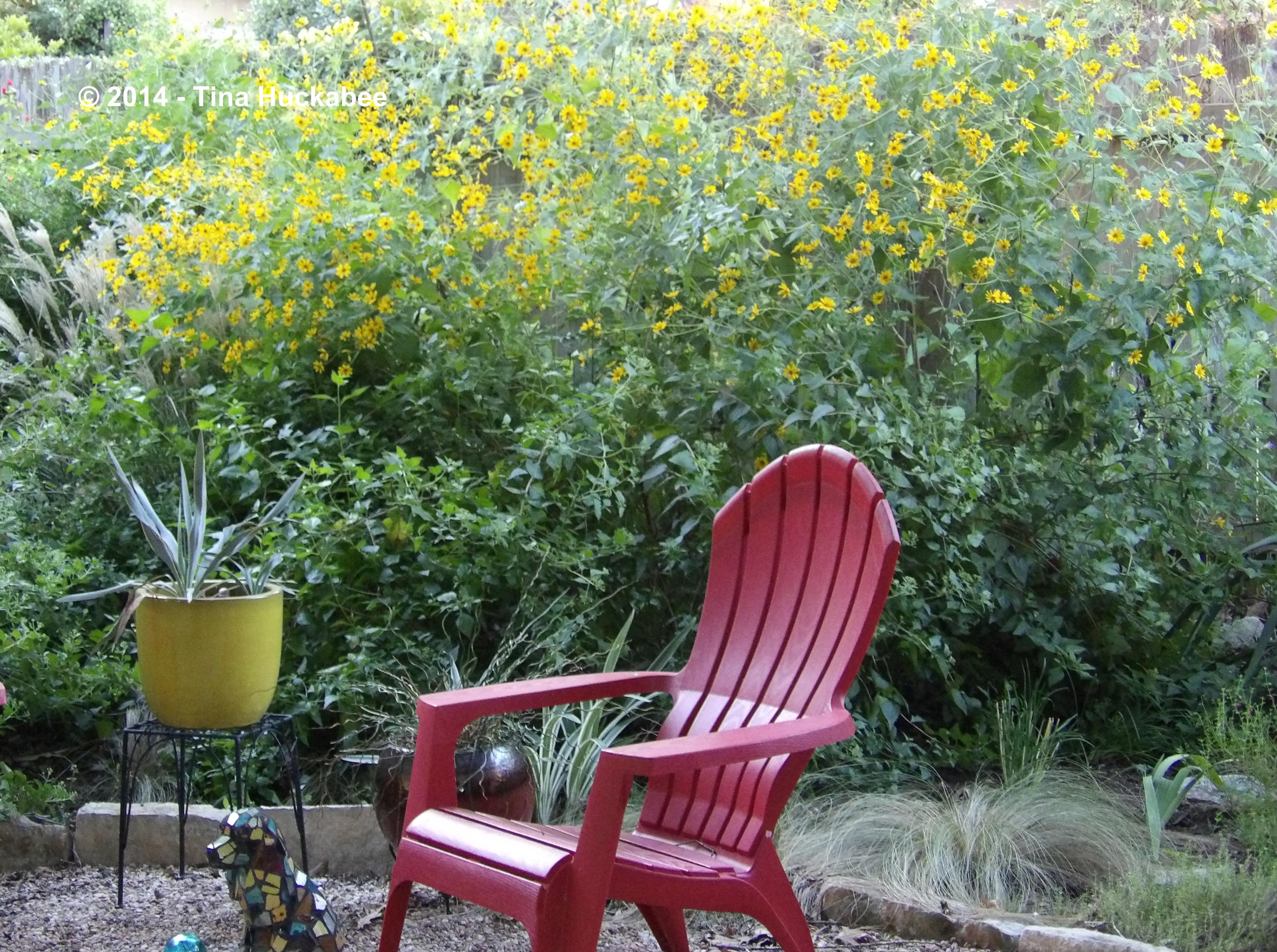
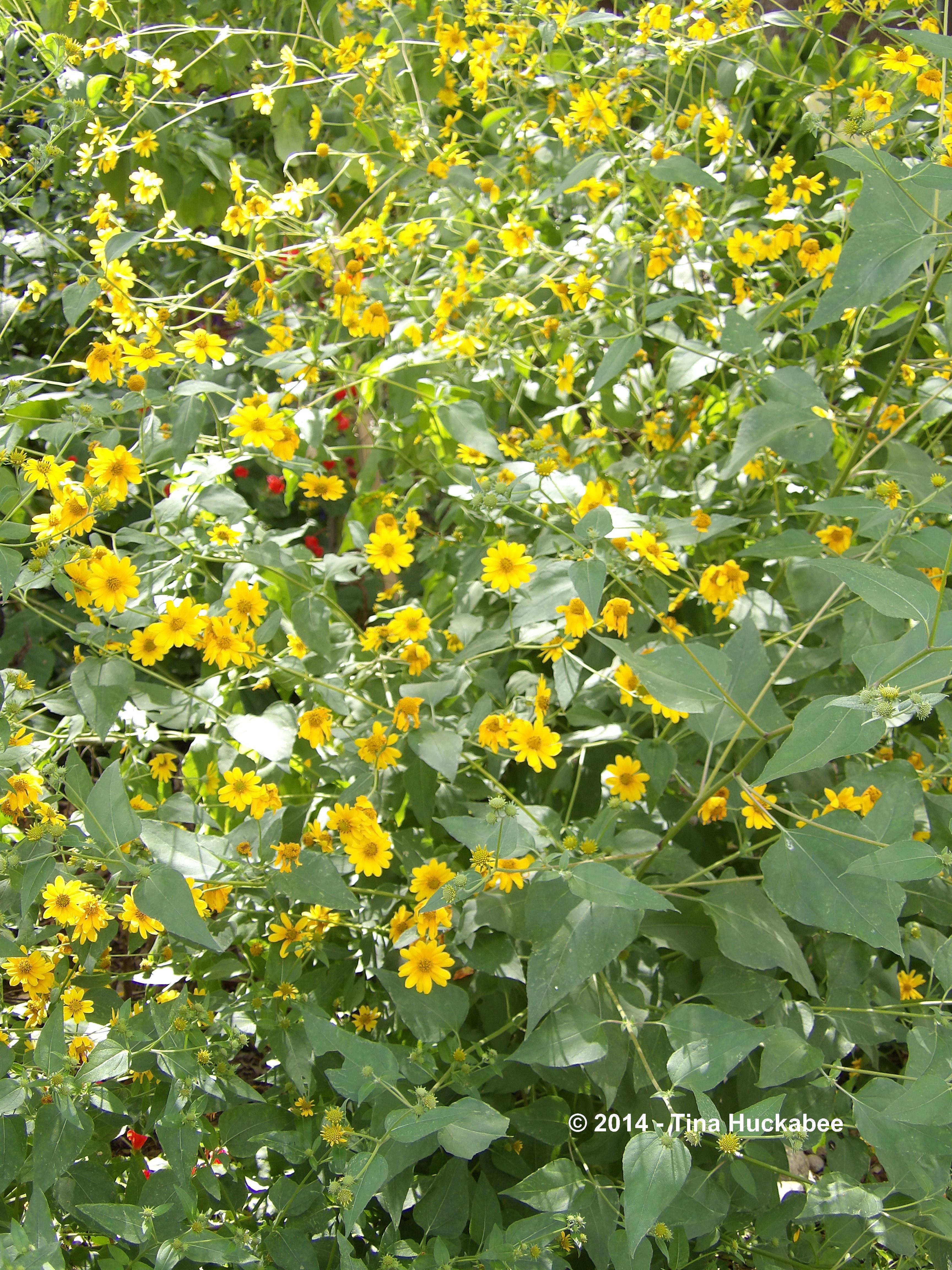
After the first hard freeze, the Goldeneye die to the ground.  They’ll reappear though in late spring, growing fully and rapidly.  During the course of summer, there will be a smattering of blooms, but mostly this perennial is all about its foliage in the summer, which are typical of sunflower leaves, large and rough textured. As Goldeneye fills out, it’s lush and neat in appearance. But after the first late August-September rains, Goldeneye burst forward in height and width and blossoms with masses of sunny, yellow blooms.

IMGP1492.new

IMGP1703.new

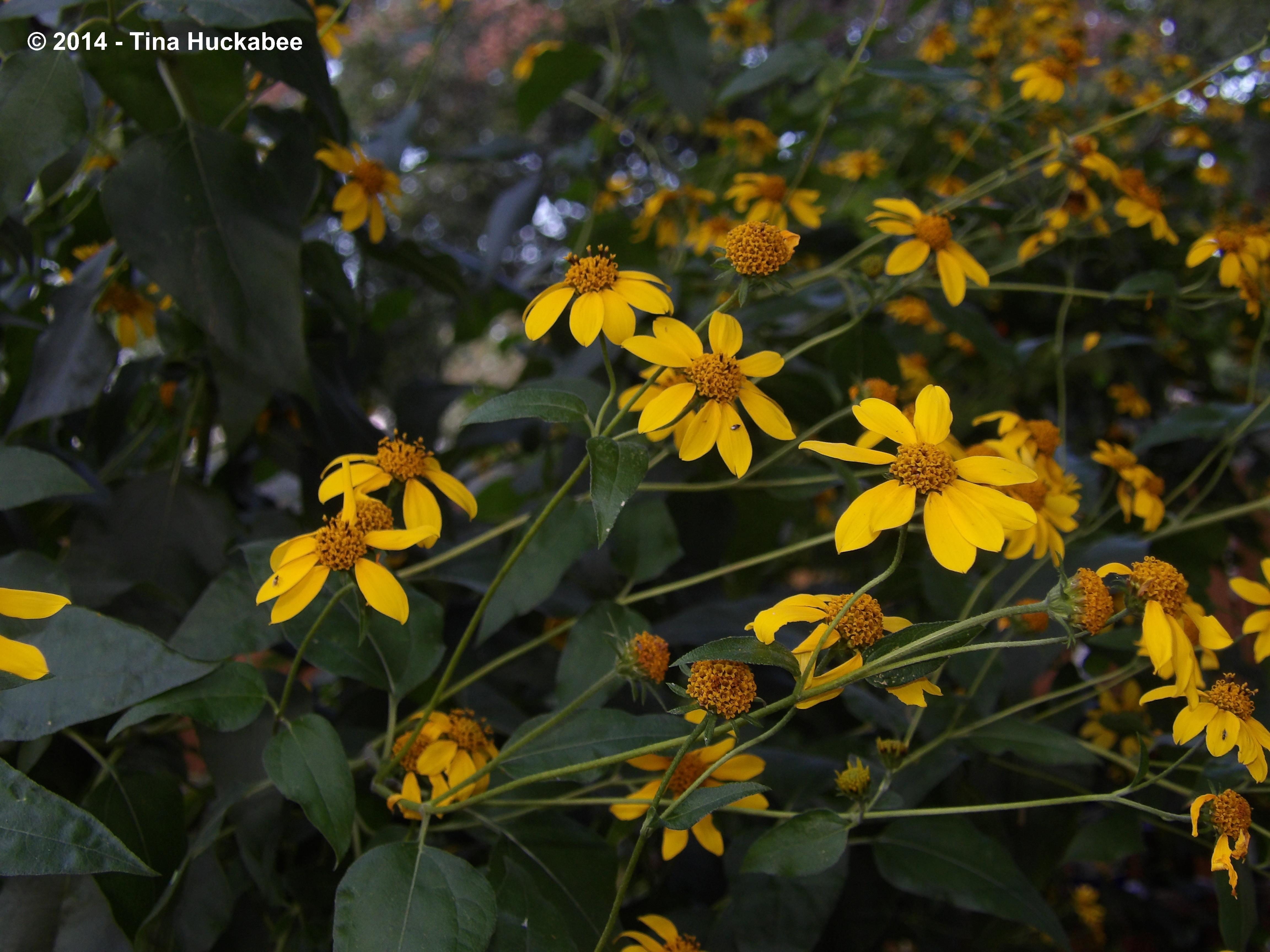
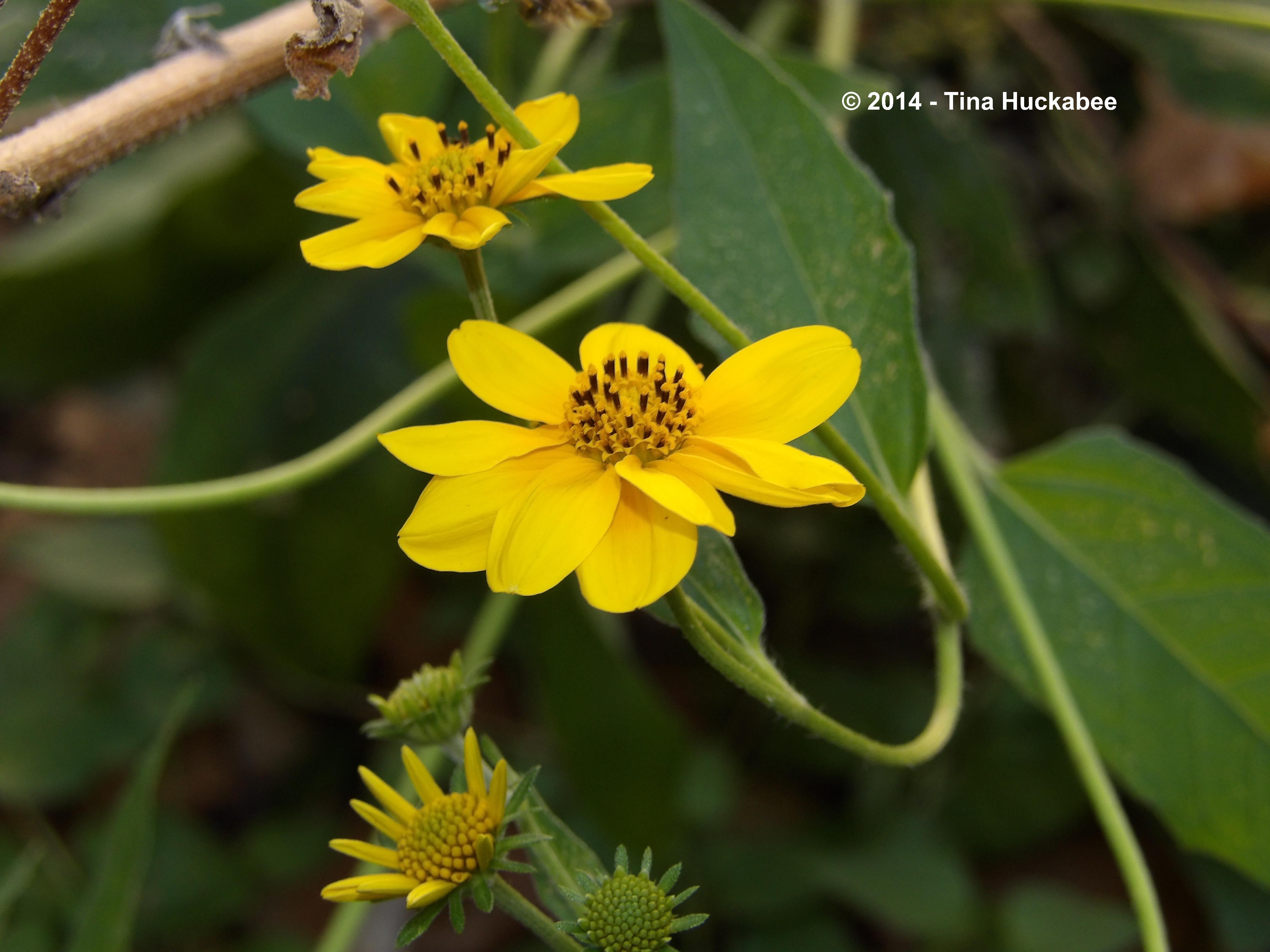
Like all wildflowers, there’s always some variability and difference between individual plants.  Some Goldeneye flowers are larger, some smaller; some Goldeneye have very narrow petals,

IMGP2119.new

…and some have wider petals.

IMGP2121.new

I appreciate that each plant has its own “personality”–just a little different from its neighbor.

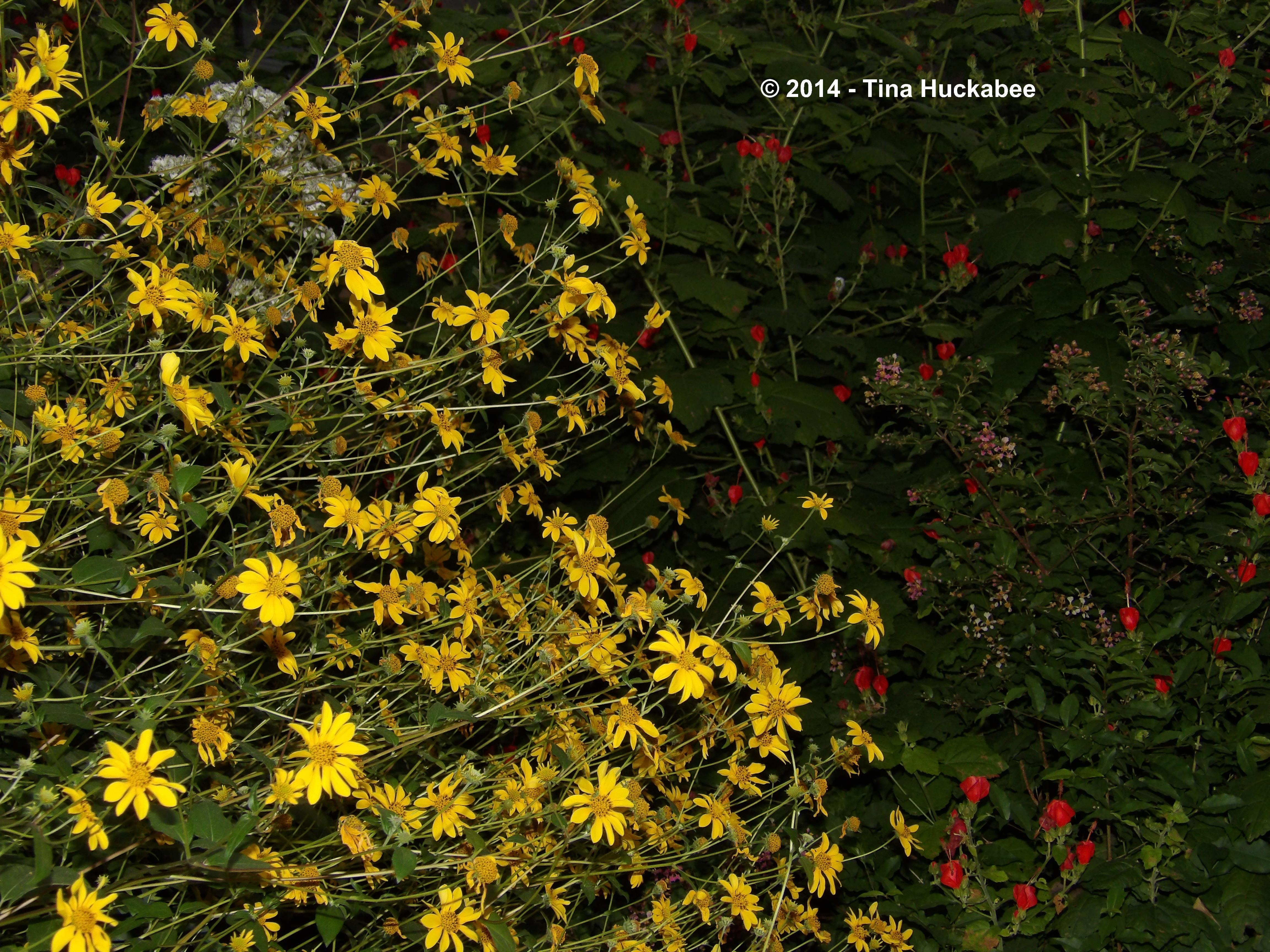
Goldeneye pair nicely with other fall bloomers.
IMGP1423.new IMGP1773.new

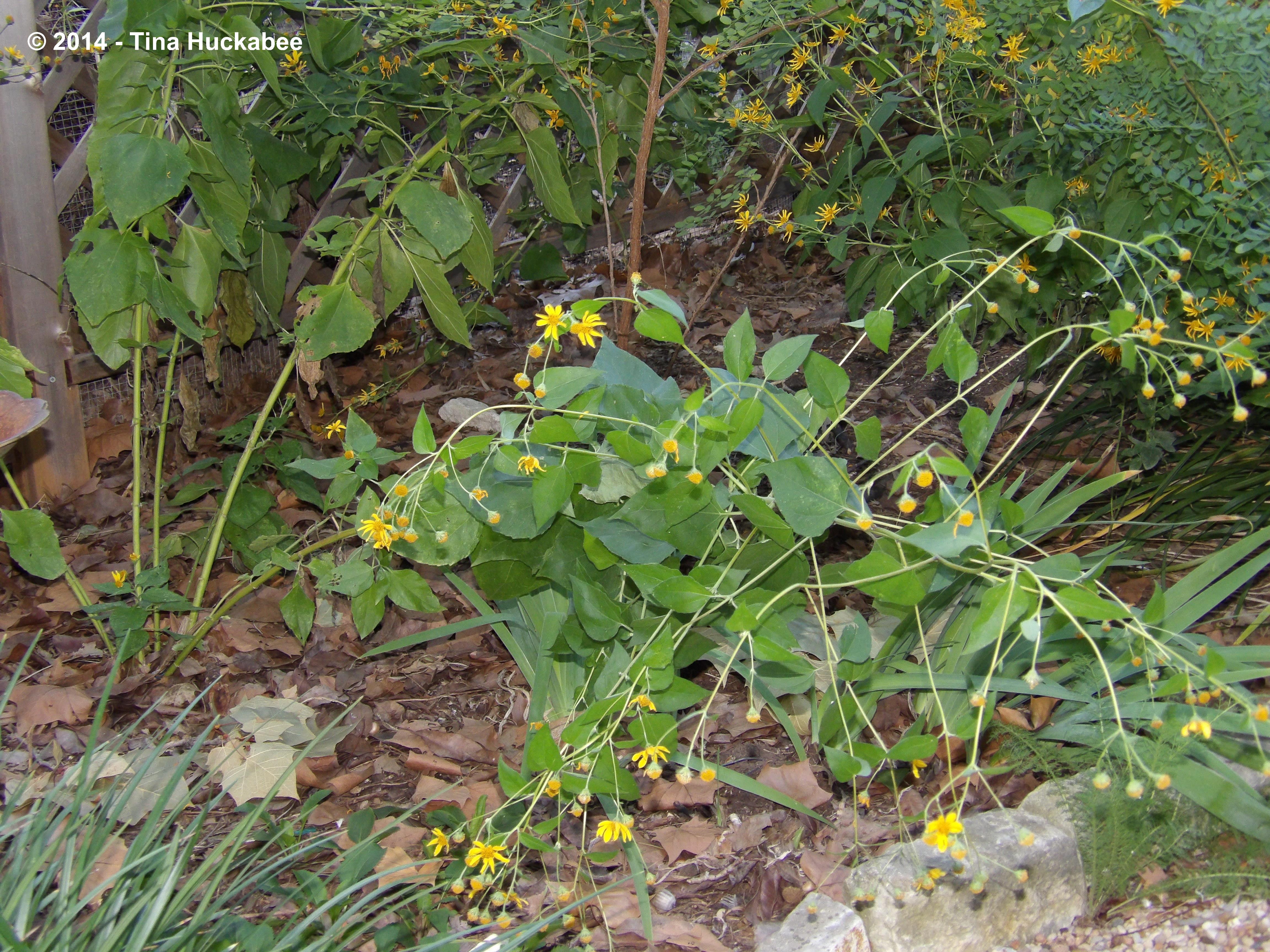
These sunflowers grow and bloom in shade, but they get tall and lanky and tend to flop over once they are bloom heavy,
IMGP2139.new

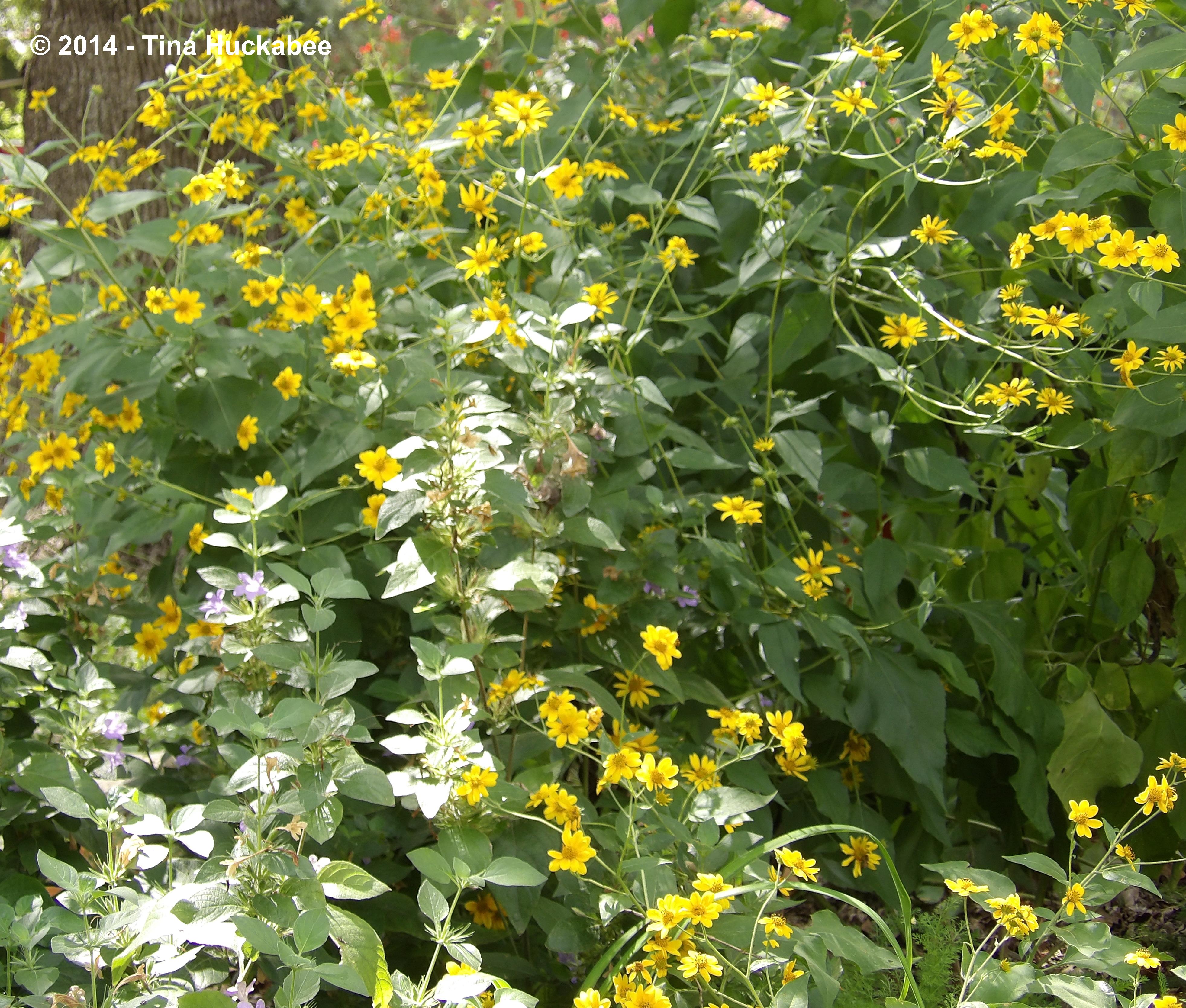
…which they will become in the fall.  In mostly sunny spots though, they tend to remain more compact and stable.
IMGP1298_cropped_3926x3337..new

IMGP1769.new

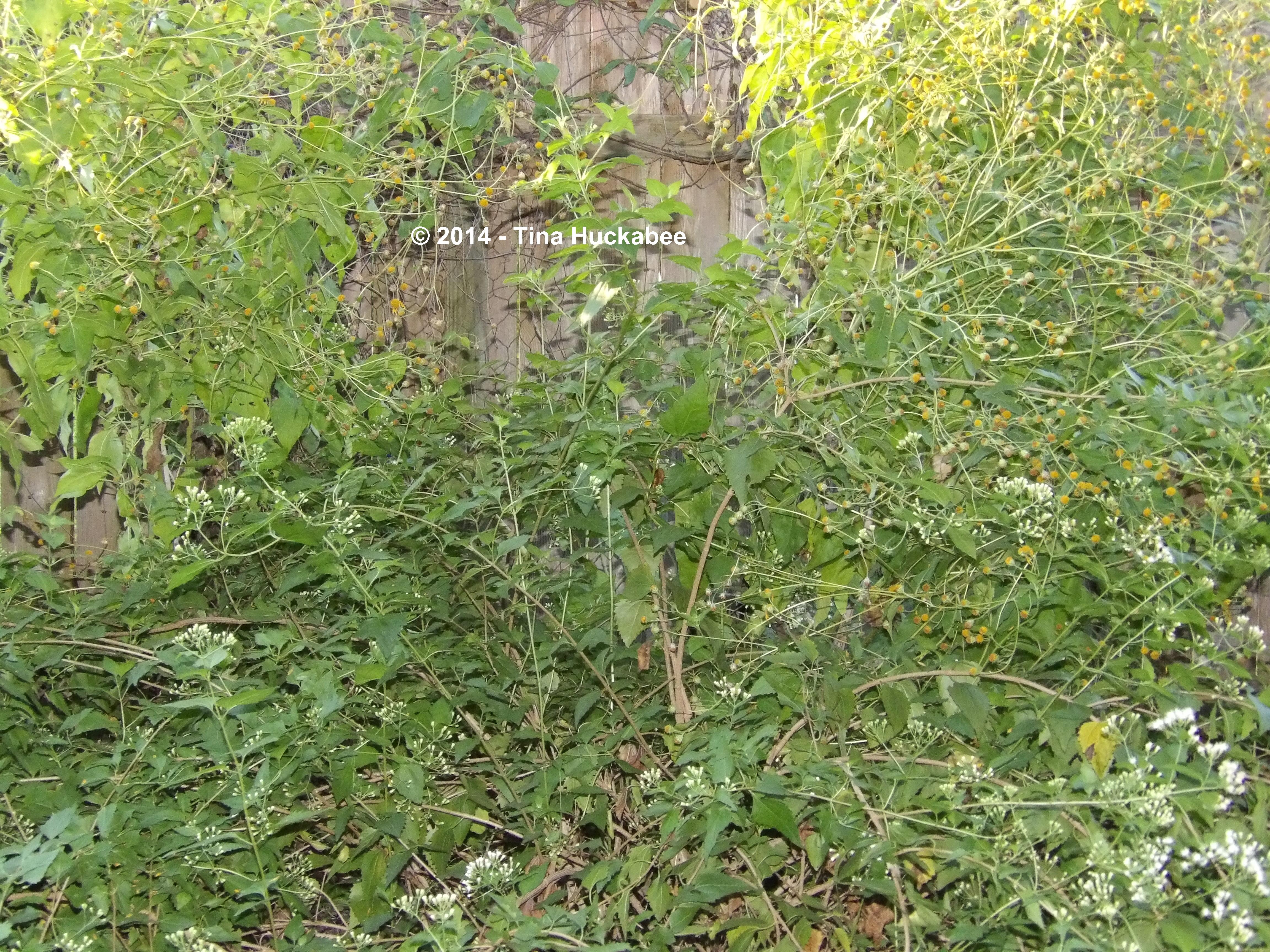
As with other wildflowers, you should tolerate the rangy growth habit toward the end of Goldeneye’s growing season.
IMGP2130.new

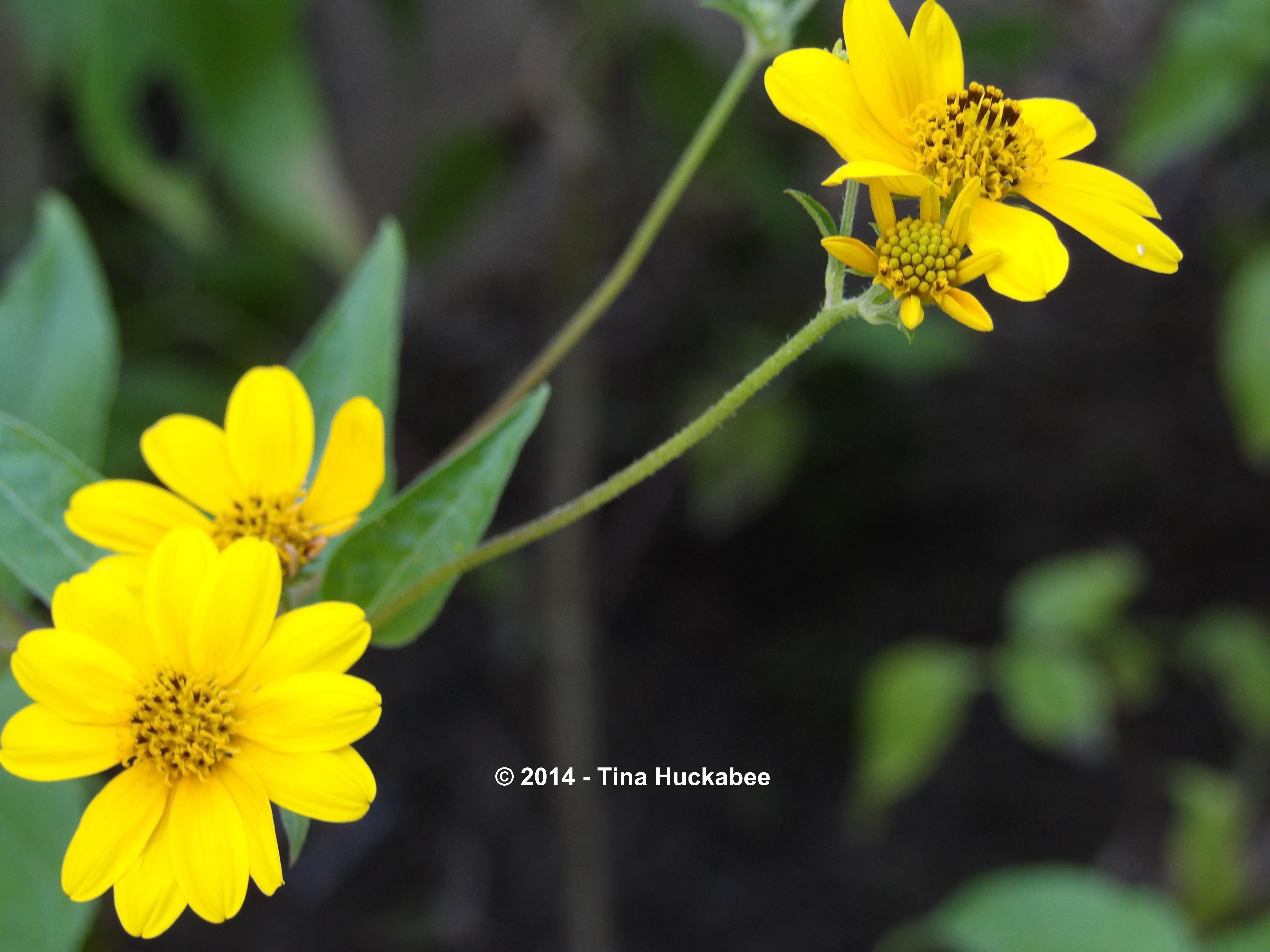
As lovely as most native plants and wildflowers are to us, they didn’t evolve to look pretty for people, but to provide food and cover for wildlife. Wildflowers are beautiful in our cultivated gardens for most of their growing season, but there’s almost always a short period of time after blooming and seeding, that wildflowers look spent from their wildflower production activities.  Be patient with your native wild plants during that period of time.
IMGP1343.new

IMGP2148.new

You’ll be glad you did!

Bloom Day, October 2014

Summer has been reluctant to release its toasty grip on us in Texas, but the cool of autumn has mostly arrived. We’ve enjoyed a couple of refreshing cold fronts, dropping our temperatures into the ’50’s, with highs in the 70’s and ’80’s. The lingering warmth of September and early October didn’t damper blooms in my gardens, though. Joining Carol at May Dreams Gardens, I’m celebrating blooming stuff on this 15th of October.

There is no shortage of blooming native Texas plants in my gardens. Let’s take a tour, shall we?

Barbados Cherry, Malpighia glabra, has blossomed its dainty, pink clusters for a month or so now.

IMGP0216_cropped_3829x2521..new

Soon, cherry red fruits will replace blooms, feeding a whole different crop of critters. Barbados Cherry is lovely in tandem with Turk’s CapMalvaviscus arboreus.

IMGP0218.new

A cultivar of the native red Turk’s Cap, the Pam’s Pink Turk’s CapMalvaviscus ‘Pam Puryear’, blooms as heartily as the red,

IMGP0235_cropped_3548x3355..new

…but with softer pink swirls perched atop the long branches.   In my gardens, the Pam’s Pink is planted with FrostweedVerbesina virginica,

IMGP1283.new

….and it’s a successful pairing.   Frostweed is an excellent wildlife plant.   Attracting butterflies, like this migrating Monarch,

IMGP1166.new

IMGP1149.new

…and bees,

IMGP1077.new

…and this guy, a Tachinid fly,

IMGP1072.new

…who you can see again on Wildlife Wednesday, a fun little wildlife gardening meme I host.  The next Wildlife Wednesday is November 5th.  Frostweed a stalwart native perennial; it’s drought hardy and works well in either shade or sun.

IMGP1031_cropped_3429x3208..new

The GoldeneyeViguiera dentata, is photogenic in the fall garden.

IMGP1236.new

Another perennial which attracts its share of pollinators,

IMGP1241.new

…these pretty yellow flowers evoke glorious autumn sunshine.

IMGP1008_cropped_4129x3078..new

IMGP1342.new

They work and play well with other natives in my gardens,

IMGP1185.new

…like the Rock RosePavonia lasiopetala and Barbados Cherry. And who doesn’t love the tried and true combination of yellow and blue?

IMGP1277_cropped_3129x3382..new

This Goldeneye’s companion is the non-native Blue Anise Sage, Salvia guaranitica.  

The roses in my gardens are awake again after the heat of summer. I grow only water–wise antique or cultivar roses in my gardens.  If a rose can’t shrug off the heat and dry of the Texas summer, it’s out!  The Martha Gonzales Rose is one such beast.

IMGP1208.new

Named after a Navasota, Texas gardener, Martha Gonzales,

IMGP1204.new

…this rose is beautiful, fragrant, and tough. Martha grows in USDA zones 7a to 10b so it it’s appropriate in a wide range of situations.  If you only grow one rose, make it the Martha!

The Belinda’s Dream Rose, which is appropriate for USDA zones 5a to 10b,

IMGP1612.new

is the quintessential elegant pink rose. Fragrant and downright luscious, Belinda isn’t quite as hardy as the Martha, but still performs well for me.  Belinda gets a little peeky in summer, but picks up again with rain and softer temperatures.  Caldwell Pink Rose,

IMGP0975.new

looks dainty, but it’s no wilting beauty.  This poor thing, I’ve moved it four times–I think I’ve finally found its forever home.

IMGP1014.new

A migrating Monarch finds this Old Gay Hill Rose delightful,

IMGP1724.new

…and so do I.  Similar to the Martha Gonzales, the shrub is larger and the petals slightly (but only slightly) more pink than the Martha’s fire engine red petals.

I’m not a grow-only-native purest and host a number of non-native perennials in my gardens, like these Four O’Clocks, Mirabilis jalapa.  Considered a staple of the Southern garden, these are new to my gardens and were gifted to me by a gardening friend, TexasDeb at austin agrodolce.

IMGP1180.new

IMGP0856.new

IMGP0858_cropped_3419x3414..new

These lovely trumpets open late in the day, bloom all night, and close in the morning. Four O’clocks are fragrant and are such lovelies–I’m tickled to make room for them in my gardens.

Jewels of OparTalinum paniculatum, are another new-to-my-gardens perennial from TexasDeb.  Jewels are also an old-fashioned flower of the Southern garden.

IMGP1369.new

IMGP1380.new

I love the teesny flowers, the “jewels” seeds, and chartreuse foliage. Both Four O’Clocks and Jewels of Opar are potentially invasive, so I’ll keep them in check–ripping out uninvited extras who crash my garden party!

It’s now that my Coral Vine, Antigonon leptopus, shines,

IMGP1413.new

IMGP1415.new

…or is that a sparkle?  Whatever it is, the bees love this bloomer.

After each rain, the Almond Verbena, Aloysia virgata, flowers and its fragrance graces my garden.  Shown here in partnership with Turk’s Cap blooms, the Almond Verbena is favored by honeybees.

IMGP0918.new

My Almond Verbena is the anchor plant in a group of native shrubs and perennials.

IMGP0910.new

It fits quite well, I think.

Quoting another garden blogging buddy, Debra of Under the Pecan Trees,  we enjoy a “second spring” in Texas–a  lush blooming autumn gift, after the heat, when all, including gardeners, perk up anew.

What’s blooming in your gardens this October Bloom Day?  Check out May Dreams Gardens for blooms from everywhere.


The Monarch And The Bee

On a sunny October afternoon, the Frostweed, Verbesina virginica, is in full bloom mode.

IMGP0994.new

IMGP1076.new

A stately native perennial to Texas and other places as well, Frostweed attracts  those who pollinate for a living. This Monarch butterfly, Danaus plexippus, no doubt on his way to Mexico, rests on the Frostweed,

IMGP1136.new

RICOH IMAGING

IMGP1144.new

…while sipping nectar to re-fuel for the rest of his long trip.  He’s only the third or fourth Monarch to visit my gardens.  I hope there will be more.

One of my hived honeybees graciously shares her food bar space with the migrating Monarch.

IMGP1159.new

There are plenty of life-giving, yummy nectar and pollen rich blossoms this time of year. In beekeeper-speak, Central Texas is experiencing nectar flow, meaning lots of honey is being produced because there are so many flowers in full, autumn flush.

In concert with the blooming Frostweed, GoldeneyeViguiera dentata, is another native perennial at its height in flowering.

IMGP1187.new

IMGP1232.new

IMGP1237.new

My forager honeybees don’t travel far to find what they need for their hive,

IMGP1240.new

IMGP1238_cropped_3345x3313..new

…while Goldeneye conjures rays of sunshine in the garden.  Oh happy autumn blooms!

IMGP1233.new