As we enter the last month of the year and I prepare for a Texas winter (such that it is), I welcome you to December Wildlife Wednesday, the final installment for 2017 of watching wonderful–sometime wacky–wildlife! Wild critters in my garden are busy with their lives and are also providing entertainment and learning experiences for me. I trust your garden has been graced with some wild happenings as well.
Winter Texans of the avian sort are settled in, having migrated from their breeding grounds in northern North America. These various songbirds will spend the next 4-6 months of relatively mild weather eating their fill of available berries, seeds, insects, and suet in preparation for the arduous migration back to the places where they raise families. These–and all birds–will be easier to spot once my deciduous plants shrug-off their foliage garb (leaving said foliage unceremoniously on the ground for me to pick up) and while that process has begun, it’s at least a month away before bare-n-naked trees will allow for better bird viewing.
This Ruby-crowned Kinglet, Regulus calendula, is one of a pair visiting my back garden daily.

The ruby streak on top of the head isn’t visible; this one could be a female.
I’ve only spotted the female at the suet feeder, but I’m sure the male pops on for a nosh, too–but, so far, not when I’m looking. I eagerly await a glimpse of ruby-red in the garden which flashes when defending territory or charming Ruby-crowned Kinglet gals.
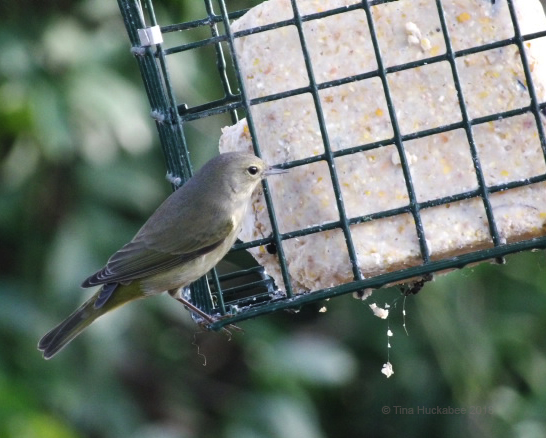
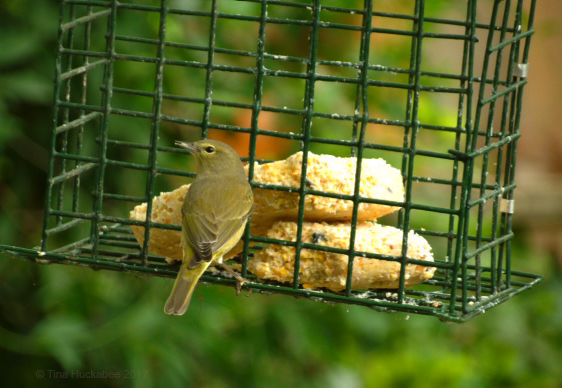
An Orange-crown warbler, Oreothlypis celata, frequently partakes of suet.


Easier to spot on the feeder, I prefer to watch them work through the garden, rapidly moving from limb to limb, and shrub to shrub, snipping insects as they go–but it’s challenging keep up with their speed-feeding movements. Less colorful than some of the other songbirds, these little ones are elegant and with charm to spare. I think there are two Orange-crowns in the garden, but haven’t definitively confirmed that.
For weeks, I observed one or two Eastern Phoebe flycatchers, Sayornis phoebe, but was either too slow with the camera, or didn’t have it at hand. One morning on my way out, I saw this beauty through my bedroom window.

Catch me if you can!
I sprinted to where my camera awaited assignment, grabbed and prepared it for the shots as I hurried back to the window. Success!
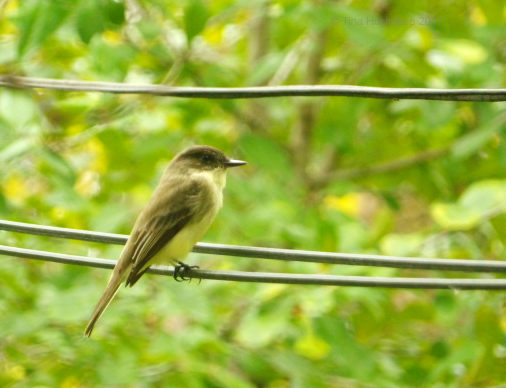
I’m waiting patiently for you to get your shots, lady! (claws tapping)
I didn’t dare step outside, as these birds have my blundering number and always take flight as soon as I make an appearance. Interestingly, I haven’t seen the phoebes since these photos, so I hope my paparazzi-like behavior didn’t scare them off. According to All About Birds, these flycatchers are year-round residents in some parts of Central Texas, though they are new to me. Their wintering grounds span West, East and South Texas and southward through Mexico.
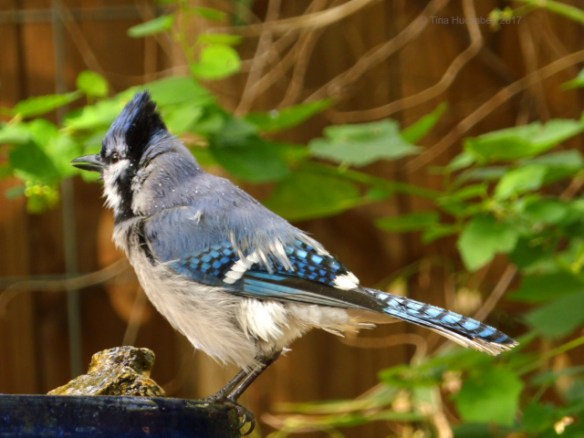
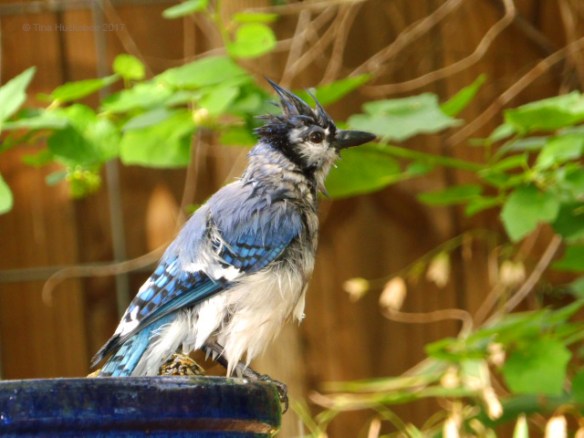
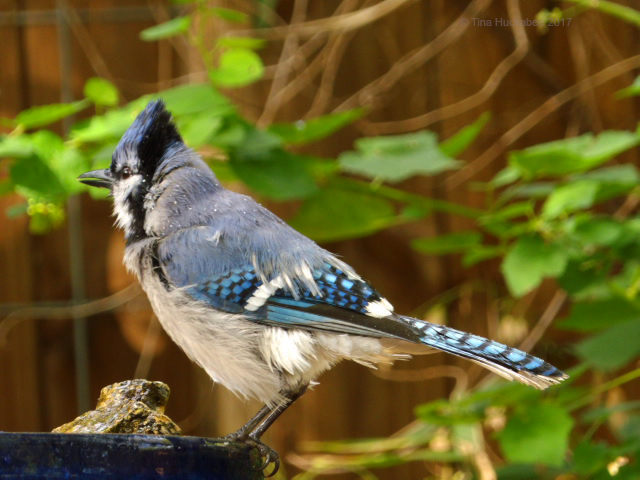
The local bird characters provide a show as they go about their daily business. A bathing Blue Jay, Cyanocitta cristata, always elicits a grin.

It’s a toss-up whether this Carolina Chickadee, Poecile carolinensis,

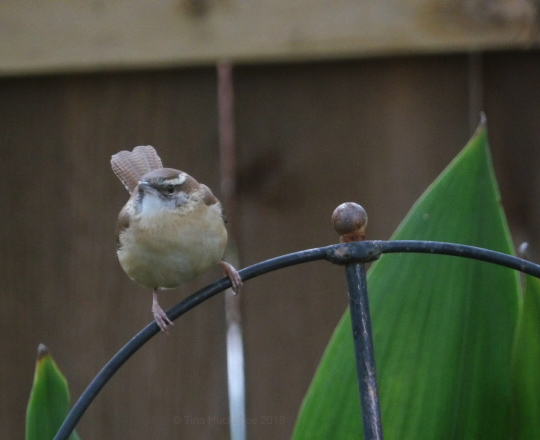
…or this Carolina Wren, Thryothorus ludovicianus, wins the cute bird-of-the-month prize.

Shall we have a vote?

This wren is certainly laser-focused on something worth investigating.
A male Red-bellied Woodpecker, Melanerpes carolinus, loves the suet I provide once the temperatures are reliably cool.
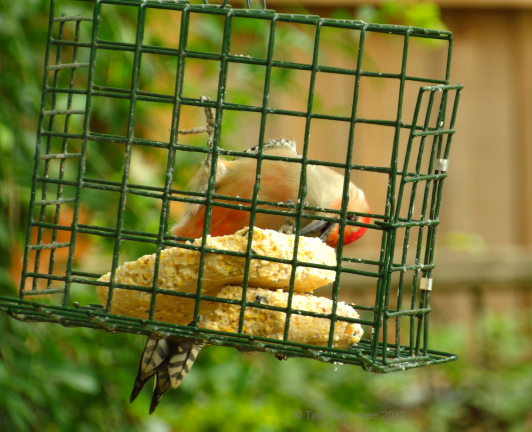
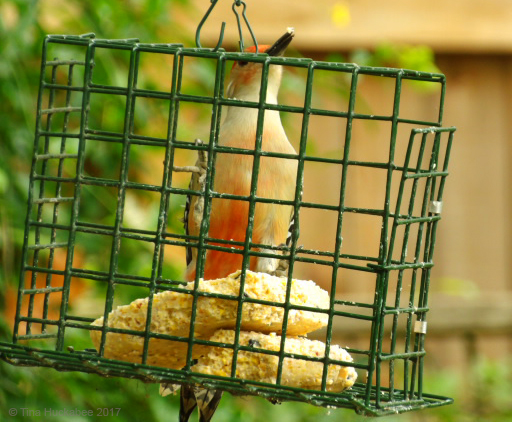
A female Red-belly also visits; I assume they’re mates, but don’t know where their nest is located.
Not in my back garden, but I spotted this gorgeous Great Blue Heron, Ardea herodias, resting in my neighbor’s tree late one afternoon.

I see Great Blues fly over my neighborhood throughout the year, as they keep a keen eye on the urban creeks which spiderweb through Austin. In my own garden, they pop in mid-to-late spring after I’ve pruned the pond lilies, which frees-up access to available fish. For a month or so, the poor little fish are vulnerable because they have fewer foliaged places to hide and the herons know that when lily pads are limited, they’re ‘shooting’ fish in a barrel! I was pleased to see this handsome heron, though it loped off as I gawked in admiration.
The state bird of Texas is the Northern Mockingbird, Mimus polyglottos. I’ve seen this one, perched silently and un-singing, on the back fence.
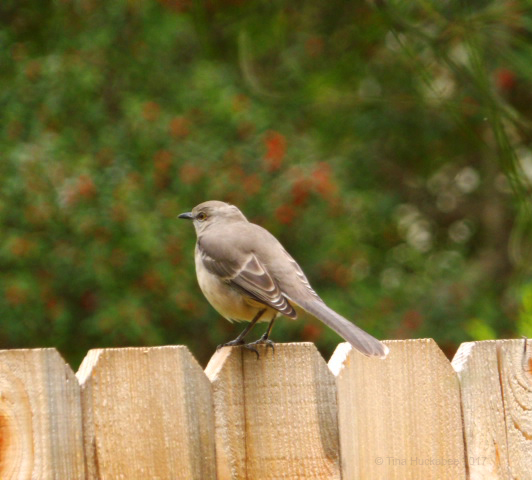
A contemplative bird.
On Thanksgiving morning I was sipping coffee and perusing the local newspaper at my kitchen table. From where I sat, there is a clear view to the back garden and I looked up just as a large, fast bird streaked across my line of vision. Recognizing a hawk in hot pursuit, I snatched my camera and caught this just-landed Red-tailed Hawk, Buteo jamaincensis, in a neighbor’s tree.

Wow! This bird was huge, so I’m guessing she’s a female and probably disgruntled at the lack of her own Thanksgiving feast. Dove with cranberry sauce, anyone?? As I snapped a few shots, a Blue Jay was harassing her, so she took wing, landing on another tree further away.

Ms. Red-tailed refused to turn around and acknowledge my presence.
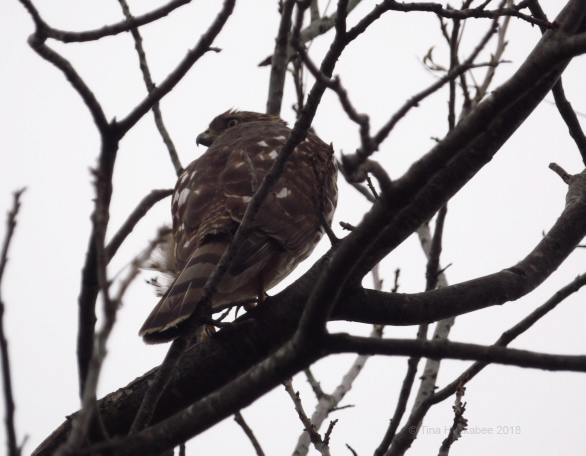
She perched there for a long time, probably re-thinking her strategy for snagging a meal. There are a variety of smaller raptors in my neighborhood: this autumn I’ve seen a Cooper’s hawk and a Sharp-shinned hawk–but I think this is the first time that a Red-tailed has wooshed through the back garden.
The birds are active, but they’re not the only winged-things around. There have been plenty of butterflies, moths, and honeybees, though the native bees have gone to sleep for the season. The cheery, yellow Southern Dogface, Zerene cesonia, is a common autumn butterfly here, but always so flighty that I rarely catch a good photo–until recently!
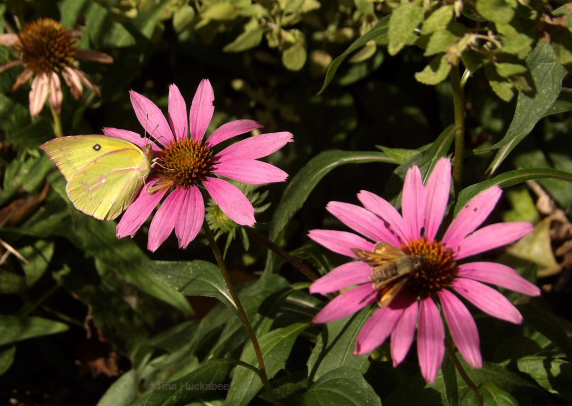
Woot! Nectaring on the autumn crop of Purple Coneflower, Echinacea purpurea, this one shares the bounty with an equally busy Southern Broken-Dash, Wallengrenia otho.
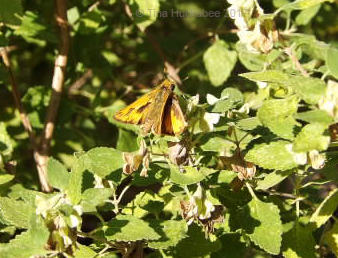
The orange-brown on the wings is plenty attractive, but the Southern Broken-Dash also shows a beautiful, iridescent blue-green on the upper side of its thorax.

Nectaring at a Purple coneflower.

Sunning on the foliage of the Shrubby Blue sage.
That same afternoon, this Clouded Skipper, Lerema accius, also vied for attention.
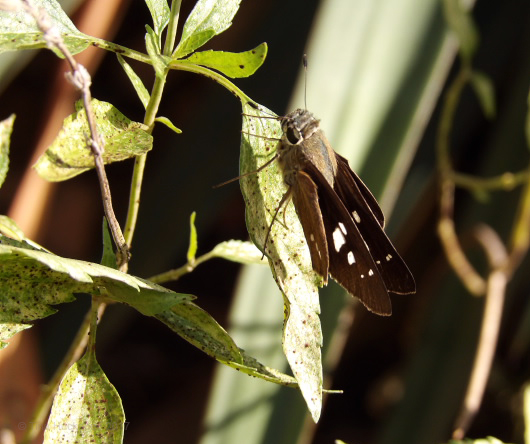
I’ve been amazed and quite pleased at the numbers of small skippers and even larger butterflies in my garden this past month, though I’ve mostly appreciated their beauty and not rushed to get photos. Keep up the good work, pollinators!
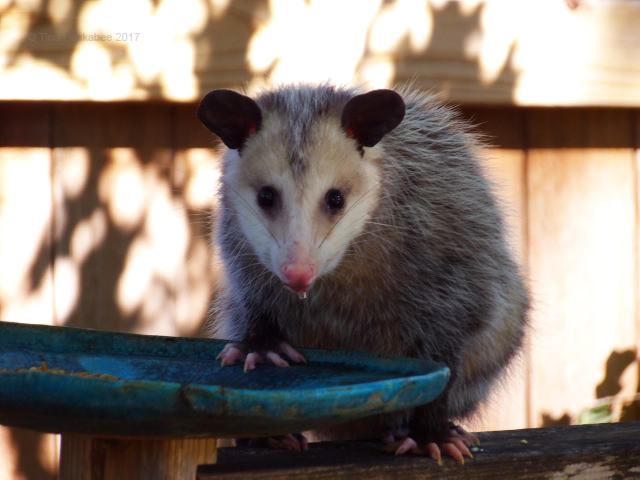
It’s not all about desirables in the garden though. I thought I’d attempt attracting Eastern Blue Birds–or something equally fascinating–by leaving dried mealworms (yuk to me, but some birds totally dig them), but all I’ve managed to attract is this critter.
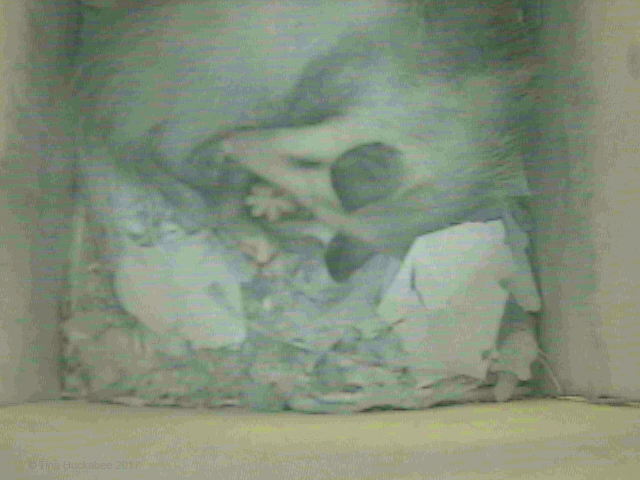
Grrrr. As well, I suspect her in the crime of squatting in the Eastern Screech Owl house. Everytime we open up the house to make it available for house-hunting owls, the camera shows a snoozing, or sometimes bathing, opossum.

We wait until nightfall, let her vacate her comfy digs (opossums are mostly active after dark) then trundle up the ladder to (again!) close the door on the hole of the house for another week or so in hopes of discouraging her. Once we reopen the door for owls looking for a home, invariably, within a day or so, Ms. Opossum snuggles back in.
It’s a drag being outsmarted by an opossum!
She enjoyed the mealworms, but I’ve removed them from the bird buffet menu. She’ll just have to get her worms like the other opossums–by digging in my garden!

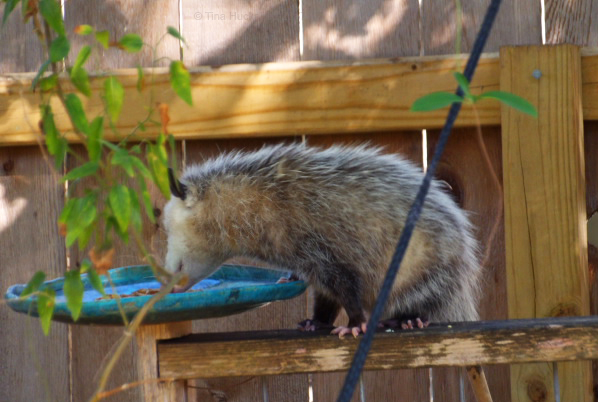
I don’t mind opossums (I keep telling myself), but this one is persistent and just won’t vacate the premises.
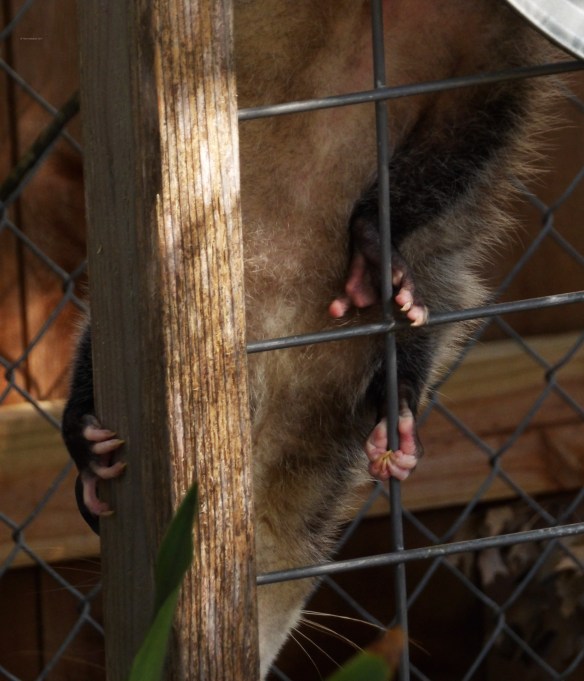
Check out her climbing claws. She may not be fast, but she’s adept.
Soon, the neighborhood owls will be courting-n-sparking and they’ll want that cozy box for their babies–you know, the one that we built for THEM!
Celebrating lots of life in the garden for Wildlife Wednesday, I hope your garden is full of wildlife happenings and reaping autumn bounty. Please share your wildlife stories for this past month and remember to leave your link when you comment.
Good wildlife gardening to you!

















 My Gardener Says...